Disney, Music, Pop Culture, The Beatles

The Beatles Hit the Brakes at Walt Disney World.

Original Publish Date: December 19, 2024. https://weeklyview.net/2024/12/19/the-beatles-hit-the-brakes-at-walt-disney-world/
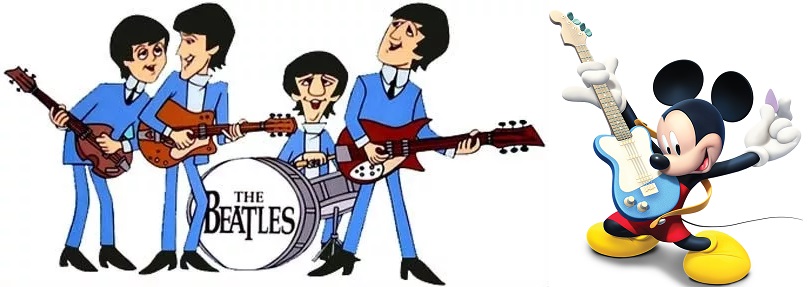
Quick, who broke up The Beatles? Which one of the Fab Four was the first to quit the group? And who was the last Beatle standing? Throw away all you thought you knew about the breakup of The Beatles and settle in for a Beatles Christmas story like you have never heard before. This Beatles breakup story involves John Lennon’s famous “Lost Weekend”, the Sopranos, Al Capone, and Mickey Mouse.


On August 20, 1969, The Beatles met for the last time at Abbey Road Studios to record what was to be the last song on their last studio album: The End. The song, which features the only song Ringo performed a drum solo on, was initially intended to be the final track on Abbey Road, but it ended up being followed by “Her Majesty” a brief tongue-in-cheek music hall song. “Her Majesty” appears 14 seconds after the The End, but was not listed on the original sleeve. Paul McCartney is the only musician to appear on the track. Some observers consider it the first example of a hidden track. The song credited to the “Lennon-McCartney” songwriting partnership brought forth a rare compliment from Lennon when he credited Paul with the line, ‘And in the end, the love you take is equal to the love you make.’ The ever-increasing acerbic Lennon offered a back-handed compliment to his songwriting partner by saying, “it is a very cosmic, philosophical line. Which again proves that if he wants to, he can think.” Thus, The End stands as the last known new recording involving all four of the Beatles during the band’s existence. And before you say it, the album Let It Be, was recorded in January 1970 ON TOP of Abbey Road Studios, NOT inside of it.
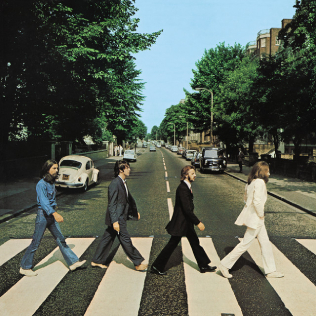
The final gathering of all four Beatles came two days later at a photo session held at John Lennon’s Tittenhurst estate. On September 20th, Lennon privately informed his bandmates at a meeting at Apple, without George Harrison present, that he was leaving the Beatles. However, it was unclear to the other members whether John just wanted a break or if his departure was permanent. Legend has it that John Lennon walked out of that 1969 meeting at Apple headquarters screaming “I want a divorce” and four years later, he would get his wish at the “Happiest Place On Earth”. Meantime, on April 10, 1970, McCartney settled the issue in a press release declaring, “I’m quitting The Beatles.” It would take another four years for the breakup to be formalized.
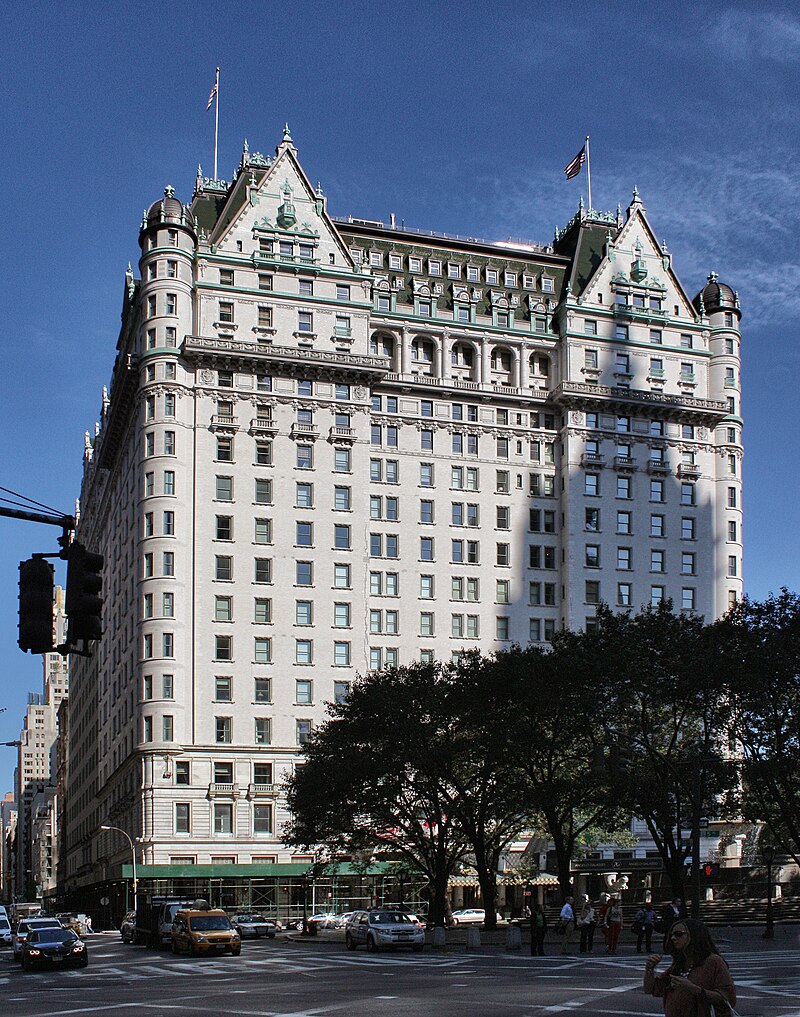
The Plaza Hotel in Manhattan, New York City.

After three years of court battles and ever-increasing acrimony amongst the Fab Four, the final dissolution of The Beatles was set to happen. The meeting was scheduled for December 19, 1974. Ironically it to happened at New York’s Plaza Hotel, the first place The Beatles stayed in America a decade before. As it happened, George Harrison was at Madison Square for two nights on his Dark Horse tour and Paul and Linda McCartney flew in for the signing. Ringo had already signed the documents in England. So, as George, and Paul sat around a large table ready to dissolve the partnership alongside Apple lawyers and business managers, Ringo listened in on the telephone to confirm that he was alive. Everyone present was wondering where John was. Keep in mind, Lennon lived within walking distance of the Plaza Hotel. George Harrison’s lawyer telephoned Lennon for an explanation. May Pang answered and from the background, John’s voice bellowed out, “The stars aren’t right,” to the lawyer’s query. When John’s response came across the speakerphone, everyone present was furious. John explained that he was going to follow his astrological signs and he wasn’t coming to the meeting.
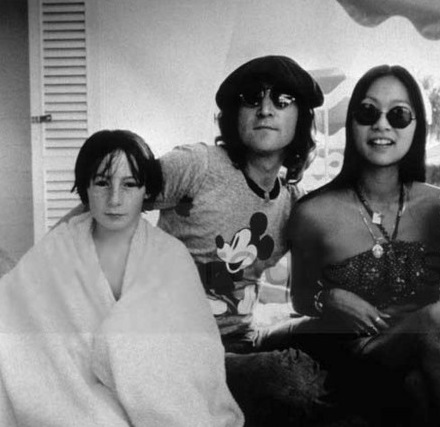
Julian & John Lennon with May Pang.

Instead, John decided that he wanted to give his 11-year-old son Julian a special Christmas holiday by taking him someplace warm. Mobster Mo Levy offered to have John, May, and Julian stay at his Palm Beach Florida condominium, not far from the former mansion of gangster Al Capone. So, Levy grabbed his son Adam and together with the wayward Beatle brood, they all flew down to Levy’s West Palm Beach estate to spend Christmas in the sunny shores of Florida. Wait, you say, where was Yoko? Well, John Lennon was in the midst of his self-described Long Weekend “sowing his oats” with May Pang, Yoko Ono’s assistant and the couple’s production coordinator. In mid-1973, while Lennon was busy working on his classic Mind Games album John and Yoko were having marital problems. Ono suggested to Pang that she become Lennon’s companion, and with Yoko’s permission, John and May began a relationship that lasted more than 18 months.
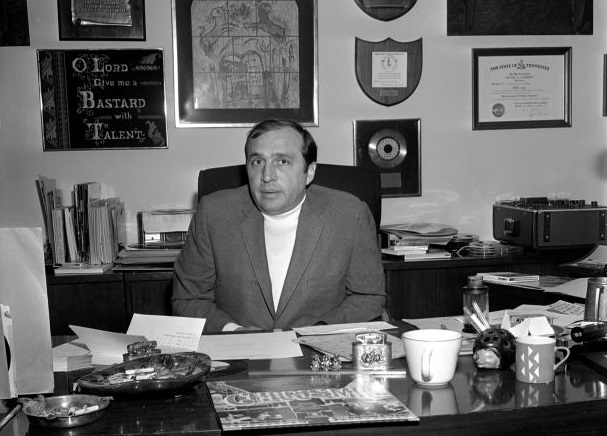
Morris Levy in his office at Roulette Records.

And that private jet-owning mobster, who was that guy? His name was Morris Levy, a music executive from Harlem with alleged mob ties to Vincent Gigante, boss of the Genovese crime family. “Moishe” or “Mo” as friends and associates called him, was known to sign up-and-coming artists to lop-sided contracts that often left the artists owing him money for touring expenses and studio time. Mo Levy would often sign his name to contracts as a song’s co-writer without the artist’s consent. Robbie Robertson of The Band was reportedly one of his victims and a witness to Mo’s henchmen holding a fellow performer by his ankles out the window of Levy’s Park Avenue apartment to get his point across. Levy, who died in 1990, was the inspiration for the HBO television series The Sopranos (1999–2007) character Hesh Rabkin, Tony Soprano’s friend who made a fortune defrauding performers, underpaying royalties, and pressing unauthorized records. Tommy James, Frankie Lymon, and Tito Puente were among his most prominent victims.

Once in South Florida, they spent their time walking on the beach, lounging by the pool and amusing themselves by throwing firecrackers at palm trees. The pinnacle of the trip came when the Lennon trio spent a day at Disney World. There one of the most famous men in the world went mostly unrecognized. At that time Disney’s Magic Kingdom was only one park on the property. They stayed at the Polynesian Hotel. To get from the Polynesian (both then and today) to the Magic Kingdom, the easiest way to travel is by Monorail. The train stops inside the hotel so guests do not have to venture outside the building. Making the Polynesian the obvious choice for John and his crew to stay.
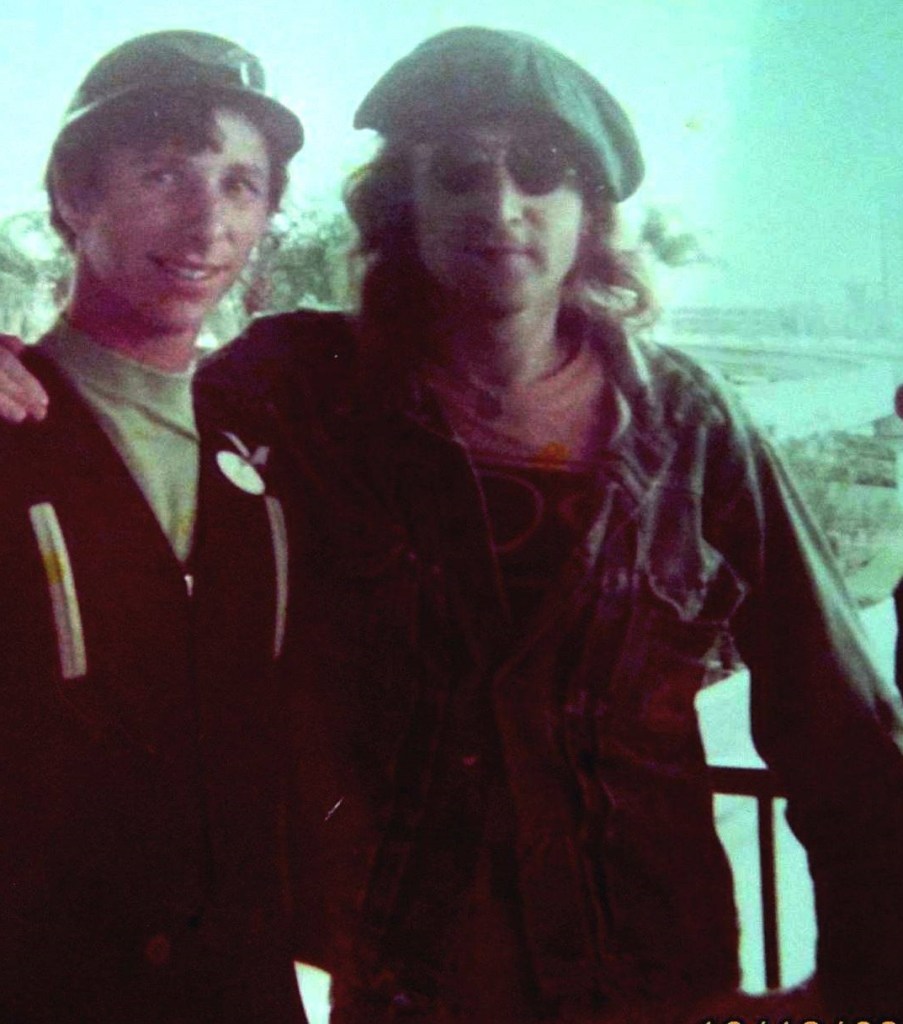
Disney monorail operator / castmember Hal East with John Lennon.

Years later, Disney monorail operator (castmember Hal East) confirmed that John, May Pang, and Julian made a few trips to the Magic Kingdom via the Monorail and were allowed to ride up front apart from the crowd. It was during these trips where John and Julian experienced the rare treat of driving the Monorail. In her book May shared an interesting memory from one of the rides: “I overheard a father tell his son [on the Monorsail] he had heard a Beatle was visiting. “Which Beatle?” The father said, “George Harrison.” I burst out laughing. John asked why. We then all started laughing so hard that the Dad turned around. It then registered which Beatle was at the park that day – and why we were laughing. “It’s O.K.,” John jokingly said, “we all look alike.” On December 29, 1974, one of Apple Corp’s lawyers hand-delivered the official documents to the House of the Mouse in Florida and John Lennon became the last of the four to sign off on the contract.
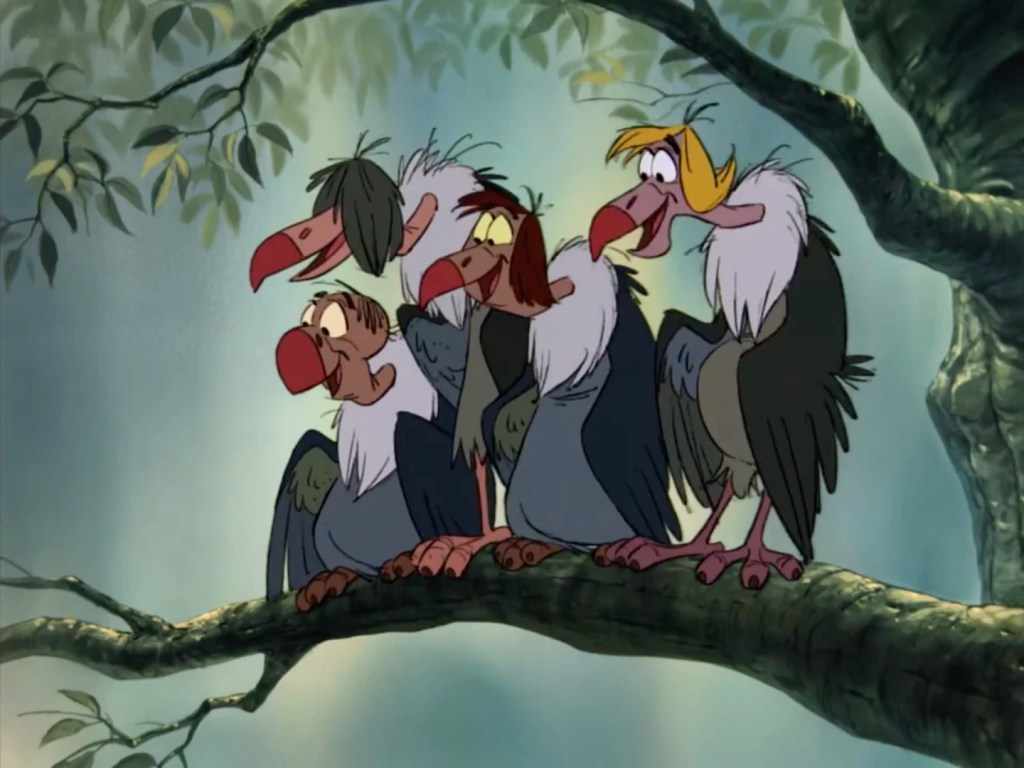
Disney’s Beatles inspired Vultures: Buzzie, Flaps, Ziggy, and Dizzy.

Ironically, the Beatles and Disney never really had much of a working relationship, but Disney did reference The Beatles in at least one of its productions: the vultures in The Jungle Book are based on the Fab Four. Disney also made plans to remake 1968’s Yellow Submarine, but the project never broke the surface. In 2020, Disney bought distribution rights for the docuseries The Beatles: Get Back from Peter Jackson and that three-part series is still streaming on Disney.


Samoa Longhouse 1601.
Samoa longhouse Building at Disney World’s Polynesian Resort.

While Disney won’t confirm the exact room where it happened, dedicated Beatles / Disney fans have pinpointed the location: Room 1601 in the Samoa longhouse Building at the Polynesian Resort at Walt Disney World, Orlando. Room 1601 looks out at the Seven Seas Lagoon and it was this scene at which John gazed as he paused briefly before officially dissolving his performing relationship with the Beatles. Room 1601 is a ground-floor corner room in the Samoa longhouse that looks out on the Seven Seas Lagoon with the Cinderella Castle visible in the distance.
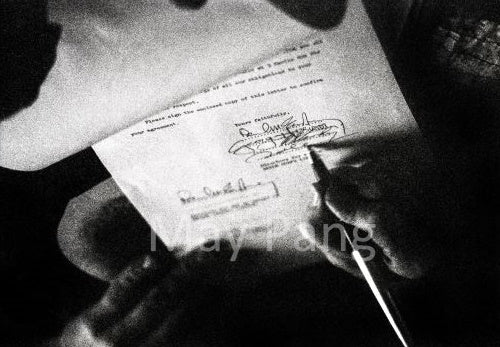
May Pang’s Photo of Lennon’s dissolution signing.

Here, with the Magic Kingdom as his backdrop, John Lennon picked up his pen and officially finished off the Beatles, once and for all. Years later May Pang remembered that John told her to “Take out your camera…He looked wistfully out the window. I could almost see him replaying the entire Beatles experience in his mind. He finally picked up his pen and, in the unlikely backdrop of the Polynesian Village Hotel at Disney World, ended the greatest rock ‘n’ roll band in history by simply scrawling ‘John Lennon’ at the bottom of the page.”

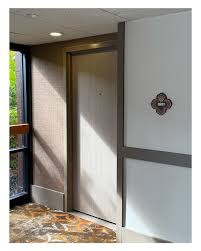
Room 1601.

In Pang’s book “Instamatic Karma: Photographs of John Lennon” (St. Martins Press 2008), there are several photos of Lennon at Disney World wearing a stylish newsboy cap and Micky Mouse ringer t-shirt posed anonymously in the park among the crowd, alongside Monorail driver Hal East, in front of Cinderella Castle and outside room 1601 at the Polynesian. Most importantly, Pang snapped a photo of Lennon’s signature on the dissolution papers. A literal snapshot of music history, Disney style. And today, if you’re lucky, you can stay in Room 1601 where the Beatles long and winding road came to an end. And then, go ride the Monorail.

Creepy history, Hollywood, Pop Culture

Shrek…For Real?

Original Publish Date: October 24, 2024. https://weeklyview.net/2024/10/24/shrek-for-real/

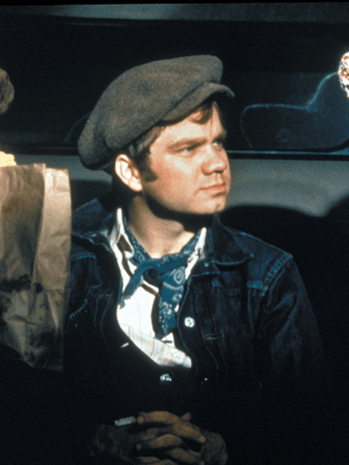
Michael J. Pollard. (1939-2019.)

The low spark of high-heeled boys is the title track from the 1971 album by British rock band Traffic. The 11-minute, 44-second song, was written by Jim Capaldi and Steve Winwood. Capaldi credits diminutive actor Michael J. Pollard (Bonnie & Clyde) for coming up with the term while the two were in Morocco planning a movie (that was ultimately never made). In a 2009 radio interview, Capaldi said, “Pollard and I would sit around writing lyrics all day, talking about Bob Dylan and The Band, thinking up ridiculous plots for the movie…Pollard wrote in my book ‘The Low Spark of High Heeled Boys’. For me, it summed him up. He had this tremendous rebel attitude. He walked around in his cowboy boots, his leather jacket. At the time he was a heavy little dude. It seemed to sum up all the people of that generation who were just rebels.” For this writer, that lyric succinctly sums up the creation of the most iconic cartoon character of our time: Shrek. And since it is Halloween week, I’m going to tell you why.

Artist William Steig (1907-2003)

Shrek was created by William Steig (1907-2003) who, during his lifetime, was hailed as the “King of Cartoons.” Steig began drawing illustrations for The New Yorker magazine in 1930, ultimately producing more than 2,600 drawings and 117 covers for the magazine. Steig began his “second career” writing children’s books at the age of 61. In 1990, Steig published his picture book Shrek! which formed the basis for the 2001 DreamWorks Animation film. After the 2004 release of Shrek 2, Steig became the first sole creator of an animated movie franchise to gross over $1 billion after only one sequel. Eventually, three sequels and three spin-offs were produced. When asked his opinion about the movie, Steig responded: “It’s vulgar, it’s disgusting-and I loved it.”

Maurice Tillet “The French Angel” (1903 –1954)

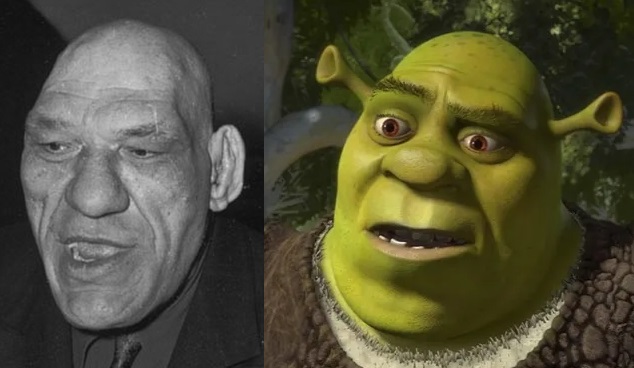
It is widely believed that Steig based his Shrek character on the professional wrestler Maurice Tillet aka “The Angel”, a nickname given to him by his mother when he was a boy. Maurice Tillet (1903-1954), a Russian/French professional wrestler, was a two-time World Heavyweight Champion and a leading box office draw in the early 1940s. Tillet was born in 1903 in St. Petersburg, Russia. His mother was a teacher of languages and his father was a railroad engineer involved in the construction of the Trans-Siberian railroad. Tillet’s father died when he was young. In 1917, Tillet and his mother fled Russia to avoid the Revolution, settling in Reims, France. When Tillet was twenty years old, his feet, hands, and head began to swell uncontrollably. A doctor diagnosed him with acromegaly, a rare condition usually caused by a benign tumor on the pituitary gland, which causes the body to produce too much growth hormone. The condition causes the body tissues and bones to grow rapidly resulting in bone overgrowth and thickening. Over time, acromegaly leads to an abnormally large head, oversized hands and feet, and a wide range of other symptoms. Maurice had a head almost twice the size of normal for a man of his size and he could shuffle three decks of cards at once in his mammoth hands.

“The Angel”

Although Tillet’s acromegaly resulted in an abnormally grotesque appearance, in truth, “The Angel” was a highly intelligent man. He spoke 14 languages, played chess brilliantly, and despite his massive size and frightening face, was known as a modest, gentle, and friendly man. Tillet completed his law degree at the University of Toulouse but felt he would never be successful as a lawyer due to his deep voice and imposing physical appearance. Tillet joined the French Navy and served as an engineer in the submarine service for five years, rising to the rank of Chief Petty Officer. Always a good athlete, Tillet excelled at rugby. After being named to an all-France rugby team in 1926, Tillet earned the honor of shaking hands with King George V. at a game in London, a feat he considered one of his greatest achievements. In February 1937, Tillet met Lithuanian light-heavyweight champion wrestler Karl Pojello in Singapore who talked Tillet to enter the ring. Tillet wrestled for two years in France and England from 1937 to 1939 until World War II forced them to leave for the U.S.

The Angel in profile.

In Boston in 1940, Tillet began wrestling as “The French Angel” and was billed as the closest living specimen of a Neanderthal man known to exist. Tillet went unbeaten for nineteen consecutive months and became an instant attraction in the area. At his American debut at Boston Garden on January 24, 1940, Maurice walked down the aisle, climbed into the ring, leaned over the ropes, and roared at the crowd. The crowds flocked to see this monster of a man who was a throwback to prehistoric times. He was hawked as the unstoppable man and was AWA World Heavyweight Champion from May 1940 until May 1942. Maurice was 5 foot 8.5 inches in height, 276 pounds with a 47-inch chest. The bear hug became his signature move. Tillet reported to the U.S. Army in 1942 to enlist in the war effort but was turned away after being told that he would be a curiosity and distraction.


As a result of his success and unique look, several Angel imitators emerged during World War II, including “Angels” from Sweden, Russia, Canada, Poland, Czechoslovakia, Ireland, and several ubiquitous American versions emerged including the Golden Angel, Black Angel, and Lady Angel, most of whom were also suffering the effects of acromegaly. The most famous imitator was Tor Johnson known as the “Super Swedish Angel.” Johnson is best remembered not as a wrestler, but as an actor who appeared in many B-movies, including the famously bad 1957 Ed Wood movie Plan 9 from Outer Space.

Maurice Tillet in later life.

Maurice proved incredibly strong and highly popular. He staged highly publicized stunts where he would pull a bus or street car with his massive hands. By 1945, after many years of punishment in the ring combined with the fact that most people suffering from acromegaly didn’t live past the age of 30, Maurice Tillet’s health began to fail and he was no longer advertised as unstoppable. He briefly considered a movie career, but the B-movie genre was years away and the Drive-in theatre craze had not yet swept America. The Mid-1940s / Early 1950s were a long, slow ride to irrelevance and the once mighty Angel was little more than a curiosity now billed as the “Ugliest Man in the World.” A highlight came in February 1947 when Maurice took the oath of citizenship to the United States. He was a devout Catholic who attended church every Sunday and that same year he was given an audience with the Pope. In his final wrestling match, in Singapore on Valentine’s Day of 1953, Angel agreed to lose to Bert Assirati, the British World Champion recalled as being one of the strongest men to ever enter the ring.


Suffering from an enlarged heart caused by his acromegaly, Tillet died of a heart attack in Chicago’s County Hospital on September 4, 1954. He was buried at the Lithuanian National Cemetery in Justice, Illinois. As for the “low spark of high-heeled boys” reference, I find it infinitely interesting that Shrek, one of the crudest, yet most beloved animated characters of the past 50 years, was created by the principal artist of one of the most high-brow publications in the country: The New Yorker. And it was all inspired by a highly-intelligent participant in one of the world’s most low-brow professions: Pro wrestling. Things are not always what they seem my friends. Happy Halloween!

The tombstone of Maurice “The French Angel” Tillet is buried next to his trainer, Karl Pojello. Lithuanian National Cemetery in Justice, Illinois.
food, Indianapolis, Pop Culture, Uncategorized

Beef Manhattan: Born in Irvington?

Original Publish Date March 14, 2024 https://weeklyview.net/2024/03/14/beef-manhattan-born-in-irvington/

Okay, okay, not likely…but possible. No one really knows EXACTLY where the Beef Manhattan was born, but most culinary historians agree that the dish (a diagonally cut roast beef sandwich split butterfly fashion with a generous scoop of mashed potatoes resting between the two halves and the whole shebang swimming in a pool of brown beef gravy) came from the eastside of Indianapolis.

Legend claims the Beef Manhattan was born at the Naval Air Warfare Center, a former US Navy facility located at Arlington Avenue and East 21st Street in Warren Township, a stone’s throw from Irvington. The knife and fork-plated comfort food was (allegedly) the brainchild of Manhattan-trained cooks working at the factory during World War II. Faced with an overage of Hoosier staples (meat, potatoes, & bread) these crafty Hell’s Kitchen food slingers came up with a plan.

A poor man’s version of the dish had been making the rounds of Manhattan (the most densely populated and smallest of the five boroughs of New York City) for generations. The difference was, that the first version contained mysterious New York City street meat, rolls, not bread, potatoes, and no gravy. We do not know the name of the chef (or chefs) who created it or, for that matter, the date the dish first showed up in the cafeteria of the Naval Ordnance Plant. But, the best guess is that the Beef Manhattan made its debut in the winter of 1942.

Ratheon-300x136
Naval Ordinance Plant in Indianapolis.

The plant opened that year, covering 1,000,000 square feet and employing 3,000 workers in avionics research and development. Construction began in 1941 and the plant became fully operational in 1943. The “NOP-I”, as it was known locally, was one of five inland sites selected in July 1940 by the US Department of the Navy Bureau of Ordnance for the manufacture of naval ordnance. The other plants were in Canton, Ohio; Center Line, Michigan; Louisville, Kentucky; and Macon, Georgia. The government-owned, contractor-operated (GOCO) plant was built for $13.5 million ($255 million in 2024 dollars) and the plant manufactured Norden bombsights until September 1945.

After World War II, the plant was renamed the Naval Avionics Center, where employees designed and built prototype avionics, including “electronic countermeasures, missile guidance technologies, and guided bombs.” In 1992, the facility changed its name to the Naval Air Warfare Center Aircraft Division. The site was closed in 1996 on the recommendation of the 1995 Base Realignment and Closure Commission at which time it transferred ownership to Hughes Electronics Corporation. In 1997, it was the “largest full-scale privatization of a military facility in U.S. history” at the time. Eventually, the company was acquired and renamed the Raytheon Analysis & Test Laboratory. As of 2022, the facility is privately owned by Vertex Aerospace and employs about 600.

While those are the facts about the origin of place for the Beef Manhattan, determining where it first hit the streets of Indianapolis is a little bit more speculative. The riddle begins with the name itself. It is a misnomer. The dish is one of two Manhattan-named staples with no ties to New York City other than a space on the menu. The other, Manhattan clam chowder, originated in Rhode Island. Sure, New York City can claim many different foods created within its five boroughs: Eggs Benedict & the Waldorf salad (Midtown), Chicken & Waffles (Harlem), The Reuben (Manhattan), and the Cronut (So-Ho), but the Beef Manhattan is pure Hoosier.

There are different variations. One calls for shredded, pot-roast style beef on two slices of white bread, mashed potatoes on the side, with a layer of brown gravy poured over all. While another insists that the mashed potatoes are placed on top of the sliced, but unseparated, sandwich which is then drowned in brown gravy. Some versions call for diagonal slices, others conventional center-sliced bread. Another variation is Turkey Manhattan, which substitutes turkey for roast beef, but that is an obvious imposter. And, although the dish is named after Manhattan, if you were to order it in a Gotham City restaurant, you’re likely to be served a cocktail (whiskey, sweet vermouth, bitters, and a maraschino cherry garnish). Beef Manhattan is unknown there, instead such dishes are usually called “open-face sandwiches” in the Big Apple.

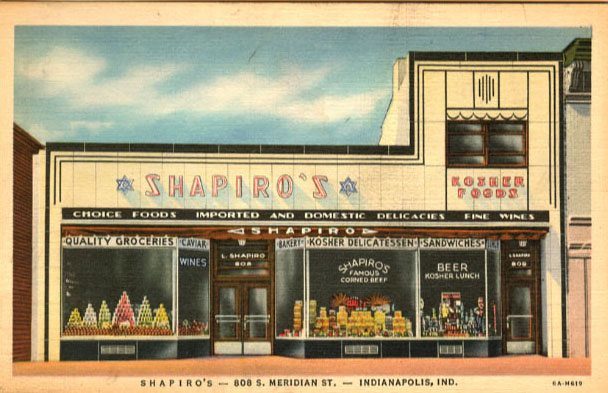
Should you Google it, you are likely to see that the dish was first served under the name “Beef Manhattan” in a now-defunct Indianapolis deli in the late 1940s, and shortly after its introduction, it became a Hoosier staple. But, nobody seems to know exactly which Indianapolis Deli was the first to put it on the menu. However, there are a few likely suspects. The natural choice would seem to be Shapiro’s. Their website states that restaurant namesakes, Louis and Rebecca Shapiro, arrived in the Hoosier state around 1900 after fleeing Russia due to anti-Semite persecution which included vandalism to their family grocery store in Odessa, Ukraine. They sold sugar and flour from a pushcart on the streets of Indianapolis for two years while saving up money to open their deli at Shapiro’s 808 South Meridian in 1905.

Shapiro's

So, Shapiro’s certainly fits the bill timewise, appearing on the scene a generation before the birth of the Beef Manhattan. Shapiro’s is the sentimental favorite for sure. And it has an Irvington tie-in too. In 1925, during the reign of terror by the Ku Klux Klan in Indiana, Shapiro’s thumbed their nose at Klansman/Governor (and Irvington resident) Ed Jackson by redecorating their storefront in an art-deco style dominated by a huge Star of David for all to see. But officially, “Shapiro’s Kosher Deli” didn’t open until 1945, three years after the dish was invented.

Likewise, the Hook’s Drug Company opened a new drugstore and soda fountain at the corner of 22nd and Meridian Streets on Feb. 17, 1940, to serve hungry Hoosiers. Hook’s restaurant featured a new stainless steel soda fountain perfectly designed to serve Beef Manhattans. A contemporary news article described Hook’s as having “year-round air conditioning” and as “the last word in efficiency and beauty. The floor behind the fountain is depressed to a level so that the customer is sitting in the same comfortable position as at his own dining table. The fountain is provided with a system of sterilization which makes it sanitary for refreshments and luncheons. The cooking equipment is electrical.” Hook’s advertised heavily in the 1940s but never mentioned the Beef Manhattan in those ads. The dish did not appear in Hook’s ads until the 1950s.

The best bet (at least of this reporter) is that the Beef Manhattan most likely appeared first as a menu selection somewhere on Illinois Street. There were at least three delis operating on Illinois Street in 1942, including Brownie’s Kosher Deli at 3826 N. Illinois, Fox Delicatessen at 19 S. Illinois, and Henry Dobrowitz & Sons Kosher Meats and Delicatessen at 1002 S. Illinois. Someday, somewhere, a better Circle-city researcher than me will pinpoint the exact location but until then, I’m content to let it remain a mystery.


Choosing instead to revisit Shapiro’s version of the “Hot Beef Manhattan” in my daydreams. It consists of 2 slices of white bread, not cheap squishy white bread, but good firm white bread with some heft to it, cut diagonally and spread out on the plate like a poker hand, a layer of handmade mashed potatoes binds them together, and forms the foundation for a generous portion of thin-sliced tender beef, brisket I’m guessing. The meat mound is topped with more mashed potatoes and covered with enough gravy to float a kayak. Not that better than bouillon gravy stuff that somehow smacks of chemicals to me, but rather, real gravy made from the constant stirring of the collected juices of meats roasting. To those haughty Food Network snobs, the Beef Manhattan looks like a failure pile on a sadness plate, but Hoosiers know it is delicious.

Typically, Indianapolis sees 29 days a year where the thermometer doesn’t rise above 32 °F, and for five months a year, we’re shivering below the fifties. So, knowing that, is it that hard to understand why the Beef Manhattan remains so popular in Indiana? I mean, no one eats a tenderloin to get warm. And while the Beef Manhattan most likely wasn’t born in Irvington, it did originate on the east side of Indianapolis and Irvingtonians can fairly claim to be among the first wave of devotees.

Baseball, candy, Pop Culture

The God Squad versus the Garbage Pail Kids.

Original Publish Date March 17, 2022

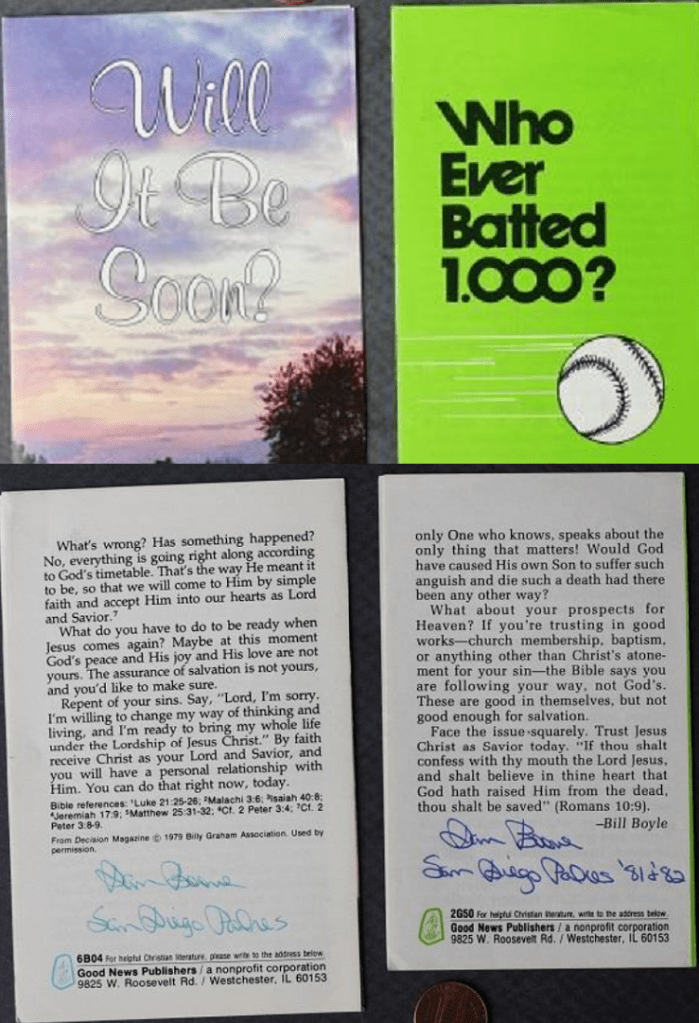
Looks like Major League baseball is on again. Right now, diehard hardball fans are on their knees thanking the baseball Gods that this Billionaires versus Millionaires battle is over and the season is set to start. I usually try and write a baseball article every Spring to kinda kick the season off and get my head on straight. But this year, since baseball fans are all “prayed out”, I thought it might be appropriate to write a story with a religious tint: The San Diego Padres God Squad versus Topps Garbage Pail Kids.
The Padres became a Major League franchise in 1969, but the namesake team was in existence long before then. The Padres’ first season came in 1936 in the Pacific Coast League after Hollywood Stars owner Bill Lane opted to move his team to San Diego. Lane built a stadium on the waterfront in downtown San Diego and gave birth to a new team that would carry its moniker to the Major Leagues and into the 21st century.
The “Padres” name is a tribute to the city’s history. It was the Franciscan Friars who founded the first Spanish colony in southern California. “Padre,” of course, is Spanish for “Father” (or “Friar”). Their mascot is the “Swinging Friar,” a sandal-clad Padre swinging a bat. They were known as the perennial cellar-dwelling team that often traded away their best players for little in return. That all changed in 1985. The 1986 defending National League champion Padres, led by manager Dick Williams, were coming off the best season in franchise history. The Padres’ gregarious owner, McDonald’s magnate Ray Kroc, had died the previous year.
The Topps Trading Card Company, Inc. (founded in 1938) was best known as the leading producer of American football, baseball, basketball, ice hockey, soccer, and other sports and non-sports-themed trading cards. After being privately held for several decades, Topps offered stock to the public for the first time in 1972. The company returned to private ownership in 1984 when it was acquired in a leveraged buyout led by Forstmann, Little & Company, a private equity firm specializing in leveraged buyouts.
Although both the Padres and Topps were hopeful about the upcoming season, things were about to come to a head between the two entities. The Padres were led by a group of young idealistic pitchers whose strong Christian faith would earn them the nickname of “The God Squad.” The pitchers were Eric Show, Mark Thurmond, and Dave Dravecky and together they comprised three-fifths of the Padres’ starting rotation. Their strong religious ideology, coupled with their even stronger anti-Communist leanings, made them the darlings of organized religion, the John Birch Society, and local media.
Press conferences in the Padres clubhouse often devolved into a discourse on political conservatism and a lecture on the evils of Capitalism. The Padres pitchers were proud members of the John Birch Society, a right-wing group that had become infamous in the ’60s by warning of communist infiltration of America. By the time of its resurgence in the Padres locker room, they were viewed as a fringe group and these Padres hurlers as fringees spouting political dogma.
Once these pitchers’ quotes were published in newspaper stories and columns, they began to creep across the entire country. The reaction was electric, like the first time Colin Kaepernick took a knee on the sideline. The most vocal of the “God Squad” Padres was 28-year-old Eric Show, the team leader in victories. In 1984 Show was Birching  (the society’s word for political evangelizing)  all the way through the Padres’ run to the World Series.

San Diego Padres Eric Show,


Show, a skinny pitcher with a prominent mustache, resented the stereotype that baseball players should be unthinking robot athletes. In the Birch Society’s New American magazine, he listed his hobbies as “philosophy, history, economics, astronomy, real estate, political affairs, business management — and, of course, God.” Show was a good pitcher (he is still the Padres’ all-time wins leader with 100), known for his fastball and his slider.

28-year-old Dave Dravecky went from the team’s best middle-reliever with 9 wins in 1984 to a 13-game winner in the starting rotation in 1985. Dravecky became a born-again Christian while playing Double-A ball in Amarillo, Texas in 1981. Padres players regarded him as an ideal teammate and moral conscience of the clubhouse . One teammate described Dravecky as having angel wings. Dravecky once told a reporter: “I think if Jesus Christ were in my shoes, he’d be one of the most aggressive pitchers around.”

Mark Thurmond, 27, a second-year pitcher out of Texas A&M, was definitely the quietest of the trio. Thurmond flip-flopped with Dravecky over those two seasons, winning 14 games as a starter in 1984 then moving to middle-reliever where he won 7 games the next year. In August of 1984, Thurmond, Show, and Dravecky were guests of honor at a giant “anti-sin” rally that took aim at abortion and homosexuality in San Diego. Most members of the Padres were content to ignore their teammates’ views on religion and politics. And in a baseball desert-like San Diego, fans didn’t seem to mind as long as they could hang on to that World Series appearance from the year before.
Instead, in 1985, baseball fans and players alike found a common nuisance to rally against. For that was the year that the Topps company came out with their Garbage Pail Kids cards. Cards is a misnomer though. Garbage Pail Kids was a series of sticker trading cards originally created to parody the wildly popular Cabbage Patch Kids dolls from the same era. Each sticker card featured a Garbage Pail Kid character having some comical abnormality, deformity, and/or suffering a terrible painful fate/death with a humorous wordplay character name such as Adam Bomb or Blasted Billy. Collectors will recall the card backs that featured puzzle pieces that together form comic murals, humorous licenses, awards, and comic strips.
Garbage Pail Kids characters, with names like Luke Puke, Slobby Robbie, Oozy Susie, Fat Matt, and Messy Tessie, were the talk of the schoolyard in the mid-1980s. During those first couple of years, Topps exercised restraint by holding back a few cards deemed too offensive to distribute. One reject was of a baby in a pickle jar; another, of a kid receiving Garbage Pail Kids cards like Moses receiving the 10 Commandments, another zonk featured a little girl and her dog standing near a pile of feces, and one, this writer’s personal favorite veto, depicted Abraham Lincoln with bullet holes through his top hat and a copy of a Slaybill in his hand.
The first Garbage Pail Kids were released in June 1985 and sold for 25 cents a pack. They were sold in slick-looking displays featuring the atomic detonation of Adam Bomb’s own head. Kids were hooked immediately. With a sense of humor straight out of Mad magazine, stores couldn’t keep the cards in stock. Garbage Pail Kids came out at a time when kids were buying up disgusting toys like D. Compose, the action figure that could open its rib cage to reveal entrails, Slime, the gelatinous green goop that got into carpets and never came out, He-Man Masters of the Universe Stinkor, who carried a very unpleasant smell. No doubt about it in the mid-1980s, gross toys were becoming big business.
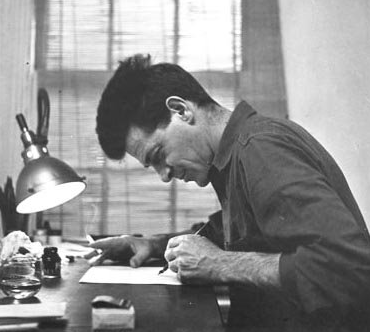
The series was the brainchild of Pulitzer Prize-winning New Yorker magazine cartoonist Art Spiegelman. Garbage Pail Kids cards were known variously as Bukimi Kun (Mr. Creepy) in Japan, The Garbage Gang in Australia and New Zealand, Les Crados (The Filthies) in France and Belgium, La Pandilla Basura (The Garbage Gang) in Spain, Basuritas (Trashlings) in Latin America, Gang do Lixo/Loucomania (Trash Gang/Crazymania) in Brazil, Sgorbions (Snotlings) in Italy, Havurat Ha-Zevel (The Garbage Gang) in Israel, and Die Total Kaputten Kids (The Totally Broken Kids) in Germany. The cards inspired an animated television series and a live-action movie, The Garbage Pail Kids Movie, in 1987.
The 1985 series included characters like Junkfood John, Valerie Vomit aka Barfin’ Barabra, Gory Laurie, Drillin’ Dylan the nose-picker, Stuck Chuck the Voodoo doll, Rundown Rhonda (flattened by a steam-roller), and Woody Alan a wooden doll be-scarred by saw marks, nail/screw holes and a woodpecker pecking a hole in his head. Because the characters looked like Cabbage Patch Kids, the company was sued and forced to forfeit the royalties and change the design. Garbage Pail Kids were banned in many schools; teachers cited them as class distractions. A group calling themselves Parents Against Sadistic Toys (or PAST) successfully lobbied several Toys ‘R Us locations to stop selling the cards in their stores.
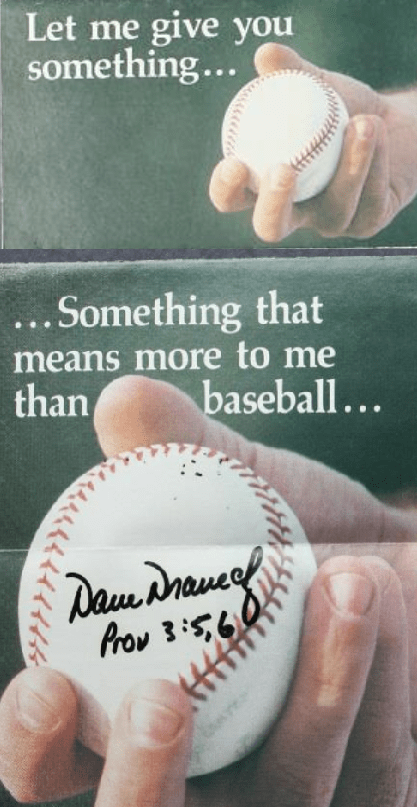
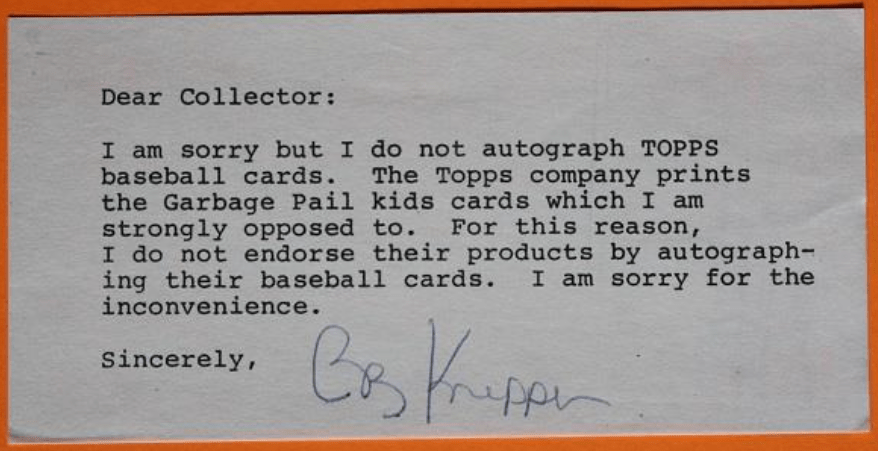
Enter the San Diego Padres “God Squad.” It was about this time that Padres players Show, Dravecky, and Thurmond stopped signing baseball cards. Not all cards mind you, only those cards produced by Topps. The trio continued to sign cards from fans made by the Fleer and Donruss card companies, but inquiries by mail were sent back unsigned with an explanatory note. “Dear Collector: I am sorry but I do not autograph Topps baseball cards. The Topps company prints the Garbage Pail kids cards which I am strongly opposed to. For this reason, I do not endorse their products by autographing their baseball cards. I am sorry for the inconvenience. Sincerely, Dave Dravecky.”

Note to fans from Houston Astros Bob Knepper.

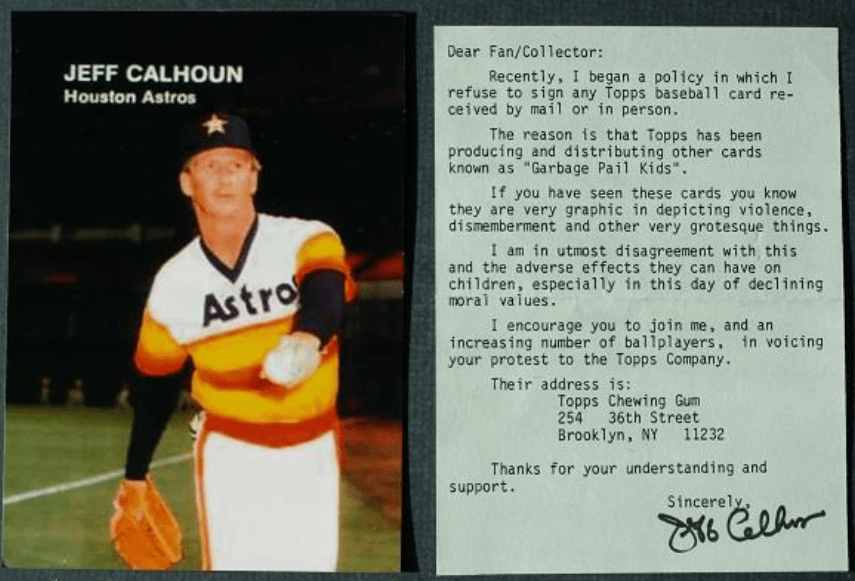
Soon other players around the league took the same posture. The San Diego Padres Dan Boone, NY Yankees Mike Armstrong, Baltimore Orioles Storm Davis, Houston Astros players Bob Knepper and Jeff Calhoun adopted the same practice. Calhoun’s note to fans was a little stronger in tone than Dravecky’s. “If you have seen these cards you know they are very graphic in depicting violence, dismemberment, and other very grotesque things. I am in utmost disagreement with this and the adverse effects they can have on children, especially in this day of declining moral values. I encourage you to join me, and an increasing number of ballplayers, in voicing your protest to the Topps company.” Calhoun ends his note with the mailing address of the Topps company.

By 1988, the handwriting was on the wall for Topps Garbage Pail Kids. That year Mexico banned all Garbage Pail Kids as part of an Export and Import Law outlawing all representations of minors “in a degrading or ridiculous manner, in attitudes of incitement to violence, self-destruction or in any other form of behavior antisocial.” After an adverse lawsuit from Original Appalachian Artworks (makers of Cabbage Patch Kids), and a movie that bombed, despite selling some 800 million cards, the fad seemed to have run its course. Topps released a total of 15 sets of Garbage Pail Kids. By the time a 16th set was nearly completed, they opted not to release it due to a lack of interest. In the ensuing years, Topps sporadically continued the production of Garbage Pail Kids in limited numbers.
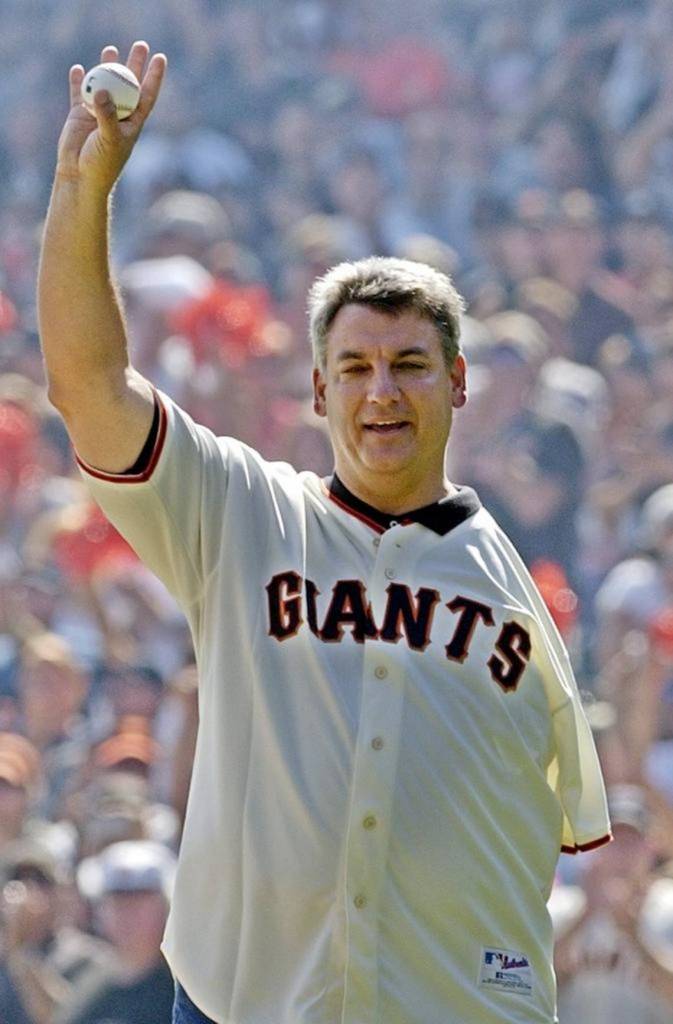
After Dave Dravecky was traded to the San Francisco Giants in 1987, he resurrected the God Squad with teammates Scott Garrelts, Atlee Hammaker, and Jeff Brantley. These players eschewed the hard-partying lifestyle of many of their teammates, preferring instead to hold Bible studies in their hotel rooms while on the road. After the God Squad vacated San Diego, reporters asked future Padres Hall of fame reliever Rich Gossage for his thoughts on the issue. Goose responded, “Heck, it’s just like being a Catholic, I guess.” After Gossage was traded from the Padres, he created a controversy of a different kind aimed at the owner of his former team by saying, “Joan Kroc is poisoning the world with her cheeseburgers”.
The Padres God Squad played together for parts of two seasons before splitting for other teams. Ironically, God Squad leader Eric Show became a victim of the moral decay he so strongly railed against. After his baseball career ended in 1991, he began using meth and cocaine. In 1994, Show died in a rehab center after ingesting a speedball (a mixture of cocaine with heroin or morphine taken intravenously or by nasal insufflation). In 1988, while pitching for the Giants, Dave Dravecky was diagnosed with a cancerous tumor in his left arm. A year later, he made a dramatic comeback, only to have his humerus bone shatter in his second start; his arm was later amputated, ending his career. Mark Thurmond pitched six more seasons in the bigs before retiring to Texas to sell insurance. Nowadays, the “God Squad” and “Garbage Pail Kids” seem tame compared with our net-driven society. But back in the mid-1980s, it was the talk of the town
.

Dave Dravecky after the loss of his arm.
Christmas, Pop Culture

A Jumping Jack for Christmas.

Original Publish Date December 8, 2022

It is December first in the Hunter household and I can now officially declare that we are ready for Christmas. My wife and I have spent the last week erecting, placing, fluffing, and decorating thirteen Christmas trees. Yes, thirteen. Our children are grown, our pets have crossed over the rainbow bridge, and we are easing into our roles as empty nesters. Rhonda has themes for her Christmas trees. There is a Disney tree, a Hershey tree, a Steinbach tree, an advertising tree, a teddy bear tree, a smores tree, a Pandora tree, and then there is mine, a history tree populated by ornaments honoring Abraham Lincoln, NASA, Gettysburg, the National Park Service, Civil War battlefields, and Scrooge, my favorite ghost story of all time.
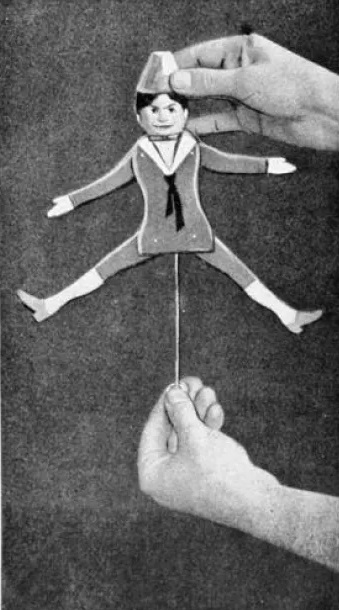
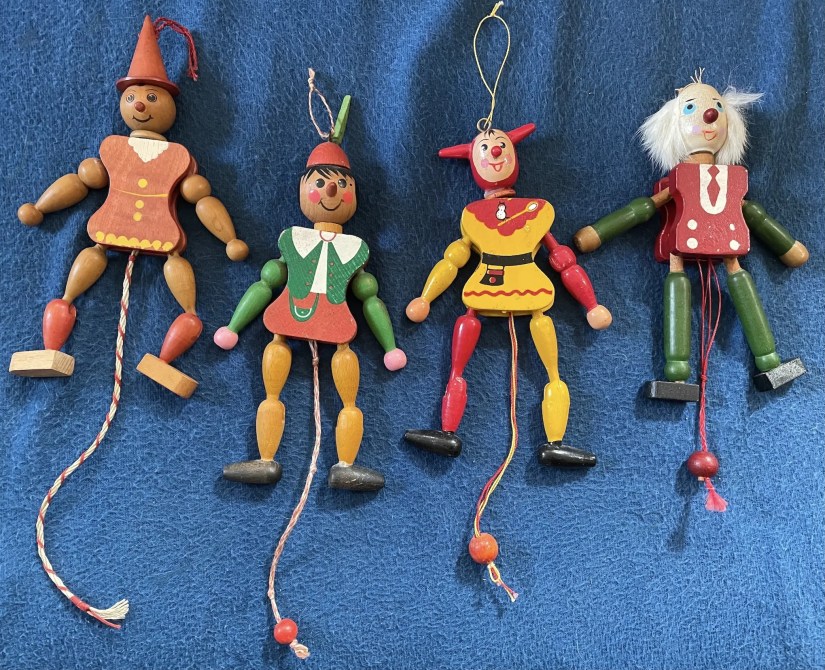
And then there are the two trees she has devoted solely to the traditional Austrian / German toy known as a “Hampelmann” (aka Hampelmaenner). In our house, we call them jumping jacks. They are multi-pieced wooden pull toys depicting traditional western European people, historical personalities, cartoon characters, or anthropomorphic figures that dance as the central string is pulled down. The jointed arms and legs of the toy hop, bounce, and jump wildly, bringing life to the previously inanimate figure. Generally, a jumping jack has three features: strings that are attached close to the pivot so that the physical principle of the lever can come into play; the parts are animated on a single plane only; and, finally, the manipulation depends on a single string to animate all the others.
Hampelmaenners are usually made entirely of wood and hand-painted in bright, shiny colors designed to catch the eye of all who behold them. In Germany, it is not unusual to see a whole cast of delightful Hampelmaenner hanging from the ceiling of a nursery, charming babies of all ages. The mechanical toy has been described as a cross between a puppet and a paper doll. The figure’s joints are interconnected by string ligaments to a central pull string hanging down from the bottom.

Traditional jumping jacks first became popular in Germany, England, and France, but similar mechanical toys date back to the Ancient Egyptians. Among the earliest-known examples are ivory dancing figures, made to spin by pulling their strings. Many of these toy artifacts were found at the archaeological site El-Lisht near the pyramids in Cairo.
In the mid-1700s French jumping jacks (known as “pantins”) proved especially popular among the nobility there. Unsurprisingly, versions were sold that satirized French Royalty and famous figures of the time. In 1747, French parliamentarian and author Edmond Barbier wrote that “one cannot go into any house without finding a pantin hanging by the mantelpiece”. In 1747, there was a fashion for carrying male and female jumping jacks around everywhere as an expression of good form. Some were sold for extraordinary prices. The Duchess of Chartres once gave 1,500 livres (pounds) for a figure painted by François Boucher. D’Alembert wrote in his memoirs: “Everywhere in the street, in the salons where they were hung from chimneys, at court, in the theatre, on the promenades, one could see, not only children and women but even the elderly, pull jumping jacks from their pocket and make them dance in the most serious manner in the world.”
In 1832, the “Hampelmann” character was created by German poet, architect, and theatre director Carl Balthasar Malß as a figure for the Frankfurt burlesque stage. Soon after, jumping jacks became known as Hampelmann in German-speaking countries. The mechanical toys were manufactured in the Erzgebirge (Ore) mountain range in Germany. The Ore Mountains are still known for the folk art created there.


In 1860s England, jumping jacks became known as “Quockerwodgers”. The term eventually became a negative appellation for a politician whose “strings” are pulled entirely by their own “puppetmaster”. The jumping jack maintained popularity in 19th-century Europe through popular imagery, much of it produced commercially by woodcut artists, printmakers, and lithographers like Pellerin in Épinal (France). Peddlers sold colored and stenciled prints that could be pasted onto cardboard, cut out, assembled using pins, and then fitted out with strings. Jumping jacks were often in the image of a Polichinelle (a vulgar “rough puppet” archetypal character of the masquerade) and sometimes of politicians, who were lampooned in this way.


Jumping jacks are also found in other parts of the world, including Africa, Canada, Portugal, and northeast Brazil where they are called mané gostoso. In Arizona and New Mexico, there is a Native American variant of the jumping jack among the Hopi tribe. Carved out of wood and crudely painted, these figures consist of a body-head element, with the lower part hollowed out and drilled through to allow for strings to attach the legs. At shoulder level, the arms are articulated in the same way. A double string passes through holes in the hands. It is crossed between the hands, and pulling on the loop in the string causes it to untwist, making the acrobat somersault.

Whether you call them jumping jacks, pantins, quockerwodgers, or Hampelmaenners, one thing is certain: they remain a timeless toy whose sturdy wooden construction and simple, yet resilient, mechanics assure its place as a legacy toy to be handed down from generation to generation. One of the toys occupying space on Rhonda’s tree is a particular favorite of mine.
Standing 7″ tall, 4″ wide, and 1″ thick and weighing in at 5.1 ounces, this antique wooden jumping jack looks to be over a century old. It depicts a pirate complete with eyepatch, peg leg, and bicorn hat festooned with an ominous-looking skull and crossbones. His mustached face is speckled with whiskers, his arms adorned by tattoos (an anchor on the right forearm, a heart with an arrow through it on the left), and his belt girds his body while holding a dagger against his midsection.
Most importantly, this pirate exhibits signs of having once survived a fire. An unintended fire that is. One look at this jumping jack and it becomes readily apparent that it has a history all its own. A story that will never be known but could easily be imagined. This little jumping jack betrays the hidden dangers of Christmas past.
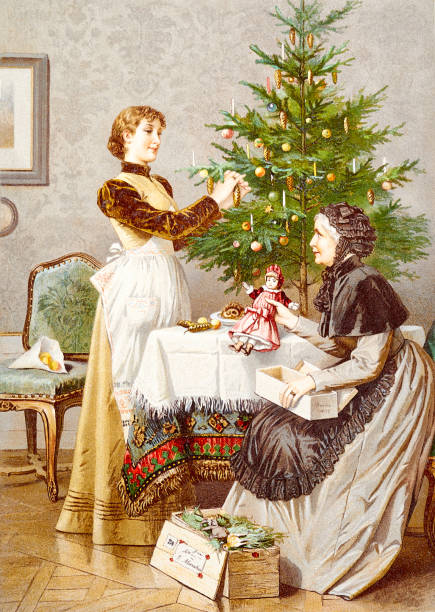
Few things are likely to inspire seasonal awe as a well-lit Christmas tree. The Christmas tree tradition is one that has developed over many centuries. The ancient pagan ritual revolved around the Yule log which developed into 16th-century Christians using the combination of evergreens and lights to symbolize life in the dead of winter. In the 17th century, German Christians combined the burning of the Yule log with the evergreen tree, adorning its branches with candles and the tradition of illuminated Christmas trees began.
The Christmas tree was introduced to America by the German-speaking people (Pennsylvania Dutch) who settled in Pennsylvania and North Carolina in the early 19th century. By the 1820s the Christmas tree had become popular and within three decades the first Christmas tree stands began to pop up in Gotham City, bringing trees from the Catskill Mountains to New York City’s Washington Market. In 1856, the Christmas tree was cemented as an American tradition when President Franklin Pierce had the first White House tree decorated for a group of Washington Sunday School children. Some Hoosiers contest that, claiming there was no White House Christmas tree until 1889 during the Presidency of Benjamin Harrison.

Illustration from 19th century

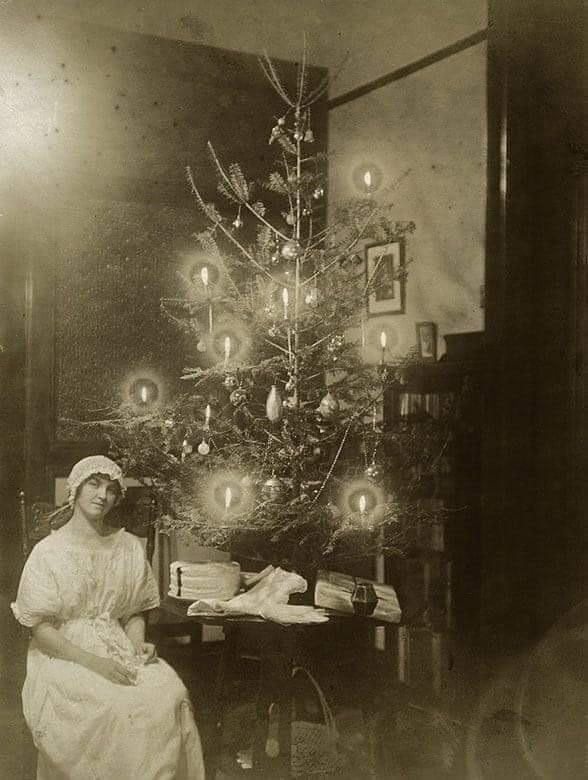
As more Christmas trees found their way into American homes, problems with the candle-lit design persisted. The first challenge was securing the candles to the branches. Some tried pinning the candles to the branches by sewing pins and needles, others lashed them to the branches with wire or string, and still more used the candle itself by melting the wax base to the branches. Unfortunately, none of these methods seemed to work and often, failed spectacularly.
In 1878, a clip-on candle holder was created to firmly attach a candle to any branch, but unless the trees were monitored constantly, the dried-out trees could quickly become fire hazards through contact with the hot metal. In those days, Christmas trees were only kept lit for about 30 minutes at a time, and even then, buckets of water and sand were always kept close at hand.
The Victorian Era is littered with newspaper accounts of Christmas conflagration, some serious, some minor, and all accidental of course. One such Christmas tree-related incident, this one from 1849, was documented in The Household Narrative, the almanac published by Charles Dickens between 1850 and 1855. In a section Dickens entitled ‘Accident and Disaster’, the creator of Ebenezer Scrooge reported: “There was a large party at the house, and during the night a “German Tree” about five feet high, with its branches covered with bon-bons and other Christmas presents, and lit with a number of small wax tapers, was introduced into the drawing-room for the younger members of the party. While leaning forward to take some toy from the tree, the light gauze overdress of one young lady, Miss Gordon, took fire and blazed up in a most alarming manner. One of the lads present, whose quickness and presence of mind were far superior to his years, with much thought and decision threw down the young lady, and folding her in a rug that was luckily close by, put out the flame before it had done any serious damage beyond scorching her arms severely.”Old newspapers reveal horrific Christmas candle fires. In 1885 a hospital in Chicago burned down because of candles on a Christmas Tree. One Oklahoma blaze killed 36 people. In 1905, a Kansas City man dressed as Santa Claus barely survived after he and his sack of toys caught fire. Legend claims that it was around this time that President Theodore Roosevelt banned Christmas trees from the White House. Although beautiful, a tree lit with dozens of candles was a major fire hazard. In fact, there were so many deaths and so much property loss attributed to Christmas tree fires that in 1908 insurance companies stopped paying out for fires started by candle-lit trees. Newspapers warned against the use of candles on trees and adopted the short-lived slogan “A House of Merriment is better than a House of Mourning.”

However, people continued to use candles to light Christmas Trees which led to more fires. In 1917, a New York City fire from Christmas Tree candles gave teenager and recent immigrant from Madrid, Spain Albert Sadacca an idea. His family sold novelty wicker bird cages that lit up. Albert suggested painting the bulbs bright colors like red and green and using the bird cage lights in long strings to wrap around the branches of Christmas trees. In the following years, he and his brothers formed the NOMA Electric Company, which became a very famous name in Christmas lights. NOMA dominated the Christmas light industry until the 1960s when competition from foreign imports drove them to bankruptcy.
At first, only the rich could afford these extravagant electric lights. Less than 10 percent of America had electricity when Christmas lights arrived. A Christmas tree with electric bulbs could cost as much as $300 in the early 1900s, the equivalent of around $10,000 today. The first strings of electric Christmas lights, known as “festoons,” debuted in 1903 and cost $12 each (slightly less than the average weekly wage at the time and equal to over $400 today). Within a decade (1914) the price of a string of “eight miniature colored glass lamps with screw-in wall socket” dropped to $1.75 (still over $50 today). By the 1920s, Christmas tree lights were even cheaper, and by the 1930s, electric lights were sweeping the market.

However, although candles were being replaced, electricity can also cause fires. One need look no further than White Christmas singer/actor Bing Crosby who lost his home to a fire caused by faulty Christmas light wiring in 1943. In conclusion: Christmas tree lights, whether candle-powered or electric, are all potentially dangerous. And this funny little Pirate jumping jack, with his telltale scorch marks and threadbare pull-string, is a mute witness to those dangers of yesteryear. His image is sure to set any fertile Yuletide imagination ablaze.