Health & Medicine, Hollywood, Indianapolis, Music, Pop Culture, Television

Warren Zevon — Accidentally Like a Martyr.

Publish Date September 12, 2024. This column first appeared in August 2013.

https://weeklyview.net/2024/09/12/warren-zevon-accidently-like-a-martyr-2/
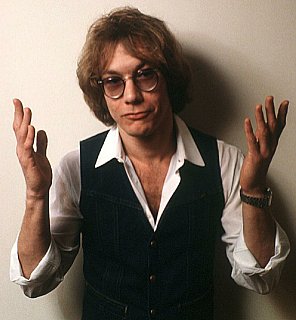
Warren Zevon 1992.

It’s hard to believe it’s been a decade since Warren Zevon died. If the name is not familiar to you, his songs might be: “Werewolves of London,” “Poor, Poor Pitiful Me,” or “Lawyers, Guns and Money” should ring a bell. Zevon was considered the rock star’s rock star, known for his songwriting talents in songs that showcased his quirky, sardonic wit in the dark humor of his ballads. Rock ‘n’ roll royalty like Jackson Browne, Bruce Springsteen, Bob Dylan, and Neil Young praised his talents and called him friend. Born in Chicago, Illinois, on January 24, 1947, he became the quintessential West Coast rocker, literally living the LA lifestyle right up until his death on September 7, 2003.

It’s easy to figure out why musicians thought Warren Zevon was so cool. From his earliest days, his personal pedigree made Warren unique and different. Zevon was the son of Beverly and William Zevon. His mother was from a Mormon family and his father was a Jewish immigrant from Russia whose original surname was “Zivotovsky.” William was a bookie who handled volume bets and dice games for notorious Los Angeles mobster Mickey Cohen. Known as Stumpy Zevon in Cohen’s employ, he was best man at Mickey’s first marriage and worked for him for years.
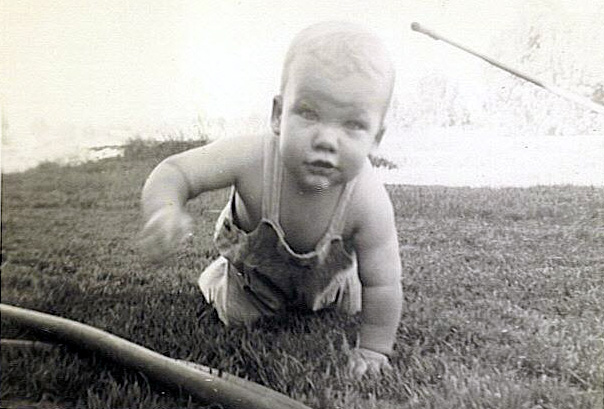
Warren William Zevon was born on January 24, 1947.

The family moved to Fresno, California when Warren was 13 years old. His British-born mother insisted that Warren take piano lessons. So Zevon started taking his lessons at the home of Igor Stravinsky, the  Russian-American composer, pianist and conductor widely considered to be one of the most important and influential composers of the 20th century. There, Warren briefly studied modern classical music, alongside future American conductor Robert Craft. Zevon’s parents divorced when he was 16 years old and he soon quit high school and moved from Los Angeles to New York to become a folk singer.
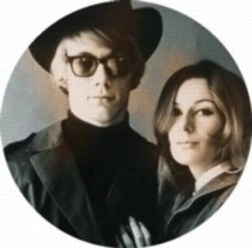
Lyme & cybelle

Zevon got his first taste of success with the song “Follow Me” as the male component of a musical coed duo called Lyme & Cybelle. He left the duo, citing artistic differences, and spent time as a session musician and jingle composer. He wrote several songs for the Turtles and another early composition (“She Quit Me”) was included in the soundtrack for the film Midnight Cowboy (1969). Zevon’s first attempt at a solo album, Wanted Dead or Alive (1969), was well-received but did not sell well. Zevon’s second effort, Leaf in the Wind, went unreleased.
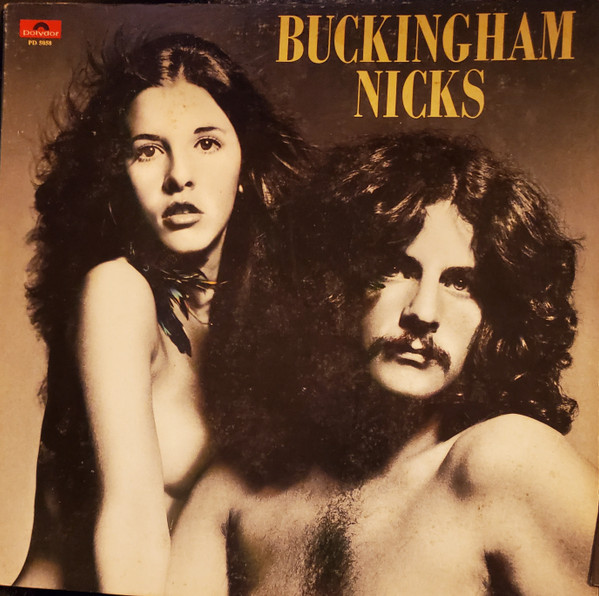
During the early 1970s, Zevon led the touring band for the Everly Brothers, serving as both keyboard player and band leader/musical coordinator. In the latter role Zevon became the first to recognize the talents of guitar player Lindsey Buckingham by hiring him for the band. It was during his time with the Everlys that Lindsey and girlfriend Stevie Nicks left to join Fleetwood Mac. Warren Zevon was a roommate of the famous duo in a Fairfax district apartment in Los Angeles at the time (September 1975). Zevon would remain friends with both for the rest of his life maintaining neutrality during the tumultuous breakups of both the Everly Brothers and Buckingham-Nicks.
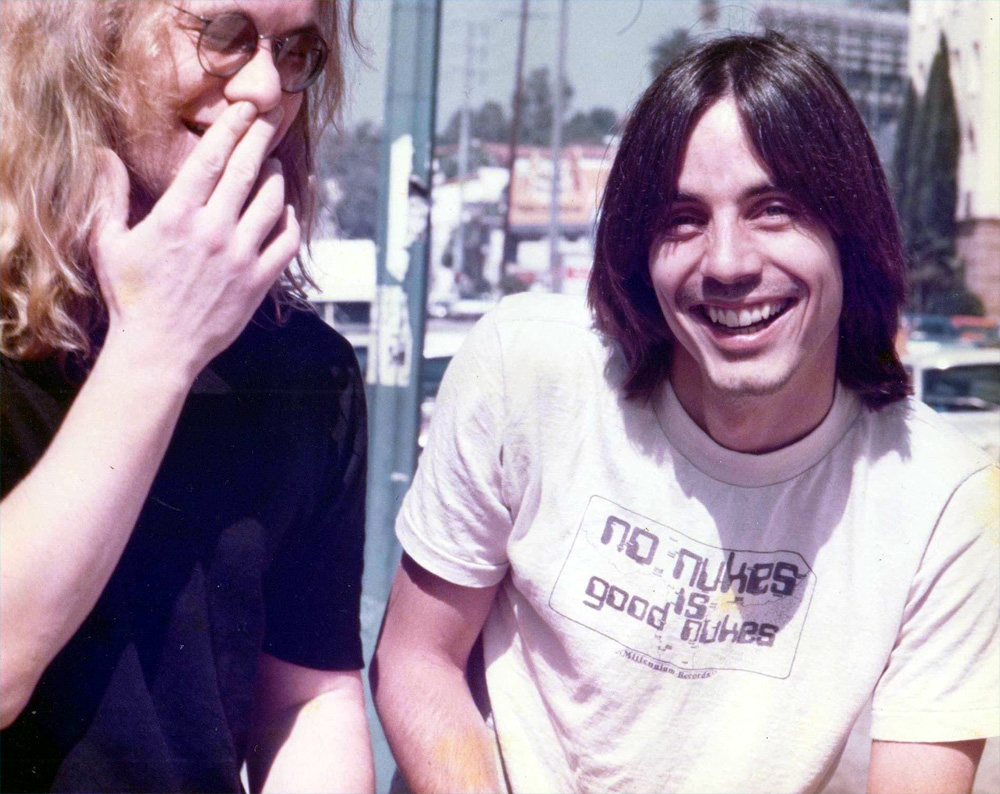
Warren Zevon & Jackson Browne.

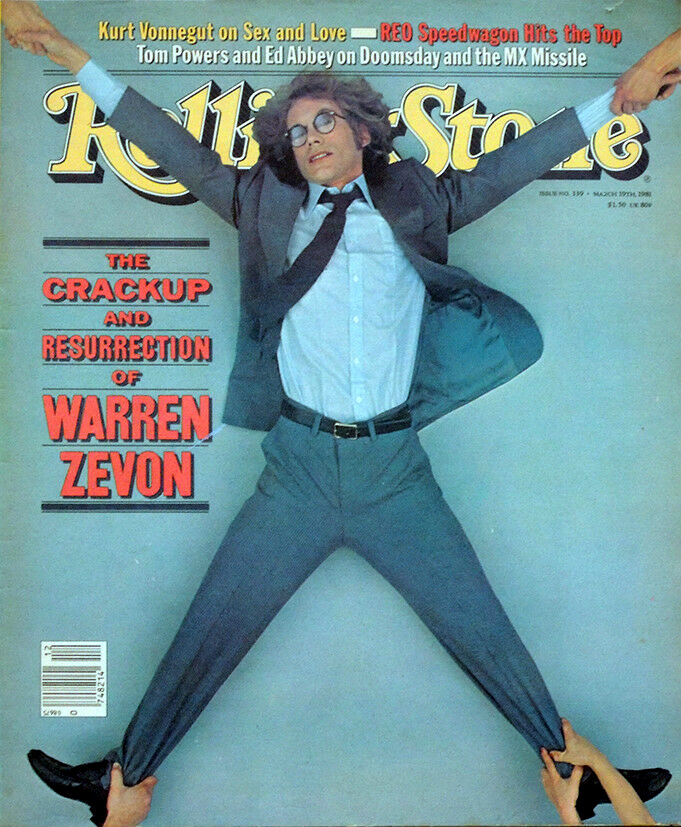
In late 1975, Zevon collaborated with Jackson Browne, who produced and promoted Zevon’s self-titled major-label debut in 1976. Contributors to this album included Nicks, Buckingham, Mick Fleetwood, John McVie, members of the Eagles, Carl Wilson, Linda Ronstadt, and Bonnie Raitt. This first album, although only a modest commercial success, was later recognized by Rolling Stone magazine as a masterpiece. Although  Zevon shared a grounding in earlier folk and country influences with his LA peers, this album brought Zevon to the forefront as a much darker and more ironic songwriter than other leading figures of the era’s L.A.-based singer-songwriter movement. Rolling Stone placed Zevon alongside Neil Young, Jackson Browne, and Bruce Springsteen as one of the four most important new artists to emerge in the decade of the 1970s.
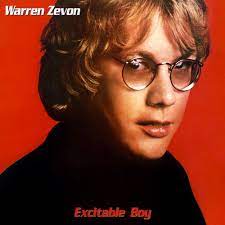
In 1978, Zevon released Excitable Boy to critical acclaim and popular success. This album received heavy FM airplay mostly through the release of the single “Werewolves of London,” featuring Fleetwood Mac’s Mick Fleetwood on bass and John McVie on drums. The song is considered a classic and has been covered by artists ranging from the Grateful Dead to Bob Dylan to comedian Adam Sandler. The song has become a Halloween season staple. For all you trivia buffs out there, The Chinese restaurant mentioned in the song (Lee Ho Fook) is a real location situated on Gerrard Street in London’s Chinatown.
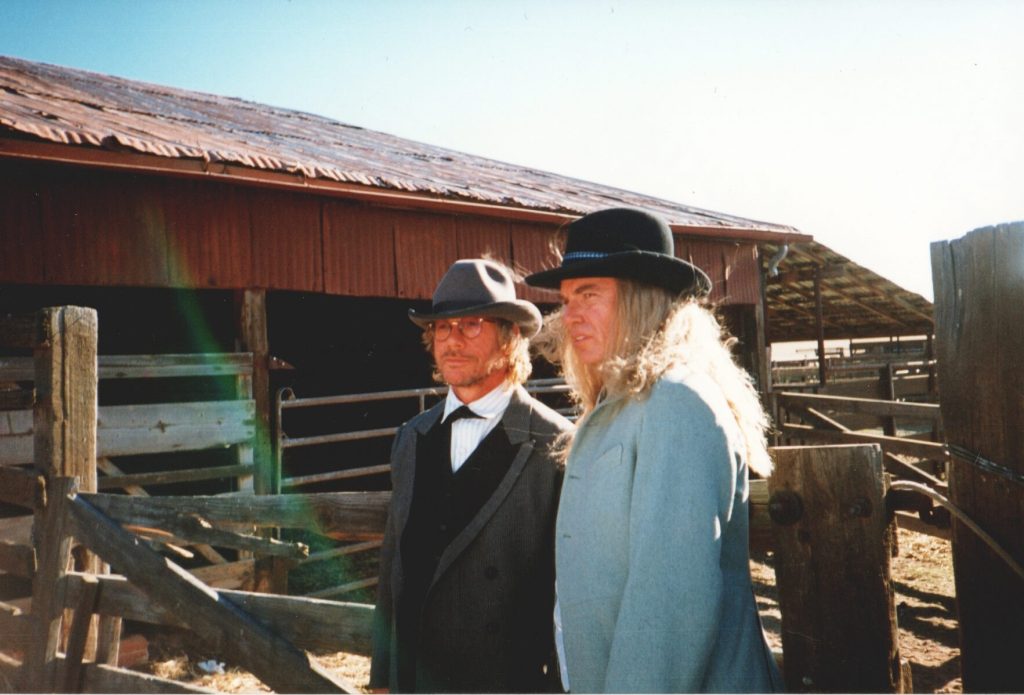
Zevon & Billy Bob Thornton on set of Dwight Yoakam’s 2000 western “South of Heaven, West of Hell”.

Although Zevon never again achieved popular acclaim, he continued to be recognized as an artist’s artist, releasing nine more albums over the next 25 years. It was during that quarter-century that Zevon lapsed in and out of the throes of excess, obsession, and addiction. To say that Warren Zevon suffered from excessive compulsion disorder would be a severe understatement. Warren had a continuing battle with drug addiction and alcoholism and was also a sex addict obsessed with the color gray and personal fame, or lack thereof. During this time, he and actor Billy Bob Thornton formed a close friendship galvanized by a shared obsessive-compulsive disorder and the fact they were neighbors living in the same apartment building.
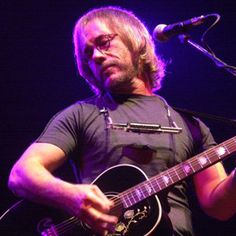
Warren Zevon is his gray t-shirt.

One of Zevon’s compulsions was collecting identical Calvin Klein T-shirts. Like everything else in his life (his car, his couch, his carpeting and wall paint), the T-shirts were gray. One story relates how Warren insisted upon traveling to every department store carrying Calvin Klein T-shirts while touring on the road. If the store carried Warren’s prized Gray Calvin Klein t-shirt, Warren obsessively purchased every one of them and stowed them in the tour bus. When asked why, Warren replied that the new ones were being made in China and that those still on the shelf had been made in the USA and were “sure to become collector’s items and go up in value.” When he died at age 56, thousands of gray Calvin Klein t-shirts were found in his LA apartment; unopened in their original packaging.
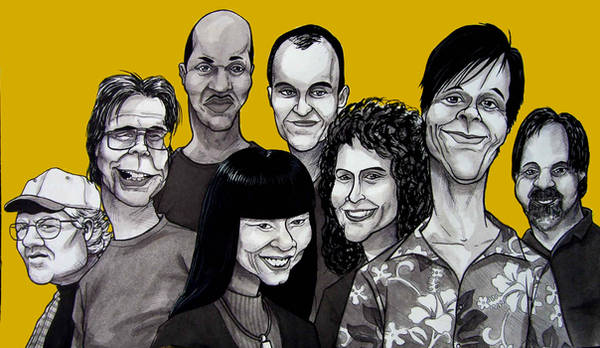
From left to right: Roy Blount Jr., Stephen King, James McBride, Amy Tan, Kathy Kamin Goldmark , Dave Barry, Matt Groening

A voracious reader, Zevon was friendly with several well-known writers who also collaborated on his songwriting during this period, including gonzo author Hunter S. Thompson, Carl Hiaasen, Mitch Albom, Norman Mailer, and Maya Angelou. Zevon served as musical coordinator and occasional guitarist for an ad-hoc rock music group called the Rock Bottom Remainders, a collection of writers performing rock and roll standards at book fairs and other events. This group included Stephen King, Dave Barry, Matt Groening, and Amy Tan, among other popular writers.

Zevon cemented his superstar status by appearing in various TV shows and movies during his career, most often playing himself. Zevon played himself on two episodes of Suddenly Susan in 1999 along with singer/actor Rick Springfield. Warren also appeared as himself on the Larry Sanders Show on HBO, alongside actor John Ritter as talk show guests in the same episode. Ironically, Zevon and Ritter would die within four days of each other.
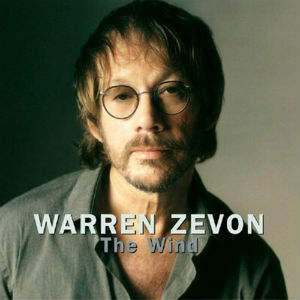
Although highly intelligent, well-read, and obsessive-compulsive in every way, Zevon had a lifelong phobia of doctors. Shortly before playing at the Edmonton Folk Music Festival in 2002, he started feeling dizzy and developed a chronic cough. After a period of suffering with pain and shortness of breath, while on a visit to his dentist, Zevon was ordered under threat of kidnapping to see a physician. A lifelong smoker, he was subsequently diagnosed with inoperable peritoneal mesothelioma (cancer of the abdominal lining commonly associated with asbestos exposure). Refusing treatments he believed might incapacitate him, Zevon instead began recording his final album, The Wind, which includes guest appearances by close friends Bruce Springsteen, Don Henley, Jackson Browne, Timothy B. Schmidt, Joe Walsh, David Lindley, Billy Bob Thornton, Emmylou Harris, Tom Petty, and Dwight Yoakam, among others.
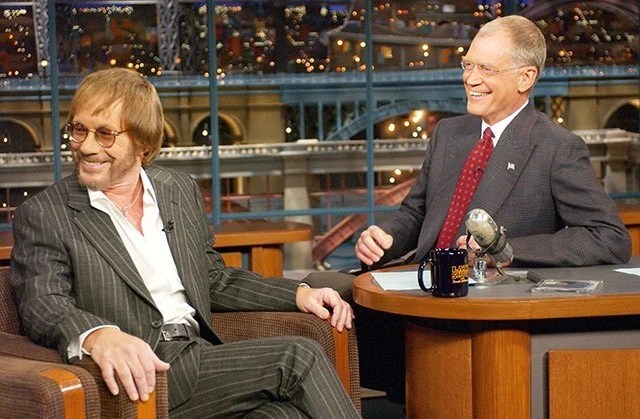
On October 30, 2002, Zevon was featured on the Late Show with David Letterman as the only guest for the entire hour. The band played “I’ll Sleep When I’m Dead” as his introduction. Zevon performed several songs and spoke at length about his illness. Zevon was a frequent guest and occasional substitute bandleader on Letterman’s television shows since Late Night was first broadcast in 1982. He noted, “I might have made a tactical error in not going to a physician for 20 years.” It was during this broadcast that, when asked by Letterman if he knew something more about life and death now, he first offered his oft-quoted insight on dying: “Enjoy every sandwich.” He  took time to thank Letterman for his years of support, calling him “the best friend my music’s ever had.” For his final song of the evening, and his final public performance, Zevon performed “Roland the Headless Thompson Gunner” at Letterman’s request. In the green room after the show, Zevon presented Letterman with the guitar that he always used on the show, with a single request: “Here, I want you to have this, take good care of it.”

Zevon was given only a few months to live after that fall of 2002 diagnosis; however, he lived to see the birth of twin grandsons in June 2003 and the release of The Wind on August 26, 2003. The album reached number 12 on the U.S. charts, Zevon’s highest placement since Excitable Boy. When his diagnosis became public, Zevon told the media that he just hoped to live long enough to see the next James Bond movie, a goal he accomplished. The Wind was certified gold in December 2003, just weeks after Zevon’s death, and Warren received five Grammy nominations, winning two posthumous Grammys, the first of his career.
I have a brief personal connection to Warren Zevon. I interviewed him in the pre-holiday winter of 1988 after a concert at the Vogue in Broad Ripple. Zevon was touring with a patchwork band that included Timothy B. Schmidt of the Eagles. He performed all of his expected hits along with a couple covers. I specifically remember an unforgettable version of the Tom Jones standard “What’s New Pussycat?” as well as the Eagles former bass player Schmidt performing his signature song, “I Can’t Tell You Why.”

See if you can pick out Warren Zevon in this clip from the movie…Don’t blink!

After the show, I was led through the music hall to the back of the Vogue and told to wait. Meantime, out walked Schmidt and the rest of the band. Soon, Warren Zevon emerged. With his long blonde curls and John Lennon glasses, he looked more like a professor than a rock star. He maintained a constant smile throughout our session. Luckily, I struck a positive nerve by remarking that I had recognized him from his brief appearance during the closing credits of the 1988 Kevin Bacon film, She’s Having a Baby. Zevon leapt from his perch atop the bumper of his band’s equipment truck and began calling to his bandmates, “Hey guys, he saw me in the movie! I told you I was in it.” His band mates shrugged, but Warren thanked me for confirming what had until then, been just a rumor. As I recall, Zevon’s only word spoken in the film came in the naming the baby segment when he offered the name “Igor”.
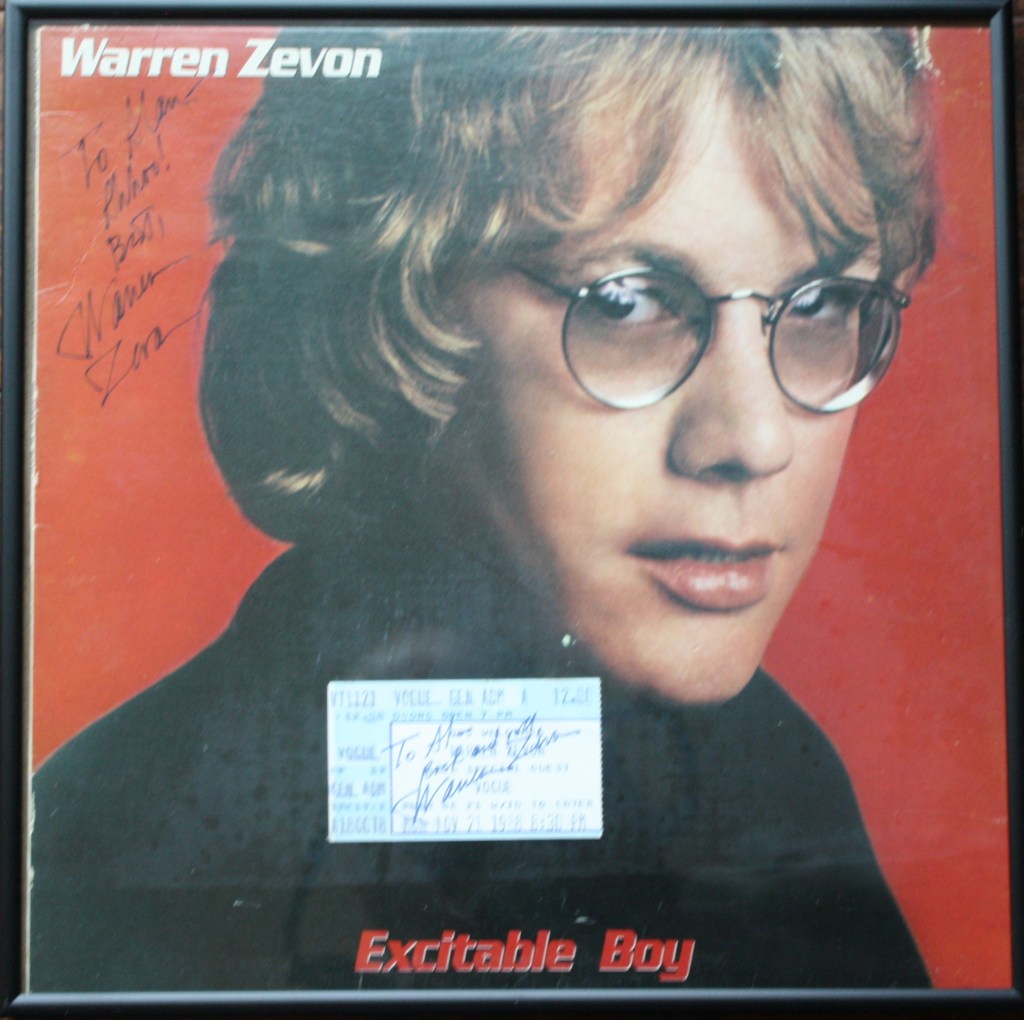
My autographed copy of Excitable Boy from that Vogue encounter.

I really can’t remember much of the encounter after that. I do remember Warren signed my copy of Excitable Boy and the interior paper cassette tape insert for A Quiet Normal Life, relics I still have. But the rest is a blur. There is a more important residual incident connected to that incident. That was the same night that my future wife Rhonda agreed to go out on our first date. Yep, I took her to a Sam Kinison comedy show at the old Indianapolis Tennis Center. Romantic huh?
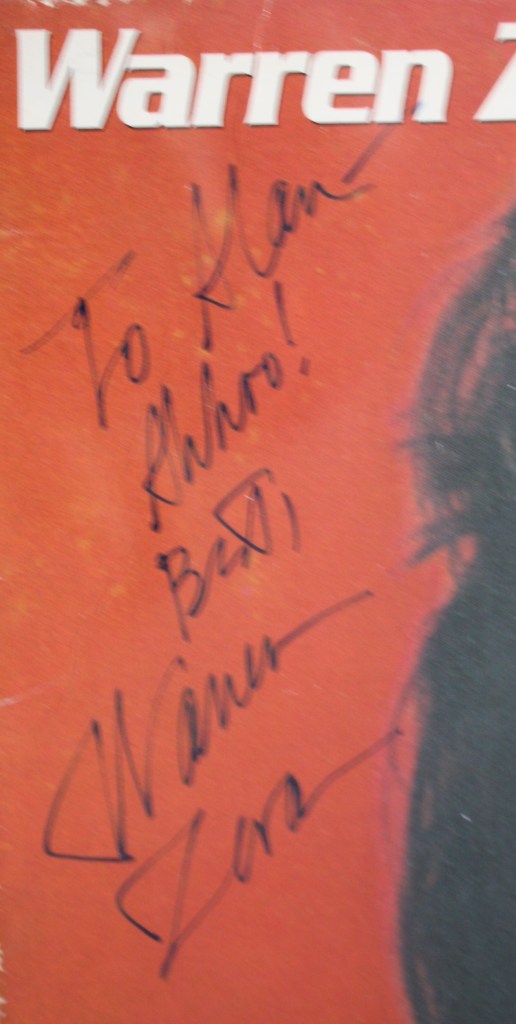
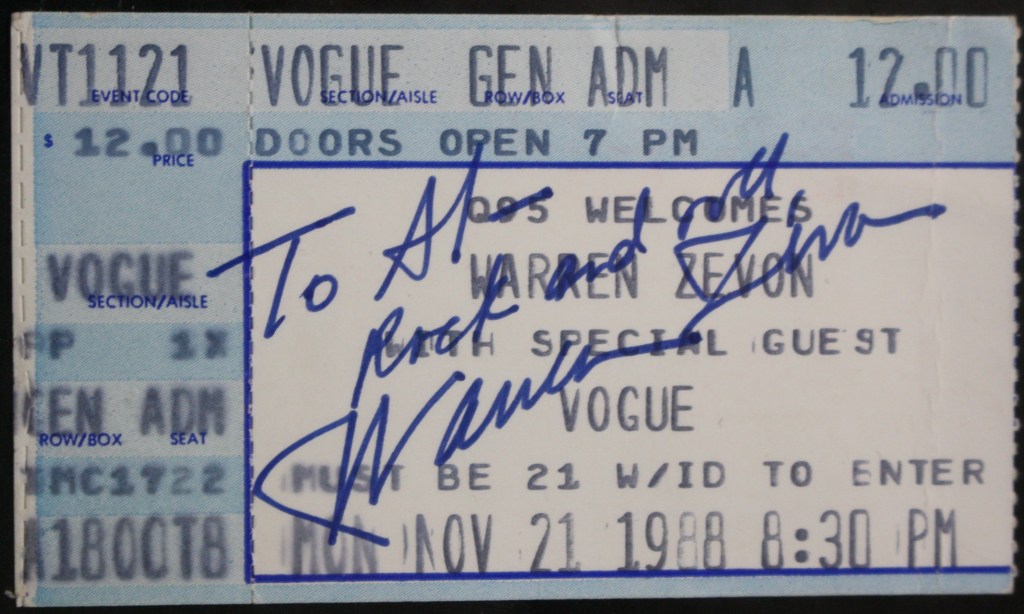
Signature closeup.
My signed ticket stub from that night.

Two decades after that first date, Rhonda bought me the book, I’ll Sleep When I’m Dead: The Dirty Life and Times of Warren Zevon written and compiled by Zevon’s ex-wife Crystal Zevon (published in 2007 by Ecco Books). The book tore down every “nice guy” image I ever had of Warren Zevon, telling his life story through interviews with those who knew him. I walked away from it thinking “Wow, they had a real hard time finding anything nice to say about this guy.” The book has been described as being “notable for its unvarnished portrayal of Zevon.” Only later did I realize the book was written this way at Warren Zevon’s own request. As the words to Zevon’s song “It ain’t that pretty at all” bounce around in my head, I must say that I am not surprised or disappointed.
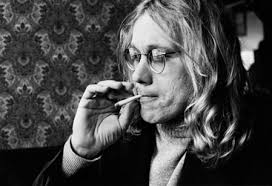
Warren Zevon still smokin’.

Indianapolis, Music, Pop Culture

“PeeWee the Piccolo” born in Indianapolis

Original publish date January 30, 2025.

https://weeklyview.net/2025/01/30/peewee-the-piccolo-born-in-indianapolis/

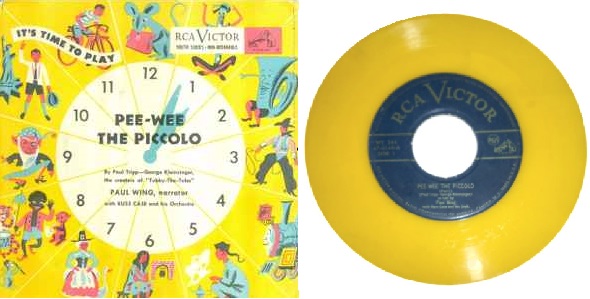
Okay all you Irvington audiophiles, quick, name the first song ever released on a 45 record. If you said it was the “Texarkana Baby” by Eddy Arnold, pat yourself on the back for remembering that lost gem. But you’re wrong. The first commercial 45rpm was “PeeWee the Piccolo” by Russ Case and his Orchestra on RCA Victor records (#47-0146 and b-side #47-0147) released on Feb. 1st, 1949. And it was born right here on the eastside of Indianapolis. Ironically Russ Case (1912-1964), a trumpet player and bandleader, led a few jazz and light music orchestras, including Eddy Arnold’s.

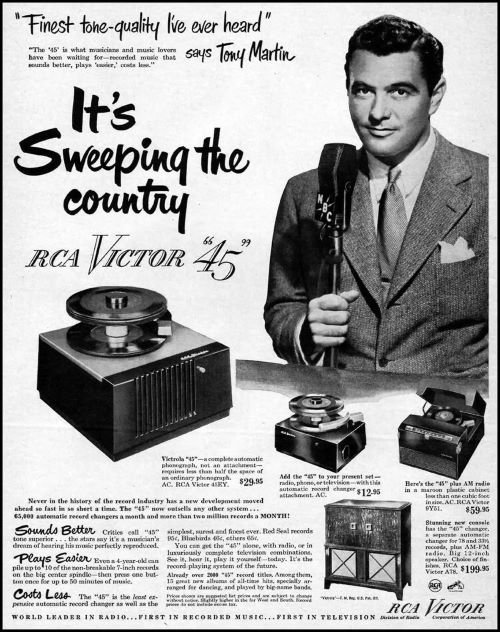
RCA Magazine ad for their new 45 record player.

RCA introduced the 45 rpm single to the world on December 7th, 1948 (seven years to the day after the Pearl Harbor attack), at the Sherman Avenue plant in Indianapolis. The confusion among the public comes from the fact that RCA released several commercial 45 singles on March 31st, 1949, including Arnold’s “Texarkana Baby.” The irony is that while “Pee Wee the Piccolo” is largely forgotten, “Texarkana Baby” topped Billboard’s country chart for three weeks, reaching #18 on the Best Selling Popular Retail Records chart. And it was the b-side of the single for Arnold’s standard hit “Bouquet of Roses.”

Pee Wee The Piccolo record.
Paul Wing.

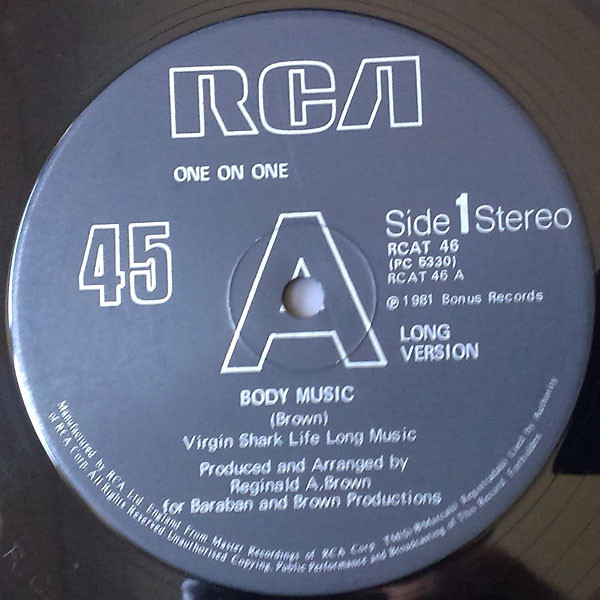
“Pee-Wee The Piccolo” is a children’s record narrated by Academy Award winner Paul Wing (1892-1957). Wing was captured by the Japanese in the Philippines in 1942, survived the Bataan Death March, and was held prisoner in the World War II prisoner of war camp portrayed in the 2005 film The Great Raid. “Pee-Wee The Piccolo” was written by Paul Tripp and George Kleinsinger, who also created Tubby The Tuba. RCA color-coded their singles, pressing children’s 45-rpm records on yellow vinyl, popular music on black vinyl, country on green vinyl, classical on red vinyl, instrumental music on blue vinyl, and R&B and gospel on orange vinyl, international music was light blue, and musicals midnight blue. Eventually, they would all be pressed in black.

The 45′s tie-in to World War II is not without purpose. The 45 rpm single can trace its earliest origins to that conflict. Like many fields, World War II put a major dent in the music industry. Most homefront record and phonograph makers retooled their factories for the manufacture of products for the war effort. A wartime blockade stopped the import of shellac, the material from which .78 records were made. With that supply cut off, manufacturers scrambled for a new material to make records. The industry had been experimenting with synthetic PVC (polyvinyl chloride) since the 1930s, but it was more expensive to produce than shellac. CBS (Columbia Broadcasting System) engineers realized that PVC’s material properties meant that a vinyl record could be made thinner and stronger than a shellac record and that the grooves could be cut thinner, allowing more music to fit on each side. More music meant more money, outweighing the cost of the more expensive material. So the 33 rpm format was born.

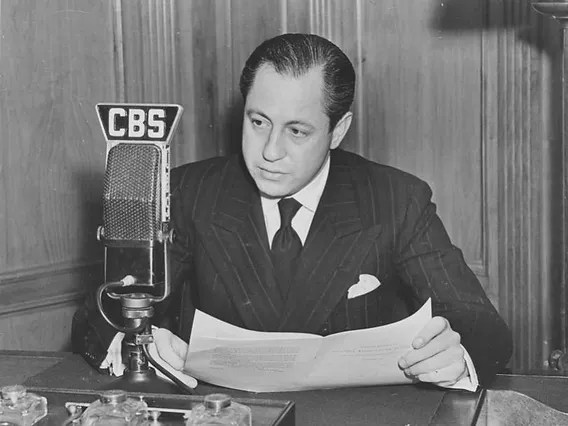
William Paley of CBS.

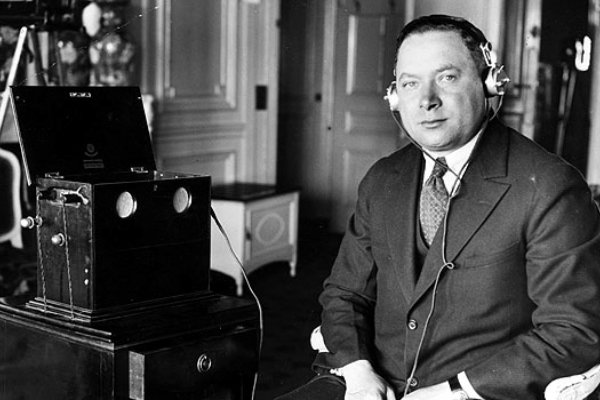
Around September of ’48, William Paley at CBS offered RCA’s David Sarnoff the rights to the 33 technology at no cost. Paley thought that sharing his secret with his chief competitor would help boost the 33 format record sales for both companies. Sarnoff adroitly thanked Paley and told him he would think about it. Paley hadn’t realized that RCA had already perfected it’s secret 45 project. Paley was shocked and CBS miffed when RCA rolled out the 45 a few months later. The 45 rpm record became RCA’s answer to Columbia’s 33 1/3 rpm long-playing disc. The two systems directly competed with each other to replace 78 rpm records, bewildering consumers, and causing a drop in record sales. In media the period from ’49 to ’51 was referred to as “the war of the speeds” years.

David Sarnoff of RCA-Victor.

A myth persists that the single’s designation of “45″ came from subtracting Columbia’s new 33 rpm format speed from the old 78: equaling 45. According to “Vinyl: A History of the Analogue Record” by Richard Osborne, “the speed was based upon calculations made by the best balance between playing time and signal-to-noise ratio given by a groove density of 3 minutes per radial inch, and also that the innermost groove of a disc should be half the diameter of the outermost groove. Given the 6 7/8 diameter of the record it was found that 45 rpm provided the desired playing time within the designated bandwidth.” No wonder the 78 minus 33 urban legend remains so persistent — it’s easier to remember.

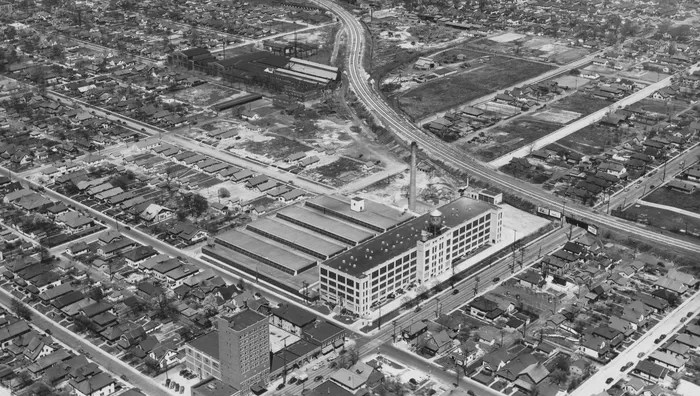
The sprawling campus of RCA at Michigan & Sherman.

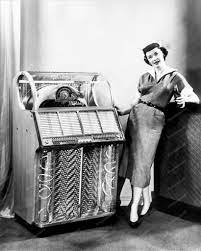
Engineers from both companies had been working on a replacement for the 78 since before the war, experimenting with speeds ranging from 30 to 50 RPM. They were balancing the playing time (5 minutes – the same as a 12″ 78) with disk diameter, to get the most compact format that would have a surface velocity and lack of “pinch effect” so that the sound would not degrade as the stylus reached the inner diameter. In fact, for all but the outer inch or so, the 45 has a higher surface velocity than a 12″ LP. Both Edison and Victor had tried to introduce long-playing records in the 1920s and failed. In 1949 Capitol and Decca started issuing the new LP format, and RCA relented and issued its first LP in January 1950. While the LP could comfortably hold a large selection of music on each side, the 45, with its large central hole, worked better on automatic changers (like jukeboxes).

Wurlitzer Jukebox Model 1700.

However the 45 rpm was gaining in popularity, and Columbia issued its first 45s in February 1951. Soon, other record companies saw the mass consumer appeal the new format allowed. By 1954 more than 200 million 45s had been sold. According to the New York Times, the peak year for the seven-inch single was 1974, when 250 million were sold. In the end, the war of the speeds ended without a decisive winner. By the early Eighties, the 45 began dying a slow, humiliating death. The number of jukeboxes in the country declined, stadium rock fans increasingly gravitated toward albums, and the cassette format (and even the wasteful “cassette single” and “mini-CD” format) began overtaking vinyl 45s.

The RCA label.

Like most people my age, I fell in love with 45s in the early 1970s. Mostly because they fit into my limited allowance budget as a kid. That was, until about 1975 when the companies all raised the price of a 45 from $0.99 to $1.49! Then I had to be choosy. In most cases, the best song from an album would make it onto the 45 and, if I was lucky, there could be a b-side that was an unexpected bonus, sometimes a song not even on the album. Bingo, bonus track! Many of those 45s were made right here in Indianapolis. What’s more, back in the late 1960s/early 1970s it seemed like everyone in my family worked at that RCA plant on Sherman Ave. I remember that Mom and Dad got to pick out 2 or 3 free records every quarter, so I had a leg up on the competition (my sisters).

The R.C.A. manufacturing plant located at 3324 East Michigan Street. Courtesy Indiana State Library Photograph Collections.

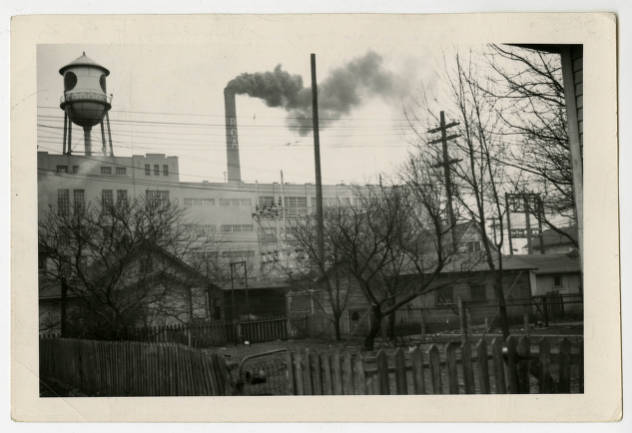
Built in the 1920s, the RCA plant on the near eastside was a massive site that, during its heyday in the 1950s, employed over 8,000 people. RCA featured over 20 buildings on its 50-acre site, and aside from making records, the plant produced electronics like televisions, stereos, and radios. A gradual decline in business began in the 1970s, eventually leading to RCA being sold to GE in 1986. The Sherman Ave. plant operated for a few more years before closing in 1995. A heavy machinery and storage company operated in a small portion of the plant and a recycling nonprofit operated in the main building along Michigan St. for years before leaving in 2012. The RCA Sherman Plant was ultimately demolished in late January/early February 2017.

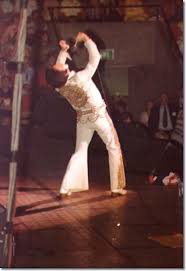
Elvis Presley on stage at Market Square Arena 8.30pm June 26, 1977.

Elvis Presley and Dolly Parton were two of the bigger names that toured the plant, although many bands and artists made the trip to the RCA plant to see how their records were made. One of the more famous records made there was Elvis Presley’s “Moody Blue” record, a special presentation copy of which was given to Elvis during his final concert at Market Square Arena on June 26, 1977. As it happens, the stage where Elvis stood when he received that gold record now rests inside the Irving Theatre.

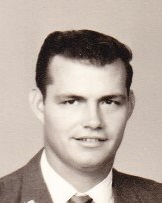
Robert E. Hunter. My dad.

Dad, who was trained as a draftsman in the service, worked in the relatively new computer processing area at the Sherman Ave. facility. He would take a sweater or zipper-pull fleece with him every day regardless of the season because back then the computers ran pretty hot and the room was kept so cold. They let employees smoke back in those days in the computer room and Dad smoked a pipe. I remember he worked with IBM cards back then. Those punchcards sorted all the info for the RCA record club members, which numbered in the hundreds of thousands.

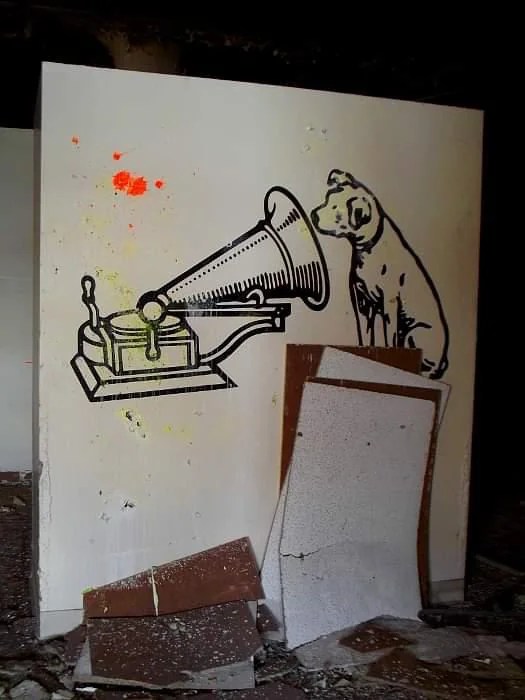
Nipper “His Master’s Voice”in wrecked interior of the abandoned RCA factory.

My father lived for many years across the street from the plant on Sherman Avenue. He relished the idea of walking to and from work and eating lunches at home. The plant was an awesome sight to see when it was still standing. After it was vacated in the early 2000s, it became the largest abandoned place in Indy (besides the coke plant). There were some reminders of its former life throughout the building (the RCA dog could still be found in the main building) and leftover remnants from the other companies that operated there.

During those derelict years, I may (or may not) have surreptitiously ventured into the empty building. It was pretty sketch back then and you were likely to run into other people, mostly vagrants, scrappers, and other neighborhood kids. The attics had catwalks from which one could access various rooms/areas throughout the building via small doors. I remember one door in the back of the men’s room. There were muddy raccoon footprints all over the bathroom tile floors: proof that the critters would come in at night to drink out of the toilets. Some rooms were lined with meshed steel Faraday cages. The level beneath the main offices had large mounds of dirt reportedly earmarked for a BMX track that never materialized. When Thomson Consumer Electronics moved north to their new sparkling aqua green and blue paneled building at I-465 and Meridian, RCA left a ton of office furniture and obsolete audio-visual equipment behind in the building.

The RCA plant coming down.

My dad worked in that building for over three decades. He died in 1997 just months away from retirement. My grandparents and my mother worked there in the 1960s. And it was in that lobby where I saw my stepmother Bonnie for the last time in 1997 before she left for Tennessee never to return. Back then RCA had a notary public in residence just inside the door. Tens of thousands of Hoosiers worked at that plant during its 75-year lifespan. Now, the vacant space is just a large patch of overgrown weeds and wild grass. My dad’s house sits empty, the doors and windows boarded up. Life goes on, the world still turns, and soon anyone with memories of working in that plant will fade away as well. Like phone booths, inspection stations, long-distance operators, and most of the products made in that building, RCA is just a distant memory now.

Music, Pop Culture, Television

Parky’s Place.

Original publish date August 31, 2023. https://weeklyview.net/2023/08/31/parkys-place/

Parky’s Place Harry Einstein (1904-1958)

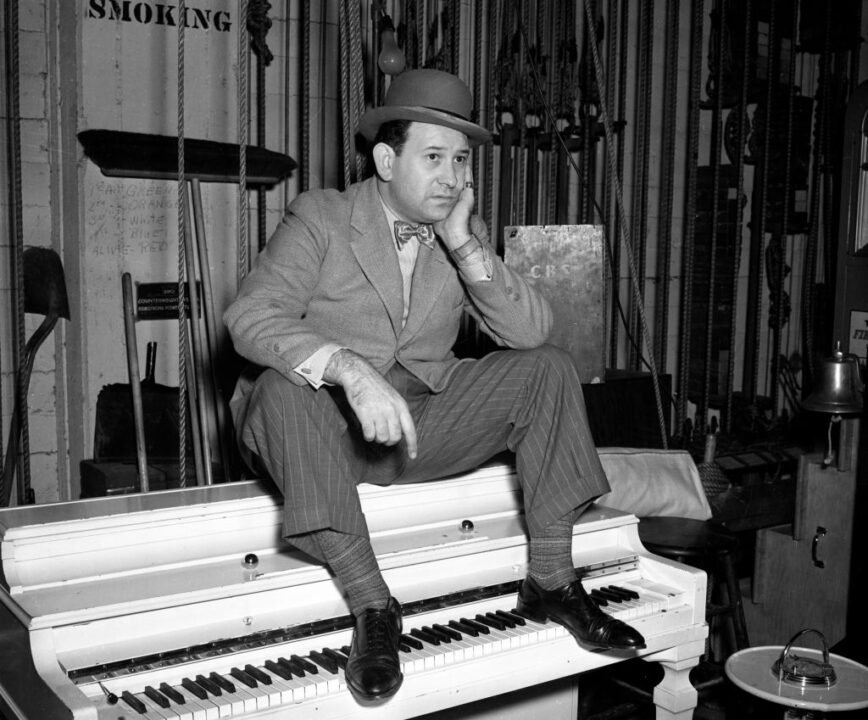
Recently I wrote an article about a couple of photos of Dick the Bruiser I found along the route of the World’s Longest Yardsale that stretches from Alabama to Michigan. I have an affinity for old photos (and old paper in general) and always linger a little bit longer when I see them for sale on a dealer’s table. This particular spot was inside a tent near the Alvin C. York General Store and Visitor’s Center in Pall Mall, Tennessee. I bought several old promo photos of Country Music Stars (termed “Hillbilly Music” back in the day) from the 1940-50s Era. Hank Williams, Sr., Roy Acuff, Red Foley, and a few more. Also among them was an old promo still dated 1947 from the Mutual Broadcasting System for a radio show called “Meet Me At Parky’s” that aired on Sunday nights from 9:00 to 9:30. Since I can remember trivial minutia better than I can family birthdays, I knew the backstory and bought the photo.

CBS Radio comic personality Harry Einstein portrays his character Parkyakarkus on The Al Jolson Show. Image dated February 1, 1938. Hollywood, CA. (Photo by CBS via Getty Images)

I seriously doubt anyone reading this column was around in 1947 to listen to this radio show, so, I’ll share what I know about it. The photo pictures comedian Harry Einstein posed leaning atop a kitchen counter with a cigar in his hand, a wink in his eye, and a chef’s hat with the name “Parky’s” on the front. Einstein, better known by the stage names Nick Parkyakarkus or Harry Parke, was an American comedian, writer, and character actor whose specialty was Greek dialect comedy. A natural humorist, Einstein came to comedy quite by accident. Born on May 6, 1904, in Boston, Mass., to a Jewish mother from Russia and a Jewish pawnbroker father from Austria, Einstein first worked as a newspaper reporter but eventually moved into advertising for Boston’s Hearst Newspapers.

On nights and weekends, Harry enjoyed performing comedy routines for friends at parties, in nightclubs, taverns, and Bar / Bat Mitzvahs. In 1924, he became a fan favorite on radio as “The Bad Boy from a Good Home”, doing comedy skits on Boston station WEEI (AM). He also worked in advertising for the Taylor Furniture Company, where he managed their radio department. He branched out in the advertising business and was soon doing the same for another larger Boston furniture store named Summerfield’s. Boston bandleader Joe Rines, a close friend at the station, tried to convince Harry to become a full-time comedian, but Harry was making a good living as advertising manager for three Boston Furniture stores. Einstein relented and began appearing on Rines’ radio program in his spare time. It was here that Harry created the Pigeon-English-speaking pseudo-Greek character of Nick Parkyakarkus for a skit on Rines’ radio show. At the time, no one blinked an eye at the “political correctness” of ethnic humor, and Harry always brought down the house.

Listeners loved the Parkyakarkus character and it didn’t take long for the national networks to take notice. Einstein got his big break nationally when he was hired as a performer on Eddie Cantor’s radio show in 1934. That led to a part-time gig on the Al Jolson show. Cantor and Jolson were big Hollywood names and soon Tinseltown came calling. In 1936 he appeared alongside Cantor in Strike Me Pink (co-starring Ethel Merman and William Frawley aka Fred Mertz from “I Love Lucy”), the next year he appeared in The Life of the Party and New Faces of 1937 (alongside Milton Berle). While filming the latter, he met his second wife, actress Thelma Leeds. From 1936 to 1945, Harry appeared as his Parkyakarkas character in eleven films. Einstein’s character name became so inextricably linked to him that, in the 1930s, Harry attempted to change his name legally to Parkyakarkus; the judge denied the request (although his star at 1708 Vine Street on the Hollywood Walk of Fame bears his character’s name instead of his own.)

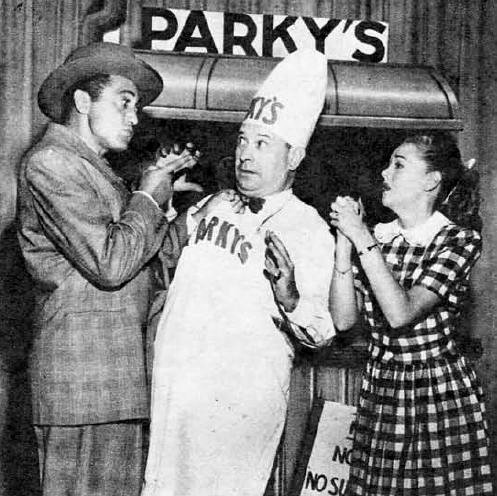
Einstein as Parky between Sheldon Leonard and Betty Rhodes in 1948.

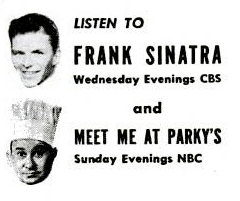
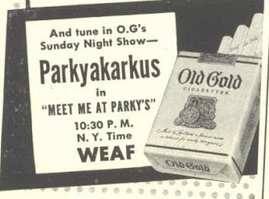
In June of 1945, Einstein began a radio show of his own called Meet Me at Parky’s, The show featured Einstein as Greek restaurant owner Nick Parkyakarkus. A typical show opened with a couple of short sketches, a short comic monologue by Parkyakarkus (sure to have the live audience rolling in the aisles), followed by the show’s singer (Betty Jane Rhodes) showing up to help Parkyakarkus with that week’s problem. Einstein wrote the scripts himself and the show co-starred Sheldon Leonard, fresh off his role as Nick the Bartender in It’s a Wonderful Life the year before. In the 1960s, Leonard would trade his actor’s chair for a producer’s megaphone creating shows like The Andy Griffith Show, Gomer Pyle U.S.M.C., The Dick Van Dyke Show, and I Spy. Parky’s Place ran for two seasons on NBC before moving to the Mutual Broadcasting System in 1947 for its third and final season, ending in November of 1948. After the show ended, Einstein became a highly sought-after guest and emcee on the Borscht Belt (or Yiddish Alps as some comics called it) in New York’s Catskill Mountains and the Friars’ Club of New York City.

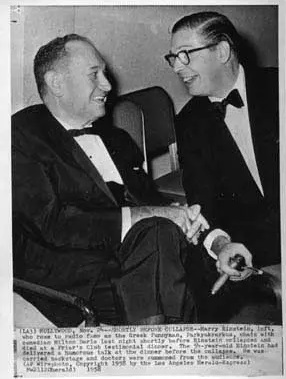
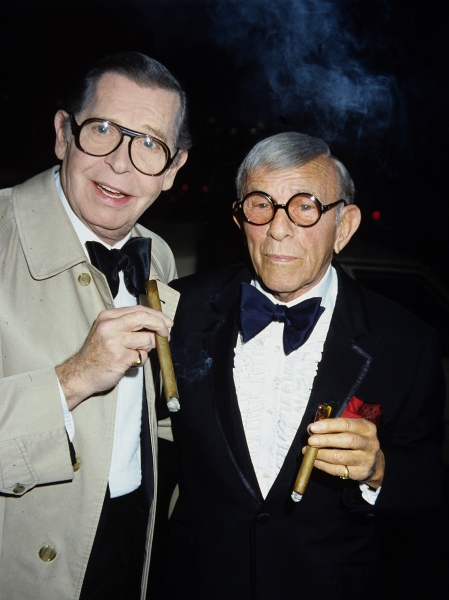
Harry Einstein and Milton Berle.

On Sunday, November 23, 1958, almost exactly a decade after his radio show ended, Einstein was a featured performer on the dais as the Friars Club inducted two new members: Lucille Ball and Desi Arnaz, the ultra-famous wife-and-husband team that created I Love Lucy. These events were traditional “Roasts” where comics, performers, friends, and fellow club members would tease and cajole the honorees, sometimes mercilessly. 1200 people packed the International Ballroom at the Beverly Hilton Hotel for the $200-a-plate testimonial dinner to Television’s original power couple. Art Linkletter was the emcee and alongside Einstein on the dais were Dean Martin, Sammy Davis, Jr., George Burns, Danny Thomas, George Murphy, and Milton Berle. Harry was the second to last speaker, and everyone agreed that his toast was the funniest of the night. Harry butchered the couple’s names, calling them Danny Arnaz and Lucille Bowles, while poking fun at Desi’s immigration status and the Friars’ Club’s “strict” rules of eligibility which included “many prominent businessmen, several fine judges, and quite a few defendants.” His routine lasted 10 minutes and, according to Milton Berle, “closed with a standing ovation.”

Harry Einstein.

Einstein took his seat next to Milton Berle as Emcee Linkletter wiped tears of laughter from his eyes and exclaimed, “Every time he finishes, I ask myself, why isn’t he on the air in a prime time?” To which, Harry turned to Berle and said, “Yeah, how come?” According to Linkletter, those were Harry’s last words before he slumped over, put his head on Milton Berle’s lap, and shut his eyes. Everyone thought it was part of the routine. Berle shouted “Is there a doctor in the house?” but the crowd thought it was a humorous ad-lib; part of the show. Harry’s wife, Thelma, who was seated to the left of comic Ed Wynn, knew immediately what was wrong and rushed to the stage. She fumbled in her husband’s pocket for a bottle of nitroglycerin pills, designed to increase the blood flow through his coronary arteries. But Harry’s teeth were clenched tight and she could not get the pill into his mouth. Ed Wynn, whose distinctive high-pitched giggly voice created Walt Disney’s mad-hatter, created an unintentionally humorous aside by repeatedly calling out, “Is there a doctor in the house?” as Einstein lay helpless on the floor of the platform. Luckily, the event had been a charity benefit for local hospitals and several physicians were in attendance.

Milton Berle & George Burns.

Berle and George Burns assisted others by carrying Einstein backstage, where five physicians worked to revive him. Amazingly, one of the physicians pulled a pocketknife out of his pocket, sterilized it quickly, then sliced open Einstein’s chest and within seconds was holding Harry’s heart in his hands, massaging it in an attempt to get it beating again. One report states that another doctor yanked an electrical cord from a nearby lamp and placed the live ends against the exposed heart as an improvised defibrillator. The combined effort of five doctors working tirelessly, literally taking turns massaging the heart, brought Einstein back to life, but only temporarily. It was later determined that Harry Einstein had literally died on stage. EMTs arrived and worked backstage to save Einstein’s life.

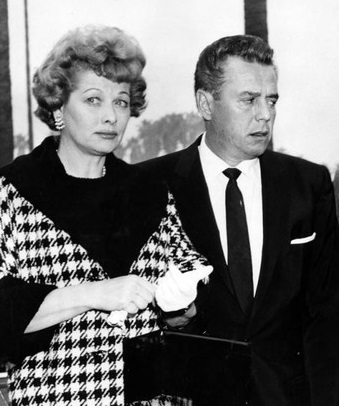
Lucille Ball & Desi Arnaz at Einstein’s Funeral.

On the other side of the curtain, the show was going on. Well, sort of anyway. George Burns sang a song from his Vaudeville days and assured the guests that “Parky will be alright.” But somehow, everyone on the dais knew better. Berle called to crooner Tony Martin, imploring him to sing a song. Martin began to sing the song There’s No Tomorrow. Obviously, that didn’t help. Desi and Lucy were to be the evening’s closing speakers. When Desi took the podium, his face was ashen and his countenance grim. Lucille Ball then came to the microphone and managed only, “I can say nothing,” through tears. Desi spoke into the microphone in almost a whisper, “This is one of the moments that Lucy and I have waited a lifetime for, but it’s meaningless. They say the show must go on. But why must it? Let’s close the show now by praying for this wonderful man backstage who made the world laugh.” Arnaz took the award from Linkletter and shoved it into his pocket. Sammy Davis, Jr. was supposed to sing a closing song, but he was so emotional that he could not do it.

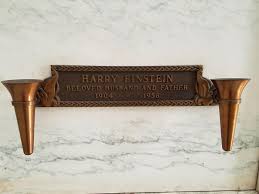
Harry Einstein’s Grave Home of Peace mausoleum L.A.

Despite two hours of continuous resuscitation attempts, Harry Einstein was pronounced dead at 1:20 a.m. on November 24. He was 54 years old. Einstein’s funeral service was attended by 300 mourners. George Jessel delivered the eulogy. Einstein is buried not far from the Three Stooges Moe & Curly Howard, Louis B. Mayer, & the Warner Brothers in the Home of Peace mausoleum, the first and oldest Jewish cemetery in Los Angeles.

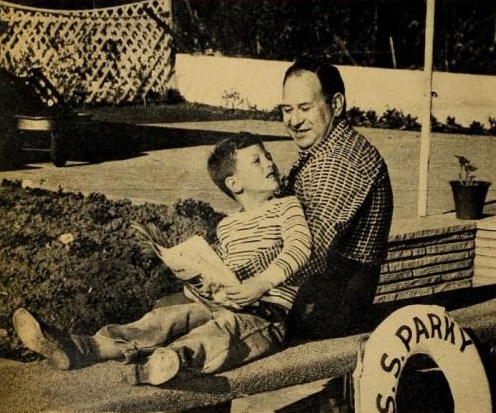
Harry Einstein and son.

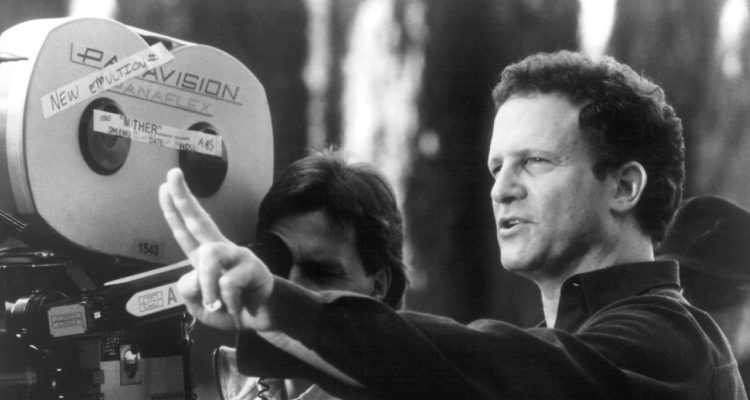
Harry Einstein was the father of four sons: Albert, Bob, Charles, and Clifford Einstein. That’s comedians Albert Brooks and Bob Einstein. Albert is best known as an Academy Award-nominated actor (Broadcast News-1987) but also for Taxi Driver (1976), Private Benjamin (1980), and Unfaithfully Yours (1984). He has written and directed several comedy films; Modern Romance (1981), Lost in America (1985), and Defending Your Life (1991). His voice acting credits include Marlin in Finding Nemo (2003) and Finding Dory (2016), Tiberius in The Secret Life of Pets (2016), and several one-time characters in The Simpsons.

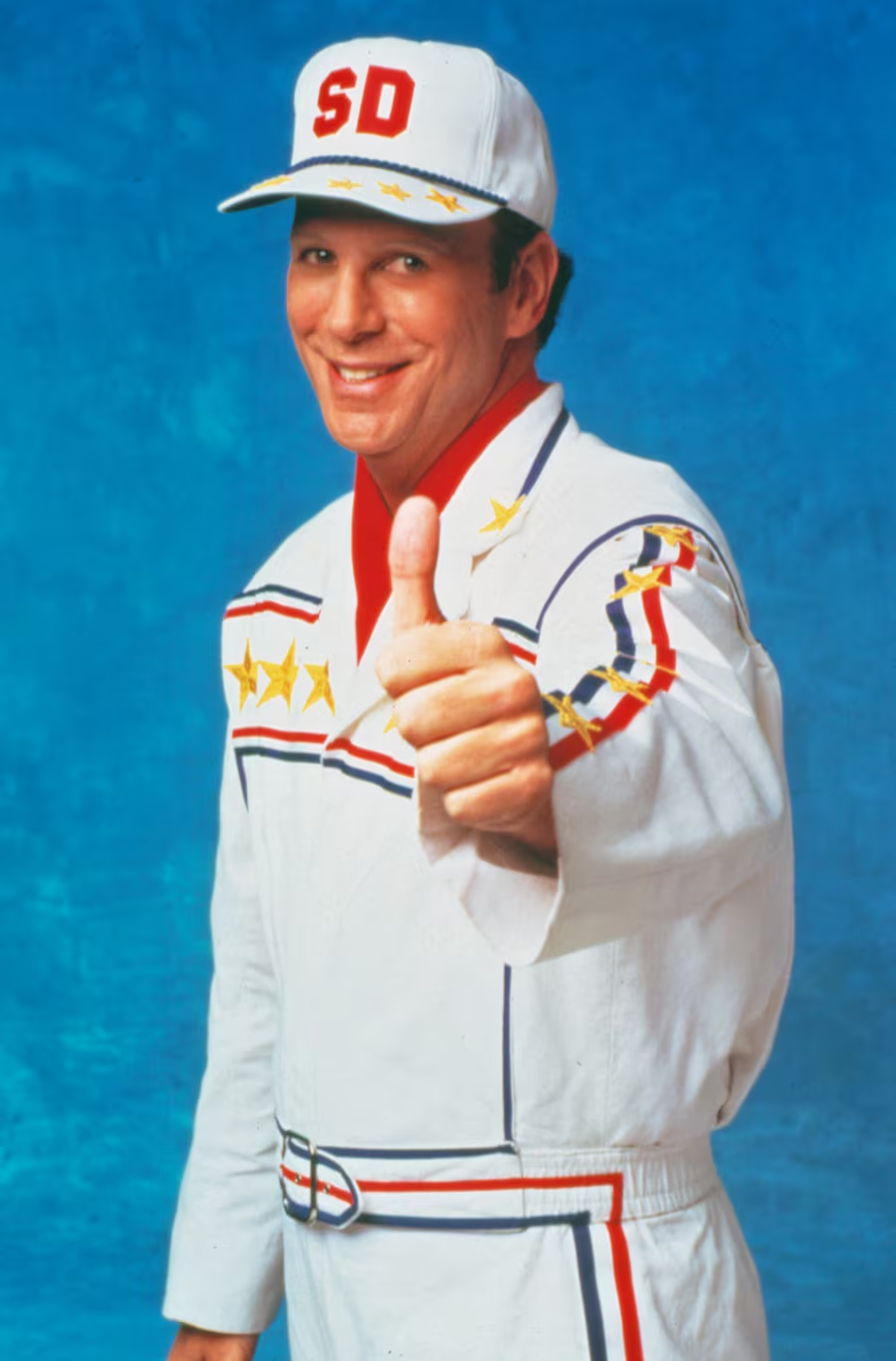
Bob Einstein as Super Dave Osborne.

Bob Einstein is best remembered for the character he created known as Super Dave Osborne, a satirical stuntman character who repeatedly survived deadly stunts. But he was also known for his roles as Marty Funkhouser in Curb Your Enthusiasm, and Larry Middleman on Arrested Development. Einstein got his start as a writer for several television variety shows, including The Smothers Brothers Comedy Hour and The Sonny & Cher Comedy Hour for which he won two Emmy Awards (he was nominated four other times). He also won a CableACE Award for acting as Super Dave, along with five other nominations.

Actor / Director Albert Brooks.

Albert Brooks, who was 11 years old when Einstein died, has addressed his father’s death briefly in his movie, Defending Your Life. In the film, Brooks’s recently deceased character, Daniel Miller, finds himself in an afterlife nightclub, watching a terrible comedian. “How’d you die?” the comic asks him; Albert replies, “Onstage, like you.” When Meryl Streep’s character invites Albert to leave with her. “I can’t,” he says, gesturing toward the stage. “That’s my father.” Bob (Super Dave) Osborne, really never got over his dad’s death. In an episode of Comedians in Cars Getting Coffee, Einstein, who was 16 years old when his father died, tells host Jerry Seinfeld that his father’s death turned him off from performing for many years. Specifically, he was highly offended by the fact that both Milton Berle and George Jessel performed their comedy routines as eulogies at Harry Einstein’s funeral, feeling it was insensitive, and this made him uncomfortable with comedy. Now you know the story behind that Highway 127 photograph. It just goes to show you, sometimes, a picture really is worth a thousand words.

Indianapolis, Music, Pop Culture

“Louie Louie”

This column first appeared in August 2013. https://weeklyview.net/2024/08/01/louie-louie-2/

“Louie, Louie” by the Kingsman 1963.

Fifty years ago this week, a song was released by an obscure Portland, Oregon, garage band that would change the face of rock ‘n’ roll history forever and ultimately resonate through the halls of the Indiana Statehouse. “Louie Louie” was written by Richard Berry in 1955 and was originally performed in the style of a Jamaican reggae ballad. The original version tells the first-person story of a Jamaican sailor returning to the island to see his lady love. Berry released his version in April 1957 with his band, the Pharaohs, and scored a regional hit on the West Coast, particularly in San Francisco. When the group toured the Pacific Northwest, local garage bands picked up the song, increasing its popularity.

Richard Berry’s Original 1957 release on Jasmine Records.

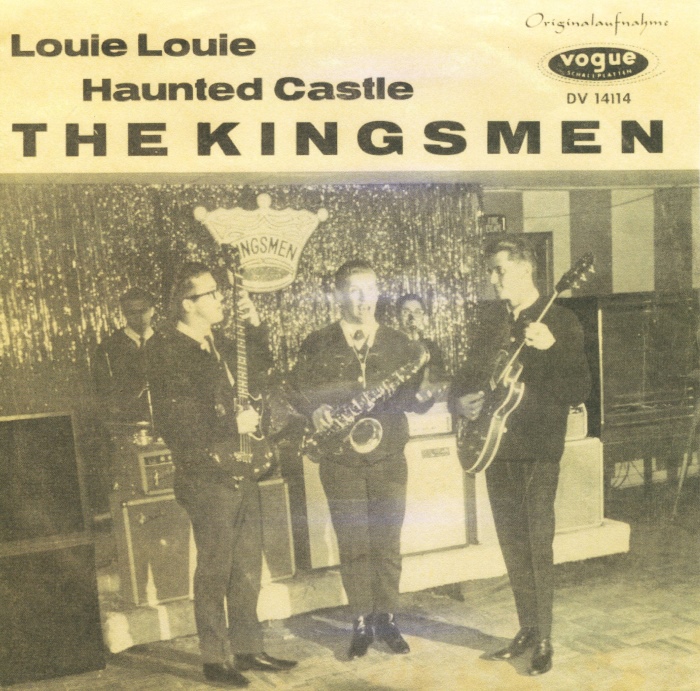
On August 8th, 1963, a relatively unknown band called The Kingsmen released their version and it swept across the airwaves from the West Coast like a musical tsunami. The band recorded the song for $50 at Northwestern, Inc., Motion Pictures and Recording studio in Portland. The band split the cost of the session. The session was produced by Ken Chase, a local radio personality on radio station KISN 91-AM. He also owned a teen nightclub that hosted the Kingsmen as his house band. The Kingsmen’s studio version was recorded in one take. They also recorded a “B” side song called “Haunted Castle.”

Berry’s version of the song on Flip Records.

The Kingsmen turned Berry’s syrupy sweet ballad into a raucous romp, backed by a twangy guitar, party chatter, and mostly unintelligible lyrics by lead singer Jack Ely. The song hit the top ten of the Billboard Hot 100 chart in December and would remain there for 16 weeks. “Louie Louie” reached number one on both the Cashbox pop and R&B charts. The version quickly became a standard at teen parties in the U.S. during the 1960s, even reappearing on the charts in 1966.

Louie Louie & Haunted Castle 45 Record.

However, it was the urban legend about the indecipherable lyrics that gave the song lasting fame — or infamy, depending on your point of view. Rumors claimed that the band intentionally slurred the lyrics to hide the profanity contained therein, in particular, graphic sex between a sailor and his lady. Soon, crumpled pieces of paper containing “the real lyrics” to “Louie Louie” circulated among giggling, red-faced teens. In time, the adults got involved in the form of unamused parents and distraught teachers who demanded action against this supposed pornography sweeping the airwaves. Keep in mind, singles by The Singing Nun and Bobby Vinton monopolized the top slot on the charts during the song’s run.

Indiana Governor Matt Welsh.

Eventually, the song was banned on many radio stations across the United States, including Indiana, where it was personally prohibited by Governor Matthew Welsh himself. Yes Indiana, our state officially banned the song “Louie, Louie” on Tuesday, January 21, 1964. The unprecedented involvement between state government and a rock ‘n’ roll song began when Governor Welsh of Indiana received a complaint from a Frankfort teenager, claiming that the lyrics to the song were obscene. The teenager included a handwritten copy of the obscene lyrics as evidence.

The Kingsmen.

Allegedly, Governor Welsh’s executive secretary Jack New went to a nearby music store to buy a copy of the record. Then, in what must’ve been a Monty Pythonesque moment, New and the Governor listened to it inside his Statehouse office. New told the Indianapolis Star “We slowed it down and we thought we could hear the words.” Billboard reported that the Governor said his ears “tingled.” The Governor’s press secretary, James McManus, said that the words were “indistinct, but plain if you listen carefully.”

WISH-Radio’s Reid “Chuckles” Chapman.

Governor Welsh snapped off a letter to Fort Wayne radio and TV personality and President of the Indiana Broadcasters Association Reid Chapman urging that the lyrics to the song be “examined.” Welsh said in 1991, “My position with respect to the whole matter was never that the record should be banned. At no time did I ever pressure anybody to take the song off the air. I suggested to him [Chapman] that it might be simpler all around if it wasn’t played.” The Governor had written to Chapman because he “was a friend of mine. I knew him; we weren’t close.”

Reid Chapman (1920-2006)

In response to the Governor’s letter, Chapman sent telegrams to Hoosier radio stations asking them to stop playing the record. The Kingsmen, who were ready to embark on a Midwestern concert tour (including an appearance at the Indiana State Fair), objected to any attempt to take their song off the air. These “hidden lyric” denials by the Kingsmen did little to stop the controversy but did much to boost sales of the record among curious teens and investigative adults.

Jack Ely (1943-2015)

In a January 24, 1964, editorial page article titled “Young Singers Dismiss As Hooey Obscenity Charge in ‘Louie Louie.’”, a reporter for the Indianapolis Star interviewed Lynn Easton, leader of the band, who “somewhat angrily” denied that the band sang obscene lyrics. “We took the words from the original version by Richard Berry and recorded them faithfully. There was no clowning around,” Easton said. To the Star’s credit, the conclusion of the editorial was against government censorship in any form. Lead singer Jack Ely explained the garbled lyrics were a result of the studio’s 19-foot ceiling which had a microphone suspended from it.

LeRoy K. New (1920-2205)

Despite the band’s protestations, LeRoy New, Chief Marion County deputy prosecutor, assigned two investigators to look into the obscenity charges. After listening to the record at three speeds, the investigators found nothing obscene, though they admitted the words were garbled. New said, “The record is an abomination of out-of-tune guitars, an overbearing jungle rhythm and clanging cymbals.” But New stopped short of saying the lyrics were obscene, and the obscenity laws of the day “just didn’t reckon with dirty sounds.”

Although Governor Welsh’s “woofing” about the record was not the cause, soon after the Indiana banning, it fell off the charts. Ironically, by the time the Kingsmen’s “Louie Louie” had achieved national popularity, the band had split up. In February 1964, an outraged parent wrote to U.S. Attorney General Robert F. Kennedy, alleging the song lyrics were obscene. Subsequently, J. Edgar Hoover’s FBI began a 31-month investigation into the matter that concluded the song was “unintelligible at any speed,” and they were “unable to interpret any of the wording in the record.” But by then, “Louie, Louie” was a footnote in rock history.

The Kingsmen.

Maybe it was the controversy about the obscene (or not obscene) lyrics that killed the song — who knows? But two weeks after the swan song, on Sunday, February 9, The Beatles appeared for the first time on the Ed Sullivan Show. The British Invasion had begun and the American garage band sound soon faded from the scene.

The song would not re-emerge until it was featured in the 1978 film Animal House. According to Kenny Vance, the musical director of the movie, a pre-Saturday Night Live John Belushi sang in a garage band that used to perform this song at frat parties. Belushi sang his version of the dirty lyrics in the studio while recording his vocals for the movie. Sadly, the tape of Belushi‘s version was lost in 2012 when Hurricane Sandy wiped out Kenny’s home in Queens.

Animal House 1978.

As for this reporter, I admired Governor Matt Welsh. He was one of my first interviews back in the early 1980s. But make no mistake about it, regardless of his posturing after the fact, Matt Welsh had the record banned. When I asked the Governor about the song, although polite, he expressed his frustration that “Louie Louie” is all he’s remembered for by “today’s” generation. Welsh did not mention the matter in his personal memoir but did say, “I thought the whole thing was a tempest in a teapot, and not worth any extended pursuit. I have no interest in it either way.”

Everyone knows the chorus: “Louie, Louie, oh no. Me gotta go. Aye-yi-yi, I said. Louie Louie, oh baby. Me gotta go.” But once and for all, here are the lyrics: “Fine little girl waits for me. Catch a ship across the sea. Sail that ship about, all alone. Never know if I make it home. Three nights and days, I sail the sea. Think of girl, constantly. Oh that ship, I dream she’s there. I smell the rose in her hair. See Jamaica, the moon above. It won’t be long, me see my love. Take her in my arms again. Tell her I’ll never leave again.” The supposed “lewd” version can be easily found on the Web, but I’ll leave that to your own devices.

The Kingsmen.

Music, Pop Culture

Fleetwood Mac: 50 years ago today.

Original publish date January 16, 2025.

(This was supposed to be published in the Jan. 3 issue. My editor apologizes for the delay.) https://weeklyview.net/2025/01/16/fleetwood-mac-50-years-ago-today/

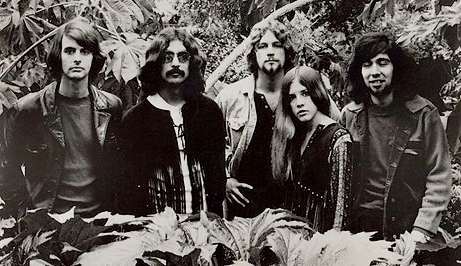
Fritz Band, L-R Brian Kane, Bob Aguirre, Lindsey Buckingham, Stevie Nicks, and Javier Pacheco.

On January 1, 1975, Lindsey Buckingham and Stevie Nicks joined Fleetwood Mac and changed music history forever. The duo produced an album, Buckingham and Nicks in September 1973, which was a commercial failure noteworthy only for the album cover that features a nude image of Stevie and Lindsey. The album has yet to be commercially remastered or re-released digitally. It was Lindsey who first joined Fleetwood Mac, replacing guitarist Bob Welch, the only guitar player in the band. Lindsey quickly convinced the band to recruit his musical partner (and girlfriend) Stevie Nicks, who played guitar and piano. Oh, and she sang a little too.

1973 Buckingham Nicks Album.

Mick Fleetwood extended the invitation to Buckingham on New Year’s Eve 1974. On New Year’s Day, Fleetwood, Christine, and John McVie met Buckingham at the El Carmen Mexican restaurant located at 8138 W 3rd St. in Los Angeles. Opened in 1929, El Carmen still stands. It has a colorful history and counted among its regulars D.W. Griffith, Cecil B. DeMille, Boris Karloff, Ricardo Montalban, Nat King Cole, Loretta Young, Diego Rivera, Busby Berkeley, Mario Lanza, Vincent Price, Gary Cooper & John Wayne. During that formative meeting, Buckingham was joined by Stevie Nicks, who arrived still wearing her flapper costume after her waitress shift ended at Clementine’s restaurant in nearby Beverly Hills.

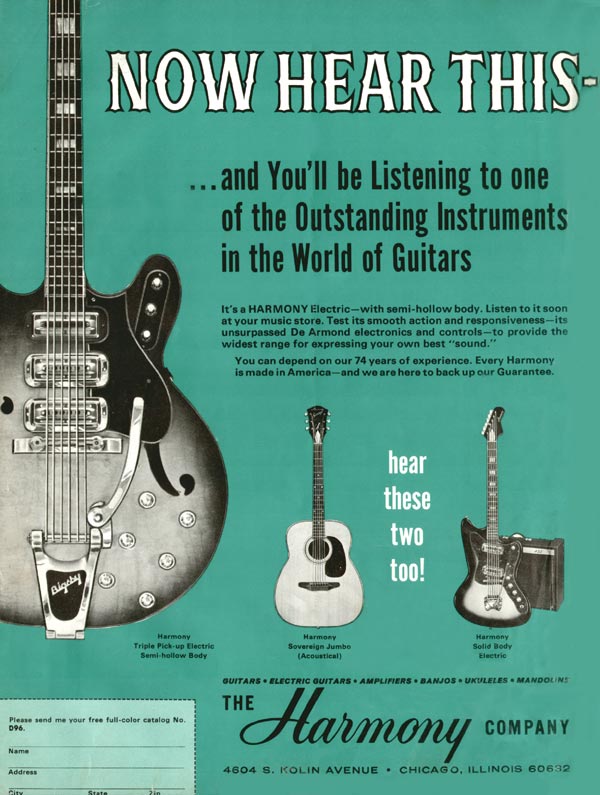
1966 Harmony Guitar ad.

Evocative as that last sentence appears, the pre-Fleetwood Mac story of Stevie and Lindsey is equally dreamful. Lindsey Adams Buckingham was born on October 3, 1949, in Palo Alto, California where he attended Menlo-Atherton High School. Lindsey and his two older brothers, Jeffrey and Gregory, were encouraged to swim competitively by their parents from an early age. Though Lindsey dropped out to pursue music, his brother Gregory would win a silver medal at the 1968 Olympics in Mexico City, setting two world records along the way. Buckingham learned to play guitar on a toy Mickey Mouse guitar, strumming along to his brother Jeff’s extensive collection of 45s. Recognizing his talent, Lindsey’s parents bought him a $35 Harmony guitar for Christmas. Produced between 1945 and 1975, the Harmony guitar was nicknamed the “People’s Guitar”. Many musicians began their careers playing Harmony guitars: Elvis Presley, Keith Richards, Jimmy Page, Howlin’ Wolf, Big Joe Williams, Ritchie Valens, and the Kinks’ Dave Davies among them.

Lindsey never took guitar lessons, does not read music, and famously plays with no pick. Instead, he plays fingerstyle almost exclusively strumming with his middle and ring fingers. After joining Fleetwood Mac, Buckingham stepped up his game and began using a Gibson Les Paul Custom. From 1966 to 1971, Buckingham performed as a bassist and vocalist with a psychedelic folk rock band originally named the Fritz Rabyne Memorial Band. In 1967 as the band’s lineup changed, they shortened their name to Fritz.

A very young Stevie Nicks.

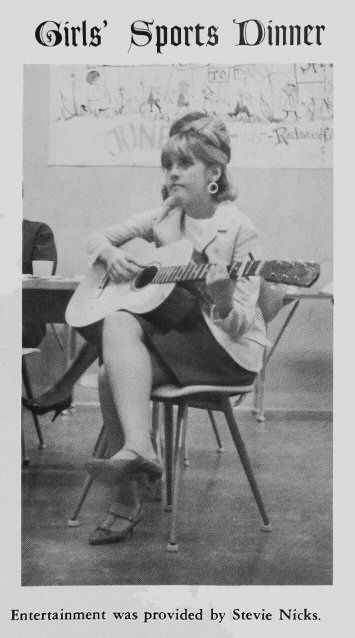
Stephanie Lynn Nicks was born in Phoenix, Arizona on May 26, 1948. As a toddler, she could only pronounce her name as “tee-dee”, which led to the nickname “Stevie”. Always a musical child, by the age of four, Stevie was strumming a toy guitar and singing duets with her grandfather. Her father’s frequent relocation as a vice president of Greyhound had the family living in Phoenix, Albuquerque, El Paso, Salt Lake City, Los Angeles, and San Francisco. On her 16th birthday, her parents bought her a Goya guitar, a favorite of folksingers best remembered as the guitar played by folksinger Melanie and by movie star Julie Andrews in The Sound of Music.

While attending Arcadia High School in Arcadia, CA., she joined her first band, the Changing Times, a folk rock band whose most famous song was “The Pied Piper”, released in 1965, which focused on vocal harmonies. Stevie met Lindsey during her senior year at Menlo-Atherton High School in Atherton, California. Stevie saw Buckingham playing “California Dreamin'” at the Young Life club and joined him in harmony. As it happened at the time, Lindsey’s rock band Fritz was breaking apart as two band members were leaving for college. In mid-1967, Lindsey asked Stevie to replace the band’s lead singer. Fritz started to take off after Stevie joined, opening for major acts like Santana, Moody Blues, Chicago Transit Authority, Jimi Hendrix, Janis Joplin, Ike & Tina Turner, War, Chuck Berry, Poco, Leon Russell, Dr. Hook, and others from 1968 until 1970. Nicks and Buckingham attended San José State University but both dropped out to pursue music. After Fritz disbanded for good in 1972, the duo continued to write songs and record demo tapes at night in Daly City, CA.

Warren Zevon & Phil Everly.

After the lukewarm release of their album Buckingham and Nicks, with no money coming in, Stevie began working multiple jobs. She waited tables and cleaned houses to make ends meet. Recruited by keyboard player Warren Zevon, Buckingham joined the Everly Brothers for their 1972 tour. Lindsey played bass for the band alongside legendary guitarist Waddy Wachtel, who continues to play with Stevie Nicks to this day. While Lindsey toured, Stevie remained behind writing songs including “Rhiannon” and “Landslide” as her relationship with Buckingham slowly deteriorated. On December 31, 1974, Mick Fleetwood called on Buckingham, changing Fleetwood Mac from a British band (whom Beatle John Lennon once cited as an influence) into an Anglo-American one.
Fritz Rabyne Memorial Band-Stevie on the ladder and Lindsey gazing up at her.

But what about those years with the Fritz Rabyne Memorial Band (aka Fritz)? The official audiophile community identifies Fritz as a diverse high school rock band formed in San Jose in the fall of 1966. The band performed early rock and roll covers mixed with sixties Bay area psychedelic instrumentals. The band’s name was derived from a fellow high school student at the time, and like Lynyrd Skynyrd, was created as an inside joke. The band was born when Bob Aguirre, drummer of The Castiles (Bruce Springsteen’s early band) invited keyboard player Javier Pacheco to perform at a high school talent show alongside Cal Roper (bass), Lindsey Buckingham (guitar), and Jody Moreing (vocals & guitar). Pacheco wrote the majority of the band’s songs. By 1968, Cal left the group to go off to college and Jody joined another band. Fritz’s tight, three-part harmonies quickly gained a loyal Bay-area following. When vocalist Jody Moreing left the band in 1968, Stevie Nicks was invited to join the band. She quickly developed a mesmeric stage persona. By the summer of 1968, the band was comprised of Brian Kane (lead guitar, vocals), Aguirre (drums), Pacheco (keyboards, vocals), Stevie Nicks (percussion, vocals), and Lindsey Buckingham (bass, vocals).

Fritz Rabyne Memorial Band-Stevie at center with Lindsey seated at her right.

Like many sixties Bay-area bands, records are sketchy. Most of the gigs were performed in and around Santa Clara County. The band played a few Stanford frat parties (where Lindsey’s brother Greg attended) and dances at Westmont High School from 1966 to 1968 and Mango Jr High in Sunnyvale in 1970. Fritz performed regularly at Ricardo’s Pizza, a popular teen hangout in a traditionally Italian neighborhood known as “Goosetown” in San Jose. It was a working-class neighborhood where many shopkeepers lived upstairs inside of or near their businesses. Ricardo’s Pizza, located at 218 Willow St., featured red-and-white checkerboard tablecloths, wooden chairs, and Italian accents. Extra seating existed upstairs above the kitchen, and a small stage occupied one of the walls. Ricardo’s featured a banjo player for the weeknight crowd and spotlighted up-and-coming bands on the weekends. In 1970-71, the Doobie Brothers were the house band at Ricardo’s, gigging there on a regular basis. Innovative Jazz trumpet player Chet Baker and The Tubes were also regulars. Fritz appeared on a number of occasions at the Santa Clara Fair Grounds, opening for Steve Miller and Deep Purple and appearing with Iron Butterfly at the Expo-69 Teenage Fair. Fritz was the headliner for the Youngbloods, Country Weather, and Stained Glass, also at the fairgrounds.

Fritz Rabyne Memorial Band- Lindsey & Stevie Center stage.

The band initially practiced at Lindsey’s house in Atherton, but after 1968, the band rehearsed in the banquet room at the Italian Gardens Restaurant in San Jose. For approximately three and a half years, Fritz was one of the major local acts on the San Francisco Bay music scene. The band’s songs spoke to the human condition: “Yellow” (about the media), “Product of the Times” (conformity), “Empty Shell” (the ego), “Bold Narcissis” (more ego), “Sharpy” (about slick-talking agents), “The Power” (about finding God), “Eulogy” (about rebirth), “Existentialist” (about intellectual self-gratification), and “Crying Time” (about the death of innocence). Edgy content notwithstanding, today Fritz’s songs are mostly forgotten novelties consigned to the darkest corners of the internet.

However, Fritz was Stevie’s first rock band and the first pairing of what would become Rock and Roll’s most tempestuous couple. Fritz served as a sort of music school for Stevie, laying the foundations for her era-defining pop career. After Fritz’s disbandment, Stevie and Lindsey became prominent members of Fleetwood Mac during its most commercially successful period, highlighted by the multi-platinum studio album Rumours (1977), which sold over 40 million copies worldwide. The rest, as they say, is history. And it all started fifty years ago this week.