Art, Hollywood, Music, Pop Culture

The Genesis of Bob Dylan, Part 1

Original Publish Date February 20, 2025.

https://weeklyview.net/2025/02/20/the-genesis-of-bob-dylan-part-1/
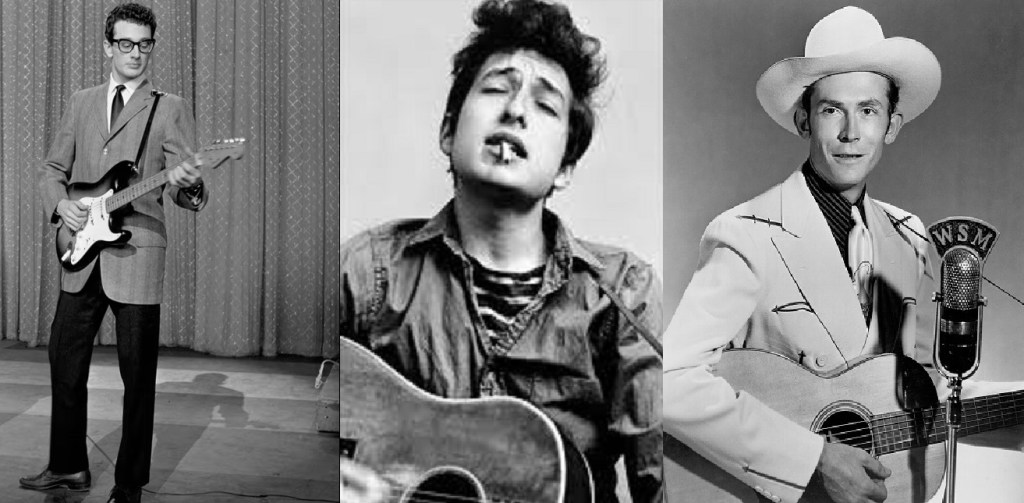
Another sad anniversary passed recently. On February 3, 1959, rock and roll pioneers Buddy Holly, Ritchie Valens, and “The Big Bopper” J. P. Richardson were all killed (along with pilot Roger Peterson) in a plane crash near Clear Lake, Iowa. The event became known as “The Day the Music Died” after Don McLean memorialized it in his 1971 song “American Pie.” While the anniversary passes every year, every so often they put us in a reflective mood. This year’s anniversary observance came on the heels of my 2-part article on the tragic death of Hattie Carroll, a subject that serrated Bob Dylan’s soul.
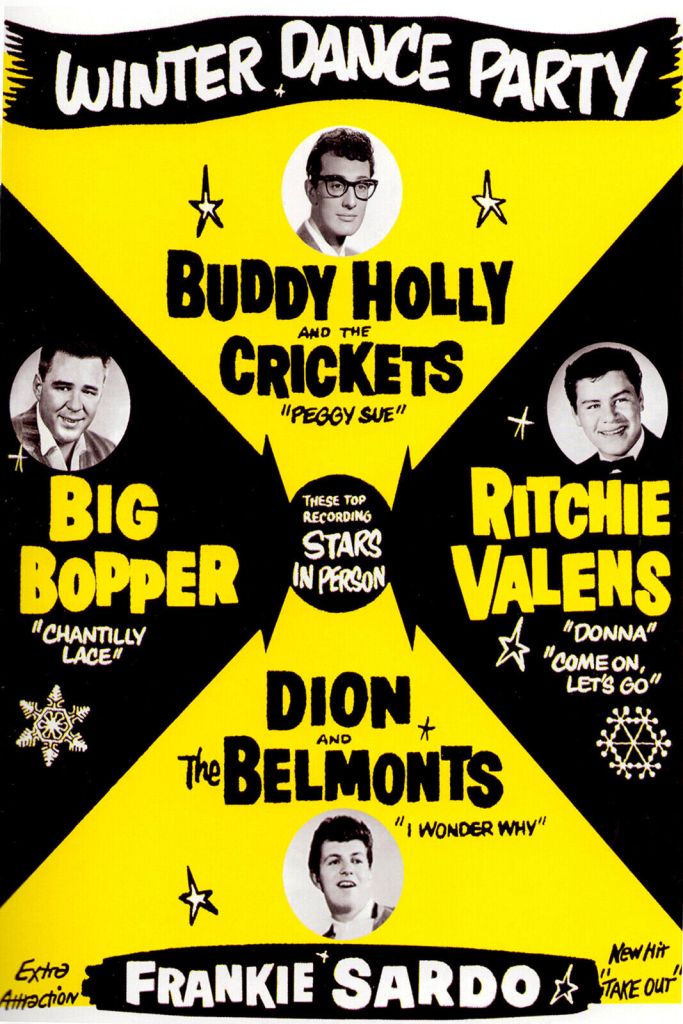
Buddy Holly’s Final Concert Poster.

It turns out the Clear Lake plane crash had an equal impact on him, but for this one, Dylan had a front-row seat. On January 31, 1959, 18-year-old Robert Allen Zimmerman was in the crowd when Buddy Holly brought his ill-fated “Winter Dance Party” tour to Dylan’s Duluth Minnesota hometown. Holly, Valens, and the Big Bopper (along with Waylon Jennings and Dion and the Belmonts) came to the National Guard Armory in that city nine days into a grueling 24-date barnstorming tour of small ballrooms and theatres of the midwest in the dead of winter. While the tour was scheduled to go as far south as Chicago, Cincinnati, and Louisville, it did not include any Indiana stops.
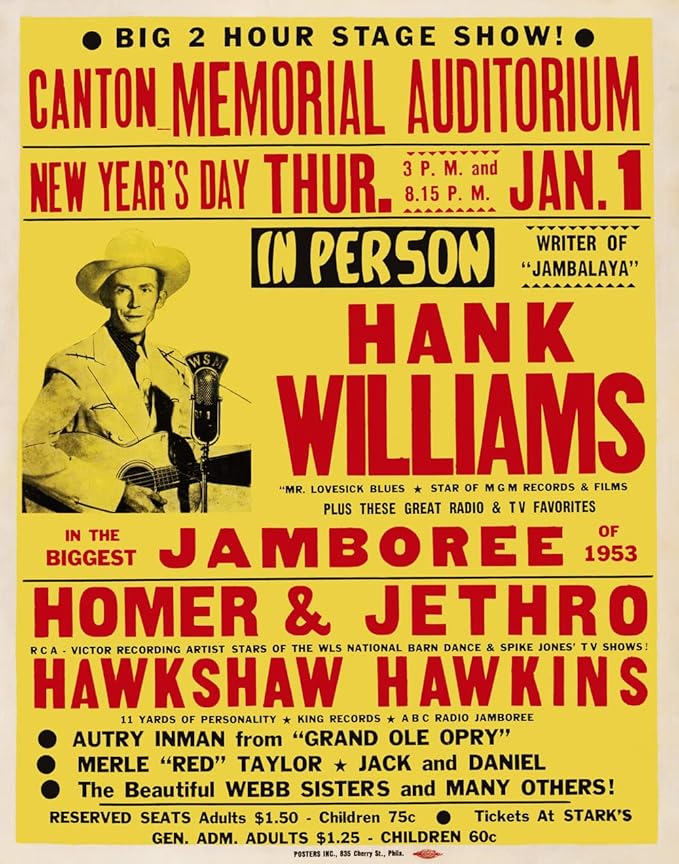
Hank Williams Final Concert Poster.

In June 2017, after being honored with the Nobel Prize for Literature, the famously enigmatic Dylan reflected on his earliest influences. As you may imagine, Dylan singled out three books specifically: Moby Dick, All Quiet on the Western Front, and The Odyssey before reflecting on Buddy Holly and how that night started him on his musical journey. “If I was to go back to the dawning of it all, I guess I’d have to start with Buddy Holly. Buddy died when I was about 18 and he was 22. From the moment I first heard him, I felt akin. I felt related like he was an older brother. I even thought I resembled him.” Dylan continued, “Buddy played the music that I loved, the music I grew up on country western, rock and roll, and rhythm and blues. Three separate strands of music that he intertwined and infused into one genre. One brand. And Buddy wrote songs, songs that had beautiful melodies and imaginative verses. And he sang great, sang in more than a few voices. He was the archetype, everything I wasn’t and wanted to be.”
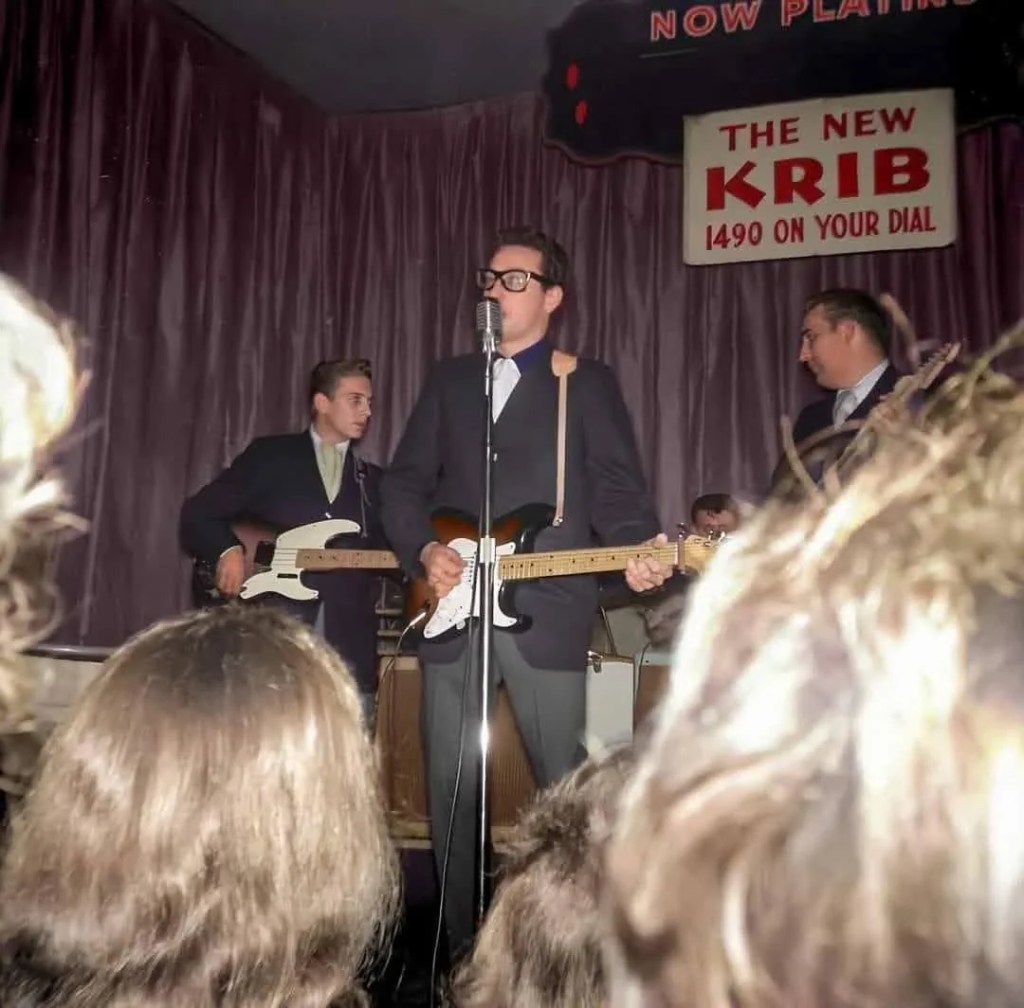
Buddy Holly’s Performing at his Final Concert.

“I saw him only but once, and that was a few days before he was gone,” Dylan recalled. “I had to travel a hundred miles to get to see him play, and I wasn’t disappointed. He was powerful and electrifying and had a commanding presence. I was only six feet away. He was mesmerizing. I watched his face, his hands, the way he tapped his foot, his big black glasses, the eyes behind the glasses, the way he held his guitar, the way he stood, his neat suit. Everything about him. He looked older than 22. Something about him seemed permanent, and he filled me with conviction.”
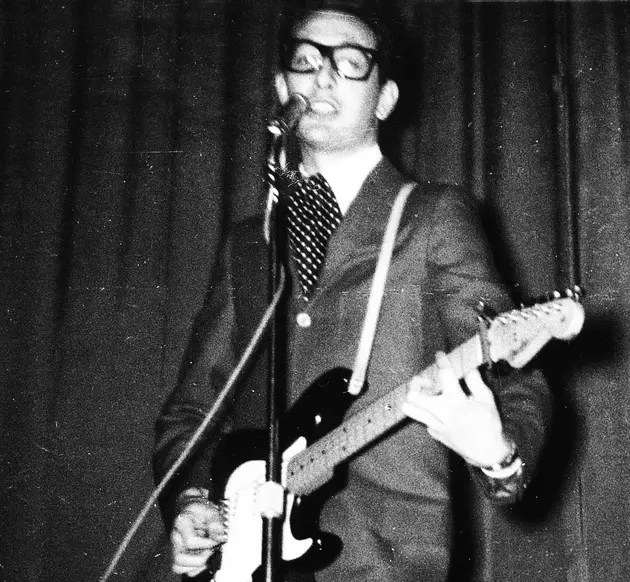
Buddy Holly Makes Eye Contact at the Duluth Armory.

Even though it happened 57 years prior, Dylan remembered the experience of standing a few feet away and making eye contact with Holly like it was yesterday. And of course, he described it exactly as you would expect: Bob Dylan style: “Then, out of the blue, the most uncanny thing happened,” said Dylan. “He looked me right straight dead in the eye, and he transmitted something. Something I didn’t know what. And it gave me the chills.” Three days after locking eyes with his musical idol, Buddy Holly was dead. Holly’s death caused Dylan to reflect on his own mortality at such a young age, stripping away the confidence of youth and beginning the complicated relationship between Dylan and death that would resonate in his songwriting for the rest of his career. Throughout his career, Dylan covered many of Holly’s songs: “Gotta Travel On,” “Not Fade Away,” “Heartbeat,” and others.
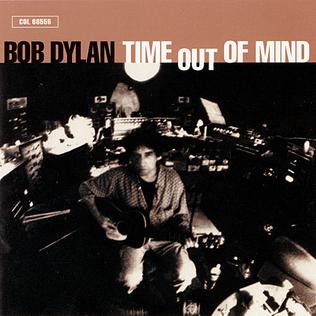
On his 1997 triple Grammy-winning album Time Out of Mind Dylan sings “When the last rays of daylight go down / Buddy, you’re old no more” on “Standing in the Doorway.” Dylan said he could feel the late rocker’s presence while making the album. In a 1999 interview, Dylan said, “I don’t really recall exactly what I said about Buddy Holly, but while we were recording, every place I turned there was Buddy Holly. It was one of those things. Every place you turned. You walked down a hallway and you heard Buddy Holly records like ‘That’ll Be the Day.’ Then you’d get in the car to go over to the studio and ‘Rave On’ would be playing. Then you’d walk into this studio and someone’s playing a cassette of ‘It’s So Easy.’” Dylan continued, “And this would happen day after day after day. Phrases of Buddy Holly songs would just come out of nowhere. It was spooky, but after we recorded and left, it stayed in our minds. Well, Buddy Holly’s spirit must have been someplace, hastening this record.” When it won Album of the Year in 1998, Dylan said, “I just have some sort of feeling that he [Holly] was, I don’t know how or why, but I know he was with us all the time we were making this record in some kind of way.”

Dylan later described what happened a day or two after the plane crash when someone gave him a copy of an obscure 12-string guitarist from Louisiana named Huddy Lead Belly. It was of the 1940 song “Cotton Fields” (also known as “In Them Old Cotton Fields Back Home”). Dylan said, “I think it was a day or two after that that his plane went down. And somebody-somebody I’d never seen before-handed me a Leadbelly record with the song ‘Cotton Fields’ on it. And that record changed my life right then and there. Transported me into a world I’d never known. It was like an explosion went off. Like I’d been walking in darkness and all of a sudden the darkness was illuminated. It was like somebody laid hands on me. I must have played that record a hundred times.” Lead Belly led to more influential artists like Robert Johnson, John Lee Hooker, and others in folk and blues, country, and jazz.
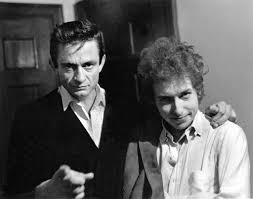
Johnny Cash & Bob Dylan.

Songwriter Kris Kristofferson once described his friend Johnny Cash as being “a walking contradiction, partly fact, partly fiction” but that verse could easily be applied to Bob Dylan, especially when one considers that Cash was another of Dylan’s acknowledged influences. Over the years, Dylan has acknowledged other influences, and, like Cash, some are more obvious than others. Dylan’s Jewish Russian immigrant parents were fond of the Grand Ole Opry show on WSM radio. WSM broadcasts originated in Brentwood, Tennessee, and featured a unique 808-foot tall “Diamond” shaped tower that allowed the radio station to broadcast to forty states and hundreds of largely rural and small-town audiences. To this day, the WSM Tower is the oldest surviving intact example of this type of radio tower in the world.
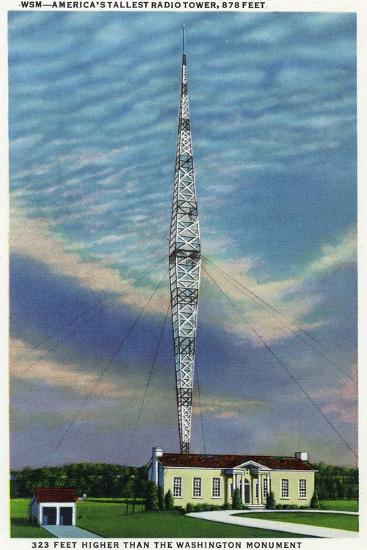
WSM Radio Tower Postcard.
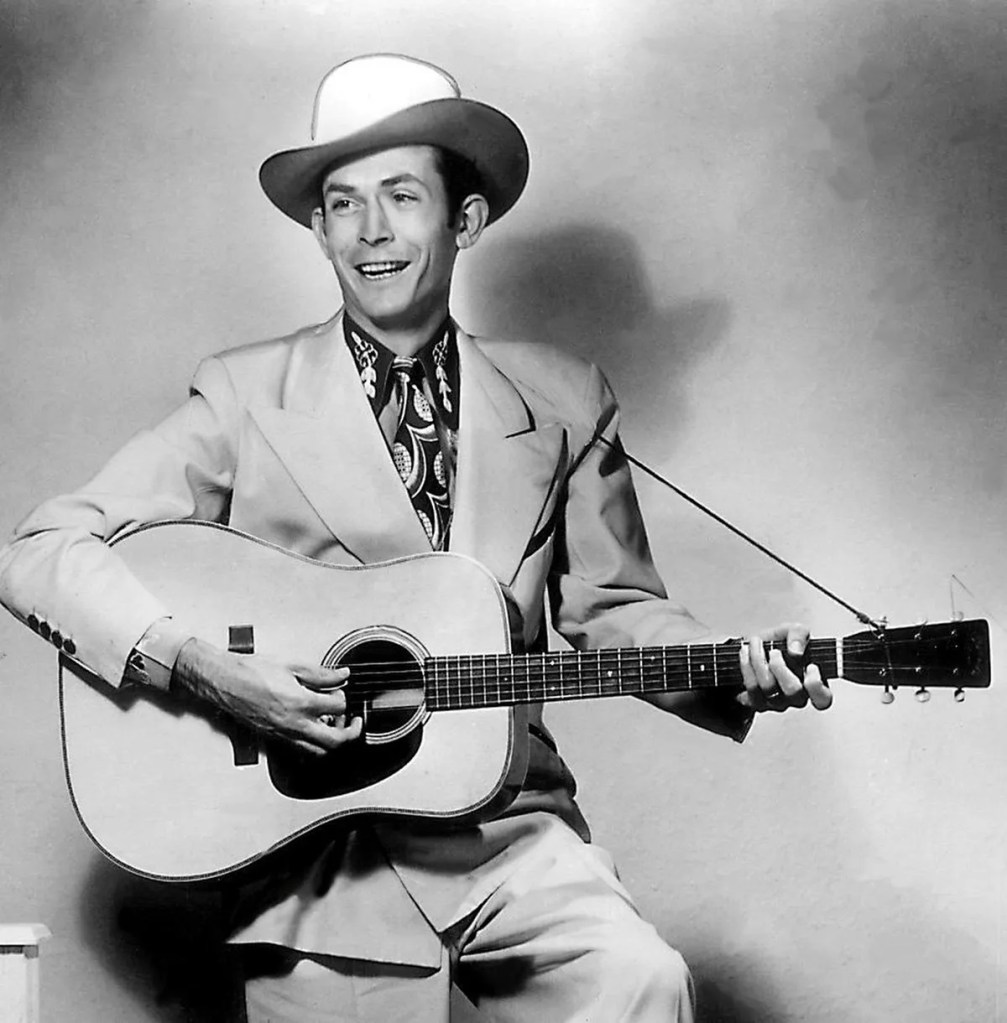
Hank Williams, Sr.

In the early 1950s, Dylan listened to the Grand Ole Opry radio show and heard the songs of Hank Williams for the first time. In his 2004 book, Dylan wrote: “The first time I heard Hank [Williams] he was singing on the Grand Ole Opry…Roy Acuff, who MC’d the program was referred to by the announcer as ‘The King of Country Music.’ Someone would always be introduced as ‘the next governor of Tennessee’ and the show advertised dog food and sold plans for old-age pensions. Hank sang ‘Move It On Over,’ a song about living in the doghouse and it struck me really funny.  He also sang spirituals like ‘When God Comes and Gathers His Jewels’ and ‘Are you Walking and a-Talking for the Lord.’ The sound of his voice went through me like an electric rod and I managed to get a hold of a few of his 78s-’Baby We’re Really In Love’ and ‘Honky Tonkin’’ and ‘Lost Highway ‘-and I played them endlessly.”

Dylan continued, “They called him a ‘hillbilly singer,’ but I didn’t know what that was. Homer and Jethro were more like what I thought a hillbilly was. Hank was no burr head. There was nothing clownish about him. Even at a young age, I identified fully with him. I didn’t have to experience anything that Hank did to know what he was singing about. I’d never seen a robin weep, but could imagine it and it made me sad. When he sang ‘the news is out all over town,’ I knew what news that was, even though I didn’t know. The first chance I got, I was going to go to the dance and wear out my shoes too. I’d learn later that Hank had died in the backseat of a car on New Year’s Day, kept my fingers crossed, hoped it wasn’t true. But it was true. It was like a great tree had fallen. Hearing about Hank’s death caught me squarely on the shoulder. The silence of outer space never seemed so loud. Intuitively I knew, though, that his voice would never drop out of sight or fade away-a voice like a beautiful horn.”
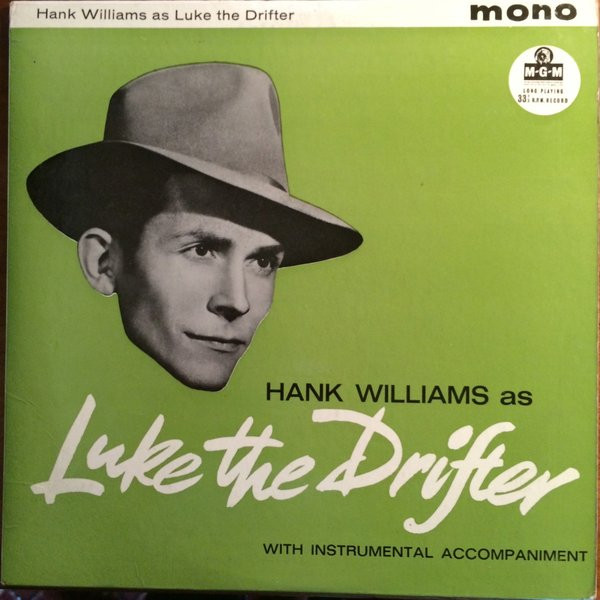
“Much later, I’d discover that Hank had been in tremendous pain all of his life, suffered from severe spinal problems-that the pain must have been torturous. In light of that, it’s all the more astonishing to hear his records. It’s almost like he defied the laws of gravity. The Luke the Drifter record, I just about wore out. That’s the one where he sings and recites parables, like the Beatitudes. I could listen to the Luke the Drifter record all day and drift away myself, become totally convinced in the goodness of man. When I hear Hank sing, all movement ceases.  The slightest whisper seems sacrilege. In time, I became aware that in Hank’s recorded songs were the archetype rules of poetic songwriting. The architectural forms are like marble pillars and they had to be there. Even his words-all of his syllables are divided up so they make perfect mathematical sense. You can learn a lot about the structure of songwriting by listening to his records, and I listened to them a lot and had them internalized. In a few years’ time, Robert Shelton, the folk and jazz critic for the New York Times, would review one of my performances and would say something like ‘resembling a cross between a choirboy and a beatnik…he breaks all the rules in songwriting, except that of having something to say”. The rules, whether Shelton knew it or not, were Hank’s rules, but it wasn’t like I ever meant to break them.  It’s just that what I was trying to express was beyond the circle.”

The Genesis of Bob Dylan, Part 2

Original Publish Date February 27, 2025.

https://weeklyview.net/2025/02/27/the-genesis-of-bob-dylan-part-2/
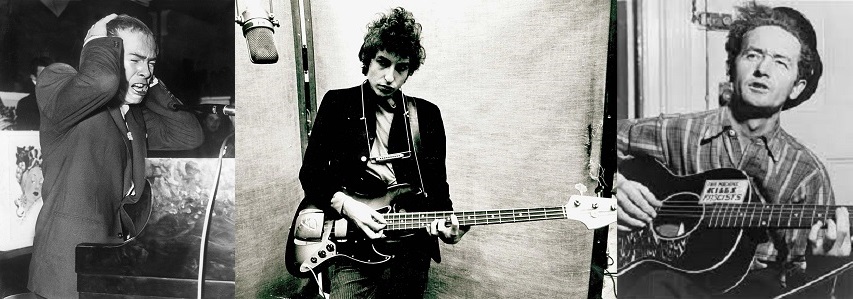
Bob Dylan’s next early musical influence came sandwiched between Hank and Buddy, and it is one you might not expect. Dylan discovered the plaintive delivery of Johnnie Ray (1927-1990) a singer/songwriter who played piano while delivering song lyrics tinged by a stream of tears. Although Ray is largely forgotten today, he was wildly popular for most of the 1950s and has been cited by many artists and critics as a major precursor to rock and roll. Tony Bennett called Ray the “father of rock and roll.” Dylan wrote of Johnnie Ray: “He was the first singer whose voice and style, I guess, I totally fell in love with… I loved his style, wanted to dress like him too.”
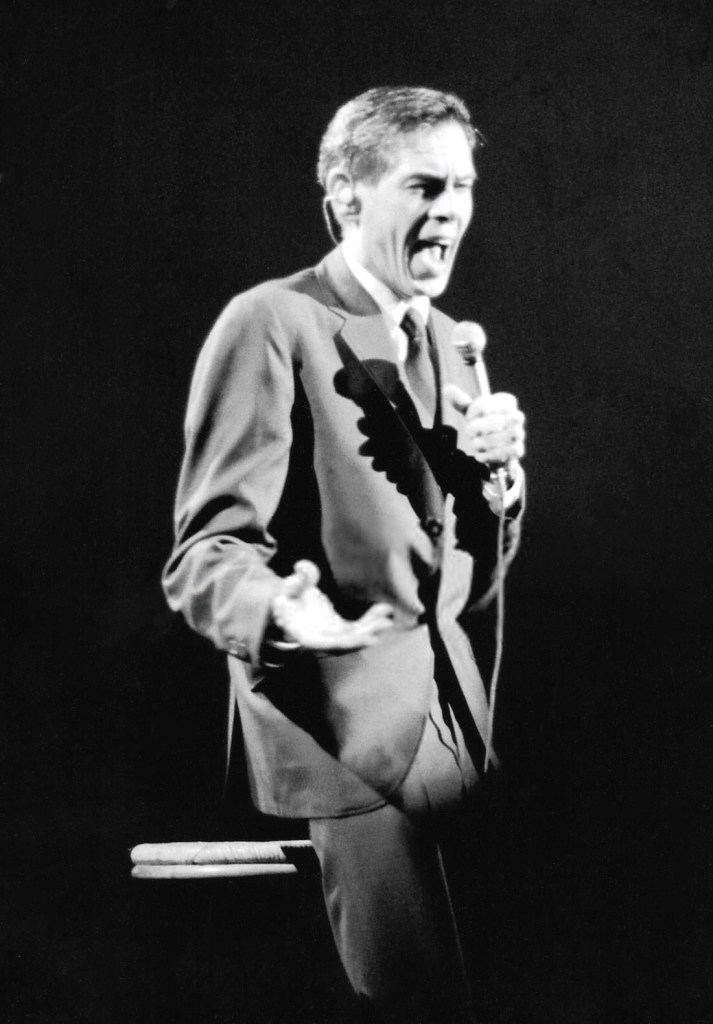
Johnnie Ray.

Johnnie Ray was a star in a pre-Elvis gyrating world of pop music, a genre of teenaged music that hadn’t existed before World War II. Ray was tall and lanky, partially deaf, and a little awkward on stage, a perceived fragility that caused his songs like “The Little White Cloud That Cried” and “Cry” to soar. Johnnie Ray didn’t just sing these songs-he became them. The press nicknamed him “The Prince of Wails,” “Mr. Emotion,” and “The Nabob of Sob.”

Ray was every bit of an enigma as Bob Dylan. He was an alcoholic who was loved and admired by the Black community (he began his career by performing in segregated Black nightclubs in the 1950s) and a man who never really divulged his sexuality. He was married to a woman in 1952/separated in 1953/divorced in 1954 and was allegedly the father of a child with journalist and What’s My Line TV show panelist Dorothy Kilgallen (1913-1965). In 1951, and again in 1956, Johnnie was arrested and briefly jailed for soliciting a plain-clothed police officer, both times in Detroit. Ray pled guilty to both charges, paid the fine, and was released. Ray was later arrested in a gay bar but the charges were kept quiet.
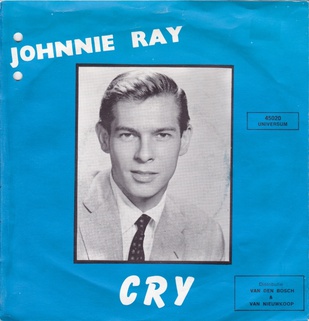
Sadly, Johnnie found no place in the folk music phenomenon, the rock ‘n’ roll revolution passed him by, and the British Invasion killed all the “white bread” acts, even though Ringo Starr admitted that, in the early days of The Beatles, they only loved “Chuck Berry, Little Richard, and Johnnie Ray.” Oh, there were movie roles, starring alongside Marilyn Monroe in 1954’s There’s No Business Like Show Business, but only fans in the UK and Australia stood by him. During the ’60s and ’70s, Ray made occasional television appearances, but he was largely a forgotten man. Although today, it should be said that Johnnie is mentioned in a Billy Idol song, featured in the opening lines of “Come On Eileen” by Dexys Midnight Runners, and as a cultural touchstone in Billy Joel’s “We Didn’t Start The Fire.” Bob Dylan said this of Ray: “He was the first singer whose voice and style, I guess, I totally fell in love with. There was just something about the way he sang ‘When Your Sweetheart Sends A Letter’…that just knocked me out. I loved his style, wanted to dress like him too.”
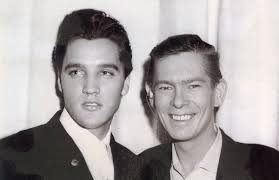
Elvis & Johnnie Ray.

During the fifties, Johnnie Ray went toe-to-toe on the charts with Chuck Berry, Little Richard, Jerry Lee Lewis, and Elvis Presley. While the press tried to gin up an imagined feud between Elvis and Johnnie, the two had a mutual respect. After returning to the States from a European tour in 1956, Johnnie Ray was asked “What do you think of Elvis Presley?” He replied, “What’s an Elvis Presley?” People thought he was disrespecting Elvis, but at that point, he had been out of the country and never heard of him. However, Elvis would often sing Johnnie’s songs (like “Such a Night”) through the years. Johnnie Ray bridged the gap between swing and rock n roll and his influence is a huge one. But what about Elvis, was the king of rock n roll an influence on Bob Dylan?
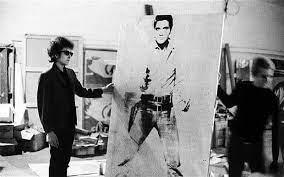
Dylan in Andy Warhol’s studio with Warhol’s Elvis.

In a 2009 Rolling Stone interview, Dylan said, “I never met Elvis, because I didn’t want to meet Elvis. Elvis was in his Sixties movie period, and he was just crankin’ ’em out and knockin’ ’em off, one after another. And Elvis had kind of fallen out of favor in the Sixties. He didn’t really come back until, whatever was it, ’68? I know the Beatles went to see him, and he just played with their heads…Elvis was truly some sort of American king…And, well, like I said, I wouldn’t quite say he was ridiculed, but close. You see, the music scene had gone past him, and nobody bought his records. Nobody young wanted to listen to him or be like him. Nobody went to see his movies, as far as I know. He just wasn’t in anybody’s mind. Two or three times we were up in Hollywood, and he had sent some of the Memphis Mafia down to where we were to bring us up to see Elvis. But none of us went. Because it seemed like a sorry thing to do. I don’t know if I would have wanted to see Elvis like that. I wanted to see the powerful, mystical Elvis that had crash-landed from a burning star onto American soil. The Elvis that was bursting with life. That’s the Elvis that inspired us to all the possibilities of life. And that Elvis was gone, had left the building.“
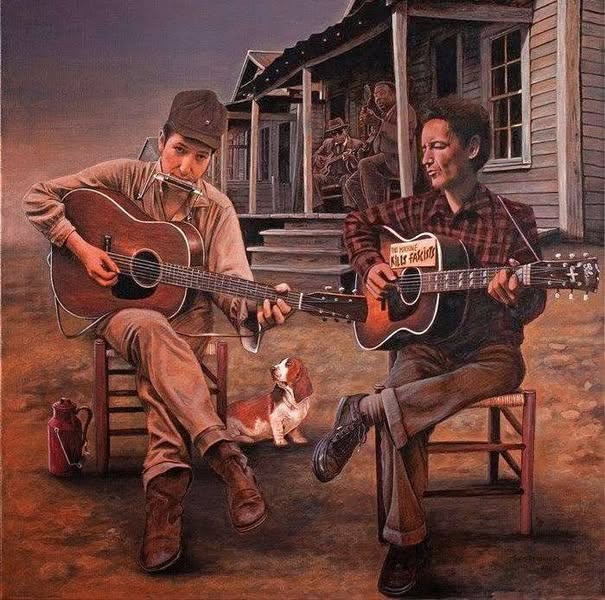
Painting of Dylan & Guthrie.

But who was Bob Dylan’s main influence on his musical career? Other than Buddy Holly, it was the only artist that Dylan ever made an effort to find: Woody Guthrie. In May 1960, Dylan dropped out of college and by January 1961, he was performing in coffee houses around Greenwich Village in New York City. Five days after arriving in “The Village,” Dylan tracked Guthrie down at Greystone Park Psychiatric Hospital in Morris Plains, New Jersey. In September of 1954, unable to control his muscles, Guthrie checked himself into the facility. He wouldn’t leave for another two years, and when he did so in May 1956, he spent days wandering the streets of Morristown, New Jersey, in a state of homelessness. Guthrie was picked up by police and spent a night in Morris County Jail. It was believed that he was suffering from paranoid schizophrenia and Woody was transferred back to Greystone. It was a voluntary readmission and Greystone staffers could not believe that this drifter had published a book and countless songs. Later Guthrie was diagnosed with Huntington’s disease, a hereditary condition that cause loss of body control.

Woody Guthrie and his famous guitar.

By the time Bob Dylan met his hero in the winter of 1961, “The Village” was flooded with folk players, and the radio was populated with singers riffing on black artists (Pat Boone’s “Tutti-Fruiti” being the most egregious example) or catchy, but safe, songs from Tin Pan Alley songwriters. This prompted Dylan to comment, “I always kind of wrote my own songs but I never really would play them. Nobody played their own songs, the only person I knew who really did it was Woody Guthrie. Then one day,” he continued, “I just wrote a song, and it was the first song I ever wrote, and it was ‘A Song for Woody Guthrie.’ And I just felt like playing it one night and I played it. I just wanted a song to sing and there came a certain point where I couldn’t sing anything, I had to write what I wanted to sing because what I wanted to sing nobody else was writing, I couldn’t find that song someplace. If I could’ve I probably wouldn’t have ever started writing.” The song would be featured on Dylan’s self-titled debut album, released on March 19, 1962. The album sold 5,000 copies in its first year, just breaking even.
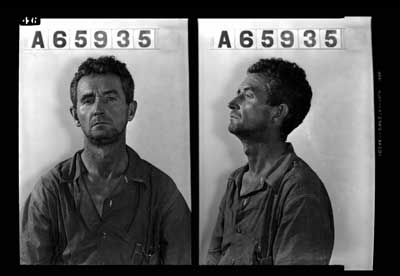
Woody’s Mugshot.

By then, Guthrie’s condition had declined to the point that he could barely move and depending on the day, barely speak. Performing was out of the question. So Dylan sang Woody’s songs back to him and the friendship blossomed. In the novel My Name is New York, Dylan said, “When I met him, he was not functioning with all of his facilities at 100 percent. I was there more as a servant. I knew all of his songs, and I went there to sing him his songs. He always liked the songs. He’d ask for certain ones and I knew them all!” Thereafter, the two shared a unique bond that would last the rest of Guthrie’s life. Dylan wrote of Guthrie’s impact: “The songs themselves had the infinite sweep of humanity in them… [He] was the true voice of the American spirit. I said to myself I was going to be Guthrie’s greatest disciple.” When Guthrie died at age 55 in 1967, Dylan emerged from a self-imposed exile after a motorcycle accident to perform a tribute concert to his hero at Carnegie Hall. According to one biographer, “This farewell to Dylan’s ‘last idol’ was the moment the legacy of American folk was crystalized.”
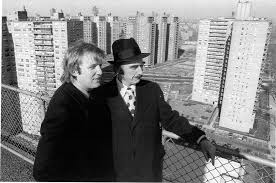
Donald & Fred Trump.

While any conversations shared between Dylan and Guthrie during those meetings will likely never be known, one Guthrie song is irresistible to not comment on…and speculate. In 1954, Guthrie wrote a song that describes what he felt were the racist housing practices and discriminatory rental policies of his landlord. In December 1950, Guthrie signed a lease at the Beach Haven apartment complex in Gravesend, Brooklyn. The song is called “Old Man Trump” and his landlord was none other than Fred Trump, father of U.S. President Donald Trump. In the song, Guthrie expresses his dissatisfaction with the “color line” Trump had drawn in his Brooklyn neighborhood. Oddly, there are no known Guthrie recordings of this song. However, the lyrics (written in Guthrie’s own hand) were discovered in 2016. “I suppose Old Man Trump knows, Just how much Racial Hate He stirred up In the bloodpot of human hearts When he drawed That color line Here at his Beach Haven family project…Beach Haven is Trump’s Tower, Where no Black folks come to roam. No, no, Old Man Trump! Old Beach Haven ain’t my home!”

Creepy history, Criminals, Hollywood, Pop Culture

They Stole Charlie Chaplin’s Body! PART I

Original Publish Date February 29, 2024.

https://weeklyview.net/2024/02/29/they-stole-charlie-chaplins-body/

Two score and six years ago, a pair of hapless unemployed European auto mechanics crept silently into a small country graveyard in Corsier-sur-Vevey, Switzerland under cover of darkness. On the night of Wednesday, March 1, 1978 (and into the early morning of March 2), a 24-year-old Polish refugee named Roman Wardas, and his partner in crime, 38-year-old Bulgarian self-exiled refugee Gantscho Ganev slithered through the small graveyard dressed entirely in black, carrying torches and shovels in search of their prey: Charlie Chaplin. Sir Charles Spencer Chaplin KBE (born April 16, 1889) may only have been 5 foot four inches tall, but he was one of the true giants of the Golden Age of Tinseltown.

Sir Charles Spencer Chaplin (1889 – 1977)

Although today’s fans may think of Chaplin as a uniquely American comic actor, filmmaker, and composer from the silent movie era, in truth, he was born in England, the product of an alcoholic failed actress mother and an absent Ragtime-singing father. Chaplin’s childhood in London was wrought with poverty and hardship. The household constantly struggled financially, as a result, young Charlie was sent to a workhouse twice before the age of nine. At 14, his mother was committed to a mental institution leaving Charlie alone to fend for himself for a time until his older brother Sydney returned from a 2-year stint in the British Navy. Chaplin began performing at an early age (by his recollection at 5 years old) touring music halls and later working as a stage actor and comedian. He dropped out of school at 13 and by the age of 19, he was signed to the Fred Karno company, which took him to the United States. Karno, a British slapstick comedian who played the American Vaudeville circuit, is credited with popularising the custard-pie-in-the-face gag. To circumvent stage censorship in the Victorian Era, Karno developed a form of sketch comedy without dialogue. A skill Charlie Chaplin quickly perfected.

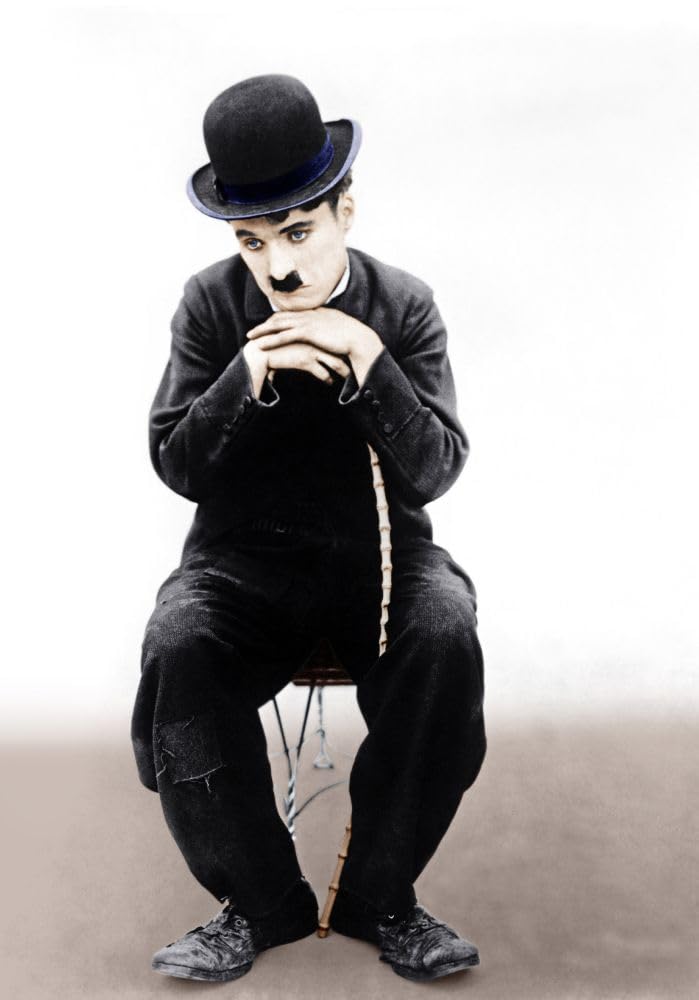
Charles Chaplin’s Tramp Character.

By 1914, Chaplin broke into the film industry with Keystone Studios, where he developed his Tramp persona and quickly attracted a large fan base. By the end of that year, when Chaplin’s contract came up for renewal, he asked for $1,000 a week ($31,000 today), an amount studio head Max Sennett refused, declaring it was too large. The Essanay Film Manufacturing Company of Chicago sent Chaplin an offer of $1,250 ($38,000 today) with a signing bonus of $10,000 ($307,000 today). By 1915, “Chaplinitis” was a cultural phenomenon. Stores struggled to keep up with demand for Chaplin merchandise, his tramp character was featured in cartoons and comic strips, and several songs were written about him. As his fame spread, he became the film industry’s first international star. In December 1915, fully aware of his popularity, Chaplin requested a $150,000 signing bonus (over $4.5 million today) from his next studio, even though he didn’t know which studio it would be.

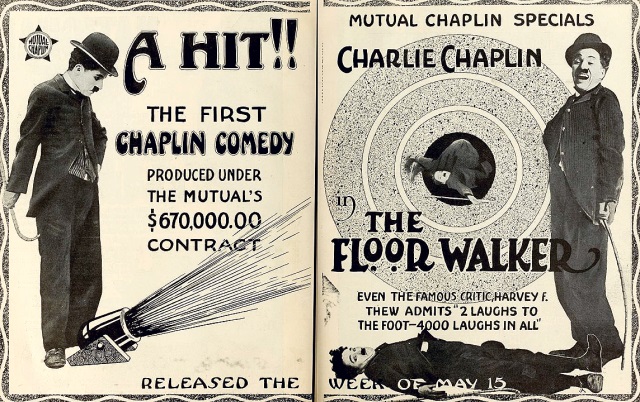
Chaplin Mutual Studio Movie Adverts.

He received several offers, including Universal, Fox, and Vitagraph, the best of which came from the Mutual Film Corporation at $10,000 a week (about $16 million a year today) making the 26-year-old Chaplin one of the highest-paid people in the world. (For example, President Woodrow Wilson earned $75,000 per year.) Mutual offered Chaplin his own Los Angeles studio to work in, which opened in March 1916. With his new studio came complete artistic control, resulting in fewer films (at one point he had been churning out a “short” per week). His Mutual contract stipulated that he release a two-reel film every four weeks, which he did. But soon, Chaplin began to demand more time and, although his high salary shocked the public and was widely reported in the press, Chaplin upped his game, producing some of his most iconic films during this era. By 1918, he was one of the world’s best-known figures. However, his fame did not shield him from public criticism.

Charles Chaplin Studios at LaBrea and Sunset Blvd.

Chaplin was attacked by the British press for not fighting in the First World War. Charlie countered those claims by stating that he would fight for Britain if called and had registered for the American draft, but he was never called by either country. It helped blunt the critics when it was discovered that Chaplin was a favorite with the troops and his films were viewed as much-needed morale boosters. In January 1918, Chaplin’s contract with Mutual ended amicably. Next, Chaplin signed a new contract, this one with First National Exhibitors’ Circuit, to complete eight films for $1 million (a staggering $22 million today). He built a state-of-the-art studio on five acres of land off Sunset Boulevard, naming it “Charlie Chaplin Studios” and once again Chaplin was given complete artistic control over the production of his films. The slow pace of production frustrated First National and when Chaplin requested more money from the studio, they refused. Defiantly, Chaplin joined forces with Douglas Fairbanks, Mary Pickford, and D. W. Griffith to form United Artists in January of 1919. The name said it all, as it enabled the four partners to personally fund their pictures and maintain complete artistic control. Chaplin offered to buy out his contract with First National but they refused, insisting that he complete the final six films owed.

Lucky for us, Chaplin acquiesced, and after nine months of production, The Kid was released in May of 1920. It is considered a masterpiece and costarred four-year-old Jackie Coogan (Uncle Fester from the Addams Family). At 68 minutes, it was Chaplin’s longest picture to date and one of the first to combine comedy and drama. It was also the first of Chaplin’s films to deal with social issues: poverty and parent-child separation. Chaplin fulfilled his contract with First National and, allegedly after being inspired by a photograph of the 1898 Klondike Gold Rush, and hearing the story of the ill-fated California Donner Party of 1846–1847, he made what may be his most remembered film: The Gold Rush. Chaplin’s film portrays his Tramp as a lonely prospector fighting adversity and looking for love. Filming began in February 1924, costing almost $1 million ($17.5 million today), it was filmed over 15 months in the Truckee mountains (where the Donner Party met their doom) of Nevada with 600 extras, extravagant sets, and special effects. Chaplin considered The Gold Rush his masterpiece, stating at its release: “This is the picture that I want to be remembered by.” Opening in August of 1925, it became one of the highest-grossing films of the silent era, with a U.S. box office of $5 million (almost $89 million today). The comedy contains some of Chaplin’s most iconic scenes; the Tramp eating his leather shoe and the “Dance of the Rolls”.

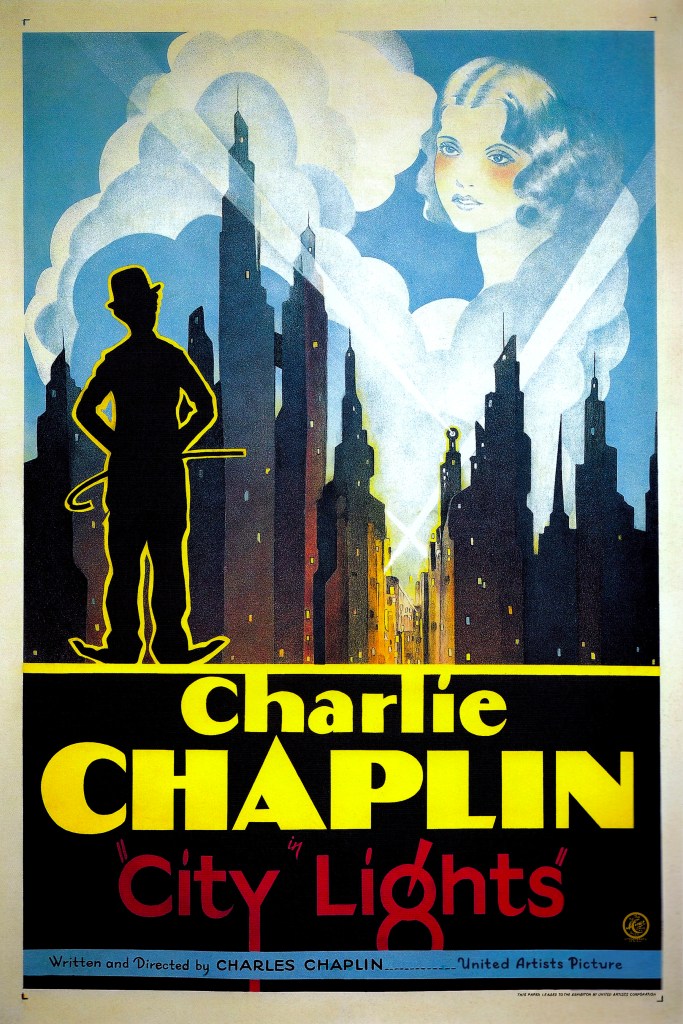
Over the next few years, Chaplin was one of the few artists to make a successful transition from silent films to “talkies”. At first, Chaplin rejected the new Hollywood craze preferring instead to work on a new silent film. When filming of City Lights began at the end of 1928, Chaplin had been working on the script for nearly a year. City Lights followed the Tramp’s love for a blind flower girl and his efforts to raise money for her sight-saving operation. Filming lasted 21 months, during which time Chaplin slowly adapted to the idea of sound when presented with the opportunity to record a musical score for the film, which he composed himself. When Chaplin finished editing City Lights in December 1930, silent films were fast becoming a thing of the past. Although not a “talkie”, City Lights is remembered for its musical score. Upon its release in January 1931, City Lights proved to be another financial success, eventually netting over $3 million during the Great Depression ($57 million today). Although Chaplin considered The Gold Rush his legacy, City Lights became Chaplin’s personal favorite and remained so throughout his life. Although City Lights had been a rousing success against seemingly insurmountable odds, Chaplin was still unsure if he could make the transition to talking pictures. After all, Chaplin’s stock in trade since his days with the Fred Karno Company had been the art of gesture to tell his stories. And he did it better than anyone else ever.

Charlie Chaplin in Japan, meets with Prime Minister Admiral Makoto Saitō 

In 1931, his state of uncertainty led him to take an extended holiday from filmmaking during which Chaplin traveled the world for 16 months, including extended stays in France and Switzerland, and a spontaneous visit to Japan. On May 15, 1932, the day after Chaplin’s arrival, Japanese Prime Minister Inukai Tsuyoshi was assassinated by ultra-nationalists aligned with the Japanese military, marking the end of civilian control over the government until after World War II. Inukai was shot by eleven junior Navy officers (most of whom were not yet twenty years of age) in the Prime Minister’s residence in Tokyo. Inukai’s last words were “If we could talk, you would understand” to which the assassins replied, “Dialogue is useless.” Astonishingly, the original plan included killing Charlie Chaplin-who was Inukai’s guest-in the hopes that this would provoke a war with the United States. Luckily, at that deadly moment, Chaplin was away watching a sumo wrestling match with the prime minister’s son. Chaplin’s vacation abruptly ended and he returned to Los Angeles. But life would never be the same for Chaplin. This political awakening would remain with him for the rest of his life.

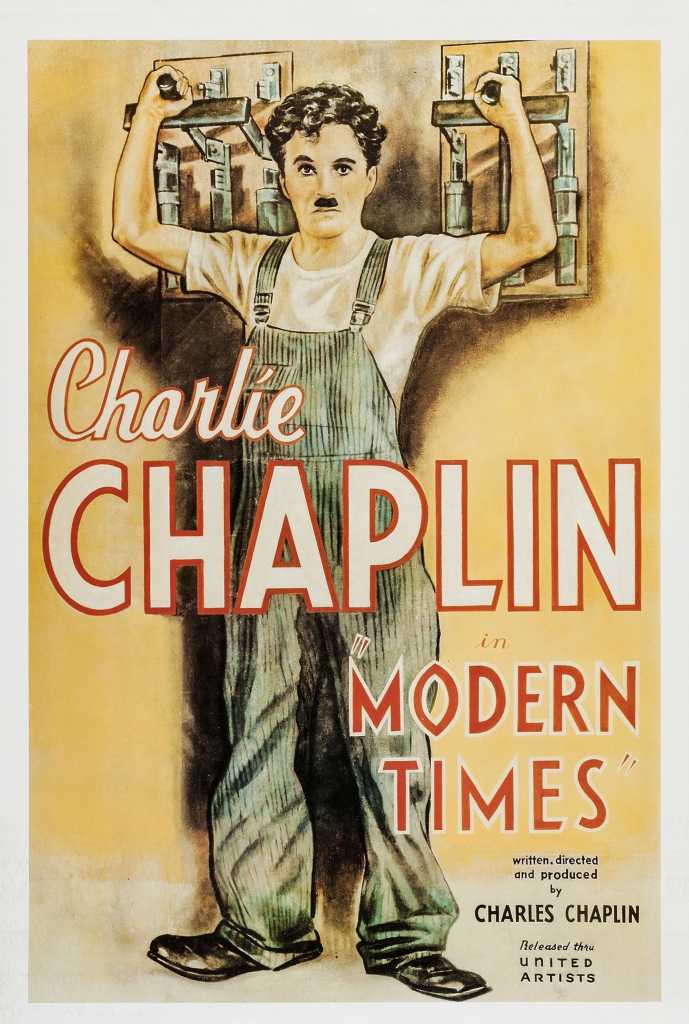
Assassination plans notwithstanding, the European trip had been a stimulating experience for Chaplin. It included meetings with several of the world’s prominent thinkers and broadened his interest in world affairs. The state of labor in America had long troubled him. Although not a Luddite by any means, the inequities of life caused him to fear that capitalism and machinery in the workplace would eventually increase unemployment levels. It was these fears that led Chaplin to develop a new film: Modern Times. The film features the Tramp and Hollywood ingénue Paulette Goddard (Charlie’s future bride) as they struggled through the Great Depression. Chaplin intended this to be his first “talkie” but changed his mind during rehearsals. Just like Modern Times, it employed sound effects but almost no dialog. However, Chaplin did sing a song in the movie, which gave his Tramp a voice for the only time on film. Modern Times was released in February 1936. It was one of the first movies to adopt political references and social realism. The film earned less at the box office than his previous features ($1.8 million-$22 million today), but it was released at the height of the Great Depression almost a decade after Al Jolson’s Jazz Singer (the first “talkie”) hit the screens.

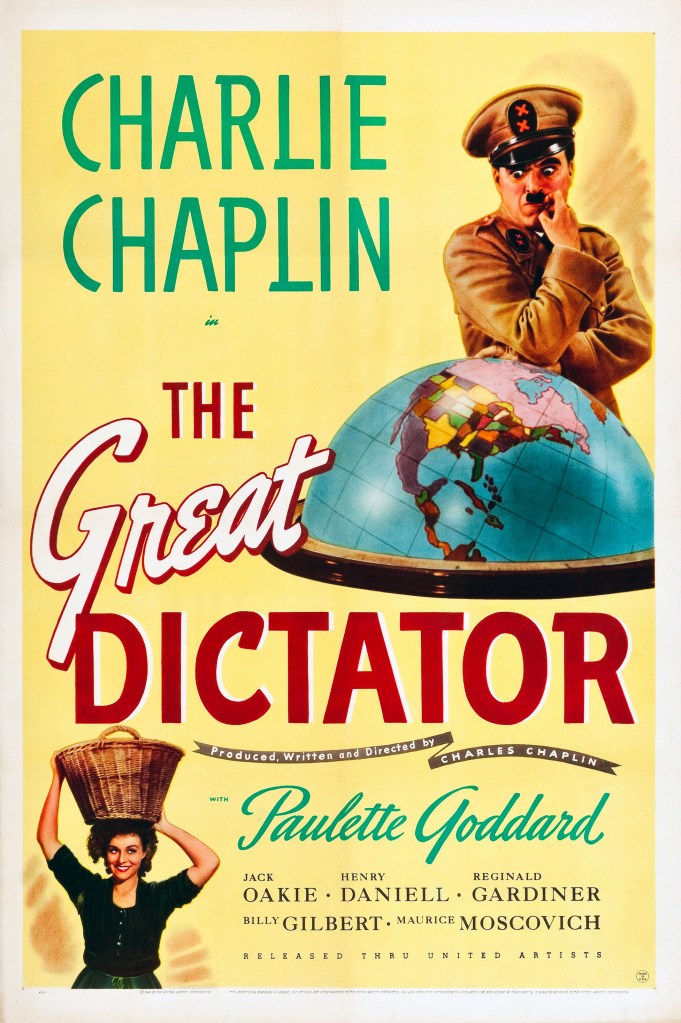
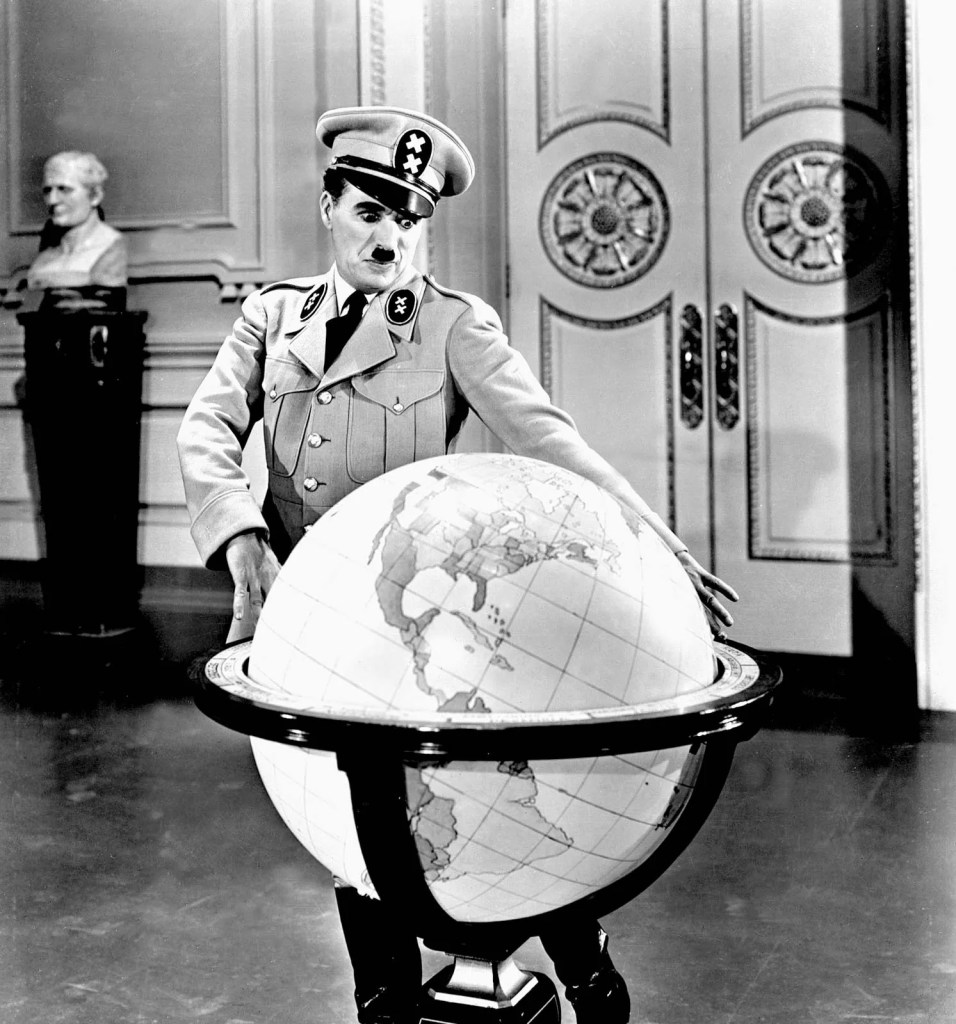
The next few years saw Chaplin withdraw from public view amid a series of controversies, mostly in his personal life, that would change his fortunes and severely affect his popularity in the States. Not the least of these was his growing boldness in expressing his political beliefs. Deeply disturbed by the surge of militaristic nationalism in 1930s Europe, Chaplin simply could not keep these issues out of his work. The ever-increasing state of hostile journalism in the US had already drawn tenuous parallels between Chaplin and Adolf Hitler: the pair were born four days apart, both had risen from poverty to world prominence, and Hitler wore the same mustache style as Chaplin. As pushback, Chaplin decided to use these undeserved comparisons and his physical resemblance as inspiration for his next film, The Great Dictator, a stinging satire about Hitler, Mussolini, and their brand of fascism. Chaplin spent two years on the script and began filming in September 1939, six days after Britain declared war on Germany. He decided to use spoken dialogue for his new project, partly because by now he had no other choice, but also because he knew it would be a better method to deliver his political message. Making a comedy about Hitler was of course highly controversial, but Chaplin’s financial independence allowed him to take that risk, stating “Hitler must be laughed at.” Chaplin replaced his Tramp with a Jewish barber character wearing similar attire as a slap at the Nazi Party’s rumor that he was a Jew. As a further insult, he also played the dictator “Adenoid Hynkel”, a parody of Hitler.

The Great Dictator was released in October 1940. The film became one of the biggest money-makers of the era. Chaplin concluded the film with a five-minute speech in which he abandoned his barber character and, while looking directly into the camera, pleaded against war and fascism. As a whole, the critics gave it rave reviews, but it made the public uncomfortable mixing politics with entertainment and although a success, it triggered a decline in Chaplin’s popularity in Hollywood. Nevertheless, both Winston Churchill and Franklin D. Roosevelt liked the film, which they watched at private screenings before its release. FDR liked it so much that he invited Chaplin to read the film’s final speech over the radio during one of his famous “Fireside Chats” before his January 1941 inauguration. Chaplin’s speech became an instant hit and he continued to read the speech to audiences at other patriotic functions during the World War II years. The Great Dictator ultimately received five Academy Award nominations, including Best Picture, Best Original Screenplay and Best Actor. It would turn out to be Charlie Chaplin’s last hurrah.

They Stole Charlie Chaplin’s Body! Part II

Original Publish Date March 7, 2024.

https://weeklyview.net/2024/03/07/they-stole-charlie-chaplins-body-part-2/

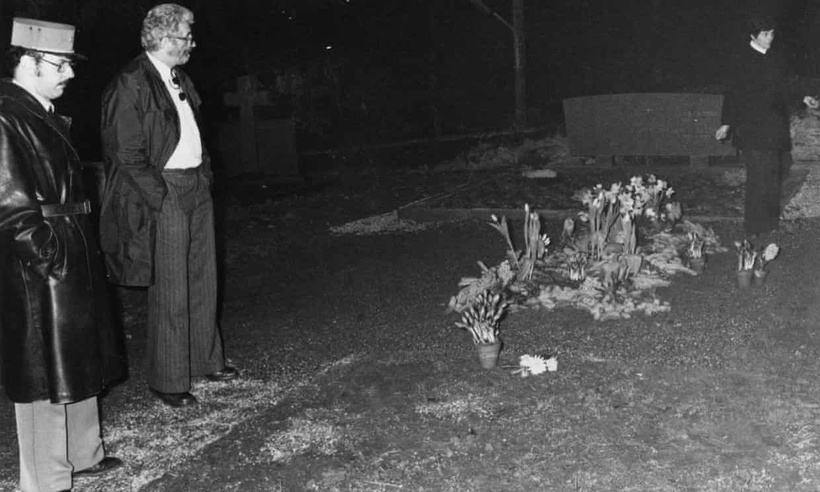
On March 1 & 2, 1978, 24-year-old Polish refugee Roman Wardas, and his cohort, Bulgarian Gantscho Ganev, aged 38, entered a small country graveyard in Corsier-sur-Vevey, Switzerland to dig up Hollywood movie legend Charlie Chaplin, who had died on Christmas Day of 1977. For this mission, the weather was right out of central casting. At 11:00 pm, the atmosphere was thick with fog, peppered by freezing haar, and plagued by a troublesome mist. As the witching hour approached and into the wee hours, a light rain began to fall augmented by a misty drizzle that morphed into shallow patches of fog. Their search ended at a neat, square, freshly dug plot with remnants of floral memorials still clinging to their rusting stands by tattered ribbons. The only sound present was the rippling of the faded satin ribbons flapping in the damp breeze.

Although they didn’t realize it, at that moment, the woebegone duo were at the zenith of their existence. They stood, staring at the grave, hands clasped atop the shovel handles, chins resting on their perpetually oil-stained knuckles. Like pirates from a bygone era, they knew a treasure was beneath their feet. For a few moments, the luckless pair dreamed of their shared idea of setting up their very own car repair shop. A sleek-looking modern white tile garage fitted with a vehicle lift, an automatic tire changer, and an air compressor equipped with a large bevy of shiny pneumatic tools ready to serve a large affluent clientele. A shared smile appeared slowly on each man’s face as they turned to each other and nodded. The first step was obvious: start digging. Atmospheric conditions aside, the two were already wet with a cold sweat. Soon the slap-sling sound of dueling shovels drowned out the usual sounds of the night. As they sunk ever-lower into the earth, the horizon disappeared around them and the panic of not knowing what was going on above them began to set in.

Chaplin’s coffin unearthed. Getty Images.

Finally, a shovel hit paydirt. A dull thud in the earth signified that they had hit the jackpot. Shovels gave way to hands and hands gave way to fingers as they quickly excavated the object of their grisly search. It was a 300-pound oak coffin which, although dirty, was remarkably intact. The handles still “handled”, and the lid remained closed. These two burly, jobless grease monkeys hefted the coffin out of its eternal resting place and carried it across the cemetery. As they trod, huffing, puffing, and groaning with each labored step, it must have presented an unearthly vision. The men busting through stage curtain sheathes of banks of fog-like characters in a Universal monster movie unkowing what was waiting for them in each clearing from which they emerged. Sliding the coffin into the back of their station wagon, they quickly jumped into the cab and drove off into the darkness of the night. They had done it. They had just stolen the body of the most famous actor in the history of Hollywood. A man so famous that the mere shadow of his waifish tramp-like form was instantly recognizable worldwide: Charlie Chaplin was in the boot of their vehicle.

Police at the desecrated grave of Charlie Chaplin in the cemetery at Corsier-sur-Vevey, Switzerland,

These two resurrectionists were convinced that their treasure was going to make them very rich, very soon. They arrived at a ransom figure: $600,000 US Dollars (over $2.8 million today). There were a couple of things the grave robbers didn’t count on though. The discovery of the theft of the Little Tramp’s mortal remains sparked outrage and spurred an expansive police investigation. Now, the whole world was watching this tiny isolated Swiss village. But why? The beloved actor who had created the iconic “Tramp” figure so associated with the Golden Age of Hollywood had been out of the limelight since World War II. While Chaplin continued to make films after his classic 1940 movie The Great Dictator, his star never shined as bright as it did during the periods between the two World Wars. Nonetheless, despite the sometimes sordid details of his love life (he was married 4 times between 1920 and 1943 and was rumored to have had many affairs) and the sensational amounts of money he commanded (The Great Dictator grossed an estimated $ 5 million during the Great Depression-a staggering $110 million in today’s currency), Chaplin remained a beloved figure to generations of fans worldwide.

Looking back, it is easy to understand why. Social commentary was a recurring feature of Chaplin’s films from his earliest days. Charlie always portrayed the underdog in a sympathetic light and his Tramp highlighted the difficulties of the poor. Chaplin incorporated overtly political messages into his films depicting factory workers in dismal conditions (Modern Times), exposing the evils of Fascism (The Great Dictator), his 1947 film Monsieur Verdoux criticized war and capitalism, and his 1957 film A King in New York attacked McCarthyism. Most of Chaplin’s films incorporate elements drawn from his own life, so much so that psychologist Sigmund Freud once declared that Chaplin “always plays only himself as he was in his dismal youth”. His career spanned more than 75 years, from the Victorian era to the space-age, Chaplin received three Academy Awards and he remains an icon to this day.

Not only did Chaplin change the entertainment industry on film, he changed it in practice as well. At the height of his popularity, wherever he went, Chaplin was plagued by shameless imitators of his Tramp character both on film and on stage. A 1928 lawsuit brought by Chaplin (Chaplin v. Amador, 93 Cal. App. 358), set an important legal precedent that lasts to this day. The lawsuit established that a performer’s persona and style, in this case, the Tramp’s “particular kind or type of mustache, old and threadbare hat, clothes and shoes, decrepit derby, ill-fitting vest, tight-fitting coat, trousers, and shoes much too large for him, and with this attire, a flexible cane usually carried, swung and bent as he performs his part” is entitled to legal protection from those unfairly mimicking these traits to deceive the public. The case remains an important milestone in the U.S. courts’ ultimate recognition of a “common-law right of publicity” and intellectual property protection.

Charlie Chaplin’s last official portrait sitting in his home in Switzerland April 1977.

By October of 1977, Chaplin’s health had declined to the point that he required near-constant care. On Christmas morning of 1977, Chaplin suffered a stroke in his sleep and died quietly at home at the age of 88. The funeral, two days later on December 27, was a small and private ceremony, per his wishes. Chaplin was laid to rest in the cemetery at Corsier-sur-Vevey, not far from the mansion that had been his home for over a quarter century. But as we have discovered, Chaplin’s “eternal rest” did not last long. After the two ghouls exhumed the body, they found themselves with a new problem. What do we do now? After all, where does one store a corpse in anticipation of a ransom delivery? Thanks to press reports, the duo were aware that Oona Chaplin (Charlie’s fourth wife after Mildred Harris, Lita Grey, and Paulette Goddard) was also the daughter of the playwright Eugene O’Neill, who had died a quarter century before. Reportedly, Chaplin had left more than $100 million to his widow ($450 million today). So surely she would not object to snapping off $600,000 to get her dearly departed husband back, right? But how long would it take to collect that payout?

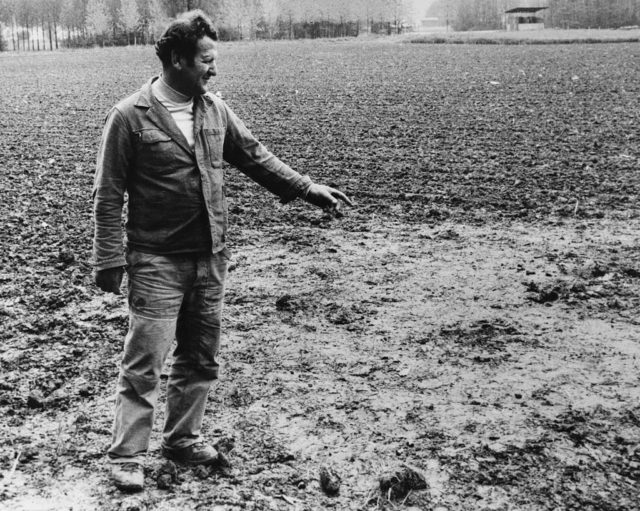
Unidentified man points to the spot where the coffin of Charlie Chaplin was found in a field near the village of Noville, Switzerland, May 19, 1978. (Photo Credit: Getty Images)

The body-snatching duo decided they had to do something with Chaplin’s corpse and quickly. So they found a quiet cornfield outside the nearby village of Noville, near where the Rhone River enters Lake Geneva about a mile away from the Chaplin Mansion. Here they dug a large hole and buried the heavy oak coffin with Chaplin in it. Then they waited until the heat died down. Meantime, rumors were flying. Did souvenir hunters steal the body? Was it a carnival sideshow that stole the Little Tramp? Was Chaplin to be buried in England, as he had once requested? The old Nazi speculation about Chaplin’s Jewish ancestry cropped up theorizing that the corpse had been removed for reburial in a Jewish cemetery. All that was forgotten when the kidnappers called Oona Chaplin demanding a $600,000 ransom for the return of the body. The crooks hadn’t counted on what happened next. Suddenly, the Chaplin family, besieged by people wanting the ransom and claiming they had the body, demanded proof that her husband’s remains were actually in their possession.

Roman Wardas and Gantscho Ganew (Photo Credit: Getty Images)

Yikes! Body snatchers Wardas and Ganev had no choice but to schlep back to that field, dig up the coffin, and take a photograph of it as proof that they were the real graverobbers. They quietly excavated the casket and took a photo of it alongside the hole in that cornfield. Then, the two dim-witted graverobbers called the Chaplin Mansion. Well, at least they tried to call. Turns out the number was unlisted so the numbskulls fished around to local reporters, pretending to be reporters themselves, to get the phone number. Needless to say, when the authorities were informed of the scheme, they did not discourage it. At the request of law enforcement, Chaplin’s widow Oona stalled the criminals as she pretended to acquiesce to their ransom demands. At first, Oona refused to pay the ransom, stating “My husband is in heaven and in my heart” arguing that her husband would have seen it as “rather ridiculous”. In response, the criminals made threats to shoot her children. After which, she directed the fiends to the family’s lawyer, who exchanged several telephone calls with the criminals, supposedly while negotiating a lower ransom demand. These stall tactics worked well enough that the police had time to wiretap the phone and trace where the calls were coming from. The savvy criminals used a different telephone box in the Lausanne area for every call, being careful to never use the same call box twice. Undeterred, the investigators enlisted an army of officers to keep tabs on the over 200 telephone boxes in the area. On May 16 (76 days after the grave robbery) the police finally arrested the two men at one of those call boxes.

Oona & Charles Chaplin’s Graves Today.

When taken back to the station, the foolish crooks couldn’t remember the exact spot in the cornfield where they had hidden the coffin. The police swarmed the area with metal detectors and were eventually able to find Chaplin’s remains thanks to the casket’s metal handles. In December of 1978, Roman Wardas and Gantscho Ganev were facing twenty years on charges of desecration of a corpse and extortion. In court, Wardas stated that he had asked Ganev to help him steal the coffin, promising that “the ransom would help them both survive in an environment where employment had not come so readily to them”. Wardas claimed that both men were political refugees and that he had left Poland in search of work, but was virtually destitute in Switzerland. The deranged duo saw the body theft as a “viable financial decision”. The pair had disinterred the coffin and placed it in Ganev’s car, then drove it to the field. Wardas explained in court that “the body was reburied in a shallow grave“ and that he “did not feel particularly squeamish about interfering with a coffin…I was going to hide it deeper in the same hole originally, but it was raining and the earth got too heavy.” In court, the Chaplin family lawyer, Mr. Jean-Felix Paschoud, asked to speak to “Mr. Rochat”, with whom he had exchanged the ransom calls. Wardas hesitantly stood up from his seat and was wished “good morning” by lawyer Paschoud. Wardas explained that it was he, under the name “Mr. Rochat”, who had made the infamous ransom and threatening phone calls to the family.

Ganev, whom the Swiss court described as “mentally subnormal”, testified coldly that “I was not bothered about lifting the coffin. Death is not so important where I come from.” Ganev testified that he had been imprisoned in Bulgaria after trying to flee to Turkey before finally making his way to Switzerland only to find meager wages working as a mechanic. Ganev claimed that his involvement in the crime was limited only to the excavation, transportation, and reburial of the body, and he had no knowledge of any ransom demand. In testimony, Ganev didn’t think the body snatching was any big deal and acted shocked at the public’s outrage to the crime. When sentencing came down, he was given an 18-month suspended sentence. However, Wardas, whom Ganev had identified as the true mastermind behind the body snatching, was sentenced to 4 ½ years of hard labor. Both men wrote letters to Oona expressing genuine remorse for their actions. Oona accepted their apologies answering, “Look, I have nothing especially against you and all is forgiven.”

Ganev and Wardas faded from view and were never heard from again. The only unanswered question remaining: did they ever open the casket? As for Chaplin’s body, it was reburied in the original plot. This time under an impregnable concrete tomb (reportedly six feet thick) to prevent any future grave robbing attempts. Chaplin’s final resting place is neat and simple and now his beloved Oona (who died on September 27, 1991, at the age of 66) rests alongside him. Just to the left of the Chaplin plot is the simple grey headstone of another movie star of the Golden Age: James Mason, a close friend of Charlie Chaplin who lived nearby and died in Lausanne in 1984.

Chaplin’s legacy extended well into the computer age. His iconic Tramp character was utilized as spokes mascot for the original IBM microcomputer from 1981 to 1987 and reappeared briefly in 1991. Not to be outdone, Apple Macintosh utilized Chaplin’s Tramp for their Macintosh 128K (aka “The MacCharlie”) made by Dayna Communications. Although the ad campaign only lasted a couple of years (1985-87) it remains as a testament to the staying power of a century-old mascot created by one man: Charlie Chaplin.

Black History, Criminals, Music, Pop Culture

The Lonesome Death of Hattie Carroll. Parts I & II.

Original Publish Date February 6, 2025.

https://weeklyview.net/2025/02/06/the-lonesome-death-of-hattie-carroll-part-1/

On August 28, 1963, Baptist minister Martin Luther King Jr. delivered his “I Have a Dream” speech to over 250,000 civil rights supporters during the March on Washington for Jobs and Freedom from the steps of the Lincoln Memorial in Washington, D.C. In that speech, King called for civil and economic rights and an end to racism in the United States. The speech became the foundation of the civil rights movement and is among the most iconic speeches in American history. Sharing the steps that day was a curly-haired mop-top folk singer named Bob Dylan. This is a story, an insight into the fertile mind of America’s greatest living singer/songwriter. A story most of you have likely never heard.

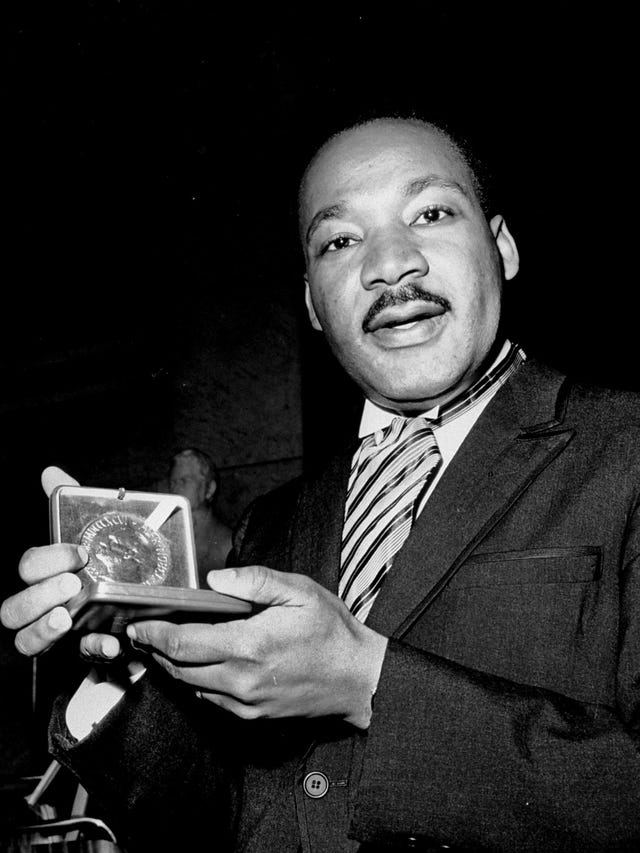
Dr. Martin Luther King, Jr. with his Nobel Prize.

Born Robert Allen Zimmerman on May 24, 1941, in Duluth, Minnesota, the youngster grew up listening to Hank Williams on the Grand Ole Opry. In his biography, Dylan wrote: “The sound of his voice went through me like an electric rod.” Soon, he began to introduce himself as “Bob Dylan” as an ode to poet Dylan Thomas. In May 1960, Dylan dropped out of the University of Minnesota at the end of his first year. In January 1961, he traveled to New York City in search of his musical idol Woody Guthrie, who was suffering from Huntington’s disease at Greystone Park Psychiatric Hospital in New Jersey. As a young man, Dylan read Guthrie’s 1943 autobiography, “Bound for Glory”, and Guthrie quickly became Dylan’s idol and inspiration.

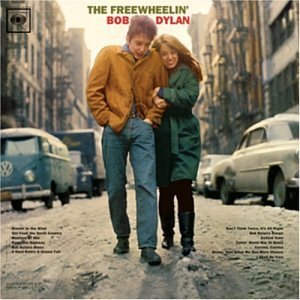
By May 1963, with the release of his second album, The Freewheelin’ Bob Dylan, the Minnesota folksinger was on the rise as a singer/songwriter. On June 12, 1963, civil rights activist Medgar Evers was assassinated in Jackson, Mississippi. Evers was a veteran U.S. Army soldier who served in a segregated unit during World War II and as the NAACP’s first field secretary in Mississippi. Evers’s death spurred Dylan to write “Only a Pawn in Their Game” about the murder. The song exonerates Evers’s murderer as a poor white man manipulated by race-baiting politicians and the injustices of the social system. At the request of Pete Seeger, Dylan first performed the song at a voter registration rally in Greenwood, Mississippi on July 6, 1963. Two weeks later (August 7) Dylan recorded several takes of the song at Columbia’s studios in New York City, only to select the first take for his album The Times They Are a-Changin’.

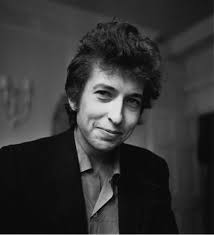
Bob Dylan.

Likely at the urging of Pete Seeger, who was busy preparing for a tour of Australia at the time, Dylan, and then-girlfriend Joan Baez, traveled to Washington DC for the March on Washington rally. Of that day, in the 2005 documentary No Direction Home, Dylan recalled, “I looked up from the podium and I thought to myself, ‘I’ve never seen such a large crowd.’ I was up close when King was giving that speech. To this day, it still affects me in a profound way.” On that day, Dylan performed “Only a Pawn in Their Game” and “When the Ship Comes In.” The songs were received with only scattered applause, likely because many marchers did not agree with the sentiments of the song. The famously reflective and observant Dylan walked away from that day contrarily looking inward.

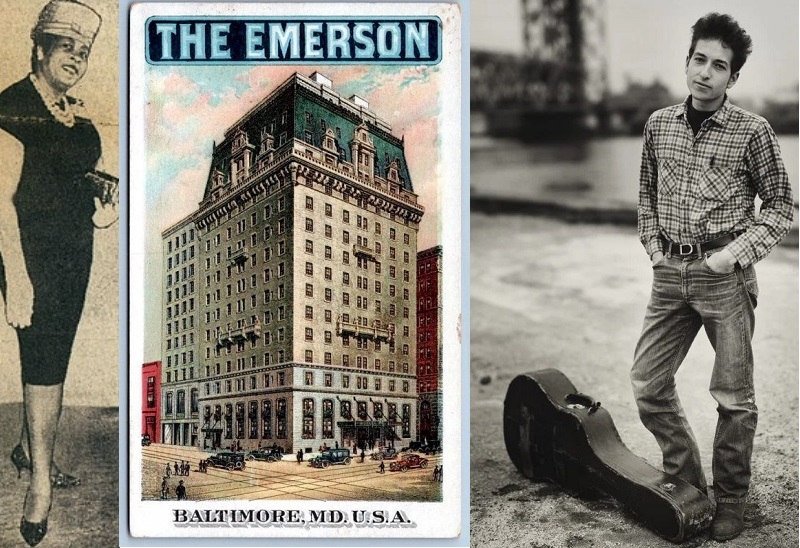
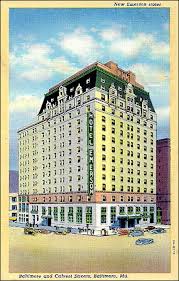
According to a 1991 Washington Post article, while on the journey home to New York City the 22-year-old Dylan read a newspaper article about the conviction of a white man from a wealthy Maryland family named William Devereux “Billy” Zantzinger (1939-2009) for the death of a 51-year-old African-American hotel service worker named Hattie Carroll on February 9, 1963, at the Spinsters’ Ball at the Emerson Hotel in Baltimore, Md. The white tie event was a debutante ball designed to introduce women in their late 20s to the “right” sort of men. The details of the event are just as shocking today as they must have been to Dylan 62 years ago.

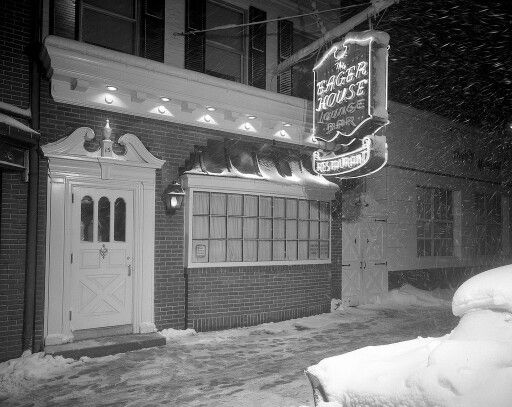
Baltimore’s Eager House restaurant.

On February 8, 1963, 24-year-old Zantzinger attended the event with his father, a former member of the Maryland House of Delegates and the state planning commission who ran one of the most prosperous tobacco operations in Charles County. Before the ball, the Zantzingers stopped for an early dinner and cocktails at downtown Baltimore’s Eager House restaurant. According to witnesses, once at the Spinster’s Ball, a drunken Zantzinger stumbled into the ballroom wearing a tophat with white tie and tails and a carnation in his lapel and carrying a 25-cent wooden toy cane. “I just flew in from Texas! Gimme a drink!” a laughing Billy shouted to the packed crowd of 200 guests. Witnesses said that he was “pretending to be Fred Astaire and when he wanted a drink, he used the cane to tap smartly on the silver punch bowl; when a pretty woman whom he knew waltzed by, he’d tap her playfully, all in fun, no offense, of course.” By 1:30 in the morning, Billy’s mood had darkened and the imposing 6’2″ Zantzinger began to assault hotel workers with his cane, poking and slapping them with it at will. His targets of drunken rage included a bellboy, a waitress, and barmaid Hattie Carroll.

Emerson Hotel in Baltimore, Md.

First Zantzinger berated a 30-year-old black employee named Ethel Hill, 30 years old from Belkthune Avenue in Baltimore, with the worst of racial slurs as she was clearing a table near the Zantzingers. Billy asked the young woman about a firemen’s fund, and then, as the police reported it later, she was struck across the buttocks “with a cane of the carnival prize kind.” As she tried to move away, Billy followed her, repeatedly striking her on the arm, thighs, and buttocks. Mrs. Hill wasn’t seriously injured, but her arm hurt, causing her to flee the room in tears.

Next, the cane was used against a bellhop, accentuated with more insults toward the young man, calling him a “Black SOB.” Billy then attacked another employee by yanking the chain around the wine waiter’s neck. When Billy’s 24-year-old wife, Jane, tried to calm him down, he collapsed on top of her in the middle of the dance floor and began hitting her over the head with his shoe. When another guest tried to pull the madman off, Zantzinger thumped him too. Then, temporarily regaining his composure, he stood up and dusted himself off, and the University of Maryland student decided he needed another drink. That is when Zantzinger first encountered Hattie Carroll.

Part II Original Publish Date February 13, 2025.

https://weeklyview.net/2025/02/13/the-lonesome-death-of-hattie-carroll-part-2/

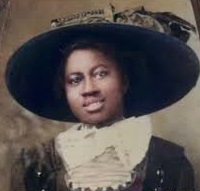
On the night of February 8, 1963, 51-year-old African-American hotel service worker Hattie Carroll was at work behind the bar as an extra employee for special functions and “ballroom events” at the Emerson Hotel in Baltimore, Md. Hattie was active in local social work as a longtime member of the Gillis Memorial Church in that city. The mother of 11 children, Hattie lived with two of her daughters, a 14-year-old and an 18-year-old, her other nine children were all older and married. While a hard worker, she suffered from an enlarged heart and had a history of hypertension.

Hattie Carroll

Zantzinger strode to the bar at a quarter til two and demanded a bourbon and ginger ale. Hattie was busy with another guest when Billy barked out his order. Proud of his prior actions, the drunkard turned his rage on Hattie Carroll whom he accused of not bringing him his bourbon fast enough, again hurling the “N-word” around the room loudly. According to the court transcript, despite the repeated indignations, Hattie replied, “Just a moment sir” and started to prepare his drink. Hattie, now nervous from the berating, fumbled with the glass. Zantzinger shouted, “When I order a drink, I want it now, you black b….!” When Hattie replied that she was hurrying as best she could. Zantzinger again berated her for being too slow and “struck her a hard blow on her shoulder about halfway between the point of her shoulder and her neck.” She shouted for help and slumped against the bar, looking dazed.

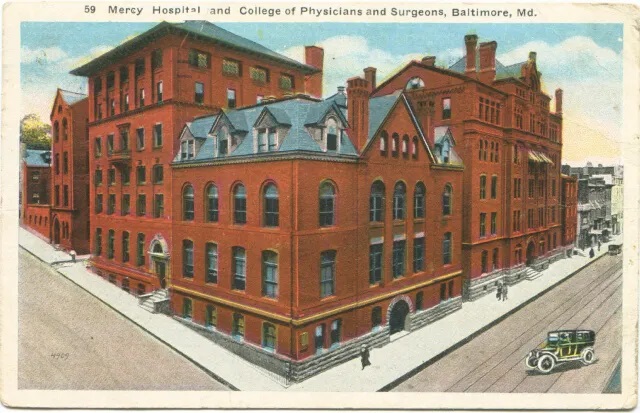
Mercy Hospital in Baltimore, Md.

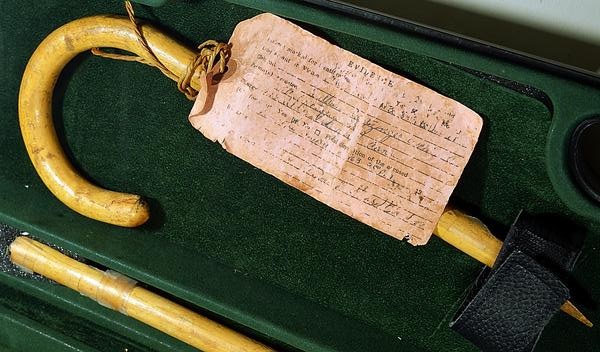
Within five minutes after being struck with the cane, Hattie slumped against another barmaid and said she was feeling sick. Coworkers said that Carroll complained, “I feel deathly ill, that man has upset me so.” Her coworkers helped Hattie to the kitchen. Hattie said her arm had gone numb and her speech became labored just before she collapsed. A hotel official called for an ambulance and the police. The unconscious Hattie Carroll was hospitalized at Mercy Hospital where she died eight hours later at 9 a.m. on February 9, 1963, never having regained consciousness. Her autopsy showed she suffered from hardening of the arteries, an enlarged heart, and high blood pressure. A post-mortem spinal tap confirmed that a brain hemorrhage was the cause of her death. When the wooden cane was found later, it was broken in three places.

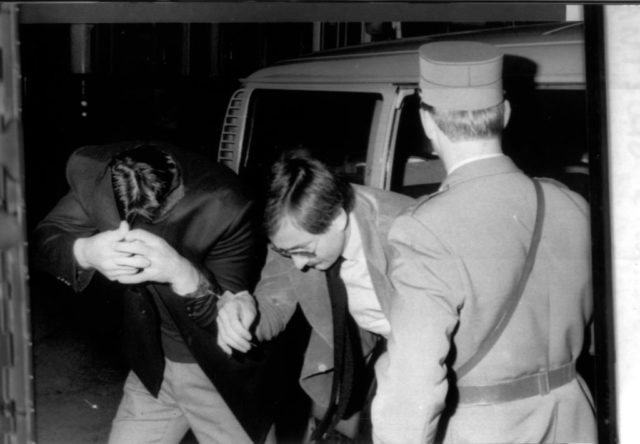
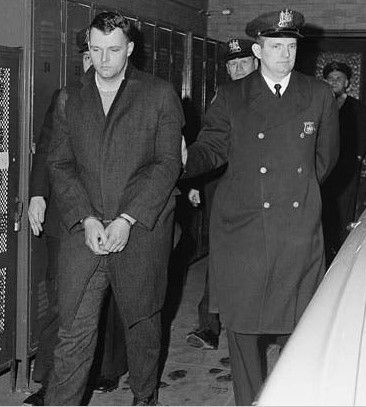
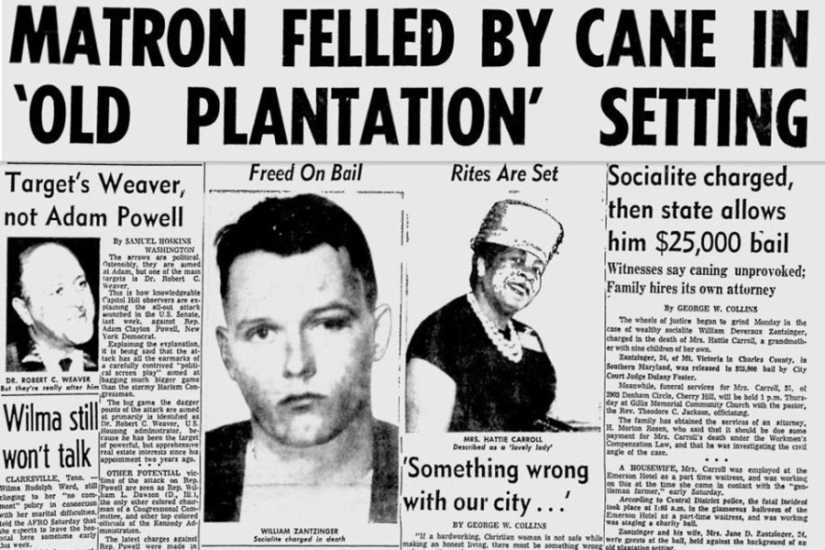
Billy Zantzinger after his 1963 arrest.

Police arrested Zantzinger on the spot for disorderly conduct plus two charges of assault “by striking with a wooden cane.” As they escorted him out through the hotel lobby, the officers were attacked by Zantzinger and his wife. Patrolman Warren Todd received multiple bruises on his legs; Zantzinger received a black eye. Billy Zantzinger spent the rest of those predawn hours in jail, and his wife was released. While Hattie Carroll was taking her last breath, Zantzinger stood in the Central Municipal Court in front of Judge Albert H. Blum, still wearing his white tux and tails, the carnation still in the lapel, though now without his white bow-tie and tophat. Billy pleaded not guilty to the charges and was released on $600 bail. At 9:15 that same morning, Judge Blum was notified of Hattie Carroll’s death. Zantzinger was charged with homicide and a warrant for his re-arrest was issued. It was the first time in the history of the state of Maryland that a white man had been charged with the murder of a black woman.

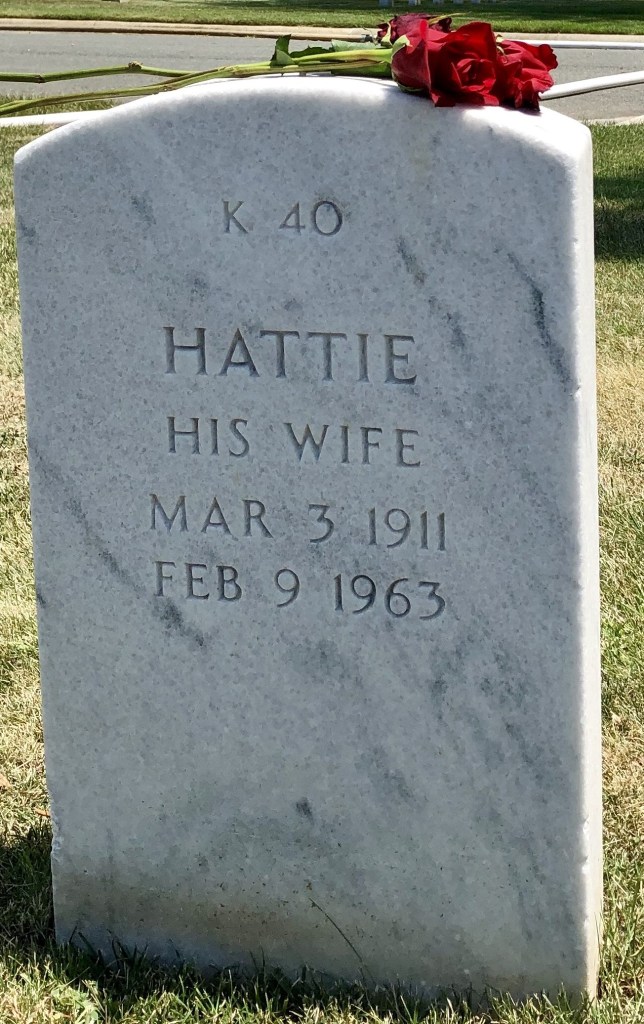
Hattie Carroll’s Grave in Baltimore.

Zantzinger’s only excuse for these indefensible actions was that he had been extremely drunk and could not remember the attack. His wealthy family retained a top-notch lawyer who managed to get the charges reduced to manslaughter and assault. The trial was moved from Baltimore to the more racially friendly Hagerstown. The attorney proposed that it was the victim’s stress reaction to his client’s verbal and physical abuse that led to the intracranial bleeding, rather than the blunt-force trauma from the blow (that left no physical marks) that killed her. The attorney contended that Hattie was a large, overweight woman with a history of high blood pressure. She could have suffered a fatal stroke at any time. His client was just a victim of circumstances. On August 28, the same day as Dr. King’s “I Have a Dream” speech, Zantzinger was convicted on all charges and sentenced to six months’ imprisonment in county jail. With time off for good behavior, he was home in time for Christmas. He was fined $125 for assaulting the other members of the hotel staff.

Zantzinger

Upon learning these details, Dylan decided to write a protest song about the case. The song was written in Manhattan while Dylan sat alone in an all-night cafe. The song was “polished” by Dylan at the Carmel, California home of Joan Baez, his then-lover. Nancy Carlin, a friend of Baez who visited the home at the time, recalled: “He would stand in this cubbyhole, beautiful view across the hills, and peck type on an old typewriter…there was an old piano up at Joan’s…and [Dylan would] peck piano playing…up until noon he would drink black coffee then switch over to red wine, quit about five or six.” The result was the song “The Lonesome Death of Hattie Carroll.” It was recorded on October 23, 1963, and quickly incorporated into his live performances. The song was released on February 10, 1964, a year and a day after Zantzinger’s conviction and 61 years ago this week.

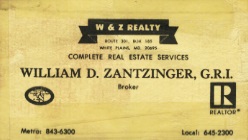
Billy Zantzinger’s business card.

But whatever happened to Billy Zantzinger, the child of white privilege who got away with murder? Zantzinger didn’t have any difficulty at all settling back into Charles County society. He inherited the family tobacco farm which included several “shanties” that he rented to the poor Black population. Billy was a nice fun-loving guy whose neighbors all liked him. But years later, Billy facing financial ruin, began to sell off sections of the 265-acre family estate farm which eventually led him into real estate. He ran a nightclub in La Plata, opened a small weekends-only antique shop, and promoted himself as an appraiser and auctioneer. He was active with the Chamber of Commerce and was elected Chairman of the board of trustees of the Realtors Political Action Committee of Maryland in 1983. Even though Zantzinger ostentatiously drove a Mercedes-Benz sporting a specialized license plate reading “SOLD2U,” the Maryland Terrapin Frat boy quickly got behind in paying his county, state, and federal taxes, both business and personal.

Billy Zantzinger’s cane on display at the Washington County Museum of Arts in Hagerstown, Maryland.

By 1986, the Internal Revenue Service had seized all of his properties. The Washington Post reported that Zantzinger continued to act as landlord of the rental properties on this confiscated land, collecting outrageous amounts of rent for his “shanties” described in the local newspaper as “some beat-up old wooden shacks in Patuxent Woods” even though the hovels had no running water, no toilets, and no heating. Over five years, he collected thousands of dollars from properties he no longer owned. In June of 1991 for his actions, he was charged with “unfair and deceptive trade practices.” After pleading guilty to 50 misdemeanor counts, he was sentenced to 19 months in prison and fined $50,000. A far cry from the six-month sentence and $125 fine in connection with the attack and death of Hattie Carroll 27 years earlier. During sentencing, Zantzinger said, “I never intended to hurt anyone, ever, ever,” Zantzinger said, pleading for leniency; “it’s not my nature.”

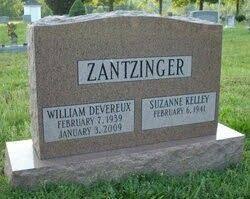
William Devereux “Billy” Zantzinger’s grave.

The lasting irony of this story is that William Zantzinger was born on February 7, 1939, almost 25 years to the day of light sentencing for the death of Hattie Carroll. He died on January 3, 2009, just a few days before we as a nation celebrate Dr. Martin Luther King, Jr. day every year. Zantzinger is forgotten, barely a footnote in American history while the story of Hattie Carroll will live on forever in Bob Dylan’s song. Hattie’s story is just one of the reasons why Bob Dylan is the greatest American singer/songwriter of all time. Dylan ranks everyone. His earliest idol Hank Williams Sr., known as the “Hillbilly Shakespeare,” would have made a run at Dylan for the title, but Hank checked out way too soon. Dylan has been around for over 60 years (and counting) with an estimated figure of more than 125 million records sold worldwide (and counting). Dylan’s value to music is incalculable. Not only for what Encyclopedia Britannica called his “sophisticated lyrical techniques to the folk music of the early 1960s, infusing it with the intellectualism of classic literature and poetry” but also for his ability to crystalize social issues at the most opportune times in this country’s history.

Hollywood, Music, Pop Culture, Weekly Column

The Monster Mash Gets Banned!

Original publish date October 7, 2021.

https://weeklyview.net/2021/10/07/the-monster-mash-gets-banned/

https://www.digitalindy.org/digital/collection/twv/id/3927/rec/246

Quick, what do Bing Crosby, David Bowie, Elvis Presley, The Beatles, Frank Sinatra, The Wizard of Oz, ABBA, Queen, The Everly Brothers, Johnny Cash, The Rolling Stones, The Sex Pistols, Donna Summer, Perry Como, Bob Dylan, Glenn Miller, The Kinks, The Who, Louis Prima, Liberace, Ella Fitzgerald, and “The Monster Mash” have in common? At one point or another, all of these artists, or one of their songs, have been banned by BBC radio.

Looking at that list, some are no-brainers, others are head-scratchers. Reasons for bans range from the very British reasons of “lyrics are too tragic” (Everly Brothers “Ebony Eyes”) to “connotations with armies and fighting” (ABBA’s “Waterloo” during the Gulf War). David Bowie’s “Space Oddity” was banned until AFTER the Apollo 11 crew landed and safely returned. Paul McCartney & Wings song “Give Ireland Back to the Irish” is not a hard one to figure out but how about Bing Crosby’s “Deep in the Heart of Texas”? In 1942, the BBC banned the song during working hours on the grounds that its infectious melody might cause wartime factory workers to neglect their tools while they clapped along with the song. Oh, those proper Brits.

Some bans are humorous and fairly obvious. Louis Prima’s 1945 World War II song “Please No Squeeza Da Banana” (admit it, you giggled) was specifically sent out by the New Orleans jazz great to the GI’s returning home from World War II. And the Wizard of Oz film’s “Ding Dong the Witch is Dead” was banned after the death of Margaret Thatcher 74 years after the movie debuted (it still made it to # 2 on the British charts).

But the REAL head-scratcher this time of year? This Saturday marks 59 years since Bobby Pickett’s “Monster Mash” was banned by the BBC. On October 20, 1962, the BBC claimed the song was “too morbid” for airplay. The traditional autumnal anthem was released in August of 1962 during the height of summer but cemented its place in music history when it reached number one on the U.S. charts just in time for Halloween of that year.

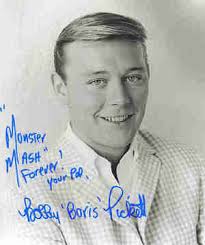
Bobby Pickett of “Monster Mash” fame.

The song is narrated by a mad scientist whose monster creation rises from his slab to perform a new dance routine. The dance soon becomes “the hit of the land,” and the scientist throws a party for other monsters, including the Wolfman, Igor, Count Dracula, and a pack of zombies. The mad scientist explains that the twist has been replaced by the Monster Mash, which Dracula embraces by joining the house band, the Crypt-Kicker Five. The story closes with the mad scientist inviting “you, the living” to the party at his castle. The song used primitive, yet effective, sound effects: pulling a rusty nail out of a board to simulate a coffin opening, blowing water through a straw to mimic a bubbling cauldron, and chains dropped onto a tile floor to ape the monster’s movements.

Bobby Boris Pickett performing on Dick Clark’s American Bandstand TV show.

Bobby Pickett and Leonard Capizzi wrote the anthem and, as the song notes, recorded it with the “Crypt Kicker Five” consisting of producer Gary Paxton, Johnny MacRae, Rickie Page, Terry Ber, and pianist Leon Russell. Yes, THAT Leon Russell. The Rock ‘n Roll Hall of Famer was famously late for the session. And the backup singers on the original single? They were led by none other than Rock ‘n Roll Hall of Famer Darlene Love (“He’s a Rebel”). Mel Taylor, drummer for the Ventures, is sometimes credited with playing on the record as well.

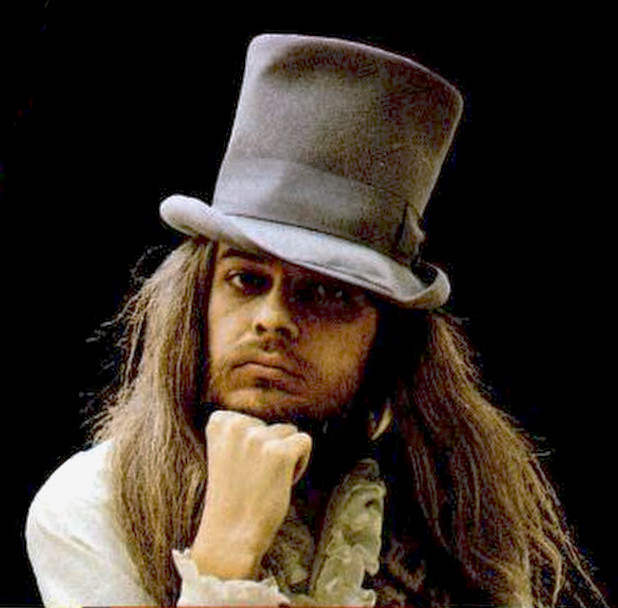
Leon Russell.

The song came about quite by accident. Bobby Pickett, a Korean War vet, and aspiring actor was fronting a band called the Cordials at night and going to auditions during the day. One night, on some long-forgotten nightclub stage with his band, Pickett ad-libbed a monologue in the distinctive lisping voice of horror movie star Boris Karloff while performing the Diamonds’ “Little Darlin’.” Karloff, the distinctive British actor perhaps best remembered for voicing the Grinch, conquered a childhood stutter but never lost his idiomatic lisp.

The audience loved it, and the band encouraged Pickett to do more with the Karloff imitation. It wasn’t long before Bobby changed his name to “Boris” and a Halloween icon was born. In the song, Pickett not only imitates Boris Karloff but also Bela Lugosi as Count Dracula complaining “Whatever happened to my Transylvania Twist?” and actor Peter Lorre as Igor, despite the fact that Lorre never played that character on screen. Every major record label declined the song, but after hearing it, Crypt Kicker Fiver member Gary S. Paxton agreed to produce and engineer it on his Garpax Records label. The single sold a million copies, reaching number 1 on the Billboard Hot 100 chart for two weeks before Halloween in 1962 (it remained on the U.S. charts for 14 weeks).

The song cemented its generational appeal when it re-entered the U.S. charts twice, in August 1970, and again in May 1973 when it peaked at #10. The UK ban was reversed in 1973, 11 years after the song was released. In October of that year, it officially became a British “graveyard smash” when it charted at number three in the UK. For the second time, the record sold over one million copies. To celebrate the resurgence, Bobby and the Crypt-Kickers toured Dallas and St. Louis around the 1973 Halloween holiday. On this tour, the Crypt-Kickers were composed of Brian Ray, longtime guitarist for Paul McCartney, and folk singer Jean Ray who allegedly was the inspiration for Neil Young’s “Cinnamon Girl.” Pickett frequently toured around the country performing the “Mash,” at one point employing the Brian Wilson-less dry-docked Beach Boys and a very young Eddie Van Halen in his backing band.

Although many listeners were introduced to Pickett’s Monster Mash strictly as a novelty song worthy of Dr. Demento, turns out it was a well-orchestrated musical slot machine whose number hit every decade or so. Pickett tapped in on three distinct national trends colliding simultaneously during those pre-British invasion years. First, the reintroduction of the Universal monster movies at drive-in theatres and on syndicated television. Second, American pop music of the late ‘50s and early ‘60s was populated by novelty songs like “Itsy Bitsy Teenie Weenie Yellow Polkadot Bikini,” “The Name Game,” “Hello Muddah, Hello Fadduh,” and “The Purple People Eater.” And third, the pop charts were awash with dance songs, from Chubby Checker’s “The Twist” and “Pony Time”, the Orlons “Wah-Wahtusi,” Little Eva’s “Loco-Motion,” to Dee Dee Sharp’s “Mashed Potato Time.”

Monster Mash Co-songwriter Leonard “Lenny” Capizzi.

Pickett’s co-songwriter, Lenny Capizzi, an otherwise mildly successful backup singer, profited from the song right up until he died in 1988. After Pickett landed a recording contract, he remembered his friend Lenny and their brainstorming jams. It had been Capizzi who encouraged Pickett to further utilize his unique impressionist skills in the first place. With the studio album nearly complete, Pickett called Lenny in at the last minute to see if his old pal could jazz up some tracks. But with most of the production money spent, all he could offer Capizzi was second-place songwriter credits. That tiny second-place billing on the single turned out to be the goose that laid the golden egg.

Lenny made a small fortune when “Monster Mash’ charted in 1962. However, it was a payday he spent foolishly on a drug-fueled rock ‘n roll lifestyle. In the early ‘70s, as “Monster Mash” was re-charting, the royalties began rolling in again, this time from both sides of the pond. Alas, within a short time, Lenny was broke again. But every time the song came back — either from airplay in its original version or as a cover (the Beach Boys, Vincent Price, Sha-Na-Na, and many others covered the song) — the royalty checks reappeared. If Pickett hadn’t already spent the original production money by the time Lenny stepped in, Capizzi would have been paid as a one-time session musician and that would have been the end of it. Instead, Lenny stepped in for an afternoon’s work for no money and accepted a co-writer’s credit for a dubious hit. When asked years later about the song, Capizzi couldn’t even recall his contribution.

Crypt Kicker Five Member Gary Paxton Producer of the song Alley Oop.

The song was inspired by Crypt-kicker Five member Gary Paxton’s earlier novelty hit “Alley Oop.” Paxton (1939-2016) built a reputation as an eccentric figure in the 1960s recording industry. Brian Wilson was known to admire his talents and Phil Spector feared him. His creativity and knack for promotion were legendary. In 1965, he produced Tommy Roe’s hit “Sweet Pea.” The next two years, he produced “Along Comes Mary” and “Cherish” both hits for the Association, and followed it up with another for Roe, “Hooray for Hazel.” Paxton moved toward the Bakersfield sound in the late 1960s, concentrating on country music.

Phil Spector and Darlene Love in studio in 1963.

Darlene Love, “Monster Mash” backup singer, told Billboard magazine’s Rob LeDonne in 2017, “We had a hard time doing it because it was totally ridiculous. When you do a song like that, you never think you’re going to be famous or that it’ll be a hit. We sat down to listen to the song to try to figure out what the background was going to be. He had to sing his vocals so we could figure out where to come in. It made it more fun, with him singing his line and then us answering him.” For his part, Pickett told The Washington Post, “The song wrote itself in a half hour and it took less than a half-hour to record it.”

On April 25, 2007, Bobby (Boris) Pickett, whose novelty voice talents on “Monster Mash” made him one of pop music’s most enduring one-hit wonders, died in Los Angeles from leukemia at age 69. Pickett was still performing the song live on stage until November 2006, five months before his death. Alongside Michael Jackson’s “Thriller,” Pickett’s “Monster Mash,” the song that started out with zero expectations 59 years ago this week, has firmly planted itself as a seasonal standard. And what about the dance? Was there ever a dance created for the song? Well, yes actually, there was. Turns out the Monster Mash is simply a Peanuts-meets-Frankenstein-style stomp-about accented by monster gestures made by outstretched arms and hands. Don’t expect to see that one on Dancing With The Stars any time soon.

Health & Medicine, Hollywood, Indianapolis, Music, Pop Culture, Television

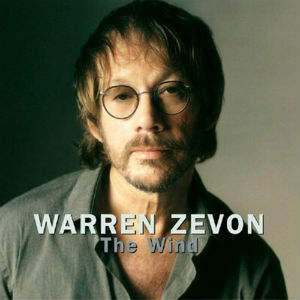
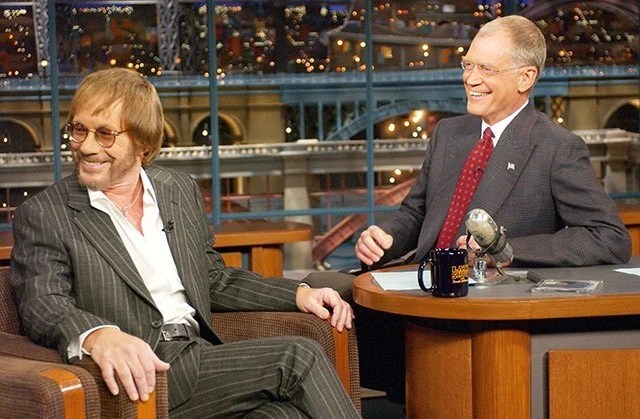
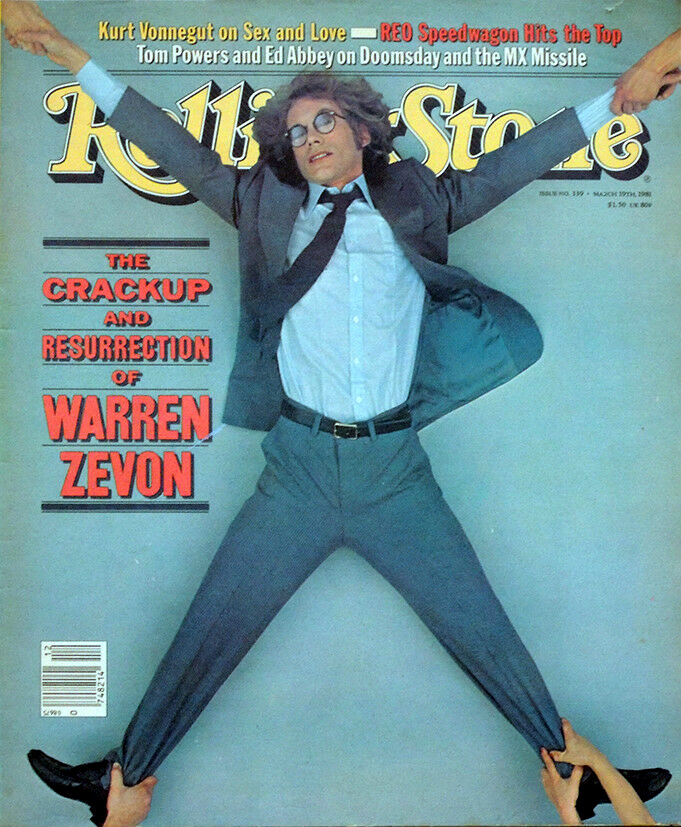
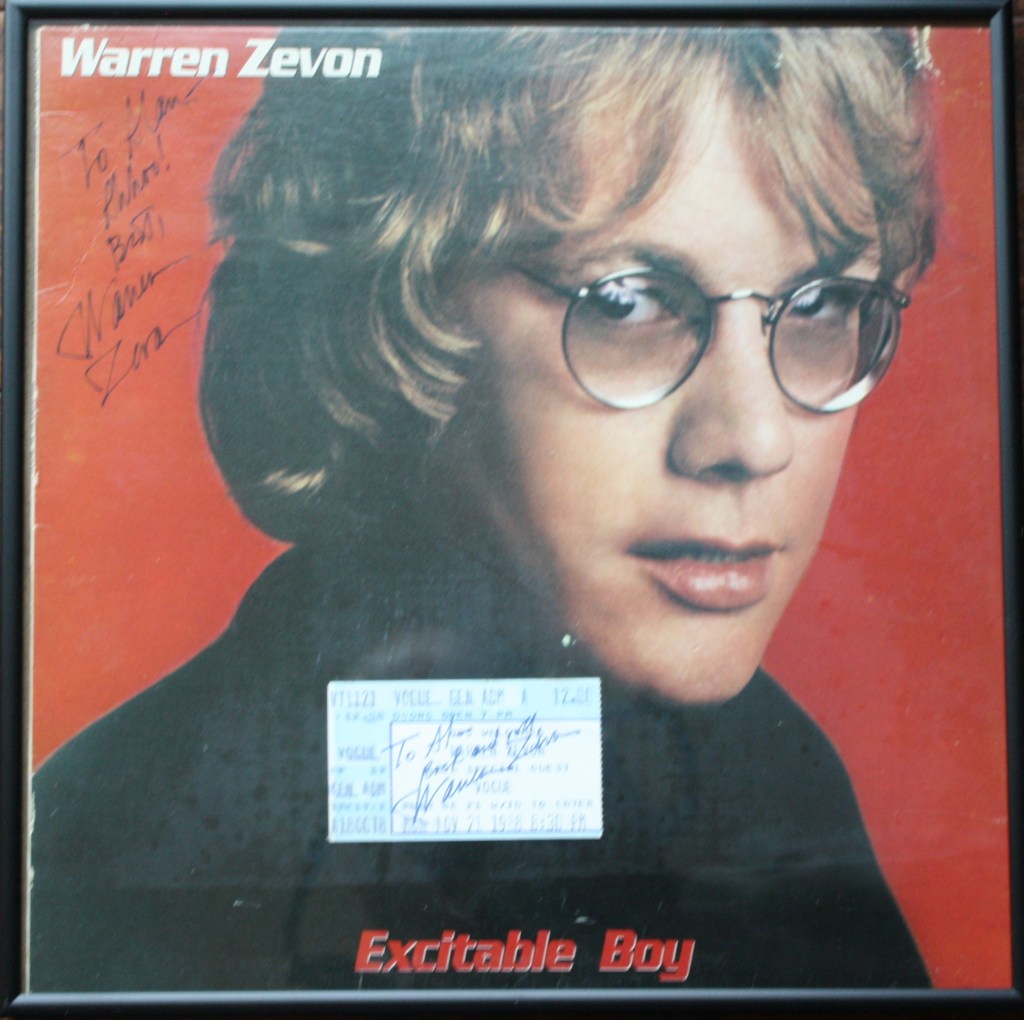
Warren Zevon — Accidentally Like a Martyr.

Publish Date September 12, 2024. This column first appeared in August 2013.

https://weeklyview.net/2024/09/12/warren-zevon-accidently-like-a-martyr-2/

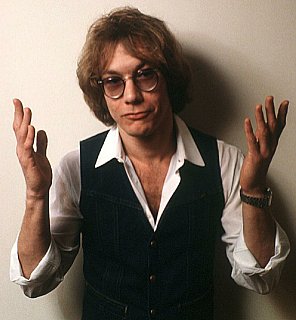
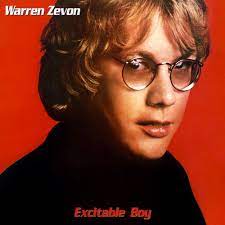
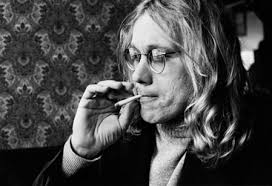
Warren Zevon 1992.

It’s hard to believe it’s been a decade since Warren Zevon died. If the name is not familiar to you, his songs might be: “Werewolves of London,” “Poor, Poor Pitiful Me,” or “Lawyers, Guns and Money” should ring a bell. Zevon was considered the rock star’s rock star, known for his songwriting talents in songs that showcased his quirky, sardonic wit in the dark humor of his ballads. Rock ‘n’ roll royalty like Jackson Browne, Bruce Springsteen, Bob Dylan, and Neil Young praised his talents and called him friend. Born in Chicago, Illinois, on January 24, 1947, he became the quintessential West Coast rocker, literally living the LA lifestyle right up until his death on September 7, 2003.

It’s easy to figure out why musicians thought Warren Zevon was so cool. From his earliest days, his personal pedigree made Warren unique and different. Zevon was the son of Beverly and William Zevon. His mother was from a Mormon family and his father was a Jewish immigrant from Russia whose original surname was “Zivotovsky.” William was a bookie who handled volume bets and dice games for notorious Los Angeles mobster Mickey Cohen. Known as Stumpy Zevon in Cohen’s employ, he was best man at Mickey’s first marriage and worked for him for years.

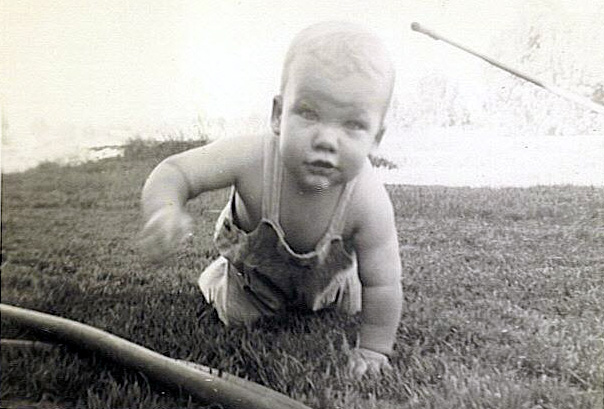
Warren William Zevon was born on January 24, 1947.

The family moved to Fresno, California when Warren was 13 years old. His British-born mother insisted that Warren take piano lessons. So Zevon started taking his lessons at the home of Igor Stravinsky, the  Russian-American composer, pianist and conductor widely considered to be one of the most important and influential composers of the 20th century. There, Warren briefly studied modern classical music, alongside future American conductor Robert Craft. Zevon’s parents divorced when he was 16 years old and he soon quit high school and moved from Los Angeles to New York to become a folk singer.

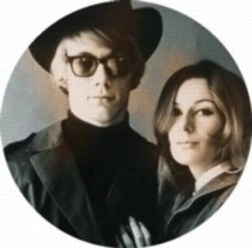
Lyme & cybelle

Zevon got his first taste of success with the song “Follow Me” as the male component of a musical coed duo called Lyme & Cybelle. He left the duo, citing artistic differences, and spent time as a session musician and jingle composer. He wrote several songs for the Turtles and another early composition (“She Quit Me”) was included in the soundtrack for the film Midnight Cowboy (1969). Zevon’s first attempt at a solo album, Wanted Dead or Alive (1969), was well-received but did not sell well. Zevon’s second effort, Leaf in the Wind, went unreleased.

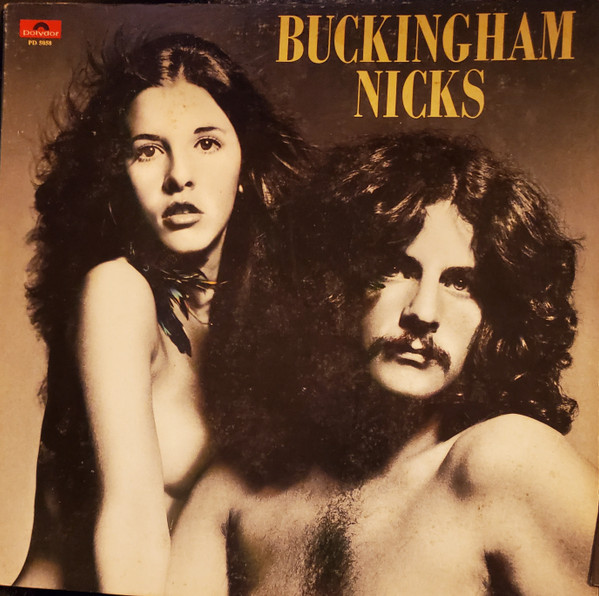
During the early 1970s, Zevon led the touring band for the Everly Brothers, serving as both keyboard player and band leader/musical coordinator. In the latter role Zevon became the first to recognize the talents of guitar player Lindsey Buckingham by hiring him for the band. It was during his time with the Everlys that Lindsey and girlfriend Stevie Nicks left to join Fleetwood Mac. Warren Zevon was a roommate of the famous duo in a Fairfax district apartment in Los Angeles at the time (September 1975). Zevon would remain friends with both for the rest of his life maintaining neutrality during the tumultuous breakups of both the Everly Brothers and Buckingham-Nicks.

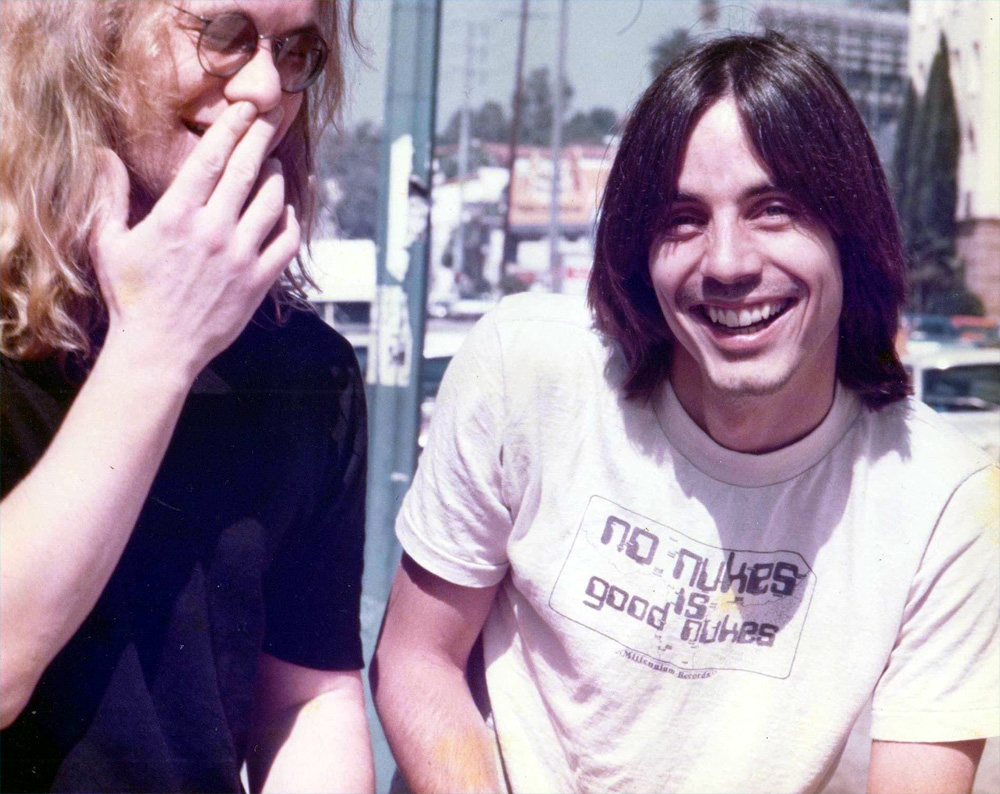
Warren Zevon & Jackson Browne.

In late 1975, Zevon collaborated with Jackson Browne, who produced and promoted Zevon’s self-titled major-label debut in 1976. Contributors to this album included Nicks, Buckingham, Mick Fleetwood, John McVie, members of the Eagles, Carl Wilson, Linda Ronstadt, and Bonnie Raitt. This first album, although only a modest commercial success, was later recognized by Rolling Stone magazine as a masterpiece. Although  Zevon shared a grounding in earlier folk and country influences with his LA peers, this album brought Zevon to the forefront as a much darker and more ironic songwriter than other leading figures of the era’s L.A.-based singer-songwriter movement. Rolling Stone placed Zevon alongside Neil Young, Jackson Browne, and Bruce Springsteen as one of the four most important new artists to emerge in the decade of the 1970s.

In 1978, Zevon released Excitable Boy to critical acclaim and popular success. This album received heavy FM airplay mostly through the release of the single “Werewolves of London,” featuring Fleetwood Mac’s Mick Fleetwood on bass and John McVie on drums. The song is considered a classic and has been covered by artists ranging from the Grateful Dead to Bob Dylan to comedian Adam Sandler. The song has become a Halloween season staple. For all you trivia buffs out there, The Chinese restaurant mentioned in the song (Lee Ho Fook) is a real location situated on Gerrard Street in London’s Chinatown.

Zevon & Billy Bob Thornton on set of Dwight Yoakam’s 2000 western “South of Heaven, West of Hell”.

Although Zevon never again achieved popular acclaim, he continued to be recognized as an artist’s artist, releasing nine more albums over the next 25 years. It was during that quarter-century that Zevon lapsed in and out of the throes of excess, obsession, and addiction. To say that Warren Zevon suffered from excessive compulsion disorder would be a severe understatement. Warren had a continuing battle with drug addiction and alcoholism and was also a sex addict obsessed with the color gray and personal fame, or lack thereof. During this time, he and actor Billy Bob Thornton formed a close friendship galvanized by a shared obsessive-compulsive disorder and the fact they were neighbors living in the same apartment building.

Warren Zevon is his gray t-shirt.

One of Zevon’s compulsions was collecting identical Calvin Klein T-shirts. Like everything else in his life (his car, his couch, his carpeting and wall paint), the T-shirts were gray. One story relates how Warren insisted upon traveling to every department store carrying Calvin Klein T-shirts while touring on the road. If the store carried Warren’s prized Gray Calvin Klein t-shirt, Warren obsessively purchased every one of them and stowed them in the tour bus. When asked why, Warren replied that the new ones were being made in China and that those still on the shelf had been made in the USA and were “sure to become collector’s items and go up in value.” When he died at age 56, thousands of gray Calvin Klein t-shirts were found in his LA apartment; unopened in their original packaging.

From left to right: Roy Blount Jr., Stephen King, James McBride, Amy Tan, Kathy Kamin Goldmark , Dave Barry, Matt Groening

A voracious reader, Zevon was friendly with several well-known writers who also collaborated on his songwriting during this period, including gonzo author Hunter S. Thompson, Carl Hiaasen, Mitch Albom, Norman Mailer, and Maya Angelou. Zevon served as musical coordinator and occasional guitarist for an ad-hoc rock music group called the Rock Bottom Remainders, a collection of writers performing rock and roll standards at book fairs and other events. This group included Stephen King, Dave Barry, Matt Groening, and Amy Tan, among other popular writers.

Zevon cemented his superstar status by appearing in various TV shows and movies during his career, most often playing himself. Zevon played himself on two episodes of Suddenly Susan in 1999 along with singer/actor Rick Springfield. Warren also appeared as himself on the Larry Sanders Show on HBO, alongside actor John Ritter as talk show guests in the same episode. Ironically, Zevon and Ritter would die within four days of each other.

Although highly intelligent, well-read, and obsessive-compulsive in every way, Zevon had a lifelong phobia of doctors. Shortly before playing at the Edmonton Folk Music Festival in 2002, he started feeling dizzy and developed a chronic cough. After a period of suffering with pain and shortness of breath, while on a visit to his dentist, Zevon was ordered under threat of kidnapping to see a physician. A lifelong smoker, he was subsequently diagnosed with inoperable peritoneal mesothelioma (cancer of the abdominal lining commonly associated with asbestos exposure). Refusing treatments he believed might incapacitate him, Zevon instead began recording his final album, The Wind, which includes guest appearances by close friends Bruce Springsteen, Don Henley, Jackson Browne, Timothy B. Schmidt, Joe Walsh, David Lindley, Billy Bob Thornton, Emmylou Harris, Tom Petty, and Dwight Yoakam, among others.

On October 30, 2002, Zevon was featured on the Late Show with David Letterman as the only guest for the entire hour. The band played “I’ll Sleep When I’m Dead” as his introduction. Zevon performed several songs and spoke at length about his illness. Zevon was a frequent guest and occasional substitute bandleader on Letterman’s television shows since Late Night was first broadcast in 1982. He noted, “I might have made a tactical error in not going to a physician for 20 years.” It was during this broadcast that, when asked by Letterman if he knew something more about life and death now, he first offered his oft-quoted insight on dying: “Enjoy every sandwich.” He  took time to thank Letterman for his years of support, calling him “the best friend my music’s ever had.” For his final song of the evening, and his final public performance, Zevon performed “Roland the Headless Thompson Gunner” at Letterman’s request. In the green room after the show, Zevon presented Letterman with the guitar that he always used on the show, with a single request: “Here, I want you to have this, take good care of it.”

Zevon was given only a few months to live after that fall of 2002 diagnosis; however, he lived to see the birth of twin grandsons in June 2003 and the release of The Wind on August 26, 2003. The album reached number 12 on the U.S. charts, Zevon’s highest placement since Excitable Boy. When his diagnosis became public, Zevon told the media that he just hoped to live long enough to see the next James Bond movie, a goal he accomplished. The Wind was certified gold in December 2003, just weeks after Zevon’s death, and Warren received five Grammy nominations, winning two posthumous Grammys, the first of his career.

I have a brief personal connection to Warren Zevon. I interviewed him in the pre-holiday winter of 1988 after a concert at the Vogue in Broad Ripple. Zevon was touring with a patchwork band that included Timothy B. Schmidt of the Eagles. He performed all of his expected hits along with a couple covers. I specifically remember an unforgettable version of the Tom Jones standard “What’s New Pussycat?” as well as the Eagles former bass player Schmidt performing his signature song, “I Can’t Tell You Why.”

See if you can pick out Warren Zevon in this clip from the movie…Don’t blink!

After the show, I was led through the music hall to the back of the Vogue and told to wait. Meantime, out walked Schmidt and the rest of the band. Soon, Warren Zevon emerged. With his long blonde curls and John Lennon glasses, he looked more like a professor than a rock star. He maintained a constant smile throughout our session. Luckily, I struck a positive nerve by remarking that I had recognized him from his brief appearance during the closing credits of the 1988 Kevin Bacon film, She’s Having a Baby. Zevon leapt from his perch atop the bumper of his band’s equipment truck and began calling to his bandmates, “Hey guys, he saw me in the movie! I told you I was in it.” His band mates shrugged, but Warren thanked me for confirming what had until then, been just a rumor. As I recall, Zevon’s only word spoken in the film came in the naming the baby segment when he offered the name “Igor”.

My autographed copy of Excitable Boy from that Vogue encounter.

I really can’t remember much of the encounter after that. I do remember Warren signed my copy of Excitable Boy and the interior paper cassette tape insert for A Quiet Normal Life, relics I still have. But the rest is a blur. There is a more important residual incident connected to that incident. That was the same night that my future wife Rhonda agreed to go out on our first date. Yep, I took her to a Sam Kinison comedy show at the old Indianapolis Tennis Center. Romantic huh?

Signature closeup.
My signed ticket stub from that night.

Two decades after that first date, Rhonda bought me the book, I’ll Sleep When I’m Dead: The Dirty Life and Times of Warren Zevon written and compiled by Zevon’s ex-wife Crystal Zevon (published in 2007 by Ecco Books). The book tore down every “nice guy” image I ever had of Warren Zevon, telling his life story through interviews with those who knew him. I walked away from it thinking “Wow, they had a real hard time finding anything nice to say about this guy.” The book has been described as being “notable for its unvarnished portrayal of Zevon.” Only later did I realize the book was written this way at Warren Zevon’s own request. As the words to Zevon’s song “It ain’t that pretty at all” bounce around in my head, I must say that I am not surprised or disappointed.

Warren Zevon still smokin’.