


Original publish date: April 4, 2016
It’s that time of year again. The rosters are set and the boys of summer have oiled their gloves and taped their bats for another season. Springtime has always been the zenith of hope for Cubs fans (and usually their best chance of winning a pennant) but this year the Cubs are picked by many to win the title so there’s no story in that. The once mighty Reds held a fire-sale over the winter so 2016 could be a long season for Reds fans (my wife among them). This is also an election year and the airwaves are hot with news from the campaigns. Trump, Cruz and Kasich are battling for the GOP nomination. Clinton and Sanders are chasing the Democratic nomination. Charges of sexism, elitism, racism and socialism pepper nearly every news story and blog. Politics and the Reds? That reminds me of a story.
In the decade or so after World War II, the idea of communist subversion at home and abroad seemed frighteningly real to many people in the United States. These fears would define the era’s political culture and spark a worldwide Cold War that lasted over half a century. Then, as now, some took advantage of those fears to advance their own personal agenda or further their career. The Cold War paranoia sparked a dastardly era in America that became known as the “Red Scare” and the demagogue Du Jour was Republican Senator Joseph P. McCarthy of Wisconsin.
Beginning in 1950, McCarthy spent nearly five years trying in vain to expose communists and other subversives working in the U.S. government. In the hyper-suspicious atmosphere of the Cold War, the mere insinuation of disloyalty was enough to convince many Americans that their government was packed with traitors and spies. McCarthy’s accusations were so intimidating that few people dared to speak out against him. While McCarthy’s Red Scare accusations were focused on national and foreign communists in the government, it quickly became a witch hunt for Commies influencing society thru the media, music, art, literature and motion picture industry.
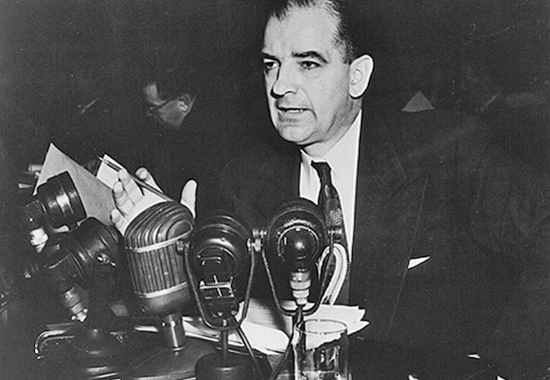
It seemed like no-one was safe from accusation. McCarthy accused icons of the government of supporting communism including two of Harry S Truman’s Secretaries of State; General George Marshall and Dean Acheson. McCarthy eventually insinuated that President Truman himself was soft on Communism after he made the decision to remove General Douglas MacArthur from power during the Korean War. In time, McCarthy targeted many names you might recognize: Albert Einstein, Charlie Chaplin, Lucille Ball, Pete Seeger, J. Robert Oppenheimer, Leonard Bernstein, Danny Kaye, Linus Pauling, Burgess Meredith, Edward G. Robinson and Orson Welles. All targets of McCarthy’s Red Smear.
McCarthy contended that all of these individuals (and more) worked within communist organizations and/or belonged to the Communist Party of America. Additionally, McCarthy’s reckless accusations ruined careers of those who were not famous and worked in the private sector. Many of those who were black-balled remained ostracized from their respective profession long after the Red Scare subsided. The fear of association with anything “Red” became so pervasive that even a professional baseball team from Cincinnati decided to change their name.

The Cincinnati Reds name is a colloquial abbreviation of the Queen City’s original team, the Cincinnati Red Stockings, which was the first fully professional baseball team. The Red Stockings had ten men on salary for eight months to play baseball in the National Association of Base Ball Players (NABBP). It was organized in 1869 by Harry Wright, who also played center field for the team and managed the defensive positioning, something typically unknown at that time. The Red Stockings were wildly successful early on, going 57-0 in league play and posting a perfect 65-0 record overall (still the only perfect season in professional baseball history). The team barnstormed the nation coast-to-coast, challenging (and defeating) every base ball club it played that inaugural season.
They followed this up by winning 24 straight games the next season. On June 14, 1870, after 81 consecutive wins, the Cincinnati Red Stockings lost 8-7 in 11 innings to the Brooklyn Atlantics before a crowd of 20,000. Apparently, the novelty of an undefeated team wore off quickly with attendance declining substantially after that first loss. Although they only lost 6 games that second season, the Red Stockings Executive Board recommended that the club not employ a team for 1871, citing that it was just too expensive.
Five years later in 1876, the National League is formed in New York City with Cincinnati as a charter member. In October of 1880, Cincinnati is expelled from the league, due in part to its refusal to stop renting out their ballpark on Sundays and to cease selling beer during games. The next year, the American Association is formed and the Reds would play their next eight seasons in the league which included (for a short time) a team from Indianapolis known as the Hoosiers. In 1889 the Red Stockings rejoined the National League where they remain to this day.
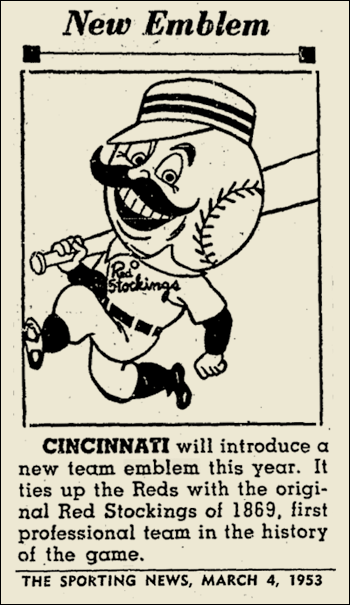 Irregardless of all that storied history, in 1953 the Reds decided to rename themselves the “Cincinnati Redlegs” to avoid the social stigma, potential money-losing prospects and career-ruining repercussions of being viewed as the “Reds”. Think about it, newspaper headlines like “The Reds bomb St. Louis” or “Reds murder Senators” might spread War of the Worlds style pandemonium. Okay,okay the Senators and Yankees were American League teams, but you get the idea.
So, for a four year stretch from 1956-1960, the name “Reds” was removed from the team’s logo and no longer appeared on team uniforms. Programs, tickets, pennants, buttons, and all team memorabilia was changed from Reds to Red Legs. The club’s logo was altered to remove the term “REDS” from the inside of the “wishbone C” symbol. In short, Cincinnati’s beloved Reds were no more.
Ironically, the term Red Legs, at least in the pages of history, was viewed as no better than the Red Stain nickname of the Reds. Red Legs derogatorily described guerrilla raiders in the Civil War, a 1670s Scottish pirate or a specific group of poor white people living on various islands in the Caribbean who generally originated from Ireland and Scotland and were most commonly known as “white slaves”. Guerrillas, pirates or slaves seemed to be a more prudent choice for the Reds during Joe McCarthy’s Red Scare.
 Sometimes peer pressure and cultural hysteria make businessmen do strange things.
It was not until Joe McCarthy attacked Ike’s Army in 1954 that his actions earned him the censure of the U.S. Senate. Even so, it took four years for the team to change the name back to the “Cincinnati Reds” after the 1958 season. By the start of Spring training in 1959, the team would be known as the Reds again. The cultural back-peddling inspired one unnamed exasperated team executive to remark: “If the communists don’t like it, let them change their name. We were the Reds before they were.” It didn’t take long for the anti-communist fears to fade. One need only consider those Big Red Machine teams of the 1970s (during the Cold War) as evidence. And would did the Reds beat in the 1976 World Series? The Yankees. Yep, the news headlines read “Reds defeat Yankees”. What would Joe McCarthy say about that?
Next week: Part II- Joe McCarthy’s Lavender Scare.
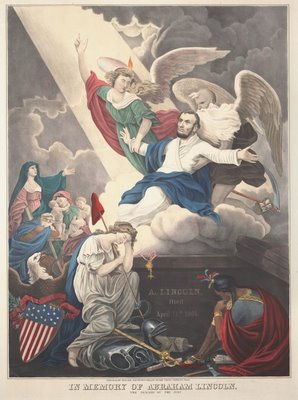
 Within forty-eight hours of his passing, the association of Lincoln’s character with American tradition began. The clergy, alongside their biblical images of Moses and martyrdom, also invoked the images of Lincoln and the founding fathers. In addition to grouping the Emancipation Proclamation and the Declaration of Independence as sacred texts, these sermons also established a link between Lincoln and the nation’s first President George Washington.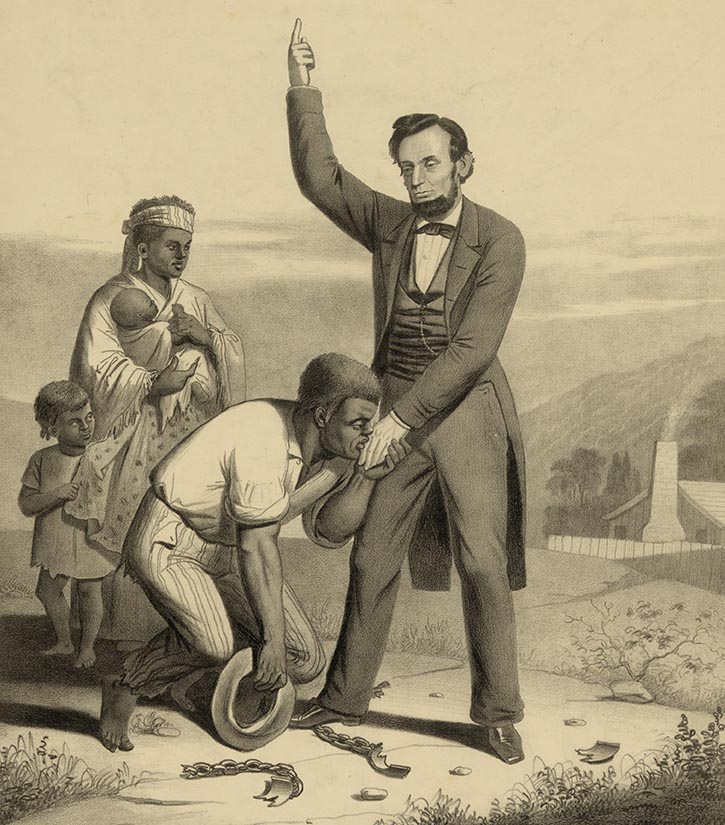




 Original publish date: July 13, 2017
 Ironically, the same year that Oldroyd moved to the Peterson house, Ford’s Theatre, where John Wilkes Booth had shot Abraham Lincoln, collapsed. The building closed since the President’s death, operated as an office until June 9, 1893, when the interior of the historic building collapsed. Twenty-two clerks died in the tragedy and sixty-eight others were seriously injured. Within a year the damage was repaired and the former theatre was remodeled for use as a government warehouse.
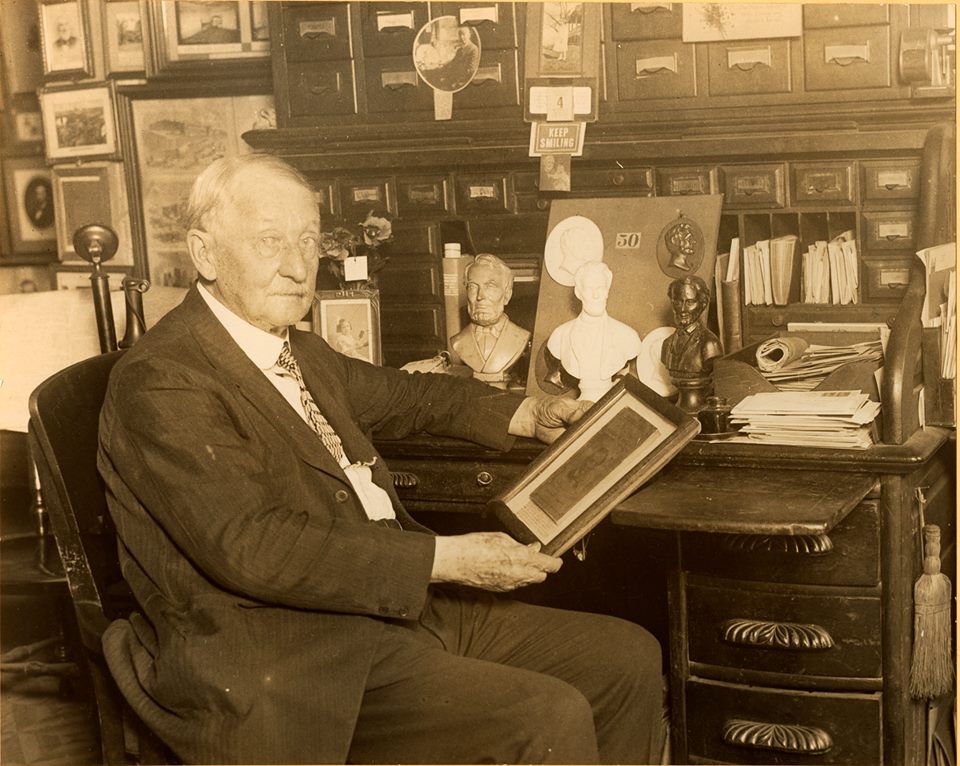
 The May 2, 1926, Washington Post announced the purchase with a banner headline reading, “Gets Storehouse of Lincoln Relics: Government Action Assures Preservation of Oldroyd Collection Here.” The newspaper column reported, “Captain Oldroyd has been gathering the collection for 63 years, having started on this patriotic work of love for his chieftain soon after he was released from service in the internecine strife (Civil War). Mr. Oldroyd is now 80 years old. Having for years been a student of Lincoln, acting as a guide for his collection all through its formation, Capt. Oldroyd has become a rich source of Lincoln traditions. Passage by Congress of the measure authorizing the purchase of the Oldroyd collection, 3, 000 authentic Lincoln mementos now on display in the historic Petersen House where the martyred president died, will preserve for future generations making pilgrimages to Washington a great storehouse of materials identified with Lincoln tradition.”
 What became of the pilfered Lincoln home artifacts? During a near forty year period between the 1950s and late 1980s, the Lincoln Home got back the disputed 25 items from Ford’s Theater that Oldroyd had allegedly removed without permission. “The items were well preserved. For the most part, these were all utilitarian items that might have been used every day by the residents of the home during the years before preservation became a priority.” says curator Cornelius “An argument could be made that if not for Osborn Oldroyd, these items might have been lost forever.”
 Original publish date: July 6, 2017
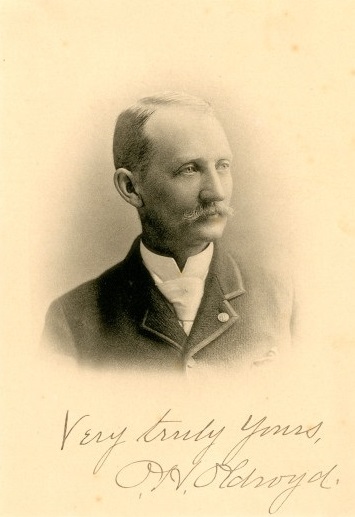
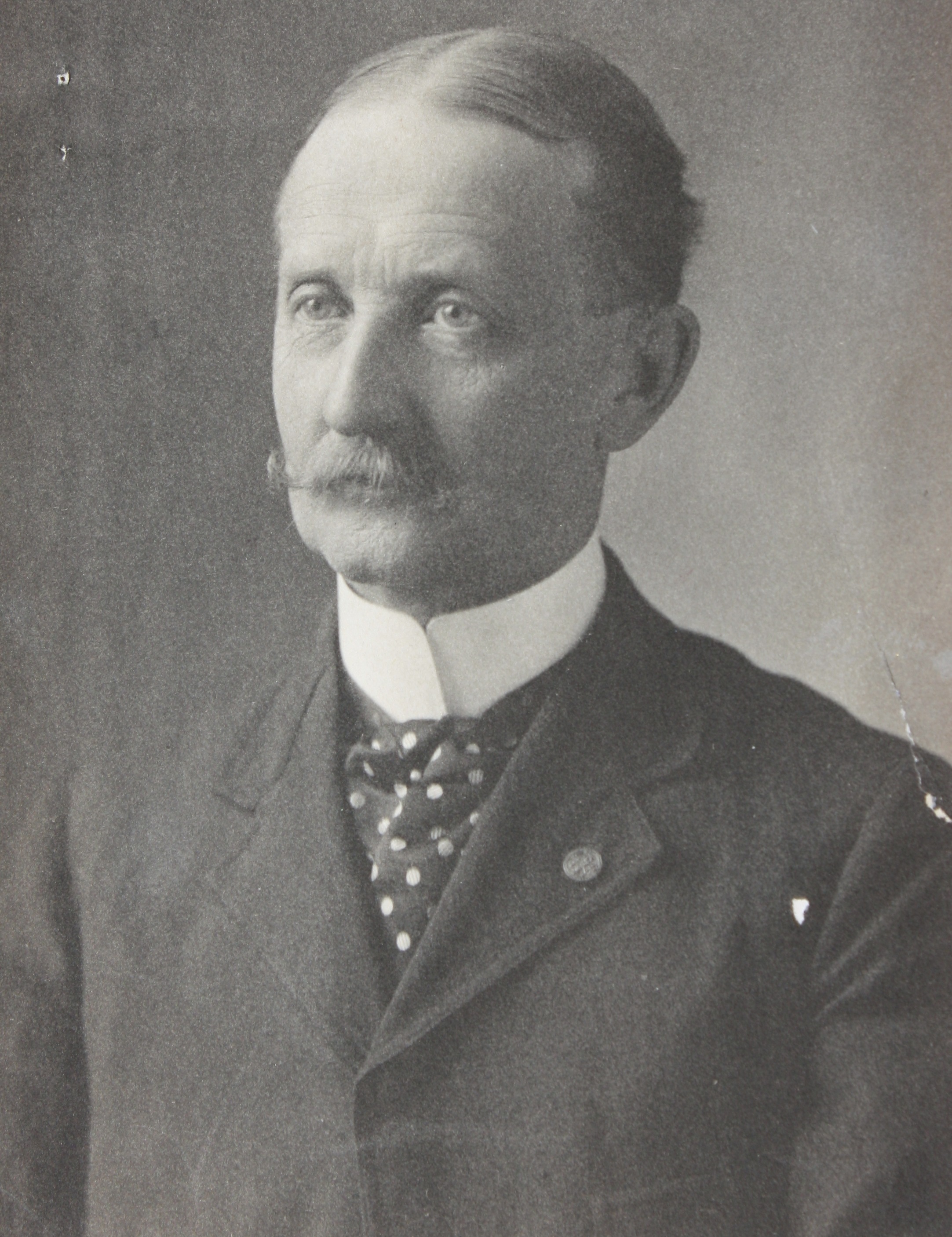 During his early years in Springfield, he ran a succession of failed businesses. All the while, Oldroyd was moving his family ever closer to the Lincoln Home at Eighth and Jackson Streets. The Oldroyd family first lived at 1101 South Seventh, then 500 South Eighth Street (immediately south of the home), and then, in 1883, when the Lincoln Home became available to rent, Oldroyd moved his family in before the last occupants had completely moved out. At that time, Lincoln’s only surviving son, Robert, owned the home and reluctantly charged Oldroyd $25 per month rent. Contemporary accounts claim that Robert Todd Lincoln agreed to the idea of a museum as long as it was free to the public, a stipulation in place to this day.
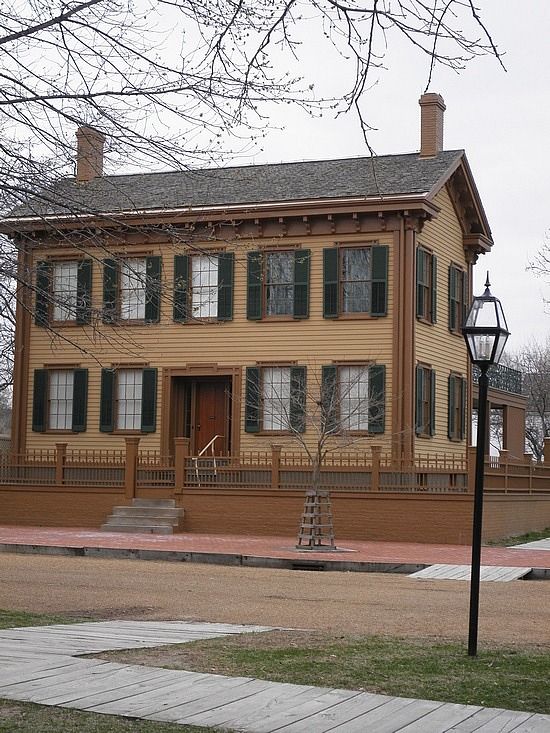 For the next five years “Captain” Oldroyd kept the Lincoln Home and added to his Lincoln collection. At one point, reports claim that Robert Lincoln was furious when Oldroyd allegedly displayed a photograph of John Wilkes Booth in the home, reportedly on the fireplace mantle. Some sources claim that Robert protested and in 1893, when the Illinois state political tides shifted, Oldroyd was unceremoniously ousted as custodian. The new governor put one of his own men into Oldroyd’s former position as political patronage.
 Alan E. Hunter