Hollywood, Music, Pop Culture, Weekly Column

Paul Bearer and the Morticians-An Indiana Garage Band Story.

Part I

Original Publish Date September 18, 2025.
https://weeklyview.net/2025/09/18/paul-bearer-and-the-morticians-an-indiana-garage-band-story-part-1/

As many of you who have read my columns over the past two decades will recall, I am a collector. Many of my columns center around collectibles, some valuable, some historic, and some for sheer folly with no lasting value other than a momentary nostalgic smile. I often visit regular antique shows, events, and roadside markets looking for whatever I can find. I recently visited a regular haunt and once again found my hands inside of boxes containing an assortment of papers and bric-a-brac from a lifetime ago. Sometimes, I run across something serendipitously, as if it was placed there specifically for me to find; one step away from the trash heap.

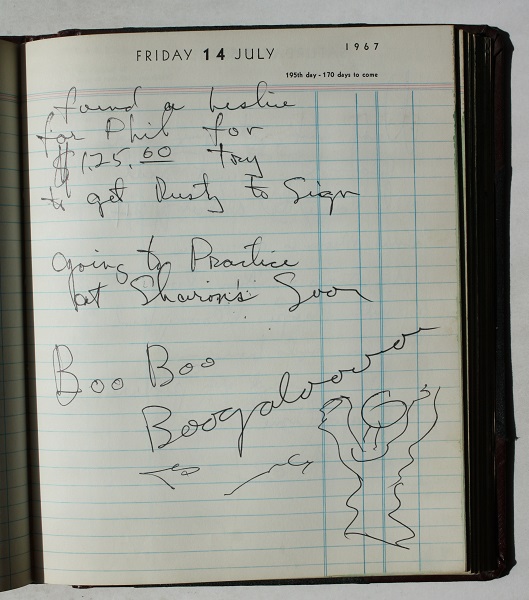
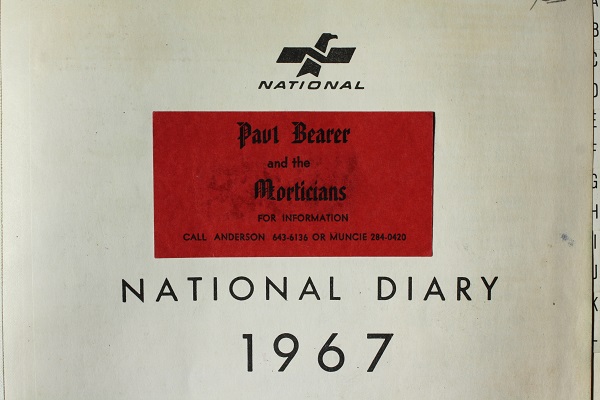
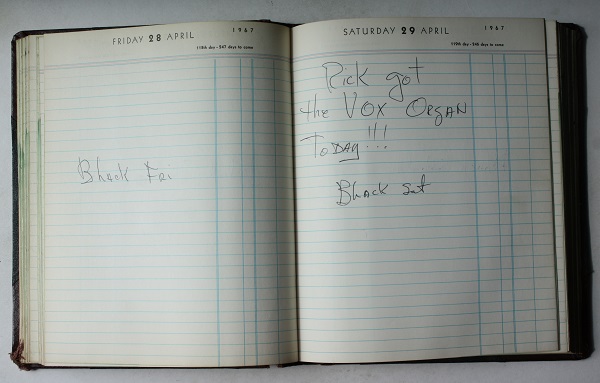
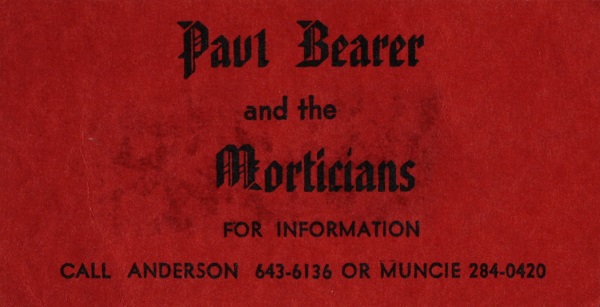
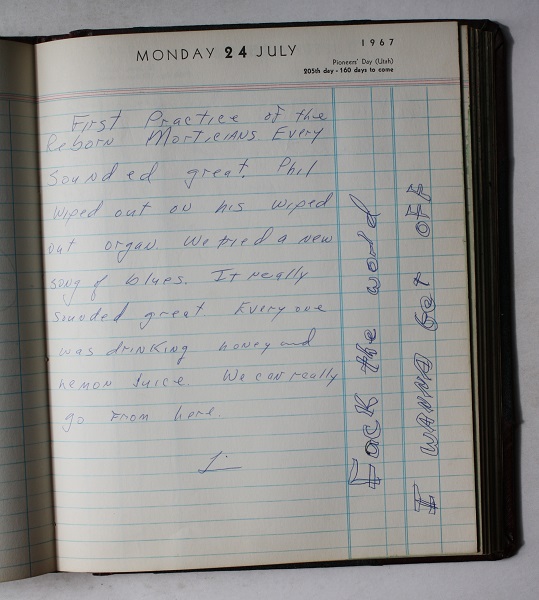
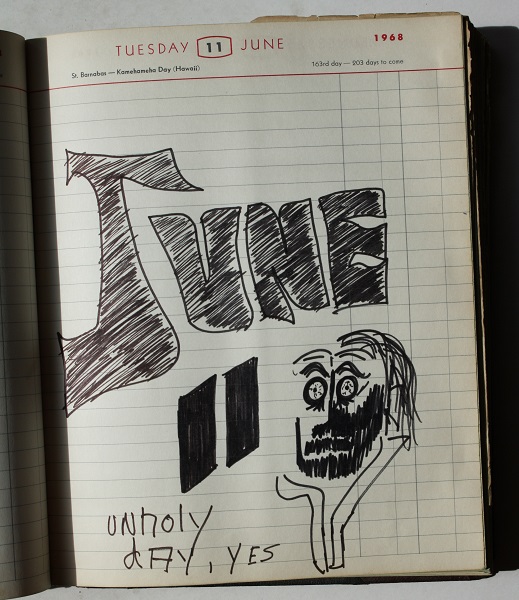
In this box, there were two 8×10 thick & heavy leather-bound books, each titled “National Diary”, although they have 1967 & 1968 cover dates, I believe they’re from 1968 & 1969 (likely a frugal “clearance” purchase by a struggling band not hung up on the concept of time, man). When I opened the initial book, the first thing I saw was a bright red business card pasted to the top of this page, emblazoned “Paul Bearer and the Morticians” with Anderson & Muncie, Indiana phone numbers inset. I quickly flipped through the first few pages to see what it was, as a wide-eyed smile slowly crept across my face. Not the best poker face, I told myself as I slammed the book closed and decided that these were going home with me. There they sat beside my “writing chair” waiting for me to devour them. Life gets in the way sometimes, so it took me a minute to get there. Oh, I would occasionally pick one of them up, flip through the pages, and whet my curiosity whistle, until I finally had a day to devote to a full read.
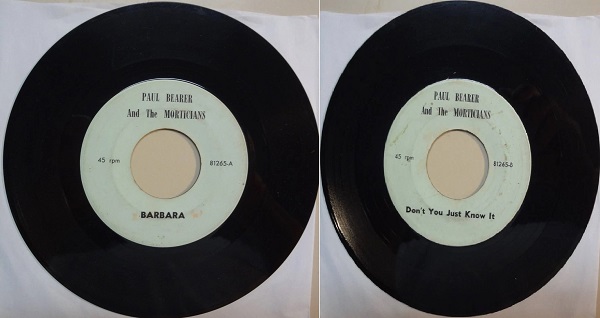
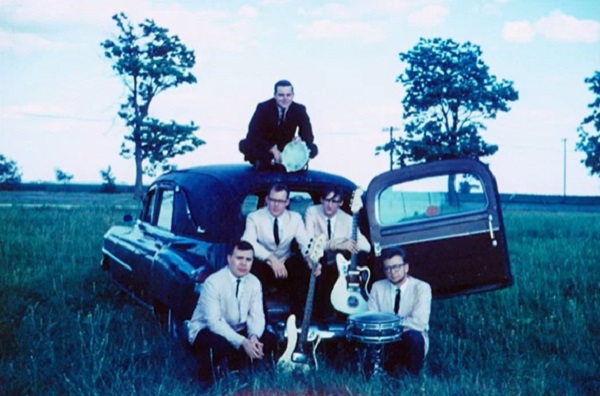
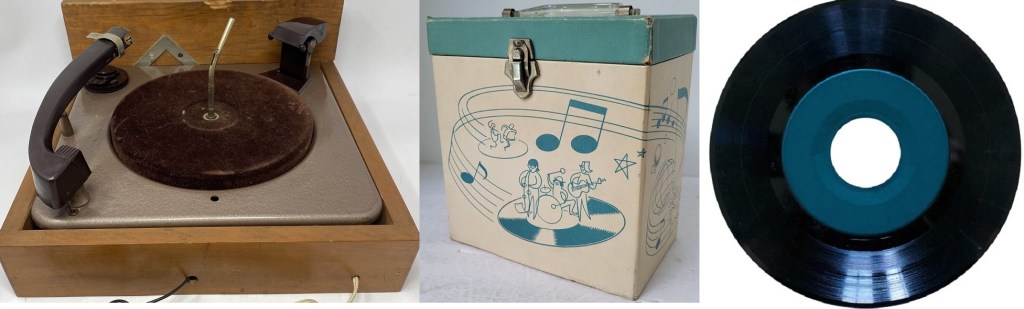
Turns out, what I had accidentally stumbled over was a day-by-day accounting of an Indiana garage band as detailed by one of its members, Larry Scherer, aka Paul Bearer himself! Larry Phillip Scherer was born Sept. 19, 1946, in Anderson and passed away on Jan. 23, 2004, in Greenfield. By all accounts, while growing up, Larry lived an ideal Hoosier childhood. He was active in Cub Scouts and Boy Scouts and played football and Little League baseball. He graduated from Anderson High School in 1964 and later earned his BA and MA in Counseling Psychology from Ball State University. He was the lead singer of the band, Paul Bearer and the Morticians. Not a lot is known about this band. A few references can be found on the net, including a 45 rpm single and a single publicity shot of the 5-man band posed around a hearse in a cemetery surrounded by their instruments. The single’s A-side is a song called “Barbara,” and the B-side is “Don’t You Just Know It.”

Each book begins & ends with a calendar page, both jumbled by hurried circles, arrows, and scribbles denoting sporadic gigs every week. Flipping through the pages, one can almost feel the high hopes of the band melting away during those first formative winter months. The entry for January 1 notes that the band took some publicity photos, which must have boosted their hopeful confidence immensely. Then reality sets in. The pages from January to February are filled with depressing notations of inactivity: “Nothing” and “Nada” on nearly every page, like a road to nowhere. Around Valentine’s Day, things were looking up, but not musically. Feb. 10, “Went to see Paul Revere + the Raiders-they were great-got a tip at where they were staying + buzzed out there. Holiday Inn-Got all their autographs…Jack talked to Mark Lindsay…We should have some great pictures.” On Feb. 17th, “Played at McPherson’s Dance Inn [in Anderson] over 300 showed up, we made $100 clear (about $1,000 today)…Thank God…we each got about $14 per man.”
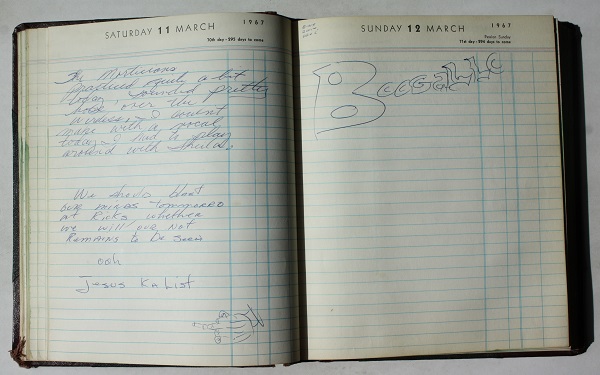
Bolstered by this modest success, the boys begin to practice regularly on original compositions (Town of Evil) and covers (Cream’s “Sunshine of Your Love” and “Outside Woman Blues”) in preparation for a desired gig at a “Hullabaloo”. A Hullabaloo was the franchise name for teen dance clubs spinning off the popular NBC musical variety show of that era. The TV series originated in London and was hosted by The Beatles’ manager Brian Epstein before hopping across the pond to America.
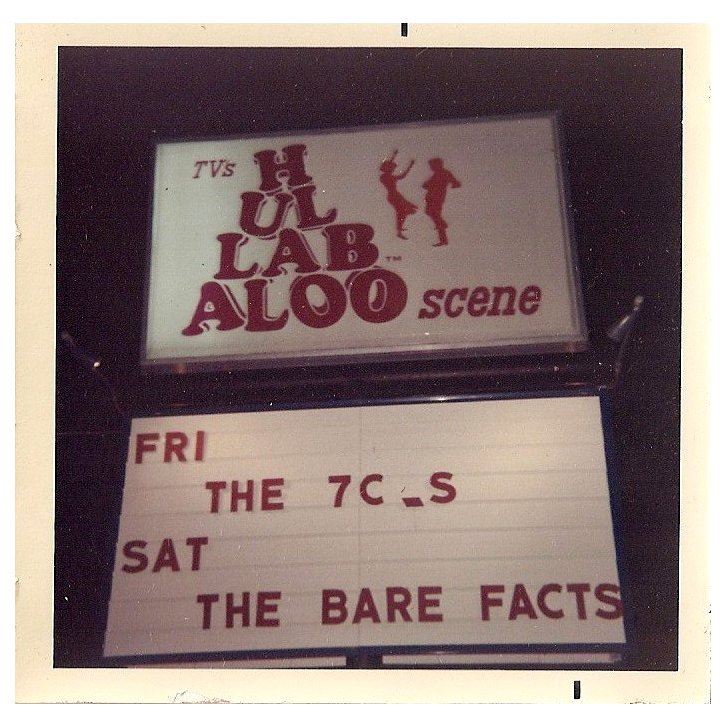
These trademarked “Hullabaloo” nightclubs were usually found near colleges (Ball State, IU, Purdue, Notre Dame, etc.) and larger high schools. On Feb. 27, the band played the Conservation Club in Anderson and received $140. “[We] sounded like a professional group, surprised everyone but me…First time we used Saxophone-sounded real good-going to use it a helluva lot more.” The success of that gig led to an audition for the Teen Time Lounge in Hartford City. March 3: “Notified to play Teen Time Palace…Sounded Great. KIds ate us up. Nothing much happened except some clown busted a $200 glass door. Some girl asked for autographs.” The band was paid $75 and by now Paul Bearer and the Morticians had a set list of 41 songs: “35 good ones-6 stand bys” including covers of the Rolling Stones “Under My Thumb”, Junior Walker’s “Pucker Up Buttercup”, Spencer Davis Group’s “Gimme Some Lovin”, and Wilson Pickett’s “In The Midnight Hour.”
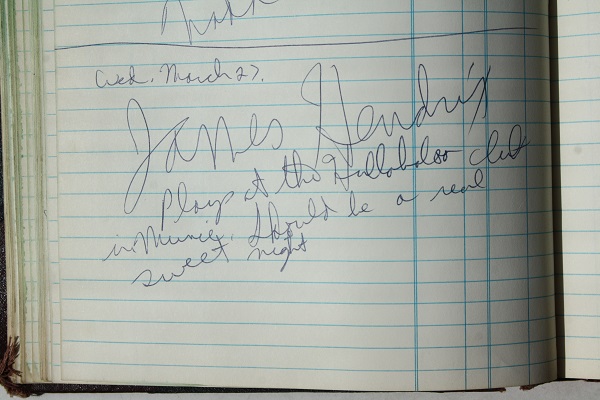
By mid-March, the band was looking ahead to a gig at Anderson’s Peppermint Lounge. March 15, “Tim came over to get some money to finish the coffin-Paid $5.” The Morticians were paid $115; by the time they left the stage, the boys made $7 each after expenses. On March 22, the band hoped to land a $125 gig at the Hullabaloo in Muncie. March 27 entry reads: “James Hendrix plays at the Hullabaloo Club in Muncie.
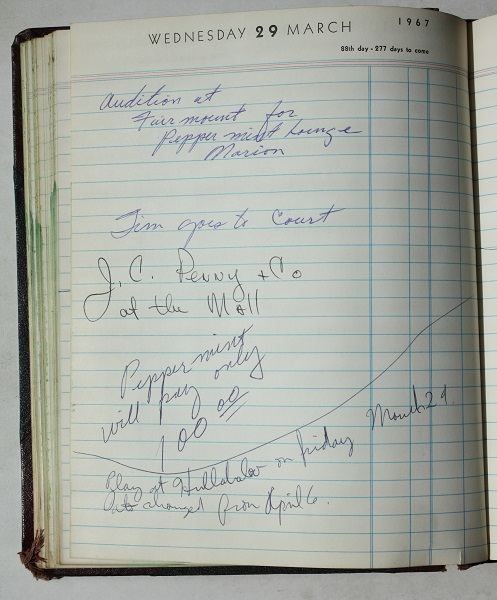
Should be a real sweet night.” The very next night, the Morticians take the stage. The band is fielding inquiries for gigs at Rensselaer ($115 payout), Hartford City ($50), Fairmount ($100), and Lapel ($85). April 1: “Best critics in Anderson-my friends-said we were whats happening-I agree!! The guys sounded great. I know we can make it to the top-just a matter of time—is on my side, yes it is.” On April 5, the Morticians book a gig to play at the Hullabaloo Club in Dayton, Ohio: for $150. On April 8, the boys again played for Anderson’s Conservation Club. “Blast it was too!! The band finally hit what its worth-a cool 40 beans apiece!! There were 267 kids there-about half sniffen glue-haha. Split the profit.”
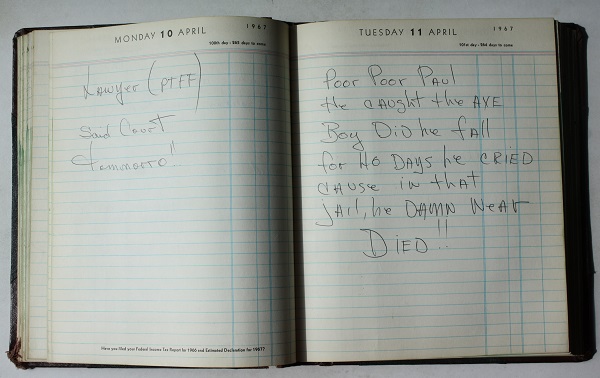
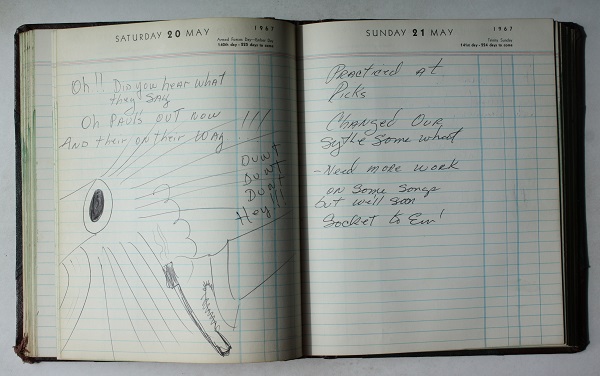
On April 11th, the diary lyrically notes, “Poor, Poor Paul. He caught the axe. Boy, did he fall. For 40 days he cried cause in that jail, he damn near died!!” For the next 40 pages, every day is denoted as “Black Monday, Black Tuesday, Black Wednesday, etc.” On May 20, another lyric, “Oh!! Did you hear what they say. Oh Paul’s out now, and their on their way. Dunt Dunt Dunt Hey!!”
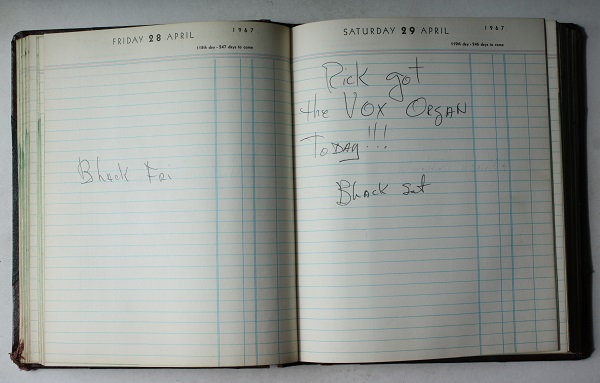
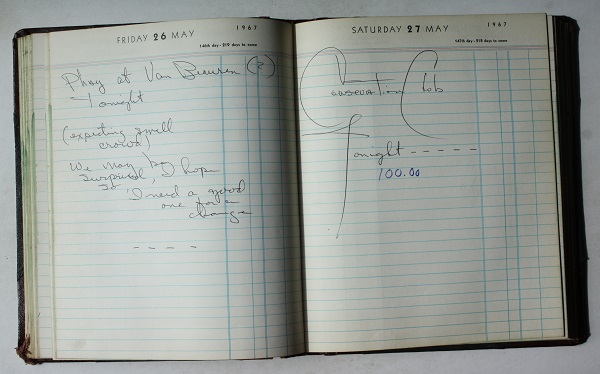
The band starts up again, practicing regularly at “Rick’s”. May 21: “[We] need more work. Changed out style somewhat on some songs but we’ll soon socket to em!” May 26th “Play at Van Buren tonight. (expecting small crowd) We may be surprised, I hope so. I need a good one for a change.”

May 27, “Conservation Club Tonight $100.” On June 5th, the band joins the American Federation of Musicians for $102.50. June 29th, “Practiced at Rick’s house + thusly decided to kick out Rick. One Mortician is buried.” July 7, “Found the band outfits at a Brand X store in Indianapolis. Sweet as hell for a mere 5 beans.” August 6, “Got our publicity pictures taken today at the graveyard in back of North Drive Inn [Anderson] 14 in all. Two sets of clothes. Outta be cold, cold shake cool. Blimey Govnor.” The entry on August 8 is actually the handwritten lyrics to a song: “There is a man from L.A., That is hard to understand. People tell me he’s an uncertain kind. In California where kids blow their mind. He has come to Hoosierland to waste his time. There are two things that he loves, an old truck and a jail to sleep. Some call him little Bo-peep. Since coming to the Midwest, he is always losing his job, because of this he can’t afford my little nest. Maybe someday he’ll be persuaded to stay around, he’ll be downgraded. No home to go to weep or food to eat. This is a man from L.A. who sleeps in the hay. He is a different brand, but now a lighting man.”
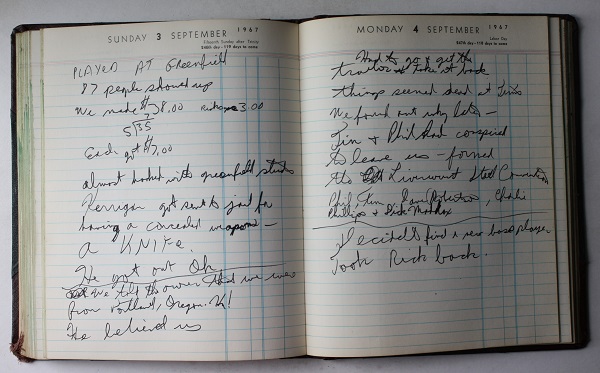
August 14th, another song, not much better than the first: “Hey Baby, why don’t you love me anymore. Hey Baby, I been here all alone eh. You know I love you, But you don’t realize, you will love me, when I look in your eyes. Oh, you got to love me, baby, then love me all the time. In the morning, in the evening, in the summer, in the winter, you gotta love me. Hey baby, I’ll buy a house + settle down. Hey, ask your mom, tell her I love you. If there’s any doubt, Baby believe me, everything I say is true. If you don’t love me, I’ll try to be true. You got to love me in the bathroom, in the kitchen, in the basement, in the sink, in the backyard. You gotta love me.” August 17, “Practided! Worked on a couple new songs. Two friends of Phil’s who own the Acid Land nightclub came to watch us. Played a lot of Psychedelic stuff.” August “Paul went to labor at the Delco Remy Salt Pits…Won’t last long.” September 3: “Played at Greenfield. 87 people showed up. We made $38. Each got $7. Tim + Phil conspired to leave us-formed the Liverwurst Steel Convention [band].” By mid-month, the Morticians were practicing new songs, mostly by The Who: “Whiskey Man” & “Pictures of Lily”.
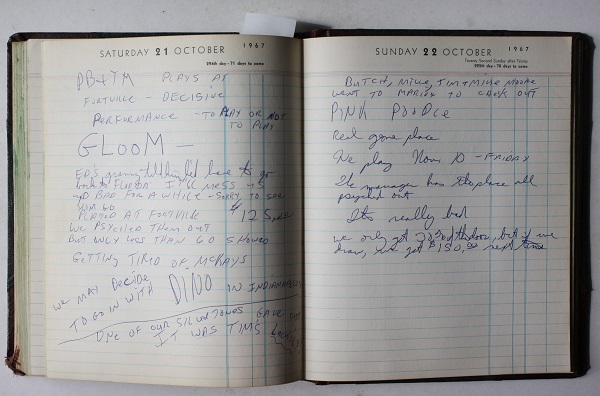
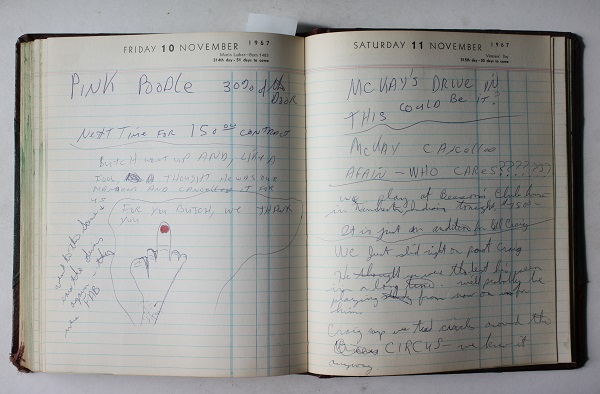
The band booked a Sept. 30th gig for $125 at McKay’s Drive-In nightclub known as the “Psycadelic Sounds at The Place” on Highway 67 in Fortville, after which they were signed as the “House Band”. October 1st, “Played at Fortville, made $2 per. If fortune doesn’t straighten up, we’re going to drop McKay. Not enough crowd…Learned two more songs: “I Need You”-By The Beatles + “Tired Of Waiting For You”-Kinks.” Oct. 18th: “We really psyched out on Fortville. I can’t explain. Had Better Be Ready.” Oct. 21: “Fortville-Decisive Performance-To Play or Not to Play. GLOOM. We psyched them out but only less than 60 showed. Getting tired of McKay’s.” Nov. 4, “Dance scheduled for McKay’s but he screwed us up again + cancelled the dance cause his roof wasn’t fixed.” Nov. 8, “We play at the Beeson Clubhouse Country Club [in Winchester] on Saturday Next. Nice Place. We get $75. Auditioned for the Hullabaloo Club in Muncie tonight. They thought we were BEAUTIFUL!! They dug the Jimi Hendrix stuff we played.” Nov. 11: “McKay’s Drive In. This could be it. McKay cancelled again-who cares??? We played at Beeson’s Clubhouse in Winchester, Indiana tonight. $75.” Nov. 15: “We found out the WHO will be in Muncie on Thanksgiving night + there’s a chance we might play alongside them. It may all depend on our performance at the barn Saturday night.” Nov. 23-Thanksgiving day. “The Who played at the new barn. All of us went to see them-they were greater than ever. We got to talk to Pete Townshend a little bit-he was really cool. Mike got some great pictures.”
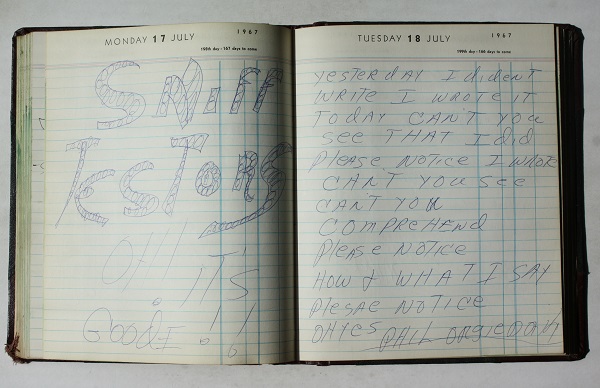
By December, the Morticians set list included 39 songs including JImi Hendrix “Hey Joe” (which they performed twice back-to-back), “Give me some lovin'”, “I can’t explain”, “Mickey’s Monkee”, “Bring it on home to me”, “Louis Louis”, “Money”, “Little Latin Lupe Lu”, “Hold On”, “We gotta get out of this place”, “Purple Haze”, “Fire”, “Foxey Lady”, “MIdnight Hour”, “The Letter”, “House of the Rising Sun”, “I’ve been loving you too long”, “Lady Jane”, and an intriguing original song titled “Ban the Egg.” On Christmas Eve, the boys “Played at Winchester for $75. The crowd dug us bad. Michael Eddie screwed up Purple Haze 3 times that night-Used Pete Townshend’s guitar strap.” The Morticians practiced but did not gig for the remainder of the year, resulting in the Dec. 31st entry: “A very dull New Year’s Eve Indeed.” Year-end receipts totaled $1899.50 (just under $20,000 today), averaging out to $70.70 per gig. Split between a rotating lineup of five musicians per night, it doesn’t take a mathlete to figure out that none of these guys could quite their day jobs.

Paul Bearer and the Morticians-An Indiana Garage Band Story.

Part II
Original Publish Date September 18, 2025.

https://weeklyview.net/2025/09/25/paul-bearer-and-the-morticians-an-indiana-garage-band-story-part-2/

In part I of this article, I detailed one of my latest “Finds”, a 1968 diary from the leader of a 1960s Anderson, Indiana garage band known as “Paul Bearer and the Morticians.” I love that it landed in my lap just before the official spooky season in Irvington commences. I wanted to share it with you, the readers, because I thought that it might stir the chords of mystic memory for other Circle City hippy kids like myself.
Jan. 13 [1969]: Played at the Loft in Muncie for a mere $75. A real good crowd showed up + there were only a few meager fights. Jan. 25: “Conservation Club [Anderson]- “Not too good of a crowd. We only made $47.50.” Jan. 27: “We played at Winchester, Ind. for $85. That’s all I’m going to say!!” On Feb. 17th, “Played at McPherson’s Dance Inn [in Anderson] over 300 showed up we made $100 clear (about $1,000 today)…Each Poison (sic) got $14 apiece.” By March, the band was looking more official than before. This second diary book includes a few of the original typed contracts between the venues and the band, all signed by Larry Scherer as the band’s representative. March 15th, 1968, is for a gig at Rensselaer High School for $115. The diary entry reads: “It was a hick dance at a school, but they liked us. Wild night in the motel there-almost got kicked out. We also had a lot of car trouble-flat tire, breakdown, etc etc.” Another contract is for the Muncie Hullabaloo Club on Kilgore near Yorktown. It netted $125 for the band and stipulates that a fee of $25 “per half hour late starting” will be enforced. The band played two sets for a “real good crowd. Our first set was a little ill, but we smoked on in the second + third. We wiped a*s on Foxey Lady.”
The May 1st entry finds an interesting partial lyric composition: “Wednesday, such a mellow day. Blowing wind + the children play!! I see the glowing sun shining down, I feel the pain and I wear a frown. It can’t be a dream, It’s not what it seems. But I am dying now.” In the Spring of 1968, the band was carving out its own identity, trying hard not to be just another cover band, by writing and practicing original compositions. Their set list now included seven new songs: “Rize Up”, “Charlotte”, “Fool of Cotton”, “Dance the form Evil”, “Turn on Green”, “Impression in F”, and their newest song, “Good Things for our Minds”. May 4th’s entry announced that the Morticians would be playing a gig at the Hullabaloo Club in Muncie alongside the British pop group, The Cryin’ Shames, who had a minor hit with the remake of the 1961 song “Please Stay” by The Drifters. The Drifters’ claim to fame (and ultimate demise) came when they turned down a managerial offer from Brian Epstein, manager of The Beatles. The April 15th entry describes, “We play the first set + they play the second, we play the third + they play fourth. We’re supposed to use our equipment and they theirs. We will definitely have to completely wipe them out. We will increase their draw by 200 people. There’ll be a lot of people discussing recording records etc. It should prove to be a very exciting evening.”
May 13 entry: “Started tonight playing the Sugar Cube for $100 [per night]. Tired as hell afterwards!” The Sugar Cube nightclub was located close to Marhofers Meat Packing Co. on Granville Avenue in Muncie. The Morticians gigged at the Sugar Cube from May 13th to the 18th for a whopping $400 paycheck! Paul Bearer and the Morticians played the “In Club” in Van Wert, Ohio for $125. May 25th: “Jack quit the band. We have to look for a new drummer-probably get Roy Buckner.” May 31, the band played a show at the Youth Center in Syracuse, IN. for $125 payday. “There were a lot of teeny boppers there that dug us bad. We will definitely go back later this summer.” By June, the band was adding more original songs to their setlist: “Manic Depression”, “Little Miss (Over)”, “Come on in”, “Talk Talk”, “You Don’t Know Like I Know”, and “When I Was Young”. June 15: “McPherson’s probably for $150…The clown only went $130.” June 21, the boys played the YMCA in Peru, In. for $150. During a dry spell for the band, one entry reads: “Went to the fabulous Anderson Fair (cow dung everywhere) + then bopped over to Phillips Swimming Hole in Muncie-It was real coooool man.” Muncie’s Phillips public swimming pool opened in 1922 and was closed in 1961 and thereafter used for training by the Muncie fire department.
July 5th, 1968, finds the band playing “The Hub” in Celina, Ohio, for $125. “We didn’t get a good reaction at first, but the third set was real good. Wiped up with Purple Haze, Fire, Foxey Lady, + You Know. I would go to Russia, Vietnam, Belgium, France, The Congo, Brazil, but NOT THE HUB.” A month later (August 3rd), a diary entry reads: “There was an atomic attack on Celina, Ohio today. Luckily, no one was saved. Praise Allah.” July 6: “Found out The Who are back in the United States for a 9-week tour. They’ll def. pass thru here. The Fab Beach Boys are in town along with the Union Gap + The Human Beings.” July 11, the band is playing at the Honeywell Pool in Wabash, In, for $150. Two days later, they are playing in Shelbyville for $150. “We def. will not play for less than $150 beans from now on. $25 raise when we cut the record. They bought us on our gimmick-Dry Ice- fog during our performance.” Despite that entry, days later, on June 21st, the band was once again appearing at the Hullabaloo in Muncie for a $130 payday. In the end, the band netted $57 and paid out $15 per band member. August 8: “Rick quit the band, supposedly, then came crawling back 3 days later, acting like it was all a gag! HAR.”
August 9th, 1968, finds the band playing at Jefferson Landing, 127 E. Main St. in Crawfordsville for $150.”It was a real sweet place, but NOBODY showed up-cause it’s Tuesday, no doubt. We got a real good report from here though.” Five days later, the Morticians were once again playing The Place in Fortville for $150. “We finally are going back to play at Fortville once more. It will really bring back old memories. Har de Har de Har!!! All they could say was that it was too loud.” On August 25, Paul Bearer and the Morticians played the Indiana State Fair [likely a warmup for The Cowsills]: “They were really digging our music.” Sept. 3rd finds the band playing a dance at the Bridge Vu Theatre in Valparaiso, IN,. for $175. October 4, 1968: “Today is the 2nd anniversary of PB + M. Ain’t you proud? I found a super contact: Jeff Beck. He is supposed to speak at the Gent tomorrow.” Oct. 12th finds the band playing a Halloween party at the Kendallville Youth Center in Kendallville, IN., for $175. “Everything was going great, until old nag (blind) started raising the roof because she thought we were a bunch of maniacs, how right she was! The kids dug us so much, they clapped after every song.” The show went over so well, the band was asked to play again the next night. On Oct. 25th, the band played the Sigma Phi Epsilon frat house at Ball State in Muncie for $100. Immediately following the show, the band drove straight to New York to see Steppenwolf. On Nov. 6, the band was playing a show at “The Anchor” in Findlay, Ohio, for $125. Nov. 8, 1968: “Went to Indianapolis + saw Canned Heat + Iron Butterfly-Boy were they great. Worth every minute, they were.”

Nov. 11, the band booked a $150 gig at the Purity Inn on High Street in Oxford, Ohio. “They said we were too loud. We won’t go back def. The acoustics were totalled. We each got 20 beans apiece tonight.” Nov. 20, the band played the armory in Crawfordsville, IN., for $175. “We turned WAY DOWN but don’t know if they liked us or not. We split the diff. + each for 30 Beans.” Nov. 30 the band was once again playing the Hullabaloo in Muncie for $135. Dec. 2nd, the band played the Sigma Pi House at Purdue University for $125. “They seemed to like us quite well + I think we did one of our better gigs. They really dug it bad.” The gigs were getting fewer and farther between now and the diary entries ceased until December 29, 1968. “Played at the Muncie Haullabaloo Club today for a measly $43.57, which was 50% of the door-WOW! We’ll probably be playing there steady at jam sessions on Sundays-NO CONTRACT yet.”
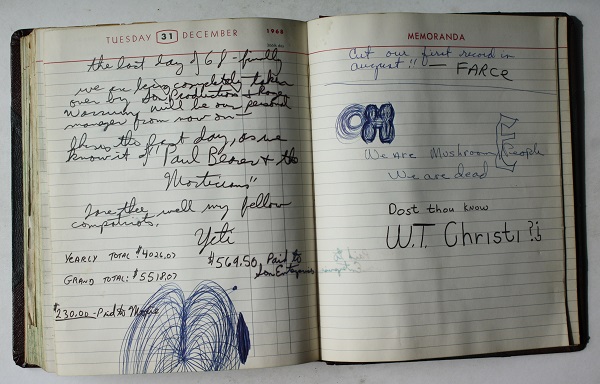
Two days later, on New Year’s Eve, 1968, the diary reads: “The last day of ’68-finally. We are being completely taken over by Son Productions. This is the last day, as we know it of Paul Bearer + the Morticians. Fare thee well, my fellow compatriots.” The annual tally for 1968 totalled $5,518.07, or just over $50,000 in today’s money. The memoranda section of the diary reads: “Cut our first record in August!!-FARCE. We Are Mushroom People. We Are Dead.”
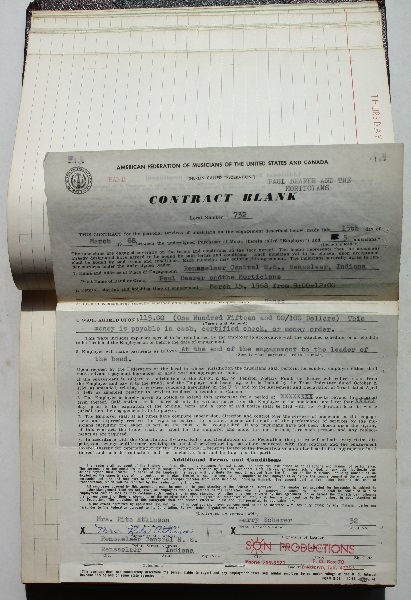
As hard as it is to find detailed information on Paul Bearer and the Morticians, it is even harder to find info on Son Records. Initial information can be found on the band’s contracts, where Larry Scherer signs as the legal representative of “Son Productions P.O. Box 78 Yorktown, Ind. 47396 (Phone) 759-9371”. One article found in the August 1, 1968, Muncie Star newspaper, notes that Son Records founder, Roger Warrum, was born in Shelbyville, attended Mount Comfort schools, graduated from Ball State University, lived in Greenfield, and settled in Anderson. Warrum had a band, The Glass Museum, and also brokered the Jimi Hendrix Concert in Muncie at the Hullabaloo Club. He formed “Son Productions” (named to honor his son Jeffrey Scott) in late 1966 and was described as the “founder-manager-chief worker” for the licensed music booking agency. The company logo incorporated sun rays jutting out of the “o” in “Son”. Warrum made his office inside the Muncie Hullabaloo building, booking bands in Indiana, Eastern Michigan, Ohio, and Kentucky. He opened a branch in Valparaiso to serve the Chicagoland & Greater Michigan, Illinois, and Wisconsin regions. The article states that Warrum planned to open more branches in Bloomington (in October) and Michigan (in January). Warrum only booked union bands and notes, “Paul Bearer and the Morticians came back [to the Muncie Hullabaloo] three times before they had a big enough, good enough sound to make the circuit.” Roger J. Warrum would go on to a successful Insurance career in Anderson, where he was elected to the City Council. He died in Hudson, Ohio in 2009 at the age of 63.
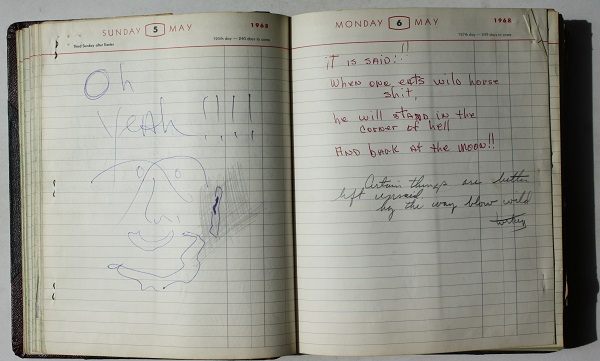
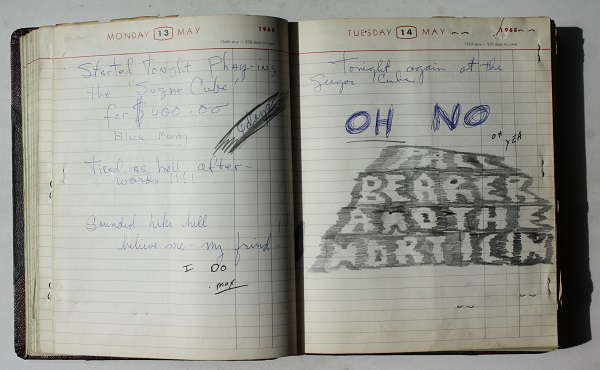
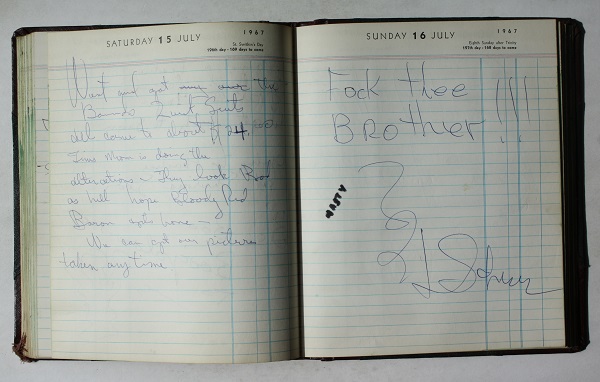
As detailed in Part I of this series, the diarist of these books, Larry Scherer (Paul Bearer himself), died at his home in Greenfield on Jan. 23, 2004, following a brief illness. After the band broke up, Larry taught school in Broxton, GA, and was Teacher of the Year three times. He relocated to Anderson in 1978 and was employed by Madison County Employment & Training Administration as an Assessment Testing Counselor and the Director of Weatherization. Larry was the owner/operator of his business as a General Construction Contractor. As for the rest of the band, Vic Burnett was the guitarist, organist, vocalist, and songwriter, and Jim Shannon was the bassist for the band. Jim Shannon’s signature appears in the diary with a comic profane inscription. Other names appearing on the pages of the diary include Tim Connelly, Jack McCleese, Phil Daily, Rick Thompson, Mike Ford, Chris Wisehart, Michael Eddie, Dave Robertson, Charlie Phillips, Dick Maddox, Steve Whitesell, Ed Wyatt (from Florida), Mike Moore, and Gary Rinker. It should be assumed that these men were members of, or closely associated with, the band.

Despite their hopes of becoming a headliner band, Paul Bearer and the Morticians were little more than a hobby, which they all hoped would turn into something bigger but never did. A thread on the net can be found from Chris Shannon (relative of bassist Jim Shannon) stating that “Paul Bearer and the Morticians made an appearance via satellite on either the Jerry Lewis Telethon or Dick Clark’s American Bandstand. Any time they played in public, the street would be packed with people listening to them play. They were hot, man!” I have spent the last month trying to connect with any family members of the men who created this band, including Chris Shannon, to no avail. So, Chris, if you’re out there, I’d love to hear from you and learn more about Paul Bearer and the Morticians. So, there you have it, the little-known story of a typical 1960s Indiana garage band.
Christmas, Hollywood, Music, Pop Culture, The Beatles

21 Top Grossing Songs of All Time.

Original Publish Date September 21, 2023.

https://weeklyview.net/2023/09/21/21-top-grossing-songs-of-all-time/

So, I’m down in Florida celebrating my 34th wedding anniversary with my bride, Rhonda, who is still the prettiest girl I’ve ever seen. Down here, I’m a thousand miles away from cutting the lawn, watering the flowers, and a honey-do list as long as my arm. So what better time to write about music? I wondered what a list of the top twenty-one money-making songs of all time would look like. Not best-selling albums. Not best-selling song catalogs. Not even best-selling singles. Rather, what songs have made the most money? So, here’s a list for you to ponder. There will be obvious titles, obscure titles, and some surprises, and by the end, I’ll throw some sand in the Vaseline. Only then will you understand what put the thought in my mind.

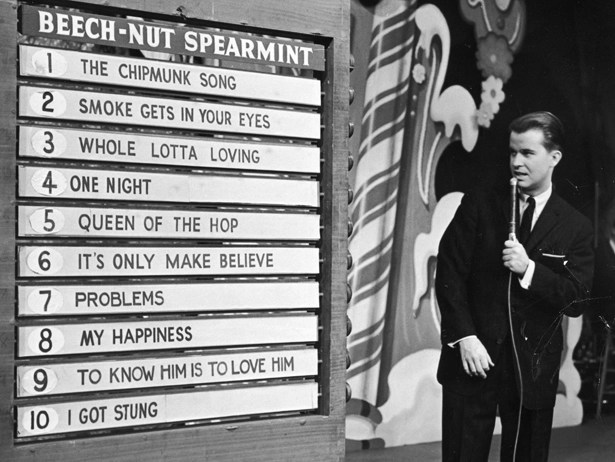
Dick Clark counting down American Bandstand hits August 5, 1957.

Many songs have made over $10 million including The Village People “YMCA,” Gene Autry’s “Rudolph the Red-Nosed Reindeer,” The Beatles “I Want to Hold Your Hand,” and, should you consult that black hole that is the Internet, names like Taylor Swift, Justin Bieber, Ed Sheehan, and a liturgy of mysterious electronic dance will muddy the issue. But for the purposes of this article, I have consulted more reputable sources for the numbers: Billboard, Music Grotto, Rolling Stone, and the Guinness Book of World Records.

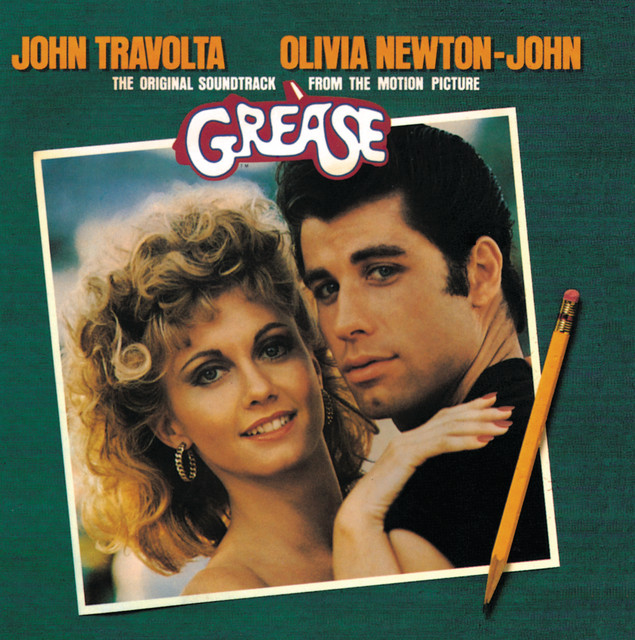
Number 21: “You’re The One That I Want,” by John Travolta and Olivia Newton-John from the 1978 film Grease. Estimated earnings: $15 million. The song featuring Travolta’s greaser Danny Zuko and Olivia’s good girl temporarily gone bad, Sandy Dombrowski, propelled the film into one of the highest-grossing musical films of all time and the soundtrack became a worldwide hit. Fun fact, Richard Gere and Barry Bostwick portrayed the Travolta character on Broadway in 1972/1973.

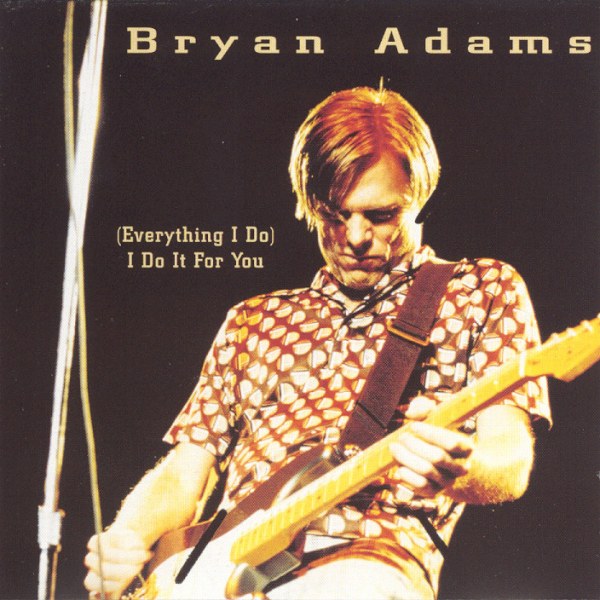
Number 20: “(Everything I Do) I Do It For You” by Bryan Adams (1991). Estimated earnings: $15 million. The song appeared on the soundtrack for the film Robin Hood: Prince of Thieves and on the Canadian singer’s sixth studio album, Waking Up the Neighbours.

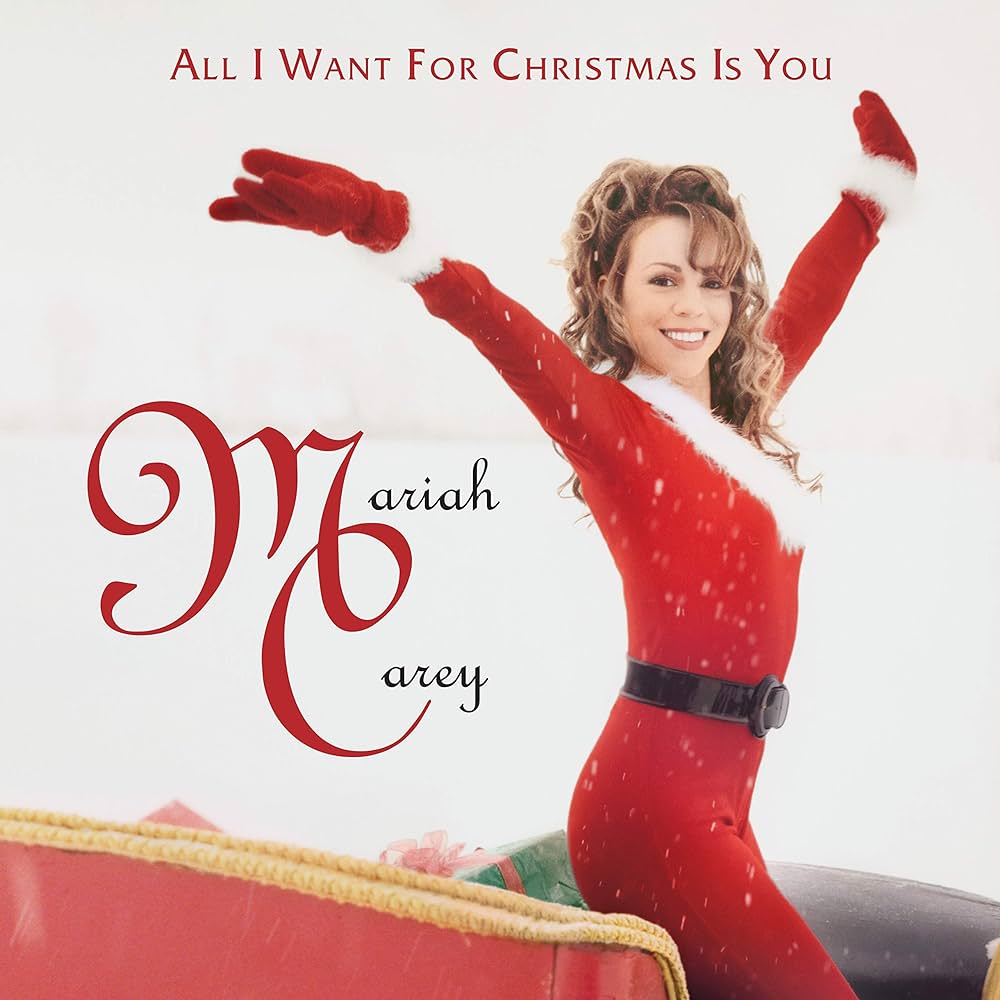
Number 19: “All I Want For Christmas Is You” by Mariah Carey (1994). Estimated earnings: $16 million. This holiday standard (or earworm depending on your point of view) is the most loved and hated song on the list by a longshot. Every holiday season it returns to the number one spot on the Billboard charts, much to the dismay of seasonal retail workers. Love it or hate it, you gotta give Mariah a tip of the cap for her skimpy Santa suit: an homage to Ronnie Spector and the Ronettes.

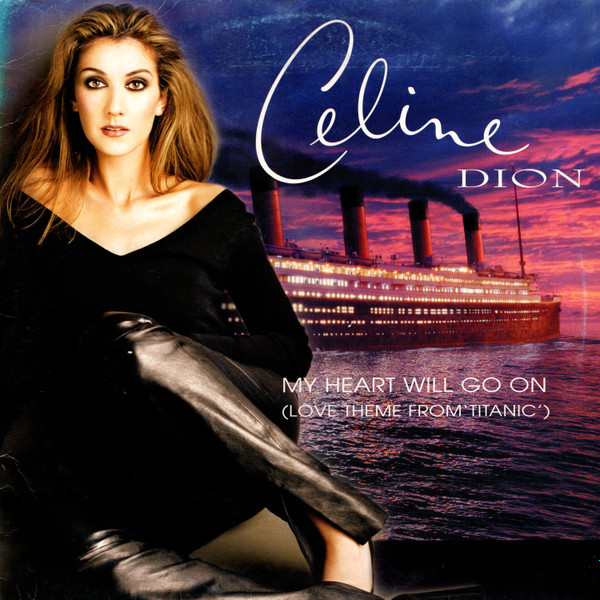
Number 18: “My Heart Will Go On” by Céline Dion (1997). Estimated earnings: $18 million. Better known as the theme song for the film Titanic, it has become Dion’s signature song and is the second-best-selling single by a woman in music history.

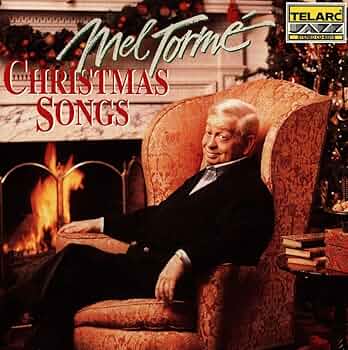
Number 17: “The Christmas Song” by Mel Torme (1944). Estimated earnings: $19 million. While the title may not ring a bell, when you hear Torme (a.k.a. “The Velvet Fog”) croon “chestnuts roasting on an open fire,” you know what time it is. The song is ironic in a couple of different ways. First Torme is Jewish. Second, Torme wrote the Christmas song “Jack Frost Nipping at Your Nose” in 45 minutes on a blistering hot California day.

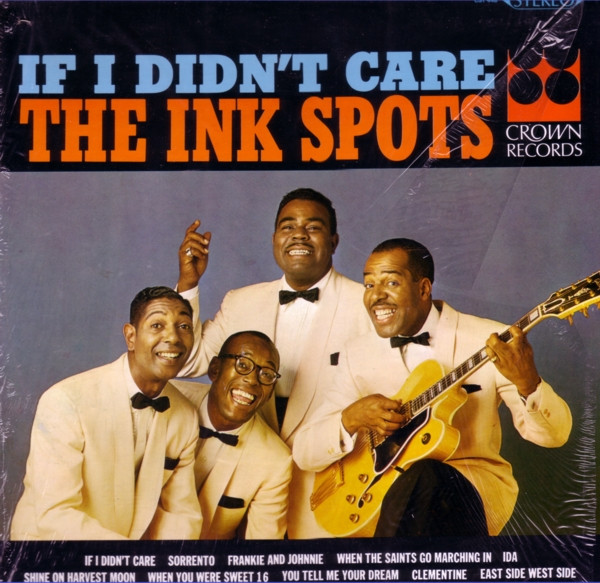
Number 16: “If I Didn’t Care” by The Ink Spots (1939). Estimated earnings: $19.75 million. The Ink Spots were one of the first all-black bands to be widely accepted in both the white and black communities. The group traces its origin to Indianapolis and in 1989 they were inducted into the Rock ‘n Roll Hall of Fame.

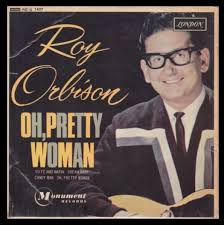
Number 15: “Oh Pretty Woman” by Roy Orbison and Bill Dees (1964). Estimated earnings: $19.75 million. Most movies form the song but this song formed the movie. The song was released as a single in August 1964 and the movie didn’t come along until 1980. The Richard Gere and Julia Roberts movie was originally intended to be a dark cautionary tale about class and prostitution in Los Angeles but the film was re-imagined as a romantic comedy and was mostly shot at Walt Disney studios. As for Orbison’s original song? It was inspired when his wife, Claudette, interrupted a conversation to announce she was going out. When Orbison asked if she had enough cash, his co-writer Bill Dees interjected, “A pretty woman never needs any money.”

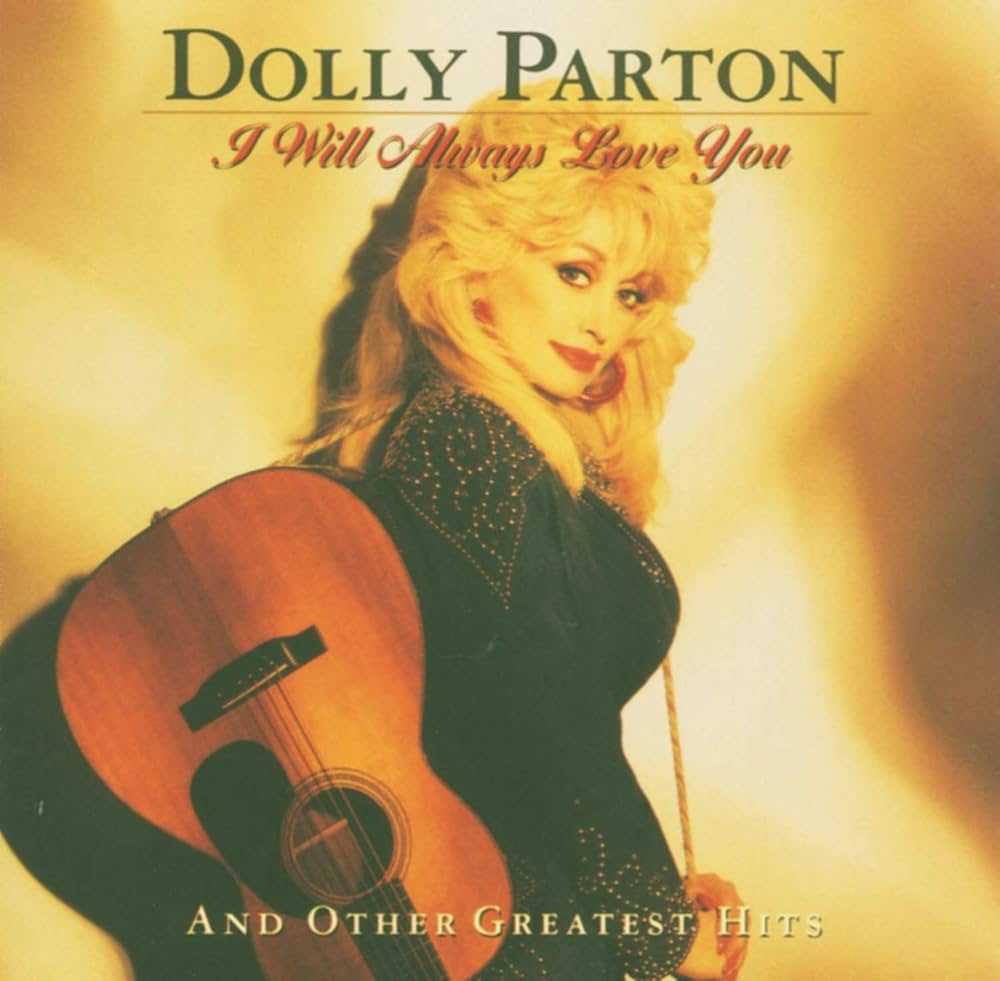
Number 14: “I Will Always Love You” by Dolly Parton (1972). Estimated earnings: $20.5 million. Dolly wrote the song to honor her early mentor, Porter Wagoner. The song helped Dolly win CMA’s Female Vocalist of the Year in 1975 but had its biggest impact in 1992 when Whitney Houston covered it for her 1992 movie, The Bodyguard. Houston’s version is the best-selling single by a woman in music history. The song has earned Dolly over $10 million which she famously donated to charities serving black communities. 

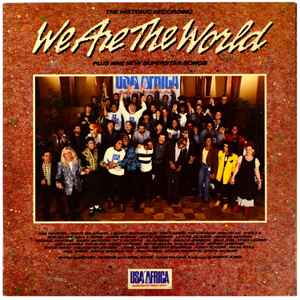
Number 13: “We Are The World” by USA For Africa (1985). Estimated earnings: $20.5 million. This charity single was written by Michael Jackson and Lionel Richie. The song featured some of the biggest musicians of the time, including Stevie Wonder, Billy Joel, Paul Simon, Kenny Rogers, Tina Turner, Diana Ross, Willie Nelson, Bruce Springsteen, Kenny Loggins, Steve Perry, Daryl Hall, Huey Lewis, Cyndi Lauper, Ray Charles, and Bob Dylan (who, when chastised by Producer Quincy Jones for singing “off-key”, responded, “That’s my style, man.”) .The chorus was equally notable: Dan Aykroyd, Harry Belafonte, Lindsey Buckingham, Sheila E., Waylon Jennings, Bette Midler, Smokey Robinson, the Pointer Sisters, and the other 4 members of the Jackson Five. The album raised a whopping $63 million in relief funds.

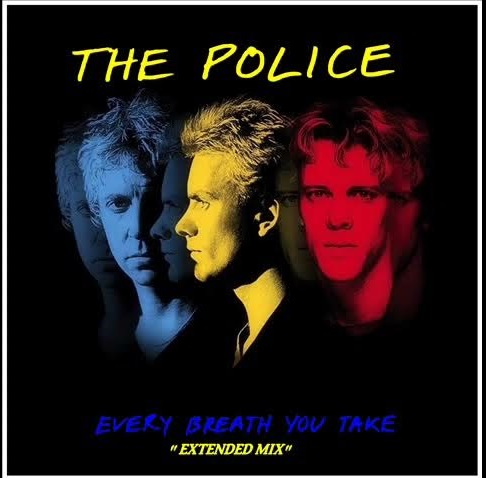
Number 12: “Every Breath You Take” by Sting (1983). Estimated earnings: $20.5 million. Although officially a song by The Police, it has become Sting’s signature song and was, for many years, a popular wedding song until it was revealed to be about a stalker with an unhealthy obsession. In 2010, Sting’s former business manager claimed that the song “is responsible for more than 1/4 of all the singer’s lifetime publishing income and today still produces $2,000 a day ($730,000 per year) in royalties income for Sting.” The songwriting for “Every Breath You Take” is credited 100% to Sting (AKA Gordon Sumner).

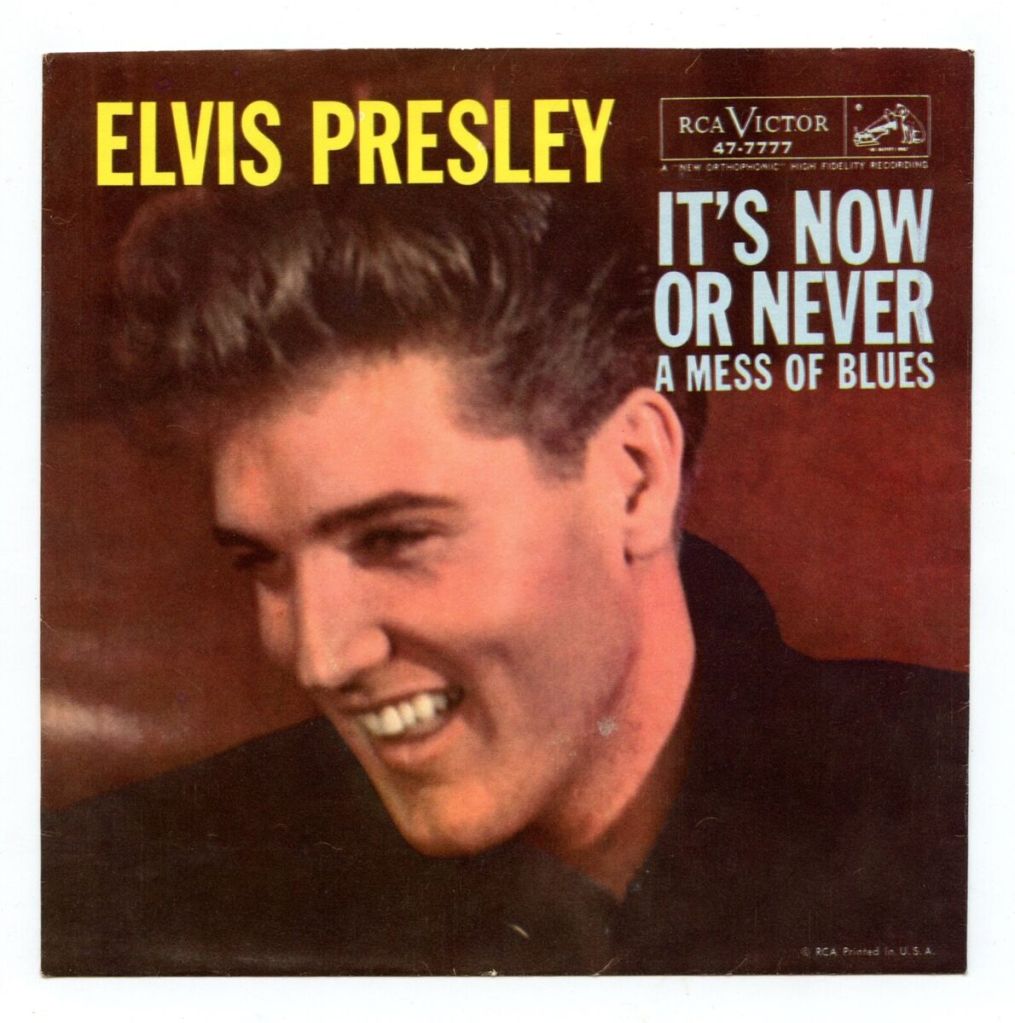
Number 11: “It’s Now Or Never” by Elvis Presley (1960). Estimated earnings: $22 million. I know, I know, why THIS Elvis song in particular? Elvis had so many great ones. When Presley wrote the song, he was serving in the military, stationed in Germany. When he returned to the States after his stint, “Now or Never” became one of his first releases, so fans raided the record stores by the millions in search of it.

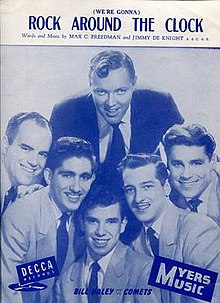
Number 10: “Rock Around The Clock” by Bill Haley & His Comets (1954). Estimated earnings: $25 million. Most of us remember it as the theme song for the Happy Days TV show, “Rock Around the Clock” was one of the earliest successful mainstream records of the rock ‘n roll era. It was the first rock and roll record to hit number one on the U.S. pop charts. Here’s a mind-bender for you: “Rock Around The Clock” was written to the tune of Hank Williams’ “Move It On Over.”

Number 9: “Santa Claus Is Coming To Town” by Haven Gillespie And Fred J. Coots (1934).  Estimated earnings: $27 million. Another head-scratcher, but as they say, timing is everything. Although the original artist who recorded it is long forgotten (Harry Reser and His Band), in November 1934 when it was covered by Eddie Cantor on his radio show, within 24 hours, 500,000 copies of sheet music and more than 30,000 records were sold and it just kept selling. The song has been recorded by over 200 artists including Bing Crosby, Neil Diamond, Fred Astaire, Bruce Springsteen, Mariah Carey, Frank Sinatra, the Temptations, the Carpenters, and the Jackson 5.

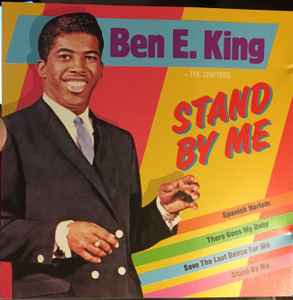
Number 8: “Stand By Me” by Ben E. King, Jerry Leiber, and Mike Stoller (1961).  Estimated earnings: $27 million. According to King, the title was inspired by a spiritual written by Sam Cooke and J. W. Alexander called “Stand by Me Father.” “Stand By Me” was successful on its own, but it shot to prominence when it was used in the Stephen King blockbuster movie of the same name twenty years later and found itself at the top of the charts in 1986. In March of 1974, John Lennon recorded two takes of the song with former Beatles bandmate Paul McCartney on the drums and Lennon on guitar. The unreleased recordings would eventually be included in a bootleg album A Toot and a Snore in ‘74.

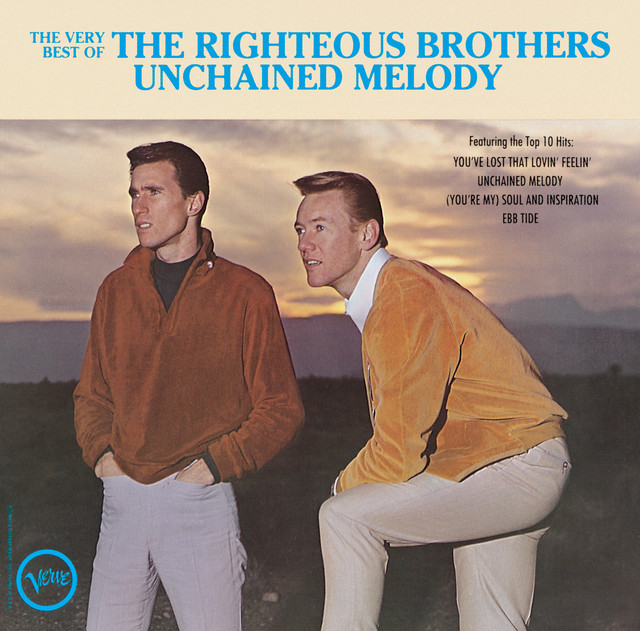
Number 7: “Unchained Melody” by Alex North And Hy Zaret (1955). Estimated earnings: $27.5 million. The song was written for a movie, Unchained, which was not a success and is remembered ONLY for starring football Hall of Famer Elroy “Crazylegs” Hirsch, Perry Mason’s Barabara Hale and Dick Van Dyke’s dentist neighbor Jerry Paris. However, the song would go on to be one of the most covered songs in recorded history; more than 650 artists at last count. The 1965 version by the Righteous Brothers is the most famous version, but the song re-emerged after it was used in the 1990 Oscar-winning movie Ghost starring Demi Moore and Patrick Swayze.

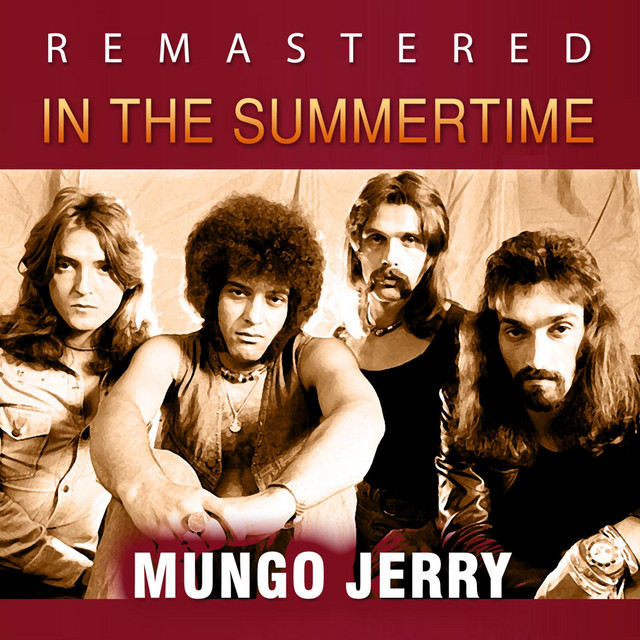
Number 6: “In The Summertime” by Mungo Jerry (1970). Estimated earnings: $30 million. I guess we should think of this as the seasonal song for summer. Just like Christmas, summer comes around every year. Impressive when you consider it was Mungo Jerry’s debut single and that lead singer Ray Dorset said it only took him 10 minutes to write. Dorset later recalled writing it “on a second-hand Fender Stratocaster while I was on break from my day job, working in a lab for Timex.” Initially, the song was only two minutes long; to make it longer, the sound of a motorcycle was added in the middle. But they didn’t have a motorcycle, so “the engineer had a Triumph sports car, which he drove past the studio microphone. So he got the stereo effects from left to right or right to left, whatever. And that was it.” That scene is made even more comical when you watch the music video for the song (one of the earliest such videos you’re likely to find) and see one of the musicians pretend to create the sound by blowing into a water jug.

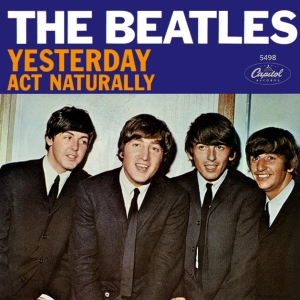
Number 5: “Yesterday” by John Lennon and Paul McCartney (1965). Estimated earnings: $30 million. Although Paul McCartney was 100% responsible for the writing and singing of the song, the songwriting credit goes to both men. From the start the duo agreed to share equal credit for their songs, no matter how much either of them contributed to the song. “Yesterday” would become the second-most-played song in the history of radio. It has been covered by more than 2200 different artists. Yoko Ono, John Lennon’s sole heir, has received millions in royalties from the song. BMI asserts that it was performed over seven million times in the 20th century.

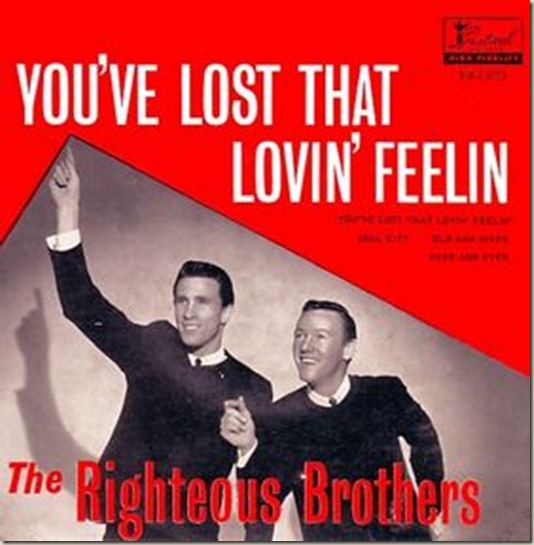
Number 4: “You’ve Lost That Feeling” by Barry Mann, Cynthia Weil, and Phil Spector (1964). Estimated earnings: $32 million. Notable as the ONLY song to crack the top 21 that was written by a convicted murderer: Phil Spector. Ironically, Spector’s sole contribution to the songwriting was the line, “and he is gone, gone, gone, Whoa, whoa, whoa.” This Spector-produced song is cited by music critics as the ultimate example of his Wall of Sound recording technique. The song became a massive hit after it was recorded by The Righteous Brothers but resurfaced in a big way in 1986 after it was included in the soundtrack for Top Gun, starring Tom Cruise. The song has been covered by over 2200 different artists and went on to become one of the most-played songs in radio history.

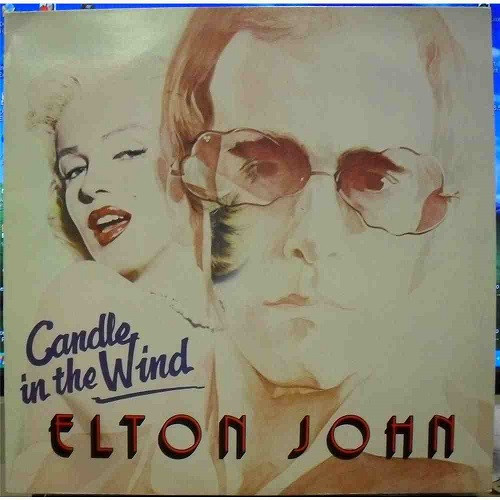
Number 3: “Candle In The Wind” by Elton John and Bernie Taupin (1973). Estimated earnings: $32 million. The song was originally written about the death of Marilyn Monroe, but, in 1997, Elton did a rewrite as a memorial for his close friend Princess Diana. The rewritten version had greater success than the original version. During a concert on April 7, 1990, at Farm Aid IV, Elton dedicated the song to Cicero, Indiana AIDS patient Ryan White, who died of AIDS complications the next day.

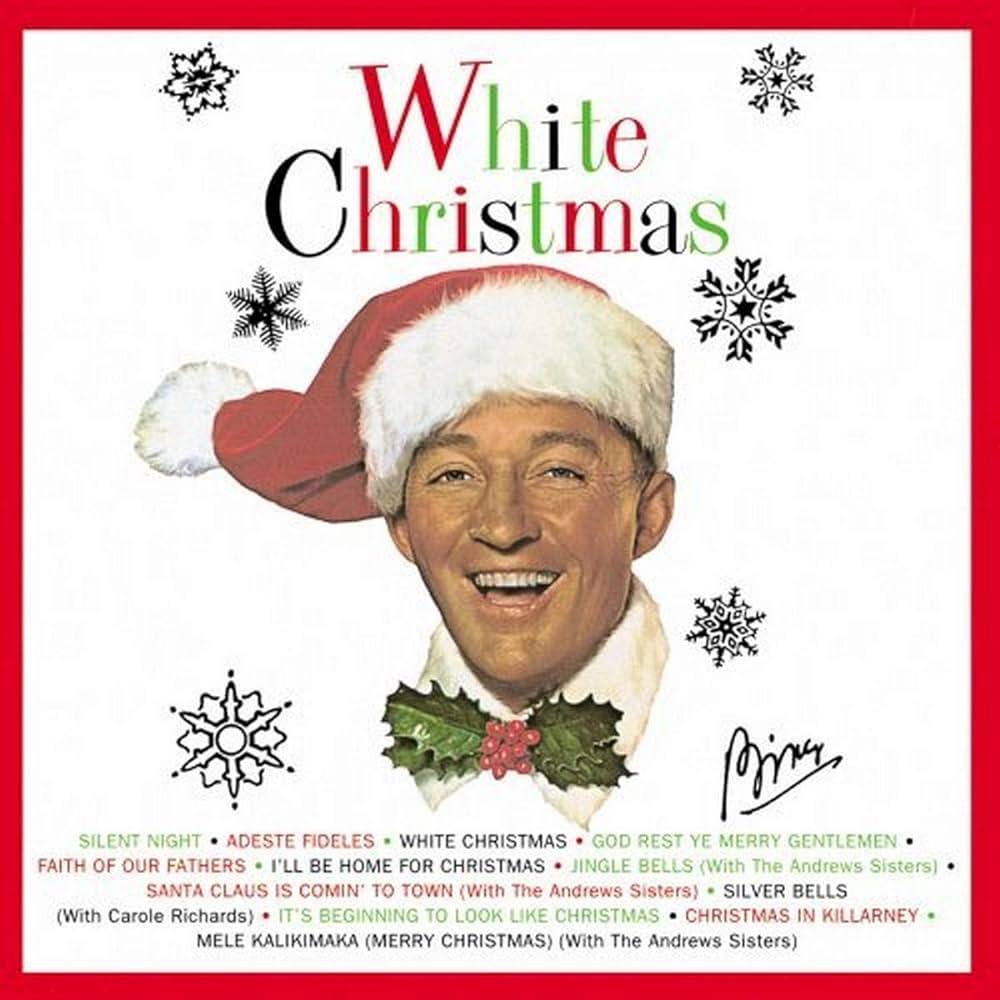
Number 2: “White Christmas” by Irving Berlin (1940). Estimated earnings: $36 million. Ironically, this standard of all Christmas songs was written by a Jewish immigrant from Russia: Irving Berlin. Though the song has been covered by countless artists, the most famous version will always be Bing Crosby’s version which sold over 100 million copies worldwide. According to Crosby’s nephew, Howard Crosby, “I once asked Uncle Bing about the most difficult thing he ever had to do during his entertainment career…He said in December 1944, he was in an outdoor USO show in northern France… he had to stand there and sing ‘White Christmas’ with 100,000 G.I.s in tears without breaking down himself. Of course, a lot of those boys were killed in the Battle of the Bulge a few days later.” Think of that the next time you hear this song.

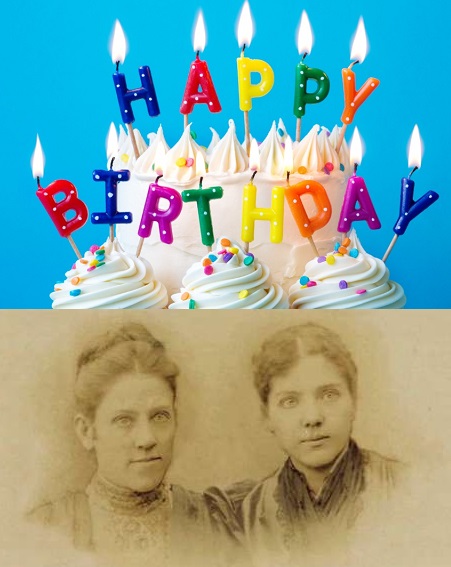
Mildred (left) and Patty (right) Hill.

Number 1: “Happy Birthday” by The Hill Sisters (1893). Estimated earnings: $50 million. The ONLY song on the list that has been sung by every generation of your family you ever knew. You know the song, but do you know the story? Mildred Jane Hill was a musicologist from Louisville, Kentucky. Born two years before the start of the Civil War in 1859, Mildred studied music, teaching, composing, and performing, specializing in the study of Negro spirituals. Hill and her sister Patty were honored at the 1893 Chicago World’s Fair for their work in the progressive education program at the experimental Louisville Experimental Kindergarten School. Her progressive 1892 article, “Negro Music,” suggested that the existing body of black music would be the basis of a distinctive American musical style in the years to come. In 1893, the Hill sisters found themselves in need of a song for their kindergarten class to sing on birthdays. 130 years later, we are still singing the Hill sisters song. Today, “Happy Birthday” brings in a reported $5,000 a day, and $2 million a year in royalties. The cost of using the song in a movie or on TV is $25,000. It is actually against the law to sing “Happy Birthday” in a large group of unrelated people, but good luck trying to enforce that one.

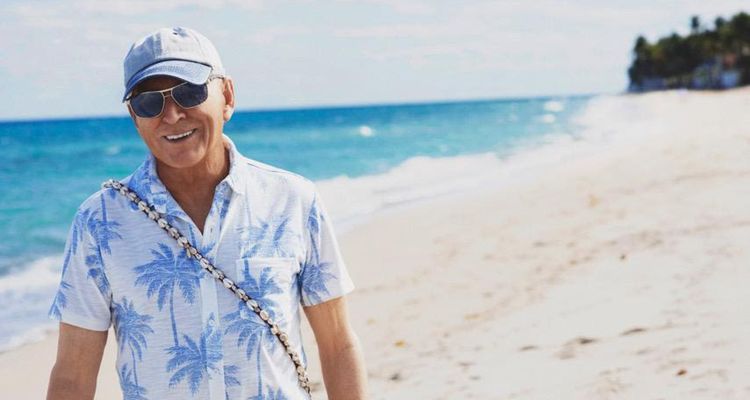
Jimmy Buffett.

There you have it. Those numbers will change in the years to come. No doubt, by scanning the list, you have deduced that all it takes for a song to make (or jump up on) the list is for a movie or TV show to pick it up as a theme song. But, as I told you earlier, I am in Florida as I write this, and for that reason, I would like to submit a song that is not on anyone’s list. Governor DeSantis of Florida has ordered that flags be lowered to half-staff from Thursday, Sept. 7, to Friday, Sept. 8th to commemorate the ‘life and legacy’ of Jimmy Buffett, the “Margaritaville” singer who died on Sept. 1st.

Buffet’s 1977 “Margaritaville” song was on his album Changes in Latitudes, Changes in Attitudes. Buffet claimed that the lyrics were taken directly from a bad day at the beach and that he really lost a flip-flop, stepped on a pop top, and cut his heel on the way back home. And, oh yes, he lost his salt shaker that day too. The song has a “lost verse” which he sometimes added when performing in concert but was cut from the original song. “Old men in tank tops, Cruisin’ the gift shops, Checkin’ out chiquitas, down by the shore. They dream about weight loss, Wish they could be their own boss, Those three-day vacations can become such a bore.” Although Buffet’s Margaritaville earned him millions, by itself, it never could have cracked the top 21.

However, Buffet’s song about life in this euphoric place has morphed into a global brand that has earned more than $4.8 billion and sees $1.5 billion in annual sales. Buffet’s Margaritaville Holdings company began in 1985 with the opening of a string of Margaritaville-themed stores and restaurants, the first of which was a store in Key West, Florida, that was followed in 1987 with the first Margaritaville Café nearby. Over the course of the next two decades, several more of each opened throughout Florida, New Orleans, and California.  In 2002, Buffet partnered with Outback Steakhouse to develop the first Cheeseburger in Paradise Restaurant in Southport, Indiana. Margaritaville resorts by Wyndham have sprouted up all over the place and most recently, a plan to develop Latitude Margaritaville: new active adult communities for those “55 and better.” At the time of his death, Buffet had amassed a personal fortune of $1 billion. That’s BILLION with a “B”, a figure that cannot be surpassed, even if you added all of the top 21 together. Apparently, Margaritaville was a pretty good place to be.

Hollywood, Indianapolis, Music, Pop Culture

The Lyric Theatre. Part I

Original Publish Date January 6, 2016. Republished January 23, 2025.

https://weeklyview.net/2016/01/14/the-lyric-theatre-part-1/

Frank Sinatra.

This week the Smithsonian Institution in Washington, D.C. will open a new exhibit called “Sinatra at 100” honoring Frank Sinatra’s 100th birthday last December 12th. The National Museum of American History will surely put up a classy display, but I seriously doubt that our fair city will be mentioned at all… but we should be.

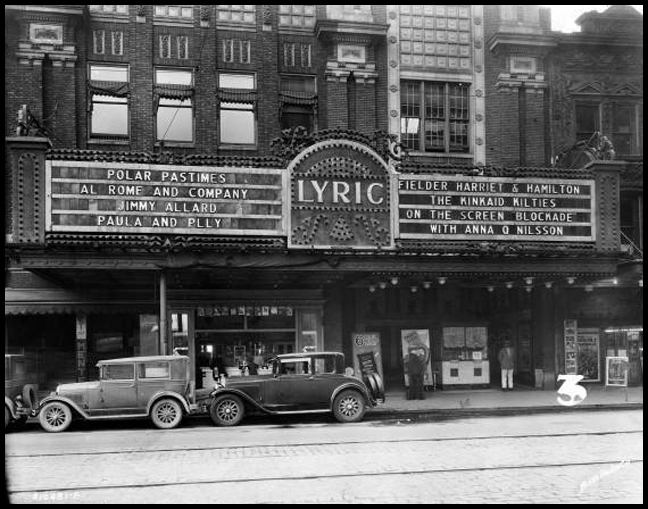
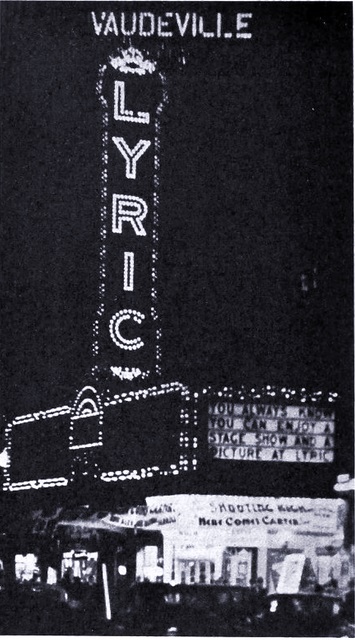
Located at 135 N. Illinois Street there once stood a theatre with as rich a pop-culture history as any in Indianapolis. When the Lyric Theatre opened in February of 1906, it was a room with about 200 folding chairs arranged in rows. A carbon arc light projector rested on a tripod in the rear of the theatre. The film was mounted on a reel and fed at a rate of 16-18 frames per second between the arc light and the projector lens, which magnified the image so that it could be projected onto a screen. Early projectors simply dumped the projected film into a basket on the floor. Projectors were hand-cranked, and the projectionist could speed up or slow down the action on the screen by “over-cranking” or “under-cranking.”

The Lyric in the 1930s – Photo cinematreasures.com

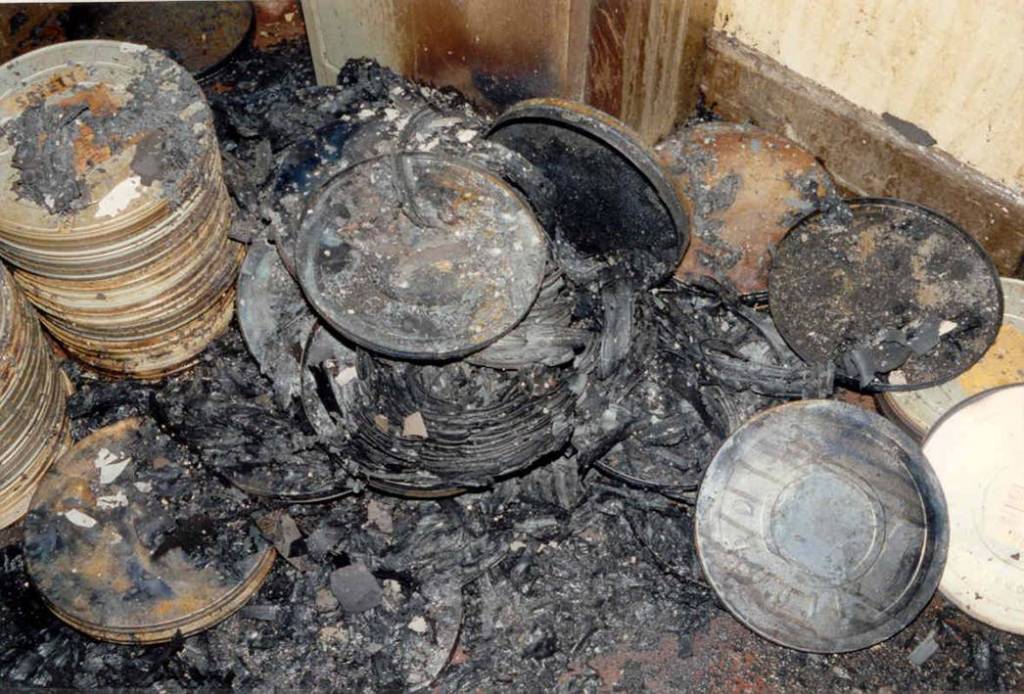
The film stock itself was made from nitrocellulose, a chemical cousin to explosives used by the military in World War I. The highly flammable film and the extremely hot light source meant that fire was a very real threat. In fact, the incidence of projector-related fires over the first ten years of movie houses produced some of the worst tragedies in our country’s history, capable of killing hundreds of people in an instant. For this reason, a larger 1400-seat Lyric theatre was built on the property six years later.

Nitrocellulose film canister disaster.

The new Lyric was constructed by the Central Amusement Co. for $75.000, built by the Halstead-Moore Co., and designed by architect Herman L. Bass, who designed Indianapolis Motor Speedway co-founder James A. Allison’s mansion, now on the campus of Marian College. This upgrade included fireproof materials inside and exterior walls of concrete, steel, and artistic brick accented by white terra-cotta trim.

Kurt Vonnegut Sr. (1884-1956)

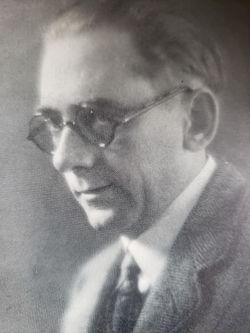
On April 20, 1919, the Lyric was again closed for remodeling, this design courtesy of architect Kurt Vonnegut Sr., a well-known name that still resonates through town to this day. This facelift left only three original walls standing and created a new lobby on the south. The stage that originally faced west now faced south. It had its grand reopening on September 1, 1919. The Lyric underwent its last major remodel in 1926, adding state-of-the-art air conditioning and modern stage lighting systems. This remodel cost $185,000 and included construction of a new four-story building featuring a new main entrance, and lobby with executive offices above.

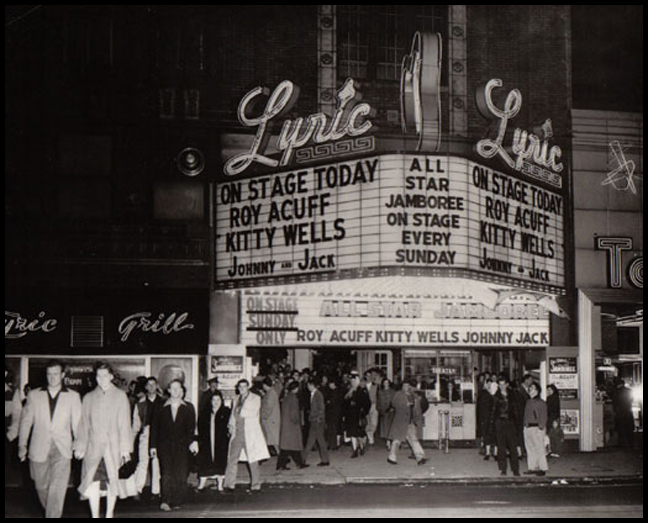
Patrons spill out of the Lyric in 1955 – Photo cinematreasures.com

The new Lyric, with its shiny marble and gold lobby lined with French mirrors and six French crystal chandeliers, was considered to be one of the finest theaters in Indiana. 300 more seats were added as was a new basement that housed rehearsal areas and dressing rooms named for cities on its doors. A new marquee was added above the front door. At 10 feet high, 50 feet long, and 16 feet deep, it held up to 440 letters and was said to be the largest of its kind in the state. The following year a new Marr-Colton pipe organ was added for $30,000.00, which, like the marquee, was the largest in the state.

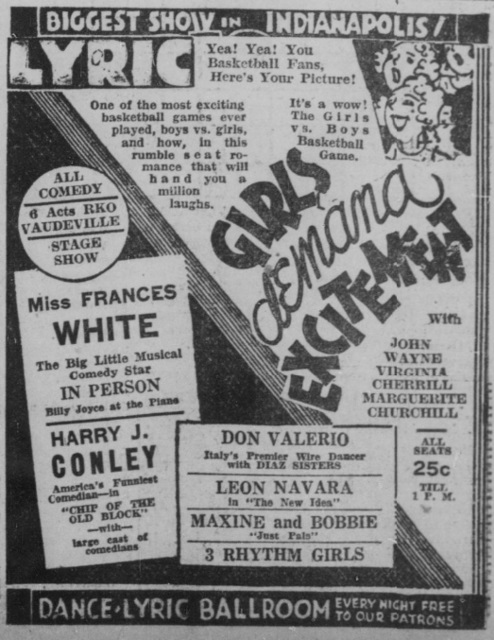
March 21, 1931, Lyric Vaudeville Ad.

The Lyric began life showing films scored with music provided by live musicians. Then came Vaudeville, talkies, and finally big screen epics similar to today. World War I led to the Roaring Twenties, then to the Great Depression, and into the gangster era whose Hoosier outlaw roots extended to the doorway of the Lyric itself. The Lyric survived the Depression by featuring an eclectic mix of movies, Vaudeville acts, stage shows and live musicals.

July 4, 1934, Lyric Indy Star Ad.
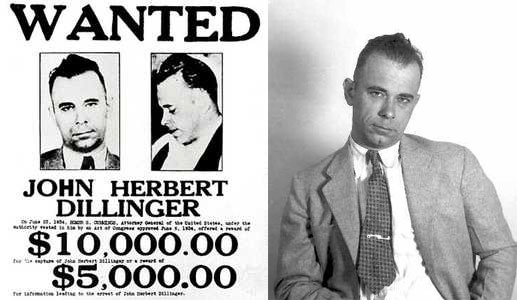
The family of John Dillinger waits outside the Lyric Theatre in Indianapolis, where they will be regaling the audience with tales of the famous outlaw, in July 1934. Left to right, they are John Dillinger, Sr., Mrs Audrey Hancock (sister), Emmett Hancock (brother-in-law), and Hubert Dillinger (his half-brother).
Hoosier Outlaw John Dillinger.

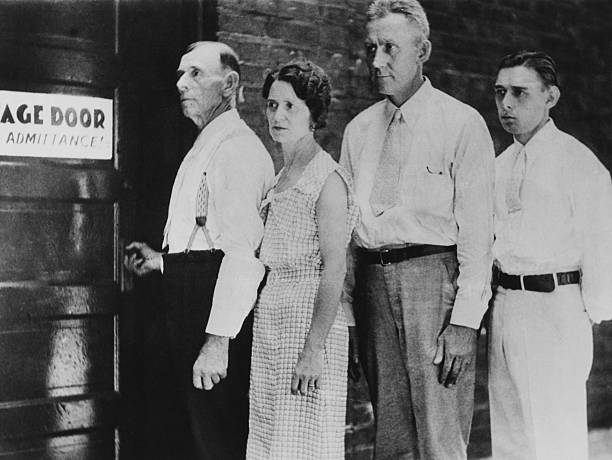
A week after the death of Hoosier Public Enemy # 1 John Dillinger on July 22, 1934, his family signed a 5-month vaudeville contract at the Lyric theatre that expired on New Year’s Eve. Crowds mobbed the theatre to hear stories from and ask questions of, John Dillinger, Sr. about his famous outlaw son. The 15-minute show was billed as “Crime doesn’t pay” even though it cost patrons an extra 15 cents to see it. Here, Dillinger Sr. and his sister Audrey fielded questions from the crowd. The show traveled to the Great Lakes, Texas Centennial and San Diego Expositions, and Chicago World’s Fair, which gangster Dillinger had famously visited while alive. Rumor persists that the Lyric was also a favorite hangout for John Dillinger. After all, everyone knows that Dillinger died outside of a Chicago movie theatre.

Lyric Vaudeville Theatre 1936.

Edgar Bergen (only weeks before he introduced his “dummy” Charlie McCarthy) played the Lyric in 1934 in a vaudeville act that included a trio of sisters calling themselves the “Queens of Harmony” who later became known as The Andrews Sisters. Red Skelton was a 1930s performer at the Lyric known as “The Canadian Comic” even though he was a Hoosier born in Vincennes. Hoagy Carmichael was a regular. The standard 1930s Era Lyric theatre contract awarded “Fifty percent (50%) of gross receipts after the first dollar”. Ticket prices in 1936 were defined as: “25 cents to 6 p.m.- 40 cents on the lower floor at night and 30 cents in balcony weekdays, and Saturday. On Sunday, 30 cents in balcony and 40 cents on the lower floor all day.”

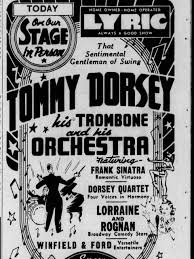
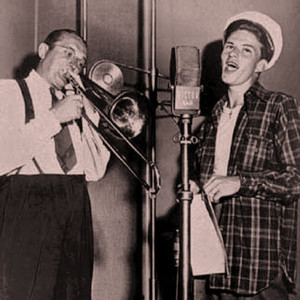
Tommy Dorsey & Frank Sinatra at the Lyric Theatre February 1940.

The Lyric’s next step towards pop culture immortality came on February 2, 1940, when the Tommy Dorsey Orchestra came to town. Dorsey began his career in a Big Band with his brother Jimmy in the late 1920s. That band also included Glenn Miller. Dorsey had a reputation for being a micromanaging perfectionist with a volatile temper. He often fired musicians based on his mood, only to rehire them a short time later. Dorsey had a well-deserved reputation for raiding other bands for talent. If he admired a vocalist, musician, or arranger, he thought nothing of taking over their contracts and careers.

Frank Sinatra 1939.

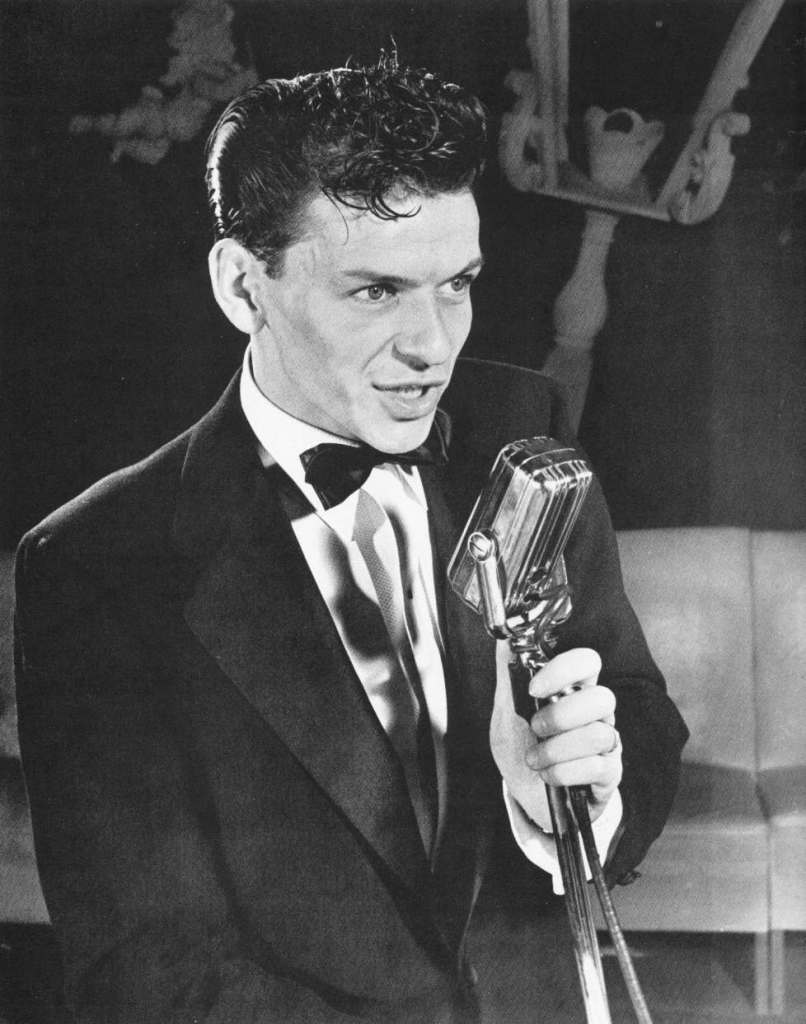
In November 1939 a relatively unknown “skinny kid with big ears” from Hoboken New Jersey signed on as the lead singer of the Tommy Dorsey band. Frank Sinatra signed a contract with Dorsey for $125 a week at Palmer House in Chicago, where Ole Blue Eyes was appearing with the Harry James orchestra. Mysteriously, but not unsurprisingly, Harry James agreed to release Sinatra from his contract. An event that would come back to haunt Dorsey a couple years later.
Dorsey was a major influence on Sinatra and quickly became a father figure. Sinatra copied Dorsey’s mannerisms and often claimed that he learned breath control from watching Dorsey play trombone. He made Dorsey the godfather of his daughter Nancy in June 1940. Sinatra later said that “The only two people I’ve ever been afraid of are my mother and Tommy Dorsey”.

From February 2-8, 1940, when the Dorsey band opened at the Lyric, the theater’s ad in the Indianapolis Star listed Tommy’s name in inch-high letters. At the bottom, in 1/8-inch type, was a listing for “Frank Sinatra, Romantic Virtuoso.” The songs he sang during that week of shows on the eve of World War II are lost to the pages of history. But we do know that Frank Sinatra made eighty recordings in 2 years with the Dorsey band.
By May 1941, Sinatra topped the male singer polls in Billboard and Down Beat magazines, becoming the world’s first “Rock Star”. His appeal to bobby-soxers created “Pop Music” and opened up a whole new market for record companies, which had been marketing primarily to adults up to that time. The phenomenon would become officially known as “Sinatramania”. Manic female fans often wrote Sinatra’s song titles on their clothing, bribed hotel maids for an opportunity to touch his bed, and chased the young star often stealing clothing he was wearing, usually his bow tie.

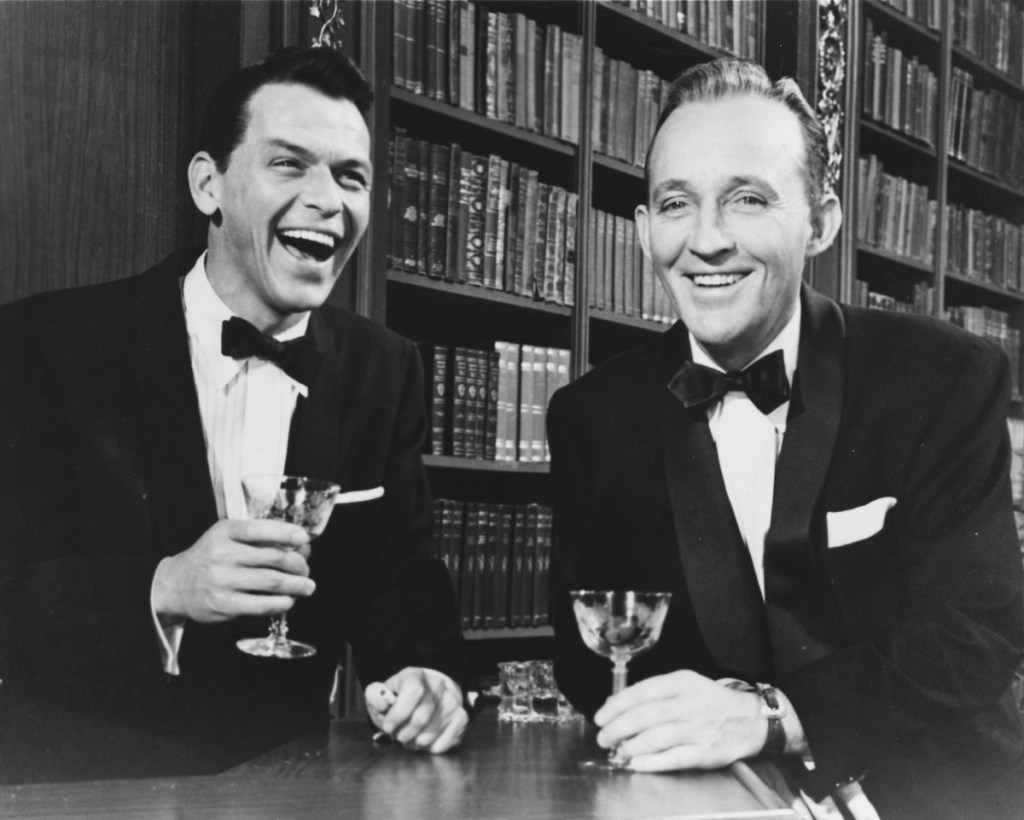
Frank Sinatra & Bing Crosby.

By 1942, Sinatra believed he needed to go solo, with an insatiable desire to compete with Bing Crosby, his childhood idol. Sinatra grew up with a picture of Crosby in his bedroom, and in 1935 young Frankie met his idol briefly backstage at a Newark club. Within a decade, Sinatra would be contending for Crosby’s throne. A series of appearances at New York’s Paramount Theatre in December 1942 established Sinatra as the hot new star. When Sinatra sang, young girls in the audience swooned, screaming so loud that it drowned out the orchestra. The girls never swooned and screamed when Bing Crosby sang. Sinatra decided early not merely to imitate Crosby, but to develop his own style. In a 1965 article, Sinatra explained: “When I started singing in the mid-1930s everybody was trying to copy the Crosby style — the casual kind of raspy sound in the throat. Bing was on top, and a bunch of us … were trying to break in. It occurred to me that maybe the world didn’t need another Crosby. I decided to experiment a little and come up with something different.”

Dorsey & Sinatra.

Frank’s singing evoked frailty, innocence, and vulnerability and inflamed the passions of his young female fans. Some older listeners, however, rejected Sinatra’s gentle sighing, moaning, and cooing as not real singing. Crosby joked: “Frank Sinatra is the kind of singer who comes along once in a lifetime — but why did it have to be my lifetime!”
Sinatra was hamstrung by his contract with the Dorsey band, which gave Dorsey 43% of Frank’s lifetime earnings in the entertainment industry. On September 3, 1942, Dorsey famously bid farewell to Sinatra by telling Frankie, “I hope you fall on your ass”. Rumors began spreading in newspapers that Sinatra’s mobster godfather, Willie Moretti, coerced Dorsey to let Sinatra out of his contract for a few thousand dollars by holding a gun to Tommy’s head and telling him that “either your signature or your brains will be on this contract.” Apparently, Sinatra made him an “offer he could not refuse”. Yes, that famous scene in The Godfather is based on this encounter.

Dorsey died in 1956, but not before telling the press this of his one-time protege, “he’s the most fascinating man in the world, but don’t put your hand in the cage”. Regardless of the way it ended between the duo. It all began at the Lyric Theatre in Indianapolis.

If you are interested in learning more about the Lyric and other legendary Circle City theatres, I highly recommend you read “The Golden Age of Indianapolis Theaters” (IU Press) by Howard Caldwell, former WRTV-Channel 6 anchor and friend of Irvington.

The Lyric Theatre. Part II.

Original Publish Date January 21, 2016. Republished January 23, 2025.

https://weeklyview.net/2016/01/21/the-lyric-theatre-part-2/

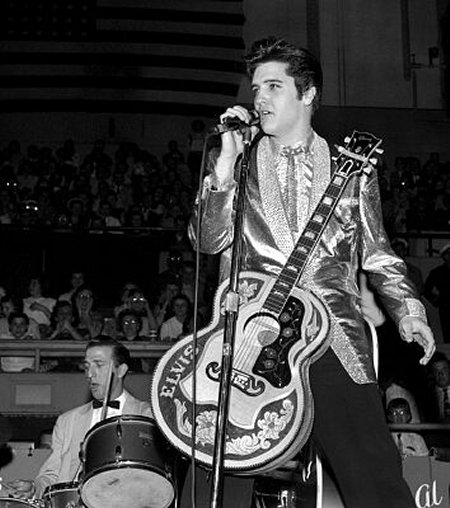
Elvis Presley 1956,

Frank Sinatra’s career began at the Lyric Theatre in Indianapolis on February 2, 1940, with the Tommy Dorsey Orchestra. Sinatra stuck with Dorsey for a couple years before he went solo. Allegedly, Dorsey only let go of Frankie at the gentle urging of Ole Blue Eyes’ Mafia Godfather, who was holding a gun to Dorsey’s head. Dorsey and Sinatra, who had once been very close, never patched up their differences. Ironically, Dorsey had a hand in the Lyric Theatre’s second step towards immortality for the next bobby-soxer generation.

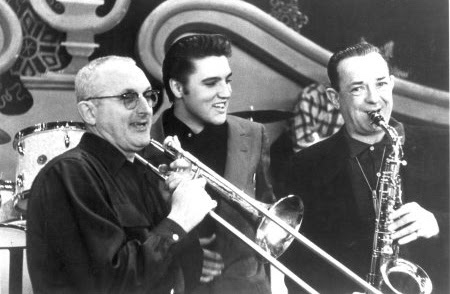
On January 28, 1956, another pop culture icon burst onto the American scene via The Dorsey Brothers TV Show. Tommy Dorsey introduced Cleveland disc jockey Bill Randle, who then introduced Elvis Presley to his first national audience by saying: “We’d like at this time to introduce to you a young fellow who…came out of nowhere to be an overnight big star…We think tonight that he’s going to make television history for you. We’d like you to meet him now – Elvis Presley”. That night the show aired from CBS Studio 50. The same studio that launched the careers of the Beatles, who would themselves eventually dethrone Elvis 8 years later. Years later, Indianapolis Native David Letterman would broadcast his Late Nite show from the same studio- yet another Hoosier pop culture connection.

Elvis on the Dorsey Brothers TV Show 1956.

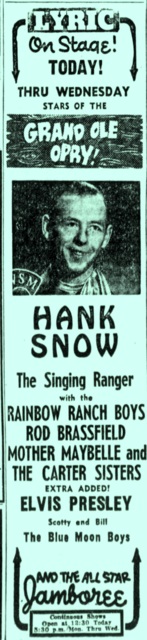
A little more than a month before that national television debut, Elvis Presley played the Lyric theatre for four days: Sunday, December 4th through Wednesday, December 7th. Elvis was paid $ 1,000 for 4 shows. 20-year-old Presley was part of Hank Snow’s tour that played the Lyric, once located in the 100 block of North Illinois Street. Presley, who never received formal music training or learned to read music, studied and played by ear. He also frequented record stores with jukeboxes and listening booths, where he memorized all of Hank Snow’s songs.

Hank Snow was the headliner and his name appeared on the Lyric theatre marquee in giant letters. Snow, a regular at the Grand Ole Opry, persuaded the Opry to allow a young Elvis Presley to appear on stage in 1954. Snow used Presley as his opening act and introduced him to the infamous Colonel Tom Parker. The Opry believed Elvis’ style didn’t fit with their image so they suggested he go the the Louisiana Hayride radio show instead. By the time Elvis came to the Lyric, he was a hayride regular. Seems Elvis’s performance at the Lyric, although one of his first, may have been one of his last without controversy.

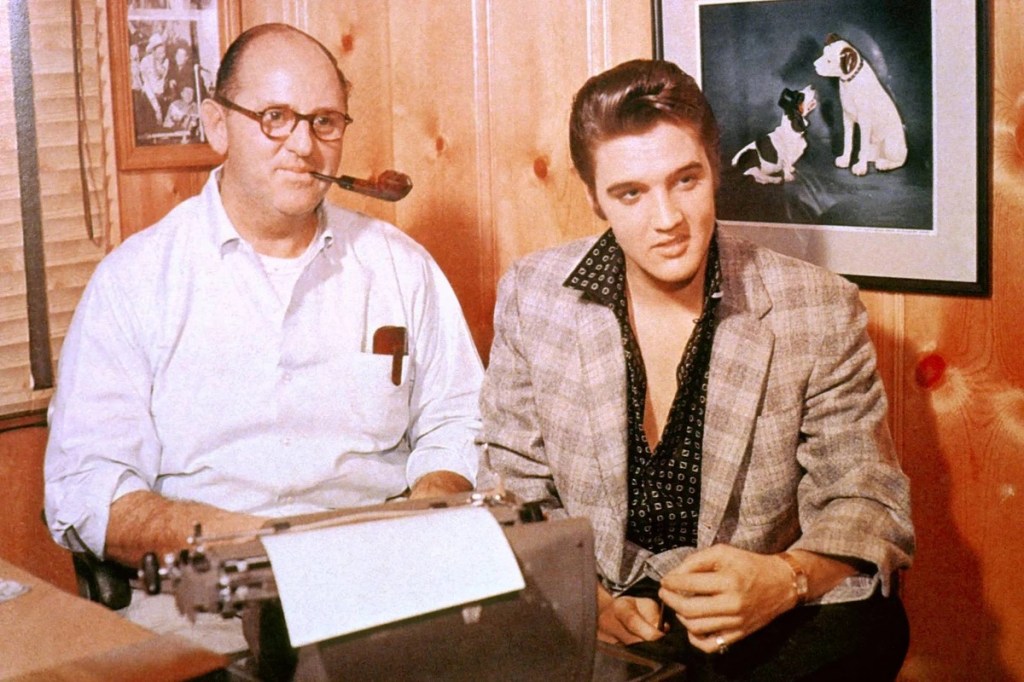
In August 1955, Colonel Tom Parker joined Hank Snow’s Attractions management team just as Presley signed his first contract with Snow’s company. Elvis, still a minor, had to have his parents sign the contract on his behalf. Before long, Snow was out and Parker had total control over the rock singer’s career. When Snow asked Parker about the status of their contract with Elvis, Parker told him, “You don’t have any contract with Elvis Presley. Elvis is signed exclusively to the Colonel.” Forty years later, Snow (who died in 1999) stated, “I have worked with several managers over the years and have had respect for them all except one. Tom Parker (he refused to call him the Colonel) was the most egotistical, obnoxious human being I’ve ever had dealings with.”

Colonel Tom Parker & Elvis.

When Elvis breezed through Indianapolis just before Christmas of 1955, he was young, he was raw, he was pure and he was blonde. Yes, Elvis Presley was a natural blonde. Elvis’s signature jet-black raven hair was actually a dye job courtesy of Miss Clairol 51D and Black Velvet & Mink Brown by Paramount. The future King of Rock ‘n Roll thought that dying his hair black gave him an edgier look. Elvis once confessed to dying his hair with black shoe polish in his earliest days. So who knows? Maybe he was traveling through the Circle City with a can or two of Shinola in his ditty bag back in ’55.

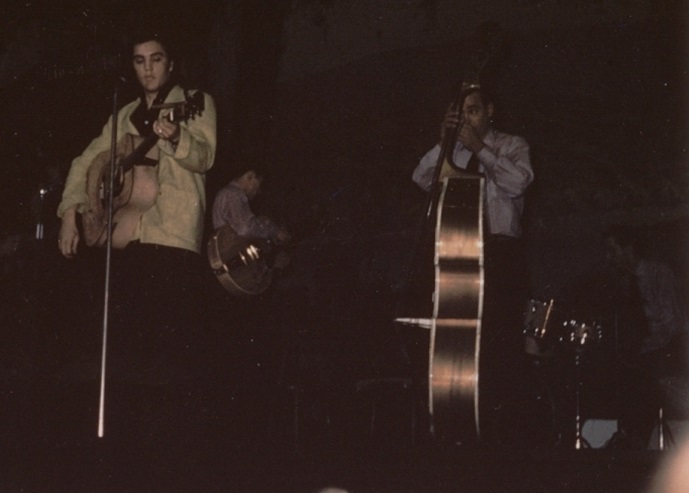
Elvis, Scotty, Bill &DJ onstage at the Lyric Theatre – Dec. 1955.

Elvis was accompanied to the Lyric by guitarist Scotty Moore, bass player Bill Black, and drummer D.J. Fontana. The Lyric bill included headliner Hanks Snow, Mother Maybelle, and the Carters and comic Rod Brasfield, for a four-day gig. Black, Moore, and Fontana toured extensively during Presley’s early career. Bill Black played stand-up bass, and his on-stage “clown” persona fueled memorable comedy routines with Presley. Black often performed as an exaggerated hillbilly with blacked-out teeth, straw hat, and overalls. Black’s on-stage personality was a sharp contrast to the introverted, consummate professionalism of veterans Moore and Fontana. The balance fit the group’s Lyric performances perfectly.

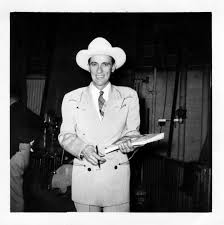
Ernest Tubb on stage at the Lyric.

The newspaper ads billed Elvis (in very small print face) as “a county and bop singer.” According to a later report in the August 8, 1956, Indianapolis Times, headliner Hank Snow missed the first show (Sunday, December 4th) due to a winter storm. Showing amazing resolve at a very young age, Elvis stood in for his childhood hero and carried on with the supporting acts to perform a seamless show. The original contract called for Elvis to be paid $750 for the four-day engagement, but Elvis was paid an extra $ 250 for saving Snow’s bacon during that first show.

Carl Smith & fan at the Lyric stage door. Dec. 1954

Two weeks later, on December 20th, RCA released Elvis’ four earlier Sun records singles: “That’s All Right”/”Blue Moon of Kentucky,” “Good Rockin’ Tonight”/”I Don’t Care If the Sun Don’t Shine,” “Milkcow Blues Boogie”/”You’re a Heartbreaker,” and “Baby Let’s Play House”/”I’m Left, You’re Right, She’s Gone.” Now the King was off and running. Elvis, Scotty, Bill, and D.J. would only make one other appearance together in the state of Indiana, in Fort Wayne when they performed at the Allen County Memorial Coliseum on Mar 30, 1957. Elvis’ Lyric Theatre band broke up a year later although Fontana, Moore, and Elvis still played and recorded together regularly throughout the 1960s.

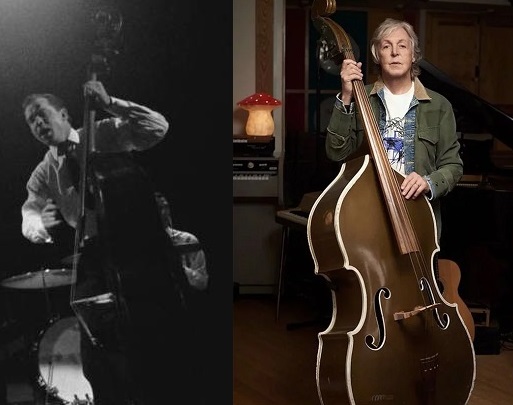
Elvis Bassist Bill Black & Paul McCartney with Bill’s bass.

After 1958, Bassist Bill Black never played with the band again; he died of a brain tumor on October 21, 1965, at the age of thirty-nine. Moore and Fontana performed together on a 2002 recording of “That’s All Right (Mama)” with ex-Beatle Paul McCartney who performed on the recording using Black’s original stand-up “slap” bass. McCartney received the instrument as a birthday present from his wife Linda in the late 1970s. In the documentary film “In the World Tonight”, McCartney can be seen playing the bass and singing his version of “Heartbreak Hotel”.

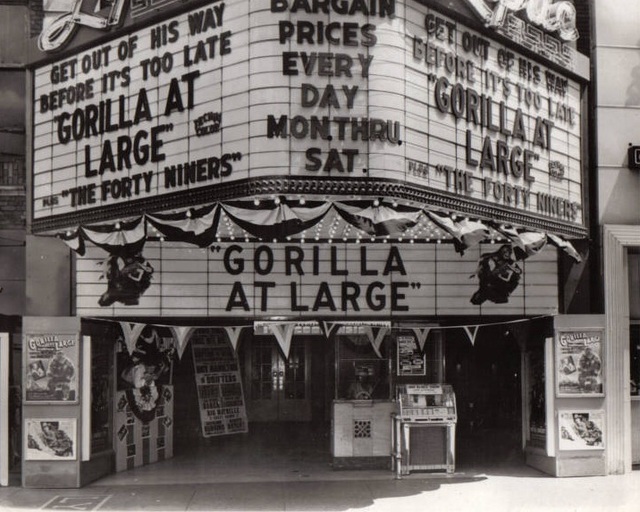
Lyrid Marque for Gorilla at Large movie 1954.

But what about the Lyric in the years before and after Elvis burst onto the scene? Well, we know that Sinatra’s idol Bing Crosby played the Lyric way before Ole Blue Eyes or Elvis ever knew the address. We know that Chuck Berry played the Lyric on October 19, 1955, just after signing with Chess Records and recording the classic “Maybelline”. We also know that the Lyric closed briefly on May 24, 1956, for a summer remodel and reopened on August 29, 1956. With the installation of Norelco 70-35 projectors it could now show 70mm film. Continuing the Lyric’s tradition as a pioneer in theatre sound performance (it was the first theater in the city to show a Stereophonic Sound Film, Fantasia in 1942) it was the first in Indianapolis to feature the Todd-AO sound system. A new screen measured 50 feet by 25 feet. The opening film was “Oklahoma” which lasted for six months.

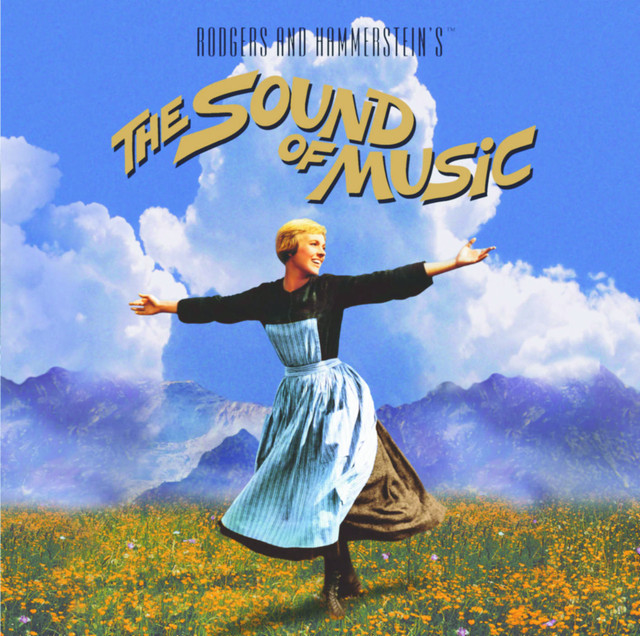
In the sixties, the Lyric was a part of the Indianapolis Amusement group which also included the Circle and Indiana theaters, still standing at the time. On March 31, 1965, the “Sound of Music” opened at the Lyric and ran until January 17, 1967, the longest run for a motion picture at the Lyric. But the glory days of the Lyric were fading fast. Urban flight and suburban relocation led to multiplexes and the death of golden-age theatres like the Lyric. The theatre that helped to introduce pop icons Frank Sinatra and Elvis Presley closed in 1969. “Shoes of the Fisherman” and “Where Eagles Dare” were the last two movies shown there. The magnificent movie house, once touted as Indianapolis’ finest theater, located at 135 North Illinois Street is just a memory today, replaced by a parking garage.

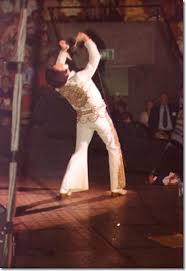
Elvis on stage in Indianapolis June 26, 1977.

Elvis would return to Indianapolis 22 years later to perform his last concert ever before 17,000 adoring fans on June 26, 1977, at Market Square Arena, which was also demolished. Reviews of the show criticized the performance as a “tacky circus sideshow at which the star was sloppy and lethargic”. Like the Lyric, Elvis became a victim of changing times and more sophisticated attitudes. The King died on August 16, 1977, 51 days after his appearance at MSA and 21 years, 8 months, and 12 days after he first strolled into the Lyric theatre to cover for his idol Hank Snow. [The MSA stage that Elvis resides in now rests inside the Irving Theatre in Irvington.]

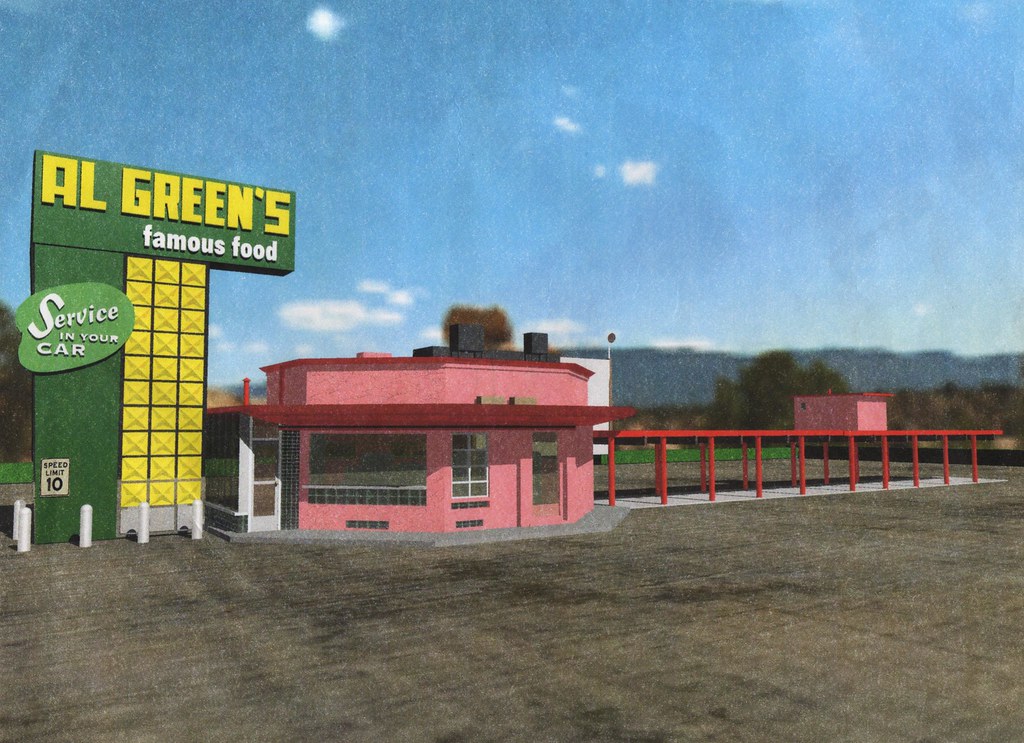
Al Green’s Drive-In Restaurant 7101 E. Washington Street Indianapolis In.

As for me, I’d prefer to remember Elvis for his trip through Indy’s eastside a year after he played the Lyric. Sometime in late 1956, Presley was reported to have stopped at the Jones and Maley automotive garage, a stone’s throw from Irvington at 3421 E. Washington St., to have the two front whitewall tires on his baby blue Cadillac balanced. According to mechanics working on the vehicle, Presley’s car had girls’ names scratched into the paint. An urban legend has Elvis driving that same Cadillac car on that same day just up the road to Al Green’s for a snack before heading on to a tour stop in Ohio. That, like the image of the Lyric Theatre’s marquee glowing brightly on a Saturday night, is the image I choose to keep with me of the King in Indianapolis.

If you are interested in learning more about the Lyric and other legendary Circle City theatres, I highly recommend you read “The Golden Age of Indianapolis Theaters” (IU Press) by Howard Caldwell, former WRTV-Channel 6 anchor and friend of Irvington.

Art, Hollywood, Music, Pop Culture

The Genesis of Bob Dylan, Part 1

Original Publish Date February 20, 2025.

https://weeklyview.net/2025/02/20/the-genesis-of-bob-dylan-part-1/

Another sad anniversary passed recently. On February 3, 1959, rock and roll pioneers Buddy Holly, Ritchie Valens, and “The Big Bopper” J. P. Richardson were all killed (along with pilot Roger Peterson) in a plane crash near Clear Lake, Iowa. The event became known as “The Day the Music Died” after Don McLean memorialized it in his 1971 song “American Pie.” While the anniversary passes every year, every so often they put us in a reflective mood. This year’s anniversary observance came on the heels of my 2-part article on the tragic death of Hattie Carroll, a subject that serrated Bob Dylan’s soul.

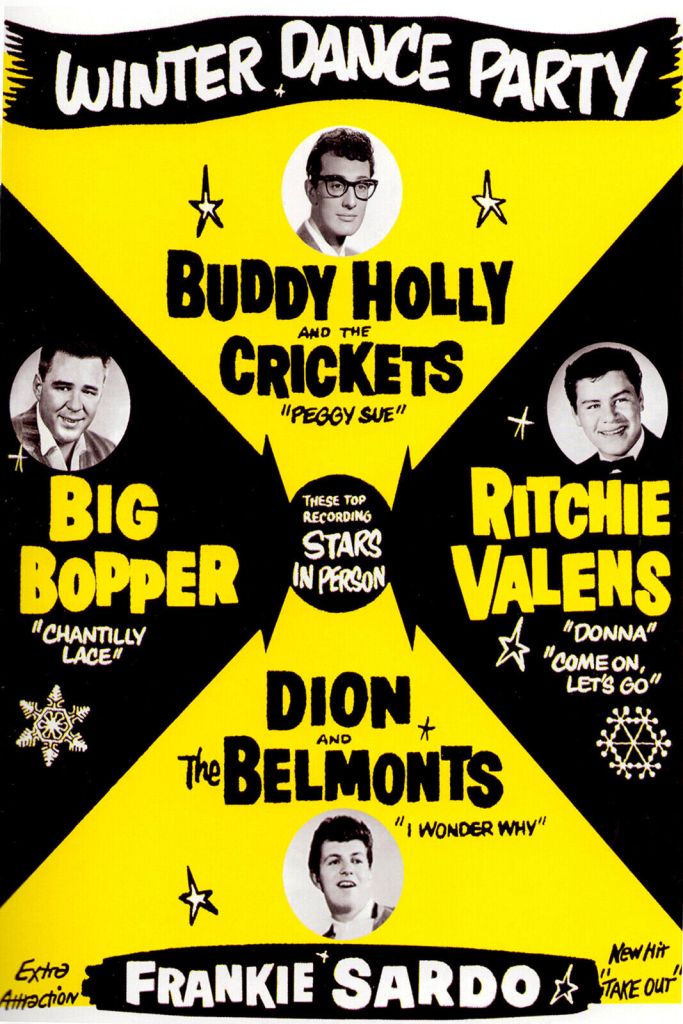
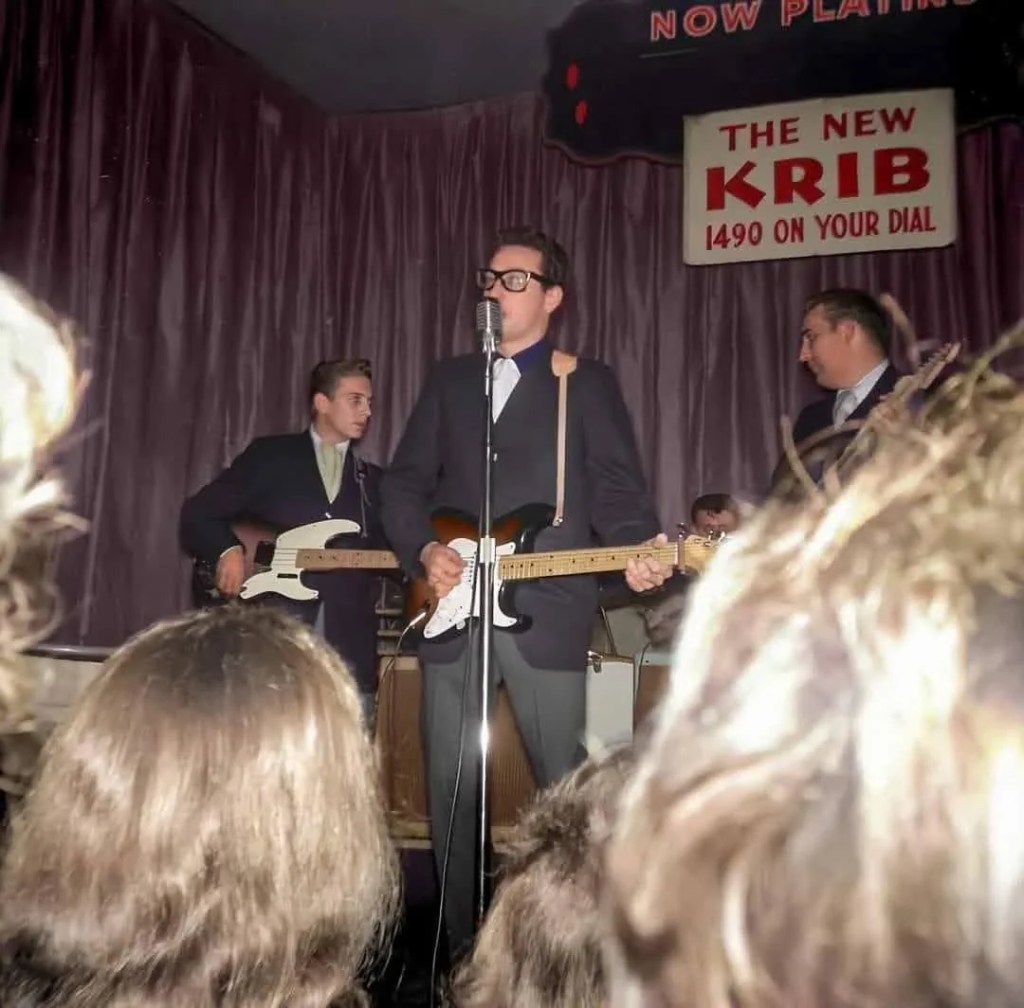
Buddy Holly’s Final Concert Poster.

It turns out the Clear Lake plane crash had an equal impact on him, but for this one, Dylan had a front-row seat. On January 31, 1959, 18-year-old Robert Allen Zimmerman was in the crowd when Buddy Holly brought his ill-fated “Winter Dance Party” tour to Dylan’s Duluth Minnesota hometown. Holly, Valens, and the Big Bopper (along with Waylon Jennings and Dion and the Belmonts) came to the National Guard Armory in that city nine days into a grueling 24-date barnstorming tour of small ballrooms and theatres of the midwest in the dead of winter. While the tour was scheduled to go as far south as Chicago, Cincinnati, and Louisville, it did not include any Indiana stops.

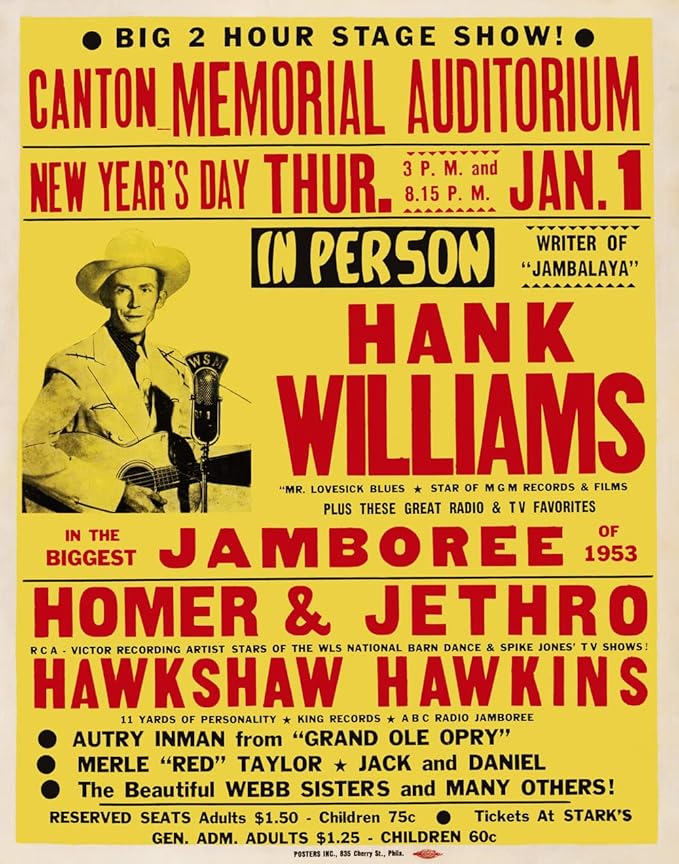
Hank Williams Final Concert Poster.

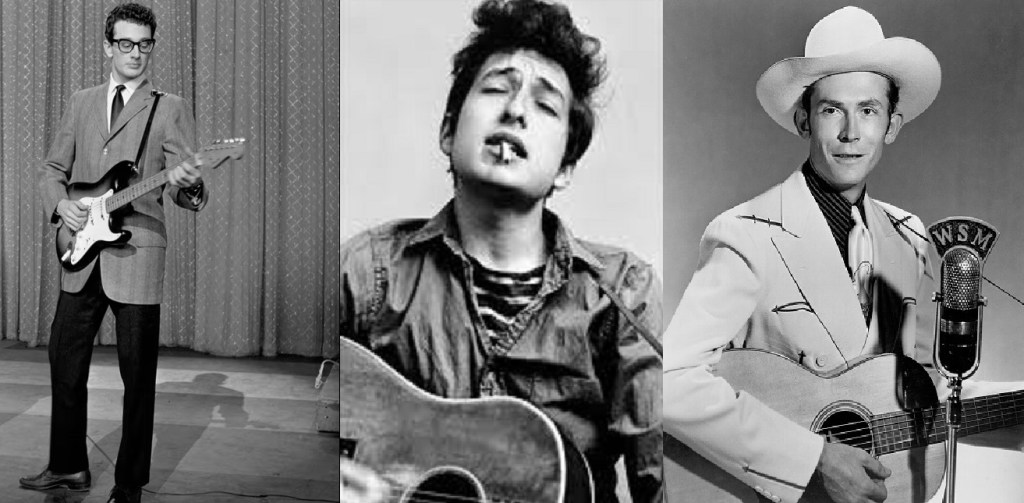
In June 2017, after being honored with the Nobel Prize for Literature, the famously enigmatic Dylan reflected on his earliest influences. As you may imagine, Dylan singled out three books specifically: Moby Dick, All Quiet on the Western Front, and The Odyssey before reflecting on Buddy Holly and how that night started him on his musical journey. “If I was to go back to the dawning of it all, I guess I’d have to start with Buddy Holly. Buddy died when I was about 18 and he was 22. From the moment I first heard him, I felt akin. I felt related like he was an older brother. I even thought I resembled him.” Dylan continued, “Buddy played the music that I loved, the music I grew up on country western, rock and roll, and rhythm and blues. Three separate strands of music that he intertwined and infused into one genre. One brand. And Buddy wrote songs, songs that had beautiful melodies and imaginative verses. And he sang great, sang in more than a few voices. He was the archetype, everything I wasn’t and wanted to be.”
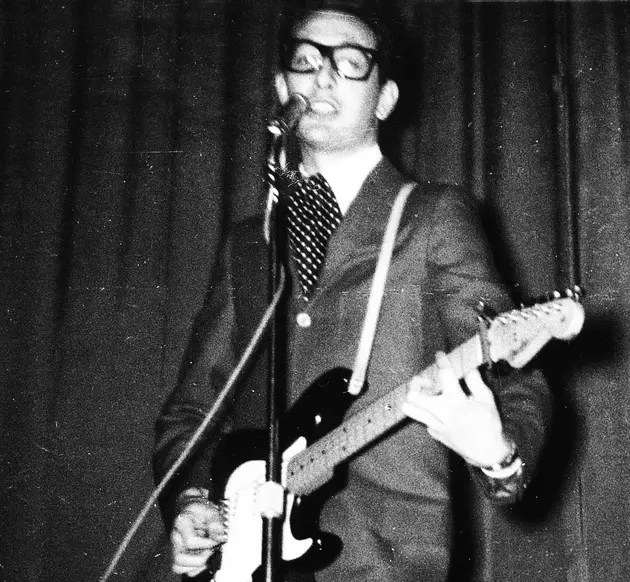
Buddy Holly’s Performing at his Final Concert.

“I saw him only but once, and that was a few days before he was gone,” Dylan recalled. “I had to travel a hundred miles to get to see him play, and I wasn’t disappointed. He was powerful and electrifying and had a commanding presence. I was only six feet away. He was mesmerizing. I watched his face, his hands, the way he tapped his foot, his big black glasses, the eyes behind the glasses, the way he held his guitar, the way he stood, his neat suit. Everything about him. He looked older than 22. Something about him seemed permanent, and he filled me with conviction.”

Buddy Holly Makes Eye Contact at the Duluth Armory.

Even though it happened 57 years prior, Dylan remembered the experience of standing a few feet away and making eye contact with Holly like it was yesterday. And of course, he described it exactly as you would expect: Bob Dylan style: “Then, out of the blue, the most uncanny thing happened,” said Dylan. “He looked me right straight dead in the eye, and he transmitted something. Something I didn’t know what. And it gave me the chills.” Three days after locking eyes with his musical idol, Buddy Holly was dead. Holly’s death caused Dylan to reflect on his own mortality at such a young age, stripping away the confidence of youth and beginning the complicated relationship between Dylan and death that would resonate in his songwriting for the rest of his career. Throughout his career, Dylan covered many of Holly’s songs: “Gotta Travel On,” “Not Fade Away,” “Heartbeat,” and others.

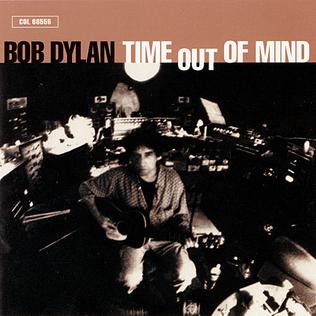
On his 1997 triple Grammy-winning album Time Out of Mind Dylan sings “When the last rays of daylight go down / Buddy, you’re old no more” on “Standing in the Doorway.” Dylan said he could feel the late rocker’s presence while making the album. In a 1999 interview, Dylan said, “I don’t really recall exactly what I said about Buddy Holly, but while we were recording, every place I turned there was Buddy Holly. It was one of those things. Every place you turned. You walked down a hallway and you heard Buddy Holly records like ‘That’ll Be the Day.’ Then you’d get in the car to go over to the studio and ‘Rave On’ would be playing. Then you’d walk into this studio and someone’s playing a cassette of ‘It’s So Easy.’” Dylan continued, “And this would happen day after day after day. Phrases of Buddy Holly songs would just come out of nowhere. It was spooky, but after we recorded and left, it stayed in our minds. Well, Buddy Holly’s spirit must have been someplace, hastening this record.” When it won Album of the Year in 1998, Dylan said, “I just have some sort of feeling that he [Holly] was, I don’t know how or why, but I know he was with us all the time we were making this record in some kind of way.”

Dylan later described what happened a day or two after the plane crash when someone gave him a copy of an obscure 12-string guitarist from Louisiana named Huddy Lead Belly. It was of the 1940 song “Cotton Fields” (also known as “In Them Old Cotton Fields Back Home”). Dylan said, “I think it was a day or two after that that his plane went down. And somebody-somebody I’d never seen before-handed me a Leadbelly record with the song ‘Cotton Fields’ on it. And that record changed my life right then and there. Transported me into a world I’d never known. It was like an explosion went off. Like I’d been walking in darkness and all of a sudden the darkness was illuminated. It was like somebody laid hands on me. I must have played that record a hundred times.” Lead Belly led to more influential artists like Robert Johnson, John Lee Hooker, and others in folk and blues, country, and jazz.

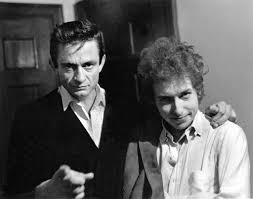
Johnny Cash & Bob Dylan.

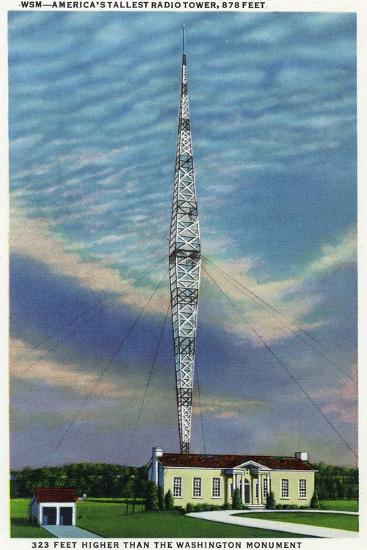
Songwriter Kris Kristofferson once described his friend Johnny Cash as being “a walking contradiction, partly fact, partly fiction” but that verse could easily be applied to Bob Dylan, especially when one considers that Cash was another of Dylan’s acknowledged influences. Over the years, Dylan has acknowledged other influences, and, like Cash, some are more obvious than others. Dylan’s Jewish Russian immigrant parents were fond of the Grand Ole Opry show on WSM radio. WSM broadcasts originated in Brentwood, Tennessee, and featured a unique 808-foot tall “Diamond” shaped tower that allowed the radio station to broadcast to forty states and hundreds of largely rural and small-town audiences. To this day, the WSM Tower is the oldest surviving intact example of this type of radio tower in the world.

WSM Radio Tower Postcard.
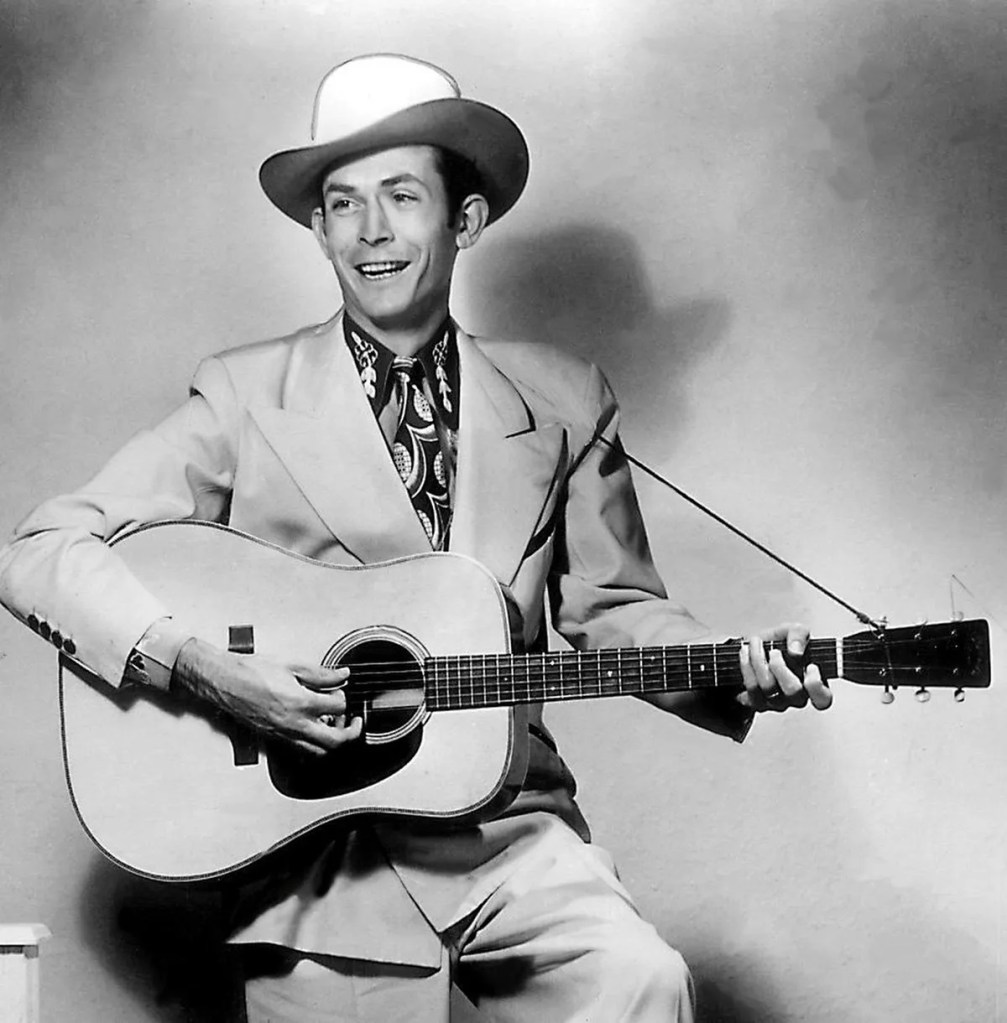
Hank Williams, Sr.

In the early 1950s, Dylan listened to the Grand Ole Opry radio show and heard the songs of Hank Williams for the first time. In his 2004 book, Dylan wrote: “The first time I heard Hank [Williams] he was singing on the Grand Ole Opry…Roy Acuff, who MC’d the program was referred to by the announcer as ‘The King of Country Music.’ Someone would always be introduced as ‘the next governor of Tennessee’ and the show advertised dog food and sold plans for old-age pensions. Hank sang ‘Move It On Over,’ a song about living in the doghouse and it struck me really funny.  He also sang spirituals like ‘When God Comes and Gathers His Jewels’ and ‘Are you Walking and a-Talking for the Lord.’ The sound of his voice went through me like an electric rod and I managed to get a hold of a few of his 78s-’Baby We’re Really In Love’ and ‘Honky Tonkin’’ and ‘Lost Highway ‘-and I played them endlessly.”

Dylan continued, “They called him a ‘hillbilly singer,’ but I didn’t know what that was. Homer and Jethro were more like what I thought a hillbilly was. Hank was no burr head. There was nothing clownish about him. Even at a young age, I identified fully with him. I didn’t have to experience anything that Hank did to know what he was singing about. I’d never seen a robin weep, but could imagine it and it made me sad. When he sang ‘the news is out all over town,’ I knew what news that was, even though I didn’t know. The first chance I got, I was going to go to the dance and wear out my shoes too. I’d learn later that Hank had died in the backseat of a car on New Year’s Day, kept my fingers crossed, hoped it wasn’t true. But it was true. It was like a great tree had fallen. Hearing about Hank’s death caught me squarely on the shoulder. The silence of outer space never seemed so loud. Intuitively I knew, though, that his voice would never drop out of sight or fade away-a voice like a beautiful horn.”

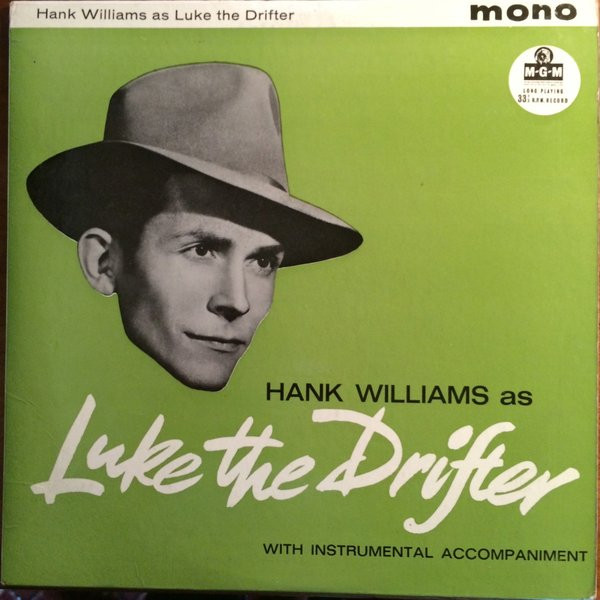
“Much later, I’d discover that Hank had been in tremendous pain all of his life, suffered from severe spinal problems-that the pain must have been torturous. In light of that, it’s all the more astonishing to hear his records. It’s almost like he defied the laws of gravity. The Luke the Drifter record, I just about wore out. That’s the one where he sings and recites parables, like the Beatitudes. I could listen to the Luke the Drifter record all day and drift away myself, become totally convinced in the goodness of man. When I hear Hank sing, all movement ceases.  The slightest whisper seems sacrilege. In time, I became aware that in Hank’s recorded songs were the archetype rules of poetic songwriting. The architectural forms are like marble pillars and they had to be there. Even his words-all of his syllables are divided up so they make perfect mathematical sense. You can learn a lot about the structure of songwriting by listening to his records, and I listened to them a lot and had them internalized. In a few years’ time, Robert Shelton, the folk and jazz critic for the New York Times, would review one of my performances and would say something like ‘resembling a cross between a choirboy and a beatnik…he breaks all the rules in songwriting, except that of having something to say”. The rules, whether Shelton knew it or not, were Hank’s rules, but it wasn’t like I ever meant to break them.  It’s just that what I was trying to express was beyond the circle.”

The Genesis of Bob Dylan, Part 2

Original Publish Date February 27, 2025.

https://weeklyview.net/2025/02/27/the-genesis-of-bob-dylan-part-2/

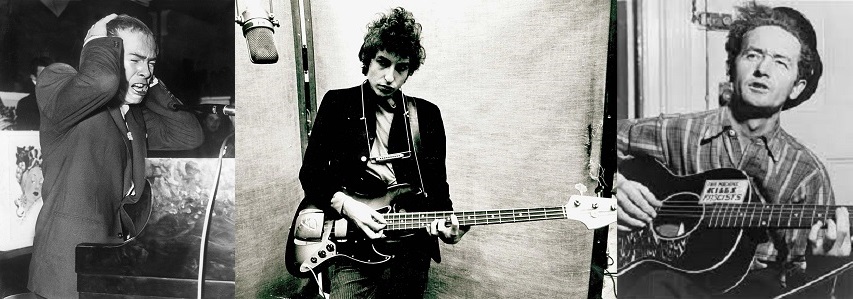
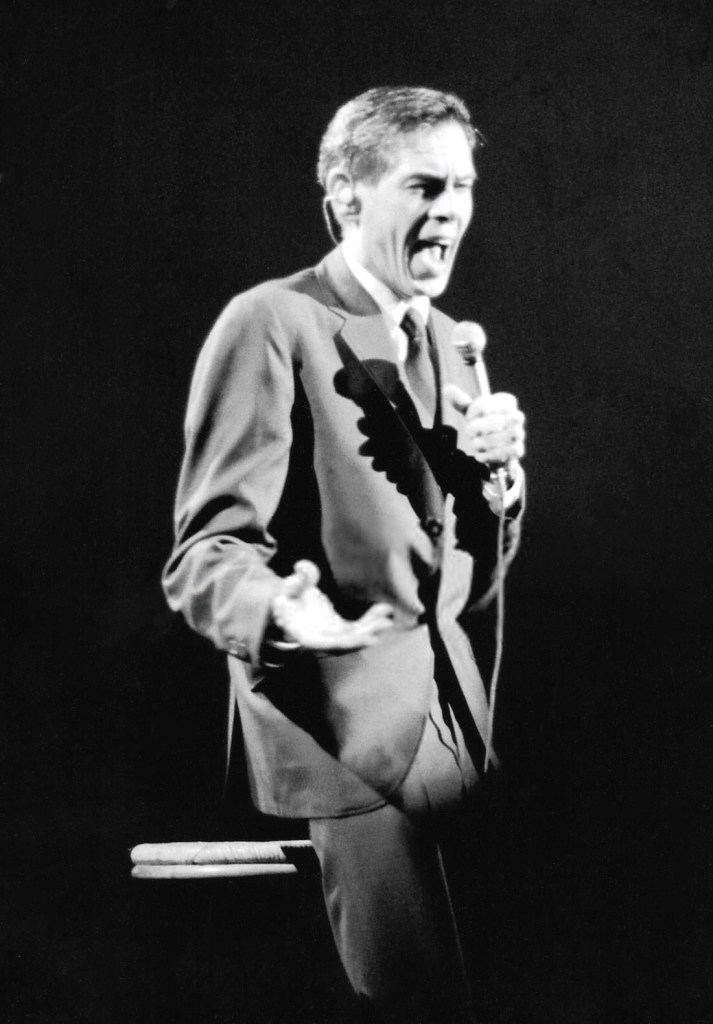
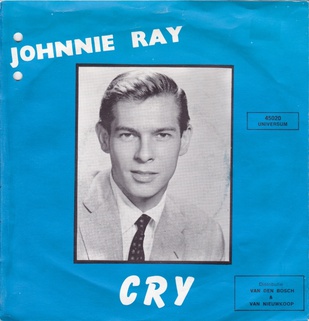
Bob Dylan’s next early musical influence came sandwiched between Hank and Buddy, and it is one you might not expect. Dylan discovered the plaintive delivery of Johnnie Ray (1927-1990) a singer/songwriter who played piano while delivering song lyrics tinged by a stream of tears. Although Ray is largely forgotten today, he was wildly popular for most of the 1950s and has been cited by many artists and critics as a major precursor to rock and roll. Tony Bennett called Ray the “father of rock and roll.” Dylan wrote of Johnnie Ray: “He was the first singer whose voice and style, I guess, I totally fell in love with… I loved his style, wanted to dress like him too.”

Johnnie Ray.

Johnnie Ray was a star in a pre-Elvis gyrating world of pop music, a genre of teenaged music that hadn’t existed before World War II. Ray was tall and lanky, partially deaf, and a little awkward on stage, a perceived fragility that caused his songs like “The Little White Cloud That Cried” and “Cry” to soar. Johnnie Ray didn’t just sing these songs-he became them. The press nicknamed him “The Prince of Wails,” “Mr. Emotion,” and “The Nabob of Sob.”

Ray was every bit of an enigma as Bob Dylan. He was an alcoholic who was loved and admired by the Black community (he began his career by performing in segregated Black nightclubs in the 1950s) and a man who never really divulged his sexuality. He was married to a woman in 1952/separated in 1953/divorced in 1954 and was allegedly the father of a child with journalist and What’s My Line TV show panelist Dorothy Kilgallen (1913-1965). In 1951, and again in 1956, Johnnie was arrested and briefly jailed for soliciting a plain-clothed police officer, both times in Detroit. Ray pled guilty to both charges, paid the fine, and was released. Ray was later arrested in a gay bar but the charges were kept quiet.

Sadly, Johnnie found no place in the folk music phenomenon, the rock ‘n’ roll revolution passed him by, and the British Invasion killed all the “white bread” acts, even though Ringo Starr admitted that, in the early days of The Beatles, they only loved “Chuck Berry, Little Richard, and Johnnie Ray.” Oh, there were movie roles, starring alongside Marilyn Monroe in 1954’s There’s No Business Like Show Business, but only fans in the UK and Australia stood by him. During the ’60s and ’70s, Ray made occasional television appearances, but he was largely a forgotten man. Although today, it should be said that Johnnie is mentioned in a Billy Idol song, featured in the opening lines of “Come On Eileen” by Dexys Midnight Runners, and as a cultural touchstone in Billy Joel’s “We Didn’t Start The Fire.” Bob Dylan said this of Ray: “He was the first singer whose voice and style, I guess, I totally fell in love with. There was just something about the way he sang ‘When Your Sweetheart Sends A Letter’…that just knocked me out. I loved his style, wanted to dress like him too.”

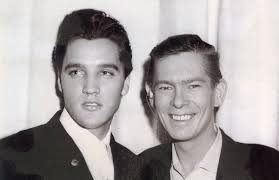
Elvis & Johnnie Ray.

During the fifties, Johnnie Ray went toe-to-toe on the charts with Chuck Berry, Little Richard, Jerry Lee Lewis, and Elvis Presley. While the press tried to gin up an imagined feud between Elvis and Johnnie, the two had a mutual respect. After returning to the States from a European tour in 1956, Johnnie Ray was asked “What do you think of Elvis Presley?” He replied, “What’s an Elvis Presley?” People thought he was disrespecting Elvis, but at that point, he had been out of the country and never heard of him. However, Elvis would often sing Johnnie’s songs (like “Such a Night”) through the years. Johnnie Ray bridged the gap between swing and rock n roll and his influence is a huge one. But what about Elvis, was the king of rock n roll an influence on Bob Dylan?

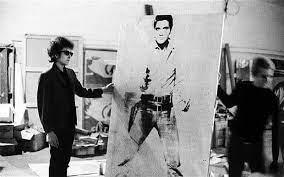
Dylan in Andy Warhol’s studio with Warhol’s Elvis.

In a 2009 Rolling Stone interview, Dylan said, “I never met Elvis, because I didn’t want to meet Elvis. Elvis was in his Sixties movie period, and he was just crankin’ ’em out and knockin’ ’em off, one after another. And Elvis had kind of fallen out of favor in the Sixties. He didn’t really come back until, whatever was it, ’68? I know the Beatles went to see him, and he just played with their heads…Elvis was truly some sort of American king…And, well, like I said, I wouldn’t quite say he was ridiculed, but close. You see, the music scene had gone past him, and nobody bought his records. Nobody young wanted to listen to him or be like him. Nobody went to see his movies, as far as I know. He just wasn’t in anybody’s mind. Two or three times we were up in Hollywood, and he had sent some of the Memphis Mafia down to where we were to bring us up to see Elvis. But none of us went. Because it seemed like a sorry thing to do. I don’t know if I would have wanted to see Elvis like that. I wanted to see the powerful, mystical Elvis that had crash-landed from a burning star onto American soil. The Elvis that was bursting with life. That’s the Elvis that inspired us to all the possibilities of life. And that Elvis was gone, had left the building.“
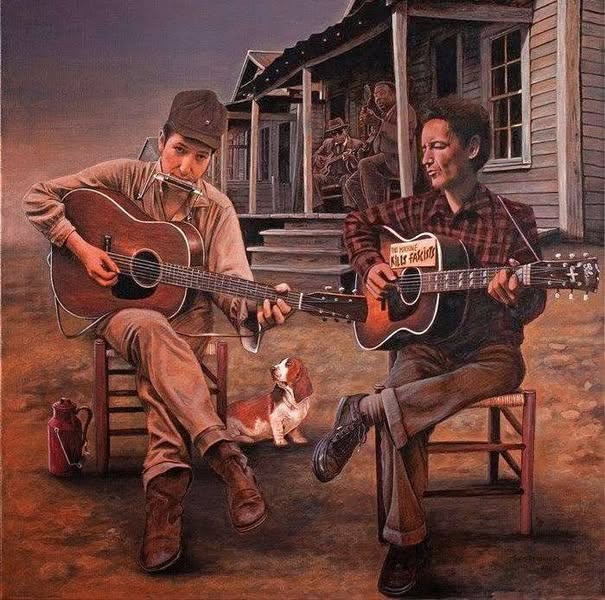
Painting of Dylan & Guthrie.

But who was Bob Dylan’s main influence on his musical career? Other than Buddy Holly, it was the only artist that Dylan ever made an effort to find: Woody Guthrie. In May 1960, Dylan dropped out of college and by January 1961, he was performing in coffee houses around Greenwich Village in New York City. Five days after arriving in “The Village,” Dylan tracked Guthrie down at Greystone Park Psychiatric Hospital in Morris Plains, New Jersey. In September of 1954, unable to control his muscles, Guthrie checked himself into the facility. He wouldn’t leave for another two years, and when he did so in May 1956, he spent days wandering the streets of Morristown, New Jersey, in a state of homelessness. Guthrie was picked up by police and spent a night in Morris County Jail. It was believed that he was suffering from paranoid schizophrenia and Woody was transferred back to Greystone. It was a voluntary readmission and Greystone staffers could not believe that this drifter had published a book and countless songs. Later Guthrie was diagnosed with Huntington’s disease, a hereditary condition that cause loss of body control.

Woody Guthrie and his famous guitar.

By the time Bob Dylan met his hero in the winter of 1961, “The Village” was flooded with folk players, and the radio was populated with singers riffing on black artists (Pat Boone’s “Tutti-Fruiti” being the most egregious example) or catchy, but safe, songs from Tin Pan Alley songwriters. This prompted Dylan to comment, “I always kind of wrote my own songs but I never really would play them. Nobody played their own songs, the only person I knew who really did it was Woody Guthrie. Then one day,” he continued, “I just wrote a song, and it was the first song I ever wrote, and it was ‘A Song for Woody Guthrie.’ And I just felt like playing it one night and I played it. I just wanted a song to sing and there came a certain point where I couldn’t sing anything, I had to write what I wanted to sing because what I wanted to sing nobody else was writing, I couldn’t find that song someplace. If I could’ve I probably wouldn’t have ever started writing.” The song would be featured on Dylan’s self-titled debut album, released on March 19, 1962. The album sold 5,000 copies in its first year, just breaking even.

Woody’s Mugshot.

By then, Guthrie’s condition had declined to the point that he could barely move and depending on the day, barely speak. Performing was out of the question. So Dylan sang Woody’s songs back to him and the friendship blossomed. In the novel My Name is New York, Dylan said, “When I met him, he was not functioning with all of his facilities at 100 percent. I was there more as a servant. I knew all of his songs, and I went there to sing him his songs. He always liked the songs. He’d ask for certain ones and I knew them all!” Thereafter, the two shared a unique bond that would last the rest of Guthrie’s life. Dylan wrote of Guthrie’s impact: “The songs themselves had the infinite sweep of humanity in them… [He] was the true voice of the American spirit. I said to myself I was going to be Guthrie’s greatest disciple.” When Guthrie died at age 55 in 1967, Dylan emerged from a self-imposed exile after a motorcycle accident to perform a tribute concert to his hero at Carnegie Hall. According to one biographer, “This farewell to Dylan’s ‘last idol’ was the moment the legacy of American folk was crystalized.”
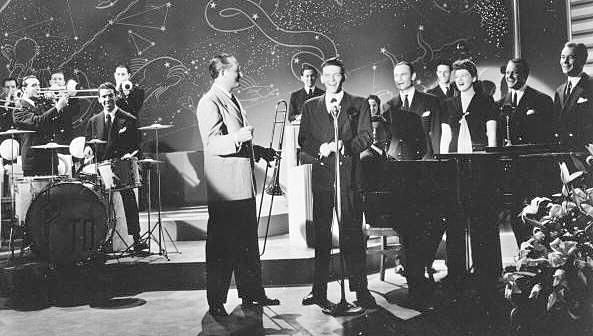
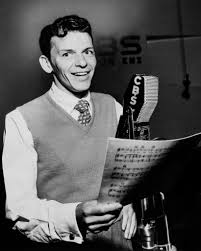
Donald & Fred Trump.

While any conversations shared between Dylan and Guthrie during those meetings will likely never be known, one Guthrie song is irresistible to not comment on…and speculate. In 1954, Guthrie wrote a song that describes what he felt were the racist housing practices and discriminatory rental policies of his landlord. In December 1950, Guthrie signed a lease at the Beach Haven apartment complex in Gravesend, Brooklyn. The song is called “Old Man Trump” and his landlord was none other than Fred Trump, father of U.S. President Donald Trump. In the song, Guthrie expresses his dissatisfaction with the “color line” Trump had drawn in his Brooklyn neighborhood. Oddly, there are no known Guthrie recordings of this song. However, the lyrics (written in Guthrie’s own hand) were discovered in 2016. “I suppose Old Man Trump knows, Just how much Racial Hate He stirred up In the bloodpot of human hearts When he drawed That color line Here at his Beach Haven family project…Beach Haven is Trump’s Tower, Where no Black folks come to roam. No, no, Old Man Trump! Old Beach Haven ain’t my home!”

Hollywood, Museums, Music, Television

Al-Al-Alamo (Sussudio)

Original Publish Date August 2012.

https://weeklyview.net/2024/09/05/al-al-alamo-sussudio/

Genesis Drummer / Vocalist & Alamo Enthusiast Phil Collins.

I was born way too late to partake in the coonskin cap craze born of Fess Parker’s Davy Crockett TV show that caused a national sensation for a couple of years in the mid-1950s. But I knew who he was and always thought of him fighting Indians, wrestling bears, and, in general, just being “King of the Wild Frontier.” It wasn’t until much later in life that I realized that Crockett was a United States Congressman from Tennessee who wisely fought against Andrew Jackson’s brutal Indian Removal Act of 1830 and supported the rights of “squatters” who, in most cases, improved the land they lived upon but were barred from buying it because, well, because they didn’t own any land. Both seemed like no-brainers to me, but that support drew the ire of Andrew Jackson and ultimately drove Davy from the state and country by costing him his job.

What floored me the most was when the revelation finally set into my grade school mind that Davy Crockett, Walt Disney’s Davy Crockett, fought and died at the Alamo in 1836. I guess I never thought of him in those terms, you know, as a real live human being. In my mind, he was a work of historical fiction in the same class as Paul Bunyan and Babe the Blue Ox. I checked out A book from the Indianapolis Public Library as a kid and read all about the battle at the Alamo. It was for years considered to be the benchmark history of this pivotal event in the fight for Texas independence. But the Alamo was a loss for Americans and I was a Vietnam War Era kid and well, my generation didn’t want to hear anymore about losing.

Well, the Alamo just got its hipness back. Do you know who has the largest private collection of artifacts from the Battle of the Alamo? It might surprise you to learn that it’s Englishman Phil Collins — songwriter, drummer, pianist, actor, and lead singer of the rock band Genesis and a successful solo artist all his own. Collins sang lead on several chart-topping hits between 1975 and 2010 ranging from the drum-heavy “In the Air Tonight,” dance pop of “Sussudio,” piano-driven “Against All Odds,” to the political statements of “Another Day in Paradise.” According to Atlantic Records, Collins’ total worldwide sales as a solo artist from 1981 to 2004 were 155 million including 30 hit singles earning him seven Grammy Awards, an Academy Award, and two Golden Globes for his solo work. He was inducted into the Rock and Roll Hall of Fame as a member of Genesis in 2010.

Phil Collins.

While most Rock stars were burning cash on fast cars, drugs, yachts, or trophy girlfriends, Phil Collins was buying up relics from the Texas Revolution and the Alamo.  “It keeps me off the streets. What am I going to do? I don’t want to traipse around the world anymore,” he told a reporter. “I love it. I sit downstairs in my basement looking at and sort of drooling over what I’ve got. It was never my intention to have this huge collection, but one thing led to another and it’s my private thing.” Among his treasures are one of Davy Crockett’s rifles and his post-death receipt from the Texan Army. They share space with Jim Bowie’s knives, verbose William Barret Travis’ letters, Santa Anna items and a snuffbox that Sam Houston gave to a romantic interest. And those are just a few of the pieces from the Texas Revolution’s biggest names.

Collins’ Alamo obsession began when he was a 5-year-old boy (who had just got his first drum set) in the London suburb of Chiswick after seeing the Disney series “Davy Crockett, King of the Wild Frontier.” “When I was five or six I started dressing up like Davy Crockett,” Collins recalled. “My sister told me a few months ago that my grandmother cut up her fur coats so I could have a coonskin hat. From there I moved on to the harder stuff, which was John Wayne’s The Alamo.”

The Alamo in the 1970s.

He first visited the Alamo in the early 1970s during a break while touring with Genesis. Then, in the late 1980s, he found himself browsing in an antiquities store in Washington, D.C. looking for Disney animation cels with his wife during a tour with Genesis. “We came across a Davy Crockett letter (he thought it was too expensive at $60,000), and suddenly it occurred to me: My God, this stuff exists! One thinks it’s all burned, dead, buried — you know, history. So the seed was planted.”

John William Smith and son.

A few years later, someone gave him a framed document as a gift: a receipt for a saddle belonging to John William Smith, the first mayor of San Antonio and one of the couriers Travis dispatched from the Alamo to get aid to the doomed Texans. (A clairvoyant later told Collins that he was Smith reincarnated.) “I just looked at the receipt and marveled at how many miles this saddle must have (been) ridden. “I thought if that’s out there, then let’s see what else is out there,” he said. “And that was the beginning of my collection.”

Collins with Davy Crockett;s Musket Ball Pouch. Photo courtesy Getty Images,

Life and music rolled on and Phil was amassing a respectable personal collection of Alamo artifacts; picking up a piece here or there (mostly for decoration) when in 2004, Collins found himself in San Antonio again, this time on his farewell tour before retiring from music. (An operation to fix some dislocated vertebrae made the decision for him.) By now a seasoned collector, he visited the Alamo for what he thought was his last time before he focused on raising his boys at home overseas. After a private tour (what did you expect? He’s Phil Collins), he stopped in at The History Shop, a store about fifty yards from the mission, where he met the shop’s owner, Jim Guimarin, who offered to scout for artifacts for him. The two became friends, and one night (after a few margaritas) Guimarin pointed out that no one had ever dug beneath his rented storefront. So in 2007, they bought the building, rented another shop space and were soon digging beneath the floorboards.

Phil Collins digging beneath the Alama Floorboards.

At a depth of 40 inches, “battle level,” they found hundreds of relics, including a rusted over-and-under pistol, musket balls, grapeshot, and personal items like buckles, buttons, and a penknife. “It was incredibly exciting. We found hundreds of horseshoes, but we found things that were in incredible condition,” Collins said, adding that he got an irate letter from an archaeologist about the dig. “She thinks we just went in there with a spade. Nope, it was very well-organized, and everything was looked over,” he said. “There were cannon handles and a flattened cannonball, lots of musket balls, personal effects of soldiers,” Collins said. They also found the remains of three fire pits, which may have been the site of the group that cleaned up after the battle, led by General Andrade.

Phil Collins holding a Bowie knife that belonged to Jesse Robinson who fought under Jim Bowie.

Besides the artifacts from The History Shop, Collins’ collection, which he keeps in the basement of his house in Switzerland, includes Davy Crockett’s musket-ball pouch (complete with five musket balls and two powder horns) that Crockett supposedly gave to a Mexican officer before he was executed, the sword belt that Travis was wearing when he died. a knife belonging to James Bowie (Texan folk hero — no relation to that other British rocker David Bowie), and a sword belonging to the Mexican leader Antonio López de Santa Anna.

Collins is thrice divorced, with five kids, including two young sons still at home. He says, “The romance is infectious. I’ve got a seven-year-old who watches the John Wayne and the Billy Bob Thornton versions and can name every character, and goes and dresses up as a Mexican,” he said. “It captures him the way it captured me. Now he’s moved on to Napoleon.” Thoughtful, polite, and studiously serious about his passion, Collins, 61, says the Alamo story “changed my life.” It’s no surprise that an Englishman should be captivated by the Alamo. “The fight for freedom speaks to people worldwide,” Collins said, “the fact that you have a rock star who has a love affair with it says it’s everybody’s Alamo.” After all, the San Antonio shrine draws nearly 3 million visitors every year. Collins hopes that his collection will end up in a museum someday for others to enjoy.

Phil Collins at the Alamo.

As for my part, if you’ve read my columns in the past, you know that I often obsess about collectors, relics, and collections. Most collectors of historic memorabilia share pretty much the same dream. That dream is to save, catalog, preserve, and protect the items they’ve deemed important to the field they have desired to pursue. You will find no greater advocate for collecting than me. In fact, I suggest you visit your local antique shop/show and give it a try. You never know what you might find. Heck, maybe you’ll bump into Phil Collins along the way.