Ghosts, Museums, Travel

The Perfect Summer Getaway: Chasing Lincoln and Mark Twain. PART II

Part 2

Original publish date:  August 1, 2019

Hannibal, Missouri is an easy 1 1/2 hour drive west of Springfield, Illinois. Rhonda and I stayed at the Wyndham Best Western on the river, located downtown. The hotel is clean and convenient, the staff is friendly, but it may be a bit dated for some people’s taste. If you’re a baby boomer, you’ll recognize the style. Indoor pool, large foyer with ample seating, rattan wallpaper, sliding glass door closets and lightswitches on the outside of the bathrooms. The kind of place that was once considered the swankiest address in town back when Don Knotts, Debbie Reynolds and castoffs from “The Love Boat” might stay while starring in traveling dinner theatre productions. Personally, we loved it because of it was within easy walking distance of the Mississippi River, Mark Twain’s childhood home and historic downtown. Not to mention, Rhonda loved the free chocolate chip cookies, which were hot, soft and plentiful.
img004I wasn’t quite sure what to expect with Hannibal and arrived there hoping to chase Mark Twain’s shadow the same as I had done with Lincoln in Springfield. The town rests in a valley between two large cliffs directly on the Mississippi River. A lighthouse rests atop one cliff and a romantic, jagged crest known as “Lover’s Leap” rests atop the other. While beautiful to look at, the result for today’s visitors is terrible cell phone reception. That is unless you find yourself on top of one of those cliffs, where service zips right along. And, just like the land of Lincoln, Mark Twain casts a large shadow in Hannibal, Missouri.
Located directly across from the hotel is the Mark Twain Diner, famous for its fried chicken and homemade root beer. In fact, the building is crowned by a gigantic root beer stein that spins slowly in the sky beckoning travelers to come in and sample a frosty mug. Also located one street over are the homes of Tom Sawyer, Becky Thatcher and Huck Finn. Although literary characters, all are based on real people from Twain’s childhood. The street, open only to foot traffic, slopes down to the Mississippi River. It is easy to envision what this little stretch of cobblestone road must have looked like in the 1840s when the author and his family lived here.

67068530_2495937590437489_3547534572931514368_n
My wife Rhonda painting the Tom Sawyer Fence.

In one of the more brilliant uses of tourist object marketing that I have ever seen, outside of the Tom Sawyer house is the famous white picket fence which the young rascal tricked his naïve young friends into painting for him. Bolted to the sidewalk in front of the fence is an old-fashioned wooden bucket containing large wooden paintbrushes tethered by wire ropes to the bottom of the bucket. By my observation, these props are irresistible to every passerby who encounters it. The urge to pick up a brush and pose for a picture is too perfect to pass up. While there, I saw many cars pull up on the street below, jump out for a “pretend paint” picture and jump right back into their car before heading on down the road. This was their chosen Tom Sawyer memory.
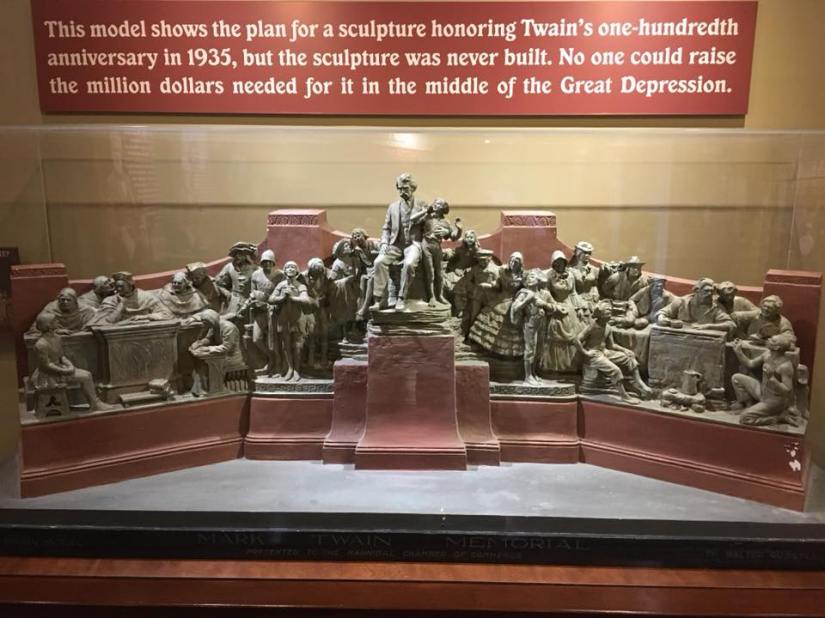
67076693_2497587883605793_280778397439754240_nThe Mark Twain House offers an excellent tour for a reasonable $12 per person that encompasses the homes of all of those familiar Tom Sawyer characters found in Mark Twain’s books. The tour concludes in the Mark Twain Museum located in the historic downtown district and features priceless relics, mementos, artwork, furniture and assorted objects once owned by and associated with Samuel Clemens (aka Mark Twain). After the tour, it is highly recommended that you take the short walk down to the shore of the Mississippi River.
I ventured down to the Big Muddy to skip stones across this legendary river that I daydreamed about as a child. Little did I know that our trip came a mere two weeks after a devastating flood visited Hannibal, destroying much of the riverfront. The backhoes were in place and temporarily idled from their duties of plowing out mud and repairing the riprap. If ever I saw tired looking machines, these were it. However, their presence offered me a unique opportunity. As part of their operation, the machines clawed up about 8 to 12 inches of topsoil in an area that was once home to a Gilded Age amusement park. The result was the accidental unearthing of ancient ink wells, medicine bottles, insulators, crockery and broken china that now rested like ancient talismans there for cultivating.
66816689_2497259076972007_6135213250209382400_n

64334560_2497259026972012_5793741540333453312_nSuddenly I was a 10-year-old boy joyfully picking up bits of glass, rusted metal and broken crockery all the while convincing myself that any one of which surely belonged to a steamboat captain, riverboat gambler or a pirate. Such are the trinkets that dreams are made of. Should you prefer your treasure of a more cultivated nature, Hannibal has many hole-in-the-wall antique shops featuring more relics from the past. Hannibal is unique among tourist river towns because it has not yet been overtaken by commercialized establishment chain restaurants or stores. Its streets are not overrun by the Harley crowd. Oh, there is an upper-class motorcycle crowd element here, but these riders seem content to park their bikes and walk the town rather than to ride it.
Most importantly, Hannibal, Missouri is home to some of the friendliest people I have ever met. I was met with a friendly greeting by nearly every person I encountered, whether on the street or in a shop. While visiting one such antique shop called “Savannah’s” on Main Street, a wicked storm moved into town. Moments after we completed our purchase, the storm blew in and the power went out. Our hotel was over a mile away and we were on foot.

67402680_2498944783470103_5926962543863005184_n
The Mississippi River from Lover’s Leap.

Rhonda & I exited the shop, which luckily had a recessed doorway covered by a large tarp to keep us dry and out of the wind. We watched and waited for some 20 minutes to see if the storm would blow over; it didn’t. Rivulets of water filled the street while sizable metal flower stands blew down the darkened roadway like tumbleweeds. When it was apparent that the storm was not going away, the shop’s attendant, a woman named Phyllis who had been checking on us every 5 minutes or so, opened the door and said, “Come on you two sugar babies, I’m driving you back to your hotel.” Turns out that our guardian angel was a retired teacher with over 30 years experience, many of those years teaching special needs students. No wonder, she was our angel.
The next morning, while again scrounging for more waterfront treasures, I met a friendly local who educated me about life on the river, barges and bridges, giving me a general outline of what I was looking at and for. He explained that these floods come about every 10 – 15 years and some are worse than others. Seeing that I was a cigar smoker, he suggested that I go halfway up the cliff where the lighthouse rests for a perfect perch.
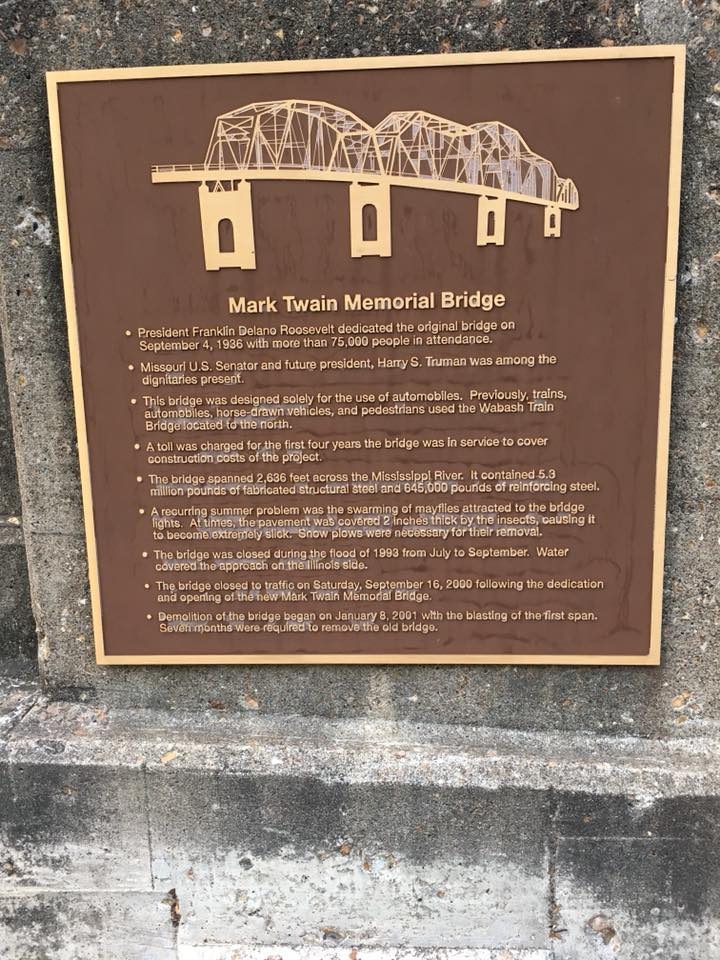
67086007_2497118243652757_7486921118473781248_nI took his advice and ventured up the hillside. There I found a quaint little pocket park created from an abandoned roadway and concrete bridge footing of a steel suspension bridge that once spanned the mighty Mississippi to Illinois on the other side. The bridge had been dedicated in the 1930s by Franklin D. Roosevelt himself with then-Senator Harry S Truman assisting. As I sat there puffing and reflecting, an older gentleman, climbing the stairs for exercise, walked by and said good evening. He stopped for a moment and, excited by my discovery, I said something silly like “Cool to think that FDR and Truman were here.” He shook his head and continued with his exercise.
Some 15 minutes later the older gent, retracing his route, remarked, “I walk these steps 2 or 3 times a week and you know most young people don’t bother to talk to me. They don’t even notice me, their faces usually buried in their cell phones. You know, I was here when FDR came. I was 3 years old and my dad put me on his shoulders because he wanted me to see FDR. I didn’t see Truman though.” We talked for a while and he revealed that he had lived in Hannibal all his life, graduated from the local high school in 1950 and was shipped off to Korea in 1951. I asked if he saw active combat and he said “oh yeah.” The admission was no big deal to him, but it floored me. We talked a little bit longer, he told me how much he loved Hannibal and, after I thanked him for his service, he bade me good night.
The next day Rhonda and I went to visit the former home of the Unsinkable Molly Brown, the suffragette heroine who survived the sinking of the Titanic (and several other disasters). It was her 152nd birthday. Margaret “Maggie” Brown (the name Molly was a Hollywood invention) was born in Hannibal in 1867 and lived in the home during her childhood. Later she married a poor Colorado mining engineer who struck it rich in the mines of Leadville which immediately catapulted Ms. Brown into high society. It was well worth the trip.
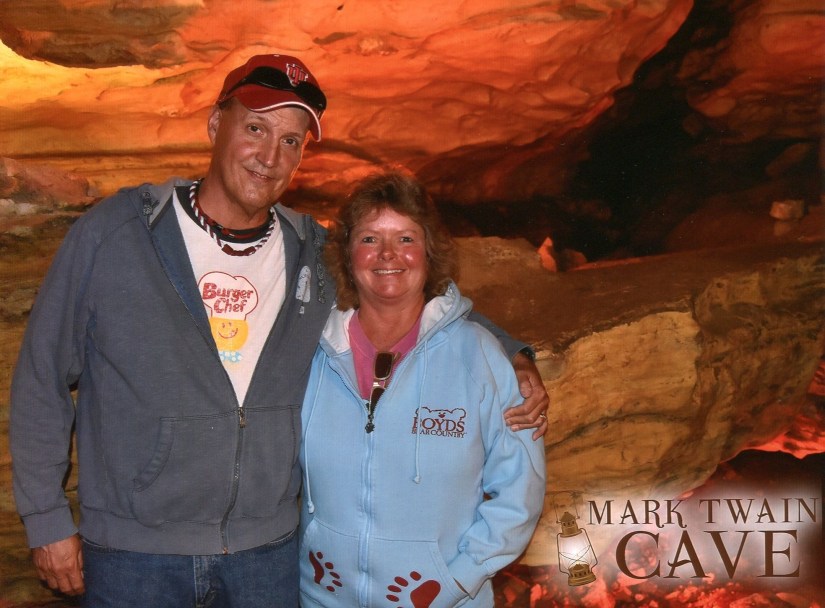
67313732_2505649639466284_7909864389405048832_o
The author and wife as tourists.

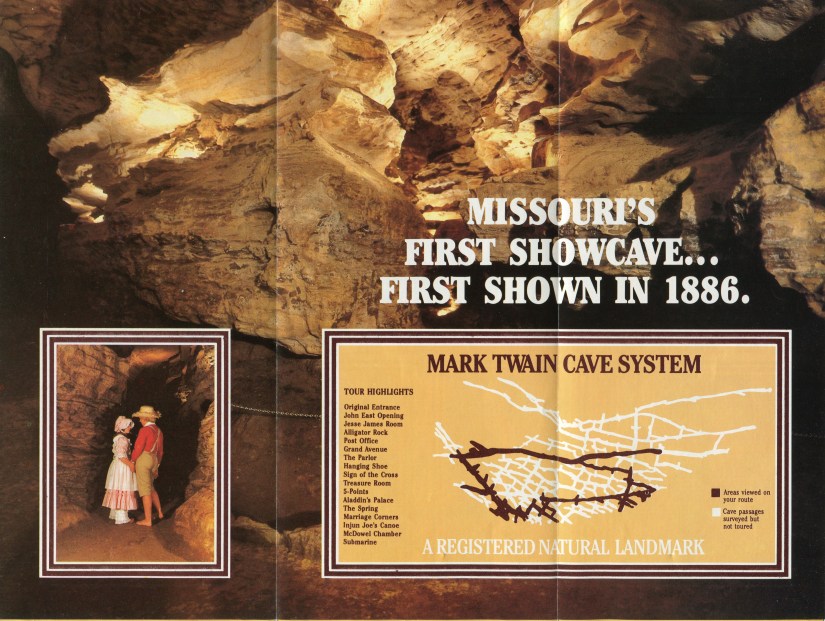
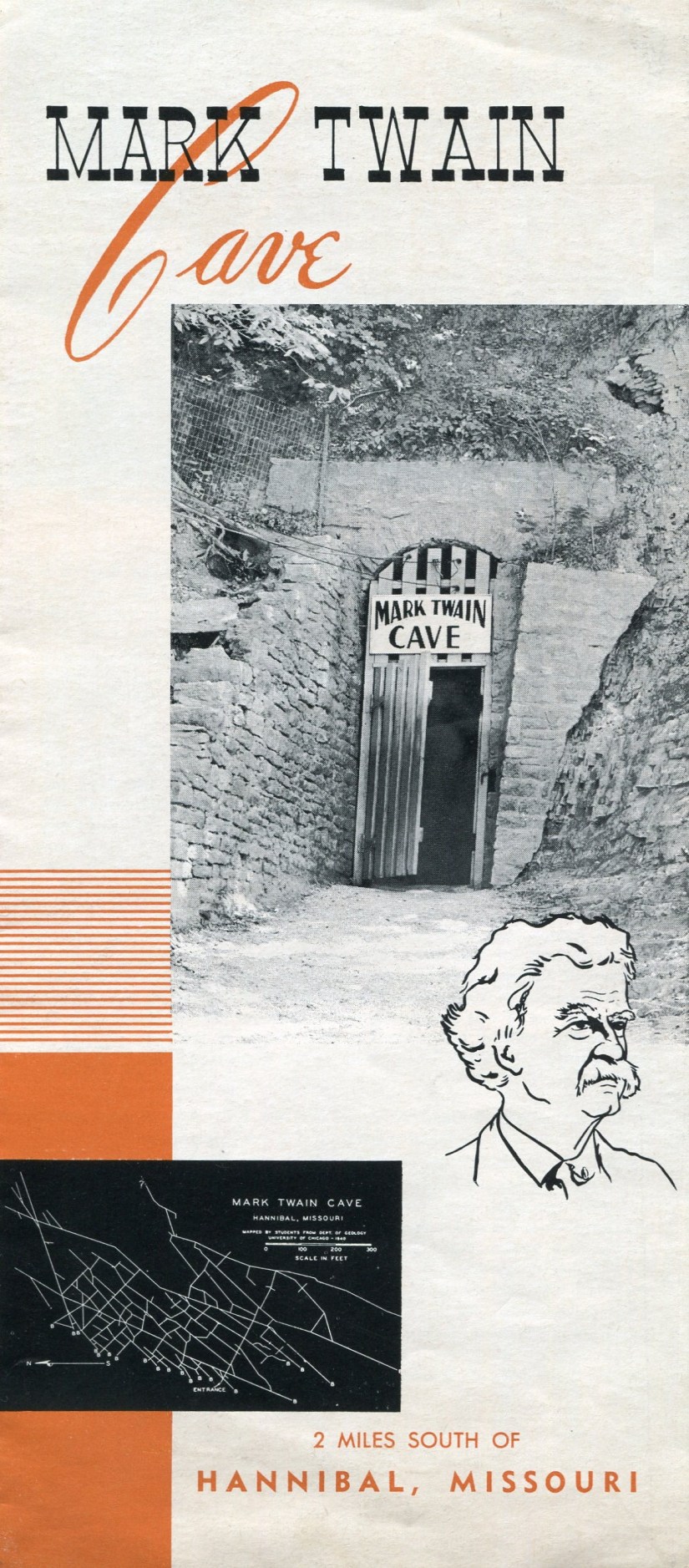
However, I came to visit Mark Twain’s cave. As many of you know, I collect old paper, particularly old photographs, letters and brochures. I recently ran across an old tourist brochure from the cave, made sometime around World War II, and decided I had to visit. Mark Twain’s cave is purportedly the same literary location featured in his Tom Sawyer book. Here young Sawyer, Huck and Becky chased ghosts, dug for buried treasure and discovered the outlaw “Injun Jim” (or “Injun Joe” depending on who you talk to), who really wasn’t an outlaw at all.

67475503_2498112616886653_3339004779610243072_n
Norman Rockwell signed photo to the Mark Twain Museum.

A tour of Mark Twain’s cave, while a feast for the imagination for any Samuel Clemens fan, is probably the most commercial experience you are likely to encounter in Hannibal. The tour guide walks guests briskly through the cave while reciting a very mechanical script committed to memory for 6 tours a day. The well rehearsed stories of Tom Sawyer characters mingle with tales of dead bodies, Wild West outlaw Jesse James, young Sam Clemens and even artist Norman Rockwell, to make for an enjoyable experience, but it does not leave much room for discussion, discovery or exploration.
Luckily, we also toured Cameron Cave, resting nearby on the same property, but separate (both in location and admission) from Mark Twain’s cave. Unlike the more commercial Twain cave, discovered in 1819, the lesser-known Cameron Cave was first discovered in 1925 and remained a closely guarded family secret until the early 1970s. The family offered limited tours over the years, mostly for special events and visiting dignitaries, but nothing like Twain’s cave. Our tour of Mark Twain’s cave featured some 20 guests, but our tour of Cameron Cave was just Rhonda, myself and our young guide Nathan. Now THAT was a cave.
Nathan was able to guide us through the cave at an easy pace affording us plenty of time to explain each and every aspect, formation, discovery and historical anecdote along the way. Cameron Cave rests below an Irish Catholic cemetery which led to stories of ghosts in the cave. Nathan stopped at the entrance and demonstrated what the old cave guides used to call a “spook horn”. It consisted of a rock ledge outcropping that, when banged on with a closed fist, emits an echoing sound like a musical instrument. 3 bangs on the spook horn chased the ghosts away, 2 bangs invited them back at the conclusion of the tour. How can you not love folklore like that?
This trip, when carefully considered, is perfect for Hoosiers because of its relatively short travel time (you can make it back from Hannibal in less than five hours), its Midwestern familiarity, rich history and friendly people. it seems fitting that when you visit Springfield and Hannibal, you lose an hour. Because, one thing is for certain, visiting these places sure feels like you are stepping back in time.

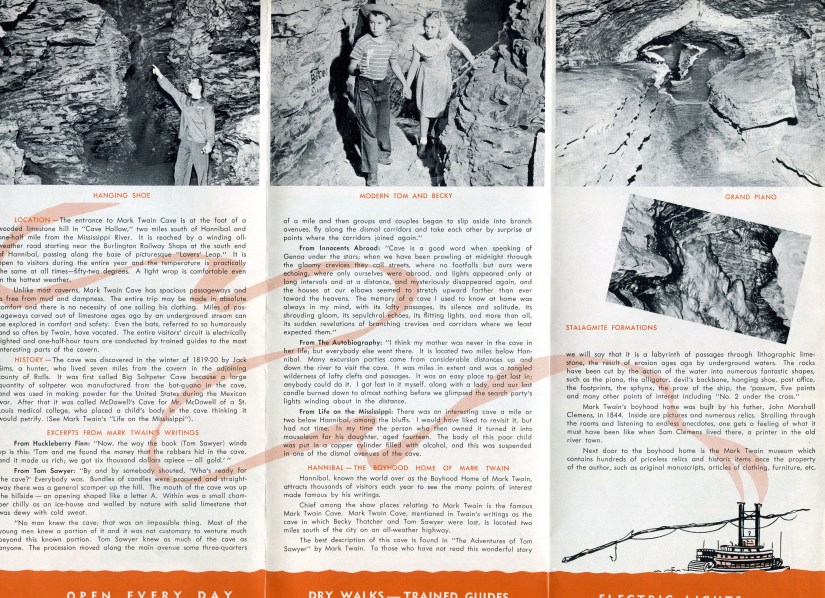
img456
Front & back of the older brochure.
img457
Inside of the older brochure.
img460
Front & back of a newer brochure.
img461
Inside panel of a newer brochure.
img463
Inside panel of a newer brochure.

img465


Abe Lincoln, Museums, National Park Service, Presidents, Travel

The Perfect Summer Getaway: Chasing Lincoln and Mark Twain. PART I

Part 1

Original publish date:  July 25, 2019

I travel a lot and for years my editors have been trying to get me to write a travel article. I have always resisted because I just didn’t believe the trips I take were meant for everyone. Most of the places I visit revolve around history and not everybody likes history, at least not everybody likes history the way I like history. However, for all you history lovers out there, I think I’ve found a perfect trip for a long weekend. I’ve visited Springfield, Illinois many times over the years and have written a few articles about my visits there too, but here’s a Springfield trip with a new twist that I can highly recommend.

40126164_10211693501603027_278799203495313408_n
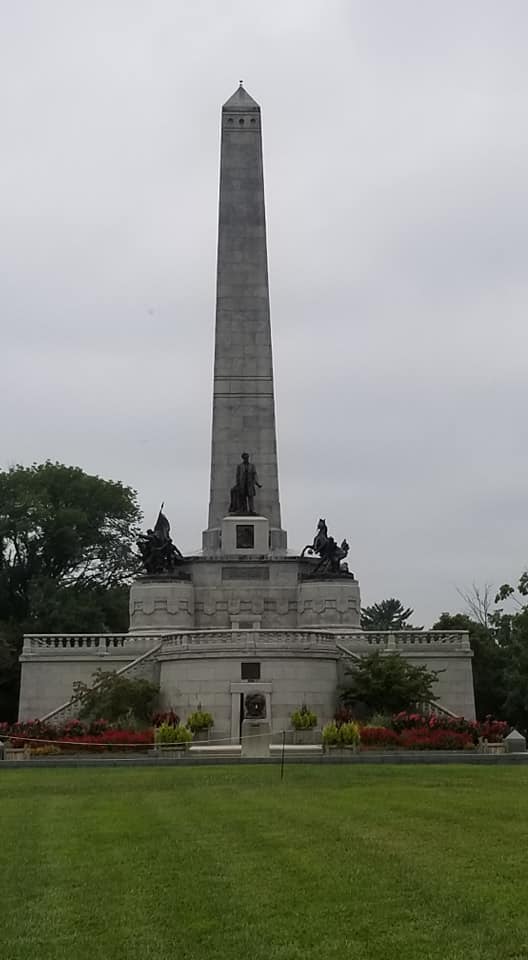
Lincoln’s Tomb.

If you’re looking for a nice 3-night / 4-day getaway, consider driving first to Springfield for a night and then journeying on to Hannibal, Missouri for the next two. Springfield, of course, is best known as the 17-year home of President Abraham Lincoln. Here you will find the only home he ever owned and visit his tomb in Oak Ridge cemetery. Springfield is the state capitol, so finding a place to spend the night is pretty easy and will fit any budget. But in Springfield, it’s not really about the hotel because you’ll be spending most of your time out of doors anyway. Should you experience Lincoln overload, no problem. Springfield is also home to the famous Route 66 Highway and offers many sites connected to that famous road well worth visiting.

IMG_2503
Gutzon Borglum’s Lincoln statue at the tomb.

Springfield is an easy 3 1/2 hour drive from Indianapolis. So you can leave Indy after rush hour and avoid the headaches that go along with all that. The landscape will comfort the traveler by offering views and scenes familiar to every Hoosier eye; flat, rolling fields of corn and soybeans dotted by old family farms and crowned by Midwestern blue skies. Danville, just over the Indiana state line, is a pretty good place to stop and stretch your legs. It was home to the last surviving Burger Chef restaurant until just a few years ago, and, should you need to refuel, you can stop at the McDonald’s. I’d recommend you skip the drivethru, park, and go into this Mickey D’s because it is a literal shrine to Danville’s favorite sons; Dick Van Dyke and his brother Jerry. The walls are lined with photos sure to make you smile.

IMG_2621
Old Capitol Building.

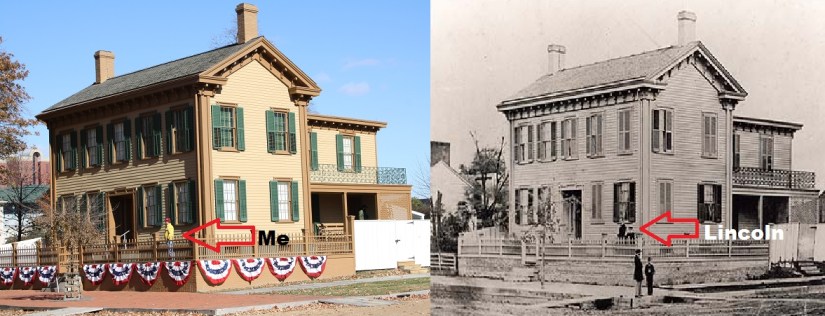
When you get into Springfield and check into the hotel, head to the old downtown district and tour the Lincoln home and old State Capitol building. Both of these sites are free. The Lincoln Homestead is run by the National Park Service and tours depart regularly every half an hour or so. The Park service has done a fantastic job with re-creating the Lincoln home (located at eighth and Jackson) and the surrounding neighborhood to look the way it looked when the old rail splitter and his family lived there. Wooden sidewalks, pebbled streets, pioneer gardens and outhouses (for demonstration purposes only) add to the interpretive plaques and audio tours made easily accessible by cell phone for visitors at all hours. If you are an early riser (like me) you’ll find no better place in Springfield to watch the sun come up than from in front of the Lincoln home. The tourists are not yet stirring at that hour and you usually will have the place all to yourself for at least a couple hours. From here, the old State Capitol is an easy walk (and even easier drive) away.

1860-2010
Lincoln’s Home Now and Then.

The old State Capitol building is impressive and a must-see. A visitor will surely stand in awe of the massive Greek revival columns during the walk up and once the massive doors are swung open, that awestruck feeling continues. Here the prairie lawyer practiced his trade. Here he delivered his famous “house divided” speech in June 1858 and here his lifeless body was carried up the stairs to lie in the same spot seven years later. From here I would recommend walking across the plaza to Mangia’s (518 E. Adams St. ) for a fine Italian dinner. The old exposed brick walls stand as mute witnesses to the spot where Abraham Lincoln gathered with friends on election night to learn he had won the Presidential Election.

IMG_2609
One of the surprises found within the plaques of the Springfield Capitol Square.

The old Capitol Square in Springfield is a worthy, standalone complex of historic sites and buildings that should be made a part of any visit to Lincoln’s city. The Lincoln – Herndon law office has been restored to its appearance as Lincoln would have known it, right down to the frontier post office Lincoln visited daily downstairs. Also worth visiting is a classic bookstore known as the “Prairie Archives” located on the square. The old-fashioned bookstore is stacked top to bottom with books, documents, publications, leaflets, posters, artwork, and bric-a-brac from the pages of Springfield’s history including a good selection of Lincoln items as should be expected. If you’re hunting antiques on the square, “Abe’s Old Hat & Country Store” is worth a visit. There are many other quaint stores, coffee shops and restaurants located on the square as well.IMG_2718
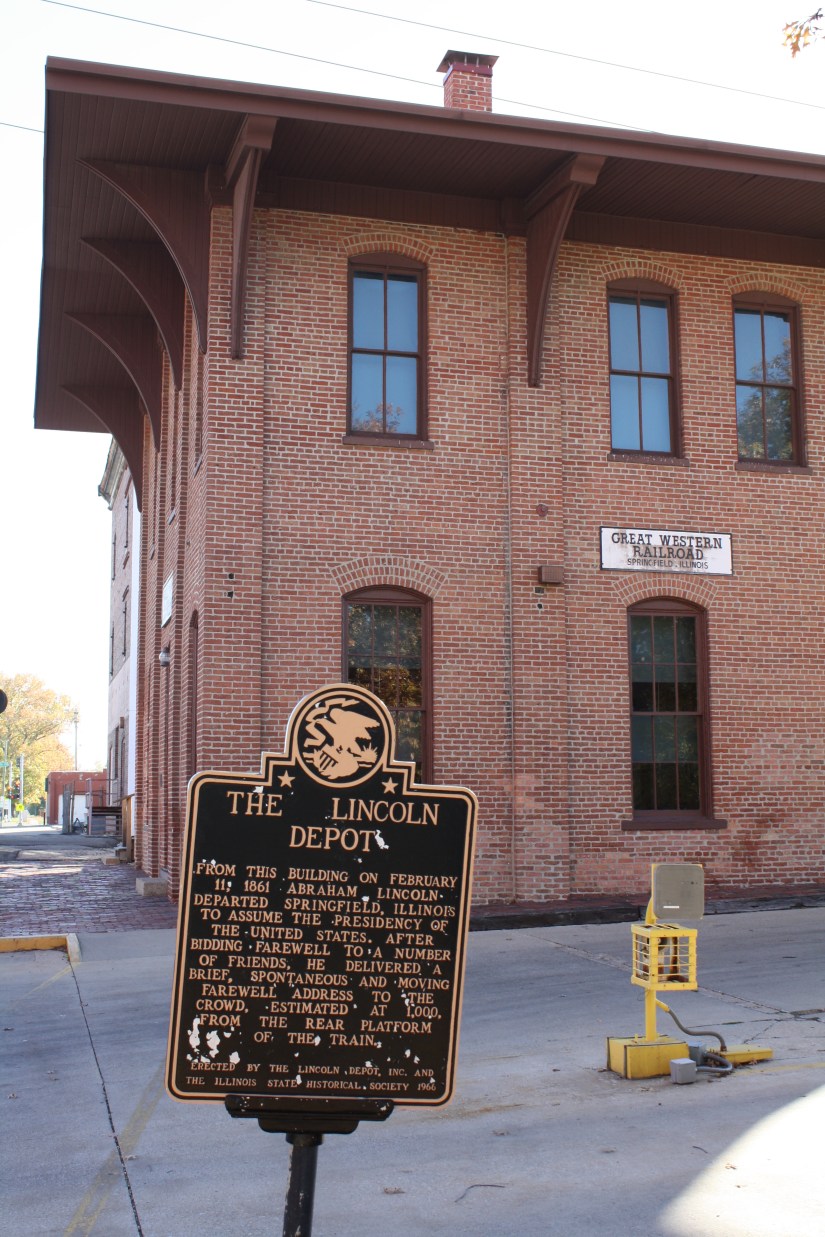
The Great Western Railroad depot is located not far from the historic town square and is well worth a visit. Here is the spot from which Lincoln departed Springfield never to return. Of interest to Hoosiers is that Lincoln’s first stop after leaving his hometown was the Bates House Hotel in Indianapolis on his way east to assume the presidency of the United States. It was at the Bates House (where the Embassy Suites now stand) that Lincoln spent his 52nd birthday and also where his son Robert momentarily lost the inauguration speech. If you’re lucky you can catch the depot building when it’s open, but that can be sporadic. Better yet you may witness an old-fashioned train crossing on your visit here because the tracks are still very active.

IMG_2598
Abe. Mary & Tad Statue on Capitol Square.

There are many other Lincoln related sites in and around the old Capitol Square. The Abraham Lincoln Presidential Library and Museum, a short trip away, offers a cool respite for visitors to view Lincoln relics and memorabilia in a state of the art atmosphere (for a small admission fee). The library also offers a generous slate of free lectures and discussions as well as a free tour of Lincoln’s old haunts which no longer stand in the downtown area (consult their website for schedules).
If you are feeling more “Route 66ish” than Lincoln, head over to the Cozy Dog Drive-in. Originally located on old Route 66, the Cozy Dog is credited as the inventor of the corndog. The walls are full of classic memorabilia and although it would never be considered as fine dining, the atmosphere is worth the trip. Should you find yourself eating elsewhere in Springfield, the locals will insist that you try the “horseshoe”, an open-faced sandwich invented in Springfield. It consists of thick-sliced toasted bread (often Texas toast), a hamburger patty, cheese sauce; smothered by french fries & gravy.
Next a visit to Oak Ridge cemetery is a must. If you happen to plan your visit in such a way that you are here on a Tuesday night, visit the cemetery around 7 PM and you can witness the American flag retirement ceremony hosted by uniformed Civil War soldiers, complete with a 21 gun salute, a canon firing and presentation of the retired flag to a lucky family in attendance. It is a perfect way to end an evening. After you’ve visited the Lincoln tomb, make sure you venture around to the back and stop a minute in front of the ornate wrought iron door with the Lincoln name inset in a laurel wreath. Behind this door, which once guarded a large open area, rested Lincoln’s sarcophagus for over 50 years before he and the family were removed and placed inside the tomb.

40099883_10212473500336424_2488593438161764352_o
Lincoln’s Temporary Tomb.

Take the stairs located behind the tomb down to the spot of Lincoln’s two temporary tombs where his body rested during construction of the current tomb. Make sure you go over to the belltower (it still rings out every hour) which has incorporated into its side the original slab upon which Lincoln’s body lay when it first arrived in Springfield awaiting burial. The cemetery also features the final resting places of many Lincoln Associates, friends and family members alongside luminaries from all fields dotted throughout the burial yard. It is a perfect place to spend time and reflect.
Be sure to stop in at the “Lincoln Souvenir & Gift Shop” (1407 Monument Ave.) and see my friend Melissa Price-King, whom I profiled in a previous article. This fantastic log cabin gift shop, owned and operated by Melissa and her family since before the Great Depression, is a trip back in time and has something for everyone. Before you leave Springfield for the next leg of your journey, a stop at “Mel–O– Cream” donuts (Mel’s for short) is a must. They have two locations, their doughnuts are legendary and will travel well on your way to Mark Twain’s Hannibal, Missouri.
Next Week- Part II- The Perfect Summer Getaway:
Chasing Lincoln and Mark Twain: Hannibal, Missouri

Abe Lincoln, Museums, Presidents

Abraham Lincoln’s Librarian: Jane Gastineau.

Jane Gastineau pic

Original publish date:  July 18, 2019

The Hoosier Lincoln community is losing a shining light in Fort Wayne next week. Jane E. Gastineau, Lincoln Librarian of the Lincoln Financial Foundation Collection (LFFC) housed at the Allen County Public Library is retiring on July 31st. Jane closes her twelve year stint of meticulously cataloging, documenting and digitizing Abraham Lincoln and all Hoosiers owe her a heartfelt thank you.

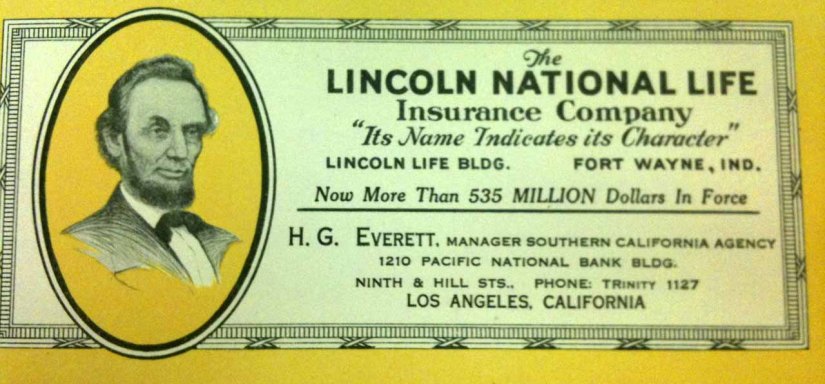
Jane steered the Fort Wayne Lincoln ship through perhaps its most turbulent time; the acquisition of the Collection by the State of Indiana. The assemblage represents a world-class research collection of documents, artifacts, books, prints, photographs, manuscripts, and 19th-century art related to Lincoln. Like many involved in the Hoosier Lincoln community, I recall the announcement (in March 2008) that the Fort Wayne Lincoln museum would close and watched with acute interest for word of its final disposition. Would it be sold at auction? Would it be acquired by a wealthy collector? Or would it remain in Indiana?lincolnnationallife2-storer

The Lincoln Financial Foundation, owner of the collection, was adamant on two points. First, the organization wanted the collection to be donated to an institution capable of providing permanent care and broad public access. Second, the collection would not be broken up among multiple owners. In other words, this collection which had been built over so many decades was not for sale and would remain intact. This came as a relief to Lincoln fans all over the country. However, the question of where it would land remained indeterminate for some time and not without controversy.

I recall visiting with James Cornelius, former curator of Lincoln artifacts at the Abraham Lincoln Presidential Library and Museum in Springfield Illinois, back in early 2009. Although my research visit was in no way connected to the Lincoln Financial collection disposition question, since I was a Hoosier, Dr. Cornelius, whom I admire, could not resist asking me how it happened. I had to inform him that I really had no idea and could not even begin to offer an explanation. Jane Gastineau cleared that question up for me.

lincolnnationallife-storer“The advantage of our facility, aside from it being in Indiana, was our technical ability. We could have any object or artifact digitized, on the web and available to researchers in no more than three days.” That may seem like a given to researchers nowadays, but a decade ago, most research facilities were still working with copy and fax machines; not exactly on the cutting edge of the digital universe.

In December of 2008 those conditions were met when one of the largest private collections of Abraham Lincoln-related material in existence was donated to the people of Indiana. Today the Collection is housed in two institutions, the Indiana State Museum in Indianapolis and the Allen County Public Library in Fort Wayne. This allows the Collection to live on in its entirety, available to the public in various exhibits at all times. And, especially in my case, the digitized LFFC is available on-line to researchers 24-7.

To date the LFFC has 15,219 items available in full text through Internet Archive and have had 5,373,223 views of that material since late 2009. The library collection has 4,907 photographs and 3,021 documents/manuscripts online. Most importantly, additional manuscripts and transcriptions are being added weekly as they are processed. Lincoln programming at the library is also taped, and there are 51 programs viewable online at https://archive.org/details/allencountylincolnprograms.

I recently spent a couple days in Fort Wayne researching Lincoln. I found Jane Gastineau hard at work deciphering, transcribing and cataloging the Lincoln collection. Depending on the day (or the hour) Jane may be working on Abraham Lincoln, his wife Mary, their son Robert or, just as often, any number of the researchers and volunteer catalogers from generations prior. Seems that 210 years after the Great Emancipator’s birth, there is still plenty of work to be done within the Lincoln genre.

“Standards of best practice re: collection building, collection record keeping, and professional conflict of interest have changed over the decades. That means that some of the practices (of early Lincoln collector/curators) may look sketchy to us, but they were acceptable at the time. Some of the older practices also make tracking provenance a bit tricky and occasionally impossible, which is frustrating for us. Hopefully we’re doing better so that those who come after us won’t find us sketchy.”

Facebook-Friends-of-lincolnAccording to Gastineau, “I work entirely with the part of the collection housed at the Allen County Public Library. The LFFC is supported by an endowment under the Friends of the Lincoln Collection of Indiana. The Allen County Public Library provides our space and supports programming at the library, but all other financial support (salaries, travel for conferences, supplies, digitizing expenses, acquisitions, etc.) are paid through the Friends endowment.”

She continues, “There are two of us that work fulltime with the collection. I moved with the collection from The Lincoln Museum (where I had been collections manager) to the library on July 1, 2009. I know the collection pretty well—though we’re still finding things we didn’t know we had—and I’ve learned a great deal about Lincoln and those surrounding him and “collecting him.” But I don’t consider myself a Lincoln expert and certainly not a Lincoln scholar. I just know a lot about him—and I admire him.” Jane is quick to point out that, “I’m not a solo act.” She’s had three coworkers over the years—Cindy VanHorn (who came with Jane from the Fort Wayne Lincoln Museum) and is currently working part time with the portion of the LFFC housed at the Indiana State Museum; Adriana Maynard Harmeyer who left to join the Archives/Special Collections at Purdue University and Jane’s associate Lincoln-librarian (and editor of the LFFC’s Lincoln Lore publication) Emily Rapoza.

Although Jane truly loves her job, she is looking forward to retirement. For now, the librarian has no plans to return to her old post, even as a volunteer, simply because, “I don’t want my successor to feel like I’m looking over his/her shoulder and judging whether things are being done right. I had my time here, and I think my coworkers and I accomplished a great deal with organizing and documenting the collection and making it widely accessible. But now I need to stay out of my successor’s way. I work with an amazing collection, and there’s always something new to discover or a new problem to solve. This job has let me work as a librarian, an archivist, a program planner, a program presenter, a creator of exhibits on site and online, a researcher, a reference for researchers, a tour guide, an instructor for interns. It’s been a great twelve years.”

When asked what she will miss the most, Jane states that she will miss the “everyday discoveries”. Whether she is learning something new from a tour guest, researcher or from the collection itself, Jane smiles widest when she makes a new discovery. While escorting me on a special tour of the LFFC holdings on display in the climate controlled, secure vault hidden deep within the library, Jane relayed the story of one such discovery made some time ago, quite by accident.

IMG_5527“For whatever reason, it was a slow day and I was poking through some uncatalogued material from the James Hickey collection. I ran across this scrap of paper.” At this point Jane removes the protective jet black cover from a locked case at one side of the room to reveal several documents written and signed by Abraham Lincoln himself. She directs my attention to a small note in the familiar handwriting of our sixteenth President. “Read it,” Jane states, “See if you notice the one word that makes people chuckle when they see it.”

“There is reason to believe this Corneilus Garvin is an idiot, and that he is kept in the 52nd N.Y. concealed + denied to avoid an exposure of guilty parties. Will Sec. of War please have the thing probed? A. Lincoln May 21, 1864” Jane reveals that the word “idiot” in Lincoln’s note never fails to elicit a giggle, “But that word doesn’t mean what they think it means. Idiot was the way they described intellectual disabilities back then.”

Jane explains that she googled the soldier’s name and learned that this note, along with 60 other supporting documents found with it, were the key to a mystery that ultimately led to a book by an Irish historian named Damian Shiels who also authors a blog called “Irish in the American Civil War”. Jane states that Shiels “had pieced the Garvin story together from newspaper accounts and pension records in the US National Archives. His post included the information that Garvin’s documents had been offered for sale in the 1940s and requested that, if anyone knew where the documents were, he be informed. So I emailed him that we had the docs and digitized them and put them online in our collection so he could use them. In 2016 he published a book titled “The Forgotten Irish: Irish Emigrant Experiences in America,” and the story of Catharine and Cornelius Garvin is the first story—about 12 pages.”

Shiels reveals, “During the Civil War, many freed slaves and young men were abducted from their families, and purchased by the Union in order to replace men who sought to avoid warfare for various reasons. In 1863, a widow by the name of Mrs. Catherine Garvin of Troy, New York, was informed that her son, Cornelius, was missing. In efforts to connect with her lost son, Mrs. Garvin not only searched the camps and hospitals where her son was believed to be, she brought her story to local politicians, newspapers, and suddenly the story of the missing boy “Con” began to receive attention. Mrs. Garvin’s story became such a sensation that it received attention from President Abraham Lincoln. President Lincoln’s interest in this story was a result of the sympathy that he felt towards Mrs. Garvin and the story of her son being sold to war. Due to his sympathetic nature, on April 18, 1864, Lincoln wrote in a telegram to Colonel Paul Frank of the 52nd Potomac, the regiment in which it was believed that Cornelius was fighting. In the telegram sent from the Executive Office, Lincoln wrote, “Is there, or has there been a man in your Regiment by the name of Cornelius Garvin? And if so, answer me so far as you know where he now is.”

“Despite Lincoln’s efforts to connect Mrs. Garvin with her son, Lincoln’s telegram never received a response form Colonel Frank. However, it was suggested that Garvin’s Captain, Capt. Degner, not only neglected to search for Cornelius, but threatened his privates in aiding Mrs. Garvin, or anyone involved in the investigation with information. Colonel LC Baker placed Captain Degner under arrest until more evidence was found, but there are no further records of charges brought against Degner.”

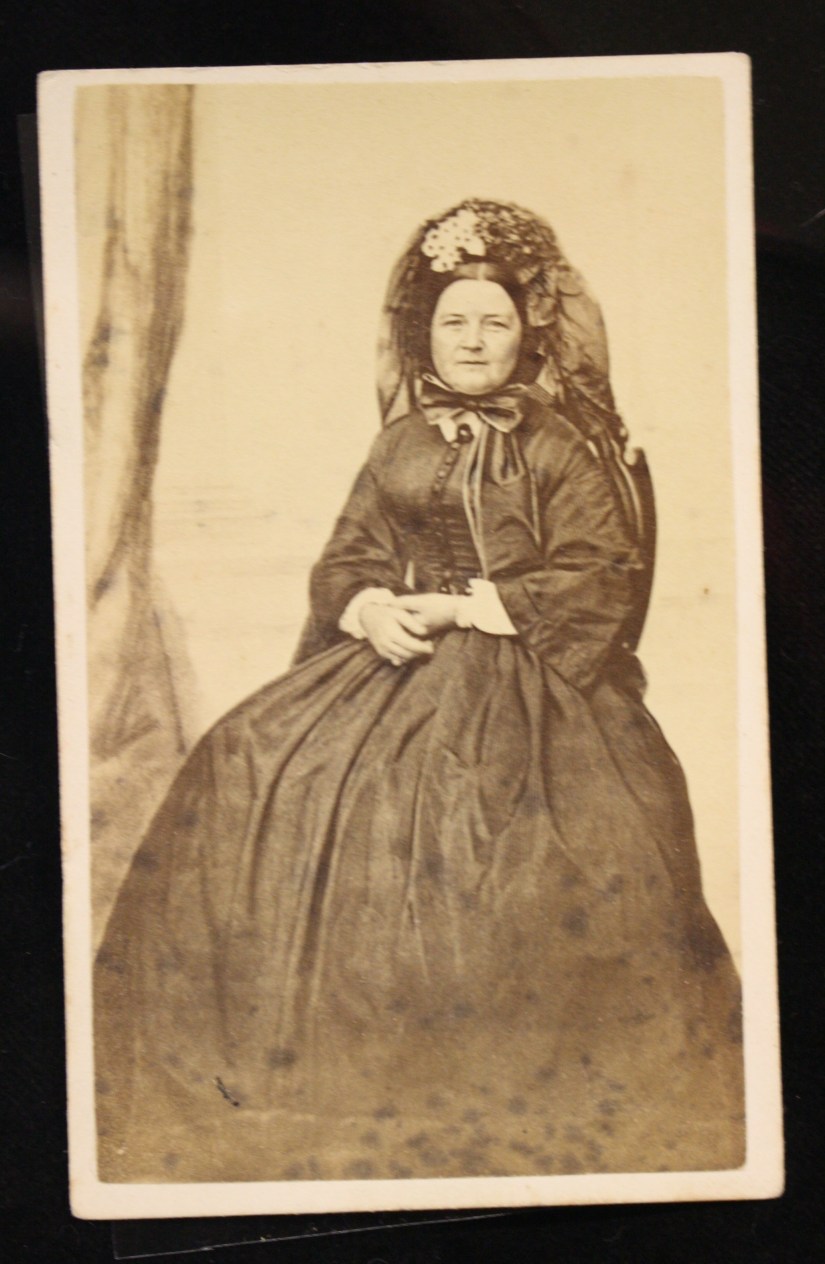
Jane Gastineau’s chance discovery, in effect, helped solve the ages-old mystery. According to the Lincoln Library webpage, “In the summer of 1863, Cornelius Garvin (b. 1845), a resident of the Rensselaer County Almshouse, was sold as a substitute into the Union army by the home’s superintendent. Eighteen-year-old Cornelius was mentally disabled in some way and had been declared an incurable “idiot” by the Marshall Infirmary, located in Troy, N.Y. He had then been placed in the county almshouse by his mother, Catharine (d. c1896), because she could not care for him at home. When Catharine went to visit her son on September 7, 1863, the superintendent informed her that Con was in the army and showed her the money he had received as payment for the boy. Catharine wrote later, “It was very cruel to sell my idiot son.” Catharine Garvin spent the rest of the 1860s looking for Cornelius. Although he was thought to have been enlisted in the 52nd New York Infantry Regiment and an official army investigation was conducted, she never found him or learned his fate. She ultimately accepted the likelihood he was dead, as the army investigation had concluded. She applied for and received a survivor’s pension from the U.S. government. Catharine continued to live in Troy, N.Y., until around 1890 when she returned permanently to Ireland. Because she was an American citizen, she continued to receive her pension until her death in County Limerick around 1896.”

One of Jane Gastineau’s favorite observations while researching are the many “rabbit holes” she finds herself traveling through when it comes to Lincoln. The note she discovered is a perfect illustration. And those rabbit holes promise to continue for researchers long after she vacates her position. In fact, another example can be found within her research that was of particular interest to me. Col. L.C. Baker, the officer mentioned above, was none other than Lafayette Curry Baker. Baker was recalled to Washington after the 1865 assassination of President Lincoln and within two days of his arrival he and his agents had made four arrests and had the names of two more conspirators, including assassin John Wilkes Booth. Before the month was out, Booth along with Davey Herold were found holed up in a barn where Booth was shot and killed. Baker received a generous share of the Goverment’s $100,000 reward. Yes Jane, there are indeed a great many rabbit holes to explore wherever Lincoln is involved.

Photos of various Lincoln items on display in the vault at the Allen County Library.

IMG_5526

This slideshow requires JavaScript.

Robert Todd Lincoln’s schoolbook.

This slideshow requires JavaScript.

Tad Lincoln gets a sword and a uniform per his father’s order.

IMG_5524

This slideshow requires JavaScript.

IMG_5523
Mary Todd Lincoln
IMG_5520
Rare mourning letter sent to Tad Lincoln after the assassination of his father.


IMG_5517
Robert Todd Lincoln
Abe Lincoln, Assassinations, Auctions, Museums, Politics

Abraham Lincoln’s Hat Needs You!

hat_and_gloves_together

Original publish date:  September 3, 2018

Attention Hoosiers, Abraham Lincoln needs your help. More specifically the Abraham Lincoln Presidential Library Foundation in Springfield, Illinois is appealing to all friends of Mr. Lincoln to lend a hand in their hour of need. Last week I traveled to the ALPLM to speak with the State Historian of Illinois and Director of Research and Collections, Dr. Samuel Wheeler. Although his title and resume may sound imposing, “Sam” is a breath of fresh air for the Lincoln historical community. Dr. Wheeler’s appearance is immediately disarming, his countenance inviting and friendly. Sam breaks the long-established mold of the elderly historian whose gray hair, Meerschaum pipe and leather-elbowed corduroy jacket are calculatedly designed to intimidate. Sam’s youthful appearance and ready smile invite everyone to come, sit and talk history for awhile.

wheeler
Dr. Sam Wheeler

Dr. Samuel Wheeler is the tenth State Historian in Illinois history and when you consider that 2018 is the state’s Bicentennial year, you may deduce that they choose their historians carefully. Sam’s specialty is the cool stuff: the history of Illinois, the Civil War Era, and the Life and Legacy of Abraham Lincoln. Dr. Wheeler’s life mission is to protect, preserve, and promote history through education. During his three years at the helm, he has devoted much of his time to assisting other museums, libraries, historic sites, documentary projects, and historical societies. He regularly speaks to diverse audiences across the country, writes for scholarly journals and popular magazines, and offers commentary to newspaper, radio, and television outlets. In short, Dr. Wheeler is a busy man.
The subject of my visit is a topic that has occupied social media, blog spots and chat rooms for the past few weeks. The ALPLM is in danger of losing some of its most precious Abraham Lincoln relics and associative memorabilia. If the ALPLM cannot satisfy a substantial financial liability by October 2019, priceless Lincoln relics will have to be sacrificed to meet their obligation. Meaning that these items will likely end up in the private collections of millionaires never to be displayed publicly again. While the amount of the liability, $9.7 million is staggering, Dr. Wheeler points out that “if we could just get every citizen of Illinois to donate one dollar each, we would wipe out that debt in no time.” Sam continues, “and if you could get Indiana to pitch in the same, we can keep the collection open for generations to come.”
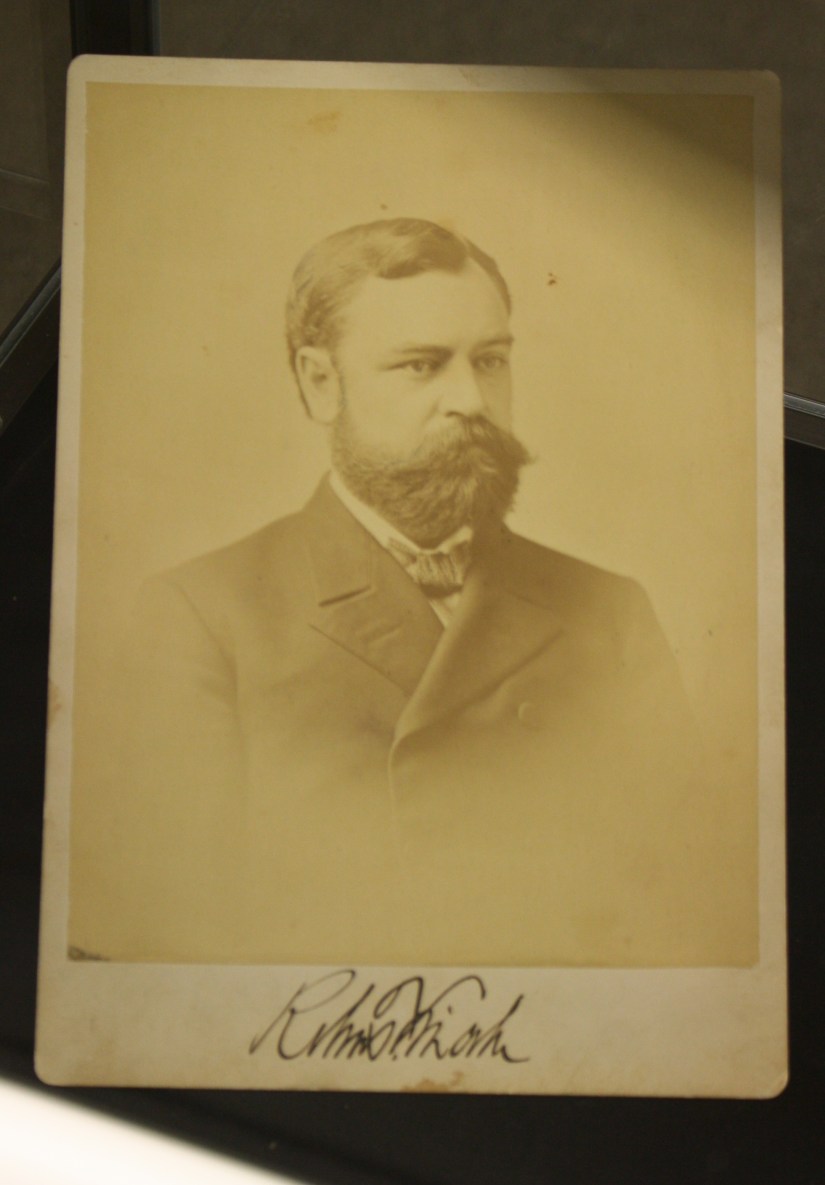
LogoThe ALPLM’s “problems” began back in 2007 when it purchased the famous Taper collection for $23 million. “The collection is amazing,” says Sam, “the Lincoln top hat and bloodied gloves seem to be the items that resonate most with people, but the collection is much more than that.” Dr. Wheeler says that the uniqueness of the Taper collection centers around its emphasis on assassination related items, a field that had been largely ignored by Lincoln collectors at that time of its assemblage. The collection was created by Louise Taper, daughter-in-law of Southern California real estate magnate S. Mark Taper. She created the exhibition The Last Best Hope of Earth: Abraham Lincoln and the Promise of America which was at the Huntington Library from 1993–1994 and at the Chicago Historical Society from 1996-1997.
According to the ALPLM’s website, “Louise Taper amassed the largest private collection of Lincolniana in more than a half-century, highlighted by 1 of 3 stovepipe hats known to have belonged to Lincoln; the earliest of his boyhood sumbook pages, ca. 1824-1826; and more than 100 letters or notes in the hands of Abraham or Mary Lincoln. Also among the 1,500 items in the collection are manuscripts by friends and contemporaries, personally owned books and clothing or other accouterments, prints, broadsides, newspapers, artworks, period photographs, and assassination-related materials.”
The ALPLM acquired the Taper Collection two years after they opened the $150 million facility on April 19, 2005. To blunt public charges that the ALPLM had bit off more than it could chew, Dr, Wheeler compares the museum to a 13-year-old child. He states, “Not too many 13-year-olds have got it all together. We’ve matured a lot in the last two years.” Sam notes that in those two years, the ALPLM has streamlined much of their operation citing as examples that more of the collection has been digitized for research and the museum’s six research rooms have been pared down to one.
Presidential-Museum-CreditALPLM3“Bottom line,” Sam says, “we need to keep the collection here. That is our first priority.” It is easy to see how important this collection is to Dr. Wheeler by simply watching his eyes as he speaks. To Wheeler, the collection is not just a part of the museum, it is a part of the state of Illinois. Sam relates how when he speaks to groups, which he does quite regularly on behalf of the ALPLM, he often reaches into the vault to bring along pieces from the Taper collection to fit the topic. “People love seeing these items. It gives them a direct connection to Lincoln.” states Wheeler.
When asked if he has a particular favorite from the Taper collection, Dr. Wheeler smiles and says, “I’m particularly drawn to the gold cufflink that Lincoln was wearing at Ford’s Theater that night.” However, Sam is quick to point out that what makes the Taper collection so special is the depth of quality it represents. The collection contains Mary Lincoln’s hand fan carried to the theater that night, locks of hair from members of the Lincoln family, and the oldest piece of writing by Abraham Lincoln known. It is a page from 15-year-old Abraham Lincoln’s 1824 schoolbook whose content Dr. Wheeler can recite by hear. “Abraham Lincoln is my name/ and with my pen I wrote the same/ I wrote in both haste and speed/ and left it here for fools to read.”
Dr. Wheeler also informs that the Taper collection contains a treasure trove of letters written by John Wilkes Booth and his entire family as well as the ring J.W. Booth presented to his fiancée Elizabeth Sumner. “We also have stage costumes and the handwritten character sketch for John Wilkes Booth’s role in Shakespeare’s Macbeth,” says Wheeler. “Our main objection for the collection, is that we keep it in the public realm. That is imperative.”
The Lincoln Library foundation recently said, “If the foundation is not able to secure commitments in the very near future to retire most-if not all-of the remaining $9.7 million debt, it will have no choice but to accelerate the possibility of selling these unique artifacts on the private market-which would likely remove them from public view forever.”
gettyimages-468377946Hoosiers may ask, why doesn’t the ALPLM just ask the state of Illinois for the money? After all, with 300,000 visitors annually, the Lincoln Library Museum is one of the most popular tourist sites in the state of Illinois and is prominently featured in all of their state tourism ads. Well, the state is billions of dollars in debt despite approving a major income-tax increase last summer and as of the time of this writing, has yet to put together a budget. To the casual observer, one would think that financial stalemate between the state and the museum would be a no-brainer when you consider that the ALPLM has drawn more than 4 million visitors since opening in 2005. The truth is a little more complicated than that. Illinois State government runs and funds the Lincoln library and museum. The separately run foundation raises private funds to support the presidential complex. The foundation, which is not funded by the state, operates a gift store and restaurant but has little role in the complex’s operations, programs and oversight.
Aside from the items previously mentioned, the Taper collection, which numbers over 1500 pieces, also includes a pair of Lincoln’s eyeglasses and his billfold. The Taper collection includes about 100 Mary Todd Lincoln letters, giving the Lincoln presidential library a total of 500-out of only 600 in the world.
Museum officials are sorting out which Taper collection items were donated and transferred to the state, and what might end up for sale-if it should come to that. One item that won’t be on the auction block is the state’s rare copy of the Gettysburg Address, written in Lincoln’s own hand. Luckily, the document wasn’t part of the Taper purchase. The state’s collection of Lincoln artifacts, tens of thousands strong, draws researchers from across the globe and gives the public a chance to see up close the man many Americans feel was the greatest President in U.S. history.

xpnjZclgoiaRQsS-800x450-noPad
Carl Sandburg and Marilyn Monroe

The Taper collection also included a dress worn by 1950s movie star Marilyn Monroe, an admitted “fan girl” of the 16th President. The blonde bombshell’s dress was considered a non-Lincoln item that potentially would fetch big bucks to help pay off the loan. Perhaps to show that they were serious, in late July the ALPLM sent Monroe’s slinky black dress off to a Las Vegas auctionhouse, where it fetched $50,000 from the lucky bidder. Also sold were seven original photographs of Monroe, which sold for $3000 each. However, an original bust of Lincoln biographer Carl Sandburg failed to sell. All proceeds from the Julien’s sale went towards the outstanding debt. Hopefully Lincoln relics will not be next up on the auction block.

5a83618b0f123.image
Author Doris Kearns Goodwin

Dr. Wheeler is doing his best to get the message out. Aside from his normal 60 hour work week he spends nights and weekends all over the state and country talking about Lincoln, the museum and sounding the alarm to save the collection. The museum is getting help from cherished friends like Doris Kearns Goodwin who will be speaking at the ALPLM on October 29 with “proceeds from this event to benefit the campaign to secure a permanent home for Lincoln’s most personal effects comprising the Taper collection.” Interested and concerned Hoosiers can help by visiting the Abraham Lincoln Presidential Museum and Library website at http://www.alplm,org and there is a “Save the Lincoln Artifacts” go find me page on the web.
If every Hoosier would chip in a few bucks we could honor our state’s favorite son and help our neighbors in Illinois at the same time. Skip that latte for Lincoln. Snap off that sawbuck for the rail splitter. Honest Abe is depending on you.

Indianapolis, Museums

Feast & Famine-Henry Flagler and the last Indianapolis Street car. Part II

ITM train 2
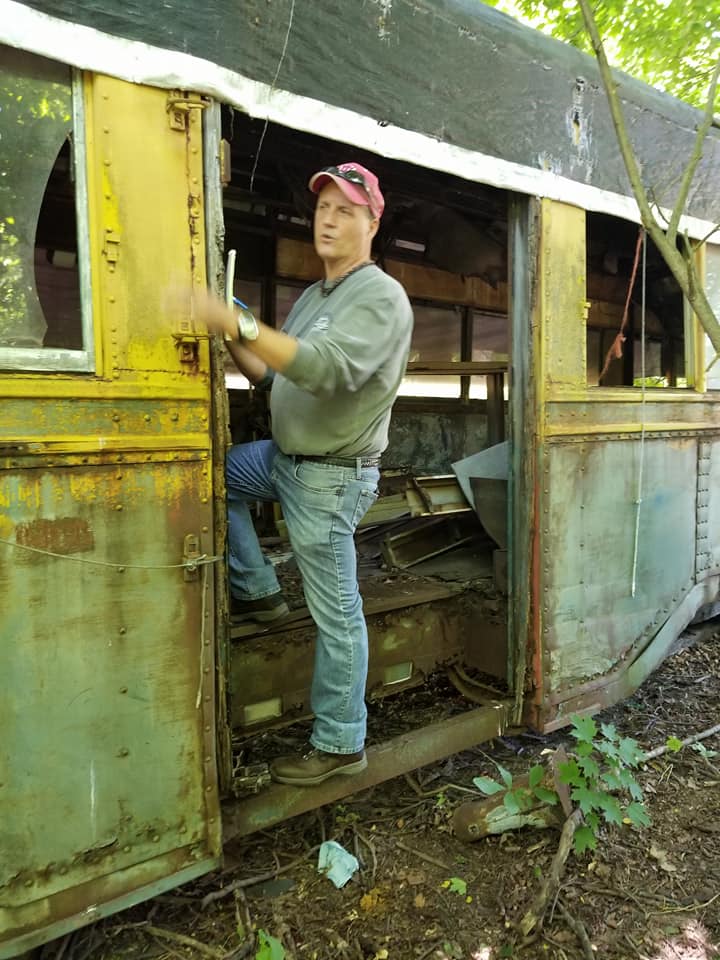
Alan E. Hunter on the last Indianapolis Street Car, Photo by Rhonda Hunter.

Original publish date:  July 23, 2018

At 11:59 pm on Thursday July 12, 2018, the Indiana Transportation Museum (ITM) in Noblesville, Indiana ceased to exist when the Hamilton County Sheriff’s Office swarmed the grounds at Forest Park and sealed the property. The closing, although known by all parties involved, still came as a shock to the system for the dedicated volunteers working furiously to save the engines, railcars and equipment they have so lovingly cared for over the past half-century. Even though everyone knew it was coming, no one really expected it to happen.
As an intensely interested (but uninvested) observer of what happened that week after Independence Day, I immediately recognized the politics involved on both sides. There can be no doubt there were strong opinions on both sides of the issue. Like all parties involved, I have my own opinion. However, I am neither a train-guy nor an investigative journalist. I have a background in historic preservation, particularly when it comes to my birth state of Indiana, and I write about Hoosier history. I don’t think it’s my place to take sides in this debate. What’s done is done, what’s right is right and in the words of Buffalo Springfield, “Nobody’s right if everybody’s wrong.”
From the moment that I walked into that chaotic scene one week before it’s closing, I was struck by the dedication of the people working on those trains. Whether talking about on-site volunteers from the ITM or those from neighboring rail museums, one thing was clear from the start, when it comes to trains, these people are passionate about preservation. The people I’m talking about don’t have PhD’s, don’t serve on boards of directors and don’t give a damn about self-promotion or the politics involved. They love trains, period. So when I heard the news of the ITM’s closing, I felt it would be best to honor these folks rather than add to the chatter of discontent.

Kris Branch streetcar photo 1
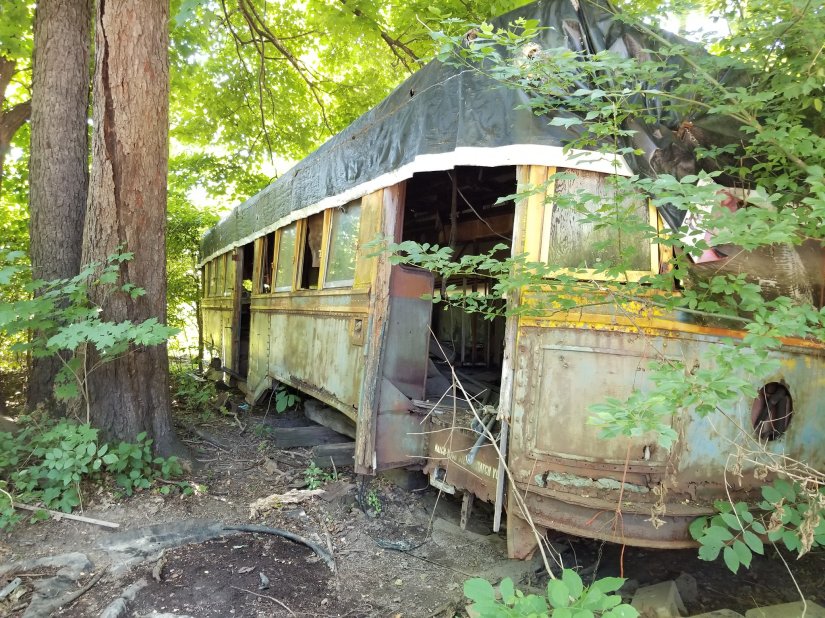
The last Indianapolis Street Car. Photo by Kris Branch.

In part one of this article, I detailed the quest that brought me to the ITM in the first place: the search for the last surviving Indianapolis streetcar. I had been tipped off to the car’s presence at ITM by Meg Purnsley, friend and dedicated Indianapolis preservationist. My first inquiries about the fate of car # 153 were met with puzzled looks on the greased streaked faces of the first few people I encountered. Finally I was directed to the trolley barn just east of the Hobbs station depot where I found Craig Presler hovering over a couple wooden trolley cars located there. As it turned out, locating Craig was my first good find of the day, but certainly not my last.
When I asked Craig about the fate of Indy streetcar 1-5-3, he answered, “Well I can take you to where it was but it was crushed some time ago.” What? I was gobsmacked by the news and immediately sick to my stomach. Thank goodness my wife Rhonda was there to prop me up else I may have fainted dead away on the spot. Craig walked us a couple hundred yards past another trolley barn and pointed to a train car parked near the tree line. “The car you’re looking for was located right behind this one,” said Craig. “But it was crushed some time ago.” I’m no Indiana Jones, but as I looked into the trees several yards past the wood line, I saw the gleam of a window. “What’s that? Is that it?” I asked Craig. Then, time slowed down like a scene from a Quentin Tarantino movie as Craig said, “Maybe, I guess it didn’t get crushed after all.”
In a flash, Rhonda and I found ourselves blazing a trail through the thick overgrowth towards that window. With each step, the shadowy silhouette of car 153 emerged from the wilderness. It was in pretty bad shape, but it was there. Knowing that time was not on my side, my every thought went to getting this car out of these woods before it was too late. As I said before, I am not a train guy and have no idea what it would take to get this relic out of these woods. Craig assured me that it could be done and pledged to help in any way that he could. Meantime, the hour was getting late and I needed to try and find a home for this historic streetcar. I arranged to meet Craig the next day to talk more about saving the car.
Once home, I fired up the lines of communication to anyone I thought might be able to help save this car. I updated former Indiana National Road Association Presidents Meg Purnsley and Ron Sanders on the dire situation. Both assured me that INRA might be a suitable home. I contacted Stevi Stoesz Kersh, Executive Director of Indianapolis City Market, who enlisted her help and counsel. I even contacted Dale Harkins of the Irving theater for his advice. The Facebook community chimed in with concern and caring comments. The support was there, no doubt, but we were running out of time.
The next day Rhonda & I returned to the ITM. Once again I sought out Craig Presler. As detailed in part one of ths story, Craig directed me towards Laddie Vitek of the Illinois Railway Museum and William Whitmer of the “Hoosier Heartland Trolley Co.” who met us at the car in the woods. Both agreed that the car could (and should) be saved. The only question was, how could we do it?

shDSC08391
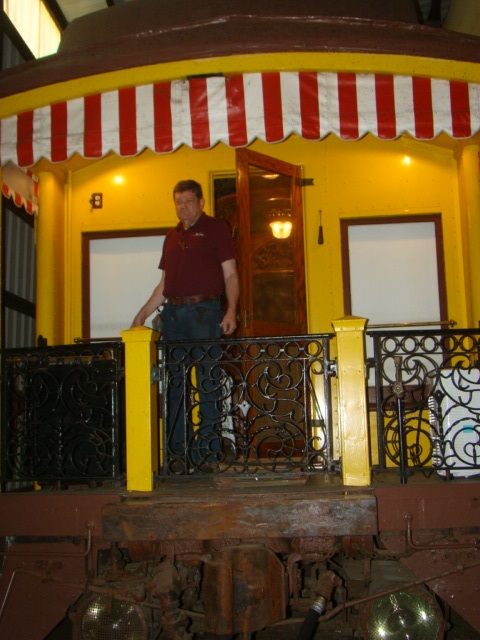
Craig Presler on back of the Flagler Car, Photo by Steve Hunt.

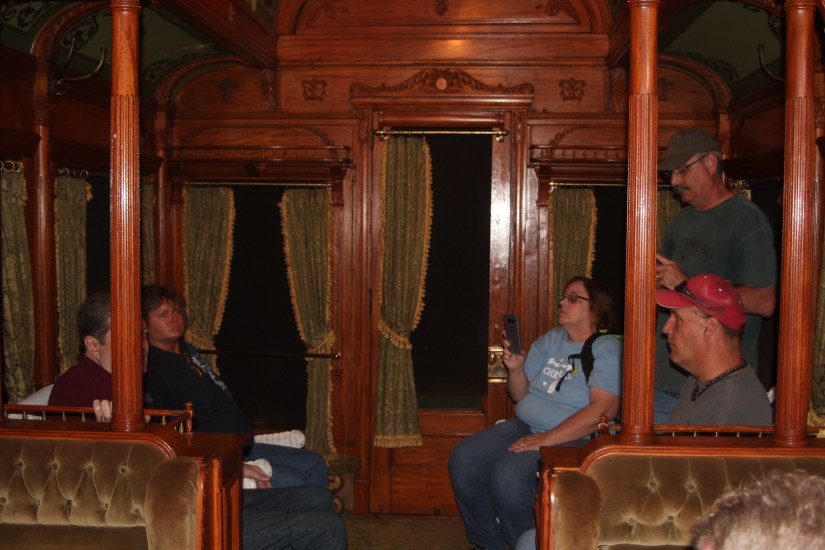
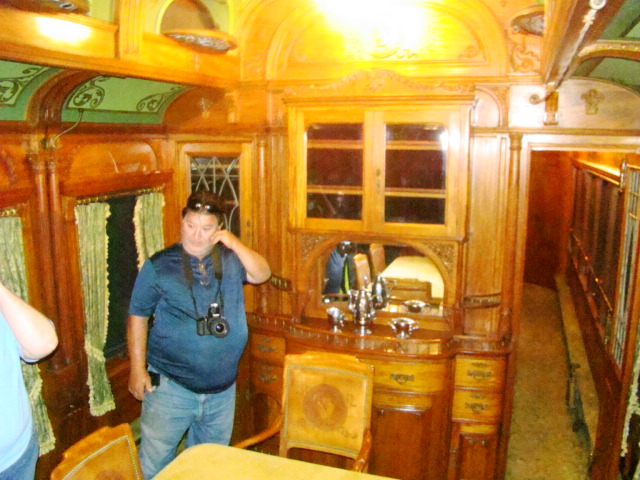
We spent the rest of that second day walking and talking with Craig Presler. Although my focus was on the last surviving Indy streetcar and how to save it, I could plainly see that news of the museum’s closing was devastating Craig. Turns out Craig Presler’s history with the ITM is nearly as old as the museum itself. He came to Noblesville in the early 1970s and worked at Firestone for over three decades while volunteering his time to the ITM on nights and weekends. He lives within walking distance of the museum and when he retired last year he made plans to devote the lion’s share of his time guiding visitors through the train cars at the ITM. In particular the lavish railcar known as “The Flagler Car.”

kb20180707_125205
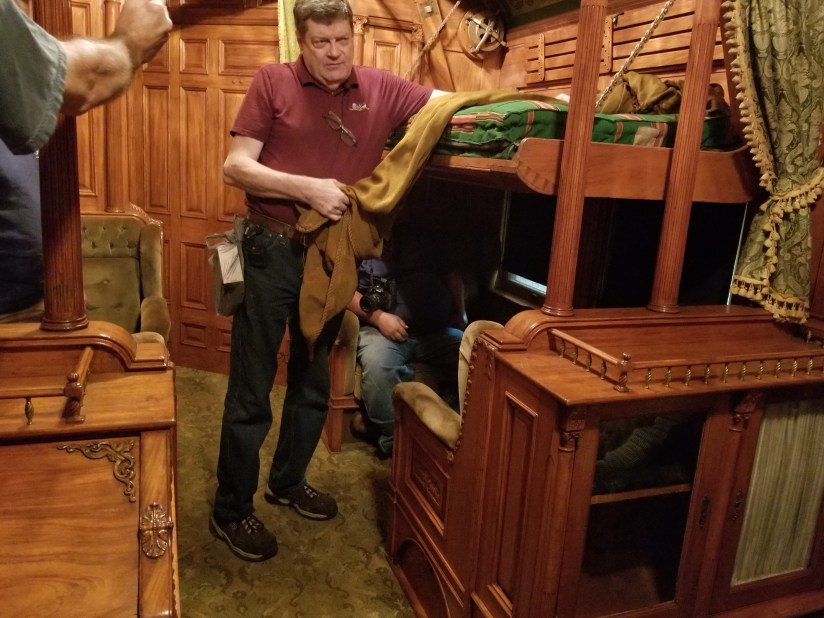
Craig Presler inside the Flagler Car, Photo by Kris Branch.

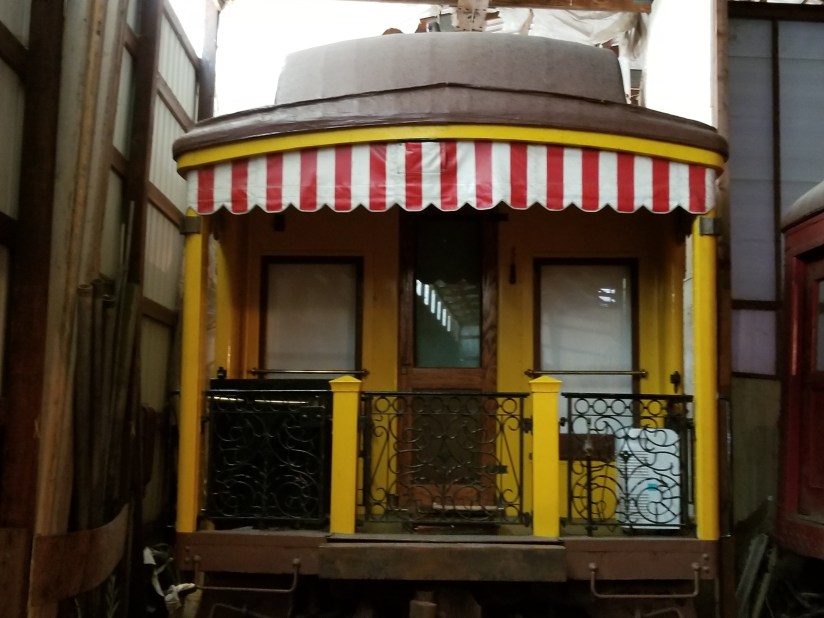
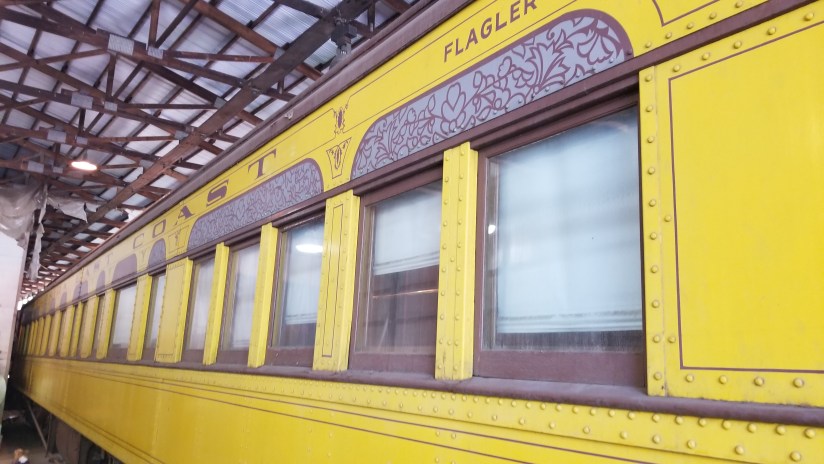
Craig Presler knows every square inch of Henry Flagler’s 1898 private railcar. The name Flagler is familiar to anyone who has spent any time visiting St. Augustine Florida but really, Flagler is second only to Walt Disney when it comes to the state of Florida’s prominence as a tourist mecca. Henry Morrison Flagler (January 2, 1830 – May 20, 1913) was a founder of Standard Oil and an early partner of John D Rockefeller in Ohio. He almost singlehandedly developed the Atlantic coast of Florida and he founded Florida’s East Coast Railway. Today, he is known as the father of Miami and Palm Beach, Florida.
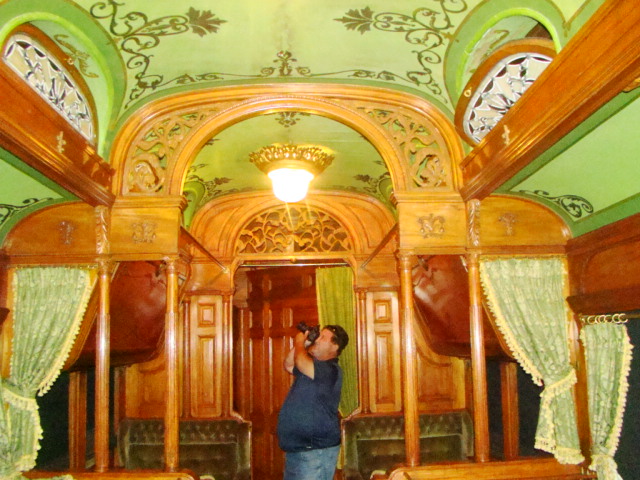
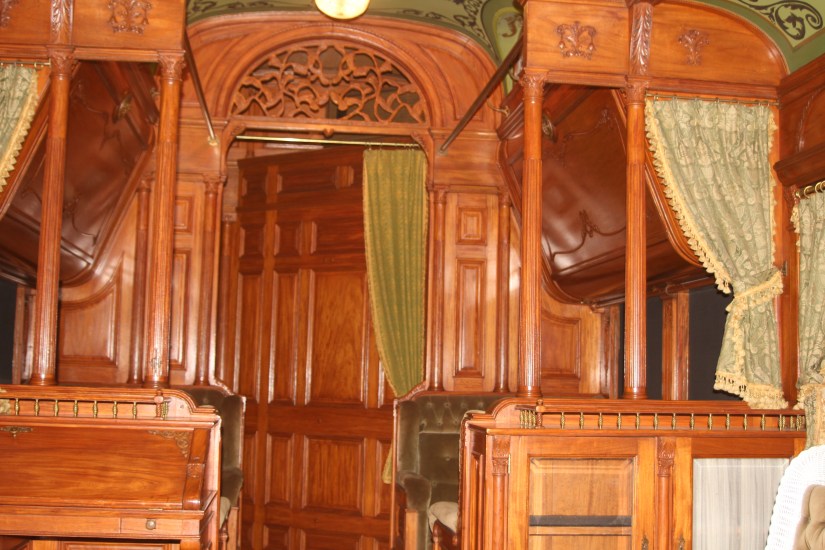
“Indianapolis Motor Speedway owner Tony Holman bought this car for his wife’s birthday in 1968 and in turn we got it several years ago,” says Craig. “The wood is all Canarium which is a blonde mahogany native to the Canary Islands. Henry Flagler pretty

shDSC08392
Tim Poynter inside of the Flagler Car, Photo by Steve Hunt.

much owned the whole east coast of Florida and he told the builders of the car that he wanted it to look sunny like Florida. The rail line continued to operate the car until about 1951 – 52 when it was purchased by a man from Anderson named Ike Duffy who managed a meatpacking plant but who, more importantly, is remembered today as a founding father of the NBA. He started one of the inaugural franchises known as the Anderson Packers. Ike use the train to promote his business and rode it around to all his meatpacking plants in Noblesville, Lebanon, Anderson, Muncie and Brazil. He would serve his employees lunch that he actually cooked in the kitchen of this car. When Ike Duffy died in 1968, Tony Hulman bought it. I’m told that he took it to Chicago twice and that Mrs. Hulman never rode in it.”

tpIMG_8037
Craig Presler on back of the Flagler Car, Photo by Tim Poynter.

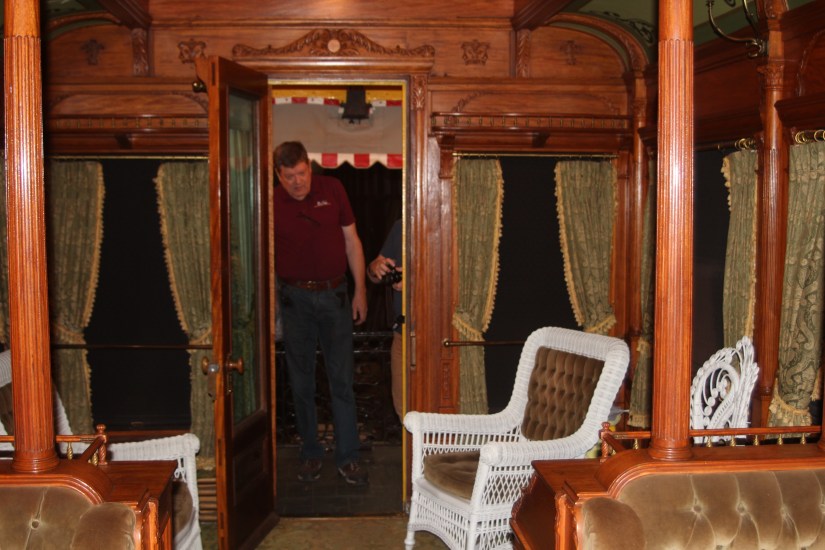
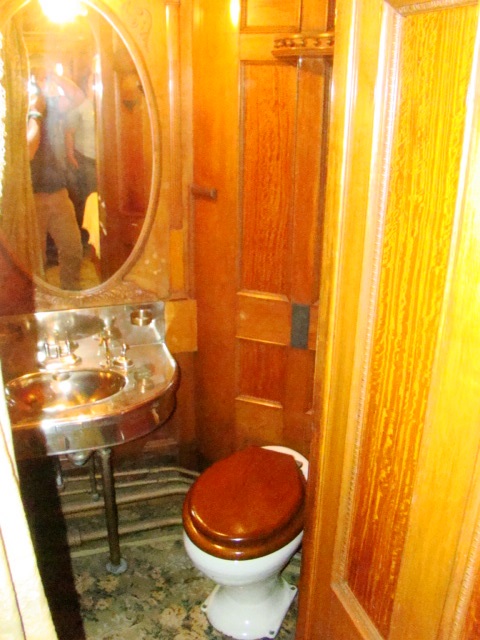
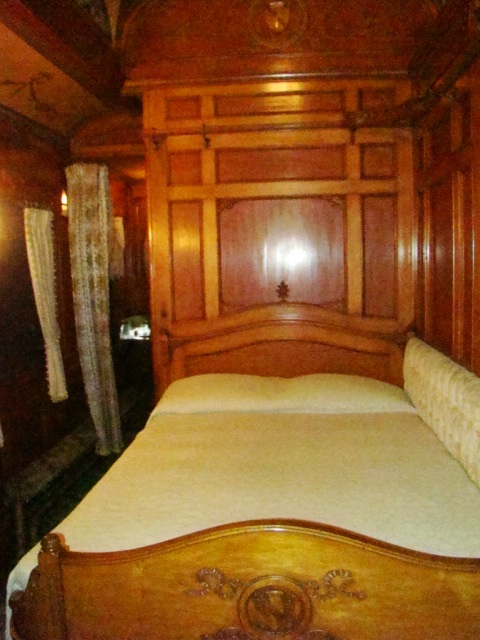
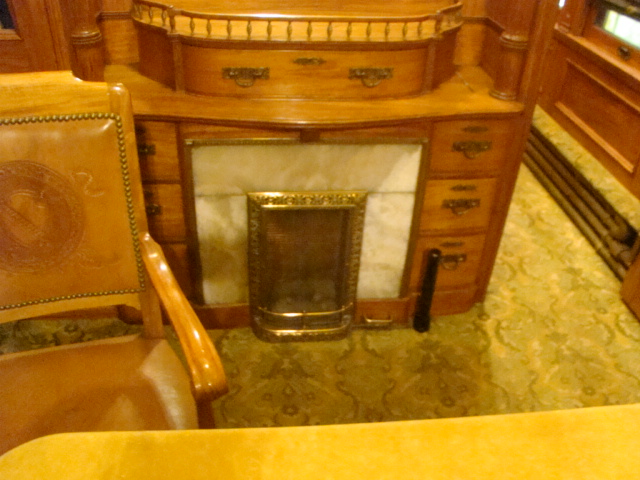
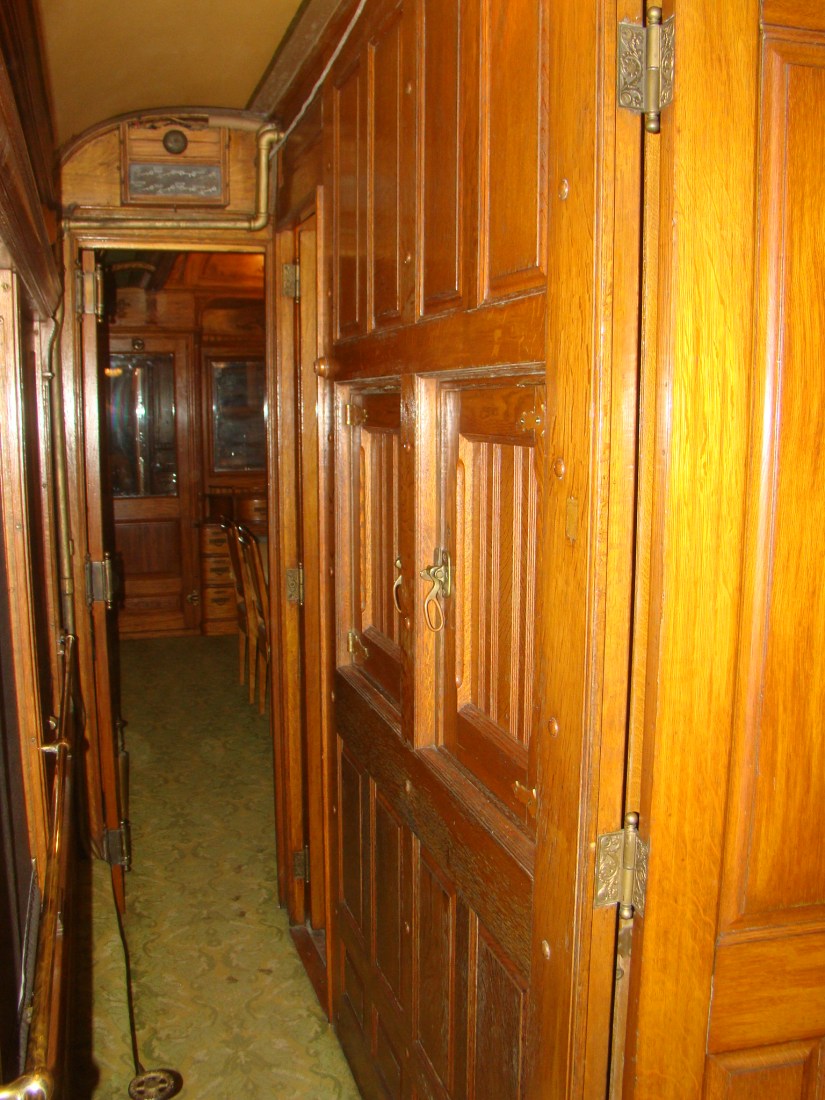
Craig delighted showing visitors (like us) all of the secret compartments and high-end accouterments that were found all over the Flagler car. It had self-closing windows, drawers and beds all over the place. Zinc lined compartments to hold and chill champagne bottles and the finest blinds, carpeting, curtains and Persian rug styled monogrammed blankets money could buy. It was easy to see that this car was a large part of Craig Presler’s life. When I asked him what would become of the car after the museum closed, he said, “I’m told the car is being moved to our affiliate in Logansport and that I will be able to go up on the weekends and continue to give tours.”
As Rhonda and I exited the the railcar following Craig’s impromptu tour, two officials I had been talking to previously about the ITM’s closure pulled me aside and informed me that while we were touring the car, it had been sold. It was going to be moved to a museum in Monon Indiana some 90 miles away. They finished by saying, “Don’t tell Craig, he does not know yet.” Knowing how much Craig loved this car, I knew this was going to be devastating news. As we left that day we arranged to meet Craig the next morning.

tpIMG_8046
Craig Presler, Rhonda Hunter, Kris & Roger Branch & Alan E. Hunter  in the Flagler Car, Photo by Tim Poynter

We showed up on Saturday, but this time with reinforcements: Kris and Roger Branch, Tim Poynter and Steve Hunt. One way or another we were going to save this car. I noticed that Craig had a plastic bag hooked on his belt loop. It contained a spray can of adhesive and some specialty tools. Craig said he brought them to fix a small piece of woodwork in the Flagler car he had pointed out to us the day before. The damaged area was so small as to be indiscernible to anyone else but Craig. The sad part is that the sight of that bag made me realize instantly that no one had yet told Craig his beloved Flagler car had been sold. He insisted on showing the Flagler car to the new additions in our group. That was Craig’s last tour. (the Flagler car made it out at 11:45. It was the last train out before the gate were locked.)

shDSC08423
Tim Poynter in the Flagler Car, Photo by Steve Hunt.

The realization was all the more ironic because the object of my quest, the dilapidated shell of the last surviving Indianapolis streetcar was moldering away in the woods not 20 yards away from that opulent Flagler car. Before I could ponder the dichotomy of the situation any further, I received a text message from William Whitmer telling me that the streetcar had been saved. We met at the streetcar and William delivered the good news.
William explained how he had stepped up and bought the car just in the nick of time. William had arrived at the streetcar, receipt in hand, just as the wrecker was creeping slowly towards it. “I couldn’t believe it,” William said, “I literally had to stand in front of the streetcar and wave my arms to get them to stop. They had been told the streetcar was scrap and that they were there to break it up. Five more minutes and the streetcar would have been crushed. The driver didn’t want to believe me until I showed him the receipt.”
William said that after our discussion the day before, “We did a very preliminary examination on the car body. The frame and car bolster (where the truck/wheels attach) is in solid shape. The actual structural steel is not too rotted. Side bracing is acceptable, and a lot of the upright steel frame is acceptable. The car is in overall better condition than we thought originally, making restoration far more likely.”
Then he shocked me by saying, “If it hadn’t been for you Al, this car would have been lost.” I was unprepared for that statement. Although humbled, I had to admit that it was not entirely my doing. First, I was there on a story for the Weekly View. Secondly, I was acting on a tip from Meg Purnsley. So without the paper and the heads up from Meg, this story would never have happened. And most importantly, without the quick action by William Whitmer and his Hoosier Heartland Trolley Group , the last surviving Indianapolis streetcar would have been lost forever. Will informs me that it may take up to 10 years to restore the car. He insists that he will keep us updated on the progress.
The streetcar has been saved but the museum is lost forever. While I no longer worry about the fate of the engines and cars, I do worry about the people. In particular my new friend Craig Presler. What is to become of him? His baby, the Flagler car, now resides nearly two hours away. The museum that was his passion is no more. The site will undoubtedly be plowed under and a swing set, waterpark or zip line will take its place in a year or so. All of the sabre rattling by the city of Noblesville about the ITM’s chemical hazards will be forgotten and no environmental cleanup will take place. Because none was needed. Another historical treasure lost to the temporal winds of political folly.
Luckily, William Whitmer assures me that his group has a place for Craig Presler and any other displaced ITM volunteer looking for a place to land. One thing can be sure, after the dust settles in the woods of Forest Park, much soul searching will be needed in the preservation community. In my opinion, it certainly smacks of just another backdoor “eminent domain” situation in Hamilton County. What I can say for sure is that I met many hardworking volunteers during the last days and hours of the Indiana Transportation Museum in Noblesville. Their individual flames burned bright. Some were warmed by the flame. Others were burnt by it. And although the flame of the ITM has burned out, that of the last surviving Indianapolis streetcar burns on.


kb20180707_122702
Back of the Flagler Car, Photo by Kris Branch.
kb20180707_133015
The Flagler Car, Photo by Kris Branch.
shDSC08413
The washroom of the Flagler Car, Photo by Steve Hunt.
shDSC08421
Bedroom in the Flagler Car, Photo by Steve Hunt.
shDSC08427
Fireplace inside of the Flagler Car, Photo by Steve Hunt.
tpIMG_8036
Interior of the Flagler Car, Photo by Tim Poynter.
tpshDSC08442
Hallway of the Flagler Car, Photo by Tim Poynter.