

Original publish date: October 18, 2018
This will be my 16th season of leading October ghost tours in Irvington. Along the way I have made many friends, some of whom return year after year to take a stroll through haunted Irvington. I have been fortunate to meet many talented and famous people who have come on the tours. I have connected with family members of the personalities I talk about on the tours and I have been privileged to hear first-hand accounts and stories that mirror the fun and spooky atmosphere of autumnal Irvington. That is what makes October in Irvington so special to me.
 This coming Saturday, October 20th at 2 PM, several of those famous friends will be here in Irvington at the Irving theater to share their talent with our community in a program I have called, “Whispers from the Grave. Testimony of Irvington’s Most Famous Crimes.” Over the past decade and a half I have gathered testimony, witness accounts, personal statements and personality sketches of the characters, both good and bad, from the stories I share on the tours. This Saturday, local celebrities, journalists and members of the media will lend their talents to the voices of these characters. Much of this spoken word performance will offer accounts that have not been heard for over a century. This testimony, told in its entirety using the words of the subjects themselves, is always poignant, sometimes shocking and often scandalous.
The doors of the Irving theater will open at 1 PM this Saturday and will close promptly at 2 PM for the start of the presentation. No one will be admitted after 2 PM out of respect for the performers and the solemn content. Parental discretion is advised and content may not be suitable for all audiences. This is the real thing in the performance promises to prove the old adage that “truth is stranger than fiction.” The performance is free to the public, but a $ 5.00 minimum donation is requested. The proceeds will benefit the Free Press of Irvington.

Those of you who have taken my tours understand that an Irvington ghost tour is really a history lesson disguised as a ghost story. Over the years proceeds from the tours over the years have helped fund many local philanthropic endeavors including the Irvington food bank at Gaia works, the IHS / Bona Thompson Museum, Halloween festival, the Irvington Council, the children’s Guardian home, the Girl Scouts, and several scholarships for local high school students. This Saturday’s presentation will be an opportunity for guests to better understand the foundation of the ghost tours by hearing accounts from the people who lived it.
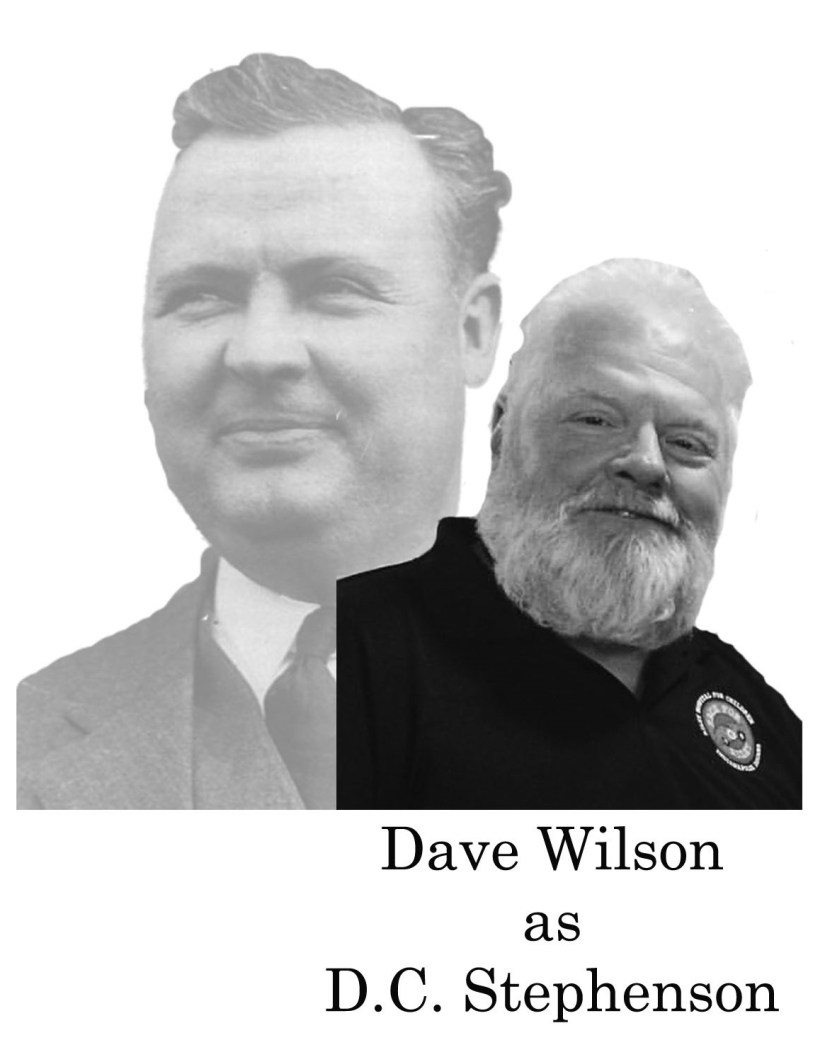 Joining us Saturday will be long time Q 95 star and stand up comic Dave “the King” Wilson reading the words of DC Stephenson. David Curtis Stephenson was the Grand Dragon of the Indiana Ku Klux Klan who reigned supreme here in central Indiana during The Roaring 20s. Stephenson controlled Indiana politics from the governor’s office to the mayor’s office with Klan money and influence from his University Avenue home here in Irvington. Gathering testimony and statements from Stephenson’s made all the more harder by the fact that after his 1925 trial for murder concluded, the official court papers mysteriously disappeared.
 2 – time Emmy award-winning former WTHR on air personality & meteorologist Nicole Misencik who will be voicing Madge Oberholtzer. Tragically, Madge was the undeserving victim of DC Stephenson’s crime in the spring of 1925. Madge was an Irvingtonian and former student at Butler College whose death at the hands of Stephenson brought down the Ku Klux Klan, which was the most powerful organization in the country at the time. Madge’s testimony was so graphically detailed that when it was read aloud in open court in Noblesville Indiana, women fainted and grown men got up and left the room. Nicole will recount Madge’s 9 – page deathbed declaration and its entirety for the first time in public and nearly a century.
 Former WTHR reporter Brandon Kline will be voicing Pinkerton detective Frank Geyer, the man who brought America’s first serial killer to justice. Brandon will wear the hero cape by voicing this legendary Pinkerton agent who is dogged determination alone solved Irvington’s first murder, that of 10-year-old Howard Pitezel. Brandon’s hero duty will be doubled when he also voices Irvingtonian lawyer Asa J Smith who recorded Madge’s deathbed declaration in what promises to be a most memorable exchange with his wife Nicole.
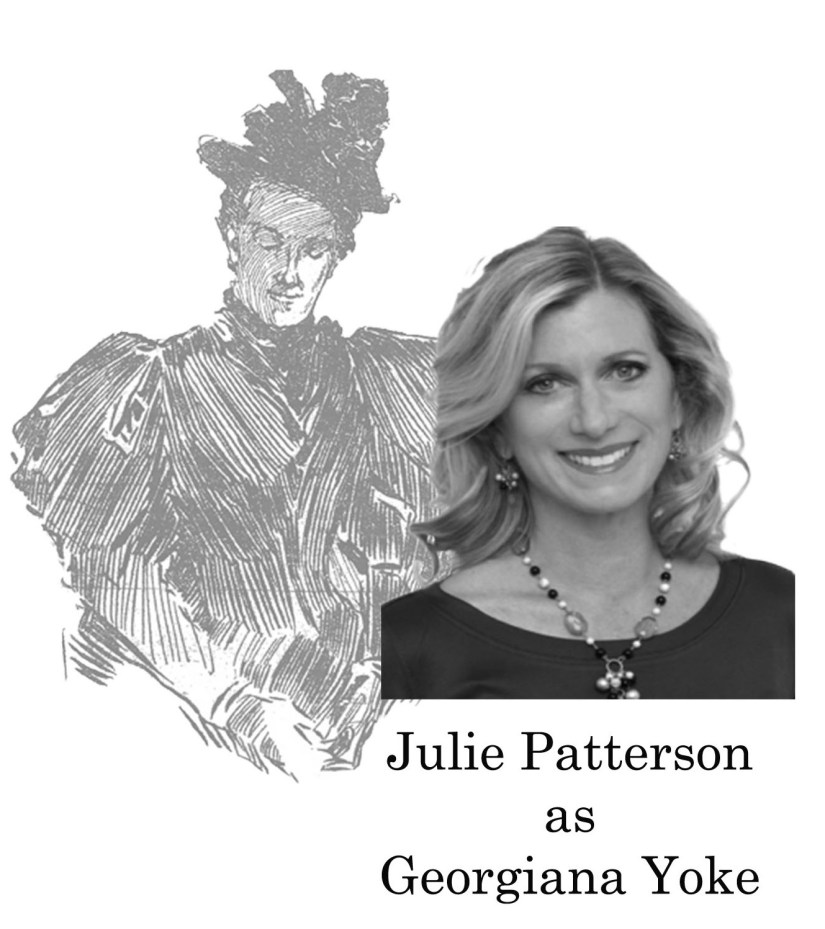 Boomer TV personality, longtime WZPL radio host and former WISH – TV alumni Julie Patterson will be voicing the last wife of HH Holmes, Georgiana Yoke. Ms. Yoke, a native of Franklin Indiana, is easily the most unknown character in the presentation. Georgiana’s family has deep connections to Indianapolis’east side at both Garfield Park and Holliday Park. Georgiana narrowly escaped death at the hands of her husband and, after his death by hanging, could not escape the cloud of suspicion that hung over her in Indianapolis after her husband’s crimes were revealed. Julie’s interpretation of Georgiana will also include her court testimony, some of which was delivered by her husband HH Holmes while acting as his own counsel.
 Ed Wenck, long time local radio host, journalist, author and on-air television personality, will be voicing America’s first serial killer HH Holmes. Allegedly responsible for over 200 murders, Holmes admitted to killing 27. The arch fiend came to Irvington in October 1894 on the heels of the 1893 Chicago world’s fair. His crimes are numerous, gruesome and unspeakable. Ed will voice America’s first serial killer using Holmes’ own words which are guaranteed to make your skin crawl.
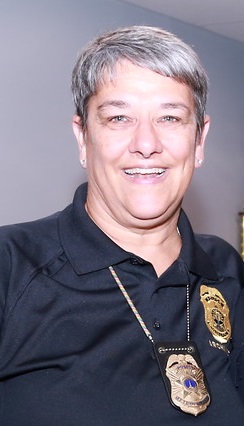
Special guest Jo Moore, retired IMPD Sergeant, will be voicing the unsung hero of the Holmes saga in Irvington, Detective David S Richards. Sgt. Moore will help outline the details of the alleged “Curse of HH Holmes” that lingered for over a quarter century after the serial killer was hanged. Sgt. Moore has been instrumental in meticulously researching the lives and duty roster of Indianapolis policemen whose honorable recognition is long overdue. Jo has also led the charge to create a museum archive honoring fallen members of Indianapolis police departments past and present. Her own son, Officer David Moore, prominent among them.
These Circle City personalities, all of which are friends of Irvington, have strong backgrounds with the press and public service. Their individual love of Indianapolis history will shine through during their performances. It promises to be an afternoon to remember. So join us this Saturday, October 20th at 2 PM inside the Irving theater for this unique performance. Remember, parental discretion is advised and the content may not be suitable for all audiences and most importantly, no one will be admitted after 2:00 PM.
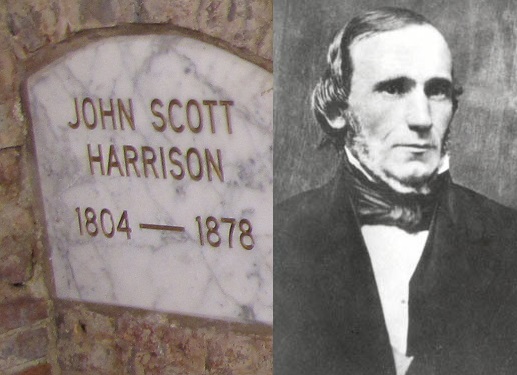
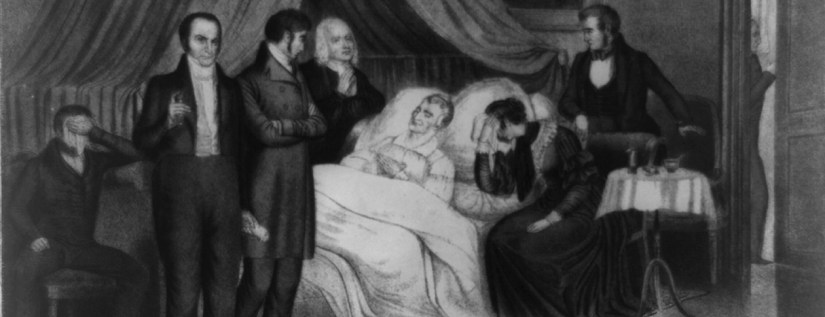
 The first order of business was to hide the fact from Devin’s widowed mother until the body could be recovered, and the second was to take precautions for safeguarding John Scott Harrison’s remains. Benjamin Harrison and his younger brother John carefully supervised the lowering of his father’s body into an eight-foot-long grave. At the bottom, they placed the state-of-the-art metallic casket into a secure brick vault with thick walls and a solid stone bottom. Three flat stones, eight or more inches thick were procured for a cover. With great difficulty the stones were lowered over the casket, the largest at the upper end and the two smaller slabs crosswise at the foot. All three of these slabs were carefully cemented together. The brothers waited patiently beside the open hole for several hours as the cement dried. Finally, with their father’s remains still under guard, a massive amount of dirt was shoveled into the hole and the brothers departed secure in the notion that their father would rest in peace for all eternity.
 John Harrison shrugged off the discovery knowing that his cousin Augustus Devin, the subject of their search, was a very young man. Still, the body was lain flat on the floor and the cloth was cast aside with the aid of a nearby stick. As the dead man’s face was revealed, John Harrison gasped in horror that the dead body was none other than that of his father, John Scott Harrison.


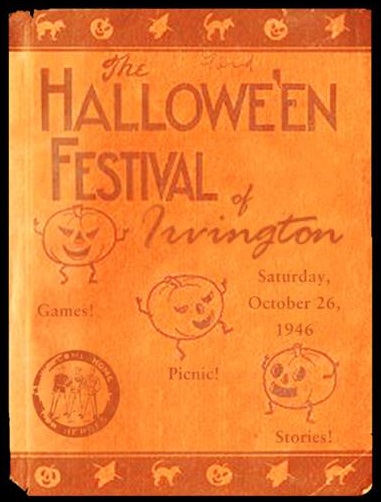
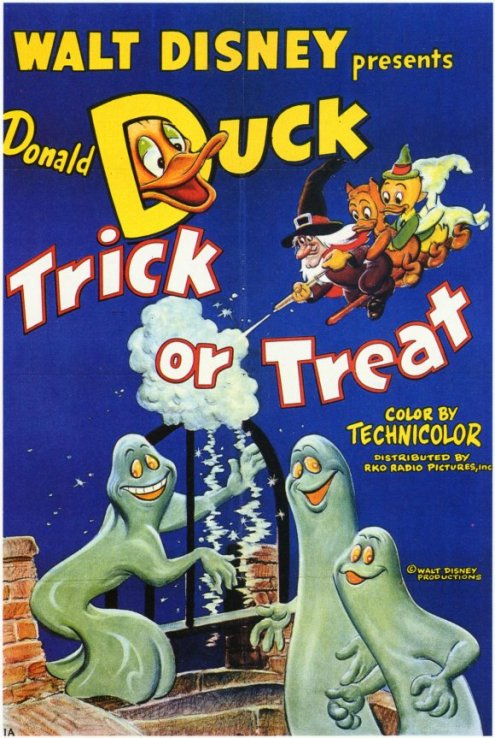 We’ve all heard the stories, legends and rumors surrounding that now legendary first event. It was sponsored by the Walt Disney company featuring costumed characters with a Disney based theme. The Disney folks gave away potentially priceless hand painted film production cels right here on the streets of old Irvington town. Walt Disney himself was seen walking down Audubon with Mickey Mouse at his side. It’s hard to separate fact from fiction nowadays.
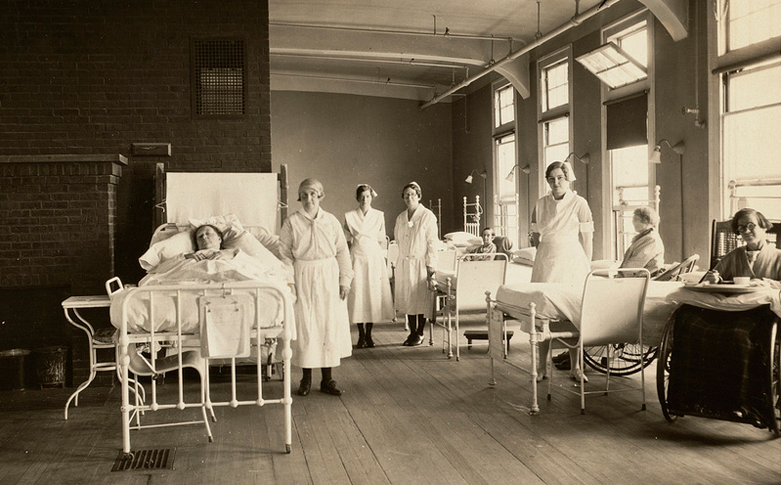
 A week later on May 5, 1942, every United States citizen received their much anticipated “War Ration Book Number One”, good for a 56-week supply of sugar. Initially, each stamp was good for one pound of sugar and could be redeemed over a specified two-week period. Later on, as other items such as coffee and shoes were rationed, each stamp became good for two pounds of sugar over a four-week period. The ration book bore the recipient’s name and could only be used by household members. Stamps had to be torn off in the presence of the grocer. If the book was lost, stolen, or destroyed, an application had to be submitted to the Ration Board for a new copy. If the ration book holder entered the hospital for greater than a 10-day stay, the ration book had to be brought along with them. Talk about your red tape!
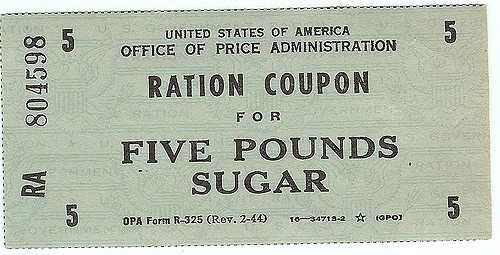
 To make matters worse, just because you had a sugar stamp didn’t mean sugar was available for purchase. Shortages occurred often throughout the war, and in early 1945 sugar became nearly impossible to find in any quantity. As Europe was liberated from the grip of Nazi Germany, the United States took on the main responsibility for providing food to those war ravaged countries. On May 1, 1945, the sugar ration for American families was slashed to 15 pounds per year for household use and 15 pounds per year for canning – roughly eight ounces per week per household. Sugar supplies remained scarce and, just as sugar had the distinction of being the first product rationed at the start of the war, sugar was the last product to be rationed after the war. Sugar rationing continued until June of 1947, over six months after the first Irvington Halloween festival in October of 1946.
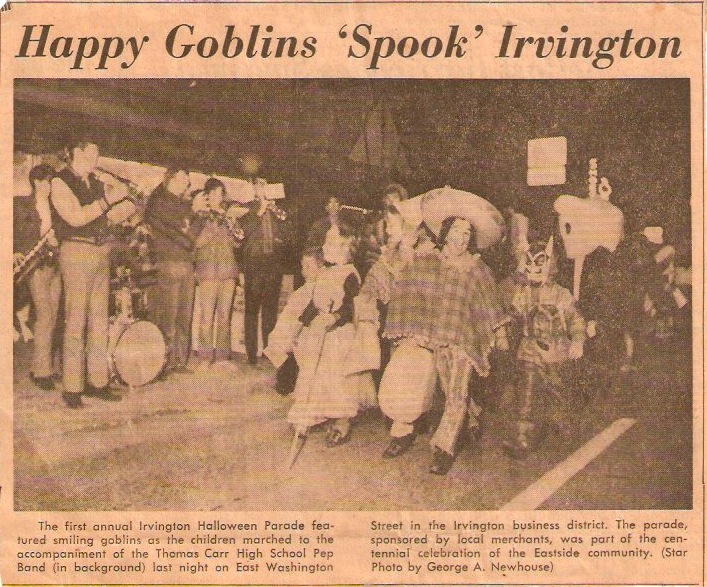 An argument can be made that it was events like the First Irvington Halloween Festival that kicked off the tradition of trick-or-treating as we know it today. Although the Halloween holiday was certainly well known in America before that first Irvington celebration, it was predominantly a holiday for adult costume parties and a chance to cut loose with friends playing party games while consuming hard cider. Early national attention to trick-or-treating in popular culture really began a year later in October of 1947. That’s when the custom of passing out the playful “candy bribes” began to appear in issues of children’s magazines like Jack and Jill and Children’s Activities, and in Halloween episodes of network radio programs like The Baby Snooks Show, The Jack Benny Show and The Adventures of Ozzie and Harriet. Trick-or-treating was first depicted in a Peanuts comic strip in 1951, perhaps the image most identified with the children’s holiday in the hearts and minds of baby boomers today. The custom had become firmly established in popular culture by 1952, when Walt Disney debuted his Donald Duck movie “Trick or Treat”, and again when Ozzie and Harriet were besieged by trick-or-treaters on an episode of their popular television show. In 1953, less than a decade after that first festival in Irvington, the tradition of Halloween as a children’s holiday was fully accepted when UNICEF conducted it’s first national children’s charity fund raising campaign centered around trick-or-treaters.
 Most of this column’s readers are aware that part of my passion for history revolves around collecting, cataloging, displaying and observing antiques and collectibles. There exists in the collecting world a strong group of enthusiasts devoted to the pursuit and preservation of Halloween memorabilia of all types. Costumes, decorations, photographs, publications and postcards in particular. The origins of Halloween as we now know it might best be traced in the postcards issued to celebrate the tradition. The thousands of Halloween postcards produced between the turn of the 20th century and the 1920s commonly show costumed children, but do not depict trick-or-treating. It is believed that the pranks associated with early Halloween were perpetrated by unattended children left to their own devices while their parents caroused and partied without them. Some have characterized Halloween trick-or-treating as an adult invention to curtail vandalism previously associated with the holiday. Halloween was not widely accepted and many adults, as reported in newspapers from the 1930s and 1940s, typically saw it as a form of extortion, with reactions ranging from bemused indulgence to anger. Sometimes, even the children protested. As late as Halloween of 1948, members of the Madison Square Boys Club in New York City carried a parade banner that read “American Boys Don’t Beg.” Times have certainly changed since that first Halloween festival 65 years ago.
 A 2005 study by the National Confectioners Association reported that 80 percent of American households gave out candy to trick-or-treaters, and that 93 percent of children, teenagers, and young adults planned to either venture out trick-or-treating or to participate in other Halloween associated activities. In 2008, Halloween candy, costumes and other related products accounted for $5.77 billion in revenue. An estimated $2 billion worth of candy will be passed out during this Halloween season and one study claims that “an average Jack-O-Lantern bucket carries about 250 pieces of candy amounting to about 9,000 calories and containing three pounds of sugar.” Yes, 65-years ago, Halloween looked quite different than it does today. Next week, doorbells all over Irvington will ring, doors will be opened and wide-eyed gaggles of eager children will unanimously cry out “Trick-or-Treat” from Oak Avenue to Pleasant Run Parkway.
 Costumed kids will be rewarded for their efforts with all sorts of tribute in the form of coins, nuts, popcorn balls, fruit, cookies, cakes, and toys. As a casual observer born long after that first Irvington Halloween Festival and an active participant in the festivities that will begin next week, I’m glad that our Irvington forefathers skirted government regulations all those years ago. In fact, as a fan of all things Irvington, I’d go so far as to say that this community has played a big part in the Halloween holiday as we know it today. Because, grammar notwithstanding, nobody does Halloween like Irvington do.
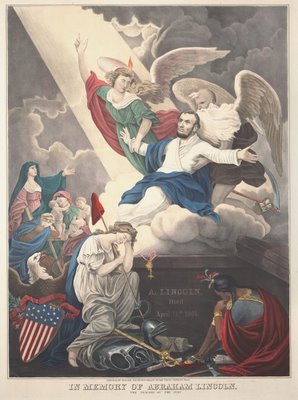
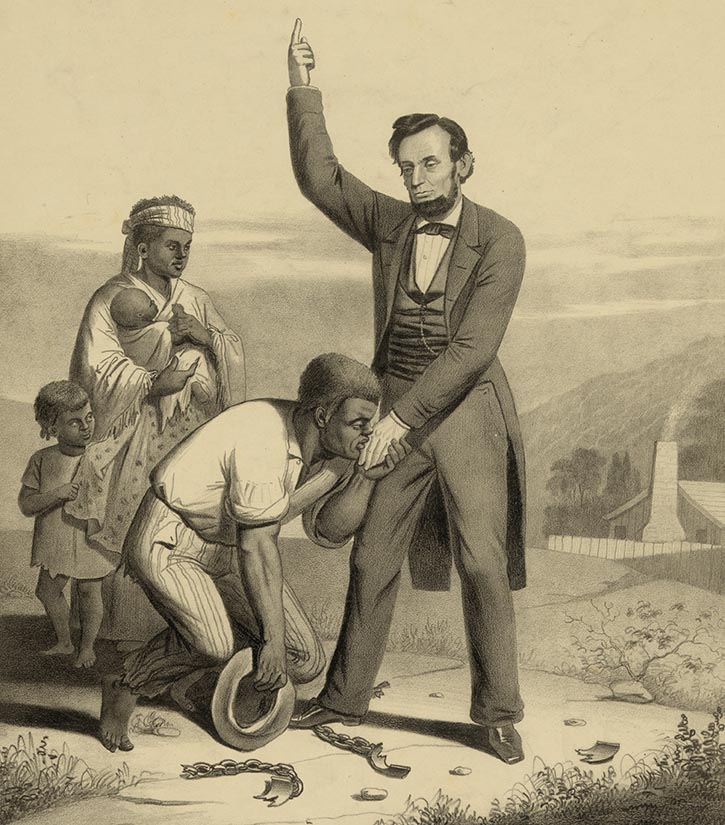
 Within forty-eight hours of his passing, the association of Lincoln’s character with American tradition began. The clergy, alongside their biblical images of Moses and martyrdom, also invoked the images of Lincoln and the founding fathers. In addition to grouping the Emancipation Proclamation and the Declaration of Independence as sacred texts, these sermons also established a link between Lincoln and the nation’s first President George Washington.

 Original publish date: September 2, 2013

