I have spent the past 12 years on a quest. A quest to discover a little-known Lincoln collector turned museum curator named Osborn H. Oldroyd. I have written about Oldroyd many times and, sometimes, the mere mention of his name elicits groans from family and friends whom I’ve forced to share my obsession, whether they want to or not. No worries, I’m not going down that road again today. I simply mention him regarding another of my early obsessions: artist Vincent van Gogh. I know, I know, Oldroyd to Van Gogh? Evel Knievel couldn’t have made that jump. Stay with me now.
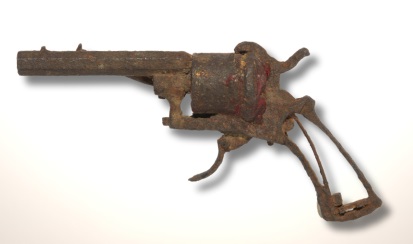
A few years back, a Paris auction house (Auction Art–Rémy Le Fur) sold the gun that Van Gogh allegedly killed himself with for approximately $182,000 to an unidentified Belgian buyer. The hammer price was almost triple the auction estimate of $44,800 to $67,000 and presumably included the buyer’s premium. Like everything in Van Gogh’s life, the sale was not without controversy. And, like many of the objects in Oldroyd’s collection (for his collection was his life), the provenance of the firearm is the sticking point. If authentic, the auction house’s description of it as “the most famous weapon in the history of art” would be unchallenged. However, let’s examine the event, the discovery, and its ultimate disposition and see what you think.
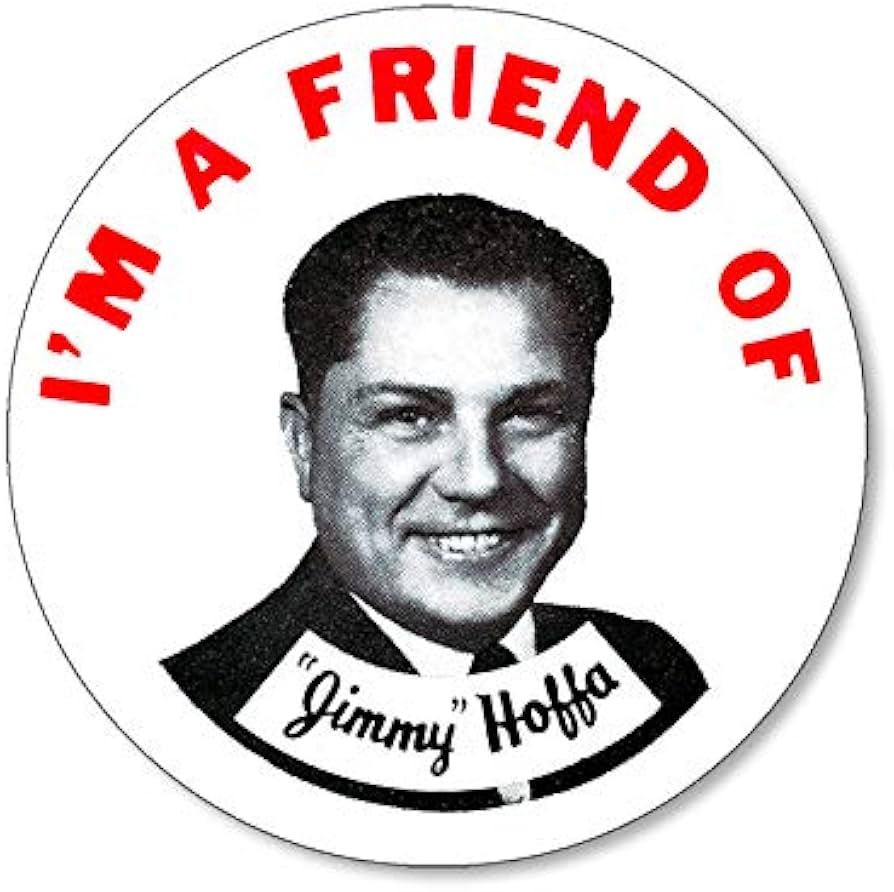
JImmy Hoffa Labor Union Badge.
As a kid, I spent most of my free time in the library. Like many my age, my first instinct was to discover a much-wished-for connection to some (or any) historical event. I pored through the annual book of Guinness World Records looking for some record (any record) that I could conceivably break. I never found one. Then I tried to prove a genealogical link to anyone of note . . . Please be Lincoln . . . Please be Lincoln. It was not Lincoln. I was descended from a long line of boringly average people. The last hope was a connection to someone/something according to my birthday (July 30th). I found two: Jimmy Hoffa disappeared and Vincent van Gogh was buried. Oh sure, Henry Ford was born, Jamestown was founded, but not much else. So I clung to the Van Gogh square. He’s been a windmill for me to tilt at ever since.
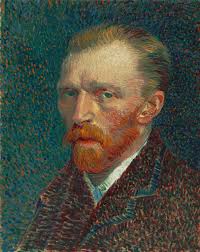
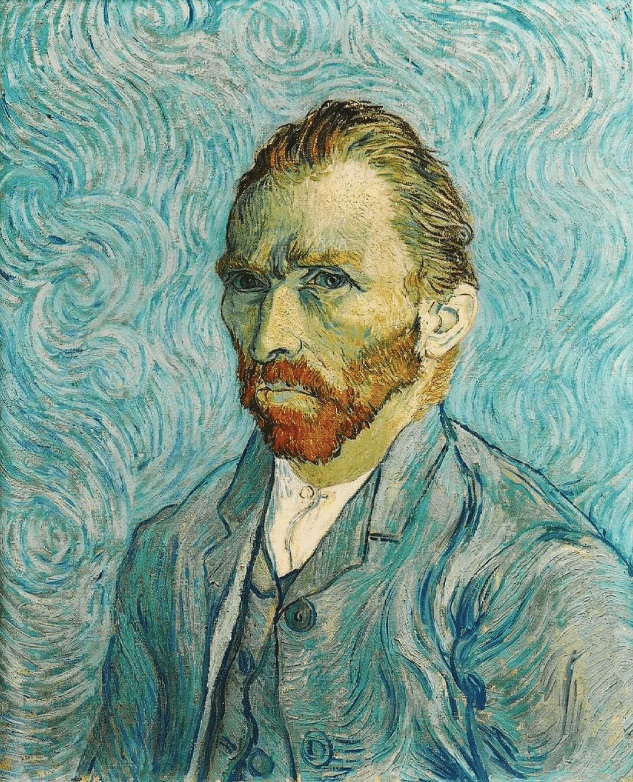
There are so many mysteries surrounding Vincent van Gogh. Was he crazy? Was a visual problem responsible for his unique painting style? Why did his paintings, all acknowledged masterpieces, not sell until after he died? And perhaps most of all, did he REALLY kill himself? Well, he did famously cut off an ear after an argument with fellow artist Paul Gauguin and famously presented it to a prostitute in a nearby brothel. And he was confined to insane asylums more than once in his lifetime. But that gun may fuel the biggest Van Gogh mystery of them all.
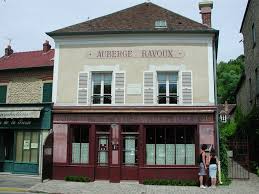
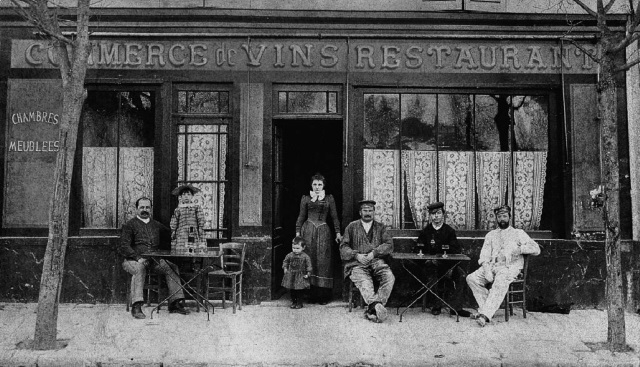
Arthur Ravoux’s Inn in Auvers-sur-Oise in France today (at left) & in Van Gogh’s time.
In May of 1890, after one of those asylum stays, Van Gogh moved into Arthur Ravoux’s Inn in Auvers-sur-Oise in France. While living in room number five there, he turned out an average of a painting a day, despite his increasingly unstable mental state. The common theory is that on Sunday, July 27th, 1890, Van Gogh ventured from his château hideaway to a nearby wheat field in the village of Auvers-sur-Oise and shot himself in the chest. The gunshot did not kill him immediately, instead, Van Gogh lost consciousness and, after waking up and in seeming defiance of his mortal injuries, left his easel against a haystack before stumbling back to his modest attic room, lit only by a small skylight, in the Ravoux Inn. He died two days later, his beloved brother Theo by his side.
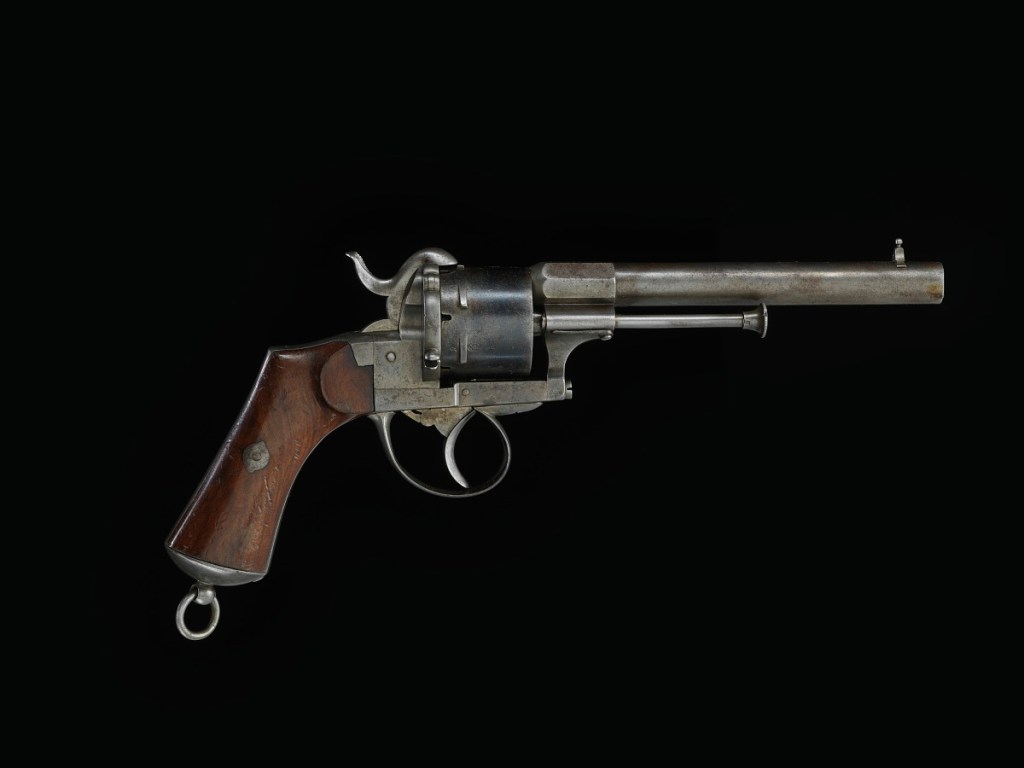
Lefaucheux pinfire revolver.
According to the auction house, while admitting that it could never be 100% certain that it was the actual gun used by the artist to take his life, circumstantial evidence certainly points to that conclusion. According to museum officials, the rusted skeletal frame of the 7mm Lefaucheux revolver was “discovered where Van Gogh shot it; its caliber is the same as the bullet retrieved from the artist’s body as described by the doctor at the time; (and) scientific studies demonstrate that the gun had stayed in the ground since the 1890s.” Devil’s advocate: Lefaucheux pinfire revolvers were inexpensive and plentiful in the late 19th century. They can be found everywhere all over the world, so finding one in a field under a random tree in France may not constitute proof experts require for authentication. While stories like that may have worked in Oldroyd’s day, it certainly does not live up to modern curatorial standards. However, it does pique one’s imagination.
The story goes that a local farmer found the gun in 1965 after plowing up the very spot in the field where tradition states the artist shot himself in the stomach in July of 1890. The farmer presented the weapon to the owners of an inn in the village, and it was passed down through their family before it was given to the auction consignor’s mother, who put it up for auction. Also weighing in the gun’s favor is the fact that it is a low-power gun, which explains why the gun didn’t kill Vincent instantly. For those subscribing to the theory that Van Gogh did not shoot himself, the auction house explains that even if his death was caused by hoodlums with a grudge against him or after two young boys playing with a gun “accidentally pressed the trigger and wounded Van Gogh by mistake” the gun could still be the weapon responsible for his death. In 2016, the Van Gogh Museum in Amsterdam exhibited the gun as part of the show “On the Verge of Insanity, Van Gogh and His Illness.”
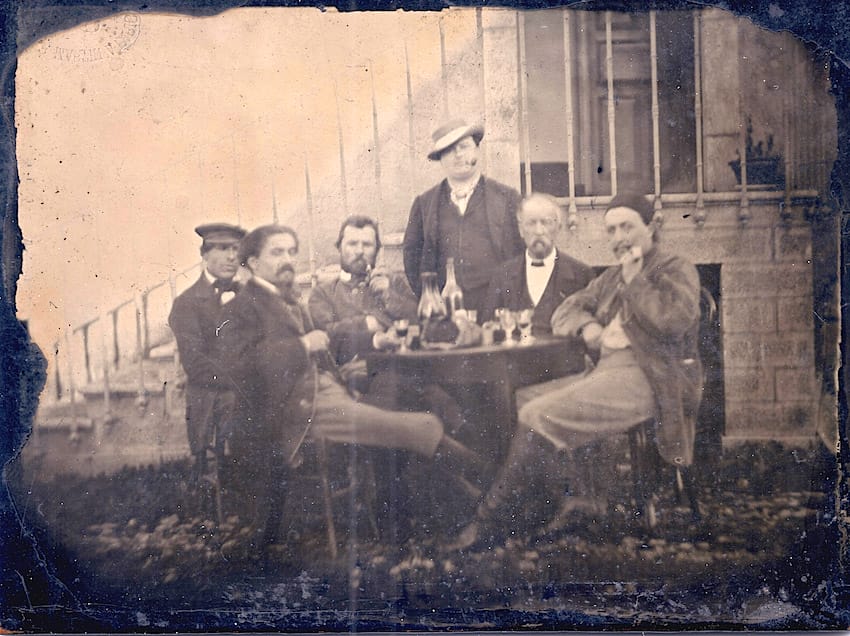
This is an 1887 tintype photo of Vincent Van Gogh (third from left) in conversation with Paul Gauguin, Emile Bernard, Félix Jobbé-Duval. André Antoine is standing between them.
Regardless, Vincent’s myth is so complicated, his art so unattainable to all but the ultra-rich, the thought of owning the pistol that killed him may strike some as irresistible. Imagine owning the ultimate instrument of tortured artistic doom, carried into an otherwise unremarkable wheat field in northern France in late July of 1890 by a man tortured with night terrors and “overwhelmed by boredom and grief.” Did the nightmares of mental illness finally prove too much to bear? Is this the final instrument of self-martyrdom? I’ll leave that for you, the reader, to decide. Shortly before his death, on July 2, writing to his brother Theo, Vincent commented: “I myself am also trying to do as well as I can, but I will not conceal from you that I hardly dare count on always being in good health. And if my disease returns, you would forgive me. I still love art and life very much…” Eight days later, Vincent wrote Theo in French, “Je me sens – raté” (I feel failed), and added: “And the prospect grows darker, I see no happy future at all.” Before his death at 1:30 in the morning, Vincent’s last words to his brother were remembered as “La tristesse durera toujours” (The sadness will last forever).
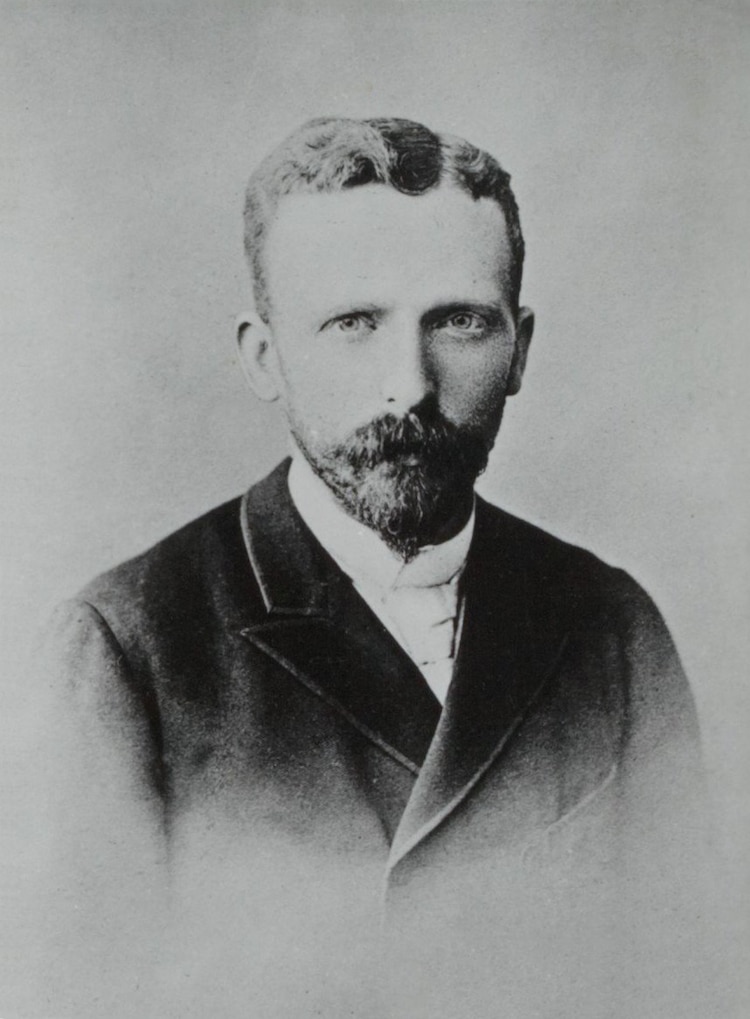
Theo Van Gogh.
On the afternoon of July 30th, Van Gogh’s body was laid out in his attic room, surrounded by his final canvases and masses of yellow flowers including dahlias and sunflowers. His easel, folding stool, and paintbrushes were placed before the coffin. Van Gogh’s last retreat at the Auberge Ravoux has remained intact since his death, as according to legend a room where a suicide took place must never again be rented out. Legend states that the room remained sealed up for almost a century for fear of bad luck. The room is unfurnished, except for a chair. However, like Oldroyd’s museum in the House Where Lincoln Died in Washington D.C., Van Gogh’s spirit can be felt there, permeating the very floors, joists, ceiling, and walls where he passed.
Two score and six years ago, a pair of hapless unemployed European auto mechanics crept silently into a small country graveyard in Corsier-sur-Vevey, Switzerland under cover of darkness. On the night of Wednesday, March 1, 1978 (and into the early morning of March 2), a 24-year-old Polish refugee named Roman Wardas, and his partner in crime, 38-year-old Bulgarian self-exiled refugee Gantscho Ganev slithered through the small graveyard dressed entirely in black, carrying torches and shovels in search of their prey: Charlie Chaplin. Sir Charles Spencer Chaplin KBE (born April 16, 1889) may only have been 5 foot four inches tall, but he was one of the true giants of the Golden Age of Tinseltown.
Sir Charles Spencer Chaplin (1889 – 1977)
Although today’s fans may think of Chaplin as a uniquely American comic actor, filmmaker, and composer from the silent movie era, in truth, he was born in England, the product of an alcoholic failed actress mother and an absent Ragtime-singing father. Chaplin’s childhood in London was wrought with poverty and hardship. The household constantly struggled financially, as a result, young Charlie was sent to a workhouse twice before the age of nine. At 14, his mother was committed to a mental institution leaving Charlie alone to fend for himself for a time until his older brother Sydney returned from a 2-year stint in the British Navy. Chaplin began performing at an early age (by his recollection at 5 years old) touring music halls and later working as a stage actor and comedian. He dropped out of school at 13 and by the age of 19, he was signed to the Fred Karno company, which took him to the United States. Karno, a British slapstick comedian who played the American Vaudeville circuit, is credited with popularising the custard-pie-in-the-face gag. To circumvent stage censorship in the Victorian Era, Karno developed a form of sketch comedy without dialogue. A skill Charlie Chaplin quickly perfected.
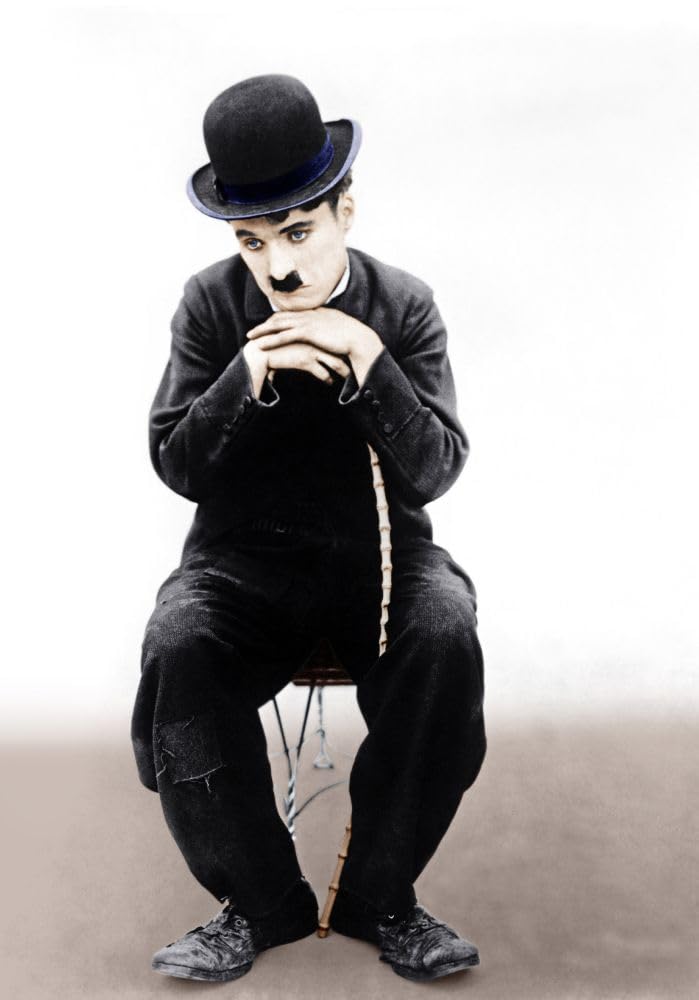
Charles Chaplin’s Tramp Character.
By 1914, Chaplin broke into the film industry with Keystone Studios, where he developed his Tramp persona and quickly attracted a large fan base. By the end of that year, when Chaplin’s contract came up for renewal, he asked for $1,000 a week ($31,000 today), an amount studio head Max Sennett refused, declaring it was too large. The Essanay Film Manufacturing Company of Chicago sent Chaplin an offer of $1,250 ($38,000 today) with a signing bonus of $10,000 ($307,000 today). By 1915, “Chaplinitis” was a cultural phenomenon. Stores struggled to keep up with demand for Chaplin merchandise, his tramp character was featured in cartoons and comic strips, and several songs were written about him. As his fame spread, he became the film industry’s first international star. In December 1915, fully aware of his popularity, Chaplin requested a $150,000 signing bonus (over $4.5 million today) from his next studio, even though he didn’t know which studio it would be.
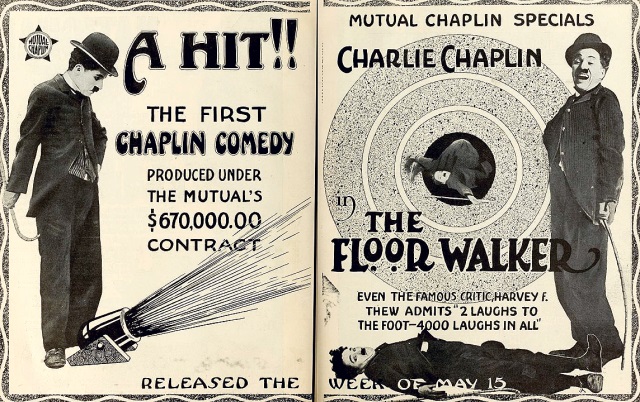
Chaplin Mutual Studio Movie Adverts.
He received several offers, including Universal, Fox, and Vitagraph, the best of which came from the Mutual Film Corporation at $10,000 a week (about $16 million a year today) making the 26-year-old Chaplin one of the highest-paid people in the world. (For example, President Woodrow Wilson earned $75,000 per year.) Mutual offered Chaplin his own Los Angeles studio to work in, which opened in March 1916. With his new studio came complete artistic control, resulting in fewer films (at one point he had been churning out a “short” per week). His Mutual contract stipulated that he release a two-reel film every four weeks, which he did. But soon, Chaplin began to demand more time and, although his high salary shocked the public and was widely reported in the press, Chaplin upped his game, producing some of his most iconic films during this era. By 1918, he was one of the world’s best-known figures. However, his fame did not shield him from public criticism.
Charles Chaplin Studios at LaBrea and Sunset Blvd.
Chaplin was attacked by the British press for not fighting in the First World War. Charlie countered those claims by stating that he would fight for Britain if called and had registered for the American draft, but he was never called by either country. It helped blunt the critics when it was discovered that Chaplin was a favorite with the troops and his films were viewed as much-needed morale boosters. In January 1918, Chaplin’s contract with Mutual ended amicably. Next, Chaplin signed a new contract, this one with First National Exhibitors’ Circuit, to complete eight films for $1 million (a staggering $22 million today). He built a state-of-the-art studio on five acres of land off Sunset Boulevard, naming it “Charlie Chaplin Studios” and once again Chaplin was given complete artistic control over the production of his films. The slow pace of production frustrated First National and when Chaplin requested more money from the studio, they refused. Defiantly, Chaplin joined forces with Douglas Fairbanks, Mary Pickford, and D. W. Griffith to form United Artists in January of 1919. The name said it all, as it enabled the four partners to personally fund their pictures and maintain complete artistic control. Chaplin offered to buy out his contract with First National but they refused, insisting that he complete the final six films owed.
Lucky for us, Chaplin acquiesced, and after nine months of production, The Kid was released in May of 1920. It is considered a masterpiece and costarred four-year-old Jackie Coogan (Uncle Fester from the Addams Family). At 68 minutes, it was Chaplin’s longest picture to date and one of the first to combine comedy and drama. It was also the first of Chaplin’s films to deal with social issues: poverty and parent-child separation. Chaplin fulfilled his contract with First National and, allegedly after being inspired by a photograph of the 1898 Klondike Gold Rush, and hearing the story of the ill-fated California Donner Party of 1846–1847, he made what may be his most remembered film: The Gold Rush. Chaplin’s film portrays his Tramp as a lonely prospector fighting adversity and looking for love. Filming began in February 1924, costing almost $1 million ($17.5 million today), it was filmed over 15 months in the Truckee mountains (where the Donner Party met their doom) of Nevada with 600 extras, extravagant sets, and special effects. Chaplin considered The Gold Rush his masterpiece, stating at its release: “This is the picture that I want to be remembered by.” Opening in August of 1925, it became one of the highest-grossing films of the silent era, with a U.S. box office of $5 million (almost $89 million today). The comedy contains some of Chaplin’s most iconic scenes; the Tramp eating his leather shoe and the “Dance of the Rolls”.
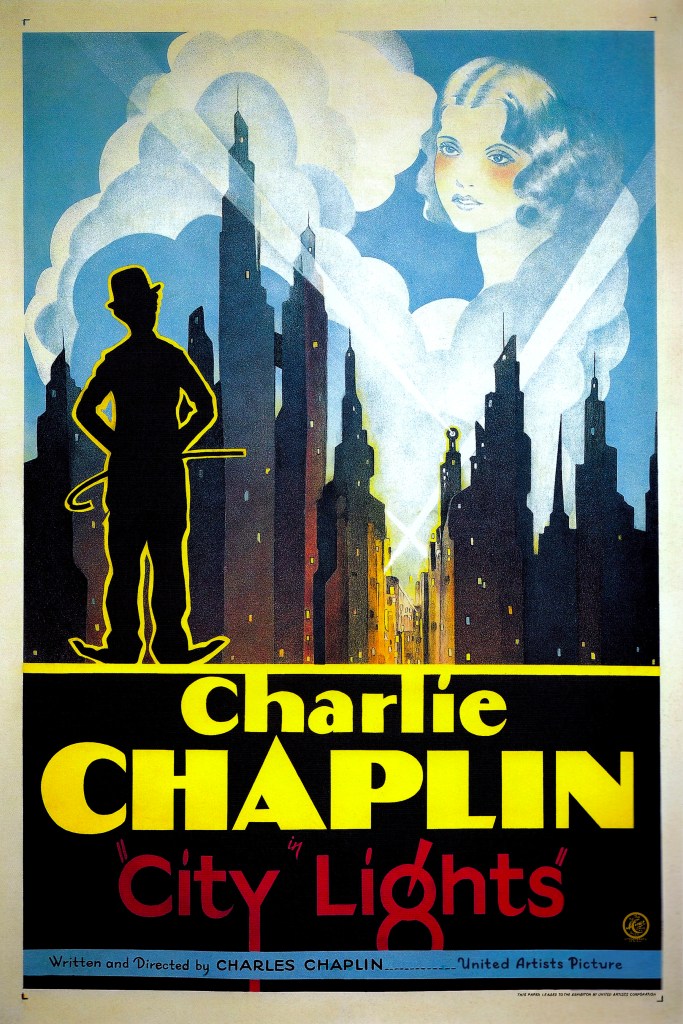
Over the next few years, Chaplin was one of the few artists to make a successful transition from silent films to “talkies”. At first, Chaplin rejected the new Hollywood craze preferring instead to work on a new silent film. When filming of City Lights began at the end of 1928, Chaplin had been working on the script for nearly a year. City Lights followed the Tramp’s love for a blind flower girl and his efforts to raise money for her sight-saving operation. Filming lasted 21 months, during which time Chaplin slowly adapted to the idea of sound when presented with the opportunity to record a musical score for the film, which he composed himself. When Chaplin finished editing City Lights in December 1930, silent films were fast becoming a thing of the past. Although not a “talkie”, City Lights is remembered for its musical score. Upon its release in January 1931, City Lights proved to be another financial success, eventually netting over $3 million during the Great Depression ($57 million today). Although Chaplin considered The Gold Rush his legacy, City Lights became Chaplin’s personal favorite and remained so throughout his life. Although City Lights had been a rousing success against seemingly insurmountable odds, Chaplin was still unsure if he could make the transition to talking pictures. After all, Chaplin’s stock in trade since his days with the Fred Karno Company had been the art of gesture to tell his stories. And he did it better than anyone else ever.
Charlie Chaplin in Japan, meets with Prime Minister Admiral Makoto Saitō
In 1931, his state of uncertainty led him to take an extended holiday from filmmaking during which Chaplin traveled the world for 16 months, including extended stays in France and Switzerland, and a spontaneous visit to Japan. On May 15, 1932, the day after Chaplin’s arrival, Japanese Prime Minister Inukai Tsuyoshi was assassinated by ultra-nationalists aligned with the Japanese military, marking the end of civilian control over the government until after World War II. Inukai was shot by eleven junior Navy officers (most of whom were not yet twenty years of age) in the Prime Minister’s residence in Tokyo. Inukai’s last words were “If we could talk, you would understand” to which the assassins replied, “Dialogue is useless.” Astonishingly, the original plan included killing Charlie Chaplin-who was Inukai’s guest-in the hopes that this would provoke a war with the United States. Luckily, at that deadly moment, Chaplin was away watching a sumo wrestling match with the prime minister’s son. Chaplin’s vacation abruptly ended and he returned to Los Angeles. But life would never be the same for Chaplin. This political awakening would remain with him for the rest of his life.
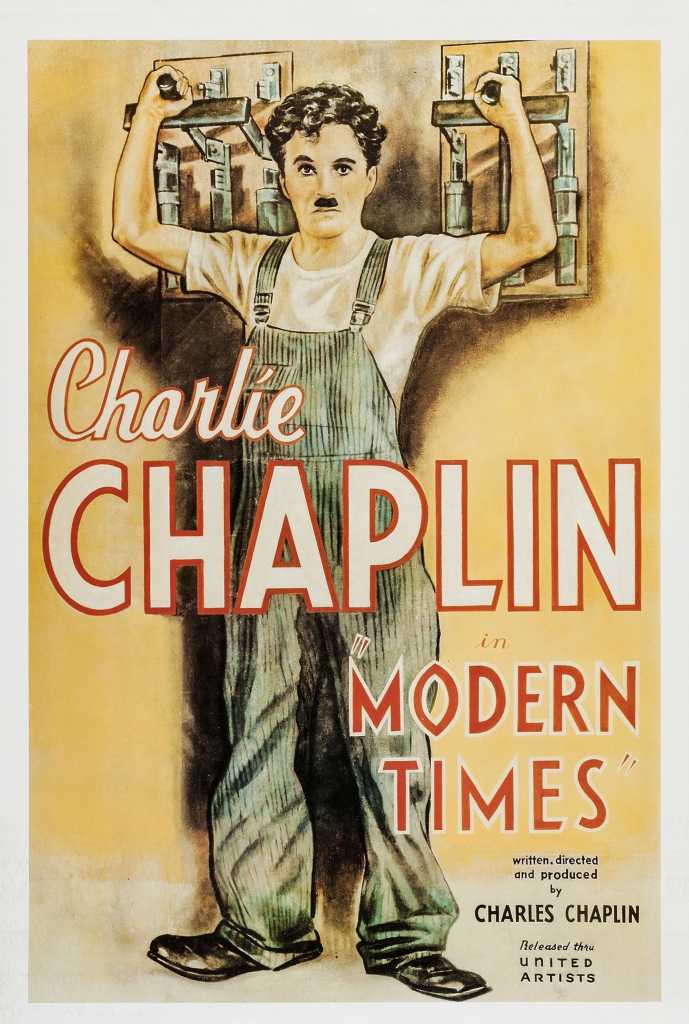
Assassination plans notwithstanding, the European trip had been a stimulating experience for Chaplin. It included meetings with several of the world’s prominent thinkers and broadened his interest in world affairs. The state of labor in America had long troubled him. Although not a Luddite by any means, the inequities of life caused him to fear that capitalism and machinery in the workplace would eventually increase unemployment levels. It was these fears that led Chaplin to develop a new film: Modern Times. The film features the Tramp and Hollywood ingénue Paulette Goddard (Charlie’s future bride) as they struggled through the Great Depression. Chaplin intended this to be his first “talkie” but changed his mind during rehearsals. Just like Modern Times, it employed sound effects but almost no dialog. However, Chaplin did sing a song in the movie, which gave his Tramp a voice for the only time on film. Modern Times was released in February 1936. It was one of the first movies to adopt political references and social realism. The film earned less at the box office than his previous features ($1.8 million-$22 million today), but it was released at the height of the Great Depression almost a decade after Al Jolson’s Jazz Singer (the first “talkie”) hit the screens.
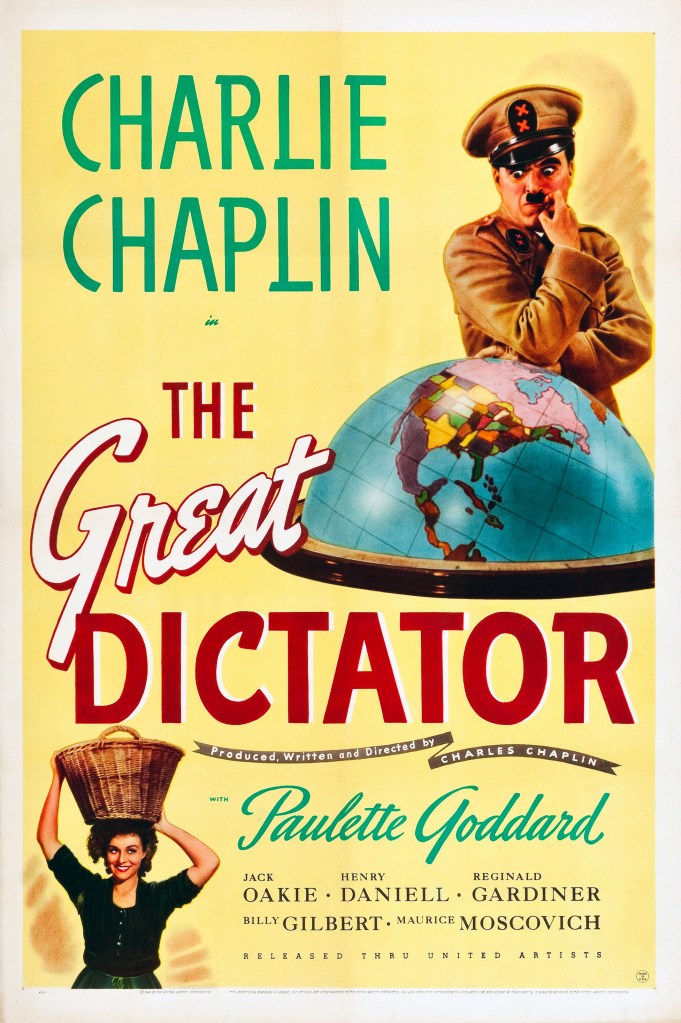
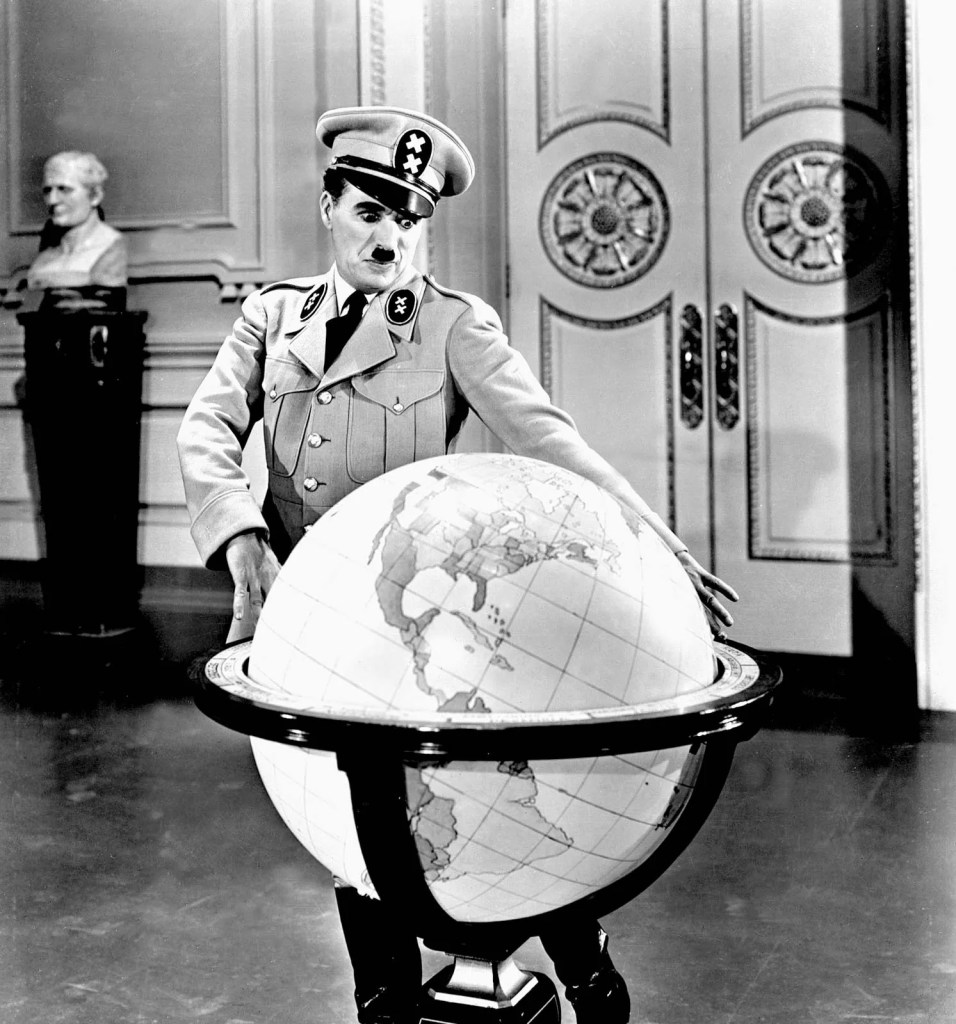
The next few years saw Chaplin withdraw from public view amid a series of controversies, mostly in his personal life, that would change his fortunes and severely affect his popularity in the States. Not the least of these was his growing boldness in expressing his political beliefs. Deeply disturbed by the surge of militaristic nationalism in 1930s Europe, Chaplin simply could not keep these issues out of his work. The ever-increasing state of hostile journalism in the US had already drawn tenuous parallels between Chaplin and Adolf Hitler: the pair were born four days apart, both had risen from poverty to world prominence, and Hitler wore the same mustache style as Chaplin. As pushback, Chaplin decided to use these undeserved comparisons and his physical resemblance as inspiration for his next film, The Great Dictator, a stinging satire about Hitler, Mussolini, and their brand of fascism. Chaplin spent two years on the script and began filming in September 1939, six days after Britain declared war on Germany. He decided to use spoken dialogue for his new project, partly because by now he had no other choice, but also because he knew it would be a better method to deliver his political message. Making a comedy about Hitler was of course highly controversial, but Chaplin’s financial independence allowed him to take that risk, stating “Hitler must be laughed at.” Chaplin replaced his Tramp with a Jewish barber character wearing similar attire as a slap at the Nazi Party’s rumor that he was a Jew. As a further insult, he also played the dictator “Adenoid Hynkel”, a parody of Hitler.
The Great Dictator was released in October 1940. The film became one of the biggest money-makers of the era. Chaplin concluded the film with a five-minute speech in which he abandoned his barber character and, while looking directly into the camera, pleaded against war and fascism. As a whole, the critics gave it rave reviews, but it made the public uncomfortable mixing politics with entertainment and although a success, it triggered a decline in Chaplin’s popularity in Hollywood. Nevertheless, both Winston Churchill and Franklin D. Roosevelt liked the film, which they watched at private screenings before its release. FDR liked it so much that he invited Chaplin to read the film’s final speech over the radio during one of his famous “Fireside Chats” before his January 1941 inauguration. Chaplin’s speech became an instant hit and he continued to read the speech to audiences at other patriotic functions during the World War II years. The Great Dictator ultimately received five Academy Award nominations, including Best Picture, Best Original Screenplay and Best Actor. It would turn out to be Charlie Chaplin’s last hurrah.
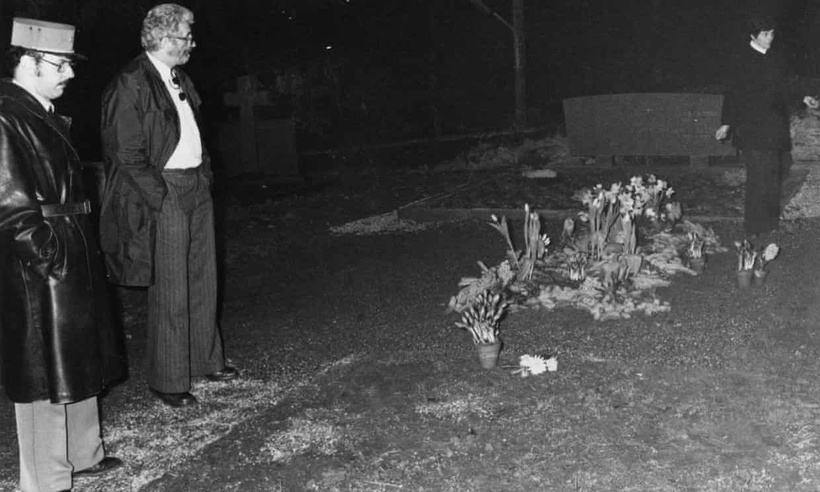
On March 1 & 2, 1978, 24-year-old Polish refugee Roman Wardas, and his cohort, Bulgarian Gantscho Ganev, aged 38, entered a small country graveyard in Corsier-sur-Vevey, Switzerland to dig up Hollywood movie legend Charlie Chaplin, who had died on Christmas Day of 1977. For this mission, the weather was right out of central casting. At 11:00 pm, the atmosphere was thick with fog, peppered by freezing haar, and plagued by a troublesome mist. As the witching hour approached and into the wee hours, a light rain began to fall augmented by a misty drizzle that morphed into shallow patches of fog. Their search ended at a neat, square, freshly dug plot with remnants of floral memorials still clinging to their rusting stands by tattered ribbons. The only sound present was the rippling of the faded satin ribbons flapping in the damp breeze.
Although they didn’t realize it, at that moment, the woebegone duo were at the zenith of their existence. They stood, staring at the grave, hands clasped atop the shovel handles, chins resting on their perpetually oil-stained knuckles. Like pirates from a bygone era, they knew a treasure was beneath their feet. For a few moments, the luckless pair dreamed of their shared idea of setting up their very own car repair shop. A sleek-looking modern white tile garage fitted with a vehicle lift, an automatic tire changer, and an air compressor equipped with a large bevy of shiny pneumatic tools ready to serve a large affluent clientele. A shared smile appeared slowly on each man’s face as they turned to each other and nodded. The first step was obvious: start digging. Atmospheric conditions aside, the two were already wet with a cold sweat. Soon the slap-sling sound of dueling shovels drowned out the usual sounds of the night. As they sunk ever-lower into the earth, the horizon disappeared around them and the panic of not knowing what was going on above them began to set in.
Chaplin’s coffin unearthed. Getty Images.
Finally, a shovel hit paydirt. A dull thud in the earth signified that they had hit the jackpot. Shovels gave way to hands and hands gave way to fingers as they quickly excavated the object of their grisly search. It was a 300-pound oak coffin which, although dirty, was remarkably intact. The handles still “handled”, and the lid remained closed. These two burly, jobless grease monkeys hefted the coffin out of its eternal resting place and carried it across the cemetery. As they trod, huffing, puffing, and groaning with each labored step, it must have presented an unearthly vision. The men busting through stage curtain sheathes of banks of fog-like characters in a Universal monster movie unkowing what was waiting for them in each clearing from which they emerged. Sliding the coffin into the back of their station wagon, they quickly jumped into the cab and drove off into the darkness of the night. They had done it. They had just stolen the body of the most famous actor in the history of Hollywood. A man so famous that the mere shadow of his waifish tramp-like form was instantly recognizable worldwide: Charlie Chaplin was in the boot of their vehicle.
Police at the desecrated grave of Charlie Chaplin in the cemetery at Corsier-sur-Vevey, Switzerland,
These two resurrectionists were convinced that their treasure was going to make them very rich, very soon. They arrived at a ransom figure: $600,000 US Dollars (over $2.8 million today). There were a couple of things the grave robbers didn’t count on though. The discovery of the theft of the Little Tramp’s mortal remains sparked outrage and spurred an expansive police investigation. Now, the whole world was watching this tiny isolated Swiss village. But why? The beloved actor who had created the iconic “Tramp” figure so associated with the Golden Age of Hollywood had been out of the limelight since World War II. While Chaplin continued to make films after his classic 1940 movie The Great Dictator, his star never shined as bright as it did during the periods between the two World Wars. Nonetheless, despite the sometimes sordid details of his love life (he was married 4 times between 1920 and 1943 and was rumored to have had many affairs) and the sensational amounts of money he commanded (The Great Dictator grossed an estimated $ 5 million during the Great Depression-a staggering $110 million in today’s currency), Chaplin remained a beloved figure to generations of fans worldwide.
Looking back, it is easy to understand why. Social commentary was a recurring feature of Chaplin’s films from his earliest days. Charlie always portrayed the underdog in a sympathetic light and his Tramp highlighted the difficulties of the poor. Chaplin incorporated overtly political messages into his films depicting factory workers in dismal conditions (Modern Times), exposing the evils of Fascism (The Great Dictator), his 1947 film Monsieur Verdoux criticized war and capitalism, and his 1957 film A King in New York attacked McCarthyism. Most of Chaplin’s films incorporate elements drawn from his own life, so much so that psychologist Sigmund Freud once declared that Chaplin “always plays only himself as he was in his dismal youth”. His career spanned more than 75 years, from the Victorian era to the space-age, Chaplin received three Academy Awards and he remains an icon to this day.
Not only did Chaplin change the entertainment industry on film, he changed it in practice as well. At the height of his popularity, wherever he went, Chaplin was plagued by shameless imitators of his Tramp character both on film and on stage. A 1928 lawsuit brought by Chaplin (Chaplin v. Amador, 93 Cal. App. 358), set an important legal precedent that lasts to this day. The lawsuit established that a performer’s persona and style, in this case, the Tramp’s “particular kind or type of mustache, old and threadbare hat, clothes and shoes, decrepit derby, ill-fitting vest, tight-fitting coat, trousers, and shoes much too large for him, and with this attire, a flexible cane usually carried, swung and bent as he performs his part” is entitled to legal protection from those unfairly mimicking these traits to deceive the public. The case remains an important milestone in the U.S. courts’ ultimate recognition of a “common-law right of publicity” and intellectual property protection.
Charlie Chaplin’s last official portrait sitting in his home in SwitzerlandApril 1977.
By October of 1977, Chaplin’s health had declined to the point that he required near-constant care. On Christmas morning of 1977, Chaplin suffered a stroke in his sleep and died quietly at home at the age of 88. The funeral, two days later on December 27, was a small and private ceremony, per his wishes. Chaplin was laid to rest in the cemetery at Corsier-sur-Vevey, not far from the mansion that had been his home for over a quarter century. But as we have discovered, Chaplin’s “eternal rest” did not last long. After the two ghouls exhumed the body, they found themselves with a new problem. What do we do now? After all, where does one store a corpse in anticipation of a ransom delivery? Thanks to press reports, the duo were aware that Oona Chaplin (Charlie’s fourth wife after Mildred Harris, Lita Grey, and Paulette Goddard) was also the daughter of the playwright Eugene O’Neill, who had died a quarter century before. Reportedly, Chaplin had left more than $100 million to his widow ($450 million today). So surely she would not object to snapping off $600,000 to get her dearly departed husband back, right? But how long would it take to collect that payout?
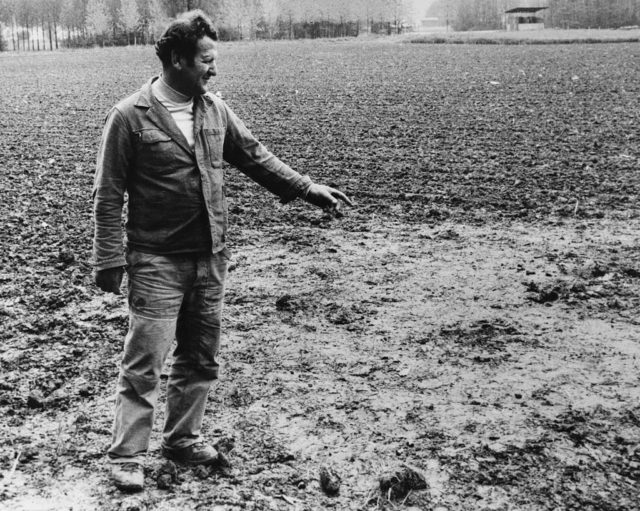
Unidentified man points to the spot where the coffin of Charlie Chaplin was found in a field near the village of Noville, Switzerland, May 19, 1978. (Photo Credit: Getty Images)
The body-snatching duo decided they had to do something with Chaplin’s corpse and quickly. So they found a quiet cornfield outside the nearby village of Noville, near where the Rhone River enters Lake Geneva about a mile away from the Chaplin Mansion. Here they dug a large hole and buried the heavy oak coffin with Chaplin in it. Then they waited until the heat died down. Meantime, rumors were flying. Did souvenir hunters steal the body? Was it a carnival sideshow that stole the Little Tramp? Was Chaplin to be buried in England, as he had once requested? The old Nazi speculation about Chaplin’s Jewish ancestry cropped up theorizing that the corpse had been removed for reburial in a Jewish cemetery. All that was forgotten when the kidnappers called Oona Chaplin demanding a $600,000 ransom for the return of the body. The crooks hadn’t counted on what happened next. Suddenly, the Chaplin family, besieged by people wanting the ransom and claiming they had the body, demanded proof that her husband’s remains were actually in their possession.
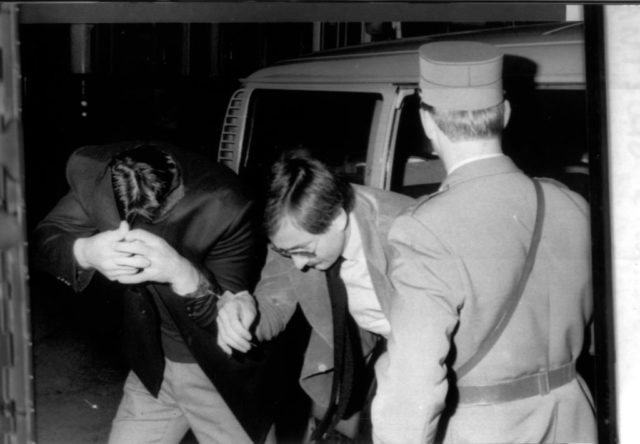
Roman Wardas and Gantscho Ganew (Photo Credit: Getty Images)
Yikes! Body snatchers Wardas and Ganev had no choice but to schlep back to that field, dig up the coffin, and take a photograph of it as proof that they were the real graverobbers. They quietly excavated the casket and took a photo of it alongside the hole in that cornfield. Then, the two dim-witted graverobbers called the Chaplin Mansion. Well, at least they tried to call. Turns out the number was unlisted so the numbskulls fished around to local reporters, pretending to be reporters themselves, to get the phone number. Needless to say, when the authorities were informed of the scheme, they did not discourage it. At the request of law enforcement, Chaplin’s widow Oona stalled the criminals as she pretended to acquiesce to their ransom demands. At first, Oona refused to pay the ransom, stating “My husband is in heaven and in my heart” arguing that her husband would have seen it as “rather ridiculous”. In response, the criminals made threats to shoot her children. After which, she directed the fiends to the family’s lawyer, who exchanged several telephone calls with the criminals, supposedly while negotiating a lower ransom demand. These stall tactics worked well enough that the police had time to wiretap the phone and trace where the calls were coming from. The savvy criminals used a different telephone box in the Lausanne area for every call, being careful to never use the same call box twice. Undeterred, the investigators enlisted an army of officers to keep tabs on the over 200 telephone boxes in the area. On May 16 (76 days after the grave robbery) the police finally arrested the two men at one of those call boxes.
Oona & Charles Chaplin’s Graves Today.
When taken back to the station, the foolish crooks couldn’t remember the exact spot in the cornfield where they had hidden the coffin. The police swarmed the area with metal detectors and were eventually able to find Chaplin’s remains thanks to the casket’s metal handles. In December of 1978, Roman Wardas and Gantscho Ganev were facing twenty years on charges of desecration of a corpse and extortion. In court, Wardas stated that he had asked Ganev to help him steal the coffin, promising that “the ransom would help them both survive in an environment where employment had not come so readily to them”. Wardas claimed that both men were political refugees and that he had left Poland in search of work, but was virtually destitute in Switzerland. The deranged duo saw the body theft as a “viable financial decision”. The pair had disinterred the coffin and placed it in Ganev’s car, then drove it to the field. Wardas explained in court that “the body was reburied in a shallow grave“ and that he “did not feel particularly squeamish about interfering with a coffin…I was going to hide it deeper in the same hole originally, but it was raining and the earth got too heavy.” In court, the Chaplin family lawyer, Mr. Jean-Felix Paschoud, asked to speak to “Mr. Rochat”, with whom he had exchanged the ransom calls. Wardas hesitantly stood up from his seat and was wished “good morning” by lawyer Paschoud. Wardas explained that it was he, under the name “Mr. Rochat”, who had made the infamous ransom and threatening phone calls to the family.
Ganev, whom the Swiss court described as “mentally subnormal”, testified coldly that “I was not bothered about lifting the coffin. Death is not so important where I come from.” Ganev testified that he had been imprisoned in Bulgaria after trying to flee to Turkey before finally making his way to Switzerland only to find meager wages working as a mechanic. Ganev claimed that his involvement in the crime was limited only to the excavation, transportation, and reburial of the body, and he had no knowledge of any ransom demand. In testimony, Ganev didn’t think the body snatching was any big deal and acted shocked at the public’s outrage to the crime. When sentencing came down, he was given an 18-month suspended sentence. However, Wardas, whom Ganev had identified as the true mastermind behind the body snatching, was sentenced to 4 ½ years of hard labor. Both men wrote letters to Oona expressing genuine remorse for their actions. Oona accepted their apologies answering, “Look, I have nothing especially against you and all is forgiven.”
Ganev and Wardas faded from view and were never heard from again. The only unanswered question remaining: did they ever open the casket? As for Chaplin’s body, it was reburied in the original plot. This time under an impregnable concrete tomb (reportedly six feet thick) to prevent any future grave robbing attempts. Chaplin’s final resting place is neat and simple and now his beloved Oona (who died on September 27, 1991, at the age of 66) rests alongside him. Just to the left of the Chaplin plot is the simple grey headstone of another movie star of the Golden Age: James Mason, a close friend of Charlie Chaplin who lived nearby and died in Lausanne in 1984.
Chaplin’s legacy extended well into the computer age. His iconic Tramp character was utilized as spokes mascot for the original IBM microcomputer from 1981 to 1987 and reappeared briefly in 1991. Not to be outdone, Apple Macintosh utilized Chaplin’s Tramp for their Macintosh 128K (aka “The MacCharlie”) made by Dayna Communications. Although the ad campaign only lasted a couple of years (1985-87) it remains as a testament to the staying power of a century-old mascot created by one man: Charlie Chaplin.
On August 28, 1963, Baptist minister Martin Luther King Jr. delivered his “I Have a Dream” speech to over 250,000 civil rights supporters during the March on Washington for Jobs and Freedom from the steps of the Lincoln Memorial in Washington, D.C. In that speech, King called for civil and economic rights and an end to racism in the United States. The speech became the foundation of the civil rights movement and is among the most iconic speeches in American history. Sharing the steps that day was a curly-haired mop-top folk singer named Bob Dylan. This is a story, an insight into the fertile mind of America’s greatest living singer/songwriter. A story most of you have likely never heard.
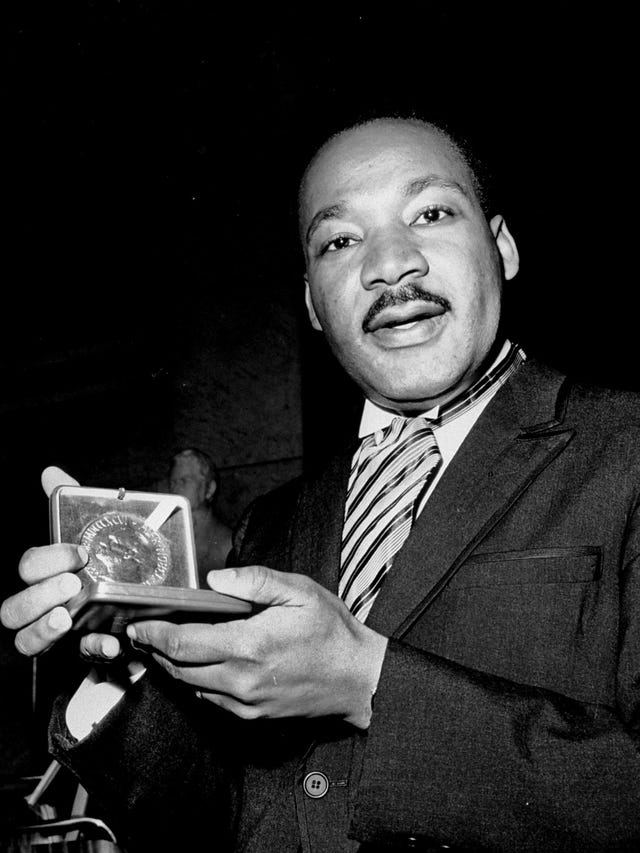
Dr. Martin Luther King, Jr. with his Nobel Prize.
Born Robert Allen Zimmerman on May 24, 1941, in Duluth, Minnesota, the youngster grew up listening to Hank Williams on the Grand Ole Opry. In his biography, Dylan wrote: “The sound of his voice went through me like an electric rod.” Soon, he began to introduce himself as “Bob Dylan” as an ode to poet Dylan Thomas. In May 1960, Dylan dropped out of the University of Minnesota at the end of his first year. In January 1961, he traveled to New York City in search of his musical idol Woody Guthrie, who was suffering from Huntington’s disease at Greystone Park Psychiatric Hospital in New Jersey. As a young man, Dylan read Guthrie’s 1943 autobiography, “Bound for Glory”, and Guthrie quickly became Dylan’s idol and inspiration.
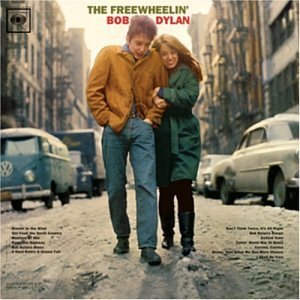
By May 1963, with the release of his second album, The Freewheelin’ Bob Dylan, the Minnesota folksinger was on the rise as a singer/songwriter. On June 12, 1963, civil rights activist Medgar Evers was assassinated in Jackson, Mississippi. Evers was a veteran U.S. Army soldier who served in a segregated unit during World War II and as the NAACP’s first field secretary in Mississippi. Evers’s death spurred Dylan to write “Only a Pawn in Their Game” about the murder. The song exonerates Evers’s murderer as a poor white man manipulated by race-baiting politicians and the injustices of the social system. At the request of Pete Seeger, Dylan first performed the song at a voter registration rally in Greenwood, Mississippi on July 6, 1963. Two weeks later (August 7) Dylan recorded several takes of the song at Columbia’s studios in New York City, only to select the first take for his album The Times They Are a-Changin’.
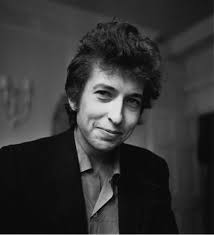
Bob Dylan.
Likely at the urging of Pete Seeger, who was busy preparing for a tour of Australia at the time, Dylan, and then-girlfriend Joan Baez, traveled to Washington DC for the March on Washington rally. Of that day, in the 2005 documentary No Direction Home, Dylan recalled, “I looked up from the podium and I thought to myself, ‘I’ve never seen such a large crowd.’ I was up close when King was giving that speech. To this day, it still affects me in a profound way.” On that day, Dylan performed “Only a Pawn in Their Game” and “When the Ship Comes In.” The songs were received with only scattered applause, likely because many marchers did not agree with the sentiments of the song. The famously reflective and observant Dylan walked away from that day contrarily looking inward.
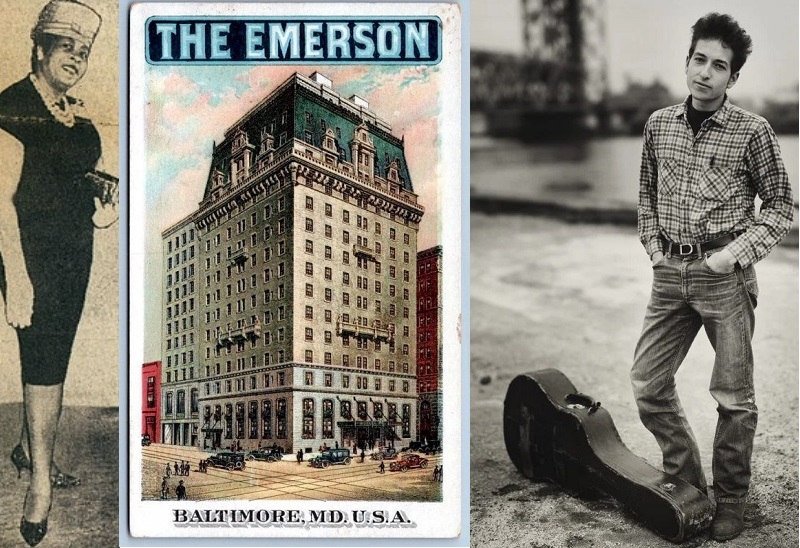
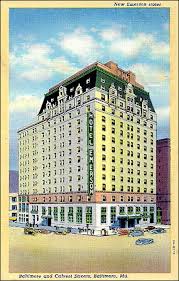
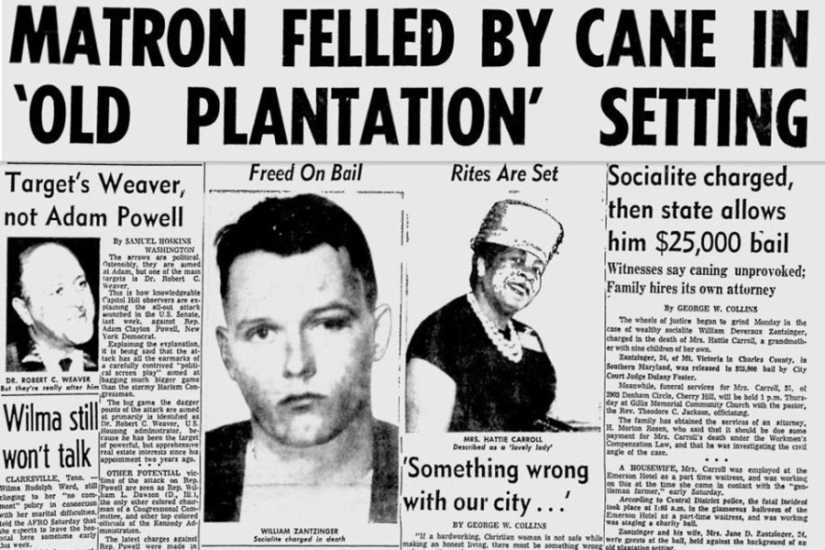
According to a 1991 Washington Post article, while on the journey home to New York City the 22-year-old Dylan read a newspaper article about the conviction of a white man from a wealthy Maryland family named William Devereux “Billy” Zantzinger (1939-2009) for the death of a 51-year-old African-American hotel service worker named Hattie Carroll on February 9, 1963, at the Spinsters’ Ball at the Emerson Hotel in Baltimore, Md. The white tie event was a debutante ball designed to introduce women in their late 20s to the “right” sort of men. The details of the event are just as shocking today as they must have been to Dylan 62 years ago.
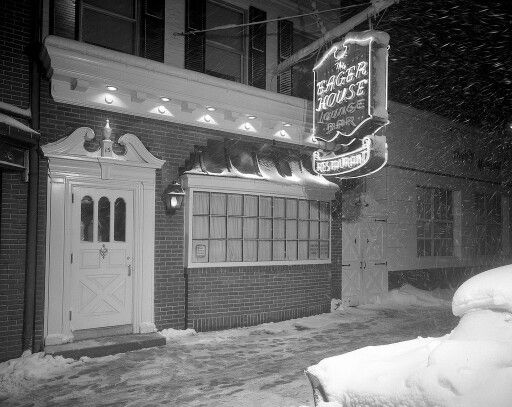
Baltimore’s Eager House restaurant.
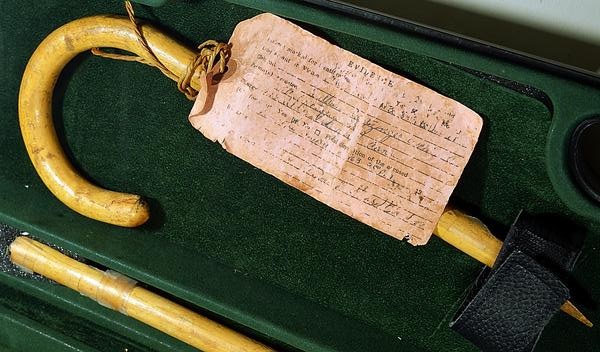
On February 8, 1963, 24-year-old Zantzinger attended the event with his father, a former member of the Maryland House of Delegates and the state planning commission who ran one of the most prosperous tobacco operations in Charles County. Before the ball, the Zantzingers stopped for an early dinner and cocktails at downtown Baltimore’s Eager House restaurant. According to witnesses, once at the Spinster’s Ball, a drunken Zantzinger stumbled into the ballroom wearing a tophat with white tie and tails and a carnation in his lapel and carrying a 25-cent wooden toy cane. “I just flew in from Texas! Gimme a drink!” a laughing Billy shouted to the packed crowd of 200 guests. Witnesses said that he was “pretending to be Fred Astaire and when he wanted a drink, he used the cane to tap smartly on the silver punch bowl; when a pretty woman whom he knew waltzed by, he’d tap her playfully, all in fun, no offense, of course.” By 1:30 in the morning, Billy’s mood had darkened and the imposing 6’2″ Zantzinger began to assault hotel workers with his cane, poking and slapping them with it at will. His targets of drunken rage included a bellboy, a waitress, and barmaid Hattie Carroll.
Emerson Hotel in Baltimore, Md.
First Zantzinger berated a 30-year-old black employee named Ethel Hill, 30 years old from Belkthune Avenue in Baltimore, with the worst of racial slurs as she was clearing a table near the Zantzingers. Billy asked the young woman about a firemen’s fund, and then, as the police reported it later, she was struck across the buttocks “with a cane of the carnival prize kind.” As she tried to move away, Billy followed her, repeatedly striking her on the arm, thighs, and buttocks. Mrs. Hill wasn’t seriously injured, but her arm hurt, causing her to flee the room in tears.
Next, the cane was used against a bellhop, accentuated with more insults toward the young man, calling him a “Black SOB.” Billy then attacked another employee by yanking the chain around the wine waiter’s neck. When Billy’s 24-year-old wife, Jane, tried to calm him down, he collapsed on top of her in the middle of the dance floor and began hitting her over the head with his shoe. When another guest tried to pull the madman off, Zantzinger thumped him too. Then, temporarily regaining his composure, he stood up and dusted himself off, and the University of Maryland student decided he needed another drink. That is when Zantzinger first encountered Hattie Carroll.
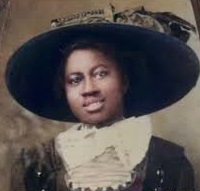
On the night of February 8, 1963, 51-year-old African-American hotel service worker Hattie Carroll was at work behind the bar as an extra employee for special functions and “ballroom events” at the Emerson Hotel in Baltimore, Md. Hattie was active in local social work as a longtime member of the Gillis Memorial Church in that city. The mother of 11 children, Hattie lived with two of her daughters, a 14-year-old and an 18-year-old, her other nine children were all older and married. While a hard worker, she suffered from an enlarged heart and had a history of hypertension.
Hattie Carroll
Zantzinger strode to the bar at a quarter til two and demanded a bourbon and ginger ale. Hattie was busy with another guest when Billy barked out his order. Proud of his prior actions, the drunkard turned his rage on Hattie Carroll whom he accused of not bringing him his bourbon fast enough, again hurling the “N-word” around the room loudly. According to the court transcript, despite the repeated indignations, Hattie replied, “Just a moment sir” and started to prepare his drink. Hattie, now nervous from the berating, fumbled with the glass. Zantzinger shouted, “When I order a drink, I want it now, you black b….!” When Hattie replied that she was hurrying as best she could. Zantzinger again berated her for being too slow and “struck her a hard blow on her shoulder about halfway between the point of her shoulder and her neck.” She shouted for help and slumped against the bar, looking dazed.
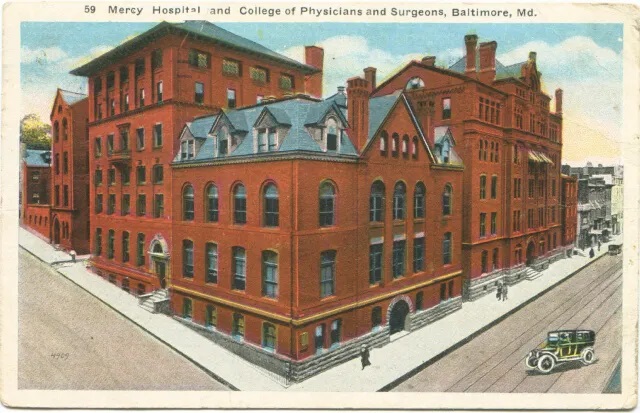
Mercy Hospital in Baltimore, Md.
Within five minutes after being struck with the cane, Hattie slumped against another barmaid and said she was feeling sick. Coworkers said that Carroll complained, “I feel deathly ill, that man has upset me so.” Her coworkers helped Hattie to the kitchen. Hattie said her arm had gone numb and her speech became labored just before she collapsed. A hotel official called for an ambulance and the police. The unconscious Hattie Carroll was hospitalized at Mercy Hospital where she died eight hours later at 9 a.m. on February 9, 1963, never having regained consciousness. Her autopsy showed she suffered from hardening of the arteries, an enlarged heart, and high blood pressure. A post-mortem spinal tap confirmed that a brain hemorrhage was the cause of her death. When the wooden cane was found later, it was broken in three places.
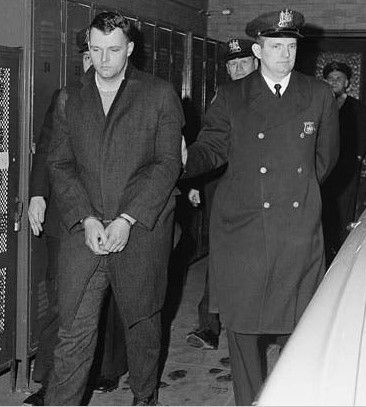
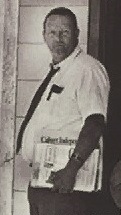
Billy Zantzinger after his 1963 arrest.
Police arrested Zantzinger on the spot for disorderly conduct plus two charges of assault “by striking with a wooden cane.” As they escorted him out through the hotel lobby, the officers were attacked by Zantzinger and his wife. Patrolman Warren Todd received multiple bruises on his legs; Zantzinger received a black eye. Billy Zantzinger spent the rest of those predawn hours in jail, and his wife was released. While Hattie Carroll was taking her last breath, Zantzinger stood in the Central Municipal Court in front of Judge Albert H. Blum, still wearing his white tux and tails, the carnation still in the lapel, though now without his white bow-tie and tophat. Billy pleaded not guilty to the charges and was released on $600 bail. At 9:15 that same morning, Judge Blum was notified of Hattie Carroll’s death. Zantzinger was charged with homicide and a warrant for his re-arrest was issued. It was the first time in the history of the state of Maryland that a white man had been charged with the murder of a black woman.
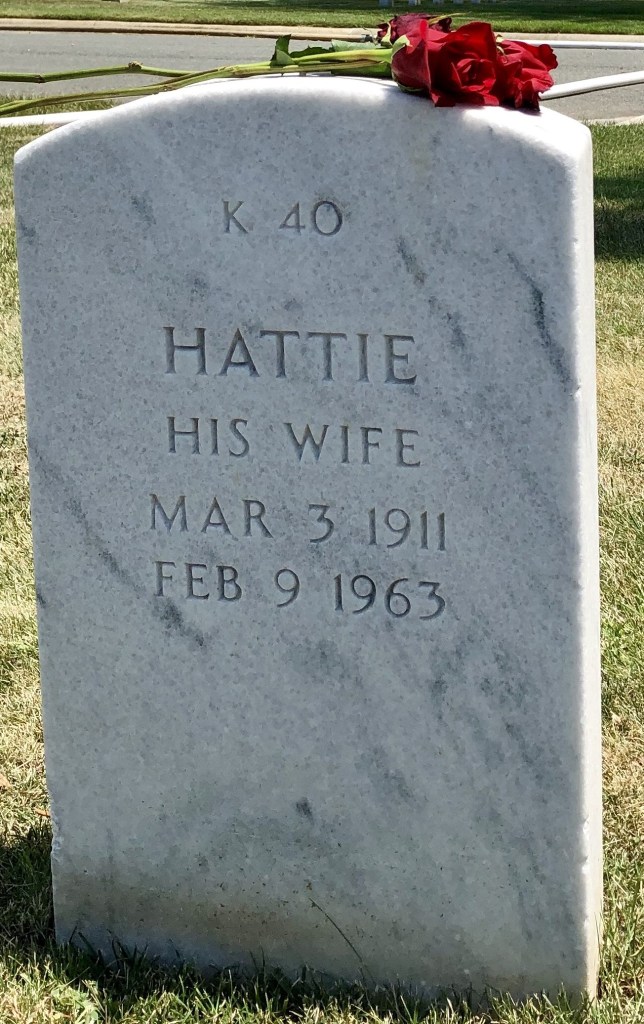
Hattie Carroll’s Grave in Baltimore.
Zantzinger’s only excuse for these indefensible actions was that he had been extremely drunk and could not remember the attack. His wealthy family retained a top-notch lawyer who managed to get the charges reduced to manslaughter and assault. The trial was moved from Baltimore to the more racially friendly Hagerstown. The attorney proposed that it was the victim’s stress reaction to his client’s verbal and physical abuse that led to the intracranial bleeding, rather than the blunt-force trauma from the blow (that left no physical marks) that killed her. The attorney contended that Hattie was a large, overweight woman with a history of high blood pressure. She could have suffered a fatal stroke at any time. His client was just a victim of circumstances. On August 28, the same day as Dr. King’s “I Have a Dream” speech, Zantzinger was convicted on all charges and sentenced to six months’ imprisonment in county jail. With time off for good behavior, he was home in time for Christmas. He was fined $125 for assaulting the other members of the hotel staff.
Zantzinger
Upon learning these details, Dylan decided to write a protest song about the case. The song was written in Manhattan while Dylan sat alone in an all-night cafe. The song was “polished” by Dylan at the Carmel, California home of Joan Baez, his then-lover. Nancy Carlin, a friend of Baez who visited the home at the time, recalled: “He would stand in this cubbyhole, beautiful view across the hills, and peck type on an old typewriter…there was an old piano up at Joan’s…and [Dylan would] peck piano playing…up until noon he would drink black coffee then switch over to red wine, quit about five or six.” The result was the song “The Lonesome Death of Hattie Carroll.” It was recorded on October 23, 1963, and quickly incorporated into his live performances. The song was released on February 10, 1964, a year and a day after Zantzinger’s conviction and 61 years ago this week.
Billy Zantzinger’s business card.
But whatever happened to Billy Zantzinger, the child of white privilege who got away with murder? Zantzinger didn’t have any difficulty at all settling back into Charles County society. He inherited the family tobacco farm which included several “shanties” that he rented to the poor Black population. Billy was a nice fun-loving guy whose neighbors all liked him. But years later, Billy facing financial ruin, began to sell off sections of the 265-acre family estate farm which eventually led him into real estate. He ran a nightclub in La Plata, opened a small weekends-only antique shop, and promoted himself as an appraiser and auctioneer. He was active with the Chamber of Commerce and was elected Chairman of the board of trustees of the Realtors Political Action Committee of Maryland in 1983. Even though Zantzinger ostentatiously drove a Mercedes-Benz sporting a specialized license plate reading “SOLD2U,” the Maryland Terrapin Frat boy quickly got behind in paying his county, state, and federal taxes, both business and personal.
Billy Zantzinger’s cane on display at the Washington County Museum of Arts in Hagerstown, Maryland.
By 1986, the Internal Revenue Service had seized all of his properties. The Washington Post reported that Zantzinger continued to act as landlord of the rental properties on this confiscated land, collecting outrageous amounts of rent for his “shanties” described in the local newspaper as “some beat-up old wooden shacks in Patuxent Woods” even though the hovels had no running water, no toilets, and no heating. Over five years, he collected thousands of dollars from properties he no longer owned. In June of 1991 for his actions, he was charged with “unfair and deceptive trade practices.” After pleading guilty to 50 misdemeanor counts, he was sentenced to 19 months in prison and fined $50,000. A far cry from the six-month sentence and $125 fine in connection with the attack and death of Hattie Carroll 27 years earlier. During sentencing, Zantzinger said, “I never intended to hurt anyone, ever, ever,” Zantzinger said, pleading for leniency; “it’s not my nature.”
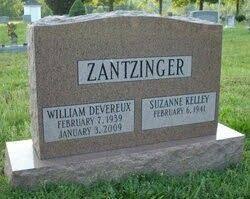
William Devereux “Billy” Zantzinger’s grave.
The lasting irony of this story is that William Zantzinger was born on February 7, 1939, almost 25 years to the day of light sentencing for the death of Hattie Carroll. He died on January 3, 2009, just a few days before we as a nation celebrate Dr. Martin Luther King, Jr. day every year. Zantzinger is forgotten, barely a footnote in American history while the story of Hattie Carroll will live on forever in Bob Dylan’s song. Hattie’s story is just one of the reasons why Bob Dylan is the greatest American singer/songwriter of all time. Dylan ranks everyone. His earliest idol Hank Williams Sr., known as the “Hillbilly Shakespeare,” would have made a run at Dylan for the title, but Hank checked out way too soon. Dylan has been around for over 60 years (and counting) with an estimated figure of more than 125 million records sold worldwide (and counting). Dylan’s value to music is incalculable. Not only for what Encyclopedia Britannica called his “sophisticated lyrical techniques to the folk music of the early 1960s, infusing it with the intellectualism of classic literature and poetry” but also for his ability to crystalize social issues at the most opportune times in this country’s history.
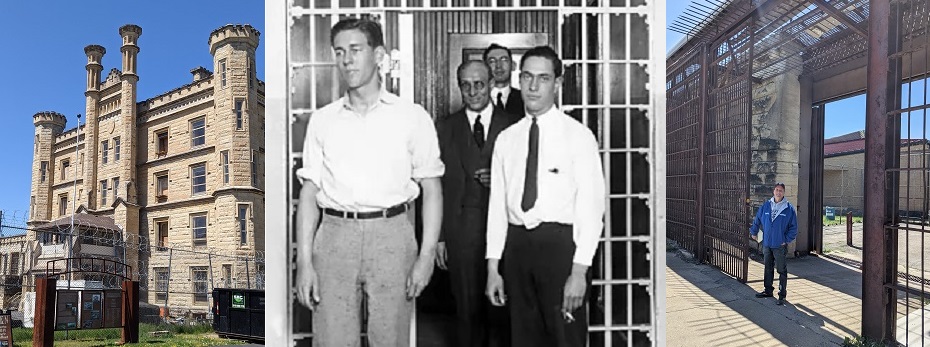
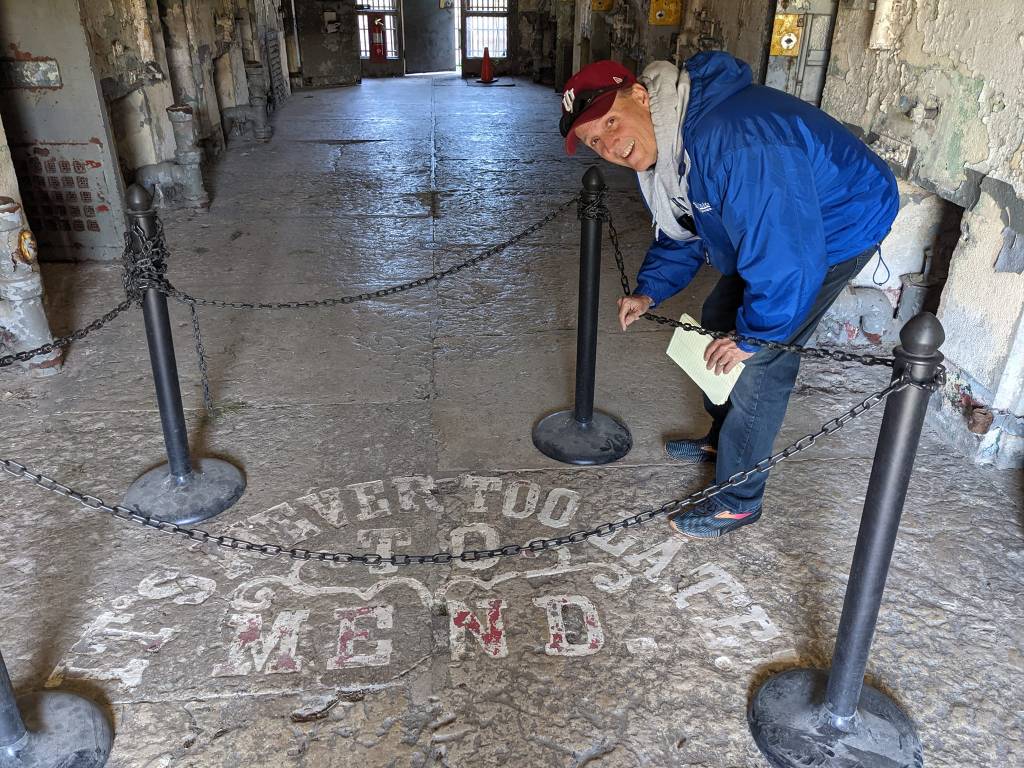
Old Joliet Penitentiary, Leopold & Loeb, and the author at the Blues Brothers gate.
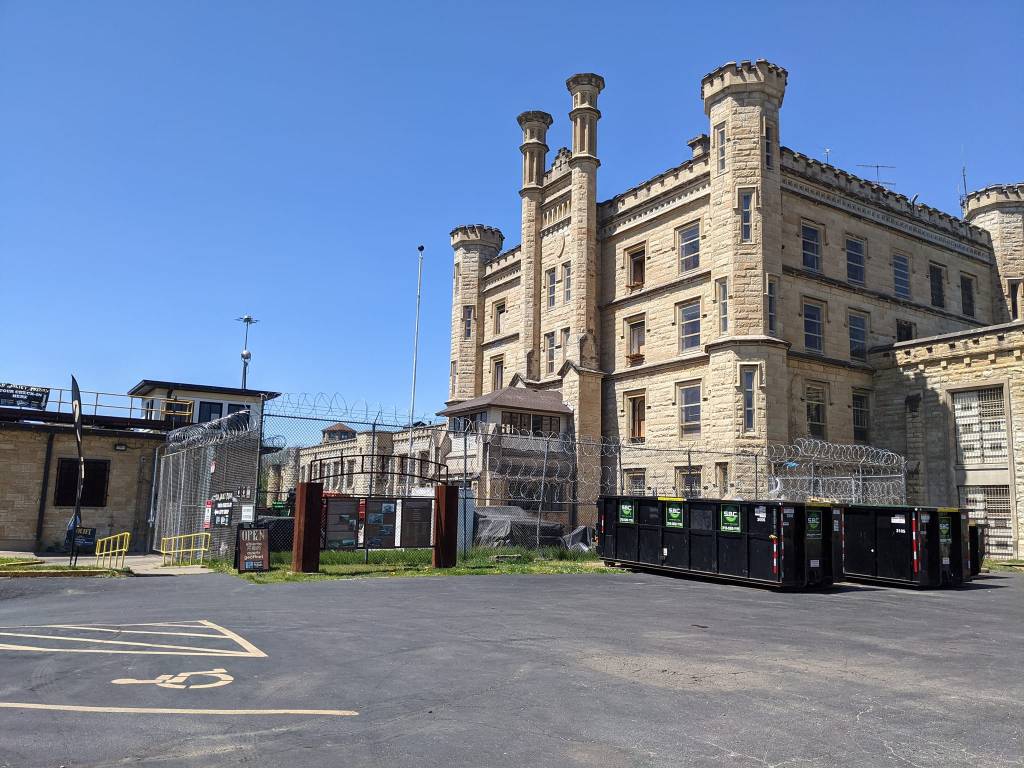
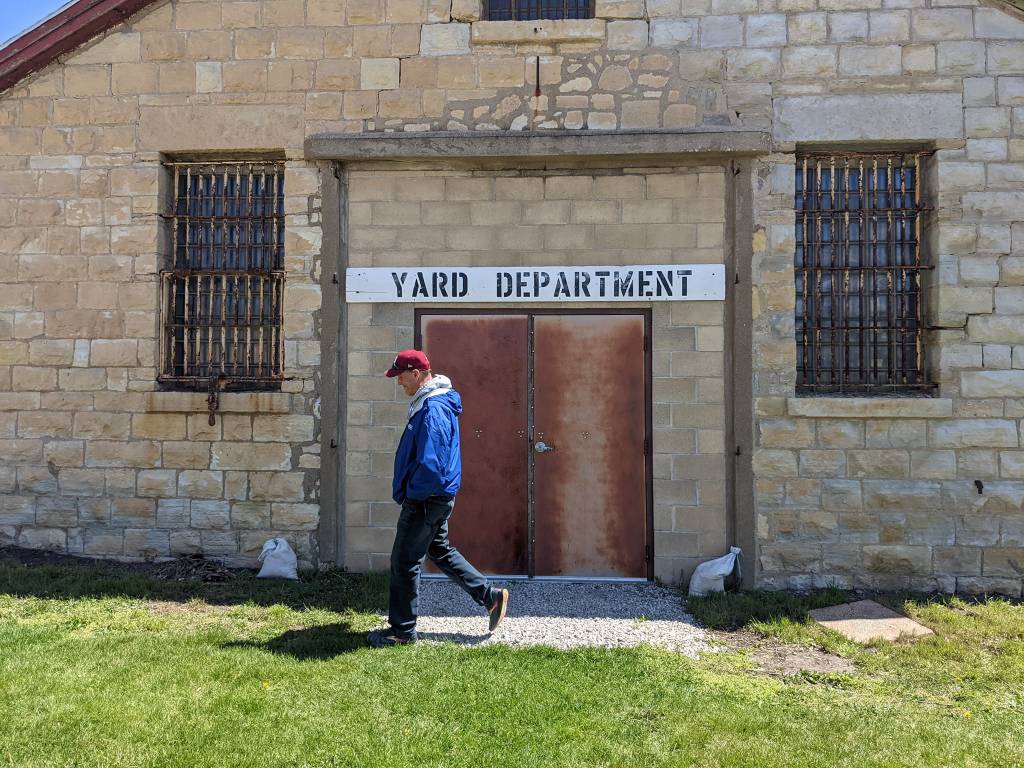
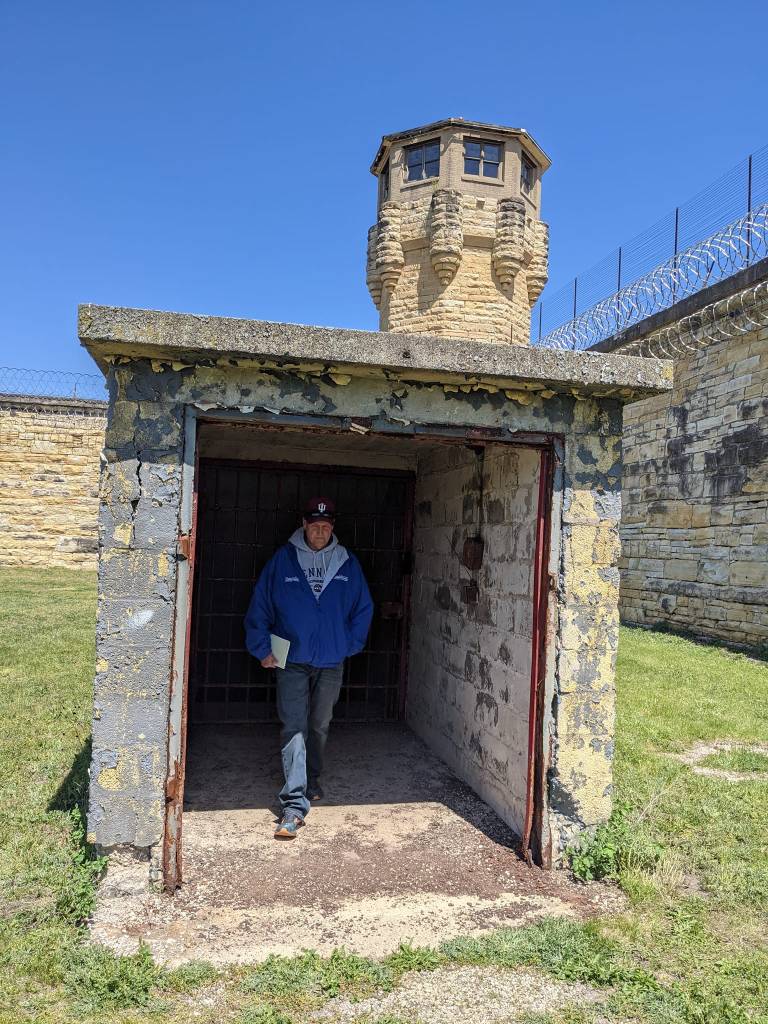
Last month, Rhonda and I drove to the outskirts of Chicago to visit Joliet Prison in Illinois. Like many ancient jails, prisons, and penitentiaries, Joliet has experienced a second life as a tourist attraction. It opened back in 2018. During the summer months (June to September) Joliet is open daily for tours until 6 p.m. For $20 you can go visit the old stomping grounds of notorious inmates like Richard Speck, John Wayne Gacy, James Earl Ray, and Baby Face Nelson. In my case, I was interested in the place because of Leopold and Loeb. Okay, okay, I was also there thinking of the Blues Brothers, but mostly Leopold and Loeb.
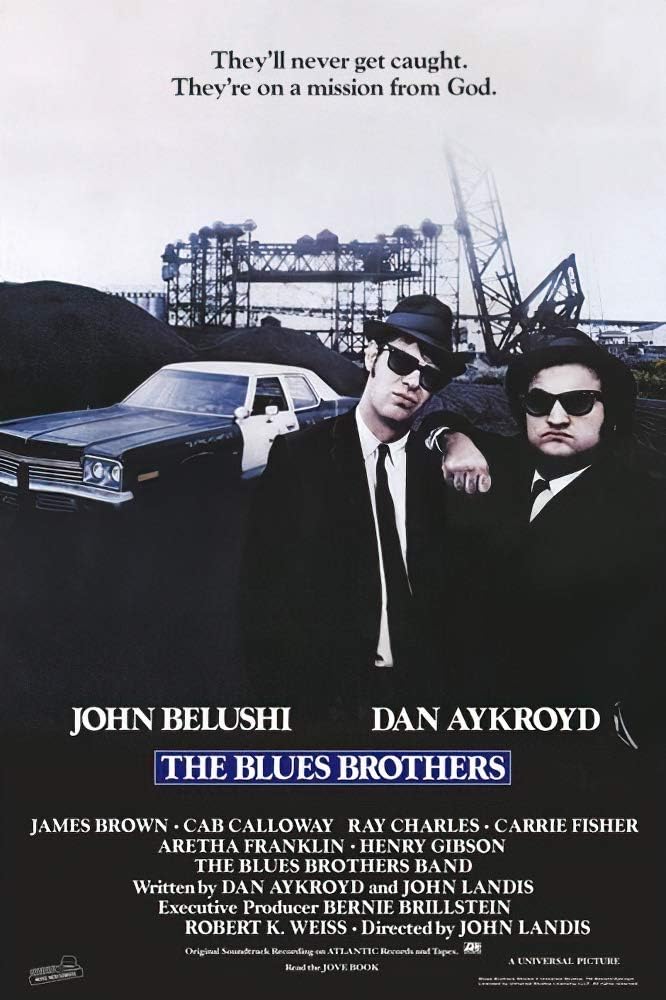
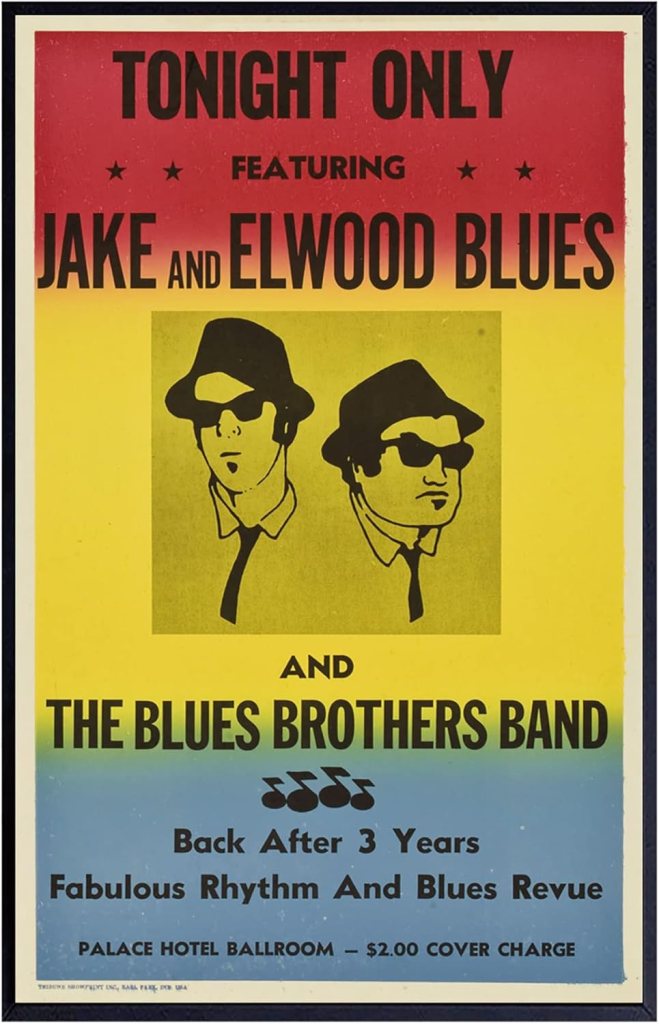
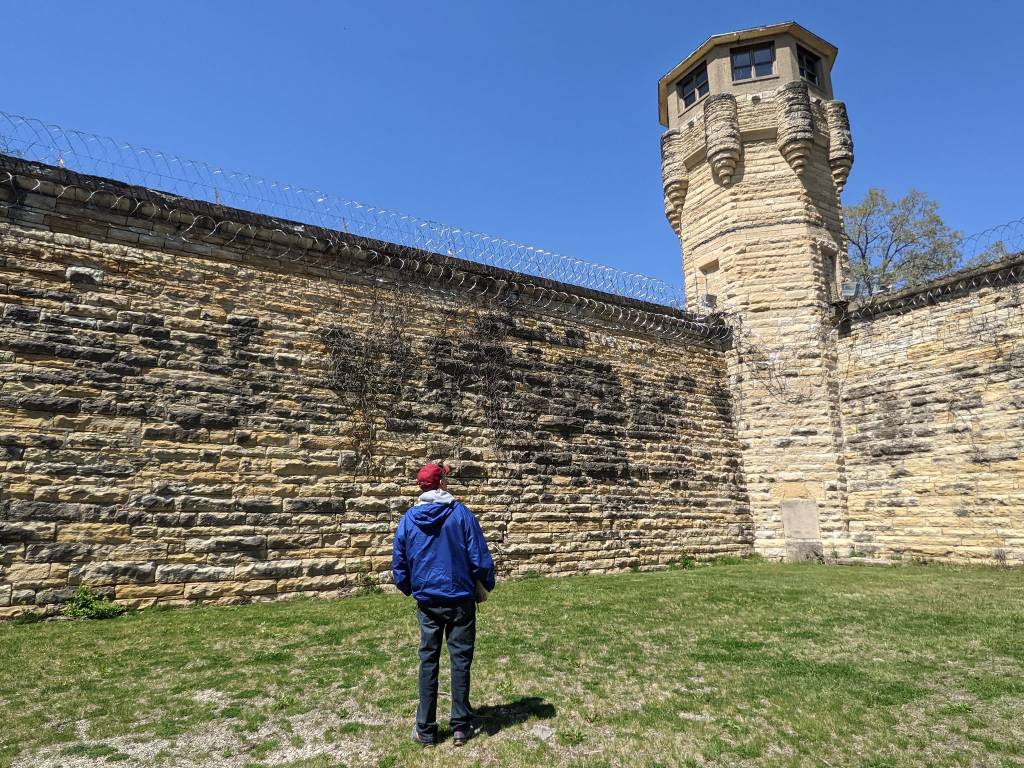
Old Joliet Penitentiary (originally known as Illinois State Penitentiary) opened in 1858 and was a working prison until 2002. In “The Blues Brothers” movie, Dan Aykroyd (Elwood J. Blues) awaits outside the prison gate for the release of John Belushi’s character (“Joliet Jake” Blues). Guests enter through the same gate Belushi exits. If you are sly, you can sneak over and crank the gate open or closed on your own. The prison was also used in the cult classic James Cagney film “White Heat” and the 1957 movie “Baby Face Nelson.”
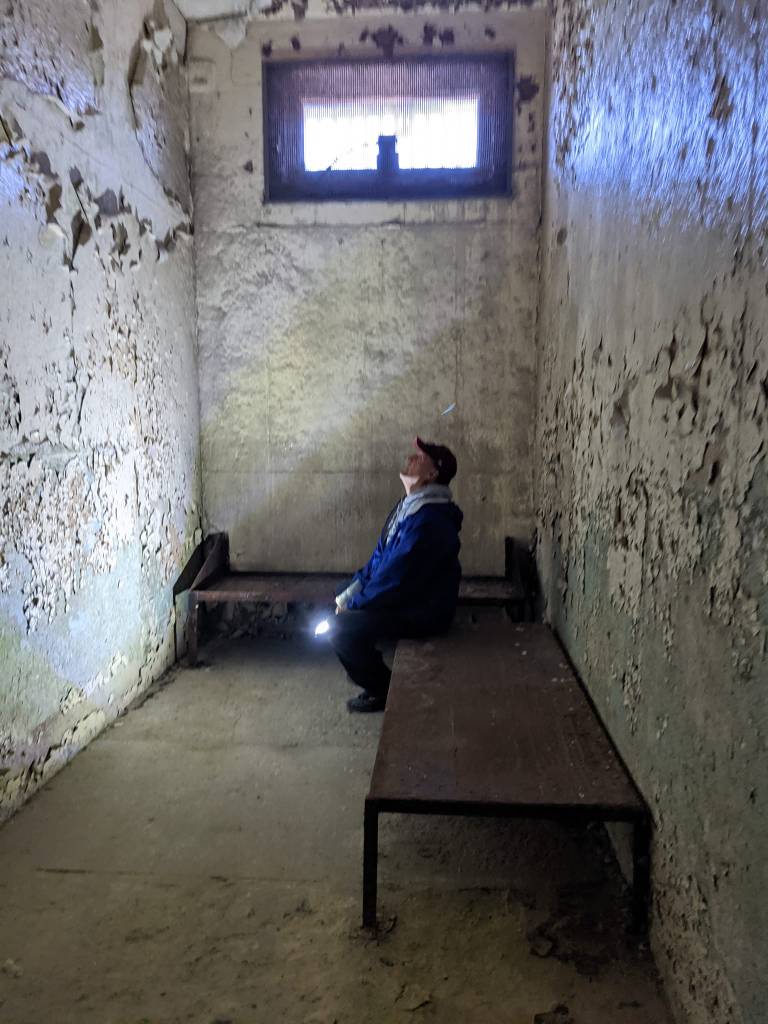
Like many of these incarceration-as-entertainment venues, Joliet is in a perpetual state of arrested decay. The tours are entirely self-guided and for a double sawbuck, you are handed a map and told to go explore “any door that is open.” We followed instructions and were only chased out of one building: the maintenance building. Which begged the question, “Then why did you leave the door open?” Visitors are warned not to shut the cell doors because they don’t have the keys and, oh, look out for rats. (For the record we saw none.) The women’s prison is still in place across the street but is only used nowadays for Halloween seasonal haunted houses and ghost tours.
Why, you ask, Leopold and Loeb? Well, because it was the 100th anniversary date of a crime that is mostly forgotten today but was the first “Crime of the Century”, the first “Trial of the Century” and the first “Media Circus” this “country-as-world-superpower” ever experienced. Fresh off the victory in World War I and smack dab in the middle of the Jazz Age, everything was bigger, faster, and more important in the US at the time. The crime hit the USA like a Jack Dempsey knockout punch to the jaw.
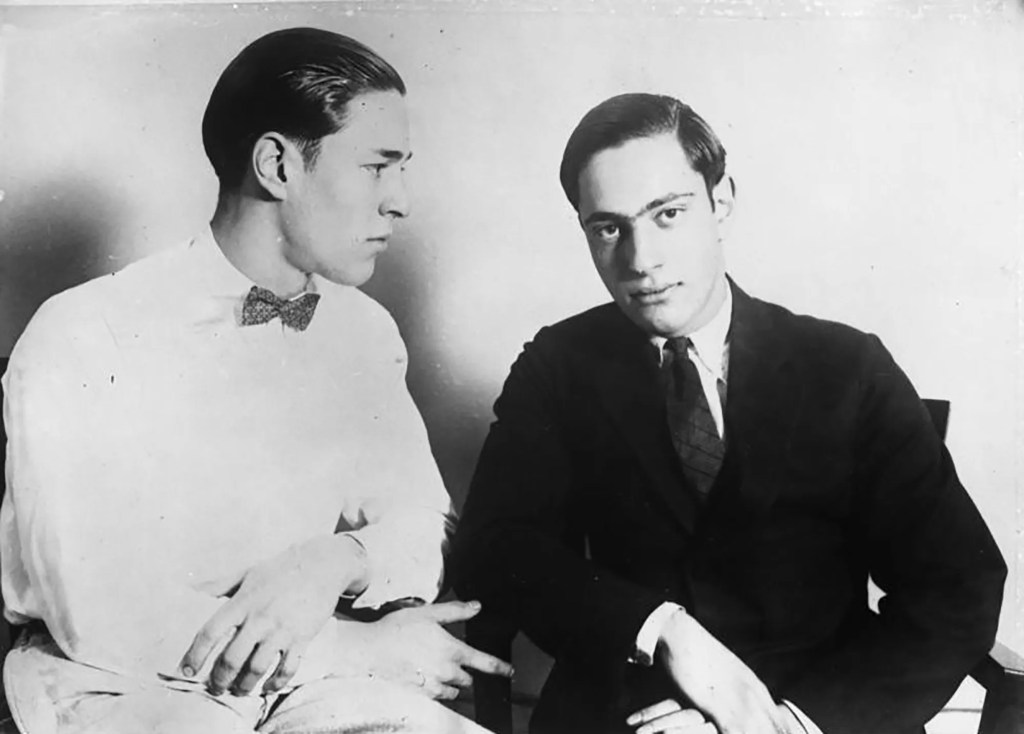
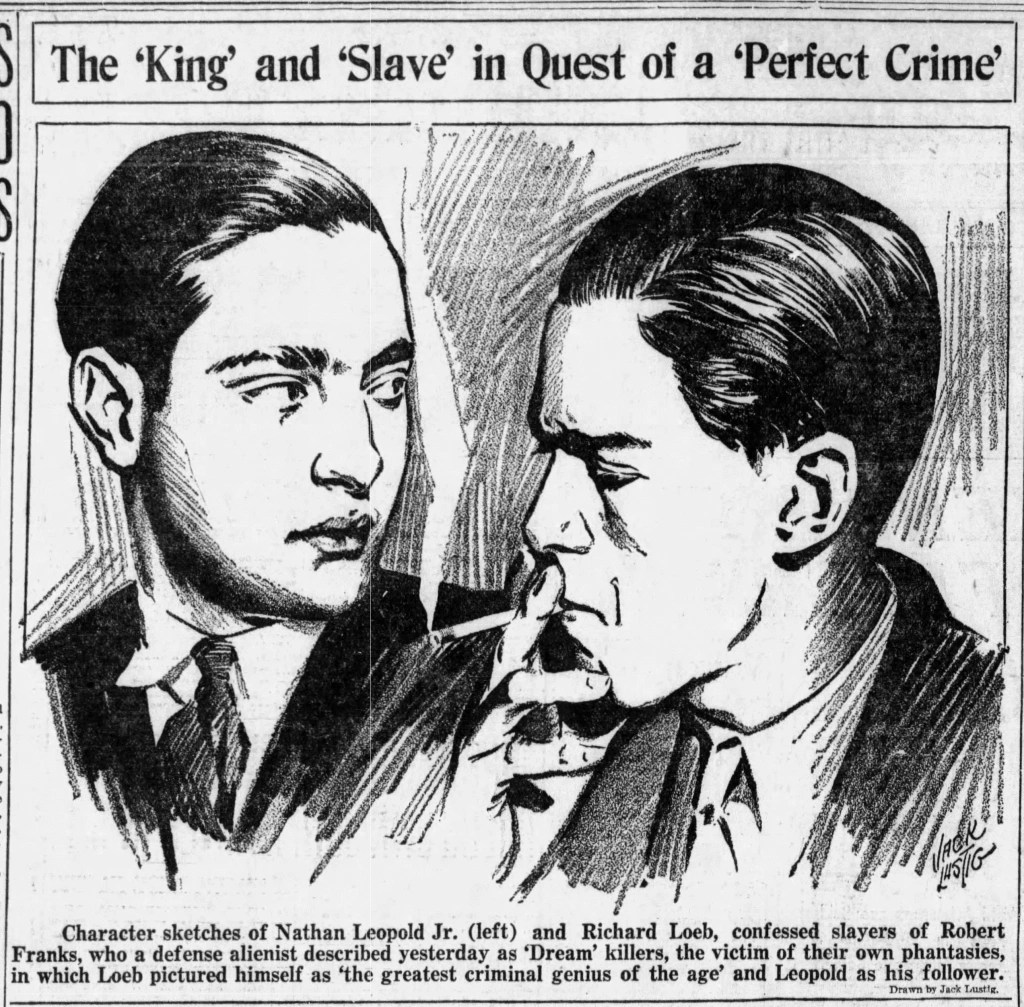
Nathan Freudenthal Leopold Jr. (November 19, 1904 – August 29, 1971) and Richard Albert Loeb (June 11, 1905 – January 28, 1936), were two affluent students at the University of Chicago who kidnapped and murdered a Chicago boy named Bobby Franks on May 21, 1924. They disposed of the schoolboy’s body in a culvert along the muddy shore of Wolf Lake in Hammond, Indiana. The duo committed the country’s first “thrill kill” as a demonstration of their superior intellect, believing it to be the perfect crime without possible consequences.
Richard Loeb (1905-1936) & Nathan Leopold (1904-1971).
Leopold (19) and Loeb (18) settled on identifying, kidnapping, and murdering a younger adolescent as their perfect crime. They spent seven months planning everything, from the method of abduction to purchasing rope and a heavy chisel to use as weapons, and to the disposal of the body. To make sure each of them was equally culpable in the murder, they agreed to wrap the rope around their victim’s neck and then each would pull equally on their end, strangling him to death. To hide the casual nature of their “thrill kill” motive, they decided that they had to make a ransom demand, even though neither teenager needed the money.
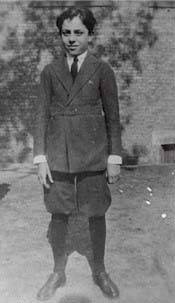
Bobby Franks (1909-1924)
After a lengthy search in the Kenwood area, on the shore of Lake Michigan on the South Side of Chicago, they found a suitable victim on the grounds of the Harvard School for Boys where Leopold had been educated. (Today, Kenwood has received national attention as the home of former President Barack Obama and his family.) The duo decided on 14-year-old Robert “Bobby” Franks, the son of wealthy Chicago watch manufacturer Jacob Franks. Bobby lived across the street from Loeb and had played tennis at the Loeb residence many times before.
Around 5:15 on the evening of May 21, 1924, using a rented automobile, Leopold and Loeb offered Franks a ride as he walked home from school after a baseball game. Since Bobby was hesitant, being less than two blocks from his home (which still stands at 5052 S. Ellis), Loeb told the victim he wanted to talk to Bobby about a tennis racket that he had been using. While the exact details of the crime are in dispute, it is believed that Leopold was behind the wheel of the car with Bobby in the passenger seat while Loeb sat in the back seat with the chisel. Loeb struck Franks in the head from behind several times with the chisel, then dragged him into the back seat and gagged him, where he died.
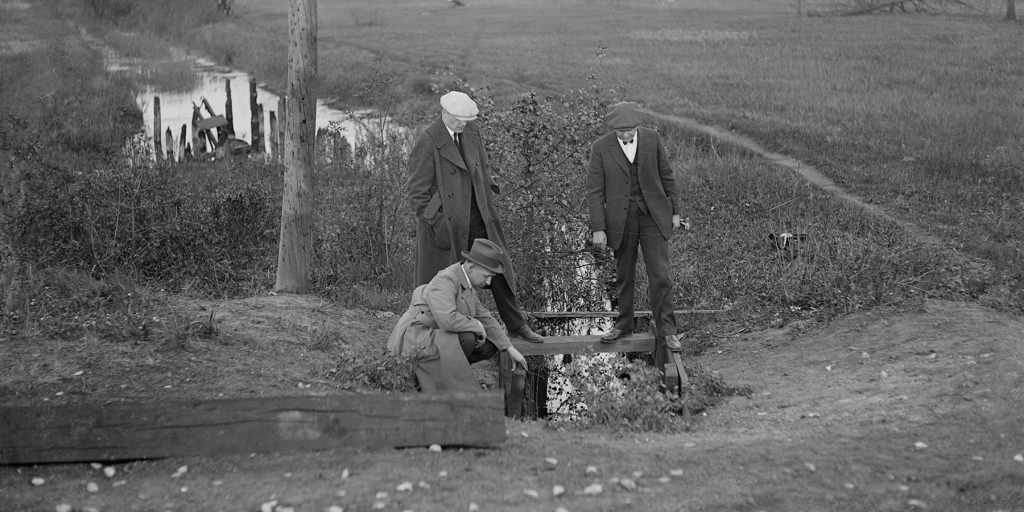
The culvert where Bobby Franks’s body was found. Chicago Daily News collection Chicago History Museum
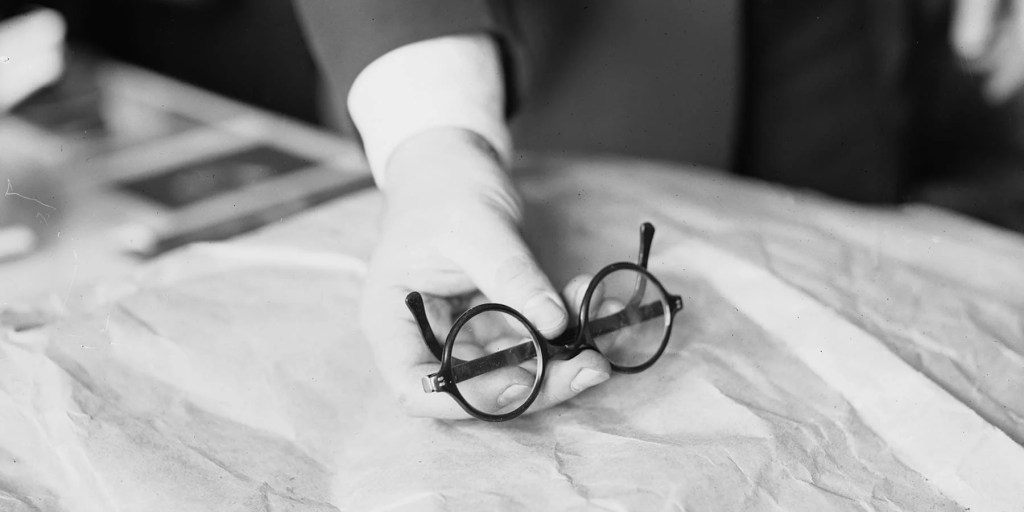
Loeb stuffed the boy’s body into the floorboards and scrambled over the back of the passenger seat. There is little doubt that the deadly duo’s demeanor was joyous as they exchanged smiles below bulging eyes accentuated with anxious breathing and giggles of laughter. The men drove to their predetermined body-dumping spot near Wolf Lake in Hammond, 25 miles south of Chicago. They concealed the body in a culvert along the Pennsylvania Railroad tracks north of the lake. To hinder identification, they poured hydrochloric acid on the face and body. When they returned to Chicago, they typed a ransom note, burnt their blood-stained clothing, and cleaned the blood stains from the rented vehicle’s upholstery. After which, they spent the remainder of the evening playing cards. They didn’t know that police had found a pair of Leopold’s prescription eyeglasses (one of only three such pairs in the entire city) near Franks’ body.
Leopold & Loeb.
Their plan unraveled quickly. When Roby, Indiana, (a now non-existent neighborhood west of Hammond) resident Tony Minke discovered the bundled-up body of Bobby Franks along the shore of Wolf Lake, the gig was up. The thrill killers destroyed the typewriter and burned the lap blanket used to cover the body and then casually resumed their lives as if nothing ever happened. Both of these demented little rich boys enjoyed chatting with friends and family members about the murder. Leopold discussed the case with his professor and a girlfriend, joking that he would confess and give her the reward money. Loeb, when asked to describe Bobby by a reporter, replied: “If I were to murder anybody, it would be just such a cocky little S.O.B. as Bobby Franks.” When asked to explain how the eyeglasses got there, Leopold said that they might have fallen out of his pocket during a bird-watching trip the weekend before. Leopold and Loeb were summoned for formal questioning on May 29. Loeb was the first to crack. He said Leopold had planned everything and had killed Franks in the back seat of the car while he drove. Once informed of Loeb’s confession, Leopold insisted that he was the driver and Loeb the murderer. The confessions were announced by the state’s attorney on May 31, 1924.
The glasses found near Bobby Franks’s body. Chicago Daily News collection, Chicago History Museum.
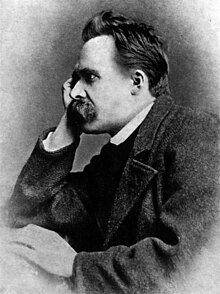
Later, both admitted that they were driven to commit a “perfect crime” by Übermenschen (supermen) delusions, and their thrill-seeking mentalities drove a warped interest to learn what it would feel like to be a murderer. While it is true that Leopold and Loeb knew each other only casually while growing up, their relationship flourished at the University of Chicago. Their sexual relationship began in February 1921 and continued until the pair were arrested. Leopold was particularly fascinated by Friedrich Nietzsche’s concept of Übermenschen, interpreting themselves as transcendent individuals possessing extraordinary, superhuman capabilities whose superior intellects would allow them to rise above the laws and rules that bound the unimportant, average populace.
Philosopher Friedrich Nietzsche (1844-1900).
Early in their relationship, Leopold convinced Loeb that if they simply adhered to Nietzsche’s doctrines, they would not be bound by any of society’s normal ethics or rules. In a letter to Loeb, he wrote, “A superman … is, on account of certain superior qualities inherent in him, exempted from the ordinary laws which govern men. He is not liable for anything he may do.” The duo first tested their theory of perceived exemption from normal restrictions with acts of petty theft and vandalism including breaking into a University of Michigan fraternity house to steal penknives, a camera, and the typewriter later used to type the ransom note. Emboldened, they progressed to arson, but no one seemed to notice. Disappointed with the lack of media coverage of their crimes, they began to plan and execute a sensational “perfect crime” to grab the public’s attention and cement their self-perceived status as “supermen”.
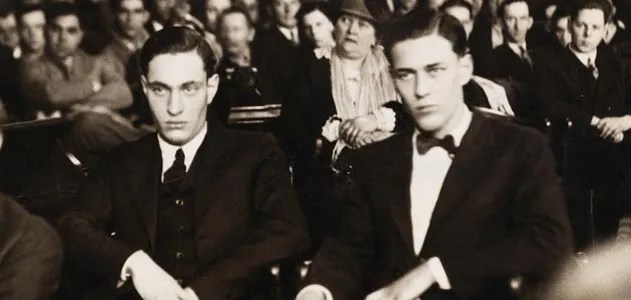
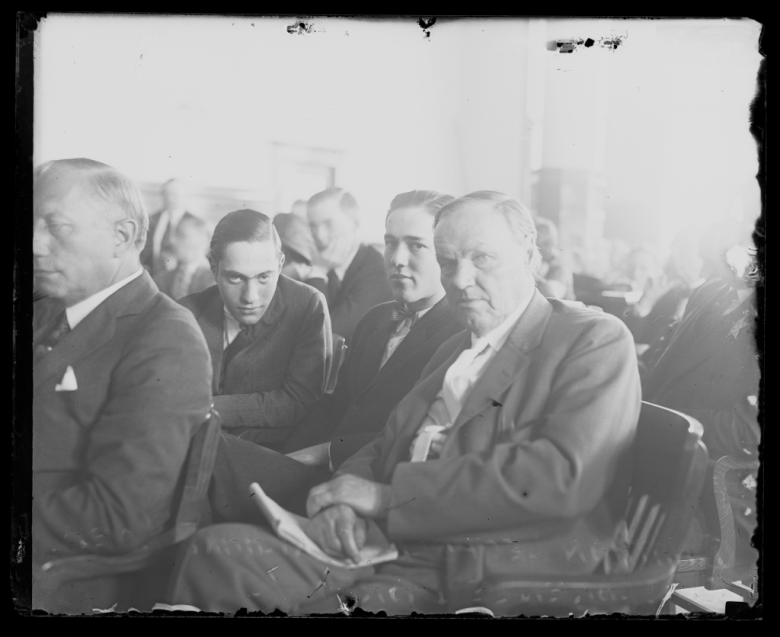
Lawyer Clarence Darrow in court with Leopold & Loeb.
After the two men were arrested, Loeb’s family retained Clarence Darrow as lead counsel for their defense. Clarence Seward Darrow (April 18, 1857 – March 13, 1938) was perhaps the most famous lawyer of the late 19th / early 20th centuries. He was known for his strenuous defense of women, Civil Rights, early trade unions, and the Scopes “monkey” trial. Darrow was also a well-known public speaker, debater, and writer. He took the case because he was a staunch opponent of capital punishment. Darrow’s father was an ardent abolitionist and his mother was an early supporter of female suffrage and women’s rights.
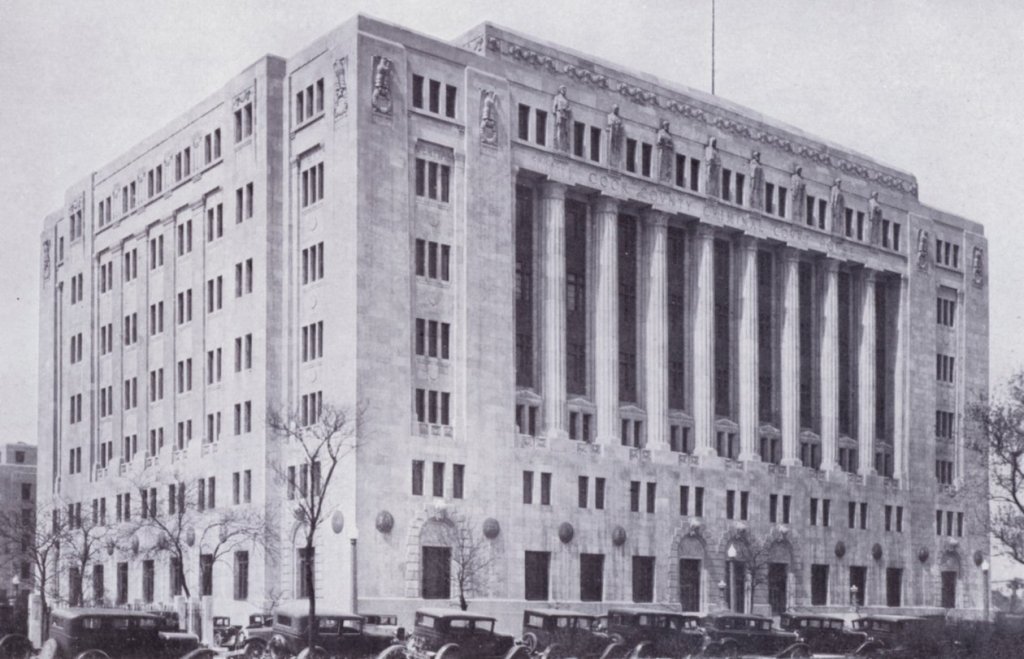
Chicago’s Cook County Criminal Courthouse.
The trial took place at Chicago’s Cook County Criminal Courthouse. For his efforts, Darrow was paid $65,000 (equivalent to $1,200,000 today). Everyone expected the defense would be not guilty because of insanity, but Darrow believed that a jury trial would convict his clients and impose the death penalty regardless of the plea. So Darrow entered a plea of guilty and appealed to Judge John R. Caverly to impose life sentences instead. The sentencing hearing ran for 32 days. The state presented over 100 witnesses, meticulously documenting the crime. The defense presented extensive psychiatric testimony to establish mitigating circumstances, including childhood neglect in the form of absent parenting, and in Leopold’s case, sexual abuse by a governess. But it was Darrow’s impassioned, eight-hour-long “masterful plea” after the hearing (called the finest speech of his career) that saved Leopold and Loeb’s lives. Darrow argued that the methods and punishments of the American justice system were inhumane, and the youth and immaturity of the accused should be considered in their sentencing.
Darrow’s speech, at least in part, is worth revisiting here. “Is any blame attached because somebody took Nietzsche’s philosophy seriously and fashioned his life upon it? It is hardly fair to hang a 19-year-old boy for the philosophy that was taught him at the university…Your Honor knows that in this very court crimes of violence have increased growing out of the war. Not necessarily by those who fought but by those that learned that blood was cheap, and human life was cheap, and if the State could take it lightly why not the boy?…The easy thing and the popular thing to do is to hang my clients. I know it. Men and women who do not think will applaud…(I) would ask that the shedding of blood be stopped, and that the normal feelings of man resume their sway. Your Honor stands between the past and the future. You may hang these boys; you may hang them by the neck until they are dead. But in doing it you will turn your face toward the past. In doing it you are making it harder for every other boy who in ignorance and darkness must grope his way through the mazes which only childhood knows. In doing it you will make it harder for unborn children. You may save them and make it easier for every child that sometime may stand where these boys stand. You will make it easier for every human being with an aspiration and a vision and a hope and a fate. I am pleading for the future; I am pleading for a time when hatred and cruelty will not control the hearts of men. When we can learn by reason and judgment and understanding and faith that all life is worth saving, and that mercy is the highest attribute of man.”
Old Joliet Penitentiary, Joliet, Illinois.
Both men were sentenced to life plus 99 years. During Darrow’s month-long courtroom argument to save their lives, Leopold and Loeb’s families greased the guards with bribes to soften their stay at the Cook County Jail. That abruptly ended when they reached Joliet. The Illinois State Penitentiary was already out of date and seriously overcrowded when they arrived. It had been condemned as unfit for habitation twenty years prior, yet, was still open. According to the Joliet Prison website, “Built in 1858 of limestone quarried on the site by prisoners to house 900 inmates; by 1924 over 1,800 prisoners were incarcerated there. The cells, four feet by eight, were damp, had narrow slits for windows, and possessed no plumbing: prisoners were given a jug of water each morning and made do with a bucket to use as a toilet. Every aspect of life at Joliet was regulated. Prisoners were given two changes of underwear, blue shirts, pants, socks, and heavy shoes to use each week. Contact with the outside world was limited. Inmates could send a single letter and receive visitors every second week. Using funds from their prison accounts, they could purchase tobacco, rolling papers, chewing gum, and candy from the prison commissary. There were no other privileges. A bell awoke prisoners at 6:30 AM and the cell blocks filled with sounds of locks opening, doors slamming shut, and boots marching along the steel flooring. After dressing, inmates grabbed the buckets and carried them into the courtyard, emptying their refuse into a rancid trough. Meals were served in a large dining hall; twice a week prisoners had beef stew for breakfast; other days hash was served. The food was cold and unappealing, sitting in pools of congealed fat on aluminum trays.”
As the Medieval prison loomed before them, its towers bathed in the glow of arc lights shadowing what lay behind the walls, the two convicted killers surely swallowed hard in fear. Thanks to the specialized skills of attorney Darrow, they had escaped the death penalty only to find themselves condemned to life imprisonment in this foreboding fortress. Leopold and Loeb were introduced to their new life at the Illinois State Penitentiary at Joliet on the night of September 11, 1924. Bound in ankle chains tethered by a chain to their handcuffs, the duo shuffled through the front gates of the inmate reception area. By the next day, their heads were shaved; they were photographed and fingerprinted; authorities assigned them prison numbers: Leopold was Inmate No. 9305, and Loeb No. 9306. After processing, they were led to separate cells, disappearing into the penitentiary population. Once they entered regular prison life, they were kept in solitary cells for several months, both because of the publicity of their crime and also because they were among the youngest inmates of the prison. Although kept apart as much as possible, the two managed to maintain their friendship. Leopold and Loeb spent most of their days working in prison shops: Leopold wove rattan chair bottoms in the prison’s Fibre Shop, while Loeb constructed furniture. Between meals, they were allowed two fifteen-minute breaks in which to walk or smoke. After dinner at four, they returned to their cells. At nine, lights out.
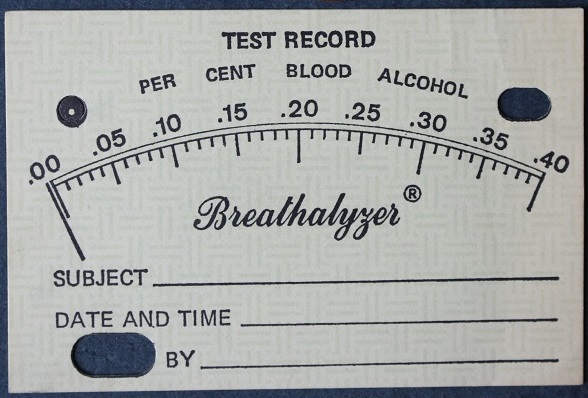
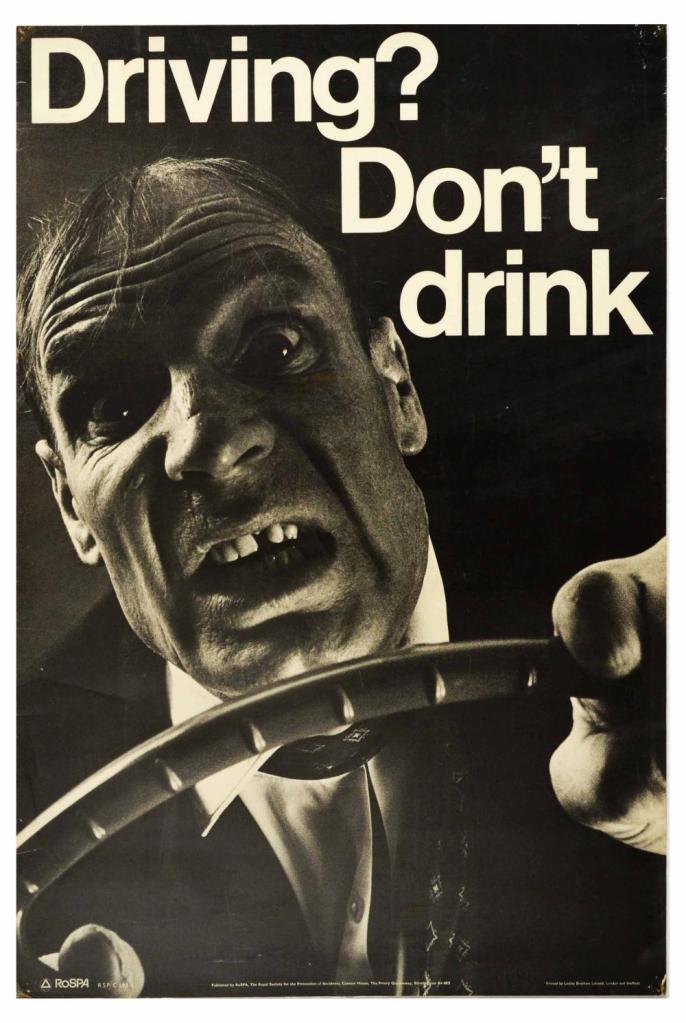
Recently, I found myself at an antique show rummaging through a small box of paper, not unfamiliar territory for me. The usual: postcards, coupons, ads, snapshot photos. Then my fingers danced past a small greenish-colored slip of paper with a frozen gauge chart numbered .00 to .40 and a pair of machine-cut holes in the corners. Titled “Breathalyzer” it was identified as a “Test Meter” to measure “Per Cent Blood Alcohol” with an unused 3-line identifier at the bottom for the “Subject” name, “Date and Time”, and name of the person administering the test. Okay, we all know what it means (some more than others) and if we are smart (or lucky) we have managed to avoid these at all costs in our lifetimes.
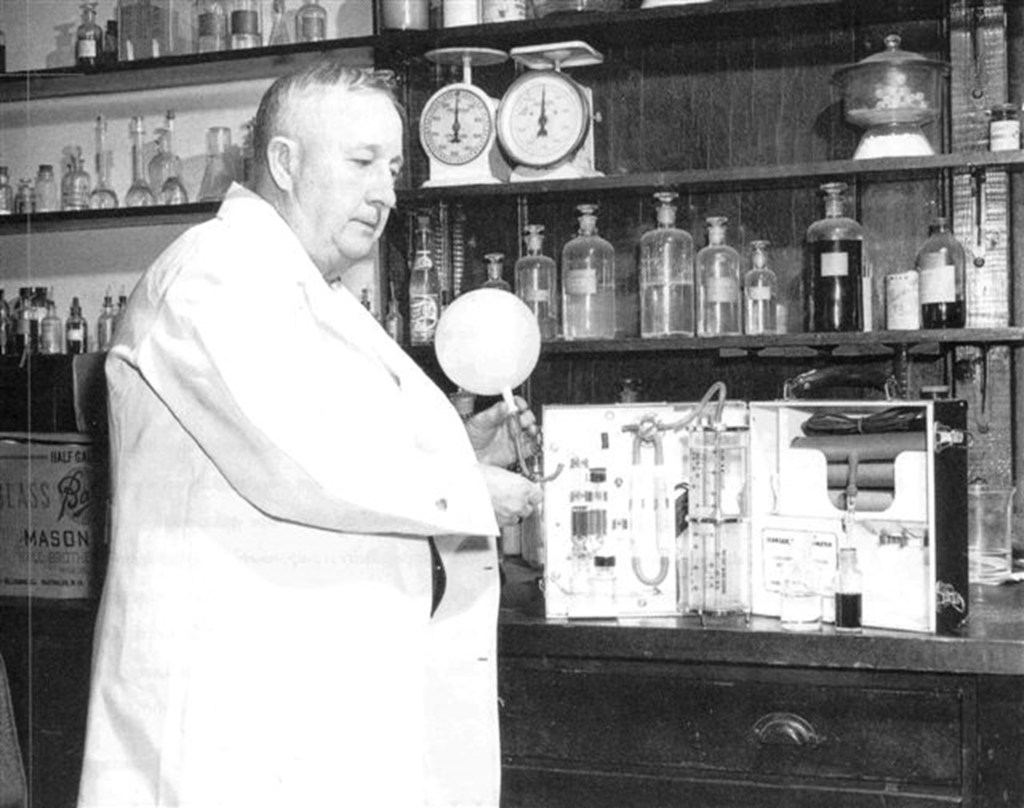
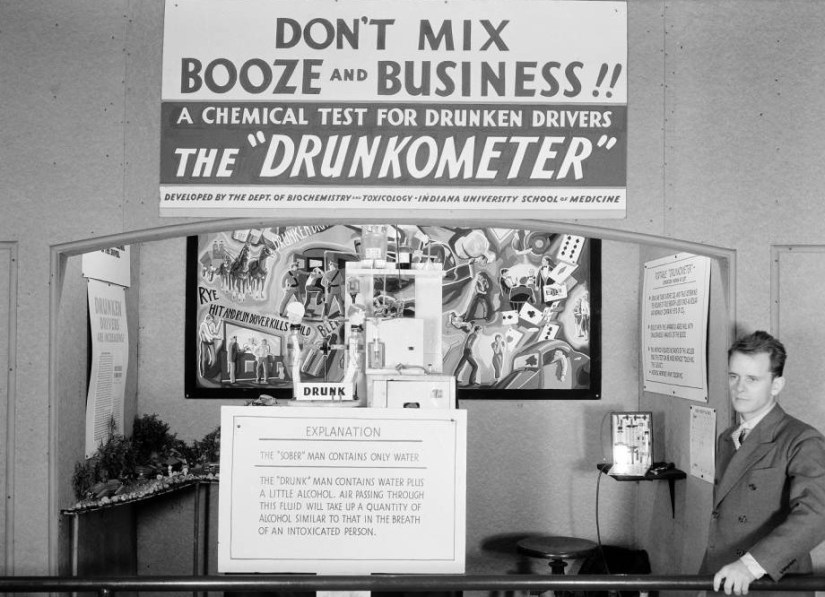
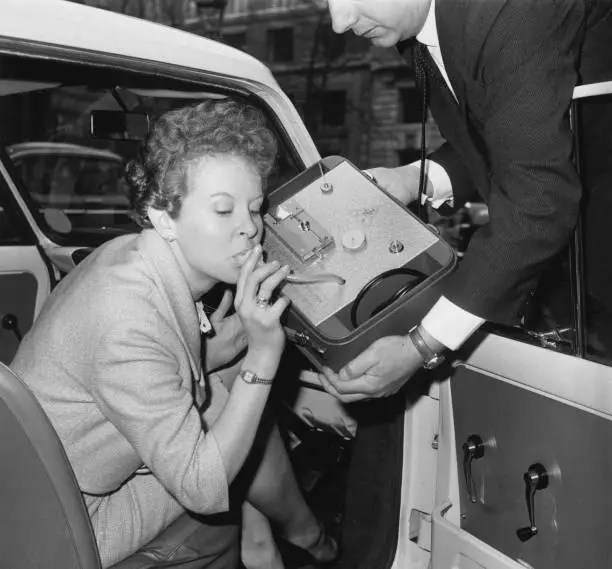
But did you know that the “Breathalyzer” instrument, known around the world as the “Breath of Death”, the “Intoxalock”, or the “Booze Kazoo”, was invented in Indiana? In 1931, a 41-year-old toxicology professor at Indiana University named Rolla Harger invented the first practical roadside breath-testing device called the Drunkometer. He was awarded a patent for it in 1936. The Drunkometer collected a sample of the motorist’s breath when the driver blew directly into a balloon attached to the machine. The breath sample was then pumped through an acidified potassium permanganate solution and if there was alcohol in the sample, the solution changed color. The greater the color change, the more alcohol there was present in the breath.
Rolla Neil Harger (January 14, 1890 – August 8, 1983).
In 1922, Harger became an assistant professor at Indiana University School of Medicine in the newly formed Department of Biochemistry and Pharmacology. He served as the department chairman from 1933 to 1956 and worked continuously in the department until 1960. However, the bulky Drunkometer proved impractical and unportable. The test required the suspected impaired driver to effectively inflate a balloon (a challenging task for some drunk or sober), which was then taken to the machine at police headquarters. This time-consuming, awkward process depended on the visual skills of the technician analyzing the sample-an Achilles heel that defense lawyers were often successful contesting. The Drunkometer eventually fell out of favor with police officers who saw it as complicated and unreliable. Police instead preferred to administer roadside dexterity tests to determine intoxication.
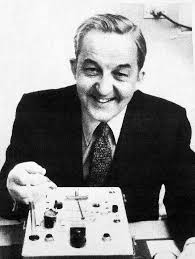
Frank Borkenstein (1912-2002)
Enter Robert Frank Borkenstein. Born August 31, 1912, in Fort Wayne, Borkenstein was a natural-born teacher, researcher, and inventor. Borkenstein was a product of the Great Depression, and like many young Hoosiers of that era, he was unable to attend college. His first job in Fort Wayne was as a photographic technician, where legend claims his expertise in color film led (at least in part) to the invention of the color camera. While that claim is hard to nail down, what we do know is that his skill and creativity were recognized by the Indiana State Police Criminology Laboratory which hired him in 1936. Borkenstein quickly rose through the ranks, he went from working as a clerk to Captain in charge of Laboratory Services to Director of the State Police Criminological Laboratory, one of the first state police laboratories in the US. During his time with the department, Borkenstein helped perfect the use of photography in law enforcement and worked extensively on developing the polygraph, or lie detector. He administered more than 15,000 tests before his retirement in the late 1980s.
Indiana University School of Medicine Dept. of Biochemistry-Toxicology display.
Also while with the department, Borkenstein developed a close professional relationship with IU Professor Rolla N. Harger who was still working to improve his Drunkometer. In the 1950s, Borkenstein attended Indiana University on a part-time basis, eventually earning his Bachelor of Arts in Forensic Science. In February of 1954, IPD Lieutenant Borkenstein, Director of the State police laboratory, developed his first working model of the Breathalyzer (an amalgam of “breath, alcohol and analyze”) in the partially dirt-floored basement of his small Indianapolis home at 6441 Broadway near Broad Ripple. His machine was more compact, easier to operate, and consistently produced reliable results when measuring blood alcohol content. The Breathalyzer substituted a rubber hose for the balloon and featured an automatic internal device to gauge the color changes previously determined by the naked eye. Borkenstein’s Breathalyzer was an inexpensive way to test intoxication and meant that BAC (blood alcohol content) could be quickly collected and analyzed for use as evidence. Upon graduation from IU, Borkenstein retired from the State Police and joined IU as Chairman of the newly-formed Department of Police Administration.
Borkenstein’s updated breathalyzer.
Robert Borkenstein, a convivial fellow known as “Bob” to friends, family, and colleagues, enjoyed listening to Gilbert and Sullivan, entertaining visitors, and serving drinks to his friends. According to one account, ironically Bob “exhibited a Catholic taste in wines and spirits”. But Bob insisted on one rule for himself and anyone consuming alcohol in his presence: No drinking and driving! This, even though he supervised a study, paid for by the liquor industry, that suggested that “the relaxing effect of having drunk less than two ounces of alcohol might produce a slightly better driver than one who had none”.
At I.U., Borkenstein was well-liked and known for his generosity to younger colleagues. He was also a Francophile who traveled extensively to Paris and other parts of France, incorporating the French language into much of his work. Another gadget Borkenstein invented was a coin-operated Breathalyser for use in bars. The idea is that when a customer drops a coin it causes a straw to pop up. When the straw is blown into, a reading of .04 or less would produce a message: “Be a safe driver.” Between .05 and .09, the machine blinked and advised: “Be a good walker.” At .10 or higher, it sounded a small alarm and warned: “You’re a passenger.”
He later became chairman of IU’s Forensic Studies Department and director of the university’s Centre for Studies of Law in Action. The class he established on alcohol and highway safety became a national standard in the United States for forensic science, law enforcement, and criminal justice professionals. Today, it is officially known as the “Robert F. Borkenstein Course on Alcohol and Highway Safety: Testing, Research, and Litigation”, more simply known as the “Borky”. In light of his achievements, Borkenstein was awarded an Honorary Doctor of Science by Wittenberg University in 1963 and an Honorary LL.D. from Indiana University in 1987. In March 1987 Borkenstein retired, though he continued to hold emeritus titles as both a professor and Director of the Center for Studies of Law in Action and was inducted into the Safety and Health Hall of Fame International in 1988. Borkenstein’s mentor Dr. Rolla Neil Harger died on August 8, 1983, in Indianapolis and is buried in Crown Hill Cemetery. Borkenstein’s papers are held at the Indiana University Archives in the Herman B Wells Library in Bloomington, IN.
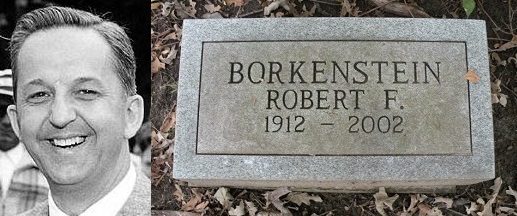
Robert Borkenstein graveLindenwood Cemetery Fort Wayne, Allen County, Indiana.
In 1938 Borkenstein married Marjorie K. Buchanan, a children’s book author who died in December 1998. The couple had no children. Robert Borkenstein died on August 10, 2002, at the age of 89. Borkenstein held the Breathalyzer patent for most of his life, finally selling it to the Colorado firm that markets it today. Although the Breathalyzer is no longer the dominant instrument used by police forces to determine alcohol intoxication, its name has entered the vernacular to the extent that it has become a generic name for any breath-testing instrument. Between 1955 and 1999, over 30,000 Breathalyzer units were sold. Without question, Bob Borkenstein’s invention has saved countless lives over the years and has become an irreplaceable tool of the police. And to think, it all started in Indiana.
















 Alan E. Hunter