
Original publish date: March 21, 2016
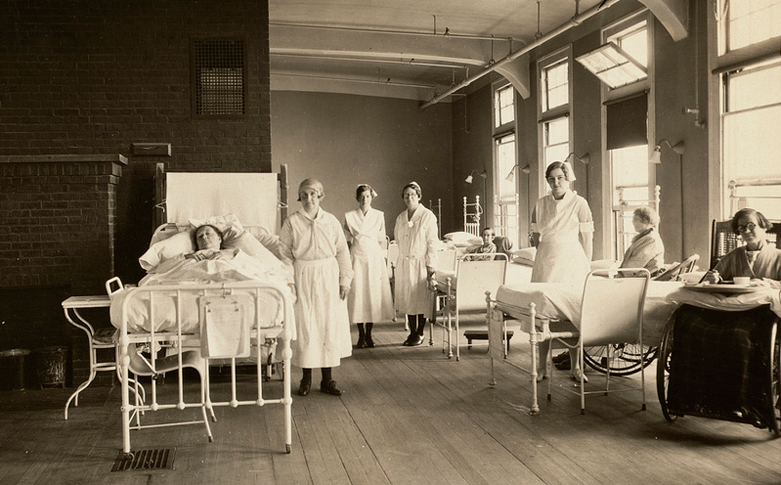
This past October while leading a ghost tour through historic Irvington, I met a pair of lovely young women who posed an interesting question to me. The query came after I concluded my version of the Lincoln funeral train story, a tale fraught with emotional imagery and historical fancy that has been the last story on the tour for over a decade. As the group dispersed into the Irvington night, the young women sheepishly approached to ask their question. They introduced themselves as nurses at Community North hospital, not just any nurses, these were critical care nurses working in the hospice unit there.
As part of their duties they were often in charge of patients in the final stages of life and both had sadly witnessed firsthand the dying of the light many times. They wanted to share personal experiences with me, witnessed by both independently and together, that they hoped I might have an answer for. They explained that on more than a few occasions, patients would suddenly see the figure of Abraham Lincoln moments before dying. One instance in particular involved a recent near comatose patient arising with arms outstretched proclaiming that Abraham Lincoln was there in the room to deliver him up to heaven.
Luckily, I was able to tell them that this was not the first time I had heard this story. As a lover of history, ghost stories, writer and folklore, I have become somewhat of an ersatz authority and repository of Abraham Lincoln ghost stories and sightings. Interestingly enough, most accounts I hear of Abraham Lincoln as a secular saint are rooted within the baby boomer generation although the roots of this belief can be found in his assassination on Easter weekend of 1865.
The assassination had occurred on Good Friday, and on the following Sunday, known colloquially as “Black Easter,” hundreds of church speakers found a sermon buried in the tragedy. Some men of the cloth viewed the act as more than mere coincidence that assassination day was also crucifixion day. One preacher declared, “Jesus Christ died for the world; Abraham Lincoln died for his country.” The meteoric posthumous growth of his reputation was influenced by the timing and circumstances of his death, which won for him a kind of saintly aura.
Although Lincoln enjoyed public popularity during his life, it was his death which erased all opposition and cemented his mythic identity. Lincoln’s shooting on Good Friday and death on Holy Saturday were his first steps on the stairway to heaven. Just moments after he breathed his last breath, Lincoln began his ascension to sainthood. Secretary of War Edwin Stanton kick-started the heavenward trip by stating, “Now he belongs to the angels.”
Churches across the country were now faced with the difficult task of celebrating Easter and mourning the death of Lincoln at the same time. The resulting nationwide church services devoted to Lincoln on Easter Sunday began his posthumous religious transformation from man of the people to Godlike status. Many Americans, North and South, came to believe that his death was the price we paid for the bloodshed of the Civil War. In fact, it became the capstone for America’s greatest internal sin: slavery.
The sermons preached on Easter Day, 1865 painted a theologically enigmatic portrait of Abraham Lincoln. Barely twenty-four hours after his death, Lincoln’s memory was already being defined as superhuman. Lincoln, as a symbolic figure, was revered not only by those who had supported him during his life, but now by all Americans, and soon by the whole world.
 Within forty-eight hours of his passing, the association of Lincoln’s character with American tradition began. The clergy, alongside their biblical images of Moses and martyrdom, also invoked the images of Lincoln and the founding fathers. In addition to grouping the Emancipation Proclamation and the Declaration of Independence as sacred texts, these sermons also established a link between Lincoln and the nation’s first President George Washington.
The timing and tragic nature of Lincoln’s death underscored the accomplishments of his life. Lincoln quickly became a central figure-perhaps the central figure-in the unfolding epic of America as a nation post 1865. Who else but Lincoln, the rough-hewn man forged on the prairies of Indiana, Kentucky and Illinois, could have seen us through the sectional conflict pitting brother-against-brother? The plain speaker-unpolished, unschooled, and untutored- somehow managed to master a situation that was in his own words “piled high with difficulty.” He did so with a rhetorical mastery that no other American political figure has come close to matching since.
Generations of schoolchildren were taught to memorize two things: the Pledge of Allegiance and the Gettysburg address. Lincoln’s image graces both our paper money and our coinage. Lincoln is referred to as Father Abraham, Honest Abe and the Great Emancipator. Therefore it should come as no surprise to even the most casual observer that Lincoln’s evolution into a religious figure was / is inevitable. Couple that with the realization that more and more late 20th / early 21st century Americans are drifting further away from organized religion and the church, and these visions of Lincoln in the last moments of life become more easily explained.
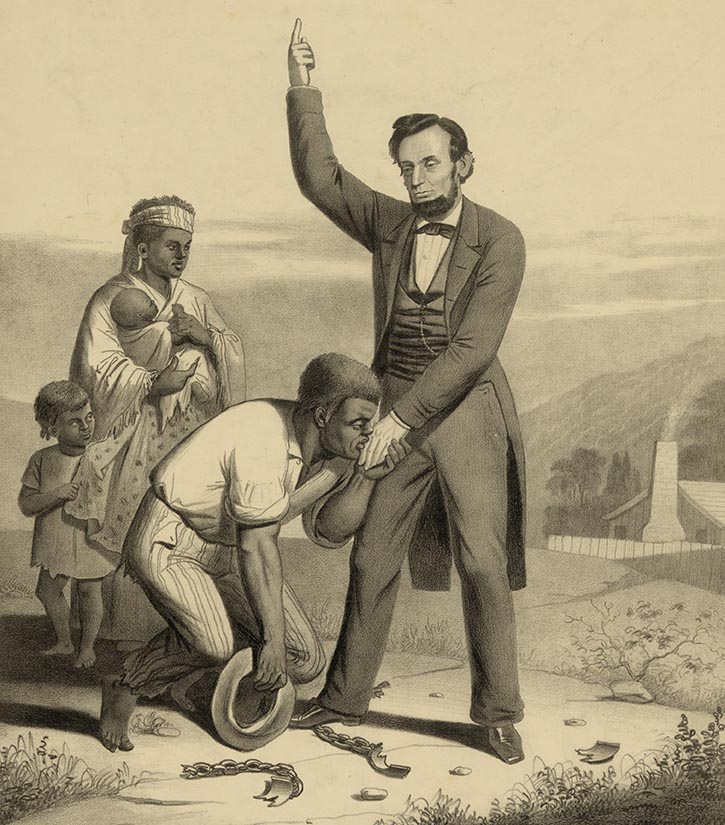
If Abraham Lincoln does not assume the identity of God to these folks, he must certainly signify the most positive prospects of heaven. I have studied Lincoln’s complicated religious beliefs over the years through conversations with Lincoln scholar and author C. Wayne Temple, whose 1995 book “Abraham Lincoln: From Skeptic to Prophet” is considered the definitive study on the subject. It appears that Abraham Lincoln was a deist, making the view of him as a prophet, angel or Godlike figure all the more ironic. A deist is defined as “a person who accepts the belief in god,but does not believe in the religion.” To a deist, the concept of God is rhetorical with a belief in his power of creation and omnipotence, but unrelated to organized religion.
The religious views of Abraham Lincoln remain a matter of interest among scholars and the public. Lincoln grew up in a highly religious Baptist family. He never joined any church, and sometimes (as a young man) ridiculed revivalists. He often referred to God and had a deep knowledge of the Bible, regularly quoting from it. Lincoln attended Protestant church services with his wife and children, and after two of them died he became more intensely concerned with religion. In short, Lincoln was the “thinking man’s” Christian whose religious ambiguity makes him a perfect candidate for a last second spiritual visitation.
When the sermons of April 16, 1865 asked the American people to “pledge not only to the affectionate memory of our MARTYR but to the imitation of his character and the perpetuation of his principles” a spiritual place was created for Lincoln in the American mind which has existed ever since. The Lincoln of legend has grown into a temporal god available to assume a shape to please almost anyone at anytime.
A 2015 Gallup poll shows that Americans’ trust in organized religion is on the decline, continuing a gradual, decades-long trend. Gallup noted in their commentary on the poll that “Once reliably at the top of Gallup’s confidence in institutions list, [organized religion] now ranks fourth behind the military, small business and the police, and just ahead of the medical system.”
The poll shows that only 42% of Americans have a “great deal” or “quite a lot” of confidence in organized religion or the Church, well below the high of 68% in the 1970s. This coincides with a 2014 Pew Study showing Americans are becoming increasingly unlikely to identify with any particular religion and that America is building fewer churches. The amount of construction spending on religious structures has dropped by 62% since January 2002. Therefore, it stands to reason that more and more people are apt to view Abraham Lincoln as a savior at the closing moments of their life.

As for me, I think it important for all people to believe in something bigger than themselves, whatever or whomever that may be. So to the nurses of Community North Hospital’s Hospice care unit I want to say thank you for sparking this conversation. Thank you for caring enough to recall with kindness and concern the plight of your beloved patients. It is good for us all to know that you care as deeply as you do right up until the last moments of precious life. One of my personal heroes of the Lincoln assassination saga is a 23-year-old U.S. Army Surgeon named Dr. Charles Leale. For most of that tragic night, Leale held the dying president’s hand. He later said “I held his hand firmly to let him know, in his blindness, that he had a friend.” Ladies, it cheers me to think that the patients of Community North know that they too have angels in the darkness.
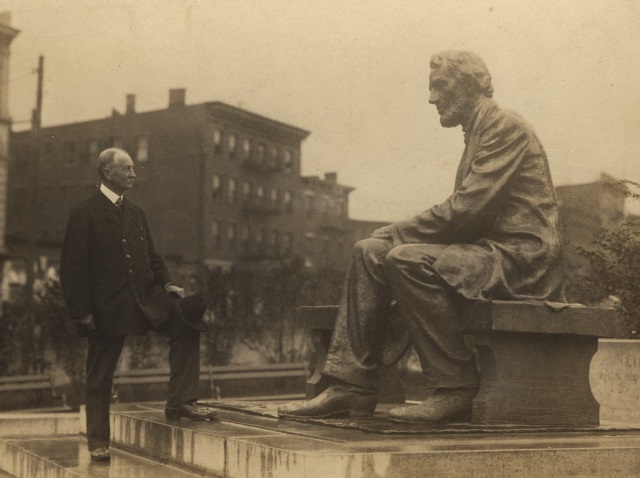
 On June 16th I found myself in Marshalltown examining the items. I obtained my bidder number, which happened to be bidder # 1, and retreated to my hotel room to await the next day’s auction. There’s not much to do in Marshalltown, Iowa so I decided to drive to the nearby community of LeClaire, Iowa to mark time.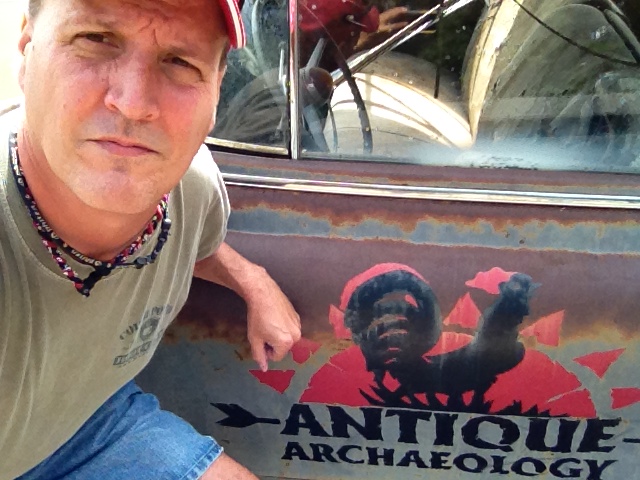
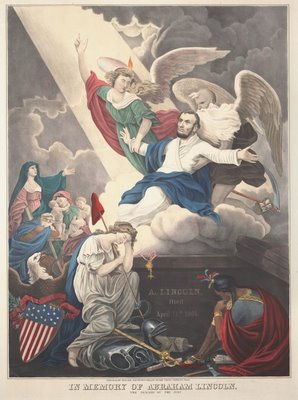
 Among the items I brought home were a pair of contemporaneous framed leaflets. Both are displayed starkly in black wood and glass frames, one is a copy of Lincoln’s farewell address to the citizens of Springfield, and the other is a copy of Lincoln’s favorite poem. The farewell address is important to me because Lincoln’s first stop after the delivery of this poignant edict was Indianapolis. The next item was a classic-looking photo of Lincoln ascending to heaven wrapped in the open arms of George Washington. The careworn oval metal frame fits snugly in the palm and bears the wear and patina of an item held repeatedly in the loving hands of a legion of Lincoln admirers.
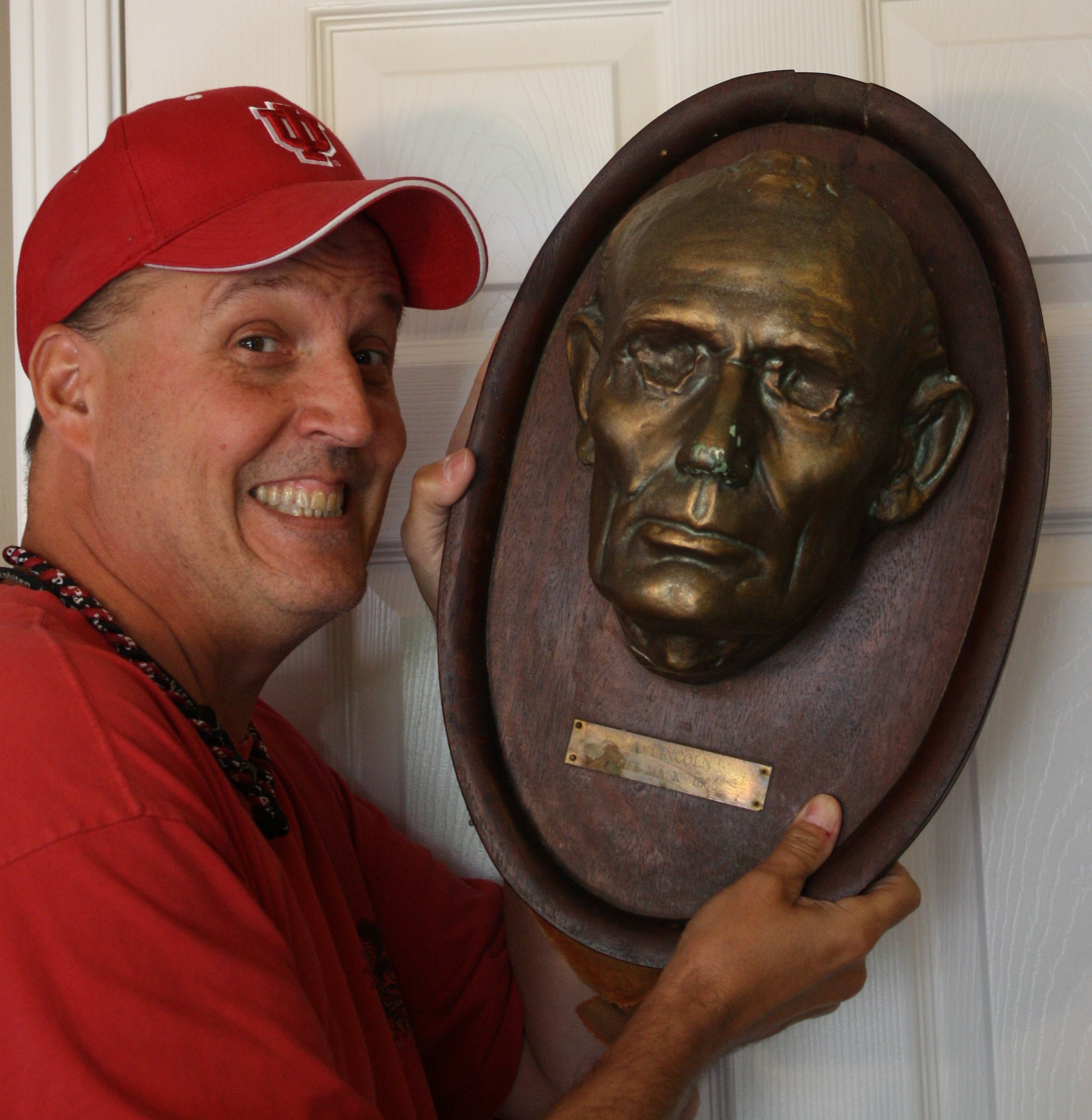 The next item is the haunting life mask of Abraham Lincoln that once hung on the wall of Oldroyd’s museum. The lifesized mask is attached to a larger handcrafted oval wooden plaque with a smaller brass nameplate attached to the front. The lifemask, made by artist Leonard Volk in 1860 before Lincoln grew his signature beard, is an accurate representation of what it would have been like to look at the face of a young and vibrant Lincoln. This item was surely a highlight of the museum and, judging by the loss of paint and subsequent repair of the nose, was a good luck talisman for all visitors. Rubbing Lincoln’s nose is still a popular tradition at the Lincoln tomb in Springfield.
 owned. The Bible was obtained by Oldroyd after Mr. Lincoln was killed and presumably following the death of Mary and Tad Lincoln. The phone book-sized Bible shows signs of heavy wear and transport in compliance with the somewhat vagabond lifestyle led by Mary and Tad after vacating the White House in 1865. Mary died in 1882. Tad preceded her in 1871. The Bible includes a couple pages of contemporary Carte de Visite photographs of the Lincoln family along with a few other disparate images from the Civil War and immediate post-period. The inclusion of CDVs depicting Union Civil War Generals Grant, Sheridan, Burnside, and Sherman alongside images of the US Capitol Dome under construction and George and Martha Washington could easily be construed as Tad’s version of collecting baseball cards.
 The last three items of acquisition were perhaps the most important to me. I am a native Hoosier. I cherish the idea that Abraham Lincoln grew to manhood in the southern region of my home state. These three items offered a direct connection to Lincoln and Indiana. The first two items are innocuous in their relevance to Lincoln the Hoosier; the Lincoln family coffee grinder and Abraham Lincoln’s ice skate.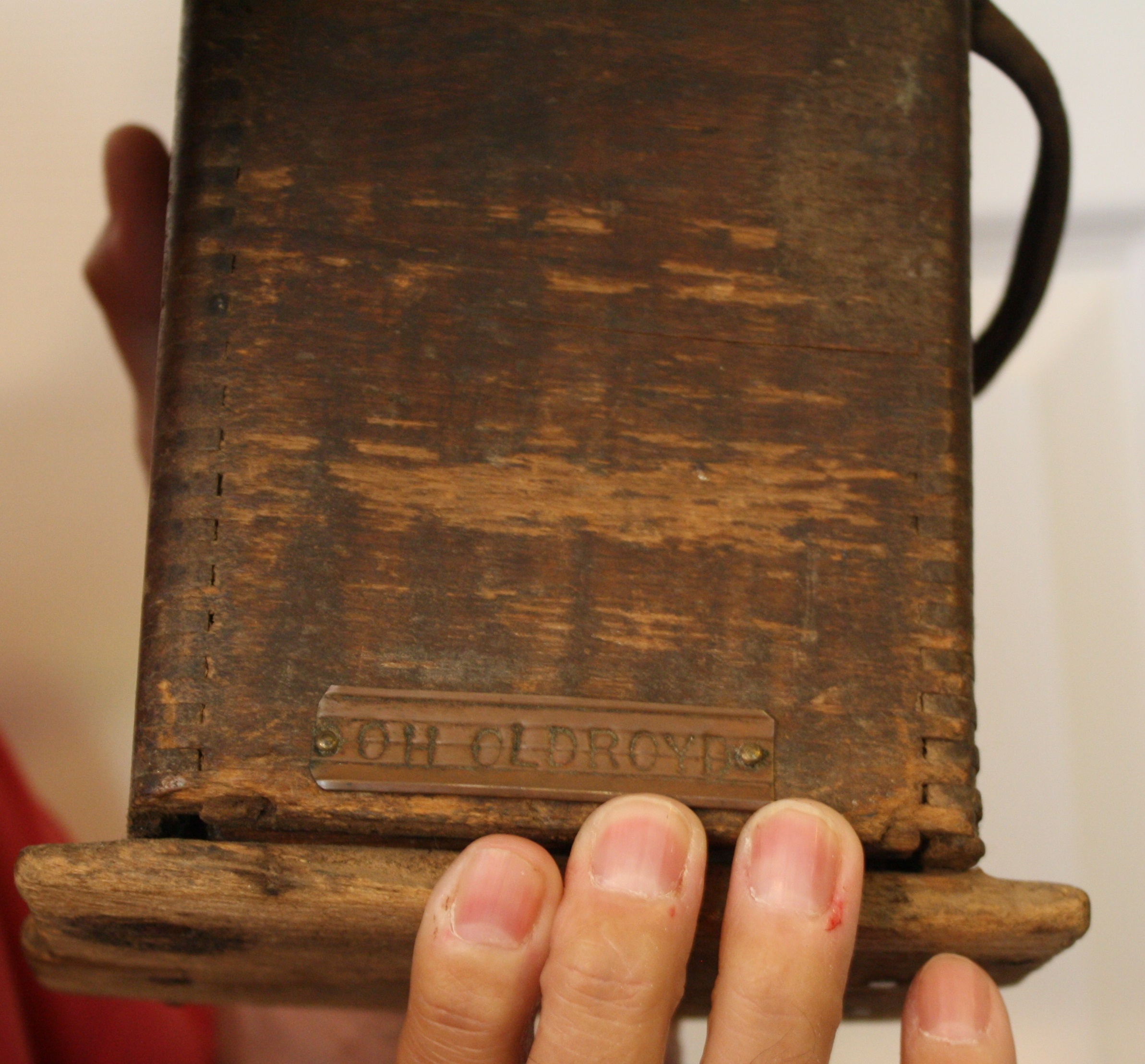
 The next Indiana Lincoln item is an ice skate. The thick wooden shoe stand is shaped like an hourglass and the heavy iron blade is curled at each end like an ancient Crakow shoe. While no official reference exists of Lincoln the ice skater, the skate presents a romantic image of boyhood Lincoln at play on a frozen southern Indiana pond. Simply holding it in your hands brings a smile to your face.
 with me, at all costs. It is an ancient-looking Colonial Era metal candle maker. During colonial times up to the Antebellum Era, candles were the main source of light during the long, dark, nighttime hours. Candles on the western frontier were made from beeswax and tallow (animal fat). The wicks were lain loosely inside the tube as the wax was poured in around them to harden.
 Included with the candle maker is a framed certificate written and signed by Osborn Oldroyd reading: “This candle maker is from the Lincoln and Sparrow Cabin on Pigeon Creek Indiana (1818-1835) O.H. Oldroyd Washington April 9, 1901”. The certificate has a small brass diecut tab attached with the seal of the state of Indiana inset. It would be hard to find a more romantic artifact to illustrate Lincoln’s time spent in the Hoosier state. Young Abraham may well have learned to read by the light of a candle made in this, the Lincoln family candle mold. Stories abound of Young Abe the railsplitter reading by candle and firelight into the wee hours of the morning after a long day’s work in the fields.
 Lastly, my wife treated me to a birthday trip to Springfield, Illinois in July. I traveled to the Lincoln home on an early Saturday morning to reflect while seated in front of the Lincoln home. Based on trips past, I’ve learned that the early morning hours are best. No school buses, tourists or fitness walkers/bikers to mar the scene. I have been coming to Springfield for many years. Of course, Abraham Lincoln is the reason for my visit. However, I never forget that Osborn Oldroyd lived in the house and operated his museum here for nearly a decade (1884-93). I’d asked several people, ranging from officials at the Lincoln Museum to parks department employees, about Oldroyd in the past but always got a cool reception to my querie.
 Original publish date: July 20, 2017
 Another of the letters, dated Dec. 10, 1902, touched me personally because it was written by the sister of Louis Weichmann, the main government witness at the trial of the conspirators. Weichmann lived in Mrs. Surratt’s boarding house and many believe it was Weichmann’s testimony that got Mary Surratt hung. Weichmann moved to Anderson Indiana after the trial and founded Anderson business college. He is buried in Anderson’s St. Francis cemetery in an unmarked grave. “Dear Sir-I am sending you a copy of Sunday’s Indianapolis Journal containing a confession of one of the conspirators of President Lincoln….With best regards from our family, I remain Sincerely yours, Mrs. C.O. Crowley Sister of the late L.J. Wiechmann.” Curiously, Mrs. Crowley misspelled her own maiden name in her letter.
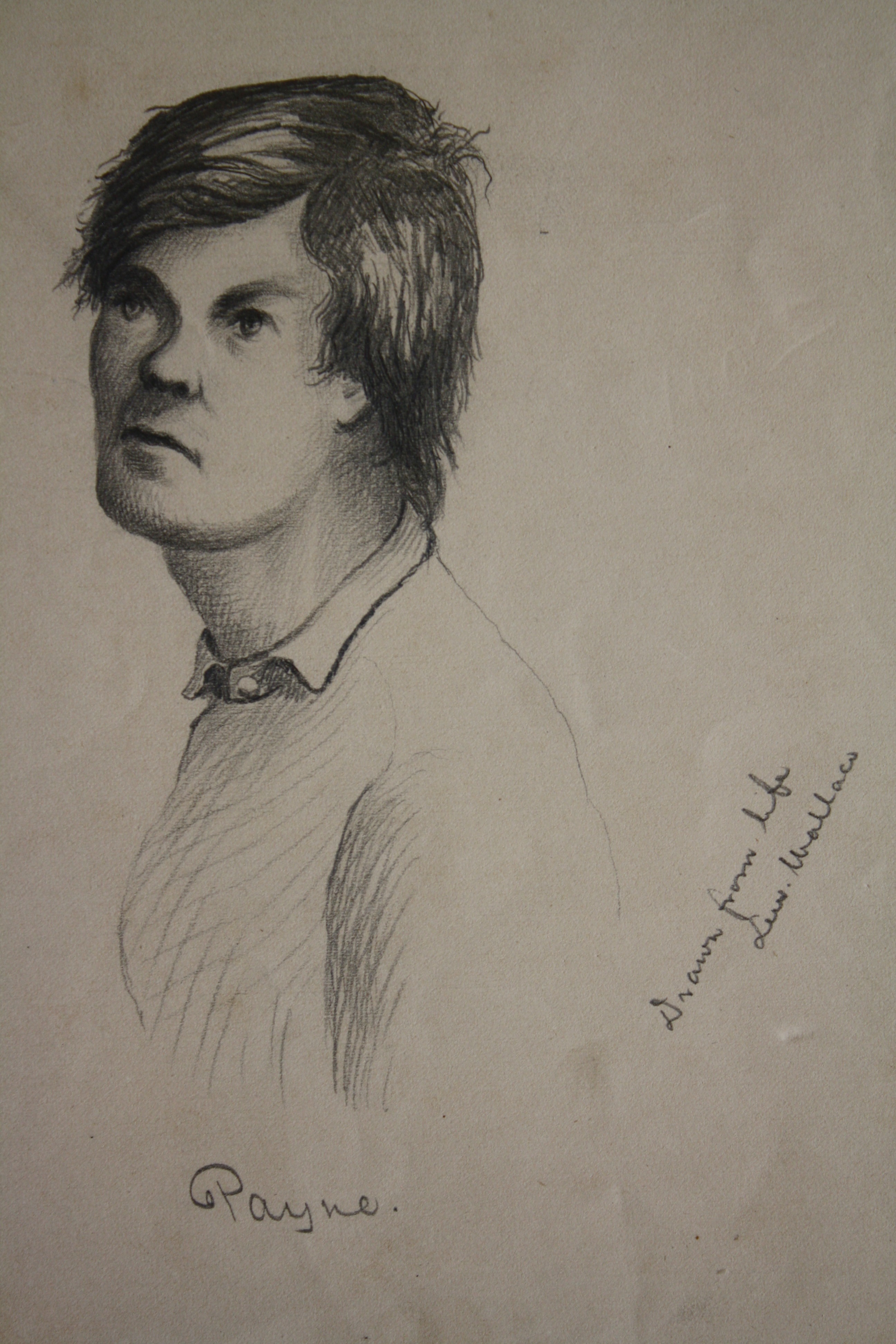 Included within that collection was a group of several dozen items that once belonged to Osborn Oldroyd himself. This included correspondence from Anderson’s Louis Weichmann to Oldroyd about shared information for books about Abraham Lincoln both men were simultaneously working on as well as photos and several handwritten eyewitness accounts of the assassination of President Lincoln. My personal favorite was a pencil drawing of Lincoln Conspirator Lewis Thornton Powell drawn by Crawfordsville, Indiana’s General Lew Wallace.
 Original publish date: July 13, 2017
 Ironically, the same year that Oldroyd moved to the Peterson house, Ford’s Theatre, where John Wilkes Booth had shot Abraham Lincoln, collapsed. The building closed since the President’s death, operated as an office until June 9, 1893, when the interior of the historic building collapsed. Twenty-two clerks died in the tragedy and sixty-eight others were seriously injured. Within a year the damage was repaired and the former theatre was remodeled for use as a government warehouse.
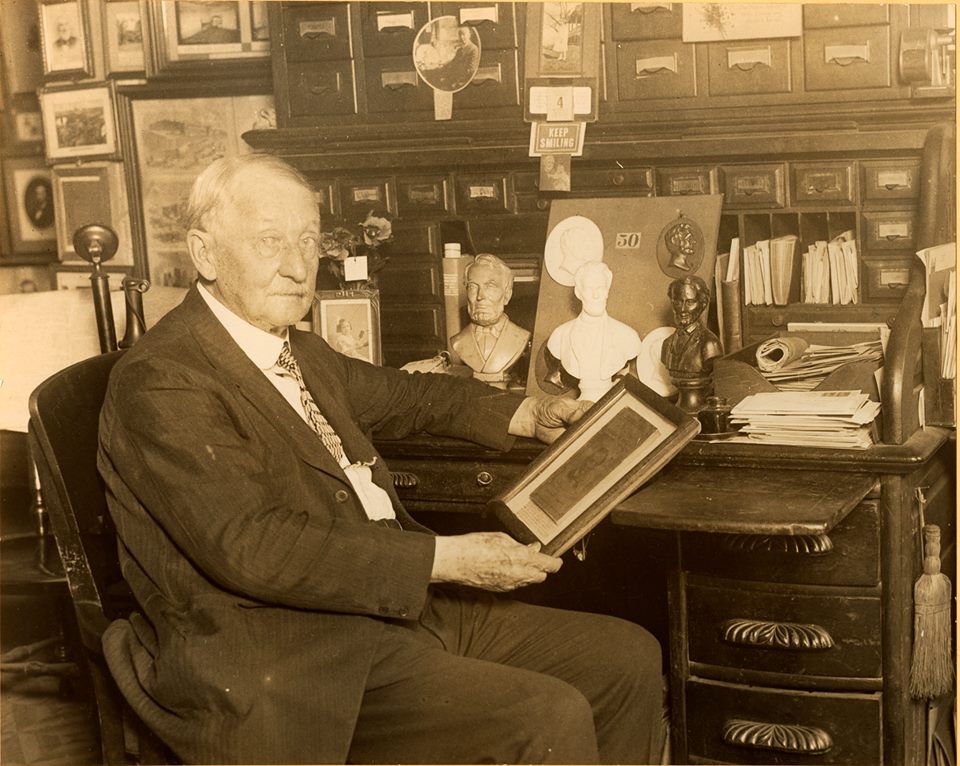
 The May 2, 1926, Washington Post announced the purchase with a banner headline reading, “Gets Storehouse of Lincoln Relics: Government Action Assures Preservation of Oldroyd Collection Here.” The newspaper column reported, “Captain Oldroyd has been gathering the collection for 63 years, having started on this patriotic work of love for his chieftain soon after he was released from service in the internecine strife (Civil War). Mr. Oldroyd is now 80 years old. Having for years been a student of Lincoln, acting as a guide for his collection all through its formation, Capt. Oldroyd has become a rich source of Lincoln traditions. Passage by Congress of the measure authorizing the purchase of the Oldroyd collection, 3, 000 authentic Lincoln mementos now on display in the historic Petersen House where the martyred president died, will preserve for future generations making pilgrimages to Washington a great storehouse of materials identified with Lincoln tradition.”
 What became of the pilfered Lincoln home artifacts? During a near forty year period between the 1950s and late 1980s, the Lincoln Home got back the disputed 25 items from Ford’s Theater that Oldroyd had allegedly removed without permission. “The items were well preserved. For the most part, these were all utilitarian items that might have been used every day by the residents of the home during the years before preservation became a priority.” says curator Cornelius “An argument could be made that if not for Osborn Oldroyd, these items might have been lost forever.”
 Original publish date: July 6, 2017
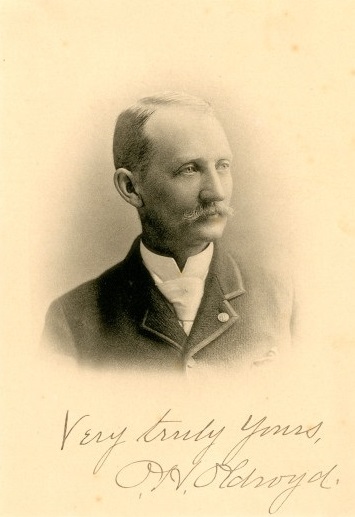
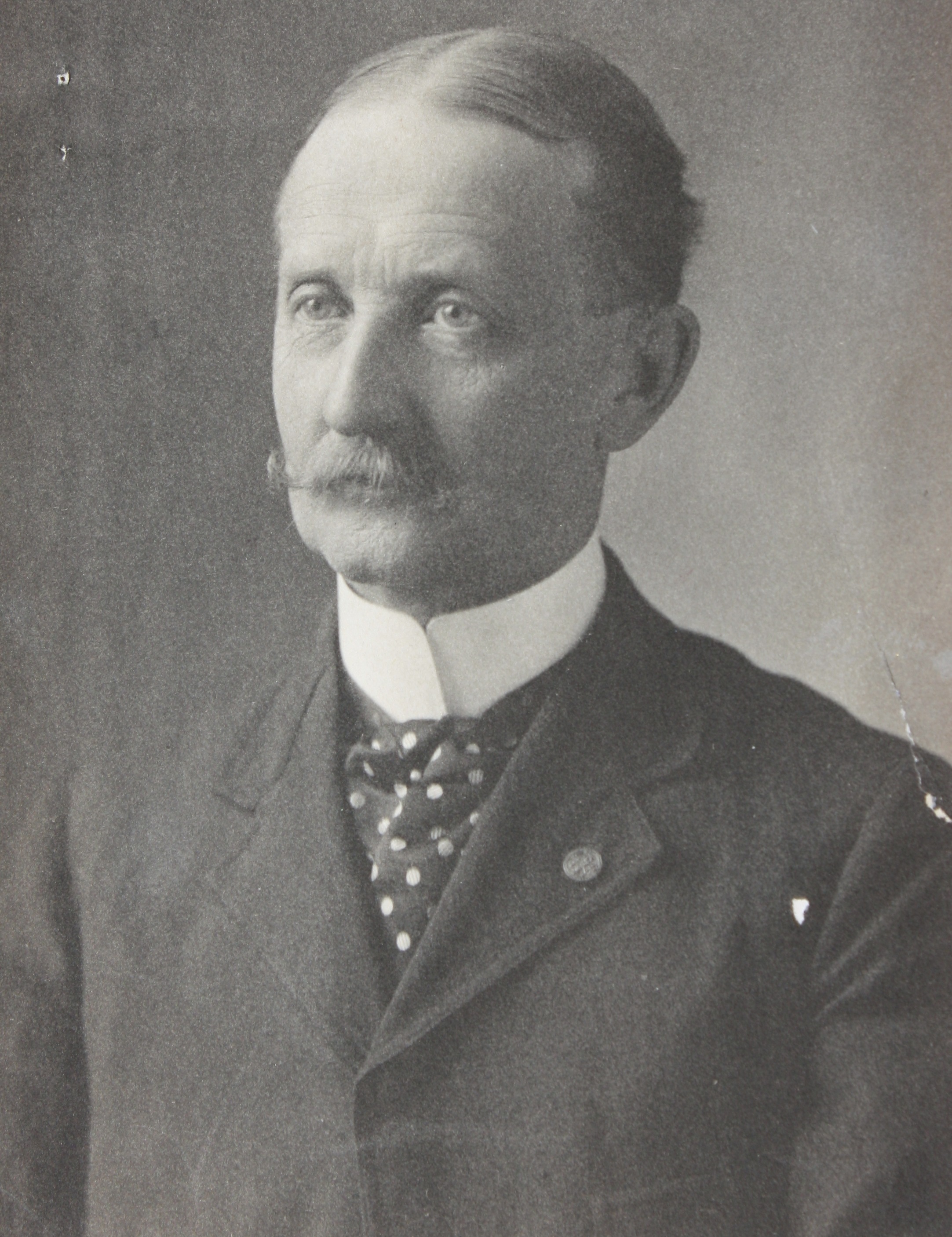 During his early years in Springfield, he ran a succession of failed businesses. All the while, Oldroyd was moving his family ever closer to the Lincoln Home at Eighth and Jackson Streets. The Oldroyd family first lived at 1101 South Seventh, then 500 South Eighth Street (immediately south of the home), and then, in 1883, when the Lincoln Home became available to rent, Oldroyd moved his family in before the last occupants had completely moved out. At that time, Lincoln’s only surviving son, Robert, owned the home and reluctantly charged Oldroyd $25 per month rent. Contemporary accounts claim that Robert Todd Lincoln agreed to the idea of a museum as long as it was free to the public, a stipulation in place to this day.
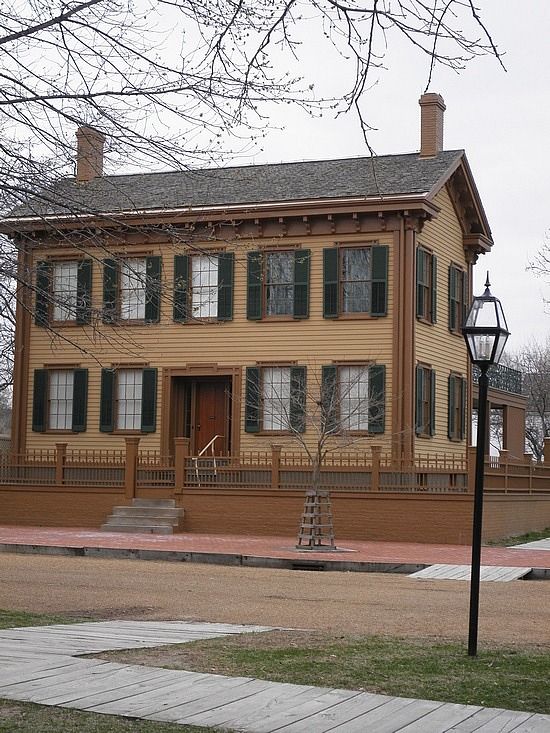 For the next five years “Captain” Oldroyd kept the Lincoln Home and added to his Lincoln collection. At one point, reports claim that Robert Lincoln was furious when Oldroyd allegedly displayed a photograph of John Wilkes Booth in the home, reportedly on the fireplace mantle. Some sources claim that Robert protested and in 1893, when the Illinois state political tides shifted, Oldroyd was unceremoniously ousted as custodian. The new governor put one of his own men into Oldroyd’s former position as political patronage.
 Alan E. Hunter