Civil War, Uncategorized

Where did you go Ambrose Bierce?

Original publish date September 26, 2024. https://weeklyview.net/2024/09/26/where-did-you-go-ambrose-bierce/
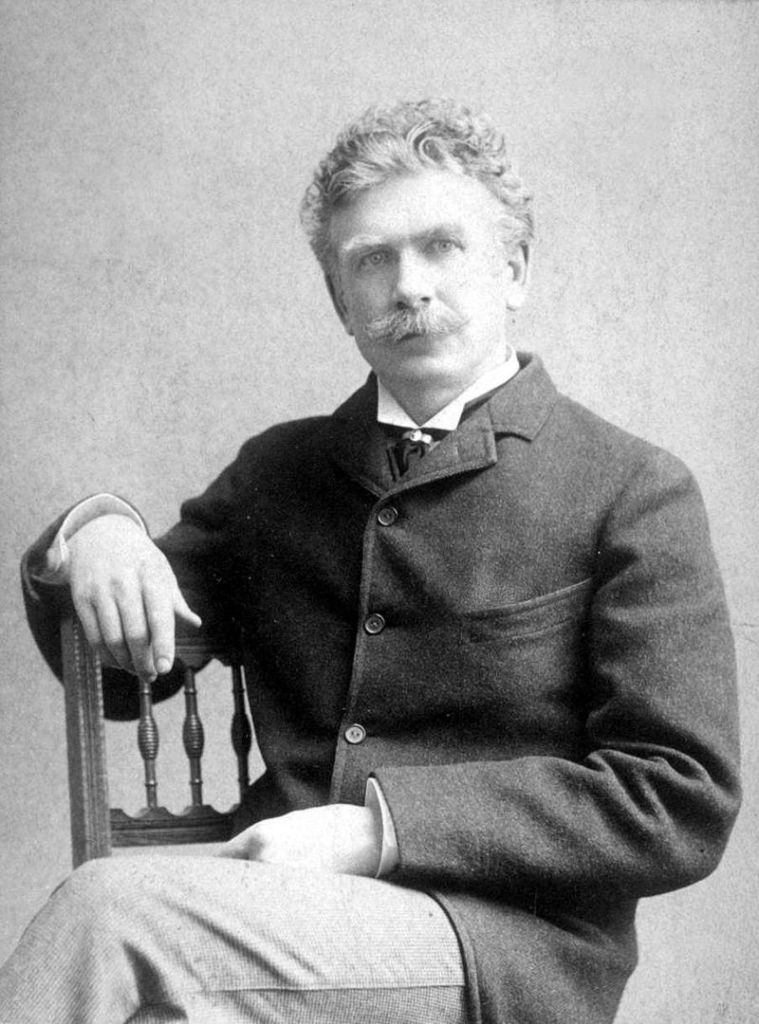
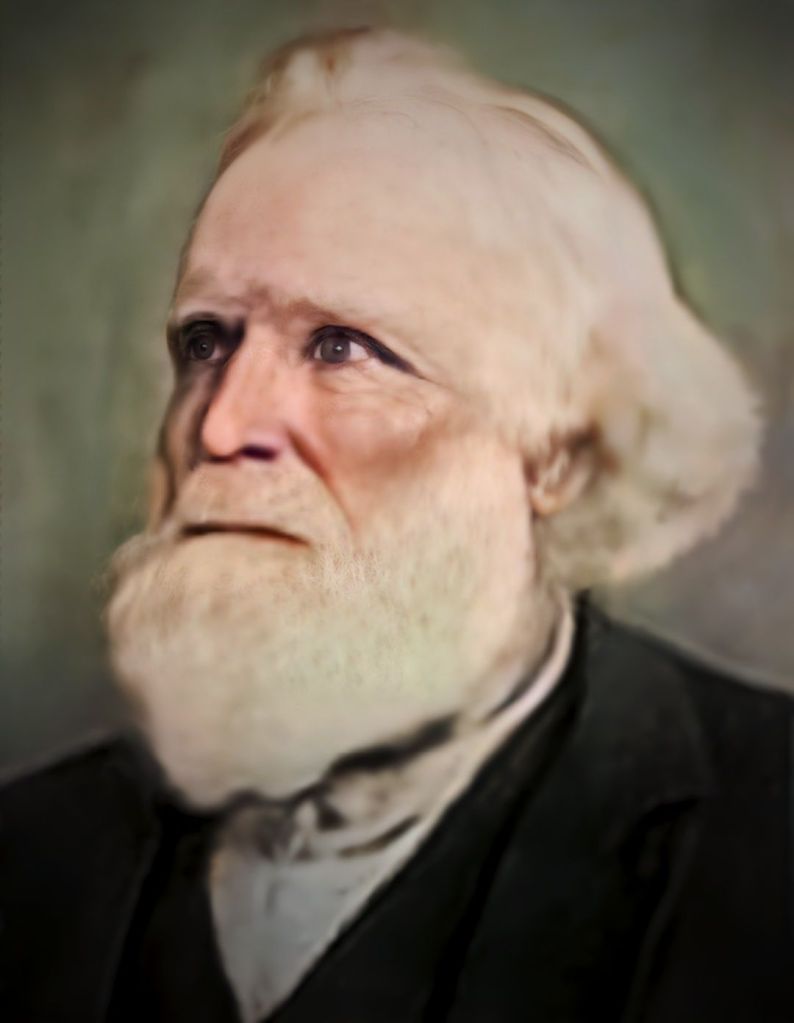
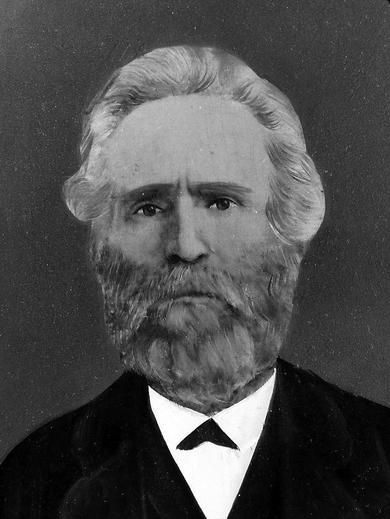
Ambrose Bierce 1892.

110 years ago last week, one of the most famous journalists you’ve never heard of disappeared from the face of the earth. Sometime between September 18-24, 1914, Ambrose Gwinnett Bierce was reported missing. And of course, he had Hoosier ties. Less than two weeks after the start of the Civil War, Bierce enlisted with the 9th Indiana on April 24, 1861, in Elkhart, Indiana. Bierce was born in a log cabin at Horse Cave Creek in Meigs County, Ohio, on June 24, 1842. Horse Cave Creek, “a religious settlement” southeast of Columbus, Ohio, is long gone. Bierce was the tenth of thirteen children, all of whom were given names by their father beginning with the letter “A”. As a child, Bierce moved from the Appalachian foothills of southeastern Ohio to the lake country of northern Indiana. His parents were a poor but literary couple who instilled in him a deep love for books and writing. Bierce grew up in Kosciusko County, Indiana, attending high school at the county seat in Warsaw. He left home in 1857 at age 15 to become a “printer’s devil” at a small abolitionist newspaper in Warsaw: the Northern Indianan. A printer’s devil was an indentured servant who performed many thankless tasks, including mixing tubs of ink and fetching type. Bierce was in good company: Benjamin Franklin, Walt Whitman, Bret Harte, and Mark Twain were all printer’s devils.
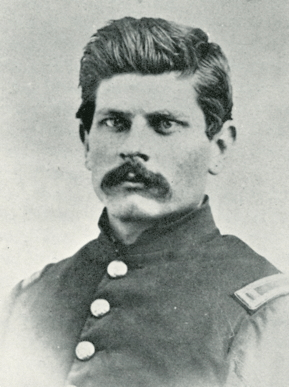
Lt. Ambrose Bierce 9th Indiana.

While with the 9th Indiana, Bierce served in Western Virginia and was present at the Battle of Philippi (the first organized land action of the war in June of 1861). Bierce received his first media attention for his daring rescue, under fire, of a gravely wounded comrade at the Battle of Rich Mountain. Later, he fought at the Battle of Shiloh (April 1862), which he would write about in the memoir “What I Saw of Shiloh”. Within two years Bierce was serving on the staff of General Wm. Hazen. Here he became known to leading generals such as George H. Thomas and Oliver O. Howard, both of whom recommended him for admission to West Point in May 1864. General William T. Sherman also endorsed his application for admission. In June 1864, Bierce sustained a traumatic brain injury at the Battle of Kennesaw Mountain and spent the rest of the summer on furlough. By the end of the war, Bierce rejoined Gen. Hazen to inspect military outposts across the Great Plains, ending in San Francisco, where he was awarded the rank of brevet major before resigning from the Army.
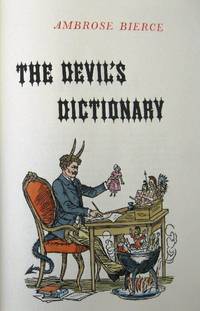
The Devil’s Dictionary 1881.

Bierce remained in San Francisco for many years, becoming famous as a contributor or editor of newspapers and periodicals. He eventually graduated to the historical novels he is most remembered for today. His book The Devil’s Dictionary was named one of “The 100 Greatest Masterpieces of American Literature” by the American Revolution Bicentennial Administration. The book first took form as a serialized newspaper column before being published as a book. The book contains satirical definitions of English words that lampoon political double-talk. The book was volume seven of a twelve-volume set called “The Collected Works of Ambrose Bierce” published from 1909 to 1912. Bierce was a pioneer in realist fiction, his horror writing prowess rivaled Edgar Allan Poe, and his satire equals his peer, Mark Twain. Bierce’s sharp tongue and penchant for biting social criticism and satire often placed him at odds with his publisher William Randolph Hearst. His poetry could be equally caustic as when one of his poems about the assassination of William McKinley in 1901 sparked a national outcry.
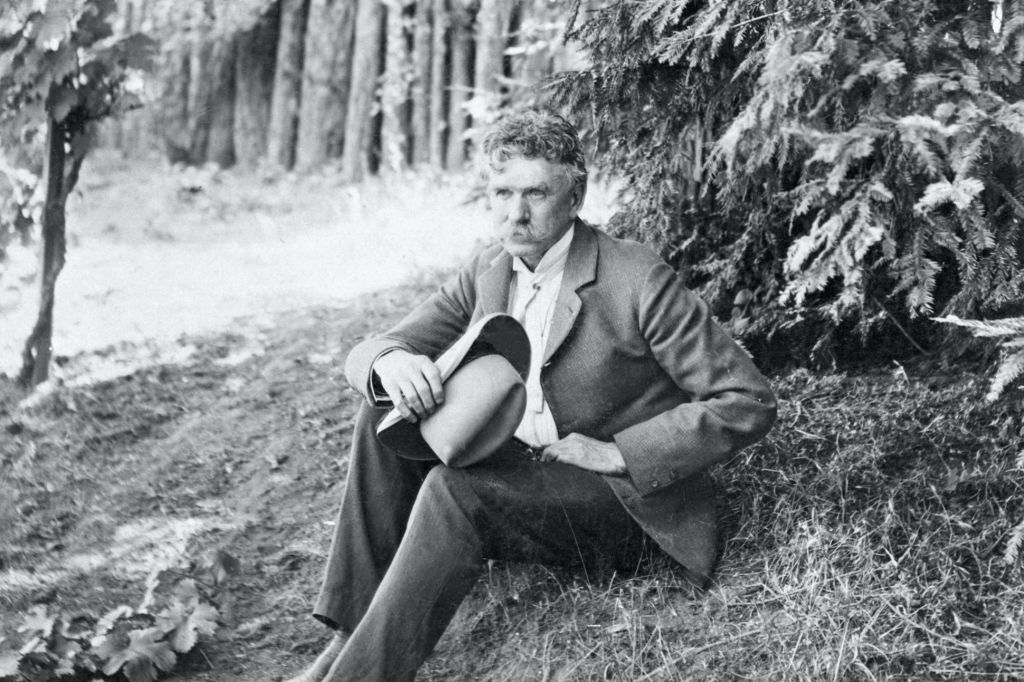
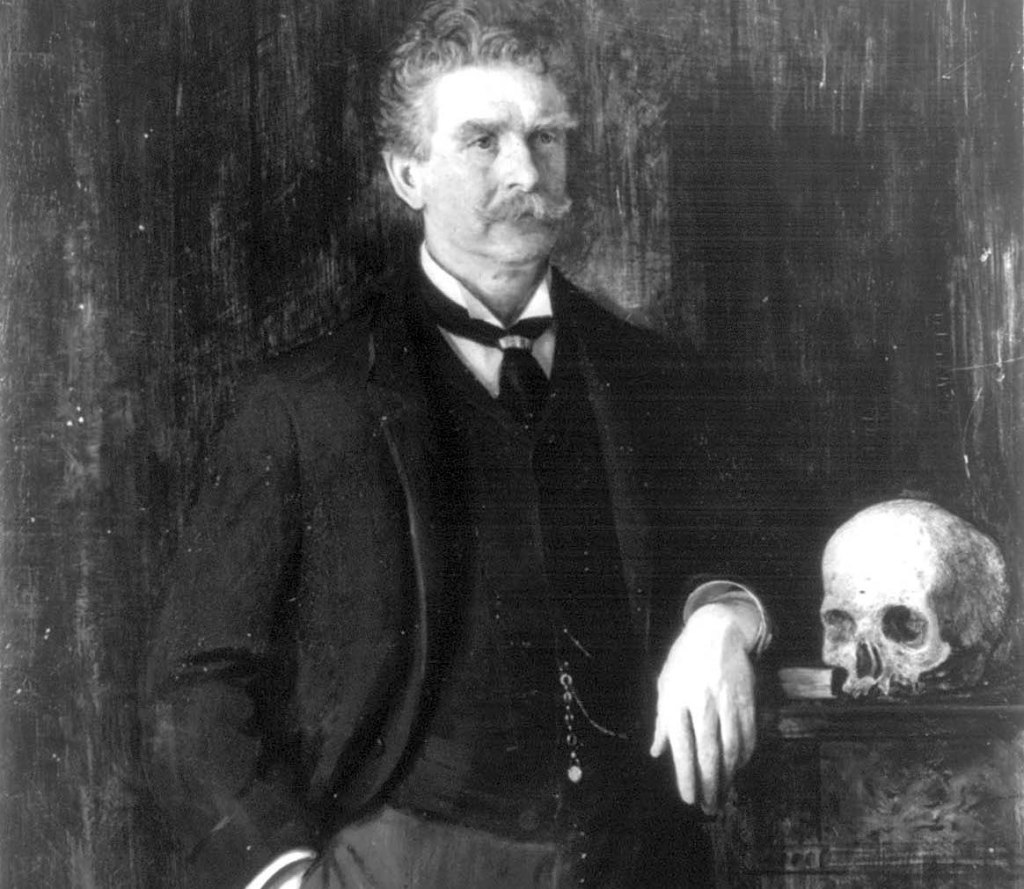
Ambrose Bierce.

Bierce’s most notable work came at the close of the Gilded Age. From 1888 to 1891 he wrote a rapid succession of short stories centering around the inscrutability of the universe and the absurdity of death. Many of those realistic themes came from the terrible things Bierce had seen on the battlefield. His collection of 25 war stories including “An Occurrence at Owl Creek Bridge”, “A Horseman in the Sky”, “One of the Missing”, and “Chickamauga” has been called “the greatest anti-war document in American literature”. Nothing infuriated Bierce more than hearing grandiose accounts of honor and glory of war from people who’d never seen or experienced it personally. His psychological horror story “An Occurrence at Owl Creek Bridge” has been described as “one of the most famous and frequently anthologized stories in American literature”, and his book “Tales of Soldiers and Civilians” was named by the Grolier Club one of the 100 most influential American books printed before 1900. Ernest Hemingway and Stephen King were among the many he influenced.
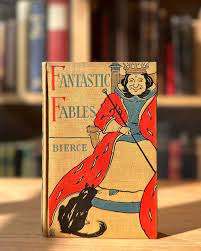
Bierce’s Fantastic Fables 1899.

BIerce’s “Fantastic Fables” book and his many ghost stories were the precursors of the grotesquerie that became a more common genre in the 20th century. Bierce liked nothing better than to shock his audience by challenging their minds on the way to a surprise ending. No better example can be found than his “An Occurrence at Owl Creek Bridge”. Written in 1890 and set during the Civil War, the short story climaxes when Peyton Farquhar, a wealthy Alabama planter and slave owner, is about to be executed by hanging from a railroad bridge as a company of Union infantrymen guards the bridge to carry out the sentence. In his final moments, Farquhar thinks of his wife and children but is suddenly distracted by an unbearably loud clanging. It is the ticking of his watch. He ponders the possibility of unfreeing his hands and jumping from the bridge to swim to safety, but the soldiers drop him off the bridge before he can act on the idea.
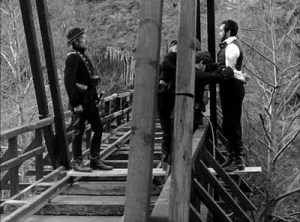
A scene from “An Occurrence at Owl Creek Bridge”

Farquhar flashes back to a time when he and his wife are relaxing at home one evening as a Rebel soldier rides up to the gate and tells Farquhar that Union troops have seized the Owl Creek railroad bridge. The soldier suggests that Farquhar might be able to burn the bridge down if he can slip past its guards. The soldier is in reality a Union scout setting a trap for Farquhar knowing that any civilian caught committing such an act will be hanged as a spy. Farquhar snaps back to the present and falls into the creek after the rope around his neck breaks. He frees his hands, pulls the noose off, and rises to the surface to begin his escape. He dodges, dives, and swims downstream to avoid rifle and cannon fire. Once out of range, he begins the frantic 30-mile journey back home. While Farquhar walks through endless forests day and night, he begins to hallucinate, seeing strange constellations and hearing whispered voices in an unknown language. He trudges on, driven by the thought of his wife and children despite the pain of his ordeal. The next morning he arrives at the gate to his plantation and rushes forward to embrace his wife, but before he touches her, he feels a heavy blow upon the back of his neck. There is a loud noise and a flash of white and “then all is darkness and silence!” Bierce reveals that Farquhar never escaped at all. His escape was an imagination, his journey home a momentary ripple in time experienced during the moment between his drop from the bridge and the noose breaking his neck.
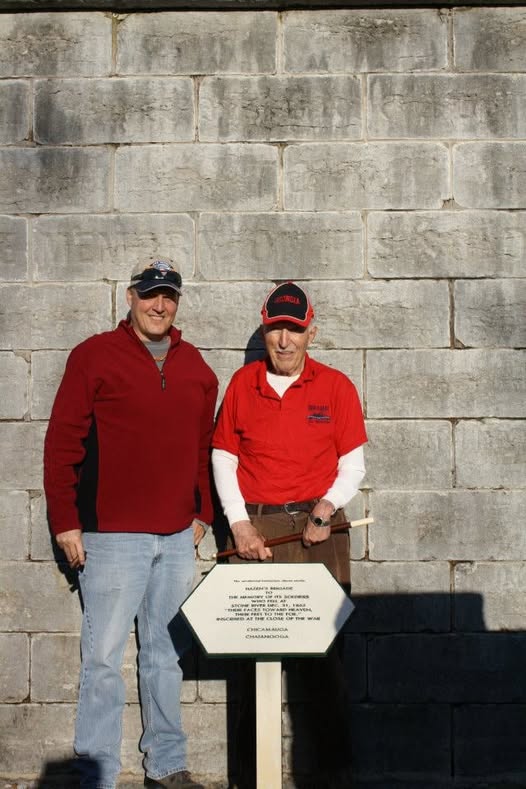
Alan E. Hunter & Edd Bearrs.

Bierce continued writing and pushing the outside of the envelope for the rest of his life. Since much of Bierce’s writing centered on the Civil War, about a decade ago I asked National Parks Historian Emeritus Ed Bearrs about Bierce. I was sharing a beer with Mr. Bearrs in a hotel bar just after touring the Stone’s River battlefield between Murfreesboro and Nashville, Tennessee. Mr. Bearrs, who passed in 2020, was a man of few words. In this instance, he paused before answering, taking a pull from his bottle of Budweiser beer, and said, “What do I think of Ambrose Bierce? I think he was a grade-A Bull-sh_ _ artist.” Which elicited laughter from me and the few others at the table.
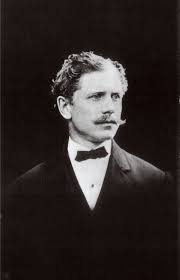
Ambrose Bierce.

In 1913, at age seventy-one, he left Washington, D.C. to tour his old familiar Civil War battlefields. Within a short time, Bierce changed his mind and decided to chase Pancho Villa’s army to gain first-hand experience of the Mexican Revolution. Bierce traveled to Mexico to witness (and some say become a part of) the revolution. By December he had passed through Louisiana and Texas, entering Mexico via El Paso. In Ciudad Juárez he joined Pancho Villa’s army as an observer, and in that role, he witnessed the Battle of Tierra Blanca. It was reported that Bierce accompanied Villa’s army as far as the city of Chihuahua. His last known communication with the world was a letter he wrote there to Blanche Partington, a close friend, dated December 26, 1913. After closing this letter by saying, “As to me, I leave here tomorrow for an unknown destination.” And that was the last anyone ever heard of Ambrose Bierce. He vanished without a trace, one of the most famous disappearances in American literary history. No one knows where, when, or under what circumstances he met his end.
The U.S. consular opened an official investigation into the disappearance of one of its citizens. Some of Villa’s men were questioned but they all gave contradictory accounts. Local legend, documented by priest James Lienert, states that Bierce was executed by firing squad in the cemetery of the town of Sierra Mojada, Coahuila. Bierce’s ultimate fate remains a mystery. He wrote in one of his final letters: “Good-bye. If you hear of my being stood up against a Mexican stone wall and shot to rags, please know that I think it is a pretty good way to depart this life. It beats old age, disease, or falling down the cellar stairs. To be a Gringo in Mexico–ah, that is euthanasia!” His body was never recovered.

Indianapolis, Music, Pop Culture

“Louie Louie”

This column first appeared in August 2013. https://weeklyview.net/2024/08/01/louie-louie-2/

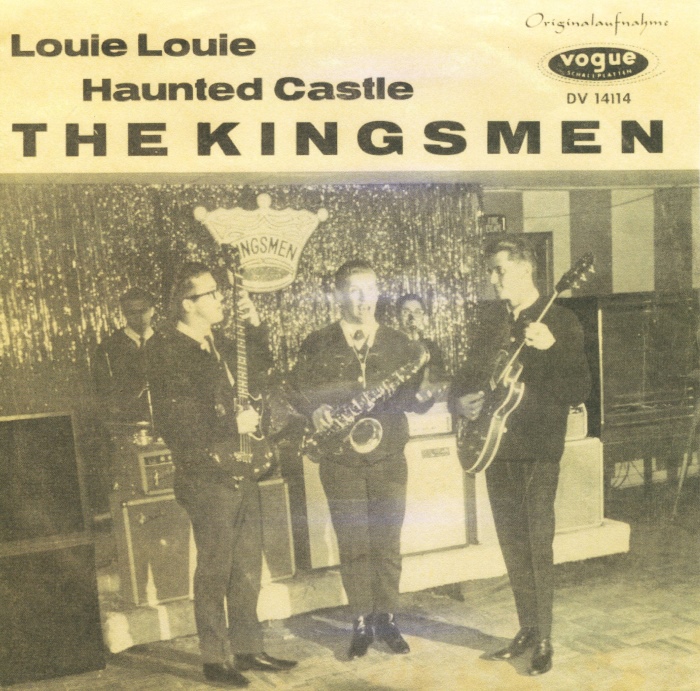
“Louie, Louie” by the Kingsman 1963.

Fifty years ago this week, a song was released by an obscure Portland, Oregon, garage band that would change the face of rock ‘n’ roll history forever and ultimately resonate through the halls of the Indiana Statehouse. “Louie Louie” was written by Richard Berry in 1955 and was originally performed in the style of a Jamaican reggae ballad. The original version tells the first-person story of a Jamaican sailor returning to the island to see his lady love. Berry released his version in April 1957 with his band, the Pharaohs, and scored a regional hit on the West Coast, particularly in San Francisco. When the group toured the Pacific Northwest, local garage bands picked up the song, increasing its popularity.

Richard Berry’s Original 1957 release on Jasmine Records.

On August 8th, 1963, a relatively unknown band called The Kingsmen released their version and it swept across the airwaves from the West Coast like a musical tsunami. The band recorded the song for $50 at Northwestern, Inc., Motion Pictures and Recording studio in Portland. The band split the cost of the session. The session was produced by Ken Chase, a local radio personality on radio station KISN 91-AM. He also owned a teen nightclub that hosted the Kingsmen as his house band. The Kingsmen’s studio version was recorded in one take. They also recorded a “B” side song called “Haunted Castle.”

Berry’s version of the song on Flip Records.

The Kingsmen turned Berry’s syrupy sweet ballad into a raucous romp, backed by a twangy guitar, party chatter, and mostly unintelligible lyrics by lead singer Jack Ely. The song hit the top ten of the Billboard Hot 100 chart in December and would remain there for 16 weeks. “Louie Louie” reached number one on both the Cashbox pop and R&B charts. The version quickly became a standard at teen parties in the U.S. during the 1960s, even reappearing on the charts in 1966.

Louie Louie & Haunted Castle 45 Record.

However, it was the urban legend about the indecipherable lyrics that gave the song lasting fame — or infamy, depending on your point of view. Rumors claimed that the band intentionally slurred the lyrics to hide the profanity contained therein, in particular, graphic sex between a sailor and his lady. Soon, crumpled pieces of paper containing “the real lyrics” to “Louie Louie” circulated among giggling, red-faced teens. In time, the adults got involved in the form of unamused parents and distraught teachers who demanded action against this supposed pornography sweeping the airwaves. Keep in mind, singles by The Singing Nun and Bobby Vinton monopolized the top slot on the charts during the song’s run.

Indiana Governor Matt Welsh.

Eventually, the song was banned on many radio stations across the United States, including Indiana, where it was personally prohibited by Governor Matthew Welsh himself. Yes Indiana, our state officially banned the song “Louie, Louie” on Tuesday, January 21, 1964. The unprecedented involvement between state government and a rock ‘n’ roll song began when Governor Welsh of Indiana received a complaint from a Frankfort teenager, claiming that the lyrics to the song were obscene. The teenager included a handwritten copy of the obscene lyrics as evidence.

The Kingsmen.

Allegedly, Governor Welsh’s executive secretary Jack New went to a nearby music store to buy a copy of the record. Then, in what must’ve been a Monty Pythonesque moment, New and the Governor listened to it inside his Statehouse office. New told the Indianapolis Star “We slowed it down and we thought we could hear the words.” Billboard reported that the Governor said his ears “tingled.” The Governor’s press secretary, James McManus, said that the words were “indistinct, but plain if you listen carefully.”

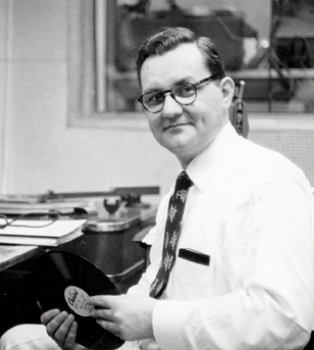
WISH-Radio’s Reid “Chuckles” Chapman.

Governor Welsh snapped off a letter to Fort Wayne radio and TV personality and President of the Indiana Broadcasters Association Reid Chapman urging that the lyrics to the song be “examined.” Welsh said in 1991, “My position with respect to the whole matter was never that the record should be banned. At no time did I ever pressure anybody to take the song off the air. I suggested to him [Chapman] that it might be simpler all around if it wasn’t played.” The Governor had written to Chapman because he “was a friend of mine. I knew him; we weren’t close.”
Reid Chapman (1920-2006)

In response to the Governor’s letter, Chapman sent telegrams to Hoosier radio stations asking them to stop playing the record. The Kingsmen, who were ready to embark on a Midwestern concert tour (including an appearance at the Indiana State Fair), objected to any attempt to take their song off the air. These “hidden lyric” denials by the Kingsmen did little to stop the controversy but did much to boost sales of the record among curious teens and investigative adults.
Jack Ely (1943-2015)

In a January 24, 1964, editorial page article titled “Young Singers Dismiss As Hooey Obscenity Charge in ‘Louie Louie.’”, a reporter for the Indianapolis Star interviewed Lynn Easton, leader of the band, who “somewhat angrily” denied that the band sang obscene lyrics. “We took the words from the original version by Richard Berry and recorded them faithfully. There was no clowning around,” Easton said. To the Star’s credit, the conclusion of the editorial was against government censorship in any form. Lead singer Jack Ely explained the garbled lyrics were a result of the studio’s 19-foot ceiling which had a microphone suspended from it.

LeRoy K. New (1920-2205)

Despite the band’s protestations, LeRoy New, Chief Marion County deputy prosecutor, assigned two investigators to look into the obscenity charges. After listening to the record at three speeds, the investigators found nothing obscene, though they admitted the words were garbled. New said, “The record is an abomination of out-of-tune guitars, an overbearing jungle rhythm and clanging cymbals.” But New stopped short of saying the lyrics were obscene, and the obscenity laws of the day “just didn’t reckon with dirty sounds.”

Although Governor Welsh’s “woofing” about the record was not the cause, soon after the Indiana banning, it fell off the charts. Ironically, by the time the Kingsmen’s “Louie Louie” had achieved national popularity, the band had split up. In February 1964, an outraged parent wrote to U.S. Attorney General Robert F. Kennedy, alleging the song lyrics were obscene. Subsequently, J. Edgar Hoover’s FBI began a 31-month investigation into the matter that concluded the song was “unintelligible at any speed,” and they were “unable to interpret any of the wording in the record.” But by then, “Louie, Louie” was a footnote in rock history.

The Kingsmen.

Maybe it was the controversy about the obscene (or not obscene) lyrics that killed the song — who knows? But two weeks after the swan song, on Sunday, February 9, The Beatles appeared for the first time on the Ed Sullivan Show. The British Invasion had begun and the American garage band sound soon faded from the scene.

The song would not re-emerge until it was featured in the 1978 film Animal House. According to Kenny Vance, the musical director of the movie, a pre-Saturday Night Live John Belushi sang in a garage band that used to perform this song at frat parties. Belushi sang his version of the dirty lyrics in the studio while recording his vocals for the movie. Sadly, the tape of Belushi‘s version was lost in 2012 when Hurricane Sandy wiped out Kenny’s home in Queens.

Animal House 1978.

As for this reporter, I admired Governor Matt Welsh. He was one of my first interviews back in the early 1980s. But make no mistake about it, regardless of his posturing after the fact, Matt Welsh had the record banned. When I asked the Governor about the song, although polite, he expressed his frustration that “Louie Louie” is all he’s remembered for by “today’s” generation. Welsh did not mention the matter in his personal memoir but did say, “I thought the whole thing was a tempest in a teapot, and not worth any extended pursuit. I have no interest in it either way.”

Everyone knows the chorus: “Louie, Louie, oh no. Me gotta go. Aye-yi-yi, I said. Louie Louie, oh baby. Me gotta go.” But once and for all, here are the lyrics: “Fine little girl waits for me. Catch a ship across the sea. Sail that ship about, all alone. Never know if I make it home. Three nights and days, I sail the sea. Think of girl, constantly. Oh that ship, I dream she’s there. I smell the rose in her hair. See Jamaica, the moon above. It won’t be long, me see my love. Take her in my arms again. Tell her I’ll never leave again.” The supposed “lewd” version can be easily found on the Web, but I’ll leave that to your own devices.

The Kingsmen.

Assassinations, Creepy history, Criminals, Politics

Charlotte Corday

Original publish date July 18, 2024. https://weeklyview.net/2024/07/18/charlotte-corday/

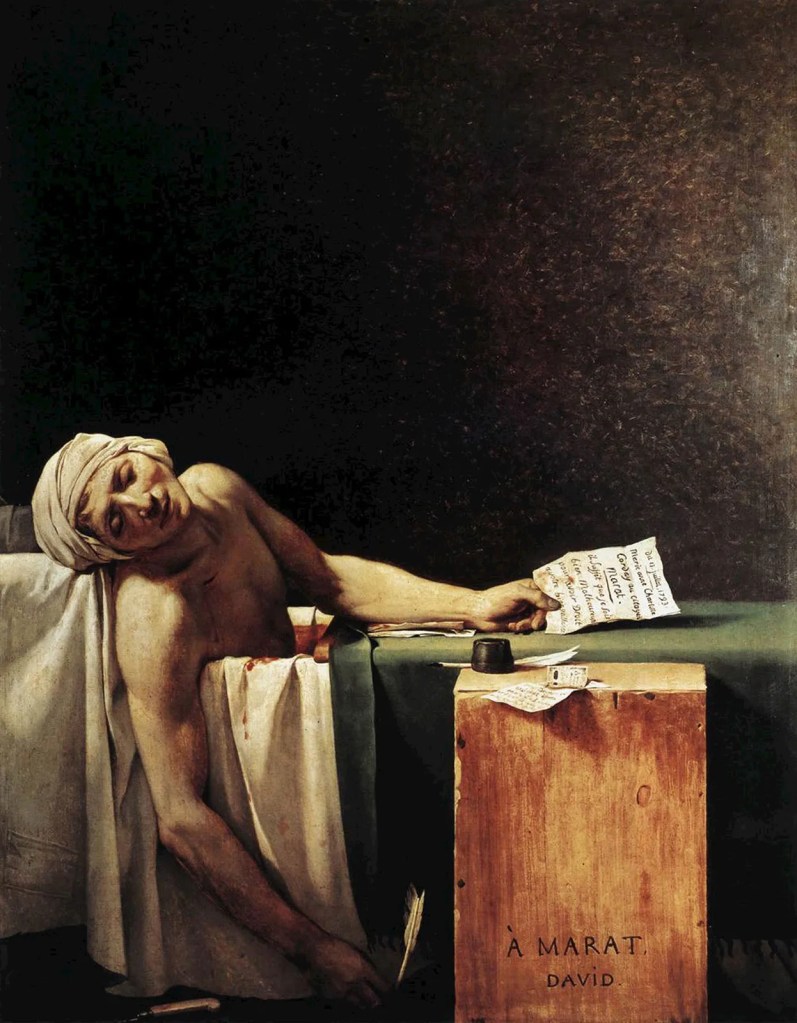
The Death of Marat, 1793 painting by Jacques-Louis David.

This 24-hour news cycle world can be exhausting. As I write this article, we stand at 120 days and counting until our next Presidential election. We are constantly reminded that this will be the most important election in the history of our country and that the end of Democracy is on the line. Since I spend most of my time buried in history of one sort or another, a phrase from the ancients runs on a loop in my head; “What has been will be again, what has been done will be done again; there is nothing new under the sun.” My idiomatic paraphrase is a Biblical verse: Ecclesiastes 1:9, “The thing that hath been, it is that which shall be; and that which is done is that which shall be done: and there is no new thing under the sun.”

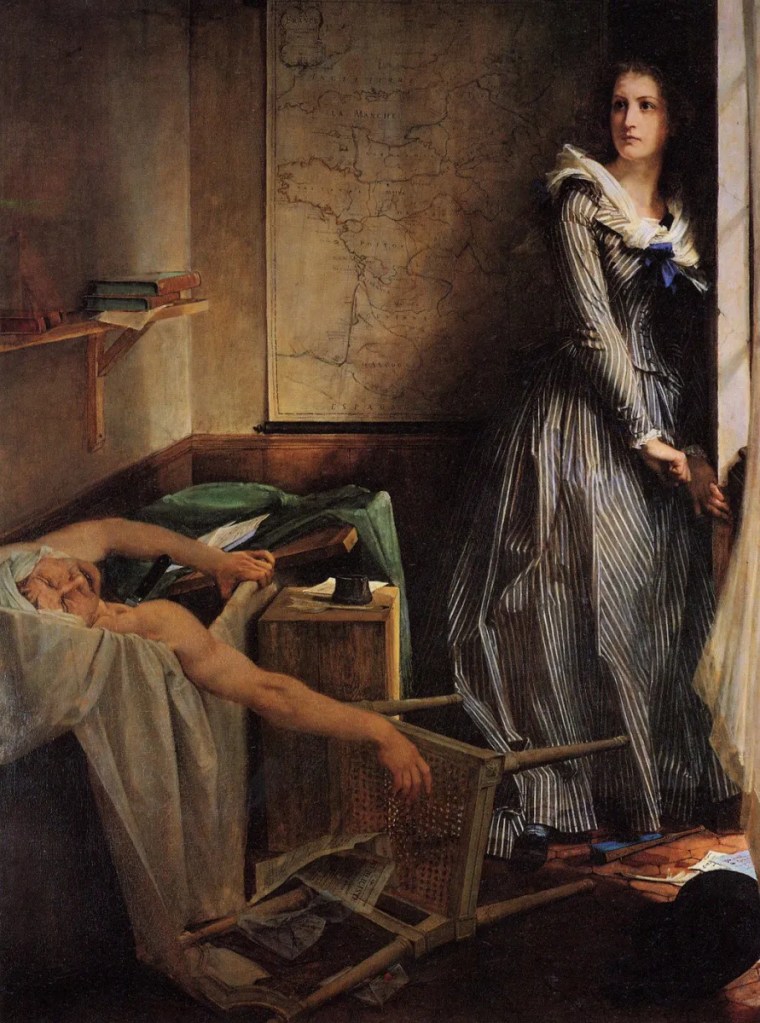
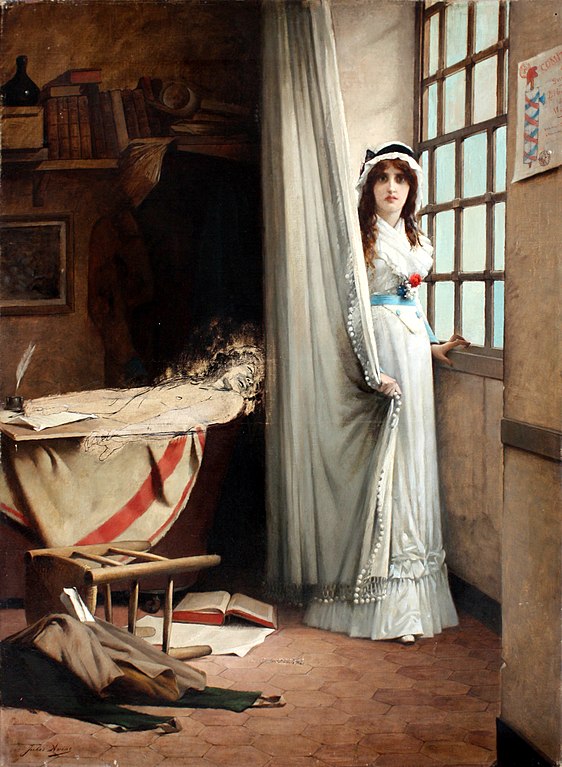
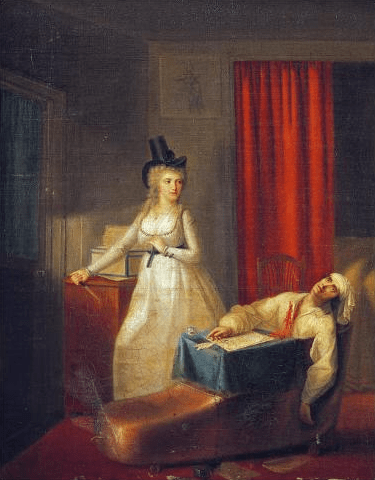
This is the story of Charlotte Corday. It is complicated, shocking, and gory, and does not end well. Her act is immortalized in one of the most famous images from the French Revolution: The Death of Marat, a 1793 painting by Jacques-Louis David. The painting depicts Jean-Paul Marat lying dead in his bathtub after his assassination by Corday on July 13, 1793. It is considered a masterpiece of the highest order and the first modernist work to express just how bad politics can be. The original painting is at the Royal Museum of Fine Arts of Belgium with a replica on display at the Louvre.

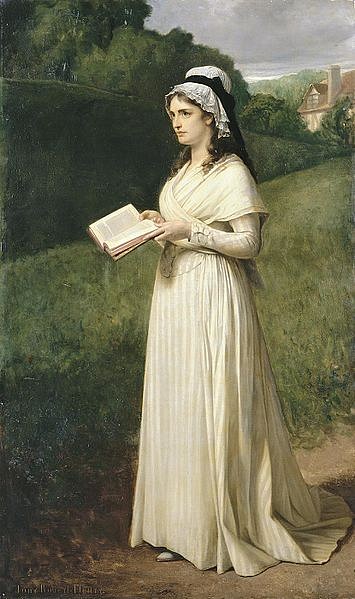
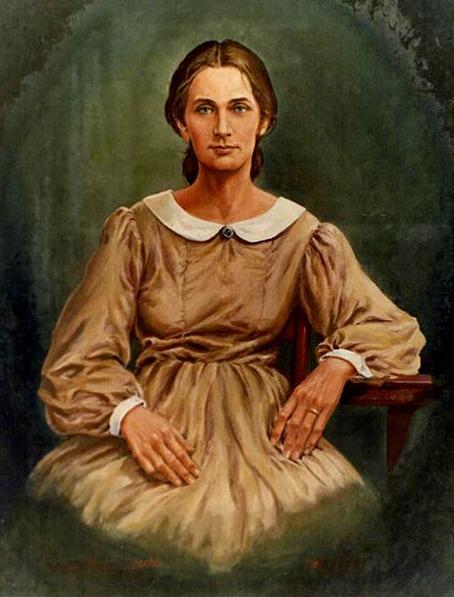
Charlotte Corday.

Marie-Anne Charlotte de Corday d’Armont (July 27, 1768 – 17 July 1793) was born to an aristocratic family in Normandy, France. Corday held Marat responsible for the September Massacres of 1792, a series of executions of prisoners in Paris during the French Revolution. Over 1600 people, most of whom were non-violent political prisoners, were dragged from their cells and killed by guillotine at the hands of the “Committee of Surveillance of the Commune” led by the Montagnards, who advocated a more radical approach to the revolution. As The French Revolution radicalized further and headed towards terror, Corday began to sympathize with the Girondins. The Girondins supported democratic reforms and a strong legislative branch at the expense of much weaker executive and judiciary branches. She regarded the Girondins as a movement that would ultimately save France and that the Revolution was in jeopardy due to the radical course taken by Marat and the Montagnards.

Jean-Paul Marat

On July 13, 1793, Corday traveled to Paris to assassinate Marat. He was not hard to find. Marat was suffering from a debilitating skin disease that left him nearly constantly confined to a bathtub to ease his suffering. Marat had always been a sickly man whom contemporaries described as “short in stature, deformed in person, and hideous in face.” The nature of his skin disease has been debated for centuries, some claimed it was syphilis, though most experts have identified it as “Dermatitis herpetiformis” a chronic, intensely itchy, blistering skin manifestation commonly known as celiac disease, a rash affecting about 10 percent of the population. Marat’s condition, which he had been suffering from for three years, was exacerbated by extreme weight loss, emaciation, and diminished strength. Marat stewed in a soup of various minerals and medicines with a bandana soaked in vinegar wrapped around his head. Marat sat upon a linen sheet for modesty, with the dry corners covering his back and bare shoulders, a board straddled the tub from rim to rim which served as a writing desk.

Charlotte Corday.

Corday is described on her passport as “five feet and one inch…curly auburn hair, eyes gray, forehead high, mouth medium size, chin dimpled, and an oval face”. Based solely on her appearance, Corday was the unlikeliest of assassins. On July 9, 1793, Corday arrived in Paris and took a room at the Hôtel de Providence. She bought a kitchen knife with a 6-inch blade. During the next few days, she wrote a detailed manifesto explaining her motives for assassinating Marat. At noon on July 13, she arrived at Marat’s home claiming to know about a planned Girondist uprising but was turned away. She returned that evening and was admitted. Their interview lasted fifteen minutes. From his bathtub, Marat wrote down the names of the Girondins as Corday crept ever closer to him. As he busily wrote out the list, Marat said, “Their heads will fall within a fortnight.”

Paul-Jacques-Aime Baudry L’Assassinat de Marat 1861

Now within striking distance, Corday pulled the knife from her corset and plunged it deep into his chest, just under his right clavicle, opening the brachiocephalic artery, close to the heart. Marat, still clutching the list of names, slumped into the tub as he called out his last words: “Aidez-moi, ma chère amie!” (“Help me, my dear friend!”). The wound was fatal. In response to Marat’s cries, his wife Simonne Evrard, and two others rushed into the room and seized Corday. Two neighbors, a military surgeon and a dentist, attempted to revive Marat to no avail. Officials arrived to interrogate Corday and to calm a hysterical crowd who appeared ready to lynch her.

Jean-Joseph Weerts – Marat assassiné – 1880.
Jules-Charles Aviat-Charlotte Corday et Marat -1880.

Corday’s manifesto claimed: “I have avenged many innocent victims, I have prevented many other disasters. The people, one day disillusioned, will rejoice in being delivered from a tyrant…I rejoice in my fate, the cause is good…I alone conceived the plan and executed it. Crime is shame, not the scaffold!” Corday credited her single-blow knifing of Marat not to skill or practice but to luck. Arrested on the spot, she was tried and convicted by the Revolutionary Tribunal and sentenced to death by guillotine on the Place de la Révolution. On July 17, 1793, four days after Marat was killed, Corday was led to the guillotine via the tumbril, an open cart used to transport its load of condemned prisoners to the guillotine amid the shouts and jeers of bystanders. Corday stood calmly facing the crowd, suddenly, the heavens opened the thousands of curious on-lookers were drenched by a sudden summer rainfall. Corday never flinched.

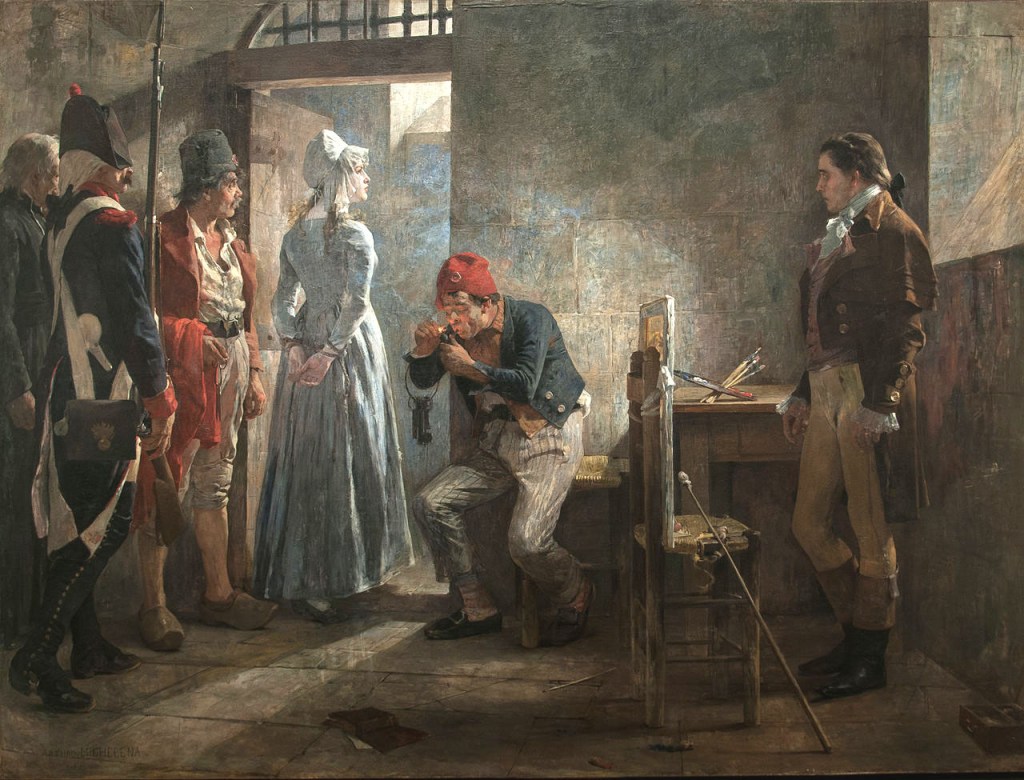
Charlotte Corday, in prison. Charles Louis Lucien Muller, artist. [1900-1912].
“La toilette des morts, Charlotte Corday” (The last toilet of Charlotte Corday) by Edward Matthew Ward The Illustrated London News, volume XLIII, July 25, 1863.
“Charlotte Conducted to the Scaffold” Arturo Michelena July 17, 1893.

Corday strode confidently to the guillotine, curtseyed to the crowd, leaned against the Bascule, and was lowered face down horizontally, her head placed into the Lunette. The Declic (handle) was pulled by the hooded executioner, releasing the heavy Mouton (weight) and blade from the crossbar. A silent swish swept the crowd as Corday’s head tumbled into the basket below. The Bascule, a sort of table, was hinged to make it easier to push the headless body into a larger side basket immediately after the execution. Moments after Corday’s decapitation, a carpenter named Legros leaped from the crowd and lifted her head from the basket. He turned towards the crowd and slapped it on the cheek. Horrified witnesses reported an expression of “unequivocal indignation” on her face when her cheek was slapped and that “Charlotte Corday’s severed head blushed under the executioner’s slap.” Ever since, the incident has fueled the suggestion that victims of the guillotine retain consciousness for a short while after decapitation. For that offense, Legros the carpenter was imprisoned for three months. To make matters worse, believing that there had to be a man sharing her bed who masterminded the assassination plan, officials had her body autopsied after her death to determine if she was a virgin. To their dismay, their non-scientific examination revealed that she was a virgin. Her body was buried in the Madeleine Cemetery, alongside the decapitated corpses of of King Louis XVI, Queen Marie Antoinette, and three thousand other guillotine victims. Legend claims that Corday’s skull was saved and passed from Parisian to Parisian (friend and foe alike) for generations after her execution.

Execution Of Charlotte Corday. Published In 1871.

Corday’s crime did not have the expected outcome and Marat’s assassination did not stop the reign of Terror. Instead, Marat became a martyr. Although the killing of Marat was considered vile, there is no doubt that the murder changed the political role and position of women during the French Revolution. Corday’s action aided in restructuring the private versus public role of women in society at the time. The idea of women as second-class citizens was challenged, and Corday was considered a hero. As the revolution progressed, the Girondins became progressively more opposed to the radical, violent views of the Montagnards espoused by Marat, Robespierre, and others.

Jean-Jacques Hauer – Meurtre de Marat, le 13 juillet 1793, par Charlotte Corday – 1793-94.

However, Corday’s critics quickly elevated Marat to the level of the immortals. His heart was embalmed separately and placed in an urn on an altar erected to his memory. His remains were transferred to the Panthéon where his near messianic role in the Revolution was gaslighted in a eulogy delivered by the Marquis de Sade, who compared Marat to Jesus Christ and idealized him as a man who loved only the people of France. Marat was transformed into a quasi-saint, his bust often replacing crucifixes in the churches of Paris. After the ousting of Maximilien Robespierre a year later, Marat’s reputation plummeted. His busts were knocked off their pedestals, carried away, and dragged through the streets by local children to the chants of ‘Marat, voilà ton Panthéon!’ (Marat, here is your Panthéon) before being dumped into the sewers. The few remaining statues of Marat were melted down during the Nazi occupation of Paris in World War II. Strangely, he continued to be held in high regard in the Soviet Union with many citizens, streets, and even a battleship sharing the name Marat.

Santiago Rebbull – La muerte de Marat – 1875.

Europeans remain split on the legacy of Corday. Some place her alongside Joan of Arc, the patron saint of France, who died 350 years prior, and others dismiss her as an idealistic radical. Corday lives on in popular memory through numerous works of art, poetry, plays, and literature including works by Percy Bysshe Shelley and Oscar Wilde, and her story is referenced variously in Rebecca of Sunnybrook Farm and Les Misérables. Marat’s wife peddled his bathtub to the highest bidder but not very successfully. Reportedly, interested parties included Madame Tussaud’s wax museum and P.T. Barnum, but it ultimately landed in the Musée Grévin, a Paris wax museum, where it remains today. The tub is in the shape of an old-fashioned high-buttoned shoe with a copper lining. However, the most tangible reminder of Marat’s death is Jacques-Louis David’s painting. David was not only the painter but also the man who organized Marat’s funeral. Marat’s disorder accelerated decomposition, making any realistic depiction of the scene impossible. The result was that David’s work beautified the skin that in reality had been discolored and scabbed from his chronic skin disease. The resulting painting was widely criticized as glorifying Marat’s death.

Charlotte Corday the “Angel of Assassination”

As for Corday’s reputation, history recalls her as the “Angel of Assassination” and lauds her as an early pioneer in the annals of women’s rights. After the assassination of Abraham Lincoln, the April 29, 1865, Harper’s Weekly mentioned Corday in a series of articles analyzing the assassination as the “one assassin whom history mentions with toleration and even applause”, but goes on to conclude that her assassination of Marat was a mistake in that she became Marat’s last victim rather than vindicating his thousands of victims. Proving that violence in the interest of “small d” democracy is, was, and always will be, futile and unacceptable.

Abe Lincoln, Ghosts, National Park Service, Presidents

Abraham Lincoln’s First Ghost Story.

Original Publish date October 7, 2021. https://weeklyview.net/2021/10/14/abraham-lincolns-first-ghost-story/

There are many ghost stories associated with Abraham Lincoln. Most revolve around his time in the White House, his assassination at Ford’s Theatre, and his death in the Petersen House across the street. But what was the first ghost story that Abraham Lincoln ever heard? Historian Louis A. Warren, whose 1959 book “Lincoln’s Youth. Indiana Years 1816-1830” is considered to be the definitive work on Lincoln’s early life in the state, does its best to answer that question.

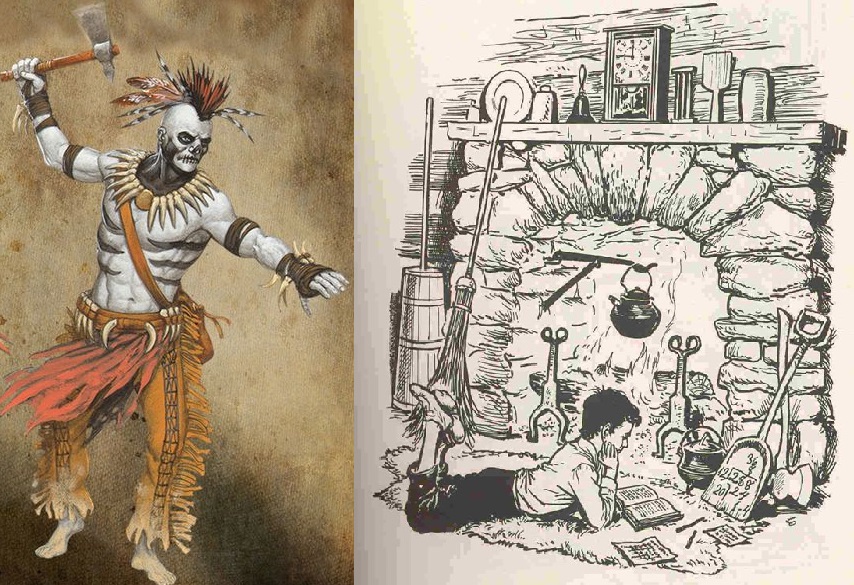
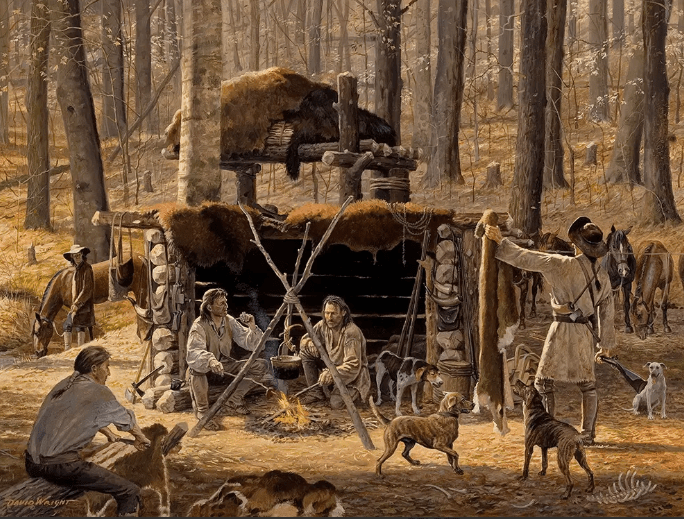
In the fall of 1816, Thomas and Nancy Lincoln packed their belongings and their two children, Sarah, 9, and Abraham, 7, and left Kentucky bound for southern Indiana. Arriving at his 160-acre claim near the Little Pigeon Creek sometime between Thanksgiving and Christmas. Thomas moved his family into a hunter’s half-face camp consisting of three rough-hewn walls and a large fourteen-foot space where a fire was almost always kept burning. Lincoln’s earliest memories of this home were the sounds of wild panthers, wolves, and coyotes howling just beyond the opening.

Typical 18th Century half-face hunting camp.

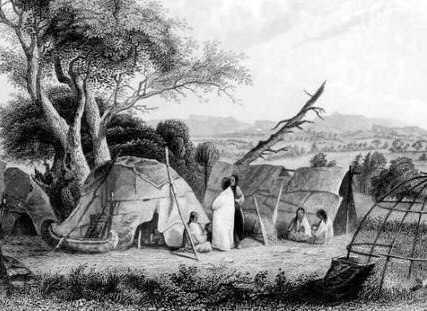
Once the chores were finished, Thomas would entertain his small family with tales of hunters, wild Indians, and ghosts. None of which was more frightening than the ghost of old Setteedown, mighty chief of the Shawnee tribe. The Shawnees were scattered throughout the region with their main settlement of about 100 wigwams located on the Ohio River near present-day Newburgh.

Shawnee tribe – Wigwams

For the most part, the Indians were friendly and peaceful. Tradition recalls that Chief Setteedown (or Set-te-tah) and settler Athe Meeks were the exceptions to that rule. The Chief accused Meeks, a farmer and trapper, of robbing his traps and Meeks accused Setteedown of stealing his pigs. A feud developed between the two men that would ultimately leave both men dead.

Atha Meeks (1820-1913)

The hatred became bitter and Setteedown decided to settle the matter once and for all. Early on the morning of April 14, 1812, Setteedown, his seventeen-year-old son and a warrior named Big Bones lay in wait outside the Meeks family cabin. The warriors were armed with rifles, knives, and tomahawks. When Atha, Jr. stepped out of the cabin to fetch water from a nearby spring, one of the Indians fired at him, wounding him in the knee and wrist.

In 2016, descendent Anthony Dale Meeks detailed the encounter in his family history. The Indians “crept up behind a fodder stack ten or twelve rods in front of the door and when my brother Athe (Jr.) got out of bed and passed out of the house and turned the corner with his back towards them, they all fired at him. One ball passed through his knee cap, another ball passed through his arm, about halfway from his elbow to his wrist. Another ball passed through the leg of his pants doing no injury.”

When Atha, Sr. heard the shots, he ran out of the cabin where Big Bones shot him as he exited the doorway. Margaret Meeks and another son dragged the dying man into the cabin before the Indians could scalp him. Atha, Sr. died without ever knowing what hit him. That 2016 account continues “Meanwhile father jumped out of bed, ran to the door to see what was up, and met an Indian right at the door who shot him right through the heart. He turned on his heels and tried to say something and fell dead under the edge of the bedstead.”

William Meeks (1815-1877)

Setteedown and his son then ran to the wounded younger man and attacked him with their tomahawks. Meeks Jr. managed to fight his attackers off until his uncle William arrived from his adjacent cabin. William Meeks fired his rifle at the tribesmen, killing Big Bones and chasing the other two away.

Some accounts report that the attack on the Jr. Atha was more of a contest of humiliation than a duel to the death. Chief Setteedown and his son were toying with their prey like a cat with a mouse, throwing tomahawks and knives at the wounded young man from a close distance.

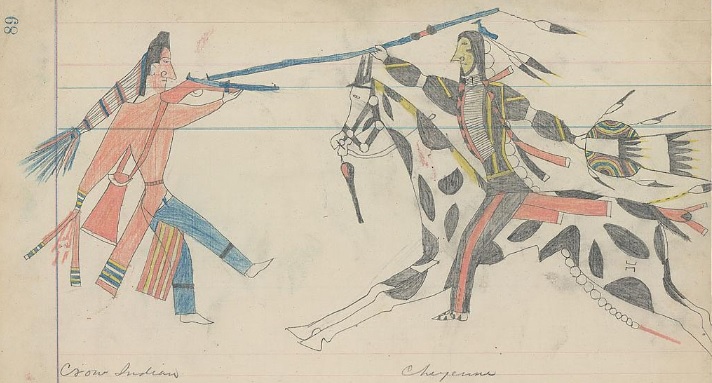
1880s drawing of a mounted Cheyenne warrior counting coup with lance on a Crow warrior.

Among the Plains Indians, counting coup is the warrior tradition of winning prestige in battle by showing bravery in the face of an enemy. It involves shaming a captive with the ultimate goal being to persuade the enemy combatant to admit defeat, without having to kill him. In Native American Indian culture, any blow struck against the enemy counted as a coup. The most prestigious acts included touching an enemy warrior with a hand, bow, or coup stick and escaping unharmed; all without killing the enemy. The tradition of “counting coup”, if true in this instance, ultimately cost the great Chief his life. The gruesome practice allowed armed avengers to bring this “game” to an end by precipitating a hasty retreat.

Some eight hours later, a group of settlers arrived at Setteedown’s village seeking revenge. The vigilantes captured Setteedown, his wife, the son who participated in the attack, and two or three other children. The posse confined them in the cabin of Justice of the Peace Uriah Lamar near Grandview. They were guarded by three men, including the deceased brother William Meeks. Sometime during the night the old chief was shot and killed, presumably by Uncle William Meeks.

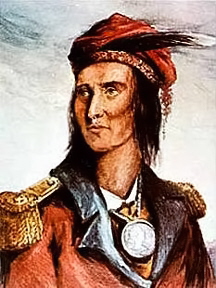
Tecumseh.

The remaining family members were banished from the region. Legend claims that they left a treasure behind buried somewhere near Cypress Creek and the Ohio River. Setteedown’s tribe disbanded and reportedly joined Tecumseh to fight in the War of 1812.

And what became of Chief Setteedown’s body? Author Louis Warren notes, “Setteedown was buried in his Indian blanket in a shallow grave close to the Lamar cabin. Mischievous boys were reported to have pushed sticks down through the soil until they pierced the old blanket. (thereby releasing his vengeful spirit) And for many years old Setteedown’s ghost was supposed to be visible at times in the vicinity.”

Local lore claims that old Chief Setteedown roamed the hills, dales, and waterways of Spencer and Warrick County looking for scalps to add to his war belt. Frontier children were warned that Setteedown’s playful spirit was a ruse with deadly intentions. Chief Setteedown was searching for souls to repopulate his lost tribe in the afterlife. In an age when children were often in charge of refilling the household water trough, gathering firewood, or collecting nuts and berries to supplement every meal, it is easy to imagine how ghost stories about bloodthirsty Indians may have sparked young Abe Lincoln’s imagination. The setteedown legend had every element that would have sparked a child’s imagination: Indians, murder and lost treasure.

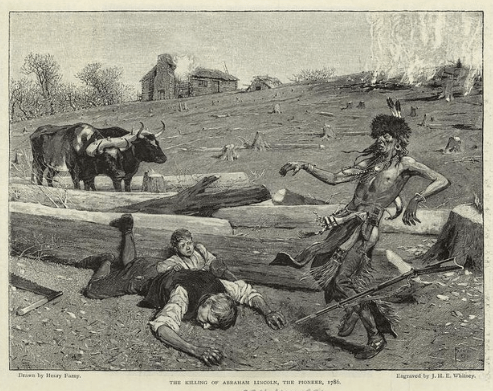
1870 Century Magazine print titled: “The Killing Of Abraham Lincoln, The Pioneer, 1786.”

The legend takes on added significance when it is remembered that Abraham Lincoln’s namesake grandfather was ambushed and killed by Indians. In May 1786, Abraham Lincoln, Sr. (his Kentucky tombstone lists his surname alternatively as “Linkhorn”) was putting in a crop of corn with his sons, Josiah, Mordecai, and Thomas, when they were attacked by a small war party. He was killed in the initial volley. In referring to his grandfather in a letter to Jesse Lincoln in 1854, Lincoln wrote that “the story of his death by the Indians, and of Uncle Mordecai, then fourteen years old, killing one of the Indians, is the legend more strongly than all others imprinted upon my mind and memory.”

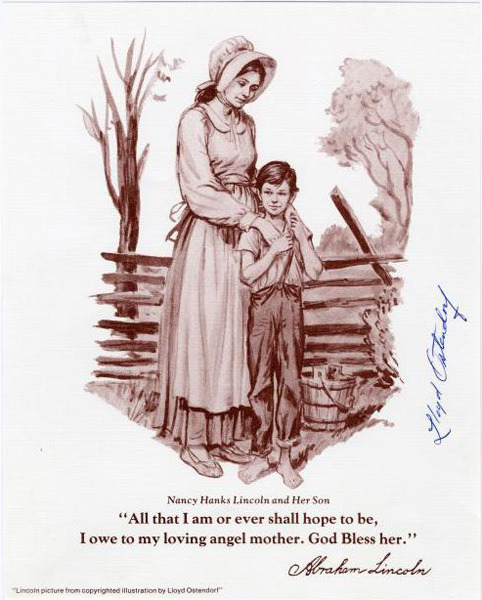
Nancy Hanks Lincoln by Lloyd Ostenddorf.

Although life was generally good for the Lincoln family during their first couple of years in Indiana, like most pioneer families they experienced their share of tragedy. In October 1818, when Abraham was nine years old, his mother, Nancy Hanks Lincoln, died of “milk sickness”. The milk sickness ensued after a person consumed the contaminated milk of a cow infected with the toxin from the white snakeroot plant ( or Ageratina altissima). Nancy had gone to nurse and comfort her ill neighbors and became herself a victim of the dreaded disease.

Lincoln Boyhood Home Marker Indiana.

Thomas and Abraham whipsawed Hoosier Forrest logs into coffin planks, and young Abe whittled wooden pegs with his own hands, pausing only briefly to wipe the tears away that were flowing down his cheeks. Ultimately, Abe’s hand-carved pegs fastened the boards together into the coffin for his beloved mother. She was buried on a wooded hill south of the cabin. For young Abraham, it was a tragic blow. His mother had been a guiding force in his life, encouraging him to read and explore the world through books.

Lincoln with his “Angel Mother” signed by Dayton, Ohio artist Lloyd Ostendorf.

His feelings for her were still strong some 40 years later when he said, “All that I am or hope to be, I owe to my angel mother.” Lincoln’s fatalistic countenance, his famous bouts with melancholy, and his overall sad-faced demeanor could easily be traced back to those “growing-up” days in Southern Indiana. It is easy to imagine that, although terrifying to most children, the Setteedown ghost story was welcome entertainment to the hard reality of life on the Hoosier frontier for young Abe Lincoln.

Disney, Hollywood, Indianapolis, Music

Irvington’s Disney Prince — Bill Shirley

Originally published in 2008, this article was reprinted on December 5, 2024. https://weeklyview.net/2024/12/05/irvingtons-disney-prince-bill-shirley-2/

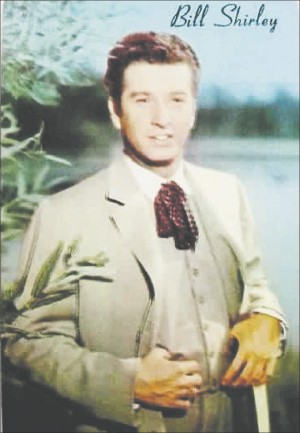
Bill Shirley on his 1953 “Mother’s Cookies” trading card.

During World War II through the I Like Ike years in America, Irvington had its own representative in Tinseltown. Irvingtonian Bill Shirley made fifteen movies starting in 1941 starring alongside Hollywood luminaries like John Wayne, Abbott and Costello, Ward Bond, and the beautiful Audrey Hepburn. Bill played the part of legendary American songwriter Stephen Foster of “”Swanee River” fame and worked with the great Walt Disney as the voice of Prince Phillip in the 1959 Disney classic Sleeping Beauty.

Disney’s Prince Phillip 1959.

Bill Shirley was born in Irvington on July 6, 1921, and attended George Washington Julian School number 57. From his earliest days, Bill Shirley had a natural talent for singing and acting. He would spend his afternoons daydreaming about becoming a star in Hollywood, and his weekends were spent watching his idols on the big screen at the Irving Theatre, located to this day on Washington Street between the intersection of Ritter and Johnson Streets. By the tender age of 7, blessed with a beautiful singing voice, Bill had the rare honor of singing at the Easter sunrise services held annually from 1929 to 1938 on Monument Circle until age 16. Bill gained his acting abilities while performing in musicals and plays at the Irvington Playhouse and Civic Children’s Theater.

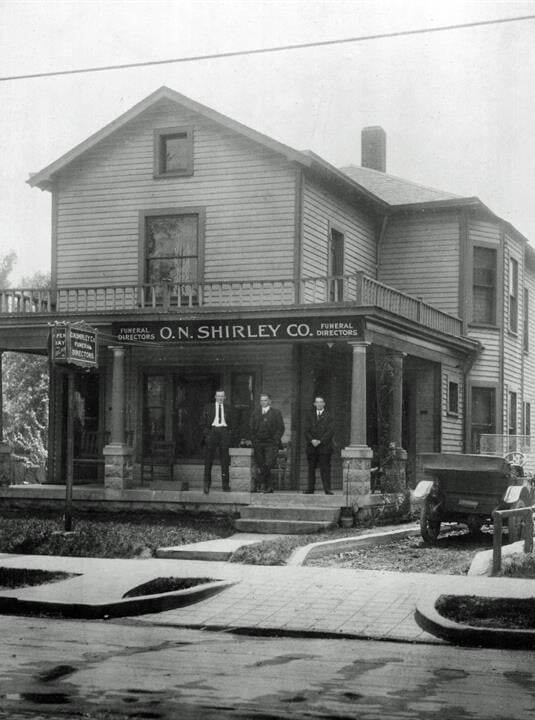
The original O.N. Shirley Funeral Home at 2755 East Washington Street in Indianapolis.

Bill’s father Ottie N. Shirley, along with his uncles Luther and Arley Shirley, formed the Shirley Brothers Funeral Home located at 2755 East Washington St. Bill lived with his family in their home at 5377 East Washington Street until he graduated from Shortridge High School at the age of 18. Immediately after Bill graduated, the family home was remodeled and opened as Irving Hill Chapel, part of the Shirley Brothers mortuary. As soon as Bill completed his studies at Shortridge, his mother packed up their bags and headed for Hollywood. She very wisely hooked Bill up with a voice coach in Los Angeles and almost immediately began to see results. His good looks, along with his mannish voice and natural acting ability, landed Bill a seven-year contract with Republic Pictures at the improbable age of 19. Bill made his first film in early 1941, a musical titled Rookies on Parade starring Bing’s brother Bob Crosby in the lead role. Within a year of arriving in Hollywood, Bill Shirley was cast in seven films for Republic Studios including the John Wayne war film Flying Tigers in 1942. Bill also appeared with one of his childhood idols, Roy Acuff in the 1942 film Hi, Neighbor shot at the Grand Ole Opry in Nashville, Tenn. His other films for Republic included Sailors on Leave and Doctors Don’t Tell in 1941, Ice Capades Review in 1942, Three Little Sisters in 1944, and Oh, You Beautiful Doll in 1949. Bill was uncredited in the film but sang the opening theme for Dancing in the Dark in 1949.

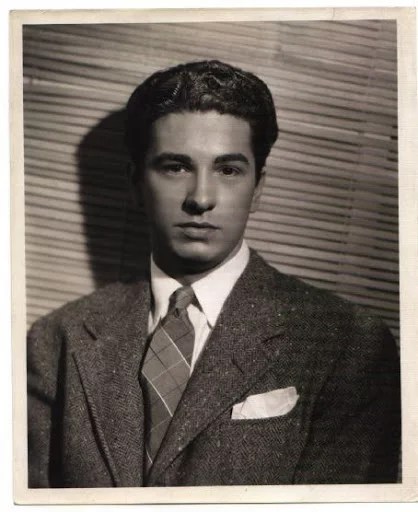
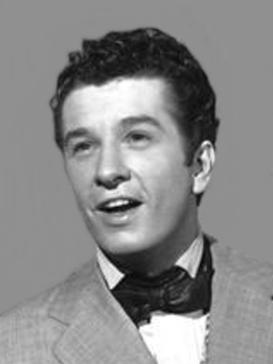
A very young Bill Shirley.

In the summer of 1942, Shirley joined the Army. When he returned at the close of the war, Bill found it hard to pick up his movie career where he had left off. He found a home as a radio announcer in Los Angeles but yearned to return to the big screen. He kept his acting skills sharp by performing on stage in the Hollywood area. He caught a break in 1947 when he was hired to dub the singing of actor Mark Stevens who was starring as Joe Howard, the man who invented kissing, in the entirely forgettable film I Wonder Who’s Kissing Her Now. This voice-over work came back to haunt him later in his career.

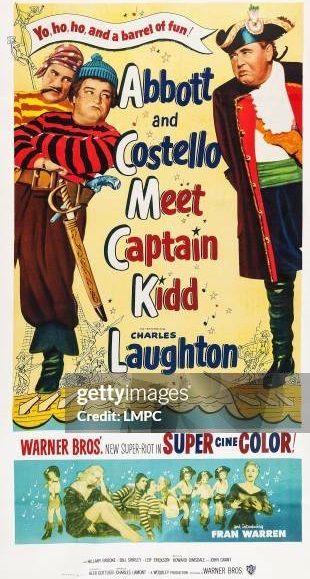
His next big break would come in 1952 when he landed a lead role as Bruce Martingale alongside the comedy team of Abbott & Costello and shared the screen with Academy Award-nominated British actor Charles Laughton in the Warner Brothers film Abbott & Costello Meet Captain Kidd. The critics hated it but the audiences loved this campy film.

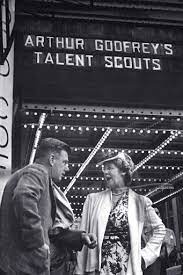
Bill landed the role of historic southern songwriter Stephen Foster in the 1952 film I Dream of Jeannie. He returned to Republic Pictures in 1953 to make the film Sweethearts on Parade. In this role, Shirley, along with co-star Ray Middleton, were being touted as Republic’s answer to the Bob Hope and Bing Crosby duo. It didn’t work. It was a critical and box office disappointment. Today the film is most remembered for the staggering 26 different songs in the film. Bill was a winning contestant on Arthur Godfrey’s “Talent Scouts” TV show which ran from 1948 to 1958. “Talent Scouts” was the highest rated TV show in America and was responsible for discovering stars like Tony Bennett, Lenny Bruce, Jonathan Winters, Connie Francis, and Don Knotts. Bill’s winning accomplishment is notable when you consider that Elvis Presley and Buddy Holly auditioned but were not chosen to appear on the show. It would take Bill six years before he made another film. But it was worth the wait.

In 1959, Bill Shirley made the film appearance he is most remembered for by today’s fans when he appeared as the voice of Prince Phillip in Walt Disney Pictures’ Sleeping Beauty. It was an impressive feat considering that he was one of only three lead voices in the entire film. The film would take nearly an entire decade to produce. The story work began in 1951, the voices were recorded in 1952 and the animation production began in 1953 and did not conclude until 1958 with the musical score recorded in 1957. During the original release on January 29, 1959, the film was considered a box office bust, returning only one-half of the Disney Studios’ investment of $6 million. It was widely criticized as slow-paced with little character development. Time has been much kinder to the film and today’s Disney fans and critics alike hail it as one of the best animated films ever made with successful releases in 20 foreign countries. To date the film has grossed nearly $500 million, placing it in the top 30 highest-grossing films of all time.

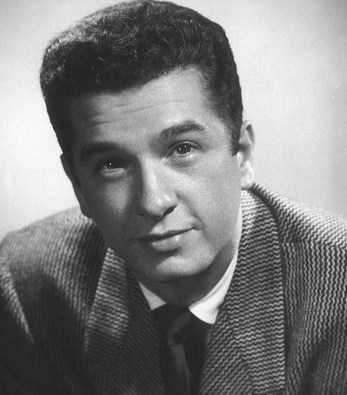
Bill Shirley.

In 1959, Bill Shirley made the film appearance he is most remembered for by today’s fans when he appeared as the voice of Prince Phillip in Walt Disney Pictures’ Sleeping Beauty. It was an impressive feat considering that he was one of only three lead voices in the entire film. The film would take nearly a decade to produce. The story work began in 1951, the voices were recorded in 1952 and the animation production began in 1953 and did not conclude until 1958 with the musical score recorded in 1957. During the original release on January 29, 1959, the film was considered a box office bust, returning only one-half of the Disney Studios’ investment of $6 million. It was widely criticized as slow-paced with little character development. Time has been much kinder to the film and today’s Disney fans and critics alike hail it as one of the best animated films ever made with successful releases in 20 foreign countries. To date the film has grossed nearly $500 million, placing it in the top 30 highest-grossing films of all time.

Bill Shirley.

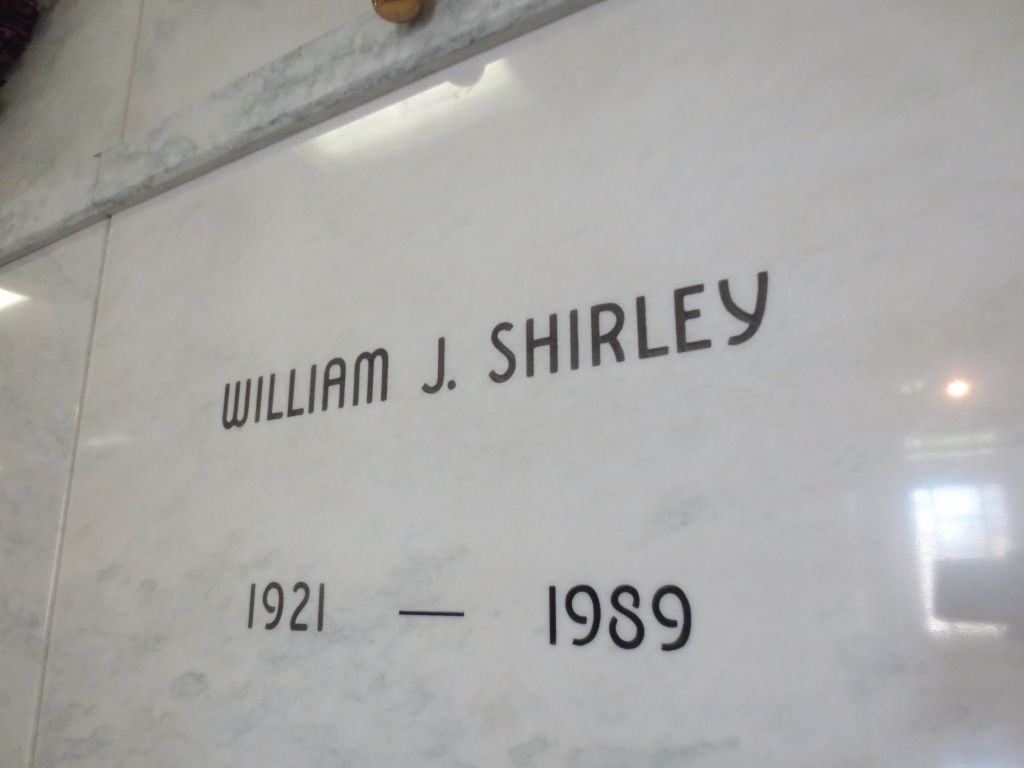
Bill Shirley died of lung cancer on August 27, 1989, in Los Angeles, California. He is buried in Crown Hill Cemetery. By the way, what is the trivia question attached to Irvington’s Bill Shirley? Prince Phillip was the first of the Disney Princes to have a first name. Cinderella’s and Snow White’s previous princes had gone nameless. Bill Shirley’s name may be all but forgotten by most of Indy’s eastsiders, but I assure you that not only has he attained a lasting measure of fame in the film industry, but he has also been immortalized in a way that not even his wildest dreams could have predicted. You see, Bill Shirley appeared in the 1953 “Mother’s Cookies” baseball-style trading card set of up-and-coming movie stars. He’s card # 33 out of the 63 card set of these premium cards that were given away in packs of Mothers Cookies sold in the Oakland/San Francisco region. The card is pretty rare and if you can find it at all, it’ll cost you about $25.

Bill Shirley’s Grave at Crown Hill Cemetery in Indianapolis, Indiana.