Ghosts, Hollywood, Pop Culture

Clifton Webb’s Ghost-Forgotten Hoosier Hollywood Icon

webb1Original publish date:  November 9, 2008

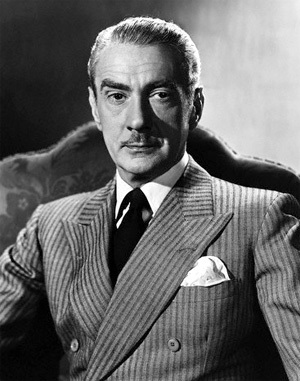
If you’re a fan of the Golden Age of Hollywood, then you should recognize the name Clifton Webb. If you’ve never heard of him, but consider yourself a fan of old Hollywood movies, don’t despair as you’ve probably seen Webb in one of his many old movies or television appearances made during his long career in Tinseltown. He’s one of those great character actors whose face is very familiar but whose name escapes us. So great in fact that he was nominated for 3 Academy Awards and 2 Golden Globe awards ( winning one in 1946) during his career. His story is sadly sweet.

If you’re a fan of the Golden Age of Hollywood, then you should recognize the name Clifton Webb. If you’ve never heard of him, but consider yourself a fan of old Hollywood movies, don’t despair as you’ve probably seen Webb in one of his many old movies or television appearances made during his long career in Tinseltown. He’s one of those great character actors whose face is very familiar but whose name escapes us. So great in fact that he was nominated for 3 Academy Awards and 2 Golden Globe awards ( winning one in 1946) during his career. His story is sadly sweet.  Clifton Webb was born Webb Parmelee Hollenbeck to a multi-generational Hoosier farming family in Marion County on November 19, 1889. If you find a biography on Mr. Webb, it will most likely claim that he was born in Beech Grove. However that information proves faulty when you realize that Beech Grove wasn’t formed as a community until after he was born. Beech Grove as we know it was not formed until 1906. Before that time it was known as a region known for the many Beech trees that populated the area. The town of Beech Grove was formed when the Big Four railroad began to use it as a hub during the early 1900s.

It’s much more accurate to say that Clifton Webb was born nearer to Brookville Road in the South eastern area of Marion County. So it’s accurate to say that Webb started life as an east-sider. However, he did not stay long. Webb’s father, Jacob Grant Hollenbeck (1867-1939) , was an Indiana farmer and sometime green grocer. His domineering mother, Maybelle A. Parmelee (1869-1960) was the daughter of a railroad conductor. Maybelle insisted that her “Little Webb” keep her family name along with that of Webb’s father. She moved with her “little Webb” to New York City after her husband’s job as a ticket taker did not suit her plans for her son’s career advancement in the theater.

Maybelle was known to tell anyone she came in contact with the “We never speak of him. He didn’t care for the theater.” Maybelle had “little Webb” enrolled in singing, dancing, & acting classes in New York City by the age of 5. Maybelle was an effective and aggressive stage mother who managed to get “little Webb” his stage debut at Carnegie Hall at the age of only 7 in a play called “The Brownies”. Webb was so effective in this first role that he was signed up to tour with a traveling vaudeville acting troupe. Shortly afterwards he was tapped for lead roles as Tom Sawyer and Oliver Twist. Maybelle kept “little Webb” busy between performances with painting and opera lessons. Webb quite school by the age of 13. He was performing opera solos on stage by the age of 17.

By the age of 19, Webb had dropped both the Parmelee and Hollenbeck names and adopted the stage name we know as “Clifton Webb”. He was performing regularly on Broadway and it was not unusual to find his mother Maybelle’s name listed in the playbill along with her “little Webb” as a minor scene player or extra. During this period, Webb co-starred with legends like Will Rogers and Al Jolson in plays and musicals written by luminaries like Cole Porter, Irving Berlin, Oscar Wilde, Noel Coward, the Gershwins and Jerome Kern. Webb received billing above Humphrey Bogart in Bogie’s first stage performance. Although he appeared in a few silent films in the 1920s, he stuck to Broadway until 1944.

webbclifton01Webb was tapped by director Otto Preminger to appear in the classic “Laura” alongside Gene Tierney. He would receive his first Oscar nomination for this appearance, even though he was relatively unknown to movie fans. 2 years later in 1946 he again starred with Tierney in the cult classic film “The Razor’s Edge”. He received his second Oscar nomination for this role. Webb’s created the lasting character “Mr. Belvedere” in 1949 for the film “Sitting Pretty” and would reprise the role 2 more times. This character would earn him his third and final Academy Award nomination. This same “Mr. Belvedere” character would be retooled as a TV show and played by 4 different actors from the 1950s thru the 1980s.
Some of Webb’s other films (He made 25 films in all) include: “The Dark Corner” in 1946, “Cheaper by the Dozen” with Myrna Loy in 1950, “For Heaven’s Sake” in 1950, “Dreamboat” in 1952, “Woman’s World” in 1954, “Titanic” in 1954 (He played Barbara Stanwyck’s doomed husband), “Three Coins in a Fountain” (1954), “The Man Who Never Was” in 1956, “Boy on a Dolphin” (1957), and “The Remarkable Mr. Pennypacker” in 1959. It’s been claimed that Webb’s real life persona was most like that of his “Mr. Belvedere” character, described as being somewhat of a “Sophisticated, stuffy, effete snob” by some who knew him. It was no secret that Clifton Webb was gay. This at a time in Hollywood when it was an unwritten rule in Tinseltown to “Don’t ask, don’t tell”.

Clifton Webb’s elegant style landed him on Hollywood’s best dressed list for decades. Webb was the subject of many great stories and quotes in Hollywood. One of comic Bob Newhart’s favorite stories is to relate how while he was a young & naive star in Hollywood at one of his first exclusive parties, Clifton Webb approached this wide eyed newcomer and startled Newhart by asking him if he wanted to dance. Despite this obvious frankness, Clifton Webb managed to keep his personal life out of the Hollywood tabloids. Although the rumor in late 1950’s Hollywood was that Webb was once romantically linked with fellow Hoosier icon James Dean. It was widely known that Webb openly flirted with young, good looking men at parties in Hollywood, taking satisfaction in garnering more attention from them than the women in the room.

However, this is all unsubstantiated Hollywood gossip. Webb was never seriously linked to anyone in Hollywood, male or female. He never married. This is at least due in part to his abnormally close relationship with his mother, who seemed to be the sole object of Webb’s tenderness and love. She lived with her son until her death at age 91 in 1960. Webb was distraught. So much so that his friend Noel Coward tried to get him to snap out of the deep depression months after her death by telling Webb, “It must be difficult to be orphaned at 70, Clifton.” As for trivia, cartoonist Jay Ward claimed that he modeled the “Peabody” character from the Rocky & Bullwinkle show on Clifton Webb.

Direct quotes attributed to Webb include, when speaking of his alternative lifestyle, he said “It’s never morals, it’s manners.” and “You can be rich and dull or poor and amusing–but you must always contribute something to the community.” On the subject of wearing a partially exposed handkerchief in a suit jacket pocket, Webb said “Never pointed, never square…it should always be, of course, pear shaped.”

Clifton Webb never really recovered from the loss of his mother and his health began to suffer for it. He reportedly locked her room and refused to remove her belongings, choosing instead to leave everything just as he left it. He spent the last 5 years of his life as a sad, lonely recluse in his Beverly Hills home. Sadly, upon her death he slipped into a prolonged period of denial and depression going so far as to contact dozens of clairvoyants and spirit mediums in an effort to contact the spirit of his dead mother. One of these mediums was the former Blonde Bombshell star Mae West, who was herself known for a powerful spiritually intuitive gift of communicating with the spirits of the dead.

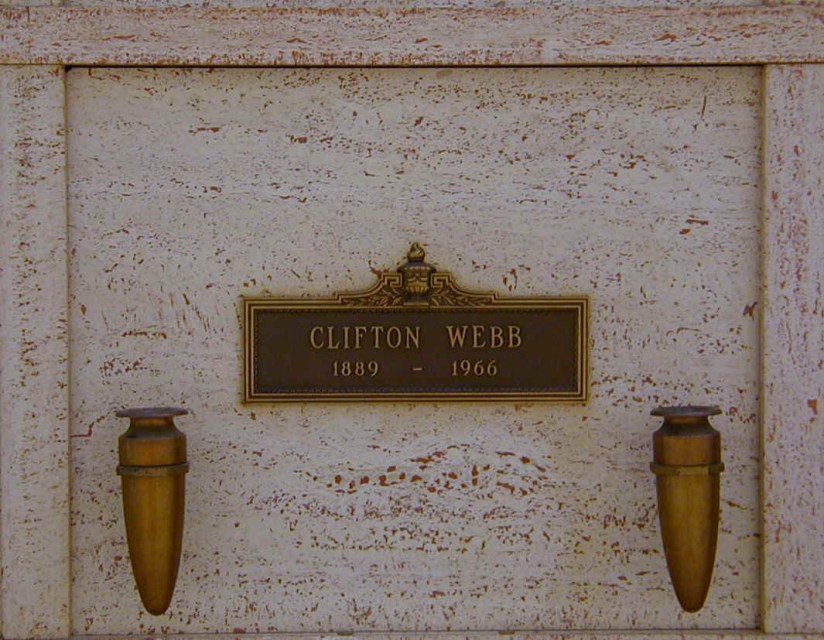
Clifton Webb died of a heart attack on October  13, 1966 at the age of 76. He was awarded his own star on the Hollywood walk of fame. It’s located at 6840 Hollywood Blvd. He was interred in a burial vault at Hollywood Forever Cemetery. His is crypt 2350, Corridor G-6 in the Abbey of Psalms. Why so much detail about Webb’s burial spot? Because it’s rumored to be haunted by Webb himself.

Rarely will you find accounts of ghosts “haunting” their gravesites, but Clifton Webb is the exception to this general rule. Clifton Webb’s restless spirit has been seen haunting the crypt in the section known as “The Sanctuary of Peace” where his mortal remains were laid to rest. Mr. Webb is always seen fastidiously dressed in his dapper suit and sometimes has been known to startle visitors by yelling at them in his distinctive voice. There are even a few accounts of Mr. Webb haunting his old house at 1005 Rexford Drive in Beverly Hills before it was torn down many years ago. It has been claimed that the reason for his haunting is his reluctance to relinquish his fame and the fear that his legacy might be forgotten. The precursor for these ghostly visits by Webb in his burial vaults is the unnerving sound of the marble slab that covers the opening shifting back and forth.

Clifton_Webb1I can tell you from first hand experience, this slab does indeed move to and fro within the slot that covers the burial cavity. I had heard these legends and visited the Hollywood Forever cemetery 9 years ago to test the theory. I will tell you that it’s an eerie feeling and an even stranger sound. If I were alone in that vault and heard that sound without explanation as to whom or what was causing it, I would not stick around to see if it was my famous fellow Hoosier, Clifton Webb!

Auctions, Pop Culture

Roy Rogers Auction. Happy Trails for sale.

441Original publish date:  July 16, 2010

Roy Rogers. If you’re a baby boomer you think “King of the Cowboys”, if you’re a Gen-Xer or younger, you think chicken. Roy Rogers, born Leonard Franklin Slye on November 5, 1911, was an American singer and cowboy actor, as well as the namesake of the Roy Rogers Restaurants chain. He and his wife Dale Evans (known as the “Queen of the West”), his golden palomino Trigger, and his German shepherd dog, Bullet, were featured in over one hundred movies and The Roy Rogers Show. The show ran on radio for nine years before moving to television from 1951 through 1957.

Roy Rogers. If you’re a baby boomer you think “King of the Cowboys”, if you’re a Gen-Xer or younger, you think chicken. Roy Rogers, born Leonard Franklin Slye on November 5, 1911, was an American singer and cowboy actor, as well as the namesake of the Roy Rogers Restaurants chain. He and his wife Dale Evans (known as the “Queen of the West”), his golden palomino Trigger, and his German shepherd dog, Bullet, were featured in over one hundred movies and The Roy Rogers Show. The show ran on radio for nine years before moving to television from 1951 through 1957.  Rogers was well ahead of his time in many aspects. He was one of the first Hollywood stars to realize the power of his likeness and maintaining his image. Rogers endorsed everything from cap guns, cowboy hats and comic books to clothing brands, lunch boxes and fried chicken. His “Roy Rogers Enterprises” was created in the 1950s and every item Roy endorsed was personally approved and inspected by Rogers himself and carried his “Pledge to parents” attesting to its quality.So powerful was the Roy Rogers brand that Roy was able to open the “Roy Rogers-Dale Evans Museum” near their home in Apple Valley, California in 1967 before relocating to nearby Victorville on old historic Route 66 in 1976 and finally ending up in Branson, Missouri in 2003. The museum was filled with hundreds of one-of-a-kind personal mementos from Roy & Dale’s careers as well as at least one of every product Roy or Dale ever endorsed. It seems that Roy insisted on retaining at least one example of every item bearing his likeness over the years.

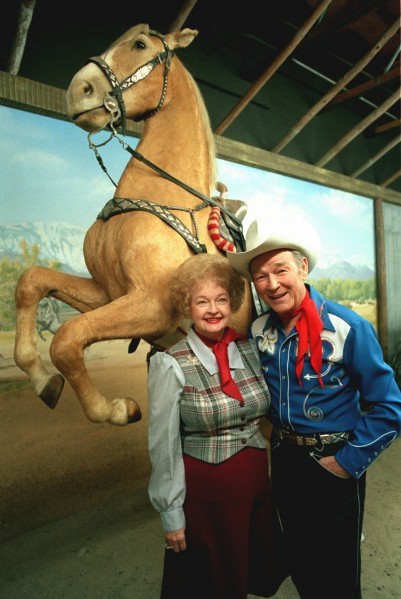
roy-rogers-dale-evans-773x1024Roy died on July 6, 1998 and Dale followed him on February 7, 2001, prompting the move to Branson. Sadly, the popular museum closed for financial reasons on Dec. 12, 2009. It seems that Roy’s demographic and interest in his life and career was dying with him. The museum was operated by Roy Rogers, Jr., known as “Dusty” to fans, whose decision to close the museum was like another death in the family. In a move that shocked fans, historians and preservationists alike, Dusty announced that the contents of the museum would be liquidated. What most people fail to realize is that Dusty is simply doing what his late father told him to. Roy often told his family that when interest in his career inevitably waned, sell the collection and close the museum.
According to the website: “The decision to close the Museum has come after two years of steady decline in visitors to the Museum. A lot of factors have made our decision for us. The economy for one, people are just not traveling as much. Dad’s fans are getting older, and concerned about their retirement funds. Everyone is concerned about their future in this present economy. Secondly, with our high fiscal obligations we cannot continue to accumulate debt to keep the doors open. This situation is one I have not wanted to happen. Dad always said, ‘If the museum starts costing you money, then liquidate everything and move on.’ Myself and my family have tried to hold together the museum and collection for over fifteen years, so it is very difficult to think that it will all be gone soon.”

The contents of the museum, 348 lots in all, were auctioned to the highest bidder by Christie’s auction house during a highly anticipated sale on July 14-15 in New York City. The auction included what many considered to be the centerpiece of the museum, Roy’s horse Trigger, a huge 15.3 hands high golden palomino. Perhaps the most famous horse in entertainment history, Trigger was featured in all of Roy’s movies and television throughout the 1950s. Born in 1934 on a ranch owned by Bing Crosby, Trigger entertained movie and television audiences for three decades. When Trigger died in 1965, Roy hired a taxidermist to mount the animal in a rearing position on two legs. Trigger was estimated to sell for $100,000-$200,000, the final gavel price was $ 266,000. In addition to the stuffed horse, the auction featured ornate western costumes, saddles, personal photos, musical instruments, awards and the Nellybelle Jeep from Rogers’ television show.

rogerstrigger

Dale Evans’ pearl-colored quarter horse Buttermilk, a light buckskin Quarter Horse with dark points that appeared in numerous films for over 30 years from 1941 to 1972, was estimated to sell for $30,000 to $40,000, it sold for $ 25,000, well below auction estimate and less than a tenth of Trigger’s gavel price. The Rogers’ German Shepherd Bullet was estimated to sell for $10,000 to $15,000. The final price was $ 35,000 and sold to the same man that purchased Trigger. Bullet was a master at knowing who the bad guys were, and always eager to bite a gun out of their hand or to tackle them when his human partners were outnumbered. He could run alongside Roy’s horse Trigger and keep up no matter where they went. The sale also included Roy’s back-up horse, Trigger Jr. with a pre-sale estimate of between $30,000 to $50,000. The second “other Trigger” was a registered Tennessee Walking Horse whom Roy himself called Trigger Jr. It sold for $ 18,750.

In case you’re wondering, the animal’s hides were stretched over plastic statue likenesses of each subject to obtain a realistic lifelike look. Although Trigger gained fame as Roy’s horse, his first screen appearance was as Olivia De Havilland’s mare in Warner Brothers pictures “The Adventures of Robin Hood” in 1938. In keeping with the “spirit” of the column, Roy’s beloved horse Trigger was the subject of a rather macabre incident that occurred after his death in 1965. It seems that after Trigger’s hide was removed for mounting, the remaining meat was illegally sold to several unscrupulous southwest eateries. Can you imagine the horrific prospect of eating a “Trigger Burger” ? The butcher responsible, John L. Jones, was sentenced to five years in prison.

Another highlight of the Rogers museum sale included another kind of horsepower, Roy Rogers’ personal automobile, a 1964 Bonneville convertible, adorned with collectible silver dollars and featuring door handles and a gear shift knob made from silver-plated pistols. The car’s interior is all hand tooled leather and features no less than 14 authentic guns, rendered non-firing by the designer, in its design. The hood ornament is a pair of 6 foot long Texas longhorns. It was estimated at $100,000 to $150,000 and sold for $ 254.500. The Willy’s CJ-2A Jeep “Nellybelle” used in the TV show from 1951 to 1957 to drive around Mineral City was also featured in the sale; it carried a pre-sale estimate of $ 20,000 to $ 30,000 and sold for $ 116,500.

Other items included in the auction were 60 pairs of cowboy boots, dozens of Roy & Dale’s cowboy hats and belt buckles, trophies, many of Roy’s pocket and wrist watches, musical instruments, paintings, countless movie posters and props,  household furnishings (including the Roger’s family dining room table) and tools. The sale of the collection from the defunct Museum was expected to generate about $1.4 million, with all proceeds going to the family. The sale generated just under $ 3 million.

Although the museum is closed and the contents now reside in private collections all over the world, reminders of Roy & Dale are not merely confined to their old movies, songs and television shows. Their Apple Valley, California home is the final resting place for both Roy and Dale and there are reminders of the Rogers family everywhere including roads and highways named in their honor. Roy and Dale created St. Hillary’s Episcopal Church, founded a home for boys, and took in some 20-40 foster children and raised them as their own. Yes, Roy Rogers was a savvy self-promoter, shrewd personal investor and slightly unorthodox lifetime curator of his own legacy and name. But it would seem that he actually lived the life and values his character portrayed on screen and in this case, Mommas, go ahead and let your babies grow up to be cowboys.4c40ce319e51c.image

Assassinations, Creepy history, John F. Kennedy, Pop Culture

Lee Harvey Oswald and the death of Innocence. Part II

781_1026023017Original publish date:  December 14, 2013

It was Monday November 24, 1963 and recently widowed Marina and the rest of the family were watching the John F. Kennedy funeral in a Fort Worth, Texas motel. Marina wanted to keep watching it, but the family said it was time to leave for nearby Rose Hill Cemetery. When they arrived, the small party drove straight to the chapel, expecting that their loved one would be buried in a religious service. But the chapel was empty. Instead, she was told to expect a brief service at the gravesite.
The 22-year-old widow made her way to section 17 of Shannon Rose Hill Memorial Park, a lonely, sparsely populated plot of Texas real estate where even the grass struggled to survive. A hole was waiting there with a handful of empty chairs waiting alongside. Only a few people were there to watch as the casket was lowered into the ground. Reporters who were covering the funeral carried the casket from the hearse to the graveside. Reporters? The casket contained the remains of 24-year-old Lee Harvey Oswald, the murderer of President John F. Kennedy and Dallas police officer J.D. Tippitt.
The dead man’s wife, Marina, felt humiliated that her husband was denied a religious ceremony. She was ashamed that no friends were present to act as pallbearers for her beloved Lee. Instead reporters, there for a story, were pressed into service to carry the dead man to his final resting place. This sad Texas spectacle was in sharp contrast to the ceremony taking place at the same time some 35 miles away in Dallas. The funeral of Officer Tippit at the Laurel Land Memorial Park cemetery included posthumous awards of valor and accolades from all over the nation. The lavish state funeral of President John F. Kennedy in full swing some 1,360 miles away in the Nation’s Capitol included accolades from all over the world.
Oswald’s funeral time, date and location were kept a closely guarded secret during its preparations in order to keep the morbidly curious away. To further insure that the services would not be disturbed, Oswald’s funeral was held at the same time as JFK’s because the family and officials from the funeral home knew that at that time everyone would be attending the president’s funeral.781_132829300087
On December 16, 2010, the original coffin of assassin Lee Harvey Oswald sold for $87,469 (which includes a 20 percent buyers’ fee) in an online auction at a California auction house. The starter bid was $1,000 and bidding ended when one of two top buyers dropped out around 10 p.m. The auction described the macabre relic as: “Original pine coffin that held the body of Lee Harvey Oswald from his burial on 25 November 1963 until his exhumation on 4 October 1981. At the time, conspiracy theories swirled over who was actually buried in the coffin.The coffin’s wood exterior was very soft from moisture damage, and had dark areas of discoloration. Visible along the sides were the tarnished original metallic ornamentation. The interior of the casket also showed splotchy dark discoloration and moisture-softening of the wood. A portion of the original fabric that lined the top of the casket had fallen upon the decomposed remains. Oswald’s remains were transported back to Rose Hill Cemetery for re-interment in a new casket and vault. The original deteriorated coffin offered here, measures 80″ long x 24″ deep, with the thickness of the sides of the casket approximately one inch. Sitting on wood crate which measures 84″ x 24″. Accompanied by a Letter of Authenticity by Funeral Director Allen Baumgardner, who assisted at the original embalming of Lee Harvey Oswald and later purchased the Miller Funeral Home along with all of its property.”
Because water had got into a cracked burial vault and damaged the original coffin, the funeral home swapped it with the family for a new one and Oswald’s body was reburied in another casket. The original casket was heavily water damaged and whats left of its metal ornamentation is rusted and parts of it, including the roof, have rotted extensively. Its satin lining has long since disintegrated but the coffin still contains shredded newspapers and other padding material left from its manufacture. Baumgardner, one of the funeral directors who participated in that autopsy kept the casket because no one seemed interested in it at the time, The Dallas Morning News reported. Baumgardner was a 21-year-old funeral home assistant when Oswald was shot to death, “I’ve never seen so many security police and FBI and Secret Service and news media just everywhere,” he recalled. The mortician kept it in storage in his Fort Worth funeral home for three decades. But Baumgardner, now 68, decided last month to sell it. “None of us is going to be around forever,” he said.
The auction also included instruments used to embalm Oswald, the 1963 funeral home log book, ( On Page 525 are the details of the original $573.50 mortuary fee and $135 cemetery plot. Oswald’s coffin cost $300, and the leaky vault that enclosed it was $200), an Easter card he sent to his brother and a section of the car seat the President Kennedy was sitting on when he was shot described as “A chilling relic…section of the seat upon which he and First Lady Jacqueline Kennedy sat…Light blue leather seat section which composed the main portion of the bench seat and clearly shows rust-colored staining consistent with long-dried blood…Accompanied by a letter of provenance on White House letterhead by White House Technical Service Rep. F. Vaughn Ferguson. Ferguson, whose involvement with the limousine before and after the shooting is well-documented, writes in part: “…Four days after the assassination the White House upholsterer and I removed this leather at the White House. The light blue leather is from the center of the rear seat…The spots on the leather are the dried blood of our beloved President John F. Kennedy.” The first draft of Oswald’s death certificate is for sale too. It was redone after the justice of the peace hastily wrote “Shot by Jack Rubenstein” in the space listing “How Injury Occurred” and someone pointed out that Ruby had not yet been convicted of the killing.
Although the auction is over and your chance to participate is lost, never fear. For if you want a chance to experience any left over “bad vibes” of Lee Harvey Oswald, you can always travel to Ft. Worth and try to locate the final resting place of the enigmatic Marine assassin. Just keep in mind, its not easy. True Oswald is buried in section 17 of east Ft. Worth’s Rose Hill cemetery (7301 East Lancaster Avenue) once you get there, don’t expect any help from the cemetery staff. The workers are not allowed to divulge the location of Oswald’s grave. The general manager at Rose Hill confirms that curiosity-seekers are not told how to find his grave at the sprawling cemetery, out of respect for his relatives. Another reason for the secrecy might be found in the current marker atop the dead assassin’s body that is inscribed simply “Oswald.” The current rose colored granite stone replaces the stolen original tombstone, which gave Oswald’s full name and birth-death dates.
If you find Oswald’s marker, you’d never realize that his controversial mother Marguerite, who died Jan. 17, 1981, is buried next to him on the left in an unmarked grave. However, the first thing you’ll notice is the stone marker that rests just inches to the left of Oswald inscribed simply “Nick Beef”. For years, veteran journalists, scholars and members of the entertainment world who have studied the assassination, knew nothing about the “Nick Beef” mystery. Who is it? What does it mean? Why is it so close to the Oswald stone? No-one knew.
d12508937307b3a2fe6c2cc97a868177The mysterious stone was first noticed in 1998 and soon after word of the “Nick Beef” stone got out prompting would be grave hunters to ask the staff for directions to that stone, knowing that was the surest way to find Oswald’s. But nowadays, the staff is wise to that ploy and they won’t tell people where Nick Beef’s grave is either. But the question remains, who is / was Nick Beef?
On holidays, when the cemetery is covered with flowers from loved ones, both of these plots typically remain barren. However, they remain free of ornamentation for two very different reasons. It can be argued that no single gravesite in the country holds more secrets than Lee Harvey Oswald’s. Whatever secrets Oswald knew, he certainly took them to the grave with him. But Nick Beef’s grave holds a secret too: it’s empty. Ask the black suits at the cemetery office, and they’ll tell you that Nick Beef is the stage name of a comedian who bought the plot and had a headstone with that name installed. As part of his act, he reportedly told fans that if they wanted to find Oswald’s grave at Rose Hill…just ask for Nick Beef and you’ll find Oswald.
However, the employees can’t tell you anymore about Nick Beef than I’ve told you here, in fact they will often teasingly mislead you by claiming that Mr. Beef is a disc jockey. If you find the Oswald grave and its “Beef” neighbor on your own and return to the office to confront the workers who routinely tell visitors asking for Mr. Beef’s grave by saying “They have no record of any such person”, the office workers explain their dissemination of misinformation with , “I did not lie. You asked me where Nick Beef is buried, and I told you truthfully that no Nick Beef is buried here. That stone marks a cenotaph (A monument erected in honor of a dead person whose remains lie elsewhere).”
Internet searches and computerized property records suggest only one vague possibility – that a “Nick Beef” might have lived in a high-rise apartment complex in New York during the mid to late 1990s. The spot is in Manhattan’s trendy West Village, known for its nightspots, and comedy clubs. But there is no phone number for a “Nick Beef,” and several residents of the complex said they do not remember a neighbor by such a name. However, the Comedy Cellar, one of New York’s most established stage-comedy clubs, whose featured entertainers have included Robin Williams, Jerry Seinfeld and Chris Rock, is located only a block away. But, after that, the “Nick Beef” trail turns cold.
After you have found Lee Harvey Oswald’s Gravesite you can exit Rose Hill Memorial Burial Park and head west on Lancaster Avenue. A couple blocks before you reach the 820 Freeway, on the right side of the road, in the Urban Village of Handley, you will find The Ozzie Rabbit Lodge. Ozzie Rabbit was Oswald’s nickname while in the army.
If you’re looking for a bright spot in the Oswald family tragedy, believe it or not, a few can be found. His brother, Robert, lives in Wichita Falls Texas and according to the funeral home paid the total cost of $710.00 for the burial of his brother. He believes that Lee was guilty of JFK’s murder and blames his mother as the main reason his brother went bad. Robert has lived a model life and has made a few media appearances recently. Despite the stigma of being the brother of an assassin, he maintains a quiet dignity that has earned him the admiration of many. Lee’s half-brother John is deceased.
Lee’s daughters, June and Rachael took the name of their stepfather, Ken Porter, in 1965. This helped them to maintain a slight anonymity while growing up in Texas. According to a 1995 article, June keeps a low profile and uses her married name in an effort to protect her own children from the controversy. She manages to keep a sense of humor and mentioned that she enjoyed the “second spitter” episode of Seinfeld, which parodies the Single Bullet theory. In 1995 it was reported that Rachael worked for seven years as a waitress while putting herself through nursing school. She seemed to be the more conspiracy-oriented of the two daughters and enjoyed meeting Oliver Stone during the making of his film “JFK”.
Marina, the widow of Lee Harvey Oswald, has changed her beliefs about the assassination several times over the years and is often described as being influenced by whatever book or theory is in vogue at the time. In 1965 she married Kenneth Jess Porter, with whom she has a grown son. The couple divorced on October 11, 1974. She has lived in Dallas for many years, and has appeared in numerous documentaries on the Kennedy assassination. In recent years she has expressed the view that Oswald was innocent in the assassination, though she has never recanted any of her Warren Commission testimony. In April 1996 she wrote : “At the time of the assassination of this great president whom I loved, I was misled by the “evidence” presented to me by government authorities and I assisted in the conviction of Lee Harvey Oswald as the assassin. From the new information now available, I am now convinced that he was an FBI informant and believe that he did not kill President Kennedy.”
John Kennedy’s assassination was the death of innocence. After that, the shock, sorrow and overwhelming bewilderment of unexpected celebrity death no longer surprised us. JFK’s was the first American tragedy covered from start to finish by every available media, but most especially television. During that extended weekend of unabated grief, the main players visited us in our living rooms. We could feel the events as they unfolded as if they were happening to our friends, neighbors, or relatives. We would find out in short order that it was sadly all too true. And we would never trust again

Assassinations, Auctions, Creepy history, Criminals, John F. Kennedy, Politics

Lee Harvey Oswald and the death of Innocence. Part I

oswaldshot1Original publish date:   December 7, 2013

Fifty years ago this month, the death of innocence in America began. I believe its roots can be found in a single diary entry made on February 1, 1961 that reads: “Make my first request to American Embassy, Moscow for reconsidering my position, I stated “I would like to go back to U.S.” Nearly two weeks later, on February 13, 1961, the author of that diary entry officially notifies the Embassy that he wants to return to the United States. That disgruntled Cold War continental traveler was Lee Harvey Oswald, the man who killed President John F. Kennedy.
Indeed, a case can be made that the path to the death of innocence in America was paved by many events; the assassination of Abraham Lincoln, the attack on Pearl Harbor, Watergate? However it was the death of JFK that changed America forever. True, three U.S. Presidents were assassinated before Kennedy, but these murders were perpetrated by men best described as “nuts with a cause.” Oswald killed Kennedy for one reason only; fame. Lee Harvey Oswald proved once and for all that one motivated, unknown man with a gun can change history forever. That single act shattered the myth of the invincibility of power and fostered an atmosphere of mistrust of authority that survives to this day.
The assassination of Kennedy is much too complicated to sort out in this simple article and I assume that all of the facts, theories and lore are well known to my readers, so I won’t debate the particulars here. The facts are that both men are dead and both men are forever linked by this one cowardly act. Kennedy was a true American hero; an accomplished author, legendary statesman and devoted father who deserves to be remembered for the way he lived, not the tragic way he died. Oswald is an American nightmare; the product of the original dysfunctional family, a disgraced Marine, a misanthrope who craved fame so much that he didn’t care who he killed to get it. The fact that Oswald’s name is known by millions of Americans disturbs me, but would delight the assassin immeasurably today.
Controversy followed Lee Harvey Oswald for all of his life and doesn’t appear to be waning nearly fifty years after he pulled the trigger. He very publicly supported Fidel Castro’s rise to power in the late 1950s. He defected to Communist Russia at the height of the Cold War in 1960. He changed his mind and returned to the United States, with a Russian bride, in 1961. He tried to kill right-wing Major General Edwin Walker in April of 1963. He killed millionaire President John F. Kennedy with a $ 20 mail order rifle in November of 1963. He was killed two days later in what was the first televised murder in the history of our country. For the next 3 decades he was the central figure in countless conspiracy theories revolving around the death of the President. His body was exhumed in 1981 when rumors persisted that he was not the corpse buried in his own grave. And most recently, his coffin was auctioned for @ $ 87,500 by a California auction house.

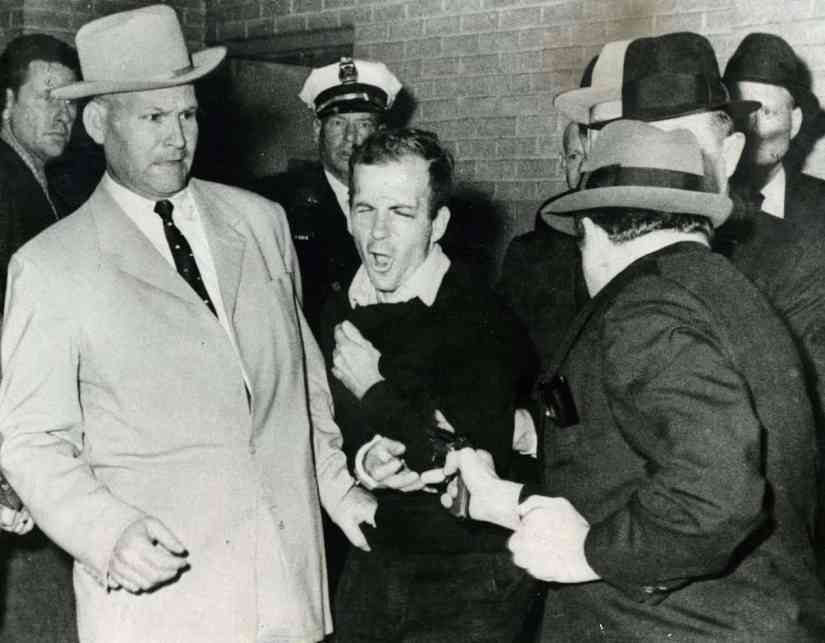
For saleLee Harvey Oswald assassinated John F. Kennedy on November 22, 1963 by firearm from the sixth floor of the Texas schoolbook depository in Dallas, Texas. Later that day, Oswald murdered Dallas police officer J. D. Tippit by shooting him four times on a Dallas street approximately 40 minutes after Kennedy. He was arrested while seated in the Texas Theatre a short time later and taken into police custody. On Sunday, November 24 Oswald was being led through the basement of Police Headquarters on his way to the county jail when, at 11:21 a.m., Dallas strip-club operator Jack Ruby stepped from the crowd and shot Oswald in the abdomen. Oswald died at 1:07 p.m. at Parkland Memorial Hospital-the same hospital where Kennedy had died two days earlier. A network television camera was broadcasting the transfer live and millions witnessed the shooting as it happened. After autopsy Oswald was buried in Fort Worth’s Rose Hill Memorial Burial Park.
In 1981, with widow Marina Oswald’s support, the grave was opened to test a theory from a conspiracy book alleging that during Oswald’s stay in the Soviet Union he was replaced with a Soviet double. The rumor claimed that it was this double, not Oswald, who killed Kennedy and who is buried in Oswald’s grave. The author charged that the remains, if exhumed, would prove it when a surgical scar Oswald was known to carry would not be found. Robert Oswald (brother of Lee Oswald) obtained a temporary restraining order halting the exhumation. Marina filed suit against Robert to allow the exhumation to proceed. Two days later citing emotional and financial burdens, Robert withdrew his opposition to the exhumation.
Backhoes began the process with the onset of sufficient daylight at about 6:30 am Central time on October 4th. The initial plan called for the removal of the entire concrete vault containing the casket. When the excavated vault was found to be cracked it was immediately obvious that the casket and body had suffered extensive water damage. The casket cover was noted to be severely weakened and one section had fallen in, actually exposing the remains to onlookers.
The casket was then covered by a cardboard lid and carefully slid onto a wooden platform placed in the trench alongside the coffin. The entire platform was then raised and placed in a waiting hearse for the trip to nearby Baylor University. The excavation took about two and a half hours, by which time the small crowd had turned into a large one including the morbidly curious and several members of the news media.
The remains arrived at Baylor and the examination began at 10:00 am. The casket was opened and it was obvious that the water that had so damaged the coffin had caused marked decomposition of the body as well. The exposed ribs crumbled with only mild pressure and the beige viscera bag containing the organs (placed in the bag after the original ’63 autopsy) was in full view.
Mortician Paul Groody, who had embalmed and buried Oswald in 1963, remained in the examination room long enough to identify the remains as those he had worked with. First, he observed rings on the hands of the body that were placed there by Marina Oswald. The rings, a gold wedding band and a red stone ring, were the same and seemed to be in the same position as he remembered. Secondly, Groody recognized the aforementioned viscera bag that was not in common use in 1963. Finally, Groody noticed that the clothes were those that he had placed on Oswald before he was laid to rest. After making his identification, Groody promptly left the examination room.
The identification would be made primarily using dental records. However, the team was aware of the craniotomy procedure performed on the skull of the deceased that would provide convincing proof of the identity of the corpse. The head was removed from the body in order to facilitate the examination by an incision near the second cervical vertebral interspace. The autopsy saw cut was indeed present providing the first confirmation of Oswald’s craniotomy procedure.
The teeth were cleaned and photographs and x-rays taken. Two forensic odontologists then charted the complete dentition independently and dental casts were made and a positive dental identification of Lee Harvey Oswald was therefore made. A news conference was held at about 3:00 pm to announce, “We… have concluded beyond any doubt, and I mean beyond any doubt, that the individual buried under the name of Lee Harvey Oswald in Rose Hill Cemetery is in fact Lee Harvey Oswald.”
Perhaps unsurprisingly, in the decades that followed, conspiracy pundits raised identity questions based on the condition of the burial vault and coffin, claiming both had been tampered with, questioned the autopsy craniotomy with the charge that the head had been replaced, and questioned the identification by dental records after it was pointed out that Oswald had lost a front tooth during a high school fight (there is a photo of him in class with a gap-tooth smile, and many classmates remember the fight and the missing tooth) and that the exhumed skull had a full set of natural front teeth. However, Marina had made it clear to the media that she considered the exhumation issue closed.
The murder of John F. Kennedy proved once and for all that a disgruntled, motivated mental defective like Oswald can change the world by a singular cowardly act and bask, however briefly, in the reflected spotlight of their unwitting victim. In some circles, Lee Harvey Oswald has become a sympathetic figure. In truth, he’s a stone cold killer who ruined many lives.
Why do I feel it necessary to delve into the gory details of Oswald’s exhumation and subsequent body defilation? Because, for years I’ve watched film clips of a beloved President’s assassination being played and replayed on television and in movies, undoubtedly at times within eye-shot of his friends, family and loved ones, and I object. I think for once, the wages of Oswald’s crime should be made clear. Lee Harvey Oswald does not rest in peace.

Abe Lincoln, Medicine, Pop Culture

Mary Lincoln-Opium Addict?

Mary Lincoln drugsOriginal publish date: January 17, 2011

In last week’s article, I described how author Harry E. Pratt’s research incorrectly pegged our 16th President as a cocaine user shortly before he was elected in 1860. However, Pratt cannot be blamed entirely because other historians found evidence that the Lincoln family had purchased other powerful drugs in 1853 and 1854 from the same drug store . The ledgers showed that one of the drugs purchased was opium. More specifically, “camphorated opium tincture” used at the time for its anti-diarrheal and pain relief properties. The main ingredient in this drug was Morphine, a highly addictive and dangerous drug.
It must be noted that in the Antebellum Era little was known about drugs and their side effects at the time. Drugs that we know today to be addictive, at least. and life threatening, at worst, were prescribed in Mid-19th century for everyday maladies treated today by aspirin and mild pain killers. In part one, I described how Abraham Lincoln suffered and dealt with his dark moods and depression throughout his life. It should come as no surprise to learn that Mary Lincoln experienced depression, mood swings, and hallucinations after witnessing her husband’s murder. But in truth, Mary dealt with her personal demons long before she met her husband. And like her husband, Historical pundits would claim that many of these symptoms were due to her drug use.
One contemporary of Mary Lincoln’s claimed to witness her use of paregoric, whose principal active ingredient is powdered opium, making the claim that Mary Lincoln had become addicted to this drug. The evidence can be found in a manuscript housed at the Lincoln library in Springfield. The pertinent paregoric passages from the handwritten document wildly claims that the “Hoy & James” drug store ledger show that the Lincoln family used four gallons of paregoric during the year 1854, and only seven quarts of brandy over the same period. The pen & ink document is backed up by an unattributed newspaper clipping from the same time frame as the handwritten account.
The newspaper clipping reads in part: “Abraham Lincoln used four gallons of paregoric in his home during the year 1854, and only seven quarts of brandy over the same period”. The paregoric statement in the handwritten manuscript reads: “De Missy [Mary Lincoln] raised the paregoric bottle and drank from it. Ah know that bottle was a plumb gallon” These accounts were used as reference material for nearly every article and book written about Mary Lincoln after their discovery in the late 1800’s. As with the Lincoln cocaine allegation, 20th century historians would prove that these 2 research materials were wildly inaccurate with respect to the quantities of paregoric purchased by the Lincolns.
opium-bottleUnder close examination the paregoric account in the newspaper clipping begins to unravel. It smacks of a garbled interview by a careless reporter using a badly informed source. Contrary to the clipping, there was no Hoy & James drugstore in Springfield when Lincoln resided there. Lincoln left Springfield, never to return alive, for Washington on February 11, 1861; the Hoy & James drugstore did not begin operations until 1902.
Historians believe that the handwritten account, although not questioning the veracity of the claims to a personal relationship with Mary Lincoln, were written after the newspaper account came out. It is believed that the witness who wrote the account included the erroneous information, probably believing it to be true, as a way of “spicing” up her memoirs for inclusion in one of the many Lincoln books that were now appearing on a regular basis. Therefore, the handwritten account was based on a contaminated source to begin with. Conversely, future historians would also use this source to fabricate a whole line of outrageous accounts of Mary Lincoln’s use of the opium-based narcotic in future publications. To definitively prove this fabrication, scholars simply look to the history of Springfield drugstores in Lincoln’s time.
The Diller family operated a drugstore on the east side of the square in Springfield for over sixty years. The store began in 1839 as Wallace & Diller, founded by Jonathan Roland Diller and William Wallace, Mary Lincoln’s brother-in-law. When Diller died in 1849, his cousin Roland Weaver Diller and druggist Charles S. Corneau formed a new partnership known as Corneau & Diller Drug Store at this same location. Lincoln patronized the firm of Corneau & Diller from the time it was established until he left for Washington to become president. Luckily the records of drugstore survived because they show purchases by it’s most famous customer, Abraham Lincoln. The Illinois State Historical Library in Springfield has all of these records that include three day-books, three ledgers, and one blotter.
These records show all of the Lincoln drug purchases at Corneau & Diller from August 10, 1849, to November 9, 1860. The Lincoln purchases from Corneau & Diller are carefully listed in a chart by date, item, and cost. The narcotics purchased over this eleven year period are as follows: April 29, 1853-Paregoric 10 cents…July 25, 1853-Paregoric 10 cents…March 22, 1854-Paregoric 60 cents and October 12, 1860-Cocoaine 50 cents. A far cry from the “four gallons of paregoric” claimed by later scandal seeking Mary Lincoln biographers. to use the vernacular of the era, “A preposterous amount!” The inflated claims that Mary Lincoln was addicted to paregoric are nonsense, poppycock, balderdash!
The purchase of 80 cents’ worth of this “paregoric” drug over a period of eleven years is far from an addiction. After all, the Encyclopedia Americana describes paregoric as “a narcotic drug composed of opium, camphor, benzoic oil, oil of anise, honey, alcohol, and water. At one time widely used to quiet colicky babies, quiet coughs and ease stomach pains.” Not unlike many over-the-counter cough & cold medications and none of which carry a stigma of addiction today.
Nevertheless this fabrication has become part of the Mary Lincoln mythology. Mary Lincoln and others of her generation were prescribed paregoric y physicians who believed that the medication would cure them. Ironically for Mary, while the medication gave her a temporary “high”, it was quickly followed by a deeper depression. Undoubtedly, these small doses of paregoric contributed to Mary’s frequent mood swings, from her temper tantrums to what Lincoln called her “stupor.” But she was by no definition addicted.
Lincoln authority Lloyd Ostendorf once explained Mary’s temper tantrums and anger this way, “Perhaps she can be forgiven for this side of her nature since she unknowingly took paregoric medication to calm her nerves. Neither she nor her doctors knew, at the time, the awful side effects of what she prescribed for herself. It occasionally caused her to lose control, and Lincoln had his own way of dealing with her. To her credit, she later regretted her outbursts and tried to make amends.”
380px-apothecary_vessel_opium_18-19_centuryAnother Lincoln scholar, Walter Oleksy made things worse when he claimed Mary Lincoln was a heavy user of paregoric and had become addicted. Oleksy wrote, “Mary Lincoln was troubled most of her adult life with emotional and psychological problems. In Springfield, to calm her nerves…Mary took paregoric, a popular drug sold in pharmacies in the nineteenth century… Little was then known about the drug’s side effects. For Mary Lincoln the side effects were depression, mood swings, and hallucinations and believed she could communicate with her dead sons.”
Deaths in the family and Mary’s well documented mental and emotional instability combined with a very troubled and tragic family life to form what most saw in Mary Lincoln as a difficult woman. But did she deserve this? I’ve always believed that Mary Lincoln got a bad rap and an undeserved reputation as a drug addict by revisionist historians. To this day, Mary gets no respect. Who among you hasn’t heard the joke, “Other than that Mrs. Lincoln, how’d you like the play?” Drug addiction rumors notwithstanding, Mary Lincoln might just be the saddest woman this country has ever known.