
 Original publish date: July 6, 2017
In the seven years since I ran parts I and II of this article, much has changed. Osborn Oldroyd has remained the windmill I tilt at and he has never strayed far from my side. I will share the “new” developments about this man in part III of this series. But first, let me reintroduce you to Captain Oldroyd.
As a fan of history, I find myself drawn to characters who populate the sidelines of historic events in a way that sometimes threatens to overtake the subject itself. Anyone familiar with my musings knows that I am, like many a homegrown Hoosier, a fan of Abraham Lincoln. If Lincoln had never been born, literature would surely have created him. In November of 2010, I traveled to Springfield, Illinois on the 150th anniversary of Lincoln’s election to the Presidency in search of the man who I believe to be the original keeper of the Lincoln flame.
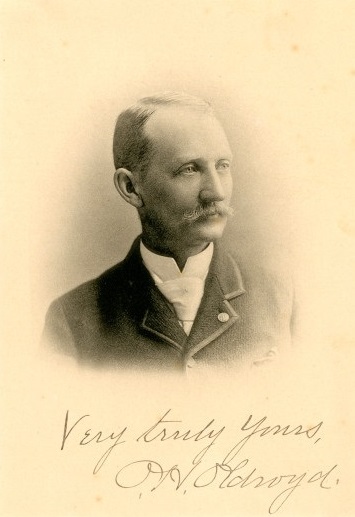
I met with historian James Cornelius, curator of the Lincoln Presidential Library and Museum. The state-of-the-art museum opened in 2005 and featured as its principal speakers President George W. Bush and a then little-known Illinois Senator named Barack Obama. However, this is not the first Lincoln museum in Springfield, Illinois. There was an unofficial version housed in the Lincoln Home from 1884 to 1893 created by Civil War veteran Osborn Oldroyd, a man as quirky and controversial as the museum he created.
When Oldroyd began collecting Lincoln items in 1860, Honest Abe was still very much alive. Oldroyd was among the first Americans to attempt such an undertaking, a collection he himself described as “books, sermons, eulogies, poems, songs, portraits, badges, autograph letters, pins, medals, envelopes, statuettes…anything related to the man”. In many cases, it is Oldroyd’s collecting habits we have to thank for the preservation of priceless Lincoln relics. However, to some, he was as much historical huckster as a hero. It was Oldroyd’s “P.T. Barnum” sideshow approach that continues to rankle Lincoln scholars to this day.
Eccentricity ran in his genes. The evidence can be found in the very first thing he owned: his name. His parents, William and Mary, named their son “Osborn Hamiline Ingham Oldroyd” so that his initials would spell the name of their beloved home state, Ohio. Sergeant Osborn Oldroyd was only nineteen years old when he enlisted with the 20th Ohio Volunteer Infantry on October 15, 1861. He was mustered out of the army on July 19, 1865. During his years in the Union Army, he was a careful diarist keeping day-by-day observations of the war. His 1885 book, “A Soldier’s Story of the Siege of Vicksburg” gives a sixty-five-day account of the Vicksburg Campaign. Oldroyd re-enlisted after the Vicksburg campaign but his chronic asthma made him unfit for duty. Following the war, Oldroyd returned to Ohio and was made Steward of the National Soldiers’ Home in Dayton. Friends lovingly referred to him as ‘Captain’ or ‘Colonel’ while others simply called him ‘Ozzie’.
Oldroyd found his life’s calling when he attended memorial services at Lincoln’s Tomb on the 15th anniversary of the president’s death just a few months after he arrived in Springfield in 1880. He came up with a plan to build a Memorial Hall in Springfield to display his growing collection of Lincoln memorabilia. Within two years after that first visit, Oldroyd wrote a 500-plus-page book, containing excerpts from Lincoln speeches and writings, as well as anecdotes and memories collected by Oldroyd from Lincoln’s friends and contemporaries, to raise money for the Memorial Hall. Book sales were fairly good, but Memorial Hall was never constructed.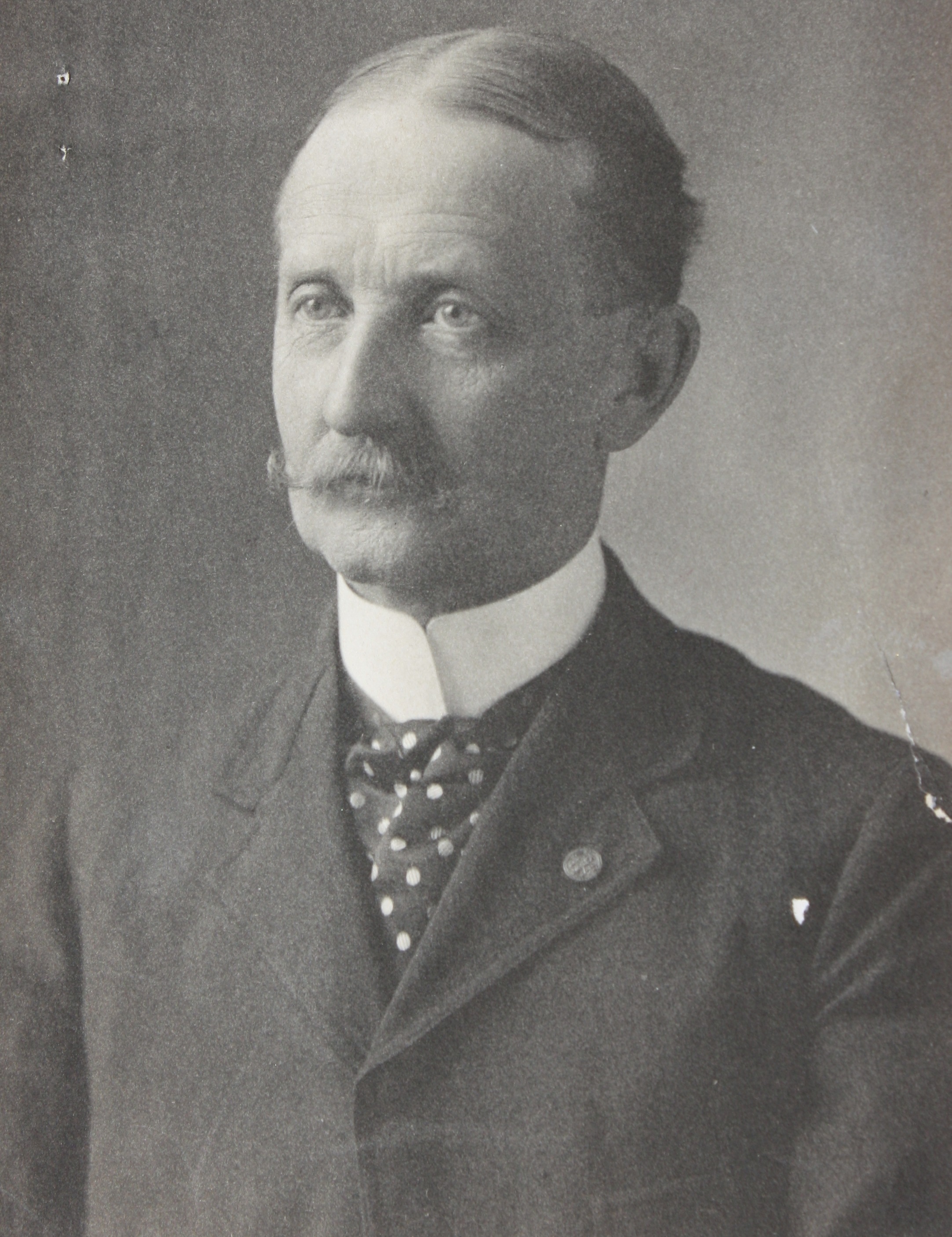 During his early years in Springfield, he ran a succession of failed businesses. All the while, Oldroyd was moving his family ever closer to the Lincoln Home at Eighth and Jackson Streets. The Oldroyd family first lived at 1101 South Seventh, then 500 South Eighth Street (immediately south of the home), and then, in 1883, when the Lincoln Home became available to rent, Oldroyd moved his family in before the last occupants had completely moved out. At that time, Lincoln’s only surviving son, Robert, owned the home and reluctantly charged Oldroyd $25 per month rent. Contemporary accounts claim that Robert Todd Lincoln agreed to the idea of a museum as long as it was free to the public, a stipulation in place to this day.
Oldroyd could not believe his luck. He immediately began to arrange his nearly 2,000-piece Lincoln collection on the home’s first floor, while he and his family lived on the second floor. On April 14, 1884, the 19th anniversary of Lincoln’s assassination, he opened the ” Oldroyd Lincoln Memorial Collection” museum. Admission was 25 cents, although later in his life Oldroyd denied ever charging admission. According to the Illinois State Journal “The reception at the Lincoln residence last night was a brilliant affair. Mr. Oldroyd has been at work for years on this matchless collection, and it is believed its equal does not exist in the United States. At last his labors have been crowned with success, and the hundreds of people who thronged the rooms last night are loud in their praise.” 
Oldroyd, ever the promoter, found creative ways to publicize his museum while at the same time filling the public’s desire to own Lincoln artifacts. He sold photographs of his collection for 25 cents and a box of “Lincoln relics” for 75 cents. These boxes contained bits of the Lincoln Home and grounds: pieces of brick, shingle, ceiling plaster, elm tree, apple tree, lath, joist, and floor that Oldroyd claimed he saved during house repairs. In an ominous portent of things to come, two years after moving into the home of the man he adored, Oldroyd began stiffing the man’s son when he stopped paying rent in 1885. Robert Lincoln, a lawyer, was reluctant to attract public attention to the matter. He refused to pursue legal proceedings against Oldroyd even after no rental payments arrived for two years.
Not only did Robert feel he was being used, but “he was not happy with the way Oldroyd had turned the home into a sort of carnival sideshow, selling pieces of it and putting other things into it that had not been the Lincolns’,” says James Cornelius. “Robert referred to Oldroyd as a deadbeat and called the exhibits in the house traps.” Even though Oldroyd wasn’t paying rent, he continuously schemed for a way to live rent-free in the home with his collection indefinitely. Behind the scenes, Oldroyd lobbied Illinois legislators to acquire the Lincoln Home for the state and let Oldroyd and his museum remain in it. The legislature’s first two attempts to ask Robert Lincoln for the house failed because Lincoln’s eldest son said he wasn’t ready to part with the home just yet. The third time was the charm. In 1887 the legislature succeeded and Robert deeded the Lincoln Home to the state of Illinois. Robert insisted on only two provisions; that his father’s home “be kept in good repair” and that it be”free of access to the public.”
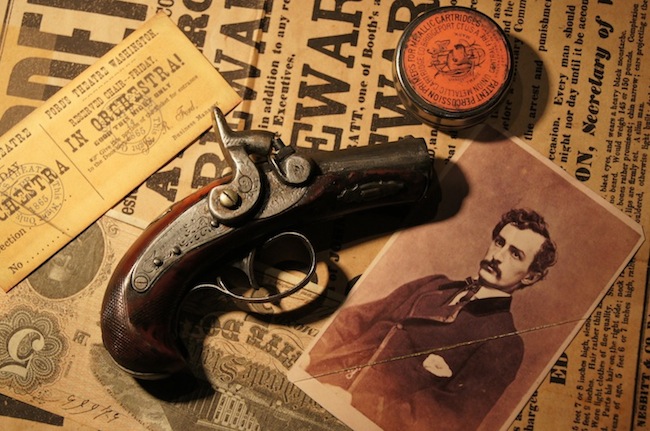
Osborn Oldroyd was appointed custodian of the house for a salary of $1,000 per year (just under $ 25.000 today) and was allowed to continue living in the home rent-free. He was also allowed to keep his museum as long as he didn’t charge admission anymore. Ever the operator, Osborn made up for that loss of income by allowing several of his in-laws to move in and charging them rent. The records don’t reveal whether Oldroyd ever paid Robert the two years of rent he owed, but I highly doubt it.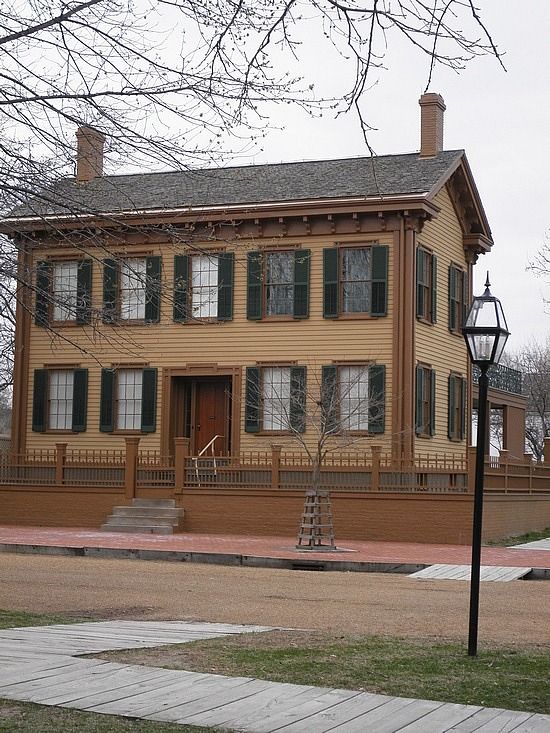 For the next five years “Captain” Oldroyd kept the Lincoln Home and added to his Lincoln collection. At one point, reports claim that Robert Lincoln was furious when Oldroyd allegedly displayed a photograph of John Wilkes Booth in the home, reportedly on the fireplace mantle. Some sources claim that Robert protested and in 1893, when the Illinois state political tides shifted, Oldroyd was unceremoniously ousted as custodian. The new governor put one of his own men into Oldroyd’s former position as political patronage.
The Illinois State Journal, writing nearly 9 years to the day after its first article on Oldroyd, criticized the move by saying, “The removal of Captain O. H. Oldroyd…means that the Lincoln Home will be stripped of the features of most interest to visitors, which are the personal property of Captain Oldroyd, and…the new custodian…will have nothing to show to those who visit the Home.” Nothing, that is, but the Lincoln home itself. In the July 1888 issue of Harper’s magazine, Charles Dudley Warner wrote after a visit to the home that he could not find Lincoln’s “sense of personality there… although the parlor is made a show-room and full of memorials, there is no atmosphere of the man about it.” Oldroyd, it appears, had wedged himself into the very fabric of the home and many citizens felt that without his passion and guidance, the Lincoln home would eventually fail in its pursuit to attract the steady stream of visitors so carefully courted under the “Captain’s” care. But Oldroyd, ever the huckster, had other plans for his unmatched collection of Lincoln memorabilia.
Next week: part II of “Osborn Oldroyd-Keeper of the Lincoln Flame.”
 Original publish date: February 19, 2016
 That afternoon, Booth sat down and wrote a letter to the editor of a Washington D.C. newspaper called the National Intelligencer. In it, he explained that his plans had changed from kidnapping Lincoln to assassinating Lincoln. He signed the letter not only with his own name but also three of his co-conspirators: Lewis Powell, George Atzerodt, and David Herold. Then he got up and walked his rented horse down Fourteenth Street.

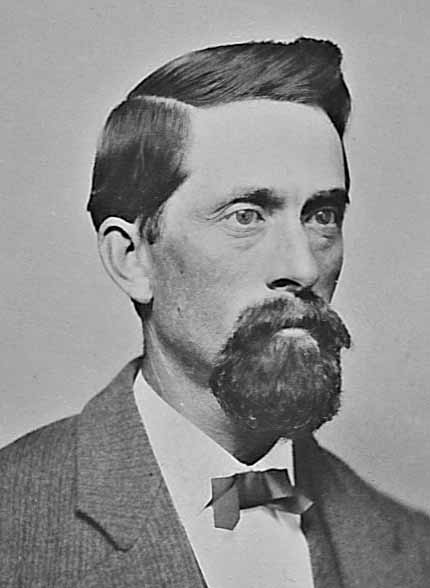
 Apparently Booth visited Mathews and Warwick at the Petersen house and both rented the Lincoln death room on numerous occasions. Both actors recalled Booth visiting them there, stretching out on the bed, laughing and telling stories, chomping on a cigar or with his pipe hooked in his mouth. There are several unconfirmed claims that Mathews was actually staying in an upstairs room at the Petersen House on the night of Lincoln’s assassination. The accounts are speculative at best but tantalizing to be sure. If that were the case, then Mathews burned Booth’s confessional letter in a fireplace just feet away from the dying President.
 Original publish date: June 26, 2014
 Suddenly, as the carriage topped Howard’s Hill, a screeching sound was heard behind them. Great God! A trolley was seen wildly careening down the hill towards them. In a flash, it slammed into the carriage, throwing the president and his secretary out and onto the street’s grassy berm. The President’s face was bloodied and his leg injured, but in true Roosevelt style, T.R. brushed off his own injuries and rushed to the aid of his horribly injured bodyguard. But it was too late, FBI agent Craig was crushed to death under the wheels of the electric streetcar.
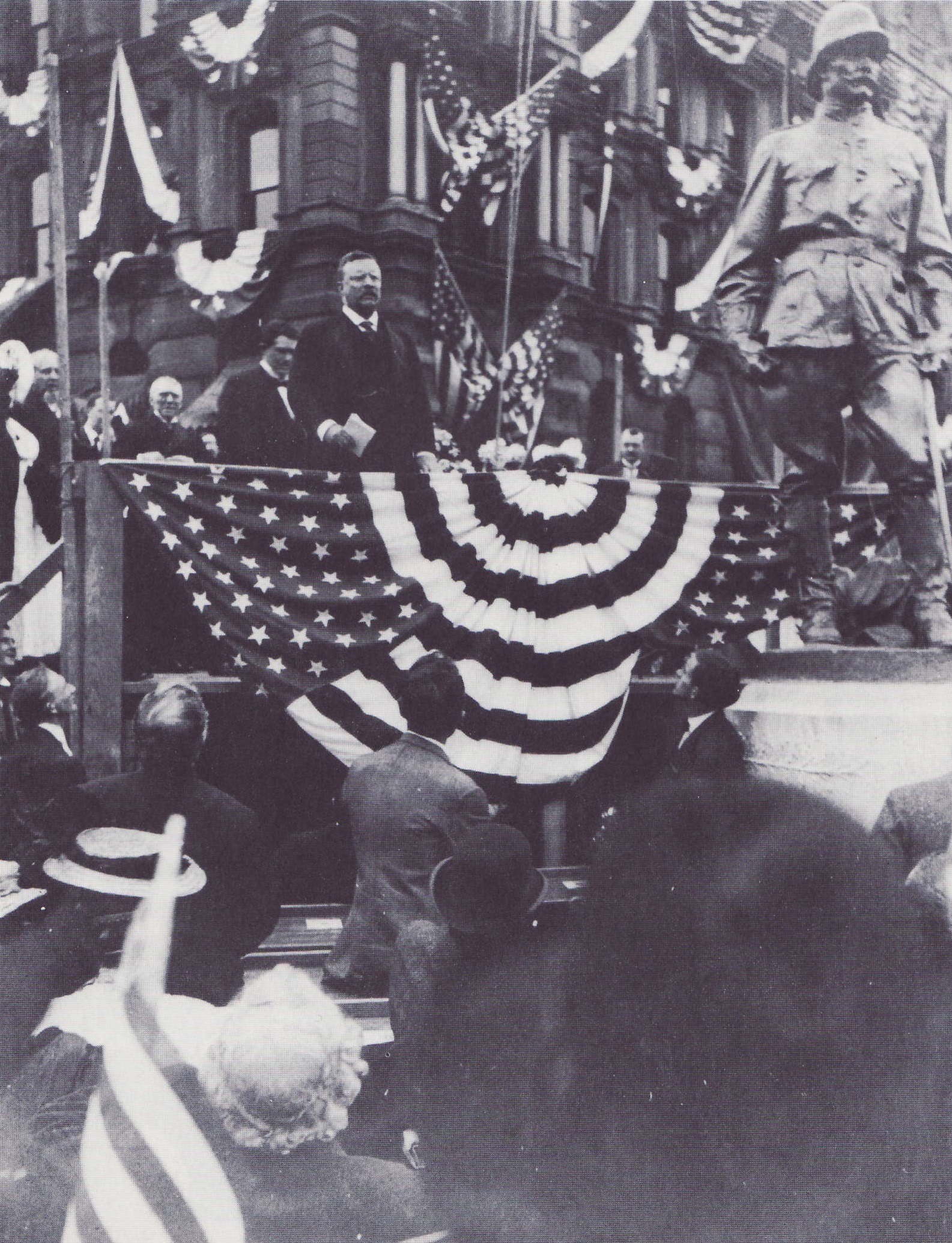 The accident was never explained. Rumor was that passengers on the trolley paid the driver to follow the carriage in hopes of glimpsing the Rough Rider himself. Still others speculated that it was another Presidential assassination attempt. The driver of the trolley was sent to jail for six months. The President continued his trip and was able to keep his speaking engagements over the next few days. The now lame President stood and shook hands at a pace of fifty-two hands per minute for three hours at a time at most of these engagements. All the while, Teddy’s leg silently throbbed with pain.
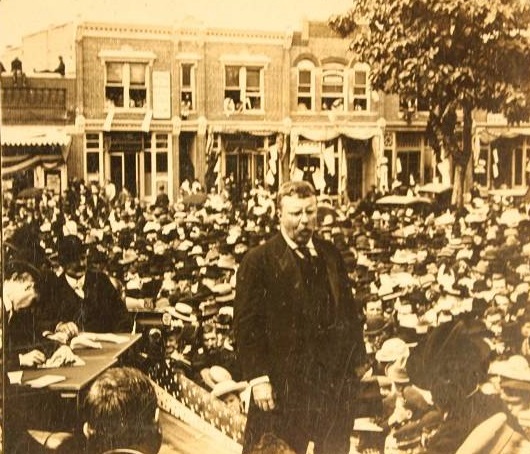
 By the time of his first stop in Indiana, on Tuesday September 23rd, it was apparent that something was wrong with the trust busting chief executive. It was pouring rain as Teddy addressed the crowd in Logansport with a speech he had planned to deliver in Indianapolis. This speech was supposed to change the position of the presidency on national issues. The town had prepared for the Presidential visit by erecting a large platform at the corner of Seventh and Broadway in front of the High School (today aptly known as the “Roosevelt Building”). At the depot, the Elks Band was waiting to lead the procession of carriages for the special guests’ trip to the courthouse. As the parade moved up Market to Ninth Street, the skies opened and it started to rain. A local skating rink had been decorated as an alternate place for Roosevelt to speak, but Teddy insisted on speaking in the rain.
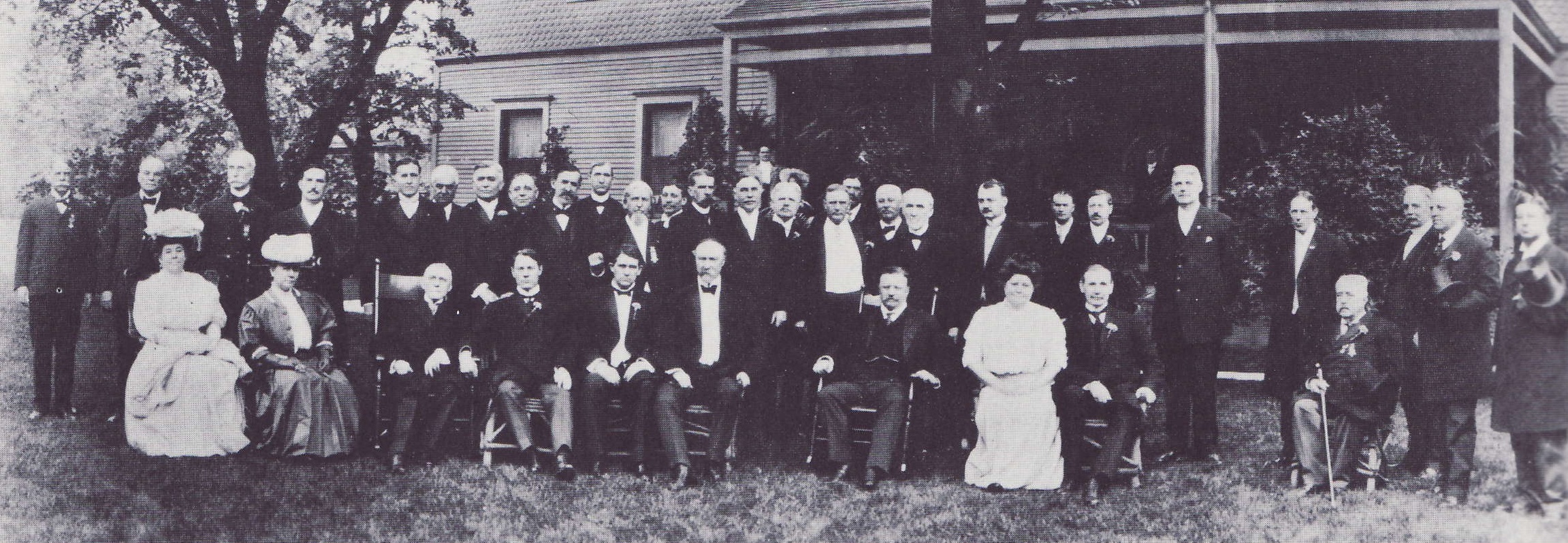
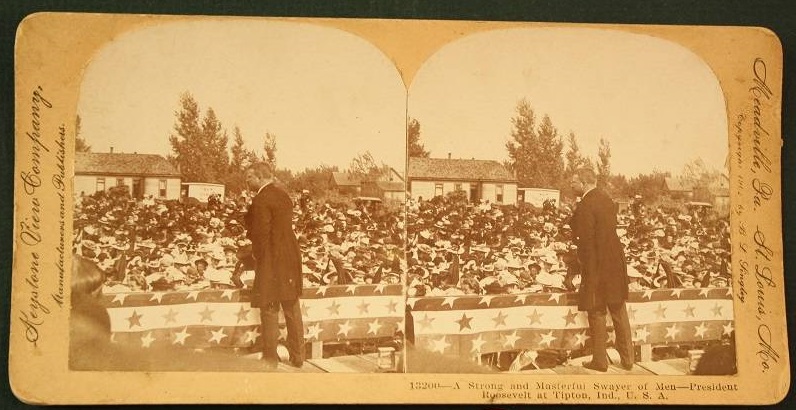
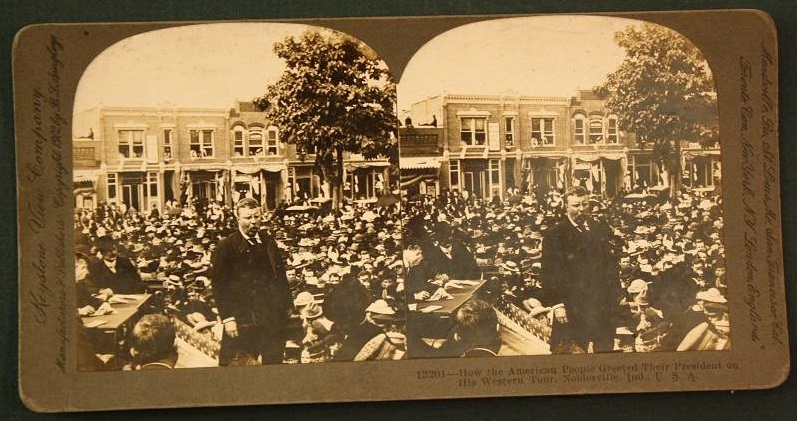 The Logansport stop must have recharged Roosevelt’s batteries as the train made a stop in Tipton where Teddy addressed another adoring crowd on the courthouse square. Next came Noblesville, where 6000 people packed the courthouse lawn to hear the young lion speak. Keep in mind the population of Noblesville was less than 4,000 people at the time. Here, Roosevelt told the crowd “We war not on industrial organizations, but on the evil in them.”
 Original publish date: July 11, 2014
 After Chenault’s arrest, police found a hit list of names in his pocket that included 10 black clergymen and strangely, Aretha Franklin. Weeks before the incident, witnesses said that Markie went through numerous personality changes. One day he was an anti-communist; the next day a Black Panther militant. One day he was a Christian, the next, a Muslim or a Jew. One week he was chasing women, the next week he claimed to be homosexual.But mostly, Markie turned lonely and withdrawn. His motivation for the dastardly crime was a mystery.
 Alberta Williams King died at the age of 69 by the actions of little Markie Chenault. Her death was a shock to the congregation, the city, and the nation. In her honor, Atlanta mayor Maynard Jackson ordered the flags on all Atlanta city buildings to be flown at half-staff. Her body came back to Ebenezer Baptist Church to lie in state for public viewing, just a few feet from where she was shot. Alberta’s funeral was held at Ebenezer Baptist Church; U.S. representative from Georgia Andrew Young, who was on the balcony of the Lorraine Motel when her son was killed six years earlier, officiated at the service. Funeral attendees included members of the King family, second lady of the United States Betty Ford, and Georgia governor Jimmy Carter. She was buried in the same double mausoleum at Atlanta’s South-View cemetery that had previously held her son Martin Luther King, Jr.’s remains.
 His father said in his autobiography, “Alveda had been up the night before, she said, talking with her father and watching a television movie with him. He’d seemed unusually quiet…and not very interested in the film. But he had wanted to stay up and Alveda left him sitting in an easy chair, staring at the TV, when she went off to bed… I had questions about A.D.’s death and I still have them now. He was a good swimmer. Why did he drown? I don’t know — I don’t know that we will ever know what happened.” Naomi King, A.D.’s widow, said, “There is no doubt in my mind that the system killed my husband.”
 Original publish date: June 10, 2013
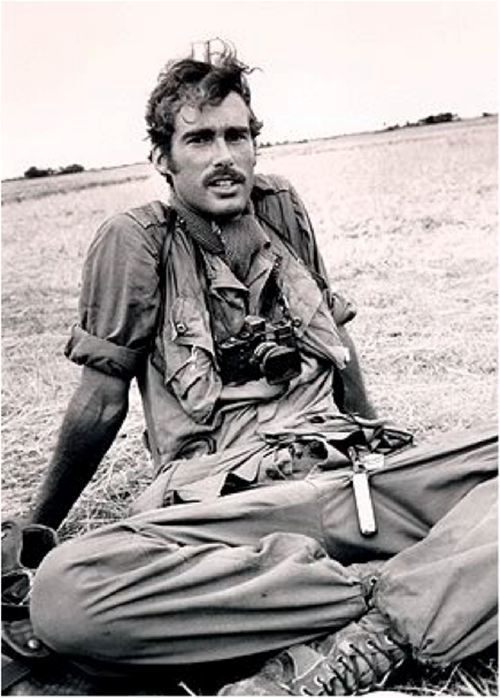 Sean Leslie Flynn, born May 31, 1971, made some forgettable films during his short movie career including the regrettable remake of his father’s classic “Captain Blood” featuring the predictable title “Son of Captain Blood”. When he “retired” from acting, Flynn signed a contract with Time Magazine. In a search for exceptional images, he attached himself to Special Forces units and even irregulars operating in remote areas.
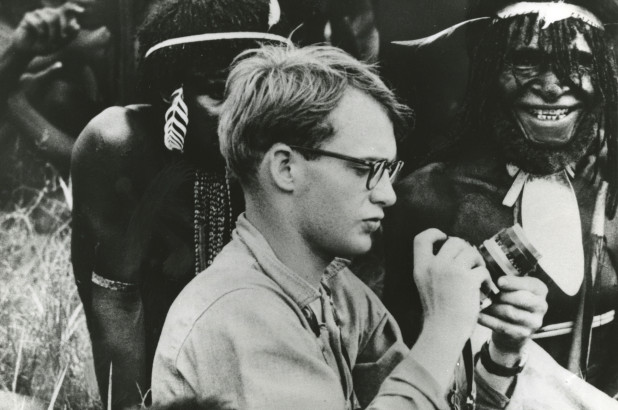 On November 17, 1961, Rockefeller and Dutch anthropologist René Wassing were in a 40-foot dugout canoe about three miles from shore when their double pontoon boat was swamped and overturned into the Arafura Sea. Their two local guides swam for help and told the Anglos to stay put, for obvious reasons. After drifting for some time in the rolling waters off the coast of New Guinea, Rockefeller said to Wassing “I think I can make it”. Michael estimated that the catamaran boat was five miles from the shore. The current was against him, and he risked a confrontation with a shark or crocodile, but perhaps because he was a Rockefeller, the fabled family of industrialists, philanthropists and politicians, he decided to swim for it. Later it was determined that the capsized boat was closer to twelve miles off shore when Michael pushed off.

