

Original publish date: July 12, 2018
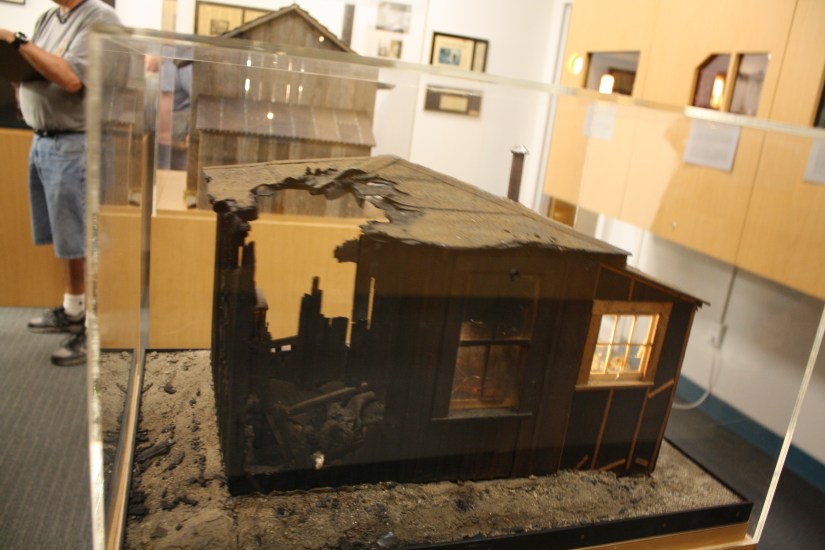
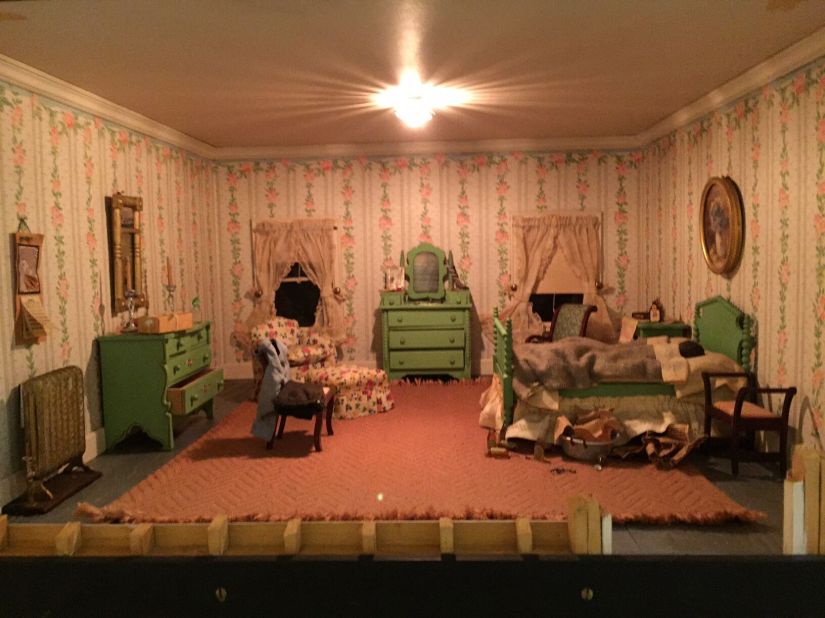
Recently I was fortunate enough to take a tour of an American treasure housed within the Maryland Medical Examiner’s Office in Baltimore, Maryland. What, you ask? An American treasure in a medical examiner’s office? Yes dear reader, let me share with you a story about the coolest display you’re ever likely to find in any government office, anywhere. This is the story of the “Nutshell Studies of Unexplained Death.” On the fourth floor, room 417 is marked “Pathology Exhibit” and it holds 18 dollhouses of death. These meticulous teaching dioramas, dating from the World War II era, are an engineering marvel in dollhouse miniature and easily the most charmingly macabre tableau I’ve ever seen.

These dioramas were created by Frances Glessner Lee (1878–1962) over the course of 5 years between 1943 and 1948. Glessner Lee was a pioneer in the burgeoning field of forensic science and a trailblazer for women’s rights. She used a sizable inheritance to establish a department of legal medicine at Harvard Medical School in 1936. She donated the first of the Nutshell Studies in 1946 for use in lectures on the subject of crime scene investigation. Glessner Lee named her studies nutshells because they were designed to “convict the guilty, clear the innocent, and find the truth in a nutshell.” She instructed her students to study each scene methodically by “moving the eyes in a clockwise spiral” before drawing conclusions based on visual evidence. Crime-scene investigators had 90 minutes to study each diorama.
I was fortunate to have Bruce Goldfarb, Special Assistant for the Office of the Chief M.E., as my personal tour guide. Bruce, a former EMT, newspaper writer and accomplished author many times over, knows more about the Nutshell Studies than any one else in the Clipper City. “There are 18 dioramas in our collection and another is housed in a museum in Littleton, New Hampshire.” Bruce says, “Glessner Lee was an heiress to the International Harvester fortune and a dedicated model-maker. Each diorama cost as much to make as a full sized house.” Each model cost about US$3,000–4,500 to create which, when calculated for inflation, translates to $ 40,000 to $ 60,000 today.

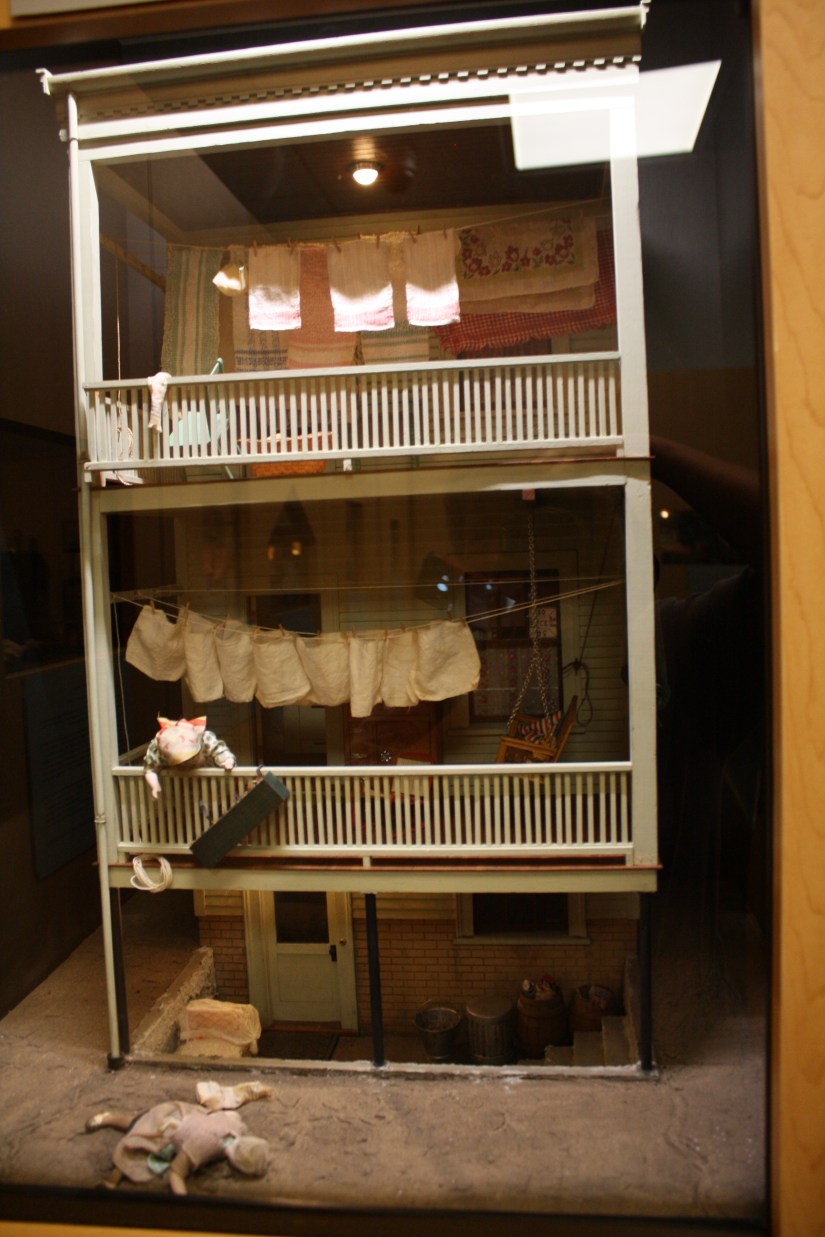
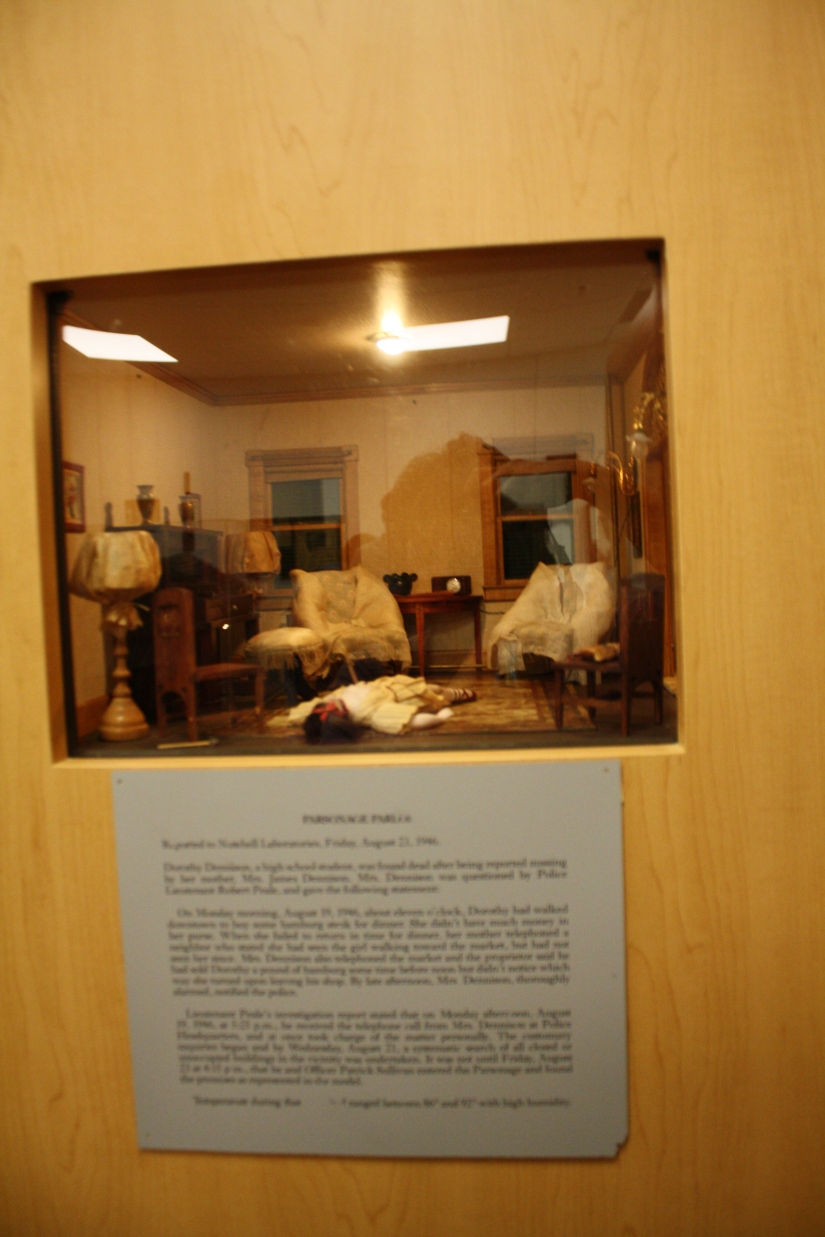
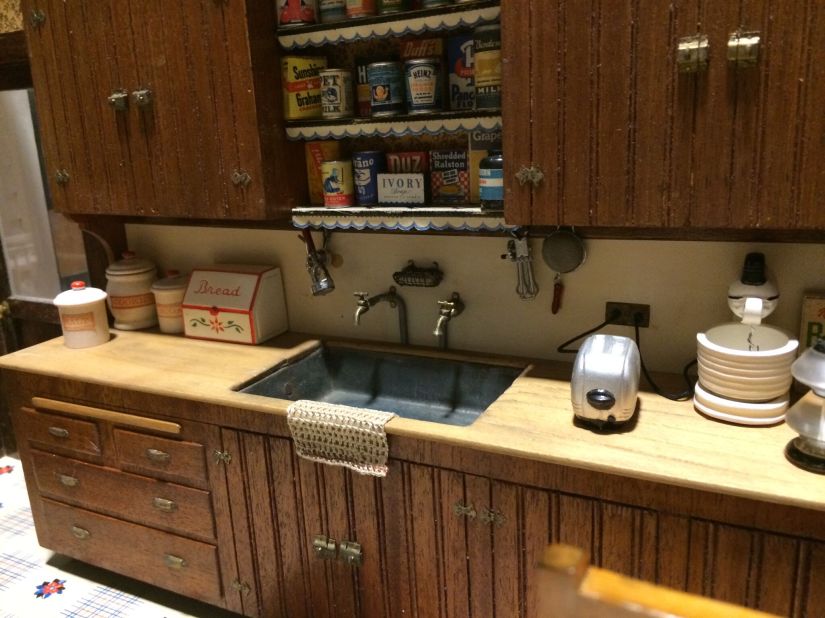
Each exquisitely detailed miniature diorama (1 inch equals 1 foot or a 1:12 scale) depicts a different true crime scene and are so well done that they are still used for forensic training today. Bruce explains, “These are not famous crime scenes. They are local scenes chosen by Frances to tell a story using composites of actual court cases. They are designed to teach young investigators how to examine and preserve a crime scene properly.”
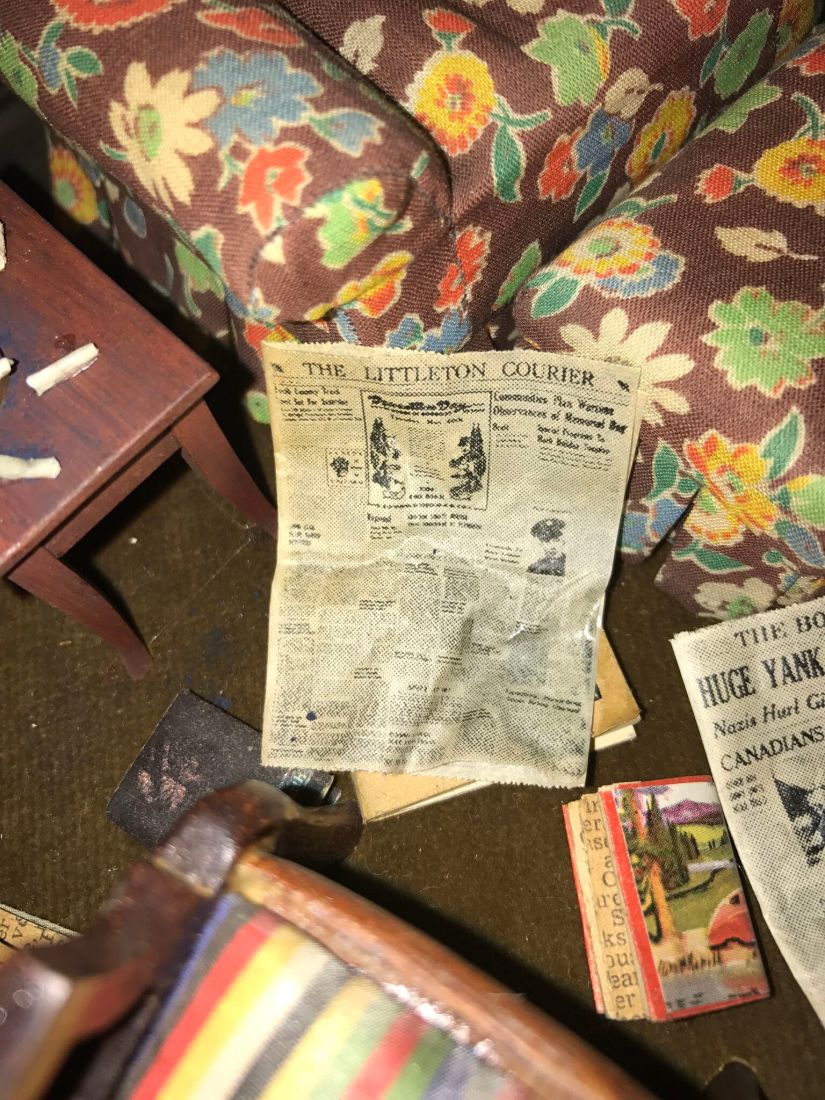
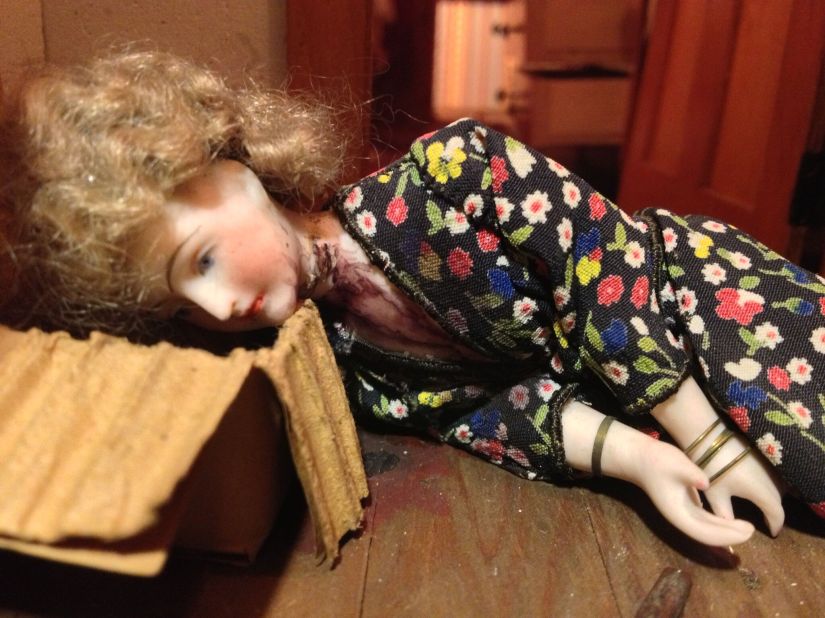
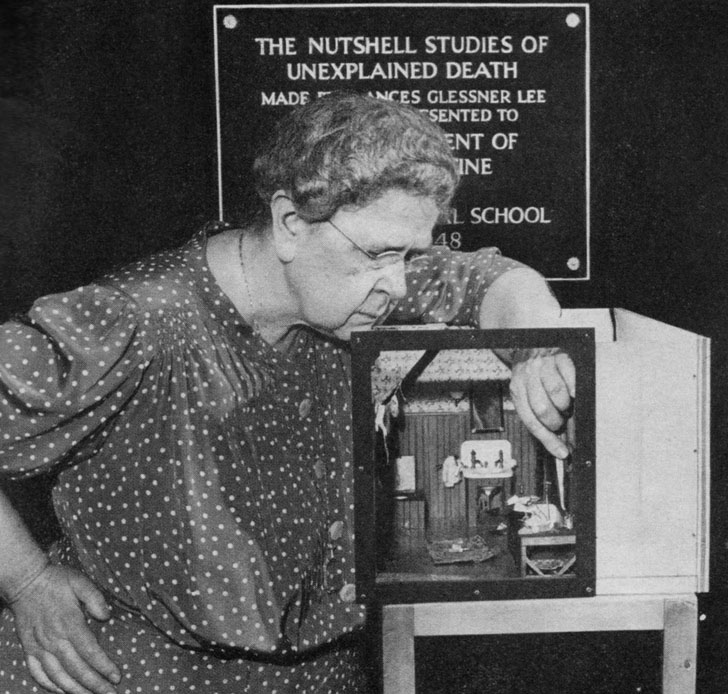 Housed in impressive looking wood and glass locked cases, they are not unlike the ancient penny arcade mechanical machines recalled by every baby boomer’s childhood. Except these scenes are populated by dead bodies, gruesome instruments of death and startling realistic blood spatter patterns. The scenes take place in attics, barns, bedrooms, log cabins, bathrooms, garages, kitchens, parsonages, saloons, jails, porches and even a woodman’s shack. Sometimes, it’s easy to determine the cause of death, but look closer and conclusions are tested. There is more than meets the eye in the Nutshell Studies and any object could be a clue. Every element of the dioramas-angles of minuscule bullet holes, placements of window latches, discoloration of painstakingly painted miniature corpses-challenges the powers of observation and deduction.
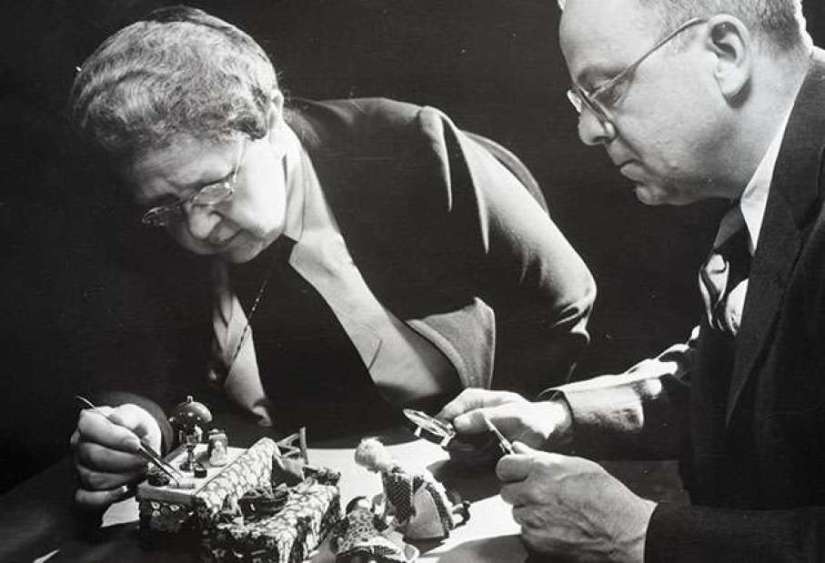
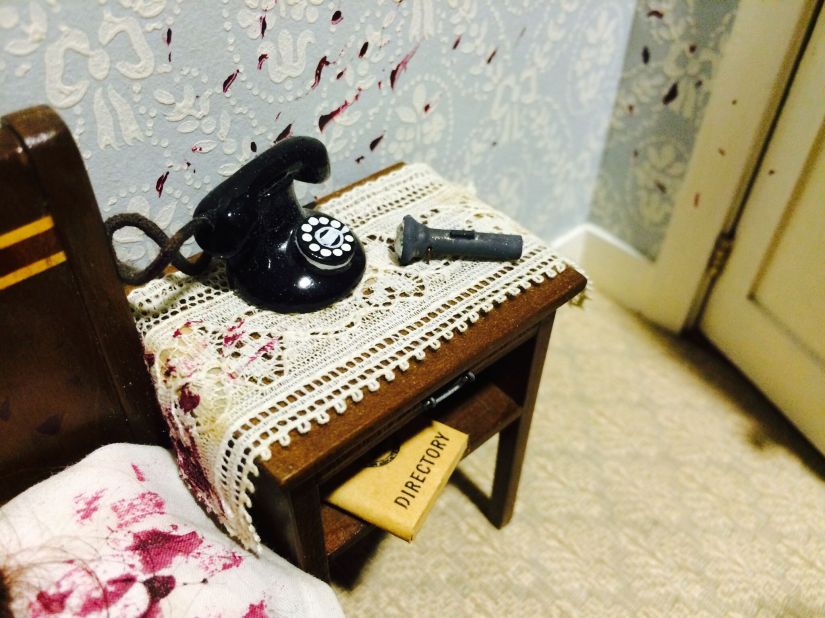
 Bruce says, “Look at the miniature sewing machine (about the size of your thumbnail) it’s threaded. There is graffiti on the jail cell walls. The newspapers (less than the size of a postage stamp) are real. Each one had to be printed on a tiny press, the newsprint is immeasurably small. The Life magazine cover is accurate to the week of the crime. The ant-sized cigarettes are hand rolled and burnt on the end. Amazing!” Bruce, who came to the M.E.’s office in 2012, says that although he’s been over every inch of each diorama, he is still making new discoveries.

Bruce credits a recent exhibition of the Nutshell Studies at the Smithsonian for reinvigorating interest in the displays among the public. The dioramas were exhibited at the Renwick Gallery of the Smithsonian’s American Art Museum in Washington, DC from October 20, 2017 to January 28, 2018. When I asked if they would ever be put on public display again, Bruce answers quickly, “Never. That is the last time they will be available to the general public. This is a classroom, not a gallery. The studies won’t leave this room again.” He continues, “The Smithsonian people really helped in our preservation efforts. They had expertise far beyond our knowledge.” Bruce especially credits Smithsonian conservator Ariel O’Connor for her expertise, “Ariel is the only woman to have entered the Apollo 11 capsule and only the 6th person overall. She was lowered Tom Cruise / Mission Impossible style into the capsule to retrieve a bag left under the seat by Neil Armstrong.”

As informative as Mr. Goldfarb is on the dioramas, his eyes really light up when it comes to the artist. He explains “Lee was the first female police captain in the U.S. and is considered the mother of forensic science.” Lee’s original commission as captain hangs nearby on the wall. Bruce delights in telling the story of how a woman co-opted traditionally feminine crafts to advance the male-dominated field of police investigation and to establish herself as one of the founders of “legal medicine”, what we now call forensic science. “These studies are not puzzles waiting to be solved. They are designed to teach police officers to handle, observe and assess crime scenes. Frances wanted the investigator to get a sense of who these people were by deciphering the residual clues found in the surroundings.”
 The Nutshell Studies made their debut at the homicide seminar in Boston in 1945. It was the first of it’s kind. Bruce says, “Frances’ intention was for Harvard University to do for crime scene investigation what they had done for their famous business school. When Frances died in 1962, support evaporated and by 1966, the department of legal medicine at Harvard was dissolved.” When asked how the displays made the trip from Harvard yard to Baltimore, Bruce states, “That’s a good question. When Harvard planned to throw them away, longtime medical examiner Russell S. Fisher brought them here in 1968. Fisher was a legend and a former student of Frances Glessner Lee. Fisher was one of the doctors called in to examine John F. Kennedy’s head wounds.”
Each study includes a descriptive crime scene report placard (written by Lee to accompany each case) containing a general outline of the crime, parties involved and date. But the solutions remain a secret. One such placard reads: “Robert Judson, a foreman in a shoe factory, his wife, Kate Judson, and their baby, Linda Mae Judson, were discovered dead by Paul Abbott, a neighbor.”
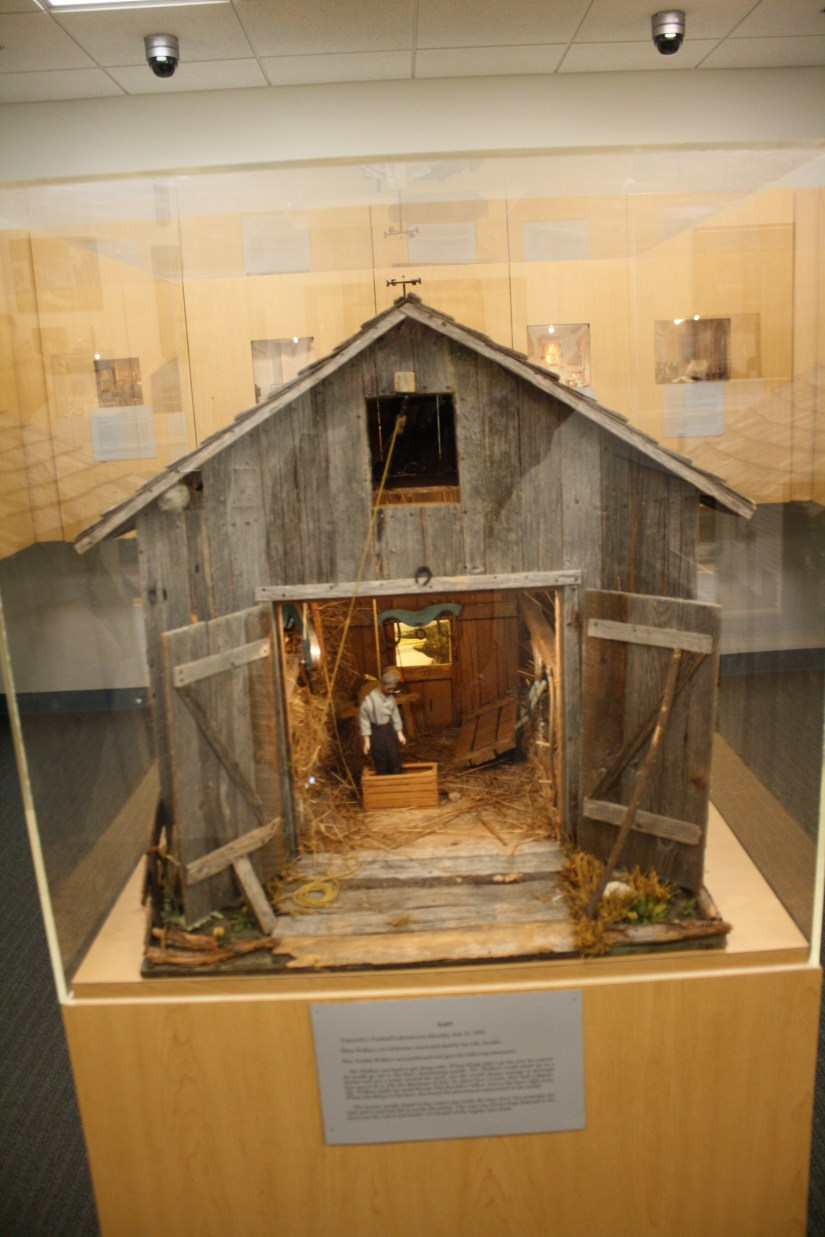
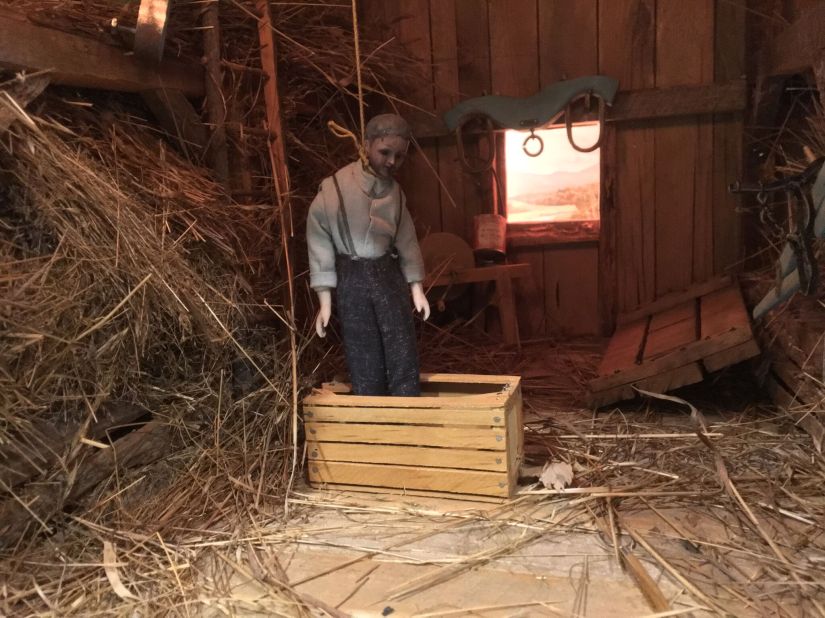
One model shows farmer Eben Wallace hanged in a hay-filled barn. One depicts a man shot to death in a log cabin, another shows a charred body in a burnt home, another, a body splattered face-down on the sidewalk outside a three-story apartment complex and still another reveals the decomposing body of “Mrs. Rose Fishman,” found in a pink bathroom in 1942. The scenes are accurate to the tiniest of details, including the appropriate lighting. “Frances was very ingenious in her lighting choices. There were no LED lighting options available. She used turn signal bulbs, Christmas tree lights, flashlight bulbs, anything she could find. Sometimes it came down to the color of the bulb or a particular paint color to achieve appropriate mood lighting.” says Bruce. “The blood pools and spatter are actually finger nail polish, which took us forever to figure out.”
While perusing these fascinating dioramas, it’s easy to forget where you are. Researchers who work in the $43 million Forensic Medical Center call the state-of-the-art facility the “Bat Cave.” It is the largest free-standing medical examiner’s office in the country and home to some 80 full-time employees, many of them pathologists, who analyze death in minute scientific detail, much like the Nutshell Studies themselves. Here, the state of Maryland learns the facts behind thousands of deaths each year.

I inform Bruce that the last time I was in Baltimore was on April 15, 2015 during the 150th anniversary of the Civil War. It was 3 days after the tragic death of Freddie Gray that sparked Civil Rights protests in the city and all across the country. My visit this time came just 3 days after the Capital Gazette newspaper shootings in Annapolis. Bruce pauses, shakes his head slightly and says, “Yes, we were very involved in the Freddie Gray incident and we’re working on the Capital Gazette shootings downstairs right now.”
In a typical summer, the M.E.’s office receives 13 to 18 bodies each day (more than 8,000 per year). It is the sole medical examiner’s office for the entire state. Homicide accounts for about 14 % of deaths, suicide for 12 % and accidents for 27 %. The first floor of the building serves as a garage that can be transformed into a mass casualty center. A large classroom on the fourth floor, with banks of desks and communication connections, can become an emergency command center during disasters. It’s like a hospital where patients are getting a physical exam, one day too late.

Bruce says the Nutshell Studies are an integral part of the M.E.’s popular 5-day homicide seminar every April. The seminars are limited to 90 people and are routinely filled to capacity. He reveals that the courses are likely to be expanded this October. “The seminars are not pass or fail, they are designed as a team exercise. Each team member is paired up with strangers. They are conducted the same way that Frances did them back in 1945. Each graduate receives a ‘Harvard Associates in Police Sciences’ diploma and a class photo. Historically, police officers and journalists do well.” Bruce says with a wry smile.

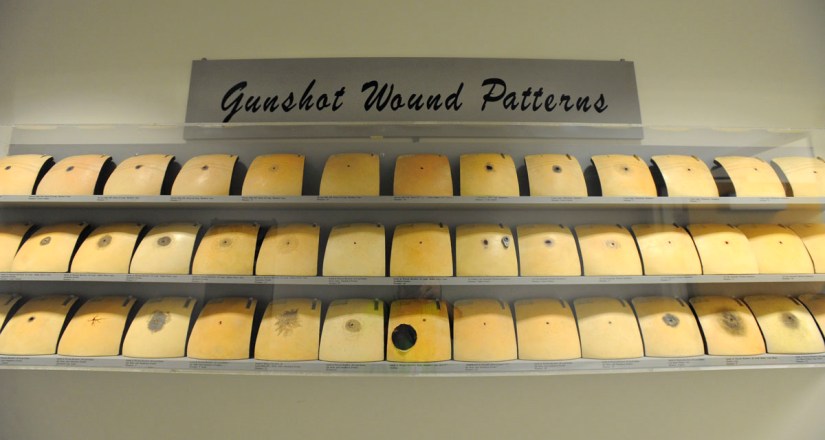
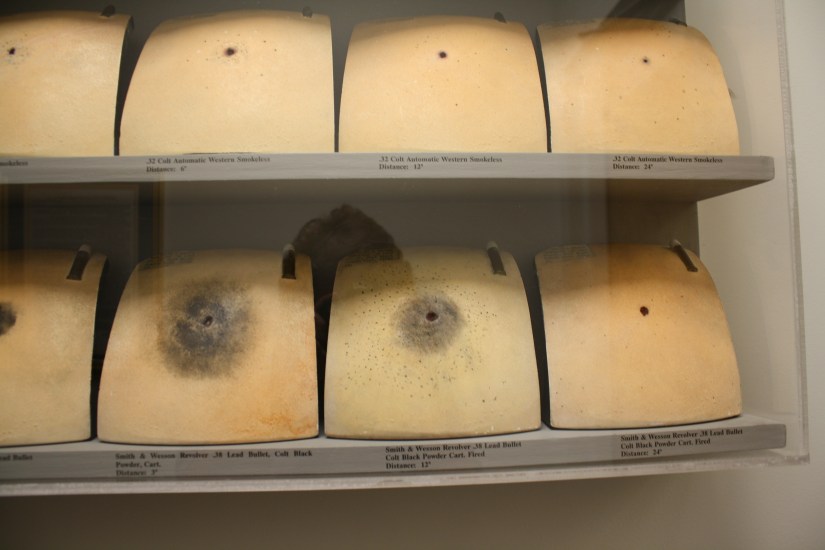
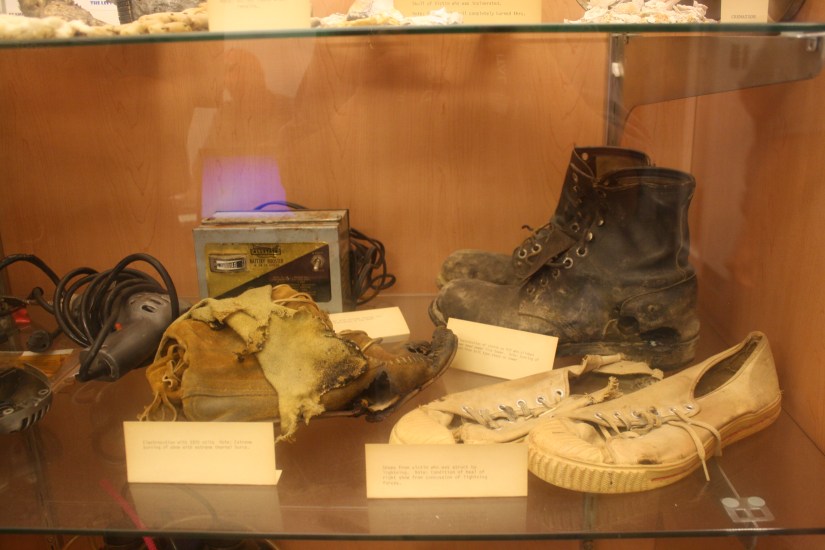
However, the Nutshell Studies are not the only visual aids created by Frances on display in the M.E.’s office. The walls of the entryway to room 417 are lined with 48 incredibly realistic looking bullet wound patterns and the conference room has 3 life-size heads with bullet wounds, slashed throats and a reconstructed face. Cases contain cremated remains, shoes worn by people struck by lightning, exploded oxygen tanks and even a motorcycle helmet from a crash victim who died in an accident. But wait, there’s more.
Bruce asks, “Would you like to see the Scarpetta House?” Accompanied by official tech advisers Kris & Roger Branch and my photographer wife Rhonda, I answered “Absolutely” even though I had no idea what lay in store for us. Bruce explains that the Scarpetta house is an enclosed space decorated like a typical model home complete with a swing set and wooden deck “outside”, a furnished living room, bedroom, bathroom, kitchen and laundry room “inside.” It was donated by novelist Patricia Cornwell and the facility is named after Kay Scarpetta, Cornwell’s medical examiner heroine. Her books, including 24 novels in the Scarpetta series and 2 non-fiction books on Jack the Ripper, have sold more than 100 million copies worldwide.

It should come as no surprise that the Scarpetta house is incredibly accurate in every detail. Cigarettes on the kitchen table, cereal boxes on the counter, trash in the trashcans: it looks like someone just stepped out to get the mail. Bruce notes that a few years ago, the M.E.’s office used bloody mannequins to recreate death scene scenarios for investigators to solve, but now they use live volunteers to portray the dead.
“We have local makeup artists with ‘Special FX’ experience from TV and movies come in to apply the Moulage make-up. And they look very realistic. We’ve even had some celebrities come in to portray dead people. It’s like a bucket list thing with them.” Bruce continues, “Last year my brother came in and portrayed a suicide victim. His family asked him not to take the makeup off when he was finished so they could see it. I drove him home (in the passenger seat) with a gunshot wound (complete with dripping blood) to the right temple. I even pulled in to the 7-Eleven and parked. Nobody even raised an eyebrow. He warned me that if I got pulled over for speeding, he was gonna play dead and let me explain it.”
I must admit that by this time in our visit, the investigation bug had bitten our little group. The four of us were now spread out in the Scarpetta house in search of our own clues. And although the facility had been cleaned up after last Spring’s class departed, upon closer examination, blood spatter evidence remained in those hard to reach places found in normal household scenarios. For example, the space between the toilet & sink, the bathtub grout and that pesky space between the fridge and the cabinet. Rhonda notes that there was no toilet paper in the bathroom but the empty roll remained on the holder. “That is a crime in itself,” she states. While in the kitchen, Bruce pauses before saying, “Oh yeah, don’t open the fridge” before walking out of the room. Although tempted, we took his advice and left it alone without ever knowing exactly what was inside of it.

Viewing the Nutshell Studies in this information age of virtual reality, it becomes easy to appreciate them as works of art and popular culture over and above their importance as forensic tools. Lee’s hyper-real dioramas are designed to re-train people to see. It becomes obvious that Frances Glessner Lee’s genius for story telling by using simple materials was both exacting and highly creative in her pursuit of detail-knitting tiny stocking by hand with straight pins, writing minuscule letters with a single-hair paintbrush, and crafting working locks for tiny windows and doors. Exacting details, easily overlooked.
What may be most overlooked in her dioramas is the subtle social commentary found within these complex cases. Her subversive velvet touch challenges the mores of femininity, questions domestic bliss and upends the traditional ideals for dollhouse miniature modeling, sewing, and other crafts considered to be “women’s work” back in the day. Often, her models focus on society’s “invisible victims” and feature victims (women, the poor, and people living on the fringes of society) whose cases might be overlooked or tainted with prejudice on the part of the investigator. She wanted trainees to recognize and overcome any unconscious biases and to treat each case equally, regardless of the status of the victim.
So much of today’s culture is digital, and the Nutshell Studies are three-dimensional. You can’t really understand it from a flat page; you have to see it to believe it. And if that isn’t enough, Bruce Goldfarb is in the final stages of a book about Frances Glessner Lee. “Why not? I know her as well as anyone and it’s a story is worth telling. ” Bruce says. I’m sure that Bruce’s book will sum it up quite nicely…in a nutshell.









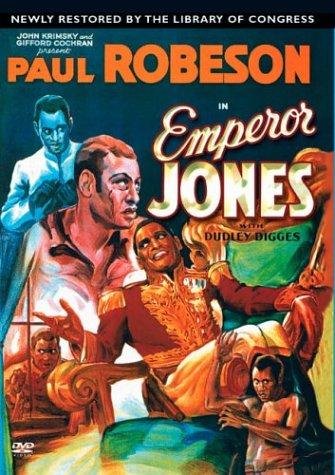

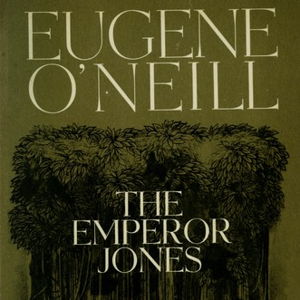
 With the choice of O’Neill’s work, “The Emperor Jones”, the Society was taking an enormous risk if only for the fact that it required an elaborate stage for a one night performance. And then there was the Klan. The KKK was growing by leaps and bounds despite the fact that it had just been formally recognized in the state that same year. Soon, one third of the native male white born citizenry of the state would belong to the Klan. This was a play solely centered around a strong, murderous black man in a position of absolute authority in production in the principally white governed center of the WASP-ish Midwestern cornbelt.
 W. F. McDermott, drama editor of the Indianapolis News, wrote this about Long: “a colored actor, played the role of the emperor with several moments of great naturalness. He was able to portray the negro fear of “ha’nts” with unusual power.” But McDermott was less kind to the playwrite, “O’Neill writes darkly of brooding, inscrutable fate; of black and stormbound heights, of man, stripped savage and terrified; of man tragically at odds with his environment and foredoomed.”
 Perhaps the most unusual feature of the Indianapolis production was the choice of the lead actor chosen to portray Brutus Jones. Arthur Theodore Long was born on December 31, 1884, the son of Henry and Nattie (Buckner) Long in Morrillton, Arkansas. According to the 6th edition of “Who’s Who in Colored America (1941-1944)”, Long graduated from Sumner High School in St. Louis, Missouri in 1904. He entered the University of Illinois at age twenty and earned a BA degree in 1908. Arthur then went on to further his education at both Indiana and Butler universities. He then studied at the University of Chicago, presumably in pursuit of his master’s degree. Long earned teaching credentials in history, civics, English, music and mathematics.


 I asked Mr. Casteel if it was true that Longstreet’s granddaughter attended the unveiling ceremony. He answered quickly, “Oh yes. Jamie Longstreet Paterson attended the dedication ceremony. We brought out a ladder and she climbed up to get a better look at the General. I was worried because she was 67-years-old but more worried when she started to cry,” said Gary. “I thought, oh my, we may have a problem here. When she came down, I realized they were tears of joy as she said, ‘I never thought I would look him in the face’.” Sculptor Casteel’s Longstreet memorial was one of the last monuments erected at the Gettysburg National Military Park. It was dedicated on July 3, 1998, the 135th anniversary of the end of the battle of Gettysburg. Jamie Paterson Longstreet died six years later on August 4, 2014.
 It should be noted that Casteel is not only an accomplished sculptor, knowledgeable historian and well versed art scholar, he has deeper personal roots in the Civil War and Battle of Gettysburg itself. Casteel says that his own family had two ancestors -brothers in fact- who actually fired at each other from opposing sides during the Battle of Gettysburg. “I call him Uncle Bill and he placed his rifle against that stone wall and fired our way from right over there” as he points out his studio window. Casteel is currently hard at work on several pieces for the proposed National Civil War Memorial. “Did you realize that there is no national monument to the Civil War?” he asks.
 Gary guides us to a loose leaf binder containing images of the large sculpture medallions he has created for the museum. Lincoln, Lee, Jefferson Davis, and John Wilkes Booth are just a few of the completed images resting on the drying racks in the back of Gary’s studio. Gary remarks, “I asked Ed Bearss (Chief Historian Emeritus of the National Park Service), who serves on the museum board, why there was no plaque for Joshua Lawrence Chamberlain (Hero of Gettysburg’s Little Round Top) in the selection. He responded, ‘Gary, no one ever heard of Chamberlain before Gettysburg or afterwards for that matter.” Yes, talking with Gary Casteel gives new perspective to an old subject and promises to make a visit to his studio an unforgettable memory.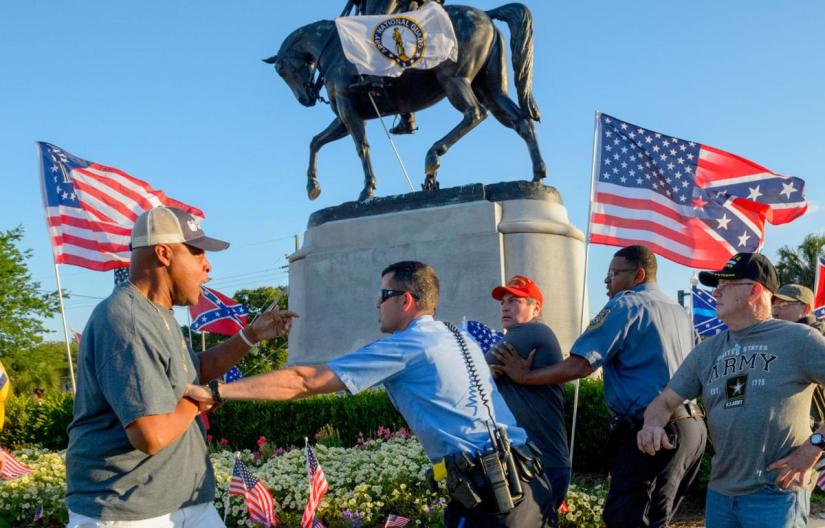


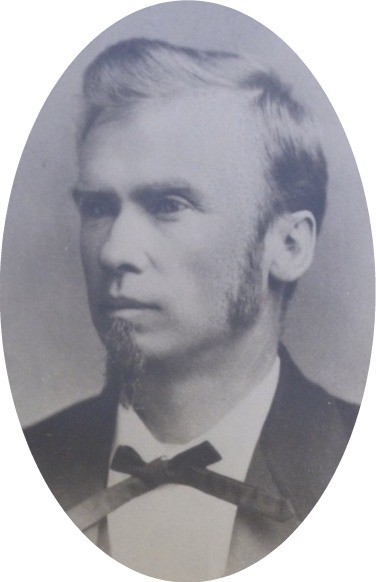


 Her efforts worked and today, Pickett is widely remembered as a tragic hero of the disastrous charge at Gettysburg that bears his name. Rather than place blame at the feet of the South’s “Marble Man”, Robert E. Lee, LaSalle shifted blame to James Longstreet. Her effort was well received by the purveyors of the Lost Cause and Pickett’s reputation was posthumously restored.
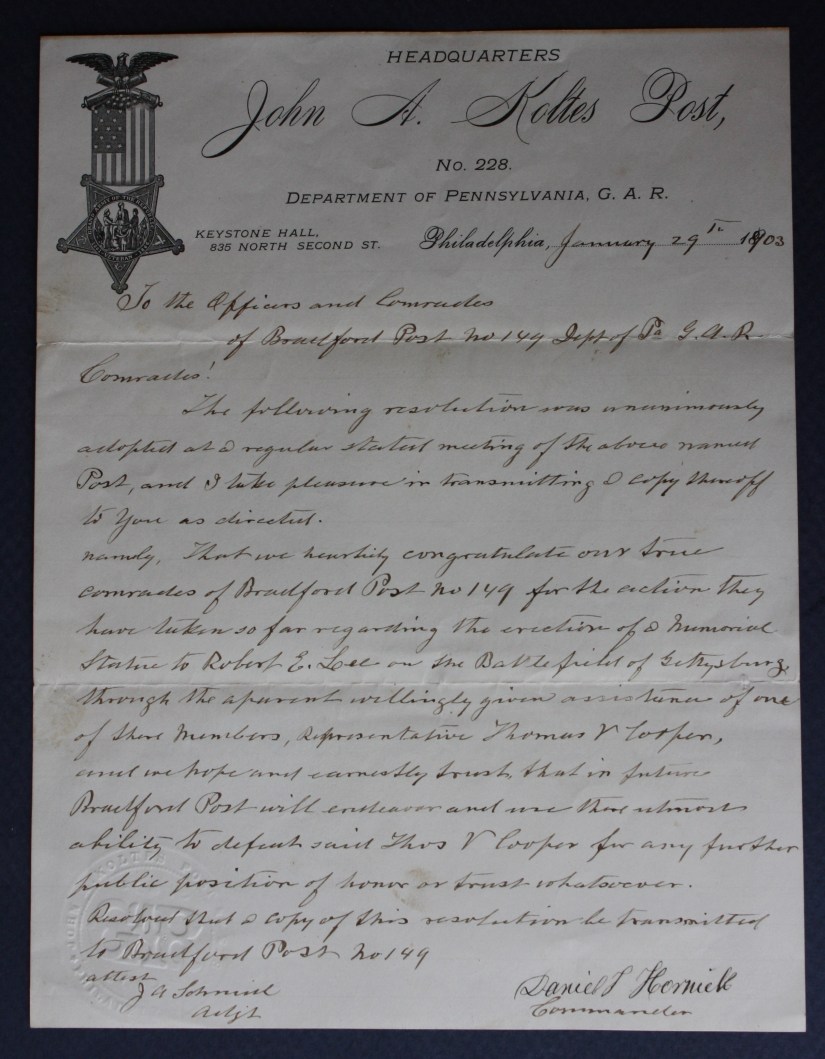
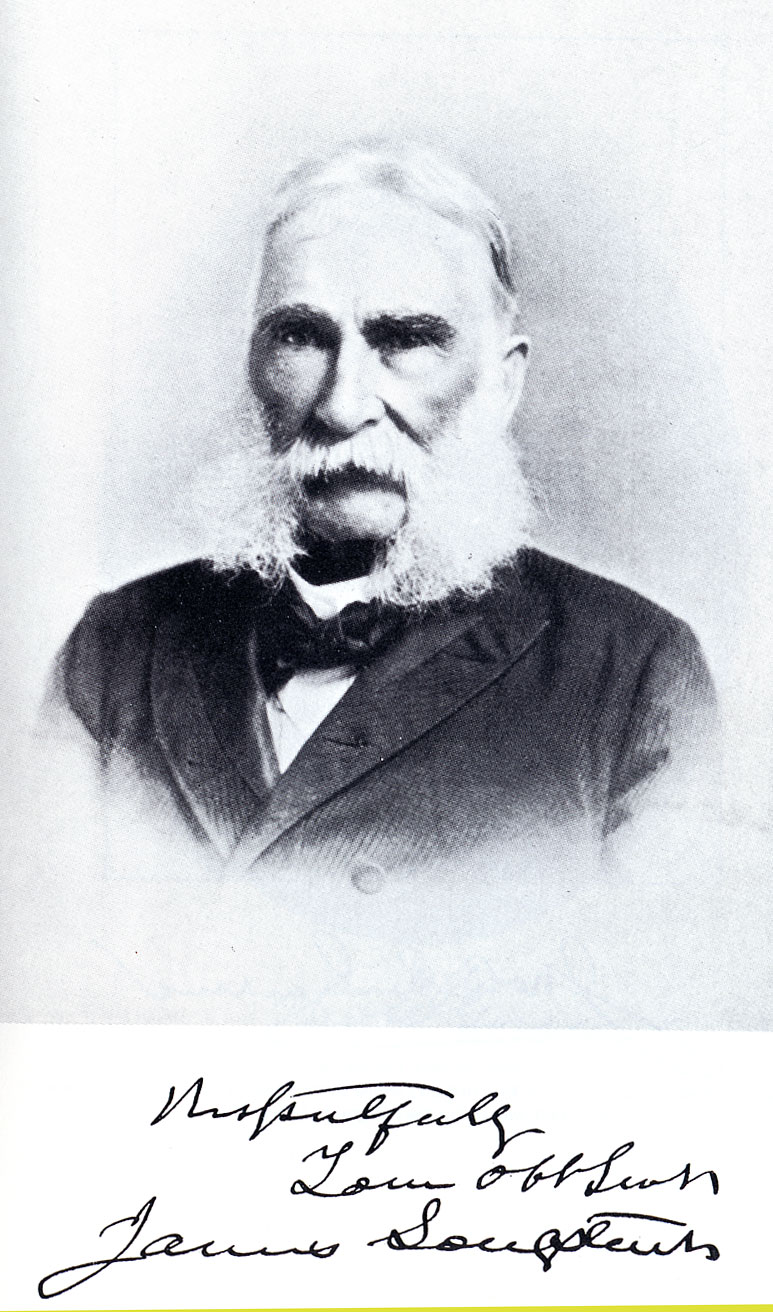
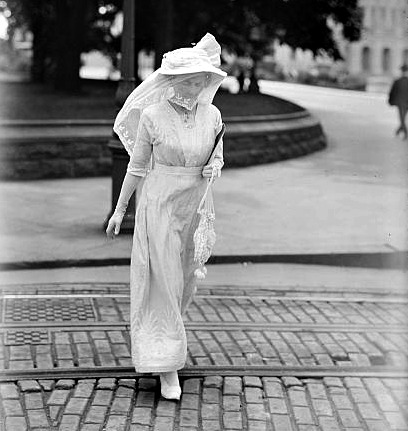
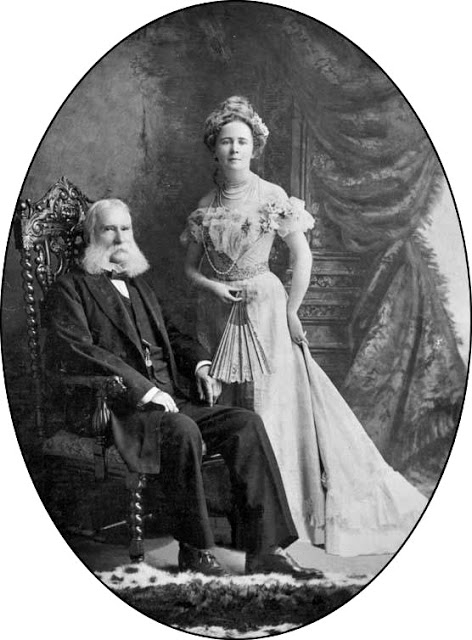 But General Longstreet had a secret weapon of his own: his young bride, Helen Dortch Longstreet. The General married her in 1897 in a ceremony at the governor’s mansion in Atlanta. She was 34 and he was 76. She would outlive her husband by 58 years, passing away in 1962 during the National Centennial Celebration of the Civil War. By the time of her death, she had accomplished more than most any other woman of her era and helped restore her husband’s legacy along the way. And I have the letters to prove it.
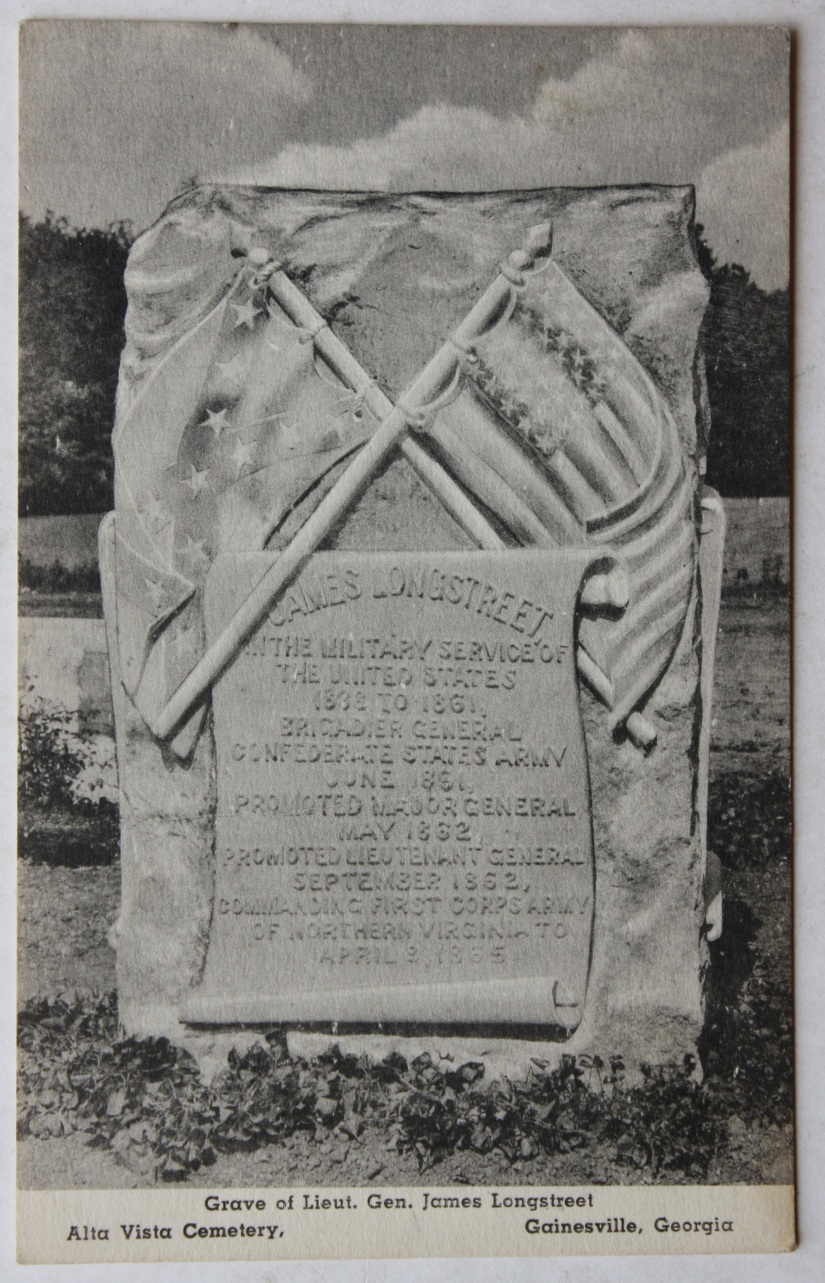 Longstreet served in a variety of government positions after the war, including ambassador to Turkey and as a Federal Marshall. He served as a railroad commissioner and spent his final years trying to refute continued attacks on his character raised by his former friends and brothers in arms who labeled him as a traitor to a failed ideal. His 1896 memoirs, a labor of five years titled “From Manassas to Appomattox”, he attempted to set the record straight.
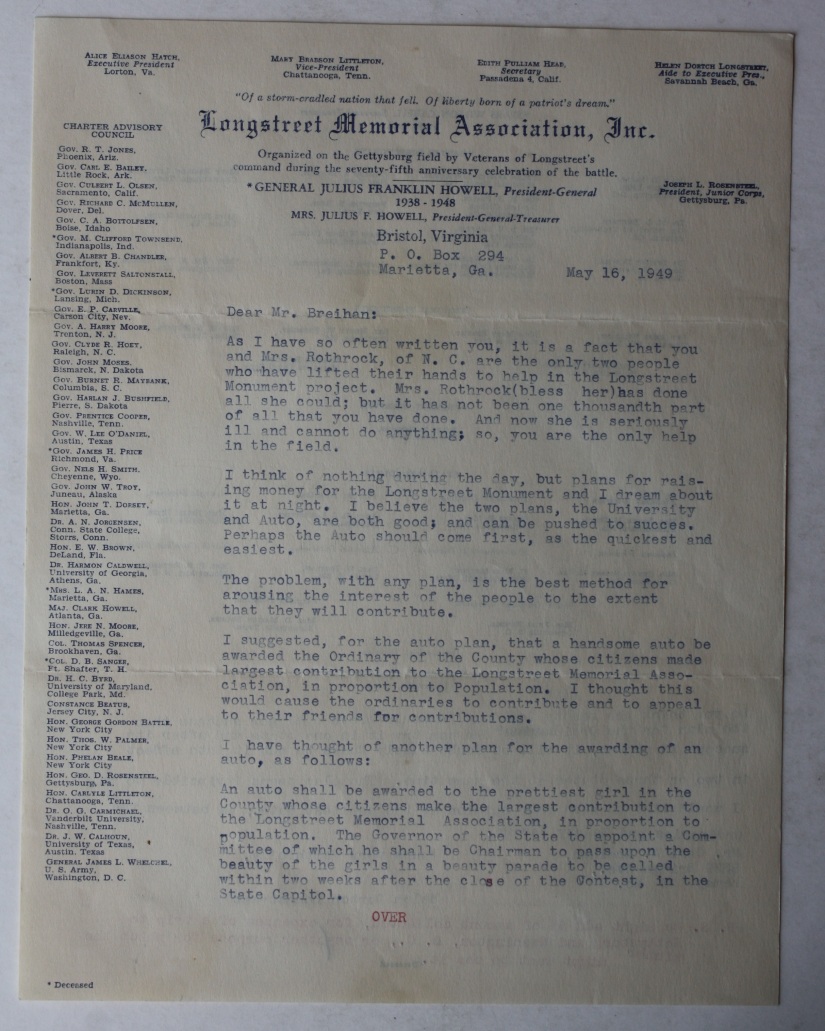
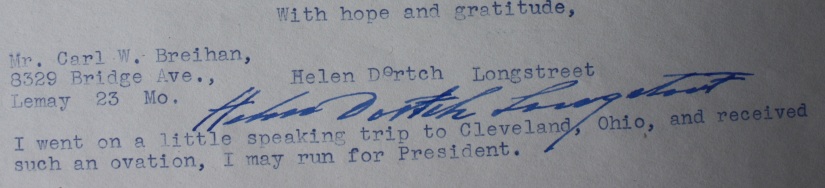 The letter continues, “The auto dealers will pay more attention to the plan if presented by a young, vigorous, intelligent gentleman like yourself, than by an old woman….I could never make them understand that behind the wrinkles and gray hairs the vigor and enthusiasm of youth still lives…When the monument stands finished on the field of glory, Carl W. Breihan, more than any other person in the world will deserve the credit.” She added the postscript, “I went on a little speaking trip to Cleveland, Ohio and received such an ovation, I may run for President.”
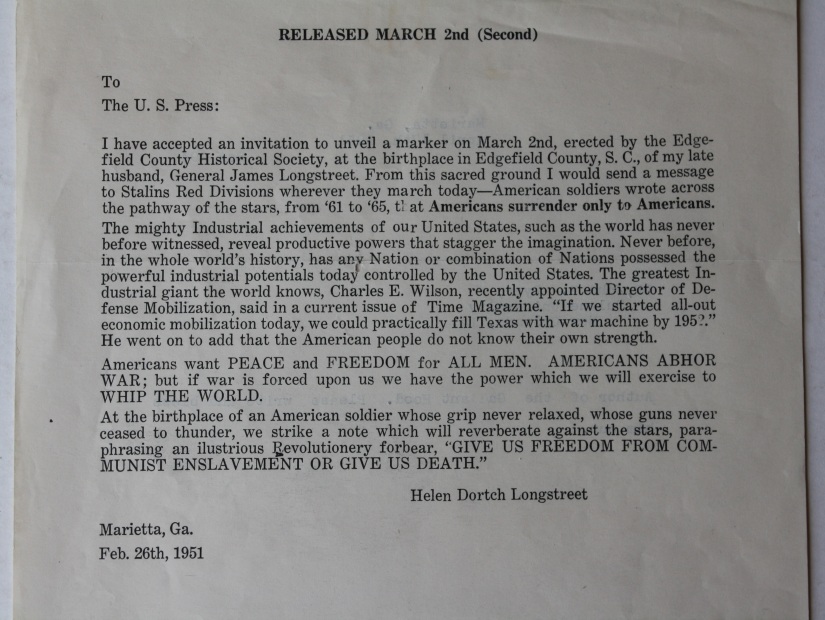 The next letter is in the form of a press release. Dated Feb. 26, 1951, it mentions the unveiling of a marker at General Longstreet’s South Carolina birthplace that likely includes excerpts from her planned speech at the ceremony. “I would send a message to Stalin’s Red Divisions wherever they march today-American soldiers wrote across the pathway of the stars, from ’61 to ’65, that Americans surrender only to Americans….Americans want PEACE and FREEDOM for ALL MEN. AMERICANS ABHOR WAR; but if war is forced upon us we have the power which will exercise to WHIP THE WORLD…At the birthplace of an American soldier whose grip never relaxed, whose guns never ceased to thunder, we strike a note which will reverberate against the stars.”
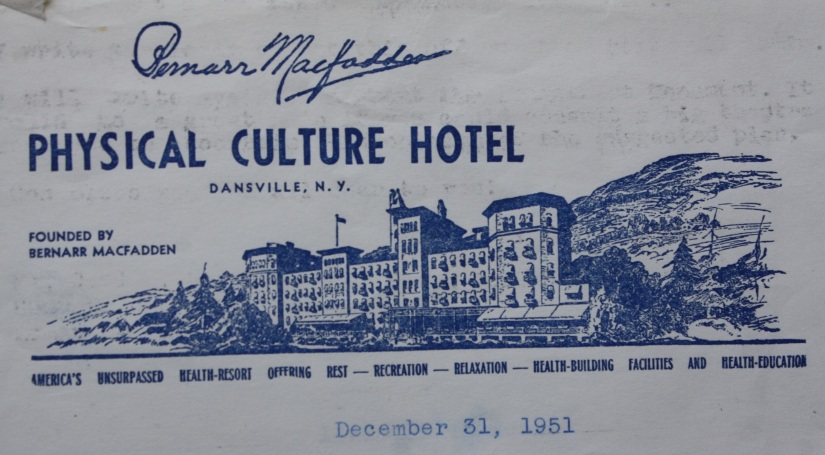
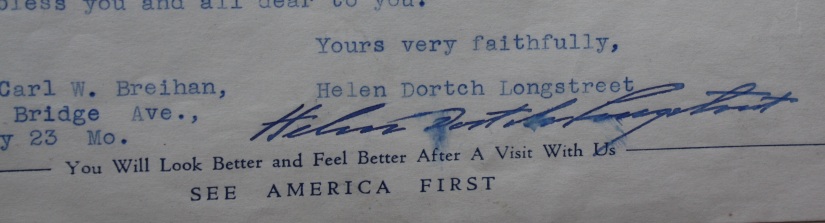 The Physical Culture Hotel, founded by former professional wrestler and magazine mogul Bernarr MacFadden, began life as the “Jackson Sanitorium” (founded in 1854), a health spa credited with inventing granola and launching the Kellogg cereal company. The Hotel was a pioneer in the use of hydrotherapy but also emphasized recreation and social activities such as swimming, sunbathing, tennis, and dancing. McFadden and his hotel were on the cutting edge of the physical fitness movement in America and at age 88, Helen Dortch Longstreet was right in the center of it. To me, this letter is emblematic of the widow Longstreet. She was ahead of her time, unpredictable and most of all, she never gave up.
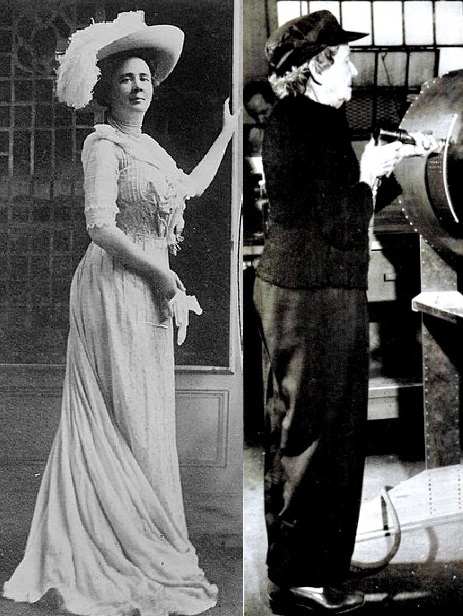
 Further research reveals that, during World War II, Mrs. Longstreet was a Rosie the Riveter assembling B-29 bombers at the Bell Aircraft plant in Atlanta. She explained, “I was at the head of my class in riveting school. In fact I was the only one in it.” She worked in the factory for two years, refused to join the union, never missed a day of work or showed up late for a shift. Widow Longstreet told Life magazine reporters, surprised to find a Civil War General’s widow alive and well and working for the war effort, “I just want to build bombers to bomb Hitler.”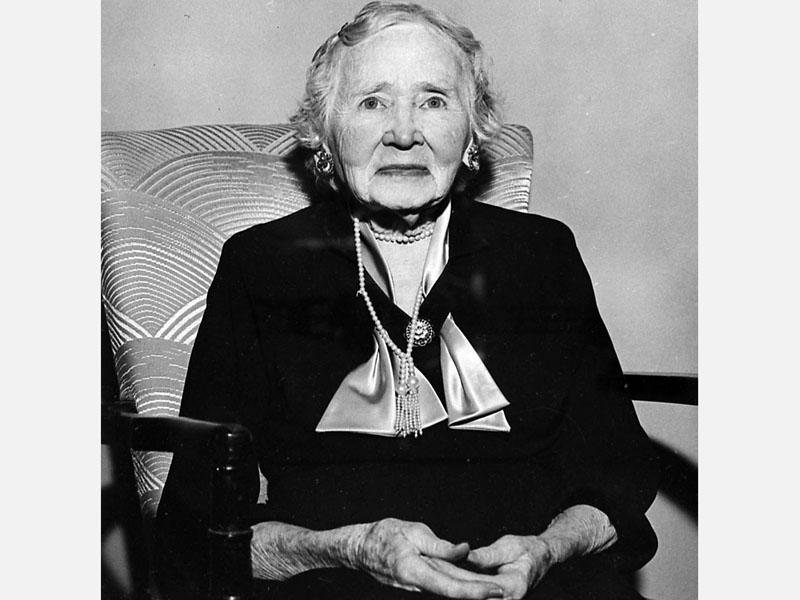
 In 1998, the Military Order of the Stars and Bars and United Daughters of the Confederacy worked together to pay for LaSalle’s disinterment and reburial in front of the George E. Pickett Memorial in Hollywood Cemetery. Widow Pickett was buried on Saturday, March 21, 1998. She was the first woman interred in the Confederate military burial section. On July 3 of that same year, one of the last monuments was erected on the Gettysburg National Military Park. It was an equestrian statue of General James Longstreet on his horse “Hero” in Pitzer Woods on Confederate Avenue. Perhaps most astonishingly, 135 years after the battle, Jamie Longstreet Paterson, the 67-year-old granddaughter of General Longstreet was there to see it.
 Alan E. Hunter