
Original publish date: December 7, 2013~~Republished September 27, 2018
Quick name the Northern-most battle fought on Union soil during the American Civil War? Gettysburg? Nope, but here’s a hint…it was fought in Indiana. Corydon? Nope. Indianapolis…the Battle of Pogue’s Run. Okay, okay, so no shots were fired, but it’s still a great story from the archives of Civil War Indiana. And during this, the 150th anniversary of the Civil War, what better time than the present to revisit Indianapolis past?
It’s May 20, 1863 and there’s a battle raging at the Indiana statehouse. Rumors were spreading that Copperheads within the Indiana Democratic party were determined to take over State Government and turn it over to the Rebels. Named for the poisonous snake indigenous to Southern Indiana which gives no warning before it strikes, Copperheads were Hoosiers who opposed the American Civil War. Considered traitors by others in the North, they favored immediate peace with the Confederacy.
These “Peace Democrats” accepted the label and often identified themselves by the use of stickpins featuring the likeness of Lady Liberty, which they cut from copper pennies and proudly wore on their lapels. Copperheads damaged the Union war effort by fighting the draft, encouraging desertion, and forming conspiracies in effort to incite unrest far behind the front lines.
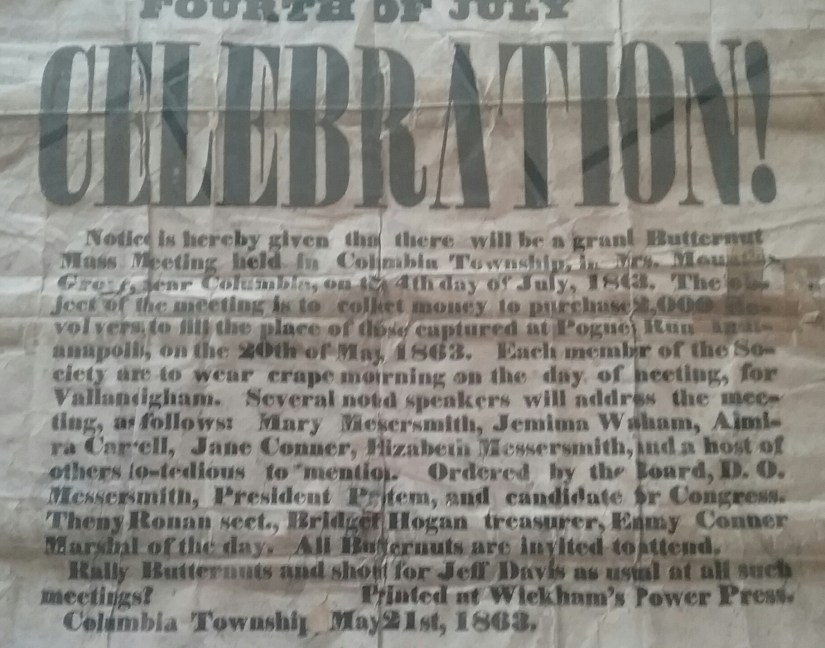
The “Battle of Pogue’s Run” began when a rumor circulated that that many of the delegates to the Democrat state convention were carrying concealed firearms, hell bent on insurrection. Union soldiers entered the delegates hall and found personal weapons on many of the delegates. Afterwards, Union soldiers stopped departing trains carrying delegates and began another search of the delegates. Many of the delegates fled the train and began to throw their weapons into the creek that ran diagonally southwest through the city known by locals as Pogue’s Run. Some blamed the Republicans, some the Democrats, while others pointed the finger at powerful Governor Oliver P. Morton but it might be easier to place the blame on the fear and paranoia that permeated the Civil War itself.
Oliver P. Morton, Governor of Indiana for the duration of the Civil War, strongly supported President Abraham Lincoln and the Union. Perhaps more than any other northern Governor. Under his leadership, Indiana raised more men and money for the war effort than any other northern state. Whether you loved him or hated him, there was no doubt about it, Oliver P. Morton was large and in charge.
Within days of his inauguration as governor, Morton saw the war clouds on the horizon and began to prepare the state for the inevitable. He appointed men to important positions who he knew would never compromise with the southern states. Time and time again, he chose Republicans loyal to him over others connected to politicians like Congressmen George W. Julian or Schuyler Colfax, his chief rivals in the Republican Party. When the legislature resisted his call for the creation of a State armory, he collected private funds and built one himself. Morton’s new state arsenal employed seven hundred men to produce ammunition and weapons without legislative permission in preparation for the war he was sure was coming. When the South Carolinians’ fired on Ft. Sumter on April 12, 1861, he telegraphed President Abraham Lincoln within hours to announce that he already had 10,000 soldiers under arms ready to suppress the rebellion.
Lincoln and Morton maintained a close alliance during the war, although Lincoln was wary at times of Morton’s ruthlessness. Lincoln once said of Morton that he was “at times the shrewdest person I know.” Governor Morton wrote to Lincoln claiming that “no other free state is so populated with southerners”, and that these “Copperheads” kept Morton from being as forceful against secession as he wanted to be. Through sheer determination and projected self confidence, Morton kept the state united early on in the war. That is until Lincoln began to raise the emancipation question in 1862.
The cracks in Morton’s armor began to show in the mid-term elections of 1862. The Republican party suffered a major defeat at the polls and the Democratic Legislature, which had been strongly Pro-Morton during the Governor’s first 2 years in office, now turned against him. The Democrats, under future Vice-President Thomas A. Hendricks, declared that while they were strongly pro-union and supported the war effort, they opposed the abolition of slavery. In protest, and possibly out of arrogance, Morton never called the 1862 State Legislature into session.
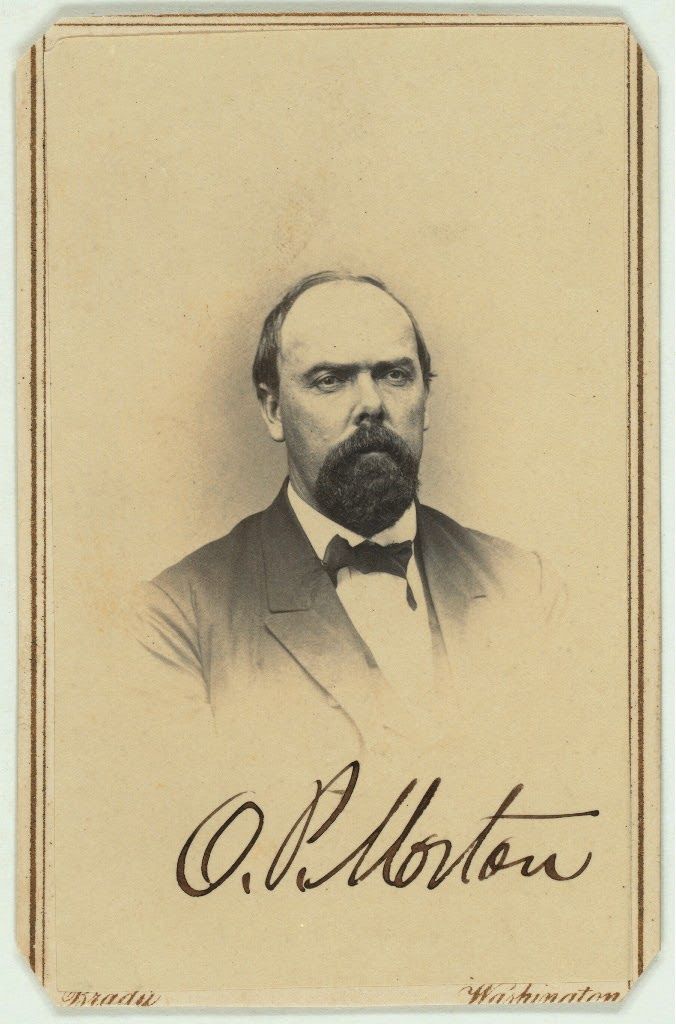 Morton believed that should he call the session, radical elements in the opposition party might undermine the Hoosier state’s devotion to the war effort, instigate riots, harbor southern spies and possibly vote to secede from the Union. The Governor issued secret instructions to GOP legislators asking them to stay away from the Statehouse, thereby thwarting efforts to attain a voting quorum. With Morton’s aid, the Republicans fled to Madison where they could cross easily into Kentucky should the Democrats attempt to forcibly return them to the capitol. Because of this, the government was at a virtual stand still. No budget, no taxes, no revenue. The state quickly ran out of money and teetered dangerously on the edge of bankruptcy. Exceeding his Constitutional powers, Morton solicited millions of dollars in personal loans to keep the Government going.
Although patently Unconstitutional, Morton’s plan worked and the Hoosier contribution to the war effort rolled on without the help of the State Legislature. The atmosphere created by Morton’s actions only worsened tensions between the two parties and guaranteed a confrontation, which was probably already inevitable. Now Democrats saw Morton as the embodiment of the National Republican agenda, with its expansion and corruption of power. They saw him as Lincoln’s henchman in Indiana as well as a tyrant in his own right.
The rage among the Democrats was bubbling to the top. They launched vicious attacks in the press against Morton, who responded by accusing them of treason. Morton again pushed the limits of his wartime authorities by using an intelligence network to deal with rebel sympathizers, the Knights of the Golden Circle, Democrats, and anyone who opposed the Union war effort, or him. While this helped to keep the state more secure, his secret police force also carried out arbitrary arrests, suppressed freedom of speech and freedom of association (particularly in the press), and generally maintained a repressive control of the southern-sympathetic minority. It was easy to see that a battle was brewing in the Circle City.
The Battle of Pogue’s Run commenced when Morton had soldiers disrupt the Democratic state convention based solely on conjecture. Many leaders of the Democratic Party were arrested, detained, or threatened and charged with the possession of firearms. Which is ironic considering Morton had been making his own guns and ammunition statutorily illegally for years and while nearly every citizen in Indianapolis, at that time considered the far western frontier, was armed to the teeth.
Governor Morton developed an incendiary plan to place Union troops inside the convention hall specifically to intimidate the delegates to the convention. About four o’clock in the afternoon, while Thomas A. Hendricks was speaking to an estimated 10,000 delegates from the rostrum, a group of a dozen-or-so soldiers entered the hall with bayonets fixed and rifles cocked. The menacing looking soldiers entered the crowd and advanced slowly toward the stand, causing a great uproar. The delegates and attendees scattered in every direction. A high fence on the east side of the state-house square was pushed down by the panicked crowd. To make matters worse, a squad of cavalry galloped back-and-forth along Tennessee street.
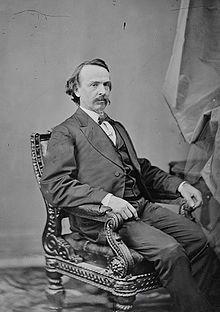
The soldiers moving towards the stand were ordered to halt by Colonel John Coburn, who had been guarding the quartermaster’s stores north of the State-house but who had rushed over after hearing the disturbance. He asked what they were doing. They replied they were “going for Tom Hendricks,” that he had said too much, and they intended to kill him. Coburn reasoned with the agitated soldiers and they halted. Meantime, there was much confusion on the stand. Perhaps needles to say, Hendricks closed his remarks prematurely by quickly suggesting that the resolutions be read and the meeting adjourned. The record reflects that there was no second to his motion.
When calmer heads prevailed, it was found that the resolutions declared that the Federal government had two wars upon its hands; one against the rebels and one against the constitution. The quorum breaking Republicans in the late legislature were denounced in the strongest terms and it was further declared that the Governor could not “clear himself from complicity, except by taking steps to prevent repudiation.” In reaction to the Governor’s crack-down on dissent, the Indiana Democratic Party called Morton a “Dictator” and an “Underhanded Mobster” while Republicans countered that the Democrats were using “treasonable and obstructionist tactics in the conduct of the war”.
Although now calmer, the soldiers remained agitated. Occasionally, if they heard any of the remaining Democrats speak against the war, the Republican Party, the President or Governor Morton, that individual would be grabbed roughly underneath the armpits and marched out to the street followed by a great rabble. The intent was not to harm the poor fellow but to frighten him. Eventually the scared temporary detainee either slipped away or was told that he would be released if he promised to behave himself. A number of men were taken to the police court and charged with carrying concealed weapons, and about forty pistols were taken from those arrested. Later that night as the convention concluded, many of the Democratic delegates took trains departing from Indianapolis. As the trains slowly departed from the city a great number of shots were fired from within the cars traveling on the Lafayette and Terre Haute railroads. 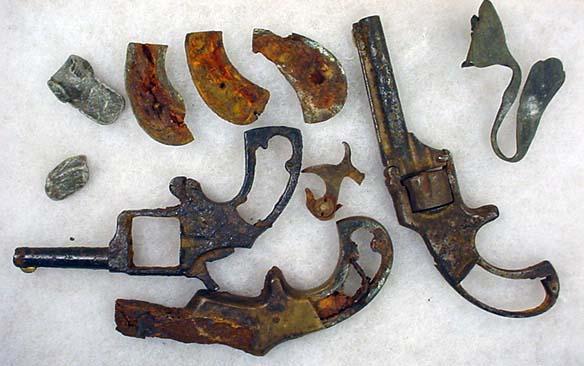
The delegates felt the rough treatment they deserved from the Governor’s armed thugs was undeserved and their anger manifested by an intention to create an armed disturbance. Perhaps justified in their feelings, it was not the wisest thing for them to do, and the re-agitated soldiers quickly determined to teach the remaining “Copperheads” a lesson. As the Indiana Central Railroad train left Union station a cannon from Morton’s nearby armory was commandeered and placed on the tracks in front of it. The train stopped. A small body of soldiers and policemen boarded the train and demanded the surrender of all firearms by the passengers. The delegation collected nearly two hundred weapons. The train bound for Cincinnati was also stopped and many revolvers were taken from the passengers.
Some of the enraged delegates refused to hand over their personal firearms and chose instead to throw them out the open windows into Pogue’s Run, a shallow waterway parallel to the track. Some delegates gave their pistols to women on the train, in the belief that they would not be searched. They were mistaken and in one instance, seven firearms were found hidden upon a single woman. A two foot long Bowie knife was discovered hidden in the smoldering ashes of a stove in one of the cars. In all, about five hundred loaded revolvers were taken from passengers, not all of whom were delegates to the convention, or even Democrats!
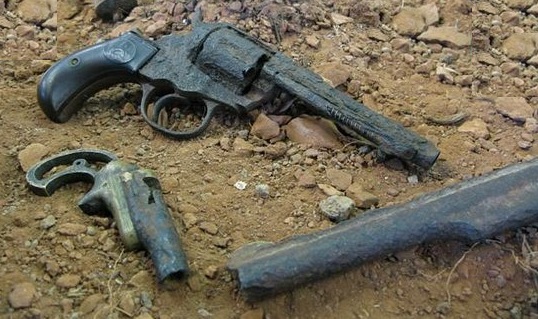 Accounts of just how many weapons were thrown into Pogue’s Run ranged from 500 to 2,000. The Indianapolis Sentinel described it as: “It is with feelings of sorrow, humiliation and degradation that we witnessed the scenes of yesterday. . . . Indiana is as completely under military rule as France, Austria or Russia”. But to those who supported Morton’s action, it seemed to them that would-be insurrectionists would be too cowardly to actually rebel. The term “Battle of Pogue’s Run” was given to the event by the Republican Party derisively, who praised the soldiers involved as “halt(ing) a meeting of traitors to the Union cause”. The Democrats, on the other hand, called the event “still more assaults upon constitutional rights” by those supporting Abraham Lincoln and Governor Morton.
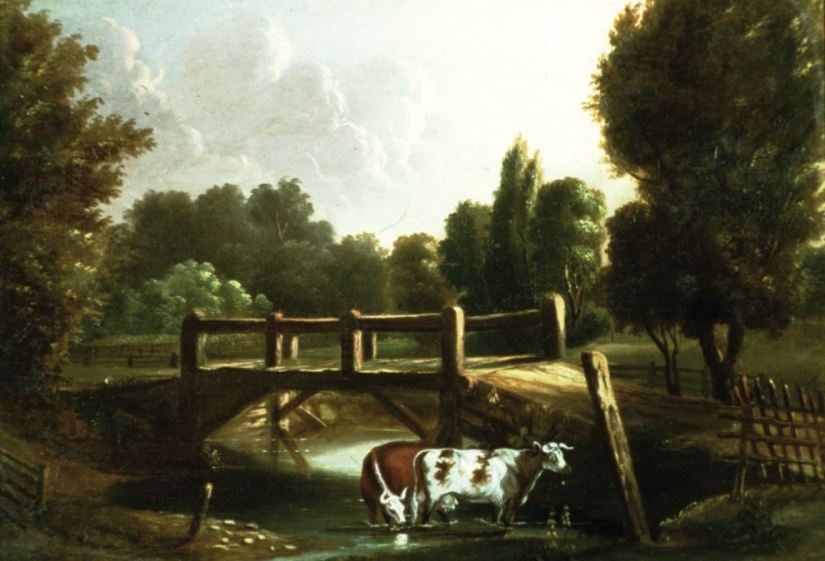
The Run flooded in 1882, killing at least ten people and exposing the skeletal remains of many of the weapons pitched into the water that May evening two decades before. The flood destroyed a covered bridge that once crossed Pogue’s Run near the spot where the battle took place. More than three decades after that devastating flood, in 1914, Pogue’s Run was rerouted into the storm sewers of downtown Indianapolis in order to allow for a perfect grid pattern for Indianapolis’ roads. The stream goes underground at New York Street, east of I-70, and eventually spills into the White River near Kentucky Avenue. Indy Parks established a Pogue’s Run Trail alongside the creek bed on the section northeast of downtown.

Today, wildlife can be found on the path including ducks, geese, red-winged Blackbirds, and the occasional blue heron. A plan called “Charting Pogue’s Run” intends to mark where the creek once ran in downtown Indianapolis. The plan calls for a blue line, made of thirty permanent steel medallions and a semi-permanent blue thermoplastic line, to “meander” across roads and parking lots following the route of the historic waterway. That proposed blue line promises to show how Pogue’s Run now lies under Lucas Oil Stadium and Banker’s Life fieldhouse. I expect that at least one of those markers will be dedicated to the rich history of Pogue’s Run and the Civil War battle that bears it’s name.

 Ask any of these visitors about the park’s namesake and you’re likely to catch them at a loss. What’s more, most visitors are unaware that Paul Ruster Park is haunted by a centuries-old ghost. The park, acquired by the Indy Parks system in 1970, is named after a 1964 Warren Central high school graduate, Paul M. Ruster. Paul, the oldest of three sons of Marvin and Marie Ruster, died December 10, 1978 of Hodgkin’s disease. Paul’s brother Bruce was a former Warren Central baseball star and much beloved Phys-Ed teacher at Warren Central for many years. Paul was born on the eastside, attending Eastridge elementary and Woodview Junior High. He graduated from Ball State University and returned to Indy’s eastside to teach Phys-Ed at Lowell in 1969.
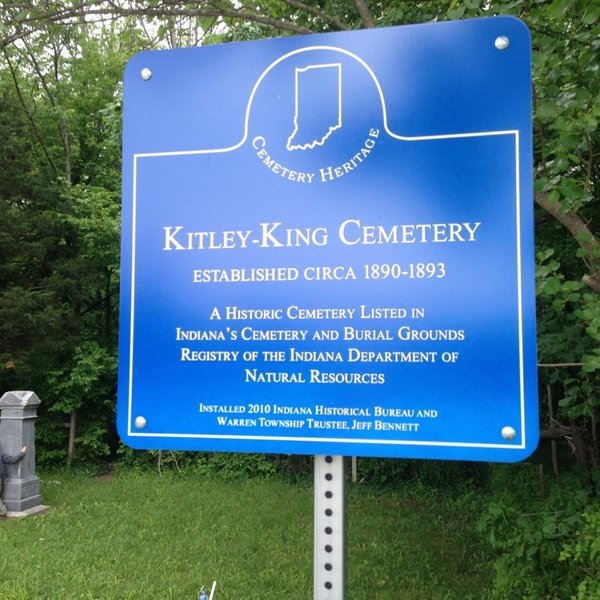 Although the park may have been new to the Indy Parks system, the haunted reputation was well established. Some of the first to report the strange happenings going on within the park were people who were themselves looked upon as strange by casual observers. These were the weekend warrior gatherings of young people dressed as medieval knights wearing full combat regalia while sword fighting and jousting around the green spaces of Ruster Park. These were the early days of the “Dungeons and Dragons” phenomenon in the 1980s involving fantasy role playing groups that met on a regular basis in the park. These groups began to report strange sights and sounds coming from the periphery of the park’s boundaries that would often stop participants in their tracks. Sometimes, these spooky sounds would drive the groups from the park in fear. Soon, the ghostly rumors made the rounds among Indianapolis paranormal groups that Paul Ruster Park was a hot spot for paranormal activity and an allegedly haunted area. Paranormal investigators declared that these unexplained occurrences were emanating from a nearby abandoned family cemetery a mere stone’s throw from the new park.
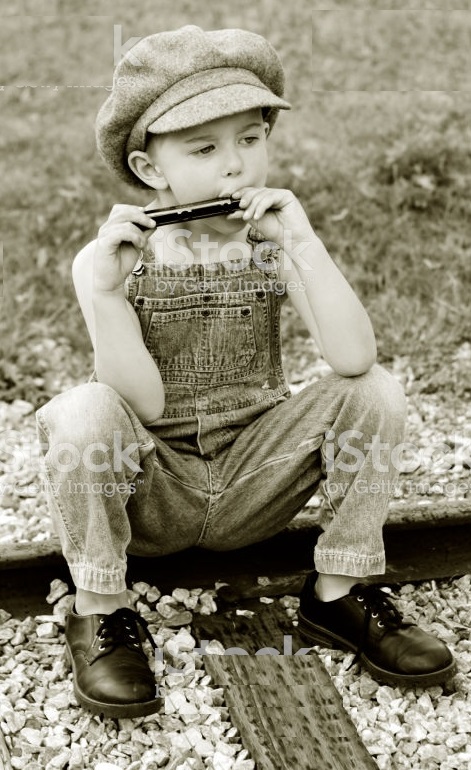 Legend claims that many years ago a 12-year-old boy living on the farm was killed while walking along the nearby train tracks. No-one knows if he was struck by a train or whether some other harm befell him. Reportedly, he is now buried in an unmarked grave within the foundation of his old house. Witnesses claim that if you walk the long path leading from the soccer fields through the woods to his grave near Prospect you can hear the boy playing his harmonica. Still other witnesses have reported seeing the ghostly image of a young boy walking down the road and again, he is seen playing a harmonica.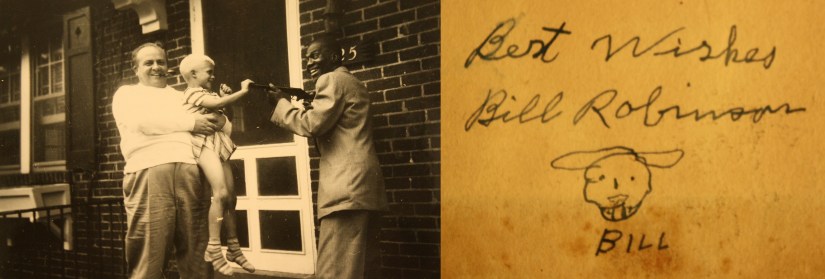
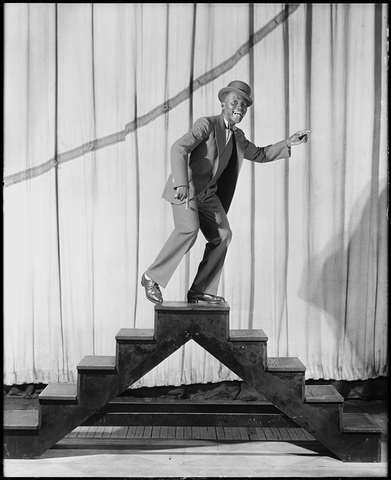 In the early 1920s, Robinson took his career on the road as a solo vaudeville act, touring throughout the country. He frequently visited Indianapolis, where he performed multiple shows per night, often on two different stages, at the B.F.Keith theatre. Robinson worked 51 weeks per year, taking a week off every season for the World Series. Bojangles was an avid baseball fan and co-founder of the New York Black Yankees of the old Negro National League in 1936.
 At the 1939 New York World’s Fair, he returned to the stage in “The Hot Mikado”, a jazz version of the Gilbert and Sullivan operetta which quickly became one of the greatest hits of the fair. Consequently, August 25, 1939 was named ‘’Bill Robinson Day’’ at the World’s Fair. By the 1940s, although he continued to perform, Robinson was past his prime and showing symptoms of heart disease. Robinson’s final film appearance is considered by critics as his best when he starred in the 1943 Fox musical Stormy Weather alongside Lena Horne.
 Robinson’s casket lay in state in Harlem, where an estimated 32,000 people filed past to pay their last respects. The schools in Harlem were closed for a half-day so that children could attend or listen to the funeral, which was broadcast over the radio. Reverend Adam Clayton Powell, Sr. conducted the service at the Abyssinian Baptist Church, and New York Mayor William O’Dwyer gave the eulogy. Newspapers estimated that one hundred thousand people turned out to witness the passing of his funeral procession. Robinson is buried in the Cemetery of the Evergreens in Brooklyn. In 1989, a joint U.S. Senate/House resolution declared “National Tap Dance Day” to be May 25, the anniversary of Bill Robinson’s birth.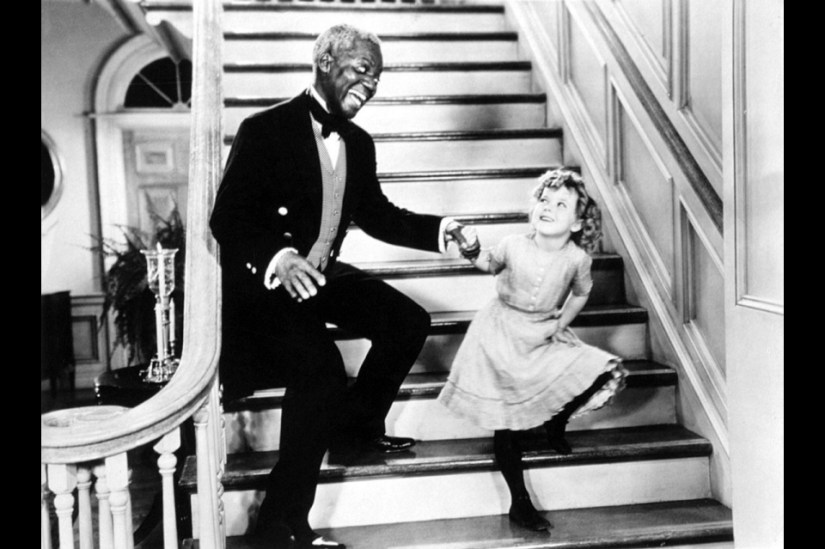

 If you’re old enough to remember Black and White TV, the original Sammy Terry TV show, Timothy Church-mouse or Cowboy Bob and Janie, then you should remember Bill Robinson. If you’re over the age of 40, you can remember a time before cable TV. A time when television stations actually went off the air at night and didn’t come back on until farm shows or cartoons popped up the next morning. Back then, it was a badge of honor to say you made it up to watch the flag wave to the rhythm of the National Anthem.
 For the sake of full disclosure, I must admit that I once owned a photo signed by Bill Robinson. Bojangles signed it for an Indiana Mayor whose name now escapes me. I sold it to a collector in the late 1980s for $ 100. But I rationalized the sale of the relic because the photo literally looked like it had been dipped in water and $ 100 might as well have been $ 1,000 to me and my young bride. By finding this photo on a dew soaked Southern Indian hillside, I felt the pendulum had swung back my way.
 Friends say there were three certainties about Bill Robinson: he loved to eat vanilla ice cream, gamble with dice or cards, and dancing was his life. At the time of his divorce his wife Fannie accused him of being a danceaholic-a man willing to sacrifice everything to dance. While his personal life was full of contradictions, his peers and historians agree he was one of the greatest American dancers of all time.
 Following the demise of vaudeville, Broadway beckoned with “Blackbirds of 1928,” an all-black revue that would prominently feature Bill and other black musical talents. Soon, he was headlining with Cab Calloway at the famous Cotton Club in Harlem. Robinson is also credited with having introduced a new word, copacetic, into popular culture, via his repeated use of it in vaudeville and radio appearances. Robinson was a true pioneer in his field with many “firsts” to his credit.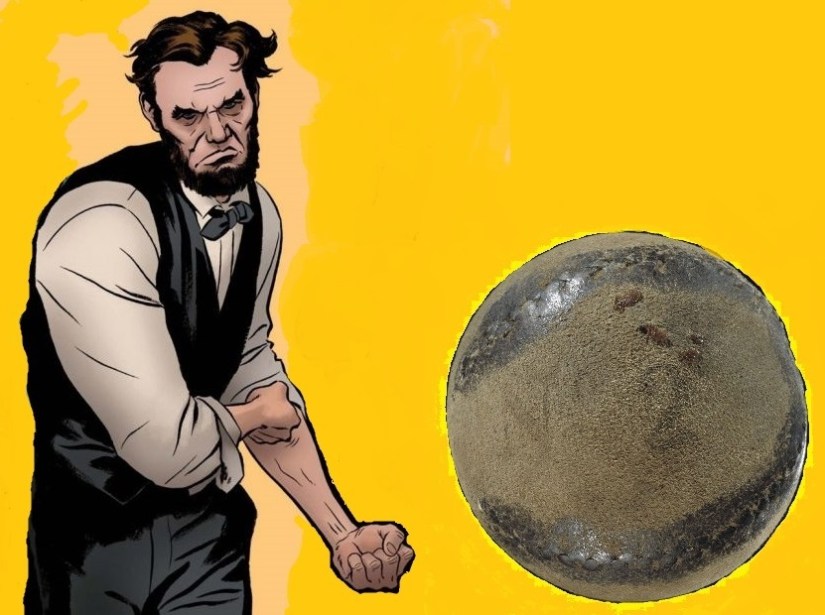
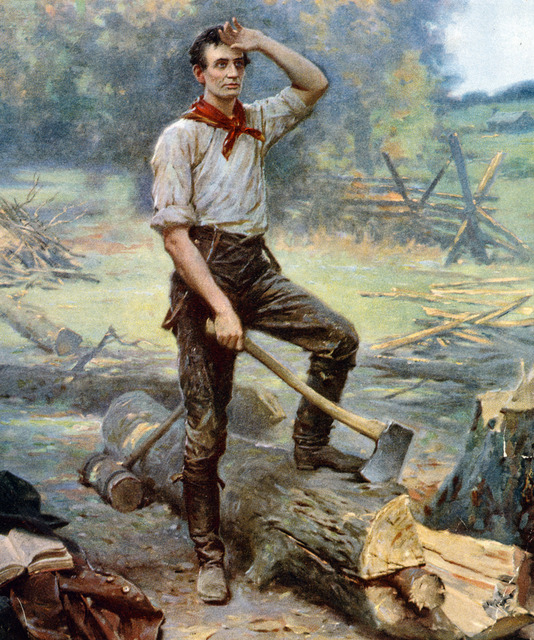 Likewise, you may have heard that he was a handball player, as have I, but details have always been hard to find. The game of handball was much better suited to Lincoln. At 6 feet 4 inches tall, his long legs and gangly arms served the rail splitter well. Muscles honed while wielding an axe as a youth were kept tight and toned as an adult. Lincoln milked his own cows and chopped his own wood even though he was a successful, affluent lawyer with little time to spare.
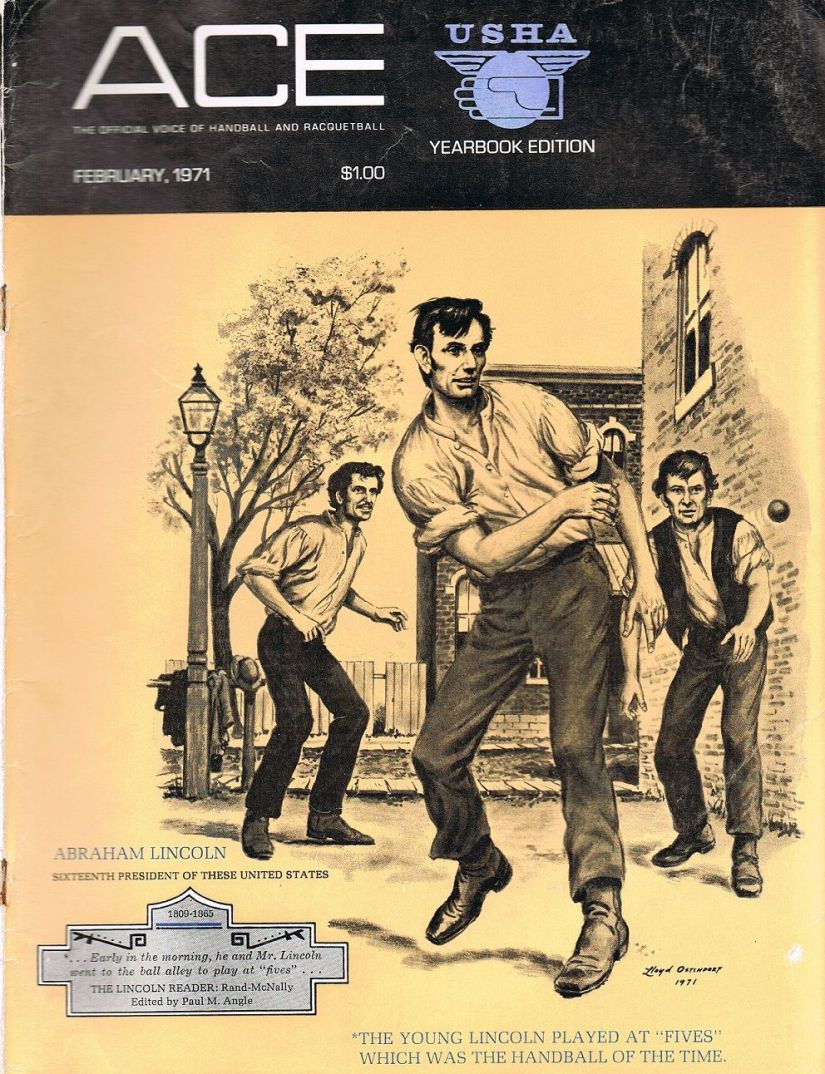 The term handball really didn’t exist in Lincoln’s day. It was called a “game of fives” by Abe and his contemporaries. When Mr. Lincoln went to town, he frequently joined with the boys in playing handball. In the Springfield version, players choose sides to square off against one another. The game is begun by one of the boys bouncing the ball against the wall of the Logan building. As it bounced back, and opponent strikes it in the same manner, so that the ball is kept going back and forth against the wall until someone misses the rebound. ‘Old Abe’ was often the winner, for his long arms and long legs served a good purpose in reaching and returning the ball from any angle his adversary could send it to the wall. The game required two, four or six players, spread equally on each side. The three players who lost paid 10 ¢ each, making 30 ¢ a game. So as you can imagine the games got pretty serious.
 Court clerk Thomas W.S. Kidd spoke of Mr. Lincoln’s love of the game: “In 1859, Zimri A. Enos, Esq., Hon. Chas. A. Keyes, E. L. Baker, Esq., then editor of the Journal, William A. Turney, Esq., Clerk of the Supreme Court, and a number of others, in connection with Mr. Lincoln, had the lot, then an open one, lying between what was known as the United States Court Building, on the northeast corner of the public square, and the building owned by our old friend, Mr. John Carmody, on the alley north of it, on Sixth street, enclosed with a high board fence, leaving a dead wall at either end. In this ‘alley’ could be found Mr. Lincoln, with the gentlemen named and others, as vigorously engaged in the sport as though life depended upon it. He would play until nearly exhausted and then take a seat on the rough board benches arranged along the sides for the accommodation of friends and the tired players.”
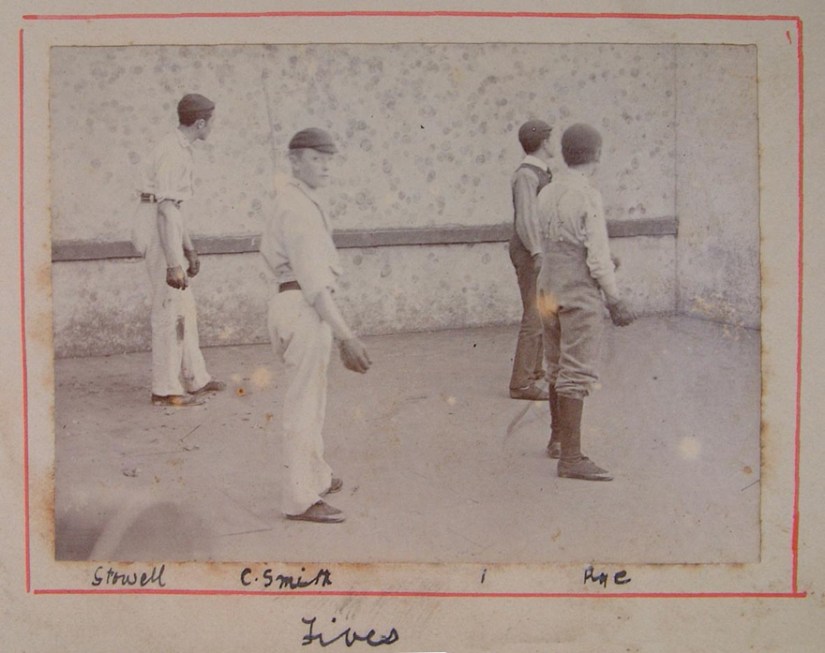 Lincoln’s friend, Dr. Preston H Bailhache, recalled a handball game played on a court built by Patrick Stanley in an ‘alley’ in the rear of his grocery in the Second Ward, which is still standing. “I have sat and laughed many happy hours away watching a game of ball between Lincoln on one side and Hon. Chas. A. Keyes on the other. Mr. Keyes is quite a short man, but muscular, wiry and active as a cat, while his now more distinguished antagonist, as all now know, was tall and a little awkward, but which with much practice and skill in the movement of the ball, together with his good judgment, gave him the greatest advantage. In a very hotly contested game, when both sides were ‘up a stump’ – a term used by the players to indicate an even game – and while the contestants were vigorously watching every movement, Mr. Lincoln and Mr. Turney collided with such force that it came very near preventing his nomination to the Presidency, and giving to Springfield a sensation by his death and burial. Both were badly hurt, but not so badly as to discourage either from being found in the ‘alley’ the next day.”
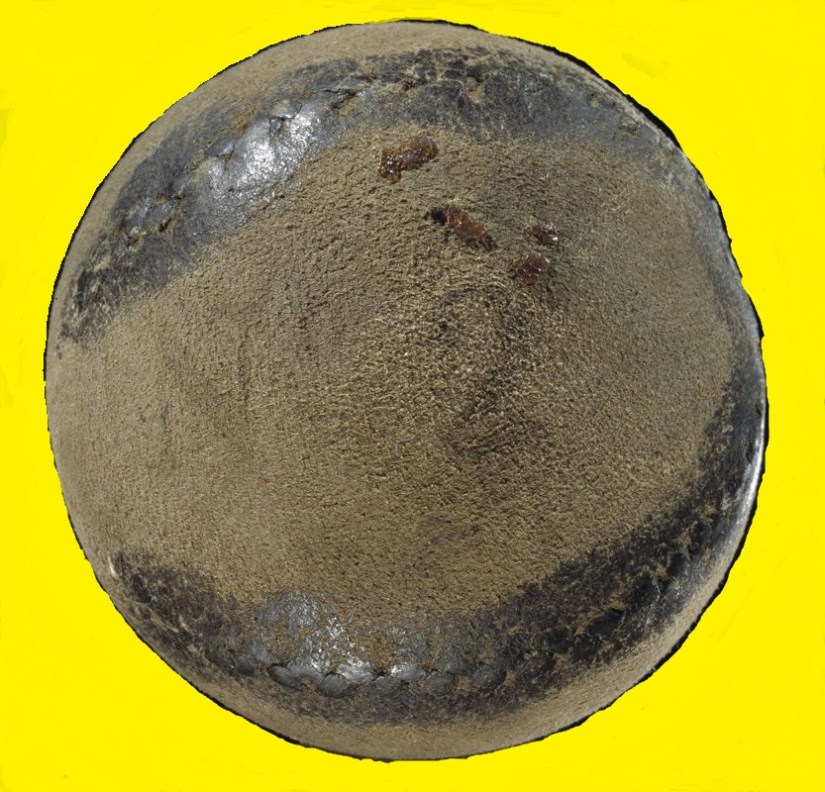 Another eyewitness was the unofficial gatekeeper of the Handball Court, William Donnelly, a nephew of John Carmody. Years later, Donnelly offered this account to a reporter, “I worked in the Carmody store and usually had charge of the ball court. I smoothed the wall and leveled the ground. I made the balls. Old stockings were rolled out and wound into balls and covered with buckskin. Mr. Lincoln was not a good player. He learned the game when he was too old. But he liked to play and did tolerably well. I remember when he was nominated as though it were yesterday. It was the last day of the convention and he was plainly nervous and restless.”
 John Carmody recalled another handball game: “An incident took place, during one of those games, which I have retained clearly in my memory. I had a nephew named Patrick Johnson who was very expert in the game. He struck the ball in such a manner that it hit Mr. Lincoln in the ear. I ran to sympathize with him and asked if he was hurt. He said he was not, and as he said it he reached both of his hands toward the sky. Straining my neck to look up into his face, for he was several inches taller than I was, I said to him, ‘Lincoln, if you are going to heaven, take us both.’”
 In October of 2004, the Smithsonian Institution displayed Abraham Lincoln’s handball as part of their exhibit “Sports: Breaking Records, Breaking Barriers.” It’s small (about the size of a tennis ball), dirty and well worn and really, really old. The ball has “No. 2” stamped on the side but it is unclear if the stamp was on the ball when Lincoln handled it or if it was stamped on the side for reference years later. It came from the Lincoln Home in Springfield, where Lincoln lived with his family from 1844 until 1861.
 Although Assassin John Wilkes Booth was not in the production, he would appear at the McVicker’s 4 times in different productions between 1862 & 1863 while Mr. Lincoln was in the White House. Ironically, the McVickers Theatre was the very first place where actor Harry Hawk began theater work as a call boy, or stagehand. Hawk was the actor on stage alone at the moment of Lincoln’s assassination and likely uttered the last words Mr. Lincoln ever heard. Who knew a well worn piece of leather sports equipment could have so many connections?
 Alan E. Hunter