

Original publish date: November 6, 2014
Republished: November 15, 2018
This past fall, I drove to a place called White’s Farm in Brookville,Indiana, not far from Cincinnati. Every Wednesday you’ll find over 100 flea market and antique dealers set-up in the hills and dales of an area once riddled with the remnants of Ancient Native American Indian Burial Mounds. “Brookville” is one of those shows that starts “flashlight early” with most dealers arriving around 3:00 a.m. and packed up and gone by 10:00 a.m. It was one of those “dew you can chew” kind of mornings replete with tiny droplets of water hanging so thick in the air that it seemed like you could catch them on your tongue like snowflakes.
While walking up a hillside my flashlight caught hold of a pile of old paper and photographs and I instinctively froze. After all, I’m a paper and photo guy and damp cool mornings are the bane of my flea market existence. Even from 15 feet away, I recognized a familiar face smiling out from the crowd. It was a hero from my past. It was Bill “Bojangles” Robinson.
 If you’re old enough to remember Black and White TV, the original Sammy Terry TV show, Timothy Church-mouse or Cowboy Bob and Janie, then you should remember Bill Robinson. If you’re over the age of 40, you can remember a time before cable TV. A time when television stations actually went off the air at night and didn’t come back on until farm shows or cartoons popped up the next morning. Back then, it was a badge of honor to say you made it up to watch the flag wave to the rhythm of the National Anthem.
After the weekend cartoon shows were over and before the sports programming began, well, that was the time for America’s sweetheart: Shirley Temple. And right there next to that darling little dancer, matching her step-for-step, was Bill “Bojangles” Robinson. And here, right here in the soggy farm fields of Brookville,Indiana, was a 5×7 World War II Era photo autographed by Bojangles himself! I sheepishly asked the vendor what the story was on the group of photographs and he replied, “Oh those all belonged to a famous Big Band leader from Cincinnati and those are all gangsters from Newport (Kentucky).”
I held up the Robinson photo in particular and the seller stated, “Oh he (the band leader) was great friends with Bill Robinson.” I asked the dealer what he wanted for the photo and he said he was trying to sell the whole collection as one lot. He then added, “I have a whole suitcase of this stuff in my truck.” Oh really? Of course I asked to see the suitcase and sure enough, it was crammed full of wonderful things. I negotiated a price, more than I expected to pay, but less than the value of my childhood memories. In instances like this, you lead with your heart, dig for your wallet and hope your wife will understand.
 For the sake of full disclosure, I must admit that I once owned a photo signed by Bill Robinson. Bojangles signed it for an Indiana Mayor whose name now escapes me. I sold it to a collector in the late 1980s for $ 100. But I rationalized the sale of the relic because the photo literally looked like it had been dipped in water and $ 100 might as well have been $ 1,000 to me and my young bride. By finding this photo on a dew soaked Southern Indian hillside, I felt the pendulum had swung back my way.
I took the suitcase home and eagerly, but carefully, began to disassemble the contents. As my fellow collectors will attest, it doesn’t get much better than this. Suitcases full of unpicked goodies fill the slumber-time dreams of every collector, regardless of the subject one desires to collect. This suitcase did not disappoint.
Turns out that this grouping represented the personal memorabilia of 1930-40s Era Queen City Big Band Leader, musician and composer “Deke” Moffitt (1906-1976). During his career, Moffitt performed with Red Skelton, Bill (Bojangles) Robinson, Perry Como, Dean Martin and Jerry Lewis, Martha Raye, Betty Grable and the Three Stooges. After his touring career was over, Deke became music director for a Cincinnati theatre and later a high school music teacher.

Among the collection were contracts, sheet music and records of songs Deke had composed and letters / correspondence from Deke’s years on the road, many from famous musicians. There was even a photo of Deke clowning around outside of what looked like a theatre backstage door with the Three Stooges (Larry, Moe & Shemp). But what caught my interest were the few items from Bill “Bojangles” Robinson. Along with the photo I mentioned previously, there was a handwritten note to Deke and a telegram from Bill. I’ll tell you what else was in there later on in the article.
First, I want to try and explain why Bill “Bojangles” Robinson matters to me and more importantly, why he should matter to you. The predominate reason for my admiration is simple: I can’t dance. For the same reason I guffaw at the Three Stooges, giggle at Groucho Marx and crack up at the Little Rascals, I can’t help but stop and gaze in wonder whenever I see the masters dance. Fred Astaire, Gene Kelly, Gregory Hines, John Travolta: they all stand on the shoulders of Bill Robinson. Except none of the above were burdened with the constraints of Jim Crow America.
 Friends say there were three certainties about Bill Robinson: he loved to eat vanilla ice cream, gamble with dice or cards, and dancing was his life. At the time of his divorce his wife Fannie accused him of being a danceaholic-a man willing to sacrifice everything to dance. While his personal life was full of contradictions, his peers and historians agree he was one of the greatest American dancers of all time.
Bill “Bojangles” Robinson was born Luther Robinson in Richmond, Virginia, on May 25, 1878. He claimed he did not like the name Luther, so he traded names with his younger brother Bill. Apparently his little brother didn’t like the name either so he changed his name to “Percy” and later became famous on his own as a dancer and musician. Although orphaned and reared by a grandmother who had been a slave, Bill Robinson would become the best known and highest paid African American entertainer in the first half of the twentieth century. Robinson began hoofing in beer gardens at age 6 and quit school the next year to begin work as a professional dancer. His career started in minstrel shows then moved to vaudeville, Broadway, the recording industry, Hollywood movies, radio, and television. He died 65 years ago this week on November 25, 1949.
The name “Bojangles” mirrors it’s enigmatic namesake. Some say the name referred to his happy-go-lucky ebullience while others claim the name refers to Bill’s fiery, argumentative disposition. Today, the word Bojangles refers to to a style of percussive, rhythmic tap-dance originated by African Americans. The word is southern in origin and means “mischief maker.” The nickname was appropriate for Robinson, whose popularity transcended his race, despite a personal life chronicled by newspapers and magazines as a series of misadventures and court appearances.
While Robinson didn’t invent tap dancing, he was the artist chiefly responsible for getting tap dance “up on its toes” by dancing upright and swinging. Before Robinson tap was most often a stoop shouldered, flat-footed shuffle style, sometimes known as “sand dancing'”. Robinson performed on the balls of his feet with a shuffle-tap style that allowed more improvisation. This new style got him noticed and eventually made him a legend. Bojangles’ unique sound came from using wooden taps and his direct claim to fame would be the creation of his famous “stair dance,” which involved tapping up and down a flight of stairs both backwards and forwards. A style he unsuccessfully attempted to patent.
 Following the demise of vaudeville, Broadway beckoned with “Blackbirds of 1928,” an all-black revue that would prominently feature Bill and other black musical talents. Soon, he was headlining with Cab Calloway at the famous Cotton Club in Harlem. Robinson is also credited with having introduced a new word, copacetic, into popular culture, via his repeated use of it in vaudeville and radio appearances. Robinson was a true pioneer in his field with many “firsts” to his credit.
A popular figure in both the black and white entertainment worlds of his era, he is best remembered today for his dancing with Shirley Temple in a series of films during the 1930s. Although a trailblazer and acknowledged pioneer, Robinson battled inner demons that belied his demeanor as a happy and easygoing character on the big screen. On one hand, he had to deal with discrimination and racial injustice by whites and on the other hand, he was labeled as the quintessential “Uncle Tom” by his own people. Decades of dealing with this untenable double standard turned Bojangles into a split personality capable of unwavering loyalty and kindness to some while turning him into an angry man, frustrated by his second-class treatment in society who was known to flash a gun to others. Measured by today’s standards and celebrity shenanigans, Robinson’s behavior would be considered tame.
Next week, I’ll continue the story of this man and tell you what else I found in that suitcase.
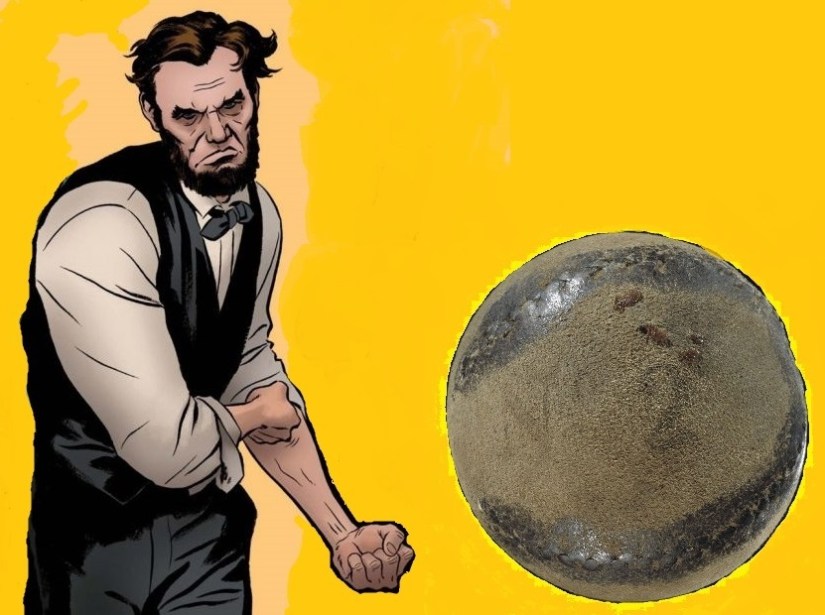
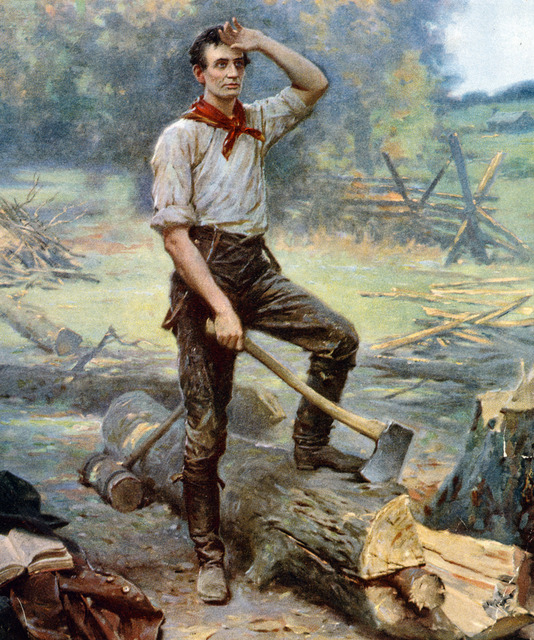 Likewise, you may have heard that he was a handball player, as have I, but details have always been hard to find. The game of handball was much better suited to Lincoln. At 6 feet 4 inches tall, his long legs and gangly arms served the rail splitter well. Muscles honed while wielding an axe as a youth were kept tight and toned as an adult. Lincoln milked his own cows and chopped his own wood even though he was a successful, affluent lawyer with little time to spare.
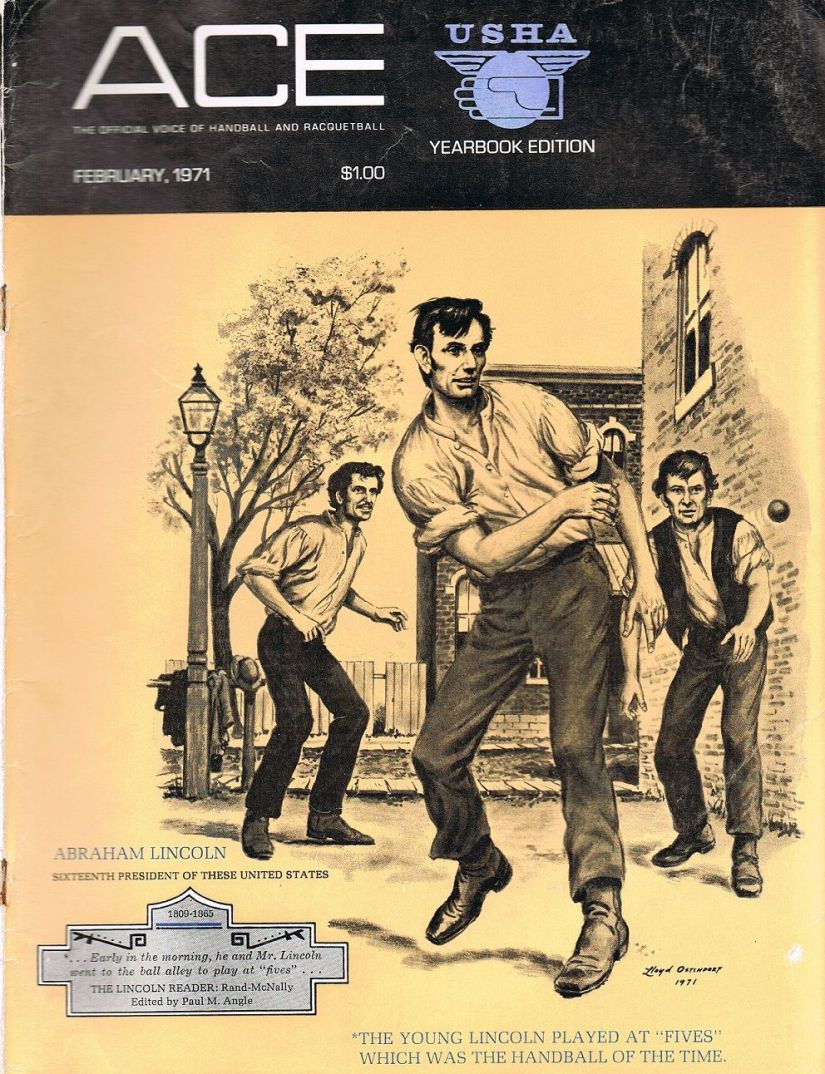 The term handball really didn’t exist in Lincoln’s day. It was called a “game of fives” by Abe and his contemporaries. When Mr. Lincoln went to town, he frequently joined with the boys in playing handball. In the Springfield version, players choose sides to square off against one another. The game is begun by one of the boys bouncing the ball against the wall of the Logan building. As it bounced back, and opponent strikes it in the same manner, so that the ball is kept going back and forth against the wall until someone misses the rebound. ‘Old Abe’ was often the winner, for his long arms and long legs served a good purpose in reaching and returning the ball from any angle his adversary could send it to the wall. The game required two, four or six players, spread equally on each side. The three players who lost paid 10 ¢ each, making 30 ¢ a game. So as you can imagine the games got pretty serious.
 Court clerk Thomas W.S. Kidd spoke of Mr. Lincoln’s love of the game: “In 1859, Zimri A. Enos, Esq., Hon. Chas. A. Keyes, E. L. Baker, Esq., then editor of the Journal, William A. Turney, Esq., Clerk of the Supreme Court, and a number of others, in connection with Mr. Lincoln, had the lot, then an open one, lying between what was known as the United States Court Building, on the northeast corner of the public square, and the building owned by our old friend, Mr. John Carmody, on the alley north of it, on Sixth street, enclosed with a high board fence, leaving a dead wall at either end. In this ‘alley’ could be found Mr. Lincoln, with the gentlemen named and others, as vigorously engaged in the sport as though life depended upon it. He would play until nearly exhausted and then take a seat on the rough board benches arranged along the sides for the accommodation of friends and the tired players.”
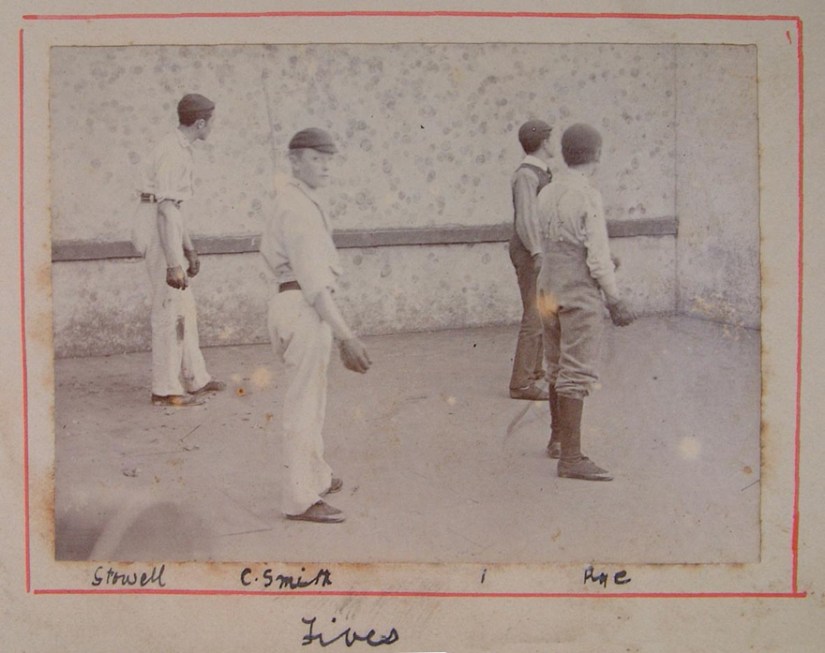 Lincoln’s friend, Dr. Preston H Bailhache, recalled a handball game played on a court built by Patrick Stanley in an ‘alley’ in the rear of his grocery in the Second Ward, which is still standing. “I have sat and laughed many happy hours away watching a game of ball between Lincoln on one side and Hon. Chas. A. Keyes on the other. Mr. Keyes is quite a short man, but muscular, wiry and active as a cat, while his now more distinguished antagonist, as all now know, was tall and a little awkward, but which with much practice and skill in the movement of the ball, together with his good judgment, gave him the greatest advantage. In a very hotly contested game, when both sides were ‘up a stump’ – a term used by the players to indicate an even game – and while the contestants were vigorously watching every movement, Mr. Lincoln and Mr. Turney collided with such force that it came very near preventing his nomination to the Presidency, and giving to Springfield a sensation by his death and burial. Both were badly hurt, but not so badly as to discourage either from being found in the ‘alley’ the next day.”
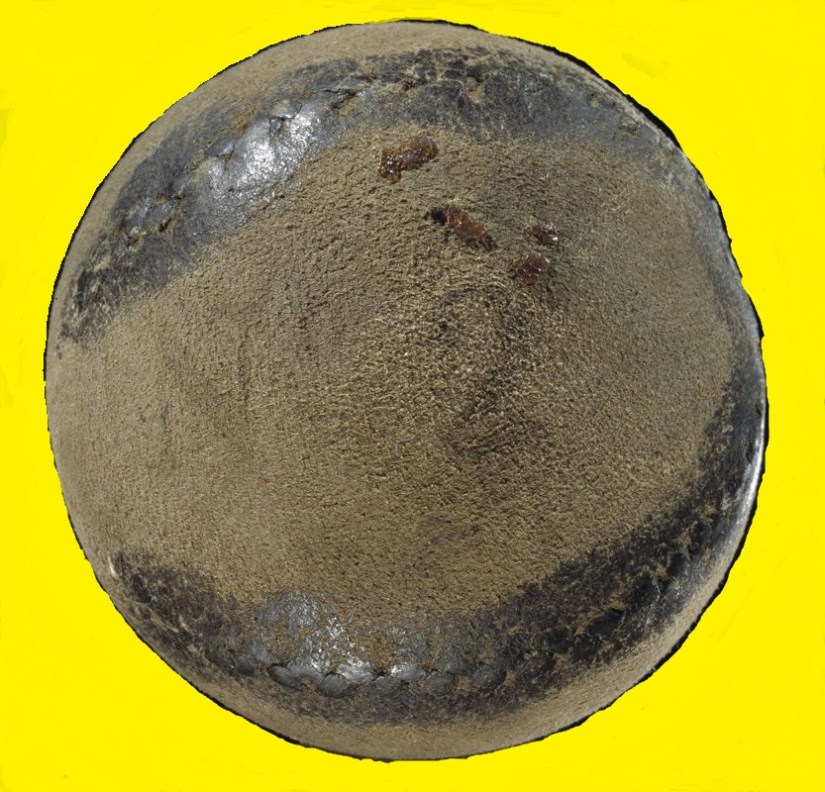 Another eyewitness was the unofficial gatekeeper of the Handball Court, William Donnelly, a nephew of John Carmody. Years later, Donnelly offered this account to a reporter, “I worked in the Carmody store and usually had charge of the ball court. I smoothed the wall and leveled the ground. I made the balls. Old stockings were rolled out and wound into balls and covered with buckskin. Mr. Lincoln was not a good player. He learned the game when he was too old. But he liked to play and did tolerably well. I remember when he was nominated as though it were yesterday. It was the last day of the convention and he was plainly nervous and restless.”
 John Carmody recalled another handball game: “An incident took place, during one of those games, which I have retained clearly in my memory. I had a nephew named Patrick Johnson who was very expert in the game. He struck the ball in such a manner that it hit Mr. Lincoln in the ear. I ran to sympathize with him and asked if he was hurt. He said he was not, and as he said it he reached both of his hands toward the sky. Straining my neck to look up into his face, for he was several inches taller than I was, I said to him, ‘Lincoln, if you are going to heaven, take us both.’”
 In October of 2004, the Smithsonian Institution displayed Abraham Lincoln’s handball as part of their exhibit “Sports: Breaking Records, Breaking Barriers.” It’s small (about the size of a tennis ball), dirty and well worn and really, really old. The ball has “No. 2” stamped on the side but it is unclear if the stamp was on the ball when Lincoln handled it or if it was stamped on the side for reference years later. It came from the Lincoln Home in Springfield, where Lincoln lived with his family from 1844 until 1861.
 Although Assassin John Wilkes Booth was not in the production, he would appear at the McVicker’s 4 times in different productions between 1862 & 1863 while Mr. Lincoln was in the White House. Ironically, the McVickers Theatre was the very first place where actor Harry Hawk began theater work as a call boy, or stagehand. Hawk was the actor on stage alone at the moment of Lincoln’s assassination and likely uttered the last words Mr. Lincoln ever heard. Who knew a well worn piece of leather sports equipment could have so many connections?
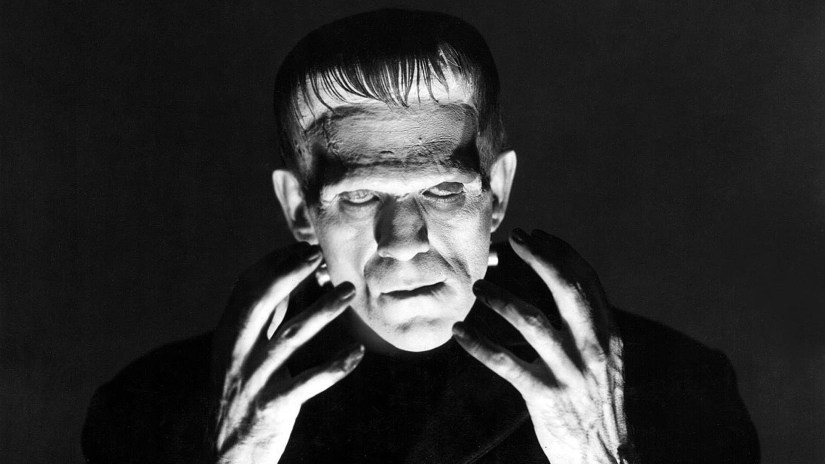
 What better time to introduce two of the world’s most popular monsters? Frankenstein and Dracula were born on the same night in the same weekend in 1816. They were brought to life by Mary Shelley and Lord Byron during a contest to see who could create the scariest monster. The weekend was wet and stormy and Lord Byron suggested the reading of ghost stories to pass away the dreary weather. Sitting around a log fire at the Villa Diodati on the shores of Lake Geneva, the company of friends amused themselves by reading German ghost stories translated into French from the book Fantasmagoriana. The members of the party were Lord Byron and his mistress Claire Claremont, his doctor John Polidori, Percy Bysshe and Mary Shelley. Lord Byron is known for his poetry, mostly Don Juan. After reading a few stories, Byron suggested that each member of their party write their own story of horror.
 Unable to think of a story, young Mary became anxious, in the introduction to her book she recalled: “Have you thought of a story? I was asked each morning, and each morning I was forced to reply with a mortifying negative.” During one evening in the middle of summer, the discussions turned to the nature of the principle of life. “Perhaps a corpse would be re-animated”, Mary noted, “galvanism had given token of such things”. It was after midnight before they retired, and unable to sleep, she became possessed by her imagination as she beheld the grim terrors of her “waking dream.” In September 2011, astronomer Donald Olson, after visiting the Lake Geneva villa and inspecting data about the motion of the moon and stars, concluded that her “waking dream” took place “between 2 a.m. and 3 a.m.” on June 16, 1816, several days after the initial idea by Lord Byron that they each write a ghost story.
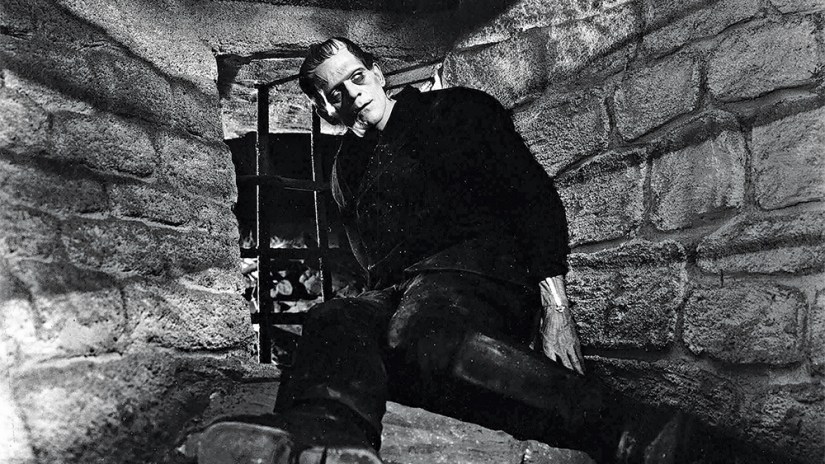 When “Frankenstein” was published it became an immediate sensation. Mary Shelley crafted her book so that readers’ sympathies would lie not only with Frankenstein, whose suffering is dreadful, but also with the creature, whose suffering is worse. Shelley skillfully directs her readers’ sympathy, page by page, paragraph by paragraph, sometimes even line by line, from Frankenstein to the creature. Shelley deftly navigates the creature’s vicious murders, first of Frankenstein’s little brother, then of his best friend, and, finally, of his bride. In 1824, one critic wrote, “The justice is indisputably on his side and his sufferings are, to me, touching to the last degree.”
 A century later, a lurching, grunting Boris Karloff defined the most widely accepted version of the creature in Universal Pictures’s 1931 production of “Frankenstein.” Karloff’s monster-portrayed as prodigiously eloquent, learned, and persuasive in the novel-was no longer merely nameless but all but speechless, too. “Frankenstein” has spawned many different depictions in the two centuries since its publication. For its bicentennial, the original, 1818 edition has been reissued in paperback form by Penguin Classics as “The New Annotated Frankenstein.”
 This coming Saturday, October 20th at 2 PM, several of those famous friends will be here in Irvington at the Irving theater to share their talent with our community in a program I have called, “Whispers from the Grave. Testimony of Irvington’s Most Famous Crimes.” Over the past decade and a half I have gathered testimony, witness accounts, personal statements and personality sketches of the characters, both good and bad, from the stories I share on the tours. This Saturday, local celebrities, journalists and members of the media will lend their talents to the voices of these characters. Much of this spoken word performance will offer accounts that have not been heard for over a century. This testimony, told in its entirety using the words of the subjects themselves, is always poignant, sometimes shocking and often scandalous.
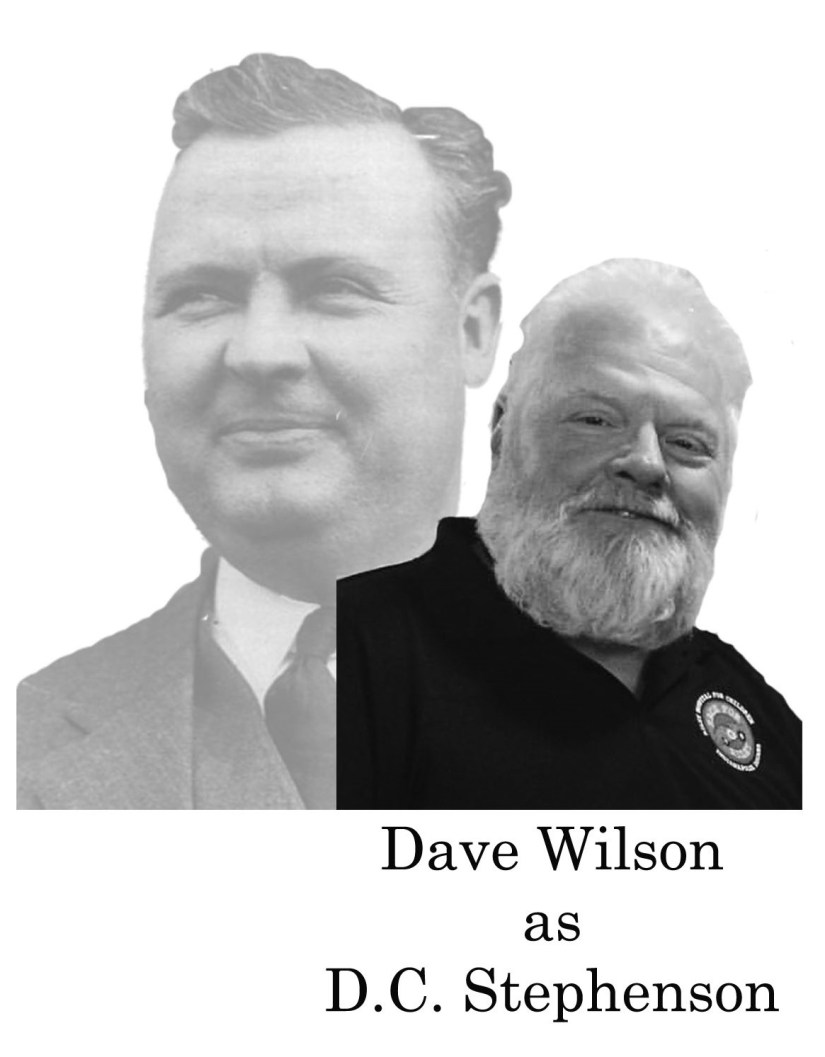 Joining us Saturday will be long time Q 95 star and stand up comic Dave “the King” Wilson reading the words of DC Stephenson. David Curtis Stephenson was the Grand Dragon of the Indiana Ku Klux Klan who reigned supreme here in central Indiana during The Roaring 20s. Stephenson controlled Indiana politics from the governor’s office to the mayor’s office with Klan money and influence from his University Avenue home here in Irvington. Gathering testimony and statements from Stephenson’s made all the more harder by the fact that after his 1925 trial for murder concluded, the official court papers mysteriously disappeared.
 2 – time Emmy award-winning former WTHR on air personality & meteorologist Nicole Misencik who will be voicing Madge Oberholtzer. Tragically, Madge was the undeserving victim of DC Stephenson’s crime in the spring of 1925. Madge was an Irvingtonian and former student at Butler College whose death at the hands of Stephenson brought down the Ku Klux Klan, which was the most powerful organization in the country at the time. Madge’s testimony was so graphically detailed that when it was read aloud in open court in Noblesville Indiana, women fainted and grown men got up and left the room. Nicole will recount Madge’s 9 – page deathbed declaration and its entirety for the first time in public and nearly a century.
 Former WTHR reporter Brandon Kline will be voicing Pinkerton detective Frank Geyer, the man who brought America’s first serial killer to justice. Brandon will wear the hero cape by voicing this legendary Pinkerton agent who is dogged determination alone solved Irvington’s first murder, that of 10-year-old Howard Pitezel. Brandon’s hero duty will be doubled when he also voices Irvingtonian lawyer Asa J Smith who recorded Madge’s deathbed declaration in what promises to be a most memorable exchange with his wife Nicole.
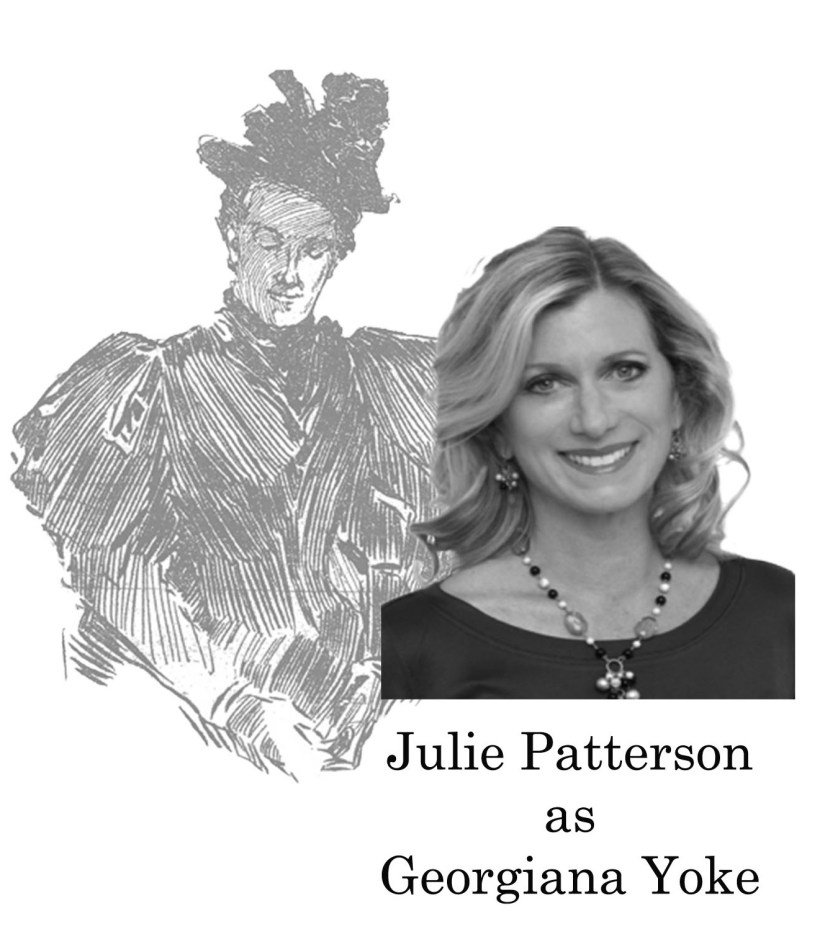 Boomer TV personality, longtime WZPL radio host and former WISH – TV alumni Julie Patterson will be voicing the last wife of HH Holmes, Georgiana Yoke. Ms. Yoke, a native of Franklin Indiana, is easily the most unknown character in the presentation. Georgiana’s family has deep connections to Indianapolis’east side at both Garfield Park and Holliday Park. Georgiana narrowly escaped death at the hands of her husband and, after his death by hanging, could not escape the cloud of suspicion that hung over her in Indianapolis after her husband’s crimes were revealed. Julie’s interpretation of Georgiana will also include her court testimony, some of which was delivered by her husband HH Holmes while acting as his own counsel.
 Ed Wenck, long time local radio host, journalist, author and on-air television personality, will be voicing America’s first serial killer HH Holmes. Allegedly responsible for over 200 murders, Holmes admitted to killing 27. The arch fiend came to Irvington in October 1894 on the heels of the 1893 Chicago world’s fair. His crimes are numerous, gruesome and unspeakable. Ed will voice America’s first serial killer using Holmes’ own words which are guaranteed to make your skin crawl.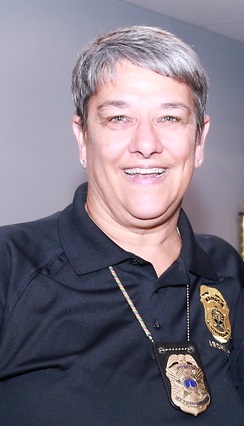


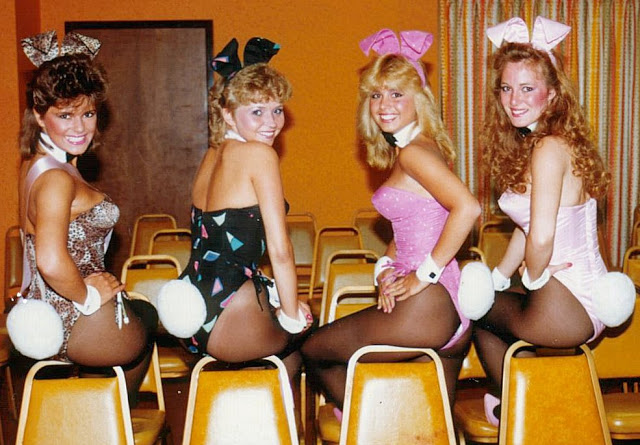
 The Chicago club opened on a bitterly cold day in Chicago, yet lines of eager prospective members stretched around the block, warmed by ideas of what was to be found inside. Membership was available to anyone willing to purchase a key – $50 for residents and $25 for out-of-towners. The club “key” itself was metal and topped off with a rabbit head, later replaced by a gold plastic credit card to carry in a wallet. Hefner was present at the grand opening until the club closed at 4am. Keyholders gawked at ladies in their colorful Playboy Bunny outfits and dined on steaks and salads (no fancy hors d’oeuvres or desserts here), drank cocktails and bought packs of cigarettes and Playboy logo lighters. Most club items were available for the standard price of $1.50 per item (an exorbitant price at the time, especially for drinks and cigarettes). In the club’s first year, entertainment included the most popular stars of the day, including Mel Torme, Barbara Streisand and a 19-year-old Aretha Franklin.
 The Bunnies themselves were instructed, in a 44-page “Bunny Manual”, that they could not date customers, give out their phone numbers, or meet their boyfriends or husbands within two blocks of the club. If they did, they would face the tortuous penalty of being banned from the “bunny hutch.” There were different types of Bunnies, including the Door Bunny, Cigarette Bunny, Floor Bunny, Playmate Bunny and the Jet Bunnies (specially selected to serve on the Playboy “Big Bunny” Jet). To become a Bunny, women first had to audition. Prospective “Kits” (short for “Kitten Rabbits”) underwent thorough and strict training before officially becoming a Bunny. Bunnies were required to be able to identify 143 brands of liquor and know how to garnish 20 cocktail variations. Customers were also not allowed to touch the Bunnies, and demerits were given if a Bunny’s appearance was not properly organized.

 Most readers are aware of feminist Gloria Steinem’s crusade to expose the sexist treatment of Playboy Bunnies in her 1983 book “Outrageous Acts and Everyday Rebellions.” The article featured a photo of Steinem in Bunny uniform and detailed how women were treated at those clubs. The article was first published in 1963 in Show magazine as “A Bunny’s Tale”. But are there any other famous former Bunnies out there? Well, yes, the “hutch” is littered with the names of young, struggling Hollywood actresses. Some are familiar: Lauren Hutton, Sherilyn Fenn (Twin Peaks TV star), Barbara Bosson (Hill Street Blues TV star), Patricia Quinn (Magenta from Rocky Horror), Kathryn Leigh Scott (Dark Shadows TV star) and many others. Jon Bon Jovi’s mom, Carol Sharkey, was a Bunny as was Kimba Wood, Bill Clinton’s nominee for Attorney General in 1993. At least 32 former Bunnies were also Playboy Magazine Centerfold “Playmates.” Rock stars Dale Bozzio (Missing Persons and Frank Zappa) and Blondie’s Debbie Harry were also Bunnies. Harry once famously remarked, “The girls there were part of the entertainment; part of the sort of mystique, the excitement, the naughtiness of it. But on the inside of that job, the girls were treated very, very well. There was a lot of benefits: health benefits, job security, good salary, good money. It was a very sought-after kind of job.”
 The Chicago Playboy Club enjoyed a long and successful quarter century run, but closed in 1986. Today, the “One Magnificent Mile Building” has replaced the Chicago Playboy Club, and in 2000, that stretch of Walton was given the honorary name of “Hugh Hefner Way.” The original magazine headquarters was located nearby as was the original Playboy Mansion at 1340 N. State St., both of which have also moved on. Sadly, nothing has quite replaced the Playboy Club in Chicago. Hugh Hefner died at his home in Holmby Hills, Los Angeles, California, on September 27, 2017, at the age of 91. The cause was sepsis brought on by an E. coli infection. He is interred at Westwood Memorial Park in Los Angeles, in the $75,000 crypt beside Marilyn Monroe. “Spending eternity next to Marilyn is an opportunity too sweet to pass up.”

