

Original publish date: August 28, 2019
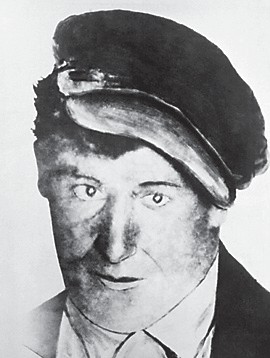
Floyd Collins is likely one of the most famous people you’ve never heard of. But, if you have ever taken a vacation down to Central Kentucky and visited Mammoth Cave, you’ve walked in his footsteps. Although Collins is a local legend, you wouldn’t know it if you asked many of the rangers on duty for the National Park Service there. Depending on which ranger you ask, Floyd Collins is either a rascal or a miscreant even though he is the most famous spelunker in the history of the world. During the roaring 20s, Collins’ story was only dislodged from the headlines by aviator Charles Lindbergh. There was a popular song written about his ordeal underground and President Calvin Coolidge himself followed Floyd’s story daily from the oval office in the White House.
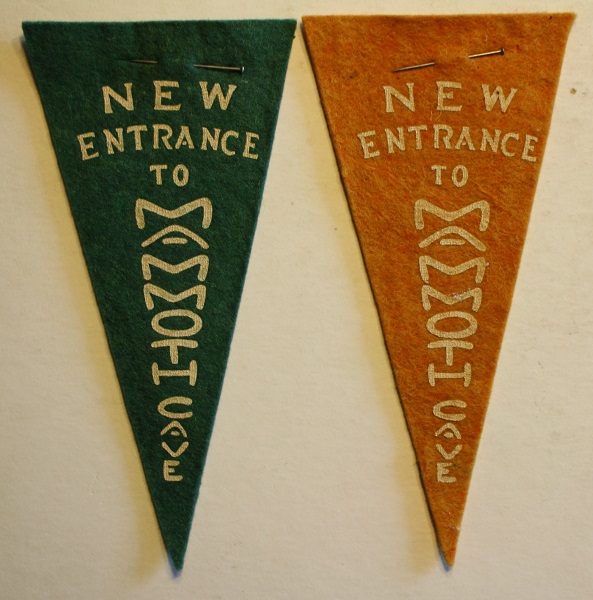
Since the early 1800s, Mammoth Cave has been THE tourist trap of Central Kentucky. The world’s longest cave, spawned a railroad, innumerable hotels, countless souvenir shops and sourced fortunes for many enterprising Kentuckians. When Louisville businessman G. D. Morrison found a new entrance to Mammoth Cave in the early 1920s, it set off a “Cave War” that raged for decades. After Morrison broke through the Earth’s crust to reveal his new entrance to Mammoth Cave, he strung some electric lights inside, built a hotel outside, and opened for business. He called it the “New Entrance to Mammoth Cave” and promoted it in his literature as “a miniature Atlantic City in the heart of Kentucky.” He told visiting reporters that he would build a twenty-thousand-dollar elevator in his hotel lobby so that his guests could comfortably descend to the caverns below.
Morrison’s announcement was followed by a group of Chicago investors who quickly announced that they had purchased three hundred acres of land three miles north of the cave. They planned to construct a private eighteen-hole golf course they would name the “Blue Grass Country Club”. Their intended membership was to be made up of Midwestern businessmen who couldn’t be bothered to travel all the way to Florida for a golf vacation. That is until they discovered that the land was so leached by ground water that any one of their greens could turn into a sinkhole overnight. The cave business got tougher and tougher. One enterprising promoter turned his truck into a billboard, driving it up and down to distraction. Angry competitors put a stop to this by burning it. Floyd Collins, a caver since the age of six, watched patiently while these carpetbaggers battled for position.
Floyd was one of nine children, raised in a log cabin. His father, Lee, was a poor farmer who did a little trapping and kept the family alive by selling eggs to Mammoth Cave hotels. Floyd and his brothers supplemented the family income by cutting timber into railroad ties for the Louisville and Nashville railroad and rafting them down the Green River. In 1917, Floyd discovered his own money pit, which he called “White Crystal Cave.” The cave, although sensational, was only mildly successful due to its location on the tail end of the cave route. Like G.D. Morrison before him, Floyd was determined to find his own “New Entrance to Mammoth Cave.” However, Floyd’s entrance would be at the front of the road.

In mid-January of 1925, Floyd signed a contract with a local landowner to explore a rock overhang called Sand Cave that Collins had known about since childhood. On Friday, January 30, Collins entered the cave. He crawled on his belly down into the dark, narrow passage. He slid fifteen feet straight down, then twisted through a hundred feet of 30 degree slopes before dropping eight feet and crawling another fifty feet more between loose rock walls before reaching a small cavern. Here he gazed down into a fifty-foot pit, twenty-five feet long and ten feet wide. He descended searching for a passage, but it was closed. He scaled the walls and headed back the way he had come. That is until he kicked loose a rock that trapped his foot at the ankle. Floyd was now trapped 125 feet underground, in a coffin like space eight inches high and twelve feet long. The temperature was 16 degrees. He was face up looking in the direction from which he’d come, but there was a seven-ton boulder hopelessly pinning his left foot in the crevice.

He lay in mud and black night, with water dripping on his head. Floyd spent that first night alone; terrified, screaming and praying. On Saturday morning, after Floyd had failed to return home, his brother arrived and found him, but was unable to free him. A crowd of men came with blowtorches to heat the rock armed with chisels and hammers to break it. They worked all day to no avail. On Sunday, the story hit the Louisville Courier. Homer Collins told a reporter that he’d spent that night in the tunnel with his brother. “Floyd told me that last night he dreamed of white angels riding in white chariots drawn by white horses … he saw chicken sandwiches [and] a red hot stove … I heard him praying … ‘Oh Lord help me. I’m going home to the angels.’” Homer offered five hundred dollars to any surgeon who could crawl into the passage and cut his brother’s leg off.
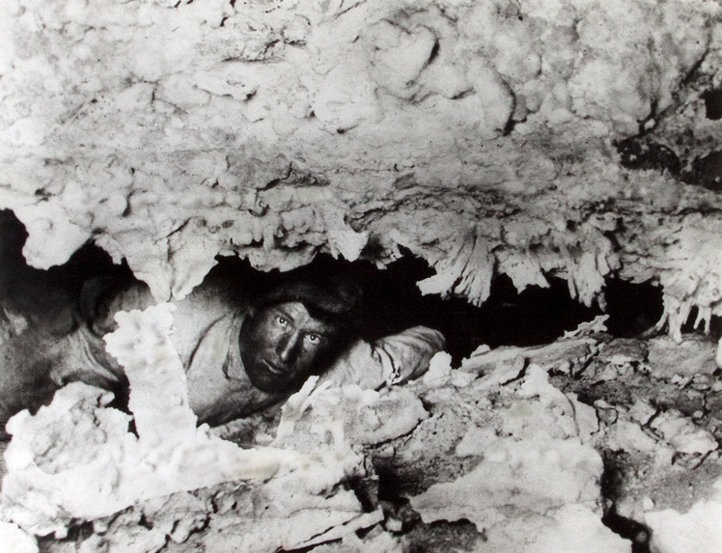
On Monday, February 2, the Herald mistakenly reported that he’d been freed. When it was discovered that the caver was still trapped, more people came, and soon he became a media sensation. Well-meaning Kentuckians arrived from nearby counties and tried to crawl down the tunnel, but only caused more rocks and pebbles to fall in around Floyd. Hundreds of men stood around the hole, drinking whiskey and telling one another what to do. Volunteers crawled into the crevice carrying blankets and gloves, thermoses of coffee, bottles of milk, and cans of soup. Some volunteers made it only halfway down before becoming frightened, ditching their supplies into the nearest crevice, only to emerge to tell everyone how grateful Floyd had been and exactly what he’d said.
The rescue operation to save Collins became headline news all over the country. Floyd’s saga became one of the first major news stories to be reported using the new technology of broadcast radio. The rescue attempt grew to become the third-biggest media event between the world wars, behind only the transatlantic flight of Charles Lindbergh and the Lindbergh baby kidnapping. Soon the Sand Cave Valley was flooded with telegrams of advice. A doctor from Des Moines said he’d amputate Floyd’s leg if they sent an airplane to get him; a man from Detroit suggested a welding torch; another from Kansas City insisted they try an electric drill. The Louisville and Nashville dispatched a special train from Louisville to carry a pneumatic drill and a crew of stonemasons from a monument company. A fire-department lieutenant named Burdon insisted that they strap a harness to Floyd, connect it to an automatic winch, and try to pull him out like a worm from a hole.
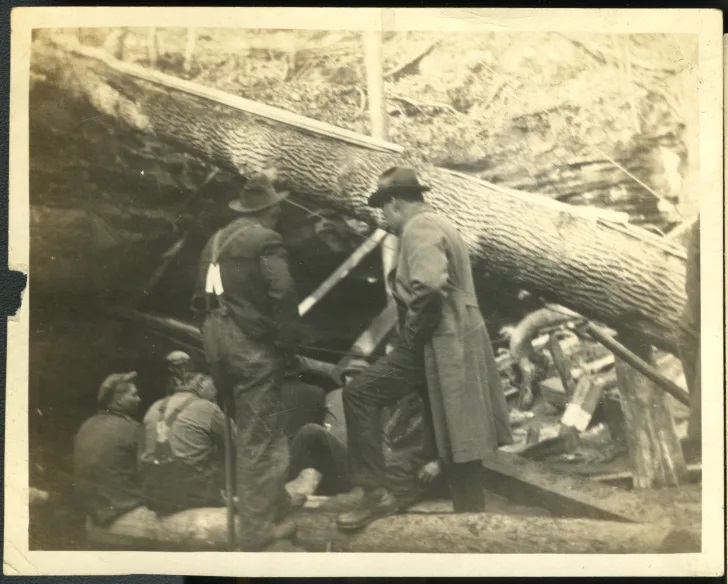
Floyd’s ex-business partner Johnny Gerald became incensed and chased away the interlopers. At midnight on Monday he crawled in, accompanied by a college president from Bowling Green and an ex-army lieutenant who taught mathematics, and together they cleared rock from Floyd’s body, freed his hands, widened the passage, and fed him coffee, milk, and grape juice. Floyd told Johnny that he’d rather have him do the rescuing than anyone else in the world. The college president crawled out and announced that he was going to have his basketball team come to the rescue. The stonemasons from Louisville left the next morning. They said the rescue camp was a cross between a county fair and a circus. Five hundred men crowded around in front of the cave. People complained about pickpockets and tire thieves. Cave City officials asked the governor to send in the national-guard. Over a period of 17 days, over 10,000 people crowded into the fields surrounding Sand Cave. Many of the local families padded their meager bank accounts by putting up out-of-towners, selling food and moonshine.

On Wednesday morning Johnny led ten men into the hole and claimed that they had chipped away at the boulder that held Floyd’s foot until Floyd told him he was free. Then, as the crew headed out to get a piece of canvas to drag Floyd out, 50 feet above the trapped spelunker the tunnel collapsed. Five days of digging had loosened the roof and weakened the walls of the tunnel. This, combined with the heat of the work, thawed the frozen mud holding the rocks in place once again trapping Floyd’s foot. By now, Floyd was delirious and dying of pneumonia. A young miner from Central City named Maddox gave him the last food he ever ate. He mumbled and whispered: “Maddox, get me out … why don’t you take me out … kiss me good-bye, I’m going.” Maddox saw purple circles around his eyes and two front teeth made of gold. He kissed Floyd good-bye.

Kentucky Governor Wm. J. Fields ordered two detachments of soldiers to Cave City. The Red Cross set up a field hospital on the slope overlooking the camp, and the soldiers strung barbed wire in a perimeter fifty yards beyond the rock overhang. Outside the wire, vendors sold hot dogs, sandwiches, and coffee to curious tourists. Inside the wire the experts agreed that the tunnel had become too dangerous and that the safest way to rescue Floyd was to dig a shaft until it reached the boulder that pinned him. None of them believed that they’d find him alive, and most of them thought he was dead already.
During this period of non-communication, the circus continued. Reporters struggled to “dig up” news. They reported that Floyd’s faithful dog Shep hadn’t eaten or slept for eight days; that Floyd had once gone all the way to Louisville to buy his sweetheart, Alma Clark, a box of chocolate-covered cherries; that Floyd had done it all for publicity. Floyd had escaped through a secret tunnel, or worse, he had never been there in the first place. Rumors persisted that Floyd had been murdered by his partner Johnny Gerald who had made a secret deal with Floyd’s father to kill him and take over Crystal Cave. A lady from Chicago claimed that she knew Floyd was alive because her coffee grounds had settled in a heart shape.

The Louisville Automobile Club issued directions on how to drive to Cave City. Twenty thousand came to have a look. They bought souvenirs and posed for photographs in the meadow outside the barbed wire. Lee Collins moved through the crowd, introducing himself and handing out leaflets that advertised White Crystal Cave. By noon the only two restaurants in Cave City had hung out “Bread and Water Only” signs. Louisville papers sold thousands of copies of their Sunday edition to people who couldn’t get close enough to see even the barbed wire. The General gave a Louisville minister permission to hold a service on one of the bluffs overlooking the hole. Five thousand people got down on their knees and prayed.
The nation was starving for news accounts of Floyd’s entrapment in Mammoth Cave. Readers imagined what it would be like if they were caught inside the cold, dark cave, barely able to move. Floyd Collins’ story dominated the nation’s headlines, eclipsing President Coolidge’s economizing, Rudolph Valentino’s movie, the stock market’s gigantic jump in fortunes and whether heavyweight boxer Jack Dempsey would retire. President Calvin Coolidge even asked to be kept up on the story daily.

One Louisville reporter, a young man named Skeets Miller, would become famous for wriggling down the hole early on in the adventure and becoming the first outsider to contact the trapped caver, wrote. “It would surprise Floyd Collins if he could see the electric lights, where before he has seen only stars…It would astonish him to look in on the hospital, with physicians and nurses waiting patiently, and the derricks, powder magazine, kitchen and mess hall, blacksmith shop, rest tent, lunch and fruit stands, restaurants and a taxicab stand—and all of them busy.”
 An enterprising local scientist jerry-rigged a wire to a lightbulb that was sent down to not only illuminate the hole, but also to keep Floyd warm. An amplifier on the other end was closely monitored by technicians hunched over an electronic box under the tarp. A cross between a telegraph and a stethoscope, it detected vibrations whenever Collins moved and was viewed as a desperate lifeline. The amplifier crackled 20 times per minute, which the scientist claimed as proof positive that Collins was still alive and breathing. Alive and breathing, but still trapped.
Next Week- Part III- Floyd Collins-Legendary Spelunker
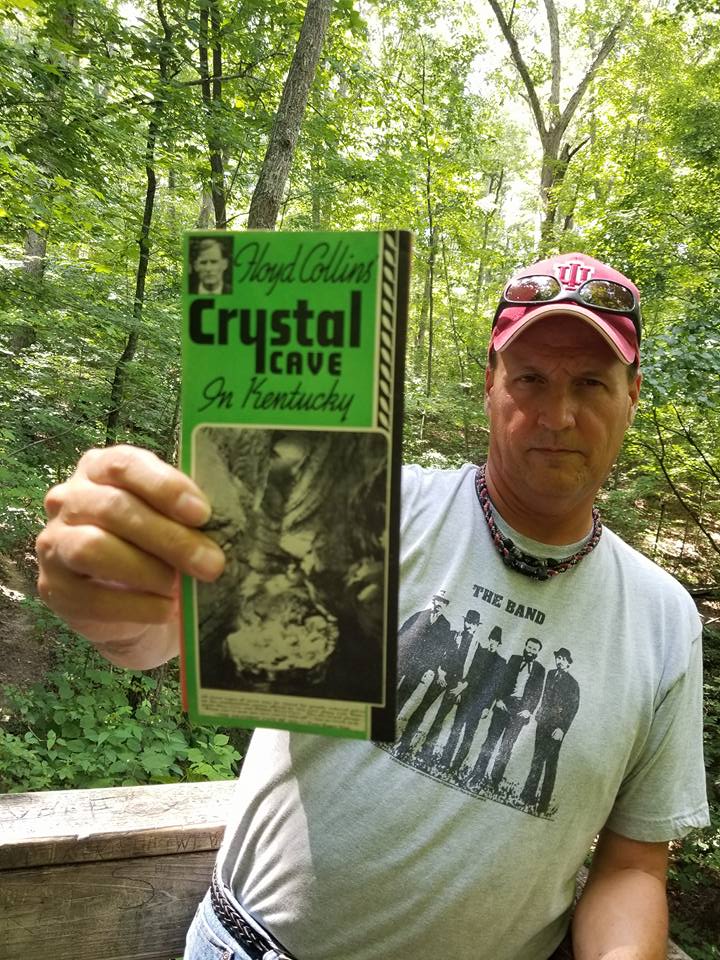
 Floyd Collins is one of those people. Collins was long, lean, logical and legendary. He remains history’s most famous spelunker. Not only because of the way he lived, but also because of the way he died. William Floyd Collins was born on July 20, 1887 in Auburn, Kentucky. He was the third child of Leonidas Collins and Martha Jane Burnett. Collins had five brothers and two sisters, including another brother named Floyd. Which was not uncommon for the time as frontier families often feared that a child might not survive to adulthood.
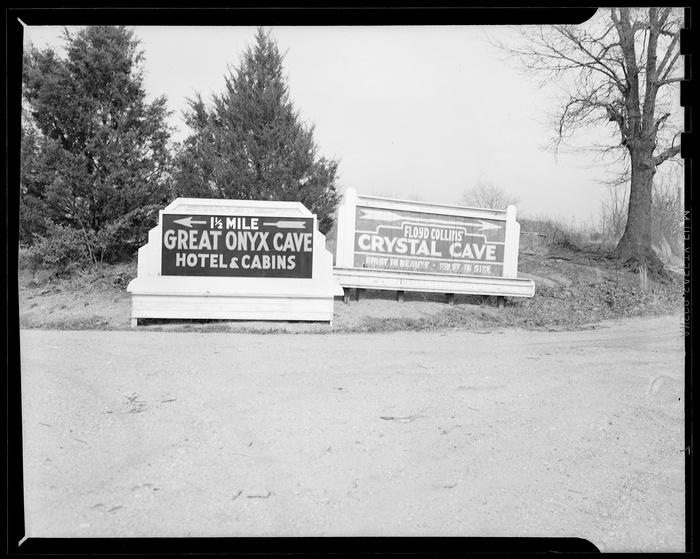 The biggest business in the area was Mammoth Cave, but there were others: Great Onyx Cave, Colossal Cavern, Great Crystal Cave, Dorsey Cave, Salt Cave, Indian Cave, Parlor Cave, Diamond Cave, and Doyles Cave. These holes were all owned and operated by men who charged admission to the visiting tourists who were more than happy to pay for the privilege. At the center of it all was Cave City. Here was the depot that brought wealthy visitors in on the hour, all hungry for adventure. And Cave City residents were more than happy to assist these gullible visitors by relieving them of their cash. As we will see later in this article, not much has changed in 200 years.
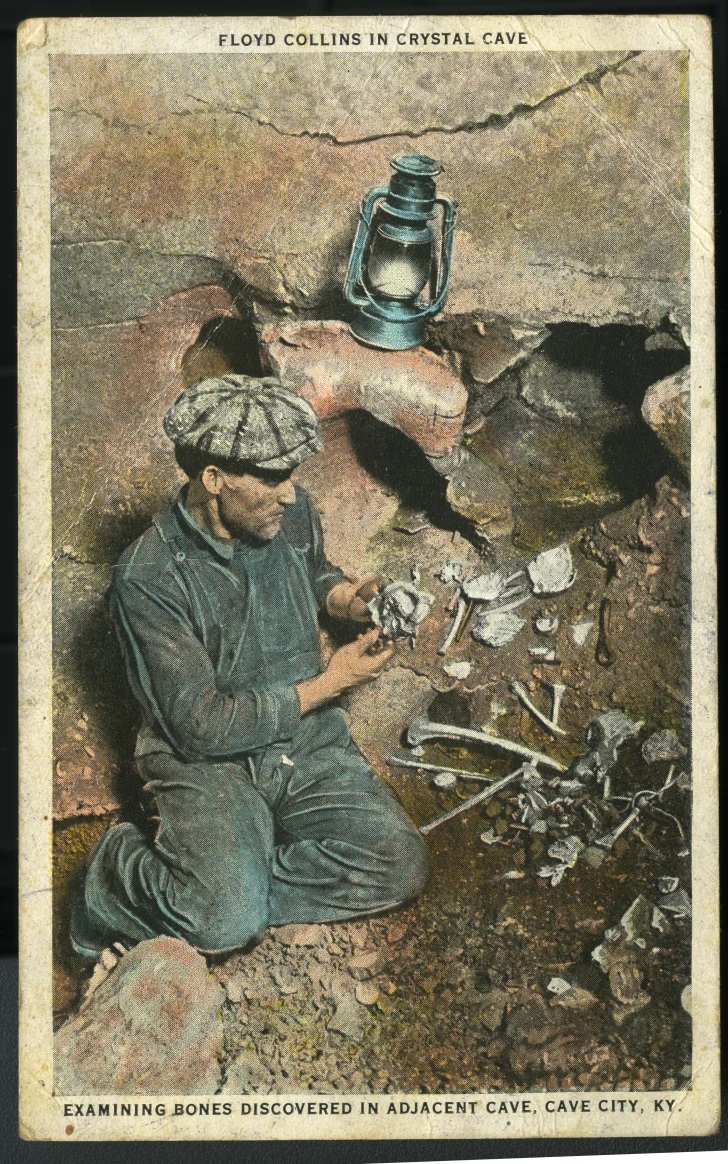 Collins first tasted celebrity when he discovered Crystal Cave in 1917 when he discovered Crystal Cave (now part of the Flint Ridge Cave System of the Mammoth Cave National Park). Twenty-seven year old Collins had chased a ground hog down a hole on his father’s farm. The hole turned out to be a passage to a large cavern Floyd called “White Crystal Cave”. He owned one half and his father owned the other. They went into business, selling options on the cave to a neighbor named Johnny Gerald who’d made a little money buying and selling tobacco. Johnny and Floyd took turns; one of them stood on the side of the road and tried to talk the tourists inside; the other guided them through the cave’s.
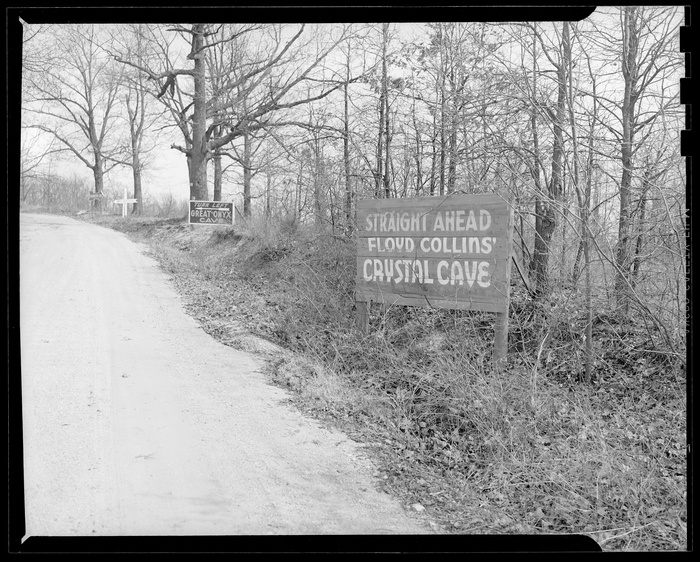 Soon the Collins family found themselves smack dab in the middle of the “Cave Wars” of the early 1920s, where Central Kentucky cave owners and explorers entered into a bitter competition to exploit the bounty of caves for commercial profit. Trouble was, Crystal Cave was the last cave on the road from Cave City. By the time tourists discovered it, they were out of money and interest. During the Cave War years, cave owners competed bitterly among each other in order to bring in visitors. The most common tactic was to deploy a man, referred to as a “capper”, who would suddenly rush out of the bushes, hop onto your car’s running board along the rugged road out to Mammoth to excitedly inform you that Mammoth had collapsed or was under quarantine from Consumption (now known as Tuberculosis) and would persuade you to visit their cave instead.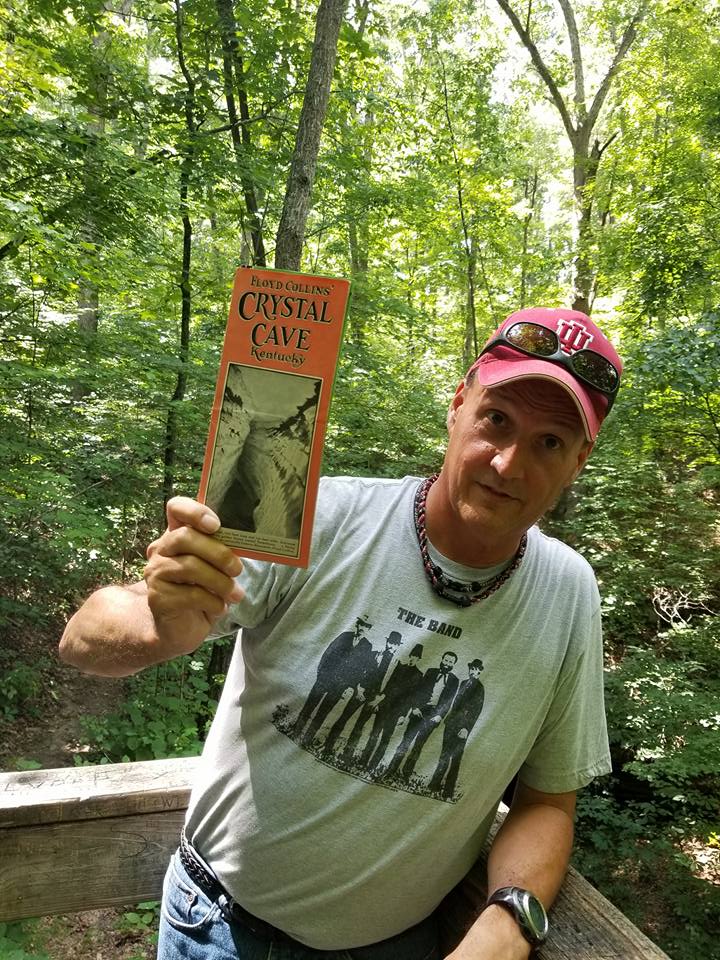

 Floyd was encased under a 4′ x 4′ square, two ton block of solid limestone ceiling, the sidewalls of the tunnel were composed of loose stones, pebbles, sand and mud. Floyd was careful to avoid bumping or displacing anything likely to cause a collapse. Collins made it through, muddy, soaked and sweating, after leaving his securely attached rope for a future trip into the 60-foot precipice he had yet to see. He wriggled head first back into the tight gravelly crevice leading to the steep, serpentine chute he’d just come in by. Pushing the kerosene lantern ahead of him as far as he could, he would then twist and squirm, shrugging ahead inch by inch till reaching the lantern before repeating the pattern by pushing ahead. Suddenly, Floyd’s lantern fell over, broke and went out.

 The little pocket sized booklet was full of info, maps and pictures from homefront San Francisco, one of America’s busiest ports of call during the war. These were obviously handed out to visiting GI’s and associated personnel for use as a handy visitor’s reference for the city by the bay. Fisherman’s Wharf, the Golden Gate Bridge, Coit Tower, Streetcars, Alcatraz, they were all covered in depth within its pages. In the back of the booklet were several “Diary” pages for the owner to quickly jot down their thoughts before they became memories and that is exactly what the previous owner did, carefully recording in pencil details of their August 1944 visit to the “Frisco.” The best way I can present it to you is exactly as I read it, so here are the words verbatim: “U.S.H.B.
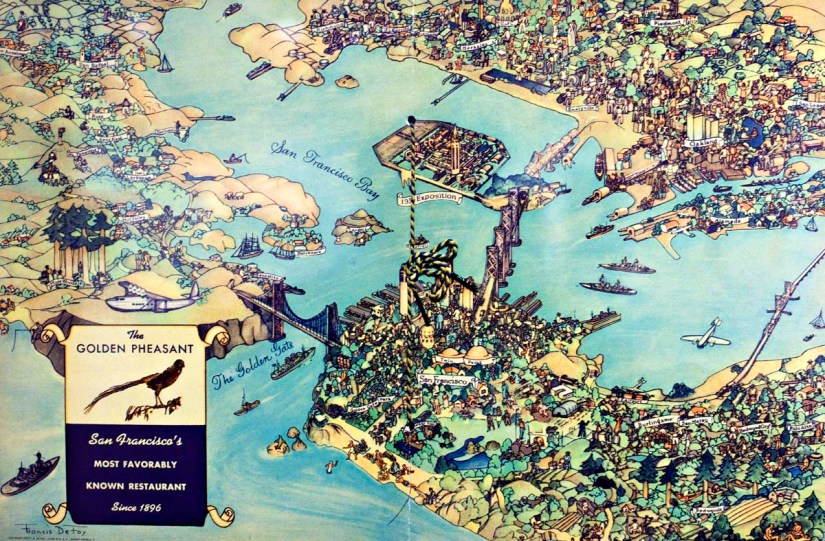
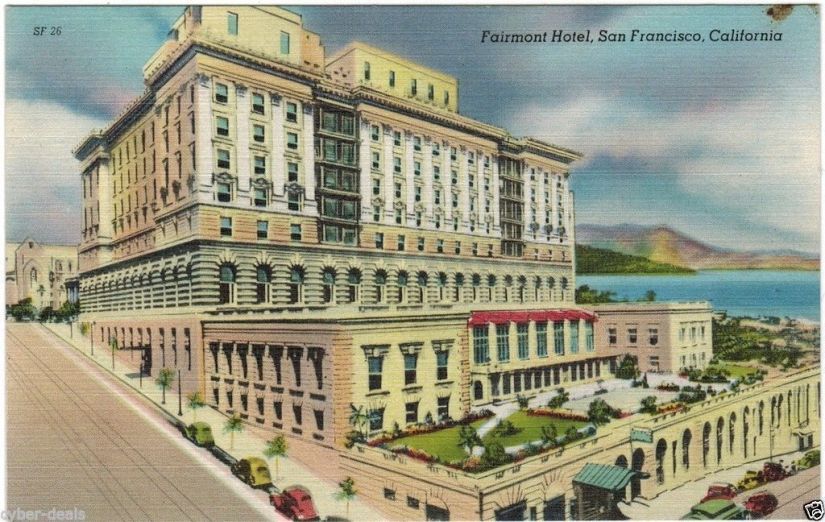 Phyllis Schwalbe Douglas 8800 Room 330 Fairmont Hotel Wed.-Station-shopped. Ernie Pyle stopped in the souvenir shop. The girl was reading August Mademoiselle. Phyl asked if she might see it-she hadn’t seen it since it was all sent to print. Sure enough, her name was in it several times. The girl was going to study Marine Zoology at U. of Cal. Phyl may come to San Diego, L.A., Tijuana, etc. sometime soon. Bill is also gobs of fun-Boston-Yale and Harvard Man. We parted ways. They are very much fun! Then rushed over to Curran Theater to see stage prod. of Rose Marie, starring Irene Manning. Very nice and very well done. Then to Golden Pheasant for a lush hot caramel sundae.
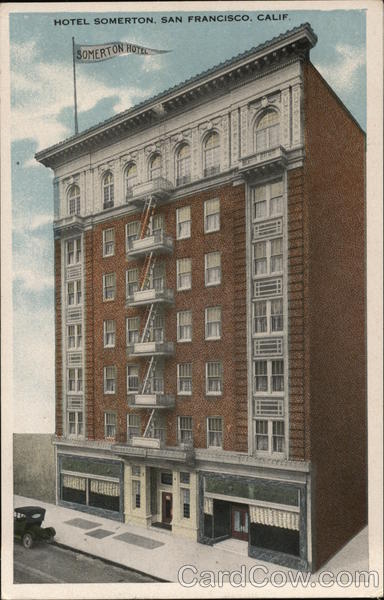 Thurs.-Hotel Somerton-Dick Came at 1:00-Went across Oakland Bay bridge by Treasure Island to U. of Cal. Lovely! Walked around campus. Went by the docks to Ft. Mason. Wonderful view of Bay, Golden Gate Bridge, Alcatraz. Ate at Officer’s club with Bob & Dotty Byers, Bob Harper and _____? Listened to piano music and requested songs. Walked around Ft. and saw Golden Gate lighted up! Went to Chinatown and International Settlement-took in a few dives-danced.
 Sat. Me + Phyl again at 12:00. Had lunch at El Prado in Plaza Hotel. Rode cable car up the huge hill and out to Fisherman’s Wharf. Went to Joe DiMaggio’s. Saw all the boats. Went out on a big plank, climbed a tower and got a wonderful view of city. Saw…”
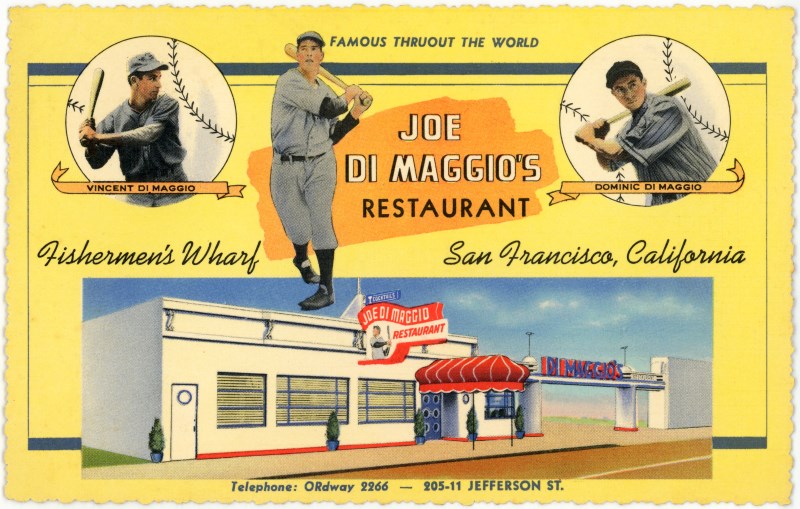 Joe DiMaggio’s restaurant on Fisherman’s wharf was THE place to eat and be seen in San Francisco. Joltin’ Joe DiMaggio was perhaps the most famous player in all of baseball as the smooth as glass center-fielder for the New York Yankees. When this diary account was written DiMaggio was in the middle of a two-and-a-half year stint in the army air forces. The Yankee Clipper rose to the rank of Sergeant even though his parents, Giuseppe and Rosalia, were among the thousands of German, Japanese and Italian immigrants classified as “enemy aliens” by the government after Pearl Harbor. The DiMaggio’s had to carry photo ID booklets at all times, and were not allowed to travel outside a five mile radius from their home without a permit. Giuseppe was barred from the San Francisco Bay, where he had raised his 3 Major League boys (Joe, Dom, and Vince) and fished for decades (Giuseppe’s boat was seized). DiMaggio resumed his baseball career and landed in the Hall of Fame and DiMaggio’s restaurant remained a Bay area hotspot for another 40 years.
 The St. Francis Hotel’s two twelve-story wings were famous for surviving the San Francisco Earthquake in 1904. During World War II, the shops in the hotel’s lobby were turned into small rooms for military officers. Hundreds of soldiers, sailors and officers danced in the Mural Room of the St. Francis to the big band music of Harry Owens and the Royal Hawaiians, and his vocalist, Hilo Hattie. Less than a year after this diary account was written, in April 1945 the St. Francis played host to twenty-seven delegations attending the founding meeting of the United Nations in San Francisco. The French foreign minister stayed in the same suite where the Fatty Arbuckle scandal had taken place. The St. Francis became the hotel where Republican presidents stayed when in San Francisco, while Democratic presidents usually stayed at the Fairmont. President Gerald Ford was almost shot while leaving the hotel in September, 1975 by Sara Jane Moore. Ronald Reagan was a frequent guest of the hotel as was Queen Elizabeth II of the United Kingdom and Emperor Hirohito of Japan.
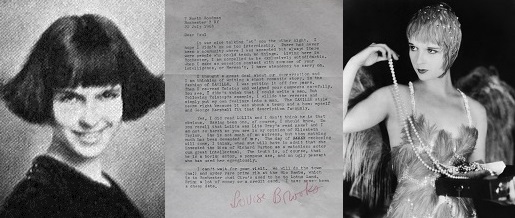
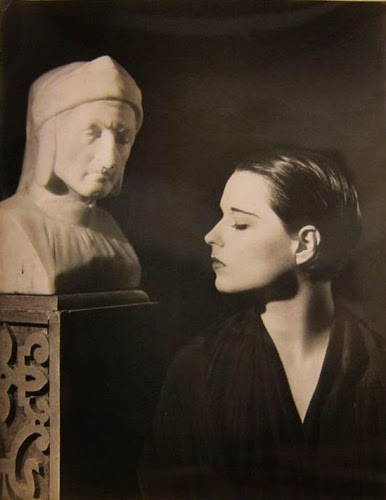

 Beginning in 1925, she starred in seventeen silent films and eight ‘talkies’ before retiring in 1938. She would forever be remembered as the iconic symbol of the flapper, and for popularizing the short ‘Bob’ haircut. Google Louise Brooks’ images and you will see why. In short, she was gorgeous at a time when classic Hollywood photographers were at their peak.
 Brooks began her career in 1922 as a dancer, joining the legendary Denishawn modern dance company in L.A., whose members included founders Ruth St. Denis and Ted Shawn, as well as a young Martha Graham. Her perceived closeness to Shawn (husband of Ruth St. Denis) got her booted from the troupe. Thanks to her friend Barbara Bennett (sister of Constance and Joan), Brooks almost immediately found employment as a chorus girl in George White’s Scandals and as a featured dancer in the Ziegfeld Follies. From there, her career caught fire.
 Despite French film historians proclaiming Brooks skill surpassing Marlene Dietrich and Greta Garbo as a film icon, she lived in relative obscurity for years in New York City and Rochester, N.Y. Despite her two marriages, she never had children, referring to herself as “Barren Brooks”. Her many lovers once included a young William S. Paley, the founder of CBS along with a veritable who’s who of Hollywood leading men and women.
 By her own admission, Brooks was a sexually liberated woman, not afraid to experiment, even posing fully nude for art photography in her golden years. Brooks enjoyed fostering speculation about her sexuality, cultivating friendships with lesbian and bisexual women. She admitted to some lesbian dalliances, including a one-night stand with Greta Garbo. She later described Garbo as masculine but a “charming and tender lover”.
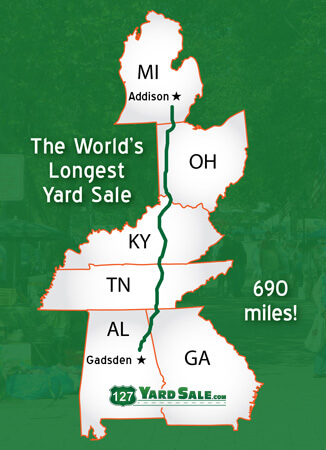
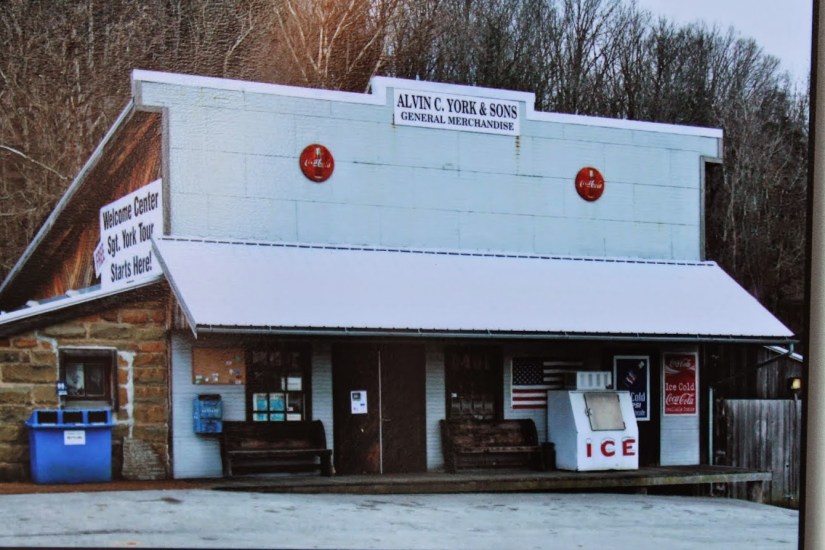
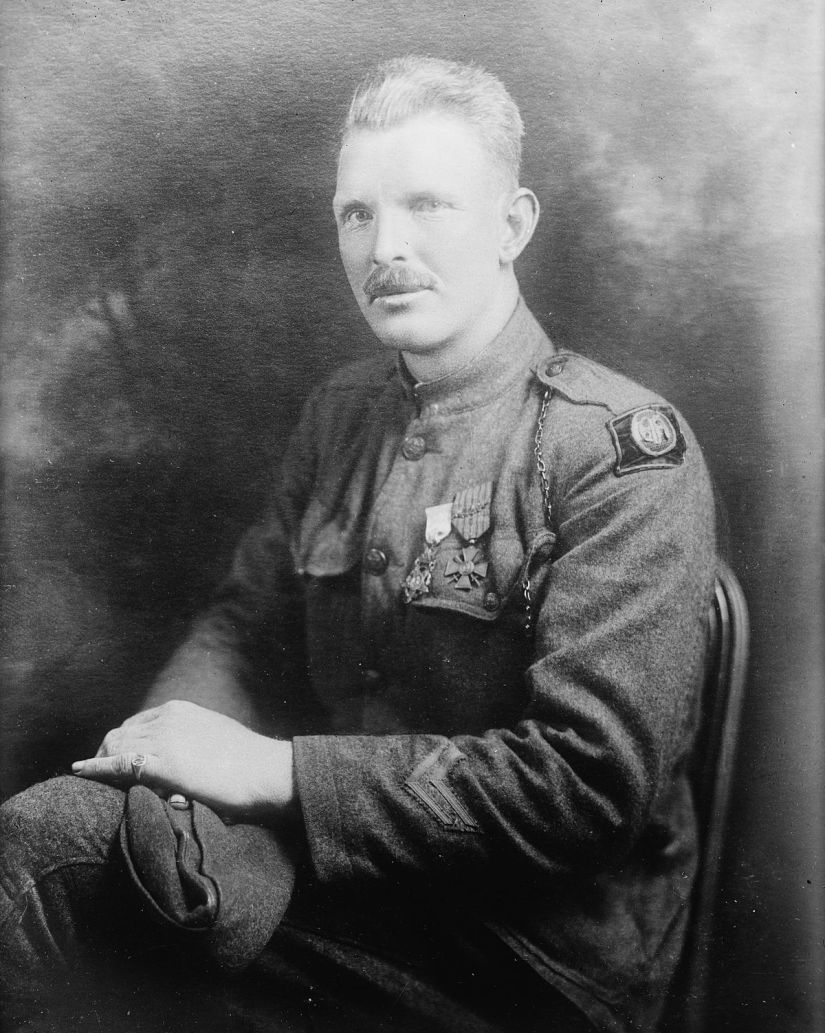
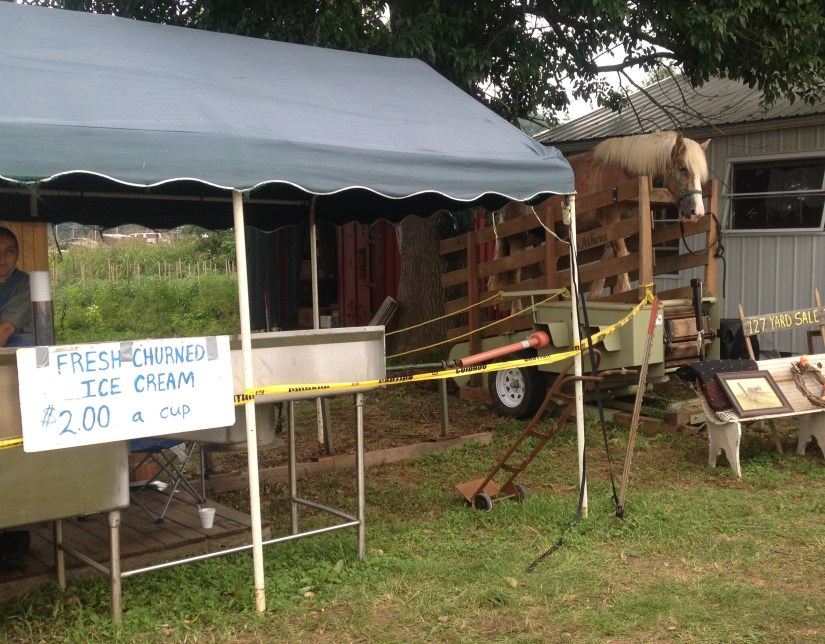
 It was during the second day of the trip where our little quartet found our most interesting finds along the route. While at a tent city near Grimsley, Tennessee we came upon a large group of dealers set up in a local park. On this 95 degree / 50 % humidity day (heat index 107), I found a rather refined looking group of Southern Belles strategically seated in a shady corner of their booth. Leaning against a post near them was a heavy steel sign from the Jack Kerouac Era California State Beaches that read: “Clothing Optional Beyond This Point”. My red-faced smirk must have betrayed me and the ladies giggled at my sheepish delight. I asked for the price and as I picked it up I realized that the sign had 2 bullet holes in the center of it. I had to have it! I forked over the cash equivalent of a St. Elmo’s dinner for two (with shrimp cocktails of course) to make it mine. The delightful owner said she had purchased the sign on “this very same field 8 years ago.”
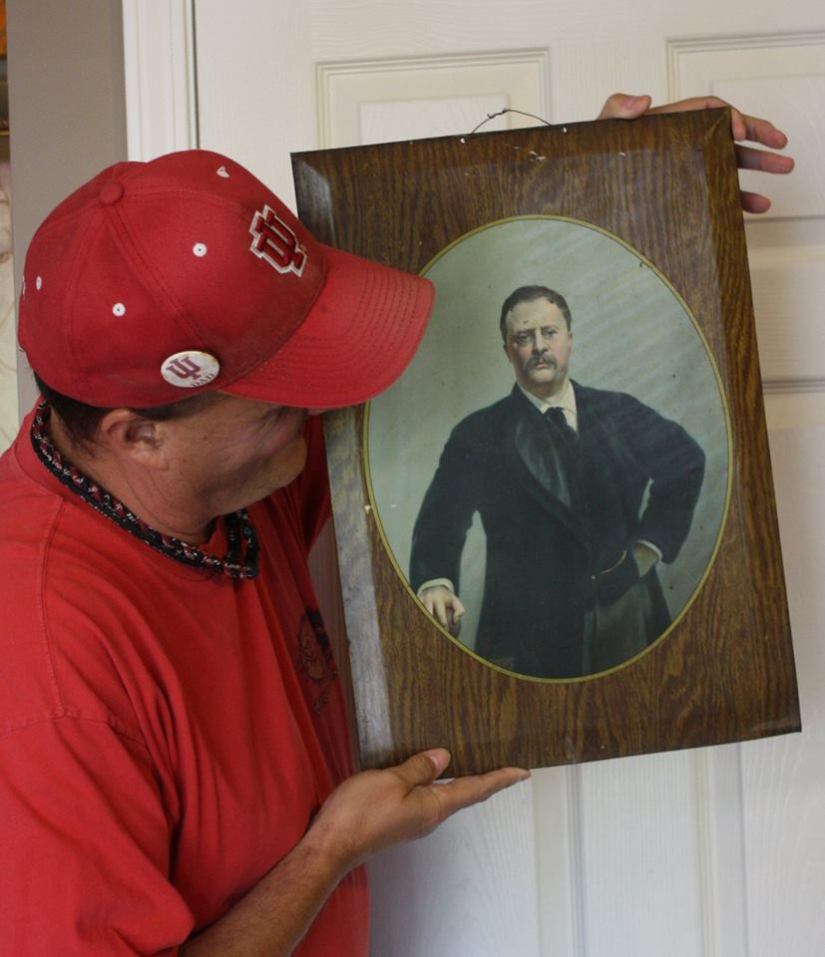
 Rhonda found a San Francisco Candlestick Park exit sign in the same booth from another lady and got a much better deal than I (about the cost of a McDonald’s Happy Meal.) A little further down the road, I found a beautiful Teddy Roosevelt metal color lithographed sign from 1903, a real stuffed alligator dressed as a sheriff complete with tiny cowboy hat and badge (please don’t judge me animal activists) and a wooden sign that had me puzzled at first. It was a large B&W direction arrow sign with the word “AWFISS” on the front. My traveling companion Chuck Hodson had to clue me in on the meaning. Apparently, “AWFISS” is slang for “Office” in the hill country. Sadly, it was not for sale.
 The last of the day’s finds was made by Chuck. It was a 12″ tall miniature prison electric chair complete with skull and crossbones in the back chair rest. “Beware Tennessee State Prison” and a 1956 year date were painted on the seat back. Constructed of wood, finish nails and leather straps, it was obviously made by an inmate back in the Ike Era. The Prison, located near downtown Nashville, opened in 1898 and closed in 1992. Hollywood movies Nashville, Ernest Goes to Jail, The Green Mile, and many more were filmed within it’s walls. I find myself strangely drawn to objects like these. I guess I love that type of gallows humor.
 Alan E. Hunter