Original publish date June 19, 2014
https://weeklyview.net/2014/06/19/the-life-and-death-of-alan-turing-part-1
I often write articles about anniversaries, some sad, some happy and some just downright confounding. This story falls within the bounds of the latter. In statistics, a confounding variable is defined as “an extraneous variable in a statistical model that correlates (directly or inversely) with both the dependent variable and the independent variable.” Sixty years ago this month, one of the most brilliant variables to ever draw breath removed himself from the equation. His name was Alan Turing and if you’ve never heard of him before, prepare to be amazed.
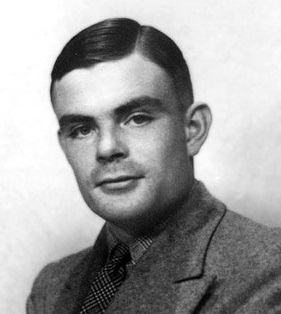
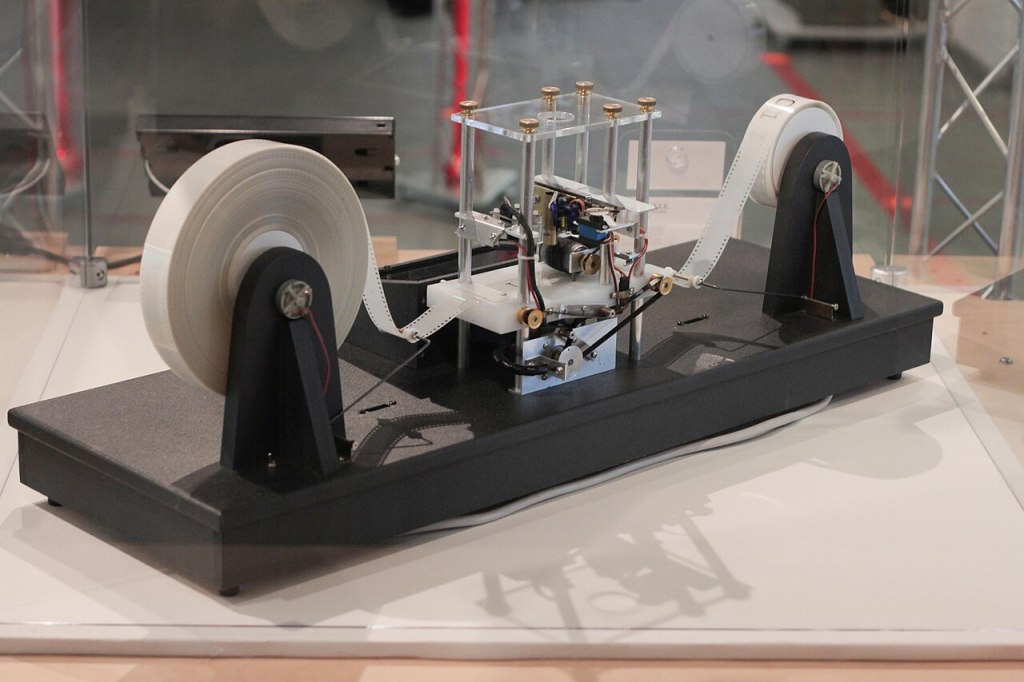
Rather than solely focusing on the date of his death, let’s start with his birth, June 12, 1912, 102 years ago this week. Alan Mathison Turing was a British mathematician, logician, cryptanalyst, computer scientist and most unlikely war hero. Many consider him to be the father of computer science and artificial intelligence. He was the first to marry the concepts of “algorithm” and “computation” together in his “Turing machine,” which is considered to be the first practical model of a general purpose computer.
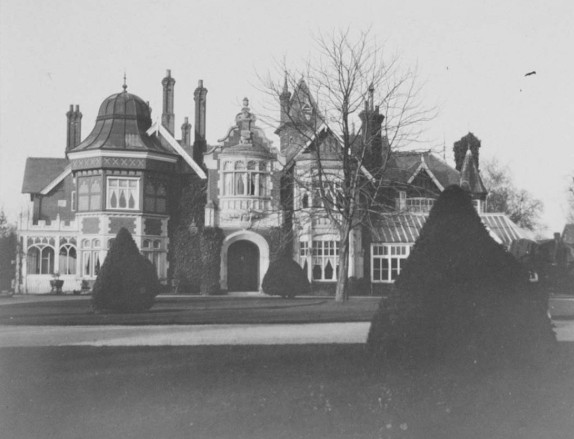
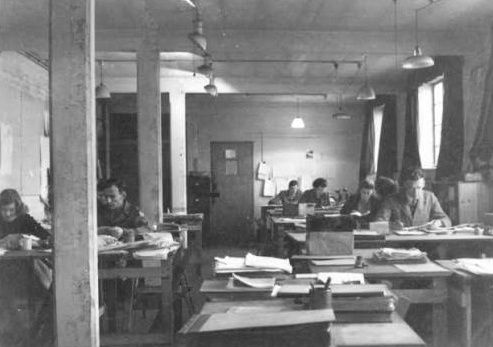
During World War II, Turing worked for the Government Code and Cypher School (GC&CS) at Bletchley Park, Britain’s code breaking center. For a time he was head of “Hut 8,” the section responsible for German naval cryptanalysis. In short, he was England’s master code breaker. He devised a number of techniques for breaking German ciphers, including the method of the “bombe,” an electromechanical machine that could find settings for the formidable Enigma machine, the cypher used by Nazi Germany to secure its military communications. His code breaking prowess enabled the Allies to defeat the Italians in the Mediterranean, beat back the Germans in Africa and evade devastating enemy submarines in the Atlantic.
While at Bletchley Park, Turing gained a reputation for eccentricity. His colleagues called him “Prof” and his treatise on the Enigma machine was known as “The Prof’s Book.” Like clockwork, every June 1st, Turing would get a severe attack of hay fever. As a result, he rode a bike to the office every day wearing a bulky military gas mask to keep the pollen off. To add to the strange spectacle, the bike’s chain would come off at regular intervals. Instead of having the bike fixed, Alan would count the number of times the pedals went round, jumping off just in time to adjust the chain by hand. Once safely in the office, Turing chained his coffee mug to the radiator pipes to prevent it from being stolen.
While working at Bletchley, Turing, a talented long-distance runner, occasionally ran the 40 mile route to London when he was needed for high-level meetings. His recorded times would place him among the world-class marathon runners of today. Turing’s eccentricities were overlooked because his “mad” code breaking skills helped the Allies outfox the Nazis, his “rad” theories laid the foundation for the computer age, and his “bad” work on artificial intelligence fueled the debate over whether machines can think independently to this very day. Even before the war, Turing was formulating ideas that would define modern computing. These ideas would mature into a fascination with artificial intelligence and the notion that machines could someday outperform the minds of man. At war’s end, Turing went to work programming some of the world’s first computers.
On February 19, 1946 Turing presented a paper to the NPL Executive Committee, detailing the first reasonably complete design of a stored-program computer. However, because of the strict and long-lasting secrecy surrounding his wartime work, he was prohibited from explaining that his ideas could be implemented in an electronic device. Others, not bound by the same rules of secrecy but aware of Turing’s work, were quick to put forth Turing’s theories and claim them as their own. Seems that intrigue, accusations and the supposed misappropriation of intellectual property in the world of computers can be traced back to its earliest days.
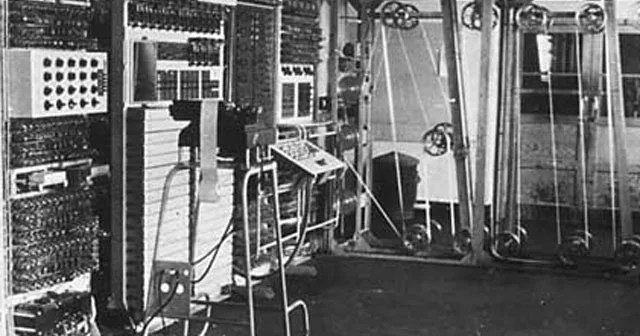
At the invitation of John R. Womersley, superintendent of the Mathematics Division, Turing went to work at Britain’s National Physical Laboratory. While there from 1945 to 1947, he designed the Automatic Computing Engine (ACE), one of the first stored-program computers. Turing’s technical design, known as the “Proposed Electronic Calculator,” was the product of his 1936 theoretical paper “On Computable Numbers” combined with his wartime experience with the Colossus computers that had broken the German military codes.
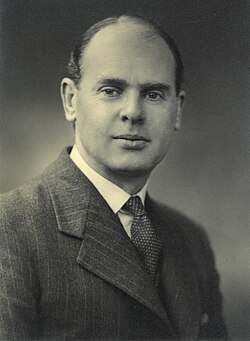
Turing described his idea as a “universal computing machine,” but it is now known as the Universal Turing machine. The Turing machine outlined the idea that it could outperform the tasks of any other computation machine, man-made or organic. In plain speak, the Turing machine was provably capable of computing anything that is computable. For the first time ever, Alan Turing proved that a machine could be programed to think independently.
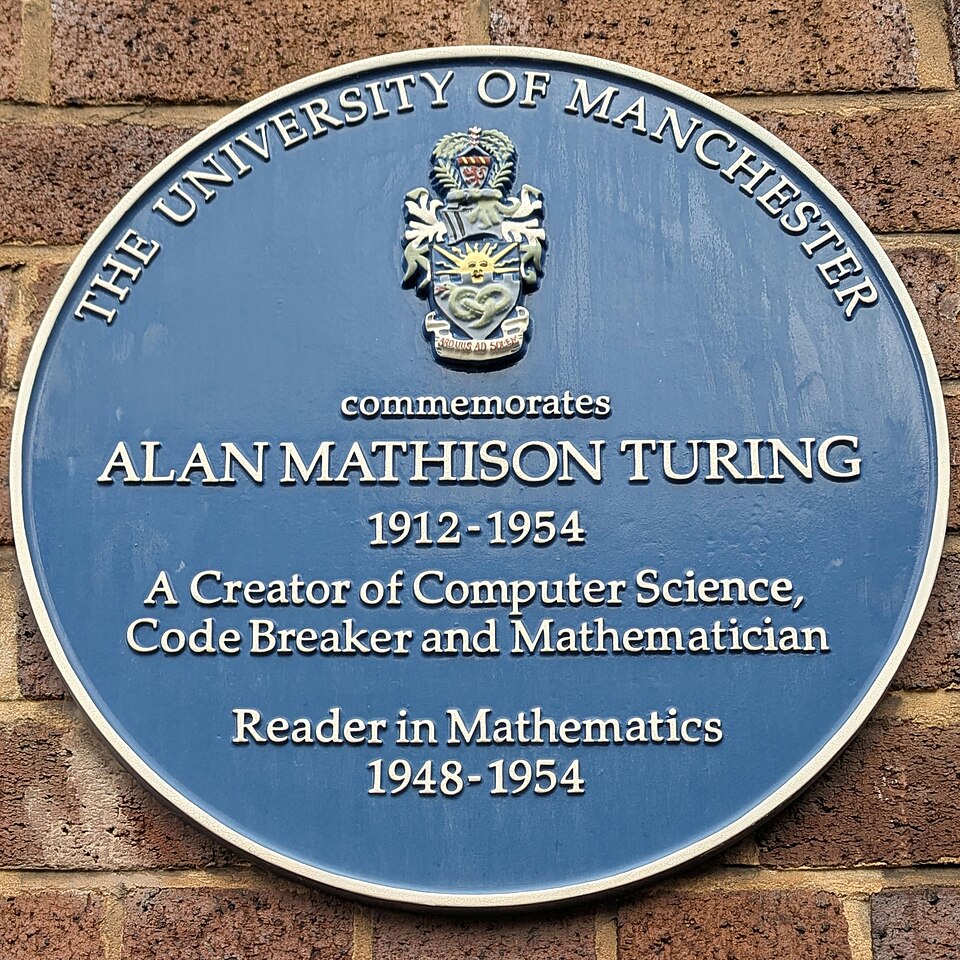
In 1948 Turing was appointed “Reader” in the Mathematics Department at the University of Manchester, where he was instrumental in the development of the Manchester computers. It was in that year that Turing forever cemented his place in the hearts and minds of modern day gamers by writing the world’s first game program for a computer. The program was so advanced that a computer to play it on did not yet exist. Did I mention that he was way ahead of his time? The “Turbochamp” was a program designed to play a game of chess between a human and a machine. It did not work very well, but it did work. In his spare time, Alan became interested in mathematical biology. It was during this period that Turing designed the software for the world’s first stored-program computer — the Manchester Mark 1.
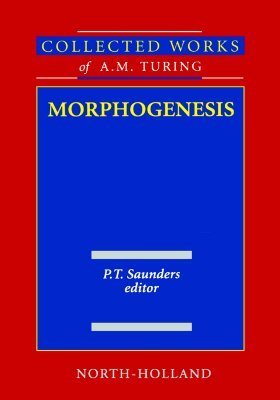
Turing worked from 1952 until his death in 1954 on mathematical biology, specifically morphogenesis. Morphogenesis is defined as “the biological process that causes an organism to develop its shape.” Turing’s interest in the field was number based and deeply rooted in statistical logic. He published one paper on the subject in 1952, putting forth the Turing hypothesis of pattern formation. He used “reaction-diffusion equations which are central to the field of pattern formation.” Think “Computer meets paint-by-number” and you’ve pretty much got it. Turing’s later papers went unpublished until 1992 when the “Collected Works of A.M. Turing” was published — a volume that quickly became known as the Bible in this field.
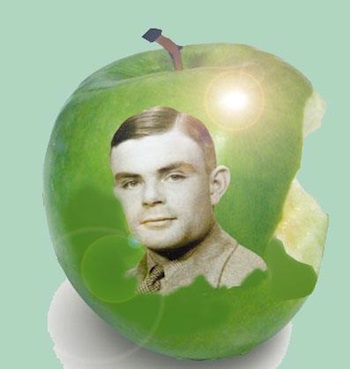
So, aside from his applied genius to the earliest days of the computer field, why is Alan Turing so revered by young historians today? Alan Turing was gay, and 1950s Britain punished the mathematician’s sexuality with a criminal conviction, intrusive surveillance and hormone treatment meant to extinguish his sex drive. Because of all this, on June 8, 1954, six decades ago this month, Alan Turing slipped quietly into bed and took one final bite of the apple — an apple laced with cyanide. The partially eaten fruit was found inches away from his dead body the next day by his cleaning lady. And what was the eccentric Turing’s favorite movie? Walt Disney’s 1937 classic, Snow White and the Seven Dwarfs. Furthermore, what is the symbol representing one of the most popular brands of computers today? An apple….with a bite taken out of it.
Part 2: “The life and death of Alan Turing.”
Original publish date June 26, 2014
Alan Turing was a man way ahead of his time. That term is often misused, but without a doubt, it applies to him. Turing was largely responsible for the code breaking that defeated the Axis Powers in World War II, credited with creating the first practical computer and his work with artificial intelligence and code mapping is still considered the standard by which all others are measured. He was a genius, an eccentric and Alan Turing was gay.
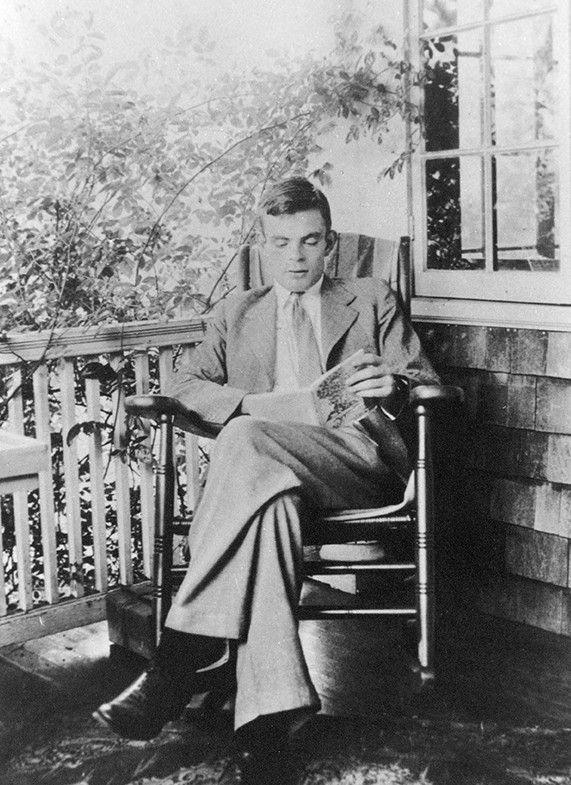
Turing made no secret of his sexuality, despite the fact that being gay could easily lead to criminal prosecution in post-war Britain. In 1952, Turing was convicted of “gross indecency” over his relationship with another man. He was stripped of his security clearance, subjected to monitoring by British authorities, and forced to take estrogen to neutralize his sex drive — a process akin to chemical castration. He agreed to these “treatments” in lieu of going to prison.
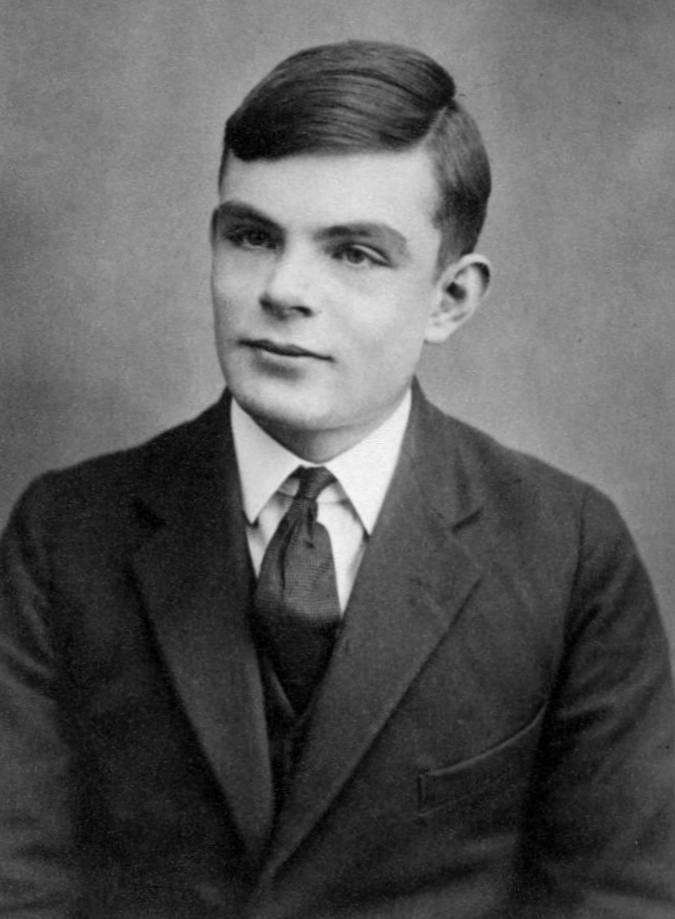
In January 1952, Turing started a relationship with a 19-year-old unemployed man named Arnold Murray. Turing met Murray just before Christmas outside the Regal Cinema. The two men bumped into each other while walking down Manchester’s Oxford Road. Turing struck up a friendly conversation with the handsome young man and invited him to lunch. This lunch led to a rather short, but torrid, love affair between the unlikely duo. On January 23 Turing’s house was robbed. Murray admitted that the burglar was an acquaintance of his, and Turing reported the minor crime to the police.
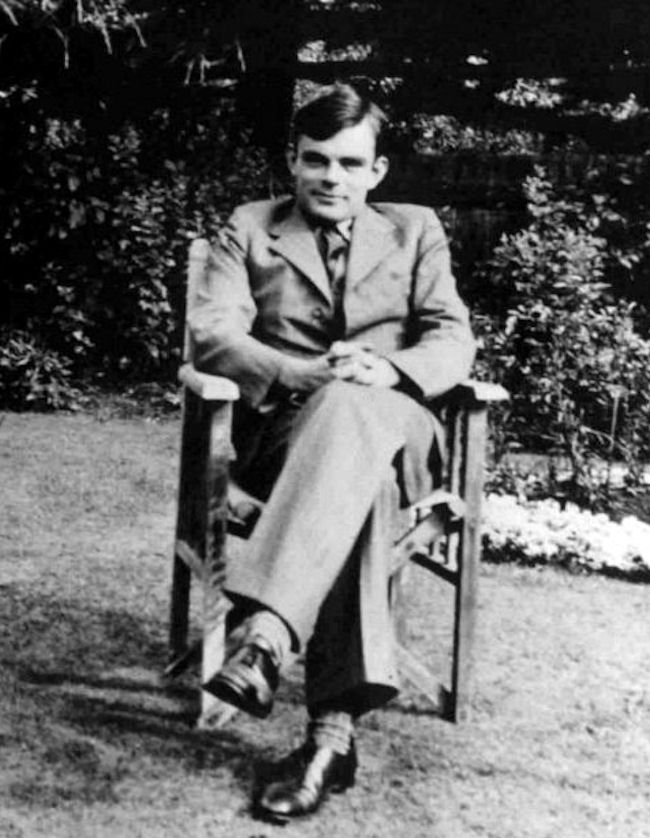
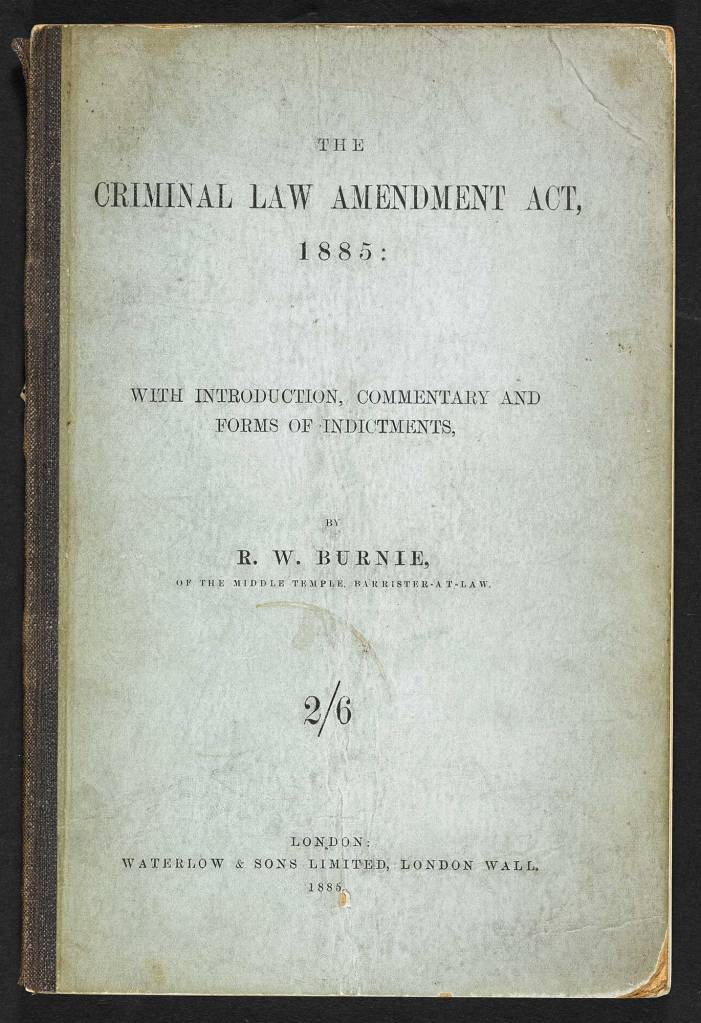
During routine questioning about the break-in, Turing inexplicably told police that Murray was not a roommate, but a sexual partner. Homosexual acts had been officially outlawed in the United Kingdom since the Victorian Era, and police immediately arrested both men, charging them with gross indecency under Section 11 of the Criminal Law Amendment Act of 1885.
Trial proceedings began on February 27, where Turing’s solicitor “reserved his defense.” Later, although he felt no personal remorse or guilt for having committed acts of homosexuality, on the advice of his brother, Turing entered a plea of “guilty”. The case, Regina v. Turing and Murray, came to trial on March 31, 1952. Turing was convicted and given a choice between imprisonment or probation. However, the probation was conditional on his agreement to undergo hormonal treatment designed to reduce libido. He accepted the option of one year’s treatment through injections of stilboestrol, a synthetic estrogen. The treatment rendered Turing impotent, caused weight gain, loss of body hair and gynaecomastia (an enlargement of the breasts), fulfilling Turing’s prediction that “no doubt I shall emerge from it all a different man, but quite who I’ve not found out.” Oddly, co-defendant Murray was given a conditional discharge.
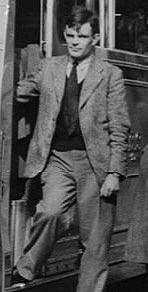
Turing’s conviction led to the removal of his security clearance and barred him from continuing with his cryptographic consultancy for the Government Communications Headquarters (GCHQ). Although his passport was never revoked, he was denied entry into the United States due to his conviction. Although he was viewed by some as a security risk, Turing was free to visit other European countries. At that time, during the height of the Cold War, there was acute public anxiety about homosexual entrapment of spies by Soviet agents for use as KGB double agents. Turing was never accused of espionage but the prejudice against homosexuals somehow accentuated the possibility with Alan.
No doubt, the bombardment of one of Britain’s greatest minds with invading hormones caused Turing unceasing discomfort, depression and confusion towards a perceived “problem” he was powerless to prevent. Depressed and angry, Turing obsessed over an incident from his school days. While a young student, Alan had formed an important friendship with fellow pupil Christopher Morcom. However, that friendship was cut short by Morcom’s premature death in February 1930 from complications of bovine tuberculosis contracted after drinking infected cow’s milk years earlier. That event shattered Turing’s religious faith. He became an atheist and adopted the conviction that all phenomena, including the workings of the human brain, must be materialistic and he believed in life after death.

On June 8, 1954, Turing’s cleaning lady found him dead. When his body was discovered, a half-eaten apple lay nearby his bed. The condition of the body indicated that he had died the previous day. The autopsy established the cause of death as cyanide poisoning. Although the apple itself was never tested for cyanide, it was speculated that this was the delivery system for that fatal dose of poison.
Along with finding a bottle of cyanide crystals in Turing’s home, authorities also discovered a glass jar filled with liquid cyanide solution. The autopsy report shows that Turing’s stomach “contained four ounces of fluid which smelled very strongly of bitter almonds, as does a solution of cyanide.” This detail is significant because it points strongly to a scenario where Turing consumed the cyanide orally. It is speculated that the half-eaten apple, rather than being the remains of the delivery vehicle, was eaten to mask the flavor of the cyanide. Turing’s body was found lying prone in bed, a position that suggests he had made a choice to end his own life.
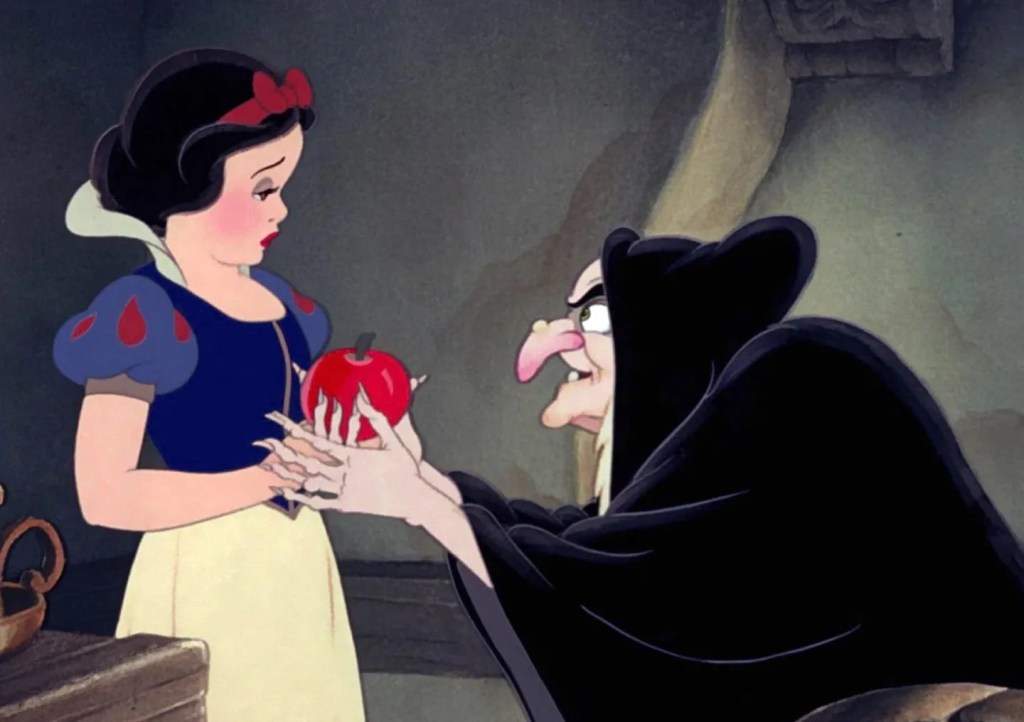
It was widely known among Turing’s circle of close friends and colleagues that he had been haunted by the story of the poisoned apple in the fairy tale of Snow White and the Seven Dwarfs. He was obsessed with the Walt Disney produced movie, especially the scene where the Wicked Queen immerses the apple in her poisonous brew, watching it over and over since it’s initial release in 1937. To many, it seemed perfectly reasonable that Alan would resort to the same desperate measure to end the persecution he was suffering as a result of his homosexuality. But in recent years, researchers have determined that it was just as likely that Turing’s death may well have been an accident.

After all, it was Turing’s ordinary habit to eat an apple before bedtime, and moreover, not to finish it. Therefore, the half-eaten remains of that untested apple should not be viewed as the strict indication of a deliberate act. The inquest determined that he had committed suicide, and he was cremated at Woking Crematorium on June 12, 1954 and his ashes scattered there. These days, a coroner would demand evidence of premeditation before announcing a verdict of suicide, yet nothing in the accounts of Turing’s last days suggest he was in anything but a cheerful mood. Close friends challenged the coroner’s conclusion by claiming Turing was handling his legal setbacks and hormone treatment “with good humour,” showing no sign of despondency prior to his death.
Turing died on a Tuesday, but that previous Friday as was his habit, Alan had left a “to-do” note on his office desk to remind himself of things to be done after the bank holiday (the day after his death). Modern day researchers offer the alternative explanation of “accidental inhalation of cyanide fumes from an apparatus for gold electroplating spoons with potassium cyanide to dissolve the gold,” which Turing had set up in an adjoining un-ventilated closet sized spare room he referred to as the “nightmare room.“ Although brilliant, Turing was careless, literally an absent minded professor. Astonishingly, his electrolysis experiment was wired into the ceiling light socket which had resulted in more than a few severe electric shocks.
And Turing was known for tasting chemicals to identify them. It has been suggested, perhaps, that he accidentally put his apple into a puddle of cyanide. It is far more likely to suppose that Alan accidentally inhaled cyanide vapors from the bubbling liquid. Advocates of this theory believe the autopsy findings were more consistent with “inhalation rather than ingestion” of the poison based on the distribution of cyanide in Turing’s organs. Yet, despite protestations from caring, concerned friends and relatives, the coroner recorded a verdict of suicide “while the balance of his mind was disturbed.” Regardless, we are left to simply shrug our shoulders in wonderment and focus on Turing’s life and extraordinary work.
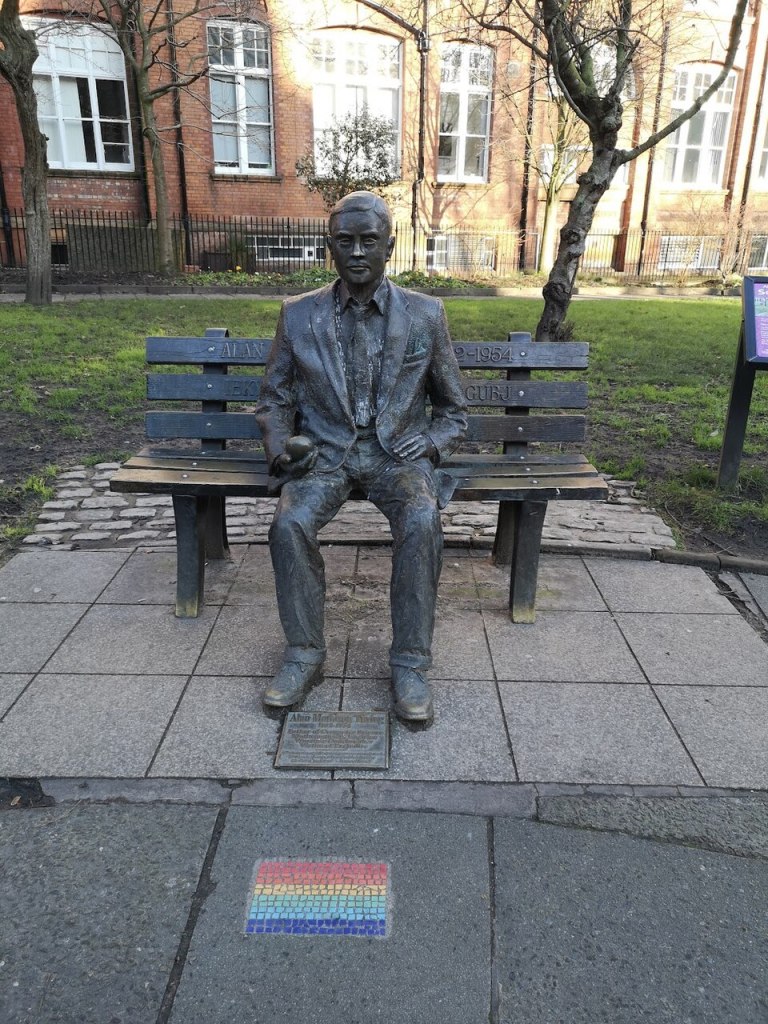
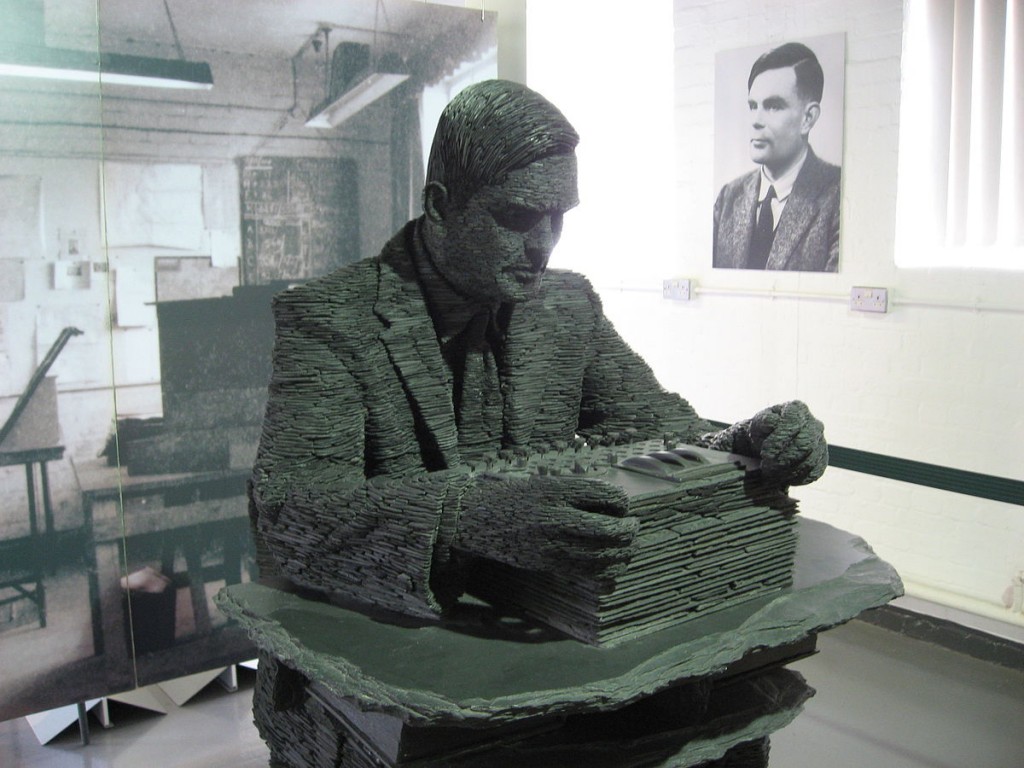
Alan Turning Memorial. Sackville Park, Manchester UK.
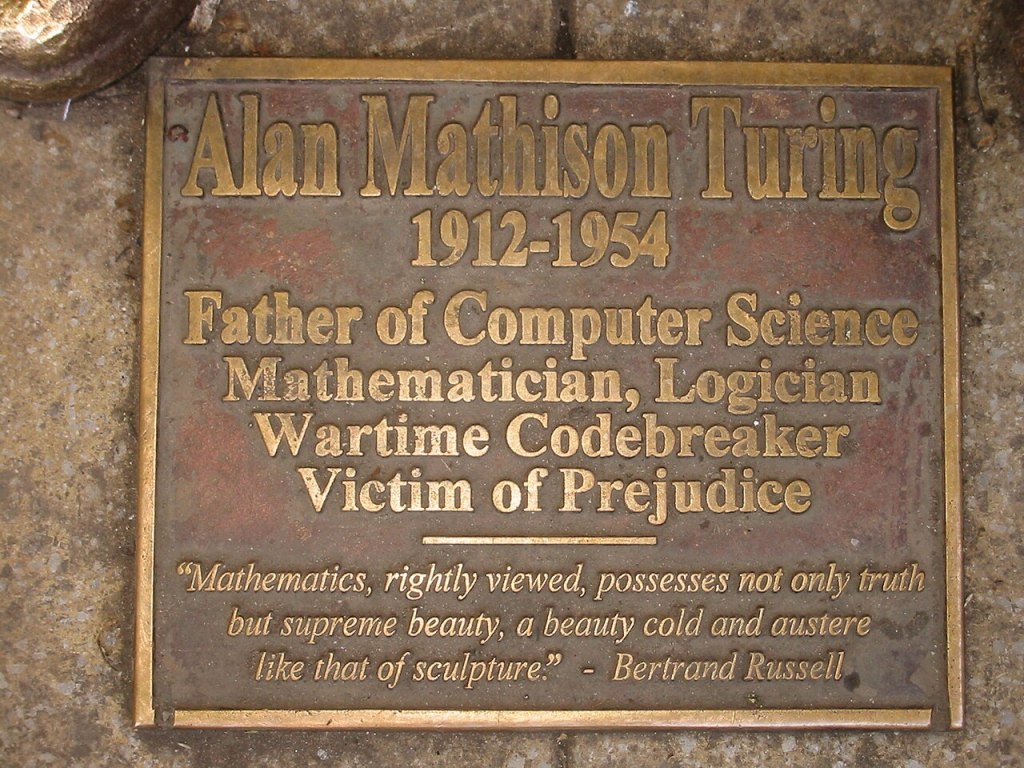
Now, 60 years after the war hero’s death, the pendulum has finally swung in Turing’s direction. Queen Elizabeth II granted him a pardon, his likeness has appeared on postage stamps, memorial plaques adorn his former residences and statues of the tragic genius can be found all over the U.K. There are bridges and highways named after him in his native Manchester. In a prepared statement, the British Monarch declared “Turing was an exceptional man with a brilliant mind who deserves to be remembered and recognized for his fantastic contribution to the war effort and his legacy to science.”
In short, when viewed through six decades of hazy hindsight, Alan Turing has become a cultural icon. His most enduring contribution, at least in pop culture terms, is just as mysterious as his death. For years, computer aficianados point to the logo used by Apple computers as an homage to Alan Turing and his untimely death. Since 1976, the image of the apple with a bite taken out of it has been identified with cutting edge innovations in the field of computer science. The apple has long been a symbol of forbidden knowledge, the object that banished Adam and Eve from the Garden of Eden, inspired Isaac Newton’s theory of gravitation, the usurpation of good by the power of evil by Disney’s wicked queen and finally as the assumed means of Alan Turing’s death.
In 1999, Time Magazine named Turing as one of the 100 Most Important People of the 20th century and stated: “The fact remains that everyone who taps at a keyboard, opening a spreadsheet or a word-processing program, is working on an incarnation of a Turing machine.” The London 2012 Olympic Torch flame was passed on in front of Turing’s statue in Manchester on his 100th birthday. So if I have now sparked an interest within you for the godfather of all modern computers, fear not, for a movie about his life called “The Imitation Game” is set for a November 2014 release. Then perhaps you can make up your own mind about the life and death of Alan Turing.