Original publish date October 22, 2015 Republished October 8, 2026
https://weeklyview.net/2015/10/22/pat-quinlan-and-the-ghost-of-h-h-holmes-part-1
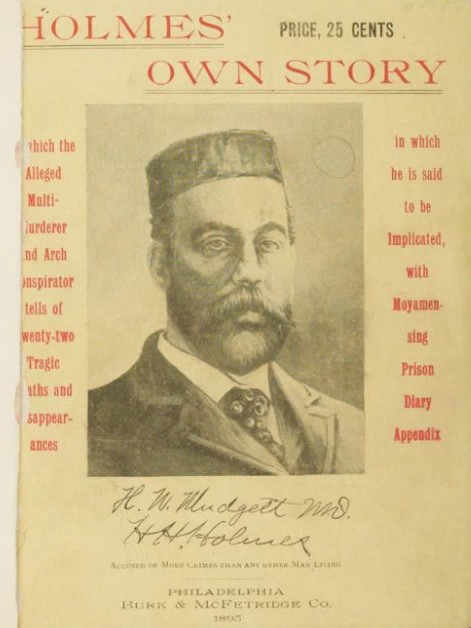
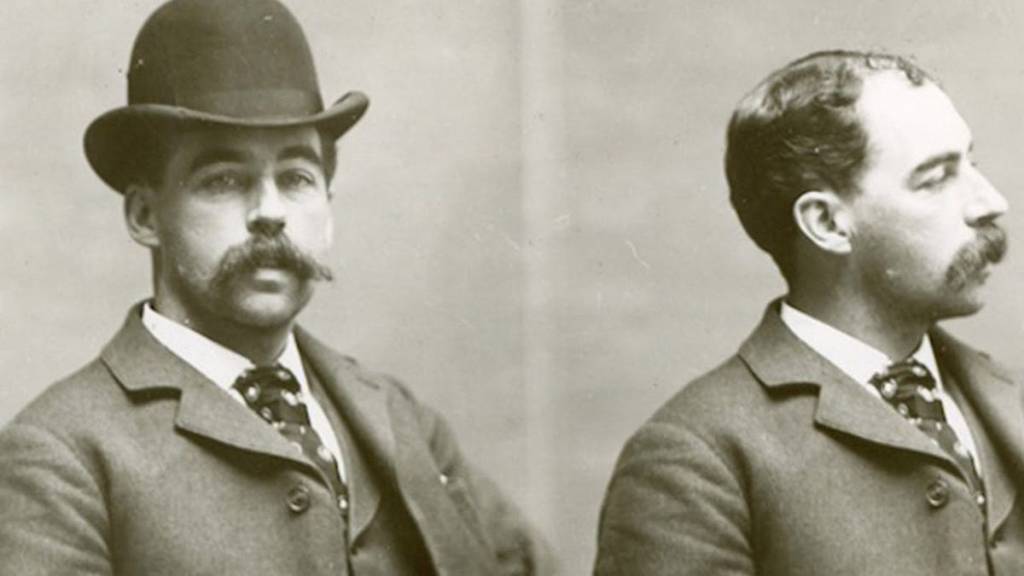
As a lover of all things historical, the stories I find myself most drawn to often include the aftermath of a historical event. One such story involves an incident and personality from the pages of Irvington history. In October of 1894, America’s first serial killer, Dr. H.H. Holmes committed one of his last murders in a quiet little bungalow on what was then the far eastern edge of Irvington. He was captured, imprisoned, convicted and hung in Philadelphia, Pennsylvania on May 7, 1896. While that was the end of HIS story, it was not the end of THE story.
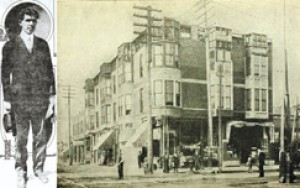
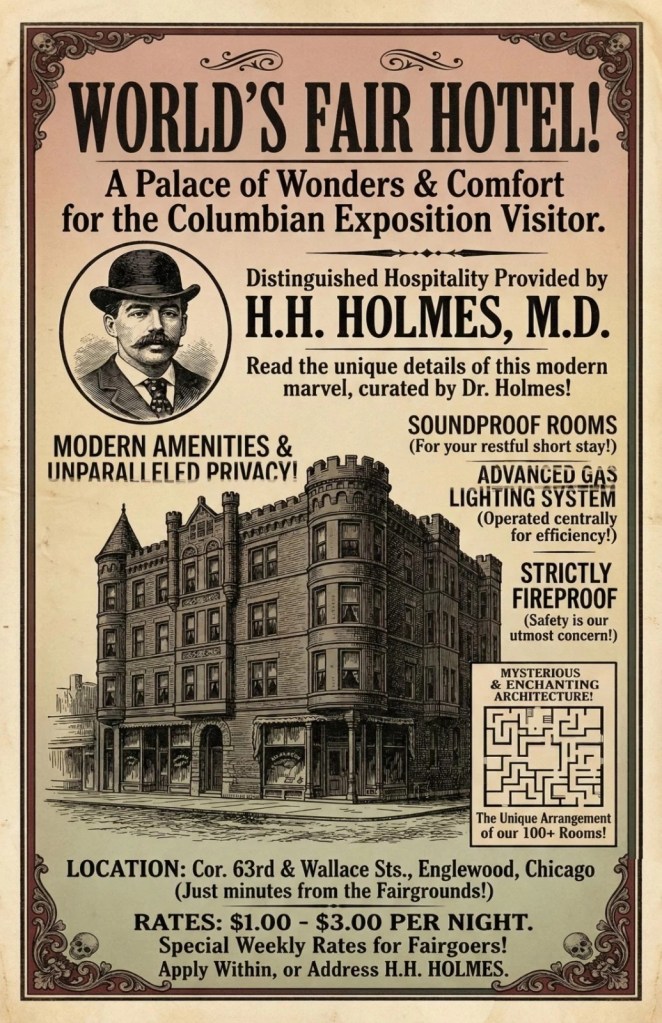
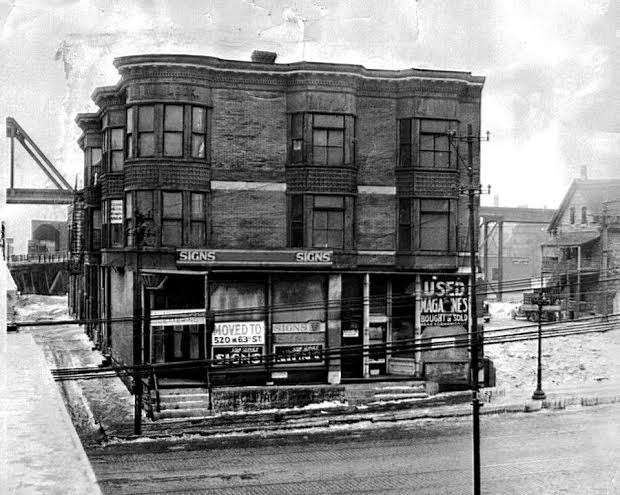
H.H. Holmes left behind a massive building at 63rd and Wallace in Chicago that the press dubbed “The Murder Castle.” Here Holmes tortured and killed his victims as systematically as cattle in a stockyard. Some claim that Holmes killed over 200 people; he confessed to killing 27. The 3-story building was a maze of confusing hallways with blind corners, doors that opened to brick walls and rooms that were escape proof with the only exit for guests being a greased chute leading to the basement.
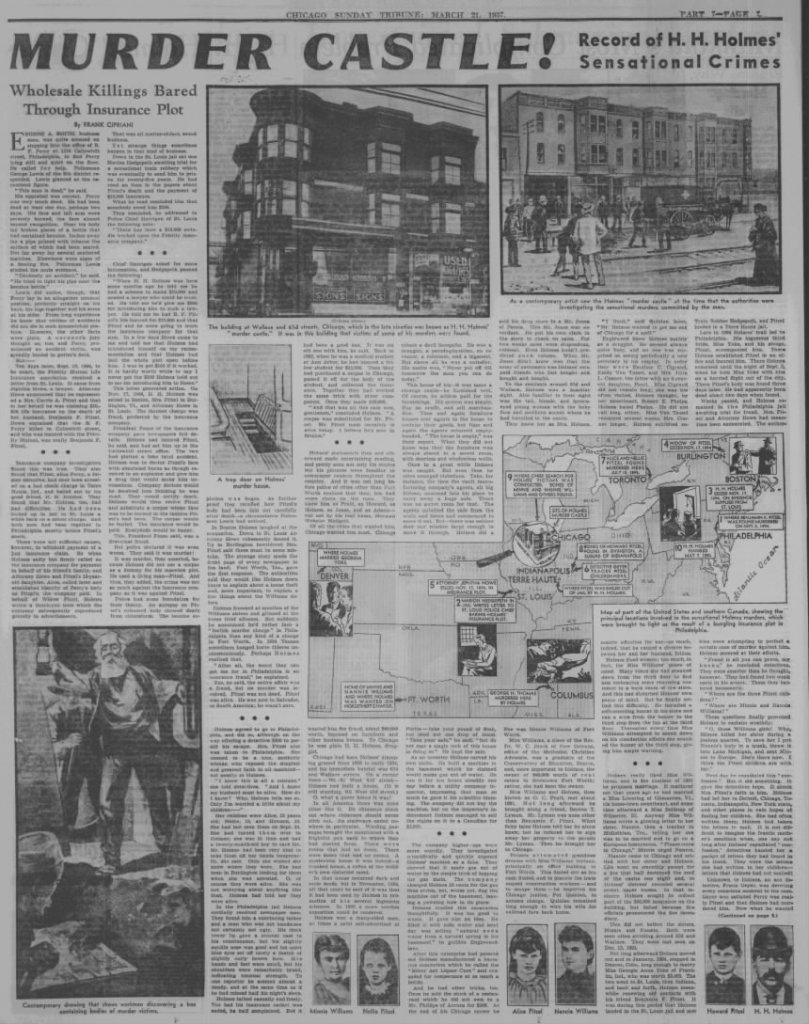
The building was described in a contemporary newspaper article as: “The castle was built admirably for a murder shop. A dumb waiter ran from the third floor to the basement and there were no connections with the dumb waiter on the intervening floors. The conveyance was big enough to admit a man riding upon it. On the top floor in one of the rooms was a gigantic stove. It was eight feet high and three feet in diameter. It was an ideal stove for the burning of a human body. A person could be thrown into the stove bodily and could be burned to nothing. In the basement were quicklime vats. Bodies could be thrown in quicklime and consumed.”
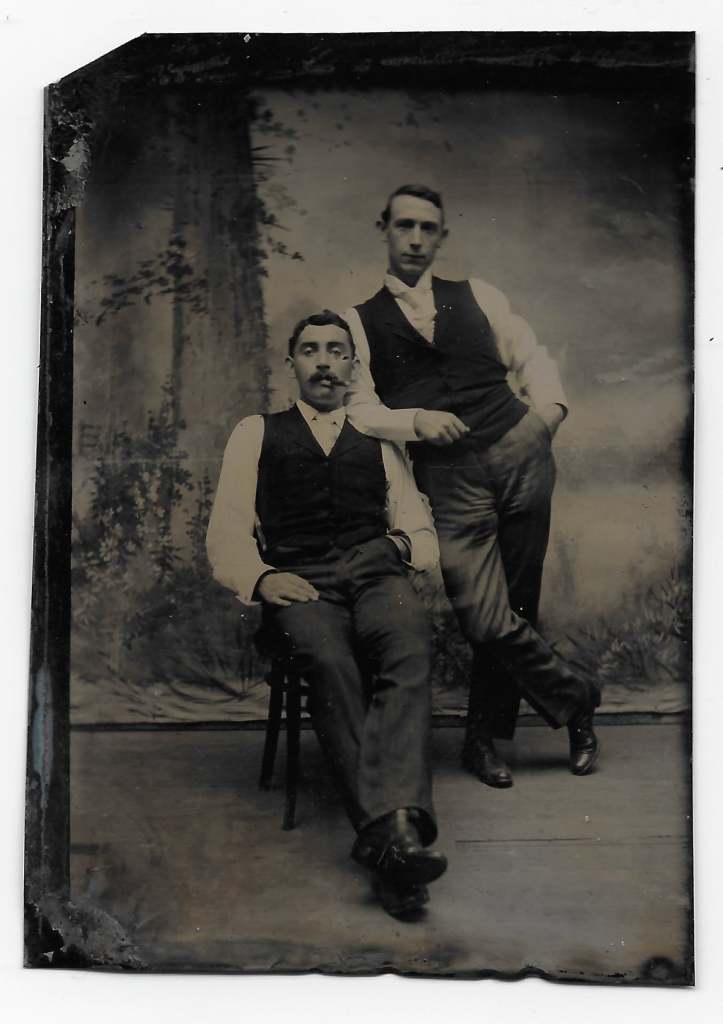
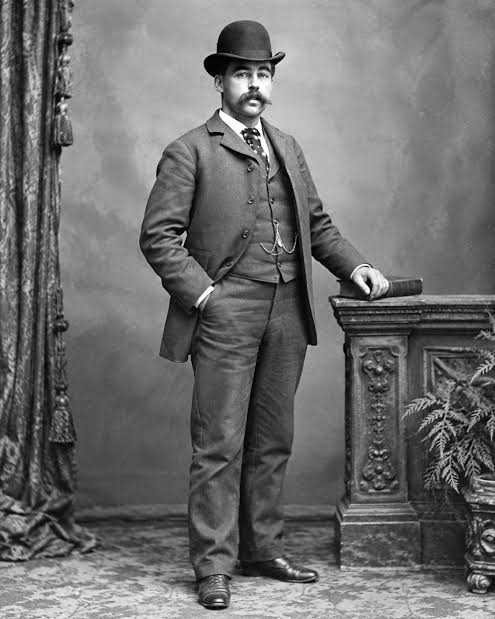
*Tintype Credit: “Brownie’s Long Lost Images” c.Blue Brown (2018).
Patrick Quinlan was the caretaker of that Murder Castle. Police described Quinlan as being “five feet, eight or nine inches tall, slim build with light curly hair, sandy mustache around 38-years-old” at the time. “Pat” Quinlan had done a pretty good job portraying his innocence in the dirty deeds that went on at the Murder Castle. He said that he was only an employee of arch murderer H. H. Holmes. He claimed that he was just the janitor of the Holmes Murder Castle, 701 63rd Street, Chicago, and nothing more. He admitted he had helped build the secret trap doors and lined the killing rooms with asbestos, designed to deaden the sound of dying men and women, but Quinlan insisted that he knew nothing of their purpose, and had no part in the devilish machinations of his boss.
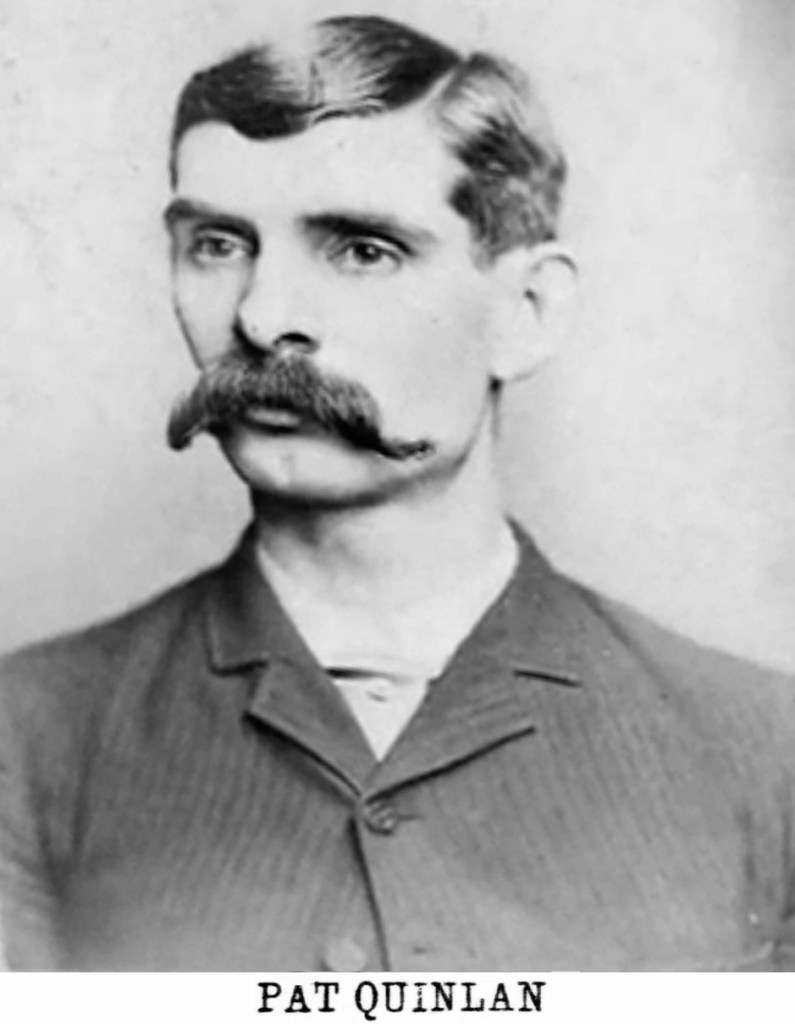
Quinlan was only an ordinary employee who did what he was told unhesitatingly. Quinlan never questioned the authority of his boss, H.H. Holmes. He never asked who the many women were Holmes had visiting him. He never questioned why he would see them come in but never see them go out. He never asked where they went when they disappeared. He was an ideal servant. That was the face Pat Quinlan showed to the authorities and the role he played for the public, but the truth was vastly different. Pat Quinlan was playing games of his own in the Murder Castle.
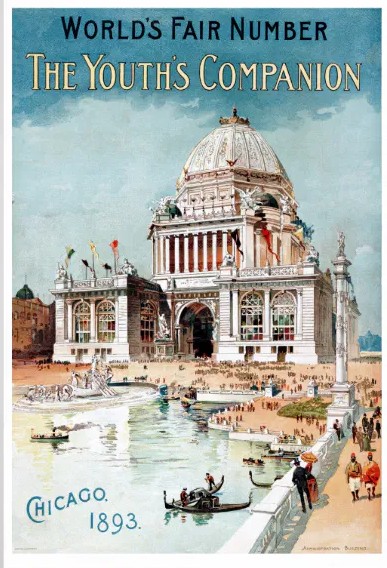
Seems that the married Quinlan liked the ladies as much as his boss did and apparently held them in the same regard. In 1893, he got a chambermaid that worked at the Castle, named Lizzie, pregnant. His wife lived in Ohio, but would soon be joining her husband at the Castle in time to see the 1893 World’s Fair located a short six blocks away. As the time for his wife’s arrival drew ever nearer, heated arguments between Pat and his very pregnant mistress made Holmes aware of the problem. Quinlan asked his boss, Dr. Holmes, if he could deliver the baby and “keep it quiet so the missus don’t find out.” Quinlan’s agitation grew as Holmes paused for a long uncomfortable minute before answering, “I’ll do anything I can Pat.”
The plan to deliver the baby changed days after his revelation to Dr. Holmes. Now Lizzie threatened to tell Pat’s wife of their elicit love affair. Worse, Lizzie had already told her sister. Quinlan went to Holmes and explained the situation in an undisguised effort to take advantage of his boss’s nefarious skills he would later claim he had no knowledge of. Quinlan lured both women to a small room in a remote part of the Murder Castle. He left the two women and met Holmes in the basement where the doctor turned on the open gas jets, filling the room with the deadly invisible killing atmosphere. Within a few minutes the two sisters were dead.
Their bodies were disposed of in the usual manner and without a trace. Quinlan’s problem was instantly solved and his silent loyalty guaranteed forever. Since Quinlan did an admirable job of keeping his mouth shut while proclaiming his innocence, no one will ever know what part he played in the murders at the Castle. What we do know is that Quinlan likely remained quiet for no other reason than fear of Dr. H.H. Holmes. One of the requirements of employment with Holmes was a life insurance policy for $5,000 naming Holmes as beneficiary. Quinlan also knew that the caretaker before him was a man named Robert Latimer who tried to blackmail Holmes after learning of the insurance scams. Pat’s fellow employees told him that Latimer just disappeared one day.
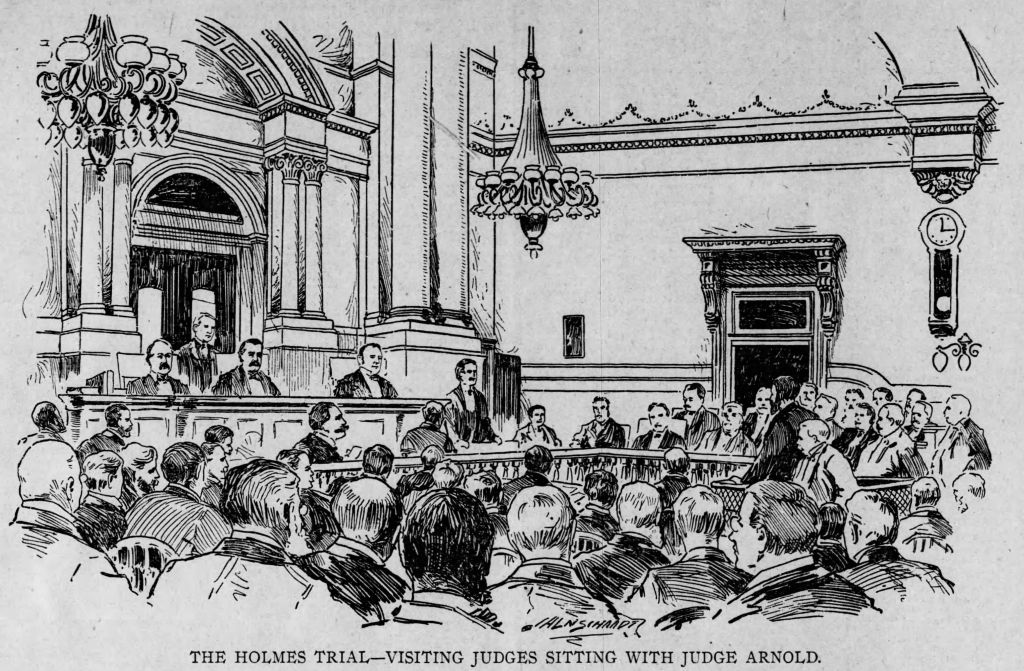
On trial in Philadelphia, Holmes said this of Latimer, his 13th victim: “Robert Latimer, a man who had for some years been in my employ as janitor, was my next victim. Several years previous, before I had ever taken human life, he had known of certain insurance work I had engaged in, and when, in after years, he sought to extort money from me, his own death and the sale of his body was the recompense meted out to him. I confined him within the Secret Room and slowly staved him to death. Of this room and its secret gas supply and muffled windows and doors, sufficient has already been printed. Finally, needing its use for another purpose and because his pleadings had become almost unbearable, I ended his life. The partial excavation in the walls of this room found by the police was caused by Latimer’s endeavoring to escape by tearing away the solid brick and mortar with his unaided fingers.”
In September of 1893, one month before the close of the all-important 1893 Chicago World’s Fair, the Murder Castle caught fire in several different locations simultaneously. True to form, Holmes had insured the building with several companies for a total of $25,000 (which shakes out to $657,000 in today’s money). Investigators discovered strong evidence of a liquid accelerant used to start the blaze. The fire had not spread to the lower floors and the insurance company never paid Holmes’s claim. The fire destroyed the top floor but Holmes was never charged with arson. The fire was the beginning of the end for H.H. Holmes.
Pat Quinlan and the Ghost of H.H. Holmes, Part II
Original publish date October 29, 2015 Republished October 15, 2026
https://weeklyview.net/2026/10/15/pat-quinlan-and-the-ghost-of-h-h-holmes-part-2-2
H.H. Holmes paid for his misdeeds with death by hanging on May 7, 1896. But his former “Murder Castle” caretaker/janitor Patrick “Pat” Quinlan would never escape his own self-made prison. When the Murder Castle caught fire in September of 1893, he was arrested with Holmes but eventually freed. Quinlan was accused of starting the fire (and most likely did) but it was his actions after the fire that tipped off Chicago Police that there may have been something more going on in that building than a botched attempted arson.
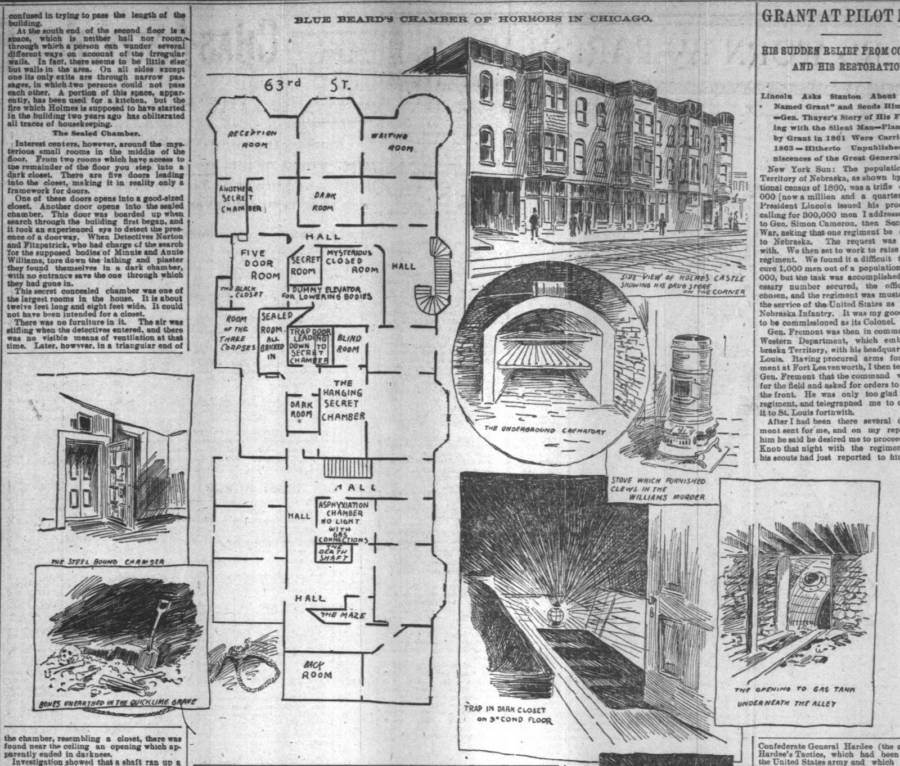
During the fire, many bones were found around Holmes Castle. Holmes explained they were beef bones left over from a time when the flat had been used as a restaurant during the World’s Fair at Chicago. He explained that the huge dumb waiter was used to convey those many pounds of beef. He explained that the asbestos was to make the house fireproof and for insulation. For the moment, Holmes had wriggled off the hook by the use of those crafty lies. He would soon leave town with the ill-fated Pitezel children in tow and would kill 10-year-old Howard Pitezel in Irvington a short time later.
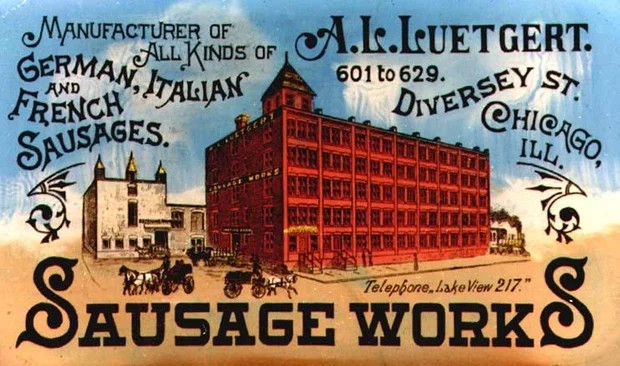
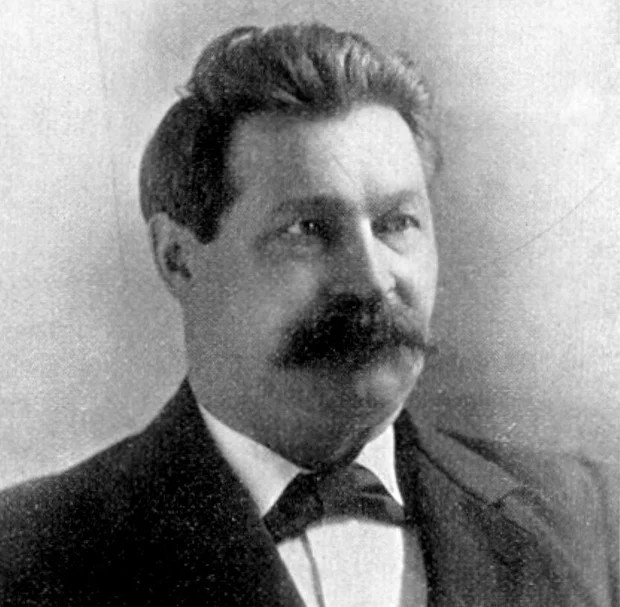
After the fire, caretaker Quinlan took several cartloads of garbage out of the “factory.” The cops searched the dumpster a week later, they were now mostly empty but with traces of obvious human ashes and bone fragments inside. In 1893, forensic science was still a few years away and the discovery of a blood soaked rag in the basement of the castle could set off a plausible legal argument over whether it was blood or paint and a piece of bone was hard to differentiate between human or animal. Ironically, the first use of bone fragments as evidence would happen a few years later in 1897 just blocks from the Murder Castle. Adolph Louis Luetgert (namesake of the A.L. Luetgert Sausage & Packing Company) was charged with murdering his wife and dissolving her body in lye in one of his factory’s sausage vats in 1897. A bit of jaw bone found in the factory (which was thriving at the same time as the Murder Castle) was identified as the remains of Adolph’s wife, Louisa.
Quinlan continued to live in one of the thirty-five bedrooms on the second floor, and the street-level retail shops remained open for business. A whisper campaign proliferated in the area after the World’s Fair left town. The local economy was hurting and now people were suspicious of Dr. Holmes and his questionable predatory business tactics and neighborhood scams. Chicago police were hesitant to investigate the Castle prior to July 1895 for fear of injuring the local construction trade, as Dr. Holmes had been almost continuously adding onto his hotel up until that time.
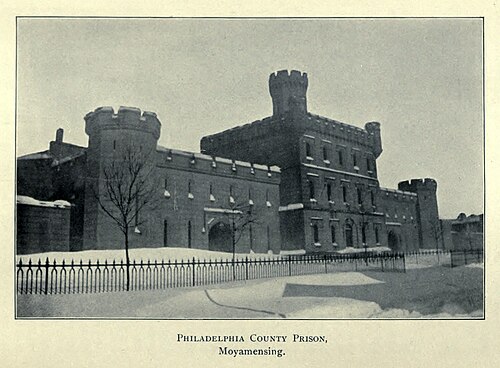
But the reputation of the place as the local haunted house was drawing negative attention by the Chicago press. Many reporters and gawkers broke into the Castle, wandering its maze-like corridors, staring at its grotesqueries, stealing Holmes’ abandoned belongings, and generally destroying it as a crime scene. The vandals drove Pat Quinlan out of the Murder Castle for good. On August 2, 1895, after Holmes was secured away in Philadelphia’s Moyamensing Prison, Patrick Quinlan (and ironically his wife) turned state’s evidence and testified against his former boss. Quinlan, now comfortable in the knowledge that his tormentor H.H. Holmes was safely behind bars, described his former boss to police detectives as a “dirty, lying scoundrel” who should be hung for his crimes and that “he (Quinlan) would only be too willing to spring the trap.”
Quinlan gave testimony at Holmes’ trial that he was aware of the practice of stealing bodies from Western Michigan graveyards under the direction of Holmes. These bodies were then sold to local college and university medical schools, no questions asked. Quinlan’s wife testified to this too. Both claimed they were aware of the practice but did not participate in the actual grave robberies. It was reported Quinlan and another man only received the bodies and participated in the “remaking and lining” of coffins for corpses before sale for medical use.
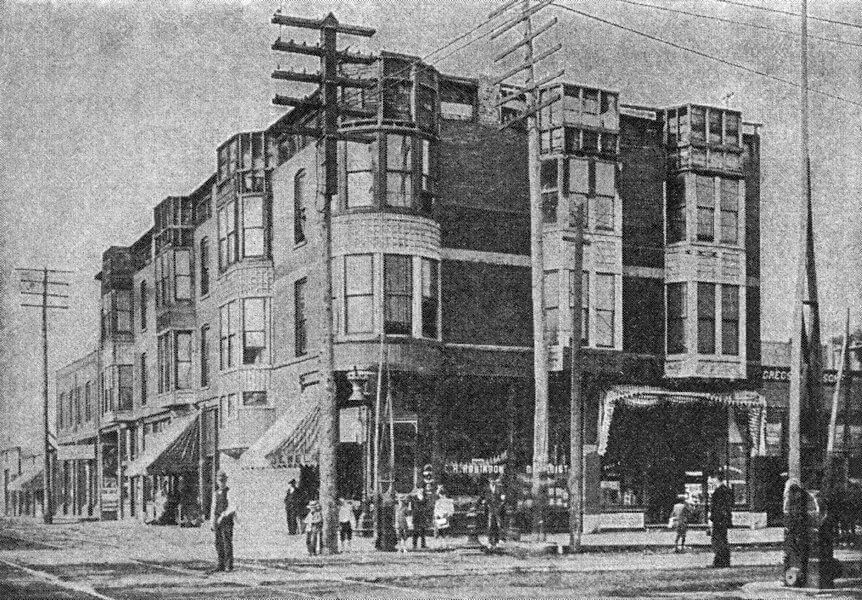
The fire didn’t actually level the building (as most books say) but it did destroy a lot of evidence. Pat, along with his wife, continued to live in the burned out shell of the old Murder Castle while Holmes was on trial. Soon, the negative attention and gangs of marauding vandals roaming through the creepy old building at all hours of the day and night drove the Quinlan’s from the building. When the Quinlan’s went back to his home state of Michigan, Pat found himself the center of suspecting eyes and backhanded whispers. Everywhere he went, he was stared at and treated as fodder for gossip. While the rest of the world forgot Holmes, the little town where Pat lived continued to speculate about how much he really knew.
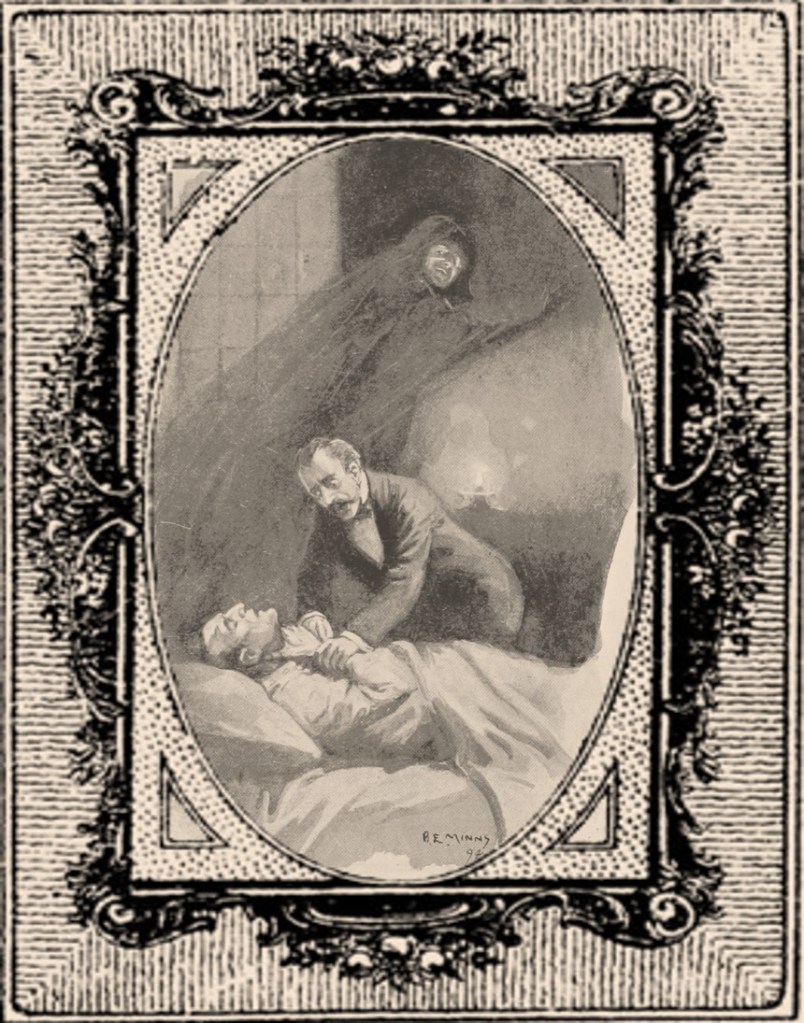
His closest friends said that Pat Quinlan often reproached himself for his part in the dastardly affair. He told friends and family that he blamed himself for not suspecting Holmes and turning him in to the police. He was clearly dealing with demons all his own many years after his evil ex-employer was dead and buried 10 feet deep under six tons of concrete (to discourage grave robbers). For nineteen years Quinlan could not sleep. At night he would wake up screaming and covered with sweat. He experienced night terrors almost every night. He would call for help and when a light would be brought to his room or when the electric switch would be turned on he would recount how he was “attacked while half asleep by strange hallucinations”.
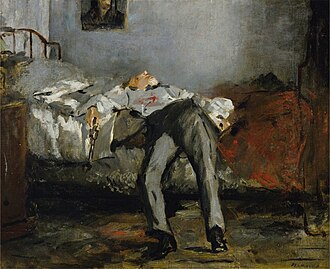
For nineteen years this man had been unable to sleep peacefully because of the awful experiences he endured during his employment by Holmes and during the period immediately after. While he remained in Chicago, Quinlan claimed that the Castle was haunted by Holmes’ many victims. He told friends that his former employer would visit him in his sleep, that the victims roamed the halls and pecked on the windows of the Castle. That the spirits followed him even after he moved back to a farmhouse in his Portland, Michigan hometown. By the spring of 1914, Pat Quinlan was a broken man. On March 7, 1914 Patrick Quinlan, the former caretaker of the murder castle, picked up a slip of paper and scribbled a note reading, “I could not sleep.” He then quietly committed suicide by drinking from a bottle of pesticide whose active ingredient was deadly strychnine. Pat’s facial muscles stretched tight and a peculiar metallic taste flooded his mouth. His calf muscles began to stiffen and convulse, his toes curled up under his feet and as his head thrashed back-and-forth, blinding flashes of light darted across his eyes. His body went ice cold as he finally drifted off into that final sleep. Witnesses claimed that in death, he looked as though he had been carried there by the ghosts of the slain women of the Castle he helped to build. Pat Quinlan had killed himself and his death did not cause much of a stir. His name would be forgotten.
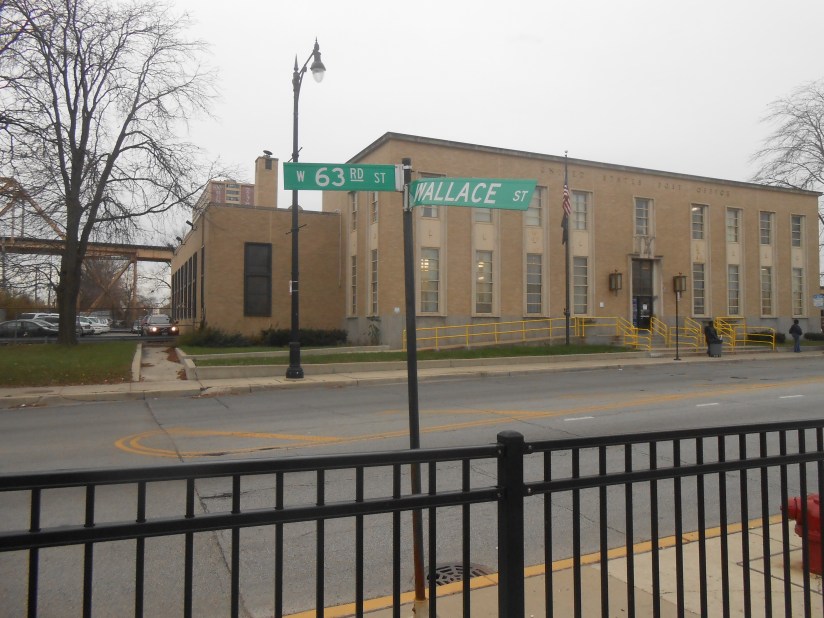
And what became of the Murder Castle, the building that had seen so much misery and pain? It stood for another twenty years on the corner of 63rd and Wallace on the southside of Chicago, a city section known as Inglewood. Of course it was known as the most haunted building in the area while it stood. The retail shops remained relatively unchanged and open on the ground floor but the two upper floors were changed radically. The building remained until the U.S. government purchased it in 1937. A United States post office was built on the site in 1938 and since then it has been the scene of poltergeist activity in the basement tunnels where the Murder Castle killing zone once stood. Chicago paranormal adventurers have heard the sounds of moans and crying coming from the site and a ghost chaser friend of mine claims to have seen one actual, full-body apparition there. No trace of the Murder Castle remains and the hauntings there may be the only evidence the of the murders that were left behind.