
Original publish date: March 13, 2013
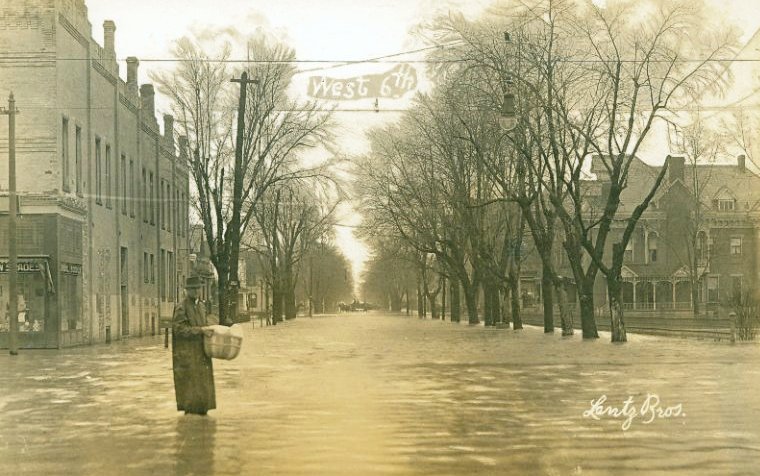
Oh, how it rained. For 48 straight hours, it rained. Martha Duncan stood on the porch of her house, located on the north side of Fourth Street between State and Pennsylvania, wondering if it was ever going to stop. It was Monday March 24th, 1913 in Greenfield, Indiana, nearly 60 degrees outside and the normally shallow waters of nearby Potts Ditch were creeping closer-and-closer by the minute. By eleven o’clock that night, she was moving furniture and rolling up carpet. By one o’clock the water was within a few inches of the floor. She managed to save everything but her piano before the Fourth Street bridge over Potts Ditch was swept off its moorings and floated downstream.
On State Street, the large front yard of the John Ward Walker home, known as “Walker’s Hill”, was now a lake. Walker was a prominent local merchant and one of the founders of the Greenfield Banking Company in 1871. The Vawter and Selman homes, properties adjoining Potts Ditch, had to be evacuated and were quickly overtaken by flood waters. The Selman barn looked like an island in the newly created waterway.
 One hundred years ago this week, the great flood of 1913, or “March Flood” to locals, became the worst flood in Indiana history. In Greenfield, James Whitcomb Riley’s storied Brandywine Creek flowed over the National Road like a raging river; it’s branches, like Potts Ditch, spread water through town ripping away all but one bridge, the East South Street bridge, the town’s newest created just the year before.
In March of 1913, Greenfield was a small agricultural community located at the headwaters of the White River’s East Fork. The news of the year was the purchase of a 156-acre tract of land one mile west of Greenfield by the Eli Lilly Biological Laboratories. In time, Spanish-style structures would start popping up all over the property. When completed, the snow-white, red-tile roofed buildings awaited the arrival of test animals to be quartered within them in preparation for the manufacture of antitoxins and vaccines. In the original buildings, there would be space for 30 horses, 18 calves, 3,000 guinea pigs, 500 rabbits and many other small animals. Eventually, the site would grow until it had 70 buildings on 800 acres. Soon, by late 1913, immunization of horses and calves would begin.
But on March 24, 1913, the flood was the big news in Hancock County. Greenfield residents stayed up all that Monday night to watch as the river steadily breached it’s banks. In 1913 farmers pastured their cattle in many places along the town’s waterways and undoubtedly many were lost in the rushing torrents. With every passing hour, the Brandywine rose higher and higher as the rain mercilessly poured down. A little past eleven o’clock on that “Black Night of Terror”, a train passed over the Brandywine via the Pennsylvania Railroad Bridge. A short time after the caboose crossed safely over, a lone watchman held his red lantern over the chasm now formed in the dark void where the bridge had stood just moments earlier. The bridge had been carried away by the raging flood waters.
 The rain did not stop until 5:30 a.m.. Tuesday, March 25th, but the Brandywine continued to rise perilously minute by minute until it crested at 6:30 a.m.. The arch bridge at Fifth Street was now underwater and the flood poured over it, flooding barns and chicken houses between Fifth and State streets. The employees of the four-story Columbia Hotel, built in 1885 at 118 East Main Street and considered the town’s most luxurious, were now furiously bailing water out of the basement while pacifying nervous guests. The newly built Greenfield Hotel and nearby Hinchman wagon store were dealing similarly. Soon, Bert Orr’s grocery, the Monger garage, the Clayton & Davis cement works and the South Street Methodist Church (now the Trinity Park Methodist Church) were soaking in muddy water.
Although the new East South street bridge survived the floods, it was for a time under more than a foot of water. According to the April 3, 1913 “Greenfield Republican” newspaper, 25-year town resident John Mulvihill said that he’d never seen the water so high. Mulvihill pointed to a corn crib in the Henry Fry barn on East Main Street that had been built above all previous high water marks that was now underwater. Another local farmer, J.P. Knight, whose farm was on the banks of the Brandywine south of the National Road, said he lost all of the grain stored in his barn and a pile of gravel worth an estimated $ 300 when both were washed away downstream.
The railcars on the Terre Haute, Indianapolis and Evansville railroad, known popularly as the “Interurban line”, now lay stranded at different points along the road between Greenfield and Richmond. In addition, the traction line bridges were washed out at many points. Travel, phone service and mail delivery ceased and for awhile, Greenfield was cut off from the outside world. To make matters worse, just hours after the rain stopped, the temperature dropped by over 20 degrees and it began to snow. By the 27th, two days after the devastating flood waters ceased, there was 1.5 inches of snow on the ground in Greenfield.
An estimated 5 to 8 inches of rain fell in a 48 hour period. It was late March in Indiana. The winter of 1913 had been particularly harsh in the Hoosier state. The Spring thaw was slow in coming and the water that rained down on Greenfield that weekend fell on frozen earth with no place to go. No place to go but downstream; to Indianapolis.
NEXT WEEK- PART II


 I often tell friends that I won my wife Rhonda’s heart back in 1988 when I walked into her store wearing a Dukakis / Bentsen for President campaign pin during the election. She gasped and asked me, “Where did you get that?” to which I reached into my pocket, pulled an identical pin out and presented it to her. Pat tells a similar story about meeting Otis for the first time in the early 1960s. “He walked up to me and asked me if I voted for John F. Kennedy” to which I answered “No.” He asked me “Well, why not?” and I said, “because I wasn’t old enough.” From that point on, the pair were inseparable while working for LBJ, RFK, McGovern culminating with Otis himself being swept into office with the Jimmy Carter election in 1976.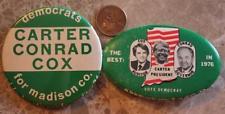







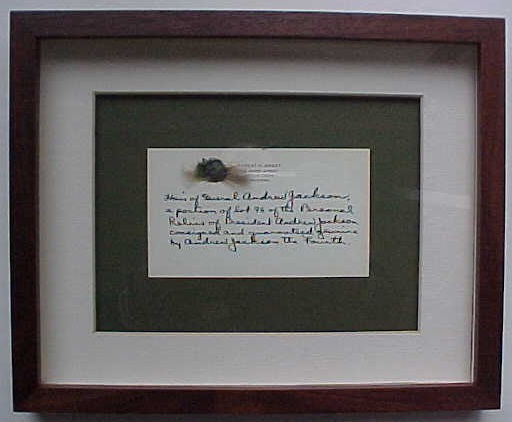
 Long story short, I won the item. Needless to say, I was excited. Hours turned into days and days turned into weeks as I waited for the General’s lock of hair to arrive. It came via the United States postal service and I could hardly wait to get my first peek at it. Turns out, the item was far more attractive than I expected (for a lock of dead guy’s hair that is). The thick lock of reddish grey hair is about 1.5 inches in length and looks to contain somewhere between 25 and 50 strands of hair. The blue wax seal features an “S” initial that was undoubtedly applied by Forest H. Sweet himself. I could hardly wait to reveal the relic to my children. Sadly, the unveiling was less than I expected. “That’s nice daddy” was the general consensus. It was like buying a kid a Christmas present only to find that they are more interested in playing with the shipping box.
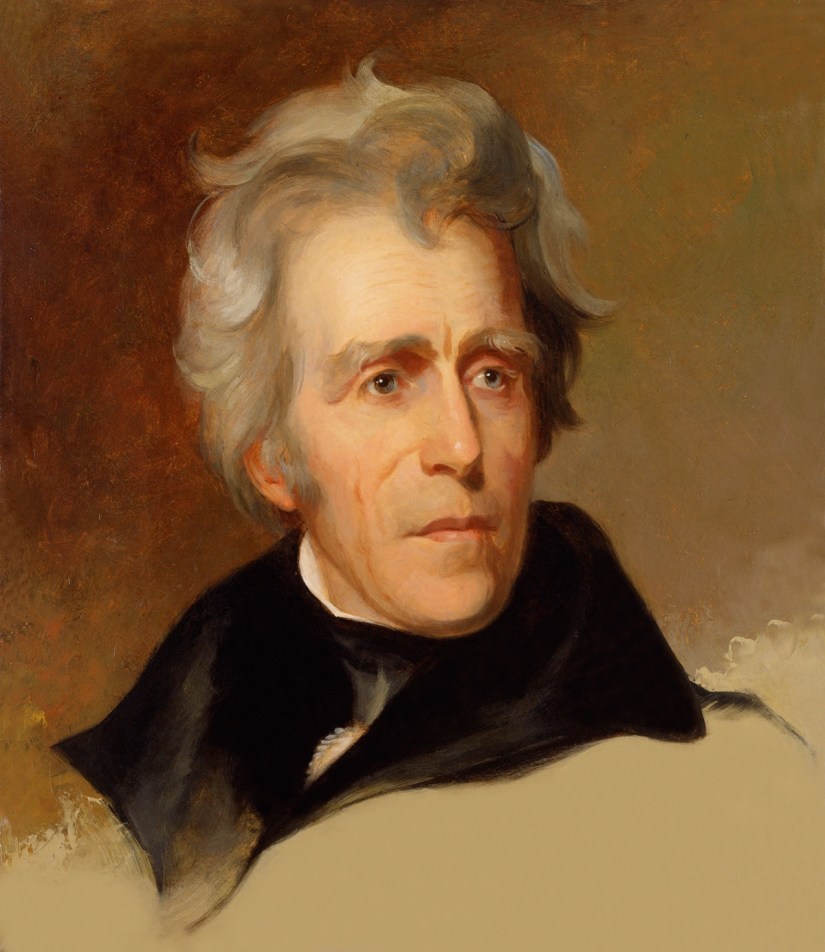 I simply could not resist researching (my wife might say obsessing over) my cherished new relic. Much to my surprise, while searching the net I actually found a website and active blog devoted to “That Glorious Mane“. The website, called “American Lion”, is associated to Andrew Jackson’s hair in name only. But it does touch on the macabre hobby and, more importantly, vindicates my strange purchase by discussing famous locks of hair that have sold recently at auction. In December of 2011, 12 strands of Michael Jackson’s hair, reportedly fished out of a shower drain at New York’s Carlyle Hotel after Jackson stayed there for a charity event during the 1980s, sold at auction in London for around $1,900 to an online gaming casino. The casino plans to use the hair in the construction of a special roulette ball (I don‘t understand it either).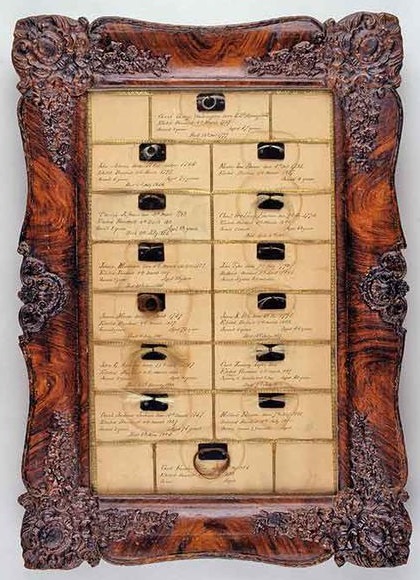
 In addition, Jackson suffered from dysentery and malaria contracted during his military campaigns. He was known to have an addiction to coffee, enjoyed a drink or two on occasion, and incessantly chewed tobacco to the extent that brass spittoons were everywhere in the White House. Despite Doctor’s orders, Jackson refused to give up these three vices, regardless of the fact that they gave him migraines. The afore mentioned bullets undoubtedly caused the General to suffer from lead poisoning, quite literally. Luckily, 19 years after that 1832 duel, the bullet causing the most damage was extracted in the White House without anesthesia. Afterwards, Jackson’s health improved tremendously .
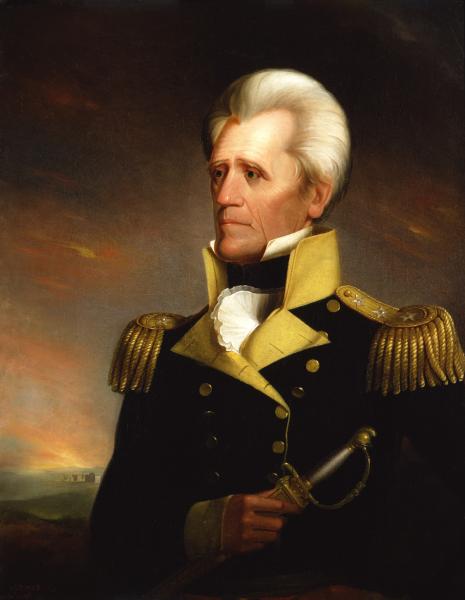 For years, Jackson treated his aches and pains by self-medicating with salts of mercury (often used as a diuretic and purgative in the mid 19th century), as well as ingesting sugar of lead (a lead acetate-used as a food sweetener). Historians have long believed that Andrew Jackson slowly died of mercury and lead poisoning from two bullets in his body and those medications he took for intestinal problems. As proof, historians believe that his symptoms, including excessive salivation, rapid tooth loss, colic, diarrhea, hand tremors, irritability, mood swings and paranoia, were consistent with mercury and lead poisoning. One of Jackson’s doctors liked to give the lead laden sugar to both Andrew and his wife Rachel. They not only ingested it, but used it to bathe their skin and eyes. Jackson’s well-documented, unpredictable behavior were textbook signs of mercury poisoning. Historians described these signs as “thundering and haranguing,” “pacing and ranting” and “at one moment in a towering rage, in the next moment laughing about the outburst. “
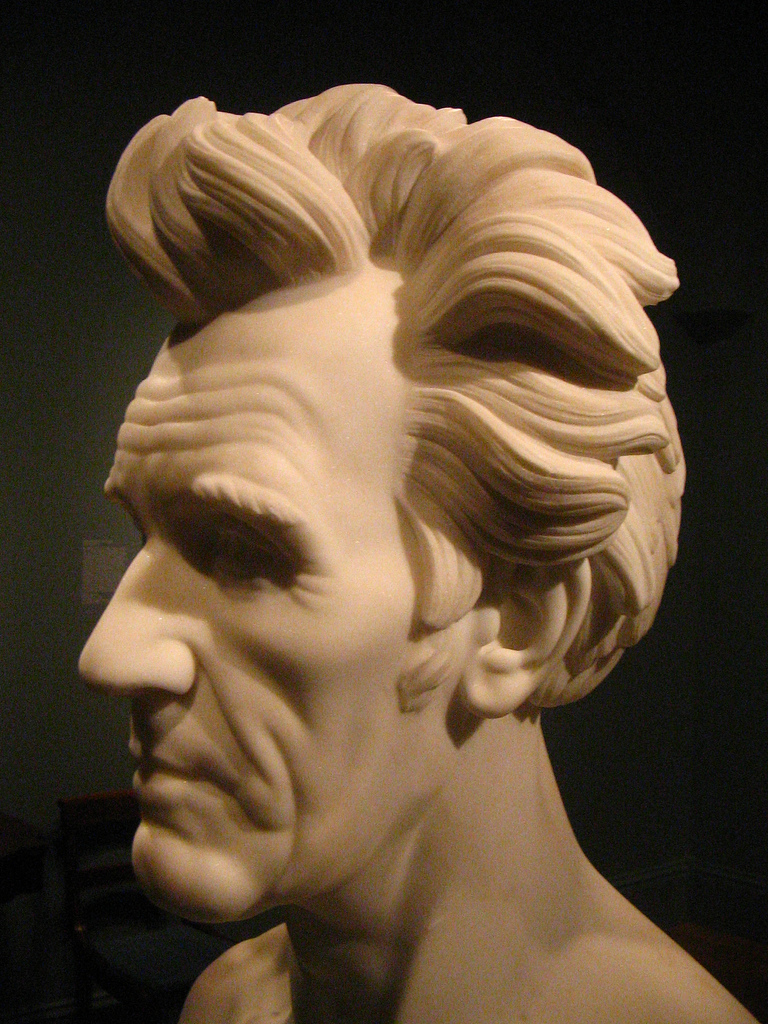 The submitted strands were taken nearly a quarter century apart for better comparison to check for elevated levels of the heavy metals. The first sample was from 1815, the year of Jackson’s victory at the Battle of New Orleans, the second was from 1839, toward the end of Jackson’s life. According to the American Medical Association, while the mercury and lead levels found in the hair samples were “significantly elevated” in both samples, they were not toxic, said Dr. Ludwag M. Deppisch, a pathologist with Northeastern Ohio University College of Medicine and Forum Health. Officially, Andrew Jackson died at The Hermitage on June 8, 1845, at the age of 78, of chronic tuberculosis, dropsy, heart disease and kidney failure. In other words, the General died a natural death after leaving an extraordinarily unnatural life.
 Alan E. Hunter