
 Original publish date: July 11, 2016
On July 16, 1967 (49 years ago this Saturday), the oddest concert pairing in music history came to an end: Jimi Hendrix dropped out as the opening act for The Monkees. Yes, it’s true. During the summer of 1967 the Jimi Hendrix Experience joined the as-seen-on-tv band The Monkees for a short 8-gig run of concerts. The king of psychedelic guitarists joined the tour on July 8, and lasted eight shows before leaving after three concerts at the Forest Hills Tennis Stadium in New York City on July 14, 15 and 16. As you may have already deduced, this absurd, hallucinatory pairing didn’t last long.
The Monkees’ 1967 summer tour marked the pinnacle of Monkeemania. On June 9, before the tour officially kicked off, the band played a show at the Hollywood Bowl, their tinseltown birthplace, in front of an adoring audience of over 17,000. Just five days earlier, The Monkees rocked the Emmy Awards by taking home two awards, including “Outstanding Comedy Series.” The tour commenced with the band’s third album, “Headquarters”, perched at #2 on the charts behind The Beatles’ Sgt. Pepper’s Lonely Hearts Club Band.
This unlikely concert bill was the brainchild of Hendrix’s manager, Mike Jeffery, who was seeking greater public exposure for his young client who was fast becoming a legend in the UK, but was an unknown in his native United States. For their part, The Monkees jumped at the opportunity. It was at a dinner party in John Lennon’s UK house where Monkee Mike Nesmith heard Hendrix play for the very first time. Nesmith recalled: “I was in London visiting John Lennon, and I was having dinner with him, (Paul) McCartney and (Eric) Clapton. And John was late. When he came in he said, “I’m sorry I’m late but I’ve got something I want to play you guys.” He had a handheld tape recorder and he played “Hey Joe.” Everybody’s mouth just dropped open. He said, “Isn’t this wonderful?” So I made a mental note of Jimi Hendrix, because Lennon had introduced me to his playing.” Nesmith failed to mention that his fellow Monkees Peter Tork and Micky Dolenz were at the dinner too.
The Monkees became instant Hendrix fans, following Jimi to California to witness his legendary performance at the Monterrey International Pop Festival in June 1967 which culminated with Jimi lighting his guitar on fire and holding it over his head. “Micky said, ‘We gotta get this guy,’” recalled Tork in the documentary The Monkees Story. “Micky was just enthusiastic about his music.” They encouraged their own manager to invite the Jimi Hendrix Experience to join their upcoming U.S. tour. Hendrix obviously didn’t have much to do with the arrangement. He’d made his opinion of the Monkees clear several months earlier in an interview with Melody Maker magazine: “Oh God, I hate them! Dishwater….You can’t knock anybody for making it, but people like the Monkees?”
Today, it’s easy for most hardcore music fans to dismiss The Monkees as bubble gum for the ears. But whatever you think of The Monkees’ music, you must admit that their tunes are catchy and that the band was anything but ordinary. After all, if you were at all shocked by the Hendrix connection, then you must be really stunned by the fact that the Beatles and Eric Clapton were among their legion of fans, let alone personal friends and peers.
True, The Monkees were originally formed as actors in a sitcom, whom Dolenz described as “an imaginary band… that wanted to be The Beatles,” but “was never successful.” On Sept. 8-10, 1965 an ad for cast members ran in Daily Variety and The Hollywood Reporter magazine. The ad read: “Madness!! Auditions. Folk & Roll Musicians-Singers for acting roles in new TV series. Running Parts for 4 insane boys, age 17-21. Want spirited Ben Frank’s types. Have courage to work. Must come down for interview.” Micky Dolenz, Peter Tork, Davy Jones and Michael Nesmith were selected out of 437 applicants.
Dolenz and Jones were actors while Tork and Nesmith were the true musicians of the group. Harry Nilsson, David Crosby and Stephen Stills auditioned for the sitcom but were not chosen. Popular legend claims that Neil Diamond and Charlie Manson also tried out, but that is not true. Manson was in jail and Diamond’s connection to the band was through his authorship of the hit songs “I’m a Believer” and “A Little Bit Me, a Little Bit You.”
However, it wasn’t long before the four members had mastered their instruments and began writing their own original songs. Overnight, The Monkees had evolved from a comic, lip-syncing boy band into genuine pop stars. Dolenz once described it as “the equivalent of Leonard Nimoy really becoming a Vulcan.” In the summer of 1967 the band embarked on a 29-city tour of the United States (the closest they ever came to Indianapolis was Chicago & Cincinnati). As improbable as it sounds today, the pairing of Hendrix and The Monkees actually sense. The Monkees wanted street cred and Hendrix needed an introduction to U.S. audiences. The Seattle-born Hendrix was known to music’s inner world as a touring musician and session player, but stardom in America still eluded him.
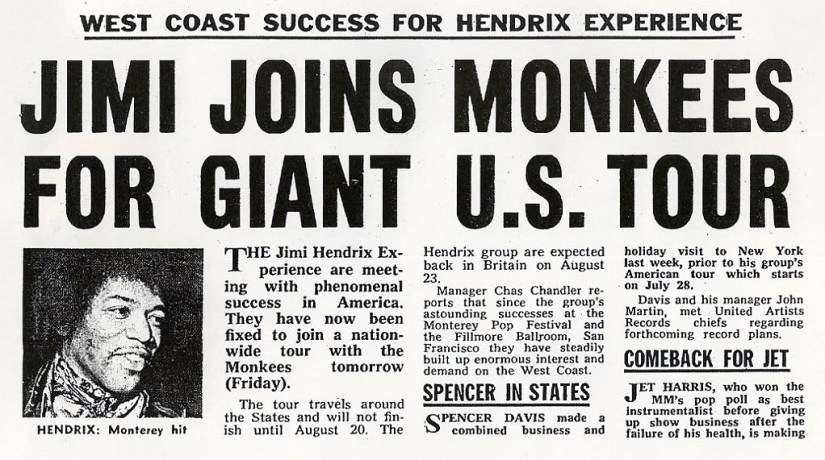 Jimi joined the tour on July 8 in Jacksonville, Florida, after The Monkees returned from three gigs in England. Now, imagine being a Monkees-loving teenager wedged into a sweaty, darkened, cram-packed concert hall anticipating the arrival of your favorite TV-pop band. Wearing your Monkees bubblegum machine pins, flipping through your official Monkees trading cards and holding your hand lettered poster professing your love for one Monkee or another. The curtain rises and this new guy Jimi Hendrix storms the stage to melt your face off while playing the guitar with his teeth!
Predictably, the reception given to Hendrix by Monkees fans (mostly young kids dragging along their parents as chaperons) was less than worshipful. As Mickey Dolenz later recalled, “Jimi would amble out onto the stage, fire up the amps and break out into ‘Purple Haze,’ and the kids in the audience would instantly drown him out with ‘We want Davy!’ God, was it embarrassing.” The Monkees’ young fans were confused by the overtly sexual stage antics of Hendrix, and when he tried to get them to sing along to “Foxy Lady” they stubbornly screamed “Foxy Davy!”
The fans’ chilly reception not withstanding, tales from the tour reveal that everyone involved got along great. “You can’t imagine what it must have been like for an act like Jimi Hendrix opening for the Monkees,” Dolenz wrote in his autobiography I’m a Believer. “It was evident from the start that we were witness to a rare and phenomenal talent. I would stand in the wings and watch and listen in awe.” Peter Tork recalls, “He was such a sweet guy. It was really just a pleasure to have him around for company.” But the group’s young audiences, as well as their parents who often accompanied them at shows, didn’t feel the same way.

“[The parents] were probably not too crazy about having to sit through a Monkees concert,” said Dolenz, “much less see this black guy in a psychedelic Day-Glo blouse, playing music from hell…then lighting it on fire.” As for The Monkees, they pushed for Jimi Hendrix to open for them simply because they wanted to watch him play every night. The boys would show up early just to witness greatness. Tork later said that “it didn’t cross anybody’s mind that it wasn’t gonna fly…And there’s poor Jimi, and the kids go, ‘We want the Monkees, we want the Monkees.’ We went early to the show and listened to what this man could do because he really was a world class musician.” But in reality, few of the anxiously screaming Monkees fans cared to sit through an act they could neither comprehend nor appreciate.
 The Jimi Hendrix Experience experiment lasted just eight of the 29 scheduled tour dates. After only a few gigs, Hendrix grew tired of the “We want the Monkees” chant that met his every performance. Matters came to a head a few days later as the Monkees played a trio of dates in New York. On Sunday July 16, 1967, Jimi flipped off the audience at Forest Hills Stadium in Queens, threw down his guitar and walked off stage, leaving Monkeemania forever in his wake. After all, “Purple Haze” and Are You Experienced? were climbing the American charts, and it was time for him play for audiences who wanted to see him. He asked to be let out of his contract, and he and the Monkees amicably parted ways.
No great loss for either band. A couple months later, Melody Maker presented Hendrix with a”World’s Top Musician” award. The Monkees sitcom was canceled in 1968, but the band continued to record music through 1971. Hendrix, of course, went on to achieve super stardom before dying three years later. The Rock and Roll Hall of Fame describes Hendrix as “arguably the greatest instrumentalist in the history of rock music”. Despite the fact that The Monkees have sold more than 75 million records worldwide and at their peak in 1967, outsold The Beatles and The Rolling Stones combined, the Rock and Roll Hall of Fame refuses to recognize them. Funny how things work out sometimes, isn’t it?
 Original publish date: December 18, 2016
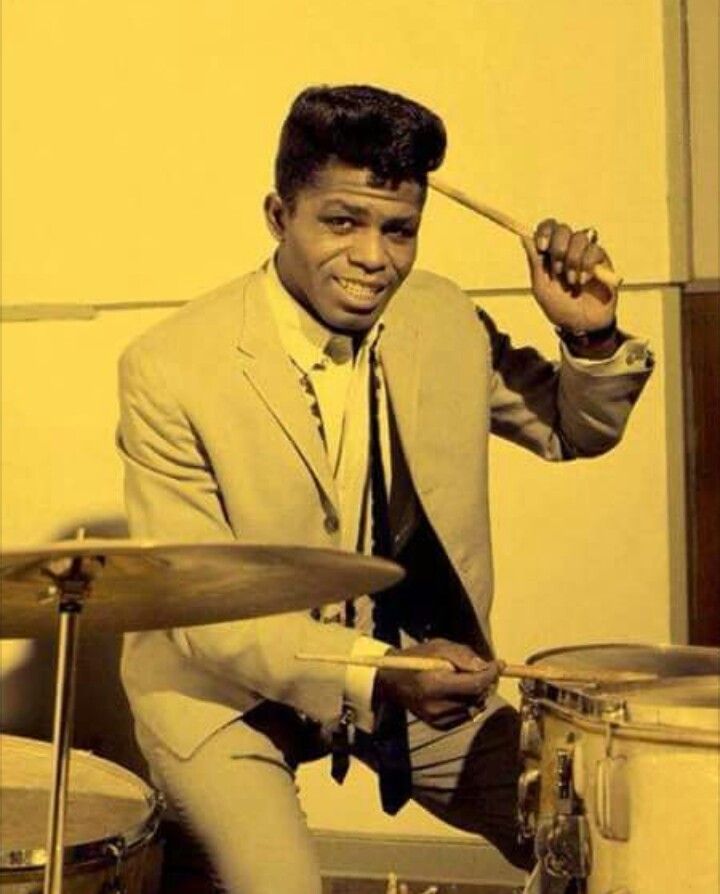 By 1968, James Brown was much more than an important musician; he was an African-American icon. He often spoke publicly about the pointlessness of rioting. In February 1968, Soul Brother No. 1 informed Black Panther leader H. Rap Brown, “I’m not going to tell anybody to pick up a gun.” Brown often canceled his shows to perform benefit concerts for black political organizations like the Southern Christian Leadership Conference (SCLC). In 1968, he initiated “Operation Black Pride,” and, dressing as Santa Claus, presented 3,000 certificates for free Christmas dinners in New York City’s poorest black neighborhoods. He also started buying radio stations.
 Except for a brief period during the mid-1960s when Brown wore his hair in a traditional afro as a temporary form of protest, for most of his career, James Brown had his hair “marceled” aka straightened or conked. The conk (derived from congolene, a hair straightener gel made from lye) was a hairstyle popular among African-American men. This hairstyle transformed naturally “kinky” hair by chemically straightening it with a relaxer (sometimes the pure corrosive chemical lye), so that the newly straightened hair could be styled in specific ways.
 Original publish date: June 26, 2014
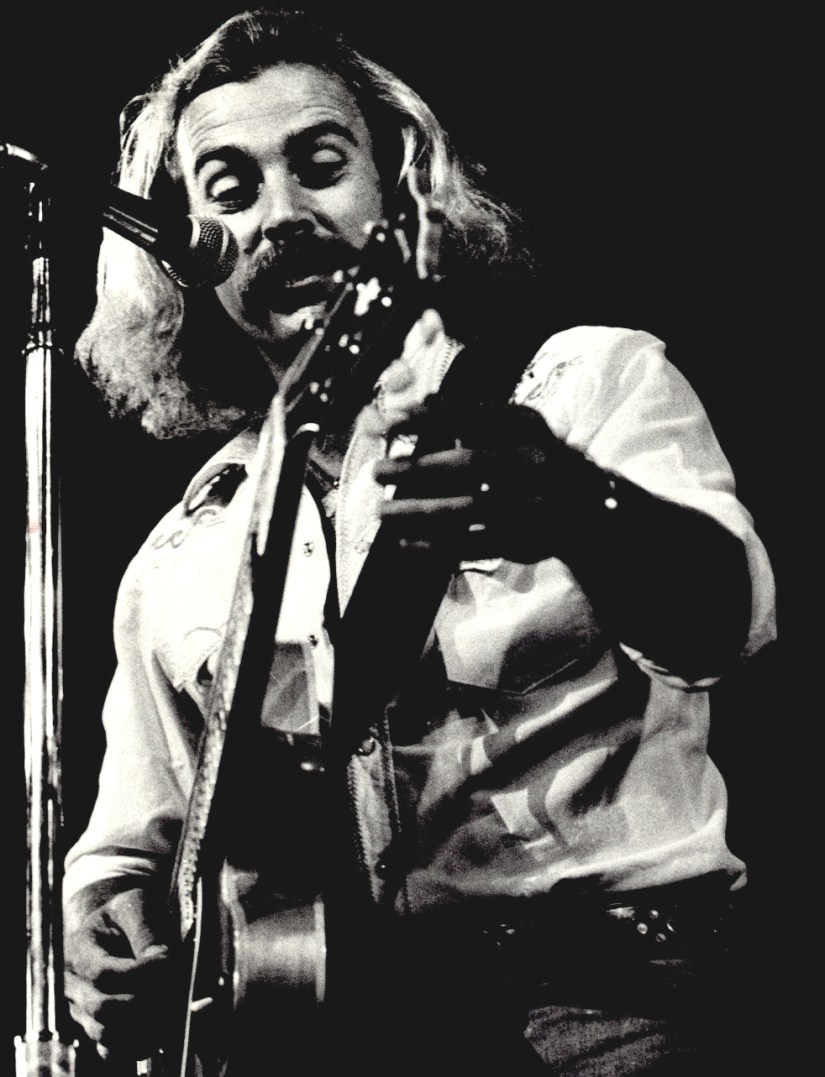 Buffett himself tells the story on his fan website, in a 1975 interview for Rolling Stone and in his own biography. “We’re there dining and dancing. Sammy Creason (Drummer) was with me (other accounts say Kris Kristofferson’s bass player Terry Paul was there too), so we provided just a gala of entertainment. Me on acoustic guitar so drunk I couldn’t hit the chords and him just pounding the drums out in 3-quarter time. Ran everybody out. We got the screaming munchies and we were going to Charlie Nickens to eat. And I couldn’t find my rent-a-car, which was parked somewhere amidst thousands of cars in the parking lot of the fabulous, plush King of the Road hotel. It was a little bitty car. It was hiding among many big ones there. And there was a Tennessee Prosecutors convention going on there. If they had made it to room 819 they would’ve had a closed door case.
 I was not scared of this individual. I just thought he was some ex-football player turned counselor. And Sammy said “look whatever damage we did ABC will pay for everything” which was awfully generous of Sammy since he didn’t have the authority to say so. Being a good company man I took up for my company and said “No they won’t. I’m still gonna beat your a*s if you don’t leave us alone”. With that he pulled up then stuck his big head and his hand in and grabbed me by my hair until it separated from my head. I had a big bald spot on the back of it and I looked like a monk for about 3 months. Then he punched Sammy right in the nose. We knew he wasn’t kidding. So Sammy defended himself bravely with a bic pen. He starts stabbing at this man’s arm trying to get it out of the window because we couldn’t start the car because with the new modern features of ‘74 automobiles you can not start your car unless your seat belt’s buckled and we were too drunk to get ours hooked up.
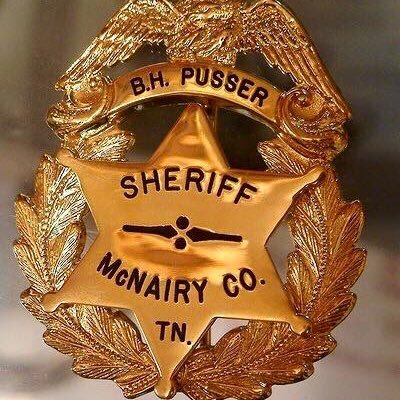 If you don’t recognize the name Buford Pusser, the epic films made about his life might ring a bell. Buford Hayse Pusser was the Sheriff of McNairy County, Tennessee from 1964 to 1970 and the subject of the film “Walking Tall”. Pusser, a 6 feet 6 inch tall 250 pound former professional wrestler, became known for his virtual one-man war on moonshining, prostitution, gambling, and other vices on the Mississippi-Tennessee state-line against the Dixie Mafia and the State Line Mob. By the time he encountered Buffett, Pusser had already killed two men.
 Original publish date: April 7, 2017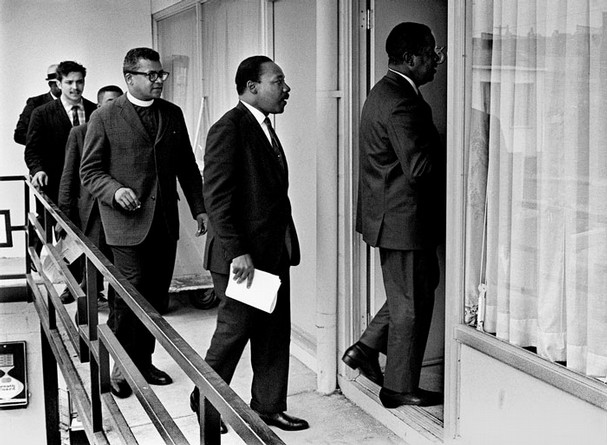
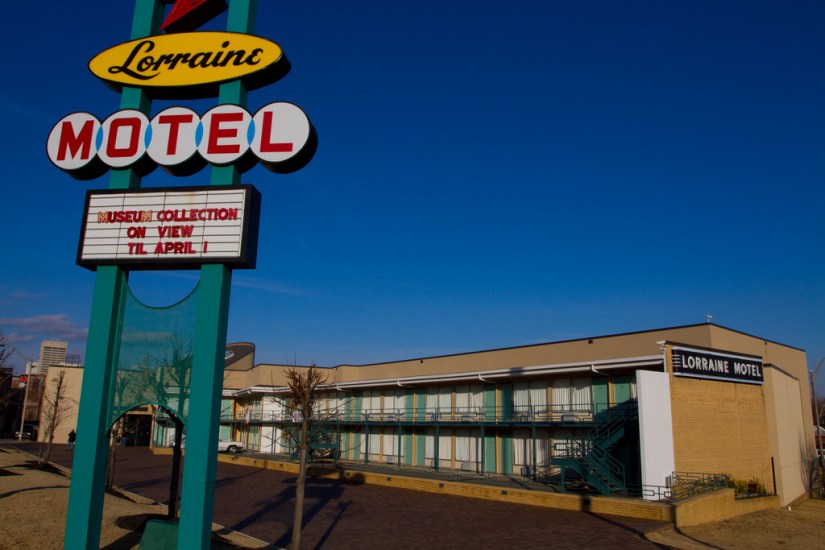
 Jacqueline believed the Lorraine should be used for helping the poor and needy, rather than a celebration of Dr. King’s death. She told visitors that “Memphis has always been a city where the two biggest attractions are memorials to two dead men: Martin Luther King, Jr. and Elvis Presley.” Near Smith’s perch was a sign that read, “Stop worshiping the dead.” Smith argued that Dr. King’s legacy would have been better honored by converting the motel into low-income housing or a facility for the poor. “It’s a tourist trap, first and foremost… this sacred ground is being exploited.” Smith said of the museum that she never set foot in, despite invitations from the museum staff to do so. Smith’s call for a boycott has gone largely unheeded and she maintains her vigil outside the Loraine to this day.
 Original publish date: March 31, 2017
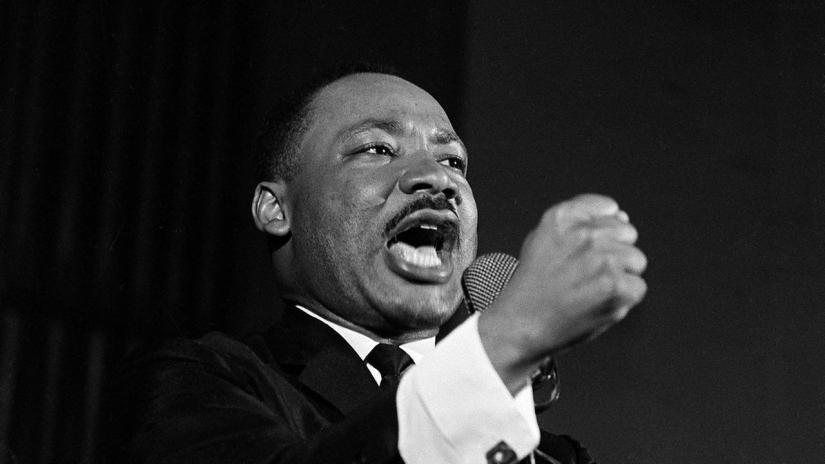 Dr. King had stayed at the Lorraine on March 18, when he spoke to an enormous crowd at the Mason Temple Church of God in Christ in support of the striking sanitation workers. The venue was perhaps the largest meeting space for African Americans in the South and a good fit for King’s Poor People’s Campaign. As King called for a general work the crowd (estimated at 12-14,000 people) erupted in cheers and foot-stomping.
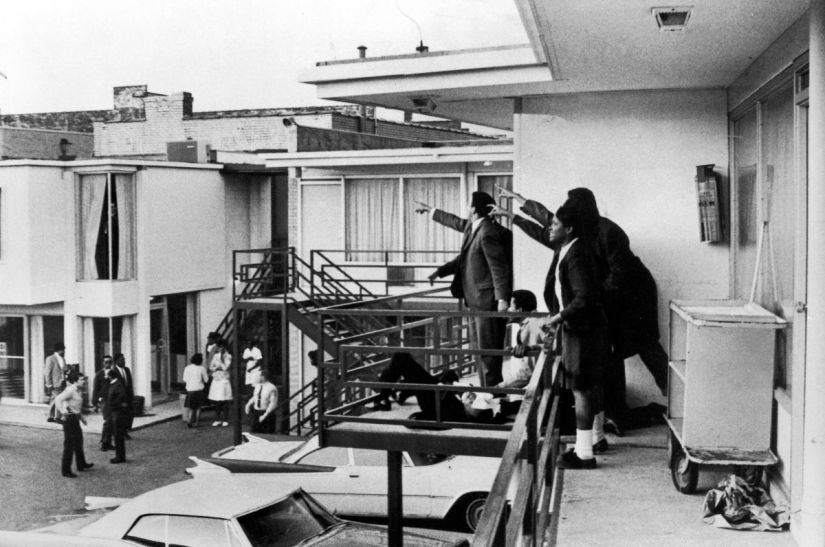
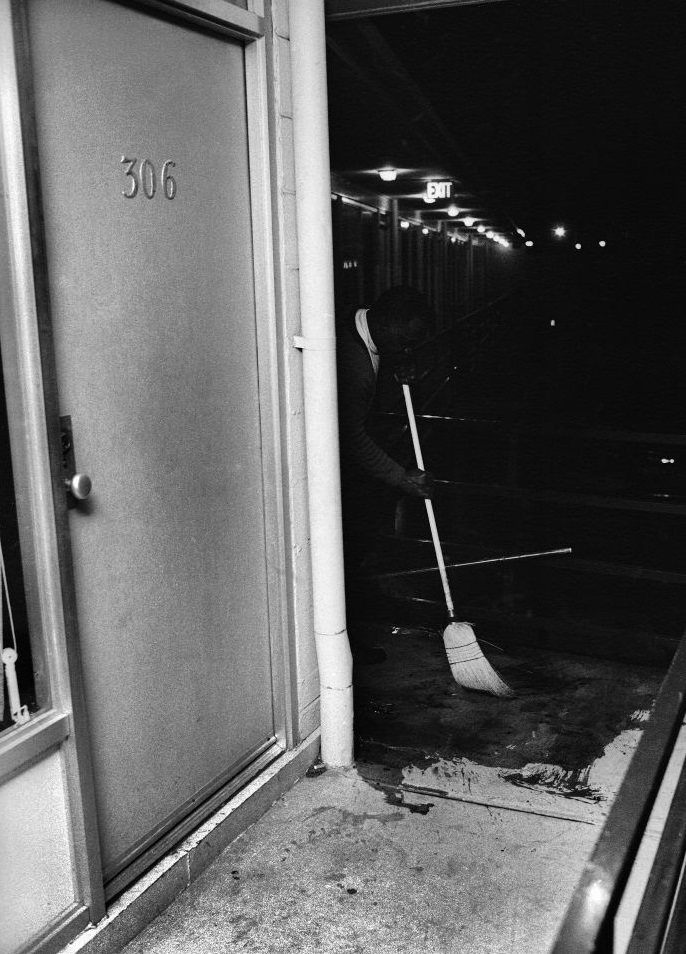
 King spent April 4, 1968, the last day of his life, at the Lorraine Motel. He shared a plate of fried Mississippi River catfish with Rev. Abernathy for his final meal. Afterwards, Dr. King participated in a playful pillow fight with Abernathy and aide Andrew Young. Just after 6 p.m., Dr. King stepped out of Room 306 and conversed with Jesse Jackson in the parking lot below. He leaned over the metal railing and asked the saxophonist Ben Branch to play “Take My Hand, Precious Lord” , one of King’s personal favorites, at the rally that evening. As King wondered aloud whether he needed a topcoat and turned back towards his room, a sharp sound rang out. Some thought it was a firecracker, or a car backfiring. Martin Luther King Jr. had been shot in the face. He died shortly afterwards at a hospital.
 Alan E. Hunter