Health & Medicine, Medicine, Pop Culture

Rhonda Hunter’s Cancer Journey.

Original Publish Date: August 21, 2025.

https://weeklyview.net/2025/08/21/rhonda-hunters-cancer-journey/
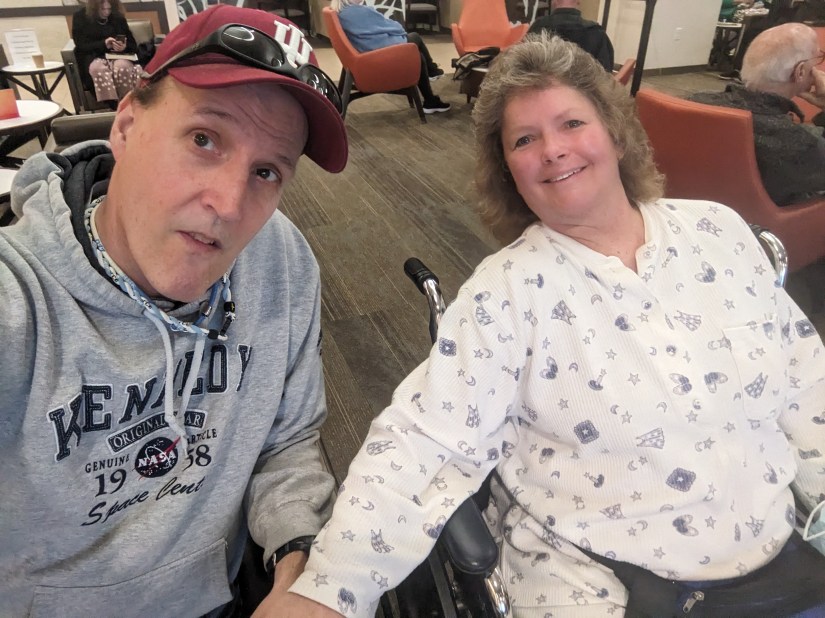
Alan & Rhonda Hunter at MD Anderson Cancer Center.

Warning. This is a self-serving article about my hero (my wife, Rhonda) and her year-and-a-half-long cancer ordeal. During our 2023 Irvington ghost tour season, she discovered a bad spot on one of the toes on her left foot. The ring toe to be specific (the little piggy that got no roast beef). At first, she thought it was a bad case of athlete’s foot. Rhonda called around the Indy area searching for a dermatologist: no openings anywhere until Christmas. She found her savior in the form of Megan Rahn, nurse practitioner at Pinnacle Dermatology in Crawfordsville, Ind. Within two days, they got her in and diagnosed it as one of the worst cases of melanoma they had ever seen. Rhonda recalls, “Megan asked if I wanted her to tell me the truth. I said, yes, and she said, ‘It’s cancer.'” We got that news on the Friday of Halloween festival weekend. Rhonda recalls, “During that weekend, longtime regular tour guests kept coming up to me and asking, ‘What’s the matter with Al? He’s not himself tonight.’ Needless to say, it was a rough weekend.
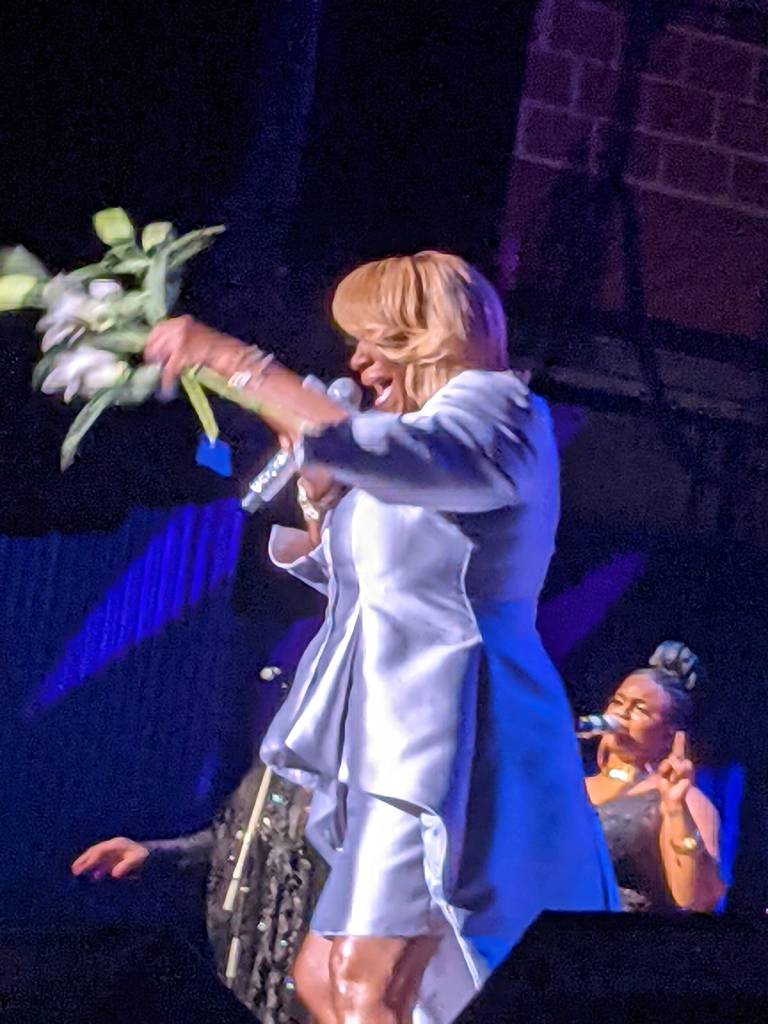
Patti LaBelle holding the white lillies.

After the tours concluded, we traveled down to our little Ricky and Lucy Ricardo efficiency time share in Daytona Beach, Florida, a luxury we bought ourselves over thirty years ago when we didn’t have two nickels to rub together. Over the years, we discovered that soaking anything in salt water cured almost everything. But this time, it didn’t work. Our trip concluded with a live concert by Patti LaBelle. At the end of the show, Patti walked over to Rhonda and handed her a bouquet of white lilies from a vase on her piano. Traditionally, white lilies symbolize purity and rebirth. Little did we know, it was an omen.
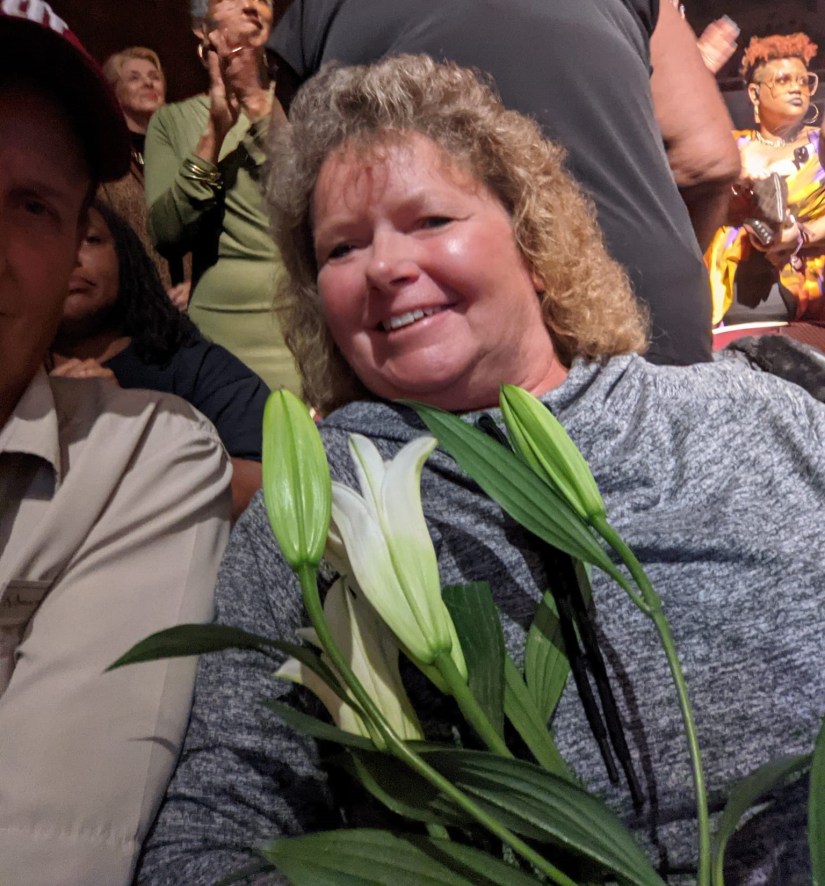
Rhonda with Patti’s gift.

Returning to Indiana, we learned that the good folks at Pinnacle Dermatology had secured an appointment with Dr. Jeffrey Wagner, melanoma reconstruction surgeon at MD Anderson Cancer Center Community North in Indy. By now, the toe was black. Dr. Wagner, who has seen over 20,000 melanoma cases in his decades-long career, said the toe’s gotta go. Her skin cancer was now categorized as a very aggressive form of malignant melanoma, the fastest spreading of all cancers (it can spread to dangerous levels in a month). She went under the knife, and they removed the toe and carved out three more spots, two on the top of her foot and one deep patch on the back of her calf.
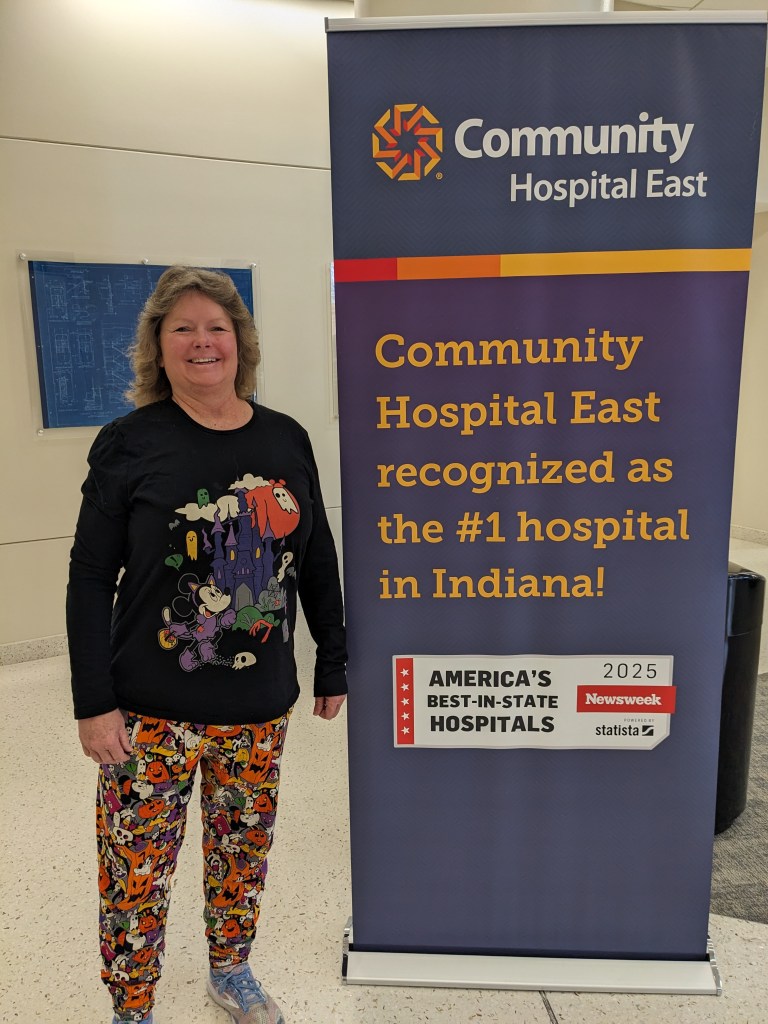
Rhonda at Community East.

They also removed a leaking Lymph Node in the groin. The result was two months in bed and a very uncomfortable Christmas season. We quickly learned that being diagnosed with melanoma is not unlike being an alcoholic, a drug addict, a diabetic, or bipolar: it’s a life sentence. It means a lifetime of treatment, scans, and medical supervision. We are now regulars at Pinnacle Dermatology, where we discovered that more than a few folks from Irvington are regulars. They now refer to Rhonda as “the lady with the toe.”
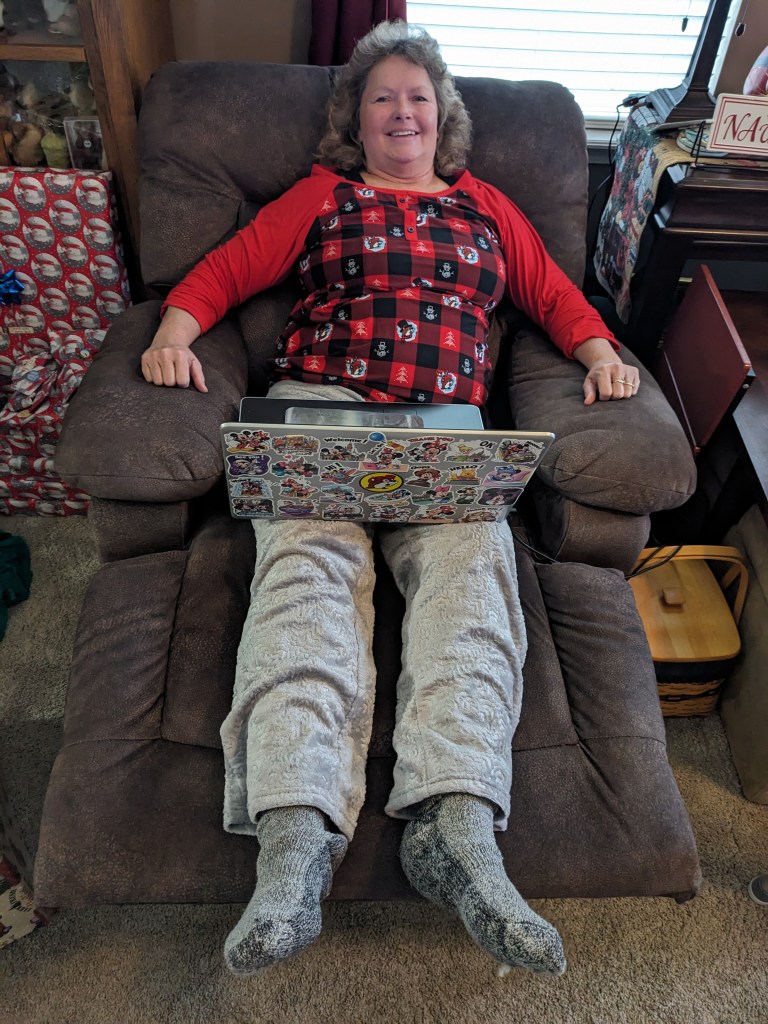
Rhonda at Christmas sans toe.

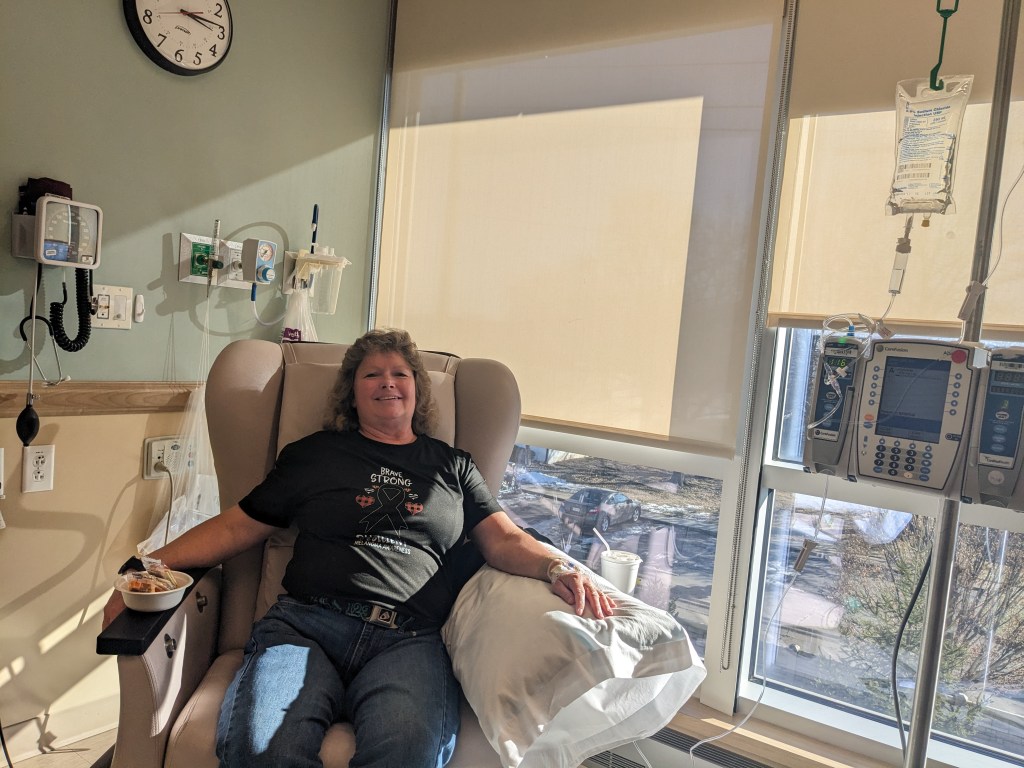
As pilgrims on this journey, we quickly learned that everyone has a skin cancer story. And, sadly, because of that, skin cancer is often minimized as a passing ailment that elicits a dismissive rejoinder. In our case, nothing could be further from the truth. Once everything was removed, we thought that was the end of it. That is, until we learned that a leaking Lymph Node had been detected and Rhonda needed to see Oncologist Dr. Sumeet Bhatia at MD Anderson. Coming a mere three days before Christmas, this was a devastating surprise; Rhonda wasn’t even out of a wheelchair yet. She was placed on Keytruda, a relatively new medicine used to treat melanoma. These monthly treatments, administered intravenously, were accompanied by endless blood work (that alone will make most readers cringe), and regular scans: PET Scans, CT scans, and MRIs. For all of 2024, we became accustomed to bi-weekly visits to MD Anderson, Community North, and Community East.
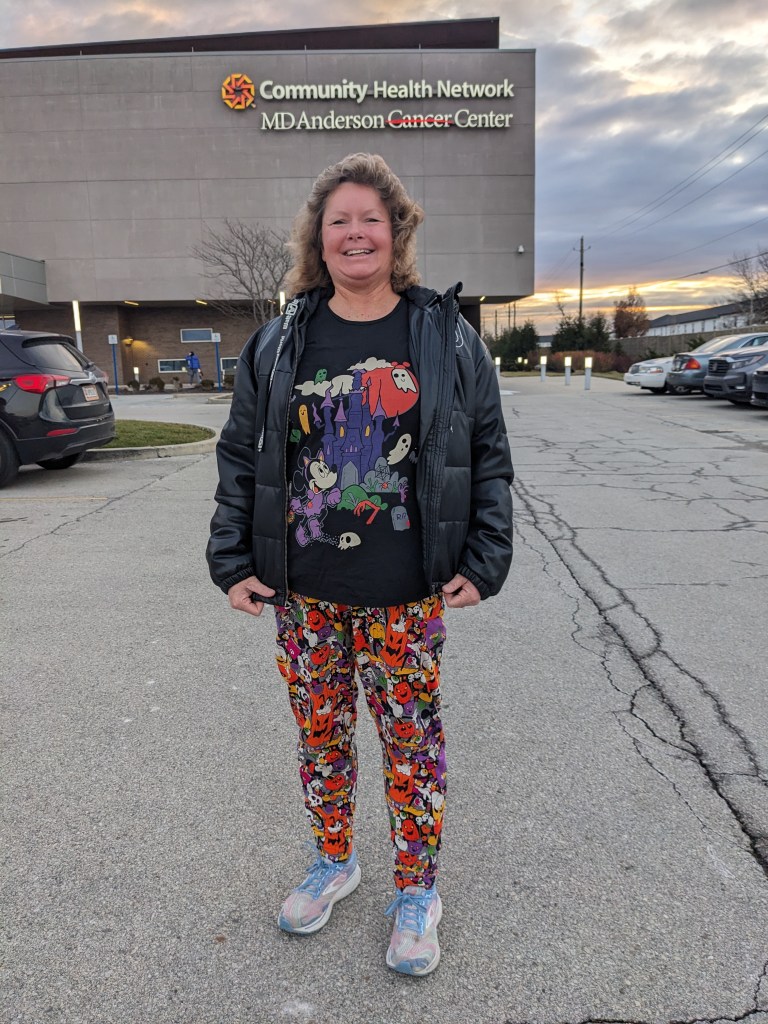
Rhonda at MD Anderson.

Sometimes with Oncology nurse Jennifer Chapman, sometimes with cancer navigator & advocate Andrea Oliver, and sometimes with Dr. Bhatia. As her last treatment concluded, we expected to walk out and ring the cancer-free bell. Suddenly, the treatment room door swung open, and in walked her entire team. The melanoma had now spread to her brain. Game changer.

Within moments, the nurse was crying, the advocate was crying, Rhonda was crying, and the doctor was crying. Surprisingly, the only person not crying was me, which is odd, because I’m the guy who tears up at Bambi, Old Yeller, and Steve Hartman stories. The doctor told us he’d give us time to decide whether we wanted to continue with a new treatment, with the warning not to wait too long because it could be too late. I had only two questions: Are they going to cut her and will she lose her hair? The answer was no. Long story short, our 10:30 checkup turned out to be an 11:30 fitting for a Radiation Therapy Thermoplastic Mask. Whenever I saw that mask, I couldn’t help but think of Boston Bruins goalie Gerry Cheevers. Google his mask and you’ll see what I mean.
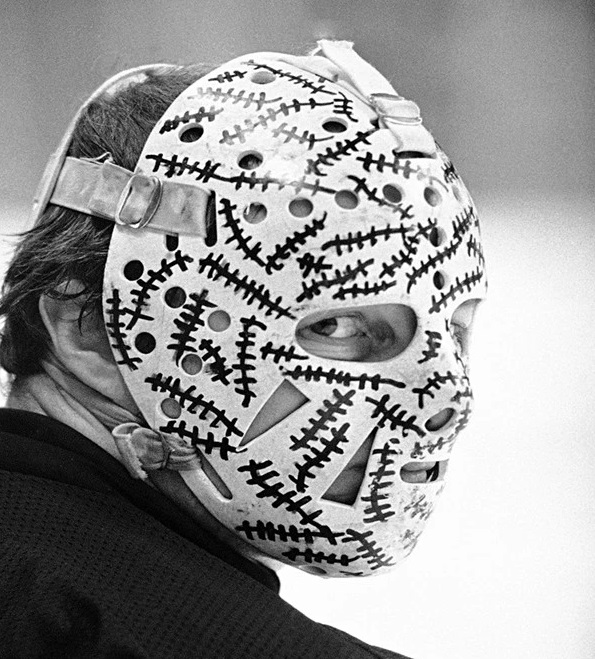
Gerry Cheever’s mask.

Within 1 week, she underwent radiology for one spot on the brain. I expected her to be zapped (pardon the pun) of energy and looking for a long nap. Instead, she came bouncing off that table and insisted on heading to Jockamos Pizza and Midland Antiques Market for the afternoon. A few months later, after another MRI discovered she had three more spots on the brain, she underwent another radiation treatment. This time, she had to be helped off the table and out the door. It was a long procedure extending past regular business hours. I was eerily alone in the cancer center and managed to lock myself out of the office, but that’s another story. She still came out smiling, though.
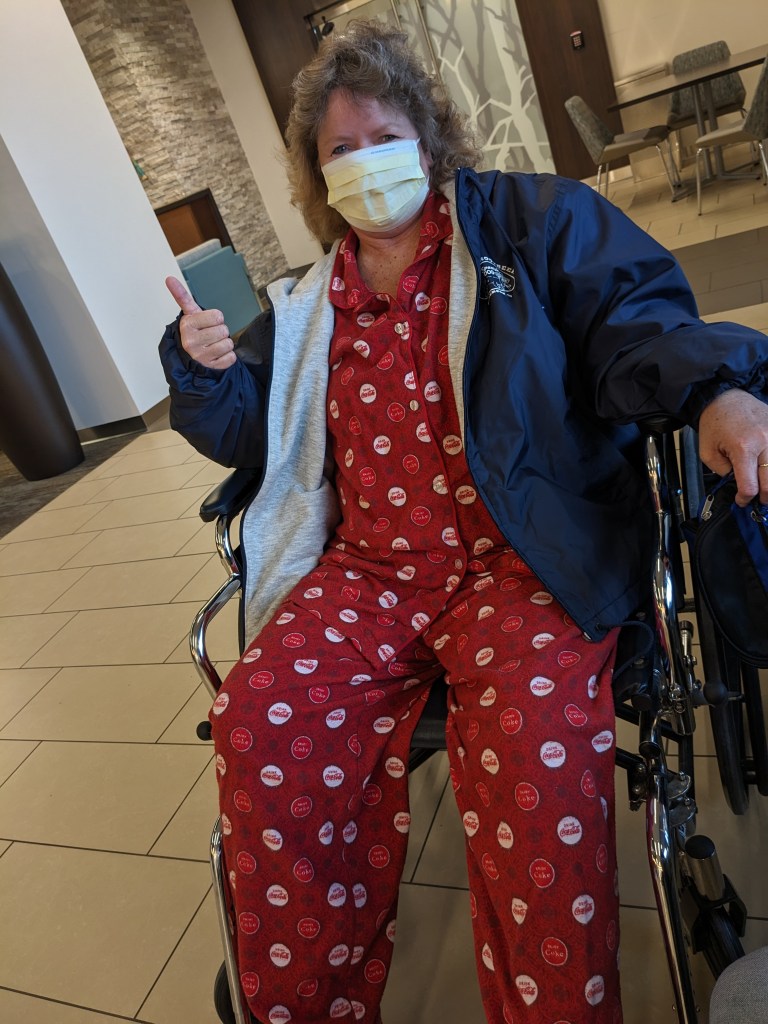
Early summer 2025 was rough as we nervously anticipated a four-month wait for new scan results. Faith & Begorra, the scans were clear! There were other challenges, including an emergency weekend hospitalization for internal bleeding, but it was not cancer-related. Now you know the details of one person’s cancer journey from an observer’s viewpoint. But how about the patient’s view?
“This is the same cancer that killed Bob Marley, and it started on his toe. It got Jimmy Buffett, too. Jimmy Carter was diagnosed with melanoma on his head and neck at the age of 90 in 2015. It spread to his brain, but after a year of treatment, the spots disappeared.
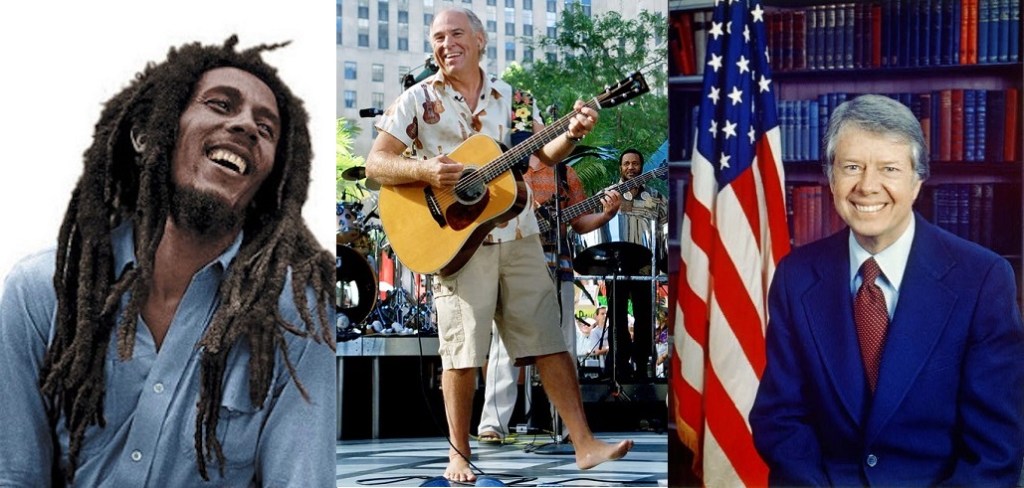
Bob Marley, Jimmy Buffett, & Jimmy Carter.

He died last year at the age of 100, but he didn’t die of melanoma; he died from bleeding in the brain caused by falls.” Rhonda says. “If you get skin cancer, take it seriously. And above all else, stay out of tanning beds. Tanning beds have been labeled as “carcinogenic to humans” by both the World Health Organization and the International Agency for Research on Cancer (IARC). So, if you must have those tan lines, spray tanning is safer. Or, just rock that Disney Princess skin!”

My wife is a Disco girl and a creature of the eighties (No lie: her office has a mirrored disco ball, movie posters from Grease and Saturday Night Fever, and a velvet painting of Donna Summer). Like most young people of that era, especially girls, she spent a lot of time (and no little money) in tanning beds.
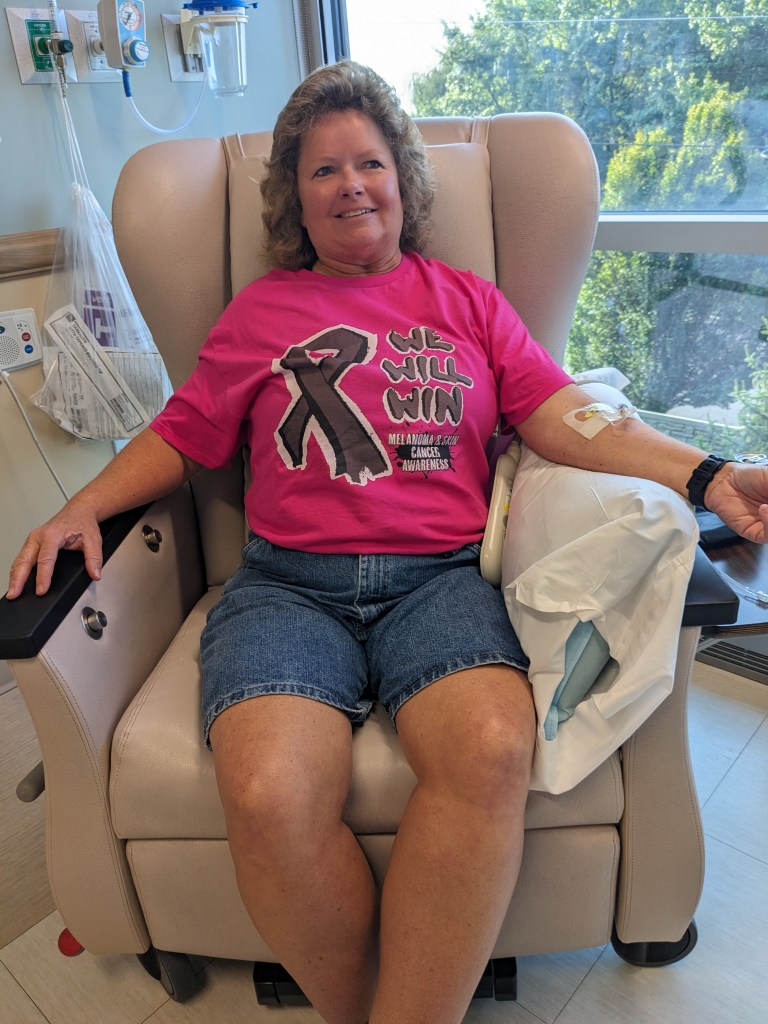
When I point out that I doubt Marley, Buffett, or Carter ever saw a tanning bed their entire lives, she answers, “Very true. Proof that the sun can damage you, too. Additionally, IARC studies show that if you’ve ever had a severe sunburn before the age of 18, you are 60% more likely to have melanoma, and that tanning-bed use before the age of 35 drives up the risk of melanoma by 75%. Worse, 70% of all melanoma travels to the brain. I never knew how aggressive this type of cancer was until I got it. Back then, not only were there tanning huts in every strip mall, but people of our generation remember using baby oil, cocoa butter, and tanning oil with no SPF whatsoever, straight up turkey basting! Even with all the bad publicity about the dangers of tanning bed use over the past quarter century, the Journal of the American Medical Association reports that 30% of white, female high school students and women ages 18 to 34 have used a tanning bed in the past year.”
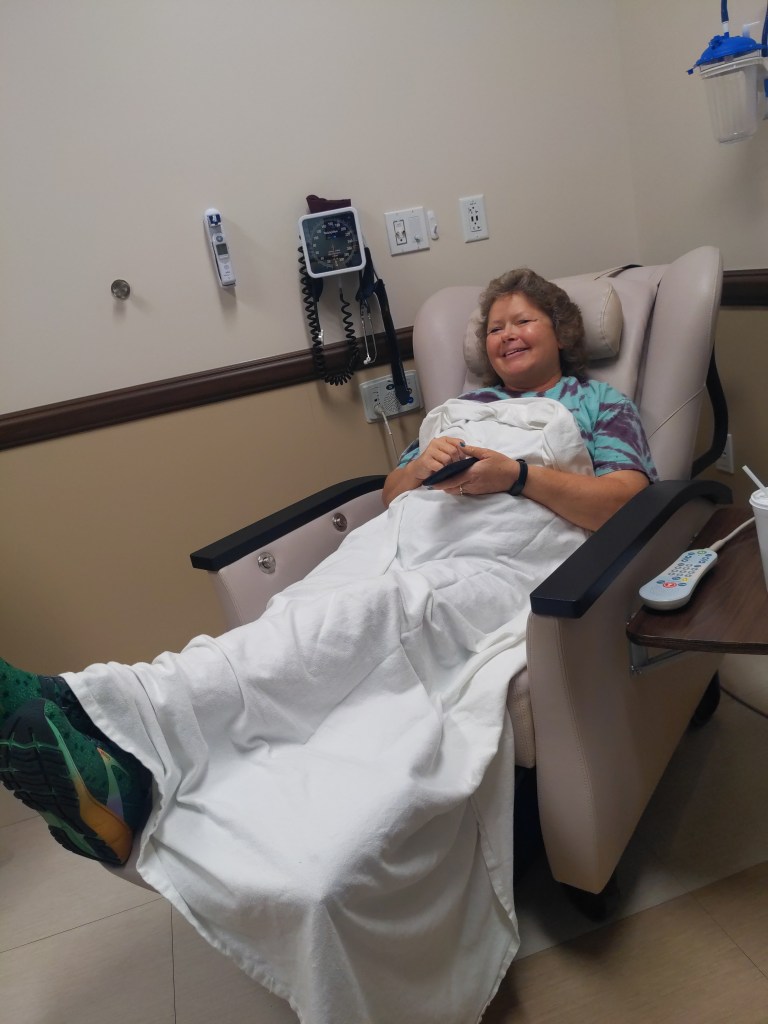
I asked Rhonda to retrace her cancer journey, both highs and lows. She answered, “The lows are pretty much what you would expect: fear, discomfort, and pain. I never smoked. I never did drugs, not even when they were prescribed to me. I don’t drink, so I went through a “Why me?” phase. But you get over all that in time. As for the medications, I did very well on Keytruda for the year I was on it. I was worried about it since I’d heard stories about people doing poorly on it and lasting for only one or two treatments. The Keytruda worked on my body, but not on my brain. So they switched my medication twice. They put me on Opdivo and Yervoy for two months (Jan.-Feb.), but it kicked my tail. I lost feeling in my hands and feet and experienced shortness of breath, flu-like pain all over, and I couldn’t even walk up a short flight of stairs.
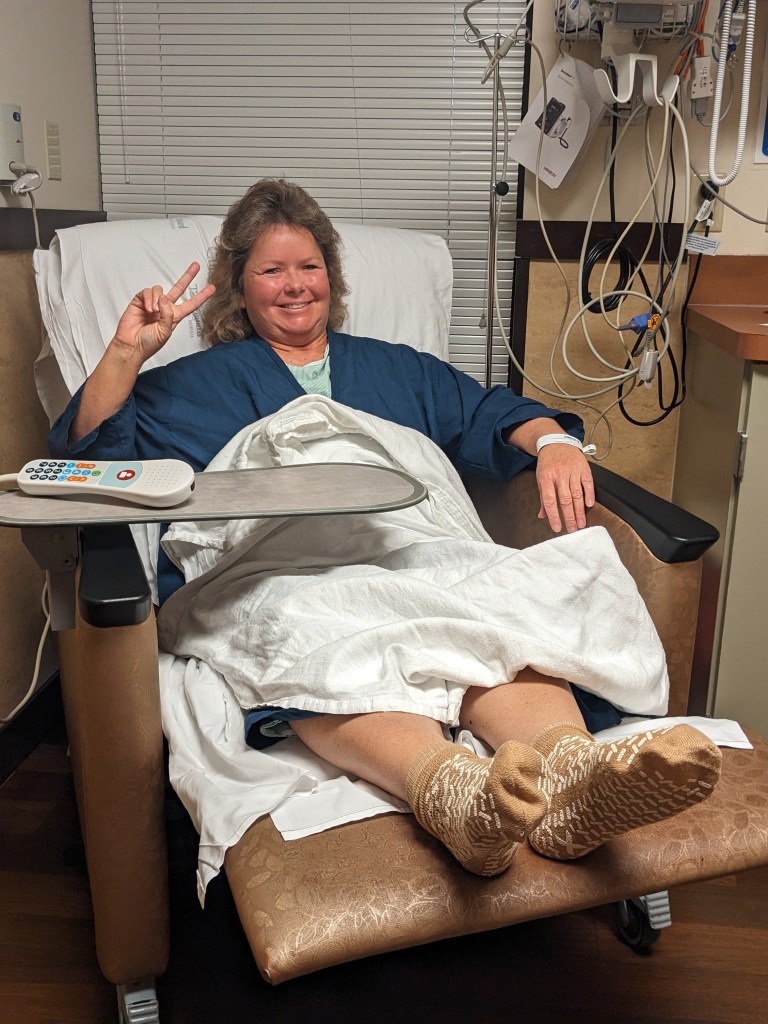
They put me on steroids, which alleviated the pain but pumped me up like the Michelin Man. They weaned me off of them slowly, but it came with an unfortunate side effect. I was tired all the time, with abdominal pain, muscle soreness, nausea, and vomiting. Worse, when I quit steroids, I went through wicked withdrawals; I was dope sick, like an addict. It’s starting to go away, but now the pain and discomfort are coming back. I am now on Braftovi and Mektovi. It makes me nauseous, weak, and tired. I don’t have many good days anymore, and even the good days aren’t great (It hurts to brush my hair). But I know there are many patients in much worse shape than me, so I’m going to keep fighting.”
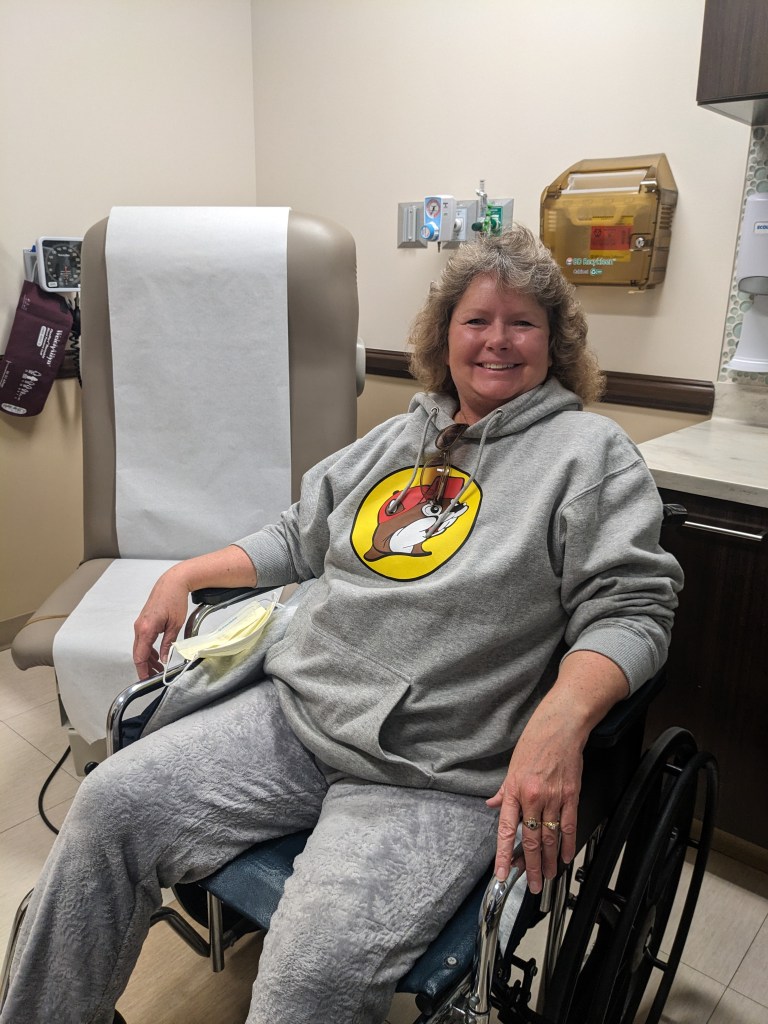
“I have been blessed with friends and family who love and support me. The value of those connections can’t be understated. My mom, Kathy Hudson, has been there from the beginning; diagnosis, treatment, and home-care. My dad, Ron Musick, has been a constant support, both by phone and in person. My children, Jasmine and Addison, have been better than I ever could have imagined. Addison, my mom, and you were the first faces I saw coming out of surgery. Jasmine, a former IU Med student, has made researching melanoma her new hobby. She discovered a web community on Reddit called “Melahomies” which has been quite helpful and informative. My sister Rennee, who works in the medical industry, has been a fountain of youth and support from Florida. I am equally blessed to have friends to lean on as well.
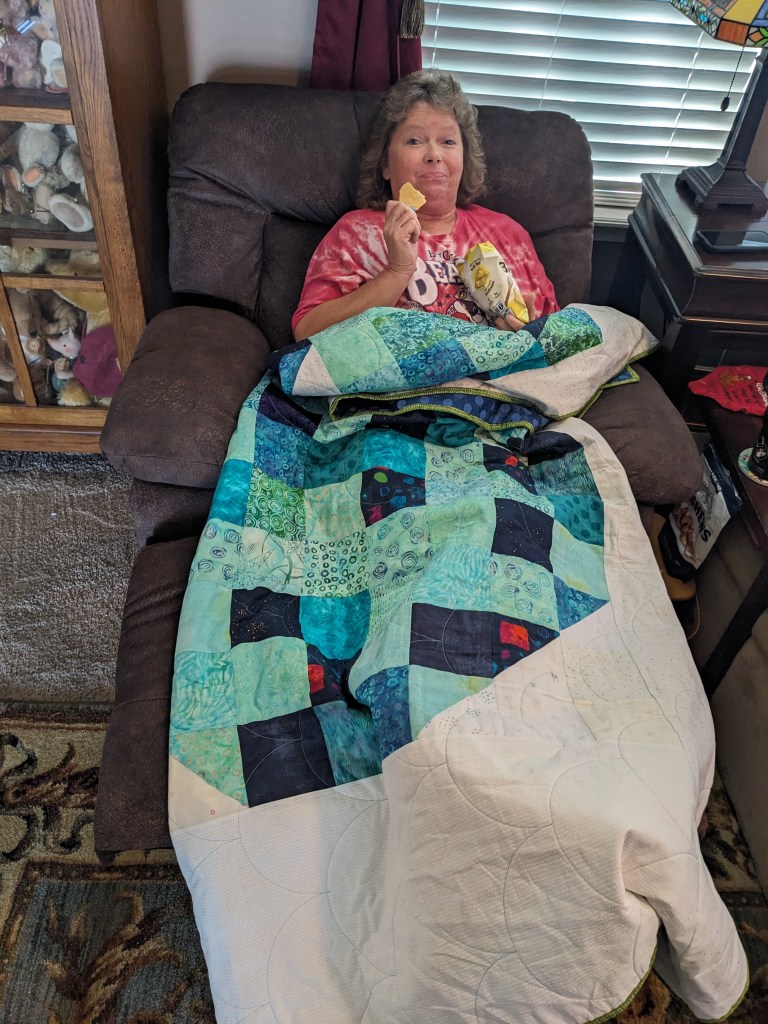
Thanks to Becky Hodson, Kris Branch, Cindy Adkins, Tim Poynter, Karen Newton, Kathleen Kelly, and Jodie Hall for being there. I am grateful for the continued support of Irvingtonians like Jan and Michelle at the Magick Candle, Adam and Carter at Hampton Designs, Dale Harkins at the Irving Theatre, and, of course, the girls at the Weekly View. Not to mention the support of your friends in the historic field. Barb Adams, Bruce & Deb Vanisacker, our Gettysburg friends and friends in the Lincoln community: Doc Temple (who passed earlier this year), Dr. James Cornelius, Bill and Teena Groves, and Richard Sloan. People like them rarely get the praise they deserve. If you ever find yourself in my position, or any traumatic medical condition for that matter, don’t be afraid to lean on your friends and family. They are as important to your healing process as the doctors and nurses. And of course, you Al, you are my rock.”
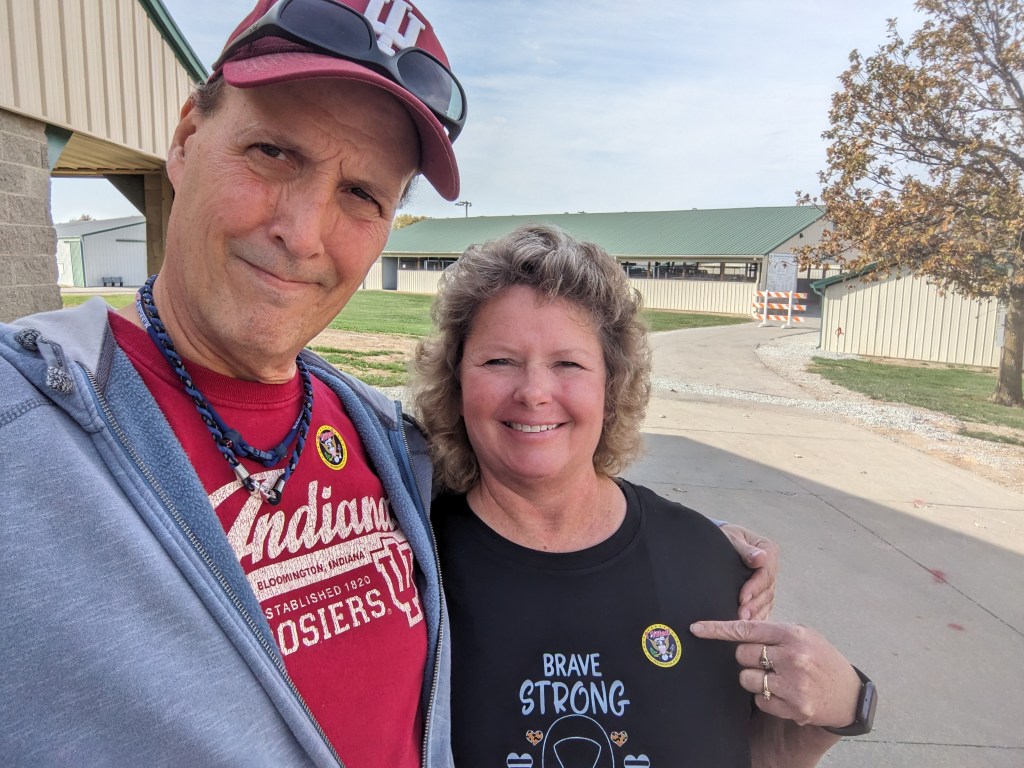
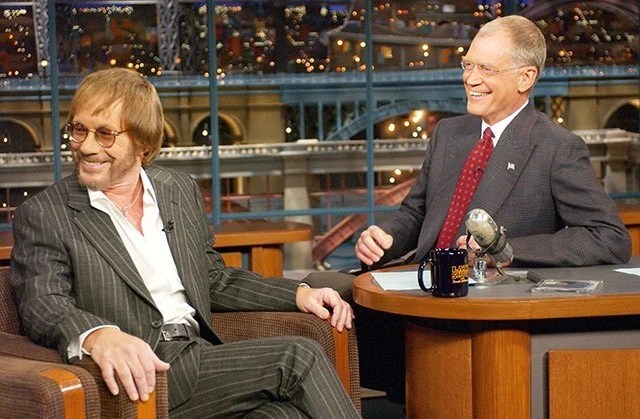
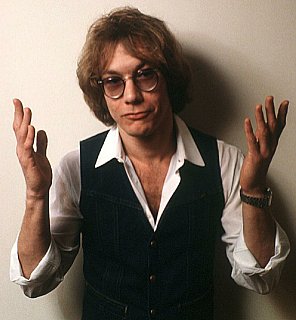
My first introduction to skin cancer came from our longtime friend, former ABA Pacers legend Bob Netolicky, and his family in Austin, Texas. Bob, Elaine, and Nicole have offered support and counsel throughout this journey. Neto has been battling skin cancer since being diagnosed during our first ABA reunion in 1997. Neto says, “I spent a lot of time in the sun when I was younger. Annual checkups are now a part of my routine.” Longtime readers of my column might recall that rocker Warren Zevon has been a constant in our relationship since the beginning. On his last appearance on David Letterman’s Late Show, Zevon, who passed away from cancer in 2003, advised his fans to “Enjoy every sandwich.”
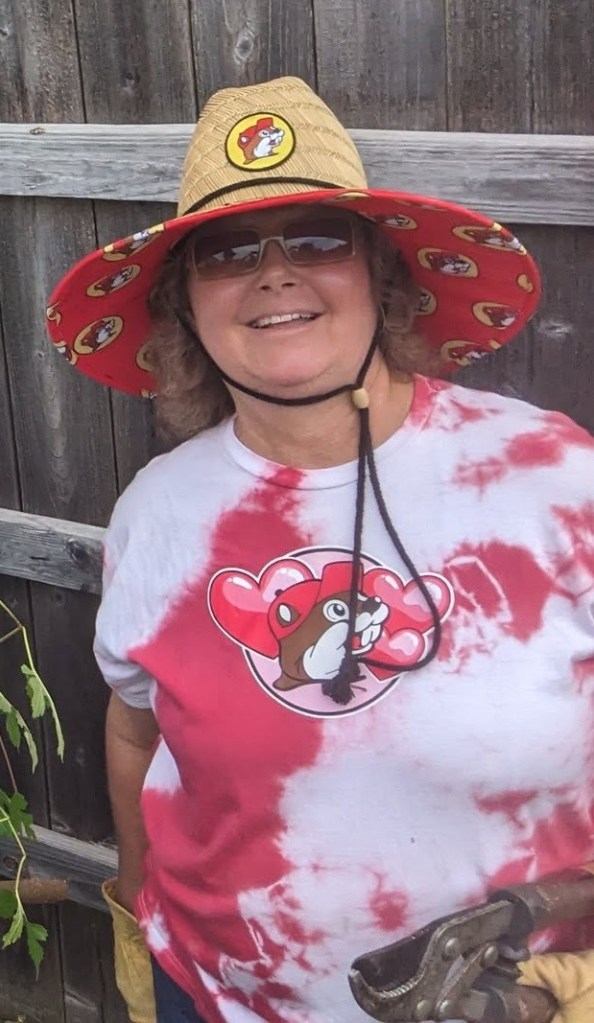
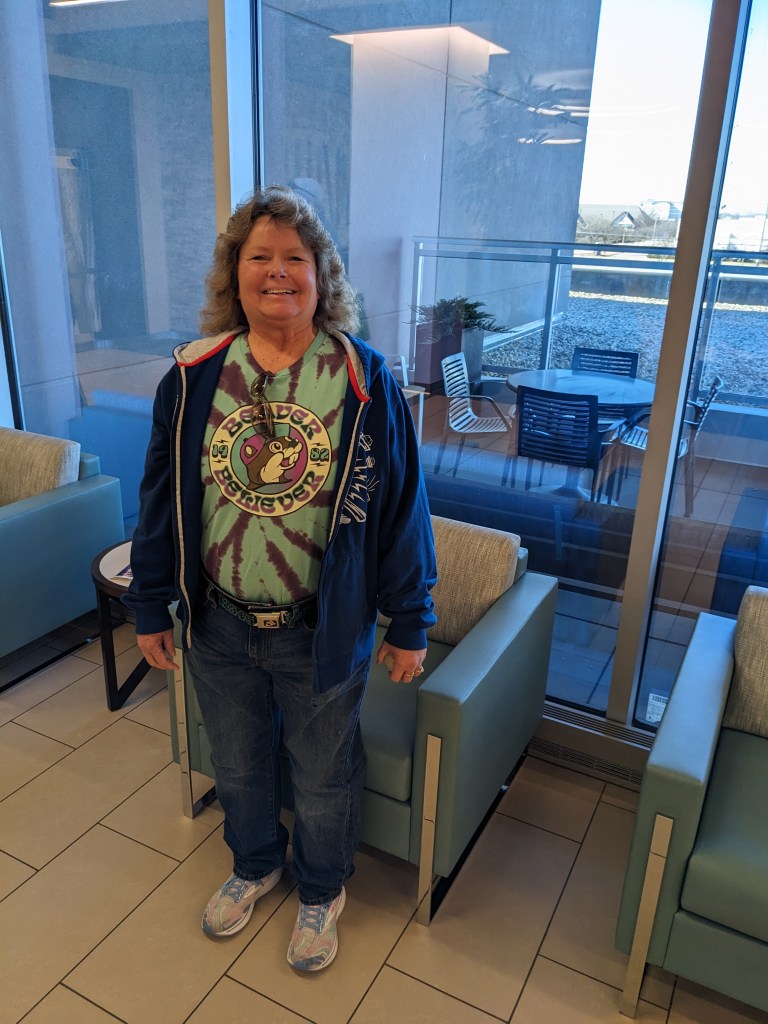
So, I asked Rhonda if she had any advice of her own. “I worry about people like me who had no idea how serious this thing is. Joggers, walkers, golfers, bicyclists, people who work or spend time outdoors professionally or recreationally. Skin cancer can sneak up on you, and it is serious. Don’t take it for granted. If you’re outside, wear a hat and make sunscreen a part of your daily routine. My Buc-ee’s straw hat is now a part of my regular gear. And it looks pretty cool.”

Rhonda’s white lillies presented to her by Patti LaBelle are now framed and hanging in her office alongside an autographed microphone from Ms. LaBelle.
Health & Medicine, Hollywood, Indianapolis, Music, Pop Culture, Television

Warren Zevon — Accidentally Like a Martyr.

Publish Date September 12, 2024. This column first appeared in August 2013.

https://weeklyview.net/2024/09/12/warren-zevon-accidently-like-a-martyr-2/

Warren Zevon 1992.

It’s hard to believe it’s been a decade since Warren Zevon died. If the name is not familiar to you, his songs might be: “Werewolves of London,” “Poor, Poor Pitiful Me,” or “Lawyers, Guns and Money” should ring a bell. Zevon was considered the rock star’s rock star, known for his songwriting talents in songs that showcased his quirky, sardonic wit in the dark humor of his ballads. Rock ‘n’ roll royalty like Jackson Browne, Bruce Springsteen, Bob Dylan, and Neil Young praised his talents and called him friend. Born in Chicago, Illinois, on January 24, 1947, he became the quintessential West Coast rocker, literally living the LA lifestyle right up until his death on September 7, 2003.

It’s easy to figure out why musicians thought Warren Zevon was so cool. From his earliest days, his personal pedigree made Warren unique and different. Zevon was the son of Beverly and William Zevon. His mother was from a Mormon family and his father was a Jewish immigrant from Russia whose original surname was “Zivotovsky.” William was a bookie who handled volume bets and dice games for notorious Los Angeles mobster Mickey Cohen. Known as Stumpy Zevon in Cohen’s employ, he was best man at Mickey’s first marriage and worked for him for years.

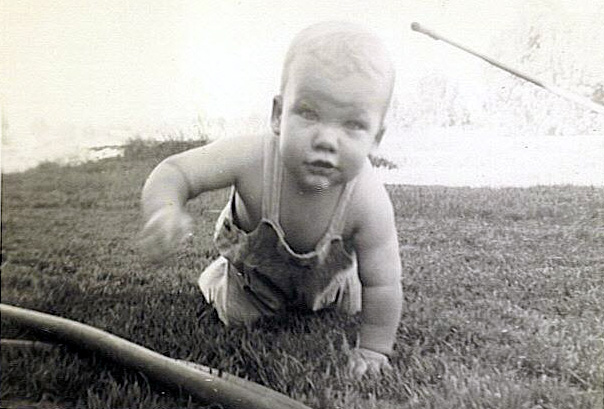
Warren William Zevon was born on January 24, 1947.

The family moved to Fresno, California when Warren was 13 years old. His British-born mother insisted that Warren take piano lessons. So Zevon started taking his lessons at the home of Igor Stravinsky, the  Russian-American composer, pianist and conductor widely considered to be one of the most important and influential composers of the 20th century. There, Warren briefly studied modern classical music, alongside future American conductor Robert Craft. Zevon’s parents divorced when he was 16 years old and he soon quit high school and moved from Los Angeles to New York to become a folk singer.

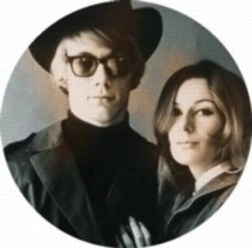
Lyme & cybelle

Zevon got his first taste of success with the song “Follow Me” as the male component of a musical coed duo called Lyme & Cybelle. He left the duo, citing artistic differences, and spent time as a session musician and jingle composer. He wrote several songs for the Turtles and another early composition (“She Quit Me”) was included in the soundtrack for the film Midnight Cowboy (1969). Zevon’s first attempt at a solo album, Wanted Dead or Alive (1969), was well-received but did not sell well. Zevon’s second effort, Leaf in the Wind, went unreleased.

During the early 1970s, Zevon led the touring band for the Everly Brothers, serving as both keyboard player and band leader/musical coordinator. In the latter role Zevon became the first to recognize the talents of guitar player Lindsey Buckingham by hiring him for the band. It was during his time with the Everlys that Lindsey and girlfriend Stevie Nicks left to join Fleetwood Mac. Warren Zevon was a roommate of the famous duo in a Fairfax district apartment in Los Angeles at the time (September 1975). Zevon would remain friends with both for the rest of his life maintaining neutrality during the tumultuous breakups of both the Everly Brothers and Buckingham-Nicks.

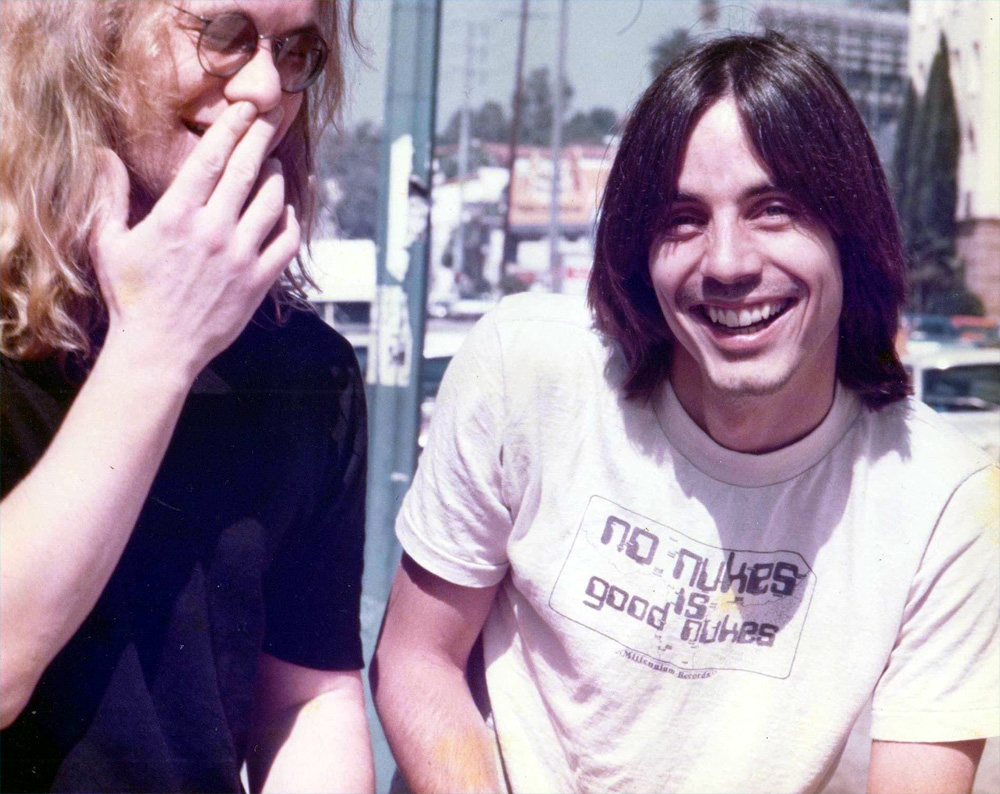
Warren Zevon & Jackson Browne.

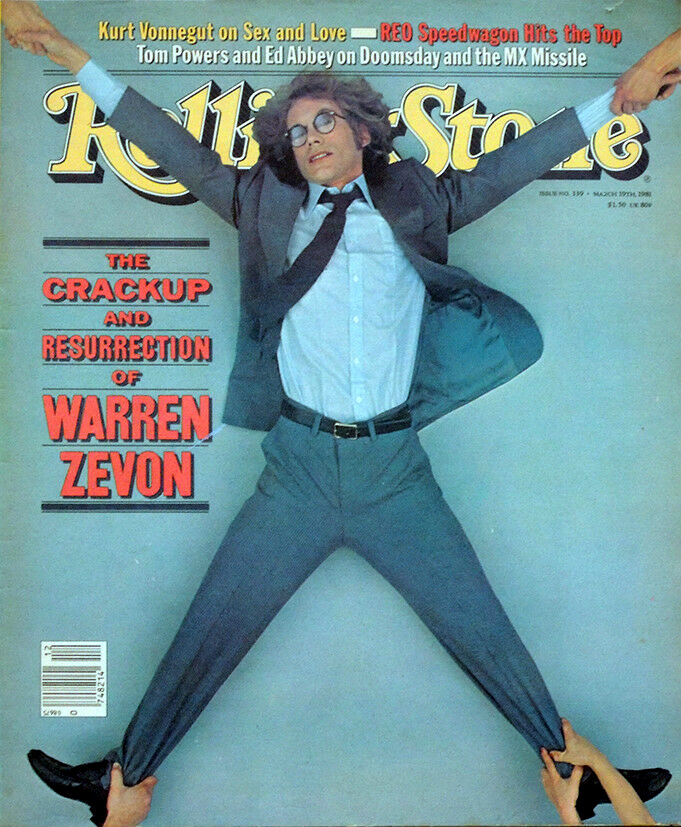
In late 1975, Zevon collaborated with Jackson Browne, who produced and promoted Zevon’s self-titled major-label debut in 1976. Contributors to this album included Nicks, Buckingham, Mick Fleetwood, John McVie, members of the Eagles, Carl Wilson, Linda Ronstadt, and Bonnie Raitt. This first album, although only a modest commercial success, was later recognized by Rolling Stone magazine as a masterpiece. Although  Zevon shared a grounding in earlier folk and country influences with his LA peers, this album brought Zevon to the forefront as a much darker and more ironic songwriter than other leading figures of the era’s L.A.-based singer-songwriter movement. Rolling Stone placed Zevon alongside Neil Young, Jackson Browne, and Bruce Springsteen as one of the four most important new artists to emerge in the decade of the 1970s.

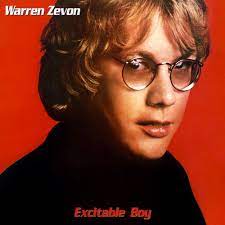
In 1978, Zevon released Excitable Boy to critical acclaim and popular success. This album received heavy FM airplay mostly through the release of the single “Werewolves of London,” featuring Fleetwood Mac’s Mick Fleetwood on bass and John McVie on drums. The song is considered a classic and has been covered by artists ranging from the Grateful Dead to Bob Dylan to comedian Adam Sandler. The song has become a Halloween season staple. For all you trivia buffs out there, The Chinese restaurant mentioned in the song (Lee Ho Fook) is a real location situated on Gerrard Street in London’s Chinatown.

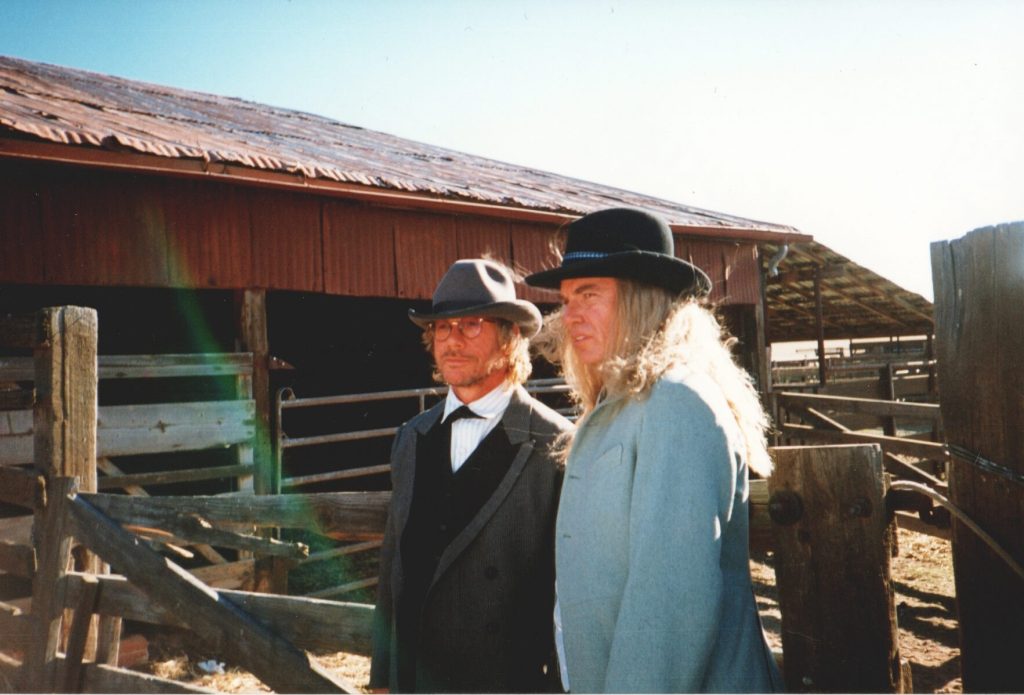
Zevon & Billy Bob Thornton on set of Dwight Yoakam’s 2000 western “South of Heaven, West of Hell”.

Although Zevon never again achieved popular acclaim, he continued to be recognized as an artist’s artist, releasing nine more albums over the next 25 years. It was during that quarter-century that Zevon lapsed in and out of the throes of excess, obsession, and addiction. To say that Warren Zevon suffered from excessive compulsion disorder would be a severe understatement. Warren had a continuing battle with drug addiction and alcoholism and was also a sex addict obsessed with the color gray and personal fame, or lack thereof. During this time, he and actor Billy Bob Thornton formed a close friendship galvanized by a shared obsessive-compulsive disorder and the fact they were neighbors living in the same apartment building.

Warren Zevon is his gray t-shirt.

One of Zevon’s compulsions was collecting identical Calvin Klein T-shirts. Like everything else in his life (his car, his couch, his carpeting and wall paint), the T-shirts were gray. One story relates how Warren insisted upon traveling to every department store carrying Calvin Klein T-shirts while touring on the road. If the store carried Warren’s prized Gray Calvin Klein t-shirt, Warren obsessively purchased every one of them and stowed them in the tour bus. When asked why, Warren replied that the new ones were being made in China and that those still on the shelf had been made in the USA and were “sure to become collector’s items and go up in value.” When he died at age 56, thousands of gray Calvin Klein t-shirts were found in his LA apartment; unopened in their original packaging.

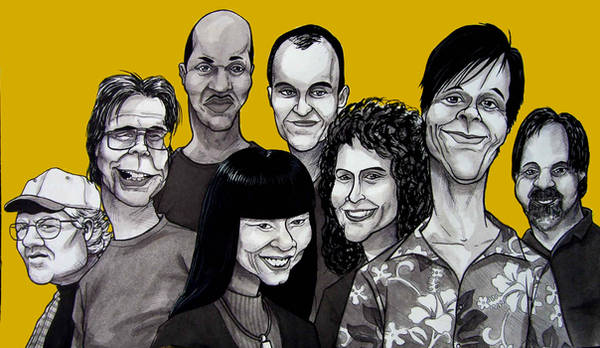
From left to right: Roy Blount Jr., Stephen King, James McBride, Amy Tan, Kathy Kamin Goldmark , Dave Barry, Matt Groening

A voracious reader, Zevon was friendly with several well-known writers who also collaborated on his songwriting during this period, including gonzo author Hunter S. Thompson, Carl Hiaasen, Mitch Albom, Norman Mailer, and Maya Angelou. Zevon served as musical coordinator and occasional guitarist for an ad-hoc rock music group called the Rock Bottom Remainders, a collection of writers performing rock and roll standards at book fairs and other events. This group included Stephen King, Dave Barry, Matt Groening, and Amy Tan, among other popular writers.

Zevon cemented his superstar status by appearing in various TV shows and movies during his career, most often playing himself. Zevon played himself on two episodes of Suddenly Susan in 1999 along with singer/actor Rick Springfield. Warren also appeared as himself on the Larry Sanders Show on HBO, alongside actor John Ritter as talk show guests in the same episode. Ironically, Zevon and Ritter would die within four days of each other.

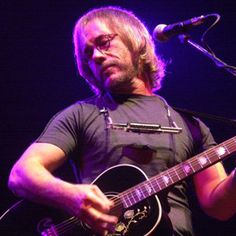
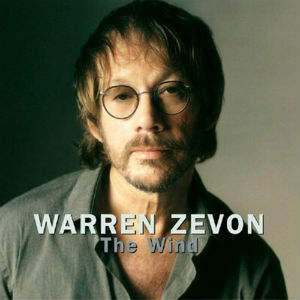
Although highly intelligent, well-read, and obsessive-compulsive in every way, Zevon had a lifelong phobia of doctors. Shortly before playing at the Edmonton Folk Music Festival in 2002, he started feeling dizzy and developed a chronic cough. After a period of suffering with pain and shortness of breath, while on a visit to his dentist, Zevon was ordered under threat of kidnapping to see a physician. A lifelong smoker, he was subsequently diagnosed with inoperable peritoneal mesothelioma (cancer of the abdominal lining commonly associated with asbestos exposure). Refusing treatments he believed might incapacitate him, Zevon instead began recording his final album, The Wind, which includes guest appearances by close friends Bruce Springsteen, Don Henley, Jackson Browne, Timothy B. Schmidt, Joe Walsh, David Lindley, Billy Bob Thornton, Emmylou Harris, Tom Petty, and Dwight Yoakam, among others.

On October 30, 2002, Zevon was featured on the Late Show with David Letterman as the only guest for the entire hour. The band played “I’ll Sleep When I’m Dead” as his introduction. Zevon performed several songs and spoke at length about his illness. Zevon was a frequent guest and occasional substitute bandleader on Letterman’s television shows since Late Night was first broadcast in 1982. He noted, “I might have made a tactical error in not going to a physician for 20 years.” It was during this broadcast that, when asked by Letterman if he knew something more about life and death now, he first offered his oft-quoted insight on dying: “Enjoy every sandwich.” He  took time to thank Letterman for his years of support, calling him “the best friend my music’s ever had.” For his final song of the evening, and his final public performance, Zevon performed “Roland the Headless Thompson Gunner” at Letterman’s request. In the green room after the show, Zevon presented Letterman with the guitar that he always used on the show, with a single request: “Here, I want you to have this, take good care of it.”

Zevon was given only a few months to live after that fall of 2002 diagnosis; however, he lived to see the birth of twin grandsons in June 2003 and the release of The Wind on August 26, 2003. The album reached number 12 on the U.S. charts, Zevon’s highest placement since Excitable Boy. When his diagnosis became public, Zevon told the media that he just hoped to live long enough to see the next James Bond movie, a goal he accomplished. The Wind was certified gold in December 2003, just weeks after Zevon’s death, and Warren received five Grammy nominations, winning two posthumous Grammys, the first of his career.

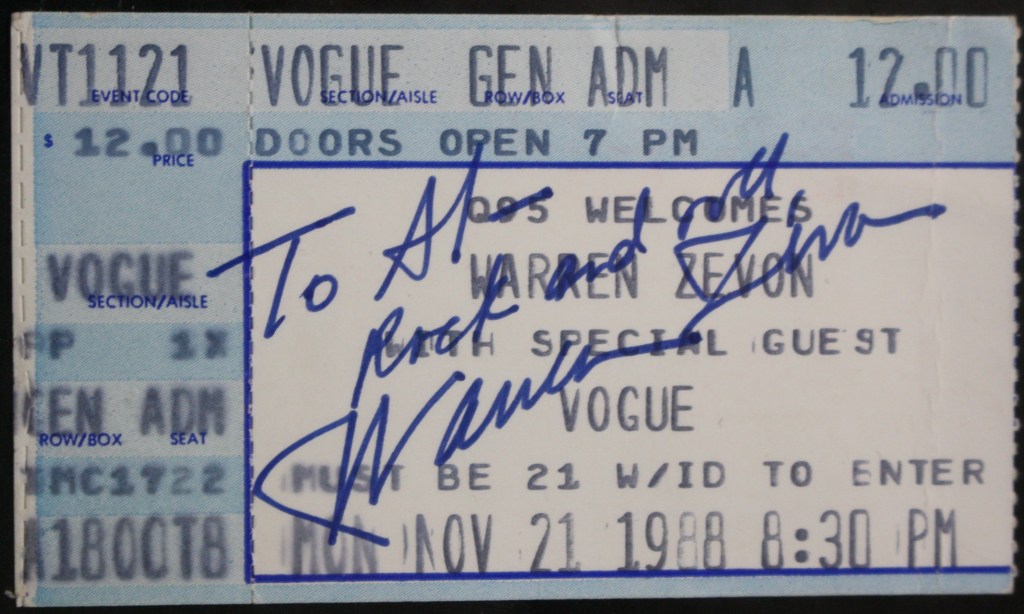
I have a brief personal connection to Warren Zevon. I interviewed him in the pre-holiday winter of 1988 after a concert at the Vogue in Broad Ripple. Zevon was touring with a patchwork band that included Timothy B. Schmidt of the Eagles. He performed all of his expected hits along with a couple covers. I specifically remember an unforgettable version of the Tom Jones standard “What’s New Pussycat?” as well as the Eagles former bass player Schmidt performing his signature song, “I Can’t Tell You Why.”

See if you can pick out Warren Zevon in this clip from the movie…Don’t blink!

After the show, I was led through the music hall to the back of the Vogue and told to wait. Meantime, out walked Schmidt and the rest of the band. Soon, Warren Zevon emerged. With his long blonde curls and John Lennon glasses, he looked more like a professor than a rock star. He maintained a constant smile throughout our session. Luckily, I struck a positive nerve by remarking that I had recognized him from his brief appearance during the closing credits of the 1988 Kevin Bacon film, She’s Having a Baby. Zevon leapt from his perch atop the bumper of his band’s equipment truck and began calling to his bandmates, “Hey guys, he saw me in the movie! I told you I was in it.” His band mates shrugged, but Warren thanked me for confirming what had until then, been just a rumor. As I recall, Zevon’s only word spoken in the film came in the naming the baby segment when he offered the name “Igor”.

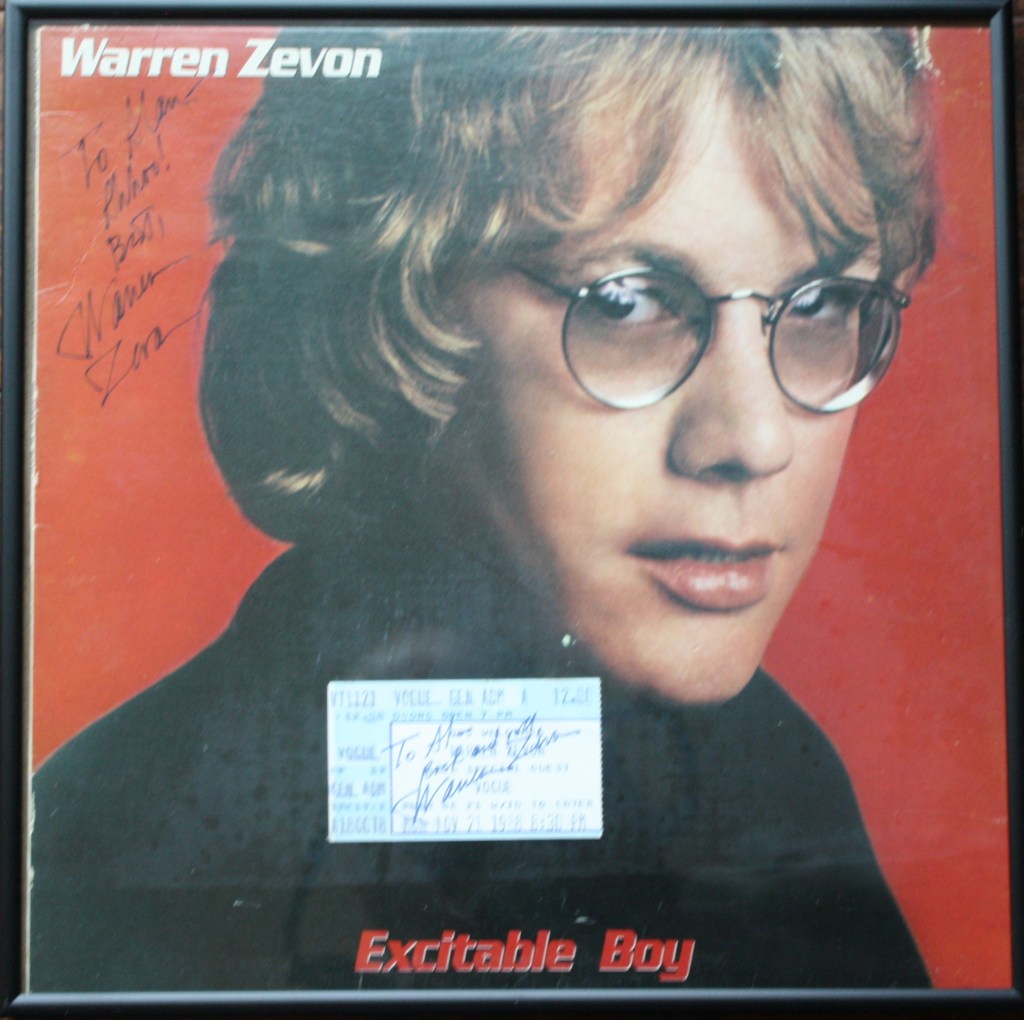
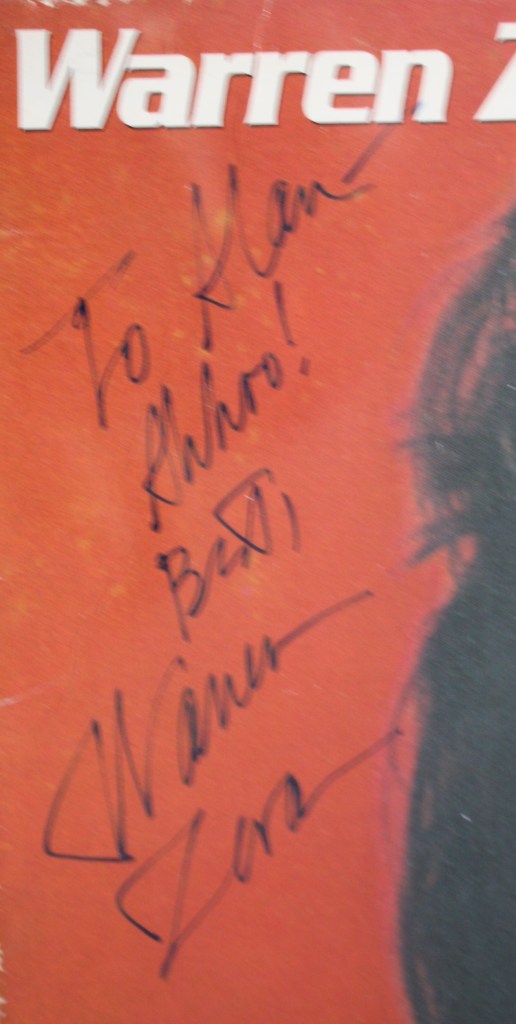
My autographed copy of Excitable Boy from that Vogue encounter.

I really can’t remember much of the encounter after that. I do remember Warren signed my copy of Excitable Boy and the interior paper cassette tape insert for A Quiet Normal Life, relics I still have. But the rest is a blur. There is a more important residual incident connected to that incident. That was the same night that my future wife Rhonda agreed to go out on our first date. Yep, I took her to a Sam Kinison comedy show at the old Indianapolis Tennis Center. Romantic huh?

Signature closeup.
My signed ticket stub from that night.

Two decades after that first date, Rhonda bought me the book, I’ll Sleep When I’m Dead: The Dirty Life and Times of Warren Zevon written and compiled by Zevon’s ex-wife Crystal Zevon (published in 2007 by Ecco Books). The book tore down every “nice guy” image I ever had of Warren Zevon, telling his life story through interviews with those who knew him. I walked away from it thinking “Wow, they had a real hard time finding anything nice to say about this guy.” The book has been described as being “notable for its unvarnished portrayal of Zevon.” Only later did I realize the book was written this way at Warren Zevon’s own request. As the words to Zevon’s song “It ain’t that pretty at all” bounce around in my head, I must say that I am not surprised or disappointed.

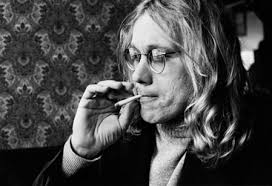
Warren Zevon still smokin’.

Music, Pop Culture

Fleetwood Mac: 50 years ago today.

Original publish date January 16, 2025.

(This was supposed to be published in the Jan. 3 issue. My editor apologizes for the delay.) https://weeklyview.net/2025/01/16/fleetwood-mac-50-years-ago-today/

Fritz Band, L-R Brian Kane, Bob Aguirre, Lindsey Buckingham, Stevie Nicks, and Javier Pacheco.

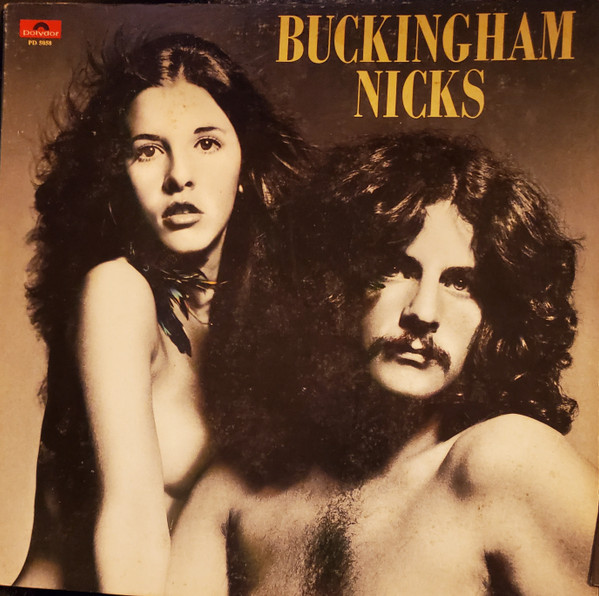
On January 1, 1975, Lindsey Buckingham and Stevie Nicks joined Fleetwood Mac and changed music history forever. The duo produced an album, Buckingham and Nicks in September 1973, which was a commercial failure noteworthy only for the album cover that features a nude image of Stevie and Lindsey. The album has yet to be commercially remastered or re-released digitally. It was Lindsey who first joined Fleetwood Mac, replacing guitarist Bob Welch, the only guitar player in the band. Lindsey quickly convinced the band to recruit his musical partner (and girlfriend) Stevie Nicks, who played guitar and piano. Oh, and she sang a little too.

1973 Buckingham Nicks Album.

Mick Fleetwood extended the invitation to Buckingham on New Year’s Eve 1974. On New Year’s Day, Fleetwood, Christine, and John McVie met Buckingham at the El Carmen Mexican restaurant located at 8138 W 3rd St. in Los Angeles. Opened in 1929, El Carmen still stands. It has a colorful history and counted among its regulars D.W. Griffith, Cecil B. DeMille, Boris Karloff, Ricardo Montalban, Nat King Cole, Loretta Young, Diego Rivera, Busby Berkeley, Mario Lanza, Vincent Price, Gary Cooper & John Wayne. During that formative meeting, Buckingham was joined by Stevie Nicks, who arrived still wearing her flapper costume after her waitress shift ended at Clementine’s restaurant in nearby Beverly Hills.

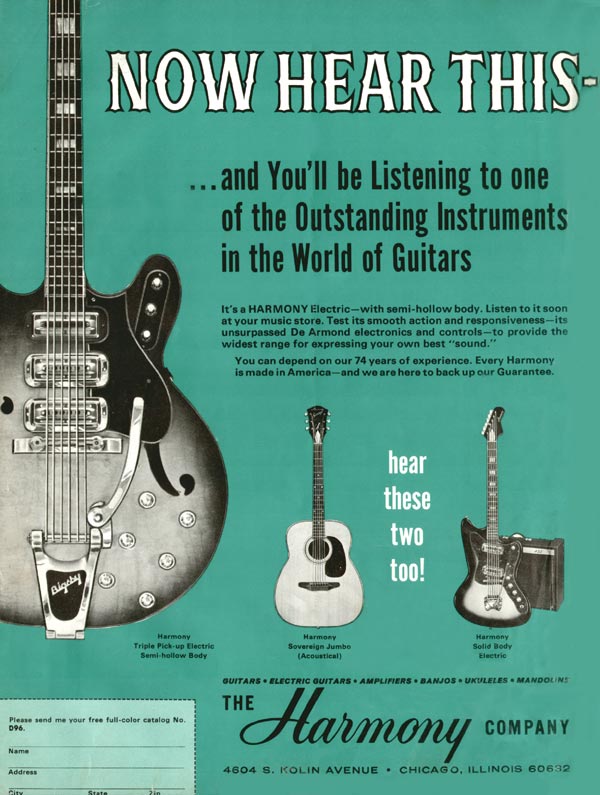
1966 Harmony Guitar ad.

Evocative as that last sentence appears, the pre-Fleetwood Mac story of Stevie and Lindsey is equally dreamful. Lindsey Adams Buckingham was born on October 3, 1949, in Palo Alto, California where he attended Menlo-Atherton High School. Lindsey and his two older brothers, Jeffrey and Gregory, were encouraged to swim competitively by their parents from an early age. Though Lindsey dropped out to pursue music, his brother Gregory would win a silver medal at the 1968 Olympics in Mexico City, setting two world records along the way. Buckingham learned to play guitar on a toy Mickey Mouse guitar, strumming along to his brother Jeff’s extensive collection of 45s. Recognizing his talent, Lindsey’s parents bought him a $35 Harmony guitar for Christmas. Produced between 1945 and 1975, the Harmony guitar was nicknamed the “People’s Guitar”. Many musicians began their careers playing Harmony guitars: Elvis Presley, Keith Richards, Jimmy Page, Howlin’ Wolf, Big Joe Williams, Ritchie Valens, and the Kinks’ Dave Davies among them.

Lindsey never took guitar lessons, does not read music, and famously plays with no pick. Instead, he plays fingerstyle almost exclusively strumming with his middle and ring fingers. After joining Fleetwood Mac, Buckingham stepped up his game and began using a Gibson Les Paul Custom. From 1966 to 1971, Buckingham performed as a bassist and vocalist with a psychedelic folk rock band originally named the Fritz Rabyne Memorial Band. In 1967 as the band’s lineup changed, they shortened their name to Fritz.

A very young Stevie Nicks.

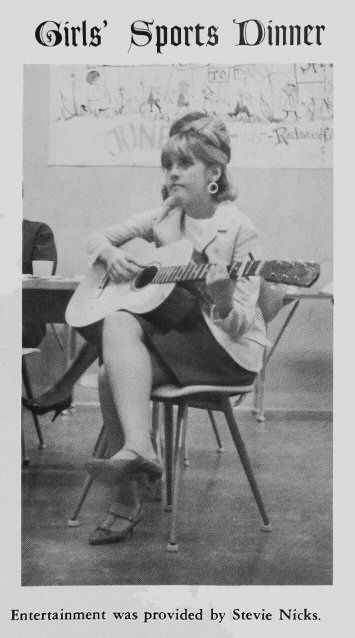
Stephanie Lynn Nicks was born in Phoenix, Arizona on May 26, 1948. As a toddler, she could only pronounce her name as “tee-dee”, which led to the nickname “Stevie”. Always a musical child, by the age of four, Stevie was strumming a toy guitar and singing duets with her grandfather. Her father’s frequent relocation as a vice president of Greyhound had the family living in Phoenix, Albuquerque, El Paso, Salt Lake City, Los Angeles, and San Francisco. On her 16th birthday, her parents bought her a Goya guitar, a favorite of folksingers best remembered as the guitar played by folksinger Melanie and by movie star Julie Andrews in The Sound of Music.

While attending Arcadia High School in Arcadia, CA., she joined her first band, the Changing Times, a folk rock band whose most famous song was “The Pied Piper”, released in 1965, which focused on vocal harmonies. Stevie met Lindsey during her senior year at Menlo-Atherton High School in Atherton, California. Stevie saw Buckingham playing “California Dreamin'” at the Young Life club and joined him in harmony. As it happened at the time, Lindsey’s rock band Fritz was breaking apart as two band members were leaving for college. In mid-1967, Lindsey asked Stevie to replace the band’s lead singer. Fritz started to take off after Stevie joined, opening for major acts like Santana, Moody Blues, Chicago Transit Authority, Jimi Hendrix, Janis Joplin, Ike & Tina Turner, War, Chuck Berry, Poco, Leon Russell, Dr. Hook, and others from 1968 until 1970. Nicks and Buckingham attended San José State University but both dropped out to pursue music. After Fritz disbanded for good in 1972, the duo continued to write songs and record demo tapes at night in Daly City, CA.

Warren Zevon & Phil Everly.

After the lukewarm release of their album Buckingham and Nicks, with no money coming in, Stevie began working multiple jobs. She waited tables and cleaned houses to make ends meet. Recruited by keyboard player Warren Zevon, Buckingham joined the Everly Brothers for their 1972 tour. Lindsey played bass for the band alongside legendary guitarist Waddy Wachtel, who continues to play with Stevie Nicks to this day. While Lindsey toured, Stevie remained behind writing songs including “Rhiannon” and “Landslide” as her relationship with Buckingham slowly deteriorated. On December 31, 1974, Mick Fleetwood called on Buckingham, changing Fleetwood Mac from a British band (whom Beatle John Lennon once cited as an influence) into an Anglo-American one.

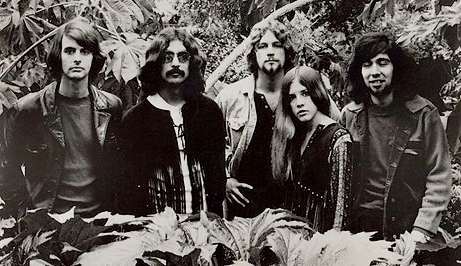
Fritz Rabyne Memorial Band-Stevie on the ladder and Lindsey gazing up at her.

But what about those years with the Fritz Rabyne Memorial Band (aka Fritz)? The official audiophile community identifies Fritz as a diverse high school rock band formed in San Jose in the fall of 1966. The band performed early rock and roll covers mixed with sixties Bay area psychedelic instrumentals. The band’s name was derived from a fellow high school student at the time, and like Lynyrd Skynyrd, was created as an inside joke. The band was born when Bob Aguirre, drummer of The Castiles (Bruce Springsteen’s early band) invited keyboard player Javier Pacheco to perform at a high school talent show alongside Cal Roper (bass), Lindsey Buckingham (guitar), and Jody Moreing (vocals & guitar). Pacheco wrote the majority of the band’s songs. By 1968, Cal left the group to go off to college and Jody joined another band. Fritz’s tight, three-part harmonies quickly gained a loyal Bay-area following. When vocalist Jody Moreing left the band in 1968, Stevie Nicks was invited to join the band. She quickly developed a mesmeric stage persona. By the summer of 1968, the band was comprised of Brian Kane (lead guitar, vocals), Aguirre (drums), Pacheco (keyboards, vocals), Stevie Nicks (percussion, vocals), and Lindsey Buckingham (bass, vocals).

Fritz Rabyne Memorial Band-Stevie at center with Lindsey seated at her right.

Like many sixties Bay-area bands, records are sketchy. Most of the gigs were performed in and around Santa Clara County. The band played a few Stanford frat parties (where Lindsey’s brother Greg attended) and dances at Westmont High School from 1966 to 1968 and Mango Jr High in Sunnyvale in 1970. Fritz performed regularly at Ricardo’s Pizza, a popular teen hangout in a traditionally Italian neighborhood known as “Goosetown” in San Jose. It was a working-class neighborhood where many shopkeepers lived upstairs inside of or near their businesses. Ricardo’s Pizza, located at 218 Willow St., featured red-and-white checkerboard tablecloths, wooden chairs, and Italian accents. Extra seating existed upstairs above the kitchen, and a small stage occupied one of the walls. Ricardo’s featured a banjo player for the weeknight crowd and spotlighted up-and-coming bands on the weekends. In 1970-71, the Doobie Brothers were the house band at Ricardo’s, gigging there on a regular basis. Innovative Jazz trumpet player Chet Baker and The Tubes were also regulars. Fritz appeared on a number of occasions at the Santa Clara Fair Grounds, opening for Steve Miller and Deep Purple and appearing with Iron Butterfly at the Expo-69 Teenage Fair. Fritz was the headliner for the Youngbloods, Country Weather, and Stained Glass, also at the fairgrounds.

Fritz Rabyne Memorial Band- Lindsey & Stevie Center stage.

The band initially practiced at Lindsey’s house in Atherton, but after 1968, the band rehearsed in the banquet room at the Italian Gardens Restaurant in San Jose. For approximately three and a half years, Fritz was one of the major local acts on the San Francisco Bay music scene. The band’s songs spoke to the human condition: “Yellow” (about the media), “Product of the Times” (conformity), “Empty Shell” (the ego), “Bold Narcissis” (more ego), “Sharpy” (about slick-talking agents), “The Power” (about finding God), “Eulogy” (about rebirth), “Existentialist” (about intellectual self-gratification), and “Crying Time” (about the death of innocence). Edgy content notwithstanding, today Fritz’s songs are mostly forgotten novelties consigned to the darkest corners of the internet.

However, Fritz was Stevie’s first rock band and the first pairing of what would become Rock and Roll’s most tempestuous couple. Fritz served as a sort of music school for Stevie, laying the foundations for her era-defining pop career. After Fritz’s disbandment, Stevie and Lindsey became prominent members of Fleetwood Mac during its most commercially successful period, highlighted by the multi-platinum studio album Rumours (1977), which sold over 40 million copies worldwide. The rest, as they say, is history. And it all started fifty years ago this week.