

Original publish date: February 14, 2019
Ten years ago, the dead body of a 67-year old woman was discovered in Engkewood, New Jersey. Her death came sometime that week and, for the most part, her passing went unnoticed. It remains so a decade later. But, in the weeks and months before the British invasion hit our shores, she was the hottest third of a fairy-tale girl group featured on magazine covers, 45 sleeves and album covers all over the world. She dated George Harrison, Mick Jagger, George Hamilton and Johnny Mathis. Her name was Estelle Bennett and together with her sister Veronica and cousin Nedra Talley, they were known the world over as The Ronettes.

One of the most popular groups (male or female) from the 1960s, they charted nine songs on the Billboard Hot 100, five of which became Top 40 hits. The trio came from Washington Heights in New York City, and took their name from lead singer Veronica; better known as Ronnie Spector. The Ronettes’ most famous songs were “Be My Baby”, “Baby, I Love You”, “(The Best Part of) Breakin’ Up”, and “Walking in the Rain”. The later won a Grammy Award in 1965, and “Be My Baby” was inducted into the Grammy Hall of Fame in 1999. The Ronettes were inducted into the Rock and Roll Hall of Fame in 2007, just a couple years before Estelle’s death, officially from colon cancer, but those who knew her said she died of a broken heart.
The girls had been singing together since they were teenagers in Spanish Harlem. In 1959, they entered a talent show at the Apollo Theater and won as “The Darling Sisters.” Ronnie was then 16, Estelle 17, and Nedra 13. Soon they were appearing at local sock hops and charity shows. By 1961 they were dancing and singing at New York’s Peppermint Lounge during the Chubby Checker “twist” dance-craze. They were featured in “Twist-A-Rama” shows and toured with Joey Dee and the Starlighters, whose song “Peppermint Twist” was a standard of the era. In time, they were discovered by New York city’s famous disc jockey “Murray the K,” who had them appear in his “rock ‘n roll revues” held at the Brooklyn Fox Theater. In March of 1963, they moved to Phil Spector’s Philles Records and changed their name to “The Ronettes”.

The Ronettes were an exotic contradiction, singing songs in flirting tones about puppy love like edgy big apple street sirens while still looking somehow lonesome and vulnerable. Their heavy mascara framed Cleopatra eyes, their tight slit skirts exposed shapely legs and their tall, jet-black beehive hairdos screamed sex appeal… and danger. All three girls were of mixed-race decent and all three were undeniable young beauties. Ronnie and Estelle had a white father and a mother of African-American and Cherokee descent. Nedra Talley was black, Indian and Puerto Rican. Despite their vampish appearance, the girls were kept off the street by their parents and led tame, sheltered lives. Sometimes at school, they were bullied for their mixed-race looks. Hard to imagine from the girls who Darlene Love (He’s a Rebel) described as “the bad girls of the ’60s.”
Estelle Bennett (July 22, 1941 – February 11, 2009) was the quieter of the two Bennett sisters. When they were in school, Estelle concentrated on her homework and brought home good grades. Ronnie, more of an extrovert, spent her time singing and cultivating her “look”. Estelle was thr fashionista of the two, always reading Glamour, Vogue, and other fashion magazines. Estelle was valedictorian of her class at George Washington High School in Manhattan and went on to study at Manhattan’s Fashion Institute of Technology. Estelle worked at Macy’s durig the day, attended fashion school at night, and sang with The Ronettes on the weekends. And above all, Estelle loved singing and the recognition that came with it. She was the “pretty” Ronette, the one whose dance card was always the fullest. Although content to remain in the shadow of her younger sister, Estelle always soaked up her fair share of the spotlight. Those who knew Estelle described her as gentle and intelligent, and the driving force behind the Ronettes’ style. As cousin Nedra recalled: “She was not pretentious at all, but she carried herself with a sophistication that a lot of guys thought was really sexy. And she had a very, very good heart.”
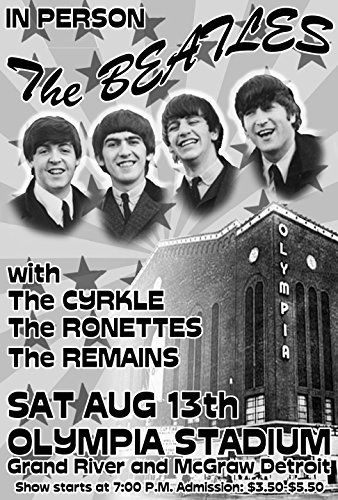 By the time the girls signed with Phil Spector in 1963, thanks mostly to Estelle, the Ronettes had their look precisely calibrated. In August of 1963 “Be My Baby” was released and by October, it had shot to No. 2 on the Billboard pop chart, making the Ronettes instant stars. The girls embarked on a tour of Britain in December of 1963 into early 1964. The Ronettes were the only girl group to tour with the Beatles. The Rolling Stiones were their opening act. When they toured, the Ronettes always traveled with at least one family member. In late 1964, the group released their only studio album, Presenting the Fabulous Ronettes Featuring Veronica, which entered the Billboard charts at number 96.
It was during that tour of ’63-’64 when The Beatles George Harrison, the “quiet Beatle”, began dating Estelle Bennett. The two hit it off immediately. According to Estelle, “We kept running into each other at parties and gatherings and always found our eyes meeting no matter how many other people were in the room. George and I talked whenever we’d see each other. We found we liked the same things, long walks while wearing comfortable clothes and being with sincere people who liked us for ourselves and not because we were in show business. I think I was the happiest when I was talking with George. There was something about him that made me open up and spill out anything that was on my mind. I think he felt the same way, for he’d often call late in the evening and talk on the phone for hours.”

 The duo were inseperable for the remainder of the English tour until The Beatles left for Paris. When The Beatles came to America, the Ronettes met them at their hotel in New York City. The Ronettes, in fact, were on hand February 8, 1964 to welcome the Beatles as they arrived in New York for their first U.S. visit and Ed Sullivan Show appearance. But the relationship fizzled out, Estelle saying, “We saw each other many times. I was with him at the party after their concert and on other evenings when we just sat around the hotel with the rest of the group. But somehow things weren’t the same. We couldn’t recreate the same relationship we had when I was in London…Over there he’s at his best, he’s relaxed, he’s George Harrison, Englishman and not George Harrison, Beatle.”
During that same tour, Estelle was also romantically linked with Mick Jagger.
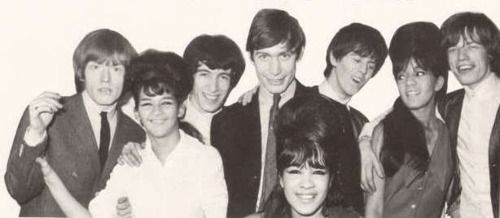
 In Keith Richards autobiography “Life” he admitted that he was dating Ronnie when the Stones toured with the Ronettes in 1963. He recalled there that Mick Jagger got with Estelle because she was less “chaperoned” than Ronnie. The pairings were viewed as controversial for a couple of reasons. One was that management, particularly The Beatles’ Brian Epstein, wanted “the boys” to remain single for fans’ sake. And two, interracial pairings were taboo back in those days. Frowned upon in the U.K. and nearly suicidal in parts of the U.S.A.
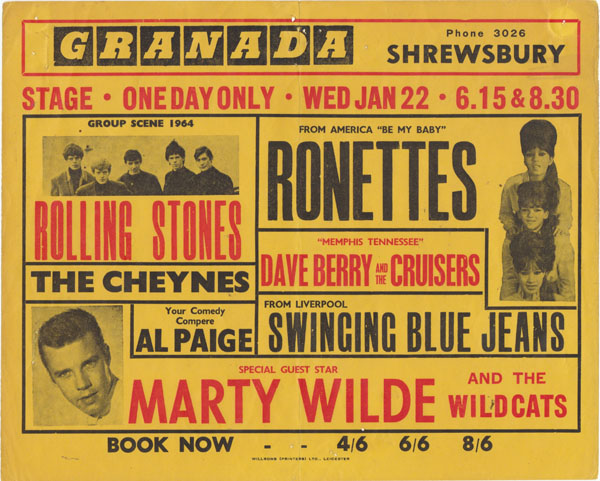 In 1965, the Ronettes continued to record and tour while making a few appearances on television, including a CBS special and the NBC pop music show, Hullabaloo. However by this time, Phil Spector was busy with other artists. The 1965 song “You’ve Lost That Lovin’ Feelin’,” produced and co-written by Spector for The Righteous Brothers, became a No. 1 hit. And by early 1966, he was preoccupied with Ike & Tina Turner. By now, The Ronettes were being moved to the back burner by Spector and some of their songs, such as “I Wish I Never Saw the Sunshine”, and two songs co-written by Harry Nilsson, “Paradise” and “Here I Sit,” were held back for decades. They had one last hurrah in August 1966 when the Ronettes (minus Ronnie) joined the Beatles on their 14-city U.S./Canada tour as one of the opening acts. As for the Rolling Stones, during one visit they made to New York in the 1960s, Ronnie’s mother ended up cooking for them at her Gotham City home.

In late 1966, after several singles failed to make the charts, Phil Spector stopped releasing new records, the Philles label shut down and the Ronettes disbanded. Nedra Talley married New York radio station programming director Scott Ross. Estelle Bennett married road manager Joe Dong and the couple had a daughter, Toyin. After the Ronettes’ break-up, Estelle took it hard. Her cousin, Nedra said “Estelle did not want the Ronettes to end.” Estelle recorded one single for Laurie Records, “The Year 2000/The Naked Boy.” It didn’t do well and she quit the music business. After she left music, her life began a descent into another world.
By 1968, Estelle seemed to lose her moorings. At one point, she was hospitalized with anorexia. Not long after her grip on reality began to loosen considerably. Estelle was often seen wandering the streets of New York, telling people she would be performing with the Ronettes at a particular jazz nightclub. Estelle’s daughter Toyin explained she had never really known who her mother was. “From the time I was born she suffered with mental illness. I never really got to know Estelle in a good mental state.” Cousin Nedra Talley Ross, reported that Estelle had led a hard life, struggling with schizophrenia and anorexia.
 Fellow 1960s singer Darlene Love, who once described The Ronettes as Rock’s tough girls, said the last time she saw Estelle, “She didn’t remember me.” By the early 2000s, Estelle Bennett was homeless. In 2007, The Ronettes were inducted into the Rock and Roll Hall of Fame. Love recalled seeing Estelle at the induction ceremony. “They cleaned her up and made her look as well as possible…She looked the best she could for somebody who lived on the street. It broke my heart.” It was decided that she was too fragile to perform. A back-up singer with Ronnie Specter’s new group stood in for an encore performance of “Be My Baby”.
“Be My Baby” sold millions of copies, both in the 1960s and since then, having been used in the opening segments of films such as Martin Scorsese’s 1973 film Mean Streets and 1987’s Dirty Dancing. In 2004, Rolling Stone ranked the song at No. 22 on their list of “The 500 Greatest Songs of All Time”. Brian Wilson of the Beach Boys has called “Be My Baby” one of the greatest pop records ever made and is his “all-time favorite song.” Wilson was in his car when he first heard the tune on the radio, and being the composer and arranger that he was, stopped the car to give the song a closer listen. “I had to pull off the road,” he said. “I couldn’t believe it. The choruses blew me away.” Wilson, in fact, wrote a famous Beach Boys song, “Don’t Worry Baby,” initially as a follow-up intended for the Ronettes, but it was turned down for that purpose.

When Estelle was found dead in her apartment by police, after relatives had been unable to contact her, Kevin Dilworth, a friend and former Newark, New Jersey Star-Ledger newspaper reporter said, “I think she really just died of a broken heart. After the Ronettes disbanded in 1966, I don’t think she was ever right again…” Dillworth added that the only time he really saw her come to life was at the Rock and Roll Hall of Fame of March 2007: “When they came out of the main ceremony… when she walked down the hallway, and the paparazzi … all the flashing cameras, and the people asking for autographs … her eyes just lit up. She was so excited, and she was back on top of the world again. But she went right back to anonymity.”
 Posthumously, all agreed that growing up, Estelle had been a force in creating the Ronettes’ style and act – and that she had a heart of gold. “Estelle had such an extraordinary life,” said her cousin, Nedra. “To have the fame, and all that she had at an early age, and for it all to come to an end abruptly. Not everybody can let that go and then go on with life.” “Not a bad bone in her body,” said her sister Ronnie in a press statement. “Just kindness.” At that 2007 Hall of Fame ceremony, Estelle spoke only two sentences during her acceptance speech, “I would just like to say, thank you very much for giving us this award. I’m Estelle of the Ronettes, thank you.” No, Estelle, we thank you.
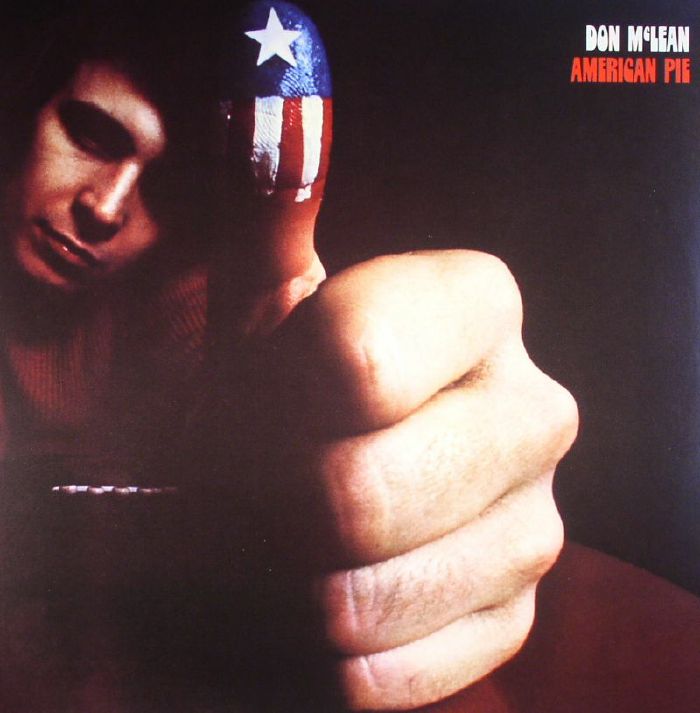
 The album launched two number one hits in the title song and “Vincent”. American Pie’s success made McLean an international star. The title track went on to become an anthem for late stage baby boomers. Decyphering the song’s lyrics became a national pasttime, sparking rumors that persist to this day. “American Pie” was the number-one US hit for four weeks in 1972. The song was listed as the No. 5 song on the RIAA project Songs of the Century and was selected for preservation in the National Recording Registry by the Library of Congress.
 McLean has really never divulged the song lyrics meanings. He has said: “They’re beyond analysis. They’re poetry.” His silence has simply added fuel to the speculation. In 2009, on the 50th anniversary of the crash, he stated that writing the first verse of the song exorcised his long-running grief over Holly’s death and that he considers the song to be “a big song … that summed up the world known as America”. It should be noted that McLean dedicated his album to Holly. Every line of the 8 1/2 minute song has been carefully culled over and, rightly or wrongly, “explained” by fans and pundits alike ever since. Some of them are simple, others, not so much.
 “A long, long time ago.”: American Pie was written in 1971 but talks about the 1950’s. “I can still remember how that music used to make me smile.”: McLean’s favorite music were the golden oldies of the 50’s. “And I knew if I had my chance, that I could make those people dance, and maybe they’d be happy for a while…”: Fifities music was primarily made for school dances and sock hops and McLean was waxing nostalgic about creating the same atmosphere with his music. “But February made me shiver.”: His idol, Buddy Holly died in a February plane crash in Iowa. “With every paper I’d deliver.”: He was a newspaper delivery boy in New Rochelle, New York. “Bad news on the doorstep, I couldn’t take one more step.”: Denotes the day he got the news of the plane crash. “I can’t remember if I cried, when I read about his widowed bride.”: Buddy Holly’s wife was pregnant when the accident occurred and soon after had a miscarriage. “But something touched me deep inside, the day the music died.”: Holly, Richie Valens and the Big Bopper died together on the same day and fans felt that these three were that only major artists left. Elvis got drafted, Little Richard turned gospel, Bill Haley was forgotten, Jerry Lee Lewis was scandalous and Chuck Berry was a convicted criminal.
 “Did you write the book of love?”:”The Book of Love” was a hit in 1968 by the Monotones. “And do you have faith in God above, if the Bible tells you so?”: Don Cornell’s book “The Bible Tells Me So” (1955) and the Sunday School song “Jesus Loves Me,” with the line “For the Bible tells me so.” were presumed memories from McLean’s childhood. “Now do you believe in rock & roll?”: McLean was a former folk singer, a medium supplanted by Rock n’ Roll. “Can music save your mortal soul?”: Music may be the only thing that can save the listener from the social upheaval of the sixties. “And, can you teach me how to dance real slow?”: another perceived reference to the innocence of the 1950s. “Now I know that you’re in love with him, ’cause I saw you dancing in the gym.”: Buddy’s widow Maria Elena remarried. “You both kicked off your shoes.”: 1950s sock hop reference. “Man, I dig those rhythm and blues.”: Buddy Holly was living in Greenwich Village at the time of his death and frequenting the Jazz bars with his young wife. “I was a lonely teenage broncin’ buck with a pink carnation and a pickup truck.”: likely a tip of the cap to Marty Robbins 1957 song A White sport Coat (And a Pink Carnation). “But I knew I was out of luck, the day the music died.”: Holly’s death presaged an end of innocence.
 “Now for ten years we’ve been on our own.”: It was a decade after Holly’s death when McLean put out his first album in 1969. “And moss grows fat on a rolling stone.”: Bob Dylan’s song “Like a Rolling Stone” signified (to many) the death of folk music. “but that’s not how it used to be.”: Again referring to Dylan’s musical changes. “When the jester sang for the king and queen.”: A veiled reference to Dylan as the jester. The king was Peter Seger and the queen Joan Baez. The two biggest names in folk music in the ’60’s. “In a coat he borrowed from James Dean.”: Although some see this as reference of Dylan’s “Freewheelin'” album cover where he is wearing a red windbreaker, it has also been explained as the movie idol’s death coming so close to Holly’s. “And a voice that came from you and me.”: again a reference to Dylan being the voice of his generation. “Oh, and while the king was looking down the jester stole his thorny crown.”: When Elvis “The King” left for the Army, Dylan stepped up to take his place. “The courtroom was adjourned, no verdict was returned.”: Dylan left the folk scene and went electric, then had his motorcycle wreck and disappeared for awhile. “And while Lennon read a book of Marx.”: Like Dylan, John Lennon and The Beatles switched genres from a pop band to serious musicians with an even more serious message. “The quartet practiced in the park and we sang dirges in the dark, the day the music died.”: The Beatles performed their last live concert at Candlestick Park and were broken up by the time this song became well known. There are many music aficionados out there who will argue that this verse is not about Bob Dylan at all but rather about the Kennedys. In that case, the lyrics should be pretty self explanatory.
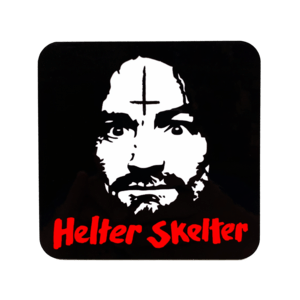 “Helter Skelter in a summer swelter.”: In the summer of 1968, Charles Manson massacred an entire family spurred on by the Beatles song “Helter Skelter” from the white album. “The Byrd flew off with to a fallout shelter.”: The Byrd’s were a popular folk-rock group who had a hit with Dylan’s “Mr. Tambourine Man,” in 1965. Dylan’s “Mr. Tambourine Man” appeared on his “Bringing It All Back Home” record, which features the image of a fallout shelter sign in the lower left corner. “Eight miles high and falling fast then landed in the foul grass.”: Eight Miles High was the first ever psychedelic song by the Byrds and tall grass refers to marijuana. “The players tried for a forward pass with the jester, on the sidelines in a cast.” Bob Dylan’s 1966 motorcycle wreck sidelined him and led to the success (out of necessity) of his back-up band, “The Band” whose 1968 and 1969 albums are considered classics. “Now the half time air was sweet perfume while sergeants played a marching tune.” Perceived reference to Dylan’s time off and the 1967 Beatles album Sgt. Pepper. “We all got up to dance, but we never got the chance.”: reference to the protests at the 1968 Chicago DNC and Kent State massacre of 1970. “Cause the players tried to take the field.”: The National Guard at Kent State University. “The marching band refused to yield.”: resulting in the deaths of of four students and wounding of nine others. “Do you recall what was revealed, the day the music died.”: Kent State University in Kent, Ohio.
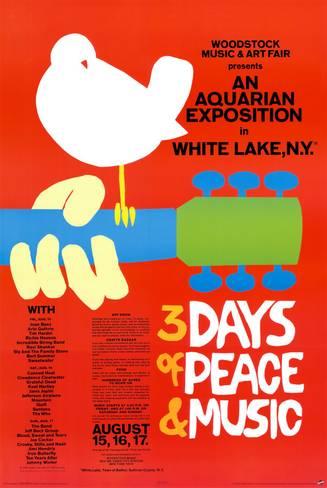 “And then we were all in one place.”: The Woodstock Festival took place in August 1969. 400,000 of McLean’s generation were there. “A generation lost in space.”: with the Apollo 11 moonlanding, the kids who grew up watching Lost in Space were coming of age. “With no time left to start again.”: The deaths of Buddy Holly and James Dean were harbingers for assassinations of the 1960s that could not be undone. “So come on Jack be nimble, Jack be quick, Jack flash sat on a candlestick.”: Reference to the Rolling Stones song Jumpin’ Jack Flash. “cause fire is the devil’s only friend.”: The Rolling Stones 1968 album Sympathy for the devil. “Oh, and as I watched him on the stage.”: In December of 1969, the Stones attempted another Woodstock at Altamont Speedway. A free concert with the Hell’s Angel’s handling the security. The Stones paid them with beer and handfuls of acid and during the performance of “Sympathy for the Devil,” a black man was beaten and stabbed to death by the Hell’s Angels. “My hands were clenched in fists of rage no angel born in hell could brake that Satan’s spell.”: The Hell’s Angels. “As the flames climbed high into the night, to light the sacrificial rite.”: The stones were helicoptered out after the murder and mayhem ensued. “I saw Satan laughing with delight, the day the music died.”: Historians point to the Stones at Altamont as the death of the sixties and good no longer triumphed over evil.
 This song’s refrain may be the hardest part of the song to explain. “So bye, bye Miss American Pie. Drove my Chevy to the levee but the levee was dry. And them good old boys were drinking whiskey and rye singing This will be the day that I die, this will be the day that I die.” The rumor was that American Pie was the name of the doomed plane carrying Holly, Valens and Richardson. Not true. It was also suggested that McLean was dating a Miss America contestant while writing the song. Also not true. Years later, McLean stated that Miss American Pie is as “American as apple pie, so the saying goes.” When taken on the face of it, I believe the refrain came together as a chorus simply because it was catchy. All hidden meanings aside, that may also be true about the entire song. Practically speaking “Chevy” rhymes with “levee”, it’s that simple. Still, theorists propose that the song’s refrain comes from Buddy Holly’s “That’ll be the day,” that eventually says “that I die.”
 In February 2015, McLean announced that Christies Auction House in New York City would sell his original lyrics for the iconic song. McLean explained his reasoning in Rolling Stone magazine: “I’m going to be 70 this year. I have two children and a wife, and none of them seem to have the mercantile instinct. I want to get the best deal that I can for them. It’s time.” The lyrics are 18 pages and contain 237 lines of manuscript and 26 lines of typed text and includes lines that didn’t make the final version as well as extensive notes. Christie’s described the lot as “Comprising: 4 pages manuscript in pencil on four sheets of blue paper stock, 11 pages manuscript on 10 sheets in pencil and ink on ruled spiral paper (including one a half sheet), 2 pages manuscript in pencil on two sheets of yellow paper stock, and one page typed manuscript on blue paper (with four lines holograph notes on verso in purple ink and pencil). Together 18 pages of manuscript on 17 sheets. ” The lot sold on April 7, 2015 for $1.2 million ($1.57 million with buyer’s premium).
 Alan E. Hunter