Abe Lincoln, Art, Museums, Presidents

Abraham Lincoln’s Favorite Poem.

Original publish date October 19, 2023. https://weeklyview.net/2023/10/19/abraham-lincolns-favorite-poem/

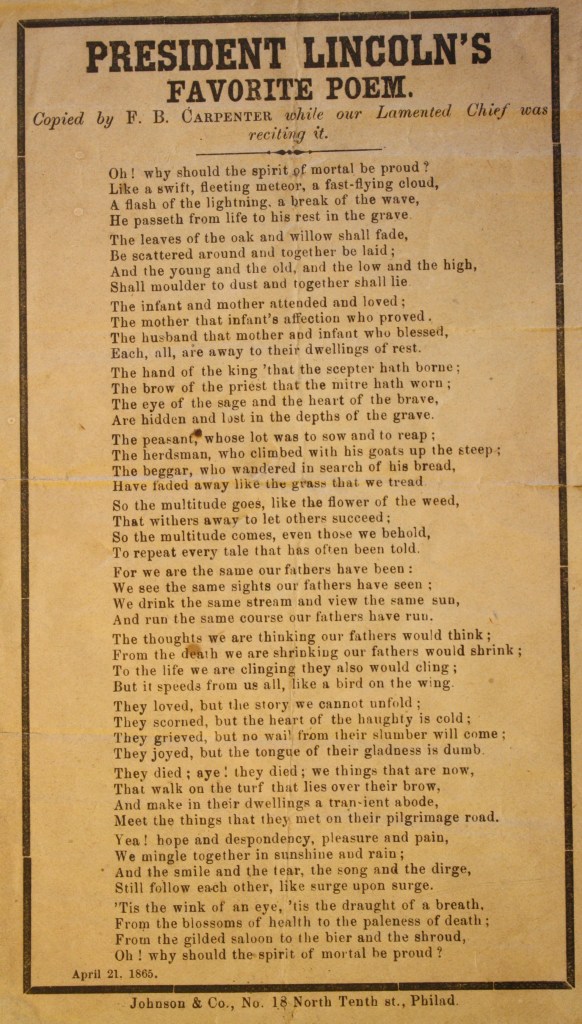
This was once displayed in Osborn H. Oldroyd’s museum inside the Lincoln Home in Springfield, Illinois. The poem was read aloud on the 15th anniversary of the President’s death, April 15, 1880, at the first memorial service at Lincoln’s Tomb ceremony by Mrs. Edward S. Johnson (wife of Lincoln Guard of Honor member and second Lincoln Tomb custodian Major Edward S. Johnson). Undoubtedly this leaflet was handed out at that ceremony on that day as a souvenir. It is titled “President Lincoln’s Favorite Poem. Copied by F.B. Carpenter while our Lamented Chief was reciting it.”

During the month of October in Irvington, I am near-constantly surrounded by reminders of the dead. While Irvington celebrates Halloween with little door-knocking ghosties and goblins gliding from door to door in search of treats, it does nothing to dispel the fact that Halloween revolves around the spirits of the dearly departed. I write often about Abraham Lincoln, but seldom about Lincoln and Halloween. I thought it might be a good time to examine a mysterious poem that fits the season and has often been referred to as Lincoln’s favorite.

Lincoln developed his lifelong love of poetry while a boy in Southern Indiana. Although by his own admission, Lincoln got his education “by littles” and the total time spent in a classroom by the young rail-splitter amounted to less than a year, he devoured the poetry found in the four school readers historians attribute to his early years in the Hoosier state. Many of those poems were about death. John Goldsmith’s 1766 poem, An Elegy On The Death Of A Mad Dog, Edgar Allan Poe’s 1845 poem The Raven, Oliver Wendell Holmes’ 1831 poem The Last Leaf, and Thomas Gray’s 1751 poem Elegy Written in a Country Churchyard. And of course, Lincoln’s love of William Shakespeare is widely known.

These poets in particular capture the gloomy, melancholic poetry of which Lincoln was so fond of as a young man. Lincoln, a capable amateur poet himself, memorized the poems he cherished, reciting them to friends and inserting them in conversations and speeches throughout his life. His favorite poem, which he recited so often that people suspected he was its author, was William Knox’s “Mortality,” alternately known as “O, Why should the Spirit of Mortal be Proud!” Lincoln often opined to friends (and at least once in a letter) that he, “would give all I am worth, and go in debt, to be able to write so fine a piece as I think that is.”

The poem was cut from a newspaper and given to Lincoln by Dr. Jason Duncan in New Salem, Illinois. At the time, its author was anonymous, and attribution was unknown. On at least a few occasions, having committed it to memory, Lincoln wrote the Mortality poem out longhand and sent it to friends, always noting that “I am not the author.” He would spend twenty years searching for the poet. Aptly for the season, one stormy night in the White House, Lincoln recited the poem for a small group of friends including a congressman, an army chaplain, and an actor, noting that the “poem was his constant companion” and that it crossed his mind whenever he sought “relief from his almost constant anxiety.”
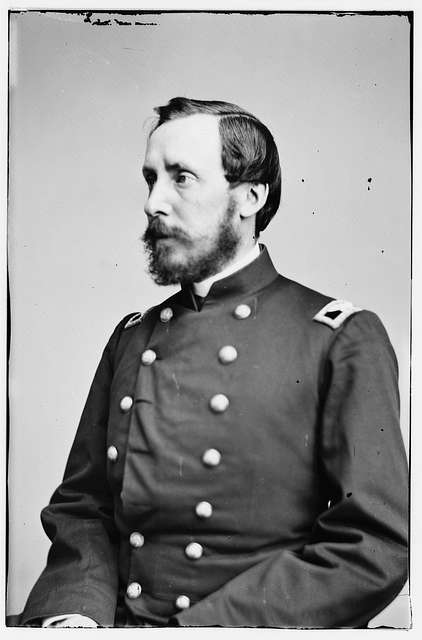
General James Grant Wilson (1832-1914)

When the group departed, Lincoln requested that his guests help to discover who had written it. “Its author has been greatly my benefactor, and I would be glad to name him when I speak of the poem…that I may treasure it as a memorial of a dear friend.” Union General James Grant Wilson (1832-1914) would ultimately inform the President that the poem was written by an obscure Scottish poet named William Knox (1789-1825). The poem was first published in his 1824 book Songs of Israel. After Lincoln’s death, the poem experienced a resurgence in popularity.
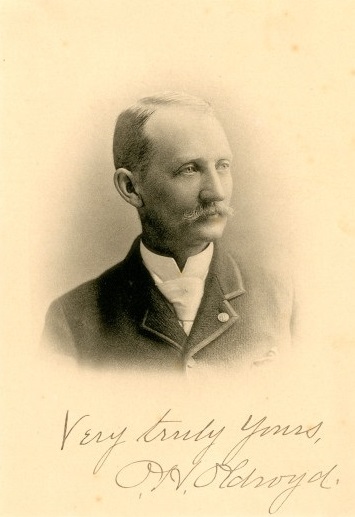
Osborn H. Oldroyd.

On April 15, 1880, on the 15th anniversary of the President’s death, the poem was read aloud by Mrs. Edward S. Johnson (wife of Lincoln Guard of Honor member and second Lincoln tomb custodian Major Edward S. Johnson) during a ceremony at the tomb in Springfield. A leaflet, handed out at that ceremony and found in my collection, was saved by Lincoln collector and personal muse Osborn H. Oldroyd and displayed in his collection in the Lincoln home for years. It remains important to the Oldroyd story as the impetus for his personal resolve to build a Lincoln Museum of his own.
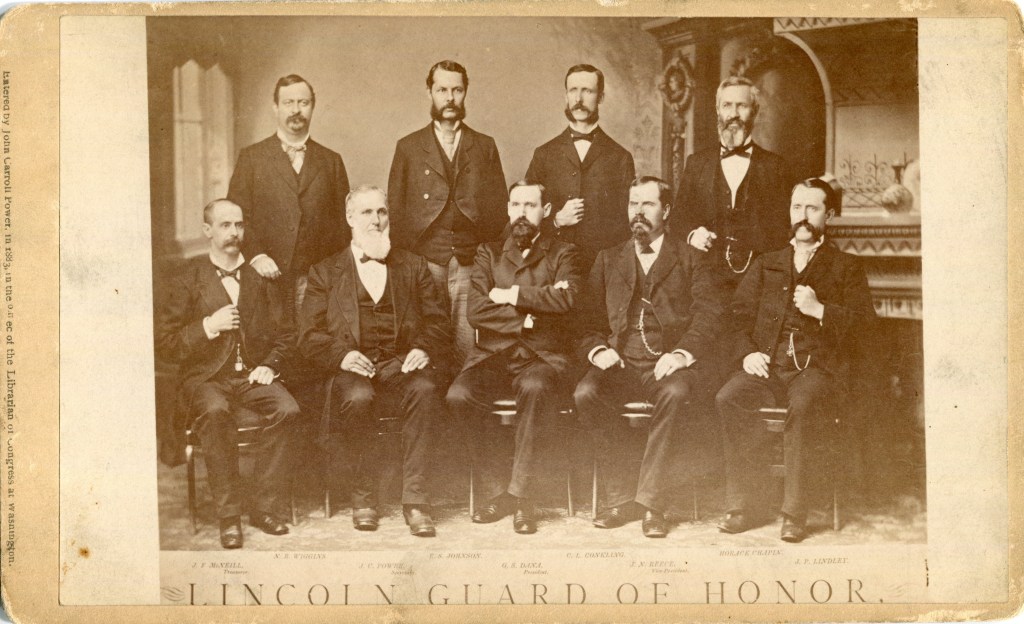
Lincoln Tomb Guard of Honor. John Carroll Power seated front row second from left.

At that time the tomb’s Memorial Hall housed a small exhibit of Lincoln artifacts gathered by custodian John Carroll Power (a subject of my past columns). At that event, Oldroyd decided that his collection might be a bigger deal than he thought it was. “As I gazed on the…resting place of him whom I had learned to love in my boyhood years, I fell to wondering whether it might not be possible for me to contribute my might toward adding luster to the fame of this great product of American institutions,” wrote Oldroyd. It was after gazing upon those priceless Lincoln relics at the tomb that Oldroyd resolved to build a Memorial Hall in Springfield to display his own collection of Lincoln memorabilia. For a decade (1883 to 1893) that museum occupied the front parlors of the only home Abraham Lincoln ever owned at 8th and Jackson. The divider between those two rooms was adorned by a shield-shaped, flag-draped wooden motif adorned with the title “O, Why should the Spirit of Mortal be Proud!” Oldroyd made sure that every visitor to his museum was aware of the poem’s significance in the Lincoln chronology while surreptitiously causing each visitor to cast their eyes towards the heavens to receive the message.

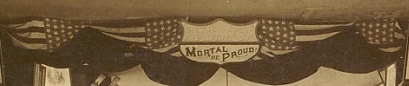
Oldroyd’s Springfield Museum.
A stanza from the poem fashioned into a plaque hangs above the door in the above photo.

The poem is written in Quatrain form with an A-A-B-B rhyme scheme, or clerihew, with all of the dominant words highlighted by the rhyme. The poem resounded in Lincoln’s mind like an echo, its pauses, and connotations framing the beat of the poem. The poem causes its reader to reflect on the inevitable continuity of life; Life is short so why sweat the small stuff? We are but insignificant players in a much grander scheme, so do all you can while you’re here. Here, submitted for your approval in the spirit of Halloween, is Abraham Lincoln’s favorite poem in its entirety.
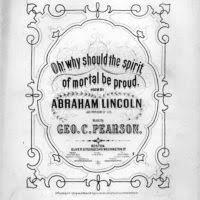
“O why should the spirit of mortal be proud! Like a fast-flitting meteor, a fast-flying cloud, A flash of the lightning, a break of the wave-He passes from life to his rest in the grave. The leaves of the oak and the willow shall fade, Be scattered around and together be laid; As the young and the old, and the low and the high, Shall moulder to dust, and together shall lie. The child that a mother attended and loved, The mother that infant’s affection that proved, The husband that mother and infant that blest, Each-all are away to their dwelling of rest. The maid on whose cheek, on whose brow, in whose eye, Shone beauty and pleasure-her triumphs are by: And the memory of those that beloved her and praised, And alike from the minds of the living erased. The hand of the king that the sceptre hath borne, The brow of the priest that the mitre hath worn, The eye of the sage, and the heart of the brave, Are hidden and lost in the depths of the grave.”
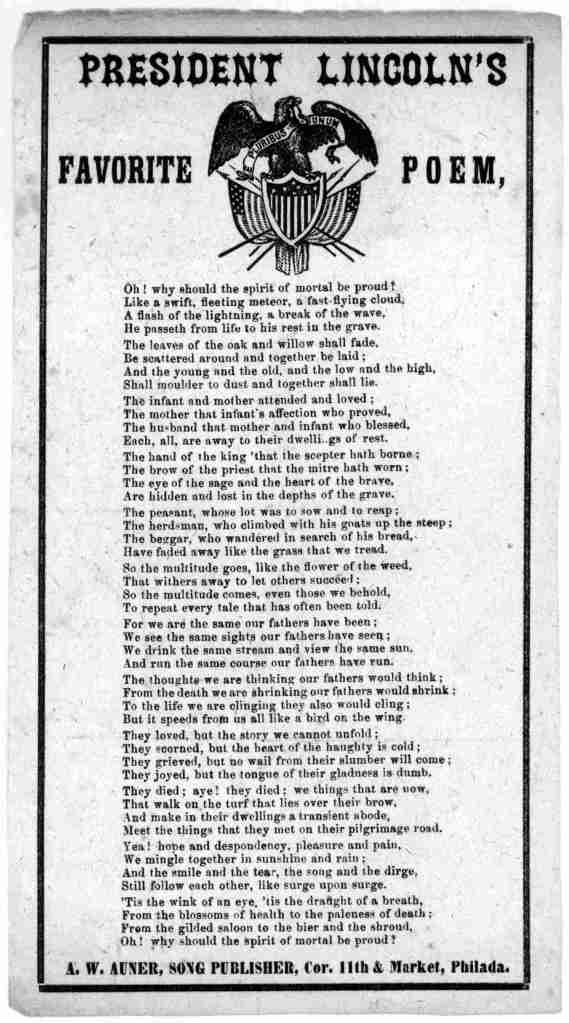
“The peasant whose lot was to sow and to reap, The herdsman who climbed with his goats to the steep, The beggar that wandered in search of his bread, Have faded away like the grass that we tread. The saint that enjoyed the communion of Heaven, The sinner that dared to remain unforgiven, The wise and the foolish, the guilty and just, Have quietly mingled their bones in the dust. So the multitude goes-like the flower and the weed, That wither away to let others succeed; So the multitude comes-even those we behold, To repeat every tale that hath often been told. For we are the same things that our fathers have been, We see the same sights that our fathers have seen, We drink the same stream, and we feel the same sun, And we run the same course that our fathers have run.”

“The thoughts we are thinking our fathers would think, From the death we are shrinking from they too would shrink, To the life we are clinging to, they too would cling-But it speeds from the earth like a bird on the wing. They loved-but their story we cannot unfold; They scorned-but the heart of the haughty is cold; They grieved-but no wail from their slumbers may come; They joyed-but the voice of their gladness is dumb. They died-ay, they died! and we, things that are now, Who walk on the turf that lies over their brow, Who make in their dwellings a transient abode, Meet the changes they met on their pilgrimage road. Yea, hope and despondence, and pleasure and pain, Are mingled together like sunshine and rain: And the smile and the tear, and the song and the dirge, Still follow each other like surge upon surge. ‘Tis the twink of an eye, ’tis the draught of a breath, From the blossom of health to the paleness of death, From the gilded saloon to the bier and the shroud-O why should the spirit of mortal be proud!”
Memento homo (remember you are only a man).

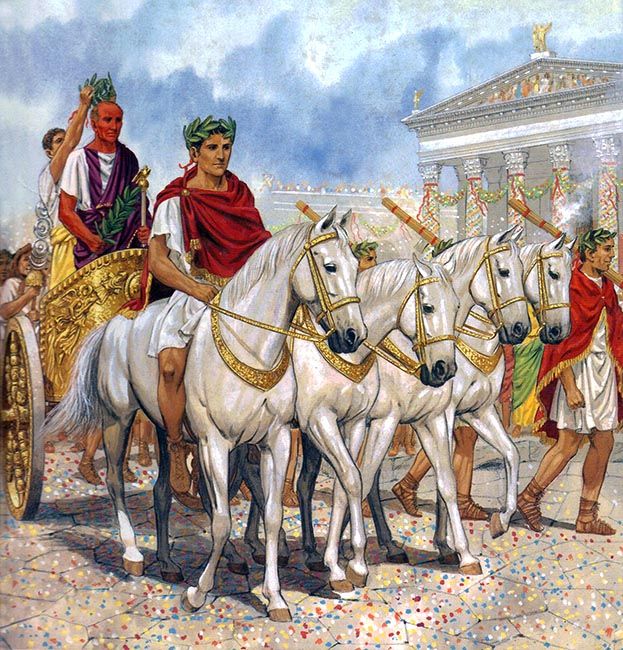
So what is the takeaway? Why should you be so proud of what you have, when all you have is so little in the bigger picture? The theme is one of life and death. A bleak and somber contrast reminds us that life is short, and in Lincoln’s case, fame is fleeting. Auriga, the slave charged with accompanying Roman Generals and Emperors through the streets of Rome after triumph in battle, often whispered the phrase Memento homo (remember you are only a man) while holding the golden crown inches above their heads. From a young age, Lincoln was well acquainted with the idea of mortality. So it comes as no surprise that he adored that poem. But it isn’t all gloom and doom. Within its stanzas are found muted messages of hope and the promise that it is not too late for society to change its ways by following in the footsteps of our ancestors. Reading this poem, one experiences the same feeling of reflection as Lincoln did. It explains how, during his entire lifetime, The Great Emancipator remained penitent and humble by simply following the lessons of this poem.
Abe Lincoln, Uncategorized

BOOK LAUNCH ANNOUNCEMENT! SUNDAY FEBRUARY 16, 2025 10 AM (CST) SPRINGFIELD, ILLINOIS.

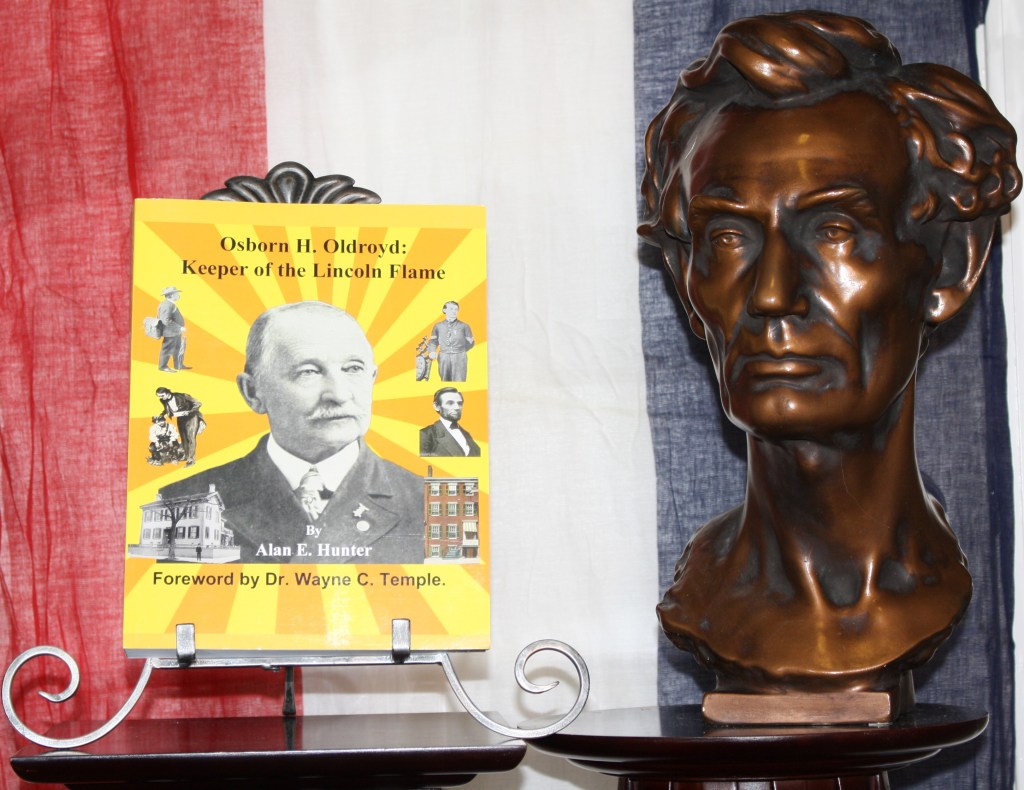
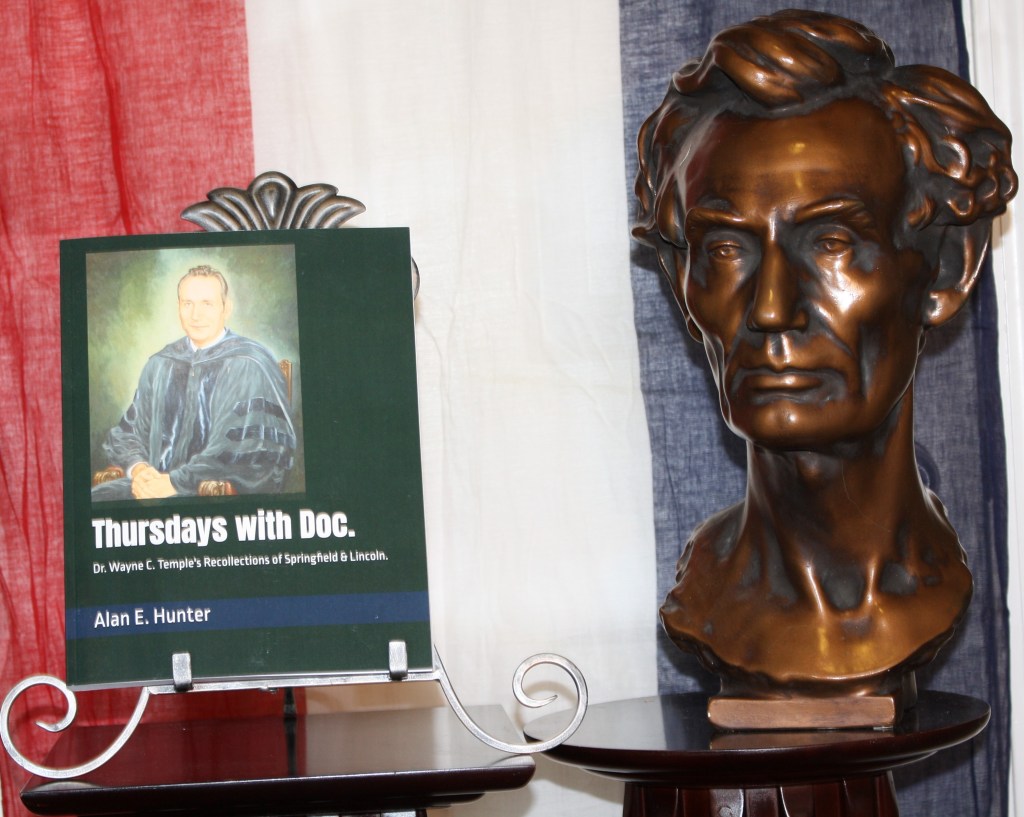
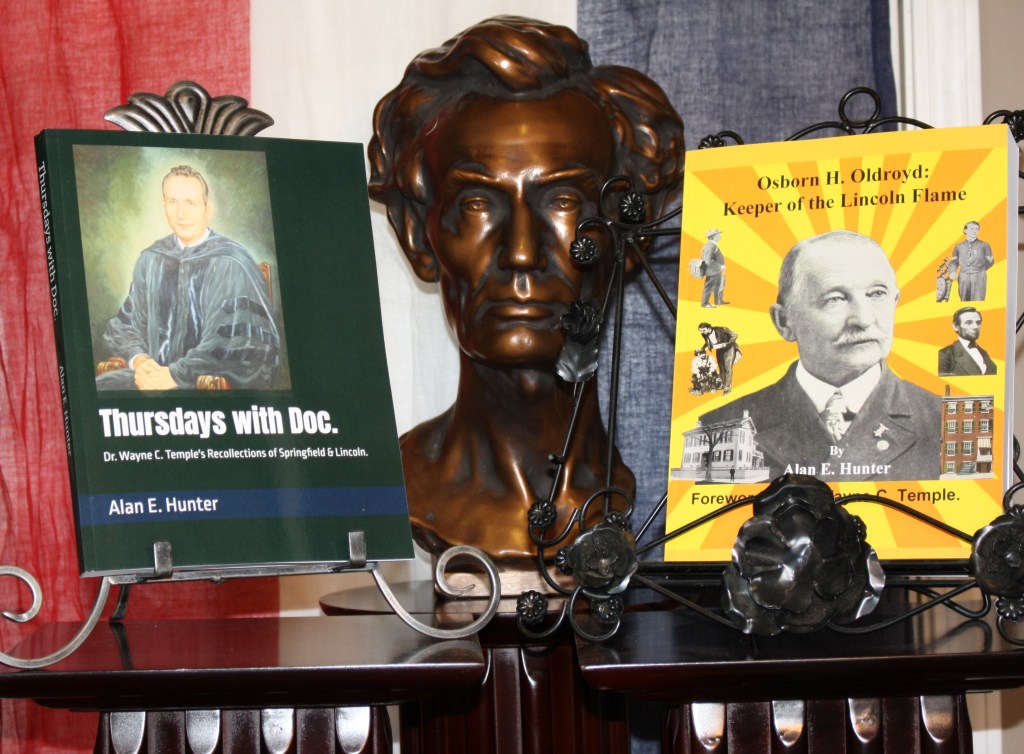
On Sunday, February 16th, 2025, the official book launch for both of my latest books, Thursdays with Doc. Dr. Wayne C. Temple’s Recollections of Springfield & Lincoln and Osborn H. Oldroyd: Keeper of the Lincoln Flame, will be held in Springfield, Illinois. 10:00 am (Central Standard Time) at Books on the Square 427 E. Washington St. Springfield, IL 62701. (217) 965-5443
https://www.booksonthesquare.com/

bksonsqr@royell.net 

The author will speak about Doc and Oldroyd, their connection to each other, and Springfield, the day after the Abraham Lincoln 216th Birthday Event: Symposium & Banquet in that historic building across from the Old State Capitol Building where Lincoln served. A book signing will follow the talk. All purchases of Doc’s book that day will include a limited edition, hand-numbered bookplate signed by Doc, Dr. James Cornelius, and the author.

Osborn H. Oldroyd devoted his life to acquiring everything relating to Abraham Lincoln. For nearly half his life, Osborn Oldroyd made his home and displayed his collection in two houses directly associated with the 16th President: the Lincoln Homestead in Springfield, Illinois, and the House Where Lincoln Died in Washington, D.C., a feat that will never be surpassed. Oldroyd guarded a gateway between two worlds. On one side was the world of the now and on the other, the world of the past. When Lincoln passed from life to history, the nation’s grief gave way to reverence; sorrow gave way to esteem. Oldroyd, the loyal log cabin Republican and veteran soldier, did his best to ensure no one forgot. Oldroyd had the institutional memory gained from walking in Lincoln’s footsteps, talking with Lincoln’s contemporaries, and examining the objects associated with his idol. Oldroyd was never trained as a curator. He was a born collector whose experience in handling and researching objects while building his personal collection was his curatorial education. His ability to recount the story behind the object and inject it with enthusiasm, humor, and believability, made him a folk hero to the common man. Just as Oldroyd’s museums can be considered the first of their kind in American museum history, Oldroyd himself can be labeled as America’s first folk curator. To the collection and study of Lincoln, Osborn Oldroyd’s name is unavoidable, particularly in the study of his assassination. It could easily be said that without the efforts of Osborn H. Oldroyd, we may have lost the Lincoln Home in Springfield, the House Where Lincoln Died, and Ford’s Theatre itself. Oldroyd’s obsessive, idiosyncratic devotion to Abraham Lincoln brought the martyred President down from the fog of intellectualism and back to earth for everyone to rediscover in object form. Oldroyd was the last of his kind and the first of another. He arrives by adoration and departs by dedication, opening doors for every Lincoln collector, admirer, and scholar that followed. Born in an age of covered wagons and canals, Oldroyd lived to see the age of the automobile and the airplane. And, thanks mainly to Osborn Oldroyd, visitors to the Petersen house today can walk through the first floor, down the long hallway to stand inside the tiny, dimly-lit otherwise insignificant room with the slanted ceiling where the last, best hope of a nation was lost.

KA series of informal discussions with Springfield Illinois Lincoln scholar and author Dr. Wayne C. Temple, known affectionately as “Doc”. Who, for over 56 years, worked for nine different Illinois Secretaries of State and ten different Governors representing both parties, a remarkable feat of its own. It is a record unlikely to be equaled. Doc was with the Illinois State Archives from 1964 to 2016, much of that time as the Chief Deputy Director. Before that, Doc was editor-in-chief of the Lincoln Herald and in charge of the Dept. of Lincolniana at Lincoln Memorial University in Harrogate, Tennessee from 1958 to 1964, remaining in that position remotely from Springfield until 1973. Doc was an honorary member of the Lincoln Sesquicentennial Commission, 1959-1960, and served on the advisory council of the  United States Civil War Centennial Commission, 1960-1966. Doc served in the U.S. Army from 1943 to 1946, and during that time he helped to establish General Dwight D. “Ike” Eisenhower’s communications in Europe. Doc has authored over 20 books, mostly on Lincoln, and has written over 600 articles, poems, reviews, and papers during his career. Doc graduated from the University of Illinois in 1949, studying under his mentor J.G. Randall, the “Dean of Lincoln Scholars.” Doc’s accomplishments are well covered in this volume. This book spans almost three years of interviews with Doc, James Cornelius (former Curator of the Abraham Lincoln Presidential Library and Museum), and author/newspaper columnist Alan E. Hunter. The topics cover Abraham Lincoln, the little-known history and colorful personalities of Springfield, Illinois, the Indigenous Peoples of Illinois, and the life and times of Springfield’s preeminent Lincoln scholar. Now over 100 years old, Dr. Wayne C. Temple has seen it all.

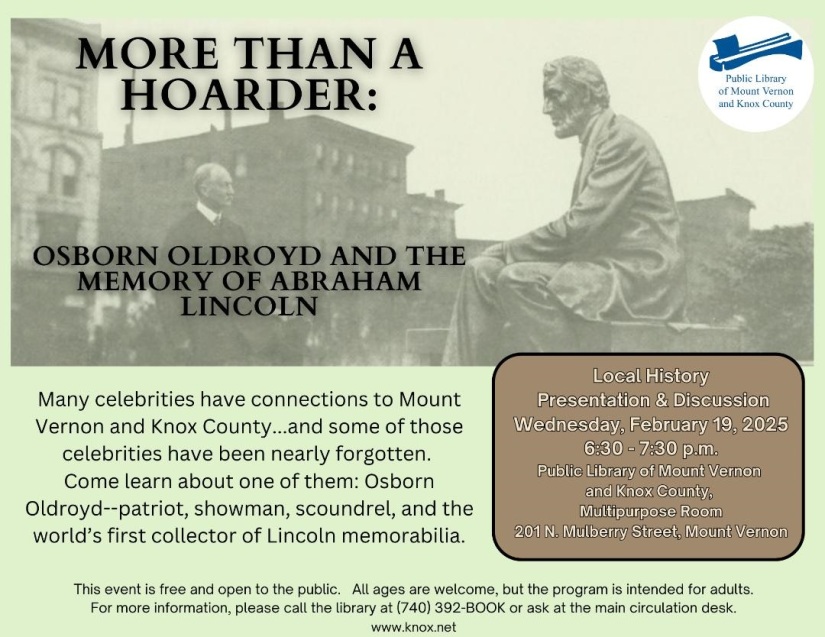
I was just informed & consulted about an upcoming program at the Knox County Public Library in Mt. Vernon, Ohio (Osborn H. Oldroyd’s birthplace). They have promised not to play up the “scoundrel” angle. The word is getting out!

Abe Lincoln, Ghosts, Indianapolis, Irvington Ghost Tours, Museums, Politics, Presidents, Weekly Column

Abraham Lincoln & James Whitcomb Riley on Halloween!

Original publish date:  October 29 2020

In 1988, a survey was taken in conjunction with the “Hoosier Celebration” during Governor Robert Orr’s administration ranking the best known Hoosiers. Abraham Lincoln was number one and James Whitcomb Riley was number two followed (in descending order) by Benjamin and William Henry Harrison and explorers Lewis and Clark, who tied with former Governor Otis Bowen. And, because everybody loves a list, others making the cut included Larry Bird, John Cougar Mellencamp, Red Skelton, Florence Henderson, Jane Pauley, Michael Jackson and Bobby Knight. Don’t remember the “Hoosier Celebration”? Neither do I.

Screenshot (155)
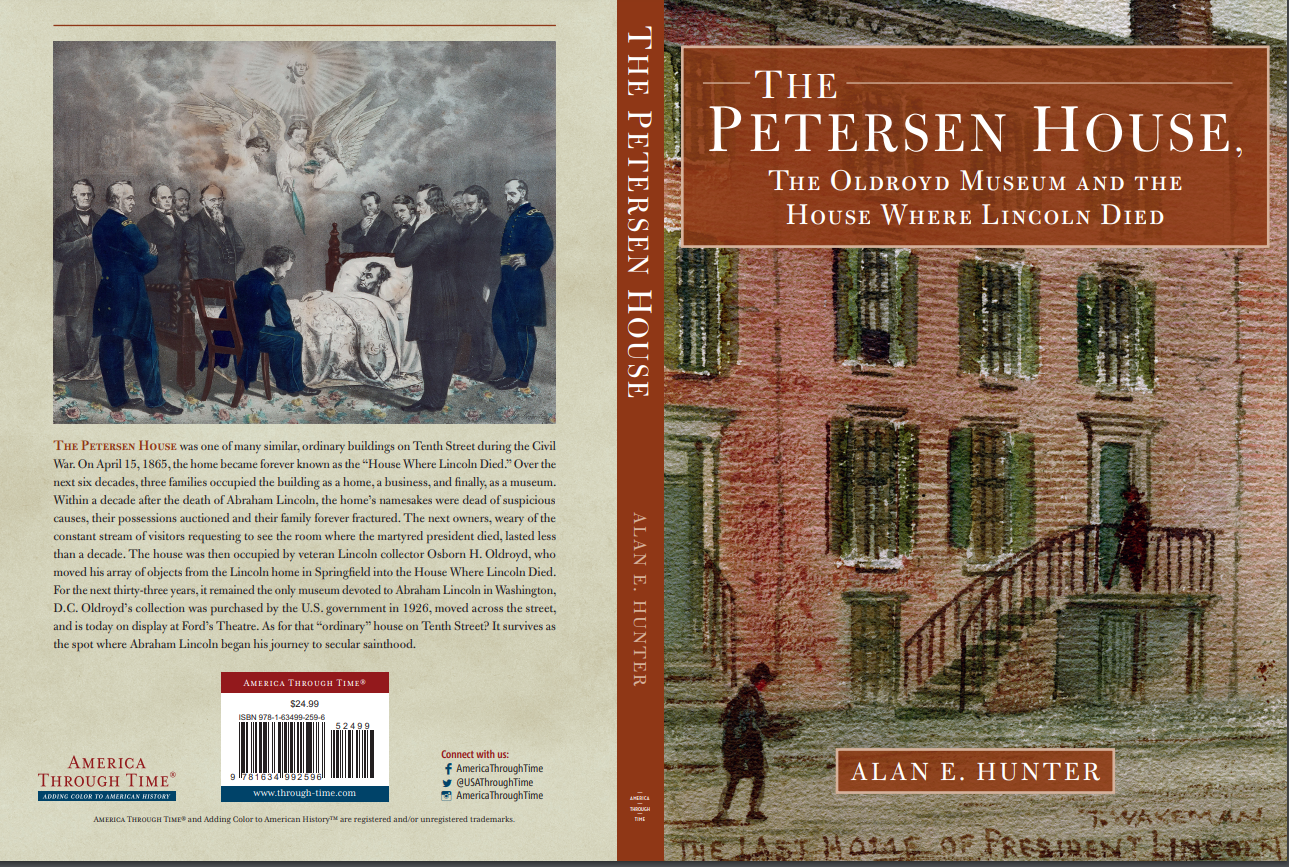
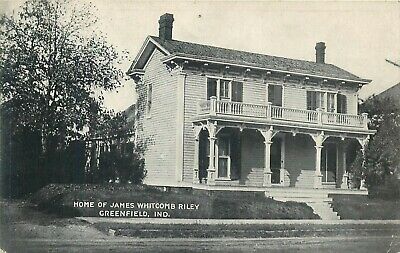
This Saturday (Yay! On Halloween!) October 31st, I will be visiting the James Whitcomb Riley boyhood home in Greenfield to talk about both Lincoln and Riley. That day will be the official book reveal for my newest book, “The Petersen House, The Oldroyd Museum and The House Where Lincoln Died”. Thanks to the courtesy of former Indiana National Road Board member and Director of the Riley Boyhood Home and Museum Stacey Poe, you are invited to come out at 2:00 pm and experience the Riley home and their new “Lizabuth Ann’s Kitchen” facility located at 250 W. Main Street on the historic National Road. I will be bringing some Lincoln props, signing books, sharing stories about the Washington DC building Lincoln died in (and it’s Indiana connection) and, in the “spirit” of the season, spinning a few ghost stories too.

z jws-l400Although Lincoln and Riley died a half-century apart, the men had much in common. The two were considered the state’s most famous Hoosiers (that is until John Dillinger died in 1934) and their names were often linked in speeches, newspaper articles, books and periodicals in the first fifty years of the 20th century. One of my favorite quotes found while searching the virtual stacks of old newspapers comes from the July 20, 1941 Manhattan Kansas Morning Chronicle: “If you want to succeed in life, you might run a better chance if you live in a house with green shutters. Abraham Lincoln, Mark Twain and James Whitcomb Riley all lived in such houses.” Lincoln and Riley epitomized everything that was good about being a Hoosier, right down to the color of their green window shutters.

z jw liz download

Lizabuth Ann’s Kitchen

The comparison was not unfounded. Both men were born in a log cabin. Both came from humble origins. Both were unevenly educated and both men never stopped learning. Both studied law-Lincoln with borrowed law books, Riley doodling poetry in the margins of his father’s law books. Both men were poets and both were considered among the greatest speakers of their generation. And both men had problematic relationships with women. Lincoln once said that he could “never be satisfied with anyone who would be blockhead enough to have me” and Riley famously said “the highest compliment I could pay to a woman is to not marry her.”

z 13964410_1441413422


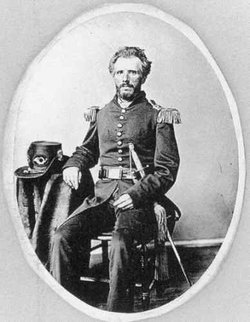
Reuben Alexander Riley (1819-1893)

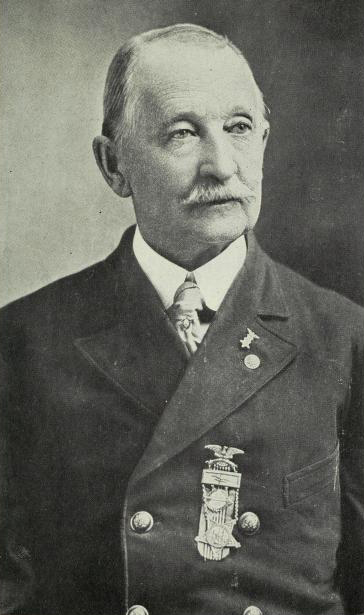
For the poet, his admiration began with his father, Reuben Riley. The senior Riley was a state legislator and among the first central Indiana politicians to embrace the railsplitter as a national figure and presidential candidate. Riley was considered by many to be the best political orator of his day. He traveled the Hoosier state stumping for Lincoln in 1860 and continued his support until the day that Lincoln died. Because of this young J.W. Riley could not remember a time when he did not admire Lincoln.
When the Lincoln funeral train came through Indiana on April 30, 1865, the official “Travel Log” notes that it arrived in Greenfield at 5:48 a.m., Philadelphia at 5:57 a.m., Cumberland at 6:30 a.m., the Engine House (identified as “Thorne” in Irvington) at 6:45 a.m. before finally arriving in Indianapolis at 7:00 a.m. In Greenfield, the depot was choked with people wishing to gaze upon the face of the departed leader one last time. The train was not officially scheduled to stop in Greenfield, but the mood among the citizens was that perhaps the engineer might be persuaded to stop when he witnessed the tremendous outpouring of trackside emotion at the Greenfield depot.

Lincoln train
The local newspaper described “a knot of three boys, hands in pockets chattering back and forth with each other while pacing up and down the railroad tracks. Two older fellows were standing together, each arm around the other, probably soldiers remembering what it means to be a comrade.” The depot porch was filled to overflowing with women in their long dresses, old soldiers in their Union uniforms and a sea of men dressed entirely in black. The telegraph operator in Charlottesville wired that the train had just passed and was heading towards the neighboring town. A sentinel was perched atop the station to alert the citizens below of the train’s approach.
In a few moments, a cloud of silver phosphorescent smoke appeared above the tree tops along the route of today’s Pennsy trail. “Here it Comes” was the cry from above and immediately the crowd below hushed and gazed eastward expectantly. For several moments, the only sound that could be heard on the platform was the muffled weeping of the gathered mourners. As the train slowly approached, Captain Reuben Riley read aloud excerpts from Lincoln’s second Inaugural address at the close of which he sat down and wept uncontrollably. The train paused briefly at the station and the engineer removed his cap in respect to reverent gathering. Fortuitously, Reverend Manners stepped from the crowd and led the group in a prayer that began, “Thank God for the life of Abraham Lincoln.” The people now openly wept as the train slowly departed westward towards Indianapolis. It is likely that 16-year-old James Whitcomb Riley was present that day.

Alan Hunter 3 col x 3

Riley wrote two poems dedicated to Abraham Lincoln. in a letter to Edward W. Bok dated October 23, 1890, Riley said this of the sixteenth President; “I think of what a child Lincoln must have been-and the same child-heart at home within his breast when death came by.” Along with all the shared common traits mentioned above, Lincoln and Riley were, and still remain, perhaps foremost, the idol of children everywhere.
Three days after Riley died on July 22, 1916, the Morning Call newspaper in Allentown, Pennsylvania eulogized the poet by saying: “The country has produced poets of more creative power and commanding genius, but none- not even Longfellow, beloved as he was- ever came quite so close to the heart of the mass of the people as the Hoosier Poet, James Whitcomb Riley, who died at Indianapolis on Sunday. He was truly from and of the people as was Lincoln, and in their way, his personality and career are almost as interesting and picturesque as those of the immortal emancipator.”
Elbert Hubbard, founder of the Roycrofters Arts & Crafts community in Aurora, New York, said “Who taught Abraham Lincoln and James Whitcomb Riley how to throw the lariat of their imagination over us, rope us hand and foot and put their brand upon us? God educated them. Yes, that is what I mean, and that is why the American people love them.” Hubbard was a contemporary of Riley’s who, along with his wife, died when the Germans sunk the RMS Lusitania leading to our entry into World War I a year before Riley passed.
However, in my view, what links both men in perpetuity is a shared language. Both men spoke fluent Hoosier. All his life, Lincoln and Riley tended to swallow the ‘g’ sound on words ending with ‘ing’, so a Walking Talking Traveling man become Walkin’, Talken’, Travelin’, man. Lincoln said “warsh” for wash, “poosh” for push, “kin” for can, “airth” for earth, “heered” for for heard, “sot” for sat, “thar” for there, “oral” for oil, “hunnert” for hundred, “feesh” for fish and “Mr. Cheerman” for Mr. Chairman. Likewise, Riley practiced the Hoosier dialect in his printed work, saying “punkin'” for pumpkin, “skwarsh” for squash, “iffin'” for if then and “tarlet” for toilet. Both men peppered their speech with distinctive words like yonder and for schoolin’ both “larned” their lessons and got their “eddication” in fits and spurts.
Both men’s lives came to an end in private houses, not in hospitals. Riley in the Nickum House in Indianapolis’ Lockerbie Square and Lincoln in the Petersen House in Washington, D.C. This Saturday, I will share my favorite ghost story about J.W. Riley (in the Lockerbie house) and while I have no ghost stories to share about The House Where Lincoln Died, I will detail a connection between the two. I will introduce you to the three families who resided there, the last of whom, Osborn Oldroyd, displayed his Lincoln collection of relics and objects for over thirty years before selling it to the United States Government in 1926. That collection is now on display in the basement of Ford’s Theatre.
Riley Lincoln poemOldroyd, a thrice-wounded Civil War veteran, collector, curator and author, is perhaps the father of the house museum in America. One of Oldroyd’s books, a compilation of poems entitled, “The Poets’ Lincoln— Tributes In Verse To The Martyred President”, was published in 1915. James Whitcomb Riley’s poem, A Peaceful Life with the name “Lincoln” in parenthesis as a sub-title can be found there on page 31. In Oldroyd’s version, the first line differs from Riley’s original version. Riley’s handwritten original (found today in the archives of the Lilly Library on the Bloomington campus of Indiana University) begins: “Peaceful Life:-toil, duty, rest-“. Oldroyd’s book version begins; “A peaceful life —just toil and rest—.” Interestingly, the Oldroyd version has become the standard. And there you have it. Oldroyd’s influence is subtle, his name largely unknown, yet he stays with us to this day.
Abe Lincoln, Assassinations, Civil War, Museums, National Park Service, Politics, Presidents

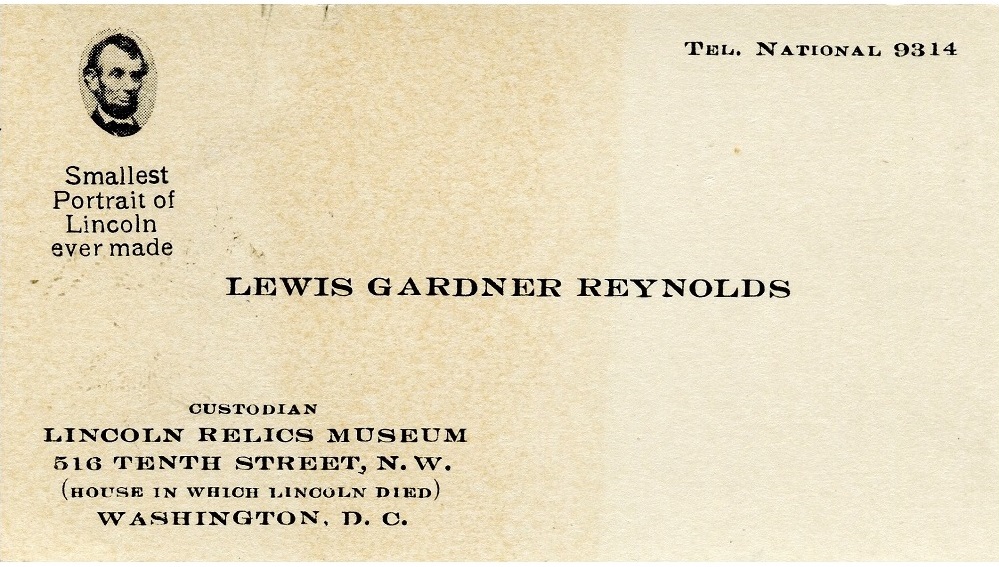
Lewis Gardner Reynolds, Carnation Day & Abraham Lincoln. PART II

Carnation Day Part II
Lewis Gardner Reynolds in the House Where Lincoln Died.

Original publish date:  February 6, 2020

https://weeklyview.net/2020/02/06/lewis-gardner-reynolds-carnation-day-abraham-lincoln-part-2/

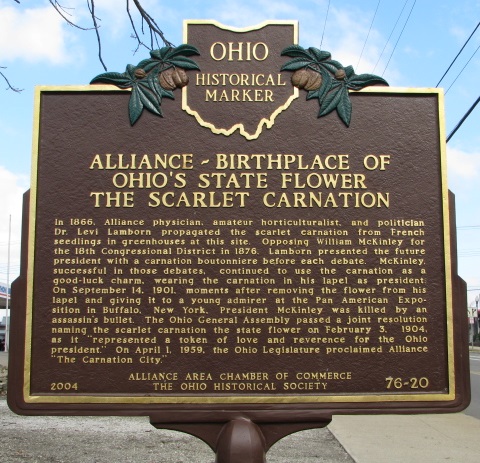
Last week the oft-forgotten holiday known as “Carnation Day” was detailed in Part I of this series. The holiday, today observed mostly only in Ohio, was created to commemorate assassinated President William McKinley on his birthday (January 29) by wearing his favorite flower, a red carnation, to honor him. The formal recognition of the holiday was due largely to the efforts of a man named Lewis Gardner Reynolds from Richmond, Indiana. In 1903, Reynolds formed the Carnation League of America to establish the custom of observing the McKinley floral holiday. That alone might be enough for most historical resumes, but not for Mr. Reynolds. Among this (and other noteworthy achievements) it should be noted that Reynolds was the last person to meet the living Abraham Lincoln.

z 1064_112582

Mr. Reynolds was born at Bellefontaine, Ohio on June 28, 1858, and grew up in Dayton, Ohio. In Dayton, he worked for his father at the Reynolds & Reynolds Co., manufacturing notebooks and other school supplies. Later he started his own company, manufacturing paper cartons, and served for 10 years as a member of the school board of that city. While in Ohio, Mr. Reynolds came to know many American leaders, including President McKinley, Theodore Roosevelt, and Ohio politicos Myron T. Herrick, and Mark Hannah. In 1896 he married Miss Jeanette Lytle in Dayton. She died in 1903 and in 1909 he married Mary V. Williams of Richmond, Indiana. The couple relocated to Richmond and during World War I, Reynolds was prominent in organizing Liberty Loan drives for the war effort.

z tr
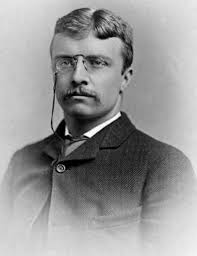
Teddy Roosevelt

Upon the death of Teddy Roosevelt on January 6, 1919, Lewis G. Reynolds was made chairman of the Wayne County Theodore Roosevelt Memorial Committee. Reynolds led Indiana’s fundraising plans to honor Roosevelt with monuments in Washington D.C., the national shrine at Oyster Bay, Long Island, restoration of his birthplace at No. 28 West Twenty-Second Street in New York City, and lastly, through an endowment fund, “to perpetuate Colonel Roosevelt’s ideals of courageous Americanism.” The next year, Reynolds traveled to Indianapolis for a speech to the Indiana General Assembly advocating for the construction of the World War Memorial in the capital of the Hoosier state. Thanks in part to his efforts, the resolution was adopted, the memorial built.

After World War I Reynolds led the European Relief Commission, in particular the Wayne County Council headquartered at 1000 Main Street in Richmond. The January 11, 1921 issue of the Richmond Palladium noted, “Lewis G. Reynolds today received the following telegram: “Congratulations on dignified and successful manner in which you are conducting campaign for European relief. The American people are thoroughly aroused to the appealing need of this great mercy call. The need is great. The call urgent. Let mercy impel us to give relief to the starving children of Europe. Herbert Hoover.”

z osborn-oldroyd
Osborn H. Oldroyd

After Osborn H. Oldroyd, the first Lincoln museum curator, sold his collection to the US government in 1926, Reynolds was called to Washington by Col. U.S. Grant, III to take charge of the Oldroyd collection. Ironically, the Reynolds family moved from their house on North Tenth Street in Richmond to their new house on Tenth Street Northwest in Washington D.C.: The House Where Lincoln Died.
A year before Oldroyd’s death, the two old friends were profiled together one final time in the February 12, 1929, Battle Creek Enquirer. “Two men who spend most of their time in the house where Abraham Lincoln died are probably more interested in the anniversary of his birth than anyone else in the country. They are Osborn Oldroyd, aged 87, who has spent 65 years collecting mementos and documents relating to the life of Lincoln, and Lewis Gardner Reynolds, 71, who sat on Lincoln’s knee as a little boy of six…Mr. Reynolds in the last year has shown 20,000 persons from all over the world through the room where Lincoln died.”

So not only was Mr. Reynolds in charge of the world’s largest Lincoln object collection contained within the house where the sixteenth president died, but he could now also entertain visitors with the story of how he, as a six-year-old child, once sat upon Abraham Lincoln’s knee in the White House. In 1929, while the Nation celebrated the 120th anniversary of the Great Emancipator’s birth, Mr. Reynolds recalled that meeting to a local Washington D.C. newspaper reporter. Although not positive about the exact date, Mr. Reynolds said he felt reasonably sure that it was June 28, 1864, his sixth birthday, when the memorable event occurred.

Lewis G Reynolds age 6
6-year-old Lewis G. Reynolds.

“Father, (Lucius Delmar Reynolds 1835-1913), a captain of one of the companies of the Treasury Guards, was to have a conference with his Commander-in-Chief, and I accompanied him,” Mr. Reynolds said. “While they were discussing the matter of the conference, which lasted nearly an hour, the President picked me up, set me on his knee, and I can feel yet the gentle stroke of that big firm hand as he stroked my head, like the halo of a great benediction. I almost remember his voice. Toward the end of the conference Mr. Lincoln carried me to one of the large windows overlooking the Potomac River, rested me on the deep window seat and stood there with one arm about me while pointing out to the captain some points of vantage he wished him to be familiar with…I saw President Lincoln scores of times,” Mr. Reynolds says, “as father’s duties took him frequently to the Executive Mansion, and he often took me with him. But I recall being actually on Lincoln’s lap and in his arms but once.”
In 1928 Reynolds authored a leaflet titled: “A Wonderful Hour with Abraham Lincoln” which he handed out to friends and special guests visiting the museum. While the leaflet ostensibly tells the story of his encounter with Lincoln, it also offers more details. “The very earliest recollection I have of anything is intimately connected with the Civil War…We removed to Washington and resided there from 1862 to 1866. Father was chief of one of the many bureaus of the treasury department. All the clerks and higher officials of the department were organized into military companies, known collectively as “The Treasury Guards.” They were intensely drilled by officers of the regular army, and as well-equipped as the soldiers in the field, except that they were not uniformed. They represented a potential army of nearly 2,000 men. Their military duties were to be, in case of an emergency, to protect the Treasury Department and the Executive Mansion, nearby. Father was made captain of one of these companies, and to his command was assigned the protection of the White House, and the President. Upon that fact rests my story.”

z img132The Reynolds leaflet further reveals,”Father and mother were at Ford’s Theatre the night of the assassination, and although it was late when they returned home, the general excitement of the night had reached our neighborhood. The newsboys shrill cries of “Extra! Extra! President Lincoln Shot” had awakened everybody in the boarding house. I, too, was awake. Young as I was, I realized what dreadful thing had happened, and I lay wide-eyed in my little trundle bed while father and mother related to the others their personal story of the tragedy. Father, accompanied by several of the men guests, went back to the scene and did not return until after the fateful hour of 7:22 the next morning. I remember as clearly as though it were of yesterday, wearing a wide band of black around the sleeve of my bright plaid jacket, and, carried in father’s arms, of passing the somber catafalque in the rotunda of the Capitol, which inclosed (sic) all that was mortal of the beloved Lincoln. A few weeks later I witnessed the Grand Review of the Army – that wonderful spectacle of the returning boys in blue – which took several days in its passing.”
z img132a
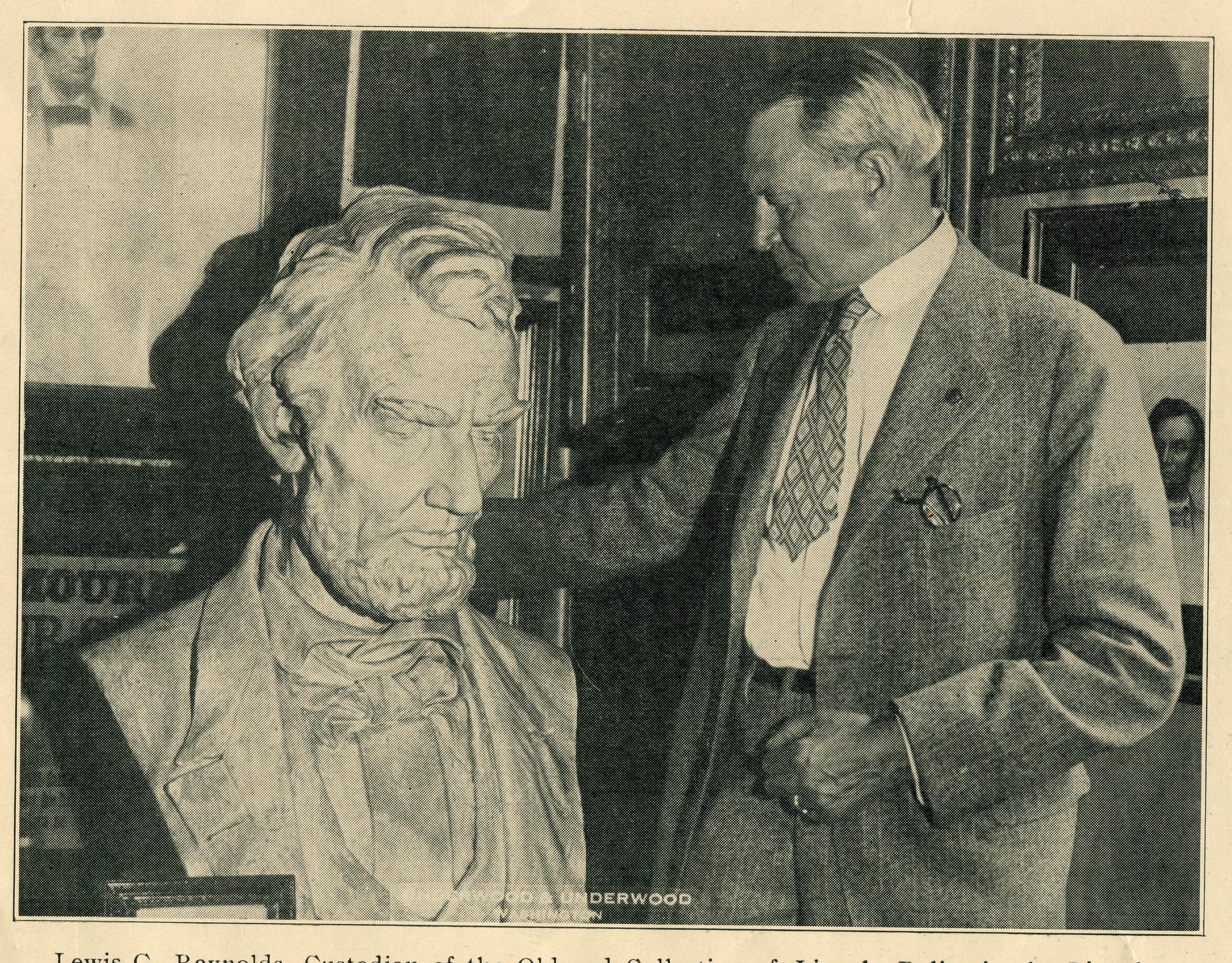
Lewis Gardner Reynolds in the House Where Lincoln Died.

On February 5, 1931, a story and photo of Lewis G. Reynolds appeared in newspapers all around the world. Mr. Reynolds was pictured standing on the spot where Lincoln died and speaking into a CBS radio microphone. The article details the radio address commemorating Lincoln’s upcoming birthday titled, “A World Tour of the Lincoln Museum”. It read in part, “In telling of the Lincoln Museum and the relics it contains, Reynolds said no story of it would be complete without reference to Col. O.H. Oldroyd to whom the world is indebted for the collection. ‘A monument should be erected to that man,’ he declared.”

A 83 R 1
Lewis G. Reynolds-Osborn Oldroyd & Abraham Lincoln.

Mr. Reynolds supervised the removal of the Oldroyd collection out of the House Where Lincoln Died and into Ford’s Theatre across the street. It began on December 8, 1931, and by New Year’s Day of 1932, Oldroyd’s collection had been fully moved into the newly repurposed Ford’s Theatre. The Oldroyd collection officially opened in its new location at 2:00 P.M. on February 12, 1932. In an article for the Washington Sunday Star magazine on February 12, 1933, Reynolds states, “Twenty-five thousand one hundred and eighty-one persons have visited the Lincoln house since it was open to the public and the number will increase from month to month as the rehabilitation of the shrine becomes more widely known.”

Mr. Reynolds continued in charge of the Lincoln Memorial collection until 1936 when he retired after suffering a stroke. He returned to his home at 39 North Tenth Street in Richmond to convalesce but never worked again. Custodian Reynolds met a sad and untimely end. On August 21, 1940, police and fire were called to the Reynolds home at 39 North Tenth Street where, upon entry, Reynolds was found seated in an invalid’s chair seriously burned. His clothing caught fire when the tip of a lighted match ignited his clothing while his nurse, Mrs. Anna Farlowe, was in the kitchen preparing his evening meal. Investigators believed the accident took place while Reynolds was trying to light his pipe. His wife Mary, who heard his screams for help, rushed to his aid, and with Mrs. Farlowe, succeeded in putting out the fire with blankets. Mr. Reynolds was taken to a nearby hospital by ambulance and both women were treated for severe burns on their hands. Lewis G. Reynolds died in Reid Memorial Hospital in Richmond; He was 82 years old. Mr. Reynolds was survived by his widow, Mary V. Reynolds; and two daughters. Mrs. Horace Huffman. Dayton, Ohio, Mrs. John W. Clements, of Richmond; a stepson, Edward B. Williams, of Richmond; 10 grandchildren and one great-grandchild.

A 82 R1Two decades later, in 1960, the Richmond Palladium-Item newspaper profiled the widow of the former curator, offering new insight. The article is titled: “Local Woman Conducted Tours In House Where Lincoln Died.” It reveals, “Mrs. Reynolds and her husband lived on the second floor of the house at 516 Tenth Street, Washington, DC, at the time Mr. Reynolds was curator of the Oldroyd Lincoln Memorial collection. This was from 1928 through 1936. “I never heard anyone ask Mr. Reynolds a question about Mr. Lincoln he could not answer,” Mrs. Reynolds recalls. Her husband acquired the job as curator when he heard Oldroyd wanted to retire… “I have had visitors say to me doesn’t it give you a creepy feeling?” (sleeping in the house where Lincoln died.) Her answer was always “No.” To the reporter, she said, “I never had a creepy feeling. When I thought about it, it was just a feeling of awe and reverence.” Mr. Reynolds described the collection via radio from the Petersen house several times.

Finally, the article makes note of the widow Reynolds’s role at the House Where Lincoln Died. “Mrs. Reynolds read the Lincoln Library in the Oldroyd collection. In her study of history and Lincoln material, she qualified herself to talk with visitors on Lincolniana. “I met most interesting people,” Mrs. Reynolds said, “I often took them through the rooms…even the people from the South were pleasant. It was a wonderful experience.”

Lewis G Reynolds Feb. 12, 1929
Lewis Gardner Reynolds

Lewis Gardner Reynolds accomplished more in his 82 years than most could ever dream of. When he died in 1940, Abraham Lincoln had transcended into secular sainthood and Reynolds was the last tangible connection to the mortal Lincoln. Not only was Lewis Gardner Reynolds the last to encounter the living Lincoln, the Reynolds family (following the Petersons, the Schades, and the Oldroyds) were the last to reside in the House Where Lincoln Died. And of course, he was a Hoosier.