Creepy history, Indianapolis, Pop Culture

Nazi’s at Arsenal Tech…What?

Part I

https://weeklyview.net/2025/03/13/nazis-at-arsenal-tech-what-part-1/

Original publish date March 13, 2025.
It’s true. In the years leading up to World War II, there was at least one eastside Indianapolis family openly identifying with the American Nazi Party. And three of those proud young Nazis graduated from Arsenal Technical High School. It all came to a head 87 years ago this Saturday when the Soltau home on North Summitt Street (where the La Parada Mexican restaurant now stands) came under attack by an angry mob of Circle City citizens seeking to enact their own “Night of Broken Glass” on March 15, 1938, seven months before Adolph Hitler’s Kristallnacht in Berlin, Germany in November of that same year. In March of 1938, Indianapolis newspapers were dominated by reports of German Wehrmarcht invaders poised at the gate, prepared to annex Austria into a “greater German Reich” and threatening the entire Western European theatre. Those same front pages reported on an organization of Hoosier ethnic Germans who were resolutely pro-Nazi, vehemently anti-Communist, deeply anti-Semitic, and staunchly American isolationists. In 1938, an estimated 25,000 Americans were members of this German American Bund. Indianapolis boosters hoped to swell that number by appealing to the large German immigrant community by advocating “clean American nationalism against Communist international outlawry.”
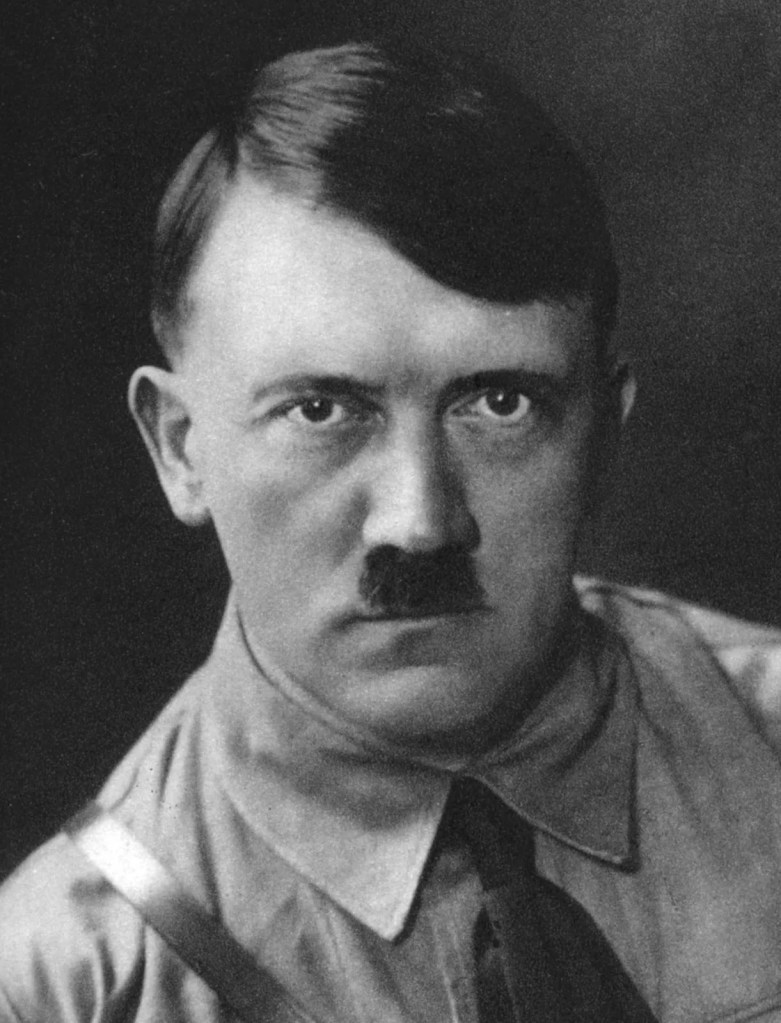
Adolph Hitler.

However, the German-American Bund secured very few Hoosier followers and gained little sympathy for their cause. Indiana had a well-deserved reputation for xenophobia and white nationalism that is most clearly reflected in the Ku Klux Klan’s ascent to power just over a decade before. The number of Hoosiers in league with the German-American Bund was certainly much smaller than the number of members of the 1920s KKK. Still it was committed to many of the same ideological issues as the Klan. Its history confirms the complex range of xenophobic sentiments simmering in the 20th-century Circle City.
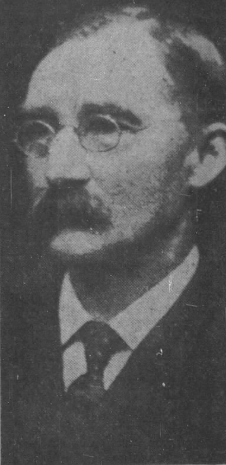
John A. Soltau

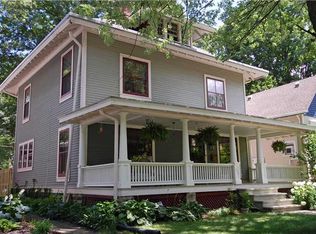
The Soltau family was closely associated with Indianapolis, particularly the east side and Irvington. John Albert Soltau (1847-1938) was a German immigrant who founded the first grocery chain in Indianapolis, the Minnesota Grocery Company. Soltau arrived here in 1873 at the age of 10. After marrying Miss Elizabeth Koehler (1851-1920), Soltau opened the first of what would become a chain of twelve grocery stores at 208 North Davidson Street. The couple had five children: William, Edward, James, John, and Benjamin. The elder Soltau remained in the grocery business for over fifty years. Three of his sons joined him, managing stores of their own. Mr. Soltau was a member of the First Evangelical Church near Lockerbie Square (where New York crosses East Street). The family residence was located at 837 Middle Drive in Woodruff Place.
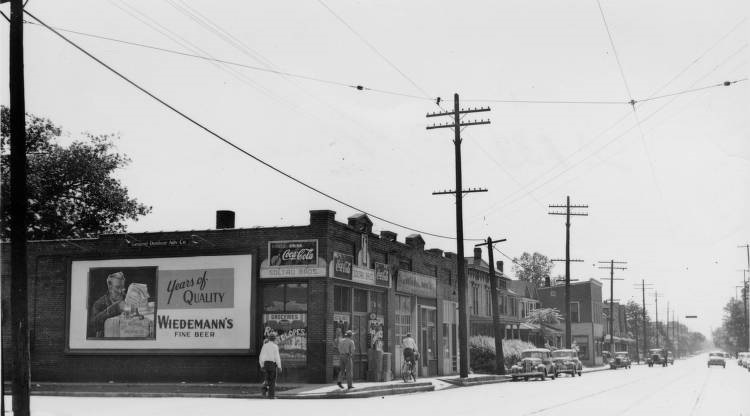
Edward B. and John H. Soltau grocery store at 2133 E. Michigan Street in Indianapolis.
837 Woodruff Place Middle Dr, Indianapolis

In 1894, John was a Republican Ward delegate in Indianapolis. In 1902, he was an unsuccessful candidate for Marion County Recorder on the Prohibition ticket, and in 1916, he was a delegate to the national Prohibition Party convention. His long adherence to the temperance cause smacks of social conservativism, but offers no clear evidence for why his family embraced the Nazi ideology. Hoosier Prohibitionists allied themselves with the Klan’s cause in the 1920s, and in 1923, John’s brother James Garfield Soltau (1881-1932) was identified as one of the first 12,208 Ku Klux Klan members in Indianapolis. John died of “uremia and carcinoma of the prostate” on July 18, 1938, and is buried alongside his wife, Elizabeth, at Crown Hill Cemetery in Indianapolis.
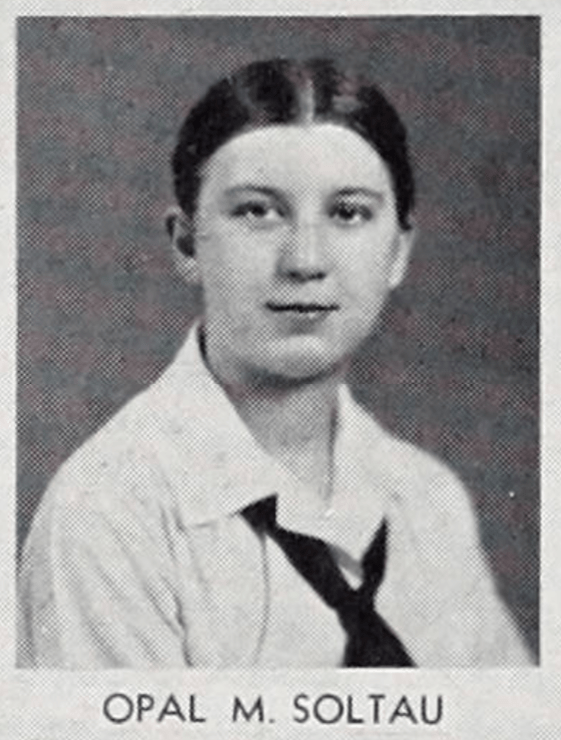
Opal’s Tech Yearbook Photo 1938.

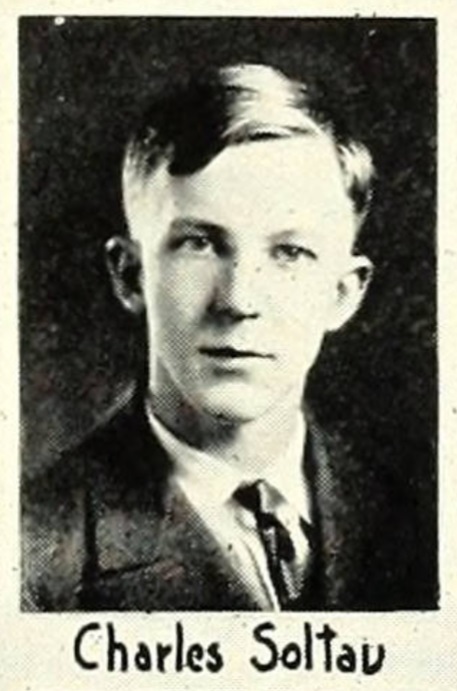
John’s eldest son, William Soltau, was a realtor who operated his agency in room 202 of the Inland Building at 160 East Market Street in the city for a quarter century. William and his wife Laura E. (Hansing) Soltau (1879-1943) were the parents of three children: Pearl Brilliance Soltau (1905-1968), Charles William Soltau (1909-1971), and Opal Margaret Soltau (1920-2008). All three children graduated from Arsenal Technical High School, Pearl, in 1922, Charles in 1926, and Opal in 1938. Pearl graduated from Butler University in 1925, Charles from Purdue in 1931 (with honors and a perfect 6.5 GPA), and Opal attended Butler University until at least 1940. The Soltau’s moved to 339 North Summit Street in 1916 and while the Soltau family was residing under that roof, it appears that all five were emersed in and sympathetic to the Nazi cause.
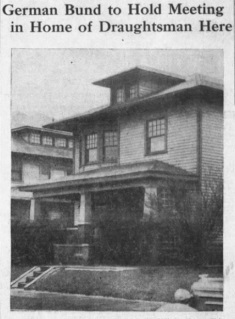
The Soltau Home Indianapolis.

The front page of the March 9, 1938, Indianapolis News ran a photo of the Soltau House with a notice that a meeting of the German American Bund, described as a “Patriotic Fighting Organization of the German Americans”, was to be held there. Regardless, the Soltau family denied that a meeting was to be held in their home. The next day, the news ran a copy of the invitation with the address of the home and the announcement that Wilhelm Kunze, National Publicity Director of the Bund, would be the speaker and that admission was free and open to the public, especially to “All Truth-Seeking Americans”. Again, the family denied that Kunze was in the city at all, let alone scheduled to appear at the house. Kunze was fresh off his January 1938 appearance in a March of Time newsreel that the Library of Congress called “the first commercially released anti-Nazi American motion picture.” The News article announced the meeting’s date as Monday, March 14, at 8:30 pm.
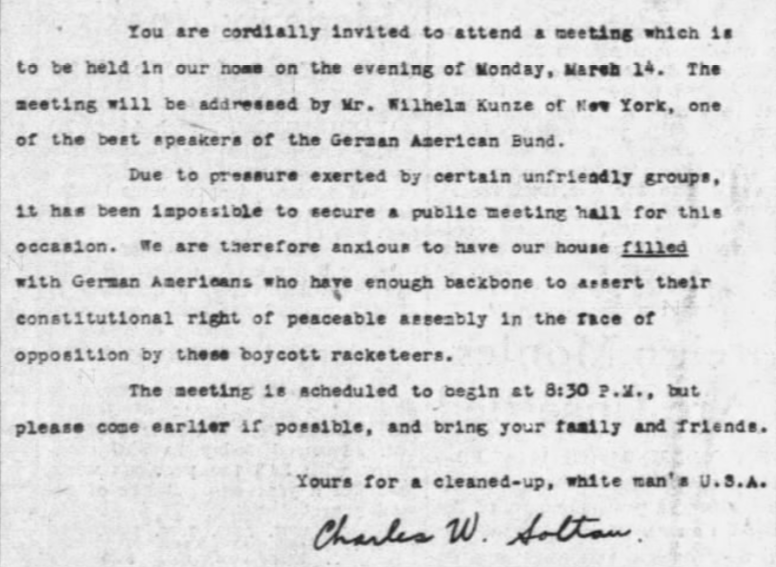
Charles Soltau’s Letter.

Hoosiers were shocked. After all, in February, the Athenaeum, the Liederkranz Hall (1417 E. Washington St.), and the Syrian-American Brotherhood Hall (2245 East Riverside) had all canceled the Bund’s reservation and refused to host the event. On February 25th the Indianapolis Star identified “an American-born Nazi agent…born in Indiana” attempted to secure a venue “to organize Brown Shirt Nazi units in Indianapolis.” That local organizer was revealed as Charles W. Soltau from the near-Eastside. Charles wrote a letter to the Star complaining that “the German-American Bund has been accused, maligned and condemned without a trial” and suggested that the Bund’s right to meet had been undermined by “Jewish business interests”, arguing that “a certain powerful minority group, which seems to have gained almost complete control of the press, fears the effect of public enlightment.(sic)” Charles further declared that the Soltau family was “anxious to have our house filled with German-Americans who have enough backbone to assert their constitutional right of peaceable assembly in the face of opposition by these boycott racketeers.” He closed his letter as “Yours for a cleaned-up, white man’s U.S.A. Charles Soltau.” Shortly after that revelation, 27-year-old Soltau announced that the meeting was called off.
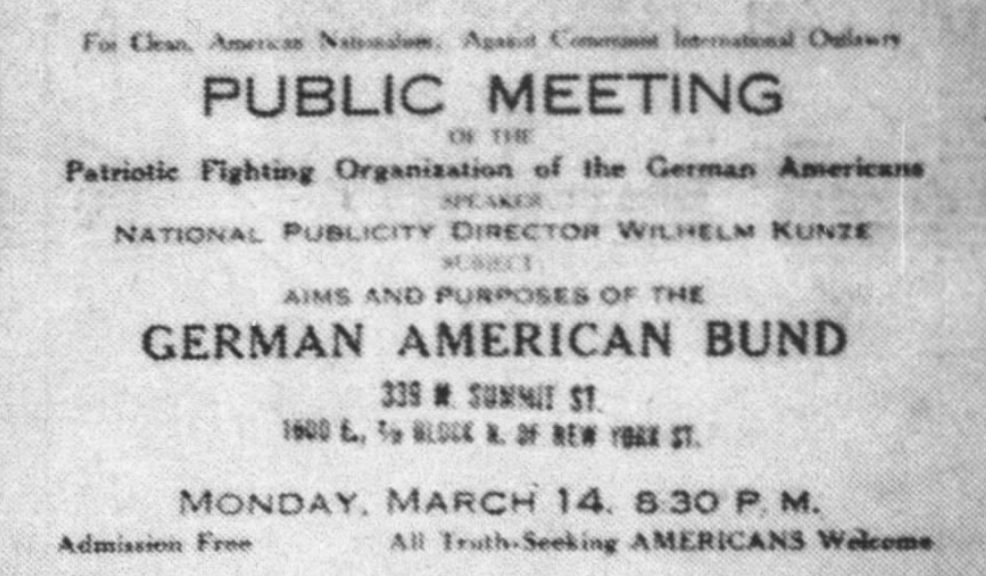
Indianapolis News Notice March 10, 1938.

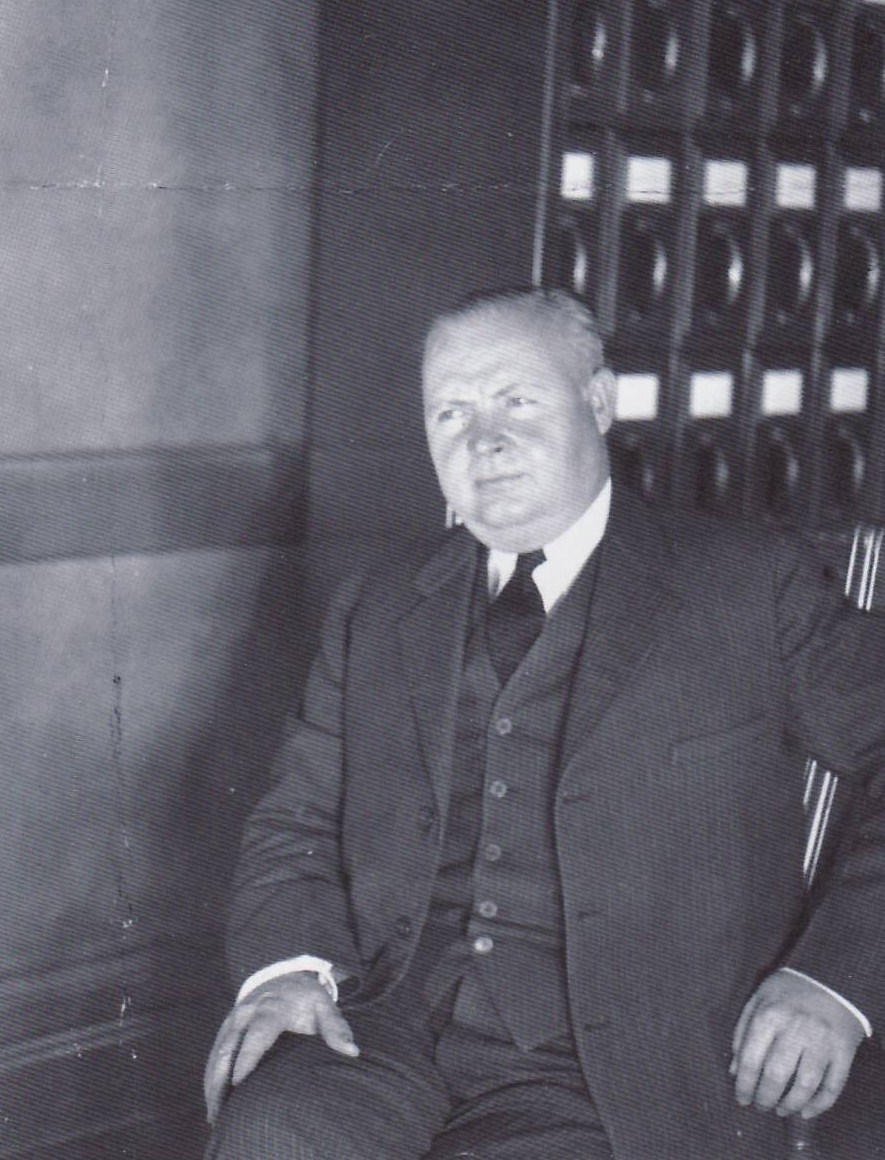
The front page of the March 15, 1938, Indianapolis Star reported, “Rocks hurled through the windows at the home of William A. Soltau, 339 North Summit Street, broke up an organization meeting of the Indianapolis affiliate of the Nazi Amerika Deutschen Volksbundes (German American bund) late last night.” William Albert Soltau (1875-1950) called the police for help after it was learned that Gerhard Wilhelm “Fritz” Kunze (1882-1958) and a small entourage had joined the Soltau family for dinner earlier that evening. Fritz Kuhn, often referred to as the “American Führer”, was the leader of the fledgling German-American Bund (Federation). Fearing for his dinner guests’ safety, Soltau asked police to escort Kunze and his guests to safety. Although Kunze refused to divulge his identity to any of the officers present, his “tooth-brush mustache”, proper Sturmabteilung brownshirt, and swastika tie-clasp made the physical connection to German Chancellor Adolph Hitler unmistakable.
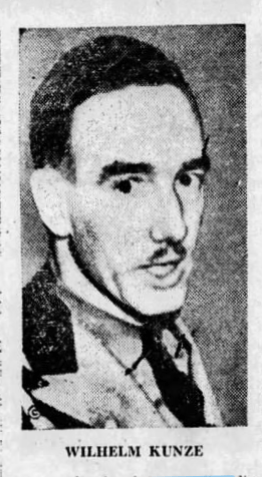
Fritz Kunze 1938.

When escorted from the home, Kunze declared to the officers and crowd gathered on the sidewalk, “I am a guest of Mr. Soltau, and he does not want my name known.” Kunze eventually admitted his identity to the police after they discovered the Bund application blanks Kunze held in his hands, wrapped up in a newspaper. An Indianapolis News article claimed that visible through the broken windows were, “Fifteen chairs had been arranged around a dining room table, and on it were application blanks for Bund membership.” The article noted that the “photographer for the Associated Press was ordered off the Soltau property by a man who carried a gun.” Soltau repeated his denials that a Bund meeting had been held in his home, claiming it was just “a few guests in for dinner.” The shades of the house were drawn, and a police squad car remained in front of the house from dusk to 10:30 pm when the officers went off duty. At 10:43 pm, a barrage of rocks crashed through the north windows of the Soltau house. Cars buzzed Summit Street for days afterward as curious motorists drove past the Soltau home and a near-constant gang of 40 or 50 youngsters “milled in the neighborhood”. Further exacerbating the situation, on July 18, 1938, just 4 months after the attack at his son’s home, family patriarch and Indianapolis grocery chain magnate John Albert Soltau died at age 90. Over the years, the elder Soltau and his son had purchased 4 tracts of land totaling 234 acres along State Road 46 in Gnaw Bone, 8 miles east of Nashville in Brown County. Newspapers speculated that the land was to be used as a Bund camp for Nazi activities, but the Soltau’s denied it.
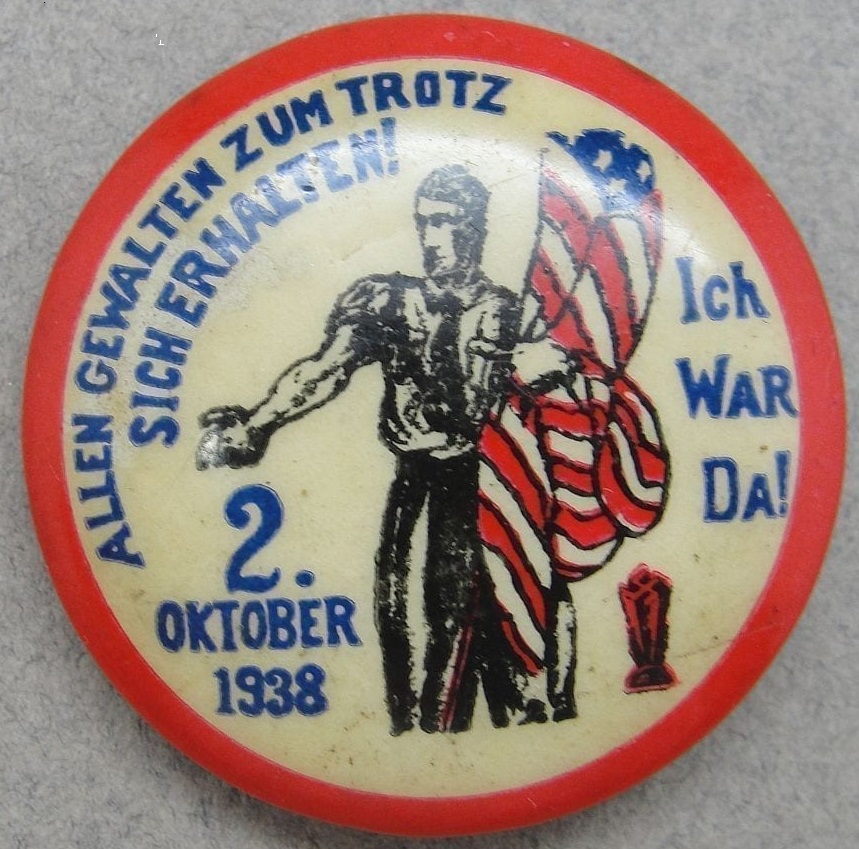

Next Week: Part II: Nazi’s at Arsenal Tech…What?

Nazi’s at Arsenal Tech…What?

Part II

https://weeklyview.net/2025/03/20/nazis-at-arsenal-tech-what-part-2/

Original publish date March 20, 2025.
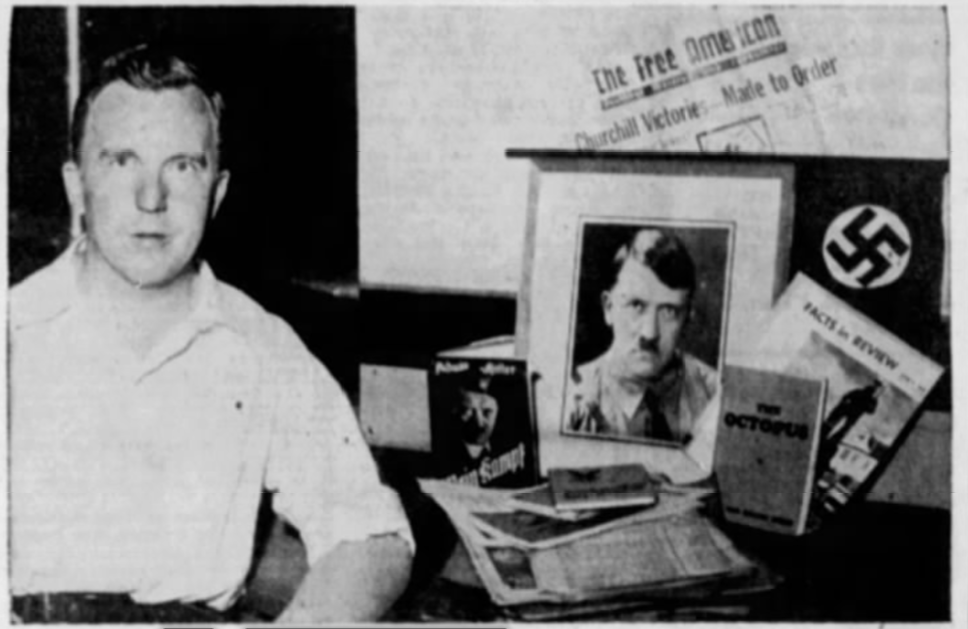
Charles Soltau.

On March 15, 1938, an eastside Indianapolis house was rocked (quite literally) by an angry crowd after the city learned about a formational meeting of the German-American Bund, an organization formed to follow the ideals and edicts of Adolph Hitler’s Nazi party. The Soltau family, who lived at 339 North Summit Street, welcomed a controversial visitor to their home, a German transplant named Fritz Kunze. The Nazi’s visit was greeted by Circle-City residents hurling rocks through the front windows of the Soltau home. Gerhard Wilhelm Kunze was the Bund’s publicity director who invented derogatory names for people (Franklin D. Rosenfeld) and programs (The Jew Deal) he disapproved of while extolling Jim Crow laws, warned against immigrants, and advocated for the Chinese Exclusion Act. Fritz warned white Americans: “You, Aryan, Nordic, and Christians…wake up” and “demand our government be returned to the people who founded it…It has always been very much American to protect the Aryan character of this nation.”
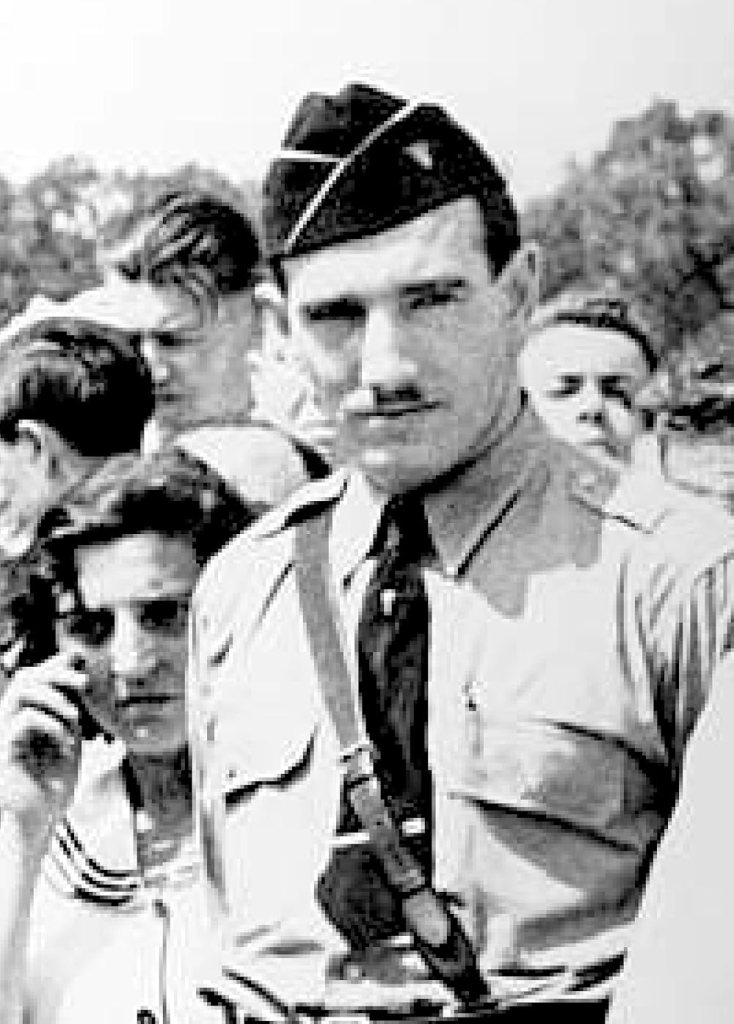
Wilhelm Kunze German American Bund Rally.1938.
Gerhard Wilhelm Kunze.

Despite the Eastside Indianapolis Nazi recruitment session debacle, the Soltau family stayed committed to Nazi ideology. In November 1938, Charles and his youngest sister, Opal, fresh off her graduation from Tech High School, returned from a Bund indoctrination trip to Germany. Some of these trips included meetings with Joseph Goebbels, Heinrich Himmler, and Hitler himself. Whether the siblings were in the Rhineland to attend a German youth camp or to enjoy a post-graduation vacation is unknown. While 18-year-old Opal fit the profile, Charles was almost 30 and may have aged out of that group. They left Hamburg on November 3rd, arriving back in New York on the 11th. The Soltau family quietly supported the Bund cause by subscribing to The Free American newsletter and other Nazi propaganda publications including a liturgy of anti-Semitic tracts like The Protocols of the Elders of Zion and Hitler’s Mein Kampf manifesto. A November 1941 FBI investigation identified the Soltau family as 4 of 38 stockholders in the Press (The publishing house had issued 5000 shares of preferred stock at $10 a share in 1937). The FBI noted that the Soltau family were the only stockholders from Indiana. While the Free American had local news columns in Fort Wayne and South Bend, there were none in Indianapolis.
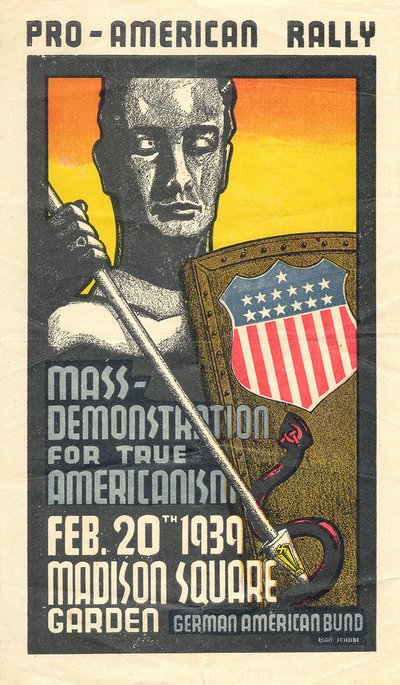
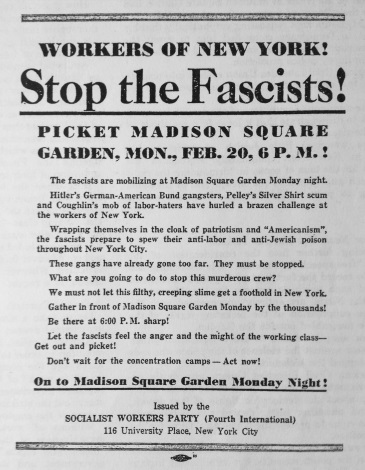
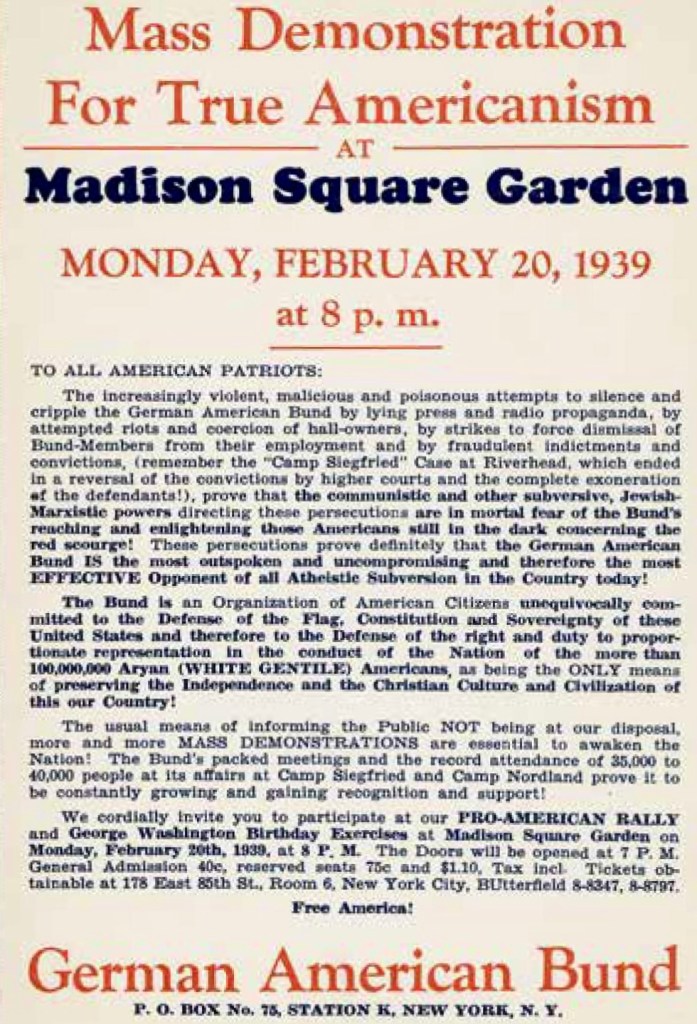
The German-American Bund was at its zenith in 1938-39, but after 20,000 people attended a Bund rally at Madison Square Garden in February 1939, New York City Mayor Fiorello La Guardia instigated a series of investigations that would ultimately bring them down. In September 1939, after the Nazis invaded Poland the FBI and federal government went after the Bund. Fritz Kunze was detained by the South Bend Police on May 12, 1941.
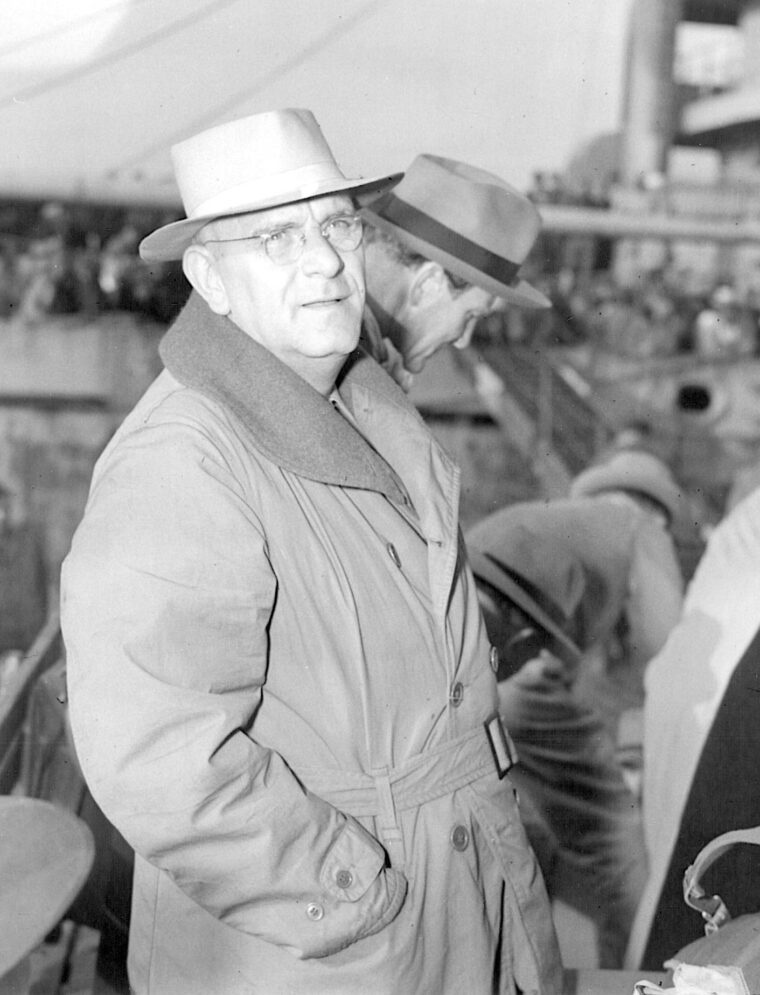
Kunze upon deportation in 1945.

In the inventory of Kunze’s papers confiscated by the Police were cards with the names and addresses of Bund members, including the Soltau family, the only members from Indiana. Kunze was charged with espionage, and in November 1941, just a month before Pearl Harbor, he fled to Mexico, hoping to escape to Germany. Kunze was captured by the Feds in Mexico in June 1942 and sent to jail for espionage, where he spent the rest of the war. The German-American Bund disbanded officially immediately after Pearl Harbor. Regardless, some Bund members had their American citizenship revoked and were deported, while others were prosecuted for refusing to register for the draft. Kunze was eventually deported himself in 1945.
In September 1940, when the draft began, the Bund instructed its members to boycott registration, and soon, former Bundist members began to be prosecuted by the Selective Service System for failure to register. 33-year-old Hoosier Charles William Soltau was among those who refused to report for induction. In August 1942, draft dodger Soltau was arrested, and his home was raided by US Marshals who discovered a large cache of Nazi propaganda there. It included issues of The Free American, a portrait of Hitler, Swastika banners, and Nazi memorabilia. In a four-page letter to President Franklin D. Roosevelt, Soltau argued that “in all my association with the German-American Bund I never was guilty of any subversive activity.” After spending a couple of nights in jail, Soltau posted a $5000 cash bond. When he appeared in court in November, he argued that, “My conscience will not permit me to bear arms against the German people.” He informed the court that “This war is a war of aggression by the United States against the Germans. I am a man of German blood, and I don’t think it is right or fair or just for a man of German blood to bear arms against the German people.” It took the jury six minutes to deliberate and deliver a five-year sentence to Soltau. Judge Robert C. Baltzell concluded that “I have never seen a more contemptuous fellow in this court,” and “I am going to do all I can to see that you serve as much [time] as possible.” In December 1943, while serving his sentence at the Federal Correctional Institute in Milan, Michigan federal prison, Soltau’s mother Laura died. Charles was released in 1946, and with his sisters, Opal and Pearl, he moved to their secluded Brown County property near Gnaw Bone.
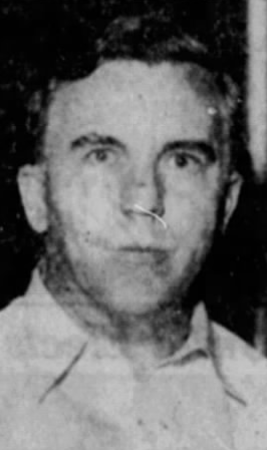
Charles Soltau 1942.

Their father, William Albert Soltau, died there on October 6, 1950, at age 75. His funeral service was held at Shirley Brothers Central Chapel in Irvington, and he is buried at Memorial Park Cemetery on Washington Street alongside his brothers, whose funeral services were also held at Shirley Brothers. At least one brother, Benjamin Harrison “Ben” (1889-1963), was a member of Irvington Masonic Lodge 666, and another, James Garfield Soltau (1881-1932), was an admitted member of the KKK. The Soltau siblings quietly left Indianapolis and moved to Gnaw Bone, where they lived together in Brown County for the remainder of their lives, and none of the three ever married. The siblings started with three goats in 1952, and by 1962, their “trip” (or tribe) had reached 44 head, so they created Pleasant Valley Goat Farm on their 200-acre Gnaw Bone property. The family sold goat’s milk and yogurt in local farm markets. Pearl Soltau also moonlighted as an accountant for a local hosiery mill, preparing tax returns on the farm. After a two-year illness, Pearl died at the Gnaw Bone farm in May 1968 at the age of 62. Charles died there on July 5, 1971, at age 61. Although Charles’s membership in the “German-American National Congress” was mentioned in his obit, Pearl betrayed no history of continued xenophobic activism after the war. Both are buried at Henderson Cemetery in Gnaw Bone.

Charles Soltau 1942.

However, the youngest sibling, Opal, remained committed to neo-Nazi causes for more than a half-century after the war. Even after the deaths of her siblings, Opal continued to agitate for unpopular political causes. Opal had been a standout at Arsenal Tech High School. She was a straight-A Honor Roll Student and received the scholarship medal from the Tech faculty in 1938. In the 1980s, Opal Soltau was accused of mailing neo-Nazi propaganda from the post office in Nashville, In. In September 1996, Opal sold her parcel of 120 acres in Brown County and by January 1997, she had moved to Nebraska. That same month, she became a Director for the National Socialist German Workers’ Party-Overseas Organization. Opal Soltau died in Lincoln in August 2008 and is presumed buried there. No one knows how the pilot light of Nazi fervor was lit in the Soltau family and, for that matter, how it burned out of control within the hearts and minds of these three Arsenal Tech graduates. Political ideology grows unchecked when surrounded only by like-minded individuals living in a silo of misinformation. Sometimes, it is the better part of valor to explore divergent opinions. The flame of Nazism burns through everything it touches. Characterized by extreme nationalism and steered by blind faith in misguided authoritarianism, its victims don’t realize what has happened until it’s too late. And by then, no matter what, they will never admit that they were ever wrong in the first place.

For a more thorough study of the Soltau family, I recommend the blog Nazis in the Heartland: The German-American Bund in Indianapolis by the late Paul R. Mullins (1962-2023), Anthropology Professor at IU Indianapolis (formerly IUPUI).
animals, Criminals, Indianapolis, Wild West

The National Horse Thief Detective Association.

PART II

Original publish date:  November 12, 2020

The southern Indiana town of Warren, a stop on the route of the Indianapolis & Ft. Wayne Railroad in Huntington County, had one of the first local Horse Thief Detective Association chapters. The town’s story typifies why a HTDA chapter was needed. Warren had a race track that drew horses from across the tri-state area; horse thieves could easily ride trains and the interurban from larger neighboring cities, steal the horses, and hide them in Wells County caves – where the Huntington County sheriff couldn’t cross county lines to look for them. In 1800’s Indiana, a deputized vigilante force of constables was formed to track, arrest and detain these suspected horse thieves. Indiana was frontier back then. It might take days (or weeks) for a US Marshal to appear. So locals took matters into their own hands.
However, there was a frail line between being protectors of people and property and frontier vigilante justice. The latter, called whitecapping, led to the beating and very often lynching of people who whitecappers saw either as criminals or simply people whose actions were eroding the morality of a community. In many cases, by the turn of the 20th century, the NHTDA had devolved into a violent lawless movement among farmers defined by extralegal actions to enforce community standards, appropriate behavior, and traditional rights.


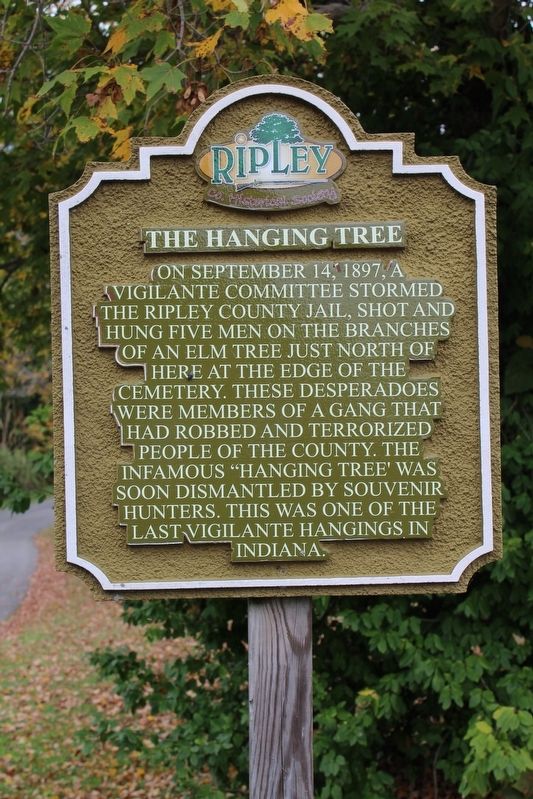
In September of 1897, newspapers reported on the “Versailles lynching,” or the “Ripley lynching” in which 400 men on horseback came to the Ripley County jail demanding that five men there, all facing charges for burglary and theft, be turned over to them. County residents were being victimized by thieves that were becoming bolder and more aggressive – sometimes conducting their crimes in broad daylight. One of the most egregious of these, which was reported to have led to the lynching, was the alleged torture of an elderly couple who had hot coals put to their feet by men demanding money. The deputy in charge of the jail refused to turn over the keys, but was quickly overpowered.
“The mob surged into the jail, and, unable to restrain their murderous feeling, fired on the prisoners. Then they placed ropes around their necks, dragged them (behind horses) to some trees a square away and swung them up,” according to an account in the Sept. 15, 1897, issue of The Madison Courier. The men killed were Lyle Levi, Bert Andrews, Clifford Gordon, William Jenkins and Hiney Shuler.

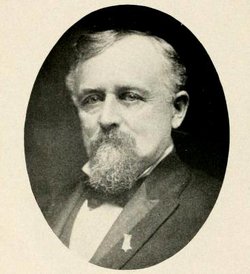
James A. Mount.
Indiana Governor James A. Mount had called immediately for those responsible for the lynching’s to be brought to justice, writing to Ripley County Sheriff Henry Bushing and ordering that he “proceed immediately with all the power you can command to bring to justice all the parties guilty of participation in the murder of the five men alleged to have been lynched. Such lawlessness is intolerable.” Despite his best efforts, the identity of those responsible for lynching these men was never discovered.

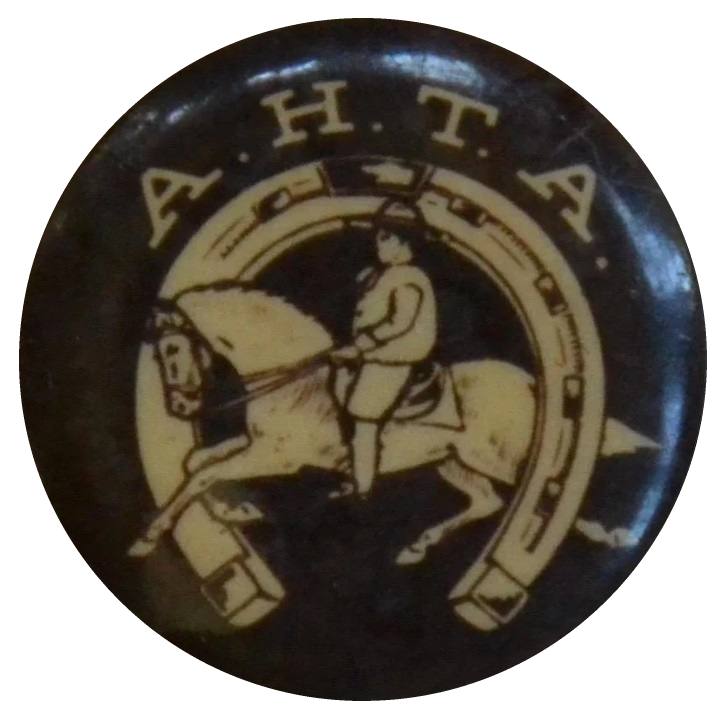
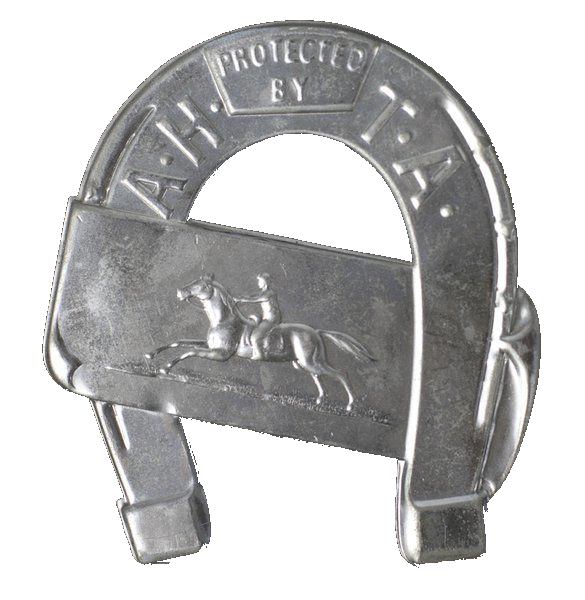
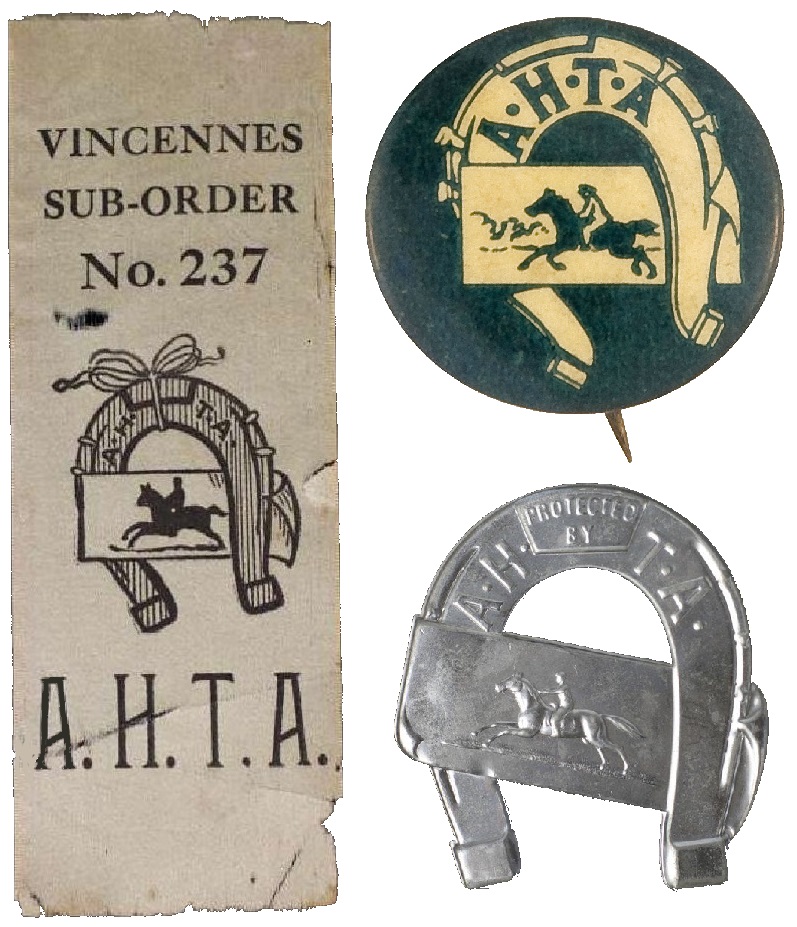
Anti-Horse Thief Association lapel badges.


Mount, who was ironically also the NHTDA’s president, reported that from 1890 to 1896 the association had investigated the theft of 75 horses and had recovered 65, leading to the conviction of 129 thieves. Mount condemned the lynching by saying, “The hideous crime of lynching is not to be measured by the worth or the character of the subject lynched, but by the dangerous precedent established,” he stated. “We would be unworthy of an organization created by the statutes if we dared to insult the law by becoming law breakers ourselves.” The vigilante spirit that once drove the organization ultimately turned ugly but remained strongest in Indianapolis.
The front page of the Feb. 25, 1925 Indianapolis Star reported that 13 Democratic State Senators bolted to Dayton, Ohio to thwart the forming of a quorum (subjecting themselves to a $ 1,000 fine per day) to pass an appropriation bill that included the gerrymandering of a Democratic Congressional District. The Star reported that “members of the Horse Thief Detective Association would come to Dayton to attempt to arrest the striking Senators.” It was clear that by 1925, the NHTDA had turned into little more than a well-organized mob of armed thugs with badges.

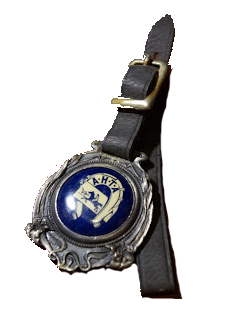
Anti-Horse Thief Association badge and watch fob.


By 1926 there were still as many as 300 active companies of the National Horse Thief Detective Association in Indiana and neighboring states. The western states version was known as the National Anti-Horse Thief Association and out east, the Horsethief Detection Society (founded in Medford, Massachusetts around 1807). And while by this time, horses were few, crime had not diminished much. By the Roaring Twenties, most of the NHTDA agencies had formed alliances with the Ku Klux Klan. It is this late association with the KKK that hastened the end of the organization and forever tarnished its history.
D.C. Stephenson, Grand Dragon of the Indiana KKK, wanted to take advantage of the broad legal powers afforded to Indiana’s horse thief detective associations. Stephenson utilized the Hoosier NHTDA chapters, still on the books but mostly forgotten, as his “hidden” enforcement arm of the KKK. He succeeded in having KKK members infiltrate the group. The post-World War I atmosphere fomented fears of political radicals, outsiders, foreigners, seditionists and minorities which played right into Stephenson’s klan plan. Stephenson’s klan latched onto fears of racism and, particularly in Irvington, anti-Catholic sentiment at the time.

Anti-Horse Thief Association ribbons.


Stephenson’s klan quickly gained momentum in the state (membership cresting at half a million members) but that all changed with his brutal assault on Madge Oberholtzer, an adult literacy advocate and state employee. Oberholtzer died of injuries suffered in the attack, but not before implicating Stephenson in a graphic 9-page deathbed statement that ultimately led to his conviction for second degree murder. Madge’s death brought down the klan and proved once and for all that, contrary to his boastful statements, he was no longer the law in Indiana.

Klan Leader D.C. Stephenson


Stephenson was denied a pardon by the Irvington resident he claimed to have gotten elected Governor: Ed Jackson. He began to leak the names of all those he had helped to elect with his influence and dirty klan money. D.C. Stephenson’s savage attack of Madge Oberholtzer in Irvington hastened the destruction of the KKK and took the NHTDA with it. (In 1928, the Indianapolis Times won a Pulitzer Prize for its coverage of the biggest scandal in the state’s history.)
In 1928, the group dropped the “Horse Thief” specification from its name in an attempt to rid itself of the Klan connection. The name change to “National Detective Association” didn’t take. By 1933, Indiana lawmakers had repealed all laws that gave the agency, regardless of name, any enforcement powers. These organizations remained on life support into the mid-1950s, but their reputations were ruined irreparably. By 1957, all such groups had faded into history. The desperate demise of the association has in many ways complicated its history. The Indiana organization, despite its onetime prominence and clear tie to the state’s history, has been largely stricken from the state’s history.


Like the Klan itself, association with the NHTDA in the Hoosier state seems to have become a taboo subject, deservedly so. So the task has fallen onto collectors, county historic societies, local libraries and archives to maintain records, roles and histories of local chapters of the NHTDA. However, the Anti Horse Thief Association fared somewhat better.
Likewise, the Anti Horse Thief Association was formed as a vigilance committee at Fort Scott, Kansas in 1859 with a noble cause: to provide protection against marauders thriving on border warfare precipitating the Civil War. It resembled other vigilance societies in organization and methods, but the AHTA did not share some of the shadier tactics of the Hoosier NHTDA. Kansas, Oklahoma and Missouri had the largest number of active AHTA chapters. A major difference between the AHTA and the NHTDA was that not only could a thief steal a horse and hurry across a state line, they could also escape into the Indian territories where local authorities could not easily follow. Stealing horses was easy and lucrative. Horses were seldom recovered, since it typically cost more to go after them than they were worth.
The AHTA was not a group of vigilantes, capturing horse thieves and hanging them from the nearest tree. The group believed in supporting and upholding the law, and the last thing they wanted to do was break the law. The AHTA worked hand in hand with law enforcement, gathering evidence and testifying in court to punish horse thieves and other criminals. It was a way for law-abiding citizens to restore order by working with law enforcement rather than becoming helpless victims.


Although it was a “secret” organization, nearly any man could join. To become a member of the AHTA, it was only necessary that you be a citizen in good standing, male and over eighteen years old. One of the reasons the AHTA was so successful was because the members didn’t have to worry about getting extradition orders and crossing state lines while bringing back a thief. The AHTA had a clever way around this. If a thief was chased into another state, part of that state’s AHTA group would remain close to the state line. When captured, they would take him to the line and tell him to, “get out of our state and don’t come back.” As soon as the thief crossed the state line he would be arrested by AHTA members on the other side waiting for him.
AHTA membership peaked at 50,000 in 1916. As with the NHTDA, World War I changed rural life, members left for the war, many never to return, and mechanization replaced horsepower. As automation took over, and horses were used less, stealing them became a misdemeanor offense. By the Great Depression and Dust Bowl, AHTA membership shrank drastically, only a few individual chapters survived as social clubs.
Although the Horse Thief Associations are all gone now, horse thieving still exists. There are no solid statistics available, but it is estimated that between 40,000 to 55,000 horses are stolen each year. It is relatively easy to pull up to a pasture and coax a horse into a trailer and haul it to an auction and make a quick buck. Sadly, most of these stolen horses taken to auction end up at a slaughterhouse. There is a modern-day version of the AHTA. It is called Stolen Horse International (SHI). Thanks mostly to the Internet, SHI boasts a 51% recovery rate of stolen horses that are reported within the first day of the theft.
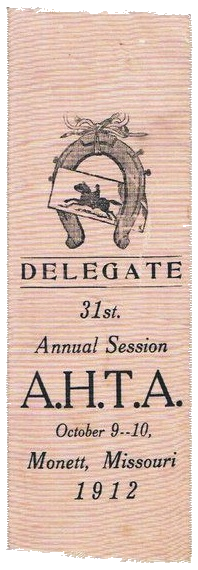
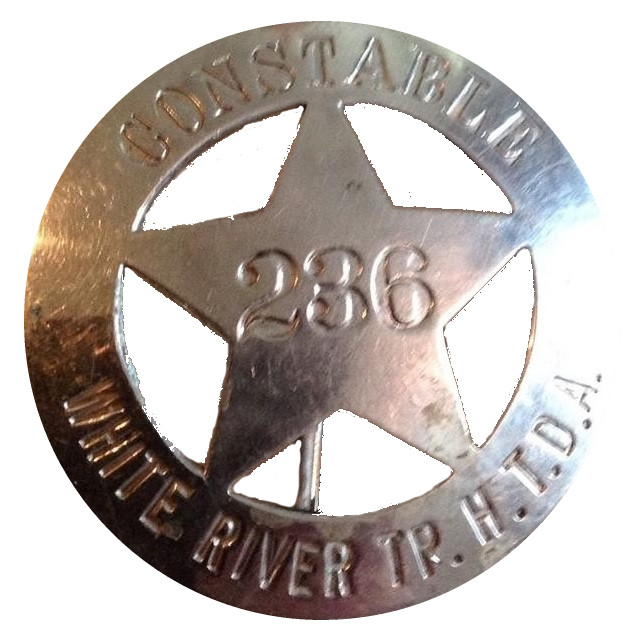
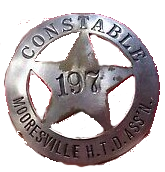
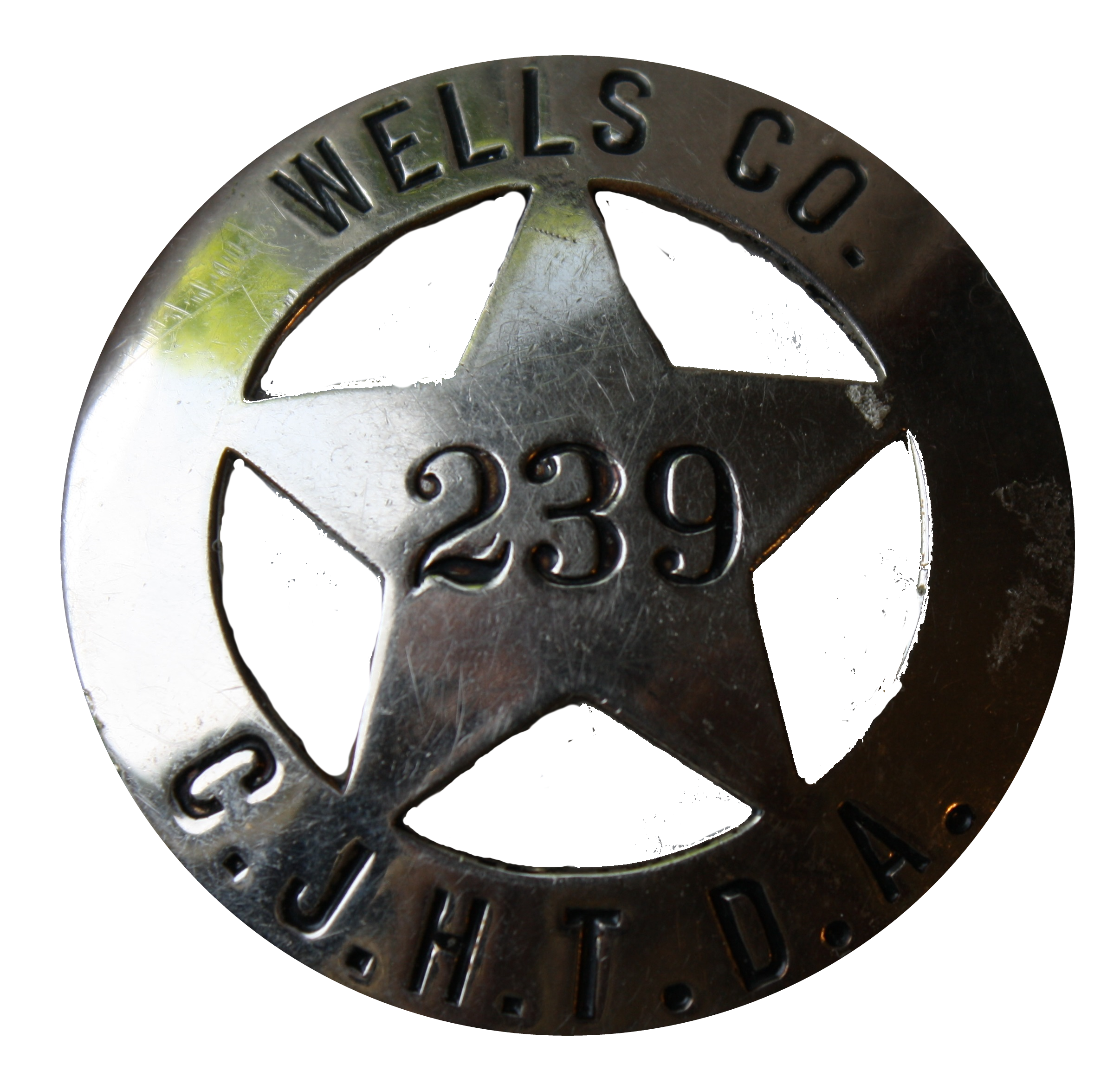
And what what remains of Indiana’s NHTDA? Today, badges once worn by HTDA, NHTDA and AHTA members are highly prized by collectors. Badges vary in style, size and design according to chapter and year. Collectors also seek out buggy markers (designed to be nailed to a buggy to signify a buggy owner’s membership) and books, stickpins and ribbons are also highly sought after. Relics from a lost era when horses were a part of the family and the only pollution being produced could fertilize your garden.

Criminals, Indianapolis, Wild West

The National Horse Thief Detective Association.

PART I

Original publish date:  November 5, 2020

I’ve spent the past month talking about the past. Relics from the past. Some good. Some bad. One of those relics has an unusually ancient sounding name: The National Horse Thief Detective Association. Sounds like something from an old B-western movie right? Visions of Roy Rogers and Gene Autry on horseback riding hell bent for leather immediately gallop through our minds. Truth is, the NHTDA is not as ancient as you might think. And of course, it has ties to Irvington.
The National Horse Thief Detective Association was sort of a nineteenth-century rural neighborhood crime watch, aimed not only at prevention but also apprehension and the execution of justice. And it wasn’t just looking for horse thieves. The NHTDA was as much a civic organization as a law enforcement agency — largely composed of white, property owning men wealthy enough to pay the dues. The NHTDA was well organized. It had branches (or companies) in 92 counties of Indiana. Delegates attended annual regional meetings to swap stories, catch up on NHTDA news and share the latest law enforcement techniques.


According to the Indiana Historical Society, the horse thief detectives were Hoosier-based from the beginning, with the first official company, the Council Grove Minute Men, formed in 1845 near Wingate, Ind. In the 1840s, Indiana was literally a wild frontier and these companies were created to police rural areas and track down criminals where law enforcement (principally enforced by US Marshals) might be days, or weeks, away. The main focus was on horse thieves but soon expanded into tracking down any “evildoers” who brought crime to an area.
Expanded duties required expanded membership and soon companies were popping up all over the state, eventually spreading to Ohio and Illinois. The NHTDA itself was founded in 1860 as an umbrella group to organize the hundreds of individual detective companies among the three states. The Hoosier countryside was riddled with bandits, outlaws and horse thieves who preyed on the people living and farming in rural communities with little established law enforcement. Stealing horses, which were crucial for farming and transportation of people and goods before the arrival of the railroad and the automobile, was crucial to survival on the frontier. Many times, these thieves were better organized than the residents themselves.


These bands of marauding bandits, rustlers and gypsies were sophisticated, with established “stations” where stolen horses could be stashed to rest during the day and moved to the next station by cover of night. These horses stolen from Indiana, Michigan, Ohio and Illinois were transported to Iowa, Kansas and Nebraska, where they were quickly sold. To combat these professional horse thieves, during the 1850s, Hoosier lawmakers passed legislation officially appointing association members as constables, granting them the authority to arrest and jail criminals and recover stolen goods. This legislation allowed them to cross county lines to track and apprehend thieves – something county sheriff’s couldn’t do.
Horses and livestock were one of the most vital resources a pioneering family had in those days of early westward expansion. Without horses travel was slow, plowing impossible and getting perishable goods to market a hopeless proposition. Horse thievery in antebellum Indiana resulted in crops being abandoned and farms being lost. Indiana winters are harsh and a stolen horse was no laughing matter. Failure to locate and prosecute horse thieves by US Marshals and local law enforcement often led to vigilante justice.


In most cases, horse thieves were transient and almost impossible to locate having crossed state lines in the blink of an eye. Brands were disguised, herds were split and mixed, and apprehension, let alone prosecution, was rare. However the operators of the safehouse stations were locals and word soon circulated that some neighbors were being paid by the gangs for tips on who had the fattest, fittest herds that could be easily stolen. To make matters worse, due to the sparse rural population, these operations were conducted quite brazenly during the day. It was this environment of widespread horse thievery that led to the first horse thief detective agencies being founded in Indiana.
The citizenry’s earliest attempt to tame the wild regions of rural Indiana were called the “Minute Men.” According to an association pamphlet, that membership included “only the best men in the community” and represented all the “vocations in pioneer life.” There were secret passwords and signs, and strict standards of behavior; Any member who played cards, gambled, or “used liquor to excess” was expelled. A registered member paid dues and became a constable with police powers. Operational enforcement was pretty straight forward.


If a horse was suspected as stolen (and not just a stray) the owner would go to a neighbor and ask them to notify the local association, passing along identifying information about the stolen horse (color, breed, type of shoe, height, etc.). Then, association members would call in other members who would ride immediately to a designated secret meeting place nearby. Once organized, the duly notarized constables would fan out individually, inquiring at toll booths, homes, farms, and stores in an effort to track the culprits down. The more people they notified, the more likely a horse could be found before the trail ran cold.
National Horse Thief Detective Association ledgers digitized and found on the internet, libraries and various private collections detail the lengths to which a particular chapter would go to retrieve a stolen horse. The October 1867 Warren Township HTDA Ledger, which included the Irvington area, reports of HTDA agents hunting for the horse of Mr. George White, who resided just off Brookville Road, east of Arlington Avenue.


The October 6, 1867 ledger entry reports: At 7:00 a.m. Leander White notified me that his father’s bay horse had been stolen the night before. I proceeded immediately to select men to hunt said horse. I selected 10 men to meet at George White’s house as soon as they could get there by 9:00 p.m. The men reported ready as soon as I could get a description of the horse and the direction he had started. I started 4 men to Indianapolis and Wilson, George Butcher, Henry Wilberg and Alonzo Snider to inquire at the toll gates and see if they could find any track in that dirt road. I went with the others to the National Road and there we found by the track, that he had crossed the road and went south towards McClain’s Gate; not finding any track where he had come back. I was satisfied that he had gone in a southern direction. I then sent Mr. McClain and Mr. White to Indianapolis to search the gates south and I went with the rest of the men Hiram Morehouse, John Wagoner, Conrad Reah; Thomas Cammel and Chris Wilder to the Brookville Road and started 2 men on that road and 2 south to go in a southern direction and Thomas Cammel to go on the Lawrenceburg Road and to get Jacob M. Springer to go with him. I then went to Indianapolis to meet the other men and did meet them at 12:00. M. Lonzo Snider reported that he had seen a horse pass where he had camped near Cumberland that morning about daylight that suited the description of the one he was hunting. I then sent Alfred Wilson and George Butcher east on the National Road and Lonzo Snider and Henry Wilberg south on the Bluff Road. McClain and White came home. I gave out word for the company to meet at the town house the next evening at 5:00 and ordered all the men that went to hunt to return by the next night if they got no track and if they got track, to keep on and not come back as long as there was any chance of getting him. Company met Monday evening; no word from the men exception Morehouse and his partner. They reported no track. Meeting approved for next morning at 7:00 a.m.
Oct 8, 1867: Company met all the men had returned. Cammel Springer reported. Heard of the horse at Shelbyville. Followed the tracks a few miles lost it; and could not find the track any more. Company agreed to send 6 men back to hunt said horse and called on me to select the men. I did select 6 men: Alfred Wilson, John Wagoner, Hiram Morehouse, Thomas Cammel, John Shearer, and Conrad Rahl to start immediately and if they made any discoveries, they were telegraph to George Parker. On Thursday we received a dispatch from Morehouse; they had heard of the horse. Friday evening, company met and the men all reporting no further track could be found. Company agreed to send 12 men to hunt said horse and ordered me to select the men. I did select Daniel Sharer, George Askren, Henry Wilberg, Isaac Wheatley, John Buchanon, Henry Jorger, Peter Kissel, Fred Brady, Conrad Gemmer, David Springer, Gorden Shimer, and Chris Raseno to meet at the townhouse Saturday morning at 7:00 a.m. Company met Sat morning; the men all reporting for duty. On motion, it was agreed to send one man by rail to the Ohio River to examine the ferries and towns along the river between Lawrenceberg and Vevey. On motion of A. Parker, it was agreed to send the Captain. I did start the same evening at 6:00 (the first train I could get on) went to Lawrenceberg. From there, walked to Aurora thence by boat to the bay making thorough inquiries at all towns and ferries. I then went back to Aurora and took the train to Osgood thence to Versailes by hack. Soon after I got to Versailes, William Wheatly, Conrad Grammer and Peter Kissel came into the Versailes and reported no track found by them and that 7 of the company had started that morning to Lawrenceberg together. After dinner I took William Wheatly and Peter Kissel and hired a man by the name of Stevens to go along. We left Gemmer at the hotel and I road his horse. We went about 4 miles from Versailes to a place noted as a horse thief harbor, it is in the hills and about 5 or 6 miles square we rode in and thru those hills and hollows but made no discoveries. We returned to Versailes that night. Shortly after we got back George Askren and John Buchanon came in and reported no track of horse found by them.


Although the culprit (or culprits) were never found or prosecuted, this particular case shows the lengths that the HTDA in Indianapolis would go to solve a case. Apparently, even though this caper almost bankrupted the group, similar associations continued to be formed throughout the city, eventually resulting in 16 chapters in Marion County alone. Eventually, the National Horse Thief Detective Association was formed to bring them all together. State laws were passed giving NHTDA members authority to arrest and detain, granting members extraordinary policing powers. While sheriffs and deputies could not cross county lines to apprehend lawbreakers, NHTDA deputies could. Justice was swift and often judgement was enforced at the end of a rope.
In time, chapters broadened their jurisdiction to include not only horses but also carriages, cows, poultry and other livestock. By the turn of the 21st Century, NHTDA were primarily tasked with looking for car thieves, home invaders… and people. It was the twisting of that last pursuit that would see the demise of the National Horse Thief Detective Association.

Indianapolis, Politics, Sports

The Purdue Football Team’s Halloween Train Disaster. PART II

1903-Purdue Part II

Original publish date: November 7, 2019

On Halloween of 1903, nearly 600 Purdue fans and players were traveling to Washington Park on Indy’s eastside for the Boilermaker’s annual in-state football rivalry game against Indiana University. On that frosty morning, the boisterous Boiler fans filled 14 train coaches to overflowing. The trains never arrived and the game was never played.
A misplaced message from a telegraph operator triggered a fatal train wreck. A train dispatcher failed to inform a coal train that two trains were hurtling down the main line towards disaster. Fifty-nine miles away from its Big Four railroad depot departure point, the train rounded a curve at 18th and Gray near the Mill Street Power House and crashed into a line of steel coal cars that were backing down the track. The first four coaches were shattered; the second car, containing the team, was split in half. According to the 2002 book, “A University of Tradition: The Spirit of Purdue”, “The floor was driven beneath the gondola and the roof fell across the top of another. Bodies were everywhere … players hung from wooden beams and slowly slipped into puddles of blood. Clothing, footballs, padded jerseys and pennants tied to canes were all strewn along the track.”
Z purdue 2A total of 17 people died immediately, including 13 players, a coach, a trainer, a student manager and a booster. One member of the team miraculously landed on his feet and was unharmed after being thrown out a window. All the casualties were limited to the team’s railcar. Twenty-nine more players were hospitalized, several of whom suffered crippling injuries that would last the rest of their lives. Further tragedy was averted when several people, led by the “John Purdue Special” brakeman, ran up the track to slow down the second special train that was following 10 minutes behind the first. This heroic action undoubtedly saved many lives by preventing another train wreck. One of the survivors of the wreck was Purdue University President Winthrop E. Stone who remained on the scene to comfort the injured and dying.
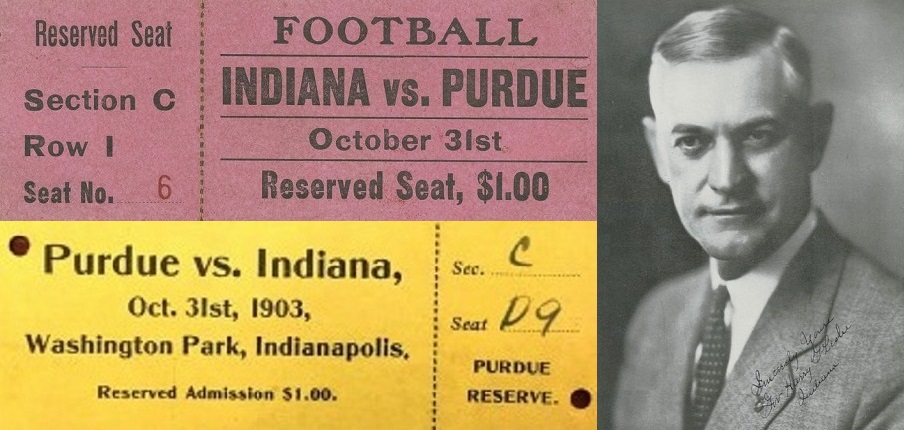
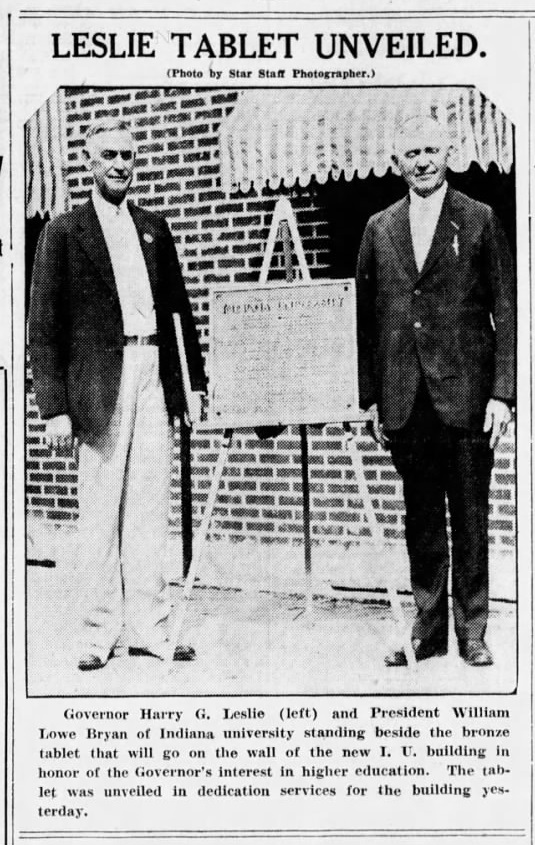
IU Purdue ticket pair leslieWalter Bailey, a reserve player from New Richmond, was grievously injured but refused aid so that others could be helped before him. Bailey would die a month later at the hospital from complications from his injuries and massive blood loss. Purdue team Captain Harry “Skeets” Leslie was found with ghastly wounds and covered up for dead. His body was transported to the morgue with the others. Leslie would later be upgraded to “alive” when, while his body lay on a cold slab at the morgue, someone noticed his right arm move slightly and he was found to have a faint pulse. Skeets was clinging to life for several weeks and needed several operations before he was out of the woods. Leslie would later go on to become the state of Indiana’s 33rd governor, the only Purdue graduate to ever hold that office. As a reminder of that Halloween train disaster, Skeets would walk with a limp for the rest of his life.
Harry G. Leslie may be the perfect model of what a Purdue graduate aspires to achieve. Born in West Lafayette, on April 6, 1878, he grew up in the Hoosier countryside, his father serving as chief of police for the town for awhile. He attended public schools and worked delivering groceries as a teenager. In 1898 he was elected town clerk at the age of 20, a year after he graduated high school. He soon enrolled in the recently constructed Purdue University where he was made captain of both the school’s football and baseball teams. His personal story of survival from the Purdue train wreck disaster received statewide acclaim and made him a folk hero.

z leslie older
Governor Harry G. Leslie.

In 1904, Leslie returned to school and founded the Purdue College Republicans before he graduated. Leslie graduated from the Indiana Law School (now the Indiana University Robert H. McKinney School of Law) in 1907 and opened a law office in Lafayette that same year. In 1923 Leslie was elected to the Indiana House of Representatives where he became known for his down-to-earth style of speaking. He was elected Speaker of the House, and remained in that position until he left the body. His term as Speaker was dominated by the Indiana Ku Klux Klan. Their leader, D.C. Stephenson, was arrested and convicted of rape and murder in 1925.
Over the next two years many other Klansman were exposed and forced out of office-including nearly half the members of the General Assembly. The Klan had tacitly supported Leslie in his bid for the speakership primarily because they opposed his rival candidate. However, Skeets fought the KKK on several issues and was pleased with the Grand Dragon’s conviction and the collapse of the Klan. Among the causes Leslie championed during this time in the Legislature was the creation of Riley Children’s Hospital.
Leslie ran for the governor’s nomination in the 1928 Republican primary and won on the fifth ballot. Leslie was elected with 51.3% if the vote, making him the state’s fifth consecutive Republican governor. The beginning of Leslie’s term was a period of economic growth for the city and state and he hosted several high-profile events; the National Governors Association and visits by President Herbert Hoover and aviator Charles Lindbergh. Then, nearly 26 years to the day after the Purdue trainwreck that almost ended his life, the Great Depression began on Halloween of 1929, threatening his Governorship.

z leslie lindbergh
Aviator Charles Lindbergh & Governor Harry G. Leslie.

The stock market crash caused widespread economic failure resulting in factory shutdowns all around Indiana. Unemployment and poverty began in the urban regions and quickly spread to the rural communities. The decreased purchasing power and resulting decreased consumption struck the agriculture industry hard. This was complicated by a statewide drought. For the most part, Governor Leslie did nothing significant believing that the Depression would soon end. In 1932 he vetoed relief legislation passed by the General Assembly which would have been Indiana’s first old-age pension act. As the Depression continued, Leslie began hiring unemployed workers to work on state road projects. He also advocated that his program be duplicated by the federal government, and his plan was soon implemented as the WPA. Among Leslie’s other projects was continuing to grow the state park system. Leslie died unexpectedly from heart disease on December 10, 1937.
The shock of the Purdue Halloween train disaster not only rocked Purdue, but I.U. as well. The intense rivalry was pushed entirely aside as the Indiana University team arrived on scene a few minutes after the wreck to assist in the work of rescue and caring for the injured. I.U. faculty members paid tribute to the fallen Purdue footballers in an open letter as “honorable and friendly rivals, not our enemies,” and likened their shock at Purdue’s loss as “to brothers who have lost the comrades of their day’s work.”
Naturally, the game was cancelled, as was the remainder of Purdue’s season. Many of those killed and injured were among the best men on the Purdue squad and the accident effectively wiped out the entire team. Although Boilermakers all, kids from all over Indiana died that day. From Butler, Veedersburg, Lafayette, Lawrenceburg, Huntington, Noblesville, Indiana Harbor, Spencer, New Richmond, Indianapolis and a few from out of state. Distraught fans speculated that Purdue may never have a football team again. Most fans thought it might take almost two seasons before a team could be put together again.
The Boilermakers would not take the field again until September 17, 1904 in an exhibition game. The first official game was against Indiana and played in Indianapolis on November 12, 1904. Purdue won 27-0. Purdue stunned everyone by going 9-3 in 1904, including a win over traditional powerhouse Notre Dame 36-0, capping a very successful comeback season for the Boilers. Since then, Purdue & I.U. have alternated every game on their respective campuses and have not played a neutral site game since.
Although the section of railroad that witnessed the tragedy no longer exists, traces of the rail bed at the accident site can still be seen in satellite photos. Google Earth shows that, from the northwest, the rail bed passes through Riverside Golf Course and crosses the White River near North White River Parkway East Drive and Rivershore Place. The rail bed continues southeast between Burton Street and the Central Canal Trail, then crosses to the east side of the canal at Fall Creek Parkway North Drive, continuing southeast onto the property of the Republic Waste Services facility.

z leslie iu
September 7, 1932 Indianapolis Star photo.

In today’s Indianapolis, the crash site would be at the intersection of W. 21st and Senate Blvd not far from where the Crispus Attucks museum now stands (between Attucks and I-65). The actual site of the wreck on the original Big 4 route is now mostly buried underneath the sprawling Indiana University Health Methodist Hospital complex. The present-day accident site is bounded on the north by West 21st Street, on the south by West 16th Street, on the east by Senate Boulevard, and on the west by West Dr. Martin Luther King Jr. Street, West 18th Street, and Mill Street. Prominent landmarks include I.U. Methodist Hospital to the east, the Peerless Pump factory to the north, and an electrical substation on the site of the former Mill Street Power House.
For you present day urban explorers, after crossing West Dr. Martin Luther King Jr. Street just south of the entrance to the Peerless Pump factory, the rail bed passes between the factory grounds and the electrical substation. There you will find the deadly right turn to the south that continues until reaching Interstate 65. Beyond this point, the rail bed is no longer visible, being covered by the interstate and the west lawn of Methodist Hospital along Senate Boulevard. A map of Indianapolis from 1916 shows the tracks continued south across West 16th Street at Lafayette Street, then along Lafayette Street into the downtown area to Union Station.

52306d16f0883.image
Purdue Memorial Gymnasium

If you are looking for traces of the team on the Purdue campus, the school’s Memorial Gymnasium is the best place to start. The gym was built to pay tribute to those who died as a result of the collision. A combination of $5 donations from every senior of the 1903 class and many donations from supportive alumni and partners raised the $88,000 it took to build the gymnasium which was completed in 1909.The plaque outside the memorial states “the appalling event is still considered the worst tragedy in the University’s history.” There are 17 steps-one for each person who died-leading up to the entrance of the building. Although, the building is now home to the computer sciences department, the original entrance still remains, as does the memory of those who died.