

Original publish date: May 14, 2020
Like all Americans, Covid-19 is affecting my life and adjusting my normal routine. For more than a quarter century, the Hunter family has ventured down to Daytona Beach, Florida every spring for an annual getaway. Well, that vacay was cancelled this year. The seriousness of this pandemic far outweigh a lost vacation and, when viewed alongside the sufferings of many of my fellow Hoosiers, is a minor issue indeed. So, since we are all confined to quarters together, I decided to write about a few things I have always loved about Daytona Beach.
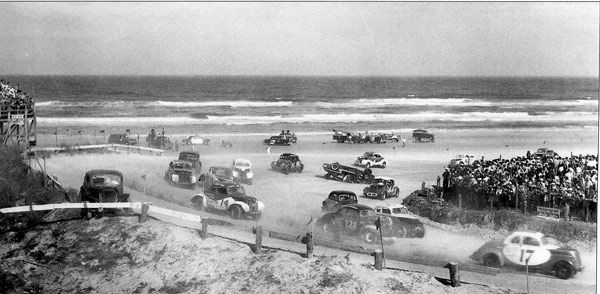 There is a lot of history on the world’s most famous beach: cars, gangsters, auto racing, motorcycles, bootleggers and Henry Ford, for starters. When you think of auto racing, two American cities come to mind: Indianapolis and Daytona. However, before Indianapolis and Daytona, Ormond Beach was the mecca of auto racing. Ormond Beach just north of Daytona, held races on the beach from 1902 until after World War II. At that time, Ormond Beach was a playground for America’s rich and famous: The Vanderbilts, Rockefellers, Roosevelts, Henry Flagler, John Jacob Astor; all spent their winters at the old Ormond Hotel.
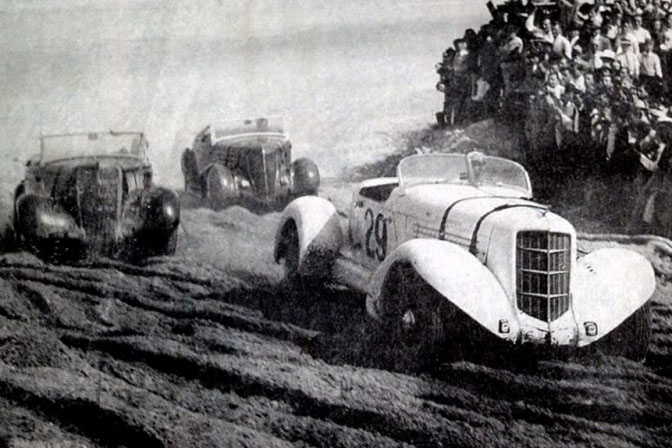 From 1902 to 1935, auto industry giants such as Henry Ford, Louis Chevrolet, and Ransom E. Olds brought their cars to race on the beach. Cigar-chomping Barney Oldfield, the most famous race-car driver in the world at the time, set a new world speed record on the Ormond-Daytona course in 1907. Racing faded somewhat in Ormond and Daytona after World War I as the racing world turned its attention to the Indianapolis Motor Speedway.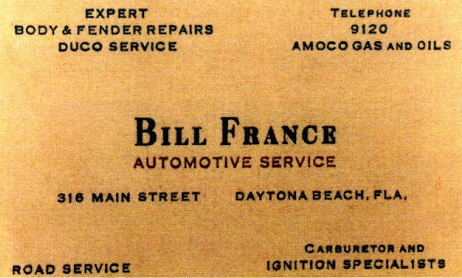
In 1936 the American Automobile Association sponsored the first national stock-car race on Daytona Beach. One of the drivers was Bill France, who later founded NASCAR. The first stock-car race after World War II was held in the spring of 1946. During that race, Bill France flipped has race his car and spectators rushed onto the beach to turn the car back on its wheels. Bill France finished the race. The next year, France began planning the construction of Daytona International Speedway 5 miles east of the beach.
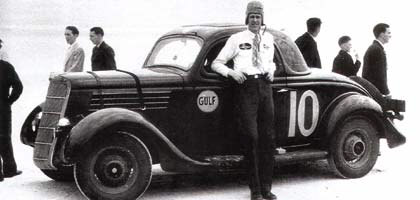
In 1937 Bill France, now a promoter and no longer a driver, arranged for the Savannah 200 Motorcycle race to be moved to the 3.2-mile Daytona Beach Road Course. World War II cancelled the races held between 1942 and 1946. By 1948, the old beach course had become so developed commercially that a new beach course was designed further south, towards Ponce Inlet (where our family time-share condo is located). The new course length was increased from the previous 3.2 miles to 4.1-miles. By the mid-1950s, the new beach course was lost to the rapid commercial growth of the Daytona Beach area.
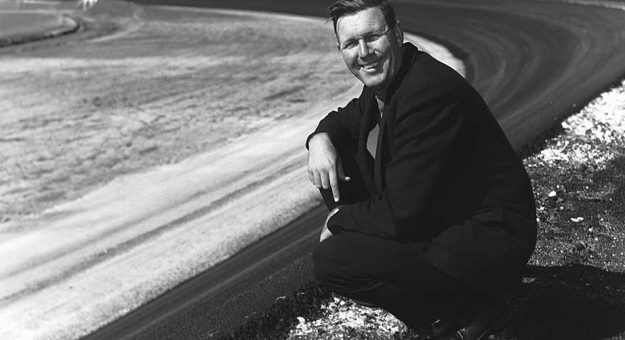
In 1957, France purchased a site near the Daytona airport and construction began on the Daytona International Speedway, a 2.5-mile paved, oval-shaped circuit with steep banked curves to facilitate higher speeds. The track opened in 1958. The first Daytona 500, run in 1959, was won by Lee Petty, father of Richard Petty. France convinced AMA officials to move the beach race to the Speedway in 1961. Today, the motorcycle racers are honored in a memorial garden, not unlike monument park in Yankee Stadium, located near the bandshell and Ferris Wheel off the Daytona Beach Boardwalk. Bill France is as much a legend in Daytona as Tony Hulman is in the Circle City and Henry Ford in the Motor City.
Although Henry Ford raced cars as a young man (he was the first American to claim a land speed record with his “flying mile” in 39.4 seconds, averaging 91.370 miles per hour in his “999” car on January 12, 1904) and attended many of the early Indianapolis 500 races as an honorary official, he did not allow his cars to take part in the races. In 1935 Edsel Ford brought his Ford V8 Miller to the IMS and after the elder Ford’s death in April 1947, the company had considerable success at Indianapolis (Mario Andretti won in a Ford powered turbocharged dohc “Indy” V-8 known as the “Hawk” in 1969). Bottom line, in the early years of automobiles, Henry Ford’s cars were fast.
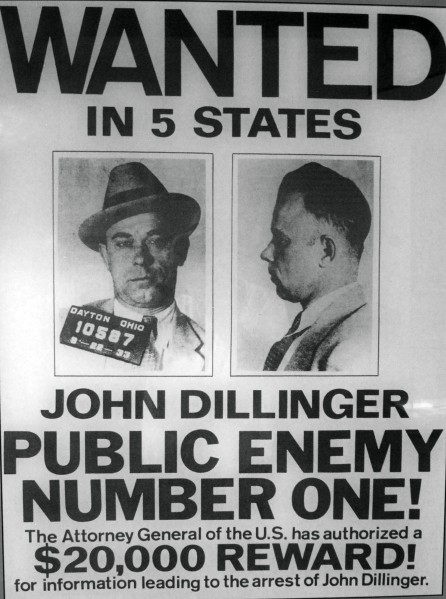 So it comes as no surprise that the gangsters of the 1930s drove Fords. In particular, outlaws John Dillinger, Bonnie and Clyde and Baby Face Nelson all preferred the Ford Model V8. Introduced in 1932, it was touted as America’s first affordable big-engine car. Dillinger also is said to have owned a Model A and what’s more, in mid-December of 1933, he drove his Ford to Daytona Beach for a vacation. After secretly visiting the Dillinger family farm in Mooresville, America’s first Public Enemy # 1 brought along girlfriend Evelyn “Billie” Frechette, Hoosier “Handsome Harry” Pierpont and his “molls” Mary Kinder, her sister Margaret and Opal Long and gang members Russell Clark and Fat Charlie Makley. The gang rented a spacious 3-story, seventeen room beach house for $ 100 a month at 901 South Atlantic Avenue until Mid-January, 1934. The house, long ago demolished, was located across the street from Seabreeze high school on the spot where “Riptides Raw Bar & Grill” and the Aliki Atrium are located today. Vacationers will recognize the “Riptides” name from the banner pulled by the tail of an airplane that constantly trails up and down Daytona beach.
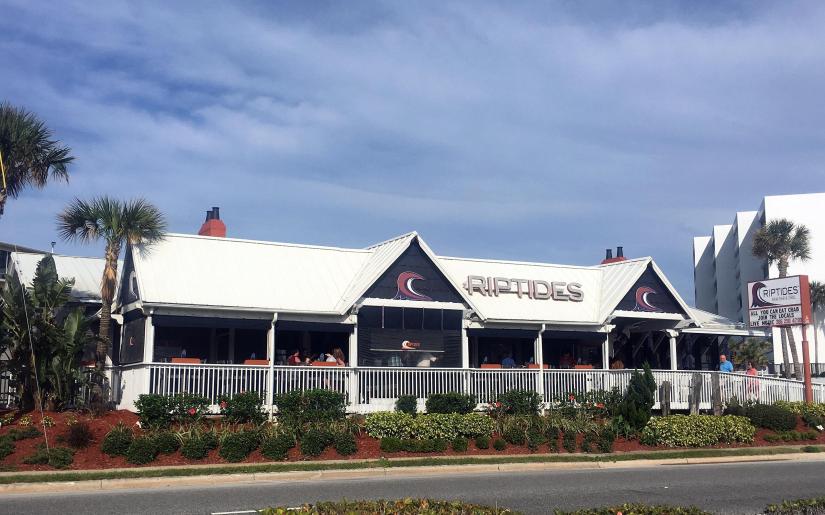
Billie later called the house a mansion with four fireplaces. The gang swam, played cards, fished, went horseback riding and reportedly took a side-trip to Miami. Billie also stated that Dillinger spent his days chuckling as he listened to radio reports and read newspaper stories about the robberies he and the gang were committing back in Illinois and Indiana. On New Years Eve a drunken Dillinger (who normally drank very little) exited the house and fired a full drum of bullets from his tommy gun at the moon. Three young boys, the Warnock brothers, lived next door and ran out to see what was going on. When they saw Dillinger with flames spitting out of the muzzle of his tommy gun, they quickly ran back into the house. Sobering up the next morning and sure that his rash act would bring on the law, Dillinger and the gang packed up the Ford V8 and head out two weeks before the rental contract ended.
By January 1, 1934, John Dillinger had just two hundred days to live. He would spend that time praising Henry Ford and damning Bonnie and Clyde, who, ironically had less than 150 days to live and were also praising Henry Ford.
Next week:
Part II of Daytona Beach, Henry Ford, John Dillinger and Bonnie & Clyde.
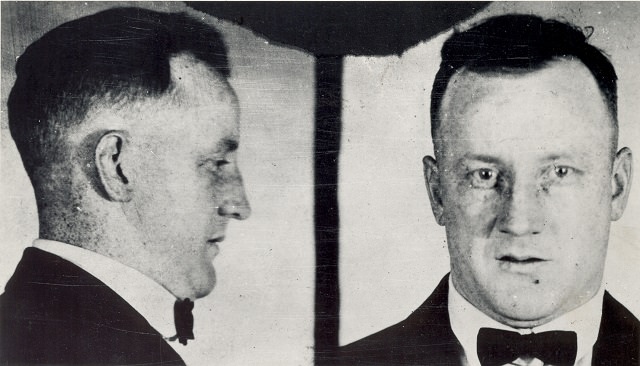
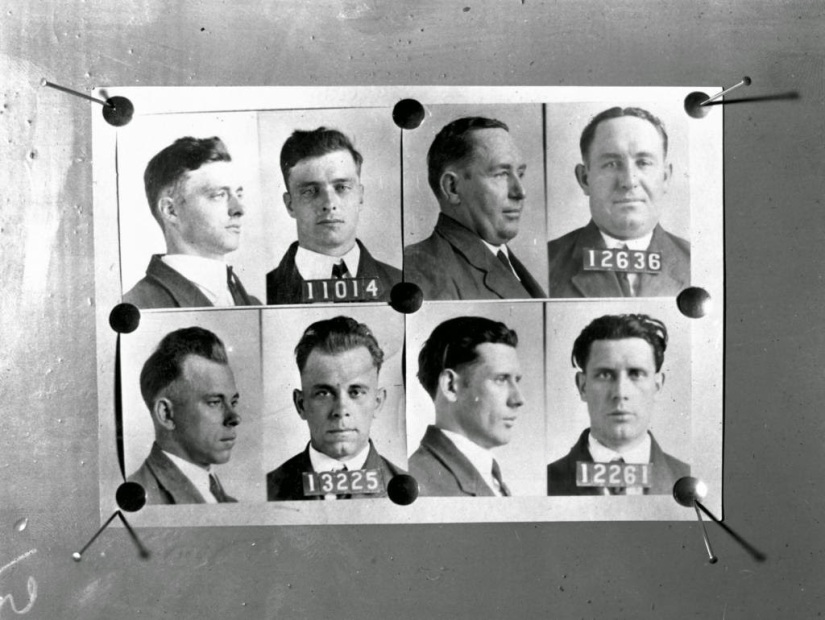
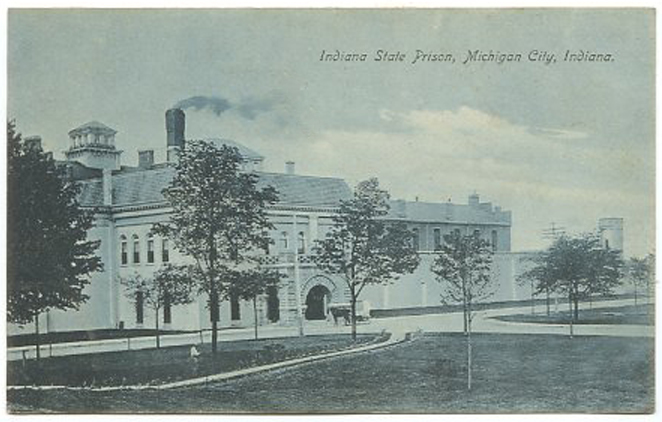
 Hamilton, escaped out the main gate of Indiana State Prison.
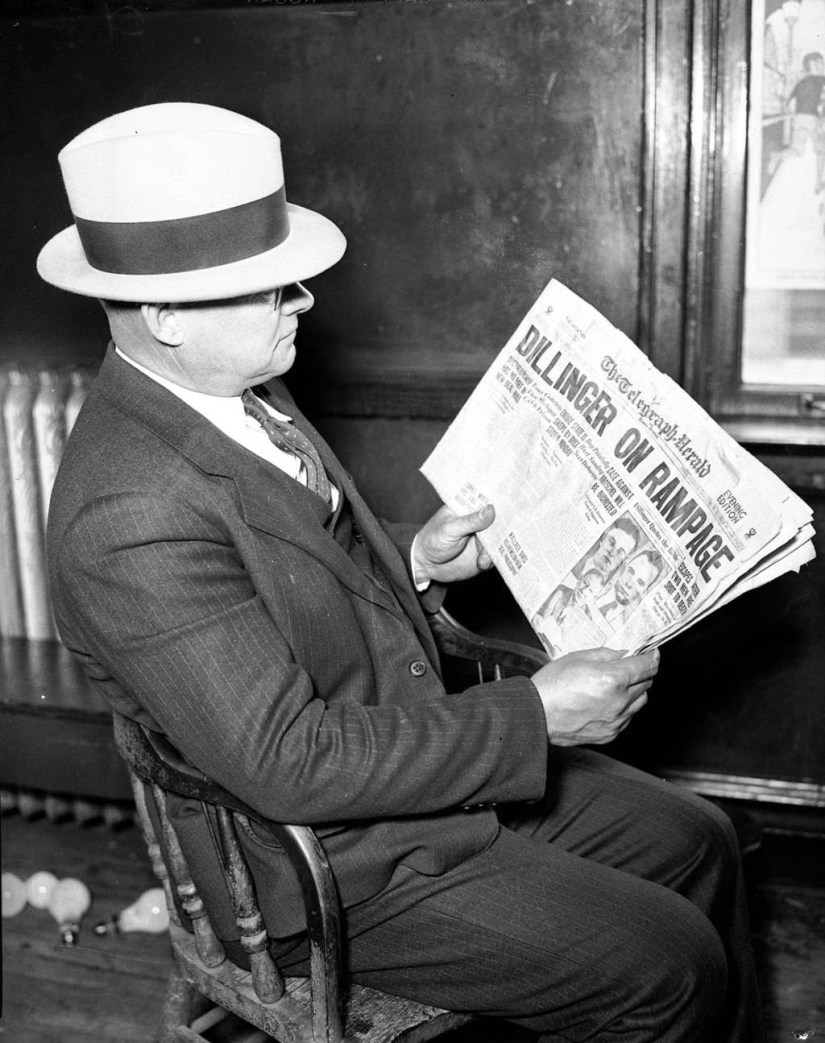 On December 13, 1933, the Dillinger gang robbed a Chicago bank, netting a reported $50,000. Afterwards, the gang went down to Daytona Beach, Florida for a time and then went west to Tucson. Hamilton, however, decided to go to Chicago instead, where, on December 13, 1933, he took part in the robbery of a local bank. The next day, Hamilton left his car at a Chicago garage for some body work, the garage’s mechanic called police reporting it as a “gangster car”. Hamilton returned to pick up the car and found police detective, William Shanley and two other officers waiting for him. He opened fire, killing Shanley, and escaped from the other two officers. Red’s incident led to the Chicago Police Department forming a special forty man “Dillinger Squad”. A month later, on January 15, 1934, Hamilton and Dillinger robbed the First National Bank in East Chicago, Indiana, for $20,376. During the heist, police officer William O’Malley was shot dead. Dillinger was officially charged with the murder, but several witnesses ID’d Hamilton as the shooter. By the end of the year, Hamilton found himself ranked third on Indiana’s list of “public enemies”, behind circle-city natives Dillinger and Pierpont.
 During the robbery, Hamilton was shot twice and left in the care of his girlfriend Pat Cherrington and underworld physician Joseph Moran, while Dillinger and the others headed to Tucson where they were apprehended by the authorities. Afterwards, for a short time, the fugitive Hamilton shot to the top of the public enemies list. There he remained until Dillinger, using a wooden gun, escaped from the Crown Point jail. Afterwards, Dillinger formed a new gang consisting of Hamilton, Homer Van Meter, Tommy Carroll, Eddie Green, and Baby Face Nelson.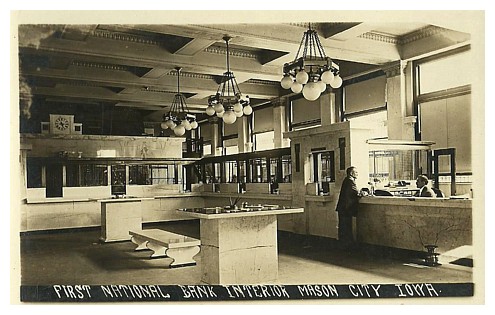
 Dillinger smashed out the window and returned fire with his .45, shattering the windshield of the police car and nearly killing the pursuing officer. A running gun battle ensued as the two cars traded 40 or 50 rounds for the next 50 miles or so, before the outlaws finally losing the pursuing patrolmen. With Hamilton losing blood from the massive hole in his back, Dillinger told Van Meter to head to Chicago and find a doctor for his friend. But first, they needed a faster, less bullet-riddled car. Van Meter cut off a 1934 Ford V8 Deluxe containing power company manager Roy Francis, his wife, Sybil, and their 19-month-old son, Robert.
 Alan E. Hunter