Baseball, Politics, Pop Culture, Presidents, Sports

Foul Ball!

Original publish date May 15, 2025.

https://weeklyview.net/2025/05/15/foul-ball/
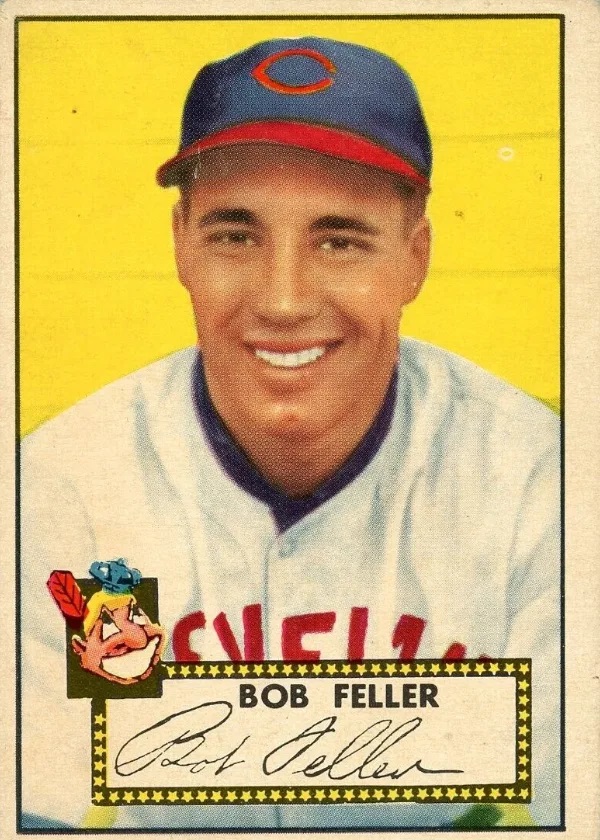
Bob Feller’s 1952 Topps card.

Last week, I ran a story about Cleveland Indians phenom Bob Feller’s pitched foul ball that hit and injured his mother during a game against the White Sox at old Comiskey Park in Chicago. That got me thinking about other foul ball stories and legends I’d heard about. Growing up, I spent a lot of time at old Bush Stadium on 16th Street in Indy. My dad, Robert Eugene Hunter, a 1954 Arsenal Tech grad, had worked there as a kid selling Cracker Jack/popcorn in the stands during the Victory Field years. He recalled with pleasure seeing Babe Ruth in person there and could name his favorites from those great Pittsburgh Pirates farm club teams from the late 1940s/early 1950s. I can’t tell you how many RCA Nights at Bush Stadium he took me to back in the 1970s during the team’s affiliation with the Cincinnati Reds Big Red Machine. During those outings, nothing was more exciting than chasing foul balls.
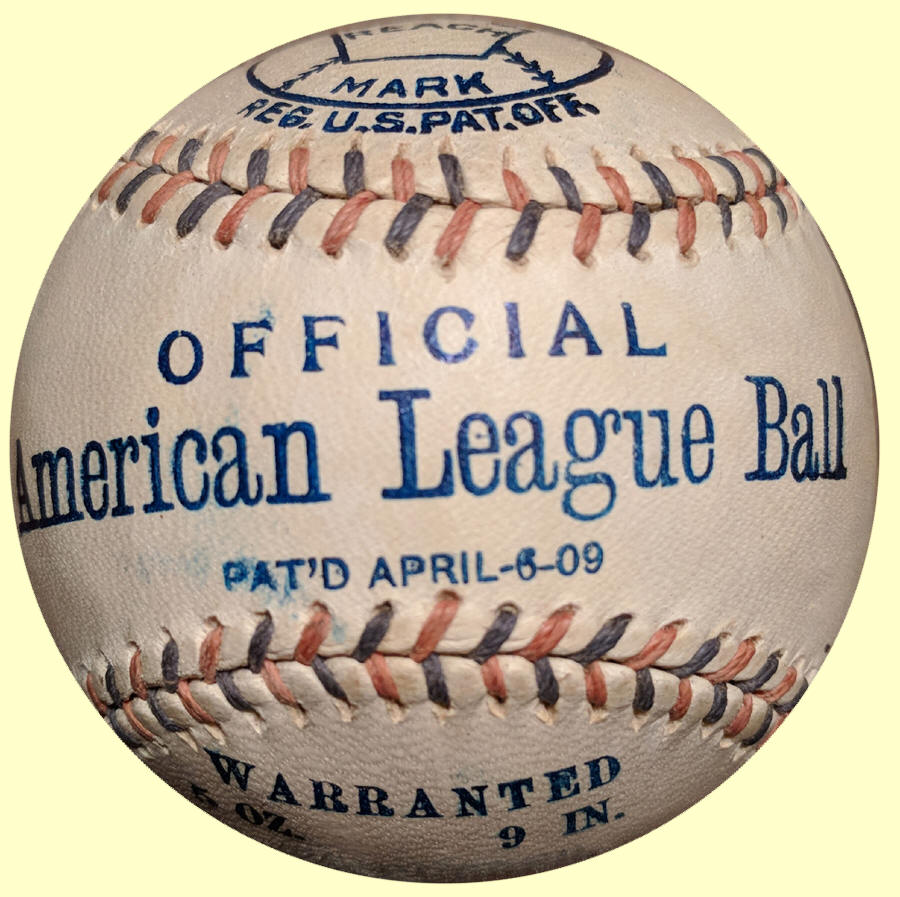
Not all foul balls are fun adventures, though; some are crazy, and others are just plain scary. Growing up, I loved reading about the exploits of those players who played before World War I. Back in those days, baseballs were considered team property and quite expensive. Fans were expected to return any ball hit into the stands (including homeruns), and balls hit out of the stadium were meticulously retrieved. In 1901, the National League rules committee, as a way of cutting costs, suggested fining batters for excessively fouling off pitches. Beginning in 1904, per a newly created league rule, teams posted employees in the stands whose sole job was to retrieve foul balls caught by the fans. Fans had a keen sense of humor, though, and they would often hide them from the “goons” or frustrate the hapless employees by throwing them from row to row. Sometimes, the games of keep-away in the stands were more fun to watch than the ones on the field. But those early WWI stories mostly involved the exploits of the players, not the fans. There were some characters in the league back then. Some of them are long forgotten and some made the Baseball Hall of Fame.
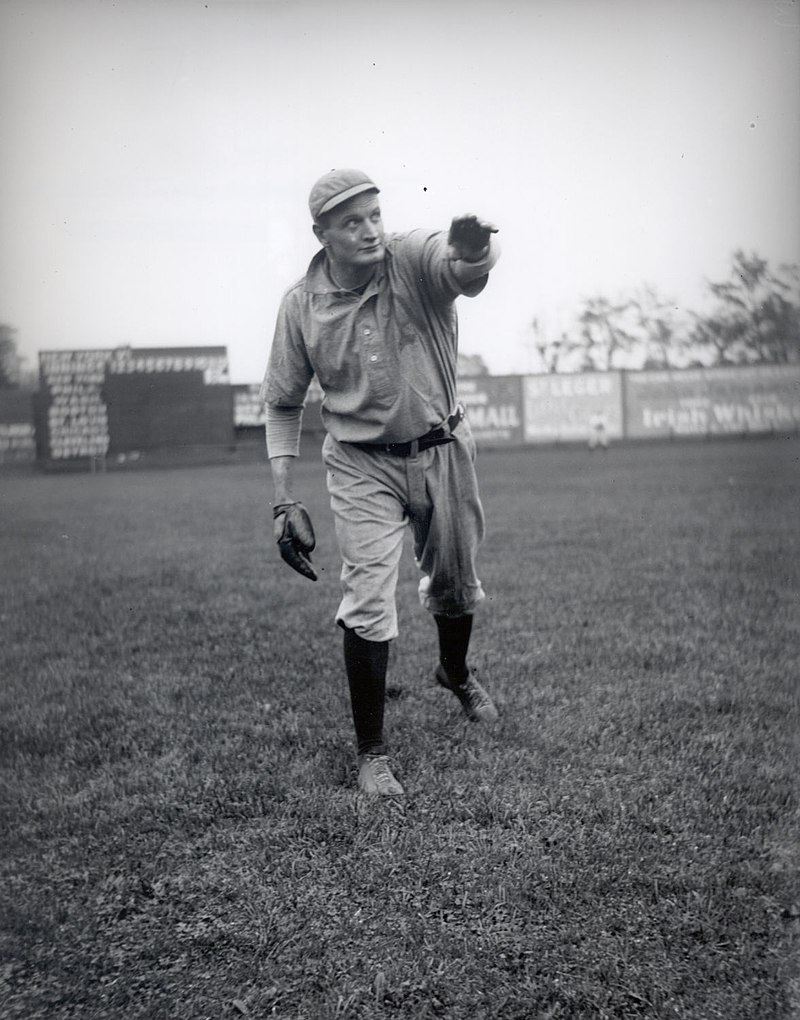
Rube Waddell 1905.

One of my favorite players from that hardball era was a square-jawed eccentric left-handed pitcher from the oil town of Bradford, Pa. named George Edward “Rube” Waddell (1876-1914). Rube played for 5 teams in 13 years. His lifetime 193-143 record, 2,316 strikeouts, and 2.16 ERA landed him in the Hall of Fame. And if there were a hall of fame for flakes in baseball, Rube would have been a first-ballot electee. If a plane flew above the field, Rube would stop in the middle of a game. If Rube heard the siren of a firetruck, he’d drop his glove and chase it. He once left in the middle of a game to go fishing. Opposing fans knew that Rube was easily distracted so they brought puppies to the game and held them up in the stands to throw him off. Rival teams brought puppies into the dugout for the same reason, knowing that Rube would drop his glove and run over to play with them every time. Shiny objects seemed to put Rube in a trance. His eccentric behavior led to constant battles with his managers and scuffles with bad-tempered teammates. Even though he was a standout pitcher, Rube’s foulball stories came off his bat, not out of his hand.
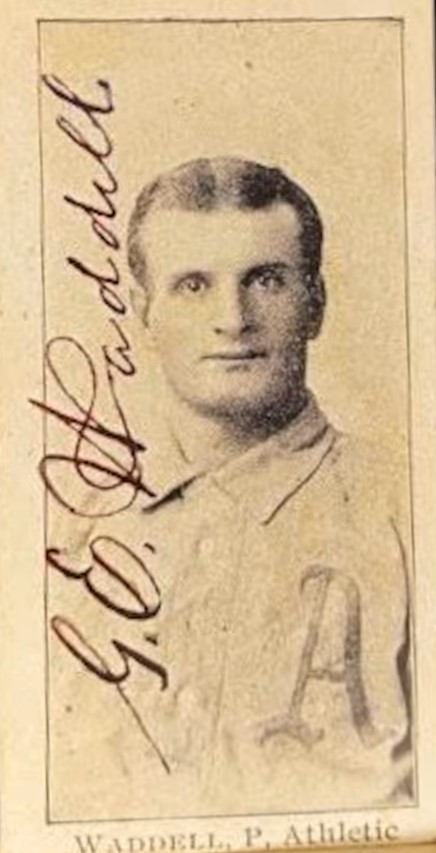
On August 11, 1903, the Philadelphia Athletics were visiting the Red Sox. In the seventh inning, Rube Waddell was at the plate. Waddell lifted a foul ball over the right field bleachers that landed on the roof of a Boston baked bean cannery next door. The ball rolled to a stop and became wedged in the factory’s steam whistle, which caused it to go off. It wasn’t quitting time yet, but the workers abandoned their posts, thinking it was an emergency. The employee exodus caused a giant caldron full of beans to boil over and explode. Suddenly, the ballpark was showered by scalding hot beans. Nine days before, on August 2, another foul ball off the bat of Waddell hit a spectator, supposedly igniting a box of matches in the fan’s pocket and ultimately setting the poor guy’s suit on fire and causing an uproar.

Waddell’s 1903 E107 Card.

George Burns Detroit Tigers.

Still, a foul ball hit by the aptly named George Burns of the Tigers in 1915 is worth mentioning in the same breath. His “scorching” foul liner struck an unlucky fan in the area of his chest pocket, where he was carrying a box of matches. The ball ignited the matches, and a soda vendor had to come to the rescue, dousing the flaming fan with bubbly to put out the fire.
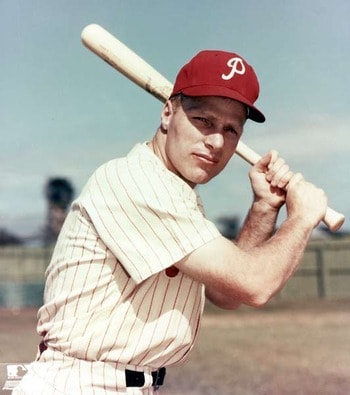
Richie Ashburn Philadelphia Phillies.

Richie Ashburn figures in many of the best foul ball stories in baseball lore. A contact hitter, Ashburn had the ability to foul off many consecutive pitches till he found one he liked. On one occasion, he fouled off fourteen consecutive pitches against Corky Valentine of the Reds. Another time, he victimized Sal “The Barber” Maglie for “18 or 19″ fouls in one at-bat. ”After a while,” said Ashburn, “he just started laughing. That was the only time I ever saw Maglie laugh on a baseball field.” Ashburn’s bat control was such that one day he asked teammates to pinpoint a particularly offensive heckler seated five or six rows back. The next time up, Ashburn nailed the fan in the chest. On another occasion, Ashburn unintentionally injured a female fan who was the wife of a Philadelphia newspaper sports editor. Play stopped as she was given medical aid. Action resumed as the stretcher wheeled her down the main concourse, and, unbelievably, Ashburn’s next foul hit her again. Thankfully, she escaped with minor injuries.
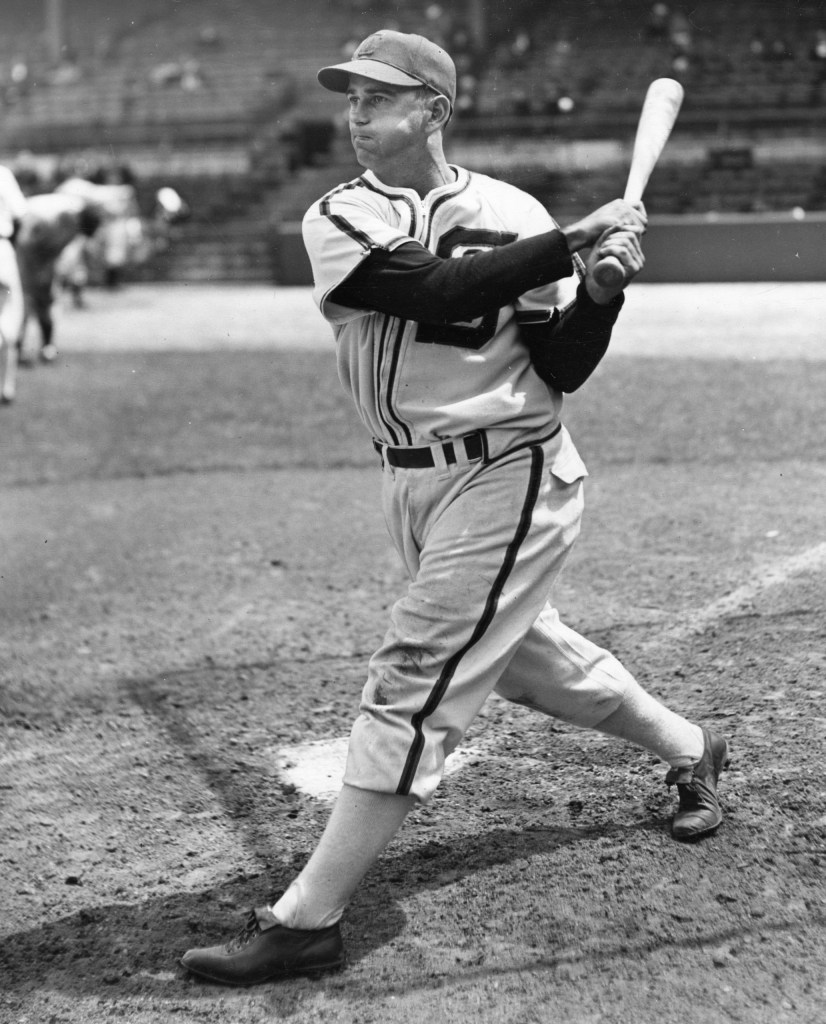
Luke Appling Chicago White Sox.

Another notable foul ball hitter was Luke Appling, the Hall of Fame shortstop with a career batting average of .310. As the story goes, Appling once asked White Sox management for a couple of dozen baseballs, so he could autograph them and donate them to charity. Management balked, citing a cost of several dollars per baseball. Appling bought the balls from his team, then went out that day and fouled off a couple dozen balls, after which he tipped his hat toward the owner’s box. He never had to pay for charity balls again, the legend goes.
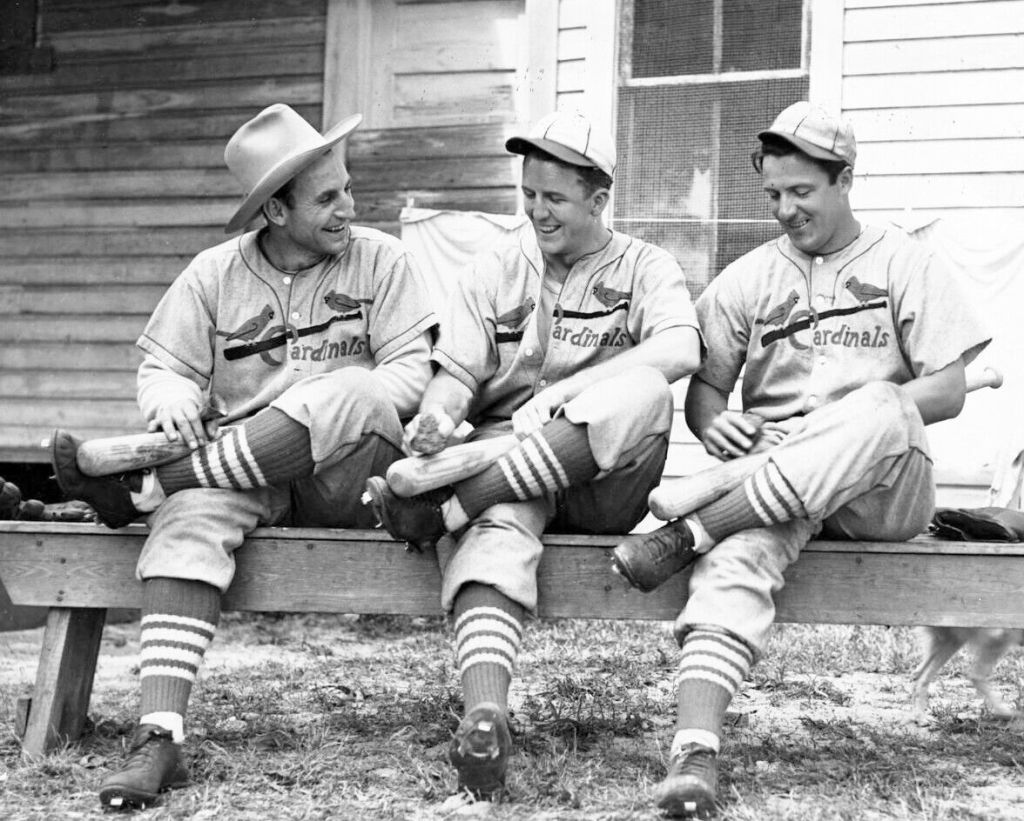
1934 Cardinals The Gashouse Gang:
Pepper Martin, Terry Moore & Ducky Medwick.

Another great foul ball story involves Pepper Martin and Joe Medwick of the St. Louis Cardinals famous Gas House Gang teams of the mid-1930s. With Martin at bat, Medwick took off from first base, intending to take third on the hit-and-run. Martin fouled the ball into the stands, and Reds catcher Gilly Campbell reflexively reached back to home plate umpire Ziggy Sears for a new ball. Then, just for fun, Campbell launched the ball down to third, where Sears, forgetting that a foul had just been hit and that he had given Campbell a new ball, called Medwick out. The Cardinals were furious, but not wanting to admit his error, Sears refused to reverse his call, and Medwick was thrown out-on a foul ball!
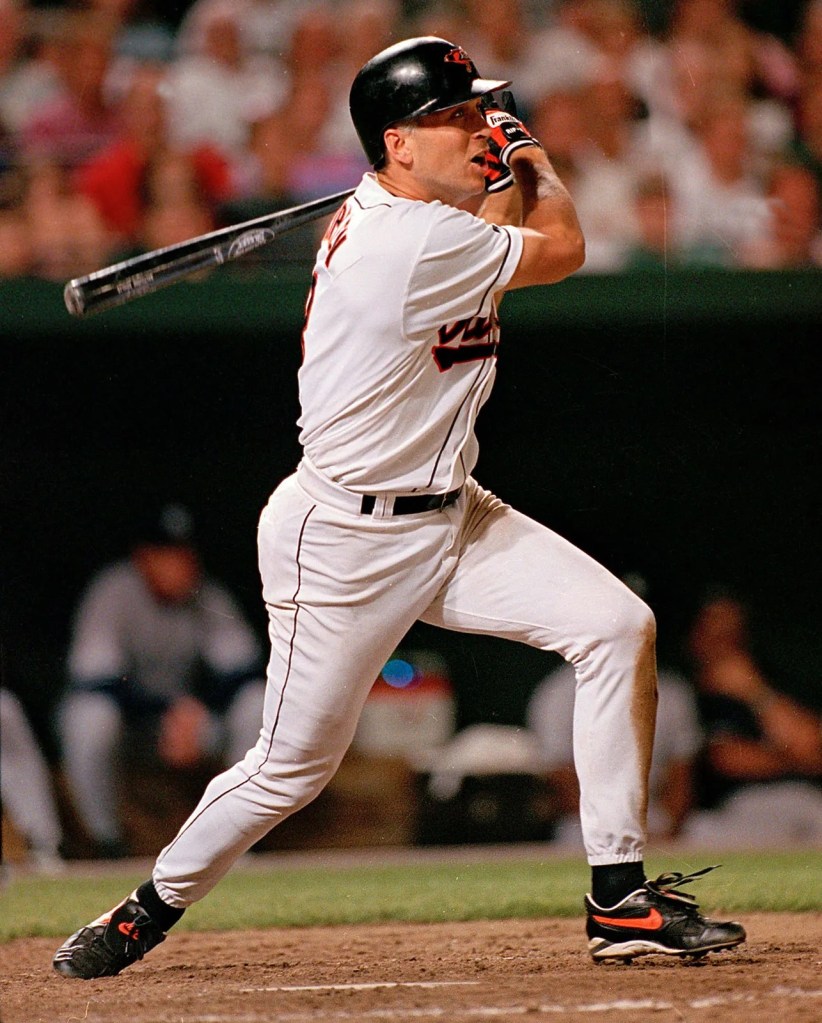
Cal Ripken, Jr.

The great Cal Ripken Jr. made life imitate art with a foul ball in 1998. In the movie The Natural, Roy Hobbs lofts a foul ball at sportswriter Max Mercy, as Mercy sits in the stands drawing a critical cartoon of the slumping Hobbs. Baltimore Sun columnist Ken Rosenthal faced a similar wrath of the baseball gods after he wrote a column in 1998 suggesting that it might be time for Ripken to voluntarily end his streak, at that point several hundred games beyond Lou Gehrig’s old record, for the good of the team. Ripken responded by hitting a foul ball into the press box, which smashed Rosenthal’s laptop computer, ending its career. When told of his foul ball’s trajectory, Ripken responded with one word: “Sweet.”

Another sweet story involves a father and son combination. In 1999, Bill Donovan was watching his son Todd play center field for the Idaho Falls Braves of the Pioneer League. Todd made a nice diving catch and threw the ball back into the second baseman, who returned it to the pitcher. On the next pitch, a foul ball sailed into the outstretched hands of the elder Donovan. “I was like a kid when I caught it,” said the proud papa. “It made me wonder when was the last time that a father and son caught the same ball on consecutive pitches.”
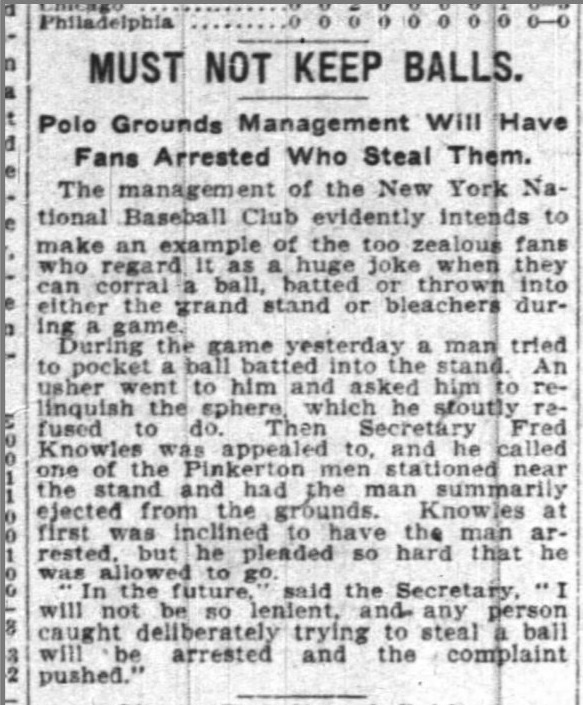
One day in 1921, New York Giants fan Reuben Berman had the good fortune to catch a foul ball, or so he thought. When the ushers arrived moments later to retrieve the ball, Reuben refused to give it up, instead tossing it several rows back to another group of fans. The angered usher removed Berman from his seat, took him to the Giants’ offices, and verbally chastised him before depositing him in the street outside the Polo Grounds. An angry and humiliated Berman sued the Giants for mental and physical distress and won, leading the Giants, and eventually other teams, to change their policy of demanding foul balls be returned. The decision has come to be known as “Reuben’s Rule.”
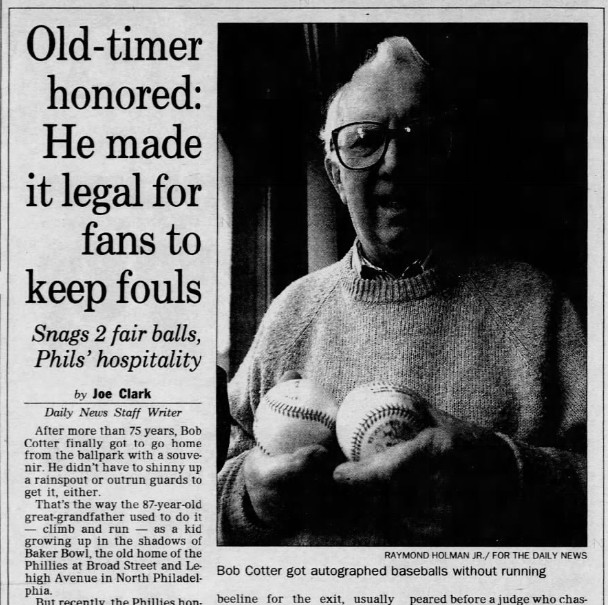
While Berman’s case was influential, the influence had not spread as far as Philadelphia by 1922, when 11-year-old fan Robert Cotter was nabbed by security guards after refusing to return a foul ball at a Phillies game. The guards turned him over to police, who put the little tyke in jail overnight. When he faced a judge the next day, young Cotter was granted his freedom, the judge ruling, “Such an act on the part of a boy is merely proof that he is following his most natural impulses. It is a thing I would do myself.” The tide eventually changed for good, and the practice of fans keeping foul balls became entrenched. World War II was another time when patriotic fans and owners worked together to funnel the fouls off to servicemen. A ball in the Hall of Fame’s collection is even stamped “From a Polo Grounds Baseball Fan,” one of the more than 80,000 pieces of baseball equipment donated to the war effort by baseball by June 1942.
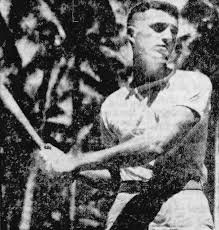
Marine Private First Class George Benson Jr.

One of those baseballs may well have been involved in one of the strangest of all foul ball stories. In a military communique datelined “somewhere in the South Pacific,” the story is told of a foul ball hit by Marine Private First Class George Benson Jr., which eventually traveled 15 miles. Benson’s batting practice foul looped up about 40 feet in the air, where it smashed through the windshield of a landing plane. The ball hit the pilot in the face, fracturing his jaw and knocking him unconscious. A passenger, Marine Corporal Robert J. Holm, muttering a prayer, pulled back on the throttle and prevented the plane from crashing, though he had never flown before. The pilot recovered momentarily and brought the plane to a landing at the next airstrip, 15 miles away.
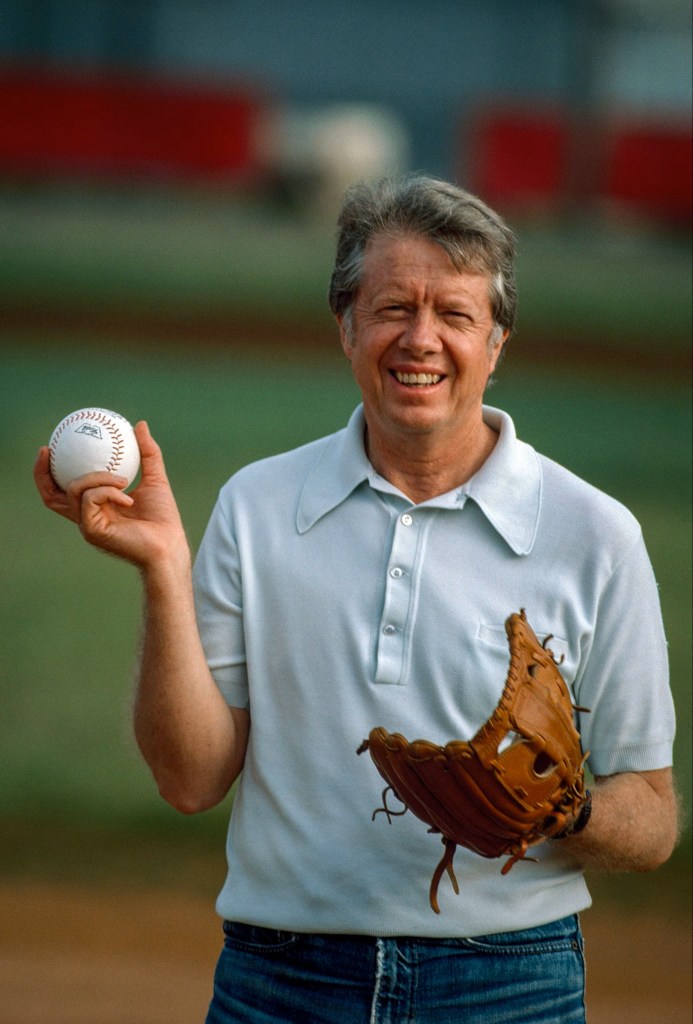
President Jimmy Carter.

In 1996, at the age of 71, former President Jimmy Carter made a barehanded catch of a foul ball hit by San Diego’s Ken Caminiti, while attending a Braves game. “He showed good hands,” said Braves catcher Javy Lopez.

With foul balls by this time an undeniable right for fans at the ballpark, what are your actual chances of catching a foul ball at a game? Well, to start with, the average baseball is in play for six pitches these days, which makes it sound as though there will be many chances to catch a foul ball in each game. While comprehensive statistics are not available, various newspapers have sponsored studies which, uncannily, seem quite often to come down to 22 or 23 fouls into the stands per game.
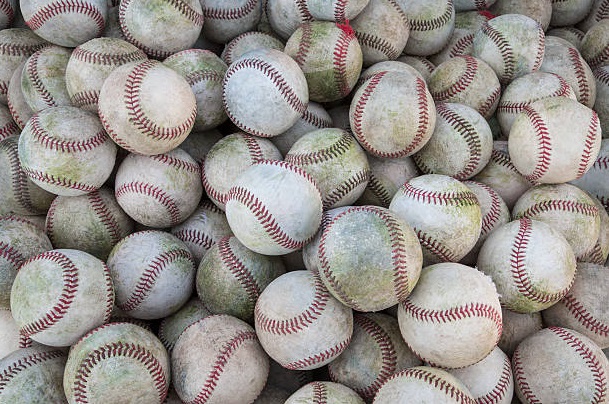
That seems like a healthy number until you look at average major league attendance at games. In the year 2000, the average game was attended by 29,938 fans. With 23 fouls per game, that works out to a 1 in 1,302 chance of catching a foul ball. With numbers like that, no wonder it feels so special to catch a foul ball. Nevertheless, those who yearn to catch a foul ball can improve their chances. I have listed some tips to help you bring home that elusive foul ball. Good luck!

Music, Pop Culture, Television

Parky’s Place.

Original publish date August 31, 2023. https://weeklyview.net/2023/08/31/parkys-place/

Parky’s Place Harry Einstein (1904-1958)

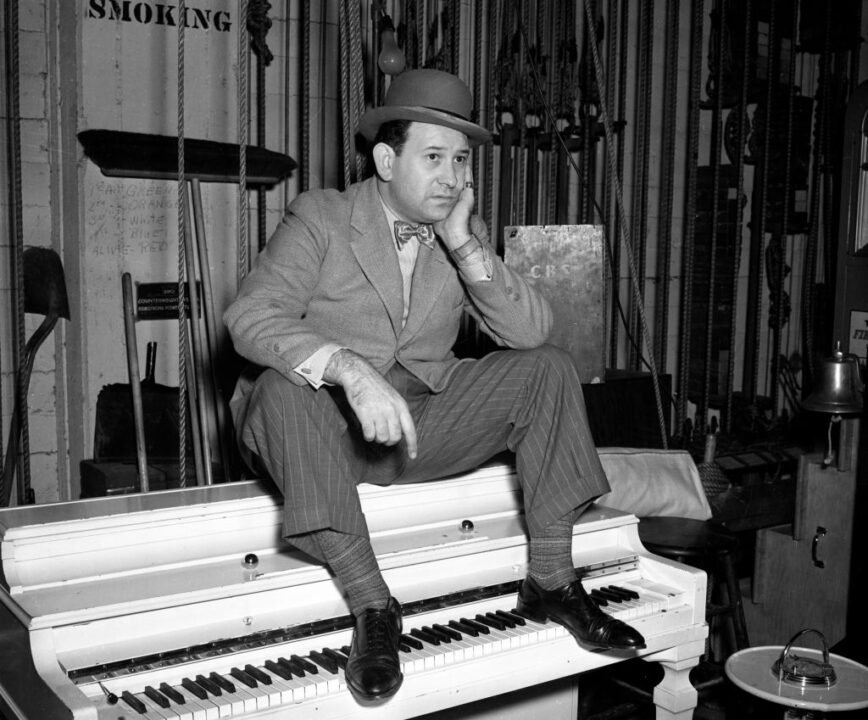
Recently I wrote an article about a couple of photos of Dick the Bruiser I found along the route of the World’s Longest Yardsale that stretches from Alabama to Michigan. I have an affinity for old photos (and old paper in general) and always linger a little bit longer when I see them for sale on a dealer’s table. This particular spot was inside a tent near the Alvin C. York General Store and Visitor’s Center in Pall Mall, Tennessee. I bought several old promo photos of Country Music Stars (termed “Hillbilly Music” back in the day) from the 1940-50s Era. Hank Williams, Sr., Roy Acuff, Red Foley, and a few more. Also among them was an old promo still dated 1947 from the Mutual Broadcasting System for a radio show called “Meet Me At Parky’s” that aired on Sunday nights from 9:00 to 9:30. Since I can remember trivial minutia better than I can family birthdays, I knew the backstory and bought the photo.

CBS Radio comic personality Harry Einstein portrays his character Parkyakarkus on The Al Jolson Show. Image dated February 1, 1938. Hollywood, CA. (Photo by CBS via Getty Images)

I seriously doubt anyone reading this column was around in 1947 to listen to this radio show, so, I’ll share what I know about it. The photo pictures comedian Harry Einstein posed leaning atop a kitchen counter with a cigar in his hand, a wink in his eye, and a chef’s hat with the name “Parky’s” on the front. Einstein, better known by the stage names Nick Parkyakarkus or Harry Parke, was an American comedian, writer, and character actor whose specialty was Greek dialect comedy. A natural humorist, Einstein came to comedy quite by accident. Born on May 6, 1904, in Boston, Mass., to a Jewish mother from Russia and a Jewish pawnbroker father from Austria, Einstein first worked as a newspaper reporter but eventually moved into advertising for Boston’s Hearst Newspapers.

On nights and weekends, Harry enjoyed performing comedy routines for friends at parties, in nightclubs, taverns, and Bar / Bat Mitzvahs. In 1924, he became a fan favorite on radio as “The Bad Boy from a Good Home”, doing comedy skits on Boston station WEEI (AM). He also worked in advertising for the Taylor Furniture Company, where he managed their radio department. He branched out in the advertising business and was soon doing the same for another larger Boston furniture store named Summerfield’s. Boston bandleader Joe Rines, a close friend at the station, tried to convince Harry to become a full-time comedian, but Harry was making a good living as advertising manager for three Boston Furniture stores. Einstein relented and began appearing on Rines’ radio program in his spare time. It was here that Harry created the Pigeon-English-speaking pseudo-Greek character of Nick Parkyakarkus for a skit on Rines’ radio show. At the time, no one blinked an eye at the “political correctness” of ethnic humor, and Harry always brought down the house.

Listeners loved the Parkyakarkus character and it didn’t take long for the national networks to take notice. Einstein got his big break nationally when he was hired as a performer on Eddie Cantor’s radio show in 1934. That led to a part-time gig on the Al Jolson show. Cantor and Jolson were big Hollywood names and soon Tinseltown came calling. In 1936 he appeared alongside Cantor in Strike Me Pink (co-starring Ethel Merman and William Frawley aka Fred Mertz from “I Love Lucy”), the next year he appeared in The Life of the Party and New Faces of 1937 (alongside Milton Berle). While filming the latter, he met his second wife, actress Thelma Leeds. From 1936 to 1945, Harry appeared as his Parkyakarkas character in eleven films. Einstein’s character name became so inextricably linked to him that, in the 1930s, Harry attempted to change his name legally to Parkyakarkus; the judge denied the request (although his star at 1708 Vine Street on the Hollywood Walk of Fame bears his character’s name instead of his own.)

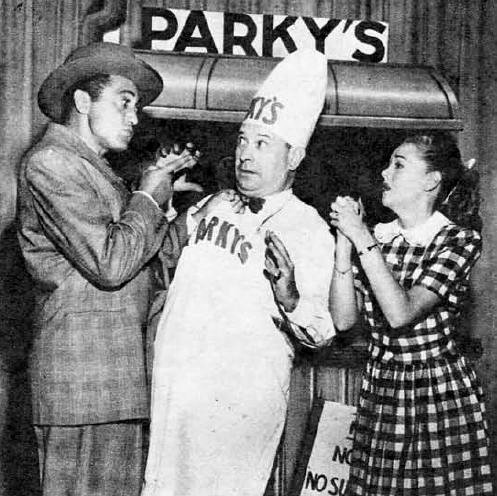
Einstein as Parky between Sheldon Leonard and Betty Rhodes in 1948.

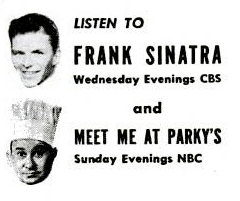
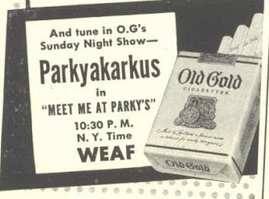
In June of 1945, Einstein began a radio show of his own called Meet Me at Parky’s, The show featured Einstein as Greek restaurant owner Nick Parkyakarkus. A typical show opened with a couple of short sketches, a short comic monologue by Parkyakarkus (sure to have the live audience rolling in the aisles), followed by the show’s singer (Betty Jane Rhodes) showing up to help Parkyakarkus with that week’s problem. Einstein wrote the scripts himself and the show co-starred Sheldon Leonard, fresh off his role as Nick the Bartender in It’s a Wonderful Life the year before. In the 1960s, Leonard would trade his actor’s chair for a producer’s megaphone creating shows like The Andy Griffith Show, Gomer Pyle U.S.M.C., The Dick Van Dyke Show, and I Spy. Parky’s Place ran for two seasons on NBC before moving to the Mutual Broadcasting System in 1947 for its third and final season, ending in November of 1948. After the show ended, Einstein became a highly sought-after guest and emcee on the Borscht Belt (or Yiddish Alps as some comics called it) in New York’s Catskill Mountains and the Friars’ Club of New York City.

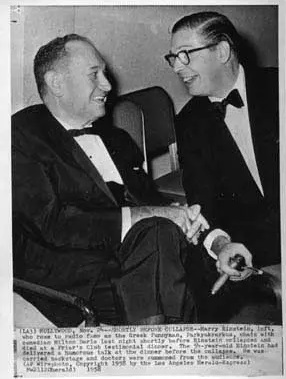
Harry Einstein and Milton Berle.

On Sunday, November 23, 1958, almost exactly a decade after his radio show ended, Einstein was a featured performer on the dais as the Friars Club inducted two new members: Lucille Ball and Desi Arnaz, the ultra-famous wife-and-husband team that created I Love Lucy. These events were traditional “Roasts” where comics, performers, friends, and fellow club members would tease and cajole the honorees, sometimes mercilessly. 1200 people packed the International Ballroom at the Beverly Hilton Hotel for the $200-a-plate testimonial dinner to Television’s original power couple. Art Linkletter was the emcee and alongside Einstein on the dais were Dean Martin, Sammy Davis, Jr., George Burns, Danny Thomas, George Murphy, and Milton Berle. Harry was the second to last speaker, and everyone agreed that his toast was the funniest of the night. Harry butchered the couple’s names, calling them Danny Arnaz and Lucille Bowles, while poking fun at Desi’s immigration status and the Friars’ Club’s “strict” rules of eligibility which included “many prominent businessmen, several fine judges, and quite a few defendants.” His routine lasted 10 minutes and, according to Milton Berle, “closed with a standing ovation.”

Harry Einstein.

Einstein took his seat next to Milton Berle as Emcee Linkletter wiped tears of laughter from his eyes and exclaimed, “Every time he finishes, I ask myself, why isn’t he on the air in a prime time?” To which, Harry turned to Berle and said, “Yeah, how come?” According to Linkletter, those were Harry’s last words before he slumped over, put his head on Milton Berle’s lap, and shut his eyes. Everyone thought it was part of the routine. Berle shouted “Is there a doctor in the house?” but the crowd thought it was a humorous ad-lib; part of the show. Harry’s wife, Thelma, who was seated to the left of comic Ed Wynn, knew immediately what was wrong and rushed to the stage. She fumbled in her husband’s pocket for a bottle of nitroglycerin pills, designed to increase the blood flow through his coronary arteries. But Harry’s teeth were clenched tight and she could not get the pill into his mouth. Ed Wynn, whose distinctive high-pitched giggly voice created Walt Disney’s mad-hatter, created an unintentionally humorous aside by repeatedly calling out, “Is there a doctor in the house?” as Einstein lay helpless on the floor of the platform. Luckily, the event had been a charity benefit for local hospitals and several physicians were in attendance.

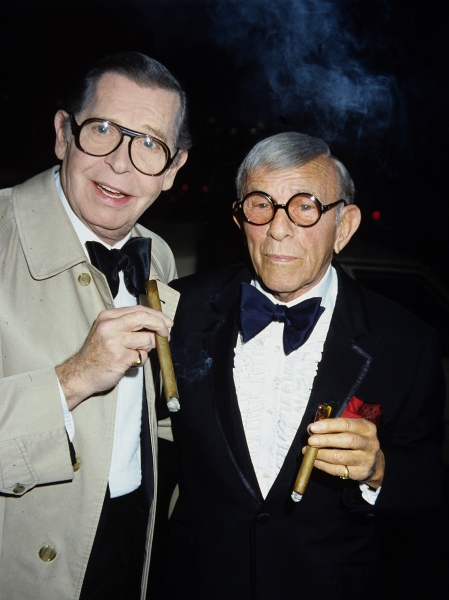
Milton Berle & George Burns.

Berle and George Burns assisted others by carrying Einstein backstage, where five physicians worked to revive him. Amazingly, one of the physicians pulled a pocketknife out of his pocket, sterilized it quickly, then sliced open Einstein’s chest and within seconds was holding Harry’s heart in his hands, massaging it in an attempt to get it beating again. One report states that another doctor yanked an electrical cord from a nearby lamp and placed the live ends against the exposed heart as an improvised defibrillator. The combined effort of five doctors working tirelessly, literally taking turns massaging the heart, brought Einstein back to life, but only temporarily. It was later determined that Harry Einstein had literally died on stage. EMTs arrived and worked backstage to save Einstein’s life.

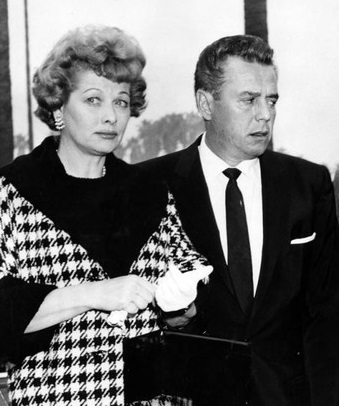
Lucille Ball & Desi Arnaz at Einstein’s Funeral.

On the other side of the curtain, the show was going on. Well, sort of anyway. George Burns sang a song from his Vaudeville days and assured the guests that “Parky will be alright.” But somehow, everyone on the dais knew better. Berle called to crooner Tony Martin, imploring him to sing a song. Martin began to sing the song There’s No Tomorrow. Obviously, that didn’t help. Desi and Lucy were to be the evening’s closing speakers. When Desi took the podium, his face was ashen and his countenance grim. Lucille Ball then came to the microphone and managed only, “I can say nothing,” through tears. Desi spoke into the microphone in almost a whisper, “This is one of the moments that Lucy and I have waited a lifetime for, but it’s meaningless. They say the show must go on. But why must it? Let’s close the show now by praying for this wonderful man backstage who made the world laugh.” Arnaz took the award from Linkletter and shoved it into his pocket. Sammy Davis, Jr. was supposed to sing a closing song, but he was so emotional that he could not do it.

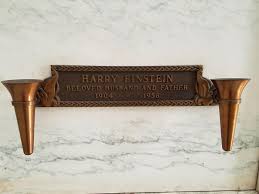
Harry Einstein’s Grave Home of Peace mausoleum L.A.

Despite two hours of continuous resuscitation attempts, Harry Einstein was pronounced dead at 1:20 a.m. on November 24. He was 54 years old. Einstein’s funeral service was attended by 300 mourners. George Jessel delivered the eulogy. Einstein is buried not far from the Three Stooges Moe & Curly Howard, Louis B. Mayer, & the Warner Brothers in the Home of Peace mausoleum, the first and oldest Jewish cemetery in Los Angeles.

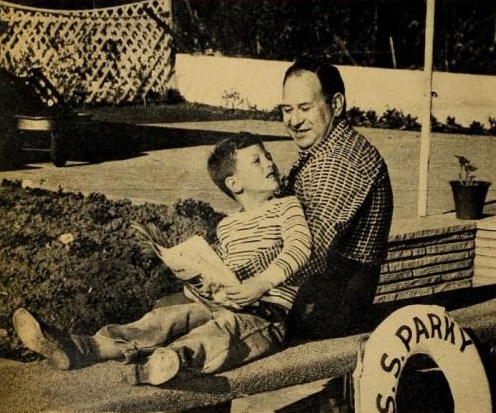
Harry Einstein and son.

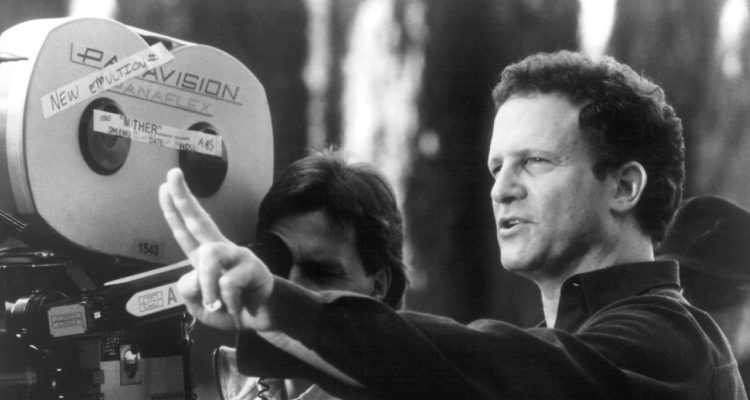
Harry Einstein was the father of four sons: Albert, Bob, Charles, and Clifford Einstein. That’s comedians Albert Brooks and Bob Einstein. Albert is best known as an Academy Award-nominated actor (Broadcast News-1987) but also for Taxi Driver (1976), Private Benjamin (1980), and Unfaithfully Yours (1984). He has written and directed several comedy films; Modern Romance (1981), Lost in America (1985), and Defending Your Life (1991). His voice acting credits include Marlin in Finding Nemo (2003) and Finding Dory (2016), Tiberius in The Secret Life of Pets (2016), and several one-time characters in The Simpsons.

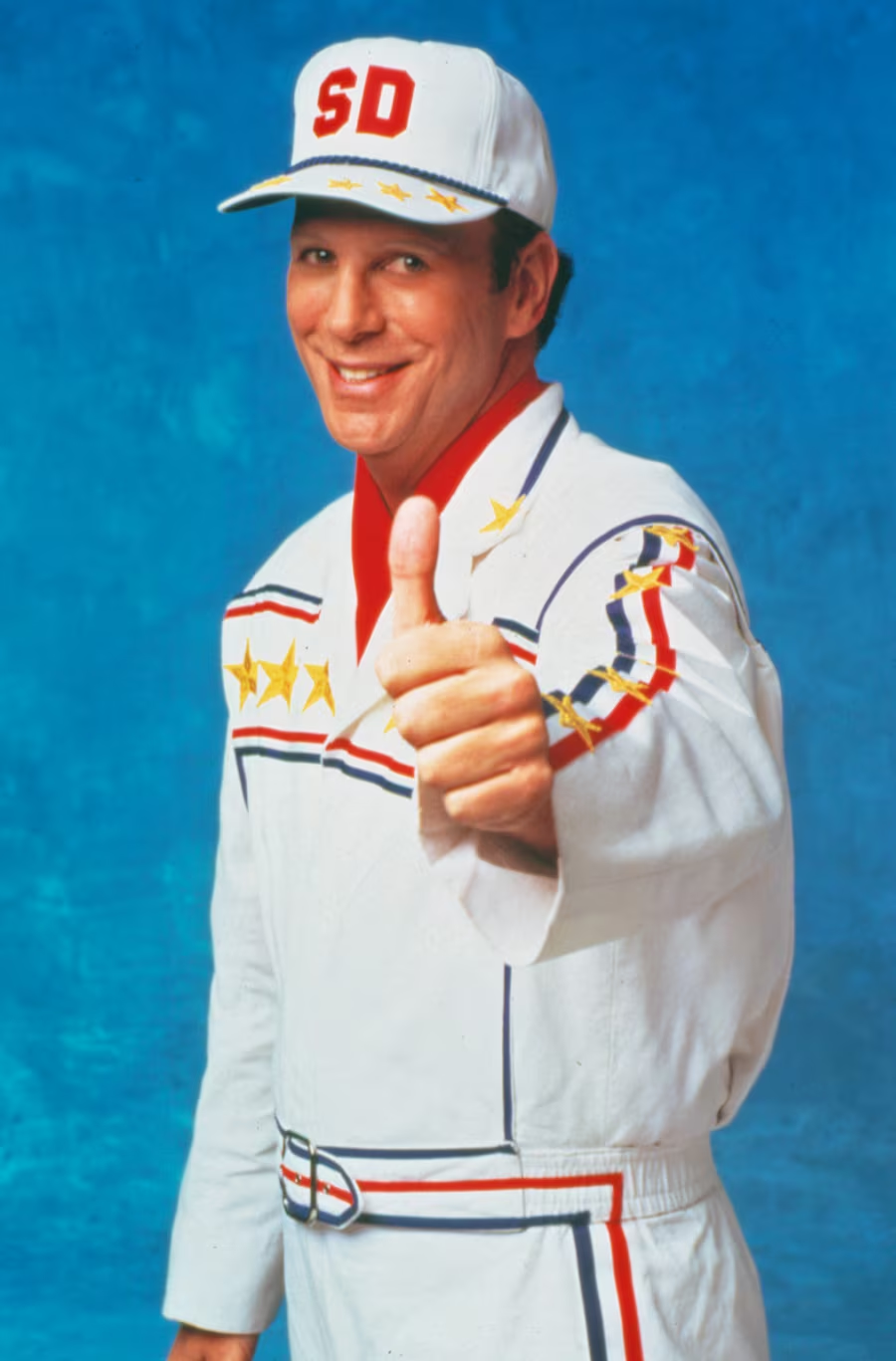
Bob Einstein as Super Dave Osborne.

Bob Einstein is best remembered for the character he created known as Super Dave Osborne, a satirical stuntman character who repeatedly survived deadly stunts. But he was also known for his roles as Marty Funkhouser in Curb Your Enthusiasm, and Larry Middleman on Arrested Development. Einstein got his start as a writer for several television variety shows, including The Smothers Brothers Comedy Hour and The Sonny & Cher Comedy Hour for which he won two Emmy Awards (he was nominated four other times). He also won a CableACE Award for acting as Super Dave, along with five other nominations.

Actor / Director Albert Brooks.

Albert Brooks, who was 11 years old when Einstein died, has addressed his father’s death briefly in his movie, Defending Your Life. In the film, Brooks’s recently deceased character, Daniel Miller, finds himself in an afterlife nightclub, watching a terrible comedian. “How’d you die?” the comic asks him; Albert replies, “Onstage, like you.” When Meryl Streep’s character invites Albert to leave with her. “I can’t,” he says, gesturing toward the stage. “That’s my father.” Bob (Super Dave) Osborne, really never got over his dad’s death. In an episode of Comedians in Cars Getting Coffee, Einstein, who was 16 years old when his father died, tells host Jerry Seinfeld that his father’s death turned him off from performing for many years. Specifically, he was highly offended by the fact that both Milton Berle and George Jessel performed their comedy routines as eulogies at Harry Einstein’s funeral, feeling it was insensitive, and this made him uncomfortable with comedy. Now you know the story behind that Highway 127 photograph. It just goes to show you, sometimes, a picture really is worth a thousand words.