
Publish Date September 12, 2024. This column first appeared in August 2013.
https://weeklyview.net/2024/09/12/warren-zevon-accidently-like-a-martyr-2/
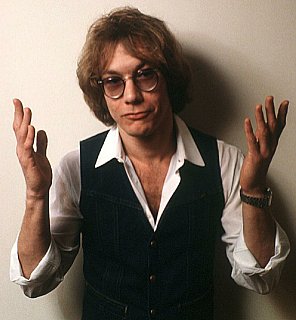
It’s hard to believe it’s been a decade since Warren Zevon died. If the name is not familiar to you, his songs might be: “Werewolves of London,” “Poor, Poor Pitiful Me,” or “Lawyers, Guns and Money” should ring a bell. Zevon was considered the rock star’s rock star, known for his songwriting talents in songs that showcased his quirky, sardonic wit in the dark humor of his ballads. Rock ‘n’ roll royalty like Jackson Browne, Bruce Springsteen, Bob Dylan, and Neil Young praised his talents and called him friend. Born in Chicago, Illinois, on January 24, 1947, he became the quintessential West Coast rocker, literally living the LA lifestyle right up until his death on September 7, 2003.
It’s easy to figure out why musicians thought Warren Zevon was so cool. From his earliest days, his personal pedigree made Warren unique and different. Zevon was the son of Beverly and William Zevon. His mother was from a Mormon family and his father was a Jewish immigrant from Russia whose original surname was “Zivotovsky.” William was a bookie who handled volume bets and dice games for notorious Los Angeles mobster Mickey Cohen. Known as Stumpy Zevon in Cohen’s employ, he was best man at Mickey’s first marriage and worked for him for years.
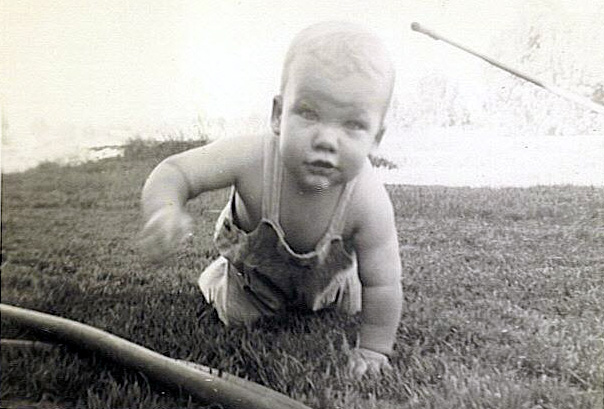
The family moved to Fresno, California when Warren was 13 years old. His British-born mother insisted that Warren take piano lessons. So Zevon started taking his lessons at the home of Igor Stravinsky, the Russian-American composer, pianist and conductor widely considered to be one of the most important and influential composers of the 20th century. There, Warren briefly studied modern classical music, alongside future American conductor Robert Craft. Zevon’s parents divorced when he was 16 years old and he soon quit high school and moved from Los Angeles to New York to become a folk singer.
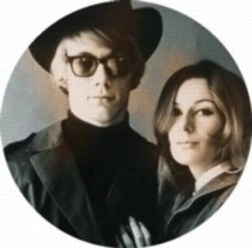
Zevon got his first taste of success with the song “Follow Me” as the male component of a musical coed duo called Lyme & Cybelle. He left the duo, citing artistic differences, and spent time as a session musician and jingle composer. He wrote several songs for the Turtles and another early composition (“She Quit Me”) was included in the soundtrack for the film Midnight Cowboy (1969). Zevon’s first attempt at a solo album, Wanted Dead or Alive (1969), was well-received but did not sell well. Zevon’s second effort, Leaf in the Wind, went unreleased.
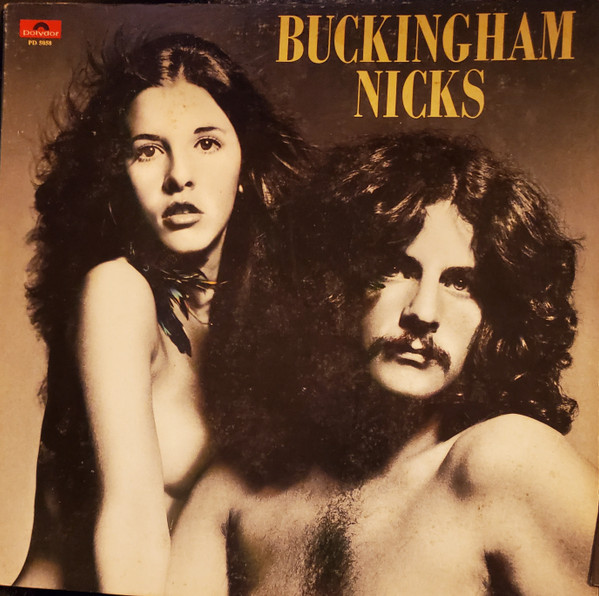
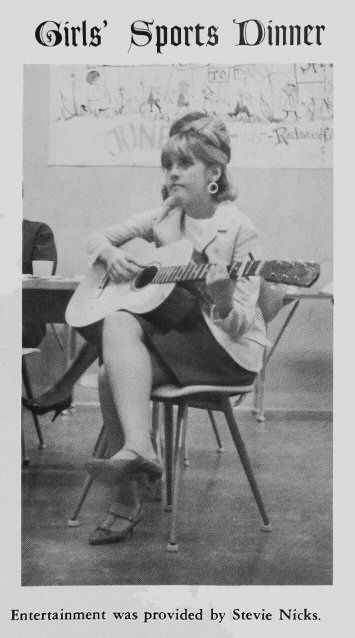
During the early 1970s, Zevon led the touring band for the Everly Brothers, serving as both keyboard player and band leader/musical coordinator. In the latter role Zevon became the first to recognize the talents of guitar player Lindsey Buckingham by hiring him for the band. It was during his time with the Everlys that Lindsey and girlfriend Stevie Nicks left to join Fleetwood Mac. Warren Zevon was a roommate of the famous duo in a Fairfax district apartment in Los Angeles at the time (September 1975). Zevon would remain friends with both for the rest of his life maintaining neutrality during the tumultuous breakups of both the Everly Brothers and Buckingham-Nicks.
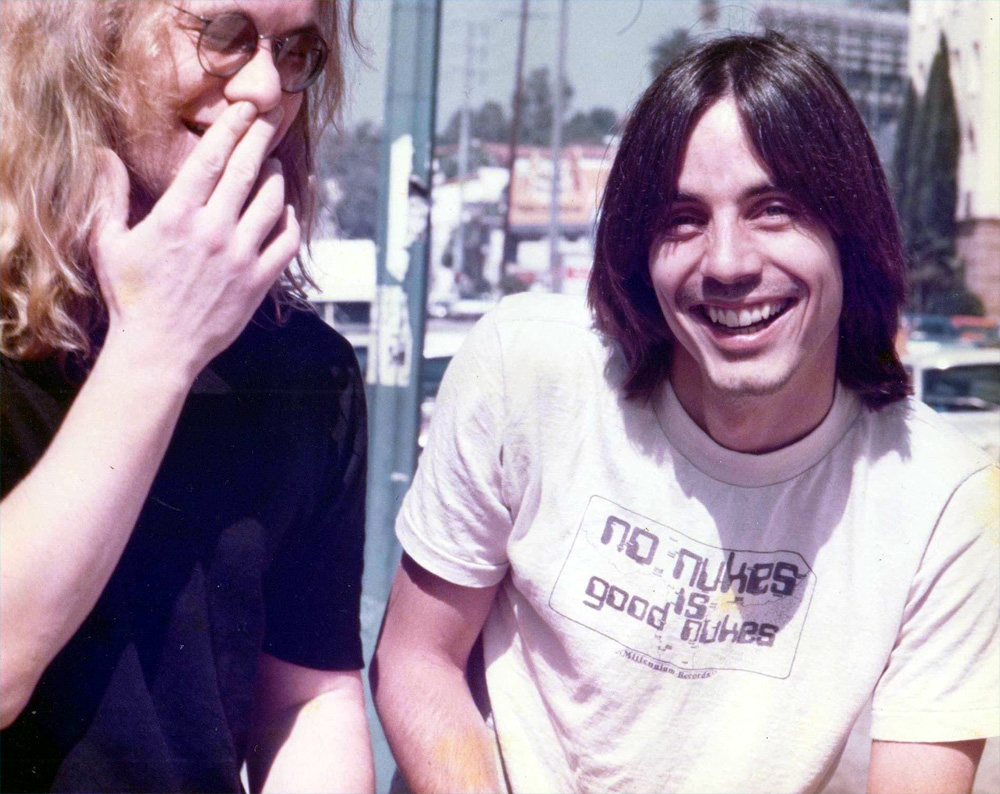
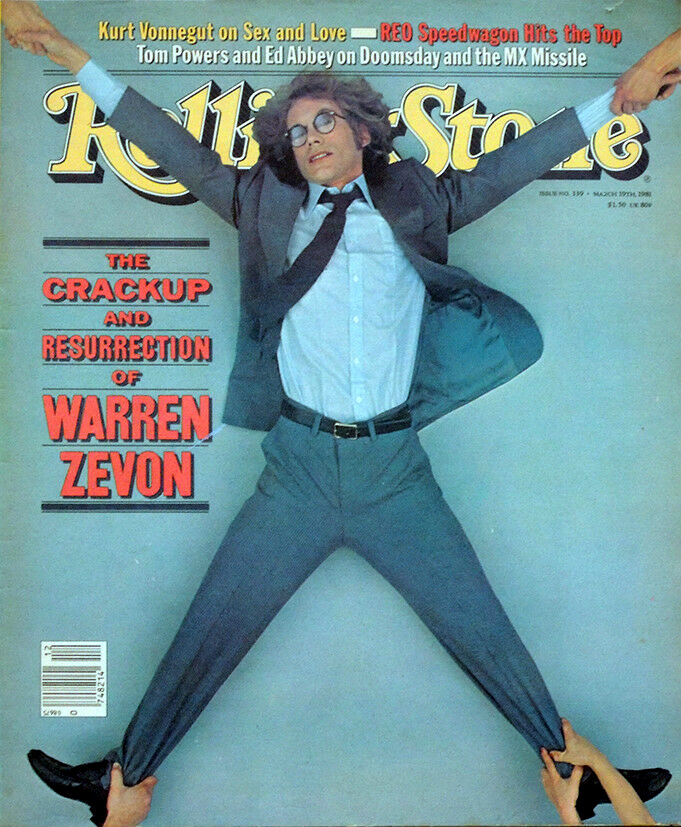
In late 1975, Zevon collaborated with Jackson Browne, who produced and promoted Zevon’s self-titled major-label debut in 1976. Contributors to this album included Nicks, Buckingham, Mick Fleetwood, John McVie, members of the Eagles, Carl Wilson, Linda Ronstadt, and Bonnie Raitt. This first album, although only a modest commercial success, was later recognized by Rolling Stone magazine as a masterpiece. Although Zevon shared a grounding in earlier folk and country influences with his LA peers, this album brought Zevon to the forefront as a much darker and more ironic songwriter than other leading figures of the era’s L.A.-based singer-songwriter movement. Rolling Stone placed Zevon alongside Neil Young, Jackson Browne, and Bruce Springsteen as one of the four most important new artists to emerge in the decade of the 1970s.
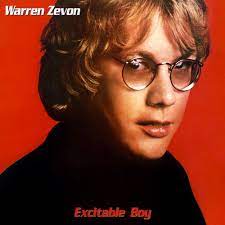
In 1978, Zevon released Excitable Boy to critical acclaim and popular success. This album received heavy FM airplay mostly through the release of the single “Werewolves of London,” featuring Fleetwood Mac’s Mick Fleetwood on bass and John McVie on drums. The song is considered a classic and has been covered by artists ranging from the Grateful Dead to Bob Dylan to comedian Adam Sandler. The song has become a Halloween season staple. For all you trivia buffs out there, The Chinese restaurant mentioned in the song (Lee Ho Fook) is a real location situated on Gerrard Street in London’s Chinatown.
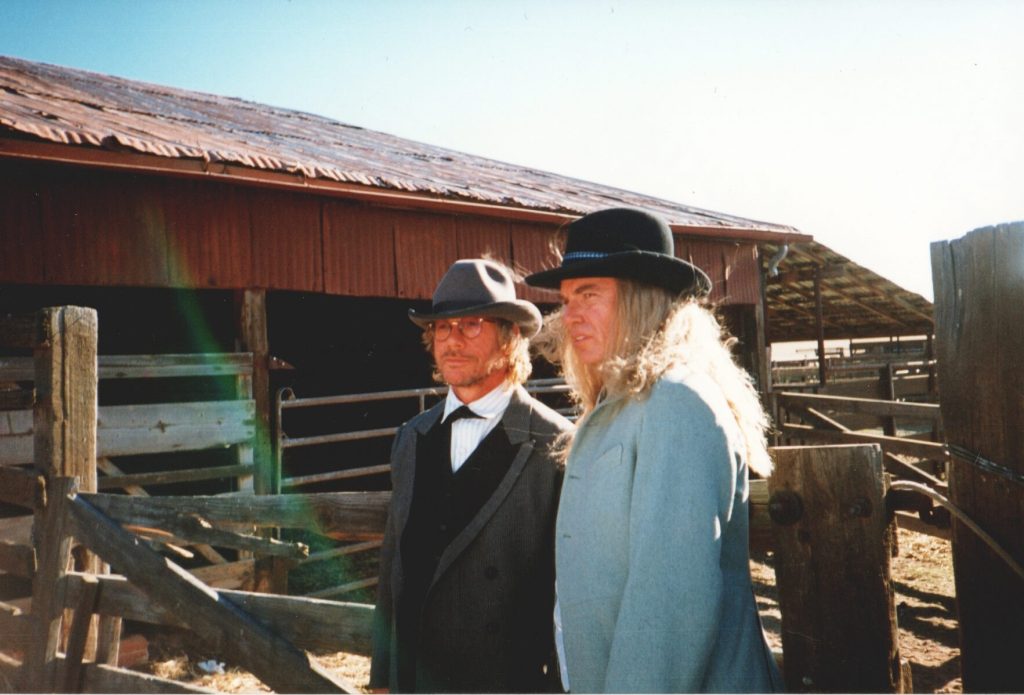
Although Zevon never again achieved popular acclaim, he continued to be recognized as an artist’s artist, releasing nine more albums over the next 25 years. It was during that quarter-century that Zevon lapsed in and out of the throes of excess, obsession, and addiction. To say that Warren Zevon suffered from excessive compulsion disorder would be a severe understatement. Warren had a continuing battle with drug addiction and alcoholism and was also a sex addict obsessed with the color gray and personal fame, or lack thereof. During this time, he and actor Billy Bob Thornton formed a close friendship galvanized by a shared obsessive-compulsive disorder and the fact they were neighbors living in the same apartment building.
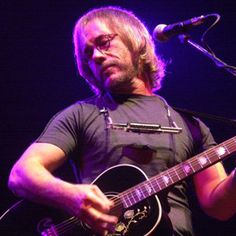
One of Zevon’s compulsions was collecting identical Calvin Klein T-shirts. Like everything else in his life (his car, his couch, his carpeting and wall paint), the T-shirts were gray. One story relates how Warren insisted upon traveling to every department store carrying Calvin Klein T-shirts while touring on the road. If the store carried Warren’s prized Gray Calvin Klein t-shirt, Warren obsessively purchased every one of them and stowed them in the tour bus. When asked why, Warren replied that the new ones were being made in China and that those still on the shelf had been made in the USA and were “sure to become collector’s items and go up in value.” When he died at age 56, thousands of gray Calvin Klein t-shirts were found in his LA apartment; unopened in their original packaging.

A voracious reader, Zevon was friendly with several well-known writers who also collaborated on his songwriting during this period, including gonzo author Hunter S. Thompson, Carl Hiaasen, Mitch Albom, Norman Mailer, and Maya Angelou. Zevon served as musical coordinator and occasional guitarist for an ad-hoc rock music group called the Rock Bottom Remainders, a collection of writers performing rock and roll standards at book fairs and other events. This group included Stephen King, Dave Barry, Matt Groening, and Amy Tan, among other popular writers.
Zevon cemented his superstar status by appearing in various TV shows and movies during his career, most often playing himself. Zevon played himself on two episodes of Suddenly Susan in 1999 along with singer/actor Rick Springfield. Warren also appeared as himself on the Larry Sanders Show on HBO, alongside actor John Ritter as talk show guests in the same episode. Ironically, Zevon and Ritter would die within four days of each other.
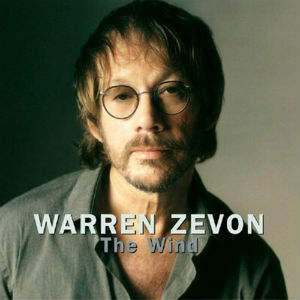
Although highly intelligent, well-read, and obsessive-compulsive in every way, Zevon had a lifelong phobia of doctors. Shortly before playing at the Edmonton Folk Music Festival in 2002, he started feeling dizzy and developed a chronic cough. After a period of suffering with pain and shortness of breath, while on a visit to his dentist, Zevon was ordered under threat of kidnapping to see a physician. A lifelong smoker, he was subsequently diagnosed with inoperable peritoneal mesothelioma (cancer of the abdominal lining commonly associated with asbestos exposure). Refusing treatments he believed might incapacitate him, Zevon instead began recording his final album, The Wind, which includes guest appearances by close friends Bruce Springsteen, Don Henley, Jackson Browne, Timothy B. Schmidt, Joe Walsh, David Lindley, Billy Bob Thornton, Emmylou Harris, Tom Petty, and Dwight Yoakam, among others.
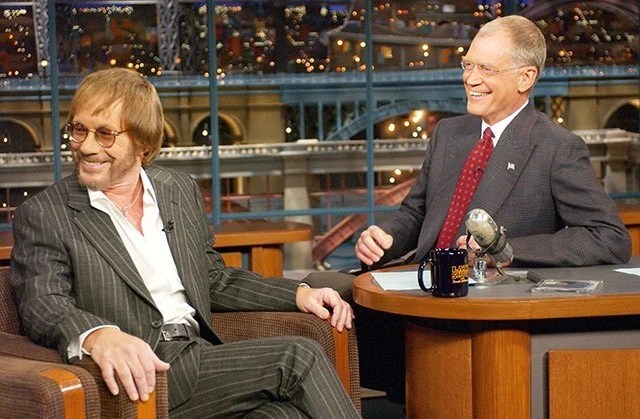
On October 30, 2002, Zevon was featured on the Late Show with David Letterman as the only guest for the entire hour. The band played “I’ll Sleep When I’m Dead” as his introduction. Zevon performed several songs and spoke at length about his illness. Zevon was a frequent guest and occasional substitute bandleader on Letterman’s television shows since Late Night was first broadcast in 1982. He noted, “I might have made a tactical error in not going to a physician for 20 years.” It was during this broadcast that, when asked by Letterman if he knew something more about life and death now, he first offered his oft-quoted insight on dying: “Enjoy every sandwich.” He took time to thank Letterman for his years of support, calling him “the best friend my music’s ever had.” For his final song of the evening, and his final public performance, Zevon performed “Roland the Headless Thompson Gunner” at Letterman’s request. In the green room after the show, Zevon presented Letterman with the guitar that he always used on the show, with a single request: “Here, I want you to have this, take good care of it.”
Zevon was given only a few months to live after that fall of 2002 diagnosis; however, he lived to see the birth of twin grandsons in June 2003 and the release of The Wind on August 26, 2003. The album reached number 12 on the U.S. charts, Zevon’s highest placement since Excitable Boy. When his diagnosis became public, Zevon told the media that he just hoped to live long enough to see the next James Bond movie, a goal he accomplished. The Wind was certified gold in December 2003, just weeks after Zevon’s death, and Warren received five Grammy nominations, winning two posthumous Grammys, the first of his career.
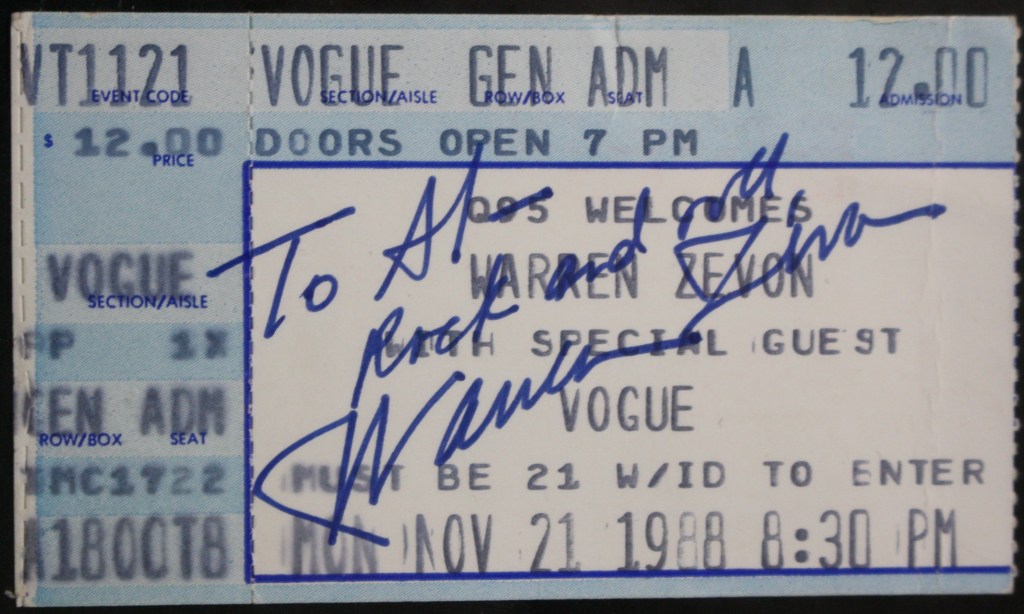
I have a brief personal connection to Warren Zevon. I interviewed him in the pre-holiday winter of 1988 after a concert at the Vogue in Broad Ripple. Zevon was touring with a patchwork band that included Timothy B. Schmidt of the Eagles. He performed all of his expected hits along with a couple covers. I specifically remember an unforgettable version of the Tom Jones standard “What’s New Pussycat?” as well as the Eagles former bass player Schmidt performing his signature song, “I Can’t Tell You Why.”
After the show, I was led through the music hall to the back of the Vogue and told to wait. Meantime, out walked Schmidt and the rest of the band. Soon, Warren Zevon emerged. With his long blonde curls and John Lennon glasses, he looked more like a professor than a rock star. He maintained a constant smile throughout our session. Luckily, I struck a positive nerve by remarking that I had recognized him from his brief appearance during the closing credits of the 1988 Kevin Bacon film, She’s Having a Baby. Zevon leapt from his perch atop the bumper of his band’s equipment truck and began calling to his bandmates, “Hey guys, he saw me in the movie! I told you I was in it.” His band mates shrugged, but Warren thanked me for confirming what had until then, been just a rumor. As I recall, Zevon’s only word spoken in the film came in the naming the baby segment when he offered the name “Igor”.
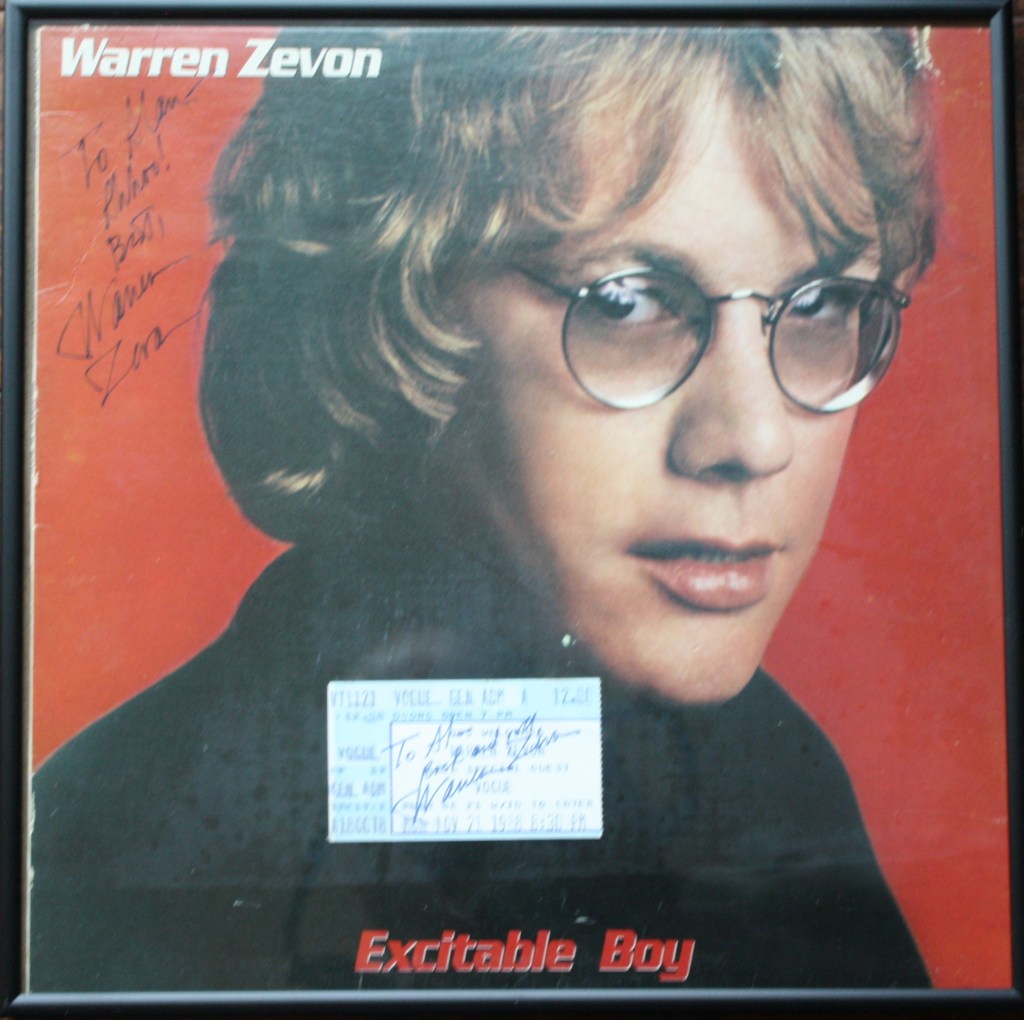
I really can’t remember much of the encounter after that. I do remember Warren signed my copy of Excitable Boy and the interior paper cassette tape insert for A Quiet Normal Life, relics I still have. But the rest is a blur. There is a more important residual incident connected to that incident. That was the same night that my future wife Rhonda agreed to go out on our first date. Yep, I took her to a Sam Kinison comedy show at the old Indianapolis Tennis Center. Romantic huh?
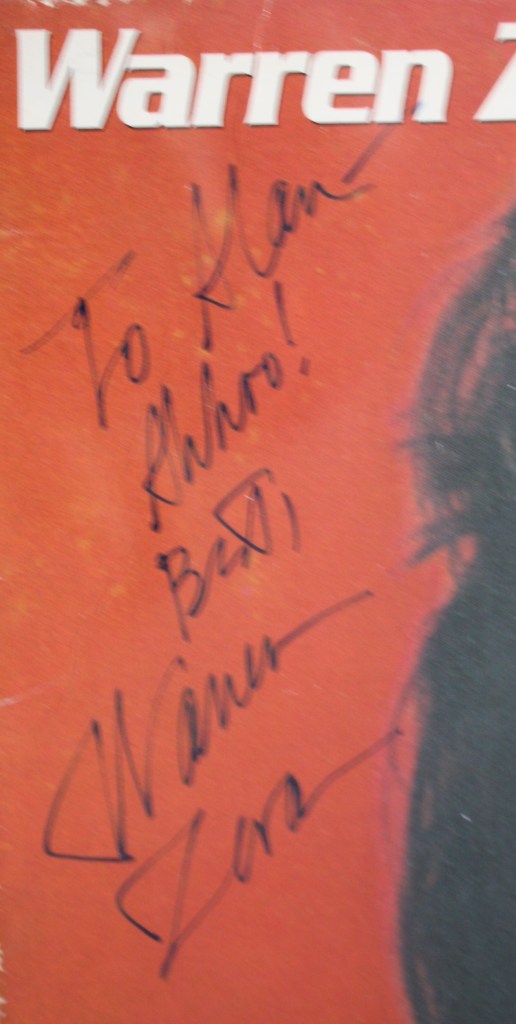
Two decades after that first date, Rhonda bought me the book, I’ll Sleep When I’m Dead: The Dirty Life and Times of Warren Zevon written and compiled by Zevon’s ex-wife Crystal Zevon (published in 2007 by Ecco Books). The book tore down every “nice guy” image I ever had of Warren Zevon, telling his life story through interviews with those who knew him. I walked away from it thinking “Wow, they had a real hard time finding anything nice to say about this guy.” The book has been described as being “notable for its unvarnished portrayal of Zevon.” Only later did I realize the book was written this way at Warren Zevon’s own request. As the words to Zevon’s song “It ain’t that pretty at all” bounce around in my head, I must say that I am not surprised or disappointed.




 Alan E. Hunter