


Many readers will recall that I have a minor obsession with old paper. Photos, brochures, booklets, newspaper, documents, letters… PAPER! Sometimes I run across an item that illustrates things really haven’t changed that much. During a recent trip to Lexington, Kentucky, I found a box of paper in an antique mall that seemed to be calling my name. It was full of a miscellany of every sort, type & design. Some of which belonged to a woman who, in 1960, had been president of the Lexington women’s club and a delegate to the 1960 Democratic National Convention in Los Angeles that nominated John F. Kennedy for President.
Hidden among them was a six-page letter about the 1952 Democratic convention in Chicago that nominated Adlai Stevenson for President written by an Eisenhower supporter. As I read the letter, it all sounded very familiar to me. Written on three sheets of stationery from the Warner Hotel in Warren, Ohio on July 25, 1952, it was sent to a couple living in Lexington. The hotel was named after Jonathan Warner, a long forgotten Lake Superior iron ore magnate and leading manufacturer of pig iron. The letterhead touts the hotel as having 150 rooms, all absolutely fireproof, and as being on the “European plan”, which basically means, all you get is the room; no meals included.

Adlai Stevenson at the 1952 DNC.
The letter reads: “Dear Mother & Daddy. – I surely did not intend to be so long writing you all, but I guess you know that what with cleaning up after our guests, getting Teresa off to camp, and then getting ready to leave myself, that I haven’t had too many spare minutes. And I must admit that what ones I did have were devoted to the Democratic Convention! Have you ever seen or heard such a brawl as was going on yesterday over the seating of the three southern states! We were so glued to the radio, that we forgot every thing else, and ran out of gas!! Did we ever feel silly! It was just at dark, and fortunately we were in town, and some kind soul gave us a push to a gas station. It’s the first time either of us can remember of that ever happening to us! We sure laughed at ourselves! How we wished and wished we had our television set to see that disgusting spectacle! Tom says he would have forgotten to eat!”
The 1952 Democratic National Convention was held at the International Amphitheatre in Chicago from July 21 to July 26. This was the same arena the Republicans had gathered in for their convention (July 7 to July 11). In 1952, the popularity of television was on the rise with 37% of American households owning televisions and both parties recognized the rising importance of television and the impact it would have on the political process. The 1952 Democratic convention was the second political convention to be televised live, coast-to-coast (following the Republicans three weeks earlier). After carefully watching the Republican Convention, the Democrats made last-minute alterations to make its broadcast more appealing to television audiences.

The Democratic platform for 1952 called for a strong national defense, collective security against the Soviet Union, multilateral disarmament, repeal of the Taft-Hartley Act, equal employment opportunities for minorities and public assistance for the aged, children, blind, and the disabled, expansion of the school lunch program, and continued efforts to fight racial discrimination.
The 1952 Republican platform pledged to end the unpopular war in Korea, supported the development of nuclear weapons as a deterrence strategy, to fire all “the loafers, incompetents and unnecessary employees” at the State Department, condemned the Roosevelt and Truman administrations’ economic policies (Code word: SOCIALISM), supported retention of the Taft–Hartley Act, opposed “discrimination against race, religion or national origin”, supported “Federal action toward the elimination of lynching”, and pledged to bring an end to communist subversion in the United States.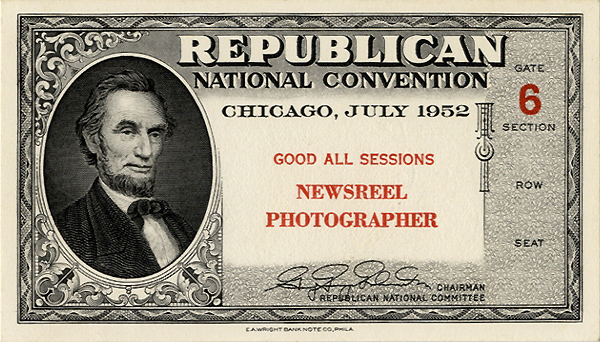 The letter continues, ” Gov. Battle has a brother living in Charleston, who goes to our church, + Tom knows him quite well, + we have been in their home, so we were especially interested in what he had to say. We thought the Louisiana Governor was crying, – did you? But I’m a telling you, the more I see of the southern states vs. the northern states, the prouder I am of being a Southerner!” Virginia Governor John Battle, of whom the letter speaks, was a Delegate to the DNC in 1952. When the Virginia delegation was threatened with expulsion at the convention for refusing to sign a loyalty oath (to whomever the party nominated), Battle delivered a speech to the convention preventing their expulsion.
The letter continues: “And I believe that if anything saves this country from socialism and communism, it’s going to be the southern states! I’m sure you must have heard Gov. Dever’s keynote speech, – the best description I have ever heard of the Democratic Party, – pure socialism! And he seemed to be trimmed in a bright shade of pink! Just listen to some of the phrases they use, – they sound exactly like the “Daily Worker”, and the “hate – mongering” they are accusing the Republicans of doing! It’s all certainly very clear, – and they’re quite bold about it this year too!”
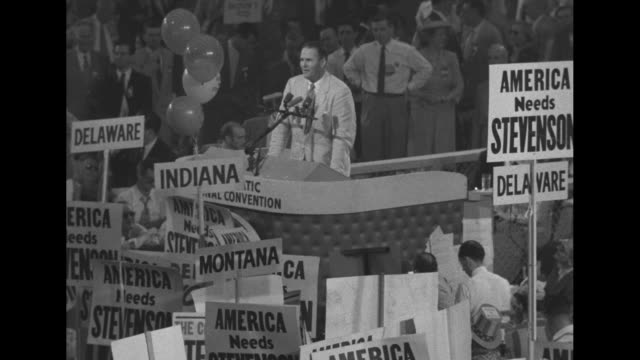
Not only was Massachusetts Governor Paul Dever the keynote speaker at the convention, he also made an unsuccessful bid for the Democratic presidential nomination, polling eighth out of sixteen hopefuls before dropping out after the third ballot. Both 1952 conventions came in the middle of a four-year period of anticommunist policies and attitudes, championed by Wisconsin Republican Senator Joe McCarthy, which came to be known as McCarthyism or more colloquially as the “Red Scare”. Beginning in February of 1950, McCarthy began denouncing the Truman administration for permitting known communists to remain working in the federal government. The accusations by McCarthy put the administration on the political defensive and led Truman to seek ways in which he might prove he was not “soft on communism.”
The letter continues: “We get a kick out of what they say about Eisenhower, because for months they were beating their brains out trying to get him to be their candidate!”
As early as June of 1943, politicians began suggesting to Eisenhower that he should run for President. Ike believed that a general should not participate in politics, and often told reporters that he did not want any political job “from dogcatcher to Grand High Supreme King of the Universe”. In January 1948, after learning of plans in New Hampshire to elect delegates supporting him for the forthcoming Republican National Convention, Eisenhower stated that he was “not available for and could not accept nomination to high political office”; “life-long professional soldiers”, he wrote, “in the absence of some obvious and overriding reason, [should] abstain from seeking high political office”. Both 1948 candidates, Harry Truman and Thomas E. Dewey, tried to get Ike to run for their respective parties but Ike maintained no political party affiliation during this time. Many believed that Eisenhower was too old to run.

IKE
The letter continues, “Politics is a terrible thing, but thank God we still have it! What must foreign countries think of such behavior as goes on in these conventions! Barkley certainly packed a wallop in his speech, and had the perfectly tremendous over patience, one 35 minutes, the other over 45 minutes! He surely could end up with the nomination!”
After President Harry S Truman announced that he would not seek reelection, his Vice-President Alben Barkley declared his availability to run for president while maintaining he was not actively seeking the office. Barkley’s distant cousin, Illinois Governor Adlai Stevenson II had not yet committed to run. When Kentucky’s delegation announced that they would support Barkley, Truman encouraged Missouri’s delegates to do the same. Hoosier DNC chairman Frank E. McKinney and former chairman James Farley also supported him. To dispel concerns about his age, failing eyesight, and heart problems,

Harry S Truman & Alben Barkley.
Barkley arrived in Chicago for the 1952 DNC and briskly walked seven blocks from the bus station to his campaign headquarters. On July 20 a group of labor leaders, including UAW President Walter Reuther, issued a statement calling Barkley too old and suggested that Democrats nominate someone younger like Stevenson. Barkley was unable to persuade them to retract the statement, which caused delegations from large industrial states like Illinois, Indiana, and Pennsylvania to balk on their commitments to Barkley. On July 21, Barkley withdrew from the race. Invited to make a farewell address on July 22, he received a 35-minute ovation when he took the podium and another 45-minute ovation at the speech’s end. In a show of respect, a Missouri delegate nominated Barkley for president and House Majority Leader John W. McCormack seconded it, but Stevenson was easily nominated.

The letter continues: “Glad the steel strike is over, but I wonder if there wasn’t a bit of timing involved? So that it would come during the Democratic convention?”
The 1952 United Steelworkers of America strike against U.S. Steel and nine other steelmakers was scheduled to begin on April 9th. President Truman, after being told that supplies of ammunition in Korea were already low and that even a 10-day strike would endanger the war effort, nationalized the American steel industry hours before the workers walked out. On June 2, 1952, in a landmark decision, the U.S. Supreme Court ruled that the President lacked the authority to seize the steel mills. The strike lasted 53 days and ended on July 24, 1952.
The letter concludes, “It’s 11:30 AM, and I had better be going out for some “brunch,” – slept until after 10. Want to thank you all again for all the food you sent by the kids, including the secondhand olives! – And also for meeting us halfway to take Jeane on. Hope you had a pleasant drive home, – we did, – it cooled off some, + we found we had a storm when we got home. It’s very pleasant here, – in fact, I had to wear a coat last night when we went out for dinner. Expect to leave about 3 o’clock this afternoon for Ashtabula, not very far from here. Then tomorrow afternoon we go to Akron to spend Saturday + Sunday with Ed + Margaret Bruner. Monday, Tom has to go to Cleveland, and we had hoped to spend that night with Mrs. Harrison, but she is visiting in Maine so will work that out later on. Anyhow, will be home Tuesday. Heaps of love – Mary Holley.”
Much in this letter written nearly seventy years ago should sound familiar to readers of today. Seems the more things change, the more they stay the same.
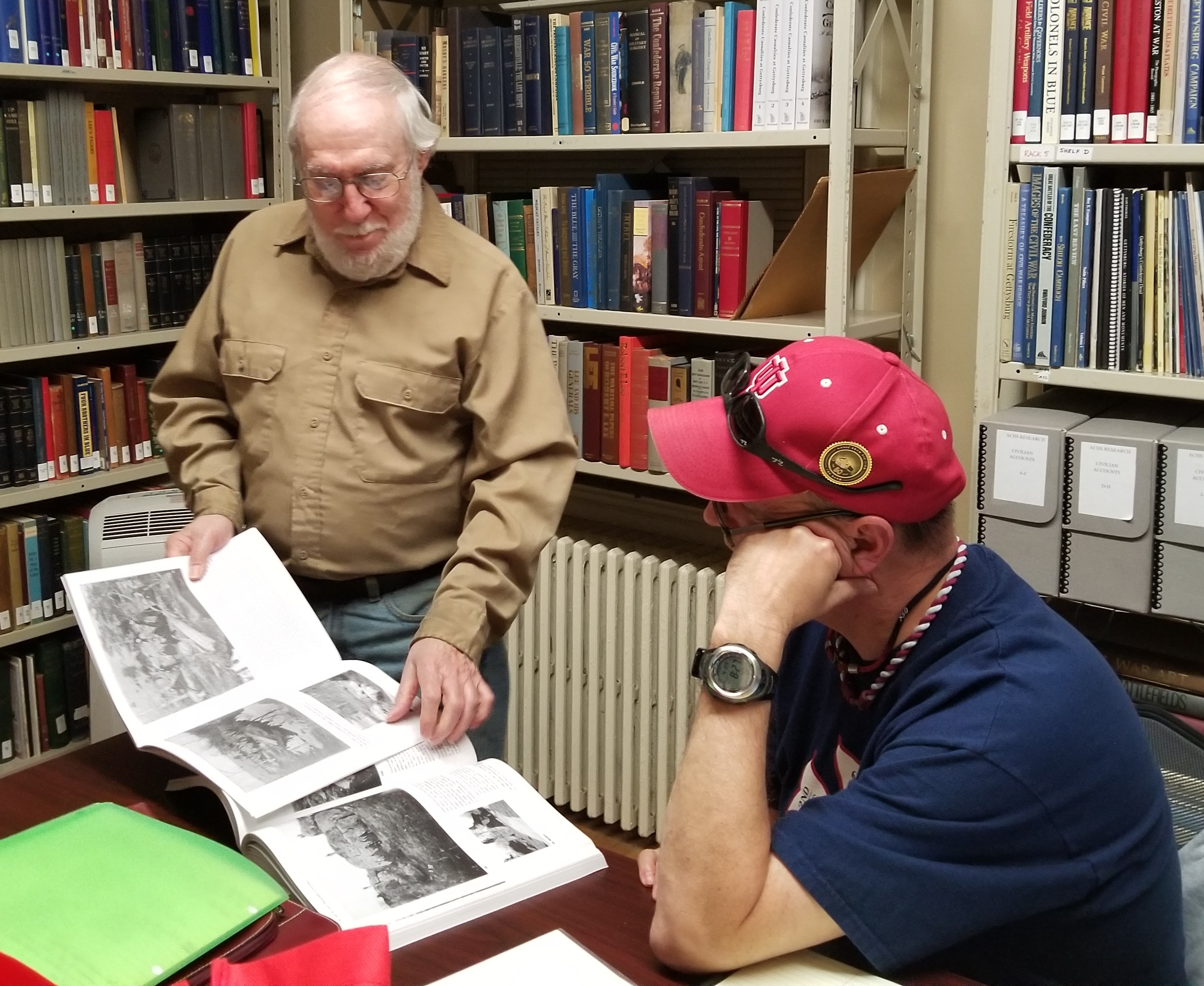
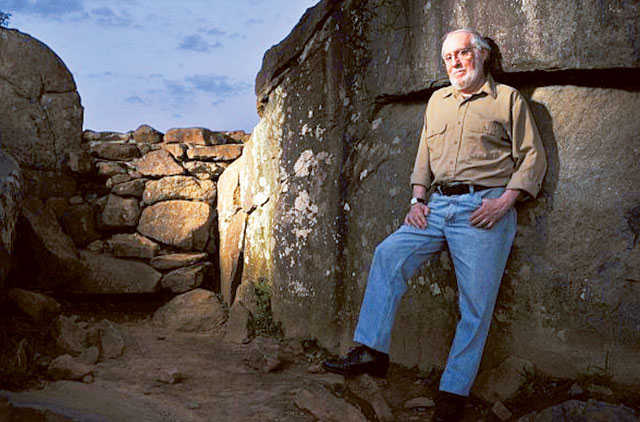
 Needless to say, I was pleased with my visit to and pleasantly reminded how invaluable places and people like these are to the preservation and education of history. After the ACHS helped fill in some blanks in my research, I turned my attention to author Bill Frassanito. He is intensely private, yet unassuming and modest in demeanor. Although an author by trade and historian by nature, Mr. Frassanito has the soul of a teacher.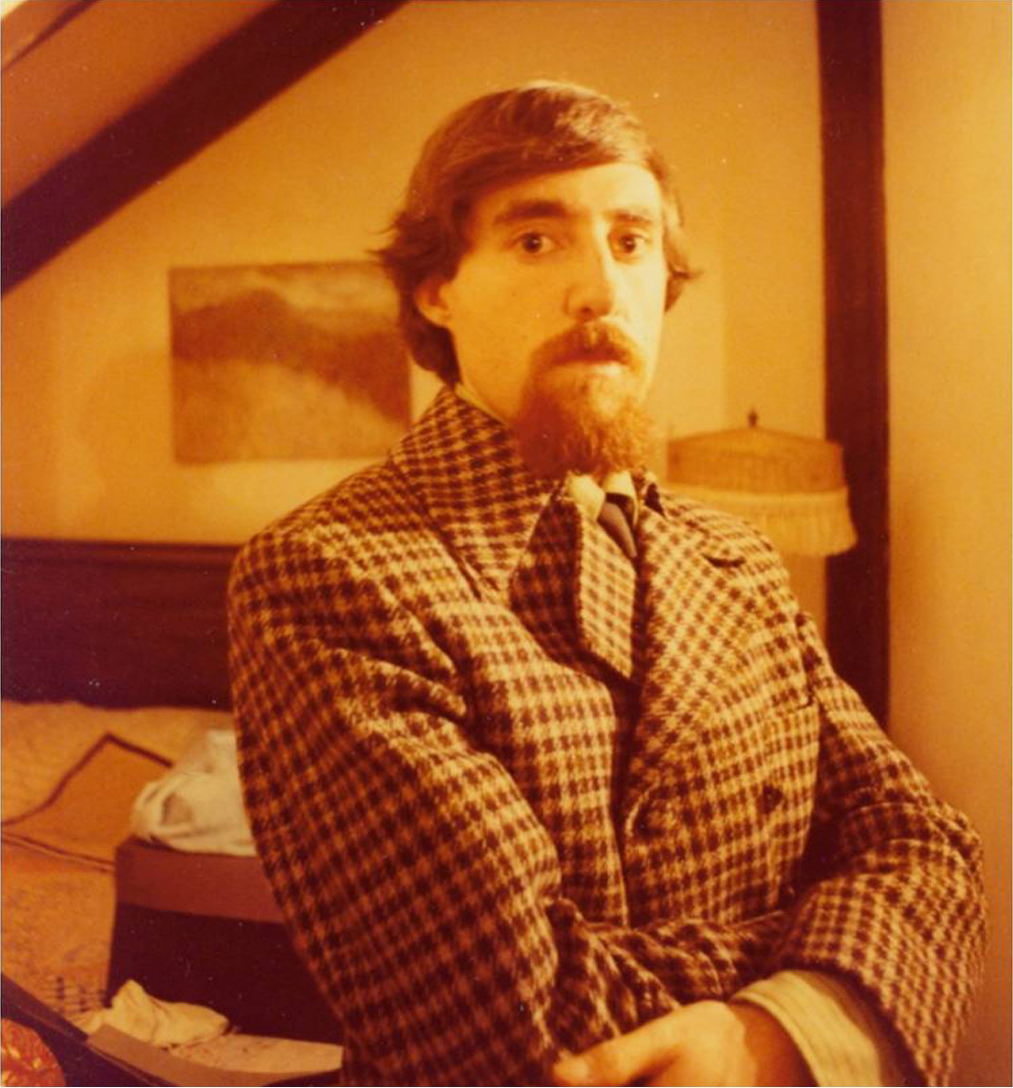
 When asked what first drew him to Gettysburg, he explains, “My first trip to Gettysburg was in 1956 when I was nine years old, and I was just awed by all the monuments, cannons and stuff. I started my research when I was a kid and much of the research for Journey in Time was done when I worked it into a Masters thesis (he is a proud Gettysburg College alum). “When you went to Gettysburg College, I was the high school class of ’64, college class of ’68, at that time all the male students had to take either phys ed or ROTC for two years, after that you made the decision whether you continued on to advanced ROTC, then you were a part of the Army and you got paid. From there you are committed to, after graduation, serving for two years as a second lieutenant, then on to grad school.”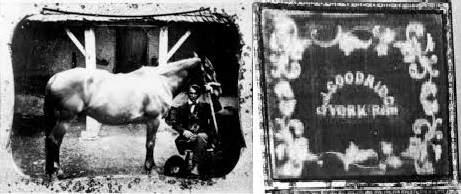
 Bill’s collecting interests are not solely confined to Gettysburg. “All of my stuff is going to the Adams County Historical Society. It will be called the Frassanito collection. Including all my stuff that goes beyond Gettysburg and Adams County. My interest in military history includes World War I and Franco Prussian war, it’s very expansive.” Mr. Frassanito’s interest in all things military came when he saw the 1956 movie “War and Peace” starring Audrey Hepburn and Henry Fonda and, he states, “from that time on I’ve been fascinated by Russian history including the Crimean War” (October 1853 to February 1856 in which the Russian Empire lost to an alliance of the Ottoman Empire, France, Britain and Sardinia).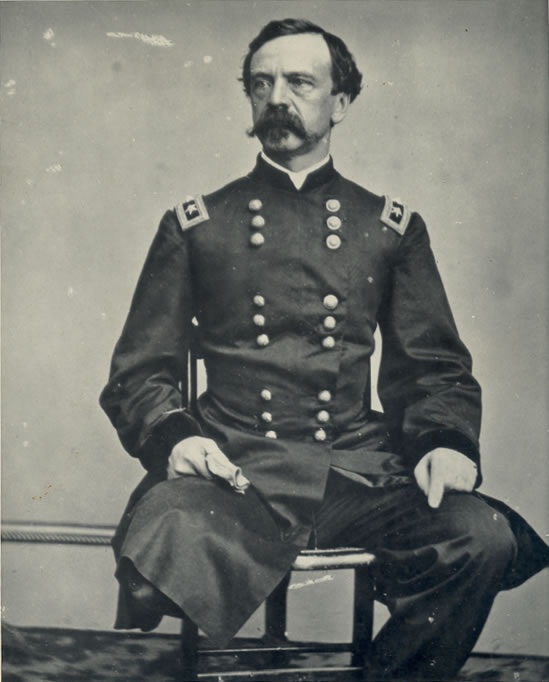
 Bill continued, “I fortunately survived Vietnam and I put it (his book research) all together when I got out of the Army. I tried to get a job in the museum field but the book took off when I signed with one of the top publishers, Charles Scribner’s. It was later picked up for the Book-of-the-Month club. That became the first of seven books on Civil War photography. I spent eight years and eight months on that project.” One of Bill’s most important discoveries was the “Slaughter Pen” near Devil’s Den. Bill’s book included detailed maps. Bill explains, “The whole purpose of the book was to enable people to re-experience standing where the photographer was. One of the questions I often get is why I don’t update the modern photographs. I’ll never do that as I see them as sort of a time capsule in themselves and I want people to know what the battlefield looked like when I spent five years looking for these spots.”
 Frassanito notes that the publication of that photo started a search that is still going on 44 years later. There have been two dozen sites that have been suggested as the site of the photograph. “When people make their discoveries it becomes a religious experience. Every one of those sites has major problems. As far as I’m concerned I don’t want to see a faulty location declared the site and have the search end. That’s the biggest mystery for Civil War photography at Gettysburg. And I’m hoping that one day a pristine 1863 version of the original stereoview or negative surfaces.”
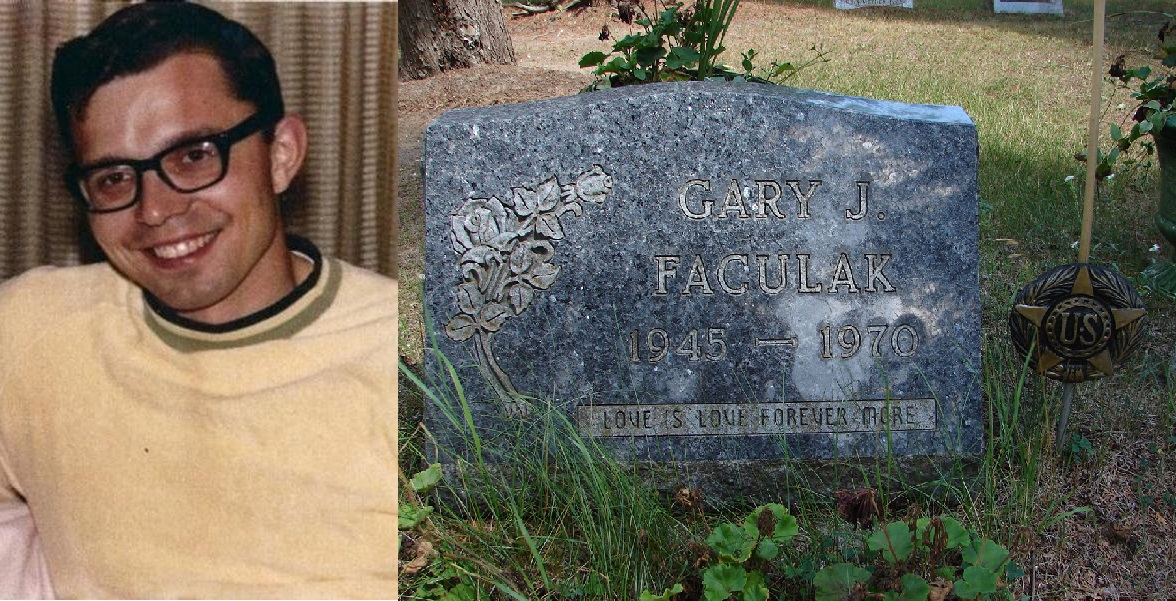
 “I lived about 2 miles away in kind of a slum area of Saigon, it was a hotel we rented from the Vietnamese called Horn Hall. On the main floor was a narrow lobby, and there were two shifts requiring a duty officer, you had to spend six hours just sitting there. You had a pistol and if anything happened, you were in charge. One of the shifts was midnight to six. On the 16th of December 1970 I was assigned night duty at MACV headquarters so my name was removed from the night duty at Horne Hall. Later, we got a phone call that a bomb had gone off that night at Horne Hall and the Lieutenant on duty was instantly killed. And I realized that had I been sitting there, all of my discoveries would have gone with me. And these classic photos of the 24th Michigan and 1st Minnesota would still be misidentified.”


 Alan E. Hunter