Civil War, Uncategorized

Where did you go Ambrose Bierce?

Original publish date September 26, 2024. https://weeklyview.net/2024/09/26/where-did-you-go-ambrose-bierce/
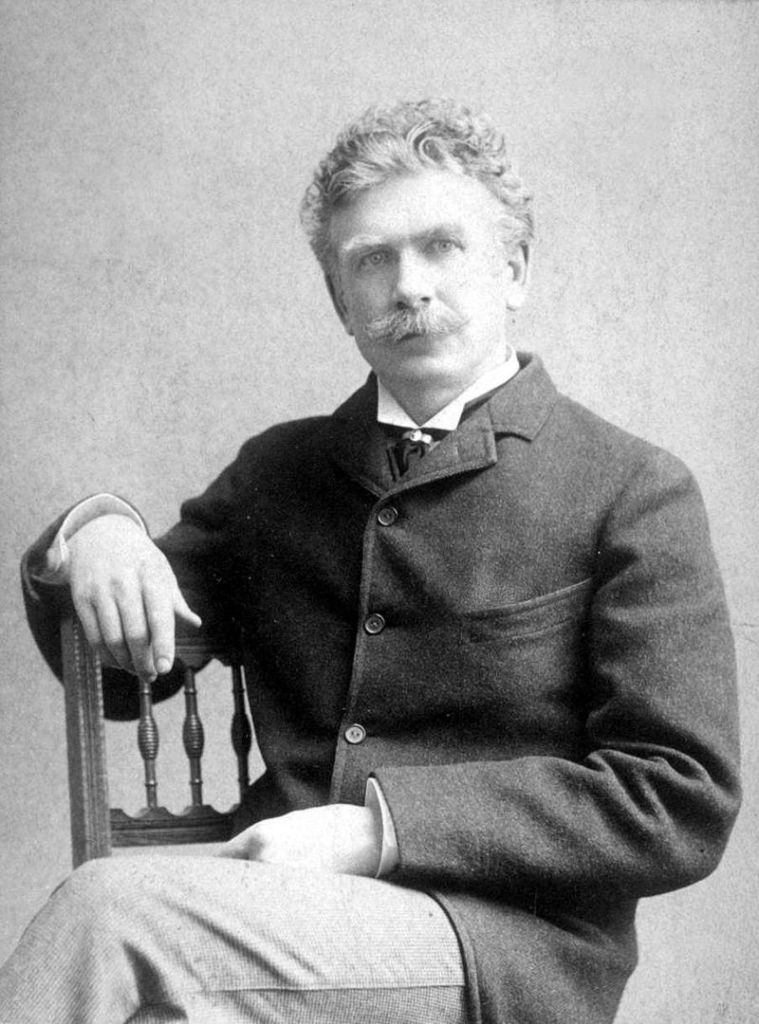
Ambrose Bierce 1892.

110 years ago last week, one of the most famous journalists you’ve never heard of disappeared from the face of the earth. Sometime between September 18-24, 1914, Ambrose Gwinnett Bierce was reported missing. And of course, he had Hoosier ties. Less than two weeks after the start of the Civil War, Bierce enlisted with the 9th Indiana on April 24, 1861, in Elkhart, Indiana. Bierce was born in a log cabin at Horse Cave Creek in Meigs County, Ohio, on June 24, 1842. Horse Cave Creek, “a religious settlement” southeast of Columbus, Ohio, is long gone. Bierce was the tenth of thirteen children, all of whom were given names by their father beginning with the letter “A”. As a child, Bierce moved from the Appalachian foothills of southeastern Ohio to the lake country of northern Indiana. His parents were a poor but literary couple who instilled in him a deep love for books and writing. Bierce grew up in Kosciusko County, Indiana, attending high school at the county seat in Warsaw. He left home in 1857 at age 15 to become a “printer’s devil” at a small abolitionist newspaper in Warsaw: the Northern Indianan. A printer’s devil was an indentured servant who performed many thankless tasks, including mixing tubs of ink and fetching type. Bierce was in good company: Benjamin Franklin, Walt Whitman, Bret Harte, and Mark Twain were all printer’s devils.
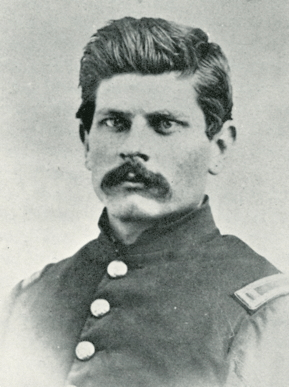
Lt. Ambrose Bierce 9th Indiana.

While with the 9th Indiana, Bierce served in Western Virginia and was present at the Battle of Philippi (the first organized land action of the war in June of 1861). Bierce received his first media attention for his daring rescue, under fire, of a gravely wounded comrade at the Battle of Rich Mountain. Later, he fought at the Battle of Shiloh (April 1862), which he would write about in the memoir “What I Saw of Shiloh”. Within two years Bierce was serving on the staff of General Wm. Hazen. Here he became known to leading generals such as George H. Thomas and Oliver O. Howard, both of whom recommended him for admission to West Point in May 1864. General William T. Sherman also endorsed his application for admission. In June 1864, Bierce sustained a traumatic brain injury at the Battle of Kennesaw Mountain and spent the rest of the summer on furlough. By the end of the war, Bierce rejoined Gen. Hazen to inspect military outposts across the Great Plains, ending in San Francisco, where he was awarded the rank of brevet major before resigning from the Army.
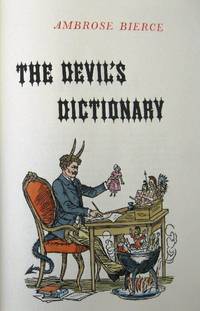
The Devil’s Dictionary 1881.

Bierce remained in San Francisco for many years, becoming famous as a contributor or editor of newspapers and periodicals. He eventually graduated to the historical novels he is most remembered for today. His book The Devil’s Dictionary was named one of “The 100 Greatest Masterpieces of American Literature” by the American Revolution Bicentennial Administration. The book first took form as a serialized newspaper column before being published as a book. The book contains satirical definitions of English words that lampoon political double-talk. The book was volume seven of a twelve-volume set called “The Collected Works of Ambrose Bierce” published from 1909 to 1912. Bierce was a pioneer in realist fiction, his horror writing prowess rivaled Edgar Allan Poe, and his satire equals his peer, Mark Twain. Bierce’s sharp tongue and penchant for biting social criticism and satire often placed him at odds with his publisher William Randolph Hearst. His poetry could be equally caustic as when one of his poems about the assassination of William McKinley in 1901 sparked a national outcry.
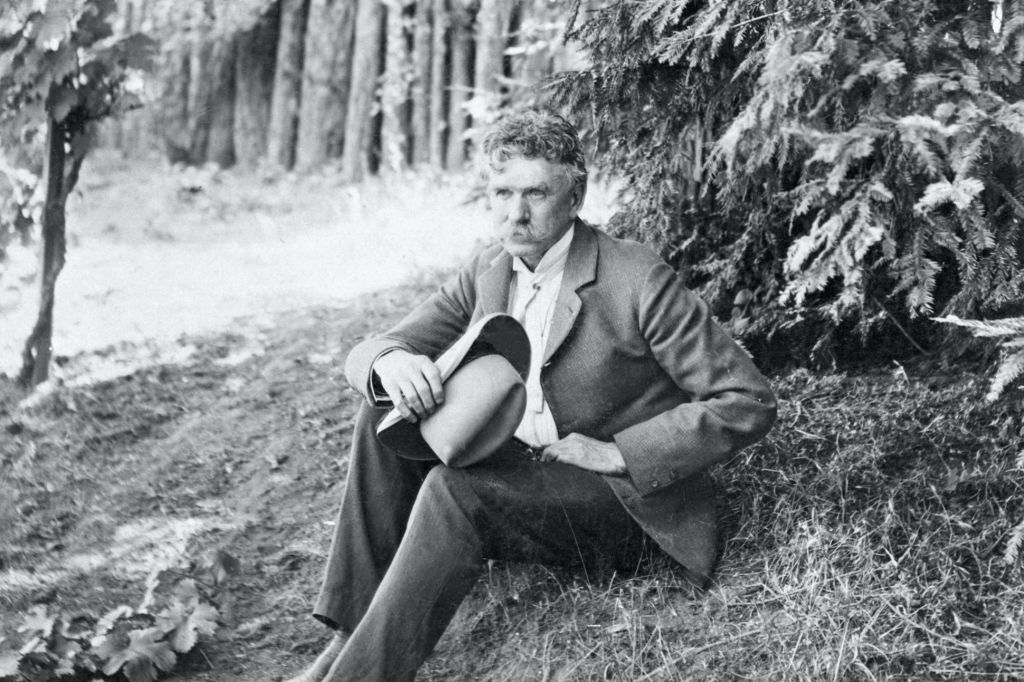
Ambrose Bierce.

Bierce’s most notable work came at the close of the Gilded Age. From 1888 to 1891 he wrote a rapid succession of short stories centering around the inscrutability of the universe and the absurdity of death. Many of those realistic themes came from the terrible things Bierce had seen on the battlefield. His collection of 25 war stories including “An Occurrence at Owl Creek Bridge”, “A Horseman in the Sky”, “One of the Missing”, and “Chickamauga” has been called “the greatest anti-war document in American literature”. Nothing infuriated Bierce more than hearing grandiose accounts of honor and glory of war from people who’d never seen or experienced it personally. His psychological horror story “An Occurrence at Owl Creek Bridge” has been described as “one of the most famous and frequently anthologized stories in American literature”, and his book “Tales of Soldiers and Civilians” was named by the Grolier Club one of the 100 most influential American books printed before 1900. Ernest Hemingway and Stephen King were among the many he influenced.
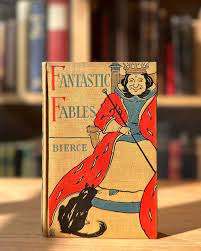
Bierce’s Fantastic Fables 1899.

BIerce’s “Fantastic Fables” book and his many ghost stories were the precursors of the grotesquerie that became a more common genre in the 20th century. Bierce liked nothing better than to shock his audience by challenging their minds on the way to a surprise ending. No better example can be found than his “An Occurrence at Owl Creek Bridge”. Written in 1890 and set during the Civil War, the short story climaxes when Peyton Farquhar, a wealthy Alabama planter and slave owner, is about to be executed by hanging from a railroad bridge as a company of Union infantrymen guards the bridge to carry out the sentence. In his final moments, Farquhar thinks of his wife and children but is suddenly distracted by an unbearably loud clanging. It is the ticking of his watch. He ponders the possibility of unfreeing his hands and jumping from the bridge to swim to safety, but the soldiers drop him off the bridge before he can act on the idea.
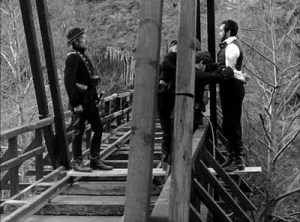
A scene from “An Occurrence at Owl Creek Bridge”

Farquhar flashes back to a time when he and his wife are relaxing at home one evening as a Rebel soldier rides up to the gate and tells Farquhar that Union troops have seized the Owl Creek railroad bridge. The soldier suggests that Farquhar might be able to burn the bridge down if he can slip past its guards. The soldier is in reality a Union scout setting a trap for Farquhar knowing that any civilian caught committing such an act will be hanged as a spy. Farquhar snaps back to the present and falls into the creek after the rope around his neck breaks. He frees his hands, pulls the noose off, and rises to the surface to begin his escape. He dodges, dives, and swims downstream to avoid rifle and cannon fire. Once out of range, he begins the frantic 30-mile journey back home. While Farquhar walks through endless forests day and night, he begins to hallucinate, seeing strange constellations and hearing whispered voices in an unknown language. He trudges on, driven by the thought of his wife and children despite the pain of his ordeal. The next morning he arrives at the gate to his plantation and rushes forward to embrace his wife, but before he touches her, he feels a heavy blow upon the back of his neck. There is a loud noise and a flash of white and “then all is darkness and silence!” Bierce reveals that Farquhar never escaped at all. His escape was an imagination, his journey home a momentary ripple in time experienced during the moment between his drop from the bridge and the noose breaking his neck.
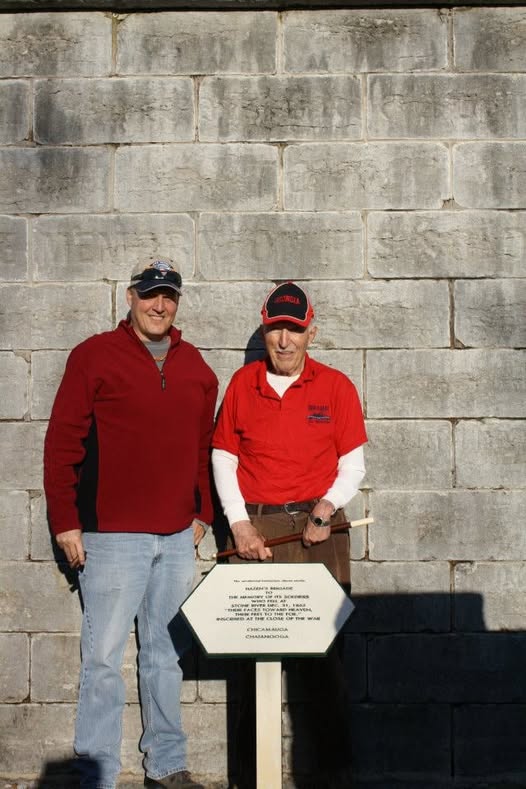
Alan E. Hunter & Edd Bearrs.

Bierce continued writing and pushing the outside of the envelope for the rest of his life. Since much of Bierce’s writing centered on the Civil War, about a decade ago I asked National Parks Historian Emeritus Ed Bearrs about Bierce. I was sharing a beer with Mr. Bearrs in a hotel bar just after touring the Stone’s River battlefield between Murfreesboro and Nashville, Tennessee. Mr. Bearrs, who passed in 2020, was a man of few words. In this instance, he paused before answering, taking a pull from his bottle of Budweiser beer, and said, “What do I think of Ambrose Bierce? I think he was a grade-A Bull-sh_ _ artist.” Which elicited laughter from me and the few others at the table.
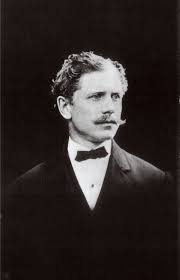
Ambrose Bierce.

In 1913, at age seventy-one, he left Washington, D.C. to tour his old familiar Civil War battlefields. Within a short time, Bierce changed his mind and decided to chase Pancho Villa’s army to gain first-hand experience of the Mexican Revolution. Bierce traveled to Mexico to witness (and some say become a part of) the revolution. By December he had passed through Louisiana and Texas, entering Mexico via El Paso. In Ciudad Juárez he joined Pancho Villa’s army as an observer, and in that role, he witnessed the Battle of Tierra Blanca. It was reported that Bierce accompanied Villa’s army as far as the city of Chihuahua. His last known communication with the world was a letter he wrote there to Blanche Partington, a close friend, dated December 26, 1913. After closing this letter by saying, “As to me, I leave here tomorrow for an unknown destination.” And that was the last anyone ever heard of Ambrose Bierce. He vanished without a trace, one of the most famous disappearances in American literary history. No one knows where, when, or under what circumstances he met his end.
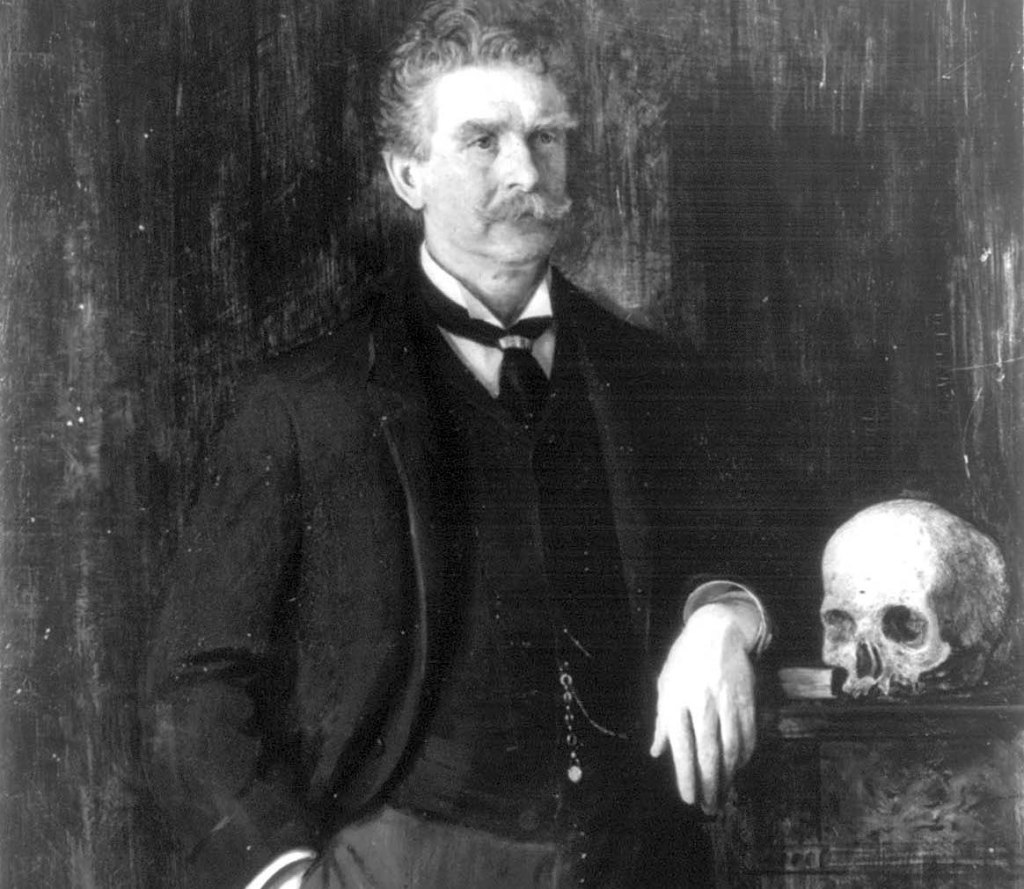
The U.S. consular opened an official investigation into the disappearance of one of its citizens. Some of Villa’s men were questioned but they all gave contradictory accounts. Local legend, documented by priest James Lienert, states that Bierce was executed by firing squad in the cemetery of the town of Sierra Mojada, Coahuila. Bierce’s ultimate fate remains a mystery. He wrote in one of his final letters: “Good-bye. If you hear of my being stood up against a Mexican stone wall and shot to rags, please know that I think it is a pretty good way to depart this life. It beats old age, disease, or falling down the cellar stairs. To be a Gringo in Mexico–ah, that is euthanasia!” His body was never recovered.
Abe Lincoln, Assassinations, Presidents, Travel

George Alfred Townsend and The War Correspondent Memorial Arch.

Original publish date April 11, 2024. https://weeklyview.net/2024/04/11/george-alfred-townsend-and-the-war-correspondent-memorial-arch/

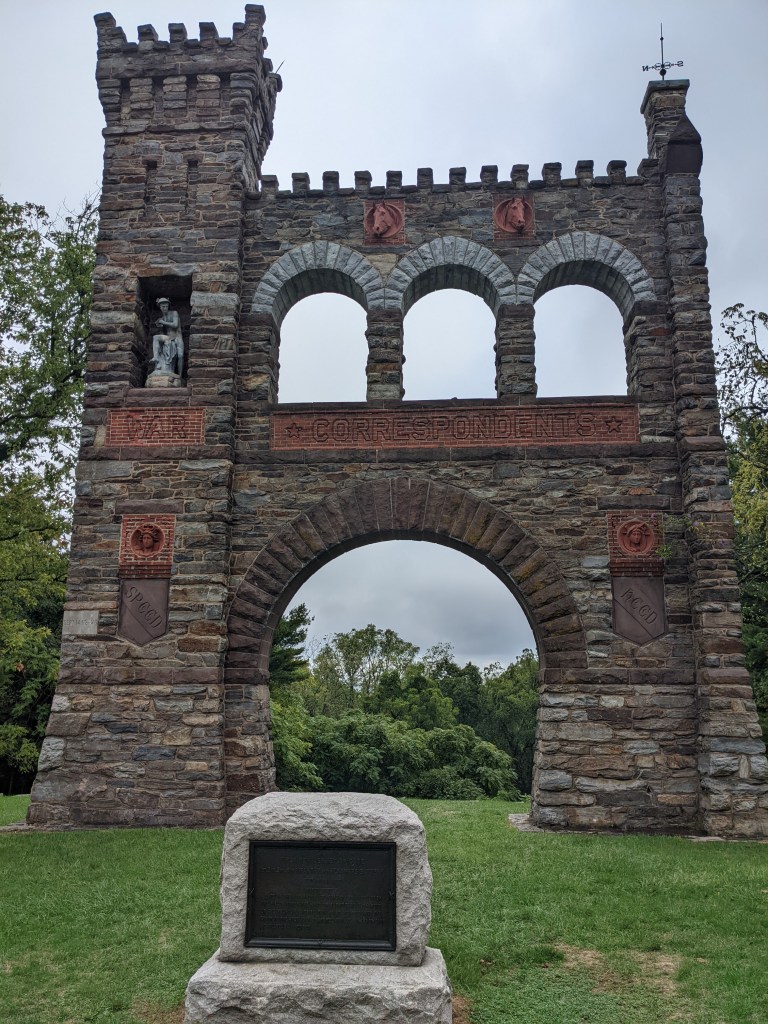
The War Correspondent Memorial Arch.

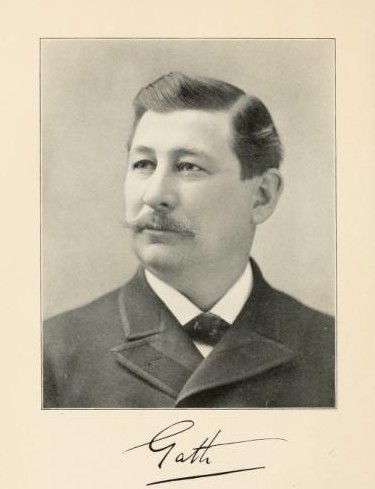
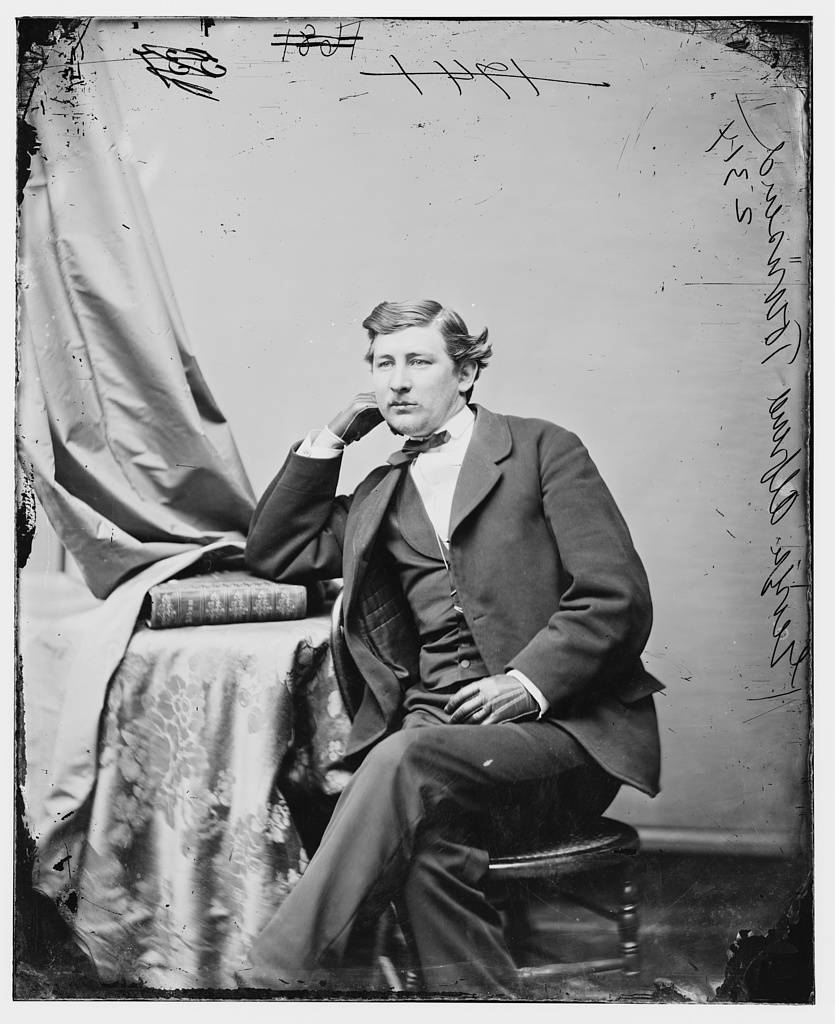
Next week will witness another sad passing in American history: the 159th anniversary of the assassination of Abraham Lincoln. Because I live with this date dancing around in my head more than most, I want to share my experience (and admiration) for a peripheral character in that tragedy: George Alfred Townsend. Born in Georgetown, Delaware on January 30, 1841, Townsend was one of the youngest war correspondents during the American Civil War. Soon after graduation from high school (with a Bachelor of Arts) in 1860, Townsend began his career as a news editor with The Philadelphia Inquirer. In 1861, he moved to the Philadelphia Press as city editor. As the war broke out, he worked for the New York Herald as a war correspondent in Philadelphia.

George Alfred Townsend.

By April 1862, George got his big break when General George McClellan rode through Philadelphia on his way to Washington. That fortuitous meeting would propel young Townsend to exclusive access to many of the Civil War’s greatest battles. One of America’s first nationally syndicated columnists, Townsend used the pen name “Gath” for his newspaper columns. Gath was an acronym of his initials with the addition of an “H” at the end. Friends and contemporaries like Mark Twain, Bret Harte, and Noah Brooks, claimed the “H” stood for “Heaven” while wags and rivals claimed it stood for “Hell.” Gath himself was inspired by the biblical passage uttered by David after the death of King Saul in II Samuel 1:20, “Tell it not in Gath, publish it not in the streets of Askalon.”

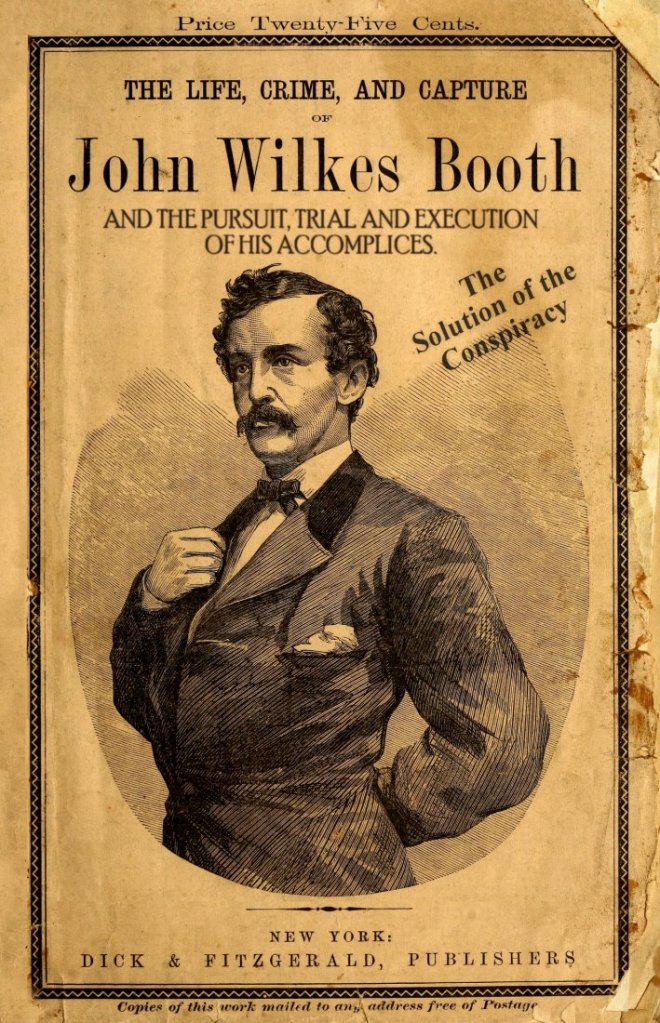
The Life, Crime and Capture of John Wilkes Booth.

While Townsend won accolades for his work covering the war, it was his coverage of the Lincoln assassination that he is best remembered for. His detailed columns (which he called “letters”) about the tragedy were filed between April 17 – May 17 and would later be published as The Life, Crime and Capture of John Wilkes Booth. Published in 1865, Townsend’s book offers a full sketch of the assassin, the conspiracy, the pursuit, trial, and execution of his accomplices. As a lifelong student of Lincoln, I have read countless books, articles, letters, and various accounts centered on his life. It was in George Alfred Townsend’s “letters” that I found my holy Grail. Townsend’s description of Lincoln in his coffin made me feel as if I were standing there myself. His description of Lincoln’s office left me awestruck and wishful. In my opinion, it would be hard to find a more worthy example of Victorian journalism than these excerpts from Gath’s “letters”.

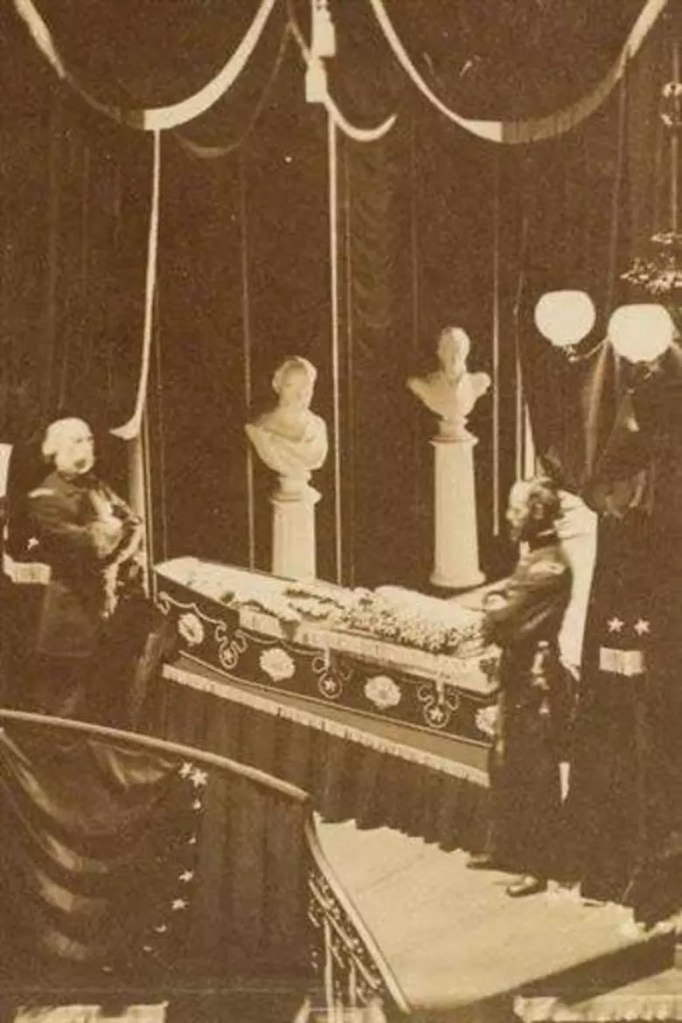
Lincoln in his coffin.

“Deeply ensconced in the white satin stuffing of his coffin, the President lies like one asleep. Death has fastened into his frozen face all the character and idiosyncrasy of life. He has not changed one line of his grave, grotesque countenance, nor smoothed out a single feature. The hue is rather bloodless and leaden; but he was always a sallow. The dark eyebrows seem abruptly arched; the beard, which will grow no more, is shaved close, save the tuft at the short small chin. The mouth is shut, like that of one who had put the foot down firm, and so are the eyes, which look as calm as slumber. The collar is short and awkward, turned over the stiff elastic cravat, and whatever energy or humor or tender gravity marked the living face is hardened into its pulseless outline. No corpse in the world is better prepared according to appearances. The white satin around it reflects sufficient light upon the face to show us that death is really there; but there are sweet roses and early magnolias, and the balmiest of lilies strewn around, as if the flowers had begun to bloom even upon his coffin. Looking on interruptedly! for there is no pressure, and henceforward the place will be thronged with gazers who will take from the site its suggestiveness and respect. Three years ago, when little Willie Lincoln died, Doctors Brown and Alexander, the embalmers or injectors, prepared his body so handsomely that the President had it twice disinterred to look upon it. The same men, in the same way, have made perpetual these beloved lineaments. There is now no blood in the body; it was drained by the jugular vein and sacredly preserved, and through a cutting on the inside of the thigh the empty blood vessels were charged with the chemical preparation which soon hardened to the consistence of stone. The long and bony body is now hard and stiff, so that beyond its present position it cannot be moved any more than the arms or legs of a statue. It has undergone many changes. The scalp has been removed, the brain taken out, the chest opened and the blood emptied. All that we see of Abraham Lincoln, so cunningly contemplated in his splendid coffin, is a mere shell, an effigy, a sculpture. He lies in sleep, but it is the sleep of marble. All that made the flesh vital, sentiment, and affectionate is gone forever.”

Lincoln Funeral Train.

On May 14, 1865, the day Abraham Lincoln’s body was placed on the funeral train to leave Washington DC forever, Townsend visited the White House. Mary Lincoln still resided there with her beloved son Tad, too distraught to leave the White House. “I am sitting in the President’s office. He was here very lately, but he will not return to dispossess me of the high-backed chair he filled so long, nor resume his daily work at the table where I am writing. There are here only Major Hay (Salem Indiana’s John Hay, Lincoln’s private secretary) and the friend who accompanies me. A bright-faced boy runs in and out, darkly attired, so that his fob chain of gold is the only relief to his mourning garb. This is little Tad, the pet of the White House. That great death, with which the world rings, has made upon him only the light impression which all things make upon childhood. He will live to be a man pointed out everywhere, for his father’s sake; and as folks look at him, the tableau of the murder will seem to encircle him.”

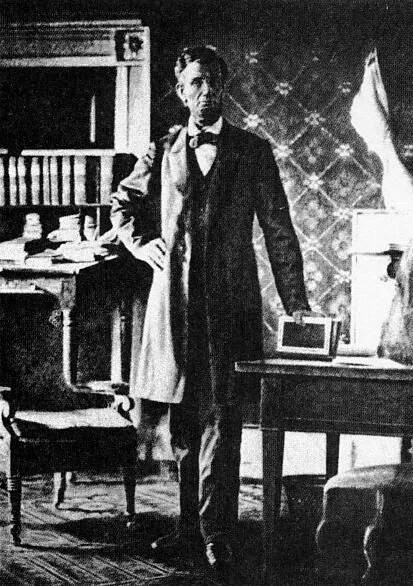
Lincoln in his White House Office.

Townsend further describes Lincoln’s office, just as he left it. “The room is long and high, and so thickly hung with maps that the color of the wall cannot be discerned. The President’s table at which I am seated adjoins a window at the farthest corner; and to the left of my chair as I reclined in it, there is a large table before an empty grate, around which there are many chairs, where the cabinet used to assemble. The carpet is trodden thin, and the brilliance of its dyes is lost. The furniture is of the formal cabinet class, stately and semi-comfortable; there are bookcases sprinkled with the sparse library of a country lawyer, but lately plethoric, like the thin body which has departed in its coffin. Outside of this room, there is an office, where his secretaries sat – a room more narrow but as long – and opposite this adjacent office, a second door, directly behind Mr. Lincoln’s chair leads by a private passage to his family quarters. I am glad to sit here in his chair, where he has spent so often, – in the atmosphere of the household he purified, and the site of the green grass and the blue river he hallowed by gazing upon, in the very center of the nation he preserved for the people, and close the list of bloodied deeds, of desperate fights of swift expiations, of renowned obsequies of which I have written, by indicting at his table the goodness of his life and the eternity of his memory.”

“They are taking away Mr. Lincoln’s private effects, to deposit them wheresoever his family may abide, and the emptiness of the place, on this sunny Sunday, revives that feeling of desolation from which the land has scarce recovered. I rise from my seat and examine the maps; they are from the coast survey and engineer departments, and exhibit all the contested grounds of the war: there are pencil lines upon them where someone has traced the route of armies, and planned the strategic circumferences of campaigns. Was it the dead President who so followed the March of Empire, and dotted the sites of shock and overthrow? So, in the half-gloomy, half-grand apartment, roamed the tall and wrinkled figure whom the country had summoned from his plain home into mighty history, with the geography of the Republic drawn into a narrow compass so that he might lay his great brown hand upon it everywhere. And walking to and fro, to and fro, to measure the destinies of arms, he often stopped, with his thoughtful eyes upon the carpet, to ask if his life were real and he were the arbiter of so tremendous issues, or whether it was not all a fever-dream, snatched from his sofa in the routine office of the Prairie state.”

“I see some books on the table; perhaps they have lain there undisturbed since the reader’s dimming eyes grew nerveless. A parliamentary manual, a thesaurus, and two books of humor, “Orpheus C. Kerr,” and “Artemis Ward.” These last were read by Mr. Lincoln in the pauses of his hard day’s labor. Their tenure here bears out the popular verdict of his partiality for a good joke; and, through the window, from the seat of Mr. Lincoln, I see across the grassy grounds of the capitol, the broken shaft of the Washington Monument, the long bridge and the fort-tipped Heights of Arlington, reaching down to the shining riverside. These scenes he looked at often to catch some freshness of leaf and water, and often raised the sash to let the world rush in where only the nation abided, and hence on that awful night, he departed early, to forget this room and its close applications in the abandon of the theater. I wonder if it were the least of Booth’s crimes to slay this public servant and the stolen hour of recreation he enjoyed but seldom. We worked his life out here, and killed him when he asked a holiday.”

George Alfred Townsend.

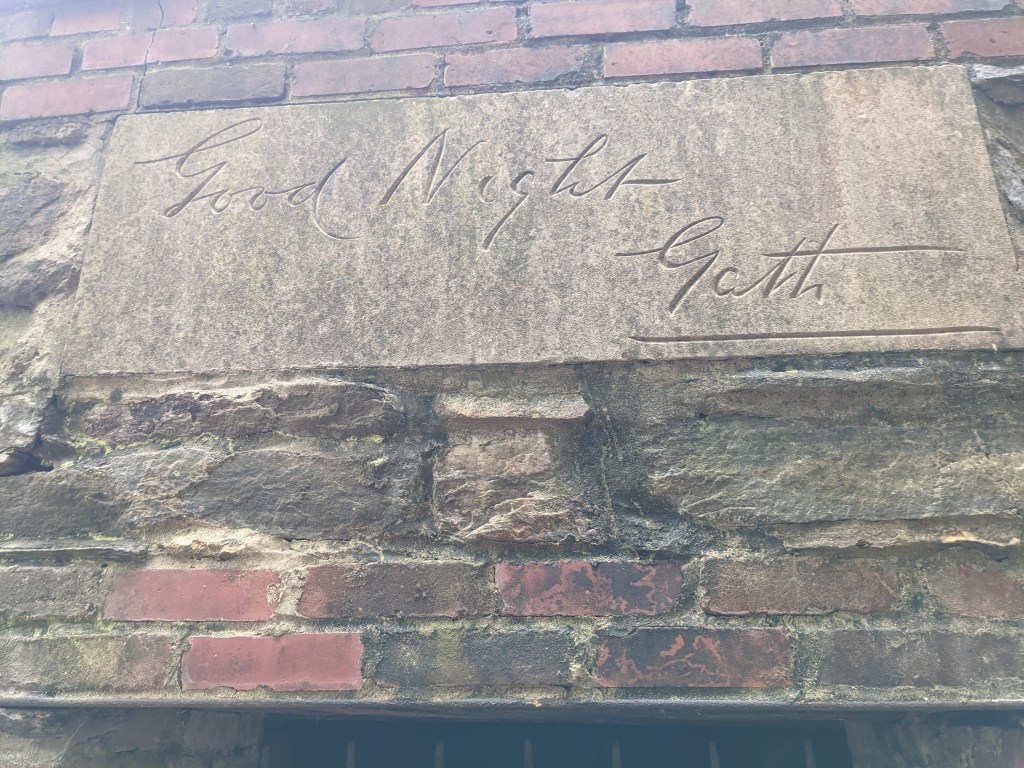
As one of the most successful journalists of his day, Townsend accumulated a tidy fortune. He used much of that fortune to build a 100-acre baronial estate near Crampton’s Gap, South Mountain, Maryland known as “Gapland”. The Civil War Battle of Crampton’s Gap was fought as part of the Battle of South Mountain on September 14, 1862, and resulted in 1,400 combined casualties. Tactically the battle resulted in a Union victory because they broke the Confederate line and drove through the gap. Strategically, the Confederates were successful in stalling the Union advance and were able to protect the rear. Gath literally bought the battlefield upon which he built his estate. The estate was composed of several buildings, including Gapland Hall, Gapland Lodge, the Den and Library Building, and a brick mausoleum (notable for its inscription of “Good Night Gath” above the entrance).

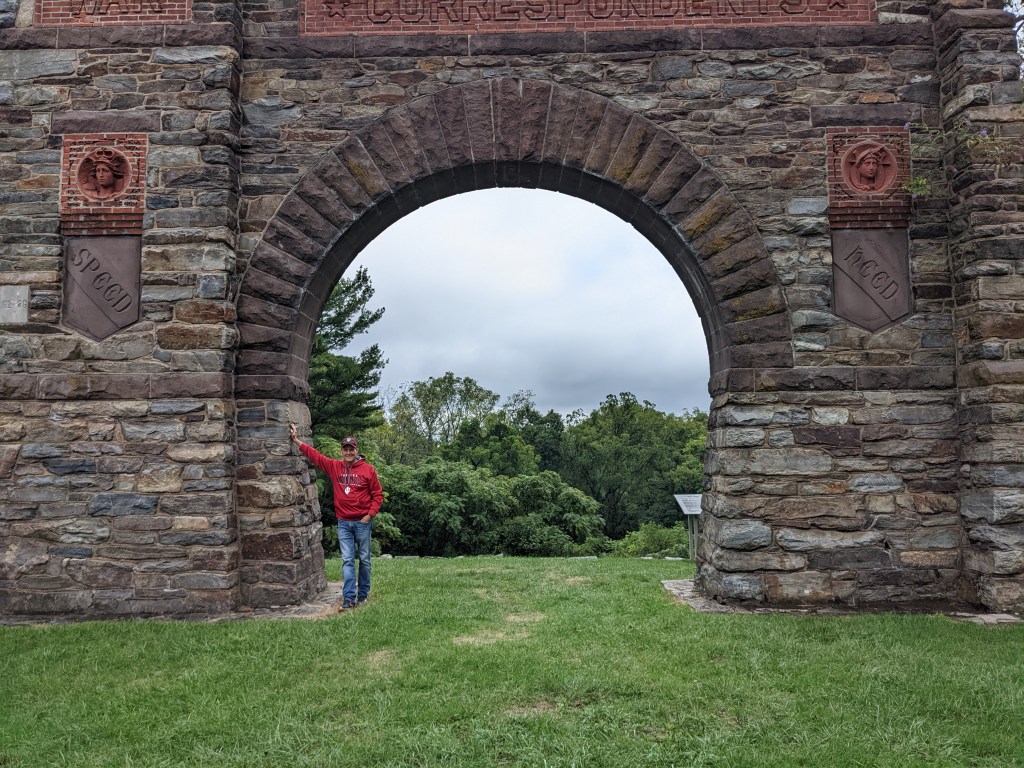
The author at Gath’s arch.

In 1896, Townsend built a monument to war correspondents to memorialize the contributions of his colleagues North and South. Dedicated in 1896, The War Correspondent Memorial Arch is 50 feet high and 40 feet wide and is the only monument in the world dedicated solely to war correspondents. Not only does the arch stand on Townsend’s original estate (operated by the Maryland Department of Natural Resources), it also rests smack dab in the middle of the Appalachian National Scenic Trail. Furthermore, the woods surrounding Gapland and the nearby town of Burkittsville were the setting for the 1999 horror film Blair Witch Project.

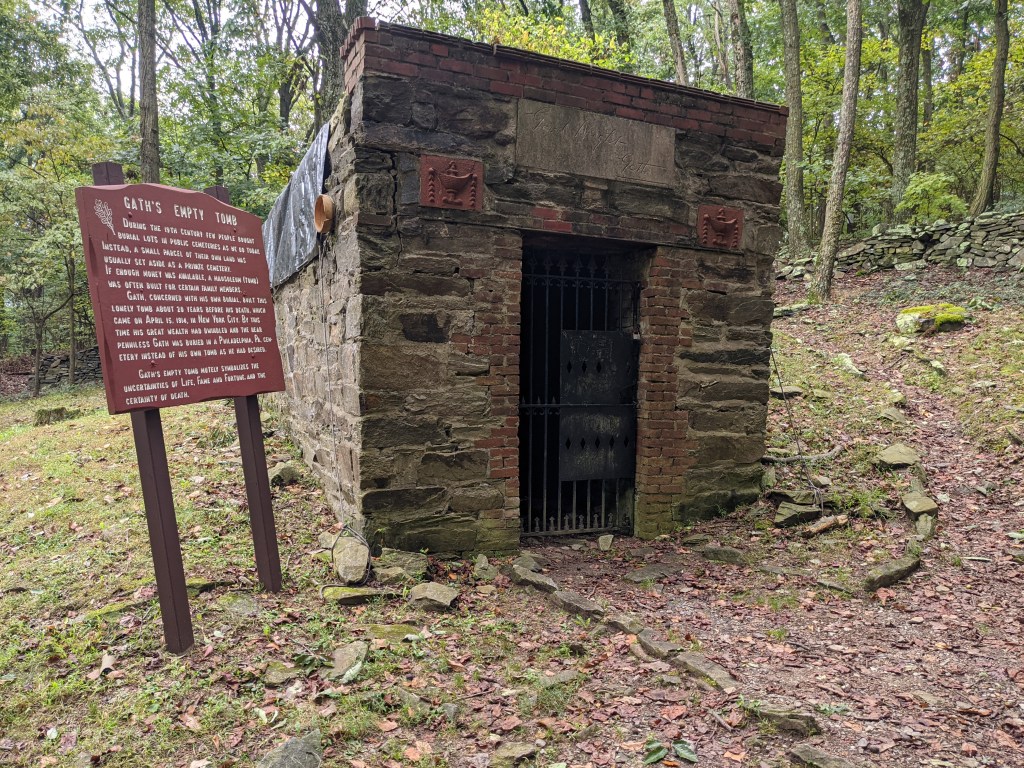
Gath’s Empty Tomb.
Good Night Gath.

Last September, I traveled to the Catoctin Mountains to visit Townsend’s estate not far from the Antietam battlefield. Townsend’s Gapland estate is now known as Gathland State Park. Several buildings still stand, including Gapland Hall (which is the park headquarters) and the mausoleum, while other buildings are mere shadows of their former self. Townsend left Gapland in 1911 and died in New York City three years later on April 15, 1914. The 49th anniversary of Abraham Lincoln’s death. He was buried at Laurel Hill Cemetery in Philadelphia.

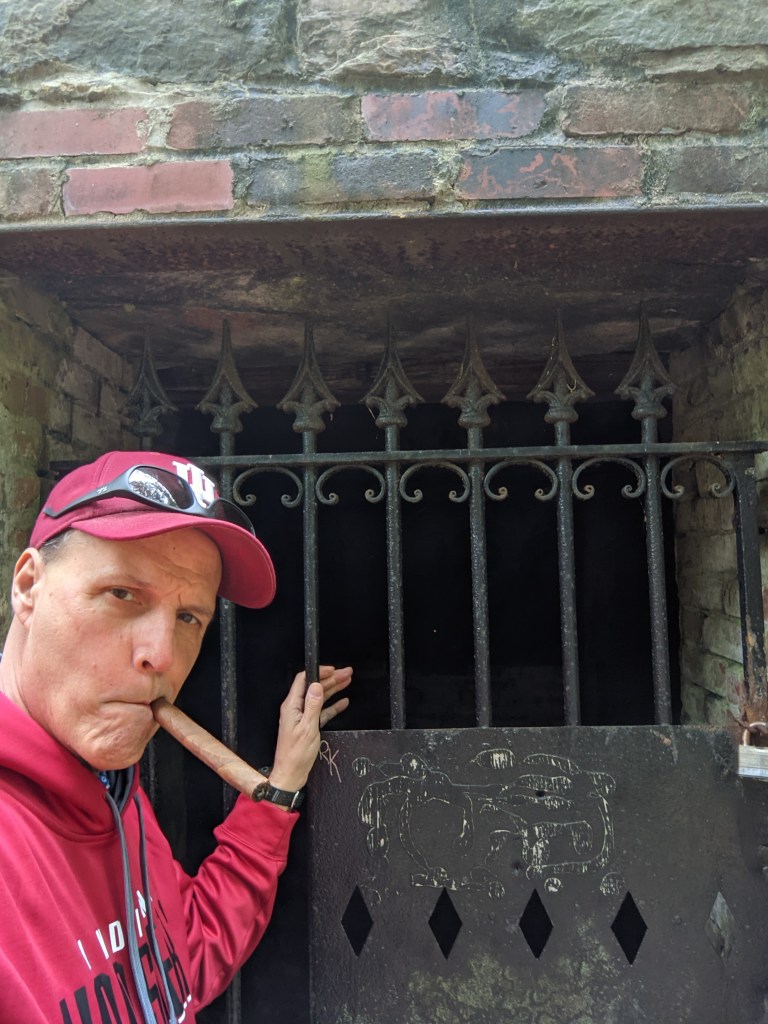
The author at Gath’s empty tomb.

His brick mausoleum, fronted by an ominous-looking iron gate causing it to look more like a jail cell than a tomb, stands empty, its roof slowly caving in. Although the object of my quest was The War Correspondent Memorial Arch, I could not help but spend most of my time seated beneath that empty tomb smoking a cigar. While the hale and hearty hikers pausing briefly at the foot of the Appalachian Trail might not have appreciated my vice, as I stared at the epitaph above the iron gate above Townsend’s unused tomb, George Alfred Townsend would understand. Good Night Gath.

Abe Lincoln, Assassinations, Civil War, Criminals

Pink Parker and his Monument to John Wilkes Booth.

https://www.digitalindy.org/digital/collection/twv/id/3538/rec/151

Original Publish Date August 26, 2021. https://weeklyview.net/2021/08/26/pink-parker-and-his-monument-to-john-wilkes-booth/

Recently, I ran across an obscure booklet about a little-known episode in the post-assassination chronology of Abraham Lincoln. Surprisingly it was published and distributed by a man named Stewart Winning McClelland (1891-1977) a self-described “Sponsor” of Dale Carnegie courses from Indianapolis. More surprising is the fact that it was published exactly 70 years ago on August 28, 1951. The booklet is titled “A Monument to The Memory Of John Wilkes Booth.” Now THAT got your attention, didn’t it

The booklet tells the story of a cranky old Rebel from Troy Alabama named Joseph Pinckney “Pink” Parker, born August 16, 1839, and died December 12, 1921. Parker, a former police officer and veteran of the Confederate Army, was often described in the local newspaper as “the bitterest Rebel in the South.” Almost immediately after graduating from Springhill Academy in Coffee County Alabama, the Civil War broke out and Pink enlisted in the Confederate Army. He left his family’s well-stocked plantation, a sister, and a bevy of slaves when he left for the front lines.
Parker served in Company A of the Second Georgia Battalion Infantry, Wright’s Brigade, Mohone’s Division of AP Hill’s Corps of the Army of Northern Virginia. During Parker’s four years of service, he rose to the rank of Corporal and fought at the battles of Gettysburg, the Wilderness, Spotsylvania, Cold Harbor, Petersburg, and Appomattox: many of the fiercest battles of the Civil War.
Four years later, when the war ended, Pink returned to find the “farm overgrown with weeds, his stock and slaves disappeared and his sister imbittered by her treatment received at the hands of the northern soldiers.” The family estate was soon “eaten up” by taxes and the former Rebel soldier was forced to take a position as a “walker” on the railroad tracks carrying with him “maul and spikes to keep the tracks repaired.” Parker grew to hate everything “Yankee”, blaming President Abraham Lincoln for the social and economic distress throughout the South and for Reconstruction, which he considered the continued destruction of the South.
Parker married and bought a farm near Inverness, Florida, but found farm life there hard and unforgiving. He moved his wife and three children to a house he bought on Madison Street in Troy. For years he earned a hardscrabble living on his meager salary as a grocery store clerk, policeman, and cotton compress worker. Eventually, he became a schoolteacher in Troy, where he built a comfortable home a short distance from the famed Natchez trace “which Andrew Jackson used in his battles against the Indians in Florida.”

The booklet describes Pink as a well-respected member of his community and a devout member of the Baptist Church with just one single vice: a deep-seated hatred for Abraham Lincoln. As Lincoln’s legend began to move towards secular sainthood, in both the North and the South, Pink Parker’s wrath grew year by year into a compulsion. Whenever Lincoln’s name was mentioned, Pink would burst forth with impassioned flights of profanity that astonished and shocked his friends and family. So bad were these outbursts that his pastor at the Baptist Church removed him from the church roles for his profanity. In a situation that Pink described, “It wasn’t quite fair. I know all the deacons in that church and any one of them can cuss better than I can.”
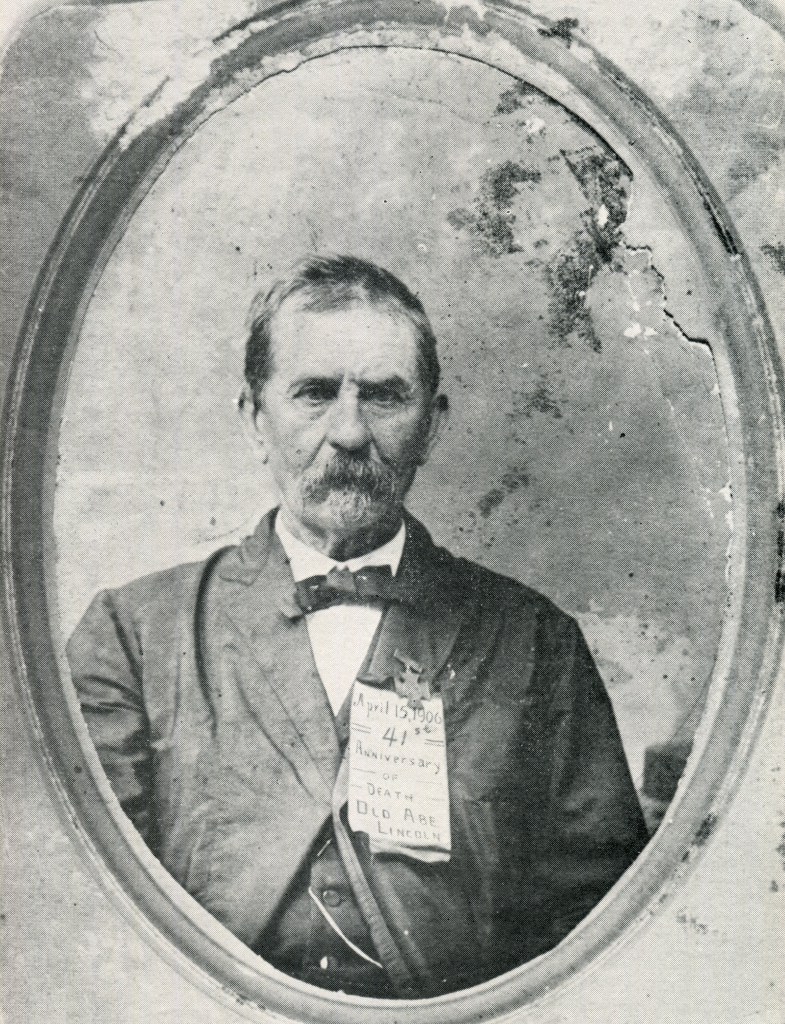
His expulsion from the church proved to be the capstone of Parker’s Lincoln hatred. Parker’s wife died in 1893 and his children moved away. From that point on, every April 15th, Pink would fashion for himself a paper badge and ribbon celebrating the “Anniversary of the Death of old Abe Lincoln.” Occasionally, Pink would memorialize these otherwise sad anniversaries by walking into the local photography studio to have his picture made wearing the offensive badge. As years passed, the idea came into his head that he would erect a monument to the memory of John Wilkes Booth. As unthinkable and repulsive as the idea sounds to our modern ears, Pink indeed put his plan into action.
The monument, standing approximately 4 feet high, resembled a typical graveyard headstone found in any Alabama burying ground around the state. Pink was always quick to note that he never took the oath of allegiance after the Civil War and he personally never surrendered. The stone bore the inscription: “Erected by Pink Parker in honor of John Wilks Booth, for killing old Abe Lincoln.” It is interesting to note that the old Rebel misspelled the cowardly assassin’s name on his memorial, fitting for such an unpopular, shortsighted memorial.

He first offered his ghastly memorial to the city of Troy to be placed in front of the Pike County Courthouse or in a public park. When the city quickly declined his invitation, he installed the monument in his front yard on Madison Street. It wasn’t long before local vandals turned their attention to the stone, defacing it. Soon Parker erected a board fence to protect it. Although newspapers from the 1920s stated that the stone had been erected in 1866, Pink placed the marker in 1906. Pink told his grandsons that he invited President Theodore Roosevelt to the stone’s dedication with a postcard stating that “while I can’t furnish a carriage for you, I could get you a dray hauled by a couple of mules.”
When those same grandsons asked their grandfather how he was going to get along with all those Yankees when he got to heaven, Pink would say, “Well, I don’t suppose I will find enough up there to bother me.” Pink Parker always believed that John Wilkes Booth was still alive, that Booth did not die from Boston Corbett’s shot through the neck in the Garrett tobacco barn. A belief principally subscribed to by only the most avowed skeptics, conspiracy theorists, and carnival sideshow aficionados of the era.

Pink Parker’s House.

Parker became ill and, in 1918, his son, Eugene, moved his father to Sardis, Georgia. Parker deeded his home to his three children. They sold it in 1920. In 1921 emotions over Pink’s distasteful display reached a boiling point. The local president of the Alabama Women’s League of Republican Voters, Mrs. C.D. Brooks, instigated a campaign to have the monument removed permanently. Letters poured in from all over the country supporting her stand. Then sometime around Halloween, a group of local boys pulled down the marker as a prank. The Booth monument lay half-buried in the dirt as weeds slowly overtook it.
In 1921, the Troy Messenger received a large volume of indignant letters and the National Sons of Union Veterans wrote to President Waren G. Harding demanding the monument be removed and destroyed. The added attention and the age of the automobile soon brought souvenir hunters to the little town of Troy. These eager relic collectors began to chip away pieces of the stone. The Troy Messenger reported on July 13, 1921, that the monument had been removed by order of the town council. It was hidden away out of sight and mind in a shed and forgotten.

The recarved Booth Marker.

In the midst of the furor, the half-blind, sick, and forgotten Pink Parker passed away in December of 1921 at the age of 82. His body was brought back to Troy and buried next to his wife. His sons retrieved the stone from cold storage and had it re-carved. The inscription honoring Booth was removed from the monument and it was fashioned into his tombstone, his name and birth/death dates on one side and the details of his service in the Confederate Army listed on the other. Confederate veterans served as his pallbearers.

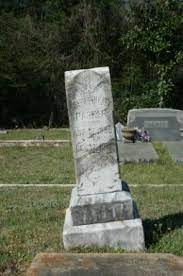
Pink’s Grave Marker Today.

Historians have long realized how much the South lost by the killing of Abraham Lincoln. Lincoln was the one man who might have reunited a broken country. The one man who could have allayed sectional hostilities and rebuilt a nation. Pink Parker was on the wrong side of history. But Pink Parker did not care. Today, the former Booth monument can be seen on Parker’s grave in Oakwood Cemetery, located on North Knox Street in Troy. The gravestone stands on a downward slope in the farthest regions of the cemetery. There is no trace of the former writing, no indication that it ever honored assassin John Wilkes Booth. Perhaps fittingly, Pink Parker’s grave marker lists to the larboard side, forever tilted, just like the man it honors.

Abe Lincoln, Civil War, Gettysburg, Museums, Pop Culture, Presidents, Travel

Statuary Myths and Urban Legends. John Rogers.

Part II

Original publish date:  October 1, 2020

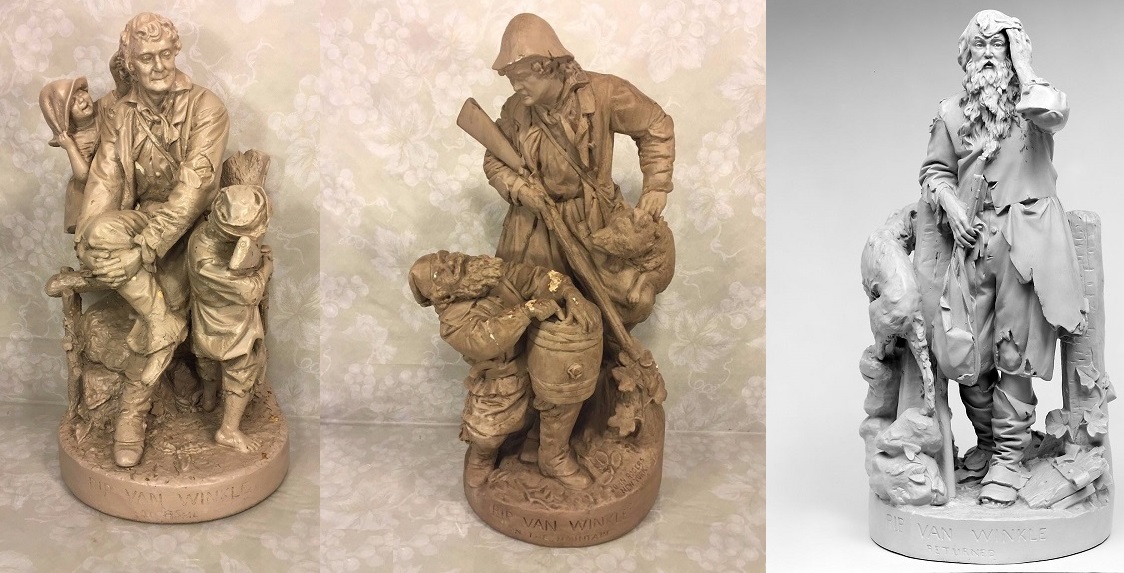
If you are a fan of Victorian decor, or if, like me, you find yourself haunting antique malls and shops, you’re probably familiar with the work of sculptor John Rogers. Commonly known as “Groups” for their routine use of more than one subject per sculpture, Rogers’ work is distinctive for many reasons: historical themes, uncommon accuracy and exquisite detail. Rogers was the first American sculptor to be classified as a “pop artist”, scorned by art critics but beloved by the average American. His themes included literary themes, Civil War soldiers, ordinary citizens, animals, sports and luminaries from the pages of history. For Irvingtonians, his works depicting namesake Washington Irving’s Rip Van Winkle are particularly prized.

zz s-l1600

John Rogers Rip Van Winkle Series.

I have a few in my office and one of my favorite places to eat, the “Back 40 Junction” in Decatur, is decorated with many John Rogers groups throughout their restaurant.
John Rogers was born in Salem, Massachusetts, on October 30, 1829, how can Halloween fans not love him already? His father, an unsuccessful but well-connected Boston merchant, felt that an artist’s life was no better than a vagabond and discouraged his artistic son from pursuing art as a profession. So, Rogers confined his love of drawing, painting and modeling in clay to his spare time. In 1856 Rogers ran away to Mark Twain’s Hannibal, Missouri where he worked as a railroad mechanic. Two years later, he moved to Europe to attain a formal education in sculpting. His first group, in 1859, he titled “The Slave Auction”. It depicts a white auctioneer as he gavels down the sale of a defiant black man, posed arms crossed, with his weeping wife and babies cowering at the side. Rogers, a strong abolitionist, was making a statement against slavery but New York shopkeepers refused to display his work in their windows for fear that the controversial subject matter would drive customers away. So Rogers hired a black salesman to peddle the statue from door-to-door and in a short time, Rogers’ statue, described as “Uncle Tom’s Cabin in plaster” became a best seller.

z john rogers cdvz artistic-sm

Sculptor John Rogers.

That same year, Rogers went to Chicago, where he entered his next statue, titled “The Checker Players” in a charity event, which won a $75.00 prize and attracted much attention. Rogers soon began rapidly producing very popular, relatively inexpensive figurines to satiate the average Gilded Age citizen’s thirst for art. Over the next quarter century, a total of 100,000 copies of nearly 90 different Rogers Groups were sold across the United States and abroad. Unsurprisingly, the next few years were filled with Rogers groups depicting scenes from the Civil War to honor their soldier boys serving far from home. These statues would remain popular with veterans after the war as well.
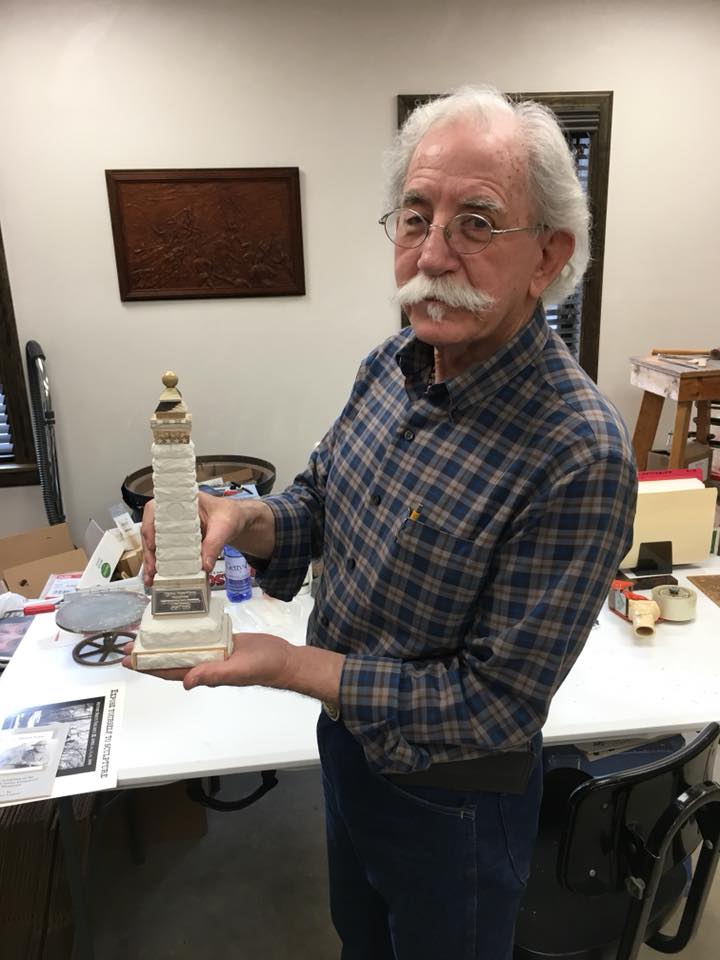
Gettysburg Longstreet monument sculptor Gary Casteel remarked, “Rogers is very well known as an American sculptor. More for his collection of small group settings rather than large public works. Both are excellent in detail and representation. His collection of CW related plaster cast pieces are quite well know and continually sought after by collectors to this day.” Rogers’ work was innovative, preferring to create his statuary based on every day, ordinary scenes from life. While Rogers’ work rarely made its way into art museums, it did grace the parlors, libraries and offices of Victorian homes around the world. However, there is one work that stands out among the rest, for subject matter, realism, and controversy.

1967.114_1.tif
                                                         Rogers’ Council of War.

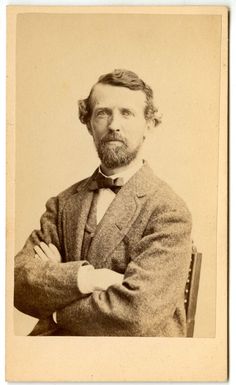
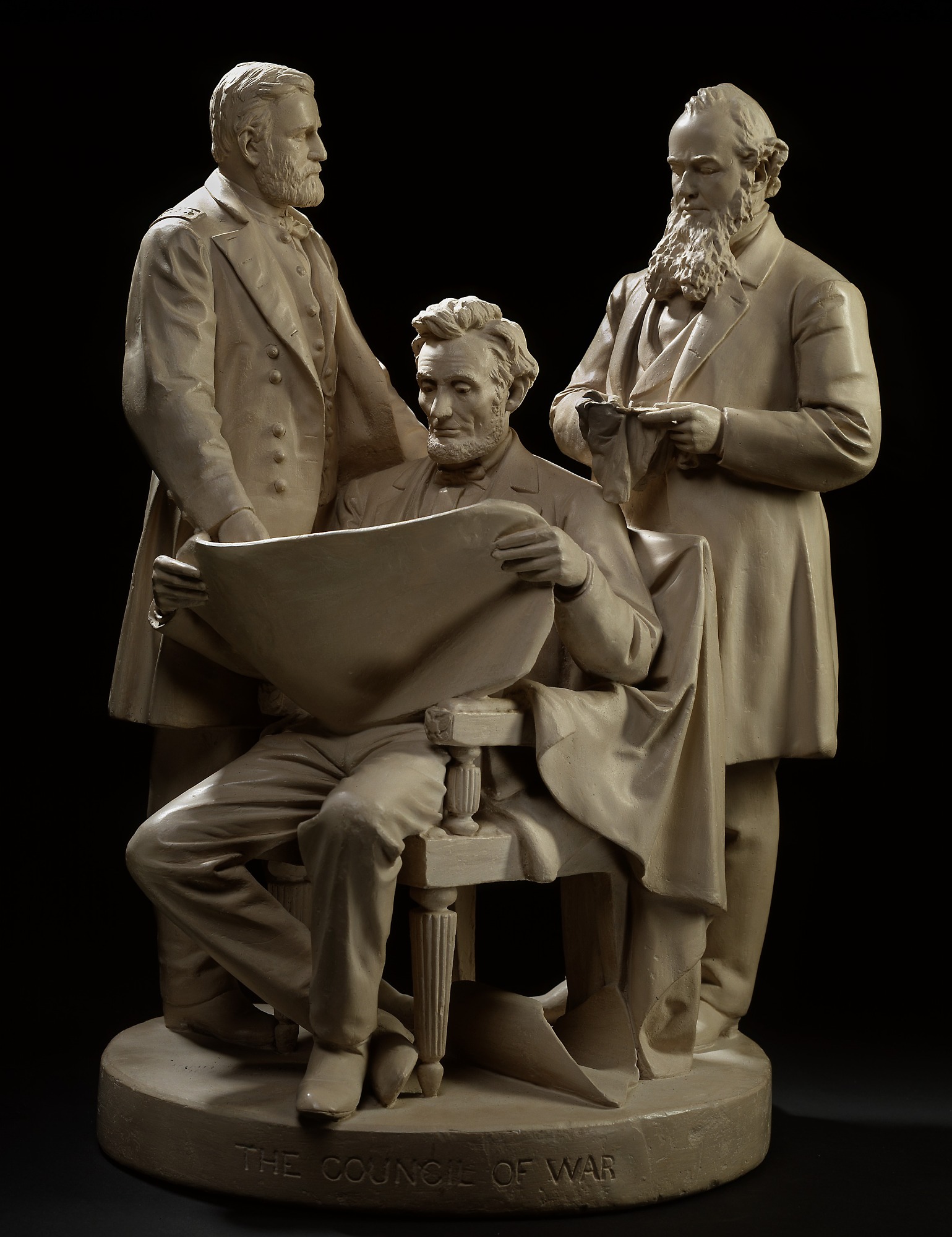
“The Council of War”, created in 1868, stands 24 inches tall and, like all of Rogers’ groups, was designed to fit perfectly on a round oak “ball and claw” footed parlor table. It depicts Abraham Lincoln seated in a chair, studying a map held in both hands, as General Ulysses S. Grant and Secretary of War Edwin Stanton confer over his shoulders. The June 1872 issue of the “American Historical Record” describes the scene: “The time is supposed to be early in March, 1864, just after Grant was appointed a Lieutenant-General and entrusted by Congress with the largess and discriminatory power as General-in-Chief of all the armies. The occasion was the Council at which the campaign of 1864 was determined upon, which was followed by Grant’s order on the 1st of May for the advance of the great armies of the Republic against the principal forces of the Confederates.”

31421516_1822681181096470_5411414843112554496_n

Gettysburg Sculptor Gary Casteel.

Both Robert Todd Lincoln and Edwin Stanton proclaimed this version of the President to be the best likeness of the man either had ever seen. Secretary Stanton wrote to the sculptor in May of 1872 stating, “I am highly gratified with the genius and artistic skill you have displayed. I think you were especially fortunate in your execution of the figure of President Lincoln. In form and feature it surpasses any effort to embody the expression of that great man which I have seen. The whole group is very natural and the work, like others from the same hand, well represents interesting incidents of the time.” Although the two surviving subjects received the piece positively, the public allegedly saw it differently: quite literally.
The controversy surrounding the pose arose based upon the positioning of Stanton behind Lincoln. Stanton, is posed polishing his spectacles, held in both hands, directly behind the President’s left ear approximately where Booth’s bullet entered Mr. Lincoln’s head. The pose is thought to have aroused the ire of collectors who believed the awkward positioning somehow stirred memories of the assassination. Hence, John Rogers made three versions of this particular group to appease those sympathies. Although the depictions of Grant and Lincoln remained the same in all three, Stanton’s hands were emptied and placed at his side in the second version and then changed back to polishing his glasses, this time forward of Lincoln’s head, in the third version. Some historians surmise the changes were affected due to the alleged theory of Stanton’s involvement in Lincoln’s murder that were circulating at the time. On the other hand, art historians claim the change was made for purely structural purposes and ease of casting to prevent breakage.
Modern day sculptors like Gary Casteel utilize many of the same methods as Rogers did a century-and-a-half ago, just as Rogers used those techniques he learned about while studying in Europe. Casteel, who like Rogers, also studied sculpture in Europe, says, “Every sculptor has his own way of sculpture production. However, there are probably similarities. I do a lot of detail as he did just simply because it’s my natural style.” The advantage that Gary Casteel has is the internet. Gary has a website and blog (Casteel Sculptures, LLC / Valley Arts Publishing) that walks his “fans” through the process of wood, wire & clay step-by-step. If you have an interest in the process, I highly recommend you subscribe to Gary’s blog. Watching Gary’s scale sculptures of the ornately detailed monuments of Gettysburg might better explain that Rogers’ changes in his Council of War group may not have been all about myth and urban legends after all.
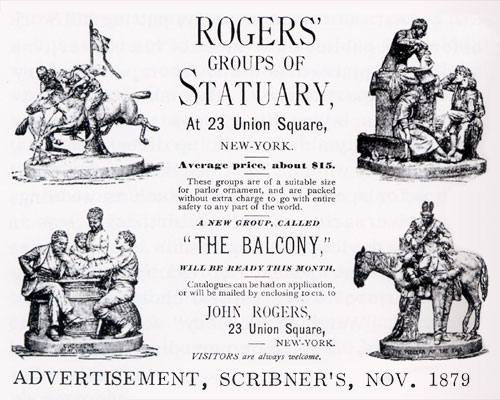
At the height of their popularity, Rogers’ figurines graced the parlors of homes in the United States and around the world. Most sold for $15 apiece (about $450 in 2020 dollars), the figurines were affordable to the middle class. Instead of working in bronze and marble, he sculpted in more affordable plaster, painted the color of putty to hide dust. Rogers was inspired by popular novels, poems and prints as well as the scenes he saw around him. By the 1880s, it seemed that families who did not have a John Rogers Group were not conforming to the times. Even Abraham Lincoln owned a John Rogers Group. My favorite account of a typical Rogers statue encounter comes from the Great American West. Libby Custer mentions in her book “Boots and Saddles” that her husband, General George Armstrong Custer, carried two prized John Rogers groups (“One More Shot” and “Mail Day”, both depicting Civil War soldiers) from post-to-post on the Western frontier including the couples’ final Indian outpost before the “Last Stand.”
z LibbyandGeorge1.jpg09082017

Libby and George Armstrong Custer.

Libby states, “Comparatively modern art was represented by two of the Rogers statuettes that we had carried about with us for years. Transportation for necessary household articles was often so limited it was sometimes a question whether anything that was not absolutely needed for the preservation of life should be taken with us, but our attachment for those little figures and the associations connected with them, made us study out a way always to carry them. At the end of each journey, we unboxed them ourselves, and sifted the sawdust through our fingers carefully, for the figures were invariably dismembered. My husband’s first occupation was to hang the few pictures and mend the statuettes. He glued on the broken portions and moulded (sic) putty in the crevices where the biscuit had crumbled. Sometimes he had to replace a bit that was lost… On one occasion we found the head of the figure entirely severed from the trunk. Nothing daunted, he fell to patching it up again… The distorted throat, made of unwieldy putty, gave the formally erect, soldierly neck a decided appearance of goiter. My laughter discouraged the impromptu artist, who for one moment felt that a “restoration” is not quite equal to the original. He declared that he would put a coat of gray paint overall, so that in a dim corner they might pass for new. I insisted that it should be a very dark corner!”
z rogersad-500

Another article, this one from the January 1926 issue of “Antiques” magazine, encapsulates the love-hate relationship for Rogers’ work: “The fact that Rogers groups are fragile has made them rare enough to arouse the interest of collectors, although I doubt that they will ever be widely collected or will ever acquire high values. They are too large to be comfortably collected in quantity. Nevertheless there might be some slight activity in Rogers groups among collectors of American antiques and it is to be hoped that existing examples will be preserved for the sake of what they express of life some forty years since.”
In 1878 Rogers opened a small studio at 13 Oenoke Ridge in New Canaan, Connecticut. By the 1890s, his work had largely fallen out of favor. Poor health forced his retirement in 1893. Rogers died at his New Canaan home on July 26, 1904. His studio was designated a U.S. National Historic Landmark in 1965. Rogers sculpted what he saw, drawing his inspiration from the everyday beauty observed by his own eye or that created by his mind’s eye while interpreting the literary works he valued most. Although he died in relative obscurity, his works live on as perfect representations of Victorian Era life at the crossroads of the Gilded Age and the Second Industrial Revolution.