Amusement Parks, Music, Pop Culture

Indiana Beach Music Scene (Part II).

Original publish date:  August 18, 2014 Reissue date: August 20, 2020

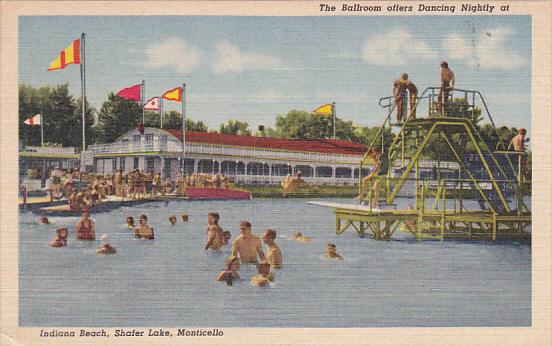
Last week, I shared the details of Janis Joplin’s visit to Indiana Beach in Monticello on August 14, 1968, 46 years ago. It still seems strange to me. The place most Hoosiers identify with the cartoon crow popping up out of a cornfield to squawk “There’s more than corn in Indiana” is the very same venue where Janis Joplin performed live for a crowd of 100. Not to mention, she strolled the midway before the show checking out the food and arcade games like any other 25-year-old. It got me to thinking, who else played the “Beach Ballroom” that I didn’t know about.
Since I never attended a single Indiana Beach show, I was fortunate to track down a couple fellows who did. Gary Brewer and Brad Long were gracious enough to share memories and files with me about the bands who played the park back in the day. Brad recalls, “I attended a few concerts at Indiana Beach years ago – Blue Cheer, Ohio Express, The Who, and Brownsville Station / Alice Cooper. I intended to continue my research and make a list of all the acts I could and all the dates they performed there, along with the opening acts from back then, who included The Chosen Few, REO Speedwagon, etc. IB was indeed a big music place in the sixties and I can remember that The Beach Boys, Byrds and Yardbirds were just a few who played there.”
Brad, a Logansport native, has an impressive list of bands with whom he’s performed and recorded with in his own right. He started playing in 1967 and his bands have included The Psychedelic Oranges, Celebrate, Tobias, The Lynx and Lincoln Supply Depot and has recorded albums on the Line Records label, whose artists included Jimi Hendrix and the Yardbirds. So, Brad has the necessary street cred to talk about Rock ‘n Roll at Indiana Beach in the 1970s.

Gary Brewer has an equally impressive musical pedigree and also recalls attending Indiana Beach concerts in the 1960s, “I used to go see some of the big name bands at Indiana Beach in the 60’s, my mom & sister & I vacationed there in ’68 and ’69, and I saw the Grassroots, Iron Butterfly & Lemon Pipers then… later in both of those summers, I persuaded some older band friends to take me there to see the vanilla fudge (twice). They also had local teen bands playing 6 nights a week in the ballroom, too, along with lounge bands upstairs above the tiki gods in the fountain.”
Gary, who used to play in Duke Tumatoe’s band and has ties to the Eastside of Indianapolis (his dad was a Tech grad), is an ex-guitar player with the Faith band. He recalls, “They (Faith) occasionally opened up for the bigger name bands in the ballroom, when they were still known as the Chosen Few. I saw them open for the vanilla fudge, and they also opened up for the Who. In 1968, the stage was facing towards the lake which I think they (Vanilla Fudge) had been swimming in (before the show), & the opening act was the Chosen Few (later known as Faith). The stage is back in that same spot now, pretty much.”


Indiana Beach Ballroom today.

“But, in 1969, i have mixed memories of it’s (the stage) location. When they (Vanilla Fudge) performed in the show, they were at the farthest end of the ballroom, facing towards the entrance & the game room, boardwalk, etc… but, it seems like, when they first arrived (late), they did a soundcheck, and were facing where the 1968 stage had been (opposite side of it). That doesn’t make a lot of sense, though, unless they moved the stage, for some reason? Or, there was another one? But, I think it’s a possibility that the stage was in one location for the soundcheck, and moved later for the show. Some of their equipment didn’t show up in time and they (The Chosen Few aka Faith) played with a scaled-down set-up. And during the soundcheck, they messed around with a led zeppelin song as they’d just taken them on their first U.S. tour a few months before.”
During Gary’s stint with the Faith Band, he recalls, “While were riding in the car somewhere, the Faith guitarist told some stories about the Who show. He said they were all having a party in one of the rooms (with the Who), and Keith Moon slipped off somewhere (he may’ve gone down the balcony). I think he ended up in an elderly lady’s room, and she came knocking at the band’s door, holding onto Keith’s earlobe, trying to return him!” When the Who played Indiana Beach in July of 1968, guitarist Pete Townshend knocked out a large chunk of the ballroom ceiling while destroying his guitar on stage. (It has since been patched but the spot may still be seen in the old ballroom.)
Gary, who hadn’t been back to Indiana Beach since 1969, drove back up there in the mid ’90’s, and says, “it was like going back in time. Except for a few new rides, it looked just as it did when I last visited there. Mr. Spackman, the owner, still walked the grounds daily, usually with an unknown, pretty girl in tow. I started driving back up there, on a regular basis, sometimes not even arriving until 30 minutes before closing. But, I’d take a few laps around the boardwalk, and that would last me until my next visit.”
Gary continued, “A few months ago, Mr. Spackman passed away, at the age of 100. I drove up for the funeral showing, and spoke to the family, all of whom had left Indiana Beach. They shared a funny story, around that time, of Cream’s appearance at Clowes Hall, in March of 1968. (I attended that show, by the way, and it was great!) After the show, Eric Clapton heard that B.B. King was playing that night at a local Knights of Columbus or possibly an American Legion or Eagles club, but, i’m pretty sure it was a K. of C., anyway, Eric was already friends with B.B. King, and wanted to go see him. So, they took Eric & Ginger Baker to the place. I didn’t know there was such a thing, but this particular K. of C., or whatever it was, was comprised of mainly black folks. But, they said they had a time with Ginger, because he was chasing all the girls around!”
Gary concludes by recalling, “I went to many of the shows back in those days…they were scattered around venues all over the city, many on the eastside. The Rivoli, The Irving and Melody Skateland…. the nationally-known surf band, the Astronauts, played on the steps of Eastgate once, back in the 60’s. and across the street, at the YMCA, were their weekly teen dances, which were legendary.”
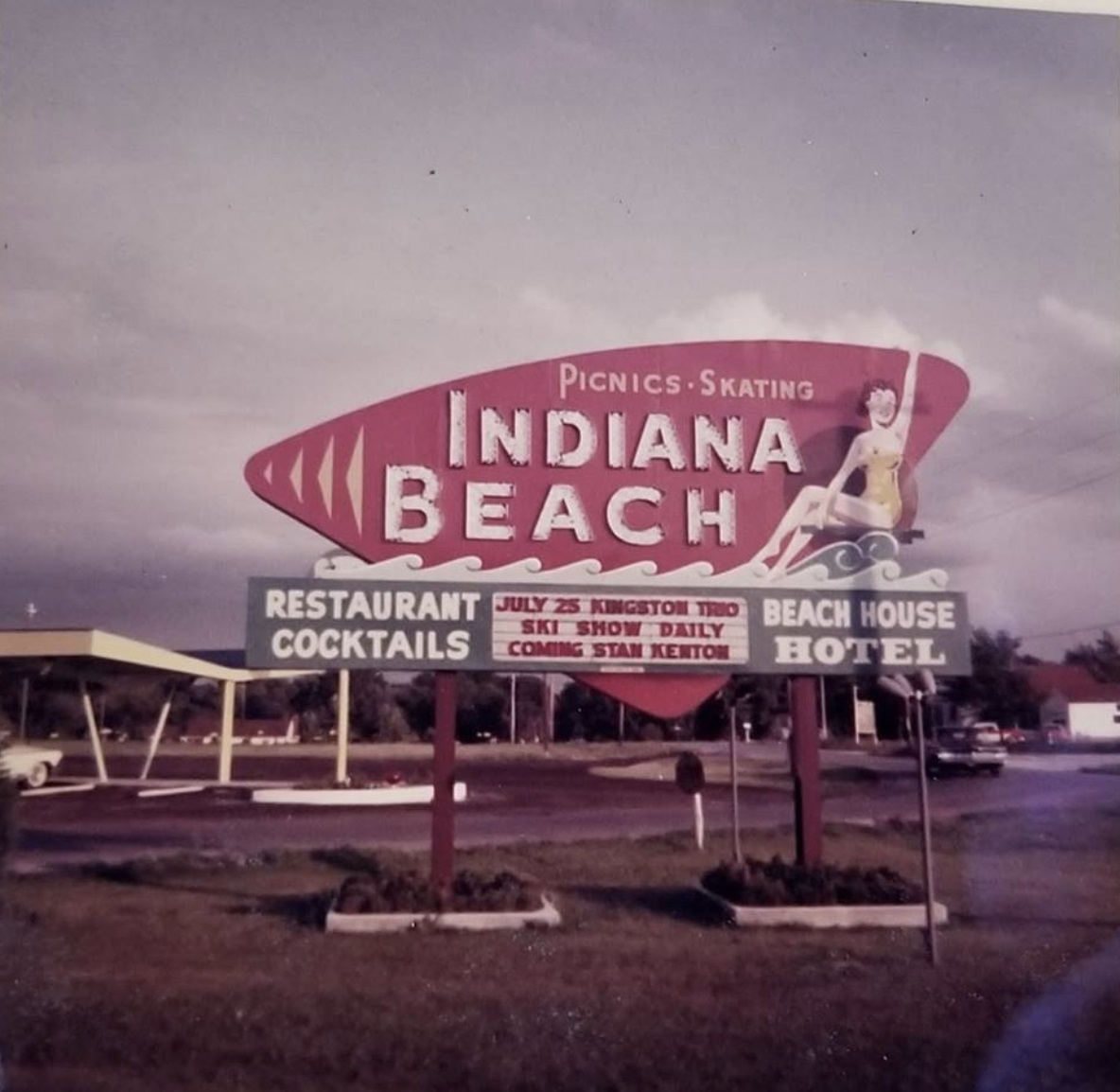

While it may not come as a surprise that big name bands played the Circle City back in the day, often stopping on the eastside for shows, concerts and partying, the idea of Indiana Beach being considered a hot music spot does come as a surprise. A 1968 Indiana Beach publication offers a picture of the Mothers of Invention with a young Frank Zappa, his Fu Manchu mustache and soul patch combo looking as “hip” today as it did in June of 1968. The Who belted out their hit “I Can See For Miles”, The Yardbirds sang their standard “For Your Love”, The Turtles’ performed “So Happy Together”, and Lovin’ Spoonful harmonized the classic “Summer In The City” live on stage at Indiana Beach.
Along with the shows came images of the band members roaming the midway, sunning on the beach, swimming in the lake, crashing the bumper cars and riding the rides alongside Hoosiers who had no idea who they were. Legend claims that the Turtles rode their motorcycles down the midway and that Cher took a long ride on the skyride. But wait, let me blow your mind with a partial list of bands and the dates they played the Beach Ballroom:

The Beach Boys July 19, 1963-Jerry Lee Lewis July 17, 1964-Everly Brothers July 31, 1964-The Kingsmen (Louie, Louie) July 9, 1965, Aug. 5, 1966, and July 21, 1967-The Byrds July 23, 1965-Righteous Brothers July 30, 1965-Sonny & Cher Aug. 20, 1965- Mitch Ryder & Detroit Wheels May 29, 1966…Lovin’ Spoonful June 24, 1966…The Mindbenders July 15, 1966…Paul Revere & the Raiders July 22, 1966-Simon & Garfunkel Aug. 5, 1966-Yardbirds Aug. 12, 1966 (with a young Jimmy Page on bass and Jeff Beck on guitar)-Tommy James & The Shondells June 2, 1967 (Crimson and Clover & Mony Mony)-Jefferson Airplane July 3, 1967-Sam the Sham & The Pharaohs Aug. 18, 1967 (Wooly Bully & Little Red Riding Hood)-Frank Zappa and The Mothers of Invention June 21, 1968-Gary Puckett & the Union Gap and Ohio Express June 28, 1968-The Who July 12, 1968-Janis Joplin/Big Brother and Holding Co. Aug. 14, 1968-Guess Who Aug. 29, 1968-Iron Butterfly with REO Speedwagon Aug. 30, 1968 (In-a-Gadda-Da-Vida)-Boyce & Hart Sept. 1, 1968 (I Wonder What She’s Doing Tonight & Last Train to Clarksville)-The Box Tops June 27, 1969 (The Letter)-Spencer Davis July 3, 1969 (Gimme Some Lovin’)-The Grass Roots July 11, 1969-REO Speedwagon July 3, 1970 & Chicago July 17, 1970 which is generally considered to be the last big show in the ballroom.
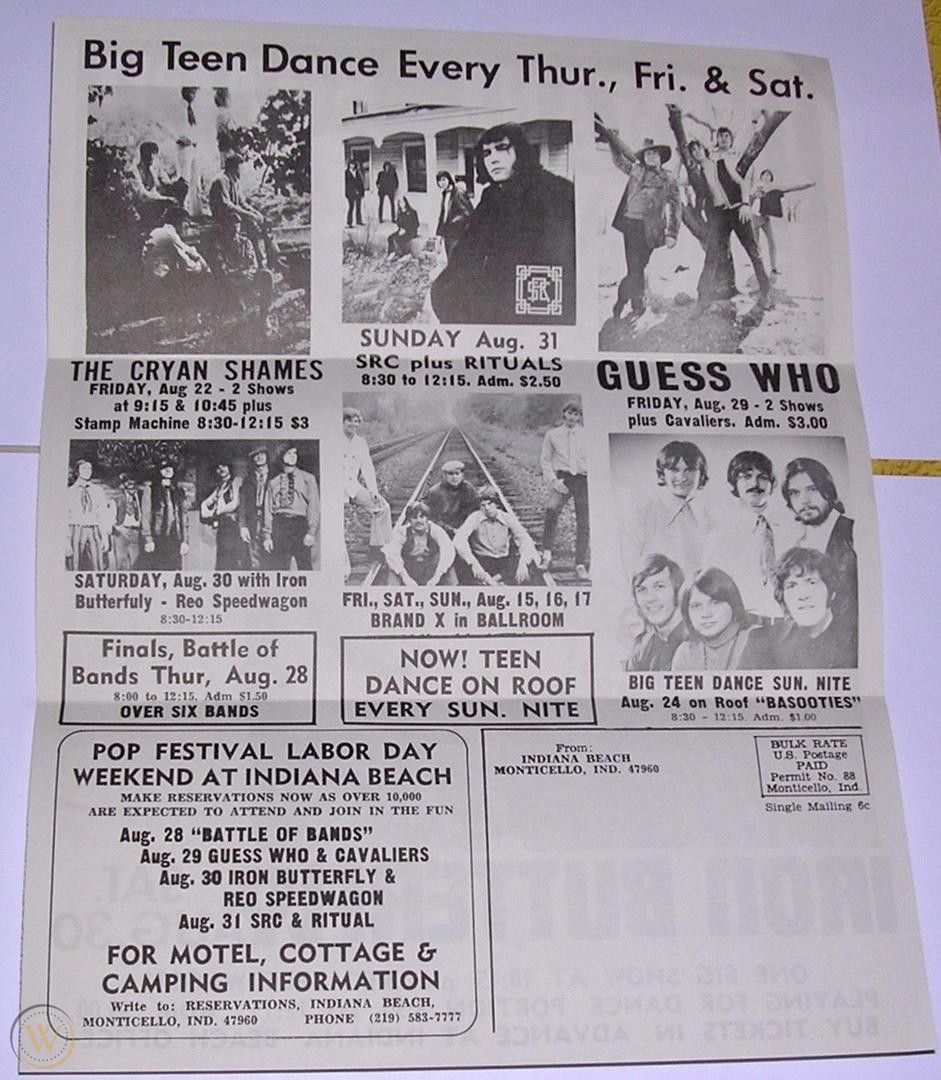
The Indiana Beach ballroom also hosted hundreds of other performances, including legendary big bands who drew massive crowds in the 1940s. Records from most of those performances at the Lake Shafer amusement park in the 1940s and early 1950s are sketchy at best. Some played more than one night, an entire weekend, a whole week of shows or even stayed and played for a month. Those acts included Glenn Miller June 1940-Benny Goodman June 25, 1941-Louis Armstrong June 12, 1955 and again on July 27, 1962-Tommy and Jimmy Dorsey June 28, 1955; Aug. 1, 1956-Dave Brubeck July 3, 1956-Bill Haley & the Comets May 31, 1957 & June 22, 1962 and Duke Ellington Aug. 20, 1957. The “Heart-throbs” and “Folkies” were well represented too with acts like Fabian, Ricky Nelson, Peter, Paul and Mary and the Kingston Trio.
The Monticello stop was usually sandwiched between gigs in Chicago and Indianapolis. By the early 1970s, cavernous arenas started to pop up for big rock tours. The arena rock era led to bands being more theatrical (Alice Cooper & Kiss, for example) and elaborate sound and lighting systems made places like the Indiana Beach Ballroom seem archaic and outdated. The list of legendary Indiana Beach bands are all but faded memories now. However, it is fun to think that back in the day, it was possible to drive an hour north of the city to see music history come alive in a room filled with less people than you might find at a Costco or Sam’s Club on any given Tuesday afternoon. And all this for the price of a $ 3.25 ticket.
Amusement Parks, Music, Pop Culture

Janis Joplin at Indiana Beach. Part I.

August 14, 1968 Janis Joplin Indiana Beach Part One August 18, 2014 picture

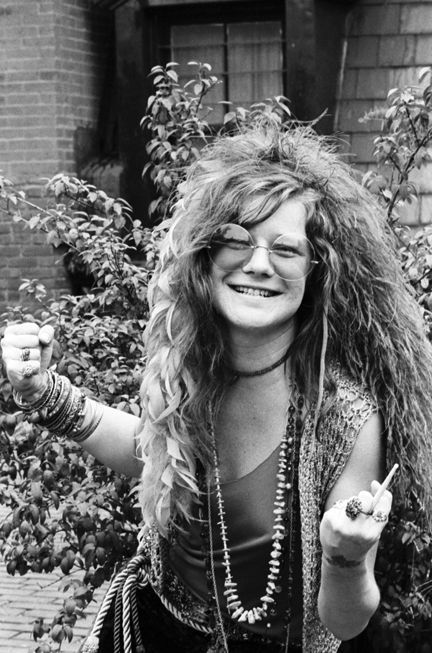
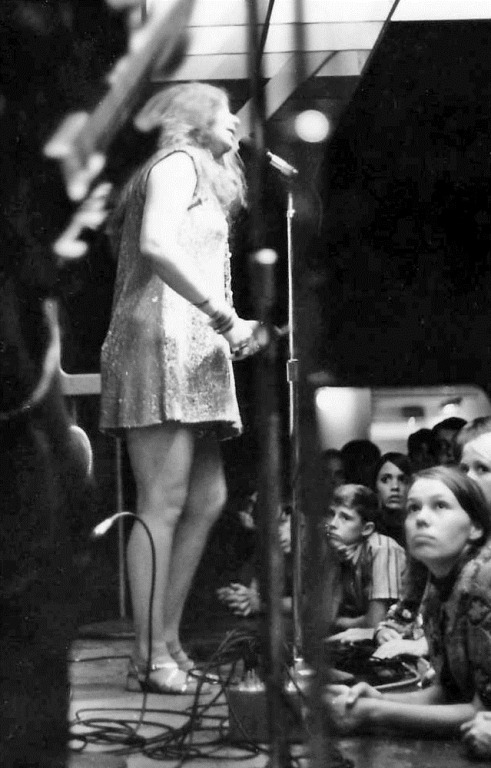
Janis Joplin on stage at Indiana Beach August 14, 1968.

Original publish date:  August 18, 2014 Reissue date: August 13, 2020

As the last gasps of summer slowly wheeze out of our lungs, I wanna take you back to 1968. America seemed to be coming apart at the seams. It was a presidential election year in the United States. The nation was divided by disputes about civil rights and the war in Vietnam. This seminal year became the backdrop for a confluence of independent yet related phenomena. It marked the end of LBJ’s “Great Society”, the country was ensnared in an unpopular war, campuses were alive with dissent, years of racial unrest were reaching a boiling point, women were burning bras, divorce was on the rise and the youth of the nation were finding their collective voice.


The culture was getting younger, like it or not. Styles and indulgences were taken to revolutionary status; drugs, music, clothing, sexual liberties, you name it and it was changing. There wasn’t a single institution left unchallenged by the nation’s youth. To top it all off, Martin Luther King, Jr. and Bobby Kennedy were tragically removed from the National stage at at time when both were needed most. In the critical year of 1968, as the atmosphere of threats, distrust, and violence poisoned the nation’s politics and public life, “Don’t trust anyone over 30” became the mantra. The blows to the national psyche were catastrophic, and were only exacerbated by the urban violence that accompanied both major parties’ political conventions that August.
But 1968 was a golden age for music..artistic expression..and political thesis. On August 14, 1968, 46 years ago this week, an iconic symbol of the sixties was breezing through Indiana. Was it Richard Nixon? Hubert Humphrey? The Beatles? No, it was Janis Joplin and she was rockin’ the main stage in the “Beach Ballroom” at Indiana Beach. Yes, Indiana Beach in Monticello, Indiana.


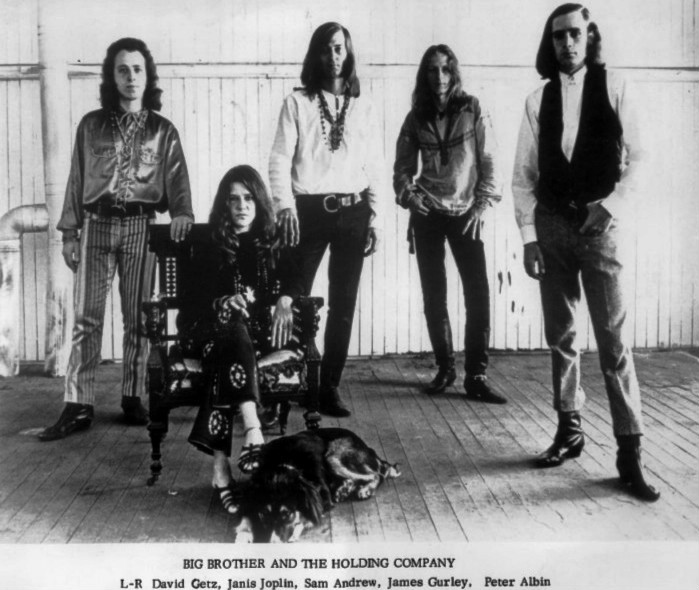
At the time, 25-year-old Janis Lyn Joplin was the lead singer of the psychedelic-acid rock band Big Brother and the Holding Company. Her performance at Indiana Beach came a year after her breakthrough performance at the Monterey Pop Festival and a year and 3 days before she stormed Woodstock with the Kozmic Blues Band on her way to becoming an American Rock n’ Roll legend.
Janis and Big Brother played for a crowd of about 100 people on that Wednesday night. Before the show, while the roadies were setting up the equipment, Janis casually strolled the midway through the games and rides and none of the park visitors bothered her. She later told friends that she “was just having a good old time.” No-one hassled Janis, no-one asked her for autographs, no-one screamed or hollered or caused a scene. Half the people didn’t even know who she was.


For the show, Janis and the band performed on the north stage that faced south. Although no playlist from that particular show exists, the Indiana Beach concert came just two days after the band released their second album, “Cheap Thrills” on August 12, 1968. So it is reasonable to deduce that Janis belted out classics like “Down on me” and “Easy Rider” from their self titled 1967 debut album along with new standards like “Summertime”, “Ball and chain” and “Piece of my heart” from the new album.
A concert at Indiana Beach in the 1960s was like going to the State Fair with the smell of grilling burgers and popping popcorn wafting in from the midway. “It had that carnival atmosphere,” one fan remembered. “It was like going to a big party.” Those who had front-row seats left with unforgettable memories. But with the passage of time, physical evidence has faded away and memorabilia has been long ago tossed in the trash or stowed away in long-forgotten boxes in the attics of Northern Indiana.


The White County Historical Museum is one of the very few places where memorabilia from Indiana Beach Concerts may be found. The museum has a collection of 1960s Era newsletters from the venue known as the “Indiana Beach Preview” and later “Happenings”. Even these newsletters change tone as the decade marches on with the early versions promoting what the park rather innocently called “Dance-In Experiences”. By the late 1960s, these same events were being called a “Psychedelic Experience & Musical Explosion”. Browse through these newsletters today and you will find bubblegum acts like Brenda Lee (I’m sorry, Sweet Nothin’s, Rockin around the Christmas Tree) to Big Bands to Beach Boy look-alike garage bands to the Beach Boys themselves. In these newsletters, music trends and styles change before the reader’s eyes. By 1968, psychedelic and hard rocker bands sporting mutton chops, long hair and wearing dashikis were showing up at Indiana Beach.

Some concert photographs and ticket stubs survive, but posters, contracts and other documentation have essentially vanished. Not even the Spackman family, former owners of Indiana Beach, know where such memorabilia can be found. Nobody was thinking in terms of posterity or Rock ‘n Roll history back then, they were just trying to get more kids into the amusement park to spend money on rides, midway games and food. Had they realized back then that today, those contracts and memorabilia would sell for a day’s receipts at auction, they most certainly would have saved them. By the way, a ticket to see Janis Joplin with Big Brother and the holding company sold for $ 3.10. Amazing huh?
Today, the Beach ballroom sits quietly behind the Indiana Beach arcade never betraying the Rock n’ Roll history it once held sway over. Few people enter the ballroom or even take notice of it. Inside, there’s an odd mix of outdated furniture as well as the old DJ booth. The cement floor remains that once withstood thousands of feet each summer all dancing to the sounds of rock ‘n’ roll royalty. The old stage stood on the north side of the ballroom allowing for a large space for standing room only crowds. The walls opened up to allow people from the outside as well as those docked on their boats, to see and hear the bands if necessary. (Did I mention only 100 people showed up to see Janis?) The ballroom can still be reserved for events, but most live bands now choose to play in the Rooftop Lounge, a bar just a short walk from the historic ballroom. A newer stage was built in the 1970s long after Janis Joplin’s raw, emotional voice pierced the summer air along Lake Shafer.


By the time Janis Joplin finished her set at Indiana Beach, she was on her way to becoming a legend. Big Brother and The Holding Company left Indiana for a gig at the Aragon ballroom in Chicago on August 16-17. By now publicists and media were calling the band “Janis Joplin and Big Brother and The Holding Company”, which led to dissension among the band. The other members thought that Joplin was on a “star trip”, while others were telling Joplin that Big Brother was a terrible band and that she ought to dump them. On August 18 Big Brother played the Tyrone Guthrie Theater in Minneapolis. On August 23 they were playing the Singer Bowl in New York City and just over 2 weeks after performing at Indiana Beach, Big Brother was playing the Palace of Fine Arts in San Francisco. It was at this show where Janis Joplin announced that she will leave the band at the end of fall tour.
In 1968, Time magazine called Joplin “probably the most powerful singer to emerge from the white rock movement”, and Richard Goldstein wrote for the May issue of Vogue magazine that Joplin was “the most staggering leading woman in rock… she slinks like tar, scowls like war… clutching the knees of a final stanza, begging it not to leave… Janis Joplin can sing the chic off any listener.” Her final show as a member of Big Brother was December 1, 1968 at the Family Dog Benefit in San Francisco. She had been a member of the band for two and a half years. From that day on, although she toured with a backup band, she would become Janis Joplin. By early 1969, Joplin was allegedly shooting at least $200 worth of heroin per day. But for that one brief shining moment in Monticello, Indiana, Janis Joplin innocently strolled the carnival midway as just another average kid. The rest, as they say, is history.

If this article about Indiana Beach “blows your mind”, wait til next week when I tell you about some other big name acts that played there. It will be groovy man. Tune in, turn on, tune out…next week.


Next Week: Indiana Beach Part II

Criminals, Indianapolis, Museums, National Park Service, Pop Culture

A Hoosier Guard on Alcatraz PART IV

Albright Part IV
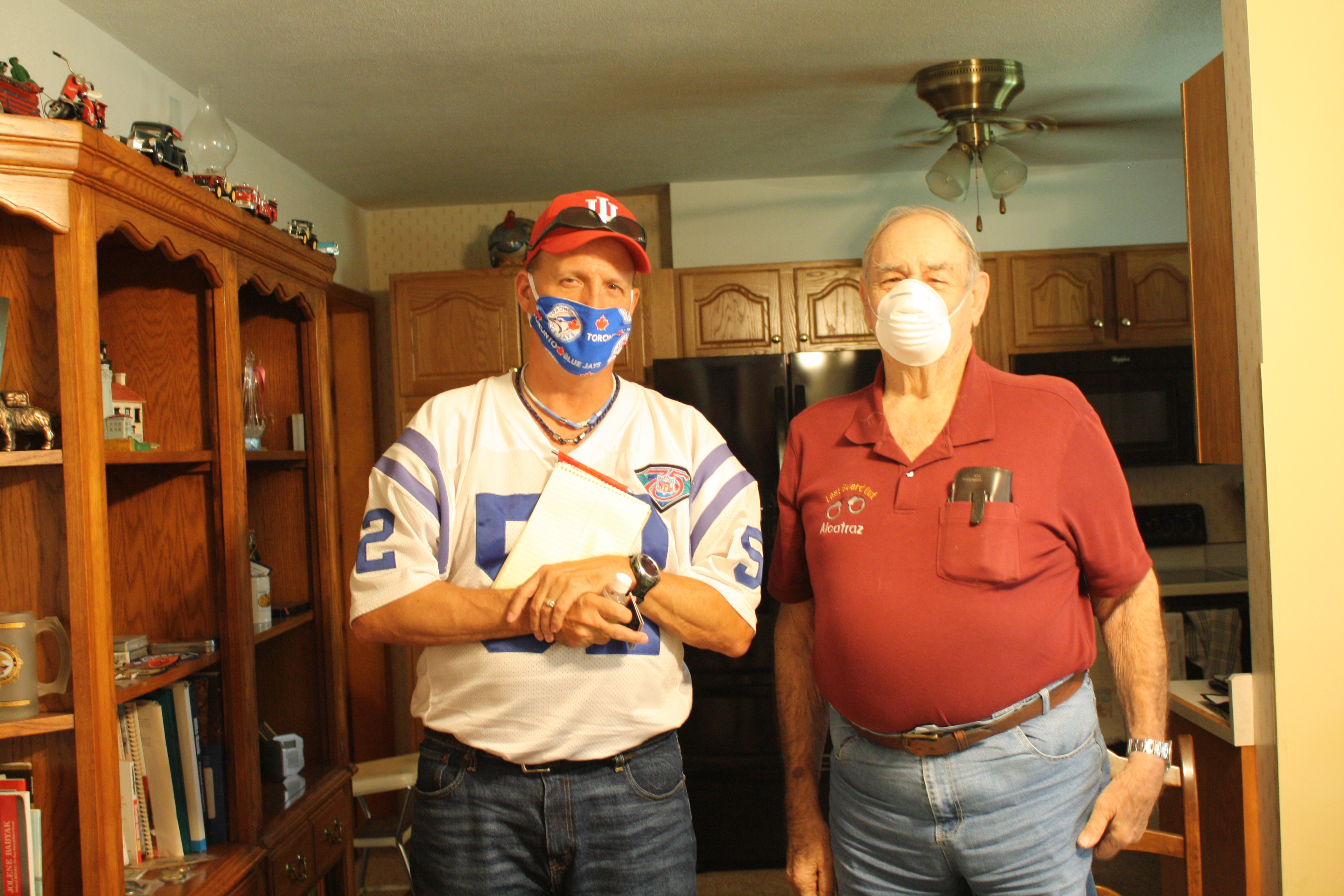
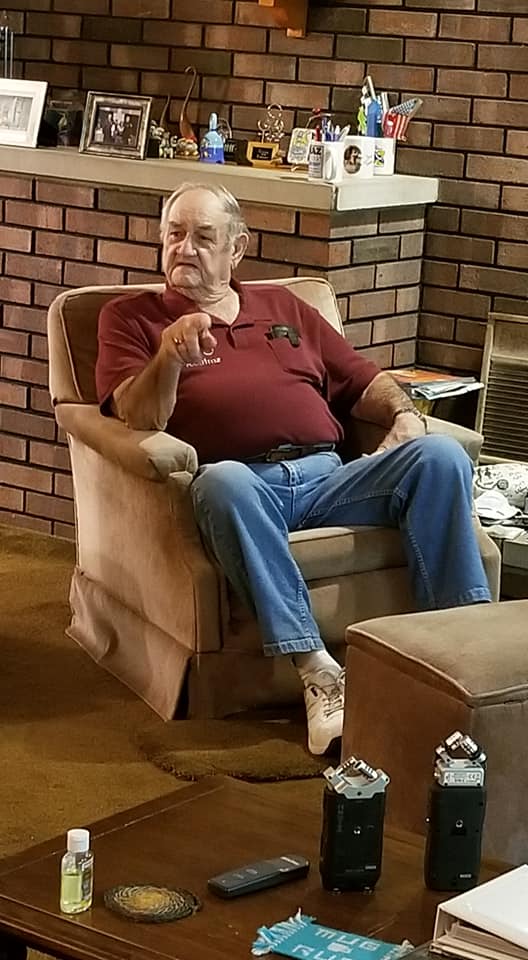
The author and Jim Albright at the Albright family home in Terre Haute.

Original publish date:  July 30, 2020

I asked guard Jim Albright what he remembers about the closing of Alcatraz prison in March of 1963, in particular the visit by Attorney General Robert F. Kennedy. “Oh yeah. I remember. He toured the island and had about 50 bodyguards all around him. He didn’t want any of those bad guys to get near him.” Jim can still recall the names and numbers of the infamous inmates on the island when he was there. “Whitey Bulger # 1428, Alvin Creepy Karpis # 325. Alvin was the lowest number left when I was there. Alvin did more time on the island than any other convict. He did just straight at 26 years.” Jim recalls both Bulger and Karpis as “good cons”, both were “quiet and respectful when they spoke to you.” However Jim does say this about Karpis, a notorious kidnapper with the Ma Barker gang, “He was creepy, oh yeah, he was creepy.” Jim states, “I always treated them like I would have wanted to be treated had I been the convict. My job was not to punish them, my job was security.”z ce unnamed
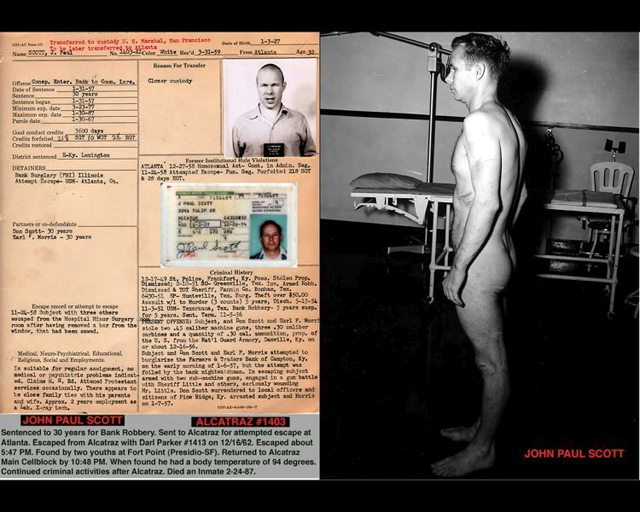
Jim recalls, “Everybody talks about that escape in the Clint Eastwood movie, but I was on duty for the last escape from Alcatraz. John Paul Scott # 1503. December 16, 1962. That was 25 years, almost to the day from the first escape. I was in the control center. I got the call on the red phone, that’s the emergency phone, and you ‘dial the deuces’ as they call it, 222. ‘Jim get me some help, I got a couple missing from the kitchen basement’ was all I heard.” It was Jim Albright’s responsibility to call out the news, order the boat and man the towers for that final escape. Once again displaying his amazing recall after nearly 60 years, Jim says, “Darrel and Don Pickens, they were from Arizona, and they were both red haired and red freckles, red faced…I put them out in # 2 and # 3 towers and every thing’s going along and pretty soon they’re yelling.” They had found Scott’s fellow escapee Daryl D. Parker clinging for life on “Little Alcatraz” (a small rock in San Francisco Bay roughly 80 yards off the northwest side of the Island). Scott, by now naked and battered senseless, came to rest on a rocky outcropping in the bay near Fort Point. He was brought back to the Rock.z JOHN PAUL SCOTT L

z ja fw
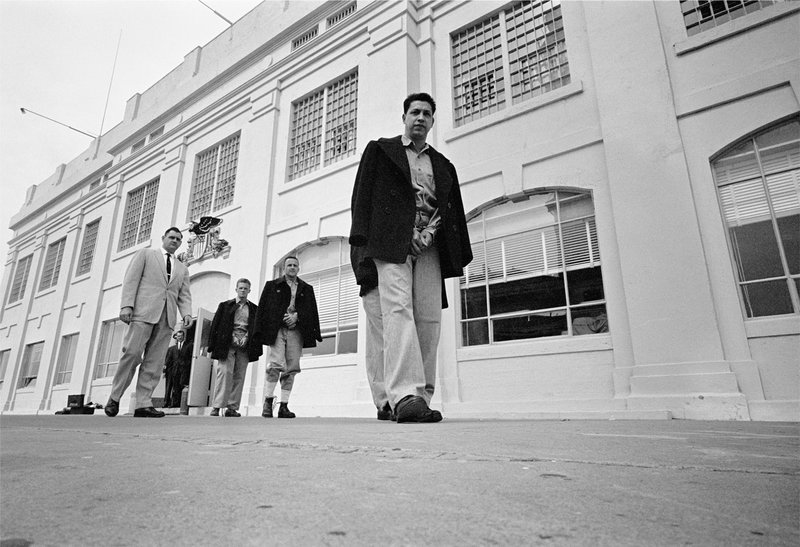
Frank Weatherman & Jim Albright (far right)

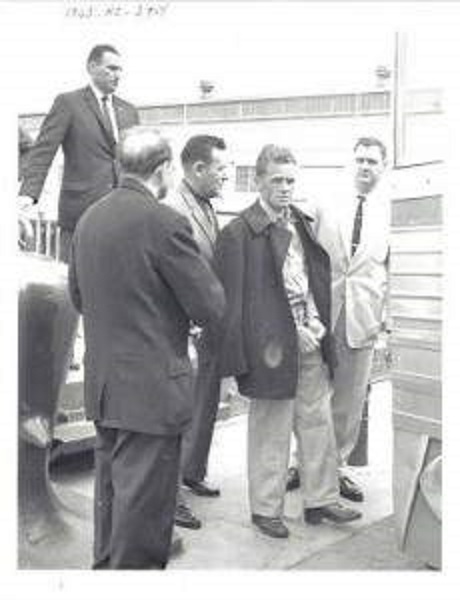
“I escorted the last inmate off the island, Frank Weatherman # 1576. We never had reporters, they were never allowed on the island but that day (of the closing) we probably had 250 of ’em, from all walks of news. One of ’em almost got in line as we’re heading out and asked me ‘what do you think about this?’ as we’re walking and I said, ‘Hey! I’m still working. My job is going on right now. The biggest thing I gotta watch right now is that one of you damned idiots don’t give ’em something they can escape with. Afterwards, I thought, Jim, keep your big mouth shut.” I asked Cathy where she was during that final prisoner walk down to the dock and she answered, “I was on the balcony watching. I was filming it.” Jim says, “We took the film to get it developed, but never got it back.” Cathy answers, “Somebody’s got it but we don’t.” Cathy also notes, “Well the inmates did not want Alcatraz to close. Some of them cried when they left because where they were going they might have to go to a 4-or-5-man cell, Alcatraz was single cells and they liked that.” Jim adds, “Some of them went, and Creepy Karpis was one of em, to McNeil Island in Washington and they had 10-man cells up there. Creepy, for 25, 26 years almost was used to a one man cell. They finally paroled him and deported him to Canada…from there he went to Spain. I guess he couldn’t take being free, cause he hung himself.”

z stroud-1b
Inmate # 594: Robert Stroud aka The Birdman of Alcatraz.

Jim missed Robert Stroud, the infamous “Birdman of Alcatraz”, by just a few days. “I went there in August and he left in July. But I heard all the stories about him,” Jim recalls. “He was not liked by inmates or staff, either one. You talk about somebody no good, that was him…He was a weird old, nasty guy.” Jim and Cathy remained on the island for three months after that last inmate was escorted onto the boat by Officer Albright himself. It was only afterwards that the couple allowed themselves a little luxury, “We were there March to June. We moved from 64 building over across the parade ground to the city side…They had what they called B & C apartments, these were nicer apartments, they had fireplaces in them.” Jim smiles as he recalls Alcatraz historian and author Jerry Champion jokingly asking, “You had a fireplace did ya? Where’d you get your firewood?” (There are no trees on Alcatraz island).

z 920x920
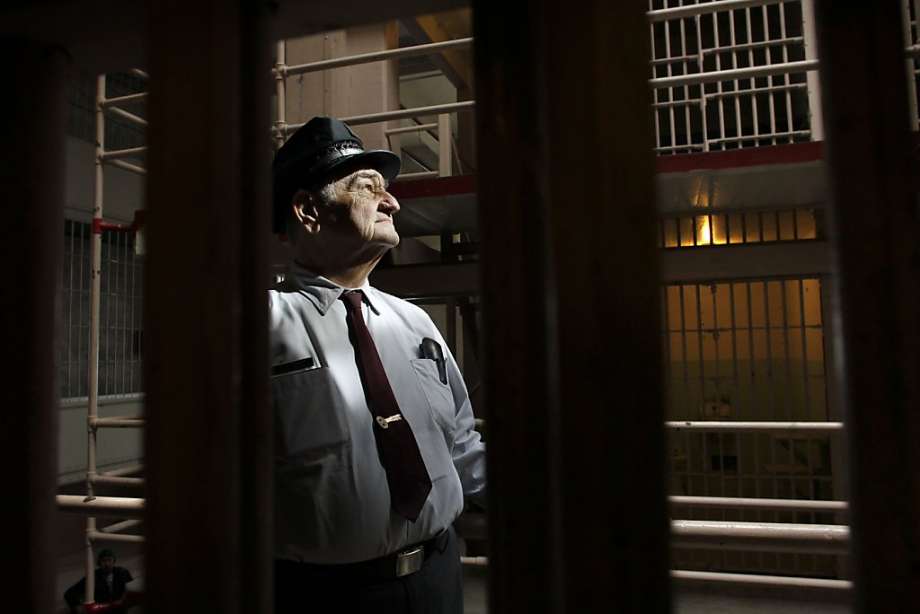
Jim Albright returns to Alcatraz.

Jim guesses that there may be a “half a dozen or less” Alcatraz guards still living, and “two of them are in wheelchairs” and the former guard estimates the same for the former convicts. Cathy notes that the inmates used to come to the reunions too and Jim recalls that it took awhile for the inmates to show up because “they were ashamed of what the guards would think, ya know.” But spend five minutes with Jim Albright and you quickly realize that he was never one to hold a grudge. Officer Albright is simply not the judging kind. Jim Albright is a people person. He enjoys meeting people and loves to see their reactions when he shares his story, especially when he reveals that they lived on the island. “As soon as I tell them that and point to my wife, it’s “FWEET!” (he says with a whistle and grin), they go right over to her and I’ve lost ’em.”
For many years, Jim and Cathy traveled by train from Terre Haute to San Francisco, a 2 1/4 day’s travel from nearby Galesburg, Illinois. “There used to be 150 people come out to those reunions, but then it got down to 30 cause there’s just nobody left.” Because of the current situation with Covid-19, the couple’s trip has been postponed. Cathy admits, “Well, we’re all getting older” and Jim chimes in, “And that’s the thing about not going in August, that means that last August was probably our last time going out there. The odds are against us.” Jim and Cathy fear that the alumni association will soon be no more. “There’s just not enough of ’em left,” Cathy says.
z DYwvoC_VAAABixRA week after our visit to Jim and Cathy Albright, the United States Supreme Court lifted the ban on executions at the Terre Haute penitentiary located a mere three miles from their front door. At the time of this writing, there had been three executions in four days. While there were never any State sanctioned executions at Alcatraz, there was not much rehabilitation taking place there either. Convicts were different back then, some actually viewed it as a profession. When asked about the convicts of today, Jim simply shakes his head and says, “They were more like professional convicts ya know ‘I did the crime, I’ll do the time’. It’s just not the same. It’s a different world now.”
In his book, Jim wrote quite eloquently of his feelings on that last day, “Emotions of prison personnel were very strong and it was hard to accept that all the convicts were gone…I boarded the boat for the last time as a guard on Alcatraz. I though to myself, what an experience I had just completed, and how fast the time went by. I felt tears grow in my eyes as the boat went across the water to Fort Mason.” I asked the couple individually, if they could make one statement about the Rock, what would it be? Cathy answered, “Well, I really liked the place. I did not want to leave. It was one big family… It was something special. It was home.” Jim reflected for a few moments, titled his head back as if looking through the mist of time, and replied, “A very enjoyable life living on the island and a very safe place to raise our children.”

z EBT-L-ALCATRAZ-0813-10
The Rock.

Alcatraz Federal Penitentiary has been closed for over 57 years now. During that time it has become more myth than reality. Alcatraz Island encompasses a total of 22 acres in the center of San Francisco Bay. It opened to the public in fall 1973 and since that time has hosted millions of people from every corner of the world. The flood of people who once lived on the island during the time it was the world’s most famous prison has trickled to a slow drip. However, there remains one couple living on the western edge of the Hoosier state who know that sometimes, even if they don’t consider themselves as such, legends are real and history is the foundation of all that is worthy in life.

519kJvKIU8L._SL500_

Criminals, Museums, National Park Service, Pop Culture, Travel

A Hoosier Guard on Alcatraz PART III

Albright Part III
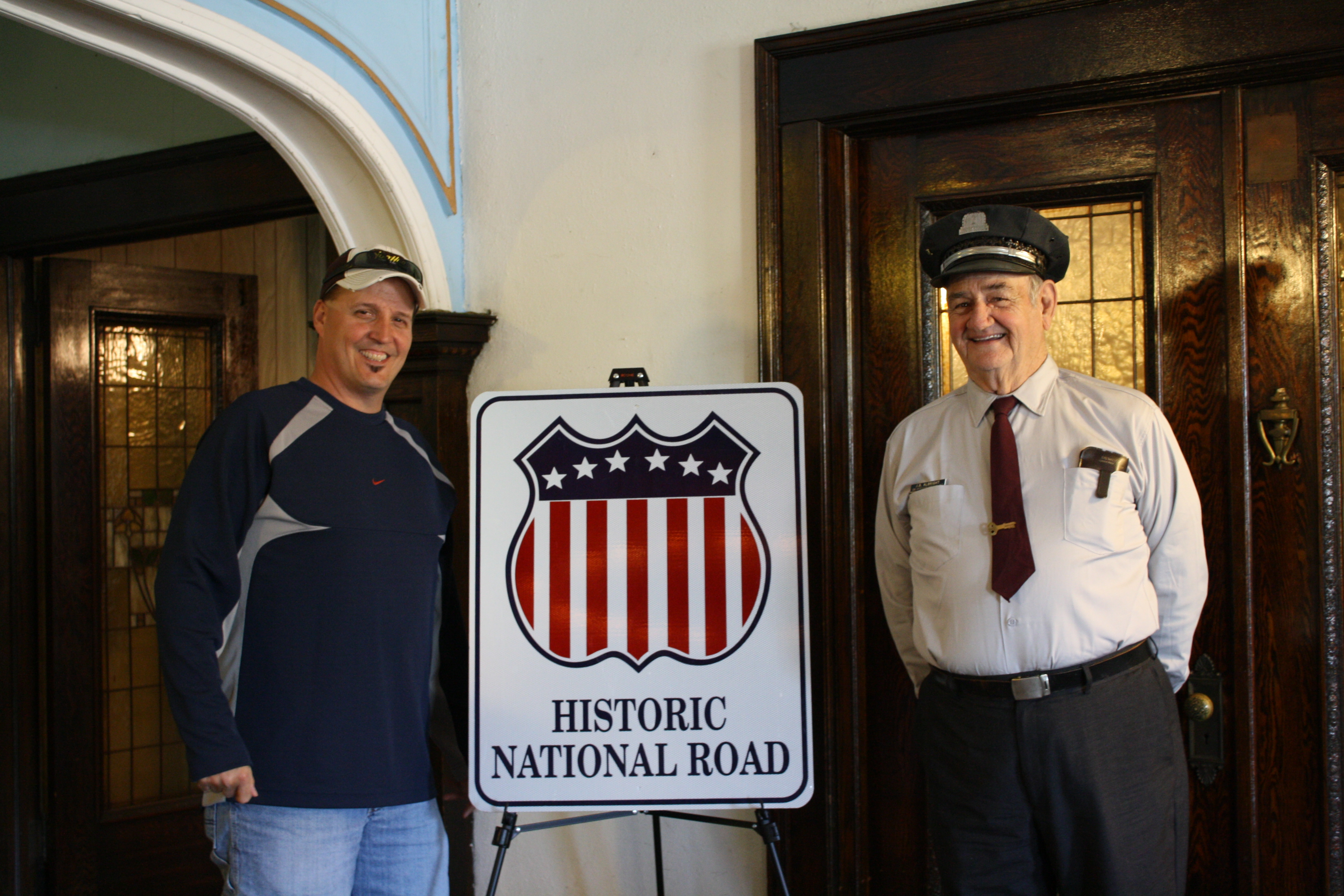
The author and Jim Albright-Indiana National Road Meeting at Brazil Lodge in 2010.

Original publish date:  July 23, 2020

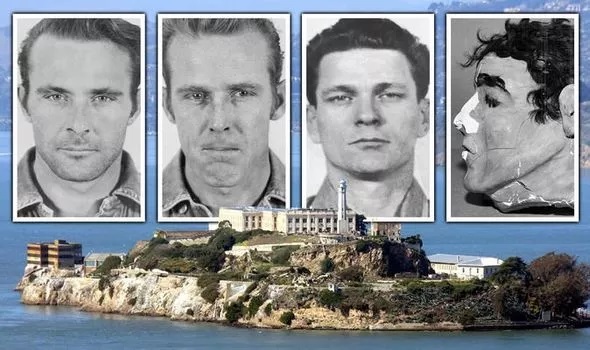
Jim Albright was on duty the night the most famous escape from Alcatraz took place. On June 11, 1962, Frank Morris, Clarence Anglin and his brother John escaped through a hole in the back of their cells, the details of which were chronicled in Clint Eastwood’s 1979 film, “Escape From Alcatraz.” Albright recalled the escape in his 2008 book, “Last Guard Out. A Riveting Account By The Last Guard To Leave Alcatraz” (available at Amazon), “The movie showed them escaping off Broadway and that is not correct. In real life they escaped off Seedy Avenue (outside of B Block).” Jim also points out that the movie showed Eastwood stealing a pair of fingernail clippers off the Warden’s desk, “This would not have been necessary as each inmate was issued a pair when they first arrive at the prison.”

z 1962-Alcatraz-prison-break-1249788
The Anglin Brothers, Morris & a dummy head.

On the night of the escape, Jim recalled, “I had been over in town playing ball and I stepped in a gopher hole and twisted my knee, so they give me some crutches. The next morning (after the escape was discovered), I’m crutching up the hill when I run into the Lieutenant and he says ‘we got some missing’ and orders me to watch the back of the cell house.” Later, Jim went inside the cellhouse to “see what was going on.” He looked in Anglin’s cell and saw the false head. “They got dummy heads up there now that look like I made them. The dummy head I saw that morning looked very real. They did a good job, in fact, when I saw it I thought I had the wrong cell, it looked that real.”
Also in his book, Jim vividly remembers the events leading up to the bustout (“I told them those blankets should not be there”), the escape (“After the escape I was placed on roof detail after night fell, with a pistol and flashlight. I couldn’t flash very often because of limited mobility with crutches.”) and the aftermath (“The inmates had a field day teasing, laughing, comments, etc., toward the guards in the immediate time after the escape.”). “John Anglin was the older brother and John worked for me in the clothing room, so I knew John real well,” Jim believes, “I strongly feel the Anglin brothers probably killed (Frank) Morris to lesson the weight of the raft, and they in turn drowned and washed out to sea…I think about it even after all these years and realize that I too was a part of all of this.” The after effects are still visible. Several times during the story, Jim would stop, shake his head, and say “Them damn blankets.”
Likewise, Cathy recalls the escape from her unique perspective. “I was downstairs with the kids visiting with Betty Miller and we heard this alarm go off. Well, that means you don’t leave where you’re at and I’m down there and I’ve got two kids in diapers and didn’t have any extra diapers so we used towels for diapers until I could go. They searched Betty’s place and then they searched my apartment. But as far as being afraid, I never was, I really felt safer there than I did some other places.”

z 14492243666_6a483a88fc_c
Tom Reeves, Jr.’s reconstructed water tower on Alcatraz.

When I asked Jim about the current trend of tearing down monuments, he recalled the Native American Indian occupation of Alcatraz that took place from 1969 to 1971, years after the Albrights’ left the island. “When the original water tower was replaced after it was rusting away and pieces were falling off of it, they hired a guy, a former kid named Tom Reeves, Jr. who was teenager living on the island when I was there, his dad worked in the hospital as an MTA, his stepmom worked in town as a nurse.” the old guard chuckles as a memory bubbles up, “Tom had a little scheme going when he was in high school, everybody wanted to go to Alcatraz. All of his buddies, everybody in the school wanted to go to Alcatraz. Tom would say ‘I will take you to Alcatraz for two bucks’ so he’d get 3 or 4 guys, get two bucks a piece, bring ’em over and show ’em the island and take ’em back. The Warden found out about it and he wasn’t happy.”

IMG_0117
Cathy and Jim Albright.

After the laughter died down, Jim continued, “Tom grew up and became an engineer. He has an office in San Francisco, Seattle and somewhere in Hawaii, he was that big. So he engineered the repair of that water tower to make it look just as it did when we were there so that it would hold up. And it looked like new. And then they went and put Indian Graffiti back on it. And I asked (National Park Service Ranger) John Cantwell why they did that and Cantwell’s answer was, ‘Jim, love it or hate it, that is part of our history.'” Jim points out that Reeves, Jr. and his company restored the water tower and helped preserve several of the decaying buildings, including the steel tie-rods used to shore up the Warden’s House that was burnt during the Indian occupation, “at no charge, he did all that for free, he didn’t charge ’em a dime.” Jim and the Alcatraz alumni association wanted to place a plaque near the water tower thanking Reeves, Jr., as a former resident and benefactor, but the Park Service wouldn’t let them.
z Ghiradeli_54_990x660Jim’s recollections about his time on the island are limitless, he can affirm or deny legends about the island with ease. He relates details as if they happened yesterday. “The best cell placement on the island was the second tier because you could look out to see and hear San Francisco. On New Years especially, you could hear the parties and watch the party boats go past. When I was there, Ghiardelli Chocolate factory was still operational and you could smell that chocolate cooking when the breeze was just right.” He continues, “Al, you’ll like this, when I was in the tower, if one of those boats got too close to the island, I’d warn them with a bullhorn and if they didn’t listen, I could fire a shot across their bow. They moved then,” says the veteran guard. The prisoners were aware of the rumor that the island was patrolled by sharks, “Well the prisoners heard the rumor that the guards went down and caught all the sharks and cut the left fin off to make them swim in a circle around the island and we guards didn’t do anything to change their mind.”
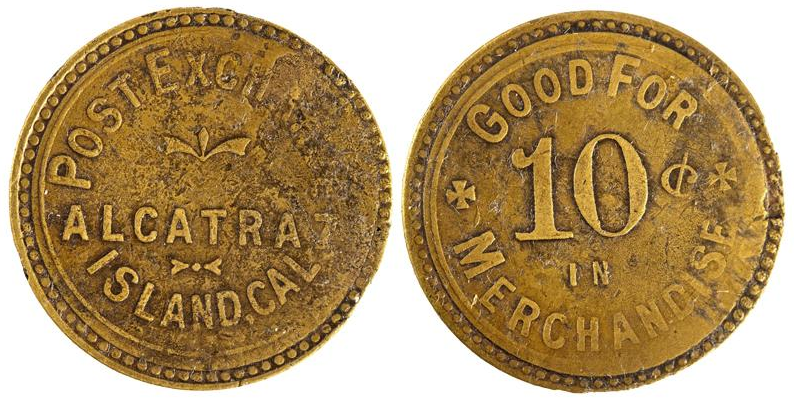
z shutterstock_743324311.0Jim recalls patrolling the perimeter of the island and occasionally finding relics left over by military personnel during the time Alcatraz was in operation as a military fort guarding the bay from the Civil War up into World War II. Jim would see the old tokens gleaming in the moonlite at water’s edge, “I found script, I guess you’d call it. I think I’ve still got a dime, a fifty cent piece and a quarter around here somewhere.” He continues, “the guys would fish, there was a bout a half a dozen of them, down below the industries building. When you were dock and patrolman, there was a list, when you walked into the dock office, and when you saw the stripe bass running, you looked on that list and you’d call those guys who wanted to fish, anytime day or night, and you could make another round and when yo came back there could be anywhere from ten to thirty guys down there fishing. They made a Formica chute where they’d filet them right there on the spot and give the scraps to the seagulls. Quite often, you could help yourself to as many filets as you wanted. The head chef loved it cause they’d catch enough to feed the whole main line of prisoners.” I asked Jim if he ate the same meals the convicts ate. “When I first started there, I went thru the line and took my food back to a table in the kitchen. then they built us an officer’s dining room upstairs. The food was good.” Jim says the Alcatraz convicts, “had the best food in the prison service. Good food keeps trouble down.”
Screenshot (163)
Alcatraz “script” tokens.

Cathy chuckles as she recalls Blackie Audett (a longtime convict who worked in the kitchen). “Whenever I baked cookies, I’d lay them out on the window sill to cool. Every time I baked cookies, there would be 3 or 4 officers, I counted 10 one time, that would knock on the door and say, ‘Hey you’re making cookies, I want a few.’ And I asked Jim how did they know? Well, come to find out, that Blackie Audett could look out of that dining room window into my kitchen and see my cookies. Well, that scared the heck out of me. I wondered if he can see in the kitchen window, can he see into the living room window or the bedroom window.” Jim, forever on guard, says, “Yeah, Blackie was there (incarcerated) three times.” Jim also confirms another bit of trivia from Clint Eastwood’s movie, “We had a guy named Ianelli. He was a weightlifter and he had muscles on top of his muscles. I always shook him down extra special and teased him that he was getting lax. They called him Wolf.” Albright confirms that Wolf was a sexual predator as portrayed in the movie and recalled that Wolf was after a young inmate named Robbins who worked back in the “dishtray room”. Jim recalls Wolf was after “Robbie”. “One day Robbie got a pipe and came up behind Wolf hit in the back of the head and damn near killed him. If he (Wolf) had not been in such good shape he would have died. He was sent to our hospital upstairs and brought him about a third of the way back before they shipped him to our medical hospital in Springfield, Missouri. I don’t know if he’s still alive or not but he sure was never the same.”

519kJvKIU8L._SL500_

Criminals, Indianapolis, Museums, National Park Service, Pop Culture, Travel

A Hoosier Guard on Alcatraz PART II

Albright Part II
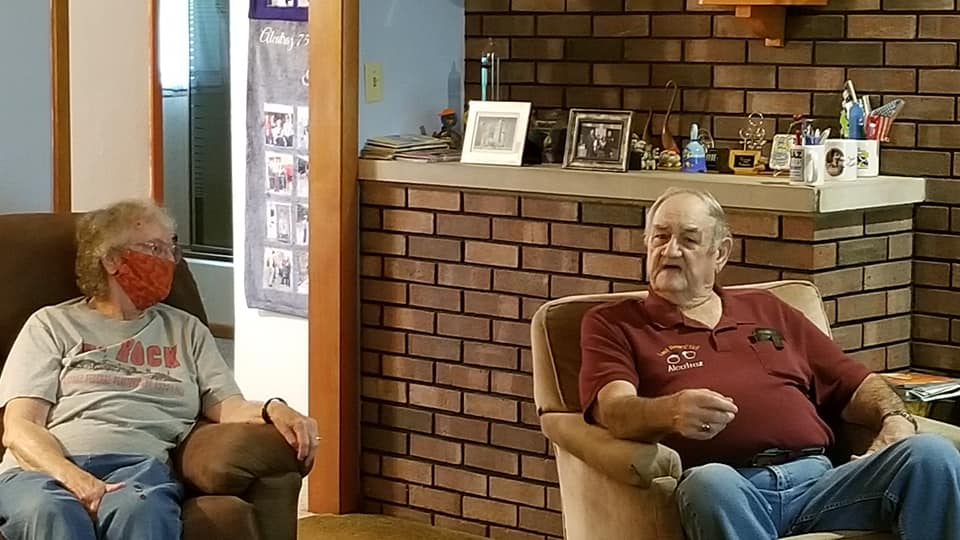
Cathy and Jim Albright

Original publish date:  July 16, 2020

A couple of weeks ago, with Covid-19 restrictions finally easing up, I traveled west on the National Road to Terre Haute with my wife Rhonda and friends Kris and Roger Branch to see a couple of Hoosier legends that I hadn’t seen in almost a decade. Jim and Cathy Albright welcomed our little band of intrepid historians into their home to catch up and listen to stories as only they could tell them. Jim was the last guard off the Island prison in San Francisco Bay known as Alcatraz. No, it doesn’t mean that Jim was the last man to board the final boat off the island when it closed on March 21, 1963, rather, Jim and his wife Cathy remained living on Alcatraz for weeks after it’s closing. As detailed in part one of this series last week, when the prison closed, the Albright’s daughter Donna Sue was only 11 days old and suffering from a foot abnormality that required surgery. The child could not be moved in her fragile condition, so the family remained on the island for 3 more months before leaving on June 22, 1963.
Social distancing guidelines and masks in place, we sat down for a talk about “The Rock.” Ironically, the couple celebrated their 65th anniversary in April during Indiana’s stay at home lockdown period. And Jim Albright knows a thing or tow about lockdown. On their 60th anniversary the couple renewed their vows on Alcatraz, “The biggest surprise I had when we got remarried out there was that she said yes the second time,” Jim says with a smile. Cathy recalls that she can still gaze up at their old apartment in Building 64 and see the curtains she made hanging in the window, although, “You can’t go into the building now, the floors and stairs are all falling apart and it’s not safe,” Cathy says.

7z 583471-Building-64-at-Alcatraz-0
Building 64 at Alcatraz.

From time-to-time, the couple still visit different civic organizations and talk about their years at Alcatraz. “You name the organization, we’ve spoken to ’em.” Jim says, “We have been going back to Alcatraz every year in August for a long time now. (Cathy recalls that first visit was on the 35th anniversary of the prison’s closing-“to the day”-she says) We take the train out but we are going to cancel this year because of the virus.” Jim recalled his first visit to his old island home so many years ago, “John Cantwell (NPS Ranger) offered to escort us around the island and it turned out to be a six-and-a-half hour tour.” To which Cathy laughs and says, “That’s because you were talking so much.” Jim’s recall of events on the island is remarkable. During that first tour, Jim shared details which Ranger Cantwell had never heard before. According to the former guard, Cantwell remarked, “Jim, we’ve had a lot of guys come back here, but they don’t remember the things that you do.” Jim continued, “That’s because wherever I went on the island, and we went EVERYWHERE; the east gun gallery, up on the roof, the old officer’s dining room, every time that I go somewhere, when I step in it seems to trigger something, and I remember…”

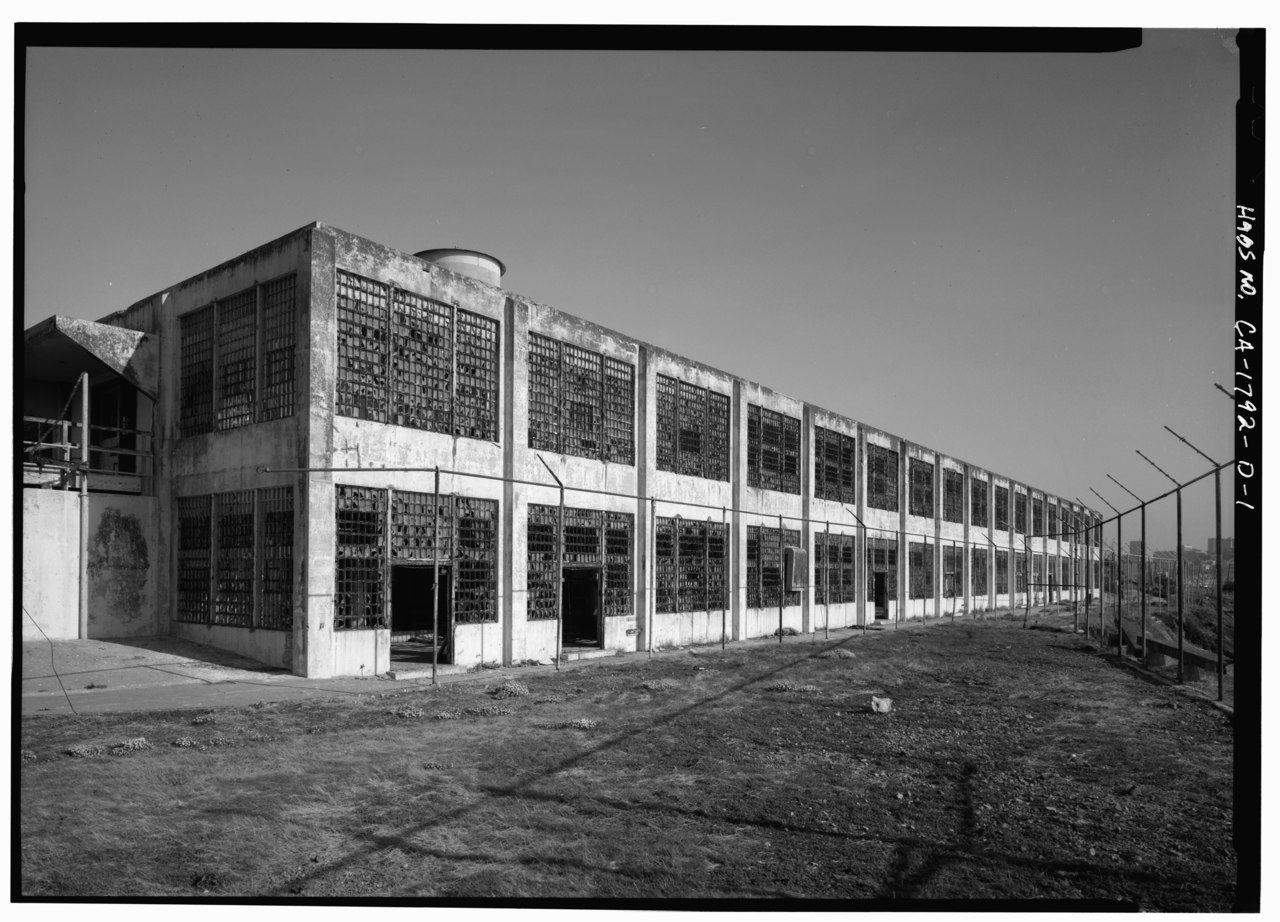
Z Industries
The New Industries Building at Alcatraz.

Cantwell took them to the old Industries building where there were “Great big, probably 8 foot by 10 foot, photographs of the prison and Jim was in several of them, so that was neat to go see that.” Jim says with a chuckle. Cathy adds, “He says he remembers stuff all the time, brings it up, he used to be able to tell you every inmate that was in there when he was there…their name, number, where they worked, where they lived.” Jim chimes in, “But I can’t anymore. It’s all gotten away. When I went there on August 24, 1959, that was my original starting date, and the low number of the inmates at that time was a guy named Clark, number 242, and of course when I left, 1576, Frank Weatherman was the high number. So we had not quite that many inmates cause if you came back, you got another number, I can think of one inmate who was there three different times under three different numbers. I come in August of 1959 and left the island June 22 of ’63.”
I asked Jim if he still had relics and souvenirs from his time as a guard and he shared that he still had his uniform but not the jacket. “I had to turn that in. I don’t know why, I was the only one left on the island and I shoulda kept it.” To which Cathy replied, “Then he found out later that they took all of those coats and stuff like that and dumped it out in the bay.” Jim adds, “Lt. Robbins came on the boat with a whole box of keys and dumped ’em into the bay. Fortunately, I was working the control center when it closed up so I have a key to the main gate. Being in the right place at the right time…I’ve also got a key to the main visiting room.”

z jimalbright-955ad39abb04a0cb2b7d719ff432ce79bb5acecc-s800-c85
Jim Albright leading the “last line” of prisoners out of Alcatraz.

And, since we we all seated in the Albright’s living room, I recalled that Jim had once told me that they also bought much of the de-accessioned furniture from Alcatraz. Cathy giggles as Jim reveals that the chair he is seated in, and that from which Kris was filming from, were all once located in the furnished apartments for guards and officials on the island. Jim points out, “that magazine rack, is off the island.” Cathy reports, “We bought most of it out of the warden’s house, they were selling it, when they closed the island, you could go up there and buy it and we did.” Cathy notes that the furniture is marked with a small metal tag reading “USP Alcatraz Survey” on the bottom. Jim further reports, “that tag has a number stamped on it and they had a book that they could tell exactly what that was and where it was.” He points over his shoulder and states, “That one bedroom down there, most of the furniture is Alcatraz, two or three items in our bedroom are all Alcatraz, the dining room table and chairs, a couple items out here and on the back porch. Red Ball moving company came to the island moved it for us. Everything had to go by barge over to Fort Mason”

Albright Part IIa
Jim Albright seated in one of the original Alcatraz chairs.

Jim recalls that his duties were light during the three months he remained on Alcatraz as the last guard. “There were others there, we weren’t alone on the island. There was a caretaker, a few maintenance workers and the lighthouse operators. I still spent my time patrolling the island with my bullhorn cause everybody wanted to board that island so I ran around yelling ‘you gotta stay off, this is Government property.'” When Jim left Alcatraz, he went to Marion, Illinois. “That was one of the seven places,” Cathy replies. The couple settled in Terre Haute and Jim retired here. “Three miles from my door to the prison gate. Last April I’m retired 35 years and I enjoy every minute of it.” he states. When I asked if his Alcatraz service helped him later on in his career, Jim said, “Because I had worked at Alcatraz, they didn’t even question what I did or how I did it. You know, it really helped as I went to different places.”

z e781c1fb6b8525d77dcfd9980ae80dfd
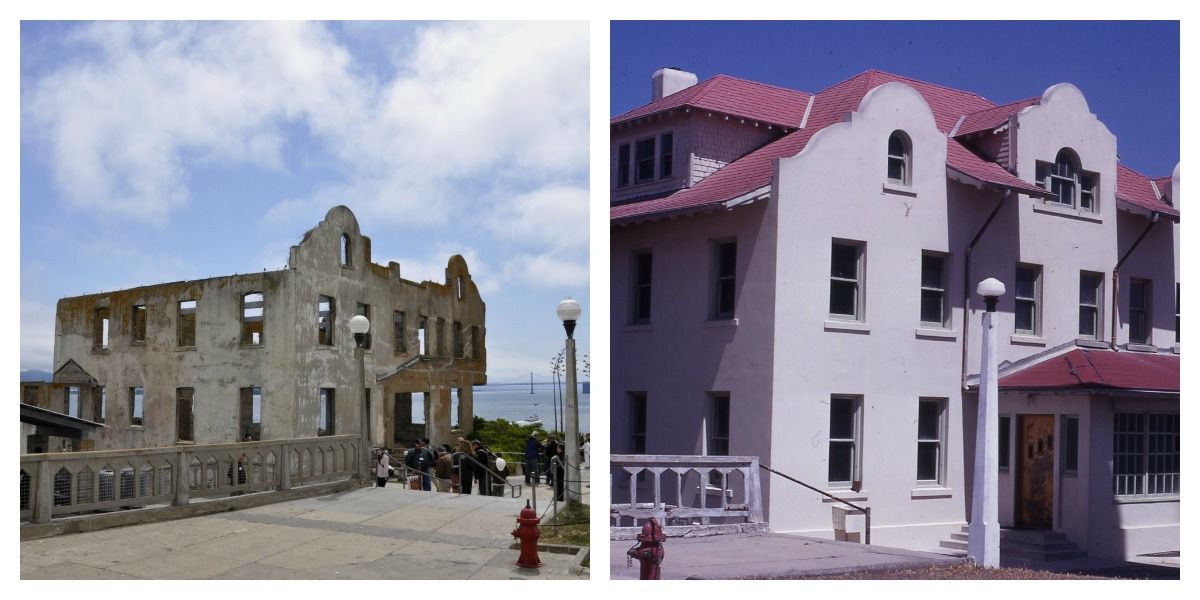
The Warden’s house on Alcatraz as it once looked (right) and as it looks today (left).

I asked how Alcatraz compared to other duty, especially considering that the guards lived with their families alongside the prisoners. Cathy replied, “Well, we could go anywhere but ‘up top’ that’s what we called where the cellhouse was located. The only time we ever went up there was when the warden’s wife had a party and then we were escorted up there and when the party was done, we were escorted back down.” Cathy further stated that the families could travel into San Francisco whenever they wanted. “When we’d go to the grocery store, if they found out we were from Alcatraz, people would just back away from you. They had a big park there and our son would want to go so I’d let him run all over there. When the women found out that we lived on Alcatraz, he couldn’t play with them anymore. The kids didn’t care what the moms said, they’d just play, you know.” Jim recalls, “there was like twelve boats a day” going into San Francisco, “somewhere around here I still have the boat schedule. The last boat ran back at 12:20 am for the guys working midnight shift, if you missed that boat, you were in town all night.”

519kJvKIU8L._SL500_