Assassinations, Creepy history, Criminals, Politics

Charlotte Corday

Original publish date July 18, 2024. https://weeklyview.net/2024/07/18/charlotte-corday/
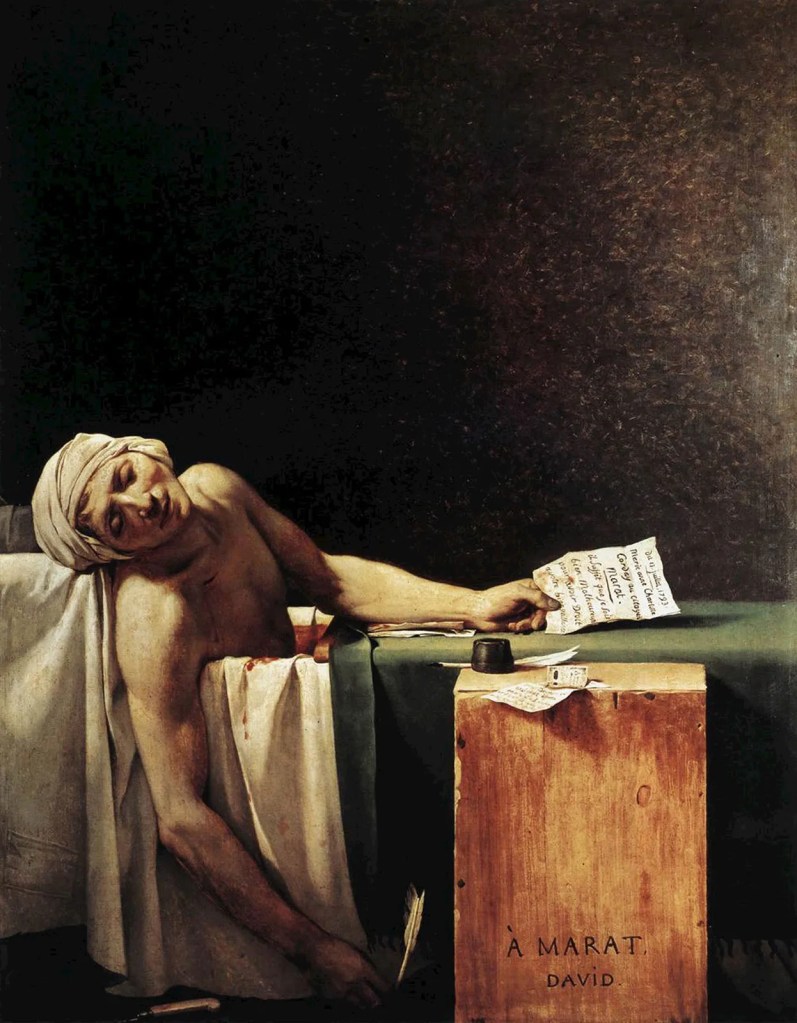
The Death of Marat, 1793 painting by Jacques-Louis David.

This 24-hour news cycle world can be exhausting. As I write this article, we stand at 120 days and counting until our next Presidential election. We are constantly reminded that this will be the most important election in the history of our country and that the end of Democracy is on the line. Since I spend most of my time buried in history of one sort or another, a phrase from the ancients runs on a loop in my head; “What has been will be again, what has been done will be done again; there is nothing new under the sun.” My idiomatic paraphrase is a Biblical verse: Ecclesiastes 1:9, “The thing that hath been, it is that which shall be; and that which is done is that which shall be done: and there is no new thing under the sun.”

This is the story of Charlotte Corday. It is complicated, shocking, and gory, and does not end well. Her act is immortalized in one of the most famous images from the French Revolution: The Death of Marat, a 1793 painting by Jacques-Louis David. The painting depicts Jean-Paul Marat lying dead in his bathtub after his assassination by Corday on July 13, 1793. It is considered a masterpiece of the highest order and the first modernist work to express just how bad politics can be. The original painting is at the Royal Museum of Fine Arts of Belgium with a replica on display at the Louvre.

Charlotte Corday.

Marie-Anne Charlotte de Corday d’Armont (July 27, 1768 – 17 July 1793) was born to an aristocratic family in Normandy, France. Corday held Marat responsible for the September Massacres of 1792, a series of executions of prisoners in Paris during the French Revolution. Over 1600 people, most of whom were non-violent political prisoners, were dragged from their cells and killed by guillotine at the hands of the “Committee of Surveillance of the Commune” led by the Montagnards, who advocated a more radical approach to the revolution. As The French Revolution radicalized further and headed towards terror, Corday began to sympathize with the Girondins. The Girondins supported democratic reforms and a strong legislative branch at the expense of much weaker executive and judiciary branches. She regarded the Girondins as a movement that would ultimately save France and that the Revolution was in jeopardy due to the radical course taken by Marat and the Montagnards.

Jean-Paul Marat

On July 13, 1793, Corday traveled to Paris to assassinate Marat. He was not hard to find. Marat was suffering from a debilitating skin disease that left him nearly constantly confined to a bathtub to ease his suffering. Marat had always been a sickly man whom contemporaries described as “short in stature, deformed in person, and hideous in face.” The nature of his skin disease has been debated for centuries, some claimed it was syphilis, though most experts have identified it as “Dermatitis herpetiformis” a chronic, intensely itchy, blistering skin manifestation commonly known as celiac disease, a rash affecting about 10 percent of the population. Marat’s condition, which he had been suffering from for three years, was exacerbated by extreme weight loss, emaciation, and diminished strength. Marat stewed in a soup of various minerals and medicines with a bandana soaked in vinegar wrapped around his head. Marat sat upon a linen sheet for modesty, with the dry corners covering his back and bare shoulders, a board straddled the tub from rim to rim which served as a writing desk.
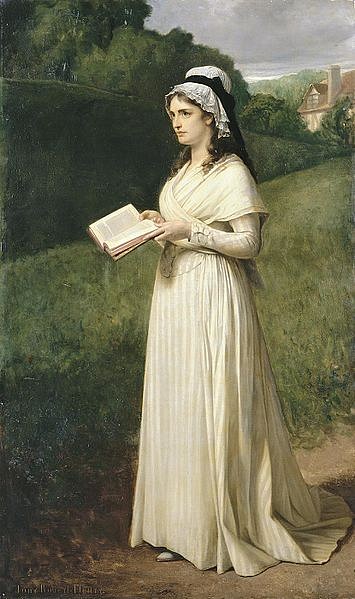
Charlotte Corday.

Corday is described on her passport as “five feet and one inch…curly auburn hair, eyes gray, forehead high, mouth medium size, chin dimpled, and an oval face”. Based solely on her appearance, Corday was the unlikeliest of assassins. On July 9, 1793, Corday arrived in Paris and took a room at the Hôtel de Providence. She bought a kitchen knife with a 6-inch blade. During the next few days, she wrote a detailed manifesto explaining her motives for assassinating Marat. At noon on July 13, she arrived at Marat’s home claiming to know about a planned Girondist uprising but was turned away. She returned that evening and was admitted. Their interview lasted fifteen minutes. From his bathtub, Marat wrote down the names of the Girondins as Corday crept ever closer to him. As he busily wrote out the list, Marat said, “Their heads will fall within a fortnight.”
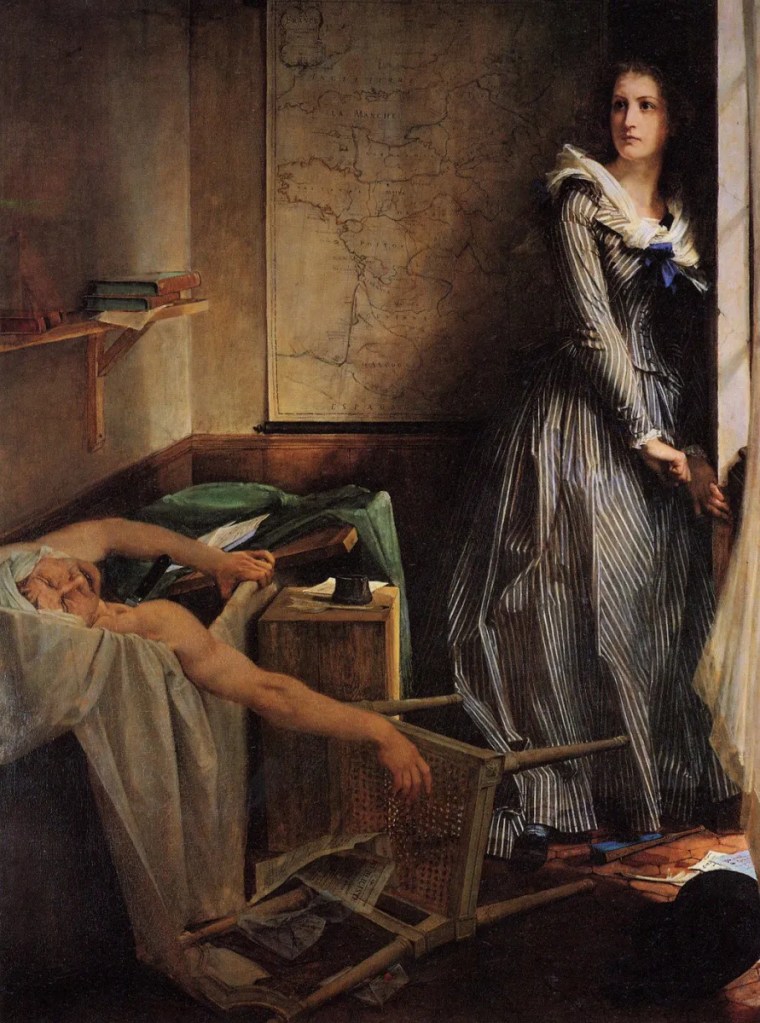
Paul-Jacques-Aime Baudry L’Assassinat de Marat 1861

Now within striking distance, Corday pulled the knife from her corset and plunged it deep into his chest, just under his right clavicle, opening the brachiocephalic artery, close to the heart. Marat, still clutching the list of names, slumped into the tub as he called out his last words: “Aidez-moi, ma chère amie!” (“Help me, my dear friend!”). The wound was fatal. In response to Marat’s cries, his wife Simonne Evrard, and two others rushed into the room and seized Corday. Two neighbors, a military surgeon and a dentist, attempted to revive Marat to no avail. Officials arrived to interrogate Corday and to calm a hysterical crowd who appeared ready to lynch her.

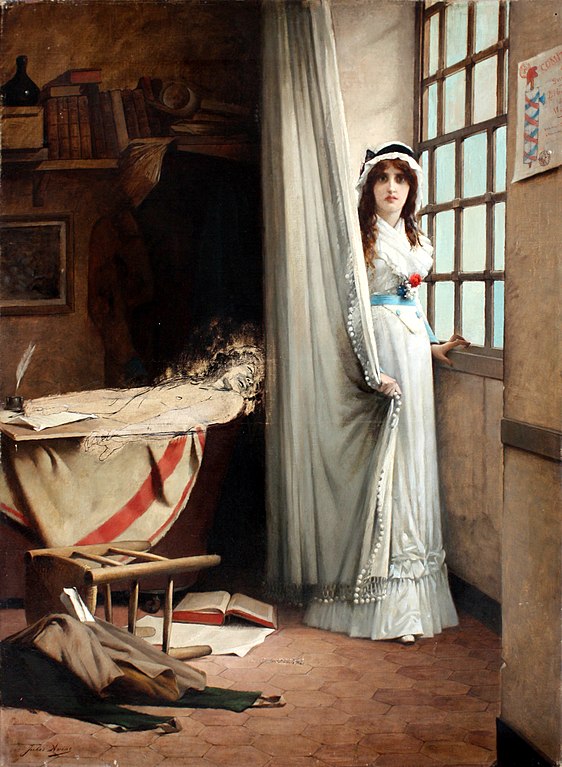
Jean-Joseph Weerts – Marat assassiné – 1880.
Jules-Charles Aviat-Charlotte Corday et Marat -1880.

Corday’s manifesto claimed: “I have avenged many innocent victims, I have prevented many other disasters. The people, one day disillusioned, will rejoice in being delivered from a tyrant…I rejoice in my fate, the cause is good…I alone conceived the plan and executed it. Crime is shame, not the scaffold!” Corday credited her single-blow knifing of Marat not to skill or practice but to luck. Arrested on the spot, she was tried and convicted by the Revolutionary Tribunal and sentenced to death by guillotine on the Place de la Révolution. On July 17, 1793, four days after Marat was killed, Corday was led to the guillotine via the tumbril, an open cart used to transport its load of condemned prisoners to the guillotine amid the shouts and jeers of bystanders. Corday stood calmly facing the crowd, suddenly, the heavens opened the thousands of curious on-lookers were drenched by a sudden summer rainfall. Corday never flinched.

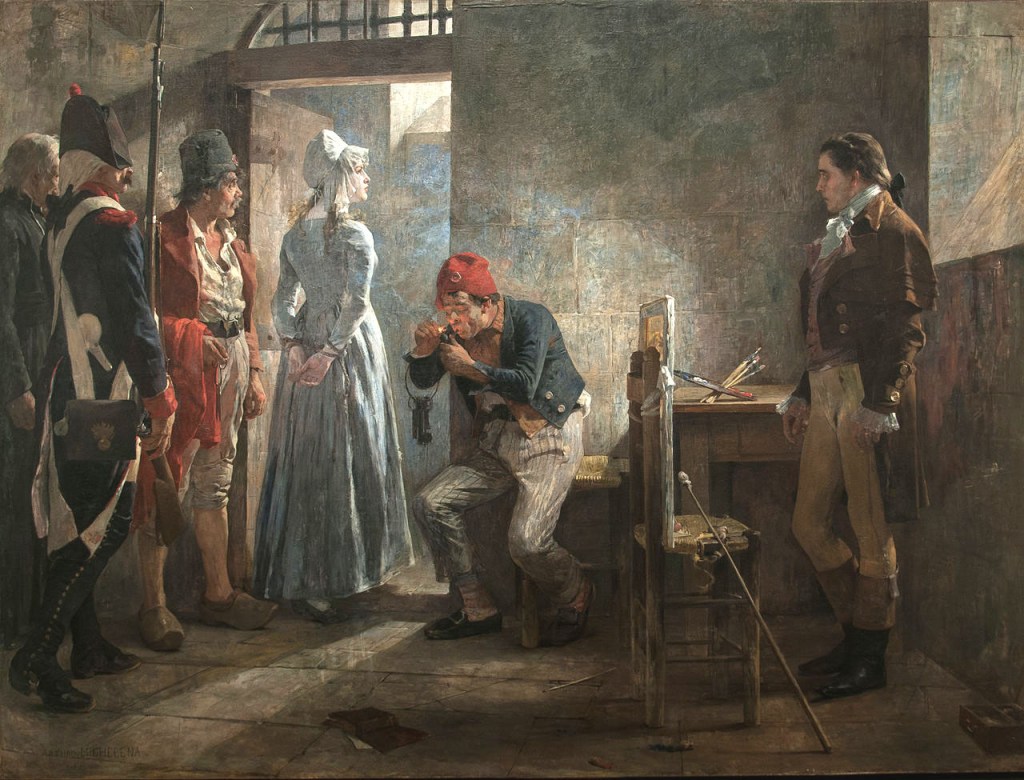
Charlotte Corday, in prison. Charles Louis Lucien Muller, artist. [1900-1912].
“La toilette des morts, Charlotte Corday” (The last toilet of Charlotte Corday) by Edward Matthew Ward The Illustrated London News, volume XLIII, July 25, 1863.
“Charlotte Conducted to the Scaffold” Arturo Michelena July 17, 1893.

Corday strode confidently to the guillotine, curtseyed to the crowd, leaned against the Bascule, and was lowered face down horizontally, her head placed into the Lunette. The Declic (handle) was pulled by the hooded executioner, releasing the heavy Mouton (weight) and blade from the crossbar. A silent swish swept the crowd as Corday’s head tumbled into the basket below. The Bascule, a sort of table, was hinged to make it easier to push the headless body into a larger side basket immediately after the execution. Moments after Corday’s decapitation, a carpenter named Legros leaped from the crowd and lifted her head from the basket. He turned towards the crowd and slapped it on the cheek. Horrified witnesses reported an expression of “unequivocal indignation” on her face when her cheek was slapped and that “Charlotte Corday’s severed head blushed under the executioner’s slap.” Ever since, the incident has fueled the suggestion that victims of the guillotine retain consciousness for a short while after decapitation. For that offense, Legros the carpenter was imprisoned for three months. To make matters worse, believing that there had to be a man sharing her bed who masterminded the assassination plan, officials had her body autopsied after her death to determine if she was a virgin. To their dismay, their non-scientific examination revealed that she was a virgin. Her body was buried in the Madeleine Cemetery, alongside the decapitated corpses of of King Louis XVI, Queen Marie Antoinette, and three thousand other guillotine victims. Legend claims that Corday’s skull was saved and passed from Parisian to Parisian (friend and foe alike) for generations after her execution.

Execution Of Charlotte Corday. Published In 1871.

Corday’s crime did not have the expected outcome and Marat’s assassination did not stop the reign of Terror. Instead, Marat became a martyr. Although the killing of Marat was considered vile, there is no doubt that the murder changed the political role and position of women during the French Revolution. Corday’s action aided in restructuring the private versus public role of women in society at the time. The idea of women as second-class citizens was challenged, and Corday was considered a hero. As the revolution progressed, the Girondins became progressively more opposed to the radical, violent views of the Montagnards espoused by Marat, Robespierre, and others.
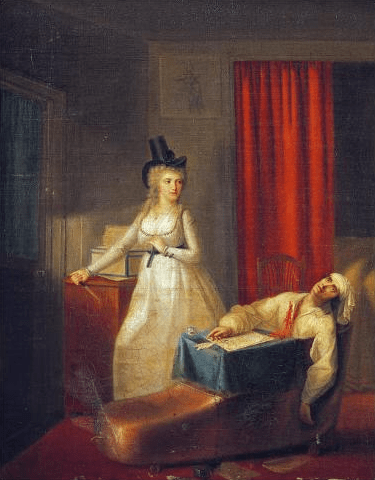
Jean-Jacques Hauer – Meurtre de Marat, le 13 juillet 1793, par Charlotte Corday – 1793-94.

However, Corday’s critics quickly elevated Marat to the level of the immortals. His heart was embalmed separately and placed in an urn on an altar erected to his memory. His remains were transferred to the Panthéon where his near messianic role in the Revolution was gaslighted in a eulogy delivered by the Marquis de Sade, who compared Marat to Jesus Christ and idealized him as a man who loved only the people of France. Marat was transformed into a quasi-saint, his bust often replacing crucifixes in the churches of Paris. After the ousting of Maximilien Robespierre a year later, Marat’s reputation plummeted. His busts were knocked off their pedestals, carried away, and dragged through the streets by local children to the chants of ‘Marat, voilà ton Panthéon!’ (Marat, here is your Panthéon) before being dumped into the sewers. The few remaining statues of Marat were melted down during the Nazi occupation of Paris in World War II. Strangely, he continued to be held in high regard in the Soviet Union with many citizens, streets, and even a battleship sharing the name Marat.

Santiago Rebbull – La muerte de Marat – 1875.

Europeans remain split on the legacy of Corday. Some place her alongside Joan of Arc, the patron saint of France, who died 350 years prior, and others dismiss her as an idealistic radical. Corday lives on in popular memory through numerous works of art, poetry, plays, and literature including works by Percy Bysshe Shelley and Oscar Wilde, and her story is referenced variously in Rebecca of Sunnybrook Farm and Les Misérables. Marat’s wife peddled his bathtub to the highest bidder but not very successfully. Reportedly, interested parties included Madame Tussaud’s wax museum and P.T. Barnum, but it ultimately landed in the Musée Grévin, a Paris wax museum, where it remains today. The tub is in the shape of an old-fashioned high-buttoned shoe with a copper lining. However, the most tangible reminder of Marat’s death is Jacques-Louis David’s painting. David was not only the painter but also the man who organized Marat’s funeral. Marat’s disorder accelerated decomposition, making any realistic depiction of the scene impossible. The result was that David’s work beautified the skin that in reality had been discolored and scabbed from his chronic skin disease. The resulting painting was widely criticized as glorifying Marat’s death.

Charlotte Corday the “Angel of Assassination”

As for Corday’s reputation, history recalls her as the “Angel of Assassination” and lauds her as an early pioneer in the annals of women’s rights. After the assassination of Abraham Lincoln, the April 29, 1865, Harper’s Weekly mentioned Corday in a series of articles analyzing the assassination as the “one assassin whom history mentions with toleration and even applause”, but goes on to conclude that her assassination of Marat was a mistake in that she became Marat’s last victim rather than vindicating his thousands of victims. Proving that violence in the interest of “small d” democracy is, was, and always will be, futile and unacceptable.

Baseball, Politics

John Glenn & Ted Williams: The Flying Leathernecks.

Ted Williams and John Glenn

Original Publish Date March 3, 2022. https://weeklyview.net/2022/03/03/john-glenn-ted-williams-the-flying-leathernecks/

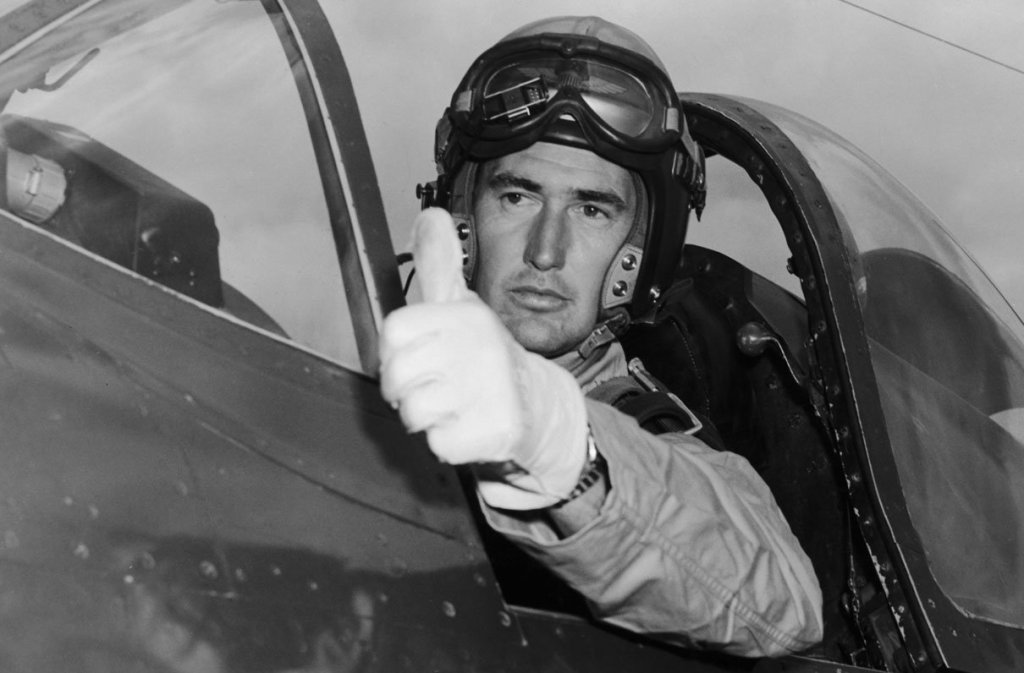
On February 16, 1953, a wounded fighter jet approached the airfield at Suwon, Korea. The plane’s radio was inoperable, its hydraulic system gone, and it was trailing smoke and bleeding fluids. Its streaming 30-foot ribbon of fire all indicated serious danger. The pilot brought his hobbled midnight-blue F9F Grumman “Panther” jet in for a dangerous wheels-up belly landing, skidding the length of the tarmac in a cloud of sparks and debris. An already tense situation became worse as the nose promptly burst into flames below the cockpit. The trapped aviator blew off the canopy, struggled out of the plane, and limped away as fire and rescue crews quickly blanketed the burning aircraft with foam. The plane was a total loss but the pilot survived.
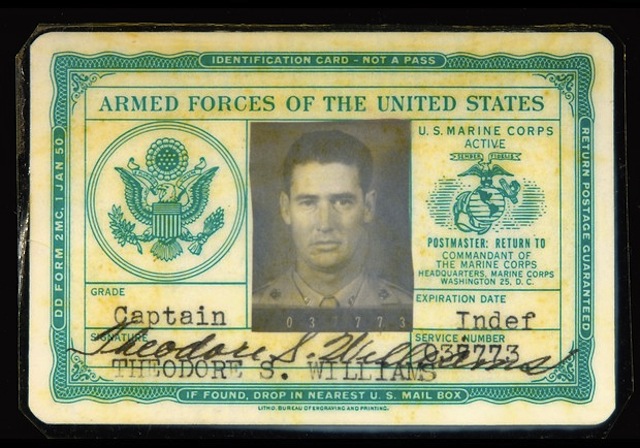
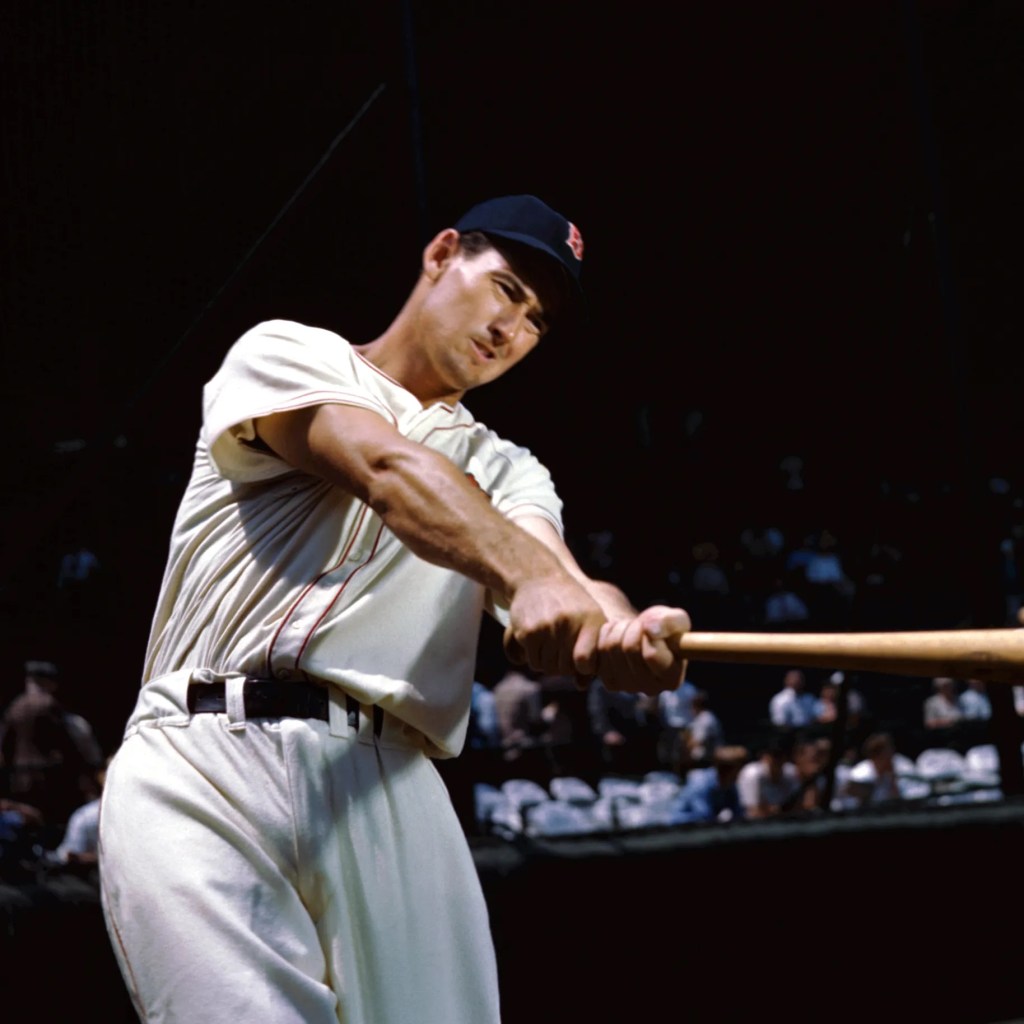
Later, the airmen at Suwon learned they had just witnessed the dramatic escape of the most famous flying leatherneck in Korea; Captain Theodore S. Williams, better known as Ted Williams of the Boston Red Sox. Williams was arguably the best baseball hitter of all time. “Teddy Ballgame” was a six-time American League batting champ, two-time AL MVP, and the last man to hit .400 for a season. He was inducted into the Baseball Hall of Fame in 1966 five years after hitting a homerun in his last at bat.

Ted Williams.

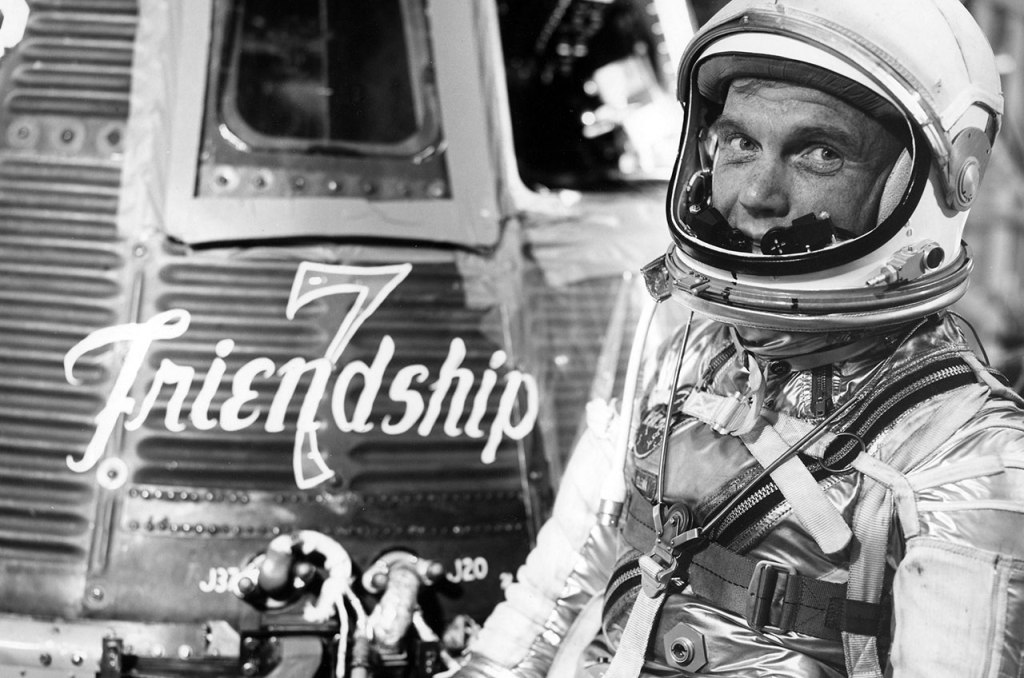
His stats as an airman were equally impressive. Ted flew 39 combat missions in Korea and his planes were hit by enemy fire three times. On this mission, as with many, Williams was flying as wingman for his squadron’s operations officer, John H. Glenn, Jr.: Ohio’s Mercury astronaut, former senator, and 1984 presidential candidate. Glenn and Williams were both Marine pilots during World War II but did not know each other well. Shortly after Pearl Harbor, Glenn dropped out of Muskingum College in New Concord, Ohio, and enlisted in the Marines. Williams joined the Marines at the end of the 1942 season after leading the league with a .356 batting average.
The two met and became friends in Korea. Glenn flew 63 combat missions in Korea and was nicknamed “Old Magnet Ass” because of the number of flak hits he took on low-level close air support missions. He returned to base with over 250 holes in his plane twice. But on that Feb. 16th mission, Williams’ plane was the one that took the heavy hits. When Glenn saw that his wingman’s plane was on fire, he flew to Williams’ wingtip and pointed up. The duo went up into thinner air and the fire went out.
Other pilots gestured for Williams to bail out but the slugger wouldn’t do it. Ted was 6-foot-4 and thought his knees might “catch the hatch” during ejection and that would be the end of his baseball career. Instead, Williams flew back to the base, zeroed in on the runway, and skidded to a stop. The hall of famer leaped from the cockpit and ran from the plane just as the aircraft caught fire again.
While much is known about Ted Williams the ballplayer, little is known about Williams the Marine pilot. In January 1942, Williams was drafted into the military, being put into Class 1-A (Available; fit for general military service). A friend suggested that Ted appeal his classification to the governor’s Selective Service board, since Williams was the sole support of his mother, arguing that he should be reclassified to Class 3-A (Men with dependents, not engaged in work essential to national defense). The “Splendid Splinter” was reclassified to 3-A ten days later.
Afterward, the public reaction was extremely negative. Quaker Oats stopped sponsoring Williams, and Williams, who previously had eaten Quaker products “all the time”, never ate Quaker products again. Williams took more flak by signing a new contract with the BoSox for $30,000 in 1942. That season, Williams won the Triple Crown, with a .356 batting average, 36 home runs, and 137 RBIs. On May 21, Williams hit his 100th career home run, and the next day he was sworn into the US Navy Reserves. Williams grew up in San Diego (a “Navy town”) and aviator Charles Lindbergh was one of his childhood heroes. Williams later noted that he first became interested in flying after seeing the Navy’s majestic lighter-than-air ship “Shenandoah” as a kid.

Naval aviation cadet T. S. Williams was sent to Amherst College in Massachusetts for a 90-day stint in preflight training, described as “Officer candidate school with a crash course in advanced science.” The school is where prospective pilots were whipped into shape, learned how to be military officers, and studied basic theories of how airplanes operated. Those cadets who did not wash out were then moved to Chapel Hill, N.C., for three months of preflight training. While the academic load was more strenuous, here the pilots actually got to fly airplanes. Ground-school training included subjects like engines, ordnance, aircraft characteristics, aerodynamics, and navigation.
Here the cadets flew small two-seat, single-engine, high-wing Piper NE-1 “Grasshopper” trainers to acquire the skills to fly an airplane. Next, Ted Williams was sent to the “Naval Air Station Bunker Hill” in Kokomo (Now Grissom Air Force Base) for basic flight training. There he learned more theory but also spent time flying Vultee SNV and North American SNJ trainers over the skies of Central Indiana. Upon graduation, Williams opted for the Marine Corps and moved south to Pensacola, Florida for advanced flight training as a fighter pilot.
Williams learned about tactics and weapons as he practiced advanced navigation, aerial combat maneuvering, and formation flying. His athletic ability, steady hand, and excellent eyesight made him a very good pilot. In fact, he was good enough to set the Marine gunnery record at Jacksonville. Williams once again was having an outstanding “rookie” season. Williams played on the baseball team (along with his Red Sox teammate Johnny Pesky) while in pre-flight training with the Civilian Pilot Training Course. While on the baseball team, Williams was sent back to Fenway Park on July 12, 1943, to play on an All-Star team managed by Babe Ruth. Upon meeting Williams the newspapers reported that Babe Ruth said, “Hiya, kid. You remind me a lot of myself. I love to hit. You’re one of the most natural ballplayers I’ve ever seen. And if my record is broken, I hope you’re the one to do it”. Williams later said he was “flabbergasted” by the incident, as “after all, it was Babe Ruth”. In the game, Williams hit a 425-foot home run to help give the A.L. All-Stars to a 9–8 win.

Ted Williams aka The Splendid Splinter.

Williams went on active duty in 1943 and was commissioned a second lieutenant in the United States Marine Corps as a Naval Aviator on May 2, 1944. In mid-1944, Marine aviation in the Pacific was on the wane. Japanese fighters had all but disappeared from the skies, and the days of dogfighting fighters crisscrossing the skies over the “Solomons Slot” were gone. With fighter pilots no longer in high demand, the most promising student aviators were made flight instructors, and that is what happened to Ted Williams.
When, in the summer of 1945, Ted finally received orders for the combat zone, he was in San Francisco. On September 2, 1945, when the war ended, Second Lieutenant Theodore S. Williams USMC was in Pearl Harbor, Hawaii playing baseball in the eight-team Navy League alongside Joe DiMaggio, Joe Gordon, and Stan Musial. The Service World Series games featuring Army versus the Navy attracted crowds of 40,000. The players said it was even better than the actual World Series between the Detroit Tigers and Chicago Cubs that year.
Williams was discharged by the Marine Corps on January 28, 1946, in time to begin preparations for the upcoming baseball season. For the 1946 season, Williams hit .342 with 38 home runs and 123 RBIs. He ran away as the MVP winner and helped the Red Sox win the pennant. That season, Williams hit the only inside-the-park home run in his Major League career and topped that with the longest home run in Fenway Park history, at 502 feet (the landing zone marked by a single red seat in the Fenway bleachers).
The name Theodore S. Williams was swapped from the list of inactive reserves to active duty on January 9, 1952. As the Korean War heated up the Marines desperately needed pilots and the 33-year-old married father was one of the best. Williams returned to active duty six games into the 1952 season. After hitting a 2-run home run in his last at-bat to beat the Detroit Tigers 5-3, Williams traded his uniform for a flight suit.
Although initially bitter at being called up (he’d only been in a plane once since World War II ended), Williams realized that going to Korea was the right thing to do. Still, Williams believed his call-up had more to do with the publicity it would generate for the Marines than the true need for his services. Right before he left for Korea, the Red Sox held a “Ted Williams Day” at Fenway Park. Williams was given a Cadillac and a memory book signed by 400,000 fans. The governor of Massachusetts and the mayor of Boston were there and at the end of the ceremony, the fans in the stands held hands and sang “Auld Lang Syne” to their hero.
Williams reported to Willow Grove (Pa.) Naval Air Station for flight-refresher training and then headed to Cherry Point, N.C., for ground school before transitioning into jets. From there, Williams traveled to Pohang on Korea’s eastern coast in early 1953. Captain Williams flew 39 combat missions, sustaining heavy enemy on many occasions, and he was awarded three Air Medals before being sent home with a severe ear infection and recurring viruses in June. Williams was formally discharged from active duty on July 28, 1953, the day after a cease-fire in Korea went into effect.
Williams’ squadron commander at his North Carolina training station said of him, “He was a spoiled-brat… He had too much money and had too many people rooting for him.” Unlike Williams, Major John H. Glenn, Jr. remained in the Marines after World War II. In Korea, it would have been easy for Glenn, the operations officer in Williams’ squadron in charge of assigning pilots to their daily missions, to adopt the same attitude toward Williams but he never did.

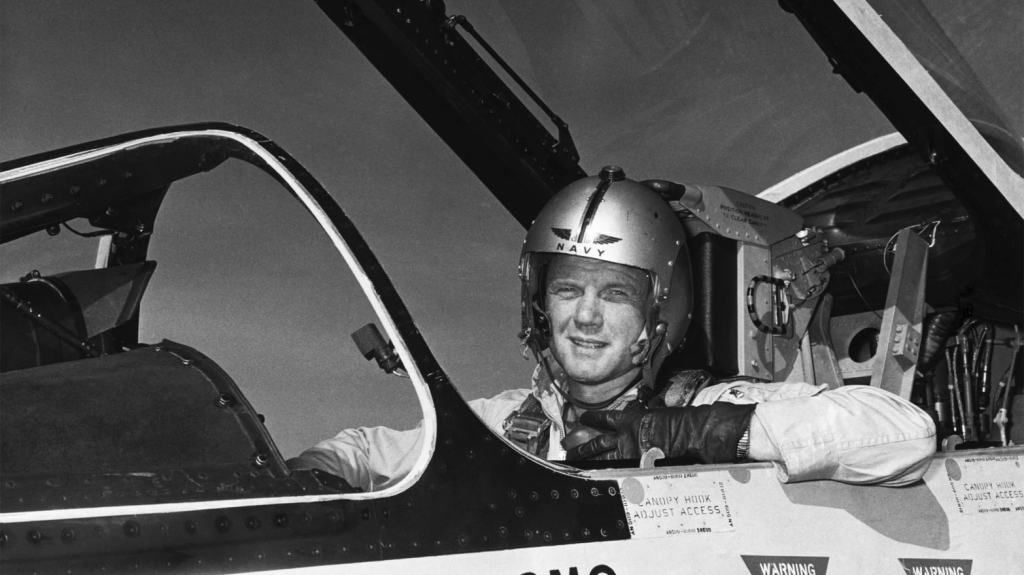
John Glenn

In the early 1950s, Glenn was a hotshot Marine pilot no one outside the military had ever heard of. In the early 1950s, Williams was one of the most famous big-league players on the planet. In his 1999 memoir, Glenn described Williams as anything but a prima donna. “I had just joined the squadron and was sitting in the pilots’ ready room one day when he walked in and came over and introduced himself,” Glenn writes of their first meeting. “I had been a baseball fan since I was a boy, and meeting Ted was a thrill.”
Glenn described Williams as a pilot, “He was just great. The same skills that made him the best baseball hitter ever — the eye, the coordination, the discipline — are what he used to make himself an excellent combat pilot.” As for their shared sky duty in Korea, Glenn describes, “We would be over one of their supply roads. Then we would drop down and follow the road back toward the front, hoping to catch their troops and trucks in the open . . . We leapfrogged, with one of us flying at treetop level and the other at 1,000 or 1,500 feet above and behind in order to see farther down the road and relay advice to the `shooter’ on targets ahead. We would switch positions every 10 minutes.”
Williams later described Glenn as “Absolutely fearless. The best I ever saw. It was an honor to fly with him.” In his memoir, Glenn emphasizes his fondness for Williams and recalls how the famously zipper-thin Williams developed an appetite for the fudge Glenn’s sister-in-law would send through the mail. “Ted and I flew together a lot,” Glenn recalled, “Ted flew about half his missions as my wingman. He was a fine pilot, and I liked to fly with him.”
Williams’ two major career disruptions for military service eventually cost the slugger nearly four years of playing time at the very peak of his career. Most articles about Williams focus on his sports achievements, hardly mentioning his military service. The only question usually asked is, “Where would Ted Williams be in the record book had he not lost four prime baseball seasons serving his country?” It may be more accurate to ask, “Where would the United States be without men like Ted Williams?” Ted’s baseball achievements take a backseat to his performance as a “Flying Leatherneck.” Williams was a baseball star for nineteen years and a proud Marine for five. In the words of Senator John Glenn, “Ted may have batted .400 for the Red Sox, but he hit a thousand as a U.S. Marine.”

John Glenn Mercury Astronaut
Abe Lincoln, Creepy history, Ghosts, Politics, Presidents

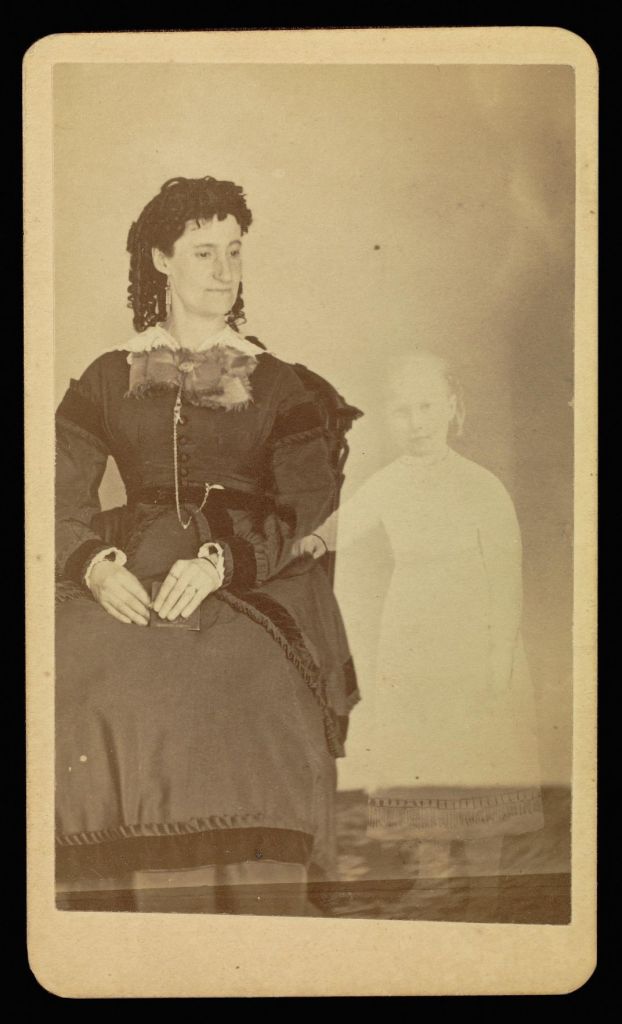
The Mumler Abraham Lincoln Ghost Photo.

Original publish date:  October 22, 2020. https://weeklyview.net/2020/10/22/the-mumler-abraham-lincoln-ghost-photo/

https://www.digitalindy.org/digital/collection/twv/id/3900/rec/104

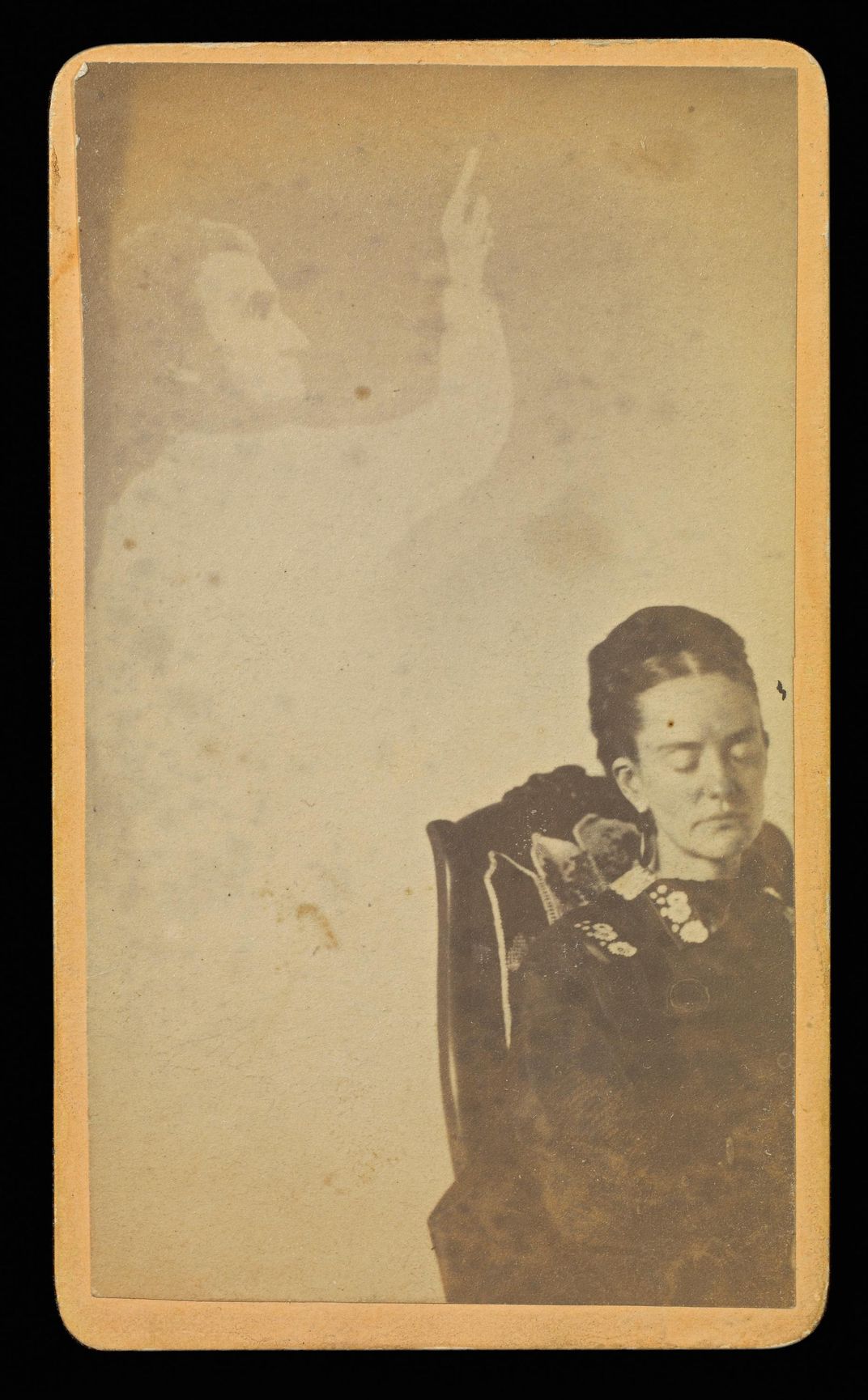
Last Saturday before the Irvington ghost tours, one of our volunteers, Alex McFarland, initiated a conversation that seemed to be a perfect topic for the evening: the Abraham Lincoln ghost photo. Known officially as the “Mumler photos”, these were a series of posed studio photographs, not unlike any old-time photo, usually in Carte de Visite (or CDV) form, that can be found at any antique show, shop, or mall today. The difference is, that Mumler’s photos had the visual image of a ghost in them. The most famous of the Mumler photos features widowed First Lady Mary Lincoln with her deceased husband, President Abraham Lincoln.


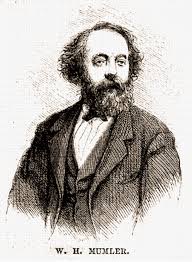
William H. Mumler

William H. Mumler (1832-1884) was a well-known Boston photographer who claimed to be a “medium for taking spirit photographs.” Mumler was part of the growing phenomenon of spiritual manifestations introduced in 1848 by the Fox sisters of Hydesville, N.Y. The three sisters held séances at their home (near Newark, N.J.), that featured spirit rappings and table tippings in response to their queries. Their amazing “abilities” caused a sensation that spread across the country. With its long history of highly-intelligent, intellectually curious populace, Boston became an epicenter for the movement attracting spiritualists, mediums, and psychics from all over to the mysterious world of the “higher plane.”
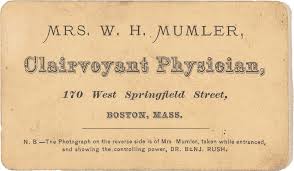
In 1871, the camera was still in its infancy. The technology had graduated from metal to glass to paper photos readily available and affordable to the general public like never before. The country was still mourning from Civil War losses, in some cases having lost entire male lines of families and large portions of towns and communities. The loss of loved ones was still fresh and many turned to any means necessary to see and talk to their loved ones one last time. Mumler’s promise of contact in the form of visual evidence drew flocks of true believers to his studio at 170 West Springfield Street in this city historians called the “Cradle of Liberty.”


In February of 1872, seven years after Lincoln’s assassination, a still grieving Mary Lincoln arrived at William Mumler’s Boston Studio to have her picture made. Dressed in mourning, she gave the photographer a false name (‘Mrs. Lindall”) and kept her face concealed behind a black veil. In 1875, Mumler recalled in his autobiography, “I requested her to be seated, went into my darkroom, and coated a plate. When I came out I found her seated with her veil still over her face. I asked if she intended to have her picture taken with her veil. She replied, ‘When you are ready, I will remove it.’” The widow Lincoln was used to dealing with charlatans and knew how to prevent their tricks.

The reason she landed at Mumler’s studio was because her dead husband had appeared to her at a séance earlier in Boston. The medium told her she should visit Mumler’s studio because the photographer could capture the shadows of the dead on photographic negatives. Mumler always claimed that he did not recognize his subject until after he developed the negative. And then only after he recognized the image of the martyred President did he realize it was Mary Todd Lincoln. His visitor just may have been the most vulnerable woman in America, shattered by death and loss for the past two decades.
Mary never recovered from her husband’s assassination six years before and the loss of three of her four sons, all dead before their 18th birthdays. Even before her husband’s death, Mary Lincoln had embraced spiritualism, the belief that the spirits of the dead can be contacted through mediums. Reputedly going so far as hosting seances in the White House and visiting mediums in Georgetown and D.C., sometimes accompanied by the President himself. So her visit to the studio, today located near historic Frederick Douglass Square in Boston, was unsurprising and predictable. It should also come as no surprise that the photo, the greatest presidential ghost photo ever known, is a fake.


Mary’s visit to William Mumler’s studio (one of five Boston studio locations he occupied during the 1860s-70s and 80s) stands out as one of the grand hoaxes of the Spiritualist period. The distraught first lady must have been satisfied, even consoled by the image, but to our practiced modern eyes, this photograph of Mary Lincoln remains a touching, if sadly preposterous, fake. Nonetheless, it was Mumler’s most famous portrait. Mumler’s Lincoln image is his most reproduced photograph, and it is believed to be the last photo ever taken of Mary before she died in 1882.


The story of Mumler’s spirit photography began as an accident and turned into a joke. In 1861 the 29-year-old jewelry engraver was living in Boston and experimenting with the new art of photography as a hobby. In his autobiography, The Personal Experiences of William H. Mumler in Spirit Photography, Mumler claimed his discovery was made while developing a self-portrait. While the plate was soaking in the tray of toxic chemicals, he noticed the mysterious form of a young girl slowly materialize on the negative. Amused and mystified, Mumler printed this curiosity and showed it around to friends, claiming that it was the ghost of a dead cousin. Mumler, a man of “a jovial disposition, always ready for a joke,” decided to show the photo to his spiritualist friends, pretending that his picture was a genuine impression from beyond the grave.

The Boston psychics fell for the gag and soon Mumler’s ghost photos were circulating around the city. It became an instant sensation and once Mumler’s photo was published in The Banner of Light and other spiritualist newspapers, he became an instant celebrity. The “spirit cousin” was nothing more than the transfer residue of an earlier negative made with the same plate, but it was declared a miracle and Mumler the jeweler became heralded as the “oracle of the camera”. Mumler soon left his job as a jewelry engraver and opened his own photography business full-time.

Here’s the scam. On arrival, the subject of the photo was greeted by William’s wife Hannah, she would chat up the client who would invariably reveal who the spirits were that they wished to appear in their sitting. Hannah had some clairvoyant abilities of her own and she often offered her own intuitions about the spirits surrounding her husband’s clients, resulting in the client’s unwittingly revealing more precise information. All while William Mumler was eavesdropping from the adjoining room. Part of his con included a “vacuum tube” that glowed as an electrical current was run through it which he claimed was a special force he then channeled into the camera. It was P.T. Barnum-style showmanship pure and simple.

For this special ability, Mumler’s fees were extravagant. At the height of his fame, Mumler charged $10 for a dozen photographs, roughly five times the average rate. Worse, there was no guarantee that any spirits would appear. If Mumler or his wife sensed a particular vulnerability in their subject, the spirits would not appear in the photos. Clients were encouraged to make repeated trips to Mumler’s studio before they were blessed with a true spirit photograph. If the high fee was ever questioned, “The spirits,” Mumler answered, “did not like the throng.”


Boston’s other photographers were not impressed by Mumler’s ghost photos. James Black, one of Boston’s premiere photographers famous for his aerial views of the city taken from the perspective of a hot air balloon, was convinced that Mumler was cheating. He set out to catch him at it. Black bet Mumler $50 that he could discover his secret. Black examined Mum­ler’s camera, plate and processing system, and even went into the darkroom with him. In his auto­biography, Mumler described Black’s reaction when a ghostlike image emerged on the negative right before the doubter’s eyes as, “Mr. B., watching with wonderstricken eyes…exclaimed, ‘My God! Is it possible?’”

P.T. Barnum.

Of the incident, Mumler later recalled, “Another form became apparent, growing plainer and plainer each moment, until a man appeared, leaning his arm upon Mr. Black’s shoulder.” The man later eulogized as “an authority in the science and chemistry of his profession” then watched “with wonder-stricken eyes” as the two forms took on a clarity unsettling in its intimacy. Despite the best efforts of countless investigators, no one was able to determine exactly how Mumler created his apparitions. With the photographic elite unable to debunk Mumler’s ghost photos, hoards of desperate souls flocked to Mumler’s studio-including a grieving Mary Lincoln and the master of all hoaxes, P.T. Barnum himself.
Soon Mumler’s pictures became the subject of great speculation among his peers from all over the country. In 1863 noted Boston scientist, physician, and avid photographer Oliver Wendell Holmes not only gave step-by-step instructions on how to obtain a double exposure in an essay for the Atlantic Monthly, but he also contemplated the popularity of Mumler’s pictures. “Mrs. Brown, for instance, has lost her infant, and wishes to have its spirit-portrait taken,” Holmes wrote. “It is enough for the poor mother, whose eyes are blinded with tears, that she sees a print of drapery like an infant’s dress, and a rounded something, like a foggy dumpling, which will stand for a face…An appropriate background for these pictures is a view of the asylum for feeble-minded persons…and possibly, if the penitentiary could be introduced, the hint would be salutary”
Further confounding the experts was the fact that the apparitions seen in a Mumler photograph had human features, lifelike gestures, and filmy interactive forms. They are translucent spirits, not hard-edged ghosts. That was the secret of a Mumler ghost photo. To mediums, psychics, and spiritualists, Mumler’s photos depicted what they believed: that the afterlife was a paradise, simply the next step in human existence, albeit on a higher plain. All questions of process and motives aside, Mumler’s subjects were satisfied with the results. Distraught parents saw visions of children gone for years. Grieving widows saw their husbands one more time and widowers looked into the eyes of deceased wives once again.
Eventually, Mumler was a victim of his own vanity and the third deadly sin of avarice: aka Greed. The more people that showed up, the more Mumler had to perform. Some prominent Boston spiritualists, once avid supporters of Mumler’s ability, began to examine the ghost photos more closely only to discover that some of the “spirits” in the images were still quite alive. The ragman, the butcher, the schoolteacher, the cop. These were normal people walking the streets of Boston, all past subjects of Mumler’s “straight” photo studio sessions utilized by Mumler in the photographs of strangers. Eventually, Mumler’s business in Boston fell off.


He died on May 16, 1884 holding patents on a number of innovative photographic techniques, including Mumler’s Process, which allowed publishers to directly reproduce photographic illustrations in newspapers, periodicals, magazines, and books. Mumler’s skill as a photographer was only rivaled by his talent as a con artist, but he never really experienced any accumulated wealth from his labors. Mumler maintained to the end that he was “only a humble instrument” for the revelation of a “beautiful truth.” To further confuse matters, Mumler destroyed all of his negatives shortly before he died. William Mumler’s photographs may be products of pure hoaxing, but the question of whether technology is capable of catching spirits on film remains with us to this day. Search the web on any given day and you will see photos of every type captured by cameras of every description. Security cameras, ring doorbells, digital images, and cellphones continue to capture photos of mysterious orbs, mists, apparitions, shadows, dancing lights, and unexplainable phenomenon of every description. The allure of capturing a ghost on film, especially that which is invisible to the naked eye, may have begun with William Mumler but it continues to this day.

Abe Lincoln, Ghosts, Indianapolis, Irvington Ghost Tours, Museums, Politics, Presidents, Weekly Column

Abraham Lincoln & James Whitcomb Riley on Halloween!

Original publish date:  October 29 2020

In 1988, a survey was taken in conjunction with the “Hoosier Celebration” during Governor Robert Orr’s administration ranking the best known Hoosiers. Abraham Lincoln was number one and James Whitcomb Riley was number two followed (in descending order) by Benjamin and William Henry Harrison and explorers Lewis and Clark, who tied with former Governor Otis Bowen. And, because everybody loves a list, others making the cut included Larry Bird, John Cougar Mellencamp, Red Skelton, Florence Henderson, Jane Pauley, Michael Jackson and Bobby Knight. Don’t remember the “Hoosier Celebration”? Neither do I.

Screenshot (155)
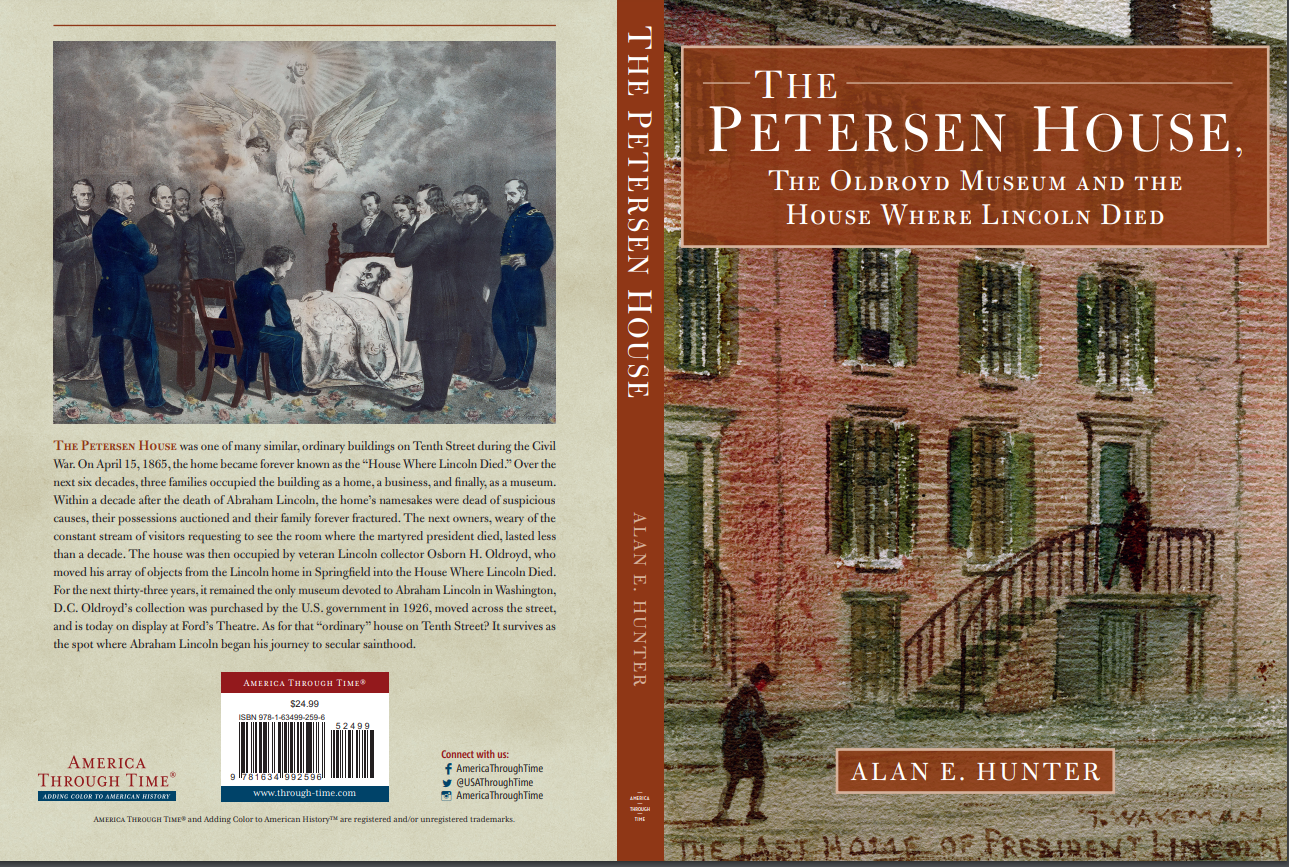
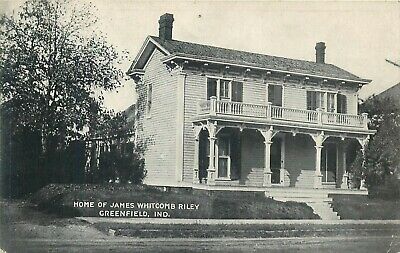
This Saturday (Yay! On Halloween!) October 31st, I will be visiting the James Whitcomb Riley boyhood home in Greenfield to talk about both Lincoln and Riley. That day will be the official book reveal for my newest book, “The Petersen House, The Oldroyd Museum and The House Where Lincoln Died”. Thanks to the courtesy of former Indiana National Road Board member and Director of the Riley Boyhood Home and Museum Stacey Poe, you are invited to come out at 2:00 pm and experience the Riley home and their new “Lizabuth Ann’s Kitchen” facility located at 250 W. Main Street on the historic National Road. I will be bringing some Lincoln props, signing books, sharing stories about the Washington DC building Lincoln died in (and it’s Indiana connection) and, in the “spirit” of the season, spinning a few ghost stories too.

z jws-l400Although Lincoln and Riley died a half-century apart, the men had much in common. The two were considered the state’s most famous Hoosiers (that is until John Dillinger died in 1934) and their names were often linked in speeches, newspaper articles, books and periodicals in the first fifty years of the 20th century. One of my favorite quotes found while searching the virtual stacks of old newspapers comes from the July 20, 1941 Manhattan Kansas Morning Chronicle: “If you want to succeed in life, you might run a better chance if you live in a house with green shutters. Abraham Lincoln, Mark Twain and James Whitcomb Riley all lived in such houses.” Lincoln and Riley epitomized everything that was good about being a Hoosier, right down to the color of their green window shutters.

z jw liz download

Lizabuth Ann’s Kitchen

The comparison was not unfounded. Both men were born in a log cabin. Both came from humble origins. Both were unevenly educated and both men never stopped learning. Both studied law-Lincoln with borrowed law books, Riley doodling poetry in the margins of his father’s law books. Both men were poets and both were considered among the greatest speakers of their generation. And both men had problematic relationships with women. Lincoln once said that he could “never be satisfied with anyone who would be blockhead enough to have me” and Riley famously said “the highest compliment I could pay to a woman is to not marry her.”

z 13964410_1441413422


Reuben Alexander Riley (1819-1893)

For the poet, his admiration began with his father, Reuben Riley. The senior Riley was a state legislator and among the first central Indiana politicians to embrace the railsplitter as a national figure and presidential candidate. Riley was considered by many to be the best political orator of his day. He traveled the Hoosier state stumping for Lincoln in 1860 and continued his support until the day that Lincoln died. Because of this young J.W. Riley could not remember a time when he did not admire Lincoln.
When the Lincoln funeral train came through Indiana on April 30, 1865, the official “Travel Log” notes that it arrived in Greenfield at 5:48 a.m., Philadelphia at 5:57 a.m., Cumberland at 6:30 a.m., the Engine House (identified as “Thorne” in Irvington) at 6:45 a.m. before finally arriving in Indianapolis at 7:00 a.m. In Greenfield, the depot was choked with people wishing to gaze upon the face of the departed leader one last time. The train was not officially scheduled to stop in Greenfield, but the mood among the citizens was that perhaps the engineer might be persuaded to stop when he witnessed the tremendous outpouring of trackside emotion at the Greenfield depot.

Lincoln train
The local newspaper described “a knot of three boys, hands in pockets chattering back and forth with each other while pacing up and down the railroad tracks. Two older fellows were standing together, each arm around the other, probably soldiers remembering what it means to be a comrade.” The depot porch was filled to overflowing with women in their long dresses, old soldiers in their Union uniforms and a sea of men dressed entirely in black. The telegraph operator in Charlottesville wired that the train had just passed and was heading towards the neighboring town. A sentinel was perched atop the station to alert the citizens below of the train’s approach.
In a few moments, a cloud of silver phosphorescent smoke appeared above the tree tops along the route of today’s Pennsy trail. “Here it Comes” was the cry from above and immediately the crowd below hushed and gazed eastward expectantly. For several moments, the only sound that could be heard on the platform was the muffled weeping of the gathered mourners. As the train slowly approached, Captain Reuben Riley read aloud excerpts from Lincoln’s second Inaugural address at the close of which he sat down and wept uncontrollably. The train paused briefly at the station and the engineer removed his cap in respect to reverent gathering. Fortuitously, Reverend Manners stepped from the crowd and led the group in a prayer that began, “Thank God for the life of Abraham Lincoln.” The people now openly wept as the train slowly departed westward towards Indianapolis. It is likely that 16-year-old James Whitcomb Riley was present that day.

Alan Hunter 3 col x 3

Riley wrote two poems dedicated to Abraham Lincoln. in a letter to Edward W. Bok dated October 23, 1890, Riley said this of the sixteenth President; “I think of what a child Lincoln must have been-and the same child-heart at home within his breast when death came by.” Along with all the shared common traits mentioned above, Lincoln and Riley were, and still remain, perhaps foremost, the idol of children everywhere.
Three days after Riley died on July 22, 1916, the Morning Call newspaper in Allentown, Pennsylvania eulogized the poet by saying: “The country has produced poets of more creative power and commanding genius, but none- not even Longfellow, beloved as he was- ever came quite so close to the heart of the mass of the people as the Hoosier Poet, James Whitcomb Riley, who died at Indianapolis on Sunday. He was truly from and of the people as was Lincoln, and in their way, his personality and career are almost as interesting and picturesque as those of the immortal emancipator.”
Elbert Hubbard, founder of the Roycrofters Arts & Crafts community in Aurora, New York, said “Who taught Abraham Lincoln and James Whitcomb Riley how to throw the lariat of their imagination over us, rope us hand and foot and put their brand upon us? God educated them. Yes, that is what I mean, and that is why the American people love them.” Hubbard was a contemporary of Riley’s who, along with his wife, died when the Germans sunk the RMS Lusitania leading to our entry into World War I a year before Riley passed.
However, in my view, what links both men in perpetuity is a shared language. Both men spoke fluent Hoosier. All his life, Lincoln and Riley tended to swallow the ‘g’ sound on words ending with ‘ing’, so a Walking Talking Traveling man become Walkin’, Talken’, Travelin’, man. Lincoln said “warsh” for wash, “poosh” for push, “kin” for can, “airth” for earth, “heered” for for heard, “sot” for sat, “thar” for there, “oral” for oil, “hunnert” for hundred, “feesh” for fish and “Mr. Cheerman” for Mr. Chairman. Likewise, Riley practiced the Hoosier dialect in his printed work, saying “punkin'” for pumpkin, “skwarsh” for squash, “iffin'” for if then and “tarlet” for toilet. Both men peppered their speech with distinctive words like yonder and for schoolin’ both “larned” their lessons and got their “eddication” in fits and spurts.
Both men’s lives came to an end in private houses, not in hospitals. Riley in the Nickum House in Indianapolis’ Lockerbie Square and Lincoln in the Petersen House in Washington, D.C. This Saturday, I will share my favorite ghost story about J.W. Riley (in the Lockerbie house) and while I have no ghost stories to share about The House Where Lincoln Died, I will detail a connection between the two. I will introduce you to the three families who resided there, the last of whom, Osborn Oldroyd, displayed his Lincoln collection of relics and objects for over thirty years before selling it to the United States Government in 1926. That collection is now on display in the basement of Ford’s Theatre.
Riley Lincoln poemOldroyd, a thrice-wounded Civil War veteran, collector, curator and author, is perhaps the father of the house museum in America. One of Oldroyd’s books, a compilation of poems entitled, “The Poets’ Lincoln— Tributes In Verse To The Martyred President”, was published in 1915. James Whitcomb Riley’s poem, A Peaceful Life with the name “Lincoln” in parenthesis as a sub-title can be found there on page 31. In Oldroyd’s version, the first line differs from Riley’s original version. Riley’s handwritten original (found today in the archives of the Lilly Library on the Bloomington campus of Indiana University) begins: “Peaceful Life:-toil, duty, rest-“. Oldroyd’s book version begins; “A peaceful life —just toil and rest—.” Interestingly, the Oldroyd version has become the standard. And there you have it. Oldroyd’s influence is subtle, his name largely unknown, yet he stays with us to this day.

Politics, Pop Culture, Presidents

The 1952 Presidential Conventions Revisited.

Original publish date:  September 3, 2020

Many readers will recall that I have a minor obsession with old paper. Photos, brochures, booklets, newspaper, documents, letters… PAPER! Sometimes I run across an item that illustrates things really haven’t changed that much. During a recent trip to Lexington, Kentucky, I found a box of paper in an antique mall that seemed to be calling my name. It was full of a miscellany of every sort, type & design. Some of which belonged to a woman who, in 1960, had been president of the Lexington women’s club and a delegate to the 1960 Democratic National Convention in Los Angeles that nominated John F. Kennedy for President.
Hidden among them was a six-page letter about the 1952 Democratic convention in Chicago that nominated Adlai Stevenson for President written by an Eisenhower supporter. As I read the letter, it all sounded very familiar to me. Written on three sheets of stationery from the Warner Hotel in Warren, Ohio on July 25, 1952, it was sent to a couple living in Lexington. The hotel was named after Jonathan Warner, a long forgotten Lake Superior iron ore magnate and leading manufacturer of pig iron. The letterhead touts the hotel as having 150 rooms, all absolutely fireproof, and as being on the “European plan”, which basically means, all you get is the room; no meals included.

z ct-1537818138-8l5za82l5p-snap-image

Adlai Stevenson at the 1952 DNC.


The letter reads: “Dear Mother & Daddy. – I surely did not intend to be so long writing you all, but I guess you know that what with cleaning up after our guests, getting Teresa off to camp, and then getting ready to leave myself, that I haven’t had too many spare minutes. And I must admit that what ones I did have were devoted to the Democratic Convention! Have you ever seen or heard such a brawl as was going on yesterday over the seating of the three southern states! We were so glued to the radio, that we forgot every thing else, and ran out of gas!! Did we ever feel silly! It was just at dark, and fortunately we were in town, and some kind soul gave us a push to a gas station. It’s the first time either of us can remember of that ever happening to us! We sure laughed at ourselves! How we wished and wished we had our television set to see that disgusting spectacle! Tom says he would have forgotten to eat!”
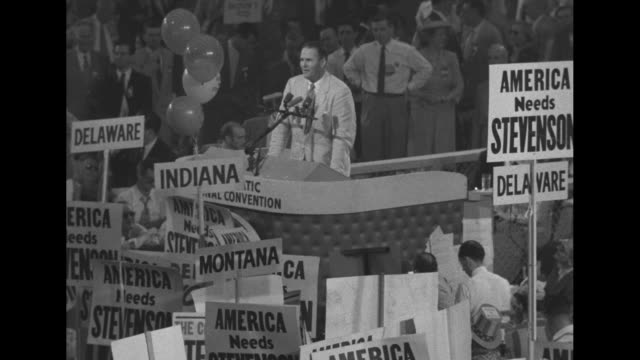
The 1952 Democratic National Convention was held at the International Amphitheatre in Chicago from July 21 to July 26. This was the same arena the Republicans had gathered in for their convention (July 7 to July 11). In 1952, the popularity of television was on the rise with 37% of American households owning televisions and both parties recognized the rising importance of television and the impact it would have on the political process. The 1952 Democratic convention was the second political convention to be televised live, coast-to-coast (following the Republicans three weeks earlier). After carefully watching the Republican Convention, the Democrats made last-minute alterations to make its broadcast more appealing to television audiences.

z 1952DemocraticConventionTicket
The Democratic platform for 1952 called for a strong national defense, collective security against the Soviet Union, multilateral disarmament, repeal of the Taft-Hartley Act, equal employment opportunities for minorities and public assistance for the aged, children, blind, and the disabled, expansion of the school lunch program, and continued efforts to fight racial discrimination.
The 1952 Republican platform pledged to end the unpopular war in Korea, supported the development of nuclear weapons as a deterrence strategy, to fire all “the loafers, incompetents and unnecessary employees” at the State Department, condemned the Roosevelt and Truman administrations’ economic policies (Code word: SOCIALISM), supported retention of the Taft–Hartley Act, opposed “discrimination against race, religion or national origin”, supported “Federal action toward the elimination of lynching”, and pledged to bring an end to communist subversion in the United States.
z 18510_detailThe letter continues, ” Gov. Battle has a brother living in Charleston, who goes to our church, + Tom knows him quite well, + we have been in their home, so we were especially interested in what he had to say. We thought the Louisiana Governor was crying, – did you? But I’m a telling you, the more I see of the southern states vs. the northern states, the prouder I am of being a Southerner!” Virginia Governor John Battle, of whom the letter speaks, was a Delegate to the DNC in 1952. When the Virginia delegation was threatened with expulsion at the convention for refusing to sign a loyalty oath (to whomever the party nominated), Battle delivered a speech to the convention preventing their expulsion.
The letter continues: “And I believe that if anything saves this country from socialism and communism, it’s going to be the southern states! I’m sure you must have heard Gov. Dever’s keynote speech, – the best description I have ever heard of the Democratic Party, – pure socialism! And he seemed to be trimmed in a bright shade of pink! Just listen to some of the phrases they use, – they sound exactly like the “Daily Worker”, and the “hate – mongering” they are accusing the Republicans of doing! It’s all certainly very clear, – and they’re quite bold about it this year too!”

z gettyimages-1077743424-640x640
Gov. Paul Dever on rostrum placing name of Adlai Stevenson in nomination.

Not only was Massachusetts Governor Paul Dever the keynote speaker at the convention, he also made an unsuccessful bid for the Democratic presidential nomination, polling eighth out of sixteen hopefuls before dropping out after the third ballot. Both 1952 conventions came in the middle of a four-year period of anticommunist policies and attitudes, championed by Wisconsin Republican Senator Joe McCarthy, which came to be known as McCarthyism or more colloquially as the “Red Scare”. Beginning in February of 1950, McCarthy began denouncing the Truman administration for permitting known communists to remain working in the federal government. The accusations by McCarthy put the administration on the political defensive and led Truman to seek ways in which he might prove he was not “soft on communism.”
The letter continues: “We get a kick out of what they say about Eisenhower, because for months they were beating their brains out trying to get him to be their candidate!”
As early as June of 1943, politicians began suggesting to Eisenhower that he should run for President. Ike believed that a general should not participate in politics, and often told reporters that he did not want any political job “from dogcatcher to Grand High Supreme King of the Universe”. In January 1948, after learning of plans in New Hampshire to elect delegates supporting him for the forthcoming Republican National Convention, Eisenhower stated that he was “not available for and could not accept nomination to high political office”; “life-long professional soldiers”, he wrote, “in the absence of some obvious and overriding reason, [should] abstain from seeking high political office”. Both 1948 candidates, Harry Truman and Thomas E. Dewey, tried to get Ike to run for their respective parties but Ike maintained no political party affiliation during this time. Many believed that Eisenhower was too old to run.

z GettyImages-544748937

IKE

The letter continues, “Politics is a terrible thing, but thank God we still have it! What must foreign countries think of such behavior as goes on in these conventions! Barkley certainly packed a wallop in his speech, and had the perfectly tremendous over patience, one 35 minutes, the other over 45 minutes! He surely could end up with the nomination!”
After President Harry S Truman announced that he would not seek reelection, his Vice-President Alben Barkley declared his availability to run for president while maintaining he was not actively seeking the office. Barkley’s distant cousin, Illinois Governor Adlai Stevenson II had not yet committed to run. When Kentucky’s delegation announced that they would support Barkley, Truman encouraged Missouri’s delegates to do the same. Hoosier DNC chairman Frank E. McKinney and former chairman James Farley also supported him. To dispel concerns about his age, failing eyesight, and heart problems,

z preview

Harry S Truman & Alben Barkley.

Barkley arrived in Chicago for the 1952 DNC and briskly walked seven blocks from the bus station to his campaign headquarters. On July 20 a group of labor leaders, including UAW President Walter Reuther, issued a statement calling Barkley too old and suggested that Democrats nominate someone younger like Stevenson. Barkley was unable to persuade them to retract the statement, which caused delegations from large industrial states like Illinois, Indiana, and Pennsylvania to balk on their commitments to Barkley. On July 21, Barkley withdrew from the race. Invited to make a farewell address on July 22, he received a 35-minute ovation when he took the podium and another 45-minute ovation at the speech’s end. In a show of respect, a Missouri delegate nominated Barkley for president and House Majority Leader John W. McCormack seconded it, but Stevenson was easily nominated.

z 420x0

The letter continues: “Glad the steel strike is over, but I wonder if there wasn’t a bit of timing involved? So that it would come during the Democratic convention?”
The 1952 United Steelworkers of America strike against U.S. Steel and nine other steelmakers was scheduled to begin on April 9th. President Truman, after being told that supplies of ammunition in Korea were already low and that even a 10-day strike would endanger the war effort, nationalized the American steel industry hours before the workers walked out. On June 2, 1952, in a landmark decision, the U.S. Supreme Court ruled that the President lacked the authority to seize the steel mills. The strike lasted 53 days and ended on July 24, 1952.
The letter concludes, “It’s 11:30 AM, and I had better be going out for some “brunch,” – slept until after 10. Want to thank you all again for all the food you sent by the kids, including the secondhand olives! – And also for meeting us halfway to take Jeane on. Hope you had a pleasant drive home, – we did, – it cooled off some, + we found we had a storm when we got home. It’s very pleasant here, – in fact, I had to wear a coat last night when we went out for dinner. Expect to leave about 3 o’clock this afternoon for Ashtabula, not very far from here. Then tomorrow afternoon we go to Akron to spend Saturday + Sunday with Ed + Margaret Bruner. Monday, Tom has to go to Cleveland, and we had hoped to spend that night with Mrs. Harrison, but she is visiting in Maine so will work that out later on. Anyhow, will be home Tuesday. Heaps of love – Mary Holley.”
Much in this letter written nearly seventy years ago should sound familiar to readers of today. Seems the more things change, the more they stay the same.