Music, Pop Culture

James Brown’s Hair.

James BrownOriginal publish date:  December 18, 2016

James Brown is remembered as the “Godfather of Soul” for his many contributions to music made during a six-decades-long career. Brown’s influence is a little more complicated than that. Truth is, not only was Brown a music legend, he was a civil rights pioneer. For a time in the 1960s, Brown was among the most important voices in the black empowerment movement. Not only did he change the culture in terms of music but also in terms of civil rights. Everything we now know about funk and hip-hop we learned from James Brown.
During the sixties, Brown’s music served as message of black empowerment and helped keep the peace during that tumultuous decade. Brown embraced the civil rights movement with the same energy and dynamism he devoted to his performances. In 1966, the song “Don’t Be a Drop-Out” urged black children not to neglect their education. In the same year, he flew down to Mississippi to visit wounded civil rights activist James Meredith, shot during his “March Against Fear.”
During that period Brown often provided nighttime performances to ease tensions when the Civil Rights Movement leadership was fracturing and threatening to break apart. As the civil rights leaders were embroiled in internal conflict, Martin Luther King, Jr. famously said, ‘You guys can stay here and argue if you want to, I’m going to go watch James Brown.” Brown recorded hits like “Say it Loud (I’m Black and I’m Proud)” and “I Don’t Want Nobody to Give Me Nothing (Open Up the Door and I’ll Get it Myself)” that embodied the positive spirit of the Civil Rights Movement in a way speeches, protests and marches never could. Brown later attested those songs “cost me a lot of my crossover audience,” but they shined the light on African-American nationalism and became unifying anthems of the age.
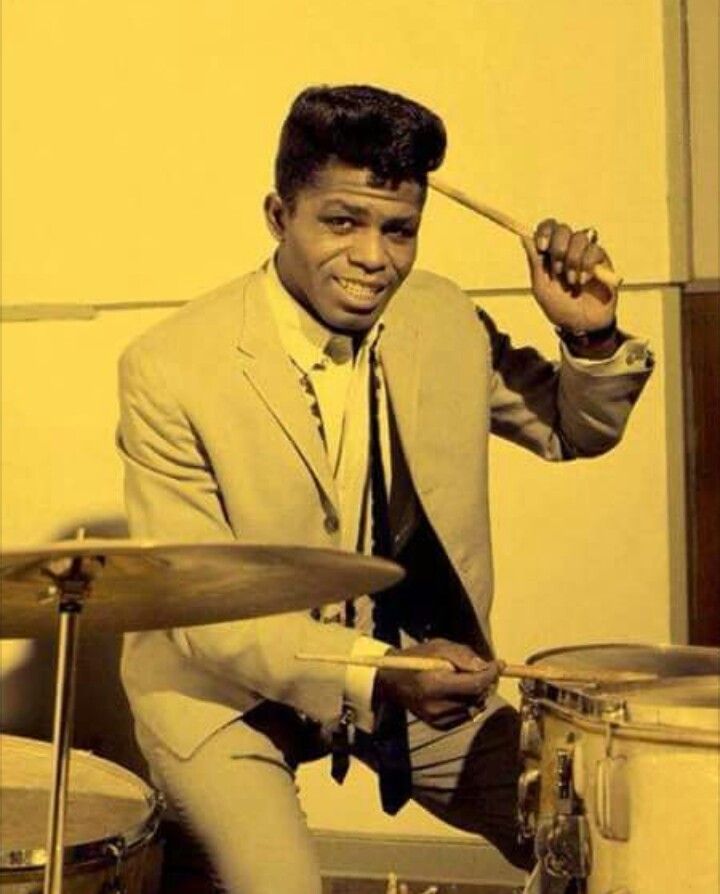
b5d335b4a5f928746bcc79c74bdba26a--soul-funk-james-brownBy 1968, James Brown was much more than an important musician; he was an African-American icon. He often spoke publicly about the pointlessness of rioting. In February 1968, Soul Brother No. 1 informed Black Panther leader H. Rap Brown, “I’m not going to tell anybody to pick up a gun.” Brown often canceled his shows to perform benefit concerts for black political organizations like the Southern Christian Leadership Conference (SCLC). In 1968, he initiated “Operation Black Pride,” and, dressing as Santa Claus, presented 3,000 certificates for free Christmas dinners in New York City’s poorest black neighborhoods. He also started buying radio stations.
On April 5, 1968, African Americans rioted in 110 cities following Dr. King’s assassination the day before. Like Robert F. Kennedy’s speech in Indianapolis the night of the assassination, James Brown hosted a free citywide concert at Boston Gardens aimed at avoiding another racially-charged riot. In the midst of that famous beantown concert, with Boston on the verge of going up in flames, Brown said, ‘I used to shine shoes outside a radio station. Now I own that radio station. That’s black power.’” Many Bostonians credit James Brown for keeping the peace in their city by the sheer force of his music and personal charisma.
However, there was a moment during the show when tensions could have boiled over. As a handful of young black male fans tried to climb on stage, white Boston policemen began forcefully pushing them back. Sensing the volatility of the moment, Brown urged the cops to back away from the stage, then addressed the crowd. “Wait a minute, wait a minute now WAIT!” Brown said. “Step down now, be a gentleman. Now I asked the police to step back, because I think I can get some respect from my own people.” Brown successfully restored order and continued the successful peacekeeping concert in honor of the slain Dr. King.
In 1969, Look Magazine called Brown “the most important black man in America.” In May 1968, President Lyndon Johnson invited Brown to the White House. The following month, the government sponsored him to perform for the troops in Vietnam. James Brown’s life and activism significantly influenced blacks in general, but some of his songs reflect the need for change that was so much a part of the Movement. James Brown used concerts as platforms to spread the philosophy of nonviolence and to bring attention to civil rights organizations. Brown’s music helped promote black consciousness and peace. It also inspired a generation of musicians. Indiana’s own John Mellencamp is probably the best example. Mellencamp has repeatedly acknowledged the influence of James Brown and it shows in his music.
James Brown had three noteworthy phases in his career: from 1962–66 he was ‘Mr. Dynamite”, from 1967–70 he was “Soul Brother No. 1” and from 1970 and beyond he was the “Godfather of Soul”. Sadly, casual fans remember James Brown for three things: his 1985 Rocky IV anthem “Living in America”, his brushes with the law and his hair. The Rocky song is a classic and his cameo in the film allowed viewers a glimpse of the legend that was James Brown. His brushes with the law always seemed a bit overblown to me. After all, he WAS James Brown. His hair, well that’s another story altogether.
There are countless stories about entertainer contract riders. The Beatles demanded a black and white television set and a few Coca-Colas, Elvis demanded 10 soft drinks and 4 cups of water, Van Halen’s rider included requests for “one large tube K-Y Jelly” and “M&Ms- BUT ABSOLUTELY NO BROWN ONES”, Eminem demands 2 cases of Mountain Dew and an assortment of Taco Bell food and Iggy Pop demanded that seven dwarfs greet him in his dressing room (Iggy Pop fans are not surprised).
James Brown’s contract called for a steam iron, ironing board, deli tray with assorted meats and cheeses, coffee, tea, soft drinks (Coke products), Gatorade, champagne (Cristal or Dom), 1 electric golf cart and a hooded hair dryer. Yes, one of those table-model hair dryers like our moms and grandmothers used at the local hair salon. The ones that fit completely over the head like a space helmet. That glorious hair didn’t make itself people. It took hours of painstaking hair engineering to create that unnatural helmet of hair. Plenty of chemicals, hair straightening techniques and, most importantly, a professional-grade rigid hooded hair dryer.
20120829_142758Except for a brief period during the mid-1960s when Brown wore his hair in a traditional afro as a temporary form of protest, for most of his career, James Brown had his hair “marceled” aka straightened or conked. The conk (derived from congolene, a hair straightener gel made from lye) was a hairstyle popular among African-American men. This hairstyle transformed naturally “kinky” hair by chemically straightening it with a relaxer (sometimes the pure corrosive chemical lye), so that the newly straightened hair could be styled in specific ways.
Often, the relaxer was made at home, by mixing lye, eggs, and potatoes, the applier having to wear gloves and the receiver’s head having to be rinsed thoroughly after application to avoid chemical burns. Conks were most often styled as large pompadours although others chose to simply slick their hair back to lie flat on their heads. Conks took a lot of work to maintain: a man often had to wear a do-rag of some sort at home, to prevent sweat or other agents from causing his hair to revert to its natural state prematurely. Also, the style required repeated application of relaxers; as new hair grew in, it too had to be chemically straightened.
In the African American Community of the early 20th century, the conk hairstyle served as a rite of passage from adolescence into adulthood for males. Because of the pain involved in the process, and the possibility of chemical burns and permanent scarring, the conk represented masculinity and virility.
Chuck Berry, Louis Jordan, Little Richard, James Brown, and The Temptations, were well known for sporting the conk hairstyle. The style fell out of popularity when the Black Power movement took hold, and the Afro became the symbol of African pride. Malcolm X, although a conk enthusiast in his youth, condemned the hairstyle as black self-degradation in his autobiography. He decried the conk’s implications about the superiority of a more “white” appearance. The conk is all but extinct as a hairstyle among African-American men today, although more mildly relaxed hairstyles such as the Jheri curl and the S-curl were popular during the 1980s and 1990s.
On December 23, 2006, Brown arrived at his dentist’s office in Atlanta, Georgia for dental implant work. Brown’s dentist observed that he looked “very bad … weak and dazed.” Instead of performing the work, the dentist advised Brown to see a doctor right away about his medical condition. Brown went to the hospital the next day and was admitted for observation and treatment. Brown had been struggling with a noisy cough since returning from a November trip to Europe. The singer had a history of never complaining about being sick and often performed while ill. Brown had to cancel upcoming concerts in Waterbury, Connecticut and Englewood, New Jersey but was confident he would recover in time for scheduled New Year’s Eve shows at the Count Basie Theatre in New Jersey, the B. B. King Blues Club in New York and performing a song live on CNN for the Anderson Cooper New Year’s Eve special. Brown wasn’t called the hardest working man in show business for nothing.
Brown remained hospitalized and his condition worsened throughout the day. On Christmas Day, 2006, Brown died at approximately 1:45 am at age 73. The official cause was congestive heart failure, resulting from complications of pneumonia. Brown’s last words were, “I’m going away tonight,” before taking taking three long, quiet breaths before dying.
James Brown wore his hair in a conk pompadour until the day he died. After Brown’s death, a public memorial service was held at the Apollo Theater in New York City and another at the James Brown Arena in Augusta, Georgia. Brown’s memorial ceremonies were elaborate, complete with costume changes for the deceased and videos featuring him in concert. His body, placed in a Promethean casket—bronze polished to a golden shine—was driven through the streets of New York to the Apollo Theater in a white, glass-encased horse-drawn carriage.
While plans were being made for the funeral, Brown’s family was contacted by Michael Jackson, a lifetime fan and friend. Michael had flown in from Bahrain, where he was living following his 2005 child molestation trial, and he asked to see the Godfather of Soul one last time. Reverend Al Sharpton, who officiated at Brown’s funeral, recalled, “I got a call from the mortician and he asked me if it was alright if Michael Jackson could come by the funeral home and see James Brown’s body. I said, ‘But Michael’s in Bahrain’. And he said, ‘No, he’s here’. A couple of hours later, I called and the mortician said, ‘He just left. He was here (for) about an hour and he was re-combing Mr. Brown’s hair. He felt that I had combed the hair wrong. People didn’t realize he was really into James and he actually styled his hair the way it was buried.”
Sharpton was insistent on making sure Michael stayed in town long enough to rightfully pay respects to the music legend, legal questions notwithstanding. Sharpton added, “I think his plan was to come in the middle of the night, see the body – because James Brown was his idol – and he was going to leave. No one had really seen him since the trial… but we convinced him to stay for the funeral. I told him, ‘Michael, you gotta stay. You’ve gotta re-emerge one day in public.” So in short, the King of Pop was the last person to attend to the Godfather of Soul. Michael would follow his idol to the grave less than three years later.

Music, Pop Culture

Jimmy Buffett: Walking Tall with Buford Pusser.

Buffett and PusserOriginal publish date:  June 26, 2014

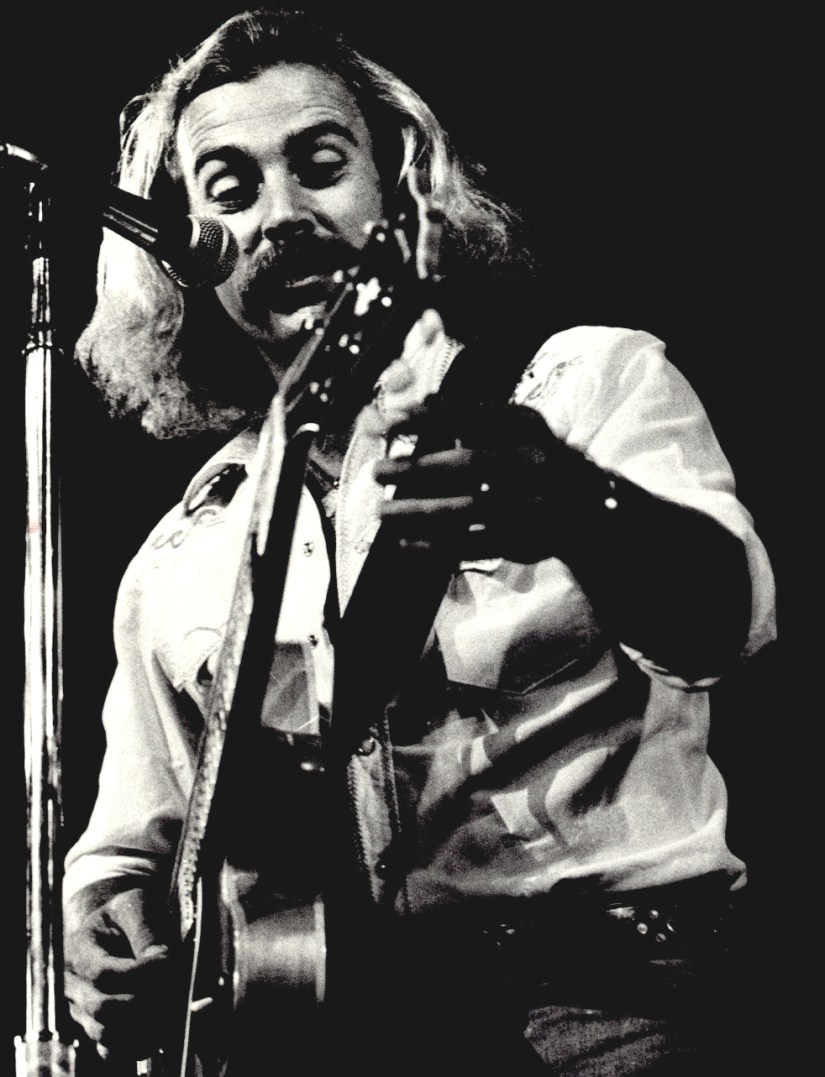
Well, Jimmy Buffett time has once again come and gone in Indiana. The Parrotheads have poured themselves safely back into their beds and the loud Hawaiian shirts have been put away in the closet til next year. Whether you love him or hate him, you cannot deny that Buffett has became a force with a fierce following and a liturgy of songs about women, drinking and all things nautical. Some people think he’s a genius, others think he’s a sellout and still more think he’s just a good jump start to a party. Regardless, there was a time 40 years ago when he was just a hard working long haired rock-n-roller trying to find his sea legs.
During those early years, Buffett himself tells a great story about an encounter with an American legend that, assuming you haven’t heard it already, is sure to make you smile. “It” happened after a show in 1974 at the Exit/In in Nashville, Tennessee. The Exit/In is a live music venue in Nashville, Tennessee, located on Elliston Place near Centennial Park and the Vanderbilt University campus. The list of musicians and entertainers that have performed there are a who’s who of entertainment history. That list includes include Hank Williams Jr., The Ramones, The Police, Talking Heads, The Black Crowes, R.E.M., The B-52’s, Johnny Cash, Emmylou Harris, Willie Nelson, Steve Martin, Red Hot Chili Peppers, Elvis Costello, Muddy Waters, Linda Ronstadt, The Allman Brothers Band, Kings of Leon, Billy Joel, Etta James, Robin Trower, Ryan Adams, The Amazing Kreskin, Tom Petty and The Heartbreakers, Cheech and Chong and Waylon Jennings. The club was even featured in the 1975 Robert Altman classic film, Nashville.
BuffettBuffett himself tells the story on his fan website, in a 1975 interview for Rolling Stone and in his own biography. “We’re there dining and dancing. Sammy Creason (Drummer) was with me (other accounts say Kris Kristofferson’s bass player Terry Paul was there too), so we provided just a gala of entertainment. Me on acoustic guitar so drunk I couldn’t hit the chords and him just pounding the drums out in 3-quarter time. Ran everybody out. We got the screaming munchies and we were going to Charlie Nickens to eat. And I couldn’t find my rent-a-car, which was parked somewhere amidst thousands of cars in the parking lot of the fabulous, plush King of the Road hotel. It was a little bitty car. It was hiding among many big ones there. And there was a Tennessee Prosecutors convention going on there. If they had made it to room 819 they would’ve had a closed door case.
So I stood on the hood of this car in a pair of old Ra Ra’s (shoes) that I bought in Miami for 2 bucks. They were white and brown, but they were golf shoes so I had to take the cleats out, but they still had the posts in them so they clicked a lot. I was standing on the hood of this particular car (a Cadillac he believed would offer a better vantage point) and as fate would have it, it belonged to a rather large man who came up behind me and threatened my life real quickly. And I hadn’t been in a fight since junior high school on the city bus in Mobile. He came up and said “Son you stay right there, you’re under arrest”. So I politely turned around and said “You kiss my a*s”. He didn’t. Instead he followed me over to the car which Sammy had found. I got in the driver’s side and Sammy got in the passenger’s side. My window was up, his was down and this fellow poked his head in and said “Would you like for me to turn this car over?”.
289c53f3a91b47b1c1e53d7a8aa2da9aI was not scared of this individual. I just thought he was some ex-football player turned counselor. And Sammy said “look whatever damage we did ABC will pay for everything” which was awfully generous of Sammy since he didn’t have the authority to say so. Being a good company man I took up for my company and said “No they won’t. I’m still gonna beat your a*s if you don’t leave us alone”. With that he pulled up then stuck his big head and his hand in and grabbed me by my hair until it separated from my head. I had a big bald spot on the back of it and I looked like a monk for about 3 months. Then he punched Sammy right in the nose. We knew he wasn’t kidding. So Sammy defended himself bravely with a bic pen. He starts stabbing at this man’s arm trying to get it out of the window because we couldn’t start the car because with the new modern features of ‘74 automobiles you can not start your car unless your seat belt’s buckled and we were too drunk to get ours hooked up.
So we sit there while this man pounded the hell out of both of us. I looked over at Creason and I said “Sammy I don’t wanna die in a Gremlin.” Eaten by a shark, killed in a plane crash, but what’s my mother gonna say? Smashed to death in a Gremlin in the parking lot of the plush King of the Road hotel. Nope. So I mustered all the courage and energy I had and all the coordination I had left in my poor body and got the seat belt buckled and went to Charlie Nickens. (Buffett later said their attacker jumped on the hood, fell off and picked a trash can up and threw it at them as they sped off.) We ordered our barbecue and on the way back we hit the Jefferson St. Bridge. Luckily there was no one around so we just backed up and headed for the hotel.
Got back, and we decided that this man may be lurking in the bushes or else may haven been snorkeling around in the pool trying to scoop up coins that people threw in. So we decided to defend ourselves with a classic southern weapon: a tire tool. So we destroyed the back end of the Gremlin looking for the tire tool, found it. Walked through the lobby of these prosecutors, and we had caused a turmoil by this time. And got up to the 8th floor where we were staying and figured we were all safe. But I had forgotten my key.
So I had to go back downstairs and Sammy said well you take this I’m not going back down there. And he gave me the weapon, which I stuck in my back pocket. Walked down into the plush lobby of the plush King of the Road hotel, walked up to the desk and asked for the key to my room. This man snuck up behind me and took the tire tool out of my back pocket. I whipped around and I said “look you, that was for my protection and you started this whole thing. I didn’t mean to get on your car and I’m still gonna beat your a*s if you don’t quit bothering me.” At this point, two detectives seized me, drug me into the elevator and said “son, we would call the police and have you arrested. You’ve caused quite a disturbance here tonight. But we figure your just lucky to be alive because that was Buford Pusser.” And I went “Oh. 8th floor please.”
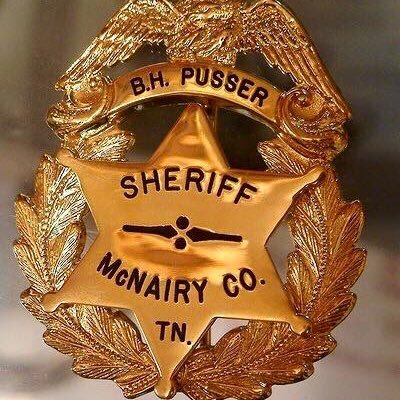
8w8L-lFp_400x400If you don’t recognize the name Buford Pusser, the epic films made about his life might ring a bell. Buford Hayse Pusser was the Sheriff of McNairy County, Tennessee from 1964 to 1970 and the subject of the film “Walking Tall”. Pusser, a 6 feet 6 inch tall 250 pound former professional wrestler, became known for his virtual one-man war on moonshining, prostitution, gambling, and other vices on the Mississippi-Tennessee state-line against the Dixie Mafia and the State Line Mob. By the time he encountered Buffett, Pusser had already killed two men.
Pusser survived several assassination attempts, suffering eight gunshot wounds and seven stabbings in these attacks. Buford’s wife Pauline was killed on August 12, 1967, during an assassination ambush intended for him. On August 21, 1974 Pusser was returning home alone from the McNairy County Fair in his souped up Corvette when he struck an embankment at high speed and was ejected from the vehicle, killing him instantly. The car caught fire and burned. Earlier that day, Pusser had contracted with Bing Crosby Productions in Memphis to portray himself in the sequel to Walking Tall.
Rumors of sabotage to the steering mechanism and the tie-rods were widely circulated but were largely ignored. Although no autopsy was performed on the body, Pusser allegedly had 0.18% blood alcohol content at the time of the accident and witnesses claimed that they had seen him drinking heavily at the fair. Both Pusser’s mother, Helen and his daughter, Dwana believed he was murdered. Sadly, Dwana, who was a passenger in another car, came upon the scene of the accident moments later. There is a museum dedicated to his life housed in the home he was living in at the time of his murder, ironically Pusser’s death came the same year as his encounter with Jimmy Buffett. His memory is so revered that a Buford Pusser Festival is held each May in his hometown of Adamsville, Tennessee.
Later that year, before Pusser’s untimely death in August of 1974, Buffett received an 8×10 photo of the legendary sheriff signed “To my favorite sparring partner. Next time, I’ll kill you. Buford Pusser”. Turns out the photo was not sent by Pusser but rather by Jimmy’s Nasville talent agent Don Light. In his December 1974 album “A1A”, Buffett refers to the Pusser incident in the song “Presents to send you” when he sings “I had my hair pulled out by a man who really wasn’t my friend.” Love him or hate him, you gotta hand it to Jimmy Buffett. He had an angry encounter with Buford Pusser…and survived!

Music, Pop Culture

The Kinks Lola. A Transgender anthem revisited. Part II

Kinks Lola Part IIOriginal publish date:  April 3, 2016

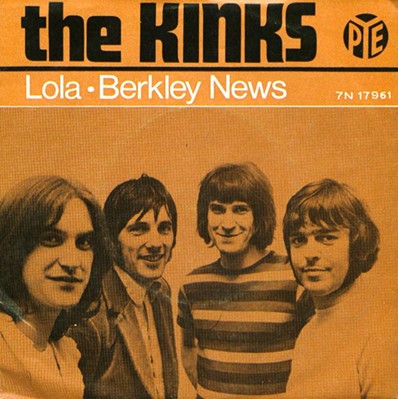
Last week, we revisited The Kinks classic transgender anthem, “Lola.” It seemed like the right time to take a look back since the subject has been in the news so much lately. Trouble was, contrary to what you may think, the transgender subject the song alludes to was not the problem. The problem was the band’s use of the brand name Coca-Cola in the opening verse. Seems that the BBC had a strict policy against product placement of any kind back in the day and refused to play the song. Kinks frontman and songwriter Ray Davies was forced to fly back-and-forth from the U.S. to the U.K. to redo the phrase from Coca-Cola to Cherry Cola during the middle of a US concert tour. Today that would require a simple file transfer, back then it involved a few Transatlantic Jet flights.
Last week’s article ended with the question, was the song in any way autobiographical? Contemporary rumors whispered that the song was written about a supposed date between Ray Davies and a trans woman actress Candy Darling. The same Candy mentioned in Lou Reed’s 1972 song “Walk On The Wild Side” (“Candy came from out on the island, in the backroom she was everybody’s darling”). Darling was one of Andy Warhol’s original “superstars” at Warhol’s New York studio known as the Factory. Davies eventually disavowed the rumor, saying that the two only went out to dinner together and that he had known the whole time of Darling’s gender identity.
Davies once said the idea behind the song this way: “It was a real experience in a club. I was asked to dance by somebody who was a fabulous looking woman. I said “no thank you.” And she went in a cab with my manager straight afterwards. It’s based on a personal experience. But not every word.” Davies further explained, “‘Lola’ was a love song, and the person they fall in love with is a transvestite. It’s not their fault – they didn’t know – but you know it’s not going to last.”
Kinks drummer Mick Avory claims the song was partially inspired by Avory’s frequenting of transgender bars in west London. Avory said, “We used to know this character called Michael McGrath. He used to hound the group a bit, because being called The Kinks did attract these sorts of people. He used to come down to Top of the Pops, and he was publicist for John Stephen’s shop in Carnaby Street. He used to have this place in Earl’s Court, and he used to invite me to all these drag queen acts and transsexual pubs. They were like secret clubs. And that’s where Ray got the idea for the song.”
Ray put the rumors to rest once and for all when he told Rolling Stone magazine that the song was inspired by a true encounter experienced by the band’s manager. Ray explains that he wrote “Lola” after Kinks manager Robert Wace spent a night in Paris dancing with a transgender woman. Davies said of the incident, “In his apartment, Robert had been dancing with this black woman, and he said, ‘I’m really onto a thing here.’ And it was okay until we left at six in the morning and then I said, ‘Have you seen the stubble?’ He said ‘Yeah,’ but he was too drunk to care, I think.”
Although it was a major hit, Ray’s brother Dave Davies did not enjoy the success, saying, “In fact, when ‘Lola’ was a hit, it made me feel a bit uncomfortable. Because it was taking us out of a different sort of comfort zone, where we’d been getting into the work, and the writing and the musicality was more thought about. It did have that smell of: ‘Oh blimey, not that again.’ I found it a bit odd, that period.” Brother Ray said that he had initially struggled with writing an opening that would sell the song, but the rest of the song “came naturally.”
There may have been another reason for Dave’s discontent. Every Kinks fan knows that the brothers Davies don’t get along. Although the acrimony existed long before the 1970 song hits the charts (Dave once claimed that the only three years Ray was happy were the three years before he (Dave) was born), Lola certainly fueled the simmering sibling rivalry between the two. Ray has sole songwriting credits on the song, but Dave always believed he should have gotten equal credit for the song’s authorship. In his autobiography, Dave claims that he came up with the music for “Lola” and his brother Ray added the lyrics after hearing it. In a 1990 interview, Dave said that “Lola” was written in a similar fashion to ‘You Really Got Me’ in that the two worked on Ray’s basic skeleton of the song, saying that the song was more of a collaborative effort than many believed.
While the feud between the brothers may be common knowledge for rock aficionados, most don’t realize that the Kinks were the original bad boys of the British Invasion. Only in The Kinks case, they never really invaded. Seems like an on stage fist fight between drummer Mick Avory and guitarist Dave Davies derailed The Kinks invasion before it ever started. Performing at Cardiff’s Capital Theatre in May 1965, tensions among band members came to a head on stage after just two songs. Dave insulted Avory’s drumming and Mick dropped his sticks and knocked Dave unconscious in front of a startled crowd of fans.
Dave was laying on the stage and Avory, convinced he had killed his bandmate, fled the concert hall and went into hiding. Dave was rushed to Cardiff Royal Infirmary and received 16 stitches. When the police caught up with the Kinks’ drummer, he denied the whole thing happened. The cops pointed out that they had the entire audience as witnesses. Dave Davies ended up dropping all charges and relations in the band were smoothed over. The same couldn’t be said for their chances of success in the States though.
Because of the onstage bust-up and various other misdoings, The American Federation of Musicians placed a four year ban against the group on touring the United States. The ban coincided with the rise of The Beatles and the British Invasion. The Kinks popularity in North America undoubtedly suffered as a result. As Ray Davies later stated, “In many respects, that ridiculous ban took away the best years of the Kinks’ career when the original band was performing at its peak. We came about in the first days after Beatlemania, got chased everywhere we went and had to have police escorts to and fro,” Ray said. “I never even heard a note we played for a long time, the crowd’s screaming was always so loud. We were battlers,” he continued. “But the very thing that makes a band special is what ultimately causes it to break up. What made our music interesting ended up being the very thing that destroyed it.”
Now, about that transgender elephant in the room, yes, “Lola” received backlash for its controversial lyrics. Censorship talk began to arise, with some radio stations fading the track out before Lola’s biological sex is revealed in the song’s final verse. On November 18, 1970, the song was banned in Australia because of “controversial subject matter.” Regardless, “Lola” received positive reviews from critics. It opened the door for artists like Lou Reed and David Bowie to explore homosexuality in songs that straight people liked too. Did you know David Bowie produced that Lou Reed classic?
The song was also well-liked by the band. Mick Avory said “I always liked ‘Lola’, I liked the subject. It’s not like anything else. I liked it for that. We’d always take a different path.” In 1999 Dave Davies said of the song, “We just thought it was little bit tongue-in-cheek humor that we might slip by the radio censorship, which it did. We always tried to get things past the censors and a lot of people didn’t realize what the song was about.” In a 1983 interview, Ray Davies said, “I’m just very pleased I recorded it and more pleased I wrote it.”
The Kinks were probably unaware of it, but an American song published in 1918 was the first to combine Lola and Coca-Cola. In “Ev’ry Day’ll Be Sunday When The Town Goes Dry,” we hear the line, “At the table with Lola they will serve us Coca-Cola.” An anti-Prohibition song published in anticipation of the 18th amendment, the song addresses the prospect of being unable to buy alcohol on any day of the week. And as for that mythical champagne that tastes just like Coca-Cola? Ray Davies insists it’s the real thing, stating, “I had a Californian champagne that tasted like it, in some kind of L.A. bordello tourist trap.” So, in the spirit of “Lola”, I think I’ll go out on a limb here and predict that the Transgender question will soon devolve into an argument about the added expense of building new bathrooms. All in an effort to undermine the real civil rights issue.

Music, Pop Culture

The Kinks Lola. A Transgender anthem revisited. Part I

Kinks Lola Part I  Original publish date:              May 27, 2016

Transgender questions have been in the news a lot lately, but for baby boomers and millennial’s, it’s nothing new. 46 years ago this week, Ray Davies of the Kinks was frantically scrambling from continent to continent on a last minute mission to change the lyrics of the most controversial Transgender song of it’s day. The song detailed a romantic encounter between a young man and a transvestite named Lola in a club in Soho, England. With that kind of content in 1970 Richard Nixon America, you may think, well, duh. However, the change had nothing to do with content and everything to do with corporate branding, namely Coca-Cola.
For the record, “Lola” is a song written by Ray Davies and performed by English rock band the Kinks on their album “Lola Versus Powerman and the Moneygoround, Part One”. The song is written in short story fashion, the first-person narrator describes his confusion towards Lola who “walked like a woman and talked like a man”. The song was released in the United Kingdom on June 12, 1970, while in the United States it was released on June 28, 1970. But because of two words in the song’s opening verse, it almost didn’t happen at all.
The song begins, “I met her in a club down in old Soho where you drink champagne and it tastes just like Coca cola. C-O-L-A cola.” Despite its controversial subject matter, the BBC banned the track for a different reason. On the eve of the single’s release, the band was informed that the BBC wouldn’t play it because it went against their strict “no product placement” policy. The word “Coca-Cola” in the lyrics threatened to derail what many consider to be one of the most important cultural songs in Rock ‘n Roll history.
Turns out that the BBC Radio’s policy against product placement was realized at the last minute and in the middle of The Kinks tour of North America. After the band’s May 23, 1970 concert at The Depot in Minneapolis, songwriter Ray Davies was forced to make two round-trip flights from New York to London and hop across the pond back before the band’s next gig six days later. All this to change the line from “Coca-cola” to the soulless pacifistic “cherry cola” for the single’s release.
Of course some of the urgency was due and owing to Davies’ feeling that when he wrote ‘Lola’ (as he wrote in his autobiography) he wanted something that would “sell in the first five seconds” and he wasn’t about to let it be banned. Ray later claimed the song was his first genuine attempt to write a mainstream hit. He was going to do whatever it took to fix the track. Problem was, the master tapes were back in the U.K., so he had to jump on a plane and rush back to Morgan Studios in Willesden, London to record the necessary two word overdub.
According to Thomas M. Kitts’ book Ray Davies: Not Like Everybody Else, Davies booked a brief session to change “Coca-Cola” to “cherry cola” but was unhappy with the result. However, the band was waiting back in Chicago, so Ray was forced to return to the States in time for the May 29 & 30th gigs at the Aragon ballroom, then plan a trip back to the studio in the U.K. in the first few days of June. The Kinks were scheduled to play Ungano’s nightclub in New York City on June 4 to kick off a grueling series of 25 concerts in 36 days from Harrisburg to San Francisco. So this second session re-dub would be his last chance before the album’s release.
After several takes, Davies finally came up with a finished version that met his liking and passed muster with the BBC. But the saga wasn’t over. Davies was blindsided again when censors decided that a key line in the band’s next single, “Apeman,” needed amending too. Apparently, in the line “…the air pollution is a-foggin’ up my eyes…”, the word “a-foggin'” sounded too much like dropping the f-bomb. The original lyric remains intact on the album, and is heard at 2:20. If you listen to the album version of Lola, the BBC banned line remains. Although the lyrics in the gatefold sleeve of the original LP use the “cherry-cola” line, the album cut actually contains the original “Coca-Cola” version.
These days, recording an overdub is as simple as emailing someone an audio file, which is a lot cheaper, perhaps more efficient, but definitely not as cool. Like many of my fellow Kinks fans, I can distinctly remember hearing the “Coca-Cola” version as a kid growing up in Indianapolis. Seems that the US radio stations weren’t as particular as the BBC. In fact, I have my suspicions that back then, Coke probably liked the idea of having their name thrown out a few thousand times a day on AM radio. Pop culture maven that I’ve always been, I always thought the Coca-Cola version was far better then the redo.
Turns out, all that effort paid off in the end: ‘Lola’ was an instant hit, reaching number two on the UK Singles Chart and remaining high on the U.S. Billboard Hot 100 charts for 20 weeks, peaking at # 9. The single also saw success worldwide, reaching the top of the charts in Ireland, New Zealand, and South Africa, as well as the top 5 in Germany, Austria, Belgium, and Switzerland. The track became one of The Kinks’ signature songs and was later ranked number 422 on “Rolling Stone’s 500 Greatest Songs of All Time” as well as number 473 on the “NME’s 500 Greatest Songs Of All Time” list.
The song’s success came at a critical time for the band and had important ramifications going forward, allowing them to negotiate a new contract with RCA Records, construct their own London Studio, and assume more creative and managerial control. In a 1970 interview, Dave Davies claimed that, if “Lola” had been a failure, the band would have “gone on making records for another year or so and then drifted apart.” Instead, the song paved the way for more controversial songs by other artists to follow.
Initial recordings of the song began in April 1970, but, as the band’s bassist John Dalton recalled, recording for “Lola” took particularly long, stretching well into May. During April, four to five versions were attempted, utilizing different keys as well as varying beginnings and styles. By mid-May, new piano parts were added to the backing track by John Gosling, the band’s newly minted piano player. Vocals were also added at this time and the song coalesced into an anthem for the LBGT community.
The distinct twangy guitar rift that opens the song was achieved by combining the sound of a Martin guitar alongside a vintage Dobro resonating guitar. Dobro is the generic term for a wood-bodied, single cone resonator guitar that looks like it has a giant tin pie plate covering the sound hole behind the strings. Ray Davies credited this mixture of guitar sounds for the song’s unique sound. Ray said, “I remember going into a music store on Shaftesbury Avenue when we were about to make ‘Lola.’ I said, ‘I want to get a really good guitar sound on this record, I want a Martin.’ And in the corner they had this old 1938 Dobro that I bought for $150. I put them together on ‘Lola’ which is what makes that clangy sound: the combination of the Martin and the Dobro with heavy compression.” The sound and content became legendary, but the real question remained, was the song in any way autobiographical?

Indianapolis, Music, Pop Culture

Busted-The 1961 Heroin arrest of Ray Charles in Indianapolis.

Charles_Ray_arrested_in_Indianapolis_Nov_1961_AP_PhotoOriginal publish date:  November 19, 2008

Located on the “point” of Washington Street and Kentucky Avenue, the Downtown Sheraton-Lincoln Hotel was the place to stay for “anyone who was anyone” visiting the Circle City during the tumultuous sixties. The Sheraton-Lincoln’s Rail Splitter restaurant and Cole Porter ballroom hosted celebrities by the score and became the epicenter of Robert F. Kennedy’s 1968 Hoosier Presidential primary campaign victory. Located on the “point” of Washington Street and Kentucky Avenue, the Downtown Sheraton-Lincoln Hotel was the place to stay for “anyone who was anyone” visiting the Circle City during the tumultuous sixties. The Sheraton-Lincoln’s Rail Splitter restaurant and Cole Porter ballroom hosted celebrities by the score and became the epicenter of Robert F. Kennedy’s 1968 Hoosier Presidential primary campaign victory.  The Hotel Lincoln was built in 1918 and designed by famed Indianapolis architects, Rubush and Hunter, the same firm that created the Madame C.J. Walker theatre, Columbia Club and old City Hall among others. The hotel, named after Abraham Lincoln, was the tallest flatiron building ever built in Indianapolis. It was acquired by Sheraton Hotels in 1955 and became known as the Sheraton-Lincoln Hotel. This four-corner intersection, obliterated in the early 1970s, was known as Lincoln Square in honor of Mr. Lincoln’s 1861 speech from the balcony of the Bates House across the street. A bust of Abraham Lincoln stood on a marble column in the lobby of the hotel for generations.

On Sunday November 12, 1961, Ray Charles checked in to the Downtown Sheraton-Lincoln Hotel. Ironically, his band spent the night in the Claypool Hotel across the street at Washington and Illinois Streets; the spot where Lincoln delivered his speech. That night, Ray got a call from a man whom he did not know. This man called with an offer to sell Ray drugs. Charles told him to come on over, and after which, the musician purchased weed and a dozen $ 3 capsules of heroin.

The next day, Ray and his band traveled to Anderson for a concert at the “Wigwam”, the new high school gym. After the show ended, they all headed back to Indianapolis. The bandmates got Ray to his room and left to see Aretha Franklin perform at the Pink Poodle at 252 North Capitol Ave. By all indications, Ray Charles stayed behind and got high.

The next morning, Tuesday November 14, 1961, at 9:00 am, Ray was awakened by a knock on the door. At first he ignored it but the knocking soon turned to pounding. Ray asked, “Who is it?”…”Western Union” was the reply. Still half asleep and dressed only in his underwear, Ray felt his way through the room and cautiously opened the door. Suddenly, two IPD detectives, William Owen and Robert Keithly, rushed in announcing that they had received an anonymous tip from a local drug dealer that there were illegal drugs in the room.

A search quickly found what they were looking for, Ray’s leather zippered “fix” bag. The detectives discovered 10 empty capsules, each containing heroin residue and a hypodermic needle. A closer search found a cold cream jar filled with marijuana they new would be there. They charged Ray with a violation of the 1935 Indiana Narcotics act and for being a “common addict”, a charge designed more to humiliate Ray than to punish him. When the narcs pulled up Ray’s sleeves, they discovered what they described in court as “the worst track marks they’d ever seen.”

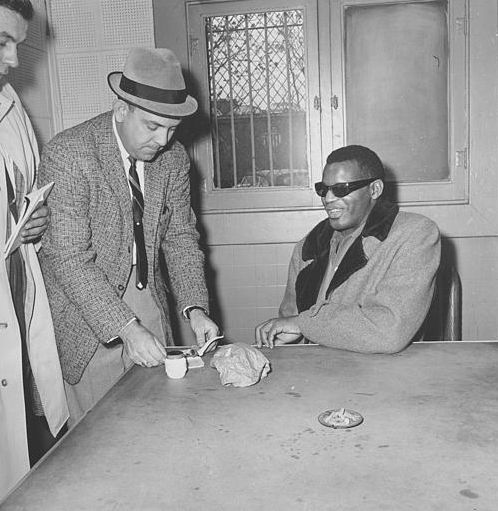
The officers led Ray out to the waiting police car and quickly took him to police headquarters a short distance away. There they fingerprinted and photographed their celebrity prisoner and brazenly let the press in to take pictures of the humiliated and confused musician. If you google the pictures taken that day, you’ll see Ray at his lowest. Ray Charles, the greatest R & B musician of all time, broke down that day. Although blind, Ray new instinctively what was going on. At first, he could only hear the familiar sound of one camera shutter clicking.

Then, as police let reporters in, he could hear the pop of flash bulbs snapping. He could feel the warmth of the flashes on his face followed by the clatter of the bulbs hitting the floor after being ejected. Ray must have felt like a man in a foxhole with bullets crashing all around. Ray’s soft sobbing soon broke into full- throated crying. The reporters yelled out questions at the helpless young man. “How did you get started on drugs, Ray?”

“I started using stuff when I was 16” Ray said as the tears rolled down from under the dark glasses hiding his eyes. “When I first started in show business. Then I had to have more and more.” Apparently ashamed by his statement and situation, he started to cry even heavier now saying “I don’t know what to do about my wife and kids. I’ve got a month’s work to do and I have to do it.” Then Ray stumbled back to the old excuses all junkies use; “I really need help. Nobody can lick this by themselves. I’ll go to Lexington (narcotics hospital). It might do me some good. I guess I’ve always wanted to go, but it was easier to go the other way. A guy who lives in the dark has to have something to keep him going. The grind is just too much.”

On drugs in the music industry, Ray said, “Believe me, there are a lot bigger guys than me who are hooked a lot worse.” Then Ray regained some of his old fire as he talked about the informant who turned him in, “Whoever he was, it was a dirty trick for him to pull.” Unbelievably, a reporter asked Ray if he’d like to see his kids using drugs. Ray began to cry again and said, “It’s a rotten business.”

Luckily the sideshow lasted only a few hours. Ray was released on $ 130 cash bond the next morning. As Ray left the jail, he covered his head with his overcoat from reporters. Ray left for a gig in Evansville that night, hoping to put the Indianapolis nightmare far behind him. Ray’s bandmates heard the news of Ray’s arrest on the radio that same morning. As they poured out into the hallways to talk about the situation, Ray came walking in. “Let’s get outta here, man.” was all he said. They quickly packed their gear and started out on the 2 hour trip to Southern Indiana.

At the Evansville concert that night, reporters swarmed over Ray backstage just before the show. Frustrated, Ray jumped up and down with his fists clenched as if he were skipping rope. Sometimes he squatted so low that it seemed he would tip over backwards. Ray claimed it was the result of nerves and lack of sleep. He regained his composure and patiently answered the inevitable questions hurled at him by reporters. No, he had no idea how much money he’d spent on drugs in his lifetime, “That’s like asking how much you spend on cigarettes.” Ray claimed that he’d been misquoted and that he hadn’t been an addict since age 16, “It ain’t been that long, not near that long.” When asked what he planned to tell the judge the next morning back in Indianapolis, Ray said, “I’ll deny everything, you can quote me.”

News of the arrest spread fast, especially in the black press. As Ray arrived at Municipal Court for his scheduled appearance before Judge Ernie S. Burke, a huge mob of fans, reporters, television cameras and radio news crews were waiting for him. They jammed the halls of the courthouse, causing enough of a spectacle that Judge Burke threatened loudly to clear the courtroom and the building. Wisely, Judge Burke dropped the “common addict” charge and set Ray’s trial date on the drug possession charge for January 4, 1962, releasing Ray on $ 1,000 bond. As Ray left the courtroom, he told reporters, “I don’t feel up to answering questions about my life or this event.” then left Indiana for Nashville, Tennessee. The controversy followed Ray for the rest of the tour. Ed Sullivan immediately canceled an appearance by Ray on his popular TV show and several concert venues canceled Ray’s scheduled gigs. But it was nothing compared to the carnival atmosphere he’d experienced in Indianapolis.

Ray Charles would return to Indianapolis twice more in 1962 to clear up the drug bust. On January 9, 1962 Ray made his first appearance in court to answer the charges. He sat uncomfortably in a courtroom packed with media and fans, at times gently rocking back and forth with his head bowed and his hands tucked between his knees. Ray’s lawyer spent this session attacking the police for entering Ray’s room under false pretenses and with no warrant. Three weeks later, Ray returned for a 5 minute session as Judge Burke ruled the police search illegal and dismissed the charges. Even though Ray was a celebrity, he still had the same constitutional rights as every american citizen. Ray left the Hoosier courtroom for the last time with a general “No comment” to the press. Ironically, at the time of his Indianapolis arrest, Ray’s single “Hit the Road Jack” was in the top ten of the Billboard charts. When he returned in January of 1962, Ray’s single “Unchain my heart” was in Billboard’s top ten.

In 1964 he was arrested again for possession of marijuana and heroin. Following a self-imposed stay at St. Francis Hospital in Lynwood, California, where he kicked his drug habit “in 96 hours” (the total treatment took 3 to 4 months, though), Charles received five years probation. Charles reappeared in the charts in 1966 with a series of hits composed by the relatively unknown team of Ashford & Simpson. Ironically one of those hits was the song “Let’s Go Get Stoned”, which became his first number-one R&B hit in many years.

“Brother Ray” Charles pioneered the soul music genre by combining rhythm and blues and gospel styles like no one before or since. Frank Sinatra called Ray Charles “the only true genius in show business.”  In 2002, Rolling Stone ranked Charles number ten on its list of the “100 Greatest Artists of All Time”, and second on their 2008 list of the “100 Greatest Singers of All Time” behind only Aretha Franklin and just ahead of Elvis Presley. On June 10, 2004, at the age of 73, Ray Charles died of complications resulting from acute liver disease at his home in Beverly Hills surrounded by family and friends.

Ray’s arrest became a footnote in the pop culture history of Indianapolis. But what became of the Downtown Sheraton-Lincoln Hotel? The hotel was demolished in April of 1973. It marked the first time that controlled dynamite was used to raze a building in Indiana. Public officials were reluctant to allow dynamite rather than the traditional wrecking ball, but the promise of saving both time and money tipped the scales. The exact time was kept a secret and the surrounding area was cordoned off for blocks. Over 200 spectators gathered to witness the building fall to the ground. Today, the Hyatt Regency stands where the Sheraton-Lincoln once  was.

The Hyatt was built with a triangular shape to pay homage to the angling street and flatiron building that once stood on the site. The building opened in 1977 and it’s circular upper floor houses the Eagle’s Nest, a rotating restaurant. One of the most prominent features of the Eagle’s Nest is a piano bar. On the weekends, guests are entertained with songs from the american songbook. No doubt, Ray Charles tunes are among them. It just goes to show you, what goes around, comes around.