Creepy history, Music

Johnny and June Carter Cash’s Home: Nashville’s Graceland, Part I

Original Publish Date August 22, 2024.

https://weeklyview.net/2024/08/22/johnny-and-june-carter-cashs-home-nashvilles-graceland-part-1/
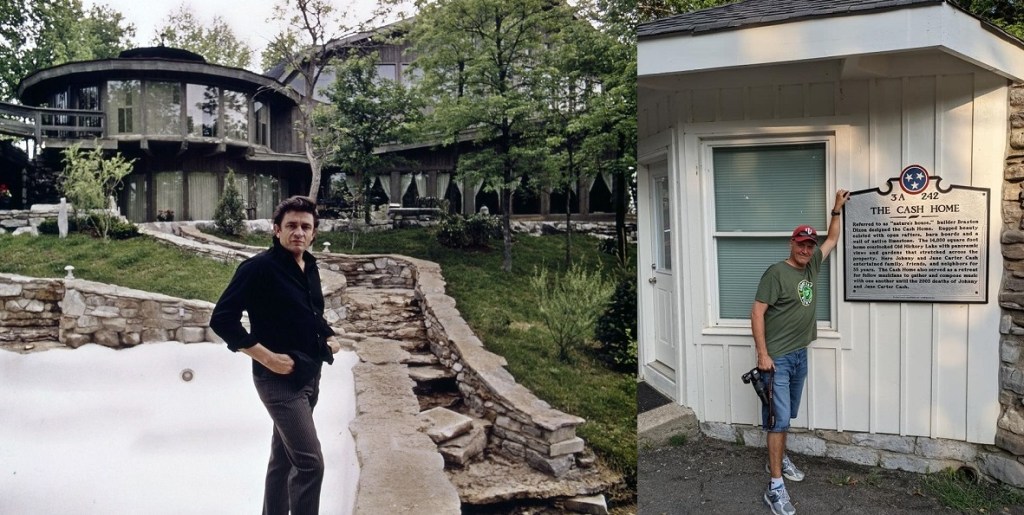
In July 2023, my wife and I made the 4 1/2 hour drive down to Nashville, Tennessee, for my birthday. After a few stops in Music City, we made an 18-mile side trip to the northeast suburb of Hendersonville and Old Hickory Lake. We traveled to Hendersonville to visit the site of Twitty City (the former home and amusement park complex owned and operated by Conway Twitty in the 1980s and 90s), Marty Robbins’ recording studio that he never used (he died in 1982, the same year it was set to open), Johnny and June Carter Cash’s gravesites, and the Cash family home at 200 Caudill Drive in Hendersonville. Well, what was left of it anyway. As you might imagine, the Cash Home, often described as country music’s Graceland, has an interesting history.

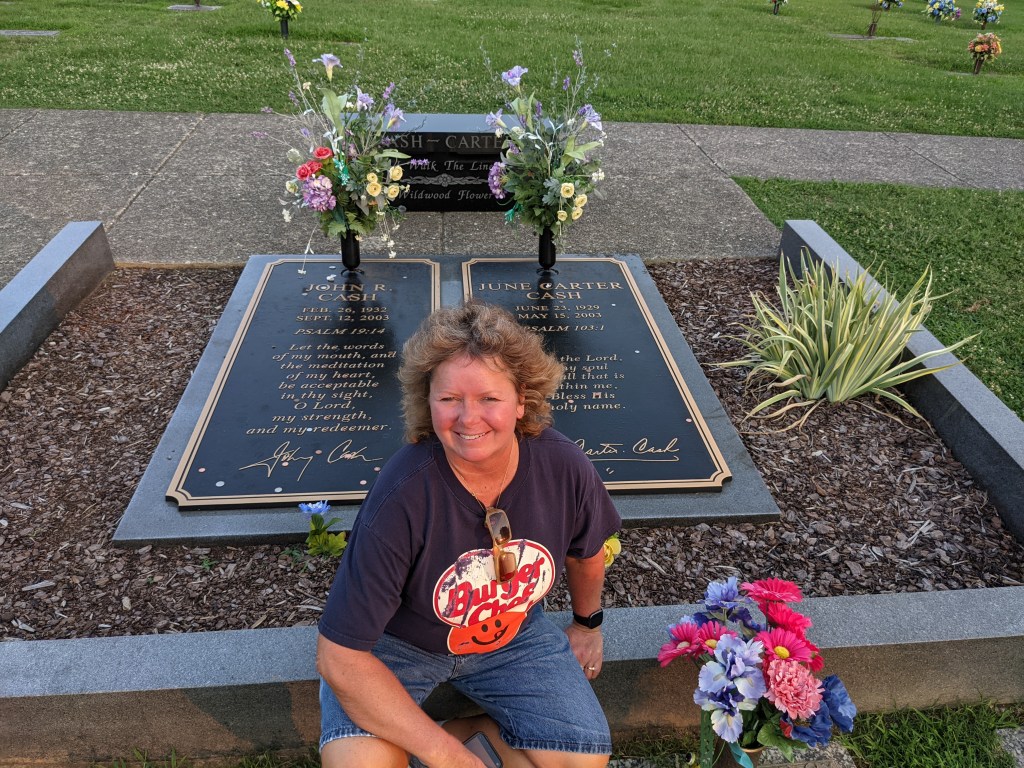
Rhonda Hunter at Johnny Cash & June Carter Cash’s Graves.

Johnny Cash fell in love with the house and the sprawling property the moment he saw it. Builder Braxton Dixon was building the home for his family, but Cash convinced him to sell it as a wedding present from Johnny to June. Dixon was no stranger to building celebrity homes, having built homes for Roy Orbison, Tammy Wynette, and Marty Stuart. Johnny bought the seven-bedroom/five full bathroom, 14,000 square foot mansion overlooking Old Hickory Lake in 1967 and lived there with June from 1968 to 2003. The four-lot lakefront property features five acres sitting right on the water, including 1,000 feet of lake frontage. The four large, 35-foot round front rooms featured stunning views of the property. Johnny and June lived there for 35 years and Cash wrote much of his famous music there. It was the only home the couple ever lived in together. Johnny Cash’s parents, Ray and Carrie, lived across the road from his mansion. Johnny’s brother Tommy described the house as “a very unusual contemporary structure. It was built on a solid rock foundation with native stone and wood and all kinds of unusual materials, from marble to old barn wood. I don’t think there was a major blueprint. I think the builder was building it the way he wanted it to look.”

Johnny & June and their home.

It was the spiritual home of Cash and the musical universe he created. The home was visited by nearly every famous country star you can imagine: actors, rock stars, artists, politicians (Jimmy Carter, Ronald Reagan, and Vice President Al Gore), and even Billy Graham. June cooked for them all in the home’s kitchen: eggs, pancakes, and ham in the morning, fried chicken, cornbread, and biscuits all day long. The home hosted Cash family Christmas celebrations, songwriting sessions, and informal jams (Johnny called them guitar pulls) featuring the likes of Bob Dylan, Brooks & Dunn, Joni Mitchell, Graham Nash, and a slew of others. In 1969, legend claims that an upstart songwriter named Kris Kristofferson landed a helicopter on the lawn, in hopes of getting the home’s famous owner to listen to some demos (from which Johnny picked “Sunday Morning Coming Down”). Cash’s late ’60s and early ’70s “guitar pulls” were held in a lakeside room accessed through a hallway and down some stairs from the home’s main family room. Although informal, these star-studded jams were profound, as Johnny writes in his 1997 autobiography, “Kris Kristofferson sang ‘Me and Bobby McGee’ for the first time … and Joni Mitchell’s ‘Both Sides Now.’ Graham Nash sang ‘Marrakesh Express’, Shel Silverstein’s ‘A Boy Named Sue’ and Bob Dylan let us hear ‘Lay Lady Lay” during those sessions.”

Johnny Cash & June Carter Cash Gravesite.

The couple lived happily in their lakefront home until their deaths four months apart in 2003. With Johnny at her bedside, June died on May 15, 2003, at the age of 73, following heart valve replacement surgery. Johnny Cash died on September 12, 2003, at the age of 71, from what doctors said were complications from diabetes, but most believe he died of a broken heart. They are buried at the Hendersonville Memory Gardens near their home. A visit to the cemetery finds the manicured plot of the Cash family, the polished bronze grave ledger of John R. Cash at the left, and June Carter Cash to the right. The markers lay flat against the earth, completely covering the bodies that rest below. The markers usually found peppered with coins and guitar picks, feature facsimile signatures of both artists along with Old Testament Bible quotes from the book of Psalms. June’s mother Maybelle Carter and her sisters Helen and Anita are buried nearby. As are Luther Perkins, the original guitarist of Cash’s “Tennessee Three” band, and country stars Ferlin Husky and Sheb Wooley rest nearby.
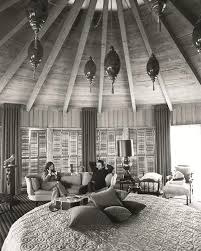
June & Johnny Cash inside their home.

The Cash Mansion became an empty shrine to the duo for two years following their deaths. The couple’s furniture and many of their belongings, at least those that June didn’t give away to friends and family during the last years of her life, were still inside the house, but the couple was gone. It was always a tourist spot. Countless Greyhound buses, station wagons, vans, and carloads of people made the trek up that winding, narrow lane every day to lean on the stone and wood fence imagining Johnny and June as they were in life walking the property. To the surprise of many, in 2006, the Bee Gees’ Barry Gibb purchased the Cashes’ home for a mere $2.3 million. The Bee Gees frontman bought the property with plans of renovating, restoring, and making it an artist/writer’s retreat. Although he remodeled the interior, Gibb was determined to preserve the home to honor their memory and even pledged to keep intact whatever furnishings and decorator accents left behind. June was legendary for filling the house with ornate, tasteful objects that she had picked up and shipped home from performances all over the world. The renovations were at their final stage and Gibb was expected to move in that summer.
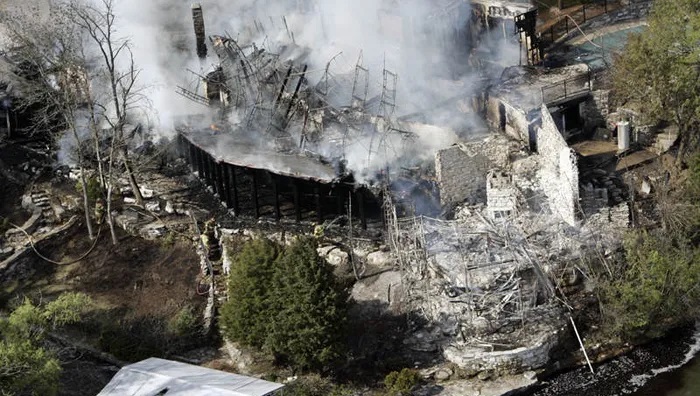
Cash House Fire Aftermath.

At 1:40 pm on April 10, 2007, a fire broke out outside the stone and wood building and while the fire department was on the scene within five minutes, the structure was already engulfed and the three-story contemporary structure burned to the ground. Only the chimney was still standing. But, a few original parts of the property survived the inferno, including the original garage, a covered boat dock, a bell garden, and a cute 1-bed, 1-bath detached apartment space where June stored her stage costumes. There’s also a tennis court, swimming pool, and a little guardhouse by the gate. The stone walls and steps that surrounded the home are still there as well as the stone/wood fences and gates that surround the property as they have done for half a century. The picturesque hardscaping still frames the trails that once hosted walks near the water from country royalty. The blaze spread quickly due to the flammable materials used in the construction work taking place in the mostly wooden interior. It was later revealed that the exterior structure itself was gutted when a flammable wood preserver that had been applied to the house caught on fire. Firefighters said the unusual multi-level structure of the house made the blaze even tougher to tackle. To his credit, Bee Gee Barry Gibb had removed most of that furniture, like Johnny and June’s bed, during renovation and it was safe and sound in storage.

While much music was written inside the mansion, not much music was made inside its walls. Photos of the Cash mansion can be found all over the internet and there are a couple of well-made videos you can check out too. The home was featured in the movie Walk the Line.  In the film, the property is shown when Johnny and June’s families come together for Thanksgiving dinner. But the better view can be found in a 2002 music video filmed before Johnny died for the song “Hurt” which was filmed in the home. The video depicts a weakened, vulnerable Cash looking back at his life while surveying the home he and June shared. The video was largely filmed there, and it shows rare interiors of the home as well as views of the derelict House of Cash museum nearby. It is a must-see. Cash’s final recordings took place within the house as well, when he was too weak to make it to a studio.

Cash Property Fence Still Stands.

If you visit the Cash property today, you can almost feel Johnny’s presence. After all, you can lean against Johnny’s stone & wood fence along Caudill Drive and gaze at the remaining buildings with ease. If you spend any time there, you’re likely to be joined by other pilgrims on the Cash trail. Not much in the way of conversation, just long moments of quiet reflection and an occasional nod of shared reverence. However, if you look over your left shoulder across the street, you can see the house where Johnny died. Johnny spent his final days living in the house at 185 Claudill Drive overlooking his old Lake House. The ranch house, which was built by the same architect, Braxton Dixon, was always referred to as “Mama Cash’s house” because it was where Cash’s parents lived before their passing. The ranch house is expansive, with 4 bedrooms, 3 bathrooms, vaulted ceilings, stone fencing, and 200 feet of road frontage. Johnny spent his last days there when it became harder for him to get around in a wheelchair in the lake house. Both the lake house property and ranch house across the street have been sold (or have been offered for sale) in the years since Cash’s passing. The issue remains unclear and when I reached out to the registered owners for this story a few years back, my e-mails and phone calls were never responded to, so…

Cash Cabin Studio.

Better still, there is another lesser-known living connection to Johnny Cash on Caudill Drive. In 1978, Johnny began building a log cabin, finishing it in 1979. He intended to use it for rest, relaxation, songwriting, and recording. He named it Cash Cabin Studio but friends and family said the man in black called it the Sugarshack. The year the Cabin was built, Elvis Costello and Dave Edmunds along with members of the band Rockpile visited, being some of the first to write their names on the fireplace mantle piece. Tom Petty and the Heartbreakers stopped by in the early 1980’s. In 1982 Johnny’s daughter Kathy and her husband Jimmy were wed there. Television star John Schneider of “The Dukes of Hazard” fame lived in the cabin for some time in the mid-1980s. Other early visitors included actor Robert Duvall, Waylon Jennings, Kris Kristofferson, and Bono and Adam Clayton of U2.
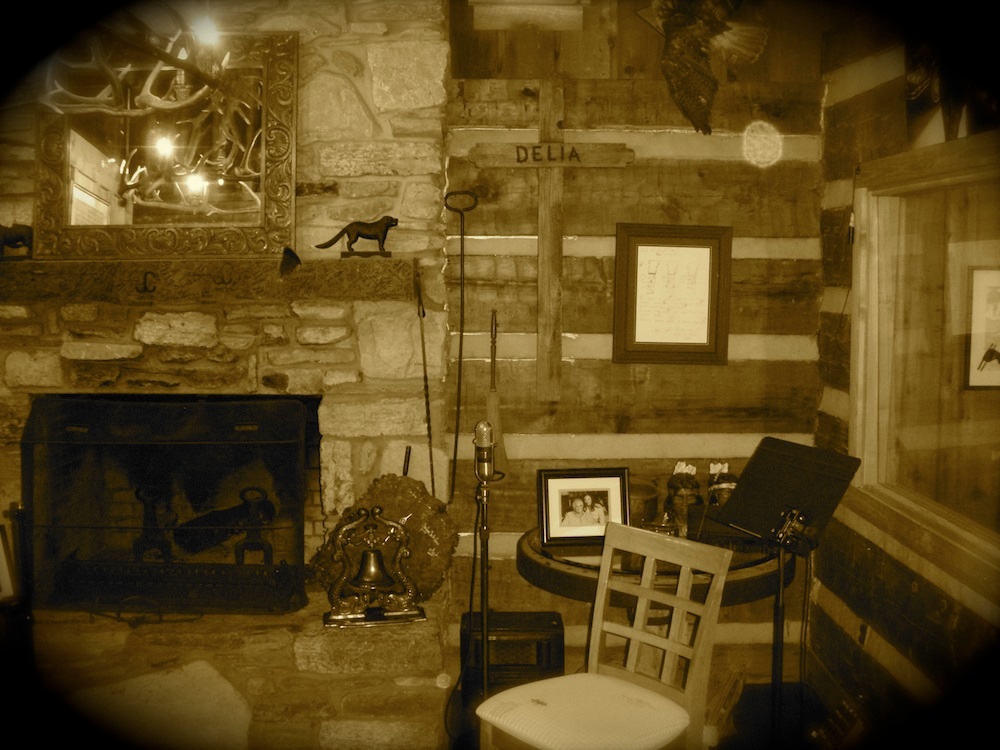
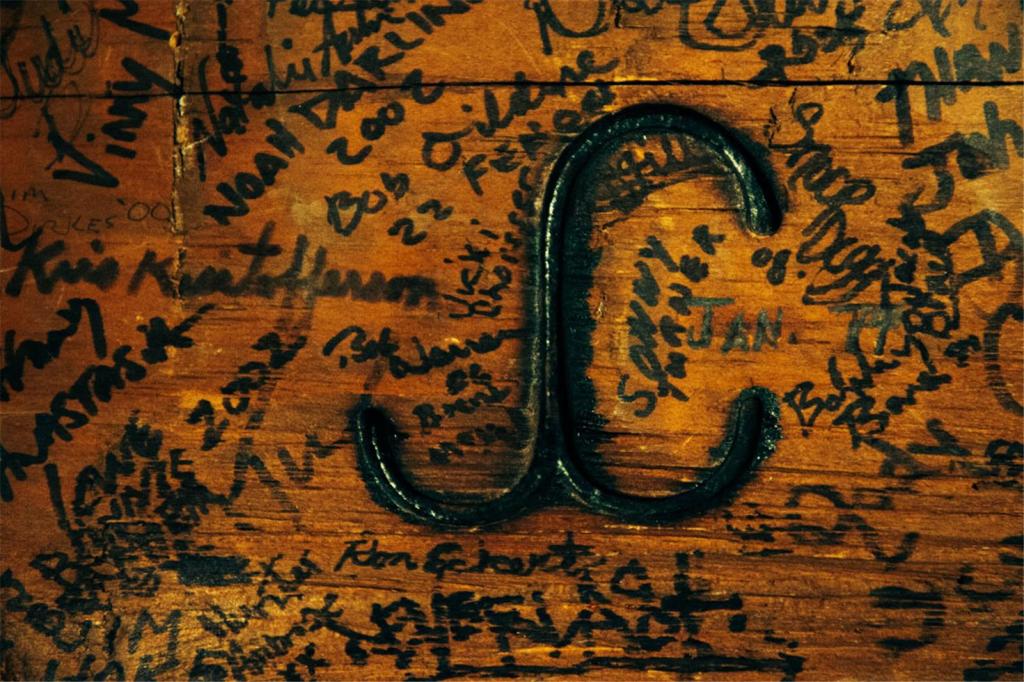
According to the website, “In 1991, June’s sister Anita Carter moved into the cabin and made it her home. It was Anita who first recorded in the cabin. Recording gear was brought in and set up and featured some wonderful musicians including Anita’s dear, old friend and master producer/guitarist Chet Atkins. In 1992, Johnny met producer Rick Rubin. Rick had a diverse creative palate, having made recordings for Run DMC, The Beastie Boys, and several other groundbreaking rap and heavy metal artists. Johnny signed up with Rick’s record company and went to California to work with Rick. Although most of Johnny’s first album in the Grammy Award-winning American Recordings series was recorded at Rick’s Los Angeles home, there were a couple of tracks recorded in the Cabin, with a simple tape machine and standard microphones. The magic of the Cabin’s music took off from there. Johnny went on to record almost half of the remainder of the American Recordings series at the Cabin. June Carter Cash also recorded both of her latter life Grammy Award-winning albums Press On and Wildwood Flower at the Cabin. Through this process, John Carter Cash worked intensely with his parents on their music. In the Summer of 2003, Johnny’s last recording, made mere days before his death, was in the Cabin. He recorded two songs in their entirety in those two sessions that day: “Like the 309” early in the day, for the album “American Recordings V, A Hundred Highways”, and “Engine 143” at the end of the day, for an album being produced by John Carter, “The Unbroken Circle, The Musical Heritage of the Carter Family”. But the story doesn’t end there.

Next Week: Part 2 of Johnny and June Carter Cash’s Home: Nashville’s Graceland.

Johnny and June Carter Cash’s Home: Nashville’s Graceland, Part II.

https://weeklyview.net/2024/08/29/johnny-and-june-carter-cashs-home-nashvilles-graceland-part-2/
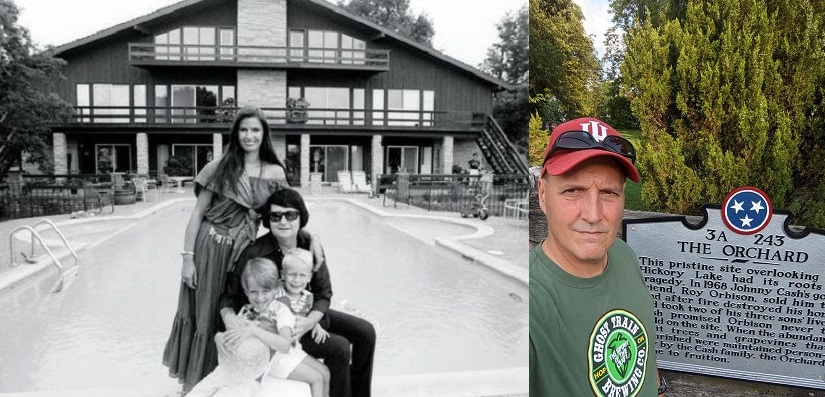
After reading Part 1 of this article, it should come as no surprise that Johnny and June Carter Cash’s beloved Lake House has a mystique all its own. Johnny and June lived happily in the house for some 35 years. When they died (four months apart) in 2003, it sat empty for two years before it was sold by the Cash’s son, John Carter Cash, to Barry Gibb of the Bee Gees. As a bevy of contractors worked to meet the Gibbs’ July 4 deadline, the home caught fire and burned to the ground on April 10, 2007. Then Gibbs built a new house on higher ground, keeping the original Cash home foundations as a testament to the memory of Cash. The new house has been sold a few times but the Cash property remains pretty much the same as it was after the fire. Johnny and June had some famous neighbors too: Marty Stuart (Cash’s former son-in-law) and The Oak Ridge Boys’ Richard Sterban among them. After the fire, Sterban reportedly remarked that “perhaps, after all, no one except Johnny and June Carter Cash were meant to live at the lake house.”

Roy Orbison.

So the Cash presence is strong here. While the Johnny Cash story is complicated, Kris Kristofferson wrote of his friend “John” that “He’s a walking contradiction, partly truth and partly fiction.” Cash struggled mightily with addictions and the only thing that saved him from himself was June Carter Cash. I can appreciate that. All questions of the Cash Lake House’s demise being tied to the passing of Johnny and June Carter Cash aside, Hickory Lake is no stranger to tragedy in its own right. There is an air of mystery that haunts Old Hickory Lake and extends beyond the charred ruins of the Cash mansion. Roy Orbison once owned a home right next to the Lake House. It burned down, killing two of his three sons. Orbison (1936-1988), was best known for his distinctive, natural lyric baritone voice featuring a range from A2 to G4: higher than the standard baritone range on the high end and not as low on the low end. Orbison’s (a.k.a. The Big O) lyric baritone voice was sweeter and lighter than the average baritone, and he could sing faster songs with more vocal agility than an average baritone. Orbison chose complex compositions and dark emotional ballads conveyed a quiet, desperate vulnerability, which led to his “Lonesome Roy” reputation. (Believe me, Roy Orbison was no boy scout. He was famous for his carousing and womanizing on the road and his conquest numbers could match anyone from Elvis to Wilt Chamberlain, but THAT is another story.) Between 1960 and 1964, 22 of his songs were placed on the Billboard Top Forty, including “Only the Lonely,” “Crying,” and “Oh, Pretty Woman.” Orbison’s trademark stage performance was standing still and solitary, lit by a single spotlight, dressed in black clothes and dark sunglasses which only added an air of mystery to his persona.

Anthony King Orbison and Roy DeWayne Orbison with their mother Claudette holding baby Wesley.

While playing a show in Birmingham England on Saturday, September 14, 1968, Orbison received the news that his home in Hendersonville had burned down. This occurred less than two years after the death of his wife Claudette Frady Orbison in a motorcycle accident on June 6, 1966, at the age of 24. It was a tragedy that plunged Orbison so deep into grief that he couldn’t write songs for a year and a half. To make matters worse, Roy received news that his sons Roy Dewayne Orbison, Jr. (age 10) and Anthony King Orbison (age 6) died in the fire. Their baby brother Wesley (age 3) survived. Fire officials stated that the cause of the fire may have been an aerosol can, which possibly contained some kind of lacquer. It was speculated that the boys were playing with a lighter or matches and using the spray can as a makeshift flame thrower when furniture or curtains ignited. The fire spread so quickly that when the boy’s grandparents, Orbie Lee Orbison and Nadine Shultz, opened the door to the room, the resulting blast knocked them to the other side of the house. Even though firefighters responded quickly, the flames were too intense to save the two young boys. By the time Roy made it home, all that was left of the home was the chimney.
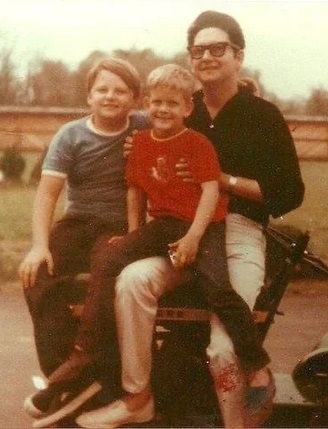
Roy Orbison & Sons.

Roy moved in with his parents and became a recluse, refusing to see or talk to anyone. When Johnny Cash visited, he found Roy sitting in his room staring at a television with the sound off. Cash told him that he loved him and was there for him. Orbison said he did not know how to cope with his grief. After the fire, Orbison had to start all over again and he could never bear the thought of rebuilding a home on the property. Roy’s parents helped to raise Wesley while his father was on the road and in the studio. In December 1988 just as his star was on the rise again, Orbison spent the night visiting with Wesley, from whom he had been estranged. The two stayed up all night singing together and writing songs. The following day, Roy died of a sudden heart attack at the age of 52.
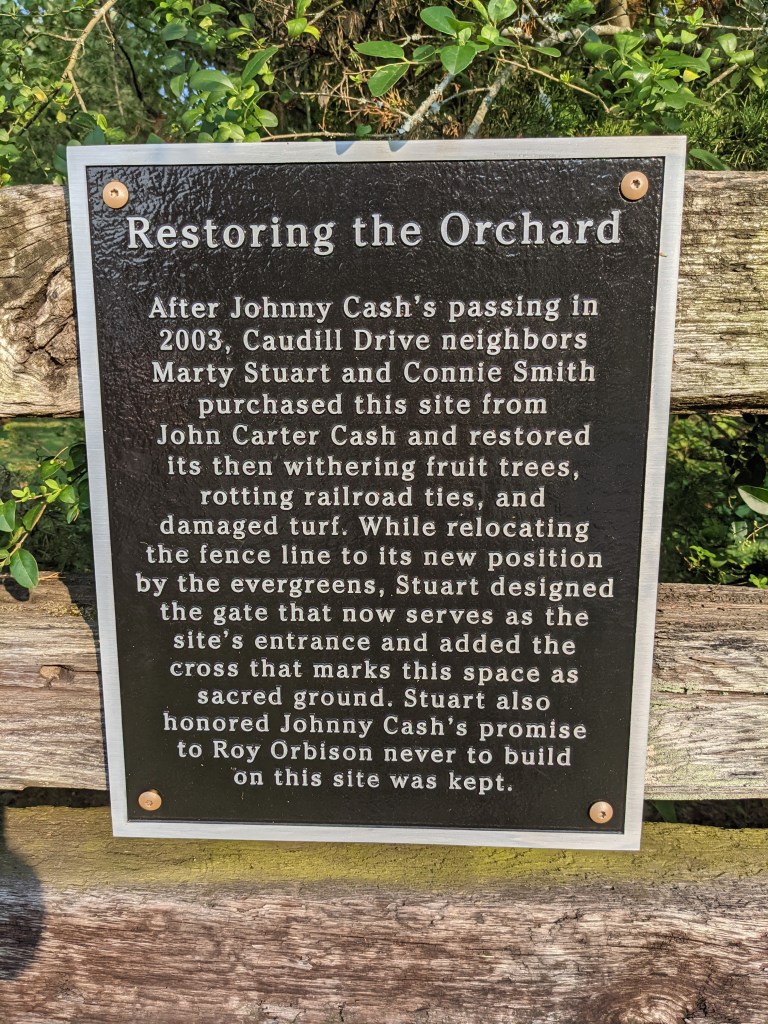
Orchard Signage On Hendersonville Site.

Eventually, Johnny Cash bought the lot, promising Orbison that he would never build on the site again and insisting “Only good shall grow on this land.” The Cash family planted fruit trees and cultivated an orchard where the Orbison house once stood. It was not unusual to see Johnny Cash, watering can in hand, tending to the saplings during the early years of the orchard. As the fruit trees and grapevines flourished, they were maintained personally by the Cash family and the orchard came to fruition. Several years after Roy’s death, Johnny saw Wesley standing in the orchard on the lot where his brothers died. Cash asked Wesley why he was there. Wesley replied that it comforted him. Together, they gathered fruit from the orchard that Wesley took with him. Soon afterward, John and June gifted the lot to Wesley, who maintains the orchard to this day. It is ironic that years later, like Orbison’s, Cash’s house burnt, leaving only the chimney.
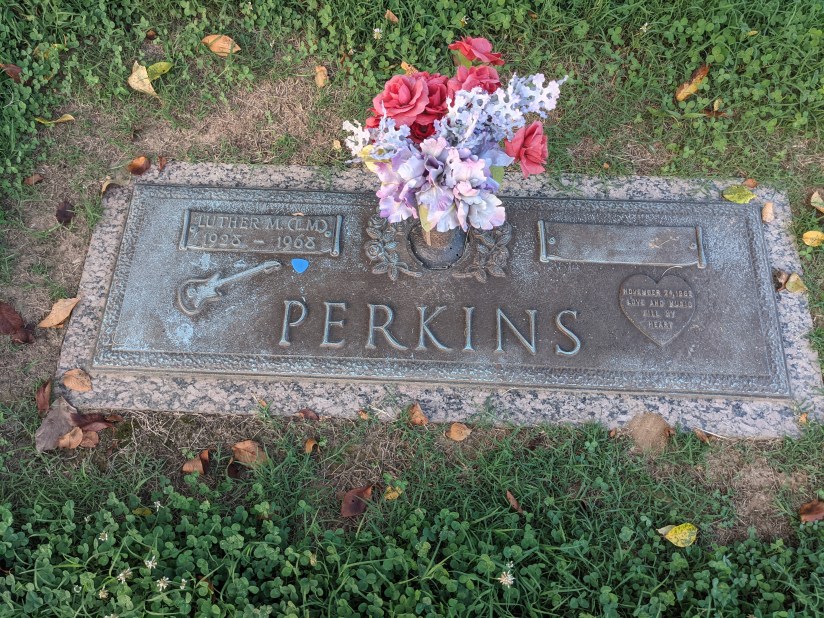
Luther Perkins Grave Near Johnny & June’s Gravesite.

Not only was Johnny’s 1963 song “Ring of Fire” a hit, staying at No. 1 on the country chart for seven weeks and declared the number one greatest country song of all time by Rolling Stone Magazine, it was written by his wife June Carter years before they were married. Tragically, fire remained an unfortunate theme in Cash’s circle. On Saturday, Aug. 3, 1968, his first “Tennessee Three” guitarist, Luther Perkins, fell asleep on the couch in his den with a lit cigarette in his hand. Luther’s home (at 94 Riverwood Drive) was just a little further down the road from Johnny’s. The accidental fire failed to burn the home but Luther suffered burns over half of his body and never regained consciousness. Two days later, he died at Vanderbilt Hospital of burns sustained in that fire. Perkins had bought the lakeside house just two months earlier and had spent the afternoon of the fire installing a television antenna on the roof. When his wife returned home from a poker party at a friend’s house that night, she found the house filled with smoke, and flames in the den and the kitchen, her husband unconscious on the floor. Perkins had called Cash the night of the fire and asked him to come over. Cash, thinking Perkins’ wife was there to take care of him, begged off. Later, Cash would rank Perkins’ death with that of his brother Jack in terms of the impact it made on his life. “Part of me died with Luther,” Johnny said.

Bandmate Marshall Grant, who along with Cash and Perkins, made up the original “Tennessee Three,” wrote in his autobiography I Was There When It Happened, said, “Luther apparently woke up, realized what was happening, and tried to escape, but he was overcome by dense smoke and couldn’t make it to a sliding glass door leading outside. The house itself never caught fire, but there was terrible smoke damage, the likes of which I’ve never seen. They told us at the hospital that if Luther had lived, the doctors probably would have had to amputate his hands, and I don’t think he could have lived with that.” Luther Perkins is buried only yards away from Johnny and June Carter Cash at the Hendersonville Memory Gardens. Bassist Marshall Grant died on August 7, 2011, at the age of 83, in Jonesboro, Arkansas while attending a festival to restore the childhood home of Johnny Cash.
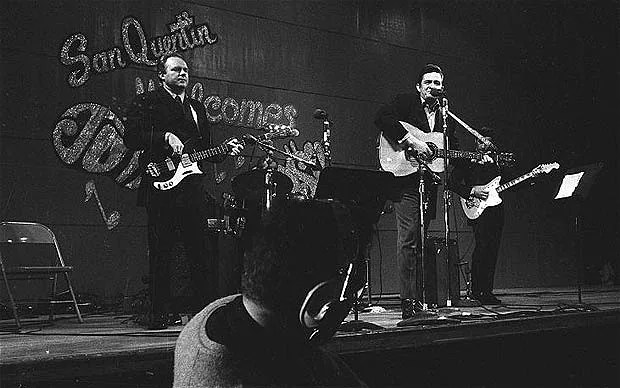
Marshall Grant & Johnny Cash.

But wait, there’s more. Cash’s longtime friend, Faron Young, known as the ” Hillbilly Heartthrob” for his chart-topping singles “Hello Walls” and “It’s Four in the Morning” has an eerie connection to the Cash property as well. In 1972, Young was famously arrested and charged with assault for spanking a girl in the audience at a concert in Clarksburg, West Virginia, after he claimed she spat on him. Young appeared before a justice of the peace and was fined $24, plus $11 in court costs. Afterward, Young’s life was plagued with bouts of depression and alcoholism. On the night of December 4, 1984, Young fired a pistol into the kitchen ceiling of his Harbor Island home. When he refused to seek help for his alcoholism, Young and his wife Hilda separated, sold their home, and bought individual houses. When asked at the divorce trial if he feared hurting someone by shooting holes into the ceiling, Young answered “Not whatsoever.” The couple divorced after 32 years of marriage in 1986.

Faron Young.

Feeling abandoned by fans and the country music industry and in failing health (he was battling emphysema, and had undergone prostate surgery for cancer), Faron Young penned a suicide note specifically enumerating his health and the decline in his career, shot himself on December 9, 1996. Sadly, Faron didn’t die immediately. Hearing the shot, Young’s long time friend and bandmate, Ray Emmett, rushed into the room to find Faron lying in his bed, still alive. Young was rushed to Nashville’s Summit Medical Center where the next day, December 10, 1996, at 1:07 p.m., he died at the age of 64. Faron Young was cremated, and his ashes were spread by his family over Old Hickory Lake at the house of Johnny and June Cash. In a “Country Music Spotlight” interview with Willie Nelson (who wrote Young’s biggest hit “Hello Walls”), Cash said, “He (Faron) was one of my favorite people, he was one day older than me. He requested that his ashes be distributed on Old Hickory Lake and my property. So they came out there with his ashes…and the wind was blowing…So he’s everywhere, he’s all over my place, my yard, my house, my windows, in my sill, on my car, I turned on my windshield wipers the next day and there’s Faron. There he went, back and forth, back and forth, until he was all gone.” So, the next time you’re heading south, take a side trip to Hendersonville and venture over to 200 Caudill Drive, park your car on the side of the road, put your elbows on Johnny Cash’s fence, and dream.

Black History, Criminals, Music, Pop Culture

The Lonesome Death of Hattie Carroll. Parts I & II.

Original Publish Date February 6, 2025.

https://weeklyview.net/2025/02/06/the-lonesome-death-of-hattie-carroll-part-1/

On August 28, 1963, Baptist minister Martin Luther King Jr. delivered his “I Have a Dream” speech to over 250,000 civil rights supporters during the March on Washington for Jobs and Freedom from the steps of the Lincoln Memorial in Washington, D.C. In that speech, King called for civil and economic rights and an end to racism in the United States. The speech became the foundation of the civil rights movement and is among the most iconic speeches in American history. Sharing the steps that day was a curly-haired mop-top folk singer named Bob Dylan. This is a story, an insight into the fertile mind of America’s greatest living singer/songwriter. A story most of you have likely never heard.

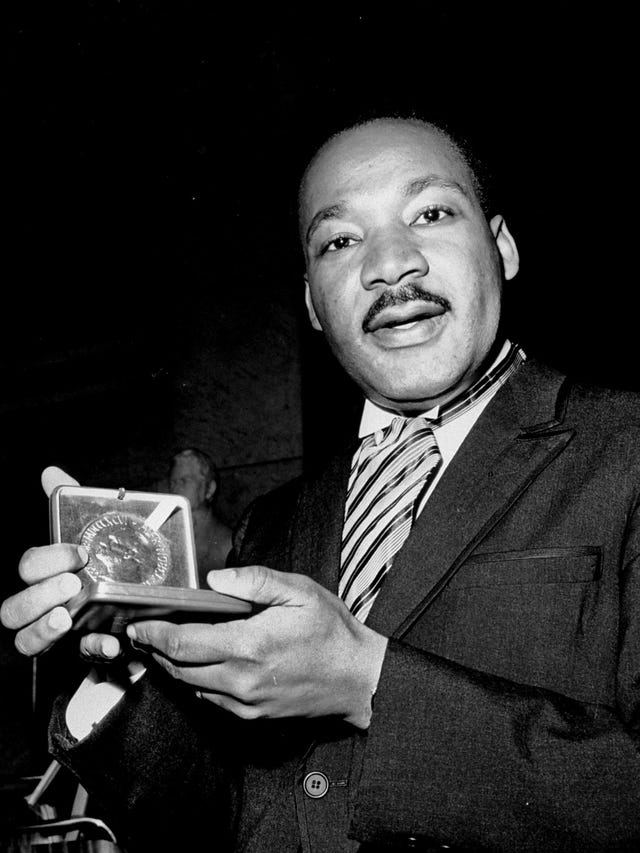
Dr. Martin Luther King, Jr. with his Nobel Prize.

Born Robert Allen Zimmerman on May 24, 1941, in Duluth, Minnesota, the youngster grew up listening to Hank Williams on the Grand Ole Opry. In his biography, Dylan wrote: “The sound of his voice went through me like an electric rod.” Soon, he began to introduce himself as “Bob Dylan” as an ode to poet Dylan Thomas. In May 1960, Dylan dropped out of the University of Minnesota at the end of his first year. In January 1961, he traveled to New York City in search of his musical idol Woody Guthrie, who was suffering from Huntington’s disease at Greystone Park Psychiatric Hospital in New Jersey. As a young man, Dylan read Guthrie’s 1943 autobiography, “Bound for Glory”, and Guthrie quickly became Dylan’s idol and inspiration.

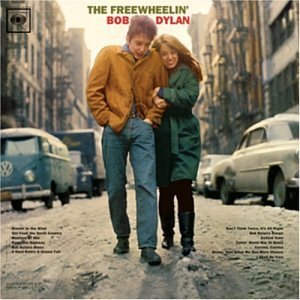
By May 1963, with the release of his second album, The Freewheelin’ Bob Dylan, the Minnesota folksinger was on the rise as a singer/songwriter. On June 12, 1963, civil rights activist Medgar Evers was assassinated in Jackson, Mississippi. Evers was a veteran U.S. Army soldier who served in a segregated unit during World War II and as the NAACP’s first field secretary in Mississippi. Evers’s death spurred Dylan to write “Only a Pawn in Their Game” about the murder. The song exonerates Evers’s murderer as a poor white man manipulated by race-baiting politicians and the injustices of the social system. At the request of Pete Seeger, Dylan first performed the song at a voter registration rally in Greenwood, Mississippi on July 6, 1963. Two weeks later (August 7) Dylan recorded several takes of the song at Columbia’s studios in New York City, only to select the first take for his album The Times They Are a-Changin’.
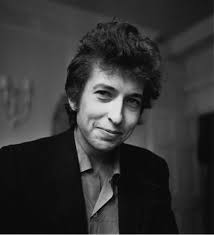
Bob Dylan.

Likely at the urging of Pete Seeger, who was busy preparing for a tour of Australia at the time, Dylan, and then-girlfriend Joan Baez, traveled to Washington DC for the March on Washington rally. Of that day, in the 2005 documentary No Direction Home, Dylan recalled, “I looked up from the podium and I thought to myself, ‘I’ve never seen such a large crowd.’ I was up close when King was giving that speech. To this day, it still affects me in a profound way.” On that day, Dylan performed “Only a Pawn in Their Game” and “When the Ship Comes In.” The songs were received with only scattered applause, likely because many marchers did not agree with the sentiments of the song. The famously reflective and observant Dylan walked away from that day contrarily looking inward.

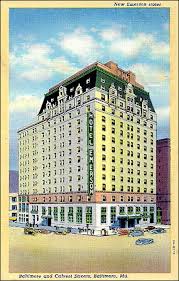
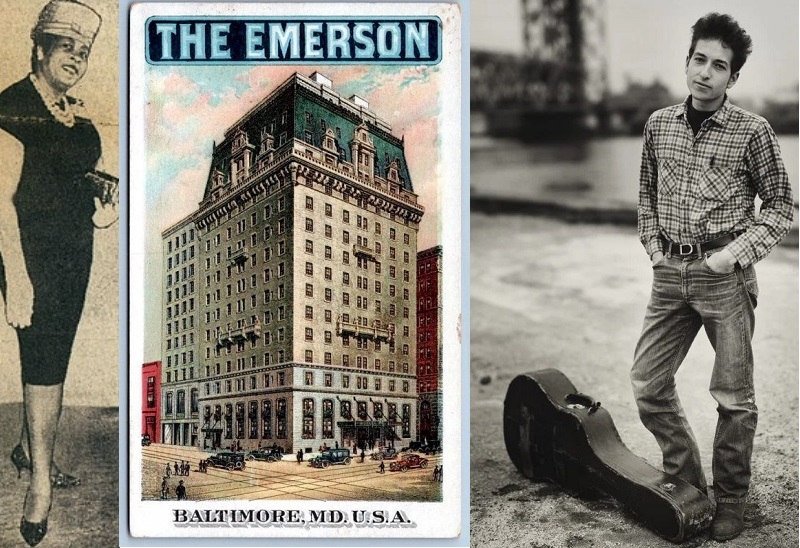
According to a 1991 Washington Post article, while on the journey home to New York City the 22-year-old Dylan read a newspaper article about the conviction of a white man from a wealthy Maryland family named William Devereux “Billy” Zantzinger (1939-2009) for the death of a 51-year-old African-American hotel service worker named Hattie Carroll on February 9, 1963, at the Spinsters’ Ball at the Emerson Hotel in Baltimore, Md. The white tie event was a debutante ball designed to introduce women in their late 20s to the “right” sort of men. The details of the event are just as shocking today as they must have been to Dylan 62 years ago.

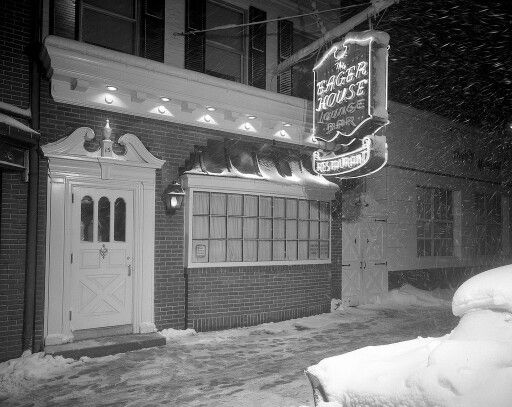
Baltimore’s Eager House restaurant.

On February 8, 1963, 24-year-old Zantzinger attended the event with his father, a former member of the Maryland House of Delegates and the state planning commission who ran one of the most prosperous tobacco operations in Charles County. Before the ball, the Zantzingers stopped for an early dinner and cocktails at downtown Baltimore’s Eager House restaurant. According to witnesses, once at the Spinster’s Ball, a drunken Zantzinger stumbled into the ballroom wearing a tophat with white tie and tails and a carnation in his lapel and carrying a 25-cent wooden toy cane. “I just flew in from Texas! Gimme a drink!” a laughing Billy shouted to the packed crowd of 200 guests. Witnesses said that he was “pretending to be Fred Astaire and when he wanted a drink, he used the cane to tap smartly on the silver punch bowl; when a pretty woman whom he knew waltzed by, he’d tap her playfully, all in fun, no offense, of course.” By 1:30 in the morning, Billy’s mood had darkened and the imposing 6’2″ Zantzinger began to assault hotel workers with his cane, poking and slapping them with it at will. His targets of drunken rage included a bellboy, a waitress, and barmaid Hattie Carroll.

Emerson Hotel in Baltimore, Md.

First Zantzinger berated a 30-year-old black employee named Ethel Hill, 30 years old from Belkthune Avenue in Baltimore, with the worst of racial slurs as she was clearing a table near the Zantzingers. Billy asked the young woman about a firemen’s fund, and then, as the police reported it later, she was struck across the buttocks “with a cane of the carnival prize kind.” As she tried to move away, Billy followed her, repeatedly striking her on the arm, thighs, and buttocks. Mrs. Hill wasn’t seriously injured, but her arm hurt, causing her to flee the room in tears.

Next, the cane was used against a bellhop, accentuated with more insults toward the young man, calling him a “Black SOB.” Billy then attacked another employee by yanking the chain around the wine waiter’s neck. When Billy’s 24-year-old wife, Jane, tried to calm him down, he collapsed on top of her in the middle of the dance floor and began hitting her over the head with his shoe. When another guest tried to pull the madman off, Zantzinger thumped him too. Then, temporarily regaining his composure, he stood up and dusted himself off, and the University of Maryland student decided he needed another drink. That is when Zantzinger first encountered Hattie Carroll.

Part II Original Publish Date February 13, 2025.

https://weeklyview.net/2025/02/13/the-lonesome-death-of-hattie-carroll-part-2/

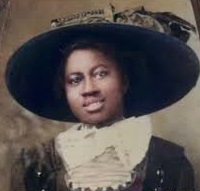
On the night of February 8, 1963, 51-year-old African-American hotel service worker Hattie Carroll was at work behind the bar as an extra employee for special functions and “ballroom events” at the Emerson Hotel in Baltimore, Md. Hattie was active in local social work as a longtime member of the Gillis Memorial Church in that city. The mother of 11 children, Hattie lived with two of her daughters, a 14-year-old and an 18-year-old, her other nine children were all older and married. While a hard worker, she suffered from an enlarged heart and had a history of hypertension.

Hattie Carroll

Zantzinger strode to the bar at a quarter til two and demanded a bourbon and ginger ale. Hattie was busy with another guest when Billy barked out his order. Proud of his prior actions, the drunkard turned his rage on Hattie Carroll whom he accused of not bringing him his bourbon fast enough, again hurling the “N-word” around the room loudly. According to the court transcript, despite the repeated indignations, Hattie replied, “Just a moment sir” and started to prepare his drink. Hattie, now nervous from the berating, fumbled with the glass. Zantzinger shouted, “When I order a drink, I want it now, you black b….!” When Hattie replied that she was hurrying as best she could. Zantzinger again berated her for being too slow and “struck her a hard blow on her shoulder about halfway between the point of her shoulder and her neck.” She shouted for help and slumped against the bar, looking dazed.

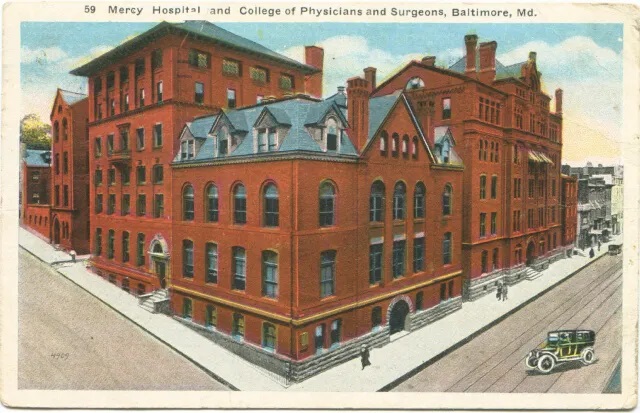
Mercy Hospital in Baltimore, Md.

Within five minutes after being struck with the cane, Hattie slumped against another barmaid and said she was feeling sick. Coworkers said that Carroll complained, “I feel deathly ill, that man has upset me so.” Her coworkers helped Hattie to the kitchen. Hattie said her arm had gone numb and her speech became labored just before she collapsed. A hotel official called for an ambulance and the police. The unconscious Hattie Carroll was hospitalized at Mercy Hospital where she died eight hours later at 9 a.m. on February 9, 1963, never having regained consciousness. Her autopsy showed she suffered from hardening of the arteries, an enlarged heart, and high blood pressure. A post-mortem spinal tap confirmed that a brain hemorrhage was the cause of her death. When the wooden cane was found later, it was broken in three places.

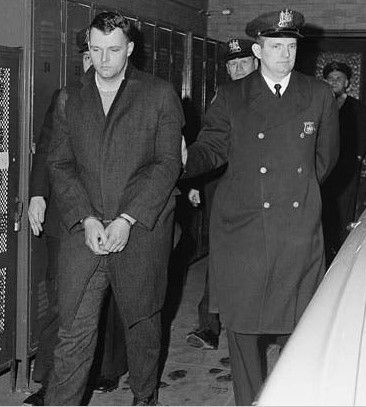
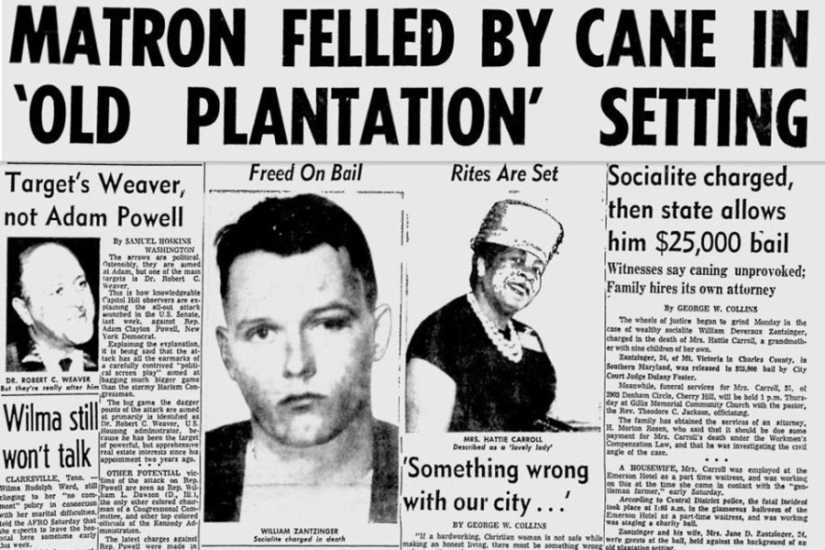
Billy Zantzinger after his 1963 arrest.

Police arrested Zantzinger on the spot for disorderly conduct plus two charges of assault “by striking with a wooden cane.” As they escorted him out through the hotel lobby, the officers were attacked by Zantzinger and his wife. Patrolman Warren Todd received multiple bruises on his legs; Zantzinger received a black eye. Billy Zantzinger spent the rest of those predawn hours in jail, and his wife was released. While Hattie Carroll was taking her last breath, Zantzinger stood in the Central Municipal Court in front of Judge Albert H. Blum, still wearing his white tux and tails, the carnation still in the lapel, though now without his white bow-tie and tophat. Billy pleaded not guilty to the charges and was released on $600 bail. At 9:15 that same morning, Judge Blum was notified of Hattie Carroll’s death. Zantzinger was charged with homicide and a warrant for his re-arrest was issued. It was the first time in the history of the state of Maryland that a white man had been charged with the murder of a black woman.

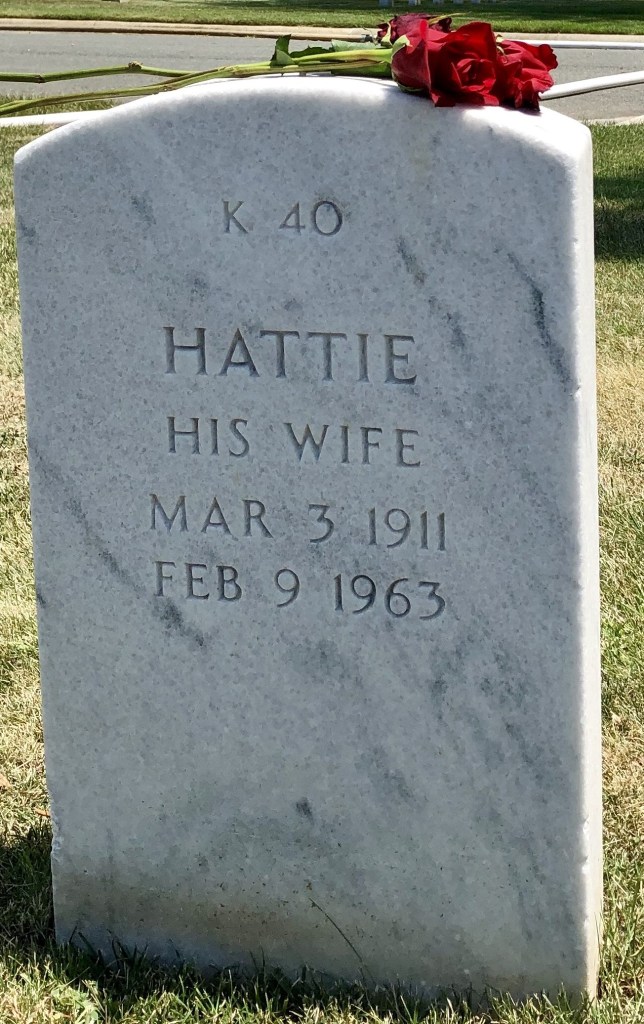
Hattie Carroll’s Grave in Baltimore.

Zantzinger’s only excuse for these indefensible actions was that he had been extremely drunk and could not remember the attack. His wealthy family retained a top-notch lawyer who managed to get the charges reduced to manslaughter and assault. The trial was moved from Baltimore to the more racially friendly Hagerstown. The attorney proposed that it was the victim’s stress reaction to his client’s verbal and physical abuse that led to the intracranial bleeding, rather than the blunt-force trauma from the blow (that left no physical marks) that killed her. The attorney contended that Hattie was a large, overweight woman with a history of high blood pressure. She could have suffered a fatal stroke at any time. His client was just a victim of circumstances. On August 28, the same day as Dr. King’s “I Have a Dream” speech, Zantzinger was convicted on all charges and sentenced to six months’ imprisonment in county jail. With time off for good behavior, he was home in time for Christmas. He was fined $125 for assaulting the other members of the hotel staff.

Zantzinger

Upon learning these details, Dylan decided to write a protest song about the case. The song was written in Manhattan while Dylan sat alone in an all-night cafe. The song was “polished” by Dylan at the Carmel, California home of Joan Baez, his then-lover. Nancy Carlin, a friend of Baez who visited the home at the time, recalled: “He would stand in this cubbyhole, beautiful view across the hills, and peck type on an old typewriter…there was an old piano up at Joan’s…and [Dylan would] peck piano playing…up until noon he would drink black coffee then switch over to red wine, quit about five or six.” The result was the song “The Lonesome Death of Hattie Carroll.” It was recorded on October 23, 1963, and quickly incorporated into his live performances. The song was released on February 10, 1964, a year and a day after Zantzinger’s conviction and 61 years ago this week.

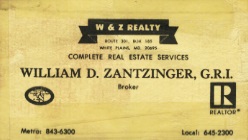
Billy Zantzinger’s business card.

But whatever happened to Billy Zantzinger, the child of white privilege who got away with murder? Zantzinger didn’t have any difficulty at all settling back into Charles County society. He inherited the family tobacco farm which included several “shanties” that he rented to the poor Black population. Billy was a nice fun-loving guy whose neighbors all liked him. But years later, Billy facing financial ruin, began to sell off sections of the 265-acre family estate farm which eventually led him into real estate. He ran a nightclub in La Plata, opened a small weekends-only antique shop, and promoted himself as an appraiser and auctioneer. He was active with the Chamber of Commerce and was elected Chairman of the board of trustees of the Realtors Political Action Committee of Maryland in 1983. Even though Zantzinger ostentatiously drove a Mercedes-Benz sporting a specialized license plate reading “SOLD2U,” the Maryland Terrapin Frat boy quickly got behind in paying his county, state, and federal taxes, both business and personal.

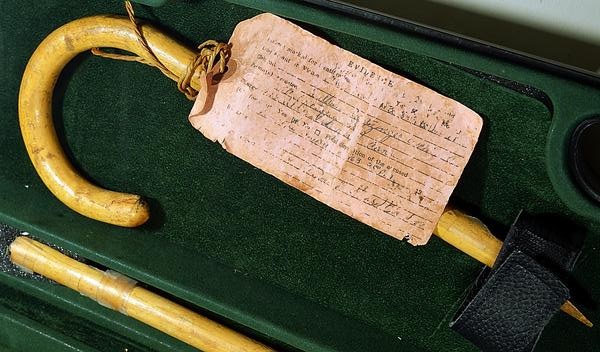
Billy Zantzinger’s cane on display at the Washington County Museum of Arts in Hagerstown, Maryland.

By 1986, the Internal Revenue Service had seized all of his properties. The Washington Post reported that Zantzinger continued to act as landlord of the rental properties on this confiscated land, collecting outrageous amounts of rent for his “shanties” described in the local newspaper as “some beat-up old wooden shacks in Patuxent Woods” even though the hovels had no running water, no toilets, and no heating. Over five years, he collected thousands of dollars from properties he no longer owned. In June of 1991 for his actions, he was charged with “unfair and deceptive trade practices.” After pleading guilty to 50 misdemeanor counts, he was sentenced to 19 months in prison and fined $50,000. A far cry from the six-month sentence and $125 fine in connection with the attack and death of Hattie Carroll 27 years earlier. During sentencing, Zantzinger said, “I never intended to hurt anyone, ever, ever,” Zantzinger said, pleading for leniency; “it’s not my nature.”

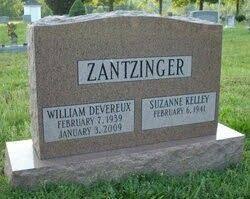
William Devereux “Billy” Zantzinger’s grave.

The lasting irony of this story is that William Zantzinger was born on February 7, 1939, almost 25 years to the day of light sentencing for the death of Hattie Carroll. He died on January 3, 2009, just a few days before we as a nation celebrate Dr. Martin Luther King, Jr. day every year. Zantzinger is forgotten, barely a footnote in American history while the story of Hattie Carroll will live on forever in Bob Dylan’s song. Hattie’s story is just one of the reasons why Bob Dylan is the greatest American singer/songwriter of all time. Dylan ranks everyone. His earliest idol Hank Williams Sr., known as the “Hillbilly Shakespeare,” would have made a run at Dylan for the title, but Hank checked out way too soon. Dylan has been around for over 60 years (and counting) with an estimated figure of more than 125 million records sold worldwide (and counting). Dylan’s value to music is incalculable. Not only for what Encyclopedia Britannica called his “sophisticated lyrical techniques to the folk music of the early 1960s, infusing it with the intellectualism of classic literature and poetry” but also for his ability to crystalize social issues at the most opportune times in this country’s history.

Hollywood, Music, Pop Culture, Weekly Column

The Monster Mash Gets Banned!

Original publish date October 7, 2021.

https://weeklyview.net/2021/10/07/the-monster-mash-gets-banned/

https://www.digitalindy.org/digital/collection/twv/id/3927/rec/246

Quick, what do Bing Crosby, David Bowie, Elvis Presley, The Beatles, Frank Sinatra, The Wizard of Oz, ABBA, Queen, The Everly Brothers, Johnny Cash, The Rolling Stones, The Sex Pistols, Donna Summer, Perry Como, Bob Dylan, Glenn Miller, The Kinks, The Who, Louis Prima, Liberace, Ella Fitzgerald, and “The Monster Mash” have in common? At one point or another, all of these artists, or one of their songs, have been banned by BBC radio.

Looking at that list, some are no-brainers, others are head-scratchers. Reasons for bans range from the very British reasons of “lyrics are too tragic” (Everly Brothers “Ebony Eyes”) to “connotations with armies and fighting” (ABBA’s “Waterloo” during the Gulf War). David Bowie’s “Space Oddity” was banned until AFTER the Apollo 11 crew landed and safely returned. Paul McCartney & Wings song “Give Ireland Back to the Irish” is not a hard one to figure out but how about Bing Crosby’s “Deep in the Heart of Texas”? In 1942, the BBC banned the song during working hours on the grounds that its infectious melody might cause wartime factory workers to neglect their tools while they clapped along with the song. Oh, those proper Brits.

Some bans are humorous and fairly obvious. Louis Prima’s 1945 World War II song “Please No Squeeza Da Banana” (admit it, you giggled) was specifically sent out by the New Orleans jazz great to the GI’s returning home from World War II. And the Wizard of Oz film’s “Ding Dong the Witch is Dead” was banned after the death of Margaret Thatcher 74 years after the movie debuted (it still made it to # 2 on the British charts).

But the REAL head-scratcher this time of year? This Saturday marks 59 years since Bobby Pickett’s “Monster Mash” was banned by the BBC. On October 20, 1962, the BBC claimed the song was “too morbid” for airplay. The traditional autumnal anthem was released in August of 1962 during the height of summer but cemented its place in music history when it reached number one on the U.S. charts just in time for Halloween of that year.

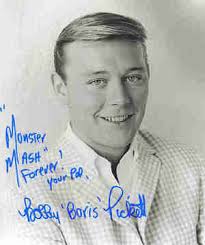
Bobby Pickett of “Monster Mash” fame.

The song is narrated by a mad scientist whose monster creation rises from his slab to perform a new dance routine. The dance soon becomes “the hit of the land,” and the scientist throws a party for other monsters, including the Wolfman, Igor, Count Dracula, and a pack of zombies. The mad scientist explains that the twist has been replaced by the Monster Mash, which Dracula embraces by joining the house band, the Crypt-Kicker Five. The story closes with the mad scientist inviting “you, the living” to the party at his castle. The song used primitive, yet effective, sound effects: pulling a rusty nail out of a board to simulate a coffin opening, blowing water through a straw to mimic a bubbling cauldron, and chains dropped onto a tile floor to ape the monster’s movements.

Bobby Boris Pickett performing on Dick Clark’s American Bandstand TV show.

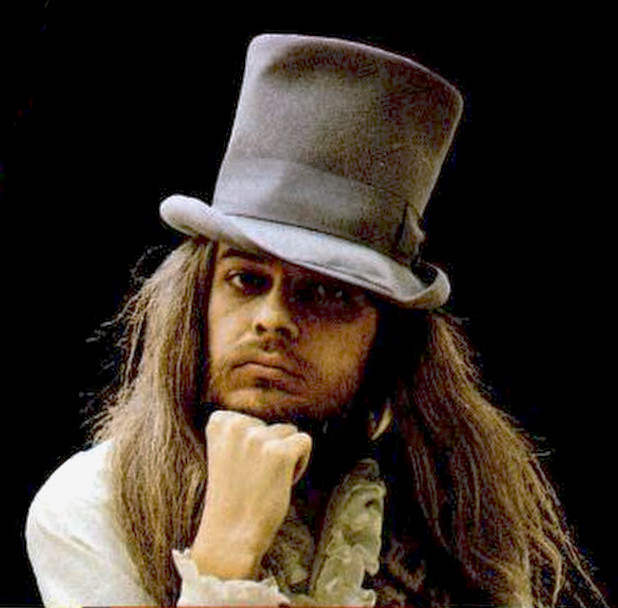
Bobby Pickett and Leonard Capizzi wrote the anthem and, as the song notes, recorded it with the “Crypt Kicker Five” consisting of producer Gary Paxton, Johnny MacRae, Rickie Page, Terry Ber, and pianist Leon Russell. Yes, THAT Leon Russell. The Rock ‘n Roll Hall of Famer was famously late for the session. And the backup singers on the original single? They were led by none other than Rock ‘n Roll Hall of Famer Darlene Love (“He’s a Rebel”). Mel Taylor, drummer for the Ventures, is sometimes credited with playing on the record as well.

Leon Russell.

The song came about quite by accident. Bobby Pickett, a Korean War vet, and aspiring actor was fronting a band called the Cordials at night and going to auditions during the day. One night, on some long-forgotten nightclub stage with his band, Pickett ad-libbed a monologue in the distinctive lisping voice of horror movie star Boris Karloff while performing the Diamonds’ “Little Darlin’.” Karloff, the distinctive British actor perhaps best remembered for voicing the Grinch, conquered a childhood stutter but never lost his idiomatic lisp.

The audience loved it, and the band encouraged Pickett to do more with the Karloff imitation. It wasn’t long before Bobby changed his name to “Boris” and a Halloween icon was born. In the song, Pickett not only imitates Boris Karloff but also Bela Lugosi as Count Dracula complaining “Whatever happened to my Transylvania Twist?” and actor Peter Lorre as Igor, despite the fact that Lorre never played that character on screen. Every major record label declined the song, but after hearing it, Crypt Kicker Fiver member Gary S. Paxton agreed to produce and engineer it on his Garpax Records label. The single sold a million copies, reaching number 1 on the Billboard Hot 100 chart for two weeks before Halloween in 1962 (it remained on the U.S. charts for 14 weeks).

The song cemented its generational appeal when it re-entered the U.S. charts twice, in August 1970, and again in May 1973 when it peaked at #10. The UK ban was reversed in 1973, 11 years after the song was released. In October of that year, it officially became a British “graveyard smash” when it charted at number three in the UK. For the second time, the record sold over one million copies. To celebrate the resurgence, Bobby and the Crypt-Kickers toured Dallas and St. Louis around the 1973 Halloween holiday. On this tour, the Crypt-Kickers were composed of Brian Ray, longtime guitarist for Paul McCartney, and folk singer Jean Ray who allegedly was the inspiration for Neil Young’s “Cinnamon Girl.” Pickett frequently toured around the country performing the “Mash,” at one point employing the Brian Wilson-less dry-docked Beach Boys and a very young Eddie Van Halen in his backing band.

Although many listeners were introduced to Pickett’s Monster Mash strictly as a novelty song worthy of Dr. Demento, turns out it was a well-orchestrated musical slot machine whose number hit every decade or so. Pickett tapped in on three distinct national trends colliding simultaneously during those pre-British invasion years. First, the reintroduction of the Universal monster movies at drive-in theatres and on syndicated television. Second, American pop music of the late ‘50s and early ‘60s was populated by novelty songs like “Itsy Bitsy Teenie Weenie Yellow Polkadot Bikini,” “The Name Game,” “Hello Muddah, Hello Fadduh,” and “The Purple People Eater.” And third, the pop charts were awash with dance songs, from Chubby Checker’s “The Twist” and “Pony Time”, the Orlons “Wah-Wahtusi,” Little Eva’s “Loco-Motion,” to Dee Dee Sharp’s “Mashed Potato Time.”

Monster Mash Co-songwriter Leonard “Lenny” Capizzi.

Pickett’s co-songwriter, Lenny Capizzi, an otherwise mildly successful backup singer, profited from the song right up until he died in 1988. After Pickett landed a recording contract, he remembered his friend Lenny and their brainstorming jams. It had been Capizzi who encouraged Pickett to further utilize his unique impressionist skills in the first place. With the studio album nearly complete, Pickett called Lenny in at the last minute to see if his old pal could jazz up some tracks. But with most of the production money spent, all he could offer Capizzi was second-place songwriter credits. That tiny second-place billing on the single turned out to be the goose that laid the golden egg.

Lenny made a small fortune when “Monster Mash’ charted in 1962. However, it was a payday he spent foolishly on a drug-fueled rock ‘n roll lifestyle. In the early ‘70s, as “Monster Mash” was re-charting, the royalties began rolling in again, this time from both sides of the pond. Alas, within a short time, Lenny was broke again. But every time the song came back — either from airplay in its original version or as a cover (the Beach Boys, Vincent Price, Sha-Na-Na, and many others covered the song) — the royalty checks reappeared. If Pickett hadn’t already spent the original production money by the time Lenny stepped in, Capizzi would have been paid as a one-time session musician and that would have been the end of it. Instead, Lenny stepped in for an afternoon’s work for no money and accepted a co-writer’s credit for a dubious hit. When asked years later about the song, Capizzi couldn’t even recall his contribution.

Crypt Kicker Five Member Gary Paxton Producer of the song Alley Oop.

The song was inspired by Crypt-kicker Five member Gary Paxton’s earlier novelty hit “Alley Oop.” Paxton (1939-2016) built a reputation as an eccentric figure in the 1960s recording industry. Brian Wilson was known to admire his talents and Phil Spector feared him. His creativity and knack for promotion were legendary. In 1965, he produced Tommy Roe’s hit “Sweet Pea.” The next two years, he produced “Along Comes Mary” and “Cherish” both hits for the Association, and followed it up with another for Roe, “Hooray for Hazel.” Paxton moved toward the Bakersfield sound in the late 1960s, concentrating on country music.

Phil Spector and Darlene Love in studio in 1963.

Darlene Love, “Monster Mash” backup singer, told Billboard magazine’s Rob LeDonne in 2017, “We had a hard time doing it because it was totally ridiculous. When you do a song like that, you never think you’re going to be famous or that it’ll be a hit. We sat down to listen to the song to try to figure out what the background was going to be. He had to sing his vocals so we could figure out where to come in. It made it more fun, with him singing his line and then us answering him.” For his part, Pickett told The Washington Post, “The song wrote itself in a half hour and it took less than a half-hour to record it.”

On April 25, 2007, Bobby (Boris) Pickett, whose novelty voice talents on “Monster Mash” made him one of pop music’s most enduring one-hit wonders, died in Los Angeles from leukemia at age 69. Pickett was still performing the song live on stage until November 2006, five months before his death. Alongside Michael Jackson’s “Thriller,” Pickett’s “Monster Mash,” the song that started out with zero expectations 59 years ago this week, has firmly planted itself as a seasonal standard. And what about the dance? Was there ever a dance created for the song? Well, yes actually, there was. Turns out the Monster Mash is simply a Peanuts-meets-Frankenstein-style stomp-about accented by monster gestures made by outstretched arms and hands. Don’t expect to see that one on Dancing With The Stars any time soon.

Health & Medicine, Hollywood, Indianapolis, Music, Pop Culture, Television

Warren Zevon — Accidentally Like a Martyr.

Publish Date September 12, 2024. This column first appeared in August 2013.

https://weeklyview.net/2024/09/12/warren-zevon-accidently-like-a-martyr-2/

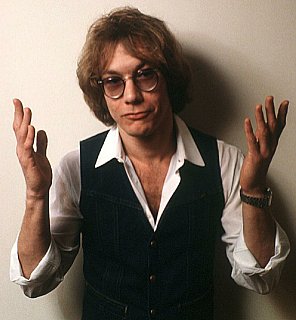
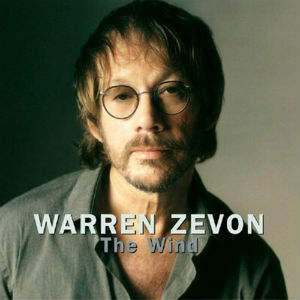
Warren Zevon 1992.

It’s hard to believe it’s been a decade since Warren Zevon died. If the name is not familiar to you, his songs might be: “Werewolves of London,” “Poor, Poor Pitiful Me,” or “Lawyers, Guns and Money” should ring a bell. Zevon was considered the rock star’s rock star, known for his songwriting talents in songs that showcased his quirky, sardonic wit in the dark humor of his ballads. Rock ‘n’ roll royalty like Jackson Browne, Bruce Springsteen, Bob Dylan, and Neil Young praised his talents and called him friend. Born in Chicago, Illinois, on January 24, 1947, he became the quintessential West Coast rocker, literally living the LA lifestyle right up until his death on September 7, 2003.

It’s easy to figure out why musicians thought Warren Zevon was so cool. From his earliest days, his personal pedigree made Warren unique and different. Zevon was the son of Beverly and William Zevon. His mother was from a Mormon family and his father was a Jewish immigrant from Russia whose original surname was “Zivotovsky.” William was a bookie who handled volume bets and dice games for notorious Los Angeles mobster Mickey Cohen. Known as Stumpy Zevon in Cohen’s employ, he was best man at Mickey’s first marriage and worked for him for years.

Warren William Zevon was born on January 24, 1947.

The family moved to Fresno, California when Warren was 13 years old. His British-born mother insisted that Warren take piano lessons. So Zevon started taking his lessons at the home of Igor Stravinsky, the  Russian-American composer, pianist and conductor widely considered to be one of the most important and influential composers of the 20th century. There, Warren briefly studied modern classical music, alongside future American conductor Robert Craft. Zevon’s parents divorced when he was 16 years old and he soon quit high school and moved from Los Angeles to New York to become a folk singer.

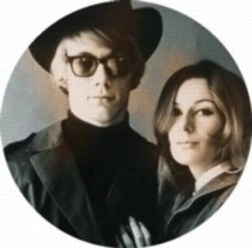
Lyme & cybelle

Zevon got his first taste of success with the song “Follow Me” as the male component of a musical coed duo called Lyme & Cybelle. He left the duo, citing artistic differences, and spent time as a session musician and jingle composer. He wrote several songs for the Turtles and another early composition (“She Quit Me”) was included in the soundtrack for the film Midnight Cowboy (1969). Zevon’s first attempt at a solo album, Wanted Dead or Alive (1969), was well-received but did not sell well. Zevon’s second effort, Leaf in the Wind, went unreleased.

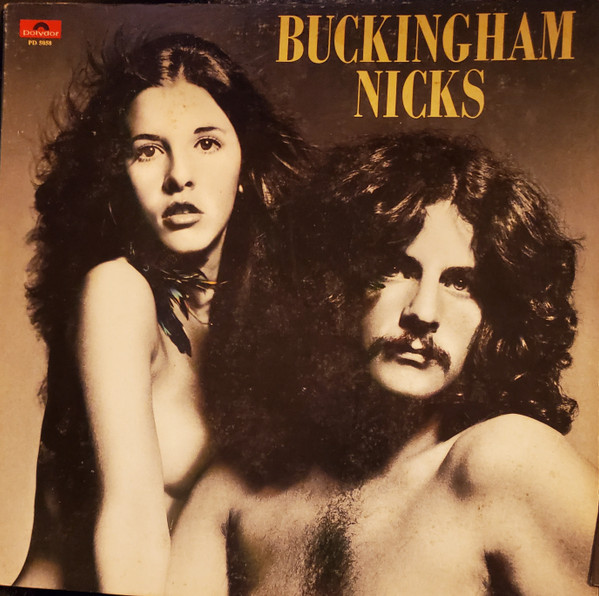
During the early 1970s, Zevon led the touring band for the Everly Brothers, serving as both keyboard player and band leader/musical coordinator. In the latter role Zevon became the first to recognize the talents of guitar player Lindsey Buckingham by hiring him for the band. It was during his time with the Everlys that Lindsey and girlfriend Stevie Nicks left to join Fleetwood Mac. Warren Zevon was a roommate of the famous duo in a Fairfax district apartment in Los Angeles at the time (September 1975). Zevon would remain friends with both for the rest of his life maintaining neutrality during the tumultuous breakups of both the Everly Brothers and Buckingham-Nicks.

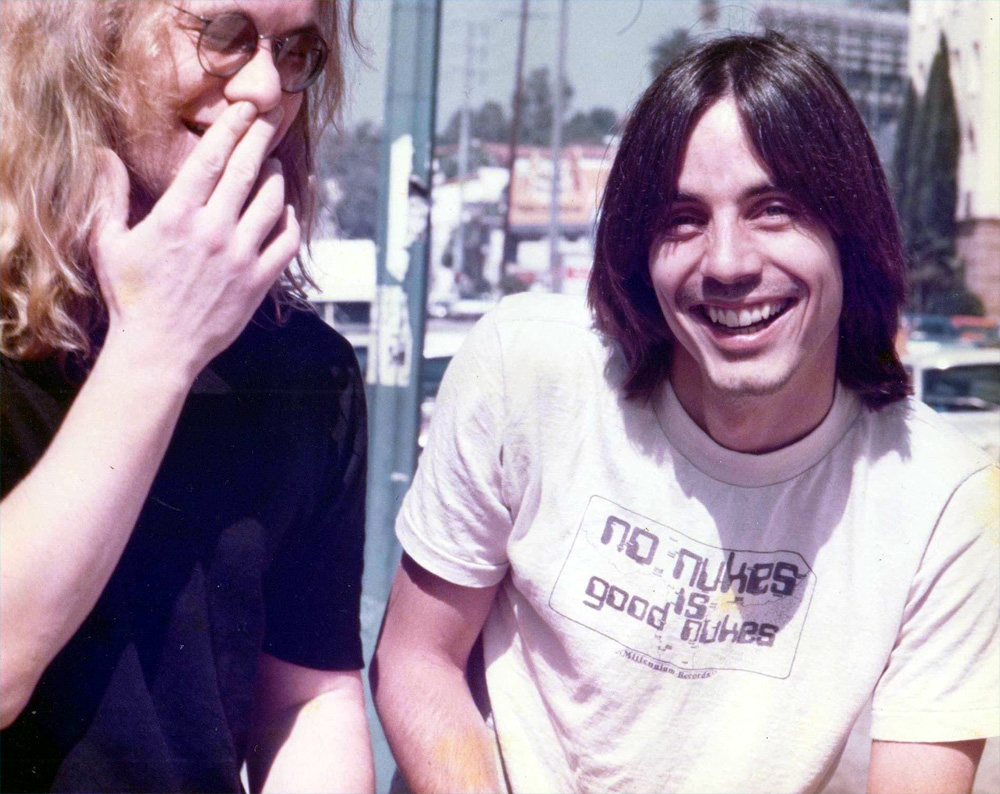
Warren Zevon & Jackson Browne.

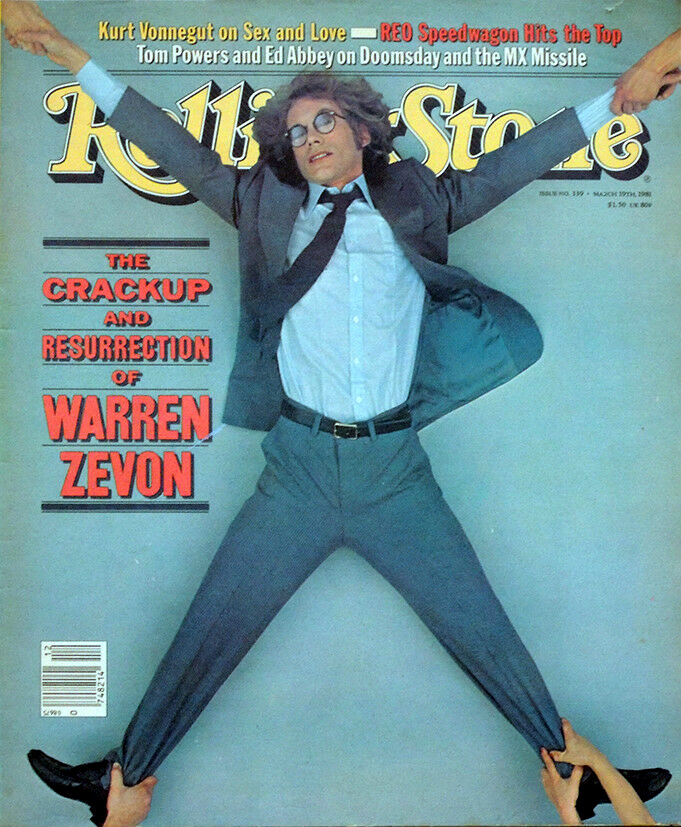
In late 1975, Zevon collaborated with Jackson Browne, who produced and promoted Zevon’s self-titled major-label debut in 1976. Contributors to this album included Nicks, Buckingham, Mick Fleetwood, John McVie, members of the Eagles, Carl Wilson, Linda Ronstadt, and Bonnie Raitt. This first album, although only a modest commercial success, was later recognized by Rolling Stone magazine as a masterpiece. Although  Zevon shared a grounding in earlier folk and country influences with his LA peers, this album brought Zevon to the forefront as a much darker and more ironic songwriter than other leading figures of the era’s L.A.-based singer-songwriter movement. Rolling Stone placed Zevon alongside Neil Young, Jackson Browne, and Bruce Springsteen as one of the four most important new artists to emerge in the decade of the 1970s.

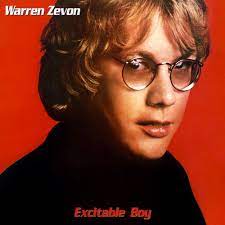
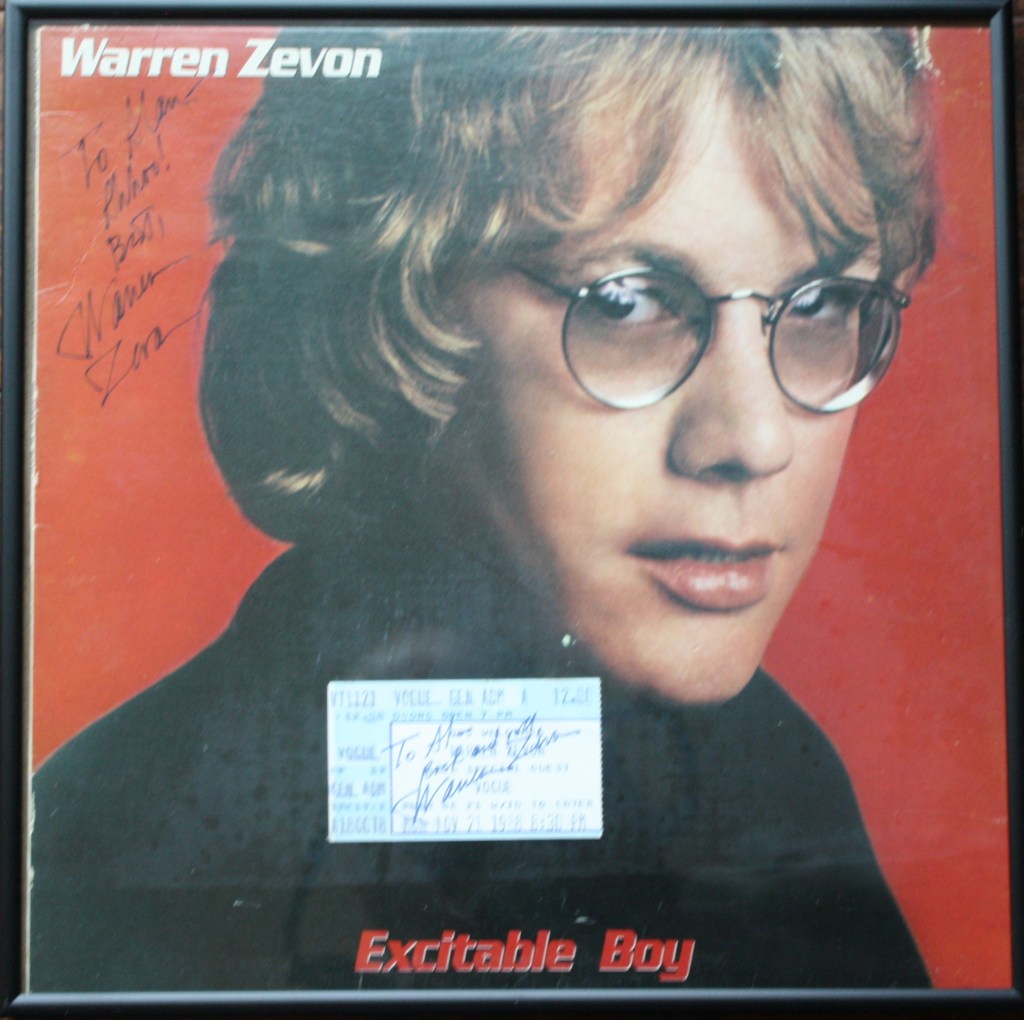
In 1978, Zevon released Excitable Boy to critical acclaim and popular success. This album received heavy FM airplay mostly through the release of the single “Werewolves of London,” featuring Fleetwood Mac’s Mick Fleetwood on bass and John McVie on drums. The song is considered a classic and has been covered by artists ranging from the Grateful Dead to Bob Dylan to comedian Adam Sandler. The song has become a Halloween season staple. For all you trivia buffs out there, The Chinese restaurant mentioned in the song (Lee Ho Fook) is a real location situated on Gerrard Street in London’s Chinatown.

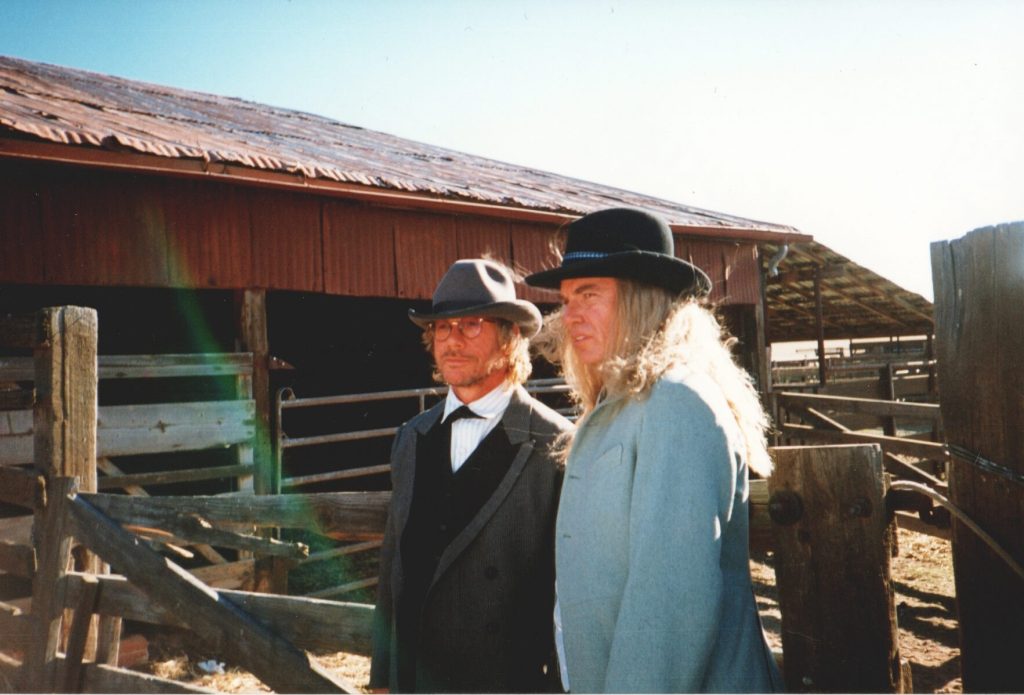
Zevon & Billy Bob Thornton on set of Dwight Yoakam’s 2000 western “South of Heaven, West of Hell”.

Although Zevon never again achieved popular acclaim, he continued to be recognized as an artist’s artist, releasing nine more albums over the next 25 years. It was during that quarter-century that Zevon lapsed in and out of the throes of excess, obsession, and addiction. To say that Warren Zevon suffered from excessive compulsion disorder would be a severe understatement. Warren had a continuing battle with drug addiction and alcoholism and was also a sex addict obsessed with the color gray and personal fame, or lack thereof. During this time, he and actor Billy Bob Thornton formed a close friendship galvanized by a shared obsessive-compulsive disorder and the fact they were neighbors living in the same apartment building.

Warren Zevon is his gray t-shirt.

One of Zevon’s compulsions was collecting identical Calvin Klein T-shirts. Like everything else in his life (his car, his couch, his carpeting and wall paint), the T-shirts were gray. One story relates how Warren insisted upon traveling to every department store carrying Calvin Klein T-shirts while touring on the road. If the store carried Warren’s prized Gray Calvin Klein t-shirt, Warren obsessively purchased every one of them and stowed them in the tour bus. When asked why, Warren replied that the new ones were being made in China and that those still on the shelf had been made in the USA and were “sure to become collector’s items and go up in value.” When he died at age 56, thousands of gray Calvin Klein t-shirts were found in his LA apartment; unopened in their original packaging.

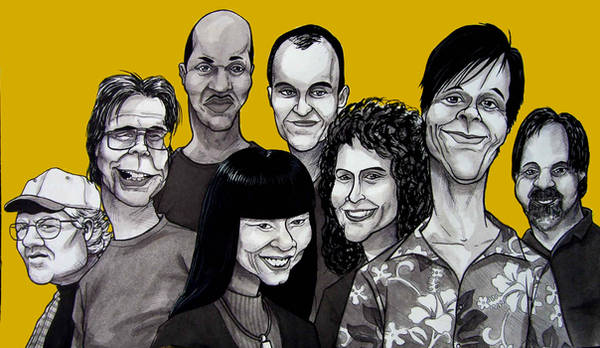
From left to right: Roy Blount Jr., Stephen King, James McBride, Amy Tan, Kathy Kamin Goldmark , Dave Barry, Matt Groening

A voracious reader, Zevon was friendly with several well-known writers who also collaborated on his songwriting during this period, including gonzo author Hunter S. Thompson, Carl Hiaasen, Mitch Albom, Norman Mailer, and Maya Angelou. Zevon served as musical coordinator and occasional guitarist for an ad-hoc rock music group called the Rock Bottom Remainders, a collection of writers performing rock and roll standards at book fairs and other events. This group included Stephen King, Dave Barry, Matt Groening, and Amy Tan, among other popular writers.

Zevon cemented his superstar status by appearing in various TV shows and movies during his career, most often playing himself. Zevon played himself on two episodes of Suddenly Susan in 1999 along with singer/actor Rick Springfield. Warren also appeared as himself on the Larry Sanders Show on HBO, alongside actor John Ritter as talk show guests in the same episode. Ironically, Zevon and Ritter would die within four days of each other.

Although highly intelligent, well-read, and obsessive-compulsive in every way, Zevon had a lifelong phobia of doctors. Shortly before playing at the Edmonton Folk Music Festival in 2002, he started feeling dizzy and developed a chronic cough. After a period of suffering with pain and shortness of breath, while on a visit to his dentist, Zevon was ordered under threat of kidnapping to see a physician. A lifelong smoker, he was subsequently diagnosed with inoperable peritoneal mesothelioma (cancer of the abdominal lining commonly associated with asbestos exposure). Refusing treatments he believed might incapacitate him, Zevon instead began recording his final album, The Wind, which includes guest appearances by close friends Bruce Springsteen, Don Henley, Jackson Browne, Timothy B. Schmidt, Joe Walsh, David Lindley, Billy Bob Thornton, Emmylou Harris, Tom Petty, and Dwight Yoakam, among others.

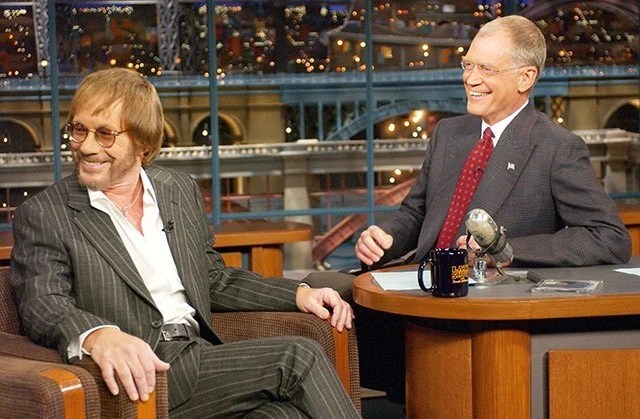
On October 30, 2002, Zevon was featured on the Late Show with David Letterman as the only guest for the entire hour. The band played “I’ll Sleep When I’m Dead” as his introduction. Zevon performed several songs and spoke at length about his illness. Zevon was a frequent guest and occasional substitute bandleader on Letterman’s television shows since Late Night was first broadcast in 1982. He noted, “I might have made a tactical error in not going to a physician for 20 years.” It was during this broadcast that, when asked by Letterman if he knew something more about life and death now, he first offered his oft-quoted insight on dying: “Enjoy every sandwich.” He  took time to thank Letterman for his years of support, calling him “the best friend my music’s ever had.” For his final song of the evening, and his final public performance, Zevon performed “Roland the Headless Thompson Gunner” at Letterman’s request. In the green room after the show, Zevon presented Letterman with the guitar that he always used on the show, with a single request: “Here, I want you to have this, take good care of it.”

Zevon was given only a few months to live after that fall of 2002 diagnosis; however, he lived to see the birth of twin grandsons in June 2003 and the release of The Wind on August 26, 2003. The album reached number 12 on the U.S. charts, Zevon’s highest placement since Excitable Boy. When his diagnosis became public, Zevon told the media that he just hoped to live long enough to see the next James Bond movie, a goal he accomplished. The Wind was certified gold in December 2003, just weeks after Zevon’s death, and Warren received five Grammy nominations, winning two posthumous Grammys, the first of his career.

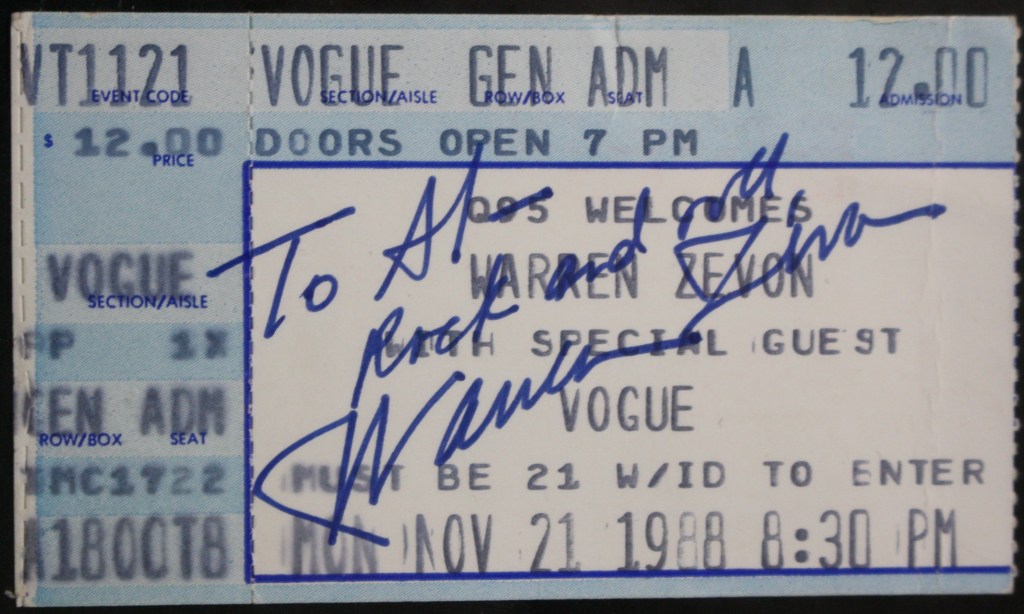
I have a brief personal connection to Warren Zevon. I interviewed him in the pre-holiday winter of 1988 after a concert at the Vogue in Broad Ripple. Zevon was touring with a patchwork band that included Timothy B. Schmidt of the Eagles. He performed all of his expected hits along with a couple covers. I specifically remember an unforgettable version of the Tom Jones standard “What’s New Pussycat?” as well as the Eagles former bass player Schmidt performing his signature song, “I Can’t Tell You Why.”

See if you can pick out Warren Zevon in this clip from the movie…Don’t blink!

After the show, I was led through the music hall to the back of the Vogue and told to wait. Meantime, out walked Schmidt and the rest of the band. Soon, Warren Zevon emerged. With his long blonde curls and John Lennon glasses, he looked more like a professor than a rock star. He maintained a constant smile throughout our session. Luckily, I struck a positive nerve by remarking that I had recognized him from his brief appearance during the closing credits of the 1988 Kevin Bacon film, She’s Having a Baby. Zevon leapt from his perch atop the bumper of his band’s equipment truck and began calling to his bandmates, “Hey guys, he saw me in the movie! I told you I was in it.” His band mates shrugged, but Warren thanked me for confirming what had until then, been just a rumor. As I recall, Zevon’s only word spoken in the film came in the naming the baby segment when he offered the name “Igor”.

My autographed copy of Excitable Boy from that Vogue encounter.

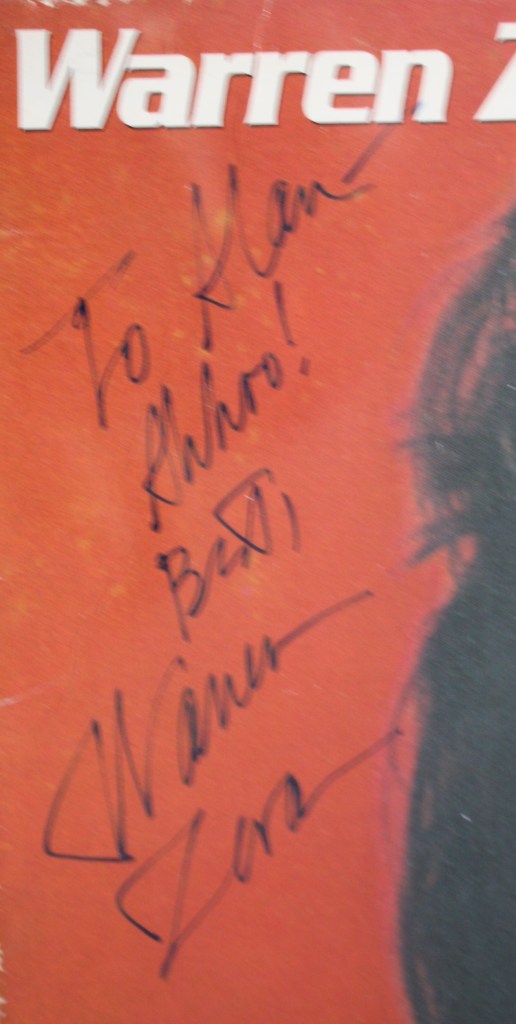
I really can’t remember much of the encounter after that. I do remember Warren signed my copy of Excitable Boy and the interior paper cassette tape insert for A Quiet Normal Life, relics I still have. But the rest is a blur. There is a more important residual incident connected to that incident. That was the same night that my future wife Rhonda agreed to go out on our first date. Yep, I took her to a Sam Kinison comedy show at the old Indianapolis Tennis Center. Romantic huh?

Signature closeup.
My signed ticket stub from that night.

Two decades after that first date, Rhonda bought me the book, I’ll Sleep When I’m Dead: The Dirty Life and Times of Warren Zevon written and compiled by Zevon’s ex-wife Crystal Zevon (published in 2007 by Ecco Books). The book tore down every “nice guy” image I ever had of Warren Zevon, telling his life story through interviews with those who knew him. I walked away from it thinking “Wow, they had a real hard time finding anything nice to say about this guy.” The book has been described as being “notable for its unvarnished portrayal of Zevon.” Only later did I realize the book was written this way at Warren Zevon’s own request. As the words to Zevon’s song “It ain’t that pretty at all” bounce around in my head, I must say that I am not surprised or disappointed.

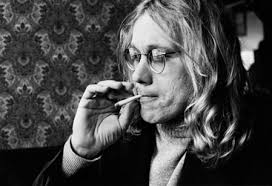
Warren Zevon still smokin’.

Indianapolis, Music, Pop Culture

“PeeWee the Piccolo” born in Indianapolis

Original publish date January 30, 2025.

https://weeklyview.net/2025/01/30/peewee-the-piccolo-born-in-indianapolis/

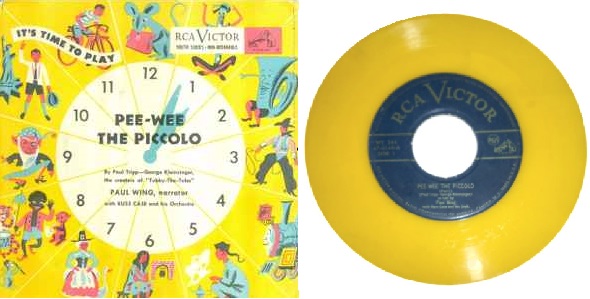
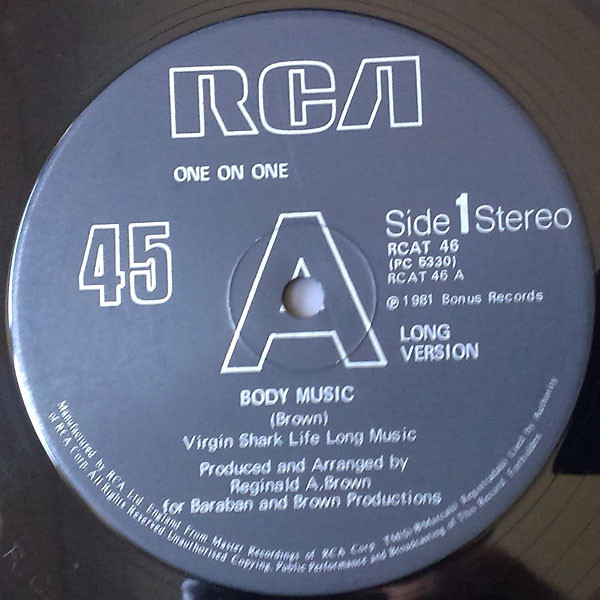
Okay all you Irvington audiophiles, quick, name the first song ever released on a 45 record. If you said it was the “Texarkana Baby” by Eddy Arnold, pat yourself on the back for remembering that lost gem. But you’re wrong. The first commercial 45rpm was “PeeWee the Piccolo” by Russ Case and his Orchestra on RCA Victor records (#47-0146 and b-side #47-0147) released on Feb. 1st, 1949. And it was born right here on the eastside of Indianapolis. Ironically Russ Case (1912-1964), a trumpet player and bandleader, led a few jazz and light music orchestras, including Eddy Arnold’s.

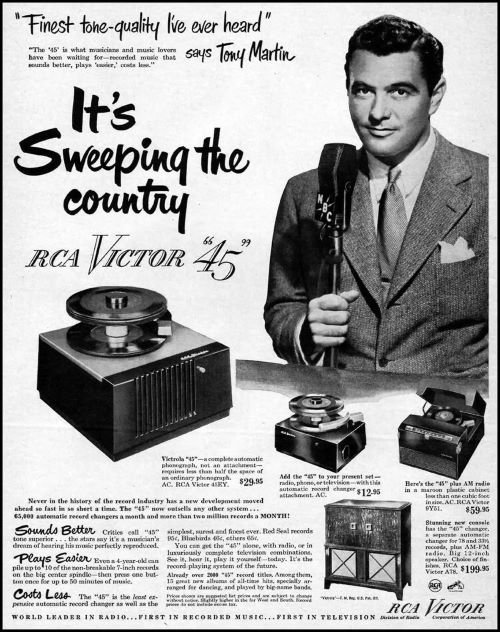
RCA Magazine ad for their new 45 record player.

RCA introduced the 45 rpm single to the world on December 7th, 1948 (seven years to the day after the Pearl Harbor attack), at the Sherman Avenue plant in Indianapolis. The confusion among the public comes from the fact that RCA released several commercial 45 singles on March 31st, 1949, including Arnold’s “Texarkana Baby.” The irony is that while “Pee Wee the Piccolo” is largely forgotten, “Texarkana Baby” topped Billboard’s country chart for three weeks, reaching #18 on the Best Selling Popular Retail Records chart. And it was the b-side of the single for Arnold’s standard hit “Bouquet of Roses.”

Pee Wee The Piccolo record.
Paul Wing.

“Pee-Wee The Piccolo” is a children’s record narrated by Academy Award winner Paul Wing (1892-1957). Wing was captured by the Japanese in the Philippines in 1942, survived the Bataan Death March, and was held prisoner in the World War II prisoner of war camp portrayed in the 2005 film The Great Raid. “Pee-Wee The Piccolo” was written by Paul Tripp and George Kleinsinger, who also created Tubby The Tuba. RCA color-coded their singles, pressing children’s 45-rpm records on yellow vinyl, popular music on black vinyl, country on green vinyl, classical on red vinyl, instrumental music on blue vinyl, and R&B and gospel on orange vinyl, international music was light blue, and musicals midnight blue. Eventually, they would all be pressed in black.

The 45′s tie-in to World War II is not without purpose. The 45 rpm single can trace its earliest origins to that conflict. Like many fields, World War II put a major dent in the music industry. Most homefront record and phonograph makers retooled their factories for the manufacture of products for the war effort. A wartime blockade stopped the import of shellac, the material from which .78 records were made. With that supply cut off, manufacturers scrambled for a new material to make records. The industry had been experimenting with synthetic PVC (polyvinyl chloride) since the 1930s, but it was more expensive to produce than shellac. CBS (Columbia Broadcasting System) engineers realized that PVC’s material properties meant that a vinyl record could be made thinner and stronger than a shellac record and that the grooves could be cut thinner, allowing more music to fit on each side. More music meant more money, outweighing the cost of the more expensive material. So the 33 rpm format was born.

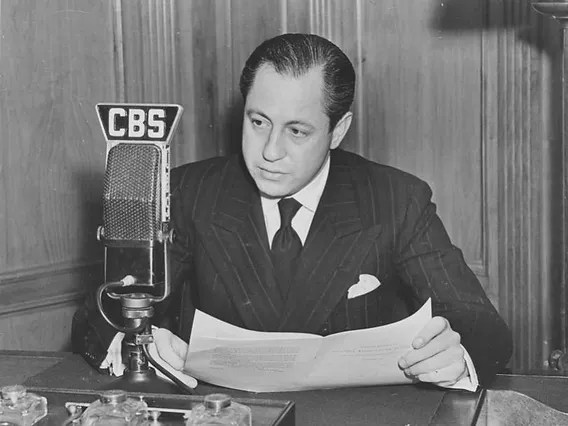
William Paley of CBS.

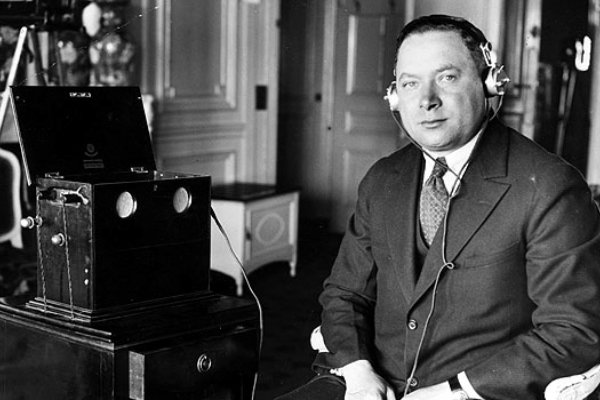
Around September of ’48, William Paley at CBS offered RCA’s David Sarnoff the rights to the 33 technology at no cost. Paley thought that sharing his secret with his chief competitor would help boost the 33 format record sales for both companies. Sarnoff adroitly thanked Paley and told him he would think about it. Paley hadn’t realized that RCA had already perfected it’s secret 45 project. Paley was shocked and CBS miffed when RCA rolled out the 45 a few months later. The 45 rpm record became RCA’s answer to Columbia’s 33 1/3 rpm long-playing disc. The two systems directly competed with each other to replace 78 rpm records, bewildering consumers, and causing a drop in record sales. In media the period from ’49 to ’51 was referred to as “the war of the speeds” years.

David Sarnoff of RCA-Victor.

A myth persists that the single’s designation of “45″ came from subtracting Columbia’s new 33 rpm format speed from the old 78: equaling 45. According to “Vinyl: A History of the Analogue Record” by Richard Osborne, “the speed was based upon calculations made by the best balance between playing time and signal-to-noise ratio given by a groove density of 3 minutes per radial inch, and also that the innermost groove of a disc should be half the diameter of the outermost groove. Given the 6 7/8 diameter of the record it was found that 45 rpm provided the desired playing time within the designated bandwidth.” No wonder the 78 minus 33 urban legend remains so persistent — it’s easier to remember.

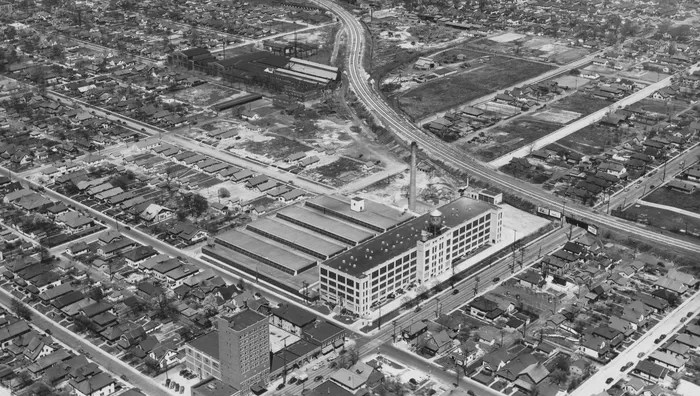
The sprawling campus of RCA at Michigan & Sherman.

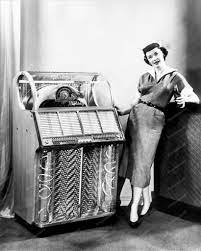
Engineers from both companies had been working on a replacement for the 78 since before the war, experimenting with speeds ranging from 30 to 50 RPM. They were balancing the playing time (5 minutes – the same as a 12″ 78) with disk diameter, to get the most compact format that would have a surface velocity and lack of “pinch effect” so that the sound would not degrade as the stylus reached the inner diameter. In fact, for all but the outer inch or so, the 45 has a higher surface velocity than a 12″ LP. Both Edison and Victor had tried to introduce long-playing records in the 1920s and failed. In 1949 Capitol and Decca started issuing the new LP format, and RCA relented and issued its first LP in January 1950. While the LP could comfortably hold a large selection of music on each side, the 45, with its large central hole, worked better on automatic changers (like jukeboxes).

Wurlitzer Jukebox Model 1700.

However the 45 rpm was gaining in popularity, and Columbia issued its first 45s in February 1951. Soon, other record companies saw the mass consumer appeal the new format allowed. By 1954 more than 200 million 45s had been sold. According to the New York Times, the peak year for the seven-inch single was 1974, when 250 million were sold. In the end, the war of the speeds ended without a decisive winner. By the early Eighties, the 45 began dying a slow, humiliating death. The number of jukeboxes in the country declined, stadium rock fans increasingly gravitated toward albums, and the cassette format (and even the wasteful “cassette single” and “mini-CD” format) began overtaking vinyl 45s.

The RCA label.

Like most people my age, I fell in love with 45s in the early 1970s. Mostly because they fit into my limited allowance budget as a kid. That was, until about 1975 when the companies all raised the price of a 45 from $0.99 to $1.49! Then I had to be choosy. In most cases, the best song from an album would make it onto the 45 and, if I was lucky, there could be a b-side that was an unexpected bonus, sometimes a song not even on the album. Bingo, bonus track! Many of those 45s were made right here in Indianapolis. What’s more, back in the late 1960s/early 1970s it seemed like everyone in my family worked at that RCA plant on Sherman Ave. I remember that Mom and Dad got to pick out 2 or 3 free records every quarter, so I had a leg up on the competition (my sisters).

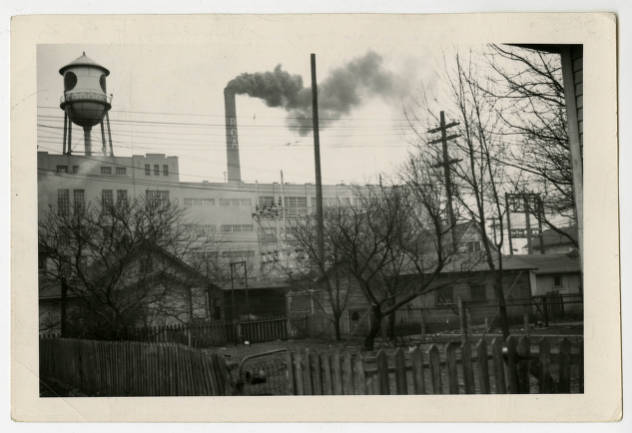
The R.C.A. manufacturing plant located at 3324 East Michigan Street. Courtesy Indiana State Library Photograph Collections.

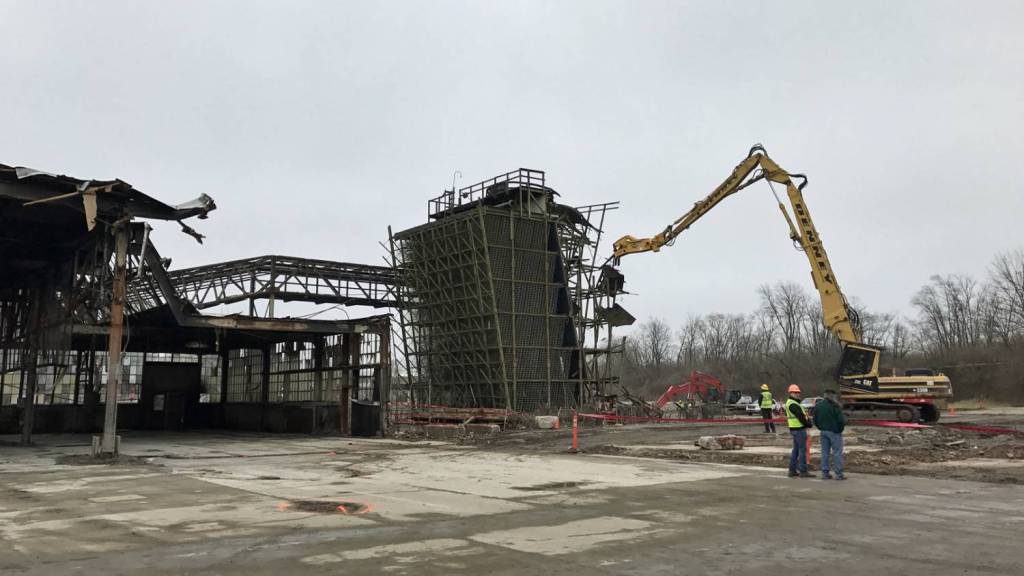
Built in the 1920s, the RCA plant on the near eastside was a massive site that, during its heyday in the 1950s, employed over 8,000 people. RCA featured over 20 buildings on its 50-acre site, and aside from making records, the plant produced electronics like televisions, stereos, and radios. A gradual decline in business began in the 1970s, eventually leading to RCA being sold to GE in 1986. The Sherman Ave. plant operated for a few more years before closing in 1995. A heavy machinery and storage company operated in a small portion of the plant and a recycling nonprofit operated in the main building along Michigan St. for years before leaving in 2012. The RCA Sherman Plant was ultimately demolished in late January/early February 2017.

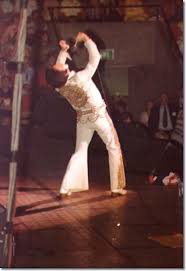
Elvis Presley on stage at Market Square Arena 8.30pm June 26, 1977.

Elvis Presley and Dolly Parton were two of the bigger names that toured the plant, although many bands and artists made the trip to the RCA plant to see how their records were made. One of the more famous records made there was Elvis Presley’s “Moody Blue” record, a special presentation copy of which was given to Elvis during his final concert at Market Square Arena on June 26, 1977. As it happens, the stage where Elvis stood when he received that gold record now rests inside the Irving Theatre.

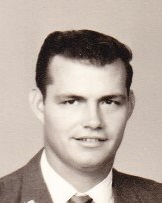
Robert E. Hunter. My dad.

Dad, who was trained as a draftsman in the service, worked in the relatively new computer processing area at the Sherman Ave. facility. He would take a sweater or zipper-pull fleece with him every day regardless of the season because back then the computers ran pretty hot and the room was kept so cold. They let employees smoke back in those days in the computer room and Dad smoked a pipe. I remember he worked with IBM cards back then. Those punchcards sorted all the info for the RCA record club members, which numbered in the hundreds of thousands.

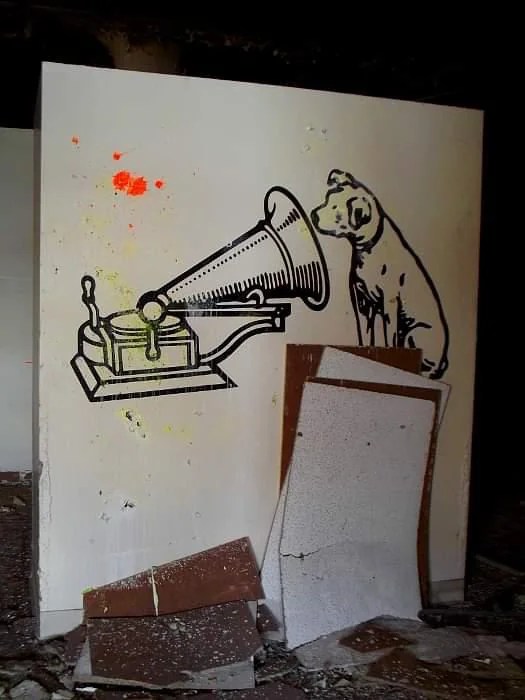
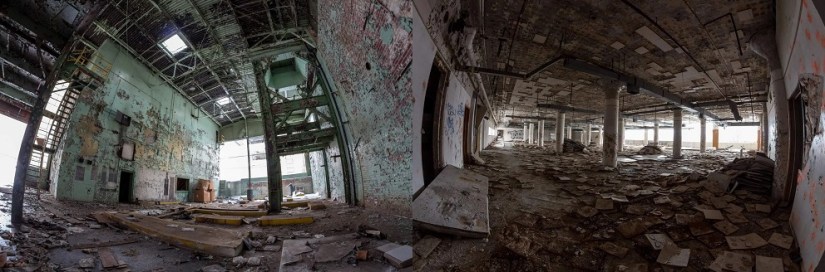
Nipper “His Master’s Voice”in wrecked interior of the abandoned RCA factory.

My father lived for many years across the street from the plant on Sherman Avenue. He relished the idea of walking to and from work and eating lunches at home. The plant was an awesome sight to see when it was still standing. After it was vacated in the early 2000s, it became the largest abandoned place in Indy (besides the coke plant). There were some reminders of its former life throughout the building (the RCA dog could still be found in the main building) and leftover remnants from the other companies that operated there.

During those derelict years, I may (or may not) have surreptitiously ventured into the empty building. It was pretty sketch back then and you were likely to run into other people, mostly vagrants, scrappers, and other neighborhood kids. The attics had catwalks from which one could access various rooms/areas throughout the building via small doors. I remember one door in the back of the men’s room. There were muddy raccoon footprints all over the bathroom tile floors: proof that the critters would come in at night to drink out of the toilets. Some rooms were lined with meshed steel Faraday cages. The level beneath the main offices had large mounds of dirt reportedly earmarked for a BMX track that never materialized. When Thomson Consumer Electronics moved north to their new sparkling aqua green and blue paneled building at I-465 and Meridian, RCA left a ton of office furniture and obsolete audio-visual equipment behind in the building.

The RCA plant coming down.

My dad worked in that building for over three decades. He died in 1997 just months away from retirement. My grandparents and my mother worked there in the 1960s. And it was in that lobby where I saw my stepmother Bonnie for the last time in 1997 before she left for Tennessee never to return. Back then RCA had a notary public in residence just inside the door. Tens of thousands of Hoosiers worked at that plant during its 75-year lifespan. Now, the vacant space is just a large patch of overgrown weeds and wild grass. My dad’s house sits empty, the doors and windows boarded up. Life goes on, the world still turns, and soon anyone with memories of working in that plant will fade away as well. Like phone booths, inspection stations, long-distance operators, and most of the products made in that building, RCA is just a distant memory now.