Indianapolis, Music, Pop Culture

The Beatles, Paul Newman and the Speedway Motel.

Beatles on the greenOriginal publish date:  August 7, 2014

On February 19, 2009, demolition crews knocked down the final wall of the 96 room Indianapolis Motor Speedway Motel aka Brickyard Crossing Inn, which was closed by the Indianapolis Motor Speedway in December of 2008. They knocked it down so fast that race fans and historians didn’t have a chance to notice, much less complain, until it was gone. On February 19, 2009, demolition crews knocked down the final wall of the 96 room Indianapolis Motor Speedway Motel aka Brickyard Crossing Inn, which was closed by the Indianapolis Motor Speedway in December of 2008. They knocked it down so fast that race fans and historians didn’t have a chance to notice, much less complain, until it was gone.

The modern style motel opened in 1963 to much fanfare. Located just off of Turn 2 of the legendary 2-1/2-mile oval, at the time, no other racing facility in the country could boast its own motel located on property. The opening of the motel 54 years ago filled a void in lodging on the near-west side of Indianapolis; long before the growth associated with the construction of Interstate 465. The Speedway Motel’s location assured that only the elite of racing stayed in the convenient confines. Some of the greatest names in auto racing history stayed at the motel, not to mention movie stars, politicians, and music legends.

Like the Speedway, the Brickyard Crossing Inn had a famous history. Besides being the home for several Indianapolis 500 drivers, personalities and owners during the month of May, scenes from Paul Newman’s movie “Winning” were filmed in rooms of the motel. Who knows how many 500 race winners have stayed there prior to the days of million-dollar motorhomes? NASCAR legend Jeff Gordon celebrated his win in the 1994 inaugural Allstate 400 at the Brickyard by eating a pizza in his room at the motel. Oh, the stories those rooms could’ve told. Every West sider should remember the distinctive sign out front welcoming fans before the race, and congratulating the winner afterwards.

When the Speedway Motel opened, John F. Kennedy was President, Alcatraz was still a working prison, the Beatles released their first record and there wasn’t another hotel in sight. Today there are 30,000 hotel rooms in the vicinity and the Speedway Motel lost it’s identity in this modern world. Speedway management  decided that bringing the old Motel up to modern standards would simply cost too much, so the hotel was closed and its 15 workers were sent home for good. After all, by today’s standards, the IMS Motel wasn’t exactly an architectural masterpiece.

The Speedway Motel’s guest list? It was something else. Just about every celebrity that attended the Indianapolis 500 over the Motel’s 45 year lifetime stayed at the IMS Motel. Names like James Garner, Jim Nabors, Paul Newman and Jayne Mansfield made it their home while in town for the Greatest Spectacle in Racing. At one time or another, nearly every Indy 500 driver lived there during the entire month of May. It was the preferred residence of 4-time Indy 500 winner AJ Foyt. Same is true of car owner Roger Penske, who typically passed on the luxury motor homes and condos for a comfortable room at the motel.

However, by the mid-1980s, the old motel was beginning to show its age. By then, it had taken on the appearance of an old roadside movie motel. Glasses were wrapped in paper sleeves and housekeeping staff still put the strip of paper across the toilet seat that said “Sanitized for your protection.” By the late 1990s, the rooms were dank and musty-smelling, and in the wintertime the rooms were intolerably hot. As the years passed, it became apparent that IMS officials had to come to a decision, the motel had to either be renovated or razed. Nowadays, the only evidence remaining of this once glorious Motel can be found in the memorable scene from the movie “Winning” when Newman’s character, Frank Capua, returned to the motel after leaving Gasoline Alley and catches Joanne Woodward (Ironically Newman’s real life wife) and co-star Robert Wagner “in the act” in Room 212 of the IMS Motel.

Newman was a fixture at the speedway for decades as a car owner for Mario Andretti in the 1980′s. During those years Newman would give his guests tours of the Speedway, he would always point out the room where the film scene took place. Newman recalled in a 2007 interview, “I always used to take a golf cart and drive the sponsors to the back of the Speedway Motel, and I would stop for a minute and point to a room and say, ‘And that’s where my wife shacked up with Robert Wagner,'” Newman continued, “I’d let that comment sit there, and deep silence and embarrassment would fall over everybody. Then 10 minutes later I’d say, ‘Oh, in the movie I meant.'” He made his final appearance at the speedway during qualifications for the 2008 Indianapolis 500, just four months before losing his battle with cancer.

It was renamed the Brickyard Crossing Inn after the race track became home to NASCAR’s Brickyard 400 race in 1994 and for awhile, the motel added NASCAR stars to its famous guest list, including the winner of the Inaugural Brickyard 400 in 1994, Jeff Gordon. After all the pictures, media interviews and celebratory appearances were over, Gordon and his first wife, Brooke, went back to their room at the motel and called Domino’s to order a ham and pineapple pizza. The unsuspecting employee on the other end said, “It’s going to take about two hours to get the pizza delivered because there was a race there today.” to which Gordon responded, “I know. I’m the driver who won the race.” After convincing the Domino’s employee that he was indeed Jeff Gordon, the pizza arrived much sooner than two hours.

The most famous non-racing related guests to stay at the motel were “The Beatles” who stayed in the Motel during their 1964 tour appearance in Indianapolis. Legend has it that during their stay in Indianapolis, fans were tipped off they were staying downtown at the Essex House Hotel. To mislead frenzied fans who might rush the motel, the Beatles’ managers let it leak out that the “Fab Four” would be staying at the swanky downtown hotel. To further add to the ruse, they put the crew traveling with the Beatles at the Essex.

Their manager then put all four in one room  at the IMS Motel. The Beatles enjoyed a quiet refuge there for one weekend in September 1964 while playing two shows at the Indiana State Fairgrounds. That night after the show, the band returned to the Speedway Motel to relax before heading to Milwaukee, Wisconsin, the next stop on their franticly-paced 1964 North American Tour. Ringo could not sleep and asked his police escort if they could drive him around the city and grab a late night bite to eat. The policeman in charge took Ringo to a restaurant known as “Charlie’s Steakhouse” on the north edge of Carmel, located at the point where Meridian Street (U.S. highway 31) and Range Line Road (Indiana highway 431) come together. Old timers will remember it as “Ben’s Island”, a bar located within the old Carmel Motel. Ringo had eggs and coffee before returning to the Speedway Motel in the wee hours of the morning. The policeman received a reprimand for this impromptu tour but Ringo later sent a thank-you note to the State trooper and his family for the opportunity to escape the tour for a little while.

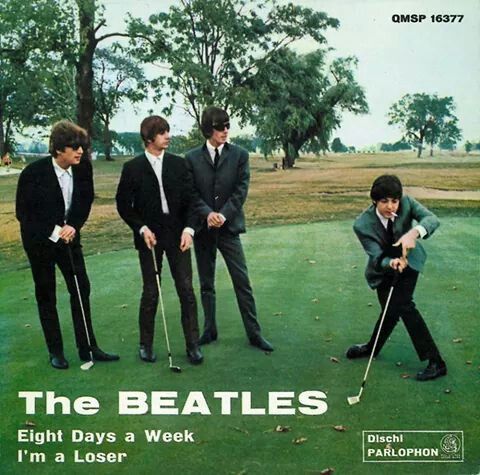
The next day, a photographer arrived to snap a few pictures of the Beatles at their Indy Motel. There were pictures of the Fab Four talking with their police escort on the balcony. Photos of the boys playing with remote control slot cars on an oval track set up on the floor of their room. The most famous image from that shoot was that of all four lads playing golf on one of the Speedway golf course greens. Afterwards, the State Police security detail took them for a lap around the track before finally heading for the airport. In the book, “The Beatles Anthology”, George Harrison remembered it this way: “Indianapolis was good. As we were leaving, on the way to the airport, they took us round the Indy circuit….It was fantastic.”

When I found out the motel was going to be torn down, I was hoping to be able to get access to the room for some photo memories to compare to the movie. Life and the Indiana Winter got in the way and delayed my trips to the Motel until I received a phone call from friends Steve and Kim Hunt telling me that, “I’m driving past it and they’re  tearing it down right now.”

Thank goodness the old motel’s main building will continue to house its popular restaurant, a conference center, pro shop of the Brickyard Crossing Golf Course and the legendary “Flag Room” pub. All will continue operation. The Flag Room bar remains a popular watering hole with regular patrons whose colorful nicknames like “Tires” and “Jonesy” hearken back to the golden days of Indy motorsports. In May, and especially during race week, The Flag Room is a prime gathering spot for former 500 winners like Jim Rathmann and Parnelli Jones to sit and talk about the good old days of their glorious racing careers. Other drivers, such as Al Unser, Bobby Unser, Johnny Rutherford and Mario Andretti, occasionally stop by for lunch or dinner.

“The motel and the restaurant were places where you could stand any day during May and just see everybody. It would have been an autograph-hunters paradise but I don’t think that word ever really got out,” Davidson said. “Who wouldn’t want to hear the lunch conversation among former Indiana basketball coach Bob Knight, four-time Indy winner A.J. Foyt and Speedway owner Tony George”, Davidson chuckled. “They were golfing buddies.”

The razing of the Indianapolis Motor Speedway Motel closed a chapter on a piece of the history of the century old Indy 500 Mile Race. They say that all good things must come to an end, but I can’t help but feel that we lost a symbol of Indianapolis sports and pop culture history with the destruction of the old motel. It was a time when a normal Hoosier kid could venture to West 16th street in the off season to sleep in the same beds as the heroes of their youth…and dream.
ABA-American Basketball Association, Indianapolis, Music

Breakfast with Neto: Marvin Gaye.

Neto Breakfast cropedOriginal publish date:  May 2, 2017

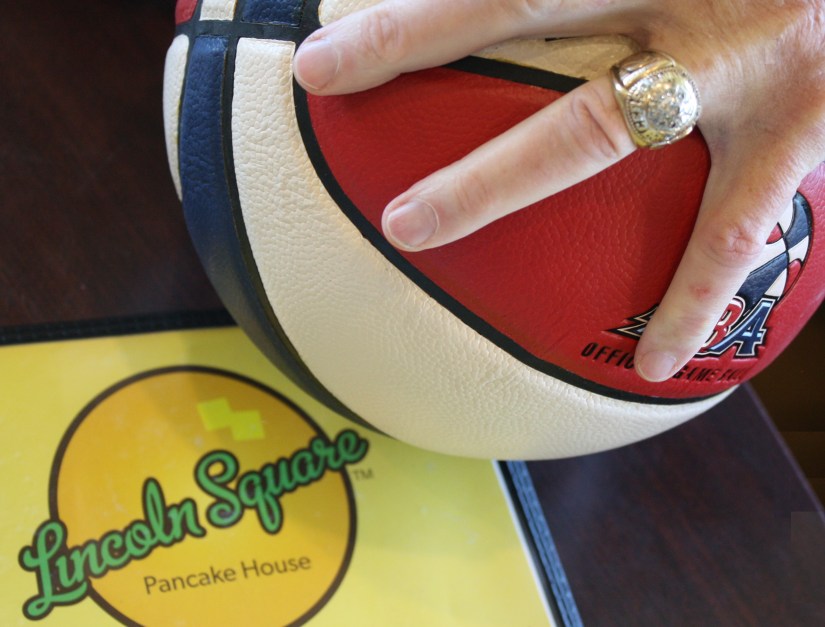
This is the first in a series of articles that I hope will bring insight into the Indianapolis sports and pop culture history scene as seen through the eyes of former ABA Pacers All-star player Bob Netolicky. I have known Bob for well over 20 years and have had the benefit of his counsel and insight on topics both on and off the court. Neto’s stories are informative, often amazing and always entertaining. Neto has called Indianapolis home for over 50 years and frankly, these stories need to be shared. We meet regularly for breakfast at the Lincoln Square Pancake House at 7305 East 21st Street so I’m calling these articles “Breakfast with Neto”. I hope you enjoy reading them as much as I enjoyed writing them.
tumblr_mpjk7gTsvv1qzp5buo1_400The ABA Indiana Pacers were the powerhouse of the old American Basketball Association, appearing in the league finals five times and winning three Championships in nine-years. By the time of the NBA-ABA merger in 1976, the Pacers had established themselves as the league’s elite. The players were household names and their reputation was now legend. The crowds at the State Fair Coliseum, and later Market Square Arena, where the Pacers held court were always dotted with celebrities from all walks of life. In the Circle City of the seventies, everyone wanted an association with the Pacers. In short, they were rock stars.
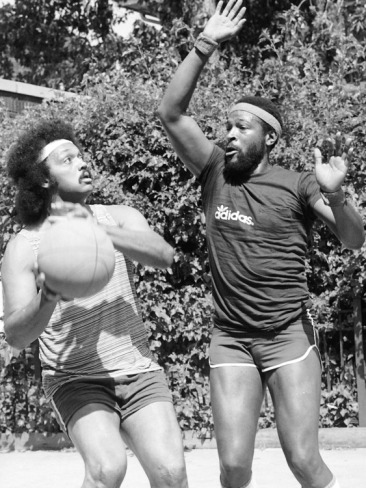
During the summer of the 1975-76 season, the Pacers held informal workouts at the Brebeuf high school gym. “The guys would all get together for scrimmages to keep in shape, It was me, George (McGinnis), Roger (Brown), Mel (Daniels), Danny Roundfield and a few others. We would get together and practice with the high school kids there.” says Neto. “One of the guys, I don’t remember who, showed up one day with Marvin Gaye in tow. Marvin was so bad, we made the high school guys take him on their team.”
Wait, what? Motown star Marvin Gaye? THE Marvin Gaye? “Yep, Motown star Marvin Gaye.” Neto replies. “He was in town for a concert as I recall.” Marvin Gaye, Jr. was born on April 2, 1939, in Washington, D.C., to a church minister father and domestic worker mother. He grew up in the Fairfax Apartments on the rougher side of D.C. Although once populated by elegant Federal-style homes on the Southwest side, when Marvin was coming up there it was primarily a vast slum. Buildings were small one or two story shacks in disrepair, many lacked electricity or running water and nearly every dwelling was overcrowded. Gaye and his friends nicknamed the area “Simple City”, owing to its being “half-city, half country” atmosphere.
slide_409216_5137250_freeYoung Marvin, who would grow to be over 6 feet tall, became a fixture on the tough D.C. basketball courts. One of his neighbors was future Detroit Mayor and Pistons All-star Dave Bing. Although smaller and four years younger, Bing played alongside Gaye on those DC project courts. The two men forged a friendship that lasted the rest of their lives. Bing continued to excel on the court as Marvin’s skills faded. Ironically, both men landed in Detroit. Gaye turned to song, which led him to Motown immortality; Bing landed in the Basketball Hall of Fame.
Marvin once said, “I was always a sports fan but I was determined to play for real. I knew I could. When I was a kid, I was scared to compete. Father wouldn’t let me. Preachers kids weren’t supposed to be football players. Well I decided to change all that. I trained with the Detroit Lions and was convinced I could start at offensive end. You see, I had this fantasy. I was in the Super Bowl, with millions of people watching me on TV all over the world, as I made a spectacular leaping catch and sprinted for the winning touchdown.”
footballWhile Marvin was busy helping Berry Gordy shape the sound of Motown in the 1960s, he never lost his love of sports. The “Prince of Soul” recorded iconic concept albums including What’s Going On and Let’s Get It On while keeping active on the courts, courses and fields around the Motor City. In the book “Divided Soul; The Life of Marvin Gaye”, author David Ritz says, “Gaye was a good athlete, but not of professional quality. His football playing, just like his basketball playing (where he loved to hog the ball and shoot) were further examples of his delusions of grandeur.” Gaye was a regular at celebrity golf tournaments and loved rubbing elbows with pro athletes like Bob Lanier, Gordie Howe and Willie Horton.
In 1969, The Four Tops’ Obie Benson and Motown songwriter Al Cleveland began working on a song that would eventually become “What’s Going On.” The song was repeatedly turned down by several different Motown acts. The duo pitched the song to Marvin Gaye in 1970. Gaye told a couple friends, Detroit Lions stars Lem Barney and Mel Farr, about the song during a round of golf at Detroit’s Palmer Park Golf Course. Palmer attracted many of the city’s black celebrities, including Joe Louis, Smokey Robinson and The Temptations. Gaye was reluctant to record the as yet unnamed song saying it just didn’t fit his style. Farr and Barney talked him into it, saying that Marvin was the only person who could pull it off.
Marvin finally agreed, coming up with the song’s title while with his two Lions buddies over a few beers after another round of golf. Marvin told the duo that he would only record the song under one condition: if Farr and Barney sang background vocals. The Al=Pro duo thought Gaye was joking, but they soon discovered that he was quite serious. The two men, NFL offensive and defensive rookies of the year just three years earlier with the Lions, agreed even though neither had ever sang professionally before. True, they had been in the studio before as Marvin’s guests, but they never dreamed they would be singing alongside their friend.
The song came at a time when America was coming apart at the seams. Malcolm X, Martin Luther King Jr. and Robert Kennedy’s assassinations were the fuel and intercity angst the match. The Watts and Detroit riots exploded after decades of racial bigotry. The Vietnam war raged on. Now, Marvin saw a chance to merge sports with music and social commentary in the epic song “What’s Going On.” Marvin headed to the recording studio alongside two of the Detroit Lions all-time greatest players. The song and album became a hit reaching No. 1 on the R&B chart, selling over two million copies. Not long after the record was released, Gaye dropped another bombshell. Now that he, Barney and Farr were musical collaborators, Gaye told them he wanted to join them on the Detroit Lions.
Gaye was 31 and had never played football professionally. In the book, “Marvin Gaye, My Brother.” Frankie Gaye quoted his brother as saying, “Don’t even try to discourage me. Smokey [Robinson] said I’m insane, but he’s hanging in with me because, you know what?…I’d rather catch a pass and score a touchdown in Tiger Stadium, than rack up another gold record.” Problem was, Barney and Farr couldn’t guarantee a tryout, let alone a spot on the team. Gaye quickly committed himself to an intense workout regimen, running 4-5 miles per day and lifting weights. He arranged workouts at the University of Michigan and transformed portions of his house into a gym, moving his Rolls-Royce and other cars out of the garage to make room.
Gaye bulked up nearly 30 pounds during the training. Gaye was realistic, he knew his NFL dream was a long shot. He trained with Farr, Barney and future Hall of Fame receiver Charlie Sanders. In addition to the university and Gaye’s garage, they trained at parks and local high schools, anywhere a productive workout could take place. Word traveled fast in the Motor city that Motown’s Marvin Gaye was in training for a tryout with the Lions.
Joe Schmidt, then Detroit’s head coach and a fan of Gaye’s music, was impressed when he learned that two of his star players were featured on a hit song of Gaye’s. However, Coach Schmidt, a member of both the pro and college football hall of fame, was less enthusiastic when he learned that the “Prince of Soul” wanted to be a Lion. Nonetheless, Schmidt agreed to meet with Gaye. Marvin put on his best three-piece suit and arrived for the meeting in a limousine. He didn’t waste a second before selling himself in the interview. He told Schmidt that not only could he could start for the Lions, but he could score a touchdown the first time he touched the ball.
Schmidt asked about Gaye’s previous on field experience. Marvin did not attended college and never played high school football either. He told Schmidt that he had dropped out at 17 and enlisted in the Air Force. Schmidt, an eight-time first-team All-Pro whose career started with leather helmets and no facemasks, was worried that Marvin would get hurt. And getting a Motown superstar injured, or worse, would be disastrous for the hometown team.
As a courtesy, Schmidt invited Marvin to a three-day shoes-and-shorts workout at the University of Michigan. He pledged to try Marvin out at several positions, including running back, tight end, wide receiver and fullback. Before beginning his tryout, Marvin said a prayer with Barney and Farr. Marvin did everything he was asked, running routes and lining up wherever he was told to. For a musician, he made a decent football player. But for a football player, he made an excellent musician.
For Schmidt, the thought of turning Gaye loose against heavy hitters like Ray Nitchske, Deacon Jones, or Dick Butkus, was too terrible to contemplate. Marvin Gaye didn’t receive a training camp invite. Regardless, Gaye got his shot at playing in the NFL. He had achieved his personal goal. Unlike later periods of his life, during his short lived dream of playing pro football, drugs -most notably cocaine- were absent.
In 1973, Marvin became one of the 33 owners of the WFL Detroit Wheels, which lasted less than a year despite having Little Caesars founder Mike Ilitch (who would later own the Red Wings and Tigers) among the ownership. After the team folded in September of 1974, Marvin told friends that he wanted to buy another WFL franchise in Memphis, Tennessee so that he could play in the backfield and sing the National Anthem before games.
Marvin’s “post-NFL” music career was sporadic at best. Although albums like “Trouble Man,” “Let’s Get It On,” “I Want You” and the controversial “Here, My Dear,” elevated him to a living legend, soon, drug addiction and mounting tax issues led to a self-imposed European exile in the early 1980s. The song “Sexual Healing,” found on his last album, 1982’s “Midnight Love,” slingshot Marvin to the top of the music world one last time.
In 1983, Marvin Gaye won the only two Grammys of his career and delivered a soulful, moving rendition of the national anthem at the NBA All-Star Game. Farr and Barney last saw Gaye at the Detroit stop in June of the singer’s 1983 tour, Marvin’s last. Twelve years had passed since “What’s Going On” was released on Super Bowl Sunday in 1971. The album is today credited with changing the course of popular political music. Hard to believe, but only 3.500 showed up for Marvin Gaye’s concert at Indianapolis’ Market Square Arena on December 30, 1983. Barely 4 months later, on April 1, 1984, Gaye’s father, Marvin Gay Sr., fatally shot him at their house in Los Angeles. At first, fans thought the news was just a bad April Fools’ Day joke. Sadly, it was true. Motown’s Prince of Soul was gone.
This year marks the 50th anniversary of the ABA. A 50th anniversary reunion is in the works in Indianapolis in April of 2018. Bob Netolicky, former Pacers & League President Dick Tinkham and noted journalist / author Robin Miller are putting the finishing touches on a new ABA retrospective book titled “We changed the game” due to be released in late 2017. A book signing / party will be held at the Irving Theatre to coincide.
Oh, about that book. It is being published by Hilton Publishing Company. HPC co-founder, Dr. Hilton Hudson II, grew up in Indianapolis and attended high school in our city. Dr. Hilton was one of the those high school kids shooting hoops with the Pacers at Brebeuf high school back in the summer of 1975. Full circle in the circle city.

ABA-American Basketball Association, Indianapolis, Music

ABA Indiana Pacers Reggie Harding & The Supremes. Part II

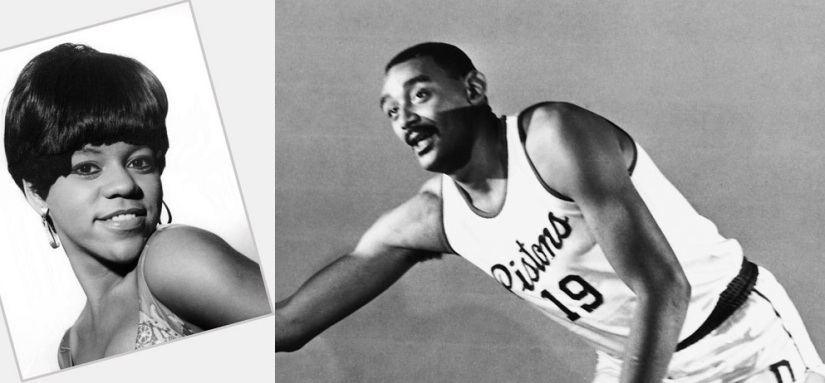
Reggie Harding and Flo BallardOriginal publish date:  March 19 2017

Detroit 7’0″ high school phenom Reggie Harding had a brief, but hauntingly promising, stint with our Pacers fifty years ago during the team’s first season in the upstart ABA. He had recently been cut loose by the Chicago Bulls after just 14 games into that milestone season of 1967-68. Harding had been the first player in the history of pro basketball to sign a contract as a high school player. He was selected by the Detroit Pistons and played parts of four seasons in the NBA. He lasted only 25 games with the Pacers; his career was over by the age of 26. He became legendary for his “world’s dumbest criminals” style antics off the court that began well before he left high school.
Here was a man who drew guns on teammates, became addicted to heroin and repeatedly robbed stores in his own neighborhood thinking no-one would ever finger him for the crimes despite being the only 7-foot tall black man in the area. He paid for his crimes with a bullet in the head fired by a man he believed was his friend and he died at the age of 30 on a trash strewn street in the Motor City on September 2, 1972. Although Reggie’s exploits are viewed somewhat comically after all these years, mainly because no one got hurt, there was at least one incident pinned on Reggie Harding that is sad and damaging in the worst way.
In 1960 Reggie Harding was a prep star for Eastern High School. The were in the second of four consecutive Detroit Public School League men’s basketball season titles from 1959-62. Reggie averaged 31 points and 20 rebounds per game while shooting an astounding 60 percent from the field for the Indians. He would earn first team high school All-American status by Parade Magaine that year. However, those sparkling hoops credentials weren’t enough to hide the tarnished image Reggie carried around with him.
While a Sophomore, Reggie had been arrested in upstate Michigan in the summer of 1959 for stealing a truck and was sentenced to probation. Reggie’s size (He was 6′ 11″ as a Freshman) taught him that he could intimidate adults on the streets, let alone kids in hall. If Reggie wanted your lunch money, or your car keys, Reggie got ’em. He didn’t even need a weapon. His most oft used tactic was to simply grab his prey by the shoulders and lift them several inches off the ground.
In 1960, when Reggie was eighteen, he was arrested for the charge of having “carnal knowledge” of a minor in Detroit. According to court records, the victim was a 15-year-old named Jean. During his trial for statutory rape, Harding admitted to the encounter but claimed in was a consensual act. At the time, Reggie Harding was ranked as the best prep player in the state and he was acquitted. That same year, Reggie allegedly raped a 17-year-old Detroit girl named Florence Glenda Chapman, better known as Flo Ballard of the Motown super-group The Supremes.
In 1958, Florence Ballard was a junior high school student living in the Brewster-Douglass Housing Projects in Detroit. There she met future singing partner Mary Wilson during a middle-school talent show and they became friends. Named “Blondie” and “Flo” by family and friends, Ballard attended Northeastern High School. Wilson soon enlisted another neighbor, Diana Ross, then going by “Diane” for their group named “The Primettes”. The group performed at talent showcases and at school parties before auditioning for Motown Records in 1960. Berry Gordy, head of Motown, felt the girls were too young and inexperienced and encouraged them to return after they graduated from high school. Flo dropped out of high school while her group-mates graduated.
In the summer of 1960, just weeks after meeting Berry Gordy, Flo went to a sock hop at Detroit’s Graystone Ballroom. She had attended with her brother Billy, but they accidentally lost track of each other in the crowded dance hall. She began to walk home in the dark but accepted a ride home from a young man whom she thought she recognized from the newspapers, a local high-school basketball player. According to her friends and family, that man was Reggie Harding. Instead of being driven home, Ballard was taken north of Detroit to an empty parking lot off Woodward Ave and Cantfield Blvd where Reggie raped her at knife point.
For the next several weeks, Ballard secluded herself in her room, away from friends and family. She even hid from her bewildered band mates when they came to call. Eventually, Ballard told Wilson and Ross what happened to her. Although the girls were sympathetic, they were puzzled by Ballard’s subsequent behavior; she had always been strong and resilient, but now her personality had changed. Wilson described her friend Flo as a “generally happy if somewhat mischievous and sassy teenager.” Now she was sullen and withdrawn, prone to sudden rages and arguments with no explanation. One thing didn’t change for Flo though, she never mentioned the rape again.
The girls continued working after the assault with Florence as the group’s original lead vocalist and Diana and Mary singing lead on alternating songs. Despite Berry Gordy’s reluctance to work with underage girls and admonition to come back after their high school graduation, the group persisted on getting signed to Motown by sitting on the steps of Motown’s Hitsville USA building and flirting with Motown’s male artists & staffers as they came and went. When a staff producer would come outside looking for people to provide background vocals or hand-claps, the girls were the first to volunteer. In January 1961, Gordy agreed to sign The Primettes on the condition they change their name. Flo Ballard chose the name “The Supremes”. Gordy agreed to sign them under that new name on January 15, 1961.
The group struggled in their early years with the label, releasing eight singles that failed to crack the Billboard Hot 100, giving them the nickname the “no-hit Supremes”. During this period, they provided background vocals for established Motown acts such as Marvin Gaye and Mary Wells. In the spring of 1964, the group released “Where Did Our Love Go”, which became their first number-one hit on the Billboard Hot 100, paving the way for ten number-one hits recorded by Ross, Ballard and Wilson between 1964 and 1967.
According to Mary, Florence’s vocals were so loud that she was made to stand seventeen feet away from her microphone during recording sessions. Florence’s voice (which went up three octaves) was often described as “soulful, big, rich and commanding,” ranging from deep contralto to operatic soprano. Flo was known for her trademark onstage candor (which included telling jokes), she became popular with audiences & most of the jokes were in response to Diana Ross’ comments. As Flo’s jokes became more frequent, Miss Ross was not amused. Florence acknowledged the widening gap between the trio when she told an interviewer that she, Diana & Mary now had their own hotel rooms unlike in the past when they all shared one room. To combat these issues and silence those demons from her past, Florence turned to alcohol which resulted in constant arguments with Mary and Diana. Flo’s shot clock was winding down.
Eerily, Reggie Harding’s rise in pro basketball paralleled Flo Ballard’s rise in the music industry. Reggie was signing with the hometown Pistons at the same time Flo was signing with the hometown Motown records. By 1967-68 while Reggie was struggling with the Bulls, Flo was struggling with The Supremes. As Reggie missed practices and plane rides, Flo missed rehearsals and performances. By March of 1968, Reggie was out of pro basketball and Flo had left The Supremes. Both became addicts; Harding to heroin, Ballard to alcohol. By 1972 Harding was dead and Ballard was on a slow march towards an early grave.
Mary Wilson would later attribute Ballard’s self-destructive behavior to the rape by Reggie Harding when she was a teenager. Ballard’s adult personality had turned to cynicism, pessimism and fear or mistrust of others. After Harding’s murder vacated the headlines, newspapers revealed that former Supreme Flo Ballard, with three children and no career, had now applied for public welfare relief. As a member of The Supremes, Flo sang on sixteen top-40 singles (including ten number-one hit songs). In January of 1969, Florence performed at one of President Richard Nixon’s inaugural galas. Two years later, Flo’s home was foreclosed and she was an alcoholic. Florence Ballard died at 10:05 a.m. on February 22, 1976; her official cause of death, following years of alcoholism and mental stress, was coronary thrombosis aka: a heart attack. She was only 32 years old. Florence is buried in Detroit Memorial Park Cemetery located in Warren, Michigan. Florence Ballard’s grave is just a short walk from Reggie Harding’s, who is buried nearby.

Music, Pop Culture

Bruce Springsteen meets Elvis Presley. Well, sort of.

bornToRun            Original publish date:  May 8, 2016

A couple of weeks ago we passed another one of those anniversaries that always seem to fascinate me. My favorites are those events that involve history colliding with pop culture and celebrity. 16-year-old Bill Clinton photographed meeting John F. Kennedy at the White House, 6-year-old Teddy Roosevelt photographed watching the funeral cortege of Abraham Lincoln from the second story window of his family mansion in New York City, Elvis Presley photographed shaking hands with Richard Nixon in the Oval Office just before Christmas in 1970. I LOVE stuff like that!
There are no photos from this event, at least none that I’m aware of, but this story does have Elvis. In the wee hours of the morning on April 30, 1976, Bruce Springsteen jumped the fence at Elvis Presley’s estate. The E-Street Band was touring Memphis, Tennessee, the birthplace of Rock ‘n Roll, in support of their Born to Run album. After the show, 26-year-old Springsteen and guitarist Little Steven (aka Steve Van Zandt) hailed a taxicab and decided to pay a 3 a.m. visit to Graceland. When Springsteen saw lights on in the mansion, he climbed over the stone wall and ran through the grass, jumped up on the porch and rushed to the front door; just as he was about to ring the doorbell, he was nabbed by security.
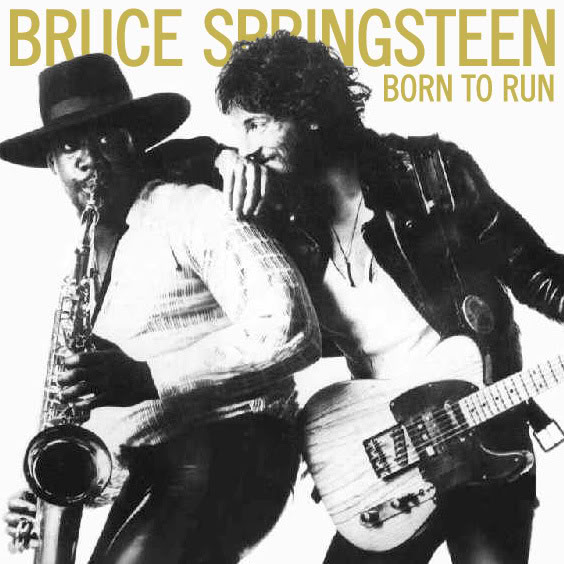
‘Is Elvis home?’ Springsteen asked. ‘No, Elvis isn’t home, he’s in Lake Tahoe’ came the answer from the unamused guards. As ‘The Boss’ was brusquely led away from the mansion and back towards the front gate, Springsteen attempted to wow them by telling them that he was himself a performer and had recently made the covers of Time and Newsweek. They were not impressed. Springsteen poured on the charm and begged to be let inside – but he was instead escorted promptly through the gate and out onto the sidewalk. Elvis died at Graceland the very next year. Ironically, if you look closely at the cover of Born to Run, Springsteen’s guitar strap proudly bears an Elvis fan club button.
Bruce Springsteen was seven when he first saw Elvis on The Ed Sullivan Show. It was The King’s third and final appearance on January 6, 1957. According to one reviewer: ‘On that Sunday night in 1957, Elvis smiled, smirked and played with the audience. Breaking from his usual attire, Presley came out wearing a bloused shirt and vest, with makeup painted around his eyes. That night Elvis sang hits like Don’t Be Cruel, Love Me Tender, and Hound Dog, shaking his hips and standing on his toes while girls screamed in the audience. And that guitar: it was a weapon and it was armor. This was the dream.’
Watching the show, Springsteen was hooked: ‘I couldn’t imagine anyone not wanting to be Elvis Presley’, he recalled. His mother eventually bought him a guitar and paid for private lessons, but young Brucey’s hands were too small. He didn’t like structured instruction so he put the guitar in the closet and started playing sports. Meantime, Elvis was on the way to stardom and legend.
Elvis purchased Graceland for his mom and dad on March 19, 1957 for the amount of $102,500. The 17,552 square foot mansion has a total of 23 rooms, including eight bedrooms and bathrooms. Located at 3764 Elvis Presley Boulevard, the 13.8-acre estate is located in the vast Whitehaven community about 9 miles from Downtown Memphis and less than four miles north of the Mississippi border.
During the years that Elvis lived at Graceland the front gate area was a gathering place for fans. After all, there was always the chance that he might drive through in one of his cars or on a motorcycle, or ride down on a golf cart or on horseback and have an impromptu autograph session. They could also watch him and his ‘Memphis Mafia’ friends ride their horses and golf carts around the grounds. Even when Elvis out of town, fans gathered at the gates and chatted up the security guards (some of whom were Elvis’ relatives) while meeting other fans from around the nation and the world at the same time. When Elvis was away, sometimes the guards would let fans onto the grounds for photos, sometimes even driving them up to the front of the house. There was always a sense of warmth, welcome and camaraderie. Many lifelong friendships between Elvis fans began at the Graceland gates.
However, it wasn’t all that uncommon for fans and curiosity-seekers to climb over the stone wall or wood fence on a dare or, more often, with the misguided mission to meet Elvis. The security staff not only routinely escorted uninvited guests off the grounds, they sometimes had to coax them down from the trees. Legend states that on one occasion Elvis caught a couple of mischievous young guys who had jumped the fence and were taking a swim. Elvis is said to have nonchalantly suggested that they be careful, then went back in the house. Once, a fan made his way into the house and was found sitting in the den waiting for Elvis, hoping to interest him in some songs he had written, but the meeting never happened. I imagine the songwriting intruder was busy being arrested. It certainly was a different world back then.
Anyone who’s attended a Bruce Springsteen concert knows that the Boss loves to share stories with his fans. His legendary 3-hour sets are littered with songs punctuated by long anecdotes, and there’s no story he loves telling more than the time he got booted from Elvis Presley’s front porch.

“Later on, I used to wonder what I would have said if I had knocked on the door and if Elvis had come to the door. Because it really wasn’t Elvis I was goin’ to see, but it was like he came along and whispered some dream in everybody’s ear and somehow we all dreamed it. And maybe that’s why we’re here tonight, I don’t know.’ Bruce continues,’ I remember later when a friend of mine called to tell me that he’d died. It was so hard to understand how somebody whose music came in and took away so many people’s loneliness and gave so many people a reason and a sense of all the possibilities of living could have in the end died so tragically. And I guess when you’re alone, you ain’t nothin’ but alone’. Presley was only forty-two years old when his life tragically ended. “They found him slumped up against the drain,” Bruce Springsteen would later sing of his fallen idol, “with a whole lot of trouble running through his veins; Bye-bye, Johnny;
Johnny, bye-bye; You didn’t have to die; you didn’t have to die.”

13 months later, on May 28, 1977, Springsteen and Van Zandt attended an Elvis Presley concert in Philadelphia. It was not one of Elvis’ better performances according to reviews and fan accounts, including Bruce’s own account, ”that wasn’t a very good night.” After that disastrous show, Bruce apparently went home and wrote ‘Fire’ to assuage his disappointment. Springsteen envisioned “Fire” as a song which could be recorded by Elvis, his idol. The song is a superb tribute to the great early sixties recordings Presley made, in particular Suspicion and His Latest Flame. Springsteen later stated ‘I sent Elvis a demo of it but he died August 16, 1977 before it arrived.’
After Elvis died Bruce gave the demo to rockabilly singer Robert Gordon, who cut it in New York in December 1977 with Link Wray on lead guitar and Bruce himself playing (un-credited-at-the-time) piano. Later, the Pointer Sisters got a hold of the track and recorded their version which made it to #2 on the pop charts in 1979. Don’t remember the song? Do these lyrics ring a bell? ‘I’m ridin’ in your car. You turn on the radio. You’re pullin’ me close. I just say no. I say I don’t like it. But you know I’m a liar. ‘Cause when we kiss Ooooh, fire.” My wife might disagree, but Elvis Presley would have killed with that song.

Music, Pop Culture

Buddy Holly’s Glasses: Lost and Found.

Buddy HollyOriginal publish date:  February 17, 2017

Leap years generally go unnoticed by everyone except those who were born on one. Leap years are recognized every four years in the month of February by tacking an extra day onto the end. To most, leap years are just another event in a month of neglected holidays. After all, when is the last day you celebrated Ground hog day? Or President’s day? To make matters worse, leap years land on Presidential election years which tend to shrink the calendar as it is. Nobody ever remembers leap years. However, one event from a leap year 37 years ago (this week) struck a chord from beyond Rock ‘n Roll eternity.
On February 29, 1980, a pair of glasses were found in a filing cabinet of the Cerro Gordo County Sheriff’s office in Mason City, Iowa. The glasses had a peculiar government issued appearance that looked oddly out of place for the Disco Era discovery. Today that style could be spotted in every office, college campus or corner coffee shop. The glasses were found in a manila envelope marked simply, “Charles Hardin Holley received April 7, 1959”. Along with the glasses, four dice, a cigarette lighter and a watch belonging to one Jiles Perry Richardson were also in the envelope. The lenses of the glasses were missing but the watch still ran pretty well.
buddyhollyThe relics had been resting in sweet repose for nearly twenty-one years. They had been found at the scene of the February 3, 1959 plane crash that took the life of pop stars Richie Valens, the Big Bopper J.P. Richardson, Buddy Holly and pilot Roger Peterson. The charter plane’s wreckage was strewn across nearly 300 yards of snow-covered cornfields. The death certificate issued by the Cerro Gordo County Coroner noted the clothing Holly was wearing, the presence of a leather suitcase near his body and the following personal effects: Cash $193.00 less $11.65 coroner’s fees – $181.35, 2 Cuff links: silver 1/2 in. balls having jeweled band, Top portion of ball point pen. Notably missing from the list were Holly’s signature eyeglasses. Officially, the crash was caused by a combination of inclement weather and pilot error. To fans, it would forever be remembered as the day the music died.
The wristwatch and cigarette lighter belonged to Richardson and the horn rimmed glasses belonged to Buddy Holly. It is widely believed that the envelope had remained undiscovered because nobody recognized the innocuous plain sounding name Charles Hardin Holley written on the outside. The envelope was found while some records were being moved. Officials speculated that the leftover items had been found by a farmer two months later after the snow melted. The coroner’s office collected (and then misplaced) them in the process of moving to a new county courthouse.
The Big Bopper’s watch was inscribed with a legend for a 1957 disc-a-thon, an important milestone in his life. In May 1957, at the Jefferson Theatre in Beaumont Texas broadcasting from radio station KTRM, the Big Bopper beat the record for continuous broadcasting that had been set by a DJ in El Paso just months before. The disc-a-thon was a popular radio station gimmick where DJ’s would stay on air continuously playing records to the point of exhaustion. Kids would rush to the station, crowding the studio and parking lots, to see how long their local DJ could last.
Richardson had been awake for a little over 3 days before he began to show signs of severe sleep deprivation. Several breaks were taken to refresh JP. Cold Towels, Hot Coffee mixed with adrenaline were used to keep him awake. The record was broken at 122 hours and 8 minutes (a little over 5 days) during which the Big Bopper stayed on air and awake the entire time. At the tail end of the sleepless marathon, Richardson began to hallucinate. Exhausted, he was carried from the studio in an ambulance. Later, he recalled one hallucination that foretold his own death. Afterwards, he told a friend, “the other side wasn’t that bad.”
Buddy’s glasses had been thrown clear of the plane wreckage and buried in the snow. Those glasses were special, they were Buddy Holly’s trademark. The focal point of a carefully crafted look. They became the single item most remembered by his fans. However, they weren’t his first choice. The Texas-born singer had 20/800 vision and couldn’t read the top line of the eye chart as a boy. At first he performed spec-less, thinking glasses would hurt his image. According to Texas Monthly, that changed after an early show where he dropped his guitar pick and had to crawl around on stage searching for it. At first, Holly asked his Lubbock, Texas, optometrist, Dr. J. Davis Armistead to be fitted with contact lenses. Buddy was a patient of his since junior high after being referred by the school nurse, and remained his patient until his untimely death at the age of 22.
It was early 1956, and Holly was going to an audition in Tennessee. The contact lenses back then were thick and bulky and had to be floated over the cornea and sclera with saline solution, which would cloud up and needed to be frequently replaced. Holly was unable to wear his contacts for more than an hour or two at a time, so Buddy watched and waited offstage until just before his time to go on, he then ran to the bathroom and inserted the contacts. The judges called an unexpected break and by the time they returned, Buddy couldn’t see the audience. Ditching the contacts, he went home and switched back to a understated plastic and metal framed pair of eyeglasses, chosen precisely to blend in rather than stand out.
hollyBefore his June 2014 death, Dr. Armistead recalled. “Buddy was trying to wear the least conspicuous frames he could find. Personally, I was not happy with the frame styles we had been using. I did not think they contributed anything to a distinct personality that a performer needs.” Armistead was watching Phil Silvers play Sergeant Bilko on television one night when he realized what skillful use Silvers made of the black-rimmed glasses to define Bilko’s character. He thought that a heavier-rimmed pair would be perfect for Holly’s narrow face. While on vacation in Mexico City, Armistead found a pair of heavy plastic frames that he felt were perfect for Buddy. Made by a Mexican company named Faiosa, the frames featured angular, slightly up swept top corners that looked like tail fins on a 57 Chevy. He brought back two pairs, one black and one demi-amber, and fitted them with Holly’s prescription lenses. Holly chose the black pair. “Those heavy black frames achieved exactly what we wanted—they became a distinct part of him.”
Holly was rough on his glasses, breaking several pairs. He became a regular visitor to Armistead’s office in search of a new pair. “He always had a gang with him when he came by the clinic,” Armistead told a reporter in 2008. “I always knew when he was out front because I could hear them beating the time (to a song) on the corner table in the waiting room.” If Armistead could not get the Faiosa frames, he supplied Holly with similar Sidewinder or Freeway frames, made by an American company called Shuron. Much to the delight of bespectacled nerds everywhere, Holly managed to make wearing thick-framed glasses cool.
When Holly and his wife, the former María Elena Santiago, moved to New York in the summer of 1958, Buddy started buying his glasses from Courmettes and Gaul, a Manhattan optometry office that was able to obtain the Mexican frames for him. Those were the glasses that he was wearing when he was killed on that snowy February night in 1959.
When that envelope was discovered, Holly’s parents claimed the glasses, as did his widow, and on March 20, 1981, a judge awarded the eyeglasses to María Elena in the same Mason City courthouse where they were discovered. According to the book “The Day the Music Died…” by Larry Lehmer, the Cerro Gordo Sheriff’s office ignored a Holly fanatic from Delaware who offered his entire life savings ($502.37) for the glasses. Maria kept them until October 1998, when she sold them to Civic Lubbock, the nonprofit cultural organization that created the Buddy Holly Center. The price was $80,000. Today the glasses, visibly scarred from the plane crash, are on exhibit at the center, in a case near Holly’s Fender Strato-caster guitar. Other pieces in the collection include Buddy’s stage clothing, letters, photos, and a book containing handwritten song lyrics.
f264ad59003fe09c7db0320aa765fdb6

Buddy Holly’s thick black frames were rock ’n roll’s first great fashion statement and they became almost as iconic and influential as his music itself. Until Buddy came along, people wearing eyeglasses suffered a certain stigma in the fifties. Buddy Holly paved the way for Roy Orbison to perform wearing distinctive eye-wear (the very same style as Buddy’s). Another notable influence was on Paul McCartney and John Lennon. Both were huge fans of Holly, claiming it was him who inspired them to play, sing and write their own songs. They called their band The Beatles as a nod to Holly’s band The Crickets. In a 1986 interview, McCartney remarked that before Buddy rock stars couldn’t wear glasses on stage, and that seeing him perform in his thick black frames made them want to start a band too. John Lennon was extremely nearsighted, and surely Buddy had influenced John’s signature round spectacles. One thing is certain: Buddy Holly’s black frames spoke to a generation and that leap year discovery in a dusty filing cabinet 37 years ago this week gave the world one last look at a rock ‘n roll legend thru a storied pair of glasses.