Abe Lincoln, Museums, Presidents, Travel

A Gift from a Friend. Abraham Lincoln, Art Sieving, and the Long Nine Museum.

Original publish date October 3, 2024. https://weeklyview.net/2024/10/03/a-gift-from-a-friend/
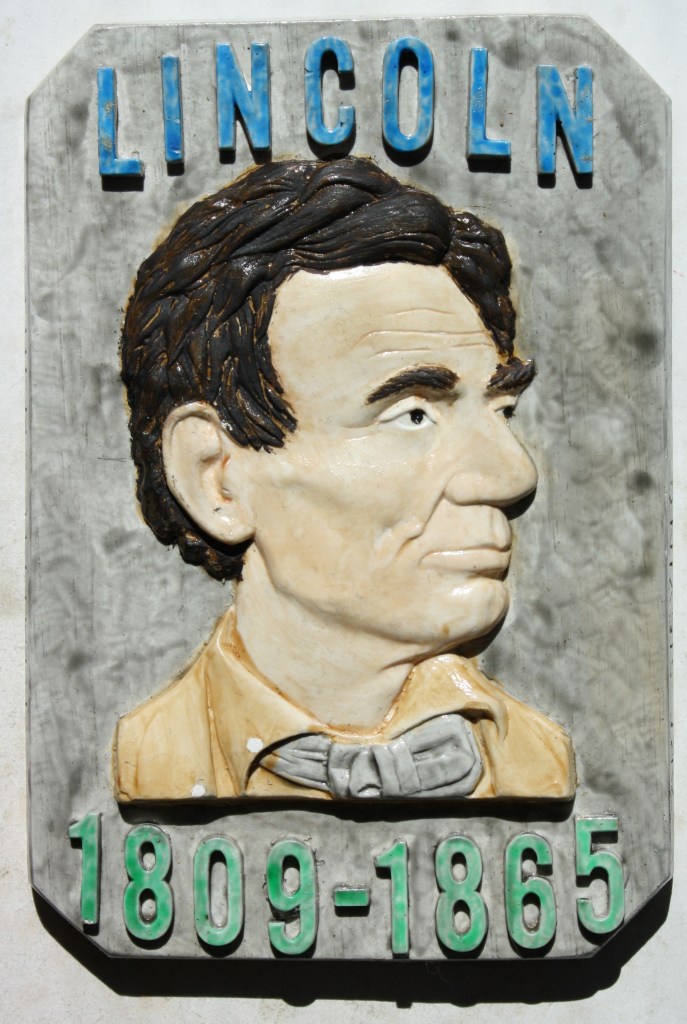
Art Sieving’s Long Nine Museum Plaque.

Rhonda and I strolled through Irvington last week to reconnect with some old friends. We visited Ethel Winslow, my long-suffering editor at the Weekly View, and then stopped in to see Jan and Michelle at the Magick Candle. From there we went down to see Dale Harkins at the Irving and then popped into Hampton Designs to check in with Adam. After that, we tried (in vain) to track down Dawn Briggs for a stop-and-chat, then traveled over to see Randy and Terri Patee for a 3-hour porch talk over a fine cigar. Why do I retrace our visit with you? Simply because I hope that anyone reading this article either is, or will, make a similar stroll through the Irvington neighborhood this Fall season and visit their old haunts as well.
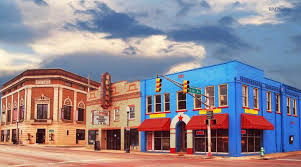
Hampton Designs & Irving Theatre Irvington Indianapolis.

I am blessed to know these folks and every one of them has been kind, giving, and thoughtful to us over the years, particularly lately as Rhonda has faced some difficult health challenges. The gals at the Magick Candle have gifted me treasures over the years connected to the people and places they know I love (Disney’s Haunted Mansion and Abraham Lincoln come to mind), the Patees have given me relics from the pages of history, and yesterday, Adam stopped me in my tracks by stating, “Wait, Carter found something for you.” Adam fumbled around gracefully behind the counter before finding the object of his search. As he handed it to me, I felt certain that he believed it to be just another Lincoln item, but I knew immediately what it was.
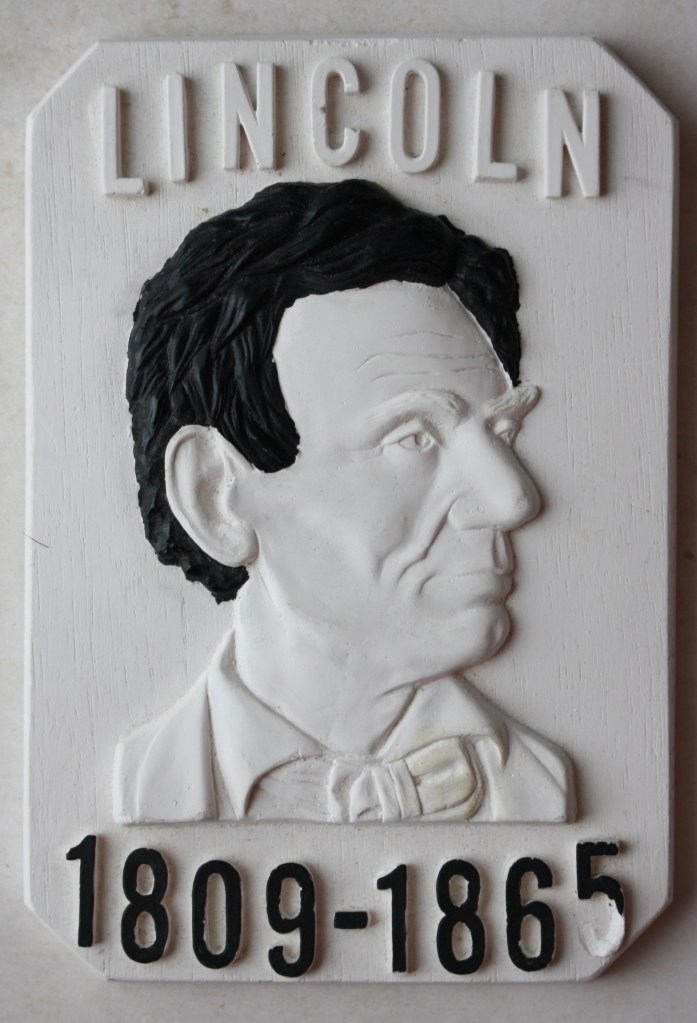
Lincoln plaque in its barest form.

The object is a ceramic plaque about the size of a paperback novel picturing a young, beardless Abraham Lincoln with his birth and death dates inset in raised / relief lettering on the front. It is painted in bright Victorian Era colors that teeter on the edge of being gaudy but are always irresistibly attractive. Rhonda was standing by my side (as always) and when I showed it to her she oohed and aahed at it simply because she understands what such things mean to me. When I told her that it had a secret surprise attached to it, she looked closer at it. Knowing what was in store, I turned the plaque sideways in my hand to reveal the artist’s name, Art Sieving, on the right edge and then turned it over to the left edge to show the town name of Athens, Illinois. Since she has listened patiently to my historical ramblings for 35 years now, she wisely responded, “Oh, the Long Nine Museum.” Ding, ding, ding, we have a winner!
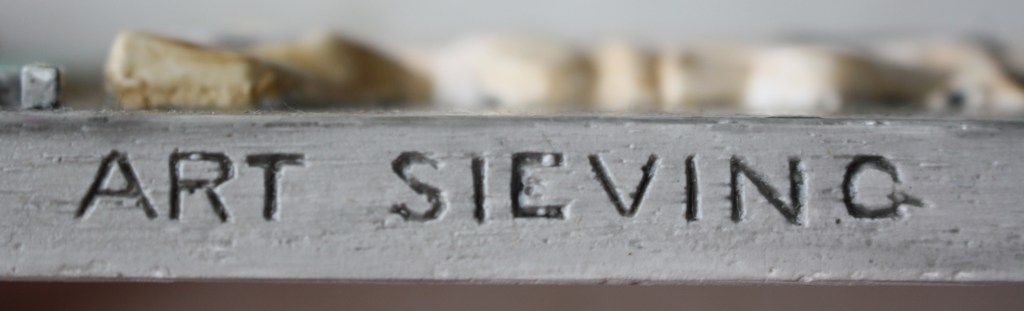
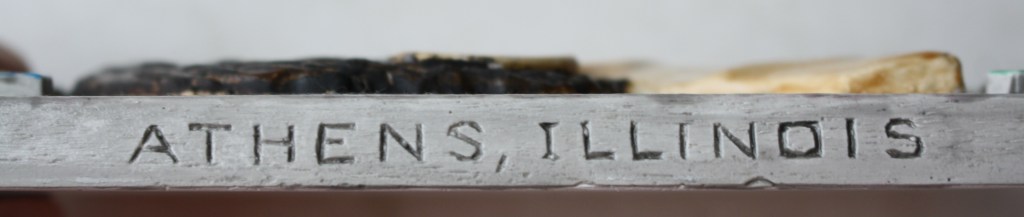
Carter and Adam had no idea, since, unlike me, they have lives outside of history books and museums, but with this gift, they had hit me in my sweet spot. I knew what it was because I already have a version, but mine, while still interesting to me, is a bland matte-finish version that pales in comparison to this one. These plaques were created by Arthur George Sieving (1902-1974) from Springfield, Ill. He was a wood carver, magician, sculptor, and ventriloquist who created many fine architectural carvings, clocks, and ventriloquist figures. At the time of his death, Art was working on the diorama displays at the Long Nine Museum in Athens. He is buried in Springfield’s Oak Ridge Cemetery final resting place of Abraham Lincoln. I was introduced, unknowingly, to Sieving’s work when, many years ago, I purchased a stunning metallic gold plaque depicting the Abraham Lincoln Tomb. About the size of a college diploma, like Carter’s plaque, it depicts the Tomb in a raised/relief style so realistically that it casts its own shadow depending on the lighting.
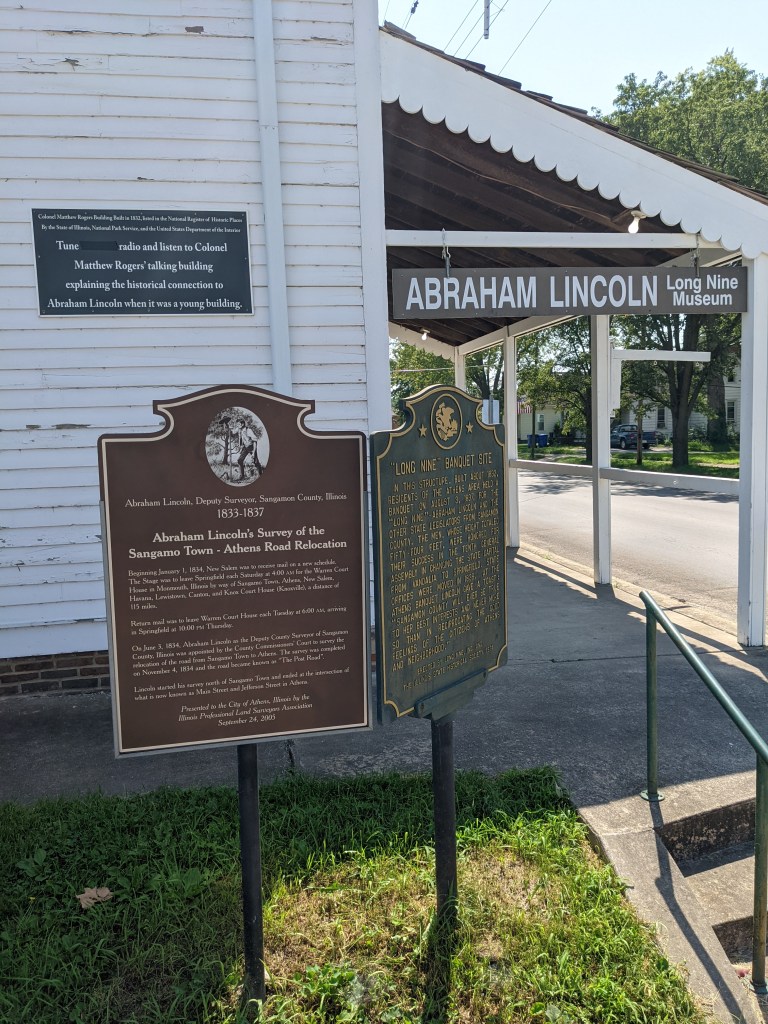
The Long Nine Museum Athens, Illinois.

I had no idea who created the piece until I traveled to Athens (Pronounced Ay-thens) just a stone’s throw north of Springfield. I ventured there to meet with Jim Siberell, curator of the Long Nine Museum, who travels from his home in Portsmouth, Ohio during the summertime months to keep the museum open. Jim and I share a mentor in Dr. Wayne C. “Doc” Temple, the subject of my upcoming biography. As Mr. Siberell toured me through the museum, I spotted the exact plaque on display there. Of course, I asked for the history and Jim explained the artist’s connection to the museum. For those of you unaware, the Long Nine building is an important waymark of Illinois history. It was in this building, on the second floor, where Abraham Lincoln and six other state legislators (two of the members did not attend) decided to move the Illinois state capitol from Vandalia (near St. Louis) to the more centralized location of Springfield.

In 1837, a dinner party was held in the banquet room on the second floor to honor those legislators who were effective in passing a bill to relocate the capital. They earned the sobriquet of “The Long Nine” because together their height totaled 54 feet, each man being over 6′ tall or taller. Among the attendees was Abraham Lincoln, who at age twenty-seven was the youngest of the group. Lincoln gave the evening’s toast by saying, “Sangamon County will ever be true to her best interest and never more so than in reciprocating the good feeling of the citizens of Athens and neighborhood.” What this Hoosier finds most interesting is that when the delegates carved out the boundaries of Sangamon County, the home of the new state capitol, they left Athens out. Athens became a part of Menard County as did their neighbor, Lincoln’s New Salem.
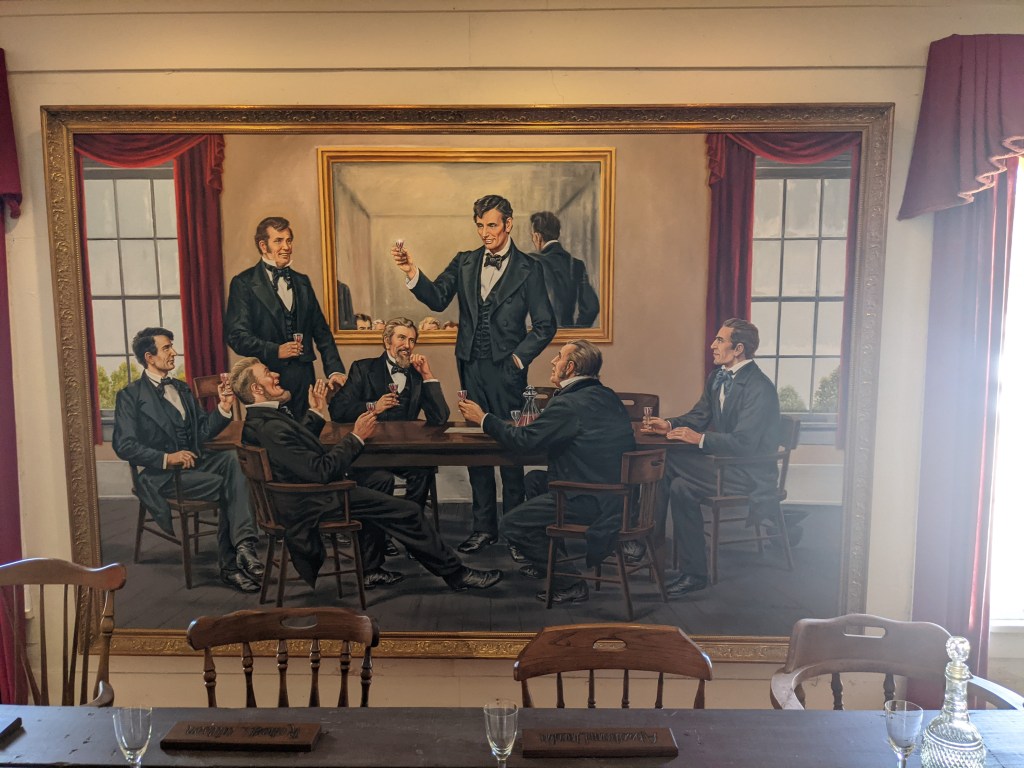
Dayton Ohio Artist Lloyd Ostendorf’s massive Long Nine Banquet painting in the museum.

Mr. Siberell toured me through the building and explained how Art Seiving had created the dioramas in the museum that recounted the stories of the men of The Long Nine in hand-carved wooden miniature displays. Each diorama’s characters were created by Seiving and the backgrounds were painted by artist, Lloyd Ostendorf. Siberell escorted me up the original stairway to the second-floor banquet room which features a stunning, massive oil painting by the late artist Lloyd Ostendorf showing Lincoln in formal dress toasting his colleagues. The mural covers an entire wall and is set against a table arranged much the same as it would have been on that fateful night. The visitor stands upon the original flooring of the banquet room where Lincoln gave his famous toast. The history room downstairs is a researcher’s dream. It contains many copies of Lincoln’s handwritten letters, documents from the history and restoration of the building, newspapers from the era, and historic photos. A trip to the basement reveals the building’s original fireplace, an arrray of period artifacts, and a scale model of Lincoln’s Tomb so big that it required the construction of a special pit to accommodate its massive size.
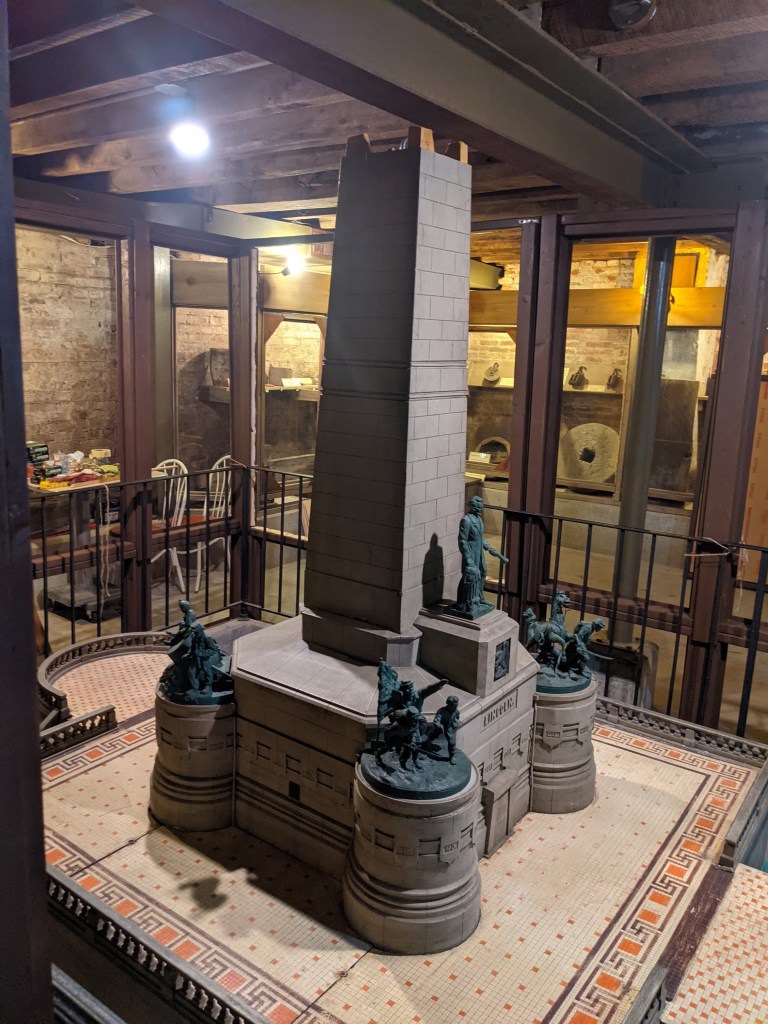
Lincoln Tomb model at Long Nine Museum.

The March 23, 1973, Jacksonville (Illinois) Journal Courier reported. “Seiving has been working hard since January making the “Lincoln Head” plaques in his basement. He used a rubber mold taken from a carving…he pours into it the powdered molding material and fashions a Lincoln head of great exactness and beauty. During the past weeks, he has made enough of them to fill every available space in his basement. When he makes a few hundred more they will be delivered to a central point for use in Athens; he will then start on larger statues. The plaques being furnished are in white plaster material, but will be finished into a walnut appearance with a high polish and most attractive “feel” and “look”.
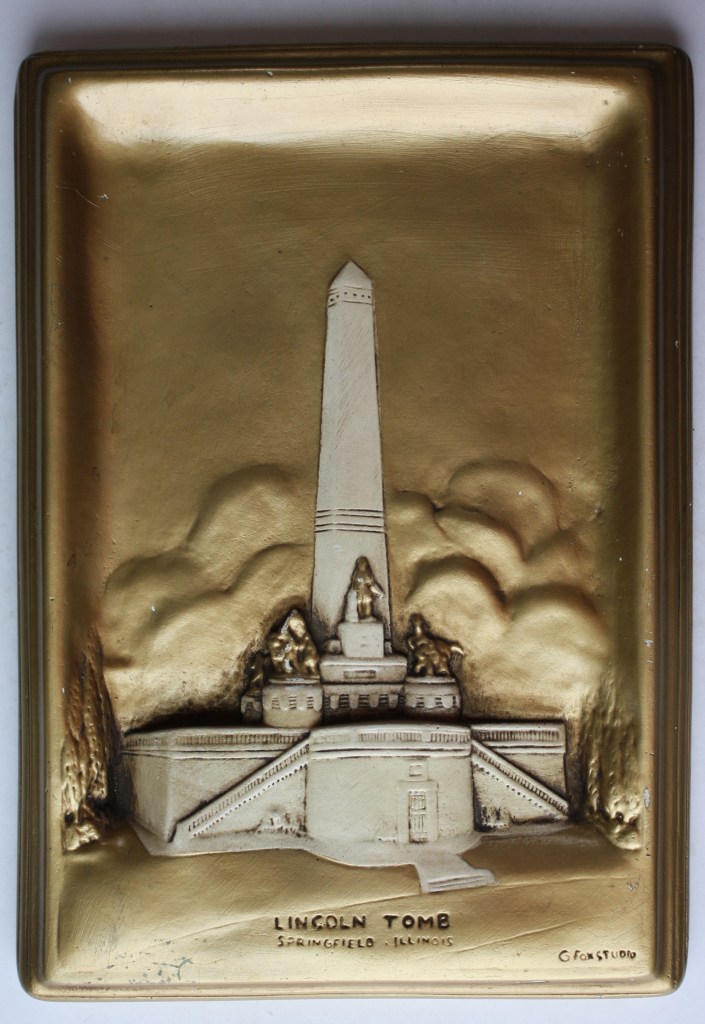
Art Sieving’s Lincoln Tomb bas relief plaque.

The article continues, “The classic dioramas made by Art Seiving will present all of those documented events which presented Lincoln in Athens, including hand-carved wooden figures, utensils, tools, buildings, and animals carved from wood.” One of Art’s carvings was titled, “Lincoln goes to school in Indiana”…It takes two people (himself and his wife) three nights to cut out 800 little paper leaves, and it’s no short job, either, to glue them to the branches, one by one. Others have taken longer. Mr. Seiving was five or six days just putting in 3,000 “tufts” of grass in his last completed scene. The grass is frayed rope strands, cut and dried and then glued down…And while you’d swear that the miniature pots and pans were made of metal, in actuality, most are simply wrapping paper glued to metal rings.” Sieving stated that it took him five to seven days to carve each figure, and one diorama alone featured 11 figures. His preferred medium was walnut with augmentations of birch wood.
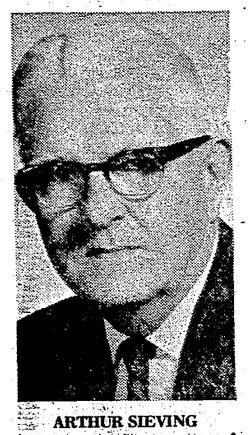
Seiving is described as an “internationally known magician, sculptor and ventriloquist” whose “dummy” partner was known as “Harry O’Shea.” Of course, Art carved all of the ventriloquist dummies used in his acts himself. Art’s magic act was called the “Art Seiving and his Art of Deceiving.” Aside from the Long Nine Museum, he is best known for his dioramas at the Illinois State Museum, ‘Model of New Salem Village’ and wood sculptures including the ‘Egyptian Motif Clock’. Seiving’s George Washington carving is in the Smithsonian Institution’s collection.
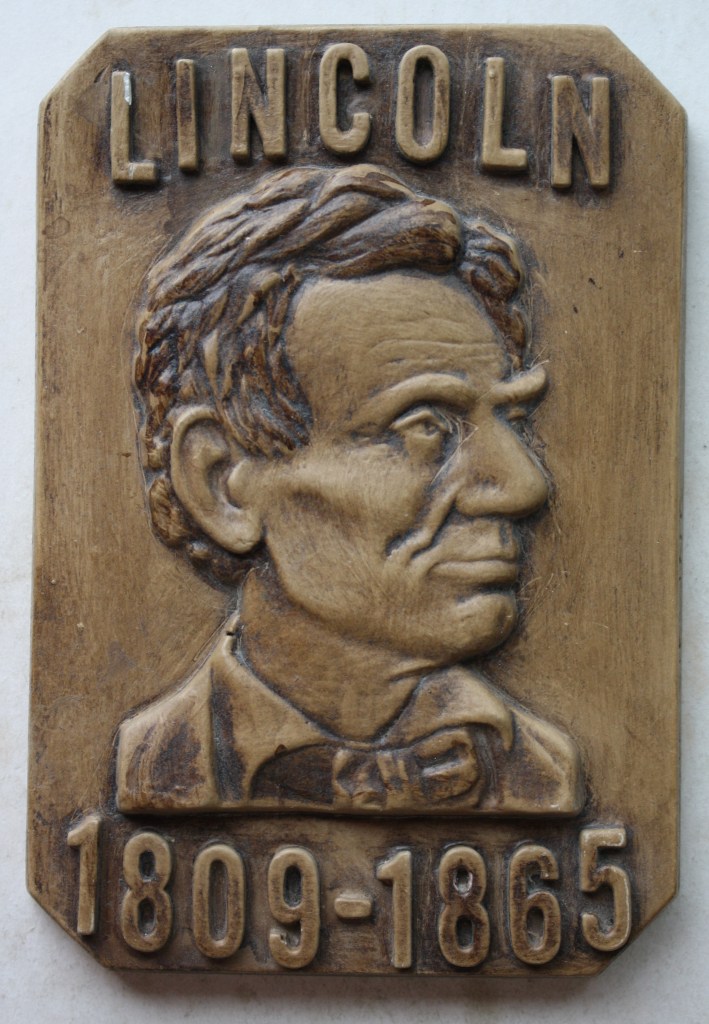
Sieving’s Lincoln plaque in walnut finish.

Art’s Lincoln plaques are by no means rare but cannot be classified as common in the “collectorsphere”. I believe the Long Nine Museum still has a few for sale if memory serves, and one would set you back about the cost of a Starbucks coffee nowadays. To me, the value is not a monetary one, but rather the story the item tells. The version that Carter discovered (and so kindly gifted to me) is signed “Love, Laurie” on the back, making it all the more special to me. I tend to love these little travel souvenirs from the 1960-70s. I’m a space race Bicentennial kid who enjoys discovering these little treasures. They represent a vacation, a trip, a moment in someone’s life. Usually a kid, they are never confined to age, race, or gender. I appreciate that, in this age where everything handmade seems to come from China, most of these old travel souvenirs originate from where they were being sold. At that moment, they were the most important thing in that person’s life. Hand-picked with a smile and a “wow” to be taken home and enjoyed long after the trip concluded. A physical manifestation of a cherished memory. So thank you “Laurie” whomever or wherever you are for saving this little treasure for a history nerd like me. And most importantly, thank you Carter for thinking of me.
Abe Lincoln, Museums

The big reveal of Springfield, Illinois Abraham Lincoln scholar Wayne C. “Doc” Temple’s collection of Native American Indian Artifacts at the Richwood, Ohio History Museum.

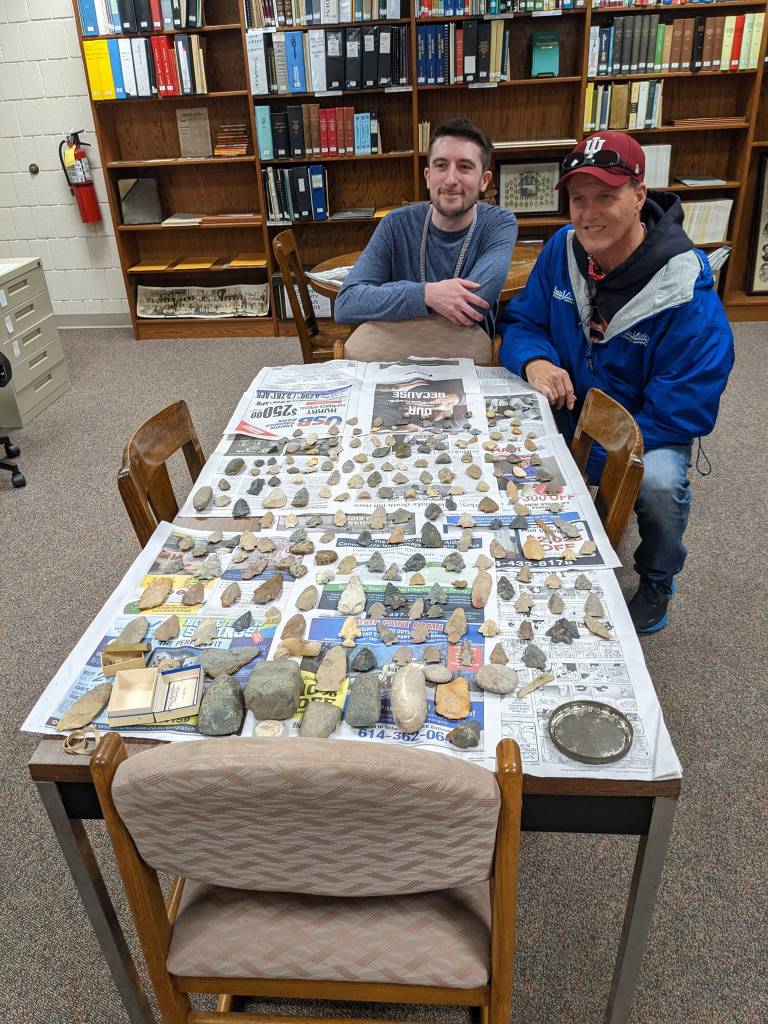
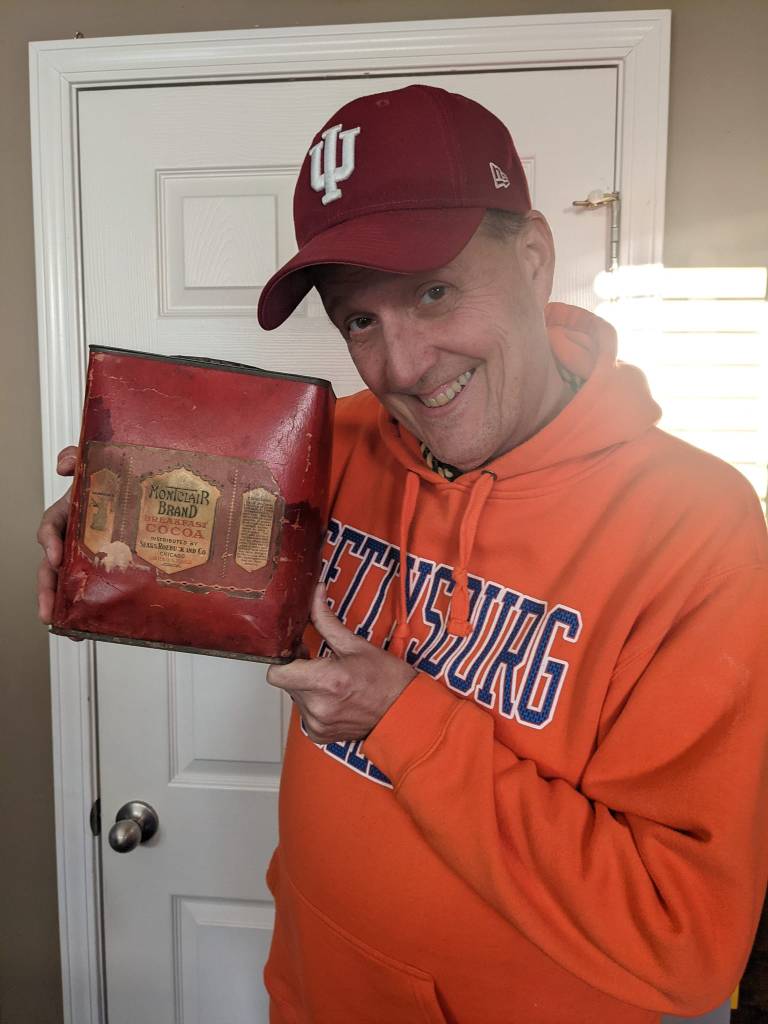
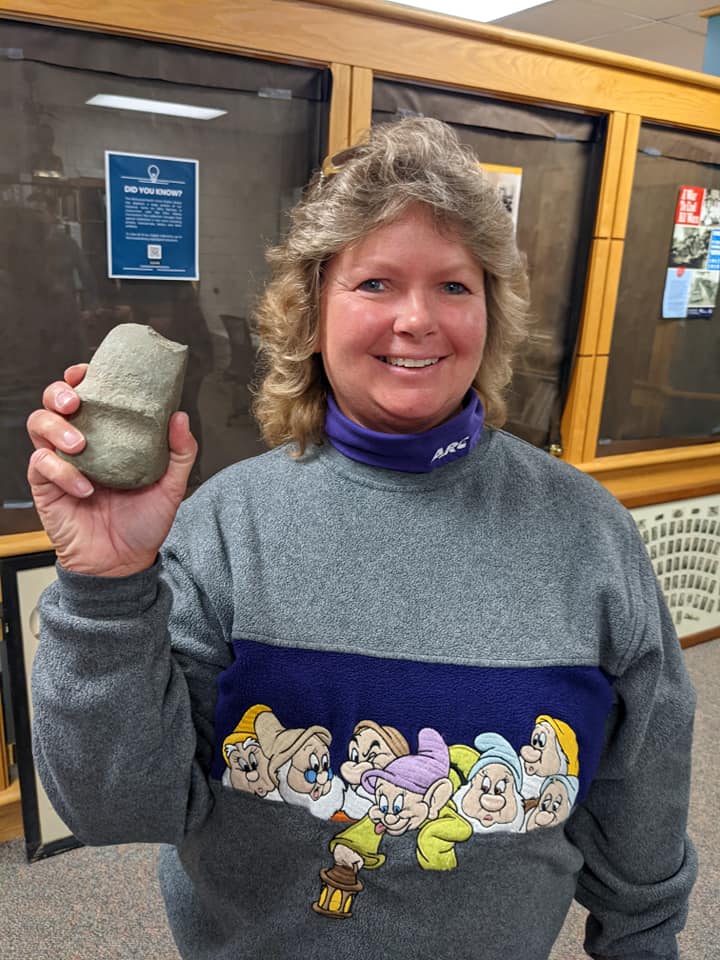
On Thursday, March 9, 2023, I visited the Richwood, Ohio History museum and library with my wife Rhonda S. Hunter. We dropped off the Temple family collection of Native American Indian artifacts collected over the course of at least two decades from @1900 past World War I. The compilation, contained in an old can of Cocoa, had not seen the light of day for nearly a century. Doc, Springfield Illinois’ premiere Abraham Lincoln scholar for over 60 years, also wrote the definitive book on the subject in 1966, Indian Villages of the Illinois Country: Historic Tribes, and several scholarly articles and papers on the subject for the University of Illinois. The artifacts were dug in the farm fields in and around Richwood Ohio so it seemed fitting that Doc’s collection go back to their place of origin. We were as happy to deliver them as the museum officials were to receive them.

Doc’s arrowhead collection had been stored in this cocoa box for a century.
Rhonda Hunter with the piece from the collection that Doc recalled specifically. I believe it is a hammer or tomahawk head.
Richwood Museum staffer Dustin Lowe and Alana E. Hunter with Doc’s collection.
Abe Lincoln, Ghosts, Indianapolis, Irvington Ghost Tours, Museums, Politics, Presidents, Weekly Column

Abraham Lincoln & James Whitcomb Riley on Halloween!

Original publish date:  October 29 2020

In 1988, a survey was taken in conjunction with the “Hoosier Celebration” during Governor Robert Orr’s administration ranking the best known Hoosiers. Abraham Lincoln was number one and James Whitcomb Riley was number two followed (in descending order) by Benjamin and William Henry Harrison and explorers Lewis and Clark, who tied with former Governor Otis Bowen. And, because everybody loves a list, others making the cut included Larry Bird, John Cougar Mellencamp, Red Skelton, Florence Henderson, Jane Pauley, Michael Jackson and Bobby Knight. Don’t remember the “Hoosier Celebration”? Neither do I.

Screenshot (155)
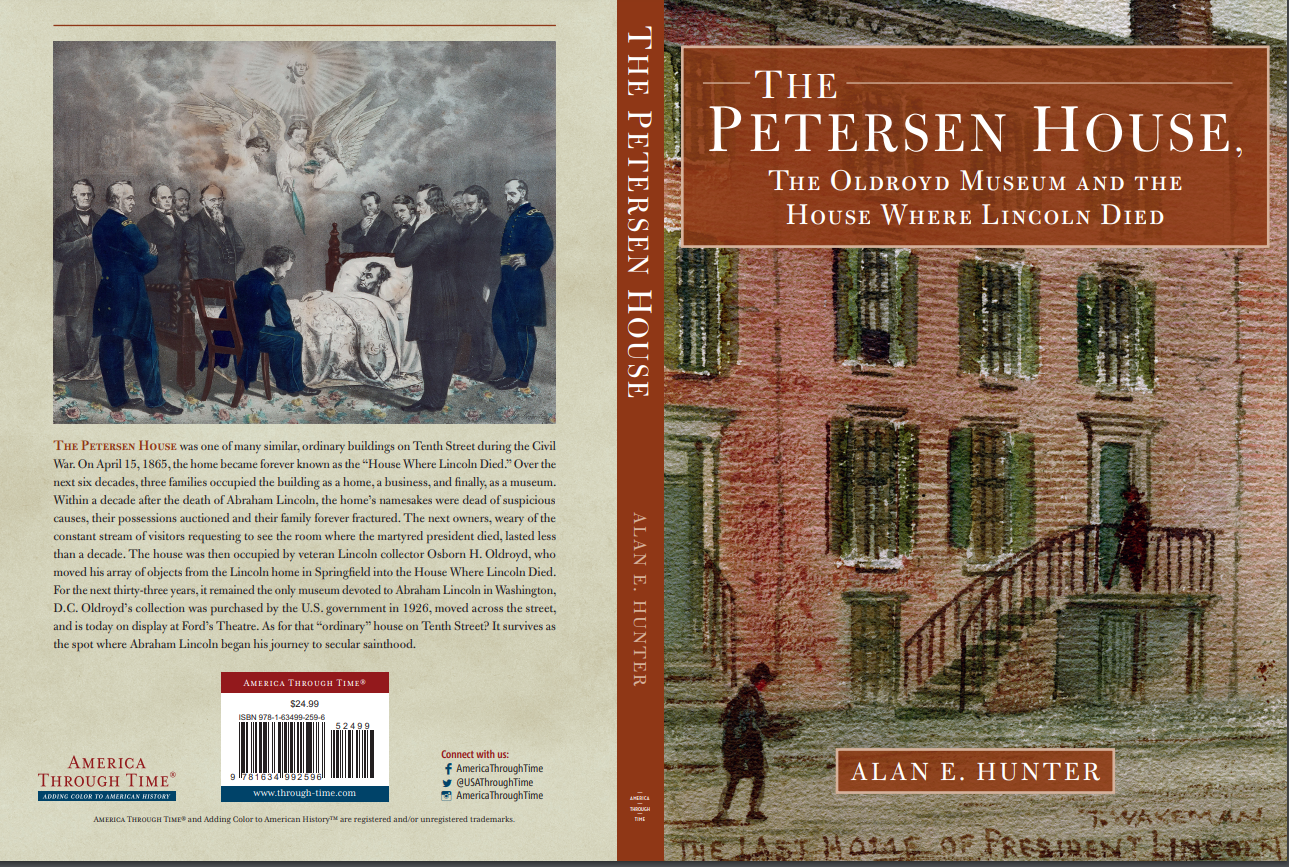
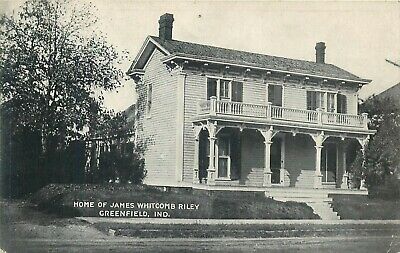
This Saturday (Yay! On Halloween!) October 31st, I will be visiting the James Whitcomb Riley boyhood home in Greenfield to talk about both Lincoln and Riley. That day will be the official book reveal for my newest book, “The Petersen House, The Oldroyd Museum and The House Where Lincoln Died”. Thanks to the courtesy of former Indiana National Road Board member and Director of the Riley Boyhood Home and Museum Stacey Poe, you are invited to come out at 2:00 pm and experience the Riley home and their new “Lizabuth Ann’s Kitchen” facility located at 250 W. Main Street on the historic National Road. I will be bringing some Lincoln props, signing books, sharing stories about the Washington DC building Lincoln died in (and it’s Indiana connection) and, in the “spirit” of the season, spinning a few ghost stories too.

z jws-l400Although Lincoln and Riley died a half-century apart, the men had much in common. The two were considered the state’s most famous Hoosiers (that is until John Dillinger died in 1934) and their names were often linked in speeches, newspaper articles, books and periodicals in the first fifty years of the 20th century. One of my favorite quotes found while searching the virtual stacks of old newspapers comes from the July 20, 1941 Manhattan Kansas Morning Chronicle: “If you want to succeed in life, you might run a better chance if you live in a house with green shutters. Abraham Lincoln, Mark Twain and James Whitcomb Riley all lived in such houses.” Lincoln and Riley epitomized everything that was good about being a Hoosier, right down to the color of their green window shutters.

z jw liz download

Lizabuth Ann’s Kitchen

The comparison was not unfounded. Both men were born in a log cabin. Both came from humble origins. Both were unevenly educated and both men never stopped learning. Both studied law-Lincoln with borrowed law books, Riley doodling poetry in the margins of his father’s law books. Both men were poets and both were considered among the greatest speakers of their generation. And both men had problematic relationships with women. Lincoln once said that he could “never be satisfied with anyone who would be blockhead enough to have me” and Riley famously said “the highest compliment I could pay to a woman is to not marry her.”

z 13964410_1441413422


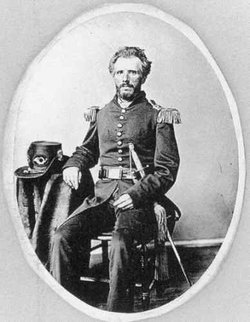
Reuben Alexander Riley (1819-1893)

For the poet, his admiration began with his father, Reuben Riley. The senior Riley was a state legislator and among the first central Indiana politicians to embrace the railsplitter as a national figure and presidential candidate. Riley was considered by many to be the best political orator of his day. He traveled the Hoosier state stumping for Lincoln in 1860 and continued his support until the day that Lincoln died. Because of this young J.W. Riley could not remember a time when he did not admire Lincoln.
When the Lincoln funeral train came through Indiana on April 30, 1865, the official “Travel Log” notes that it arrived in Greenfield at 5:48 a.m., Philadelphia at 5:57 a.m., Cumberland at 6:30 a.m., the Engine House (identified as “Thorne” in Irvington) at 6:45 a.m. before finally arriving in Indianapolis at 7:00 a.m. In Greenfield, the depot was choked with people wishing to gaze upon the face of the departed leader one last time. The train was not officially scheduled to stop in Greenfield, but the mood among the citizens was that perhaps the engineer might be persuaded to stop when he witnessed the tremendous outpouring of trackside emotion at the Greenfield depot.

Lincoln train
The local newspaper described “a knot of three boys, hands in pockets chattering back and forth with each other while pacing up and down the railroad tracks. Two older fellows were standing together, each arm around the other, probably soldiers remembering what it means to be a comrade.” The depot porch was filled to overflowing with women in their long dresses, old soldiers in their Union uniforms and a sea of men dressed entirely in black. The telegraph operator in Charlottesville wired that the train had just passed and was heading towards the neighboring town. A sentinel was perched atop the station to alert the citizens below of the train’s approach.
In a few moments, a cloud of silver phosphorescent smoke appeared above the tree tops along the route of today’s Pennsy trail. “Here it Comes” was the cry from above and immediately the crowd below hushed and gazed eastward expectantly. For several moments, the only sound that could be heard on the platform was the muffled weeping of the gathered mourners. As the train slowly approached, Captain Reuben Riley read aloud excerpts from Lincoln’s second Inaugural address at the close of which he sat down and wept uncontrollably. The train paused briefly at the station and the engineer removed his cap in respect to reverent gathering. Fortuitously, Reverend Manners stepped from the crowd and led the group in a prayer that began, “Thank God for the life of Abraham Lincoln.” The people now openly wept as the train slowly departed westward towards Indianapolis. It is likely that 16-year-old James Whitcomb Riley was present that day.

Alan Hunter 3 col x 3

Riley wrote two poems dedicated to Abraham Lincoln. in a letter to Edward W. Bok dated October 23, 1890, Riley said this of the sixteenth President; “I think of what a child Lincoln must have been-and the same child-heart at home within his breast when death came by.” Along with all the shared common traits mentioned above, Lincoln and Riley were, and still remain, perhaps foremost, the idol of children everywhere.
Three days after Riley died on July 22, 1916, the Morning Call newspaper in Allentown, Pennsylvania eulogized the poet by saying: “The country has produced poets of more creative power and commanding genius, but none- not even Longfellow, beloved as he was- ever came quite so close to the heart of the mass of the people as the Hoosier Poet, James Whitcomb Riley, who died at Indianapolis on Sunday. He was truly from and of the people as was Lincoln, and in their way, his personality and career are almost as interesting and picturesque as those of the immortal emancipator.”
Elbert Hubbard, founder of the Roycrofters Arts & Crafts community in Aurora, New York, said “Who taught Abraham Lincoln and James Whitcomb Riley how to throw the lariat of their imagination over us, rope us hand and foot and put their brand upon us? God educated them. Yes, that is what I mean, and that is why the American people love them.” Hubbard was a contemporary of Riley’s who, along with his wife, died when the Germans sunk the RMS Lusitania leading to our entry into World War I a year before Riley passed.
However, in my view, what links both men in perpetuity is a shared language. Both men spoke fluent Hoosier. All his life, Lincoln and Riley tended to swallow the ‘g’ sound on words ending with ‘ing’, so a Walking Talking Traveling man become Walkin’, Talken’, Travelin’, man. Lincoln said “warsh” for wash, “poosh” for push, “kin” for can, “airth” for earth, “heered” for for heard, “sot” for sat, “thar” for there, “oral” for oil, “hunnert” for hundred, “feesh” for fish and “Mr. Cheerman” for Mr. Chairman. Likewise, Riley practiced the Hoosier dialect in his printed work, saying “punkin'” for pumpkin, “skwarsh” for squash, “iffin'” for if then and “tarlet” for toilet. Both men peppered their speech with distinctive words like yonder and for schoolin’ both “larned” their lessons and got their “eddication” in fits and spurts.
Both men’s lives came to an end in private houses, not in hospitals. Riley in the Nickum House in Indianapolis’ Lockerbie Square and Lincoln in the Petersen House in Washington, D.C. This Saturday, I will share my favorite ghost story about J.W. Riley (in the Lockerbie house) and while I have no ghost stories to share about The House Where Lincoln Died, I will detail a connection between the two. I will introduce you to the three families who resided there, the last of whom, Osborn Oldroyd, displayed his Lincoln collection of relics and objects for over thirty years before selling it to the United States Government in 1926. That collection is now on display in the basement of Ford’s Theatre.
Riley Lincoln poemOldroyd, a thrice-wounded Civil War veteran, collector, curator and author, is perhaps the father of the house museum in America. One of Oldroyd’s books, a compilation of poems entitled, “The Poets’ Lincoln— Tributes In Verse To The Martyred President”, was published in 1915. James Whitcomb Riley’s poem, A Peaceful Life with the name “Lincoln” in parenthesis as a sub-title can be found there on page 31. In Oldroyd’s version, the first line differs from Riley’s original version. Riley’s handwritten original (found today in the archives of the Lilly Library on the Bloomington campus of Indiana University) begins: “Peaceful Life:-toil, duty, rest-“. Oldroyd’s book version begins; “A peaceful life —just toil and rest—.” Interestingly, the Oldroyd version has become the standard. And there you have it. Oldroyd’s influence is subtle, his name largely unknown, yet he stays with us to this day.
Abe Lincoln, Civil War, Gettysburg, Museums, Pop Culture, Presidents, Travel

Statuary Myths and Urban Legends. John Rogers.

Part II

Original publish date:  October 1, 2020

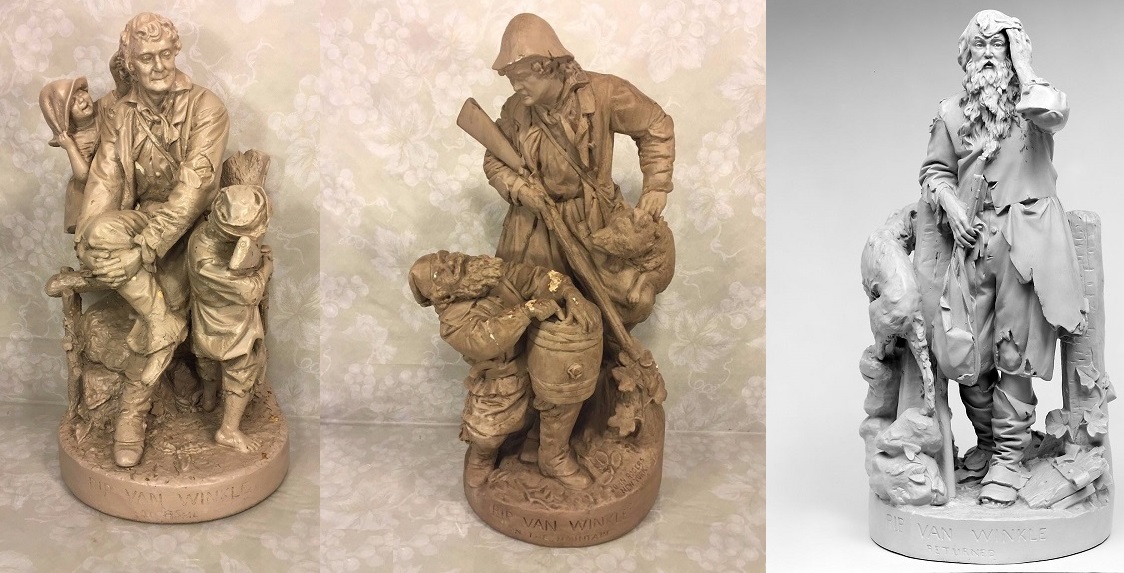
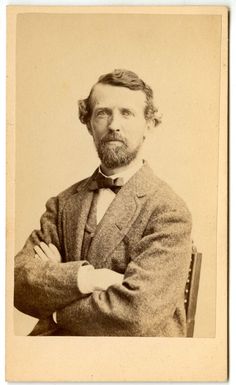
If you are a fan of Victorian decor, or if, like me, you find yourself haunting antique malls and shops, you’re probably familiar with the work of sculptor John Rogers. Commonly known as “Groups” for their routine use of more than one subject per sculpture, Rogers’ work is distinctive for many reasons: historical themes, uncommon accuracy and exquisite detail. Rogers was the first American sculptor to be classified as a “pop artist”, scorned by art critics but beloved by the average American. His themes included literary themes, Civil War soldiers, ordinary citizens, animals, sports and luminaries from the pages of history. For Irvingtonians, his works depicting namesake Washington Irving’s Rip Van Winkle are particularly prized.

zz s-l1600

John Rogers Rip Van Winkle Series.

I have a few in my office and one of my favorite places to eat, the “Back 40 Junction” in Decatur, is decorated with many John Rogers groups throughout their restaurant.
John Rogers was born in Salem, Massachusetts, on October 30, 1829, how can Halloween fans not love him already? His father, an unsuccessful but well-connected Boston merchant, felt that an artist’s life was no better than a vagabond and discouraged his artistic son from pursuing art as a profession. So, Rogers confined his love of drawing, painting and modeling in clay to his spare time. In 1856 Rogers ran away to Mark Twain’s Hannibal, Missouri where he worked as a railroad mechanic. Two years later, he moved to Europe to attain a formal education in sculpting. His first group, in 1859, he titled “The Slave Auction”. It depicts a white auctioneer as he gavels down the sale of a defiant black man, posed arms crossed, with his weeping wife and babies cowering at the side. Rogers, a strong abolitionist, was making a statement against slavery but New York shopkeepers refused to display his work in their windows for fear that the controversial subject matter would drive customers away. So Rogers hired a black salesman to peddle the statue from door-to-door and in a short time, Rogers’ statue, described as “Uncle Tom’s Cabin in plaster” became a best seller.

z john rogers cdvz artistic-sm

Sculptor John Rogers.

That same year, Rogers went to Chicago, where he entered his next statue, titled “The Checker Players” in a charity event, which won a $75.00 prize and attracted much attention. Rogers soon began rapidly producing very popular, relatively inexpensive figurines to satiate the average Gilded Age citizen’s thirst for art. Over the next quarter century, a total of 100,000 copies of nearly 90 different Rogers Groups were sold across the United States and abroad. Unsurprisingly, the next few years were filled with Rogers groups depicting scenes from the Civil War to honor their soldier boys serving far from home. These statues would remain popular with veterans after the war as well.
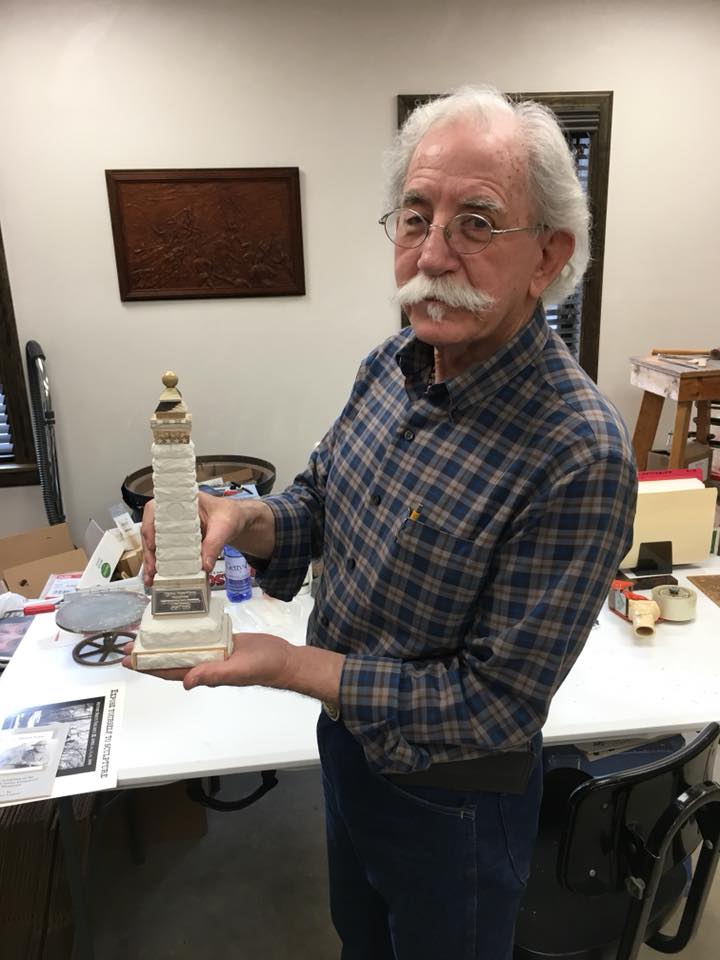
Gettysburg Longstreet monument sculptor Gary Casteel remarked, “Rogers is very well known as an American sculptor. More for his collection of small group settings rather than large public works. Both are excellent in detail and representation. His collection of CW related plaster cast pieces are quite well know and continually sought after by collectors to this day.” Rogers’ work was innovative, preferring to create his statuary based on every day, ordinary scenes from life. While Rogers’ work rarely made its way into art museums, it did grace the parlors, libraries and offices of Victorian homes around the world. However, there is one work that stands out among the rest, for subject matter, realism, and controversy.

1967.114_1.tif
                                                         Rogers’ Council of War.

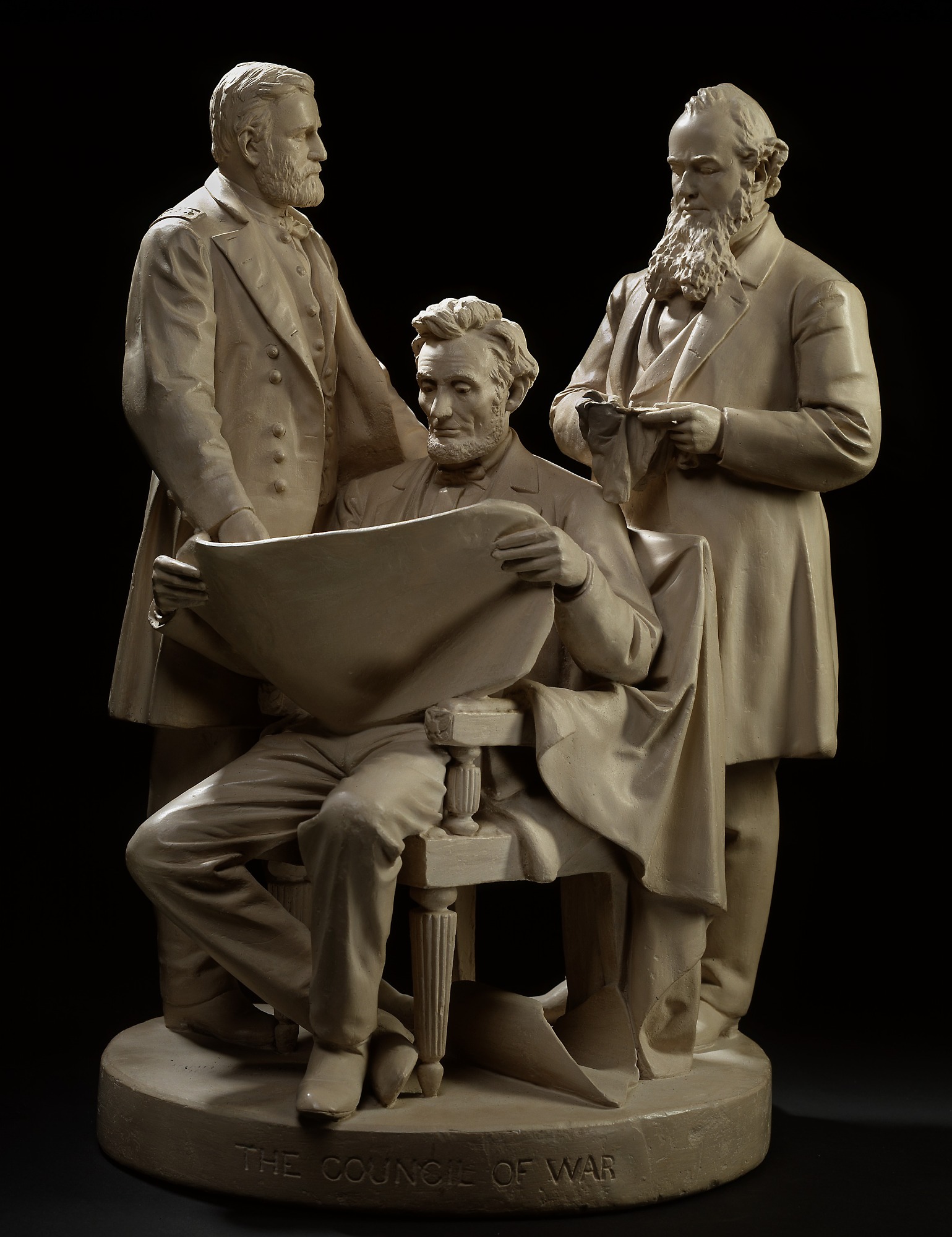
“The Council of War”, created in 1868, stands 24 inches tall and, like all of Rogers’ groups, was designed to fit perfectly on a round oak “ball and claw” footed parlor table. It depicts Abraham Lincoln seated in a chair, studying a map held in both hands, as General Ulysses S. Grant and Secretary of War Edwin Stanton confer over his shoulders. The June 1872 issue of the “American Historical Record” describes the scene: “The time is supposed to be early in March, 1864, just after Grant was appointed a Lieutenant-General and entrusted by Congress with the largess and discriminatory power as General-in-Chief of all the armies. The occasion was the Council at which the campaign of 1864 was determined upon, which was followed by Grant’s order on the 1st of May for the advance of the great armies of the Republic against the principal forces of the Confederates.”

31421516_1822681181096470_5411414843112554496_n

Gettysburg Sculptor Gary Casteel.

Both Robert Todd Lincoln and Edwin Stanton proclaimed this version of the President to be the best likeness of the man either had ever seen. Secretary Stanton wrote to the sculptor in May of 1872 stating, “I am highly gratified with the genius and artistic skill you have displayed. I think you were especially fortunate in your execution of the figure of President Lincoln. In form and feature it surpasses any effort to embody the expression of that great man which I have seen. The whole group is very natural and the work, like others from the same hand, well represents interesting incidents of the time.” Although the two surviving subjects received the piece positively, the public allegedly saw it differently: quite literally.
The controversy surrounding the pose arose based upon the positioning of Stanton behind Lincoln. Stanton, is posed polishing his spectacles, held in both hands, directly behind the President’s left ear approximately where Booth’s bullet entered Mr. Lincoln’s head. The pose is thought to have aroused the ire of collectors who believed the awkward positioning somehow stirred memories of the assassination. Hence, John Rogers made three versions of this particular group to appease those sympathies. Although the depictions of Grant and Lincoln remained the same in all three, Stanton’s hands were emptied and placed at his side in the second version and then changed back to polishing his glasses, this time forward of Lincoln’s head, in the third version. Some historians surmise the changes were affected due to the alleged theory of Stanton’s involvement in Lincoln’s murder that were circulating at the time. On the other hand, art historians claim the change was made for purely structural purposes and ease of casting to prevent breakage.
Modern day sculptors like Gary Casteel utilize many of the same methods as Rogers did a century-and-a-half ago, just as Rogers used those techniques he learned about while studying in Europe. Casteel, who like Rogers, also studied sculpture in Europe, says, “Every sculptor has his own way of sculpture production. However, there are probably similarities. I do a lot of detail as he did just simply because it’s my natural style.” The advantage that Gary Casteel has is the internet. Gary has a website and blog (Casteel Sculptures, LLC / Valley Arts Publishing) that walks his “fans” through the process of wood, wire & clay step-by-step. If you have an interest in the process, I highly recommend you subscribe to Gary’s blog. Watching Gary’s scale sculptures of the ornately detailed monuments of Gettysburg might better explain that Rogers’ changes in his Council of War group may not have been all about myth and urban legends after all.
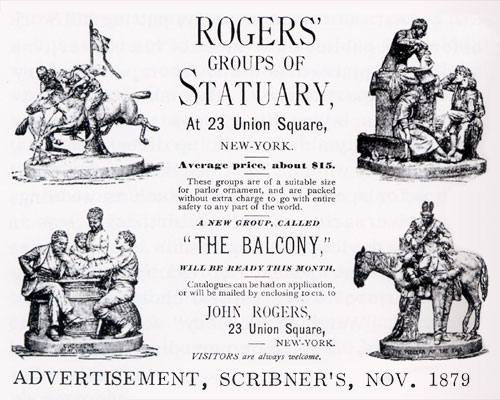
At the height of their popularity, Rogers’ figurines graced the parlors of homes in the United States and around the world. Most sold for $15 apiece (about $450 in 2020 dollars), the figurines were affordable to the middle class. Instead of working in bronze and marble, he sculpted in more affordable plaster, painted the color of putty to hide dust. Rogers was inspired by popular novels, poems and prints as well as the scenes he saw around him. By the 1880s, it seemed that families who did not have a John Rogers Group were not conforming to the times. Even Abraham Lincoln owned a John Rogers Group. My favorite account of a typical Rogers statue encounter comes from the Great American West. Libby Custer mentions in her book “Boots and Saddles” that her husband, General George Armstrong Custer, carried two prized John Rogers groups (“One More Shot” and “Mail Day”, both depicting Civil War soldiers) from post-to-post on the Western frontier including the couples’ final Indian outpost before the “Last Stand.”
z LibbyandGeorge1.jpg09082017

Libby and George Armstrong Custer.

Libby states, “Comparatively modern art was represented by two of the Rogers statuettes that we had carried about with us for years. Transportation for necessary household articles was often so limited it was sometimes a question whether anything that was not absolutely needed for the preservation of life should be taken with us, but our attachment for those little figures and the associations connected with them, made us study out a way always to carry them. At the end of each journey, we unboxed them ourselves, and sifted the sawdust through our fingers carefully, for the figures were invariably dismembered. My husband’s first occupation was to hang the few pictures and mend the statuettes. He glued on the broken portions and moulded (sic) putty in the crevices where the biscuit had crumbled. Sometimes he had to replace a bit that was lost… On one occasion we found the head of the figure entirely severed from the trunk. Nothing daunted, he fell to patching it up again… The distorted throat, made of unwieldy putty, gave the formally erect, soldierly neck a decided appearance of goiter. My laughter discouraged the impromptu artist, who for one moment felt that a “restoration” is not quite equal to the original. He declared that he would put a coat of gray paint overall, so that in a dim corner they might pass for new. I insisted that it should be a very dark corner!”
z rogersad-500

Another article, this one from the January 1926 issue of “Antiques” magazine, encapsulates the love-hate relationship for Rogers’ work: “The fact that Rogers groups are fragile has made them rare enough to arouse the interest of collectors, although I doubt that they will ever be widely collected or will ever acquire high values. They are too large to be comfortably collected in quantity. Nevertheless there might be some slight activity in Rogers groups among collectors of American antiques and it is to be hoped that existing examples will be preserved for the sake of what they express of life some forty years since.”
In 1878 Rogers opened a small studio at 13 Oenoke Ridge in New Canaan, Connecticut. By the 1890s, his work had largely fallen out of favor. Poor health forced his retirement in 1893. Rogers died at his New Canaan home on July 26, 1904. His studio was designated a U.S. National Historic Landmark in 1965. Rogers sculpted what he saw, drawing his inspiration from the everyday beauty observed by his own eye or that created by his mind’s eye while interpreting the literary works he valued most. Although he died in relative obscurity, his works live on as perfect representations of Victorian Era life at the crossroads of the Gilded Age and the Second Industrial Revolution.

Civil War, Gettysburg, Museums, Pop Culture, Travel

Statuary Myths and Urban Legends. Gettysburg.

Part I

Original publish date:  September 24, 2020

I find myself hanging around statues all the time. On Battlefields. In Museums. Visiting cemeteries. My office. I truly love looking at statues & sculptures of every sort, heck, I even find myself admiring the old fonts on those statues and plaques. Not too crazy about the recent trend of “Cairns” (aka rock stacking) sprouting up in creeks and rivers and along trails in parks, but that’s another story. I do love statues and admire the artists that created them.
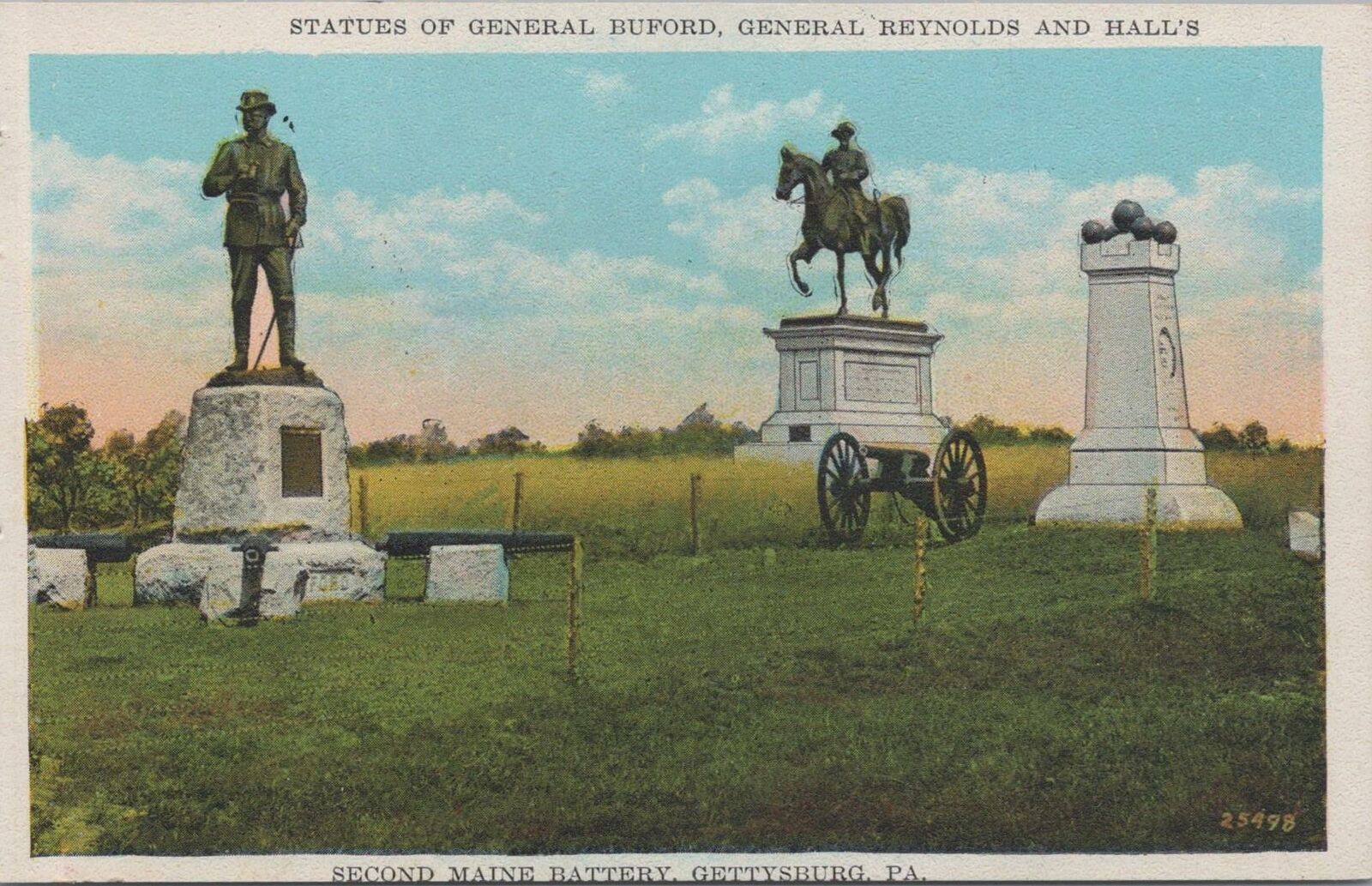
As many of you know, I spend a lot of time in Gettysburg- 2 to 3 trips a year. Part of the attraction of Gettysburg, to many, are the monuments and statues located on every part of the 6,000 acre park; some 1,300 at last count. As all devotees of the battlefield know, there is a legend that circulates around the eight equestrian statues found on the field. It has become known colloquially as the “hoof code” and until recently, solely by coincidence, it held true.
The tradition stated that the position of the horse hoofs on the statue dictated the fate of it’s rider. All four hoofs down: the rider survived the battle unscathed. One hoof up: the rider was wounded during the battle and survived. Two hoofs up: the rider was killed during the battle. According to the National Park Service, aside from the myths that the Rebels stumbled into the battle of Gettysburg while searching for shoes for footsore soldiers or that Lincoln wrote the Gettysburg address on the back of an envelope on the train to Gettysburg, the horse code legend is most enduring.

zz s-l1600
It appears that the stories were simply created by those early battlefield guides as a convenient way to get guests to remember the fates of the rider. Although harmless, it nearly drove the park brass crazy trying to explain the fallacy to guests, dignitaries and letter-writers for over a century. One letter found in the NPS archives from October of 1931, written by then superintendent E. B. Davis, addresses the issue bluntly, “The story that the posture of the horse in equestrian statues on this battlefield indicates whether the rider was killed, wounded, or unhurt seems to be one of those myths which grow up around historical places and are almost impossible to destroy. Sculptors whom I have consulted assure me there is no such convention connected with the art. This office does not countenance the story. On the contrary, invariably discourages it. It seems, however, to appeal to some imaginations among both guides and tourists. If you are in position to supply the name of your guide or the number of his cap, I can possibly stop one from further reciting the myth.” So, not only did it drive the NPS crazy, the sculptors weren’t too happy about it either.
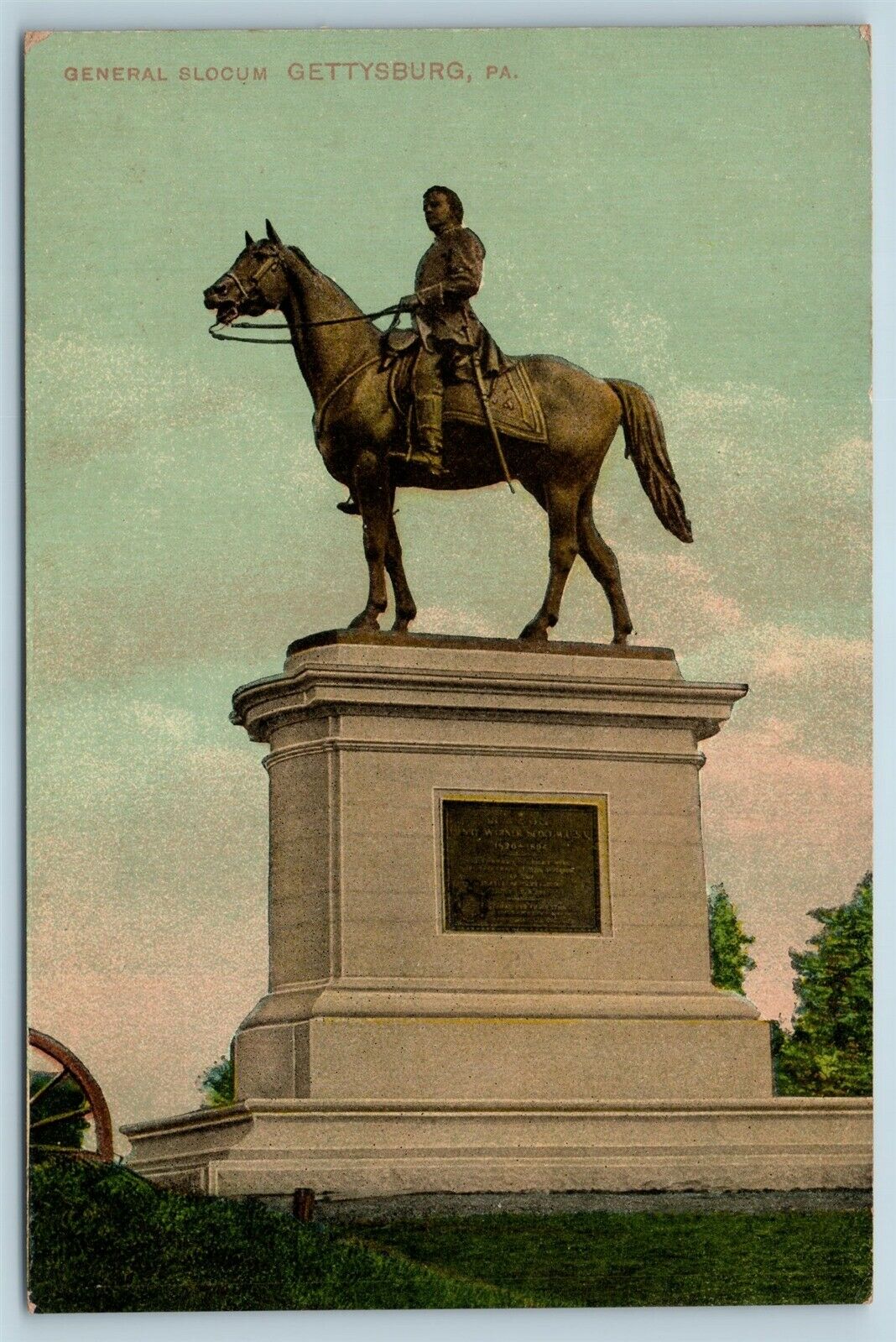
z Screenshot (175)The statues on the field represent Union Generals Meade, Reynolds, Hancock, Howard, Slocum, and Sedgwick, and Confederates, Lee, atop the Virginia Memorial, and James Longstreet. According to the NPS, “Meade and Hancock were the first on June 5, 1896. They were followed by Reynolds, July 1, 1899, Slocum, September 19, 1902, Sedgwick, June 19, 1913, and Howard, November 12, 1932. The Virginia Memorial was dedicated on June 8, 1917. Longstreet did not come along until 1998 and by this time the myth was firmly established.”
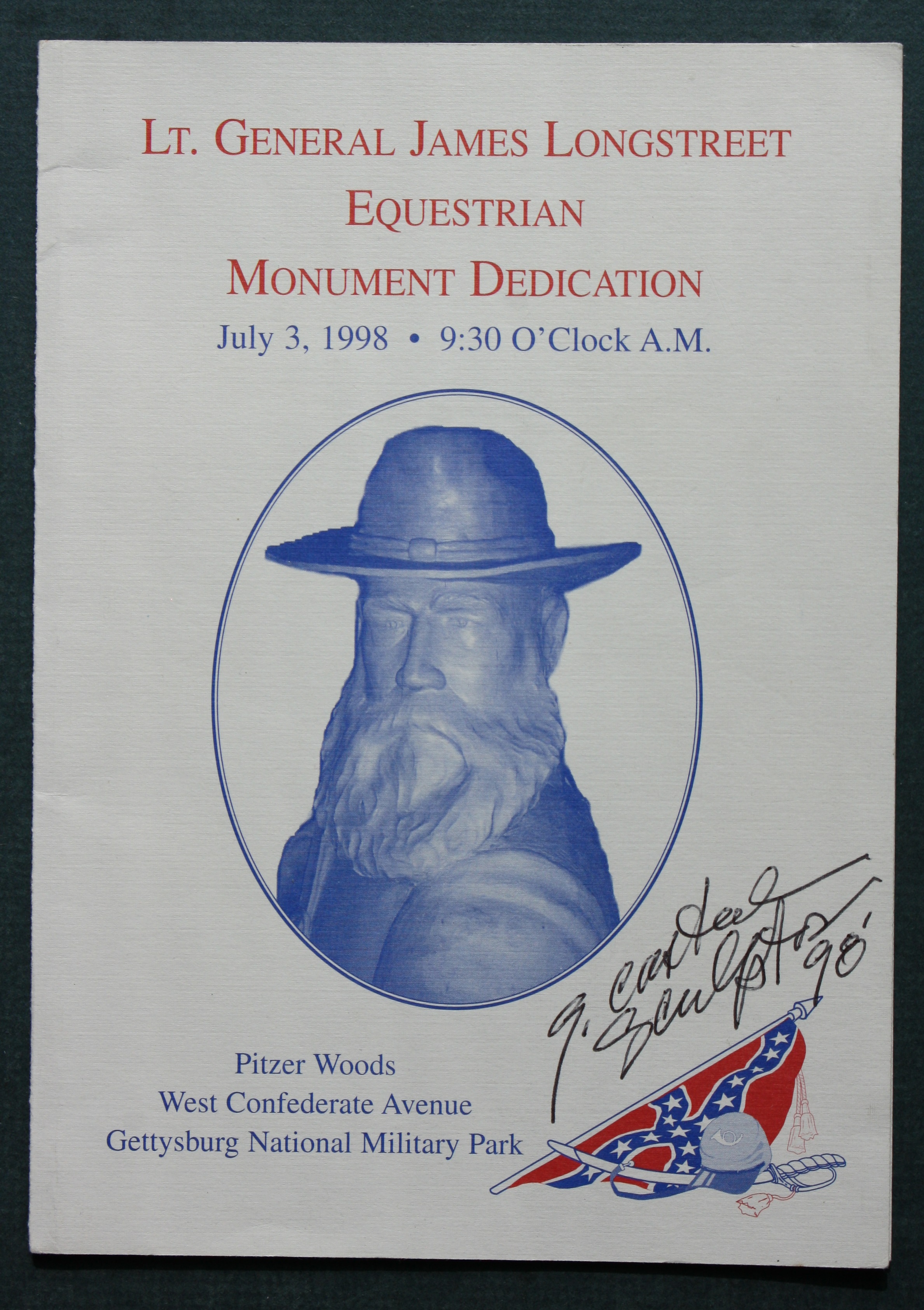
The Longstreet statue, created by artist Gary Casteel, was dedicated on July 3, 1998. Located in Pitzer Woods on West Confederate Avenue in the Gettysburg National Military Park, Gary’s statue is unique because it rests on the ground, not on a pedestal. “I wanted people to be able to walk right up to it; see it, touch it.” says the sculptor. Gary, whose studio is located near the entrance of the National Cemetery and the iconic landmark Evergreen Cemetery gatehouse in the old “Hall of Presidents” wax museum, is still busy practicing his craft within site of the Hancock monument across the Baltimore Pike.
Sculptor Frank Edwin Elwell’s larger-than-life bronze figure of Hancock astride “a horse” depicts the general extending a reassuring hand toward unseen Union soldiers. The horse “Hancock the Superb” straddles was not his own. On July 3, 1863, Gettysburg saw the greatest artillery barrage in the history of North America warfare. The earth rattling blasts of over 100 Confederate cannons and the thunderous roar of Union guns in reply, spooked Hancock’s horse, and it froze, refusing to move. Hancock dismounted, borrowed the horse of a nearby surgeon, and embarked on his ride, one of the most famous in the history of the Civil War. Hancock, fully exposed to enemy fire, rode up and down the line to bolster the morale of his troops who lay behind the stone wall. When aides begged the General to dismount, his reply was, “There are times when a Corps Commander’s life does not matter.” He was wounded grievously and his equestrian statue reflects that wound with one hoof up.
The placement of Hancock’s statue on East Cemetery Hill required the dismantling of a precarious looking wooden observation tower that stood on the hill from 1878 until 1896. But what about that horse? What was his name? Historians have studied that question for years to no avail. Every Civil War buff knows Lee’s horse at Gettysburg was “Traveller”, Meade’s horse: “Old Baldy”. We even know the name of Meade’s (he had two) and Lee’s back-up horses, “Blackie” & “Gertie” and “Lucy Long” respectively.
Reynolds horse: “Fancy”, his secondary horse was called “Prince”. Sedgwick’s horse was named “Rambler”, his two back-ups; “Cornwall” and “Handsome Joe”. General Henry Slocum’s horse was named “Charlie” and General Longstreet’s horse was “Hero”. BTW, in case you’re wondering, General Joshua Lawrence Chamberlain’s horse was named “Charlemagne” but he did not get it until the autumn of 1863, after Gettysburg. The horse, a small brown Morgan horse with scars and sores from pack-service had been captured from the Confederates. Chamberlain has no monument, equestrian or otherwise, on the field except for that of the 20th Maine on Little Round Top.
z slocum s-l1600But Hancock’s horse at Gettysburg? No one knows. Likewise, General O.O. Howard’s horse remains nameless (he had at least two shot out from under him and himself was wounded twice in battle) but the sternly pious one-armed General’s nickname of “Uh Oh” survives. So named by soldiers because when the General showed up, one way or another, there was gonna be a fight (he was awarded the Medal of Honor for actions at Gettysburg). Look up at his statue the next time you’re walking the field and you’ll see the empty flap of his right arm (shot off at the Battle of Seven Pines a year earlier) pinned neatly to his coat.
31381355_1822681061096482_4450482538460217344_n

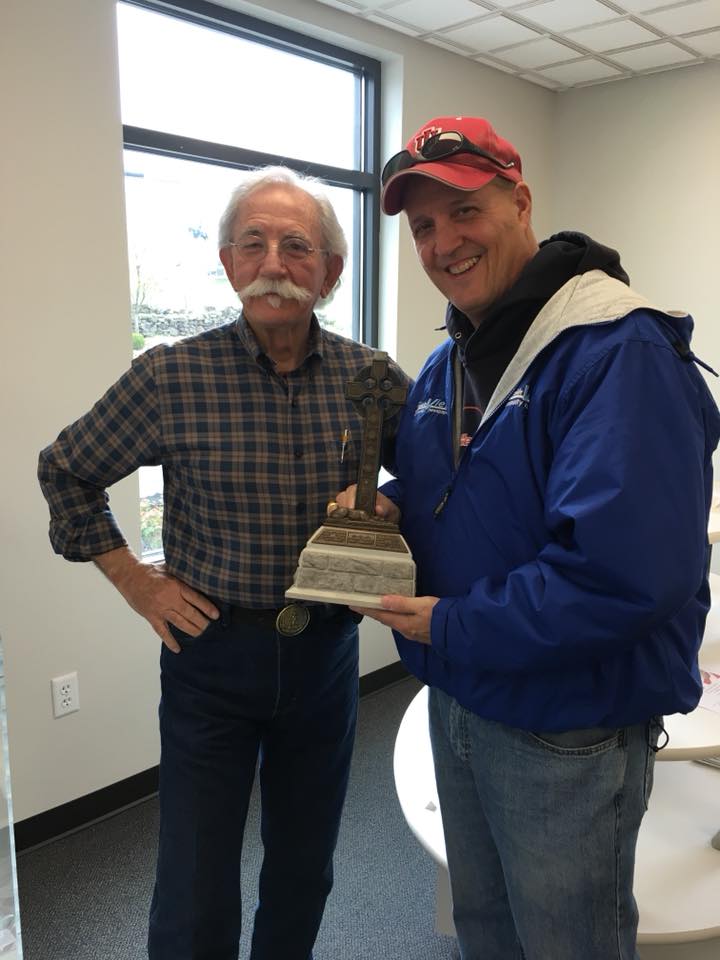
Sculptor Gary Casteel and the author in Casteel’s Gettysburg shop.

Which brings me back to sculptor Gary Casteel. Gary’s statue of General Longstreet is featured on his horse with one foot raised, even though Longstreet was not wounded in that battle. However, he was seriously wounded in the Wilderness battle the following year. The hoof is depicted in an upraised position, making it the perfect place for visitors to place coins, lucky four-leaf clovers and other mementos atop it. Casteel’s equestrian statue, the most recent general officer monument on the field, may settle the “hoof code” urban legend once and for all. Should you ever find yourself in Gettysburg, stop in Gary Casteel’s studio at 789 Baltimore Street and ask him yourself. Asked for comment on the myth, Mr. Casteel answered, “The “code” only works at Gettysburg and over the years it has become “law” thus challenging those who wish to question or break it, like me!” after which he jokingly adds, “It took a Confederate to challenge Yankee rule once again!” Yes, if you find yourself in Gettysburg, a visit to Casteel Sculptures is a must see. Most visitors fail to realize the rare opportunity afforded them with just such a visit. You can walk to battlefield and gaze at statues innumerable, but you can only talk to one sculptor: Gary Casteel.
That brings me to another statuary myth, one that I have been enamored with since I was a small boy. It involves the first American “pop sculptor”, the Civil War, the Abraham Lincoln assassination and George Armstrong Custer. Next week in part II of “Statuary Myths and Urban Legends.”

z IMG_2526