Abe Lincoln, Civil War, Museums, World War II

Obituary for Wayne C. “Doc” Temple”

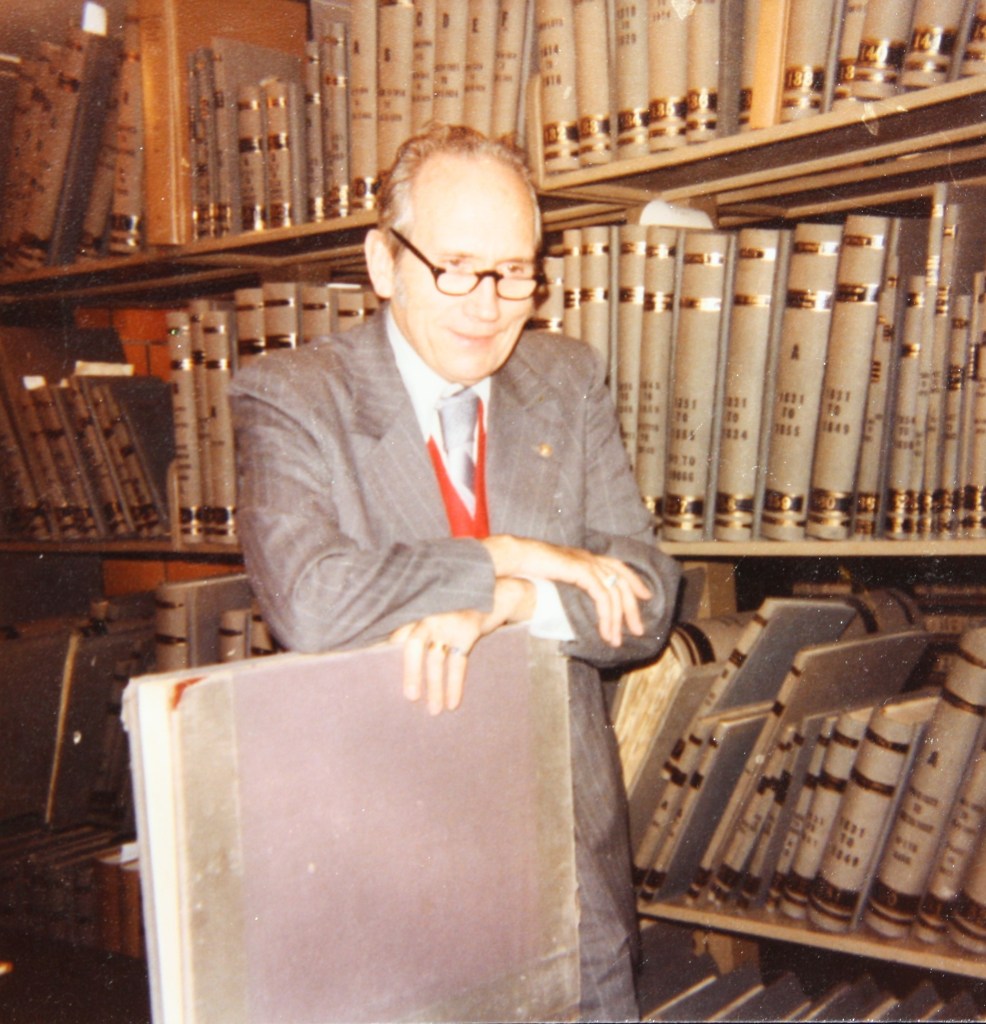
Wayne C. “Doc” Temple at his post of 56 years & 7 months in the Illinois State Archives Springfield, Illinois.

Doc Temple’s century of service is complete, his earthly journey concluded, and he has embarked on the most anticipated trip of his long and happy life, carried on the wings of cardinals to reunite in heaven with his beloved wife Sunderine. Doc’s life, by his own admission, was a dream come true. Born in Ohio’s fields of plenty, Doc was an old soul from the start. With nary a penny in his pocket, at the age of five he carried an old broken pocket watch and chain found abandoned in a farmer’s field as part of his daily attire. He turned that love of timepieces into the preeminent collection of Illinois Watch Company pocket watches known in the state. Governors, senators, congressmen, generals, scholars, and friends today carry an “A. Lincoln” or “Bunn Special” pocket watch with them today, courtesy of Wayne C. Temple. Other creatures received his bounty, too: he fed the cardinals outside his home on Fourth Street Court assiduously and considered every red bird that benefited from his efforts as an earthly manifestation of his wife Sandy, reminding him, over the past three years, that she stood with open arms on the rainbow bridge, awaiting his arrival.
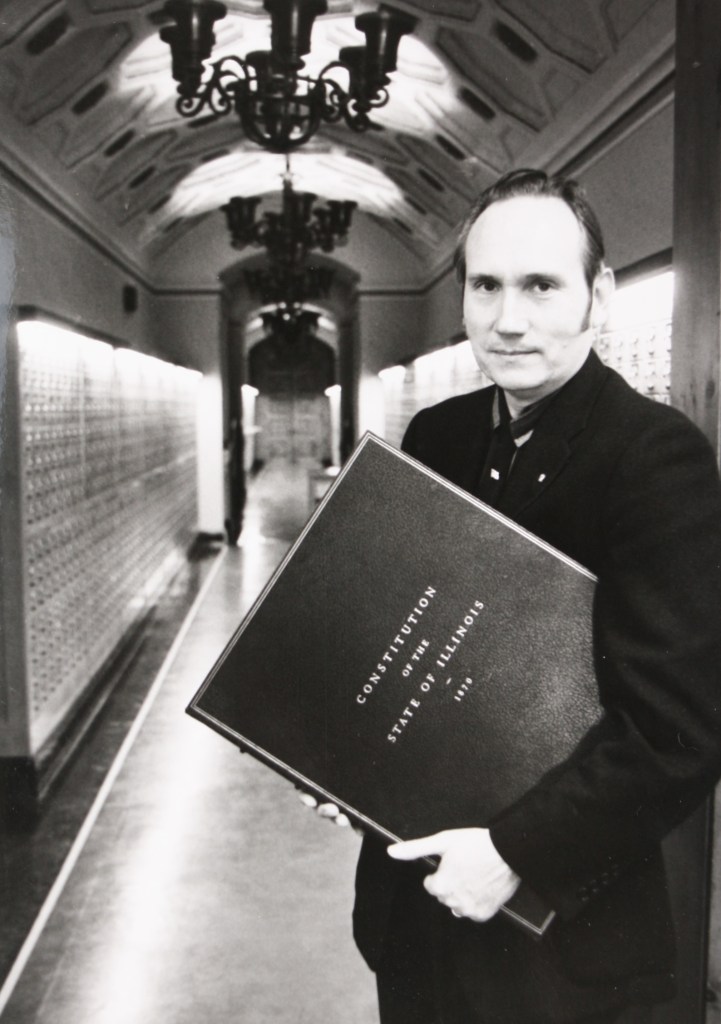
Doc holding the Illinois State Constitution at the archives.

While historians know that Doc was chosen as one of the top 150 graduates of all time from the University of Illinois during its sesquicentennial year of 2017, not many realize that Doc was also an accomplished poet, living his life with poetry in his soul. He sprouted as a poor Ohio farm boy with an unquenchable thirst for history, education, and life, with his first love the English language.  He put that adoration for the printed word to good use in elocution contests and essays that were the first signs of his innate talent. From those humble beginnings, Doc served his country in Europe, slept on castle floors, befriended a General named Eisenhower who would soon become President, and drank the wine of emperors gifted to him by grateful war-torn communities that he literally brought back to life with his engineering skills. Of course, Doc shared Napoleon’s wine with his battle buddies. Doc’s flame burned brighter than any other historian in Illinois’s history, and the prowess of his Lincoln scholarship was unchallenged for half a century. He spent a career burning holes in the pages of others’ older history by his meticulous research, yet Doc’s flame always warmed, never burned those around him. He was quick to share information with all who sought his advice. Whether you were a budding scholar, land surveyor, dentist (yes, Doc was an honorary dentist), lawyer, politician, historical enthusiast, tourist, or student, Doc always had time to lend a hand in the most generous fashion. He never concerned himself about attribution or credit; his mantra was always “Get the information out there.”  Some of it was new information, too: Each year he wrote Sandy an original poem, in rhyme, for her birthday or anniversary.
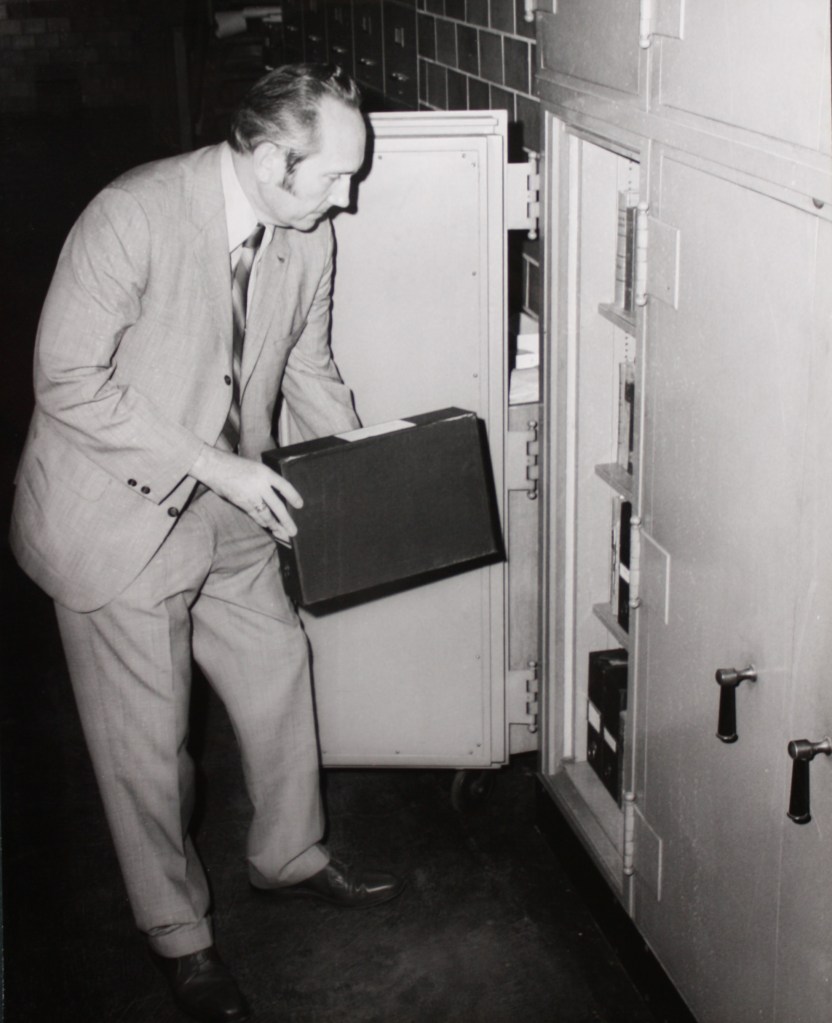
Doc Temple at work in the archives.

Although Doc stood front and center for every important Illinois event, commemoration, or big reveal for the past seven decades, you’d never know it by his demeanor. If he wasn’t on the dais, he was in the front row. During his career in the Archives, he was just as excited to meet Hoss Cartwright’s school teacher as he was to meet the Vice-President of the United States. Doc’s presence will be sorely missed, his record of 54 years, 7 months service to the state of Illinois may never be surpassed, and his space in the Lincoln field will remain unfilled. His passing came with typical military precision, bisecting the clock at precisely 1230 hours, the hands on the clock in an upswing, moving up, not down, on the final day of March. Doc’s transition occurred exactly at the conclusion of his life’s seasonal winter to burst forth to the heavenly spring we all hope awaits our final journey. Doc would remind us all, with a wink and a smile, that he also waited until after the St. Louis Cardinals home opener had arrived.
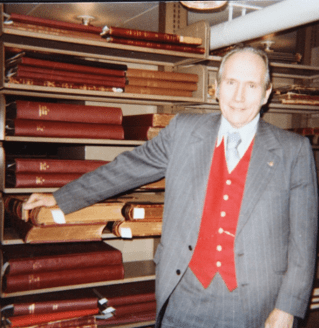
Doc Temple in the safe at the archives.

Wayne Calhoun Temple, the dean of Lincoln studies and for half a century the mainstay of the Illinois State Archives, died peacefully on March 31, 2025, at a care facility in Chatham, Illinois.  Devoted friends Teena Groves and Sharon Miller were present Wayne Calhoun Temple, the dean of Lincoln studies and for half a century the mainstay of the Illinois State Archives, died peacefully on March 31, 2025, at a care facility in Chatham, Illinois.  Devoted friends Teena Groves and Sharon Miller were present and biographer Alan E. Hunter was on the phone with them at the time of his passing. He was predeceased by his beloved wife Sandy (2022), and by his parents Howard (1971) and Ruby (1978) Temple, of Richwood, Ohio.. He was predeceased by his beloved wife Sandy (2022), and by his parents Howard (1972) and Ruby (1977) Temple, of Richwood, Ohio.
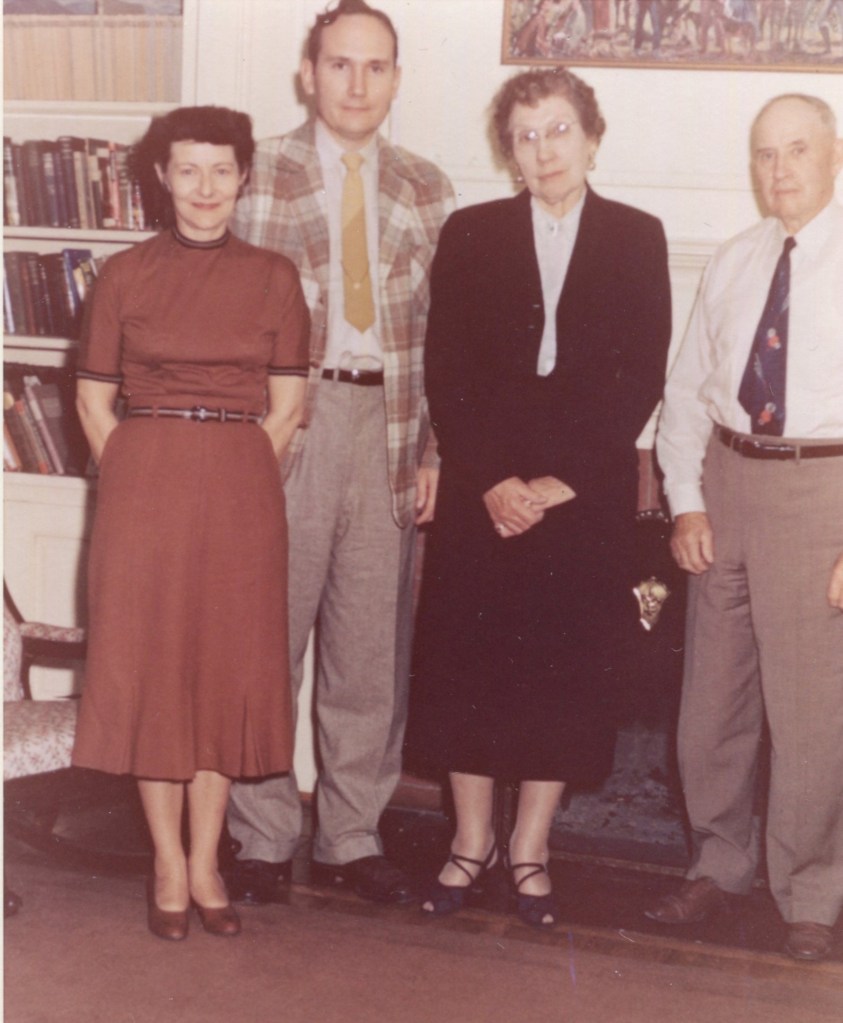
Loi & Doc with his parents Roby & Howard Temple.

Temple, known to all for 60 years as “Doc,” was born on a small family farm two miles east of Richwood (about 40 miles north of Columbus), on Feb. 5, 1924. He liked to note that he shared a birthday with Lincoln’s mother, Nancy Hanks Lincoln.  He was an only child. From his mother, a teacher, he learned literature, history, and music; from his father, he learned how to ride, how to shoot, how to plant and reap. An oft-repeated story is how at age 9 years he encouraged his parents to go see the fair in Chicago in 1933 as they wished. He persuaded them that he’d be fine and he was – he had the horse, the cart, and the rifle.
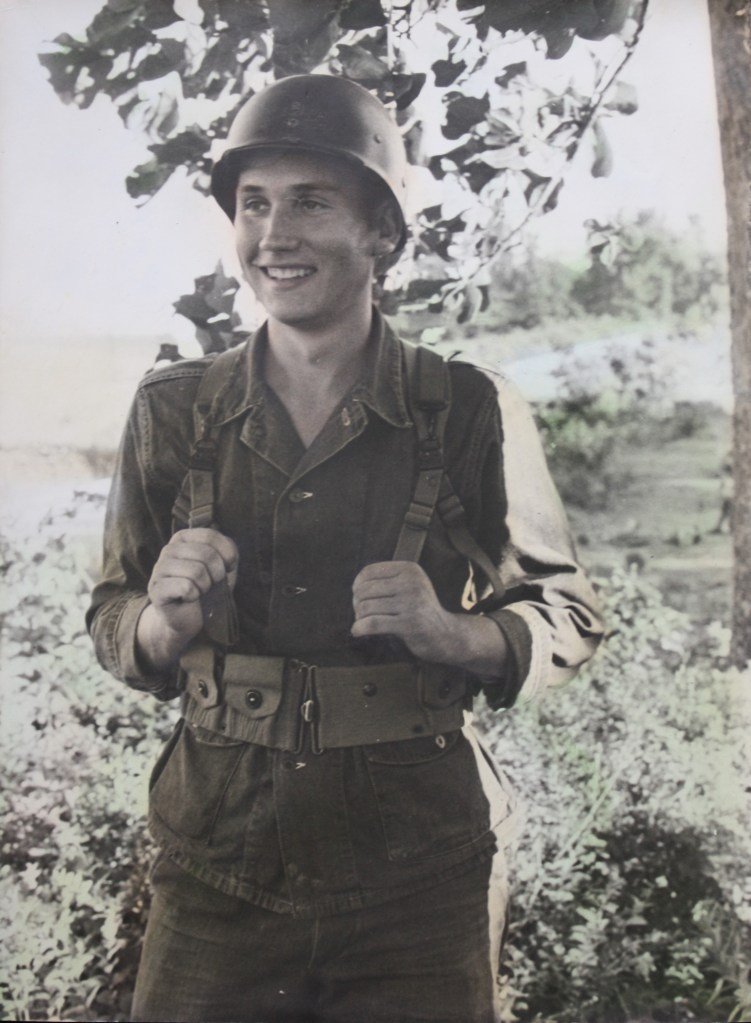
Doc Temple World War II.

After a one-room-schoolhouse start, in high school he was valedictorian and ran on a championship 1,500-yard 4-man relay team. He played clarinet in a traveling band of adult men. In 1941, he entered Ohio State University on a football scholarship, intending to study chemistry. He was soon drafted into the Army Air Corps and sent to Urbana, Illinois, for training as an engineer. He and his mates were sent to North Carolina for special training; then to Kansas for ordnance production.
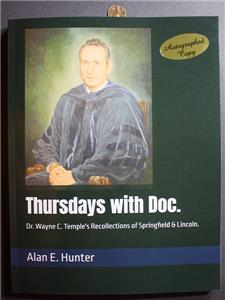
He spent 1945-46 in Europe, and at age 21 as a Tec 5 in the Signal Corps (grade of a sergeant), he helped install new airfields and radio communications, some of it personally for General-in-Chief Eisenhower.  Many more details are found in Alan E. Hunter’s remarkable oral-history-as-life-study, Thursdays with Doc (2025), copies of which Temple signed in his last months of life.
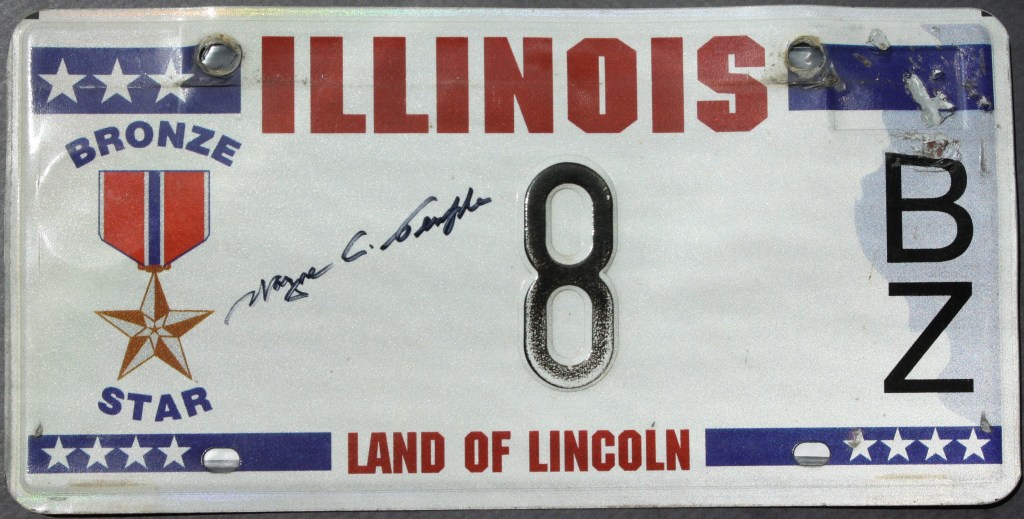
Doc’s Bronze Star license plate.

He was awarded the Bronze Star for his one-man battle with a Luftwaffe pilot who strafed their camp on the Franco-German border in the last weeks of the war.  While others dove for the ditch, Doc used his favorite weapon, the Thompson submachine gun, to fire upward at the plane. “Did you hit him?” Doc was later asked. “I don’t know, but he didn’t come back.”
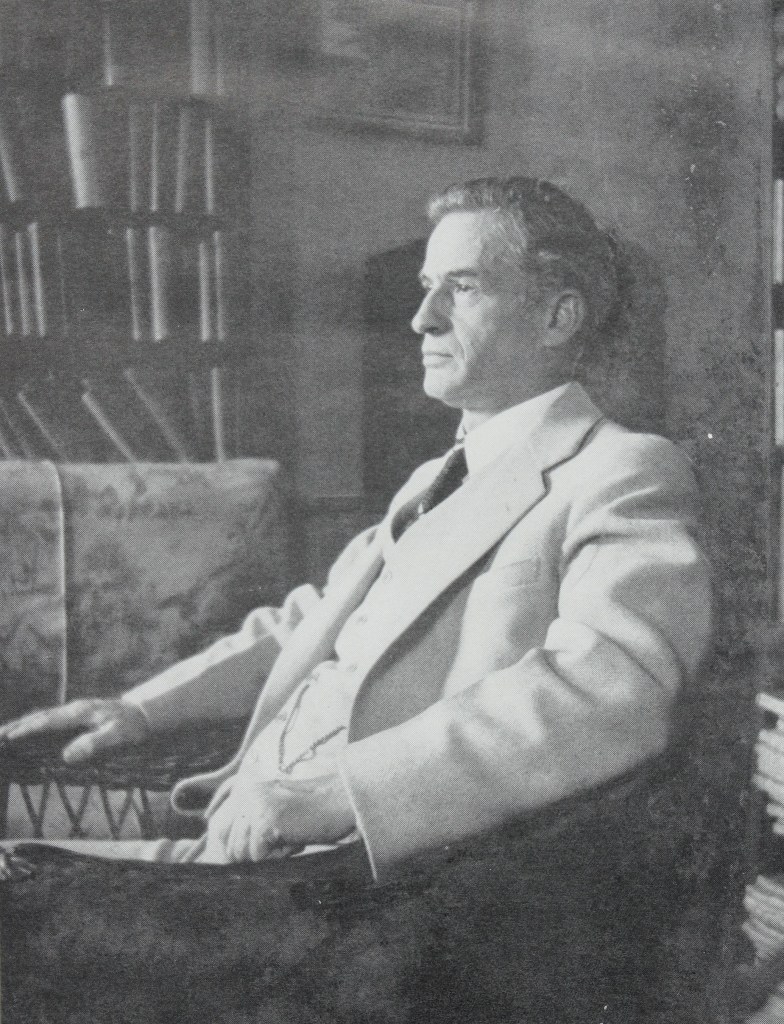
James Garfield Randall Univ. of Illinois.

After the war he returned to the U. of Illinois, earning a war-interrupted B.A. in History and English. Here, he was discovered by Prof. James G. Randall, the first academic historian of Lincoln, and became his graduate student and research assistant until “Jim’s” death in 1953. Temple helped him write vol. 3 of the tetralogy Lincoln the President (1945-55) and rough out vol. 4 although a more senior scholar got credit as co-author. Temple also helped Ruth Randall with her popular and “junior” histories about the Lincolns and women of the Civil War era, and corresponded with her until her death in 1971.
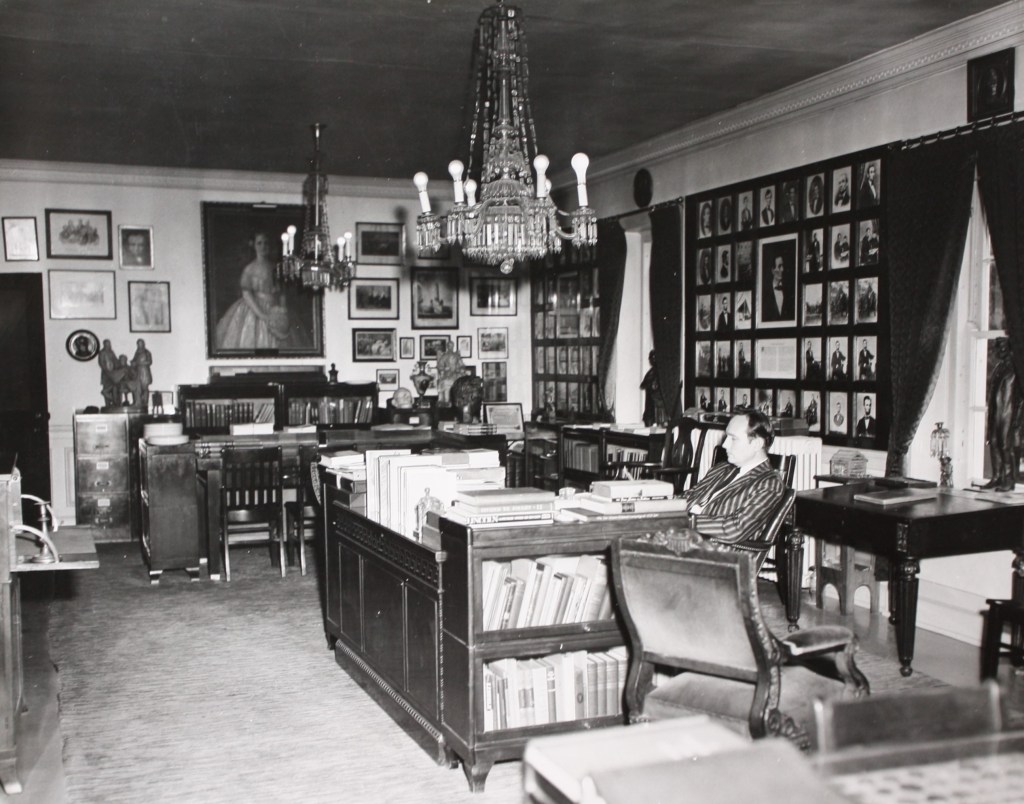
Doc in his office, the “Lincoln Room”, at Lincoln Memorial University Harrogate, Tennessee.

His first book was commissioned and remunerated handsomely by Thorne Deuel of the Illinois State Museum, on Indian Villages of the Illinois Country (1958), still considered a model of research and analysis. From there Temple took his wife Lois McDonald Temple to Lincoln Memorial University, Harrogate, Tennessee, to head up the history department. They remained in touch for decades with some of the young women who assisted in the department. He edited The Lincoln Herald there, making it the best periodical in the field, and remained as editor till the mid-1970s, long after the Illinois State Archives in 1964 brought him on staff. For decades before his retirement there in 2016 he was permanent Chief Deputy Director. (Lois died in 1978; Doc and Sandy met and married in 1979.) He no longer taught classrooms, helping instead an average of 150 people per month for a half-century who called, wrote, or walked in with questions at the Archives – in addition to speaking and writing publicly more than most fulltime professors. Land surveying, one of Temple’s many skills, proved invaluable for the dozen survey questions a month on that topic, alongside tracing the course of legislative bills old or new, gubernatorial proclamations, or judicial rulings. He mastered the use of old registers, microfilm, and the typewriter, but never took to computers. Nine secretaries of State, of both parties, kept Temple on, recognizing his value to the state and to the public; tech-savvy assistants like his friend Teena Groves made the office efficient, complementing Doc’s top-notch research work.
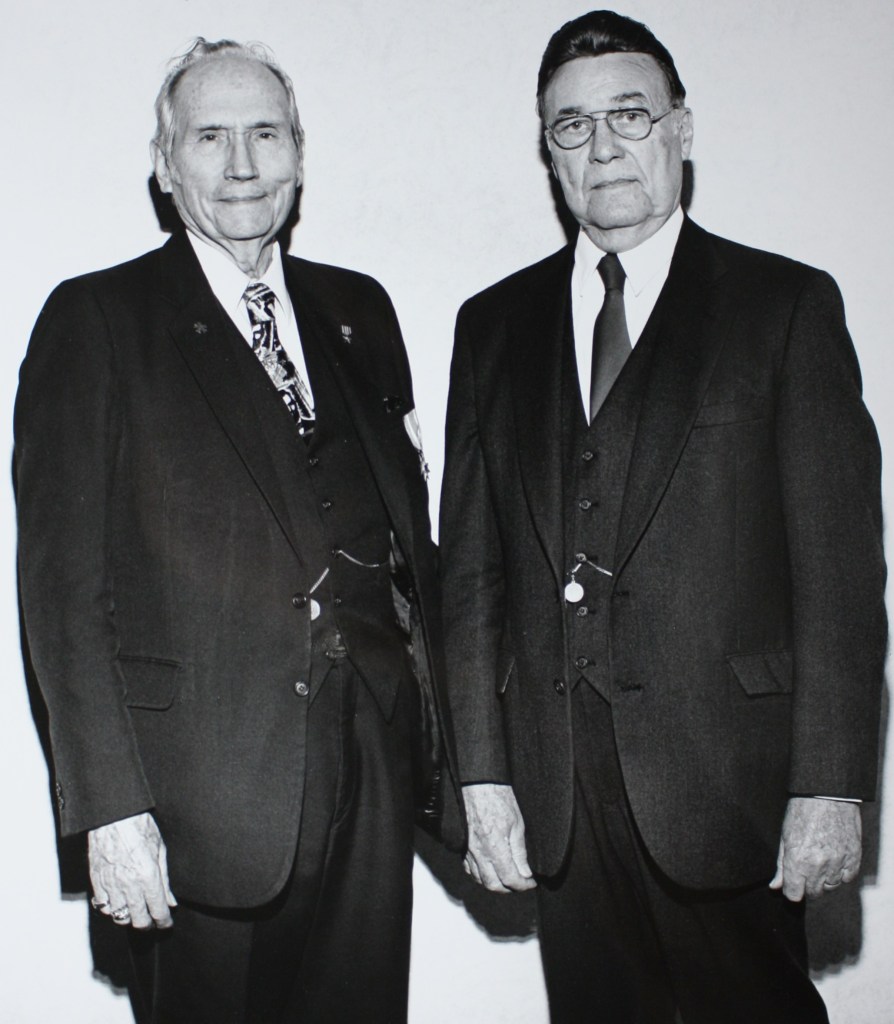
Doc with his longtime friend,
Dayton Ohio artist Lloyd Ostendorf.

At the popular level he engaged artist Lloyd Ostendorf to illustrate the Lincoln Herald with Temple’s precise historical notes on people’s heights, demeanor, clothing, armaments, supported by background architecture and horsetack, for the best historic illustrations of any American’s circle of friends and colleagues.  These scenes were set in dozens of Illinois cities and towns around the legal or political circuit, plus Lincoln’s White House years. Supporting local-history projects with Phil Wagner, John Eden of Athens, the Masonic Lodge, and towns themselves, Temple also helped re-create dramatic moments of the past.  The Lincoln Academy of Illinois made him a Regent in the 1960s with a nomination by a governor from each party, and he was elected a Laureate in 2009, the highest honor in the State’s gift.  Helping in 1969 to reactivate the 114th Illinois Volunteer Infantry of the Civil War era, he rose in its ranks from Lt. Col. to full General, presiding at dozens of ceremonies.  Nationally he was a member of the U.S. Civil War Centennial Commission (1960-1965); was invited to recite the Gettysburg Address on the steps of the Lincoln Memorial with President Nixon and other officials present in 1971, then to speak to the Senate about the Lincoln boys’ Scottish-born tutor Alexander Williamson; and in 1988 was present for the commissioning of the aircraft carrier U.S.S. Abraham Lincoln. Privately and at work he was asked to weigh in on the authenticity of dozens of Lincoln documents owned by private collectors.
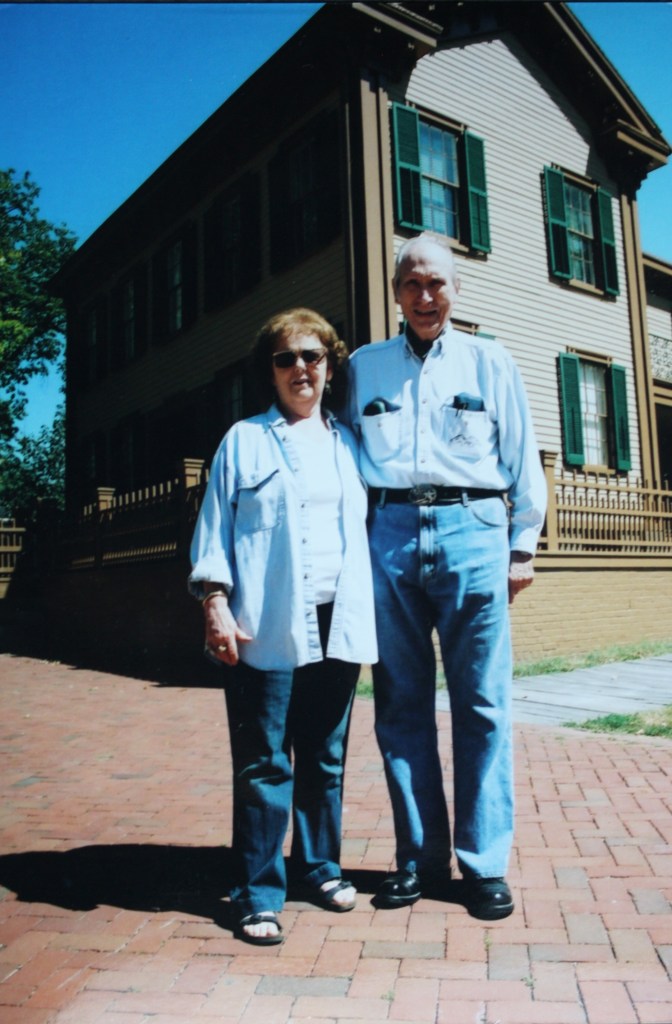
Sandy & Doc Temple in front of the Abraham Lincoln Home Springfield.

Temple’s published works remain the testament to his great energies and skill.  With wife Sunderine, a.k.a. Sandy, who for 40 years was a head docent at the Old State Capitol, he wrote Illinois’ Fifth Capitol: The House that Lincoln Built and Caused to Be Rebuilt (1837-1865) (1988), the standard work on its initiation, contracts, costs, furnishing, refurbishing, and historic moments such as Lincoln’s “House Divided” speech in 1858. In like vein he wrote up the Lincoln Home, in By Square and Compasses (1984; updated 2002). For shorter works he found or recovered the stories of people high and low, including Mariah Vance, the Lincolns’ African-American laundress; Barbara Dinkel, a German-born widow down the block; two Portuguese immigrants nearby; Robert Lincoln’s ability to play the piano; and father Abraham’s formal commission as an Illinois militia officer after the Black Hawk War of 1832, which he maintained throughout his life by attending the annual muster.  C. C. Brown, namesake of the oldest continuous business in Illinois – the law firm Brown, Hay, & Stephens (est. 1828) — offered some thoughts on working with Lincoln which Temple found and turned into a booklet in 1963.   Probably his most enduring book will be Abraham Lincoln: From Skeptic to Prophet (1995), on the religious views, which Temple called not merely a religious study but “really a biography of the Lincoln family.” Lincoln’s many connections to Pike County introduced a book about the area’s Civil War record; his trip through the Great Lakes in 1849 gave rise to a booklet about the Illinois & Michigan Canal and Lincoln’s patented invention. Some of the best of Temple’s 500 to 600 articles are being collected into a book edited by Steven Rogstad.
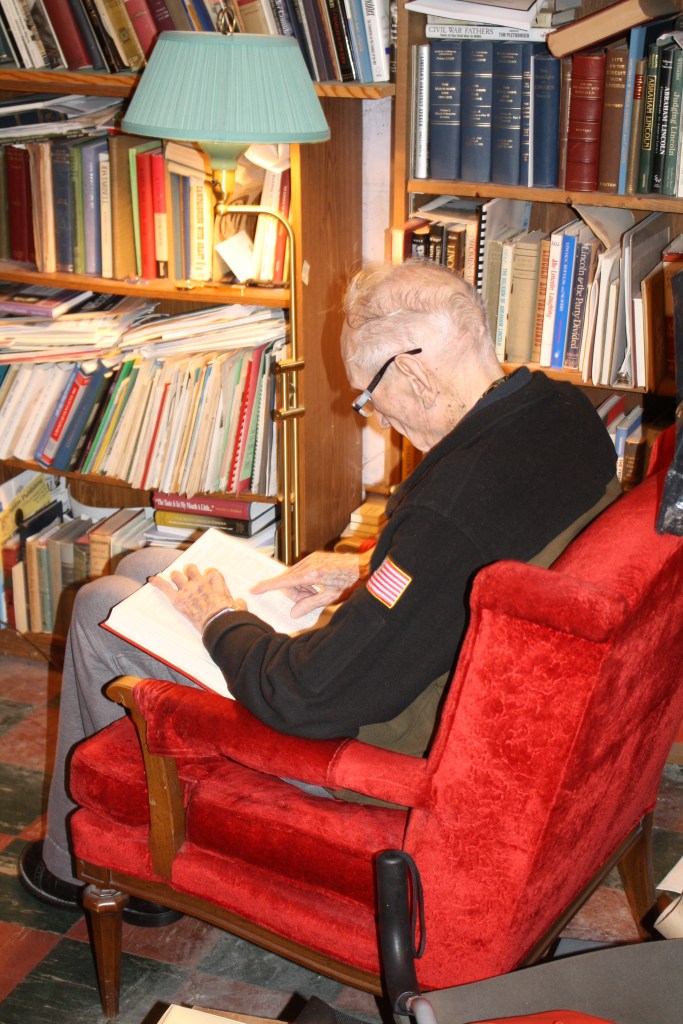
Doc at work in his basement library.

Personally Temple was highly generous, helping Sandy’s distant family when in need, serving as an Elder and teacher at the First Presbyterian Church, and endowing the UI Urbana History Dept. with funds from his estate. On behalf of wife Lois’s nephew, Temple headed a Boy Scout troop in town.  Doc gave his father’s canful of ancient Indian artifacts dug from the Ohio farm to the public library in Richwood, Ohio, as one of his last acts, though he could have sold them for many thousands of dollars. When Temple learned that his barber, a father of five, could not afford to send his bright youngest son to college, Temple spoke to Congressman Paul Findley, who got the young man appointed to the Academy at West Point, and a successful military career was launched.  Temple’s collection of 3,000 books is bound for UI Springfield’s Lincoln Studies Center, while his fine collection of artworks as well as personal papers will go to the Presidential Library and Museum.

Doc Temple and the author in their first meeting back in February of 2011.

In the opinion of the person who succeeds Temple as the dean of Lincoln historians, Prof. Michael Burlingame of UI Springfield, Doc “displayed an uncanny ability to unearth new information about Lincoln through painstaking research … For over eight decades, he tenaciously filled many niches in the Lincoln story.” His neighbor of 43 years, Sharon Miller, said, “Doc was simply a wonderful man. But he missed Sandy too much to keep going.”
Doc and Sandy in their home holding Lloyd Ostendorf’s painting of the couple.

A memorial service will be held on Thursday, April 10th, at 10:00 a.m. at Staab Funeral Home, S. 5th St. in Springfield.  Burial will take place at 1:00 p.m. at Camp Butler National Cemetery, next to Sandy temple’s gravesite. A reception at the St. Paul’s #500 A.F. & A.M. Lodge on Rickard Drive will follow.
Abe Lincoln, Assassinations, candy, food, Museums, National Park Service, Politics, Pop Culture, Presidents

Osborn H. Oldroyd’s Greatest Fear.

Original Publish Date March 6, 2025.

https://weeklyview.net/2025/03/06/osborn-h-oldroyds-greatest-fear/

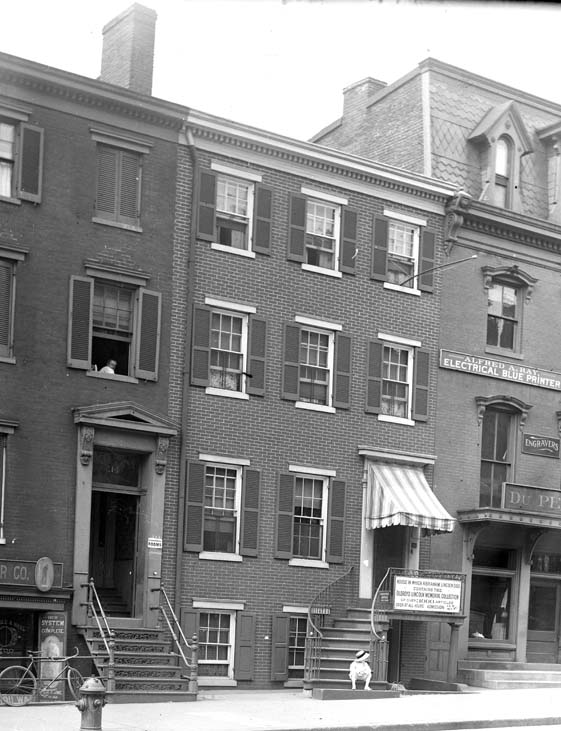
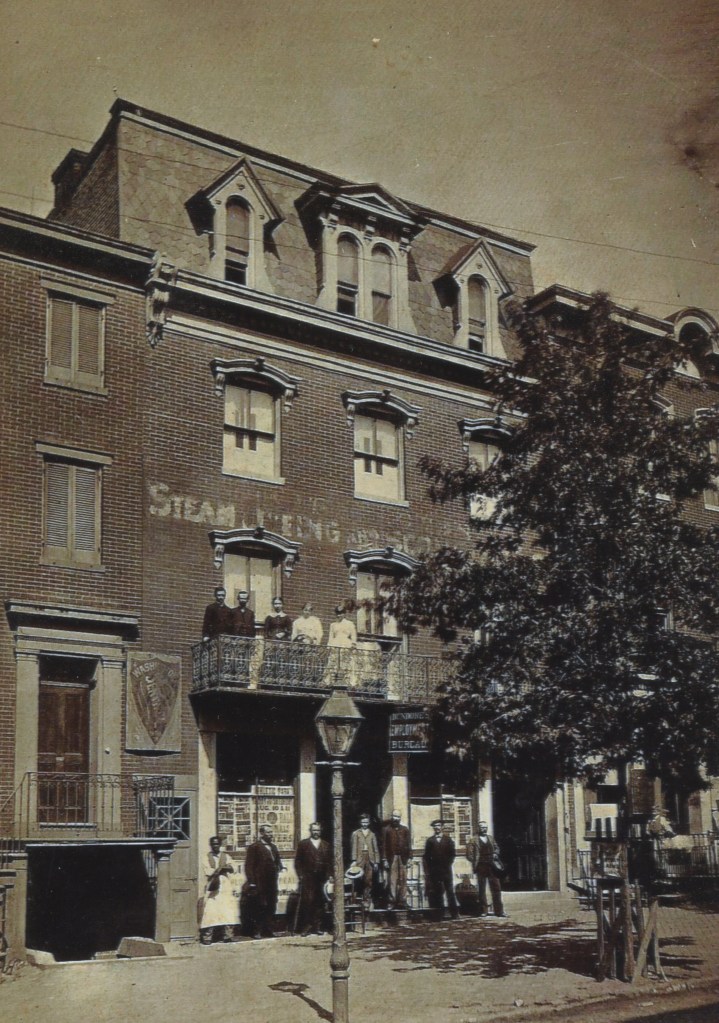
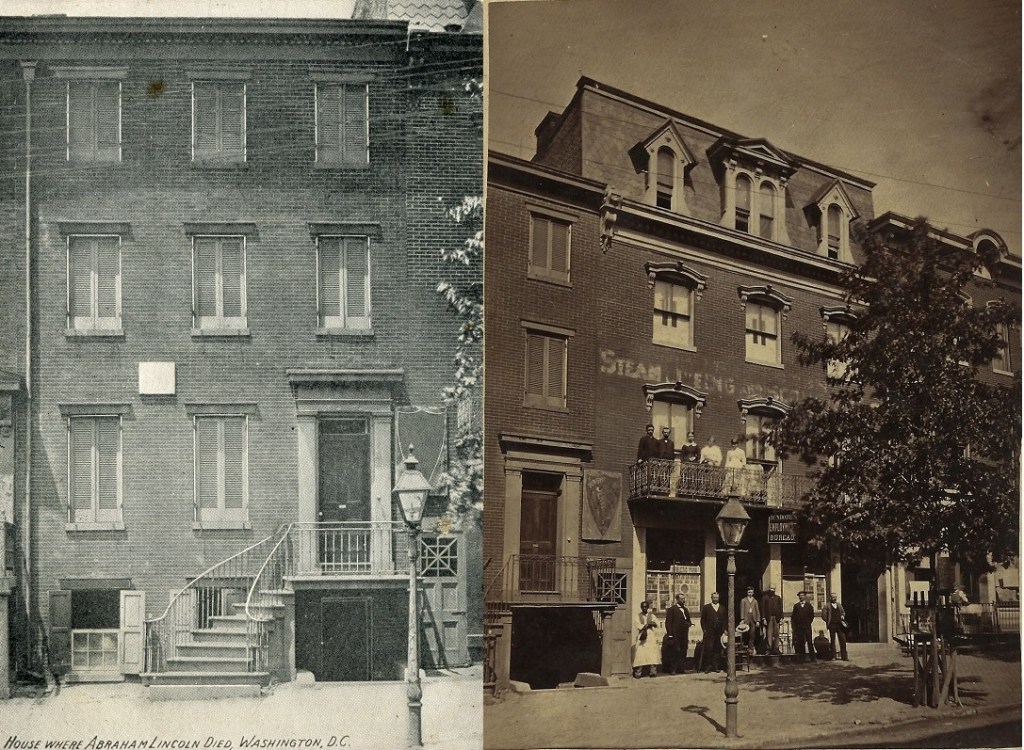
House Where Lincoln Died and the Logan Cafe next door in the 1880s.

My wife and I recently traveled to Springfield, Illinois for a book release event (actually two books). One book on Springfield’s greatest living Lincoln historian, Dr. Wayne C. “Doc” Temple, and the other on my muse for the past fifteen years, Osborn H. Oldroyd. I have fairly worn out my family, friends, and readers with the exploits of Oldroyd over the years. He has been the subject of two of my books and a bevy of my articles. Oldroyd was the first great Lincoln collector. He exhibited his collection in Lincoln’s Springfield home and then in the House Where Lincoln Died in Washington DC from 1883 to 1926. Oldroyd’s collection survives and forms much of the objects in Ford’s Theatre today.

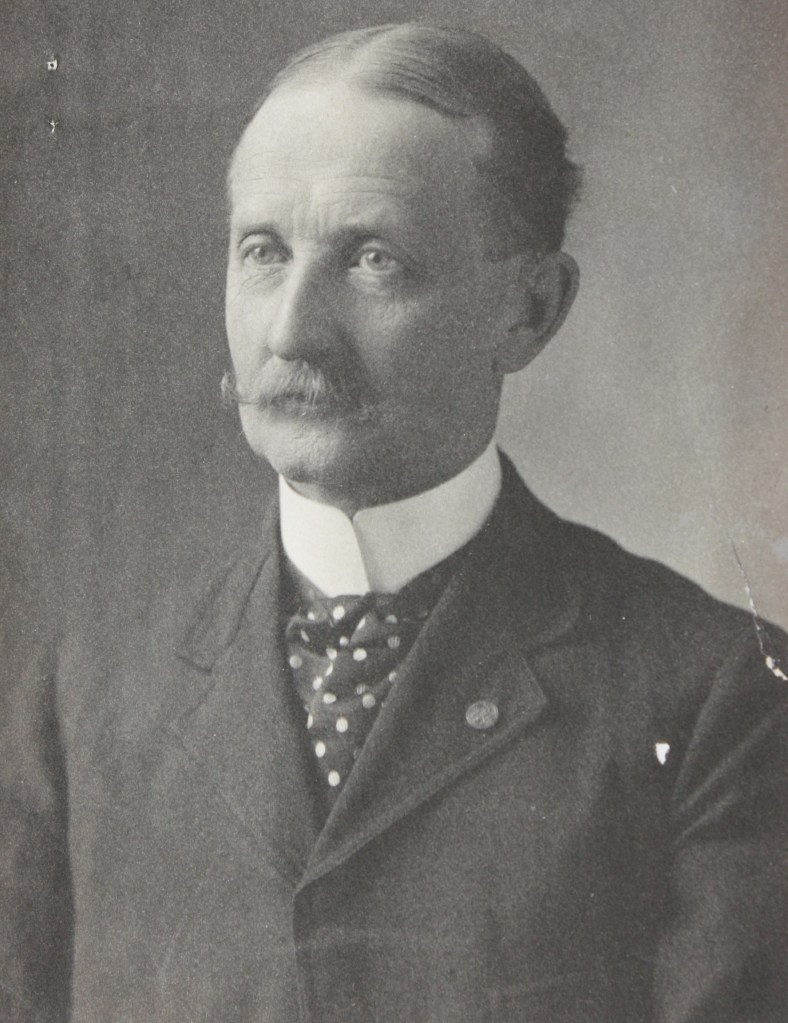
Osborn H. Oldroyd 1880s.

For this trip, we traveled up from the south to Springfield through parts of northwest Kentucky and southeast Missouri. What struck us most were the conditions of the small towns we drove through. Today many of these little burgs and boroughs are in sad shape, littered by once majestic brick buildings featuring the names of the merchants that built them above the doorways, eaves, and peaks of their frontispieces in a valiant last stand. Most had boarded-up windows and doors and some with ghost signs of products and services that disappeared generations ago.

They are tightly packed and many share common walls. We were amazed how many of them have caved-in or worse, burnt down. The caved-in buildings are the work of Father Time and Mother Nature, but the burnt ones look as if the fires were extinguished just recently. My wife deduces that these are likely the result of the many meth labs that blight these long-forgotten, empty buildings. Indeed, a little research reveals that these rural areas do lead the league in these hastily constructed, outlaw drug factories.

Oldroyd’s Museum before World War I.

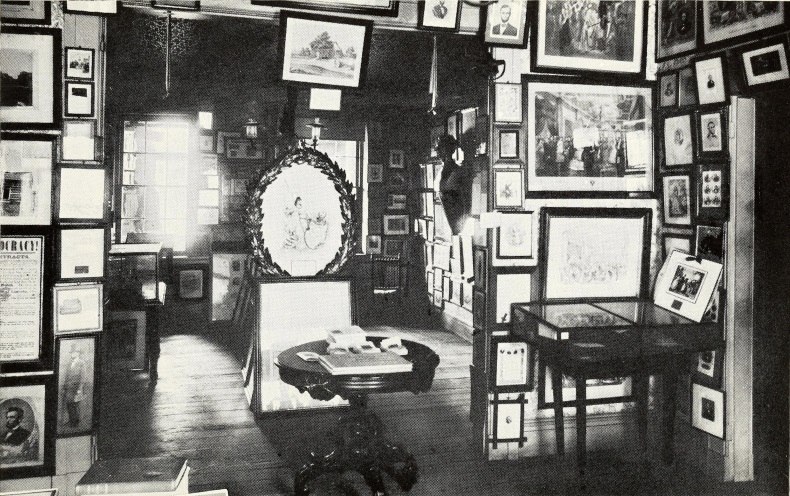
Of course, that got me thinking about Oldroyd’s museum. Oldroyd lobbied for decades to have his collection purchased by the U.S. government and preserved for future generations to explore. The Feds eventually purchased it in 1926 for $50,000 (around $900,000 today). For over half a century while assembling his collection, Oldroyd had one great fear: Fire. Visiting the House Where Lincoln Died today, the building remains unique in size and architecture compared to those around it. In Oldroyd’s day, smoking cigars, pipes, and cigarettes indoors was as prevalent as carrying cell phones and water bottles are today. The threat of fire was very real for Oldroyd.

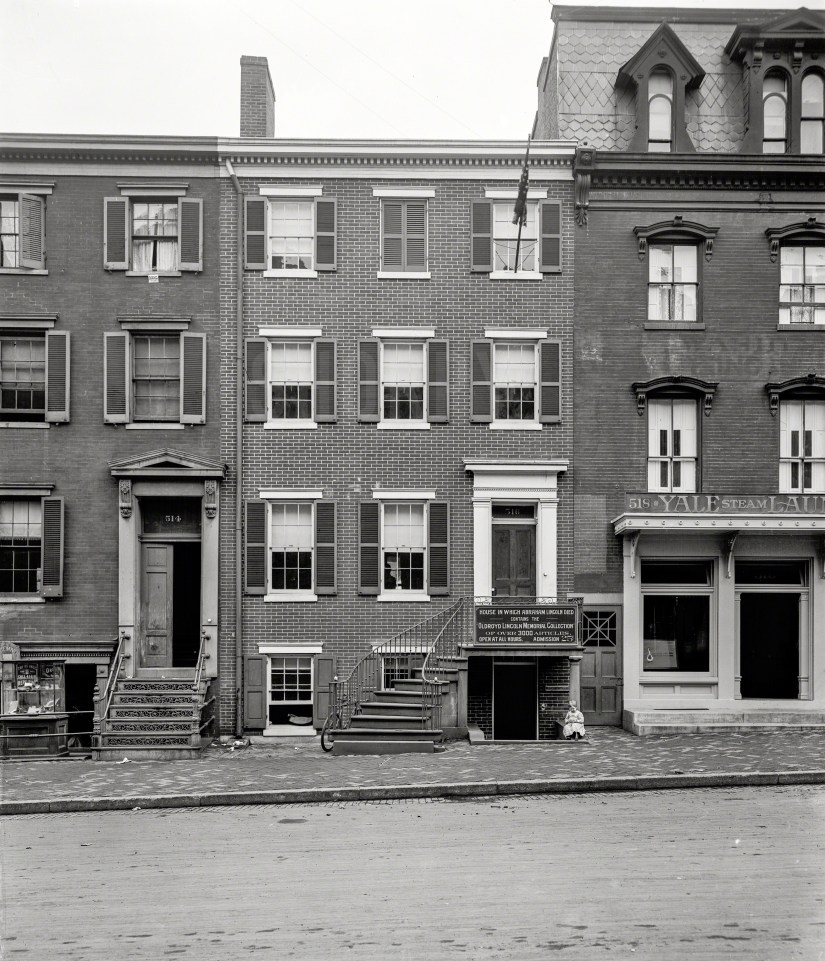
Cramped 10th Street with Oldroyd’s Museum in Center.

The March 20, 1903, Huntington Indiana Weekly Herald ran an article titled “A Visit to the Lincoln Museum in Washington City.” After describing the relics in the collection, columnist H.S. Butler states, “It is hoped the next Congress will purchase this collection and care for it. Mr. Oldroyd is not a man of means such as would enable him to do all he would like, and it seems to me a little short of criminal to expose such valuable relics, impossible to replace, to the great risk of fire. I understand Congressman [Charles] Landis, of Indiana, is trying to get the collection stored in the new Congressional Library, in itself the handsomest structure, interiorly, in Washington. I hope that his brother, the congressman from the Eleventh District [Frederick Landis], will lend his influence to Senators [Charles] Fairbanks and [Albert] Beveridge to urge forward the same end.”

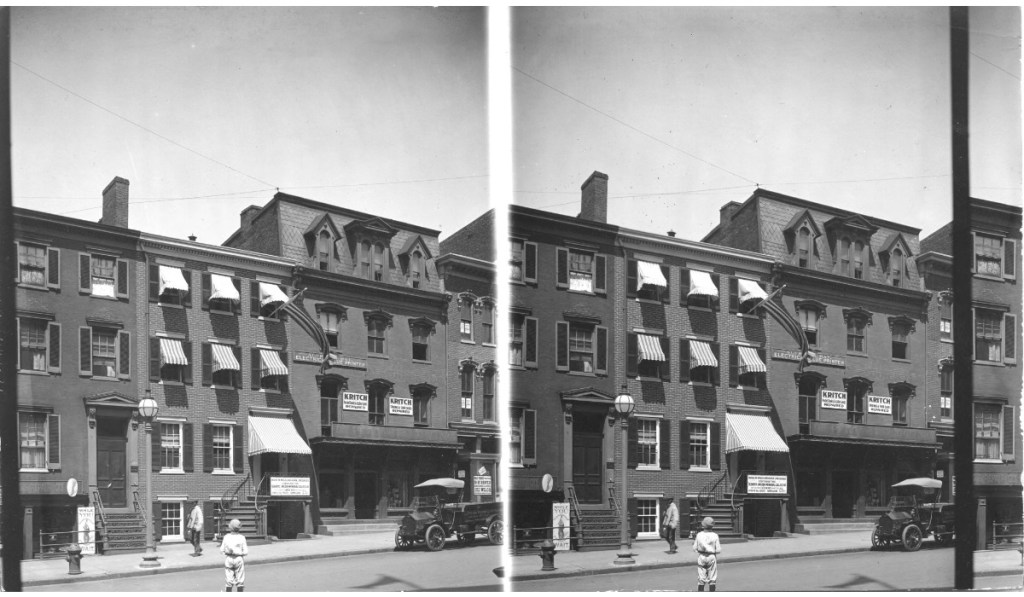
Stereoview of the HWLD with Kritch sign in place next door.

Fifteen years later, the Topeka State Journal described an event that fueled Oldroyd’s concern. “May 21 [1918]-a few days ago the Negro cook in the kitchen of a dairy lunch spilled some fat on the fire and the resulting blaze was extinguished with some difficulty. The unique feature of this trifling accident was that, had the blaze gotten beyond control, it would probably have destroyed a neighboring house in which is the greatest collection in the world of relics, manuscripts, and books bearing upon the life and death of Abraham Lincoln…Sixty feet away from the room in which Lincoln died are three kitchens of restaurants and a hotel. More than one recent fire scare has caused alarm over the danger that threatens these relics.”

Interior of Oldroyd’s crowded museum.

The February 11, 1922, Dearborn [Michigan] Independent reported, “A vagrant spark, a carelessly tossed cigarette or cigar stub, an exposed electric wire might at any time mean the destruction of the collection and the building which, of course, is itself a sacred bit of Lincolniana.” The January 21, 1924, Daily Advocate of Belleville, Ill. reported “The collection is contained in a small and overcrowded room of the house opposite Ford’s Theatre, with two restaurants across a narrow alleyway constituting a constant fire menace…it is likely that the U.S. Government will request that the Illinois Historical Society return the bed in which Lincoln died, that it may again be placed in the room it occupied on that fateful night and the entire setting restored.” Due to that unresolved fire threat the bed was never returned and is today on display at the Chicago History Museum. A 1924 Christmas day article in the Washington Standard 1924 described, “There are a number of restaurants in the block at the rear, and once an oil supply house did business close at hand. On two occasions there have been fires in the neighborhood.”

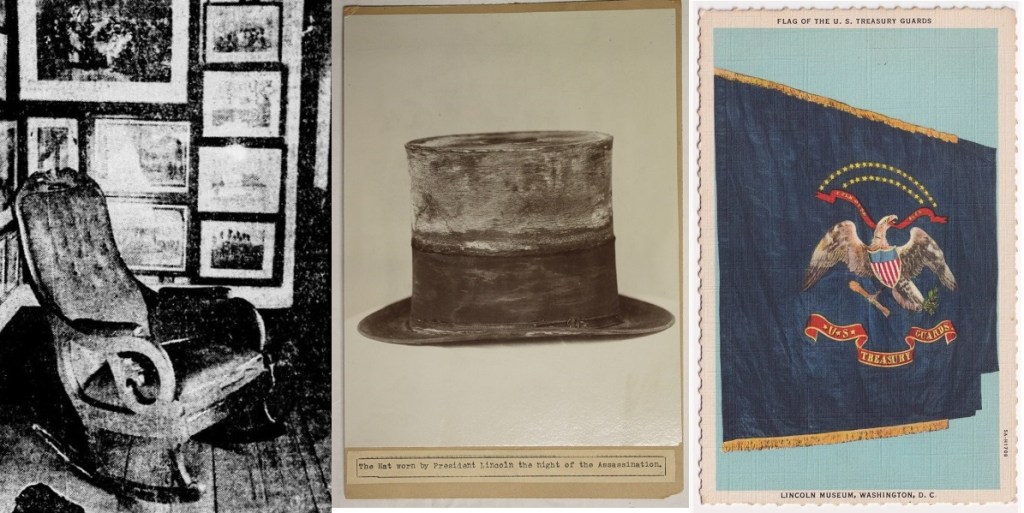
The Lincoln Rocker, Top Hat, & Treasury Guard Flag from Oldroyd’s Museum.

The July 6, 1926, Indianapolis News speculated, “The government will add to the collection the high silk hat Lincoln wore to the theatre that fatal night, the chair in which he sat in the presidential box, and the flag in which Booth’s foot caught. The flag now hangs in the treasury, while the hat and chair are in storage. These articles formerly were in the Oldroyd collection, but after a fire in the neighborhood some years ago, officials of the government took them back, fearing that they might be destroyed.” The February 18, 1927, Greenfield [Indiana] Reporter stated, “The plan proposed by Senator Watson, of Indiana, and Rep. Rathbone of Illinois, is to remodel the building to protect it against the danger of fire and the ravages of age. They would…place in it the famous Oldroyd collection of Lincoln relics.” Fire remained a nightmare for Oldroyd right up to the day he died on October 8, 1930.

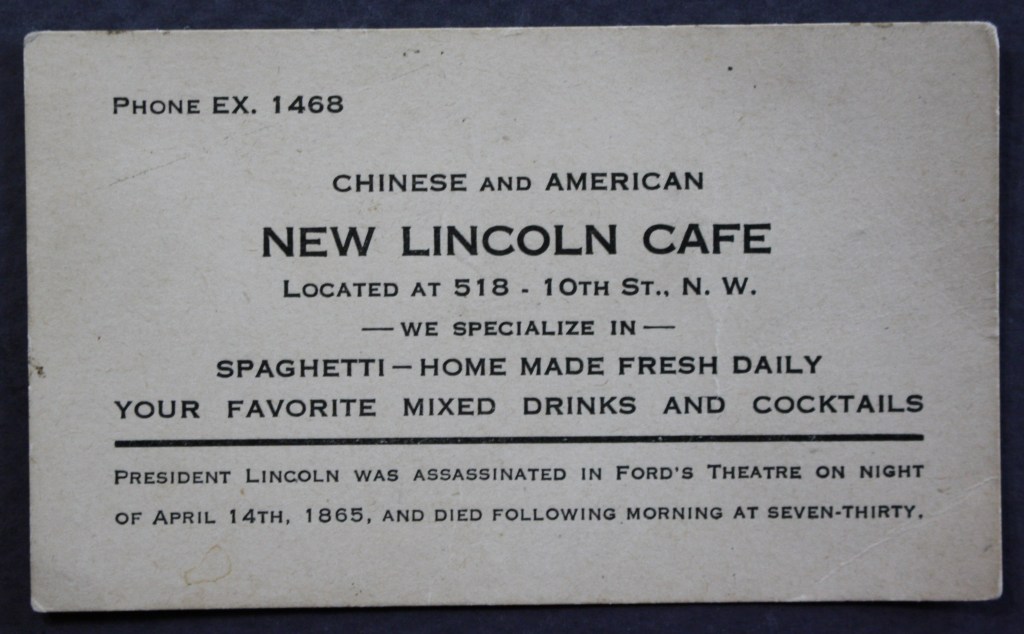
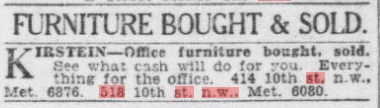
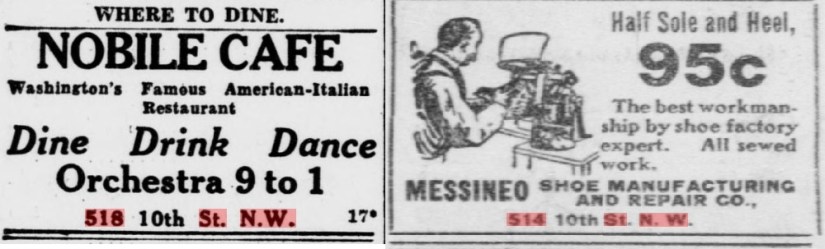
Ironically, after that book signing I found myself browsing the bookstore. I found there a 2 1/2” x 4” business card from the New Lincoln Cafe in the adjoining building to the north of Oldroyd’s Museum (at 516 10th St. NW). Putting aside the fact that I have a personal affinity for old business cards, the item called out to me and made me wonder about the businesses that had been neighbors to this hallowed spot over the generations.

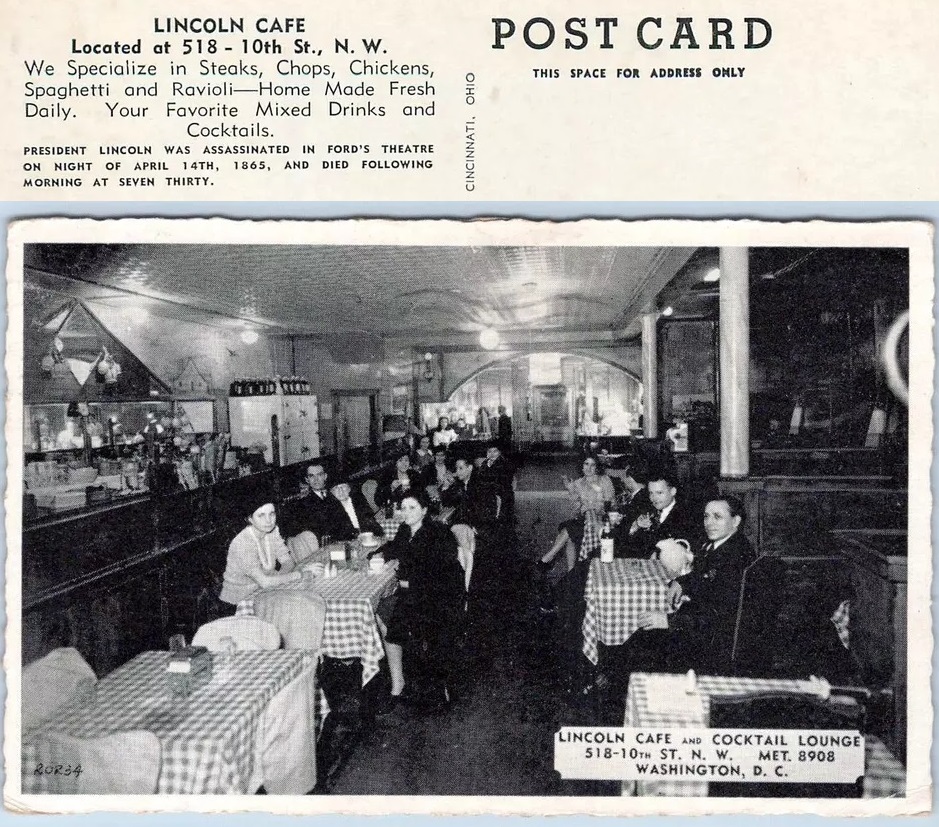
Postcard with an interior view of the Lincoln Cafe.

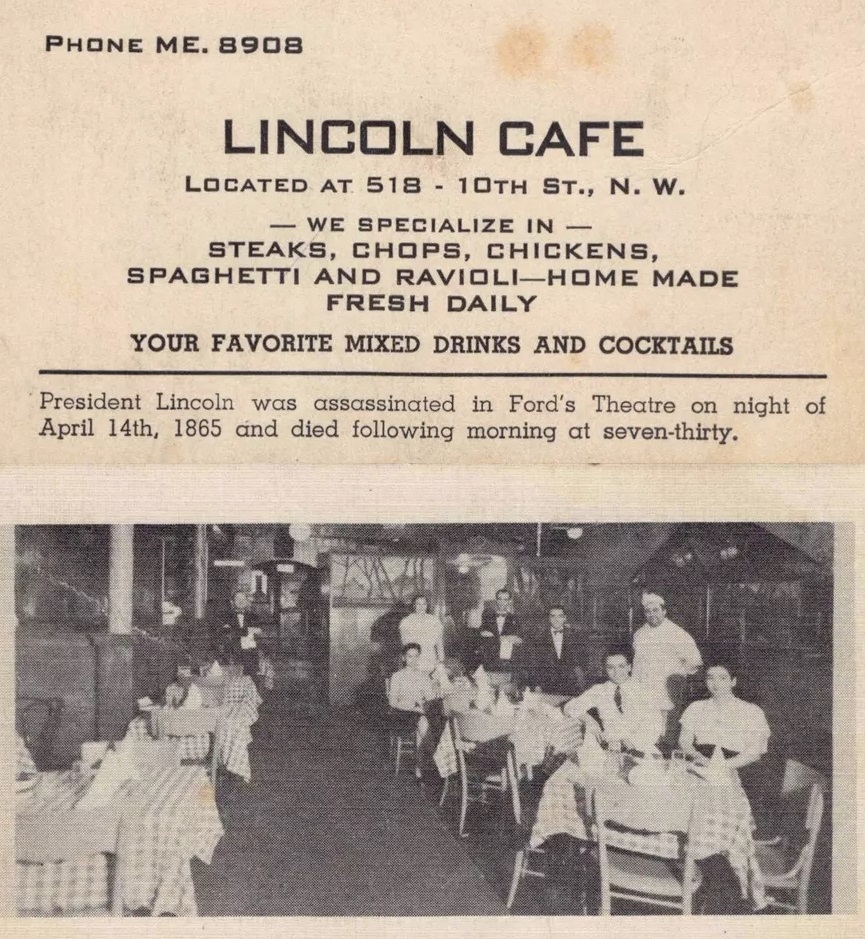
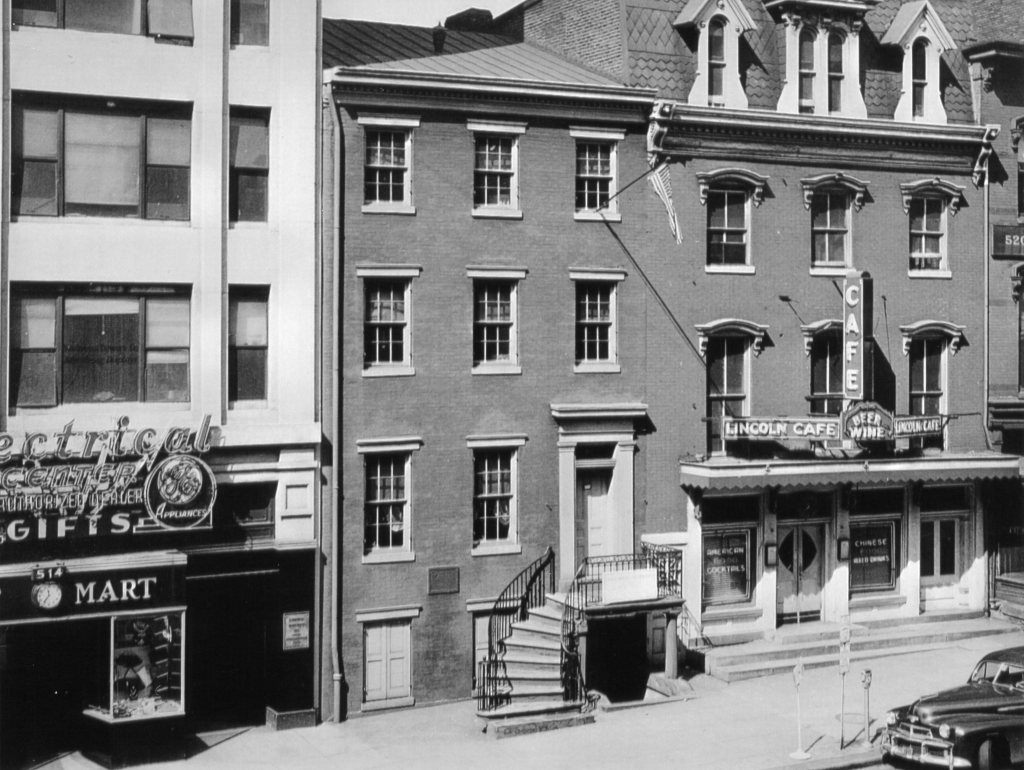
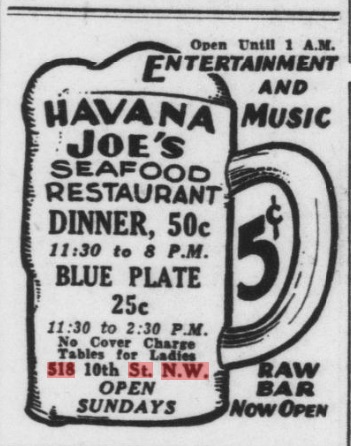
The card reads: “Chinese and American New Lincoln Cafe. Located at 518 10th St., N.W. Phone EX. 1468. We Specialize In Spaghetti-Home Made Fresh Daily. Your Favorite Mixed Drinks And Cocktails. President Lincoln Was Assassinated In Ford’s Theatre On Night Of April 14th, 1865, And Died Following Morning At Seven-Thirty.” A check of the records indicates that this restaurant remained next to the museum from the late 1930s to the early 1960s. This was just one of the businesses to call that space home over the generations.

Another view of the interior of the Lincoln Cafe.

Located in the Penn Quarter section of DC, the building was built sometime between 1865 to 1873. It envelopes the entire north side and part of the northwest back of the HWLD. It is 4 stories tall and features 11,904 square feet of retail space. One of the earliest storefronts to appear there was Dundore’s Employment Bureau which served D.C. during the 1870-90s. Ironically, when Dundore’s moved three blocks south to 717 M Street NW, the agency regularly advertised jobs at businesses occupying their old address for generations to come. Above the Dundore agency was Mrs. A. Whiting’s Millinery, which created specialty hats for women. The Washington Evening Star touted Mrs. Whiting’s “Millinery Steam Dyeing and Scouring” business for their “Imported Hats and Bonnets”. A 3rd-floor hand-painted sign on the bricks of the building advertising Whiting’s remained for years after the business vacated the premises, creating a “ghost sign” visible for many years as it slowly faded from view.
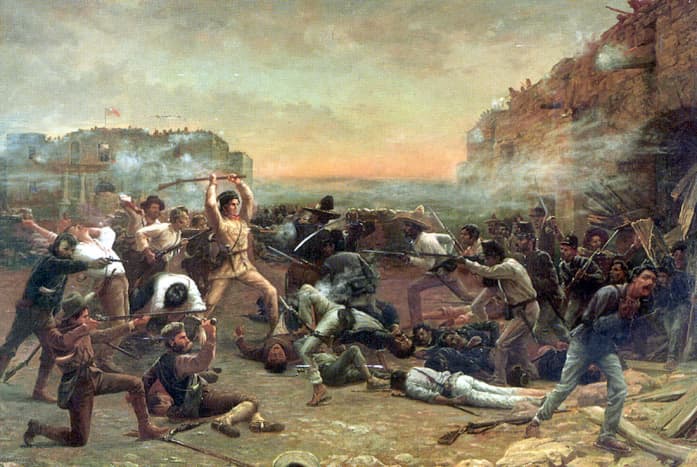
Photo of 516 W. 10th St. with Whiting’s ghost sign visible and Dundore’s Employment signs in windows.
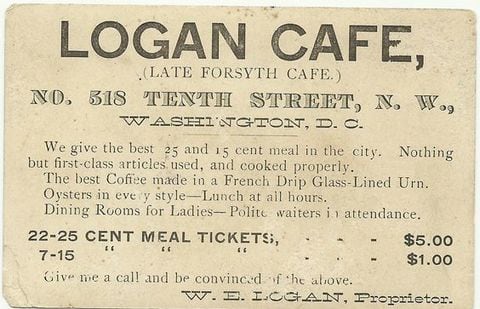
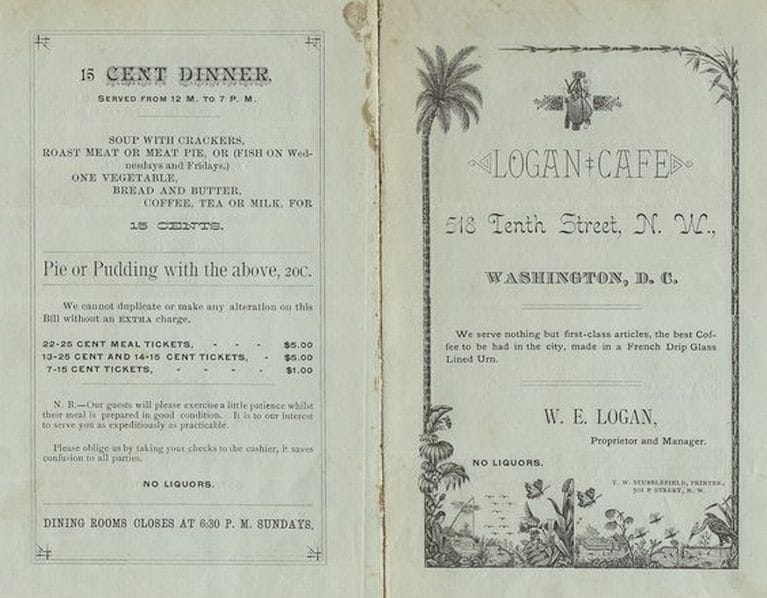
The Forsyth Cafe seems to have been the first bistro to pop up next to the Oldroyd Museum. In late February/March 1885 (in the leadup to Grover Cleveland’s first Presidential Inauguration), DC’s Critic and Record newspaper’s ad for the cafe decries, “Yes, One Dollar is cheap for the Inauguration supper, but what about those excellent meals at the Forsythe Cafe for 15 Cents?” The Forsyth continued to advertise their meals from 15 to 50 cents but by late 1886, they were gone, replaced by the Logan Cafe. The Logan offered 15 and 25-cent breakfasts, “Big” 10-cent lunches, and elaborate 4-course dinners of Roast beef, stuffed veal, lamb stew, & oysters. Proprietor W.E. Logan’s claim to fame was “the best coffee to be had in the city, made in French-drip Glass-Lined Urn” and “Special Dining Rooms for Ladies-Polite waiters in attendance” and his menus warned “No Liquors” served.

Business card from the Logan Cafe (Late Forsyth Cafe).

The June 4, 1887, Critic and Record reported on a “friendly scuffle” at the Logan between two “colored” employees when cook Charles Sail tripped waiter William Butler who hit his head on the edge of a table and died the next morning at Freedman’s Hospital. The men were described as best friends and the death was deemed an accident. By late 1887, the Logan disappears from the newspapers. From 1897 to 1897, the building was home to the Yale Laundry. The Jan. 7, 1897, DC Times Herald reported on an event that likely added to Oldroyd’s anxiety. The article, titled “Laundry is Looted” details a break-in next door to the museum during which a couple of safecrackers got away with $85 cash including an 1883 $5 gold piece.

Logan Cafe Menu.

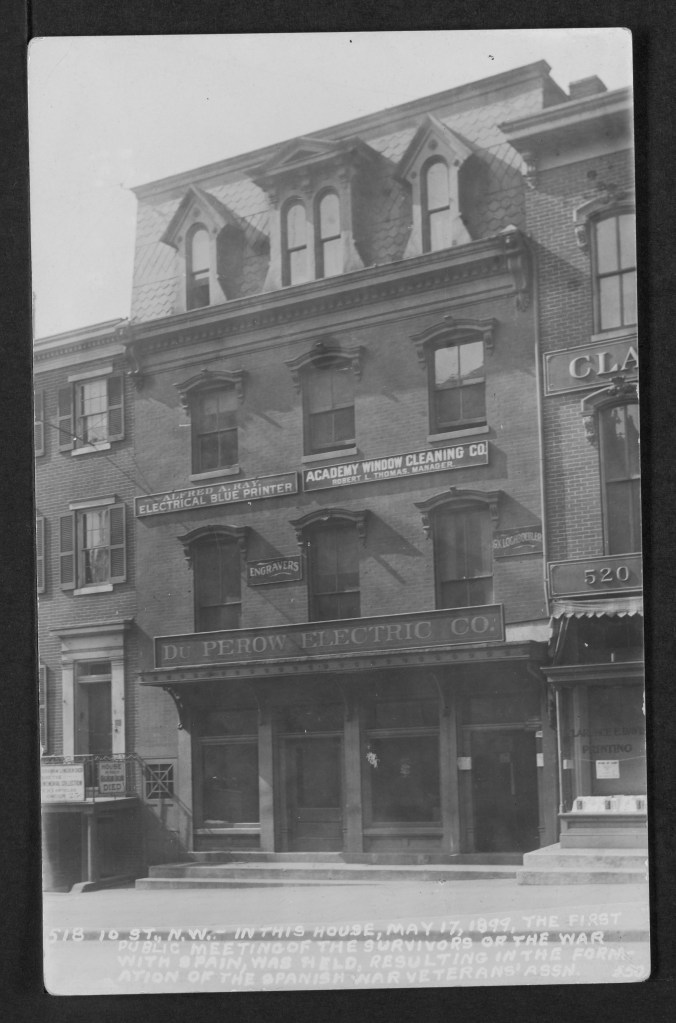
A real photo postcard in the collection of the District of Columbia Public Library pictures the building during Yale Laundry’s tenure captioned, “In this house the first public meeting of the survivors of the war with Spain, was held on May 17, 1899, resulting in the formation of the Spanish War Veterans’ Association.” The Dec. 1, 1900, Washington Star notes the addition of Harry Clemons Miller’s “Teacher of Piano” Studio and by 1903, the “Yale Steam Laundry” appeared in the DC newspapers at the address.

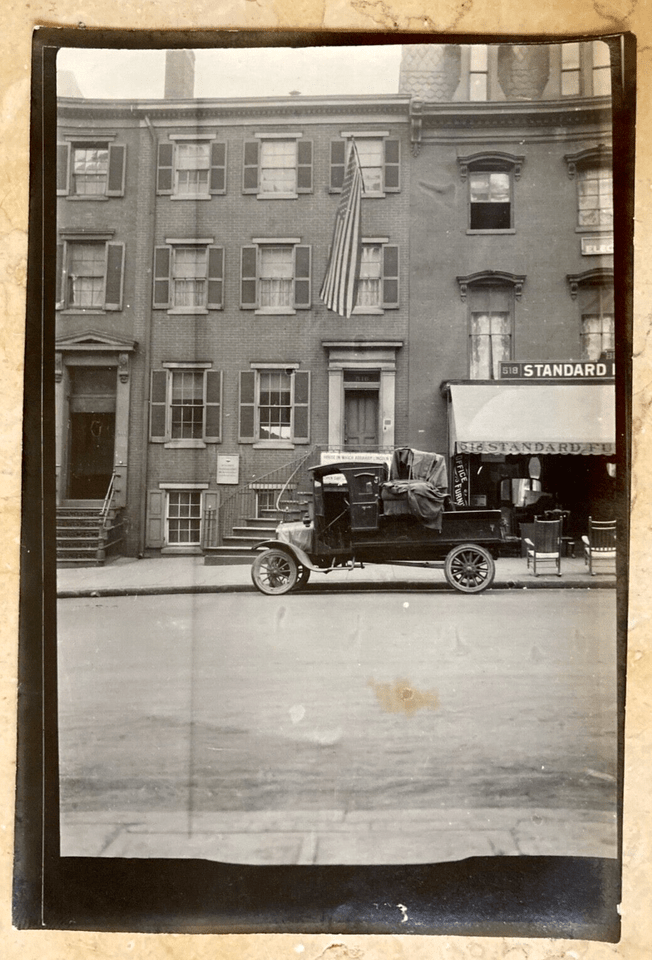
Furniture Truck Blocking Front of Oldroyd’s Museum.

In 1909, Du Perow Electric Co. (AKA as “Du Pe”) and partner Alfred A. Ray “Electrical Blueprints” occupied the building. A window cleaning company occupied room # 9 and a leather goods store was located there during this same period. By 1912, the storefront was occupied by the Standard Furniture Co. At least one photo survives presenting an amusing scene of a furniture truck blocking the entrance to Oldroyd’s museum. Amusing to the viewer today but most assuredly not to the museum curator back in the day. Eventually, the restaurants, bars, and cafes that worried Oldroyd began to come and go, among them, the Lincoln Cafe & Cocktail Lounge, whose sign was dominated by the words “Beer Wine.” It appears that during the 1920-50s, a Pontiac, DeSoto, Plymouth Motor Car dealer known as “News & Company” kept an office in the building, with the car lot and gas station across the street.

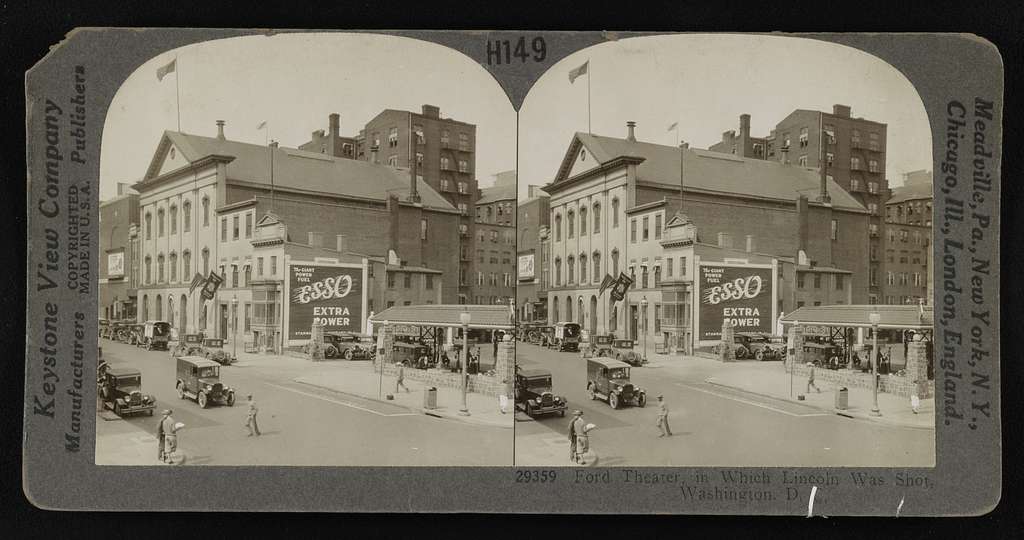
Esso Gas Station Next to Ford’s Theatre and across from the House Where Lincoln Died.
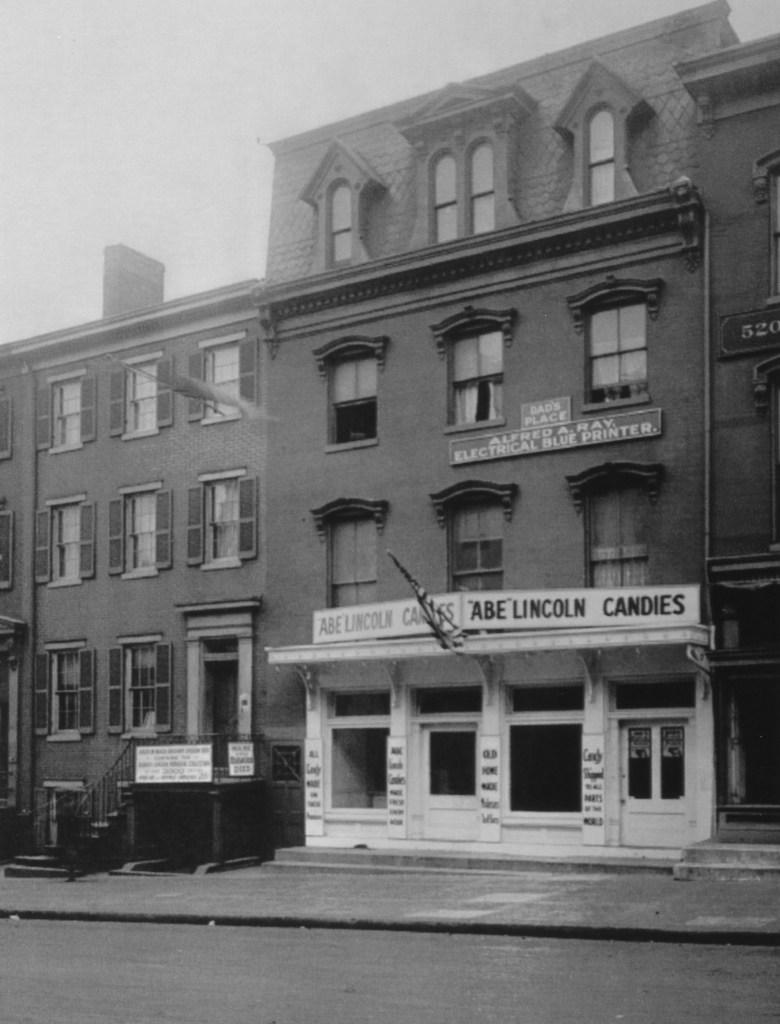
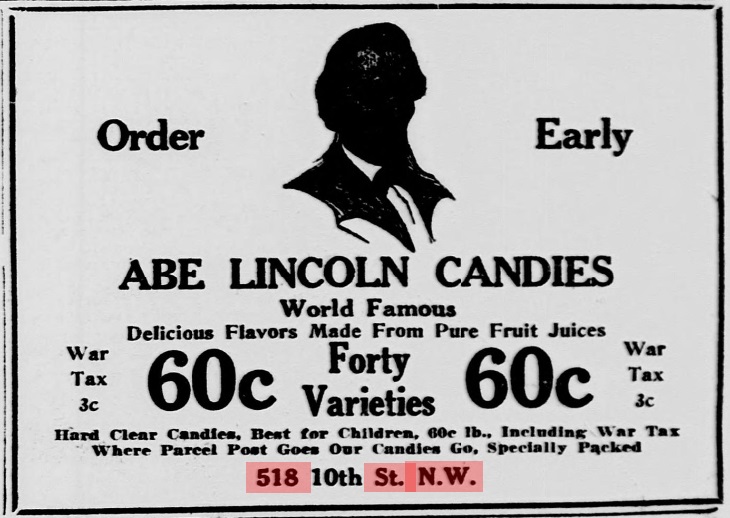
The Abe Lincoln Candy Store Nextdoor to the HWLD.

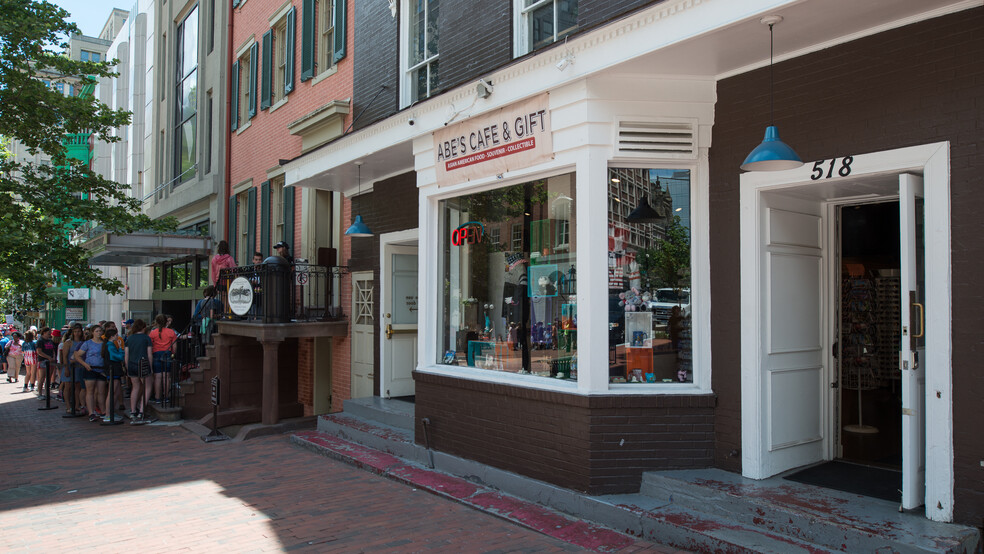
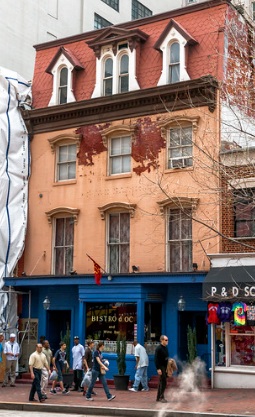
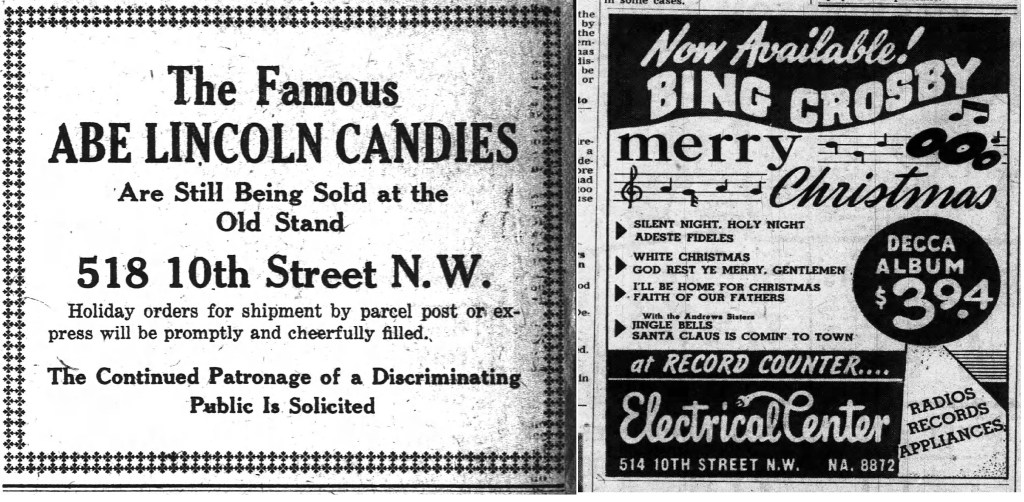
Old-timers remember a long-term tenant known as “Abe Lincoln Candies” that occupied the space from the 1950-70s. Other recent tenants included Abe’s Cafe & Gift Shop, Bistro d’Oc and Wine Bar, Jemal’s 10th Street Bistro, Mike Baker’s 10th St Grill, and the I Love DC gift store, and last year, The Inauguration-Make America Great Again Store, who one Yelp reviewer complained was crowded with outdated, sketchy clothing and that “they make u give them a good review before they give u a refund kinda scummy.”

View of the new high-rise building at 514 Tenth St. NW.

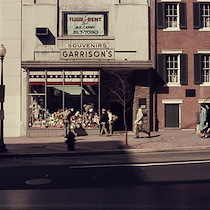
As for the building on the opposite side of Oldroyd’s museum at 514 Tenth St. NW, it remained a residence until 1922 when a $55,000, 10-story concrete & steel building with steam heat and a flat slag roof was built. Designed by architect Charles Gregg and built by Joseph Gant, the sky-scraper, known as the Lincoln Building, dwarfed the Oldroyd Museum. It was home to several businesses, including the Electrical Center (selling General Electric TVs, radios, and appliances) and the Garrison Toy & Novelty Co, its modern construction alleviated any concern of fire.

The Great Chicago Fire of 1871.

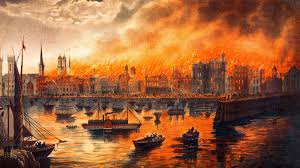
It must be noted that many great collections of Lincolniana fell victim to fire in the century and a half after Lincoln’s death. The Great Chicago Fire of 1871 consumed many Lincoln objects, documents, and personal furniture that had been removed from the Springfield home after the President’s departure to Washington DC. On June 15, 1906, Major William Harrison Lambert (1842-1912), recipient of the Congressional Medal of Honor and one of the Lincoln “Big Five” collectors, lost much of his collection in a fire at his West Johnson St. home in Germantown, Pa. Among the items lost were a bookcase, table, and chair from Lincoln’s Springfield law office and the chairs from Lincoln’s White House library. The threat of fire was a constant waking nightmare in Oldroyd’s life. While he did his best to control what went on inside his museum, he had no control over what happened outside. His life’s work of collecting precious Lincoln objects, over 3,500 at last count, could be gone in the flash of a pan.

ADDITIONAL IMAGES.

Abe’s Cafe & Gift Shop.
Bistro d’Oc and Wine Bar.
Garrison Toy & Novelty Company at 514 10th Street NW.

Hollywood, Museums, Music, Television

Al-Al-Alamo (Sussudio)

Original Publish Date August 2012.

https://weeklyview.net/2024/09/05/al-al-alamo-sussudio/

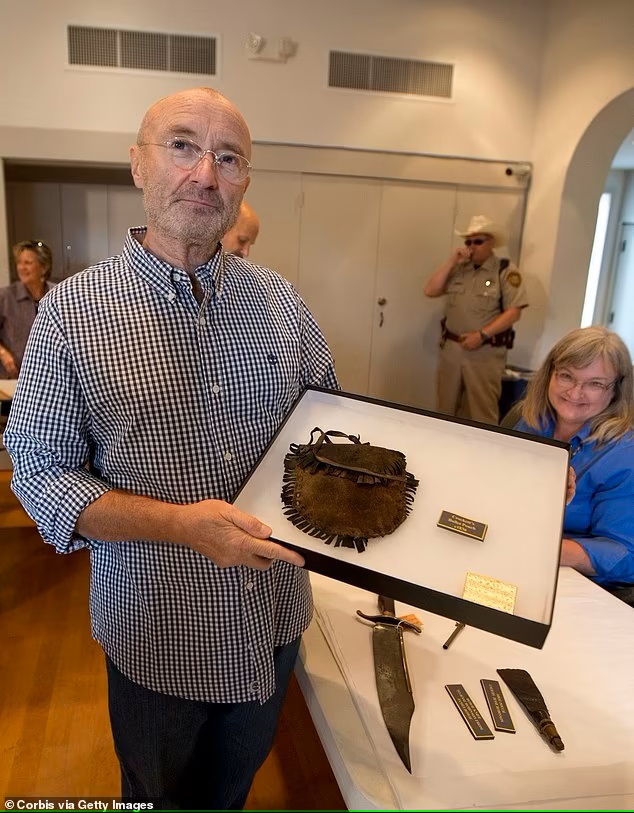
Genesis Drummer / Vocalist & Alamo Enthusiast Phil Collins.

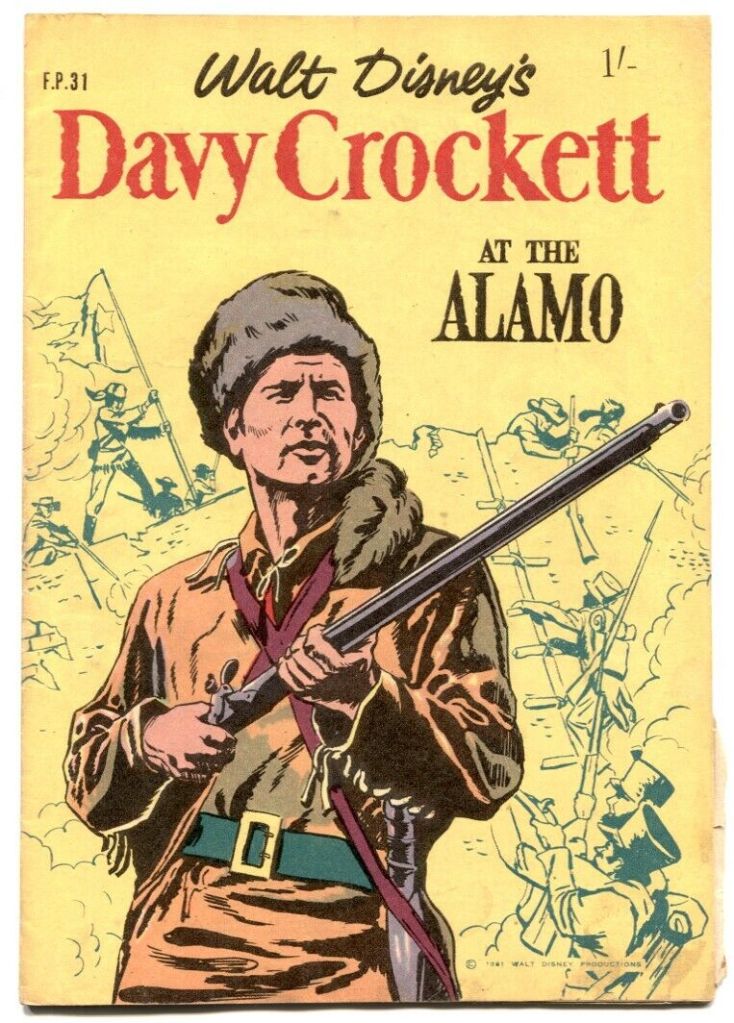
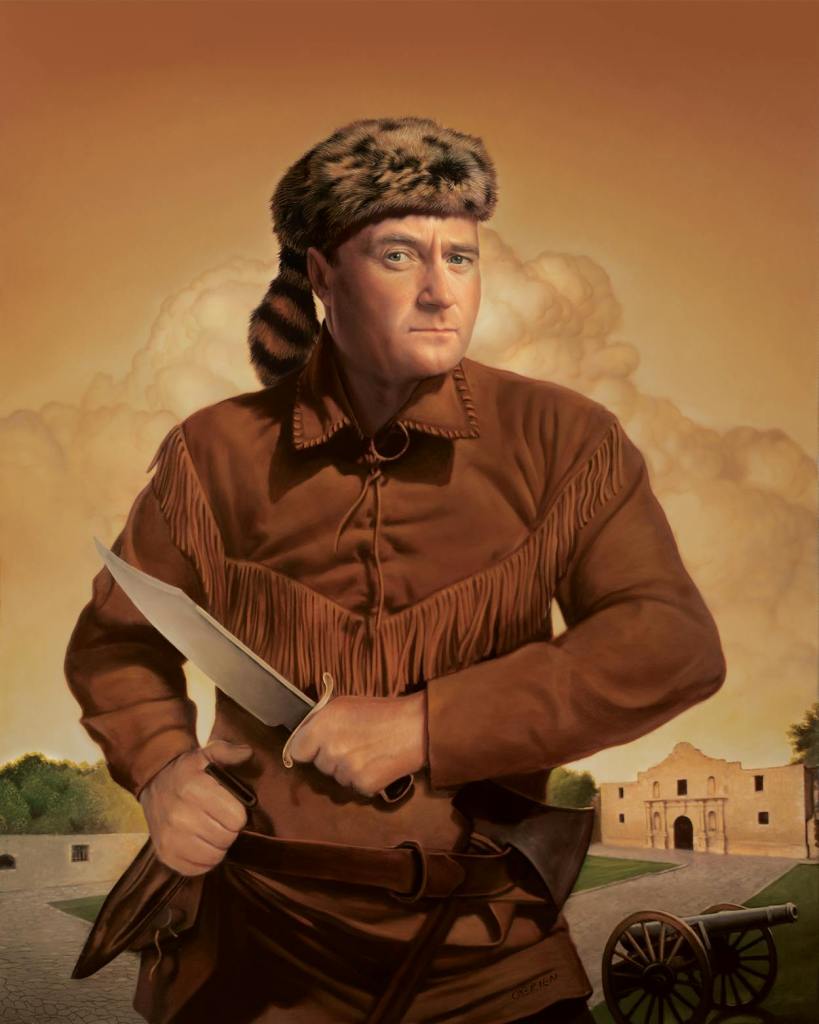
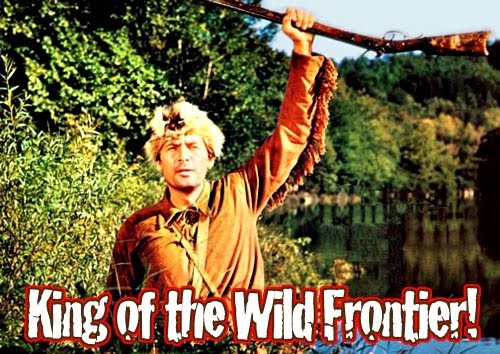
I was born way too late to partake in the coonskin cap craze born of Fess Parker’s Davy Crockett TV show that caused a national sensation for a couple of years in the mid-1950s. But I knew who he was and always thought of him fighting Indians, wrestling bears, and, in general, just being “King of the Wild Frontier.” It wasn’t until much later in life that I realized that Crockett was a United States Congressman from Tennessee who wisely fought against Andrew Jackson’s brutal Indian Removal Act of 1830 and supported the rights of “squatters” who, in most cases, improved the land they lived upon but were barred from buying it because, well, because they didn’t own any land. Both seemed like no-brainers to me, but that support drew the ire of Andrew Jackson and ultimately drove Davy from the state and country by costing him his job.

What floored me the most was when the revelation finally set into my grade school mind that Davy Crockett, Walt Disney’s Davy Crockett, fought and died at the Alamo in 1836. I guess I never thought of him in those terms, you know, as a real live human being. In my mind, he was a work of historical fiction in the same class as Paul Bunyan and Babe the Blue Ox. I checked out A book from the Indianapolis Public Library as a kid and read all about the battle at the Alamo. It was for years considered to be the benchmark history of this pivotal event in the fight for Texas independence. But the Alamo was a loss for Americans and I was a Vietnam War Era kid and well, my generation didn’t want to hear anymore about losing.

Well, the Alamo just got its hipness back. Do you know who has the largest private collection of artifacts from the Battle of the Alamo? It might surprise you to learn that it’s Englishman Phil Collins — songwriter, drummer, pianist, actor, and lead singer of the rock band Genesis and a successful solo artist all his own. Collins sang lead on several chart-topping hits between 1975 and 2010 ranging from the drum-heavy “In the Air Tonight,” dance pop of “Sussudio,” piano-driven “Against All Odds,” to the political statements of “Another Day in Paradise.” According to Atlantic Records, Collins’ total worldwide sales as a solo artist from 1981 to 2004 were 155 million including 30 hit singles earning him seven Grammy Awards, an Academy Award, and two Golden Globes for his solo work. He was inducted into the Rock and Roll Hall of Fame as a member of Genesis in 2010.

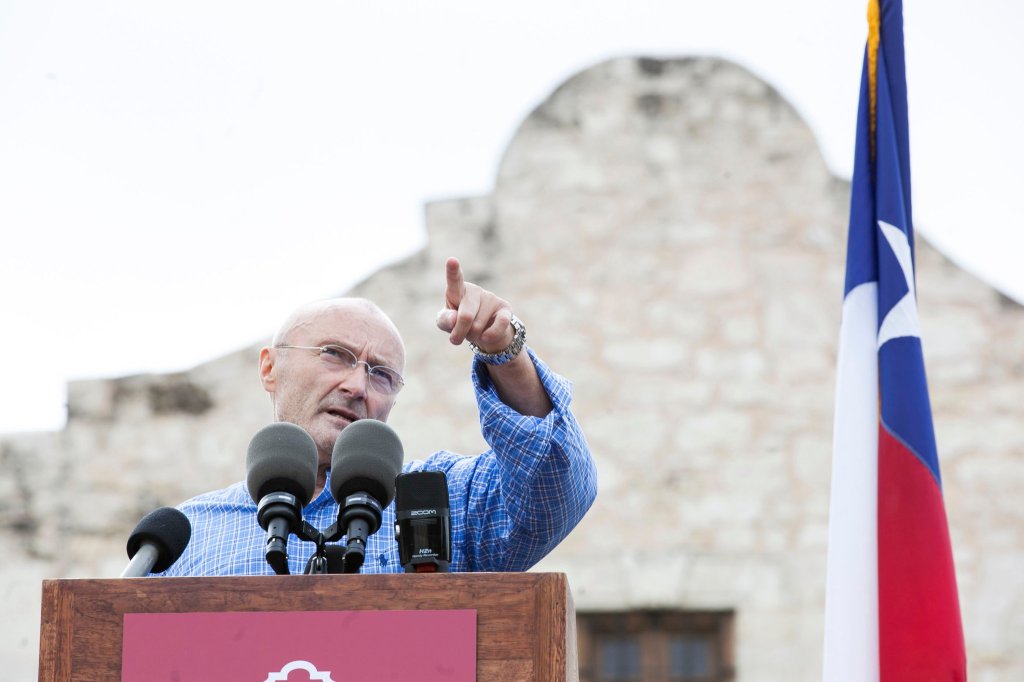
Phil Collins.

While most Rock stars were burning cash on fast cars, drugs, yachts, or trophy girlfriends, Phil Collins was buying up relics from the Texas Revolution and the Alamo.  “It keeps me off the streets. What am I going to do? I don’t want to traipse around the world anymore,” he told a reporter. “I love it. I sit downstairs in my basement looking at and sort of drooling over what I’ve got. It was never my intention to have this huge collection, but one thing led to another and it’s my private thing.” Among his treasures are one of Davy Crockett’s rifles and his post-death receipt from the Texan Army. They share space with Jim Bowie’s knives, verbose William Barret Travis’ letters, Santa Anna items and a snuffbox that Sam Houston gave to a romantic interest. And those are just a few of the pieces from the Texas Revolution’s biggest names.

Collins’ Alamo obsession began when he was a 5-year-old boy (who had just got his first drum set) in the London suburb of Chiswick after seeing the Disney series “Davy Crockett, King of the Wild Frontier.” “When I was five or six I started dressing up like Davy Crockett,” Collins recalled. “My sister told me a few months ago that my grandmother cut up her fur coats so I could have a coonskin hat. From there I moved on to the harder stuff, which was John Wayne’s The Alamo.”

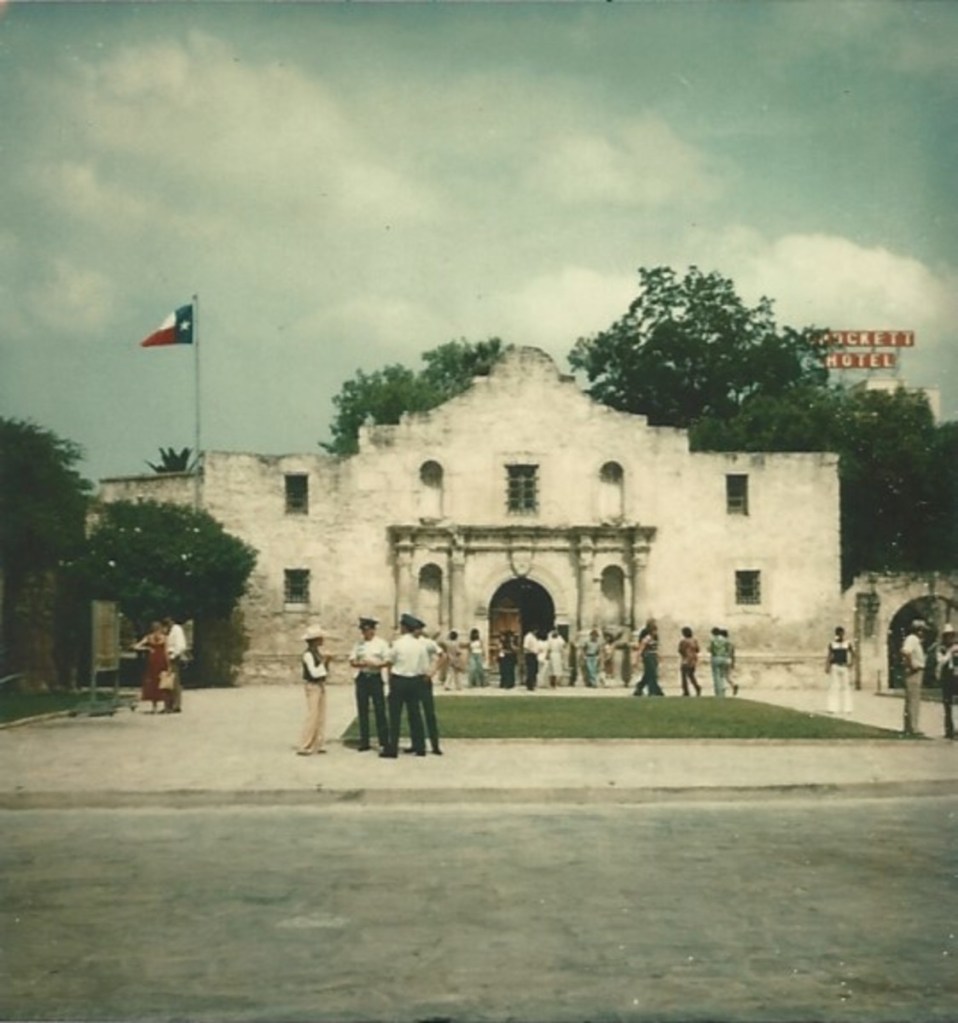
The Alamo in the 1970s.

He first visited the Alamo in the early 1970s during a break while touring with Genesis. Then, in the late 1980s, he found himself browsing in an antiquities store in Washington, D.C. looking for Disney animation cels with his wife during a tour with Genesis. “We came across a Davy Crockett letter (he thought it was too expensive at $60,000), and suddenly it occurred to me: My God, this stuff exists! One thinks it’s all burned, dead, buried — you know, history. So the seed was planted.”

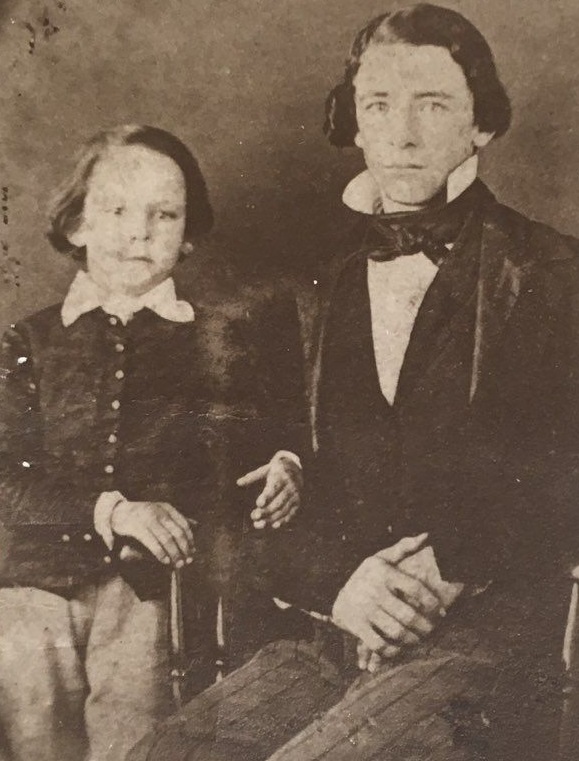
John William Smith and son.

A few years later, someone gave him a framed document as a gift: a receipt for a saddle belonging to John William Smith, the first mayor of San Antonio and one of the couriers Travis dispatched from the Alamo to get aid to the doomed Texans. (A clairvoyant later told Collins that he was Smith reincarnated.) “I just looked at the receipt and marveled at how many miles this saddle must have (been) ridden. “I thought if that’s out there, then let’s see what else is out there,” he said. “And that was the beginning of my collection.”

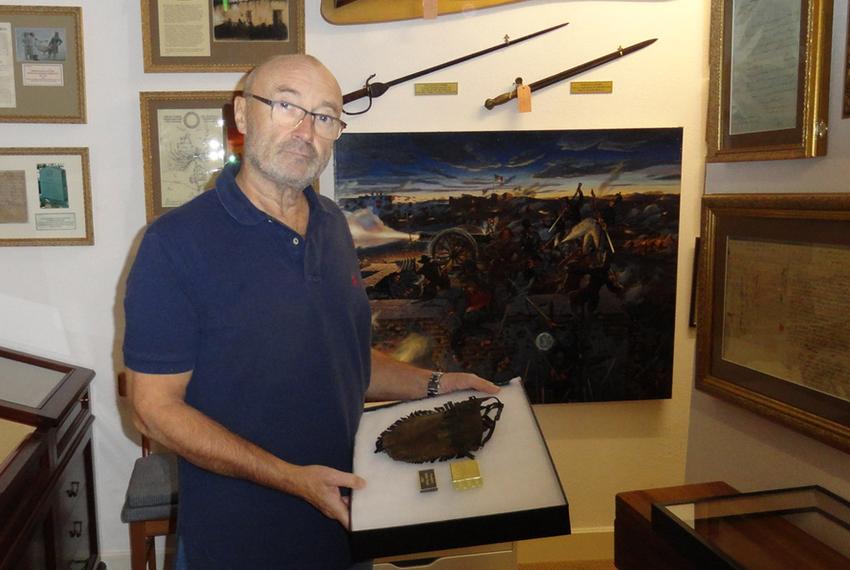
Collins with Davy Crockett;s Musket Ball Pouch. Photo courtesy Getty Images,

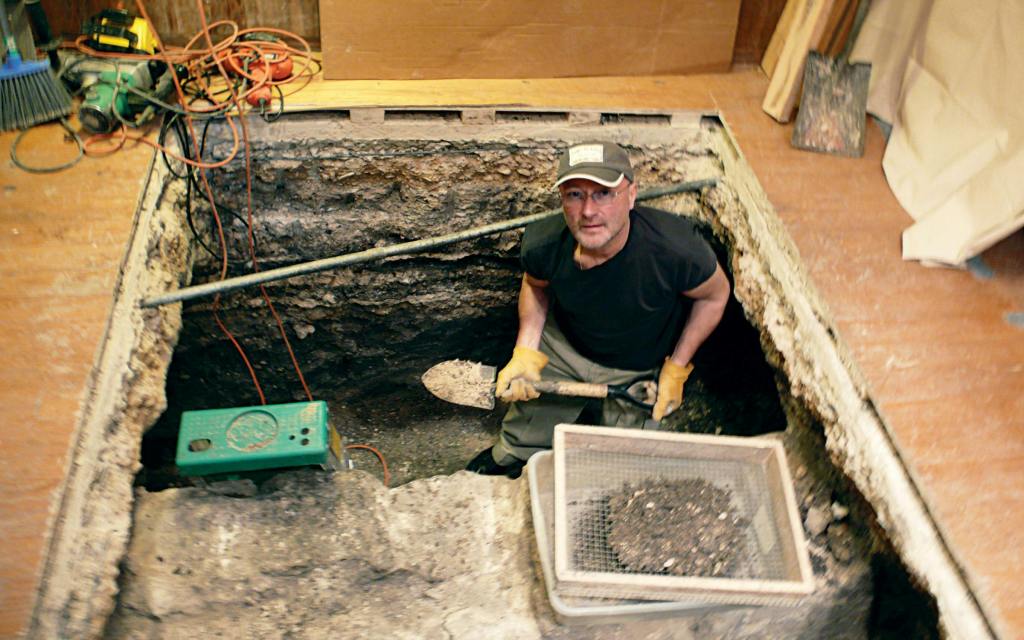
Life and music rolled on and Phil was amassing a respectable personal collection of Alamo artifacts; picking up a piece here or there (mostly for decoration) when in 2004, Collins found himself in San Antonio again, this time on his farewell tour before retiring from music. (An operation to fix some dislocated vertebrae made the decision for him.) By now a seasoned collector, he visited the Alamo for what he thought was his last time before he focused on raising his boys at home overseas. After a private tour (what did you expect? He’s Phil Collins), he stopped in at The History Shop, a store about fifty yards from the mission, where he met the shop’s owner, Jim Guimarin, who offered to scout for artifacts for him. The two became friends, and one night (after a few margaritas) Guimarin pointed out that no one had ever dug beneath his rented storefront. So in 2007, they bought the building, rented another shop space and were soon digging beneath the floorboards.

Phil Collins digging beneath the Alama Floorboards.

At a depth of 40 inches, “battle level,” they found hundreds of relics, including a rusted over-and-under pistol, musket balls, grapeshot, and personal items like buckles, buttons, and a penknife. “It was incredibly exciting. We found hundreds of horseshoes, but we found things that were in incredible condition,” Collins said, adding that he got an irate letter from an archaeologist about the dig. “She thinks we just went in there with a spade. Nope, it was very well-organized, and everything was looked over,” he said. “There were cannon handles and a flattened cannonball, lots of musket balls, personal effects of soldiers,” Collins said. They also found the remains of three fire pits, which may have been the site of the group that cleaned up after the battle, led by General Andrade.

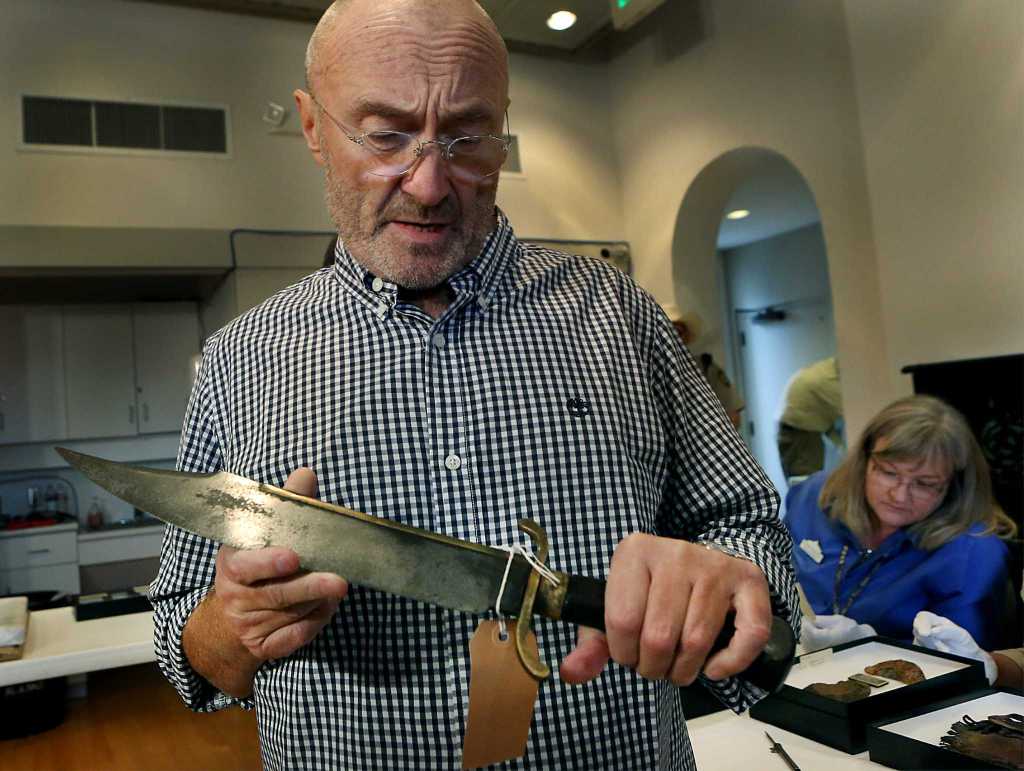
Phil Collins holding a Bowie knife that belonged to Jesse Robinson who fought under Jim Bowie.

Besides the artifacts from The History Shop, Collins’ collection, which he keeps in the basement of his house in Switzerland, includes Davy Crockett’s musket-ball pouch (complete with five musket balls and two powder horns) that Crockett supposedly gave to a Mexican officer before he was executed, the sword belt that Travis was wearing when he died. a knife belonging to James Bowie (Texan folk hero — no relation to that other British rocker David Bowie), and a sword belonging to the Mexican leader Antonio López de Santa Anna.

Collins is thrice divorced, with five kids, including two young sons still at home. He says, “The romance is infectious. I’ve got a seven-year-old who watches the John Wayne and the Billy Bob Thornton versions and can name every character, and goes and dresses up as a Mexican,” he said. “It captures him the way it captured me. Now he’s moved on to Napoleon.” Thoughtful, polite, and studiously serious about his passion, Collins, 61, says the Alamo story “changed my life.” It’s no surprise that an Englishman should be captivated by the Alamo. “The fight for freedom speaks to people worldwide,” Collins said, “the fact that you have a rock star who has a love affair with it says it’s everybody’s Alamo.” After all, the San Antonio shrine draws nearly 3 million visitors every year. Collins hopes that his collection will end up in a museum someday for others to enjoy.

Phil Collins at the Alamo.

As for my part, if you’ve read my columns in the past, you know that I often obsess about collectors, relics, and collections. Most collectors of historic memorabilia share pretty much the same dream. That dream is to save, catalog, preserve, and protect the items they’ve deemed important to the field they have desired to pursue. You will find no greater advocate for collecting than me. In fact, I suggest you visit your local antique shop/show and give it a try. You never know what you might find. Heck, maybe you’ll bump into Phil Collins along the way.

Creepy history, Criminals, Homosexuality, Museums

Leopold & Loeb A Hundred Years On.

Original publish date June 6, 2024. https://weeklyview.net/2024/06/06/leopold-and-loeb-a-hundred-years-on/

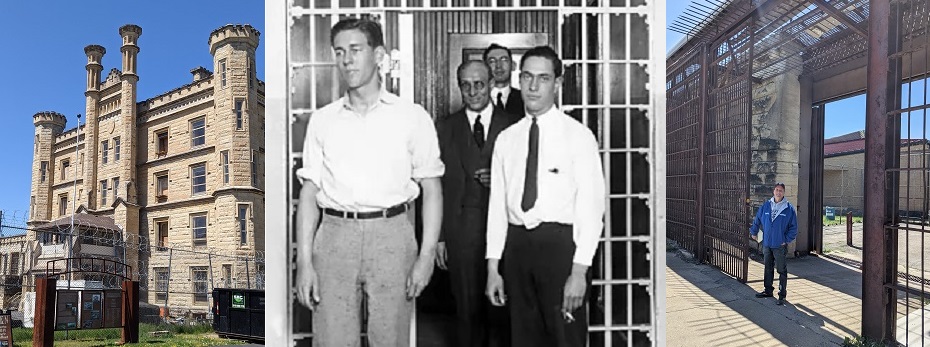
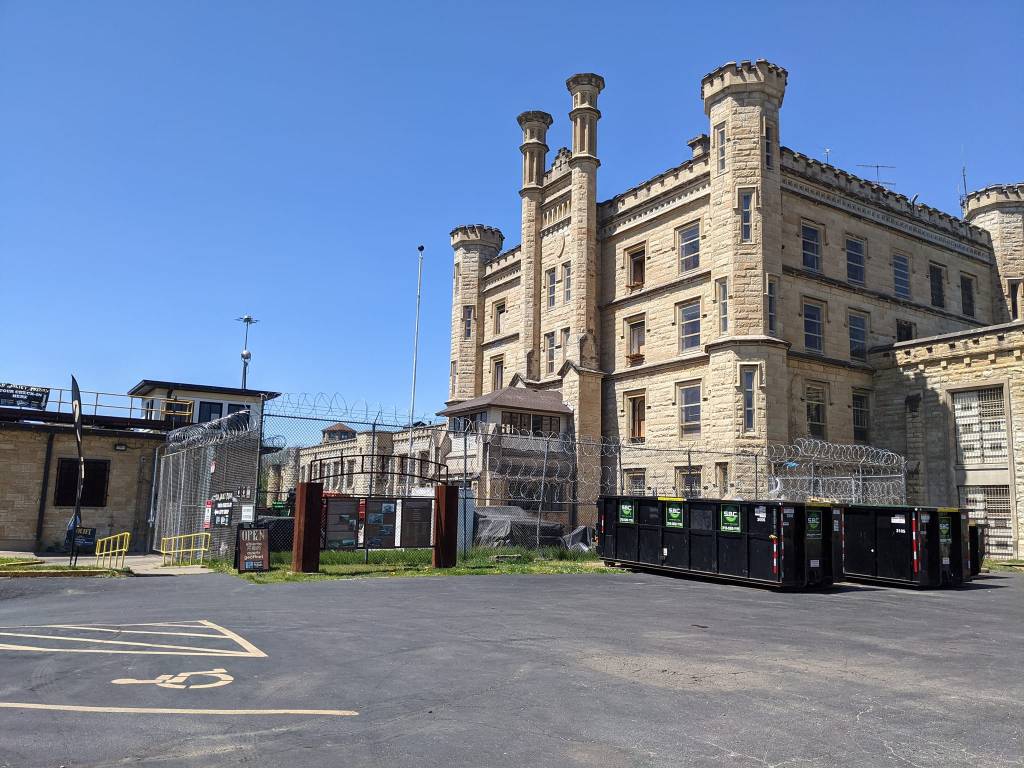
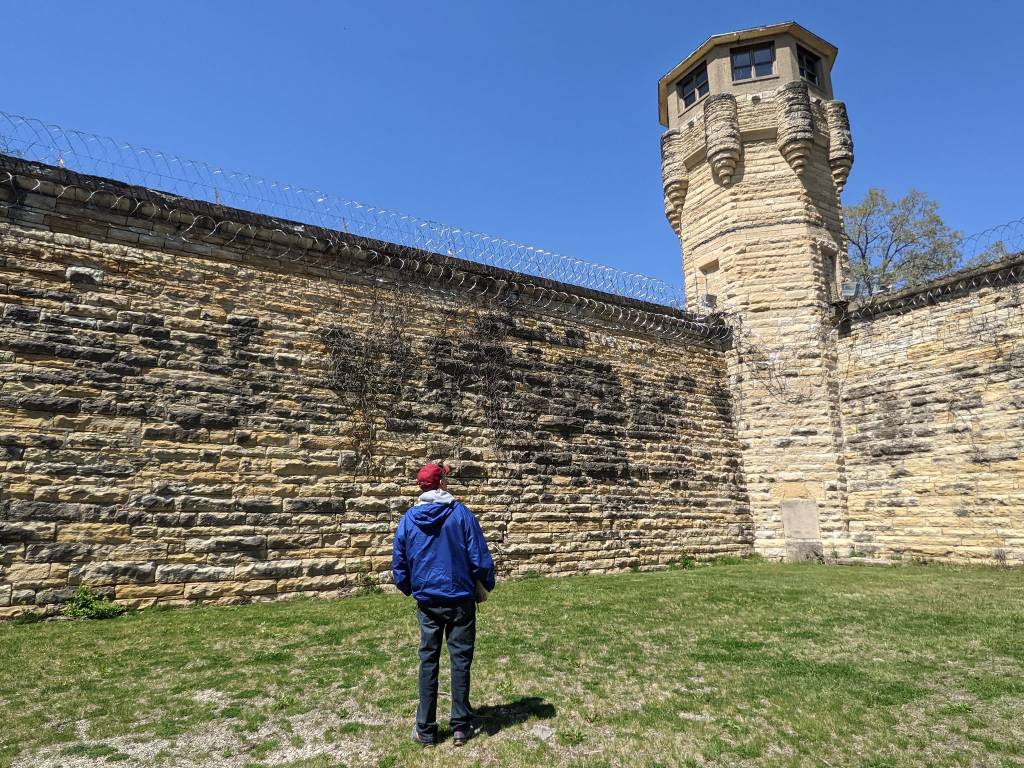
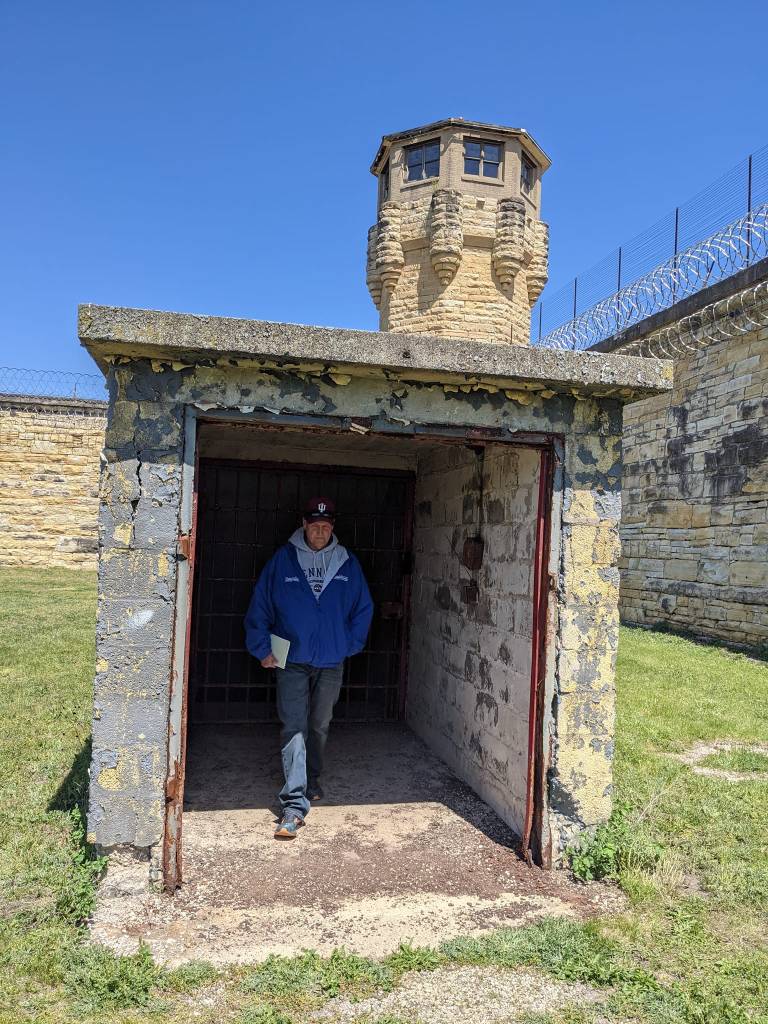
Old Joliet Penitentiary, Leopold & Loeb, and the author at the Blues Brothers gate.

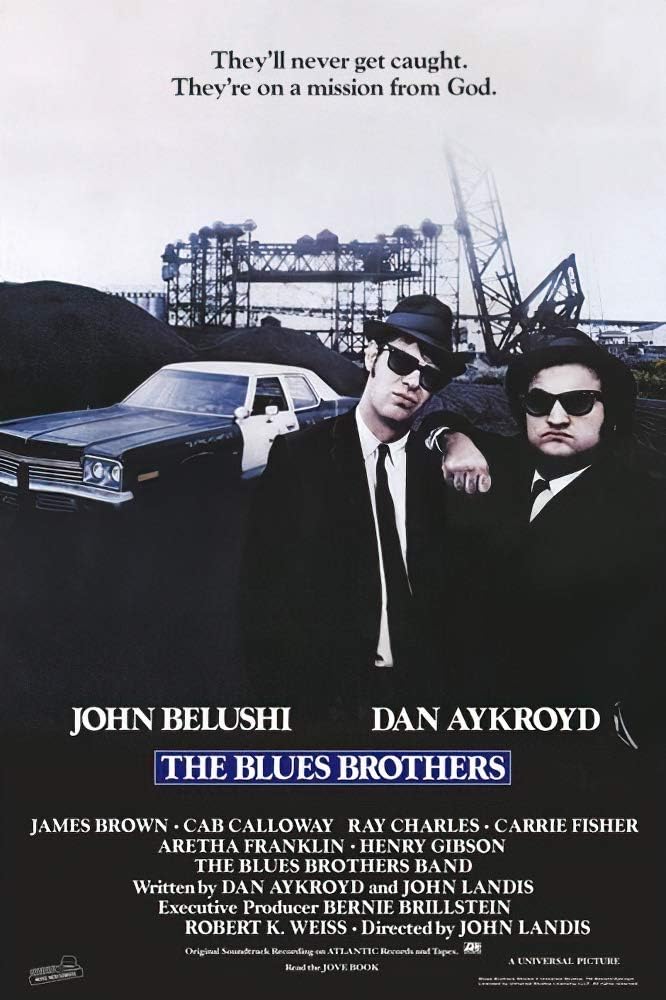
Last month, Rhonda and I drove to the outskirts of Chicago to visit Joliet Prison in Illinois. Like many ancient jails, prisons, and penitentiaries, Joliet has experienced a second life as a tourist attraction. It opened back in 2018. During the summer months (June to September) Joliet is open daily for tours until 6 p.m. For $20 you can go visit the old stomping grounds of notorious inmates like Richard Speck, John Wayne Gacy, James Earl Ray, and Baby Face Nelson. In my case, I was interested in the place because of Leopold and Loeb. Okay, okay, I was also there thinking of the Blues Brothers, but mostly Leopold and Loeb.

Old Joliet Penitentiary (originally known as Illinois State Penitentiary) opened in 1858 and was a working prison until 2002. In “The Blues Brothers” movie, Dan Aykroyd (Elwood J. Blues) awaits outside the prison gate for the release of John Belushi’s character (“Joliet Jake” Blues). Guests enter through the same gate Belushi exits. If you are sly, you can sneak over and crank the gate open or closed on your own. The prison was also used in the cult classic James Cagney film “White Heat” and the 1957 movie “Baby Face Nelson.”

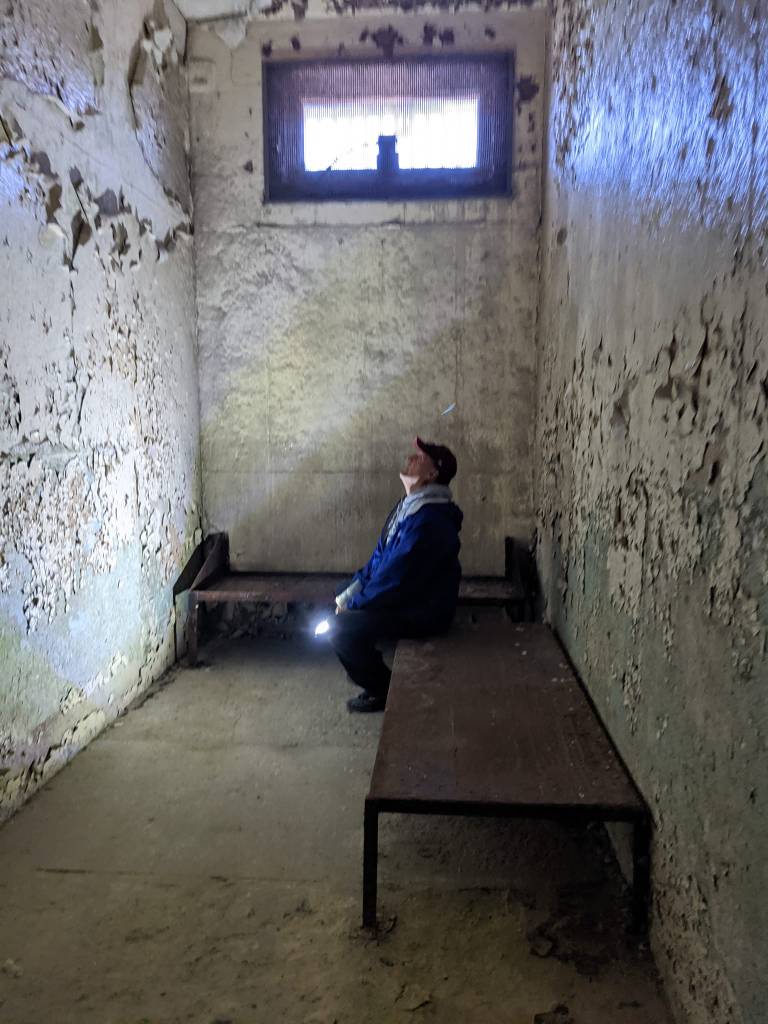
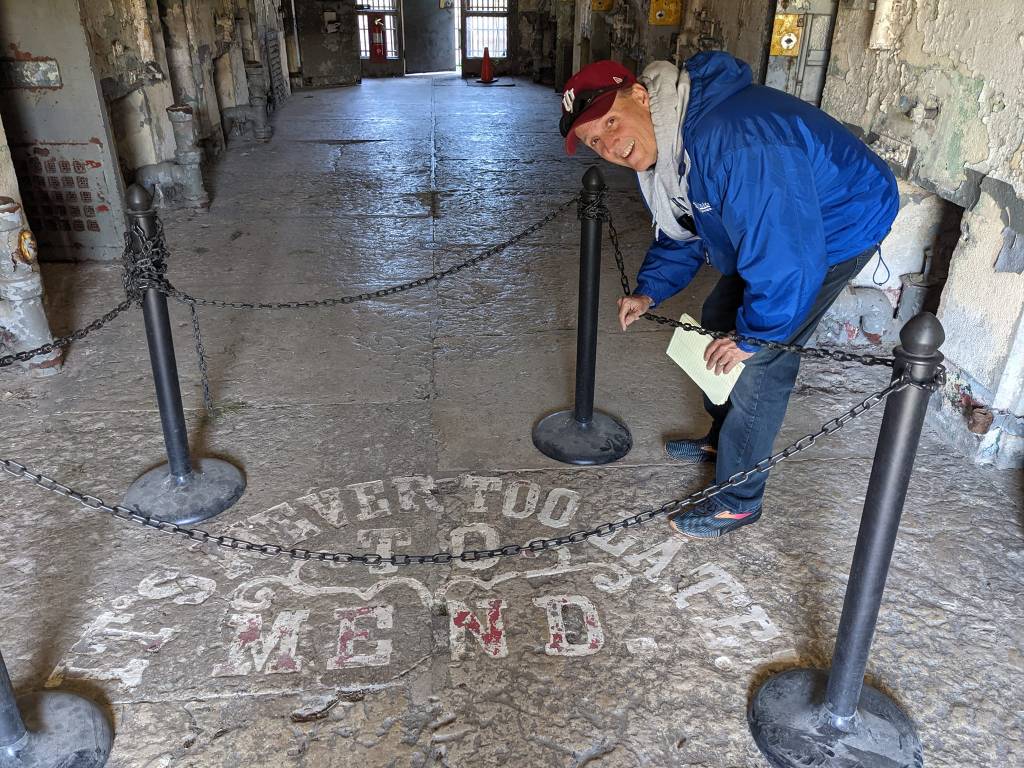
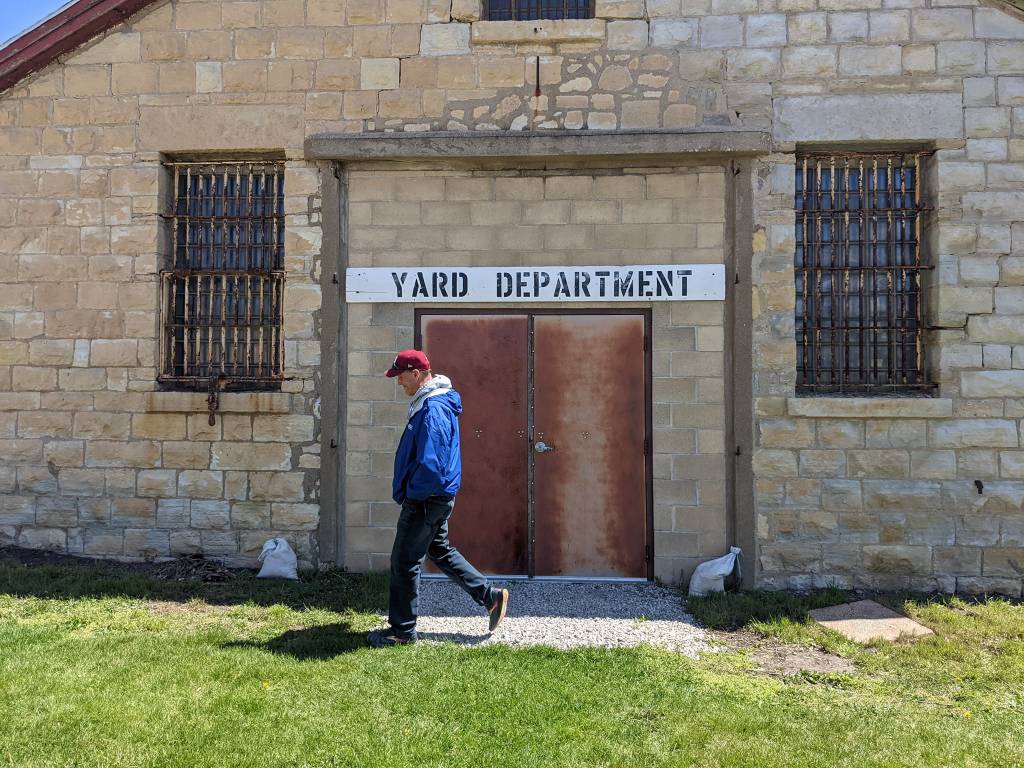
Like many of these incarceration-as-entertainment venues, Joliet is in a perpetual state of arrested decay. The tours are entirely self-guided and for a double sawbuck, you are handed a map and told to go explore “any door that is open.” We followed instructions and were only chased out of one building: the maintenance building. Which begged the question, “Then why did you leave the door open?” Visitors are warned not to shut the cell doors because they don’t have the keys and, oh, look out for rats. (For the record we saw none.) The women’s prison is still in place across the street but is only used nowadays for Halloween seasonal haunted houses and ghost tours.

Why, you ask, Leopold and Loeb? Well, because it was the 100th anniversary date of a crime that is mostly forgotten today but was the first “Crime of the Century”, the first “Trial of the Century” and the first “Media Circus” this “country-as-world-superpower” ever experienced. Fresh off the victory in World War I and smack dab in the middle of the Jazz Age, everything was bigger, faster, and more important in the US at the time. The crime hit the USA like a Jack Dempsey knockout punch to the jaw.

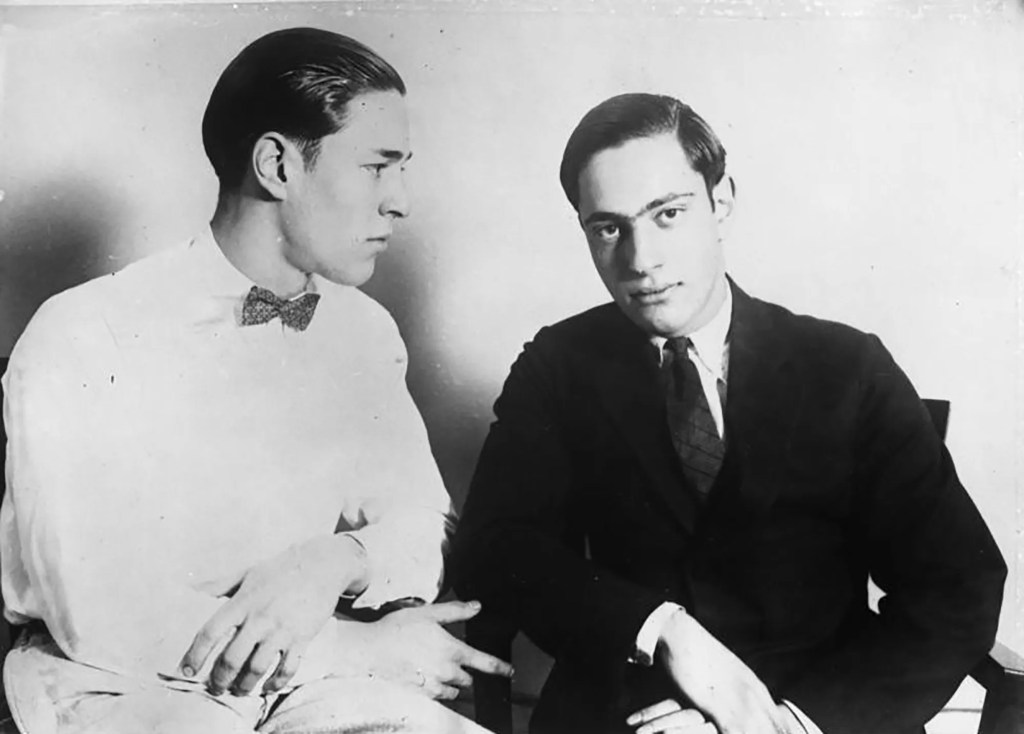
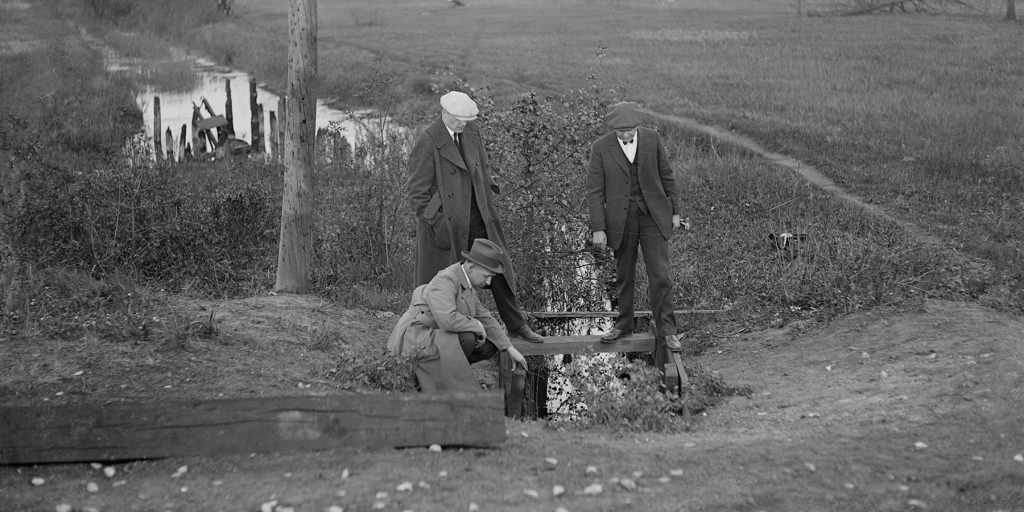
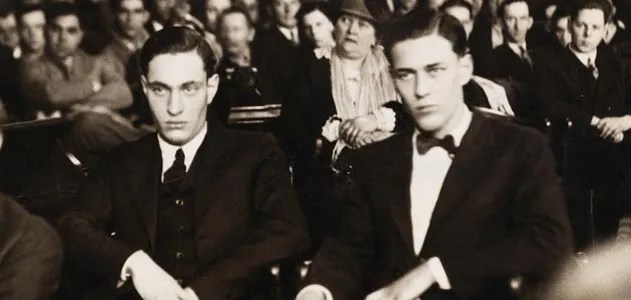
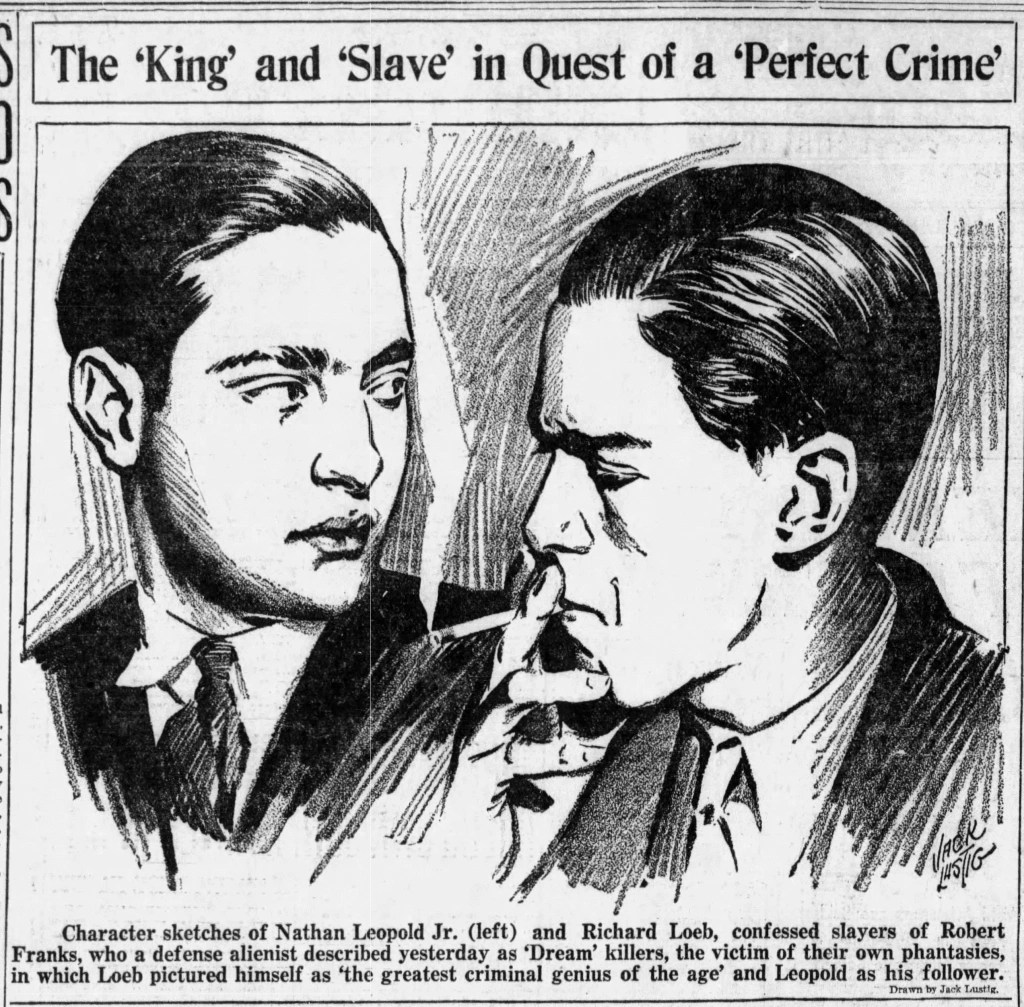
Nathan Freudenthal Leopold Jr. (November 19, 1904 – August 29, 1971) and Richard Albert Loeb (June 11, 1905 – January 28, 1936), were two affluent students at the University of Chicago who kidnapped and murdered a Chicago boy named Bobby Franks on May 21, 1924. They disposed of the schoolboy’s body in a culvert along the muddy shore of Wolf Lake in Hammond, Indiana. The duo committed the country’s first “thrill kill” as a demonstration of their superior intellect, believing it to be the perfect crime without possible consequences.

Richard Loeb (1905-1936) & Nathan Leopold (1904-1971).

Leopold (19) and Loeb (18) settled on identifying, kidnapping, and murdering a younger adolescent as their perfect crime. They spent seven months planning everything, from the method of abduction to purchasing rope and a heavy chisel to use as weapons, and to the disposal of the body. To make sure each of them was equally culpable in the murder, they agreed to wrap the rope around their victim’s neck and then each would pull equally on their end, strangling him to death. To hide the casual nature of their “thrill kill” motive, they decided that they had to make a ransom demand, even though neither teenager needed the money.

Bobby Franks (1909-1924)

After a lengthy search in the Kenwood area, on the shore of Lake Michigan on the South Side of Chicago, they found a suitable victim on the grounds of the Harvard School for Boys where Leopold had been educated. (Today, Kenwood has received national attention as the home of former President Barack Obama and his family.) The duo decided on 14-year-old Robert “Bobby” Franks, the son of wealthy Chicago watch manufacturer Jacob Franks. Bobby lived across the street from Loeb and had played tennis at the Loeb residence many times before.

Around 5:15 on the evening of May 21, 1924, using a rented automobile, Leopold and Loeb offered Franks a ride as he walked home from school after a baseball game. Since Bobby was hesitant, being less than two blocks from his home (which still stands at 5052 S. Ellis), Loeb told the victim he wanted to talk to Bobby about a tennis racket that he had been using. While the exact details of the crime are in dispute, it is believed that Leopold was behind the wheel of the car with Bobby in the passenger seat while Loeb sat in the back seat with the chisel. Loeb struck Franks in the head from behind several times with the chisel, then dragged him into the back seat and gagged him, where he died.

The culvert where Bobby Franks’s body was found. Chicago Daily News collection Chicago History Museum

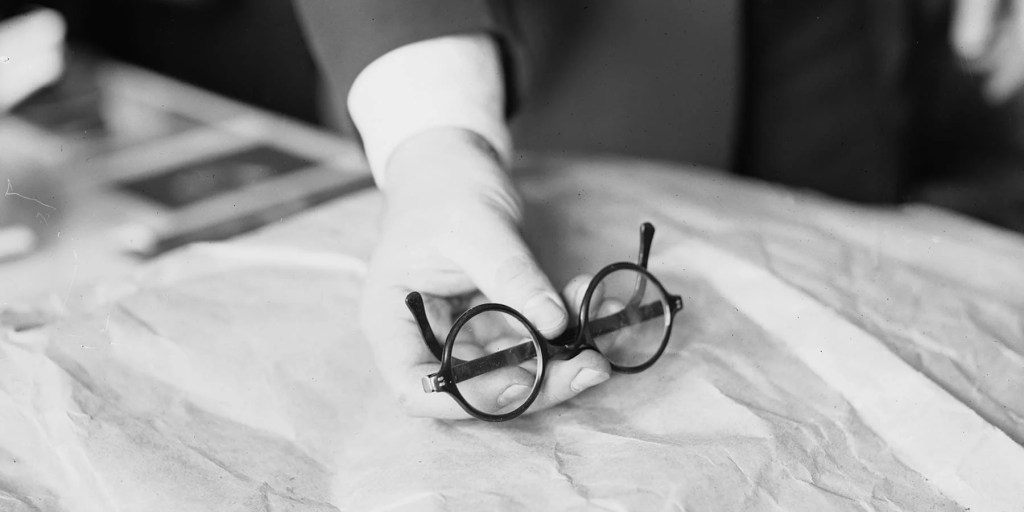
Loeb stuffed the boy’s body into the floorboards and scrambled over the back of the passenger seat. There is little doubt that the deadly duo’s demeanor was joyous as they exchanged smiles below bulging eyes accentuated with anxious breathing and giggles of laughter. The men drove to their predetermined body-dumping spot near Wolf Lake in Hammond, 25 miles south of Chicago. They concealed the body in a culvert along the Pennsylvania Railroad tracks north of the lake. To hinder identification, they poured hydrochloric acid on the face and body. When they returned to Chicago, they typed a ransom note, burnt their blood-stained clothing, and cleaned the blood stains from the rented vehicle’s upholstery. After which, they spent the remainder of the evening playing cards. They didn’t know that police had found a pair of Leopold’s prescription eyeglasses (one of only three such pairs in the entire city) near Franks’ body.

Leopold & Loeb.

Their plan unraveled quickly. When Roby, Indiana, (a now non-existent neighborhood west of Hammond) resident Tony Minke discovered the bundled-up body of Bobby Franks along the shore of Wolf Lake, the gig was up. The thrill killers destroyed the typewriter and burned the lap blanket used to cover the body and then casually resumed their lives as if nothing ever happened. Both of these demented little rich boys enjoyed chatting with friends and family members about the murder. Leopold discussed the case with his professor and a girlfriend, joking that he would confess and give her the reward money. Loeb, when asked to describe Bobby by a reporter, replied: “If I were to murder anybody, it would be just such a cocky little S.O.B. as Bobby Franks.” When asked to explain how the eyeglasses got there, Leopold said that they might have fallen out of his pocket during a bird-watching trip the weekend before. Leopold and Loeb were summoned for formal questioning on May 29. Loeb was the first to crack. He said Leopold had planned everything and had killed Franks in the back seat of the car while he drove. Once informed of Loeb’s confession, Leopold insisted that he was the driver and Loeb the murderer. The confessions were announced by the state’s attorney on May 31, 1924.

The glasses found near Bobby Franks’s body. Chicago Daily News collection, Chicago History Museum.

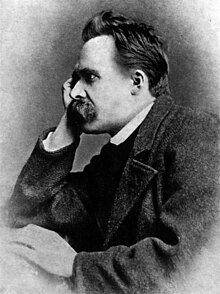
Later, both admitted that they were driven to commit a “perfect crime” by Übermenschen (supermen) delusions, and their thrill-seeking mentalities drove a warped interest to learn what it would feel like to be a murderer. While it is true that Leopold and Loeb knew each other only casually while growing up, their relationship flourished at the University of Chicago. Their sexual relationship began in February 1921 and continued until the pair were arrested. Leopold was particularly fascinated by Friedrich Nietzsche’s concept of Übermenschen, interpreting themselves as transcendent individuals possessing extraordinary, superhuman capabilities whose superior intellects would allow them to rise above the laws and rules that bound the unimportant, average populace.

Philosopher Friedrich Nietzsche (1844-1900).

Early in their relationship, Leopold convinced Loeb that if they simply adhered to Nietzsche’s doctrines, they would not be bound by any of society’s normal ethics or rules. In a letter to Loeb, he wrote, “A superman … is, on account of certain superior qualities inherent in him, exempted from the ordinary laws which govern men. He is not liable for anything he may do.” The duo first tested their theory of perceived exemption from normal restrictions with acts of petty theft and vandalism including breaking into a University of Michigan fraternity house to steal penknives, a camera, and the typewriter later used to type the ransom note. Emboldened, they progressed to arson, but no one seemed to notice. Disappointed with the lack of media coverage of their crimes, they began to plan and execute a sensational “perfect crime” to grab the public’s attention and cement their self-perceived status as “supermen”.

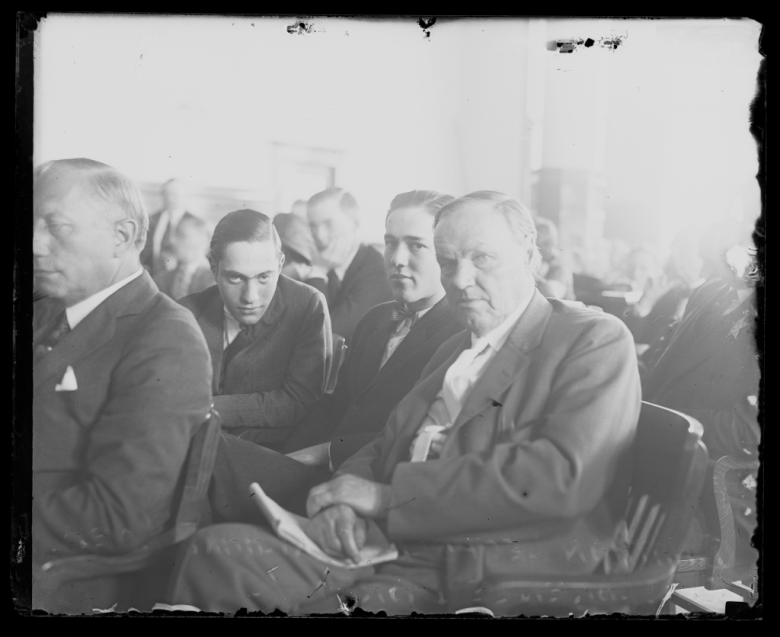
Lawyer Clarence Darrow in court with Leopold & Loeb.

After the two men were arrested, Loeb’s family retained Clarence Darrow as lead counsel for their defense. Clarence Seward Darrow (April 18, 1857 – March 13, 1938) was perhaps the most famous lawyer of the late 19th / early 20th centuries. He was known for his strenuous defense of women, Civil Rights, early trade unions, and the Scopes “monkey” trial. Darrow was also a well-known public speaker, debater, and writer. He took the case because he was a staunch opponent of capital punishment. Darrow’s father was an ardent abolitionist and his mother was an early supporter of female suffrage and women’s rights.

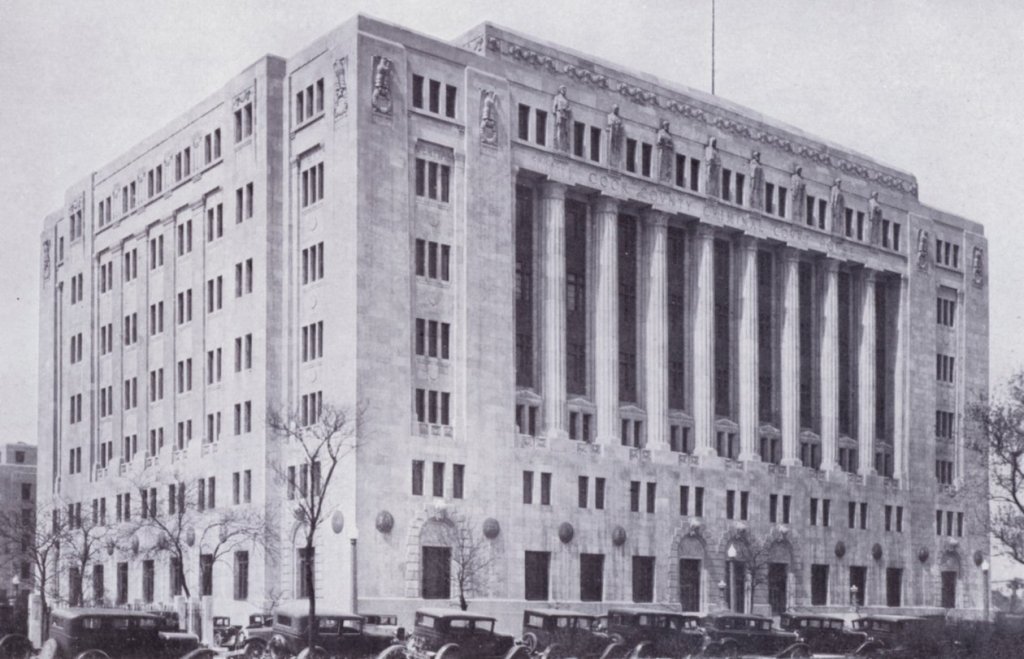
Chicago’s Cook County Criminal Courthouse.

The trial took place at Chicago’s Cook County Criminal Courthouse. For his efforts, Darrow was paid $65,000 (equivalent to $1,200,000 today). Everyone expected the defense would be not guilty because of insanity, but Darrow believed that a jury trial would convict his clients and impose the death penalty regardless of the plea. So Darrow entered a plea of guilty and appealed to Judge John R. Caverly to impose life sentences instead. The sentencing hearing ran for 32 days. The state presented over 100 witnesses, meticulously documenting the crime. The defense presented extensive psychiatric testimony to establish mitigating circumstances, including childhood neglect in the form of absent parenting, and in Leopold’s case, sexual abuse by a governess. But it was Darrow’s impassioned, eight-hour-long “masterful plea” after the hearing (called the finest speech of his career) that saved Leopold and Loeb’s lives. Darrow argued that the methods and punishments of the American justice system were inhumane, and the youth and immaturity of the accused should be considered in their sentencing.

Darrow’s speech, at least in part, is worth revisiting here. “Is any blame attached because somebody took Nietzsche’s philosophy seriously and fashioned his life upon it? It is hardly fair to hang a 19-year-old boy for the philosophy that was taught him at the university…Your Honor knows that in this very court crimes of violence have increased growing out of the war. Not necessarily by those who fought but by those that learned that blood was cheap, and human life was cheap, and if the State could take it lightly why not the boy?…The easy thing and the popular thing to do is to hang my clients. I know it. Men and women who do not think will applaud…(I) would ask that the shedding of blood be stopped, and that the normal feelings of man resume their sway. Your Honor stands between the past and the future. You may hang these boys; you may hang them by the neck until they are dead. But in doing it you will turn your face toward the past. In doing it you are making it harder for every other boy who in ignorance and darkness must grope his way through the mazes which only childhood knows. In doing it you will make it harder for unborn children. You may save them and make it easier for every child that sometime may stand where these boys stand. You will make it easier for every human being with an aspiration and a vision and a hope and a fate. I am pleading for the future; I am pleading for a time when hatred and cruelty will not control the hearts of men. When we can learn by reason and judgment and understanding and faith that all life is worth saving, and that mercy is the highest attribute of man.”

Old Joliet Penitentiary, Joliet, Illinois.

Both men were sentenced to life plus 99 years. During Darrow’s month-long courtroom argument to save their lives, Leopold and Loeb’s families greased the guards with bribes to soften their stay at the Cook County Jail. That abruptly ended when they reached Joliet. The Illinois State Penitentiary was already out of date and seriously overcrowded when they arrived. It had been condemned as unfit for habitation twenty years prior, yet, was still open. According to the Joliet Prison website, “Built in 1858 of limestone quarried on the site by prisoners to house 900 inmates; by 1924 over 1,800 prisoners were incarcerated there. The cells, four feet by eight, were damp, had narrow slits for windows, and possessed no plumbing: prisoners were given a jug of water each morning and made do with a bucket to use as a toilet. Every aspect of life at Joliet was regulated. Prisoners were given two changes of underwear, blue shirts, pants, socks, and heavy shoes to use each week. Contact with the outside world was limited. Inmates could send a single letter and receive visitors every second week. Using funds from their prison accounts, they could purchase tobacco, rolling papers, chewing gum, and candy from the prison commissary. There were no other privileges. A bell awoke prisoners at 6:30 AM and the cell blocks filled with sounds of locks opening, doors slamming shut, and boots marching along the steel flooring. After dressing, inmates grabbed the buckets and carried them into the courtyard, emptying their refuse into a rancid trough. Meals were served in a large dining hall; twice a week prisoners had beef stew for breakfast; other days hash was served. The food was cold and unappealing, sitting in pools of congealed fat on aluminum trays.”

As the Medieval prison loomed before them, its towers bathed in the glow of arc lights shadowing what lay behind the walls, the two convicted killers surely swallowed hard in fear. Thanks to the specialized skills of attorney Darrow, they had escaped the death penalty only to find themselves condemned to life imprisonment in this foreboding fortress. Leopold and Loeb were introduced to their new life at the Illinois State Penitentiary at Joliet on the night of September 11, 1924. Bound in ankle chains tethered by a chain to their handcuffs, the duo shuffled through the front gates of the inmate reception area. By the next day, their heads were shaved; they were photographed and fingerprinted; authorities assigned them prison numbers: Leopold was Inmate No. 9305, and Loeb No. 9306. After processing, they were led to separate cells, disappearing into the penitentiary population. Once they entered regular prison life, they were kept in solitary cells for several months, both because of the publicity of their crime and also because they were among the youngest inmates of the prison. Although kept apart as much as possible, the two managed to maintain their friendship. Leopold and Loeb spent most of their days working in prison shops: Leopold wove rattan chair bottoms in the prison’s Fibre Shop, while Loeb constructed furniture. Between meals, they were allowed two fifteen-minute breaks in which to walk or smoke. After dinner at four, they returned to their cells. At nine, lights out.

The author in the death house at Joliet.
Abe Lincoln, Art, Museums, Presidents

Abraham Lincoln’s Favorite Poem.

Original publish date October 19, 2023. https://weeklyview.net/2023/10/19/abraham-lincolns-favorite-poem/

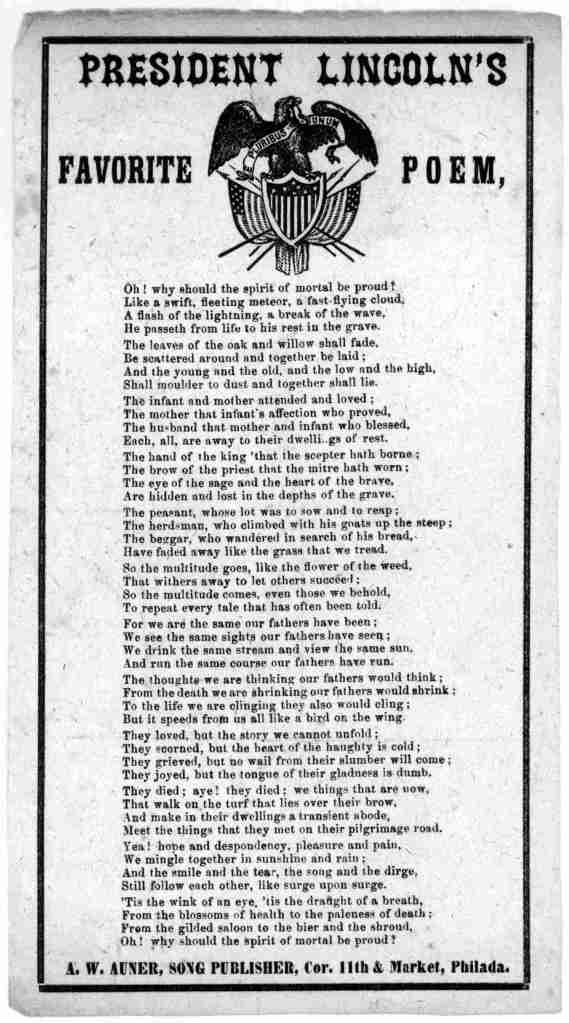
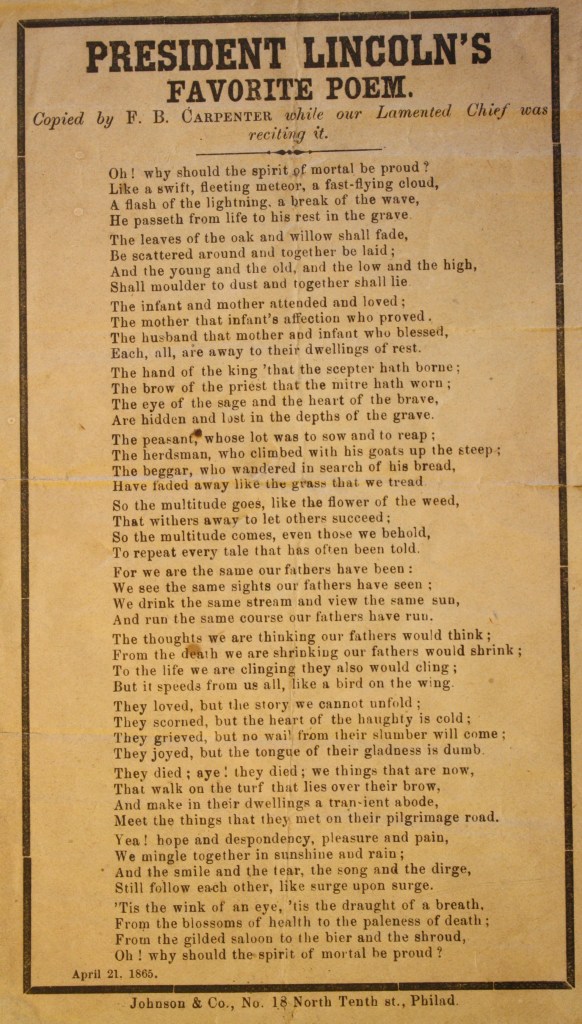
This was once displayed in Osborn H. Oldroyd’s museum inside the Lincoln Home in Springfield, Illinois. The poem was read aloud on the 15th anniversary of the President’s death, April 15, 1880, at the first memorial service at Lincoln’s Tomb ceremony by Mrs. Edward S. Johnson (wife of Lincoln Guard of Honor member and second Lincoln Tomb custodian Major Edward S. Johnson). Undoubtedly this leaflet was handed out at that ceremony on that day as a souvenir. It is titled “President Lincoln’s Favorite Poem. Copied by F.B. Carpenter while our Lamented Chief was reciting it.”

During the month of October in Irvington, I am near-constantly surrounded by reminders of the dead. While Irvington celebrates Halloween with little door-knocking ghosties and goblins gliding from door to door in search of treats, it does nothing to dispel the fact that Halloween revolves around the spirits of the dearly departed. I write often about Abraham Lincoln, but seldom about Lincoln and Halloween. I thought it might be a good time to examine a mysterious poem that fits the season and has often been referred to as Lincoln’s favorite.

Lincoln developed his lifelong love of poetry while a boy in Southern Indiana. Although by his own admission, Lincoln got his education “by littles” and the total time spent in a classroom by the young rail-splitter amounted to less than a year, he devoured the poetry found in the four school readers historians attribute to his early years in the Hoosier state. Many of those poems were about death. John Goldsmith’s 1766 poem, An Elegy On The Death Of A Mad Dog, Edgar Allan Poe’s 1845 poem The Raven, Oliver Wendell Holmes’ 1831 poem The Last Leaf, and Thomas Gray’s 1751 poem Elegy Written in a Country Churchyard. And of course, Lincoln’s love of William Shakespeare is widely known.

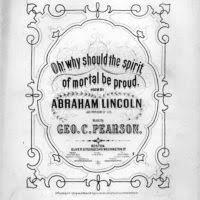
These poets in particular capture the gloomy, melancholic poetry of which Lincoln was so fond of as a young man. Lincoln, a capable amateur poet himself, memorized the poems he cherished, reciting them to friends and inserting them in conversations and speeches throughout his life. His favorite poem, which he recited so often that people suspected he was its author, was William Knox’s “Mortality,” alternately known as “O, Why should the Spirit of Mortal be Proud!” Lincoln often opined to friends (and at least once in a letter) that he, “would give all I am worth, and go in debt, to be able to write so fine a piece as I think that is.”

The poem was cut from a newspaper and given to Lincoln by Dr. Jason Duncan in New Salem, Illinois. At the time, its author was anonymous, and attribution was unknown. On at least a few occasions, having committed it to memory, Lincoln wrote the Mortality poem out longhand and sent it to friends, always noting that “I am not the author.” He would spend twenty years searching for the poet. Aptly for the season, one stormy night in the White House, Lincoln recited the poem for a small group of friends including a congressman, an army chaplain, and an actor, noting that the “poem was his constant companion” and that it crossed his mind whenever he sought “relief from his almost constant anxiety.”

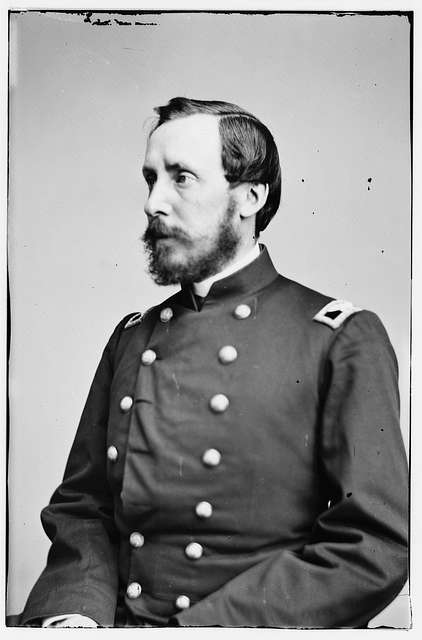
General James Grant Wilson (1832-1914)

When the group departed, Lincoln requested that his guests help to discover who had written it. “Its author has been greatly my benefactor, and I would be glad to name him when I speak of the poem…that I may treasure it as a memorial of a dear friend.” Union General James Grant Wilson (1832-1914) would ultimately inform the President that the poem was written by an obscure Scottish poet named William Knox (1789-1825). The poem was first published in his 1824 book Songs of Israel. After Lincoln’s death, the poem experienced a resurgence in popularity.

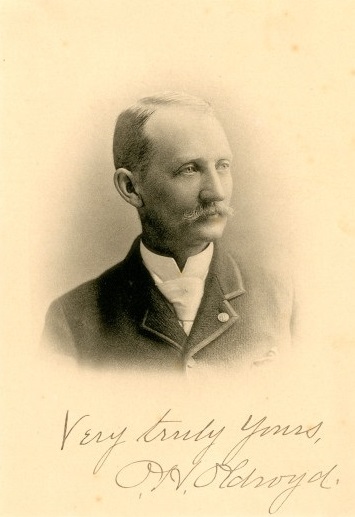
Osborn H. Oldroyd.

On April 15, 1880, on the 15th anniversary of the President’s death, the poem was read aloud by Mrs. Edward S. Johnson (wife of Lincoln Guard of Honor member and second Lincoln tomb custodian Major Edward S. Johnson) during a ceremony at the tomb in Springfield. A leaflet, handed out at that ceremony and found in my collection, was saved by Lincoln collector and personal muse Osborn H. Oldroyd and displayed in his collection in the Lincoln home for years. It remains important to the Oldroyd story as the impetus for his personal resolve to build a Lincoln Museum of his own.

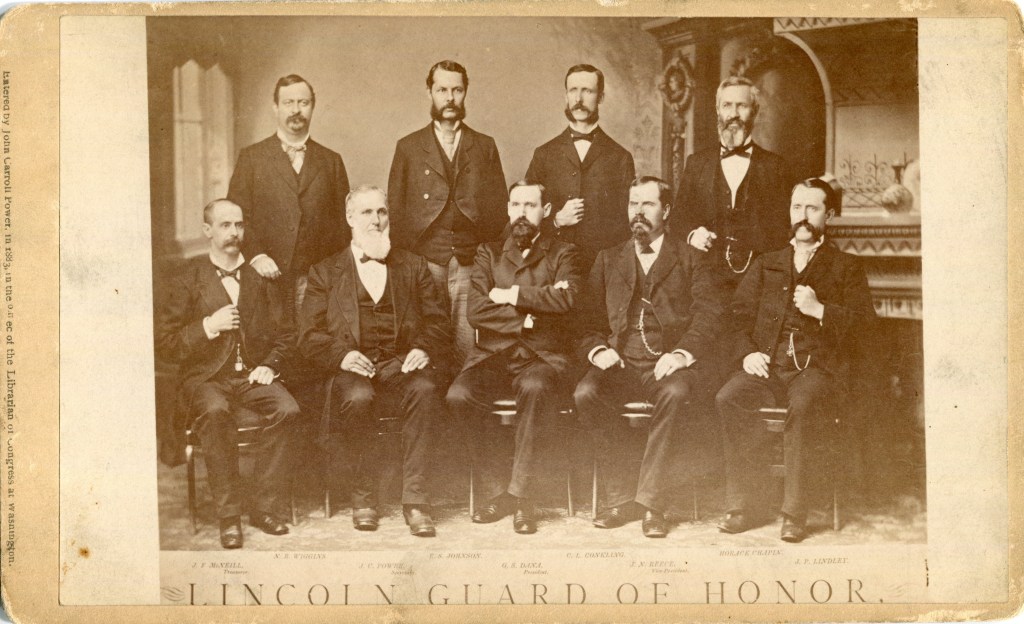
Lincoln Tomb Guard of Honor. John Carroll Power seated front row second from left.

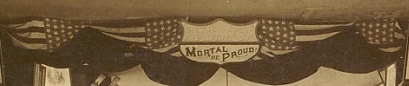
At that time the tomb’s Memorial Hall housed a small exhibit of Lincoln artifacts gathered by custodian John Carroll Power (a subject of my past columns). At that event, Oldroyd decided that his collection might be a bigger deal than he thought it was. “As I gazed on the…resting place of him whom I had learned to love in my boyhood years, I fell to wondering whether it might not be possible for me to contribute my might toward adding luster to the fame of this great product of American institutions,” wrote Oldroyd. It was after gazing upon those priceless Lincoln relics at the tomb that Oldroyd resolved to build a Memorial Hall in Springfield to display his own collection of Lincoln memorabilia. For a decade (1883 to 1893) that museum occupied the front parlors of the only home Abraham Lincoln ever owned at 8th and Jackson. The divider between those two rooms was adorned by a shield-shaped, flag-draped wooden motif adorned with the title “O, Why should the Spirit of Mortal be Proud!” Oldroyd made sure that every visitor to his museum was aware of the poem’s significance in the Lincoln chronology while surreptitiously causing each visitor to cast their eyes towards the heavens to receive the message.

Oldroyd’s Springfield Museum.
A stanza from the poem fashioned into a plaque hangs above the door in the above photo.

The poem is written in Quatrain form with an A-A-B-B rhyme scheme, or clerihew, with all of the dominant words highlighted by the rhyme. The poem resounded in Lincoln’s mind like an echo, its pauses, and connotations framing the beat of the poem. The poem causes its reader to reflect on the inevitable continuity of life; Life is short so why sweat the small stuff? We are but insignificant players in a much grander scheme, so do all you can while you’re here. Here, submitted for your approval in the spirit of Halloween, is Abraham Lincoln’s favorite poem in its entirety.

“O why should the spirit of mortal be proud! Like a fast-flitting meteor, a fast-flying cloud, A flash of the lightning, a break of the wave-He passes from life to his rest in the grave. The leaves of the oak and the willow shall fade, Be scattered around and together be laid; As the young and the old, and the low and the high, Shall moulder to dust, and together shall lie. The child that a mother attended and loved, The mother that infant’s affection that proved, The husband that mother and infant that blest, Each-all are away to their dwelling of rest. The maid on whose cheek, on whose brow, in whose eye, Shone beauty and pleasure-her triumphs are by: And the memory of those that beloved her and praised, And alike from the minds of the living erased. The hand of the king that the sceptre hath borne, The brow of the priest that the mitre hath worn, The eye of the sage, and the heart of the brave, Are hidden and lost in the depths of the grave.”

“The peasant whose lot was to sow and to reap, The herdsman who climbed with his goats to the steep, The beggar that wandered in search of his bread, Have faded away like the grass that we tread. The saint that enjoyed the communion of Heaven, The sinner that dared to remain unforgiven, The wise and the foolish, the guilty and just, Have quietly mingled their bones in the dust. So the multitude goes-like the flower and the weed, That wither away to let others succeed; So the multitude comes-even those we behold, To repeat every tale that hath often been told. For we are the same things that our fathers have been, We see the same sights that our fathers have seen, We drink the same stream, and we feel the same sun, And we run the same course that our fathers have run.”

“The thoughts we are thinking our fathers would think, From the death we are shrinking from they too would shrink, To the life we are clinging to, they too would cling-But it speeds from the earth like a bird on the wing. They loved-but their story we cannot unfold; They scorned-but the heart of the haughty is cold; They grieved-but no wail from their slumbers may come; They joyed-but the voice of their gladness is dumb. They died-ay, they died! and we, things that are now, Who walk on the turf that lies over their brow, Who make in their dwellings a transient abode, Meet the changes they met on their pilgrimage road. Yea, hope and despondence, and pleasure and pain, Are mingled together like sunshine and rain: And the smile and the tear, and the song and the dirge, Still follow each other like surge upon surge. ‘Tis the twink of an eye, ’tis the draught of a breath, From the blossom of health to the paleness of death, From the gilded saloon to the bier and the shroud-O why should the spirit of mortal be proud!”

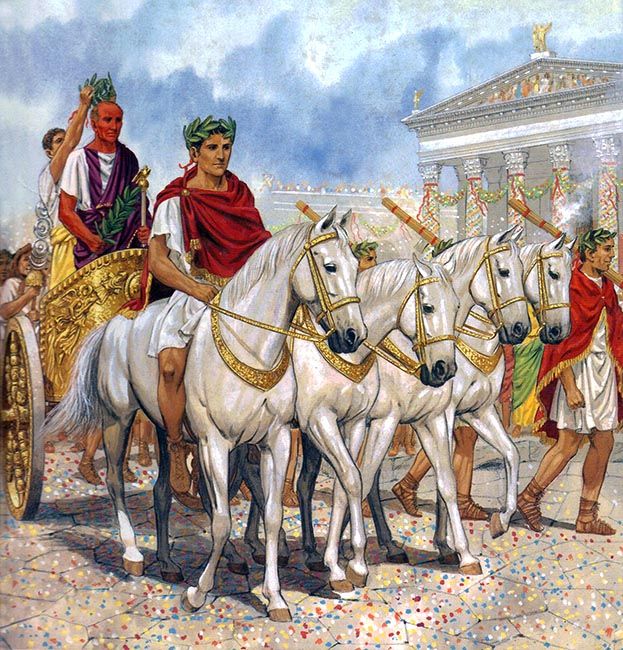
Memento homo (remember you are only a man).

So what is the takeaway? Why should you be so proud of what you have, when all you have is so little in the bigger picture? The theme is one of life and death. A bleak and somber contrast reminds us that life is short, and in Lincoln’s case, fame is fleeting. Auriga, the slave charged with accompanying Roman Generals and Emperors through the streets of Rome after triumph in battle, often whispered the phrase Memento homo (remember you are only a man) while holding the golden crown inches above their heads. From a young age, Lincoln was well acquainted with the idea of mortality. So it comes as no surprise that he adored that poem. But it isn’t all gloom and doom. Within its stanzas are found muted messages of hope and the promise that it is not too late for society to change its ways by following in the footsteps of our ancestors. Reading this poem, one experiences the same feeling of reflection as Lincoln did. It explains how, during his entire lifetime, The Great Emancipator remained penitent and humble by simply following the lessons of this poem.