


Original publish date: July 2, 2020
It is summertime in Indianapolis and once again, Hoosier eyes cast skyward as they ask, “When is it gonna rain?” Recently, I stumbled across an old brochure from Morton’s salt that was handed out at the 1933-34 Chicago World’s Fair. The brochure features the logo of a little umbrella-carrying girl walking with a cardboard can of salt tucked under her arm, the salt pouring out of the spout as she walks beneath the raindrops, blissfully unaware. The brochure notes that “One-third of our weather is rainy!” and offers “100 ways to predict rain, compliments of Morton’s Salt” and closes with the familiar slogan “When it rains it pours.”
The brochure opens to a list of 100 of “Mother Nature’s Weather Signs” and notes that these “time-tested” signs of rain are not “mere superstitions” and that “back of every sign is a common-sense explanation.” “For instance, fish leap from water and birds skim close to the ground just before a rain in order to catch insects forced down by the moisture in the air. Smoke hangs low before rainy weather because held down by nature; a cow attempts to scratch its ears because flies are more troublesome when rain is approaching, and shoe strings become difficult to untie because moisture-laden air has caused them to swell.” The brochure urges its reader to “memorize as many as you can so that you can surprise your friends by accurately predicting rain even though the sun may be shining brightly.”
So here you go, get ready to amaze your friends with these 100 ways to predict rain, as seen through the eyes of Great Depression corporate America. After each assertion, simply add the dictum; “look for, expect, or followed” by rain.
 When animals huddle together in open fields…when ants travel in straight lines (or are unusually active)…when the “Northern Lights” are visible in the sky…when bats cry much, or attempt to fly into the house…when more bees enter than leave the hive (every notice that bees never get caught in a shower?)…when distant bells sound close…when birds skim close to the ground…when boiling water evaporates more rapidly than usual…when dead branches fall to the ground in calm weather…when bubbles rise from marshy ground or appear on pools of stagnant water…
There is almost always a calm before a rainstorm…Camphor gum dissolved in a bottle of alcohol forms feathery crystals before a rain (Camphor gum was a farmhouse staple back in the day with many uses)…when canaries dress (oil) their feathers, or are wakeful at night…when cats sneeze, lie with their heads on the floor, or wipe themselves behind the ears…when many centipedes are seen…when your chairs begin to creak…when chickens huddle together outside the hen house instead of going in to roost (hence the old adage, “If fowls roll in the sand, rain is at hand”) …when distant objects look close (hence the saying, “The farther the sight, the nearer the rain”)…heavy clouds in the west and cloud streamers pointing upward… when a clover contracts its leaves…
 If coffee bubbles cling to the cup instead of floating in the center…when corns are more painful than usual… when cottonwood trees turn the undersides of their leaves upward…when a cow thumps its ribs, or attempts to scratch its ear, with its tail…when crabs leave the water and remain on land… when cream or milk sours during the night…an old adage states that a new (crescent) moon with horns tilting downward can’t hold water so…when crickets chirp loudly and more persistently than usual… when crows caw loudly and continuously or when a crow is seen flying alone… when curly hair becomes more unruly than usual…
When dandelions close their blossoms…complete absence of dew in the morning… when dogs eat grass or are uneasy and change position while lying down…when a donkey scratches itself against a wall…when doors stick in fair weather… when ducks quack unusually loud… when dust whirls around the street… ringing in the ears is seen as a warning… when worms appear in large numbers on the surface of the ground…a strong east wind means rain withing a day-and-a-half.
 When grate fires crackle and throw sparks to a greater degree than usual…when fish jump from the water, or swim close to the surface…when oiled floors “sweat”…when flowers stay open all night (and some say when the fragrance is stronger)… when frogs assume a brownish hue and croak louder and longer…when there are two full moons in a single month…when geese are particularly noisy…when glow worms shine brighter…when goats bleat a great deal…
When a clear sky has a greenish hue…when seagulls fly inland…when a halo (or ring) encircles the moon, like the old saying states, “The bigger the ring, the nearer the rain”…when a hazy twilight appears during the summer…when horses sweat in the stable, sniff loudly and switch their tails violently…many flies in the house are a sure sign as are flies that bite harder and more often…when your joints appear to feel stiff… when burning lamps and lanterns sputter continuously…a great many meteors, or shooting stars, in one evening…when mice run about more than usual…
Three misty mornings in a row bring rain…A pale moon doth rain-a red moon doth blow-a white moon doth neither rain nor blow…when both pleasant and unpleasant odors are more pronounced than ordinary…whistling by parrots, which rarely whistle, is a good sign…whenever pigeons return slowly to roost…when pigs carry straw and litter in their mouth…when a man’s pipe smells stronger than usual…when pitchers and glasses “sweat”…A rainbow before noon means rain by nightfall…The ancient adage, “Morning red, of rain’s a sign; Red in the morning, sailor’s morning” translates today as “Red sky at night, sailor’s delight; Red sky at morning, sailors take warning”…
Rheumatic twinges frequently portend rain…Robins near houses, or singing on the ground…when a rooster crows at night hence the say, “If the cock goes crowing to bed, he’ll certainly rise with a watery head.”…when circus men find their ropes growing tighter…when a sheep turns its back to the wind…when shoe strings knot stick, knot and become difficult to untie…when smoke hangs close to the ground…when snails come out abundantly…when you notice your laundry soap beginning to sweat…Whenever soot falls down the chimney…
When sparrows begin to chirp louder than usual…when spiders desert their webs…when sponges do not dry out rapidly after using…when stars are unusually dim and dull or if there is a star very close to the moon…An “uneasy” stomach is a seen as a sign…when stoves and iron objects rust over night in fair weather…when heat comes suddenly…when the sun sends out shafts of light, sometimes called “the sun’s fingers”…a white, pale yellow or gray sunset, described in Poor Richard’s almanac as “If the sun should set in gray, the next will be a rainy day.”
When a bad tooth begins to act up…when the down of the thistle flies about when there is no wind…if many toadstools spring up overnight…if cellar walls “sweat”… when the temperature rises at night instead of falling…when washrags remain damp long after using…when far off factory or locomotive whistles sound as if they were only a short distance away…when windows become hard to open in fair weather…when woodpeckers are particularly noisy and building themselves shelter… If you have a wren house, you can tell whether or not it is going to rain by whether the birds stay in or out.
 And lastly, when ordinary salt begins to lump, cake and clog the saltcellar, get ready for rain. According to Morton’s, their salt is not made this way because, “When it rains it pours.” Morton’s explanation: “Because of its unique cube shaped crystals, which tumble off one another in damp weather instead of sticking together like the flake crystals of ordinary salt…every grain is usable-there are no wasteful lumps to throw away. If you have children between 6 and 18, be sure to use the iodized variety and thus protect them simple goiter.” Goiter is a swelling in the neck resulting from an enlarged thyroid gland. Before iodized salt hit the grocery shelves on May 1, 1924, iodine deficiency was the main cause of goiter in the U.S. and even though it has nothing to do with rain, I couldn’t resist throwing that last part in. So much information packed into such a little brochure.


 The big problem with these rumors is that they are not tied to the companies that actually have such programs, so that they motivate people to collect huge numbers of bottle caps, empty packets and the like to no avail. The biggest companies are usually the most frequently targeted, recent years those have been mostly soft drinks, beer, cigarettes, and tea. Sadly, before kidney dialysis came along you typically were told to save cigarette packs to earn time on an iron lung.
  Knowing the damage smoking causes to the lungs, these red stripe redemption rumors truly proved to be a “sick bargain”.
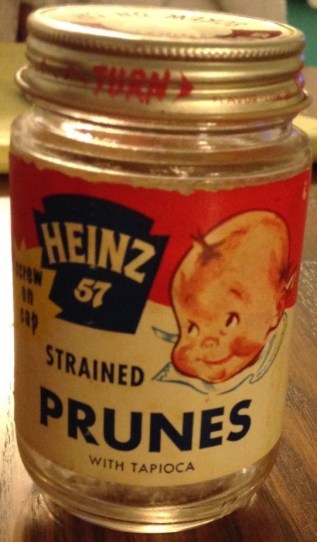 Today Heinz baby food labels can be redeemed to benefit children’s hospitals and Campbell’s soup labels can be used to buy school equipment. In Indianapolis, funds received from the recycling of pop tabs add up to between $30,000 and $50,000 annually for Riley Children’s Hospital. All this money helps with the operating expenses of the Ronald McDonald House Charities of Central Indiana and traditionally covers the cost of operating 3 rooms in the House for an entire year. With redemption rumors, it can sometimes be hard to separate fact from fiction.
 Even though it was a hoax, it didn’t mean it was a bad idea. In the 1950s, the Betty Crocker franchise started a coupon program run by General Mills. Most folks redeemed the coupons for kitchen utensils, but beginning in 1969 General Mills OK’d several fundraising campaigns in which coupons were used to purchase some 300 kidney dialysis machines. The company soon stopped dialysis drives due partly to complaints that it was “trading in human misery.” The program ceased operation in 2006.
 The most common iron lung, known as a “Drinker respirator”, was designed to provide temporary breathing support for people suffering paralysis of the diaphragm and intracostal muscles, which are essential for respiration. Developed in 1929, it came to be an important tool for the care of sufferers of paralytic polio. Strictly defined, “the iron lung is a large horizontal cylinder, in which a person is laid, with their head protruding from a hole in the end of the cylinder, so that their nose and mouth are outside the cylinder, exposed to ambient air, and the rest of their body sealed inside the cylinder, where air pressure is continuously cycled up and down, to stimulate breathing. To cause the patient to inhale, air is pumped out of the cylinder, causing a slight vacuum, which causes the patient’s chest and abdomen to expand (drawing air from outside the cylinder, through the patient’s exposed nose or mouth, into their lungs). Then, for the patient to exhale, the air inside the cylinder is compressed slightly (or allowed to equalize to ambient room pressure), causing the patient’s chest and abdomen to partially collapse, forcing air out of the lungs, as the patient exhales the breath through their exposed mouth and nose, outside the cylinder.” (The Iron Lung, Science Museum Group, Kensington, London, England, U.K)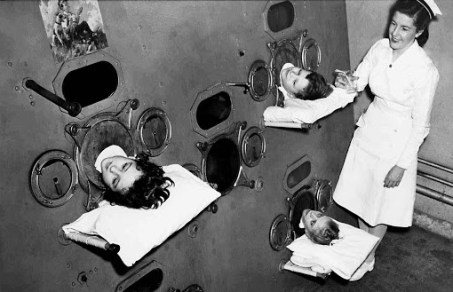
 By 2018, there were only 3 of these 700 pound behemoth iron lung machines operating in the United States. Some machines have a tray that slides out of the tube, others require the patient to climb into the bed of the pod, upon which the patient lays and is then pushed into the machine. The patient’s head is the only part of the body visible once the machine is closed, and the neck collar is adjusted to keep it airtight. Since the head is exposed, patients can eat and drink in the machine but, since both are done while laying down, swallowing can be a challenge and must be done carefully. Since the machine is pushing / pulling the patient, swallowing must occur while the machine is breathing out. Coughing and sneezing can be a challenge since both are involuntary and cannot be properly timed with the rhythm of the machine. The mechanics are under the bed, which produces a vibrating sensation for the patient.
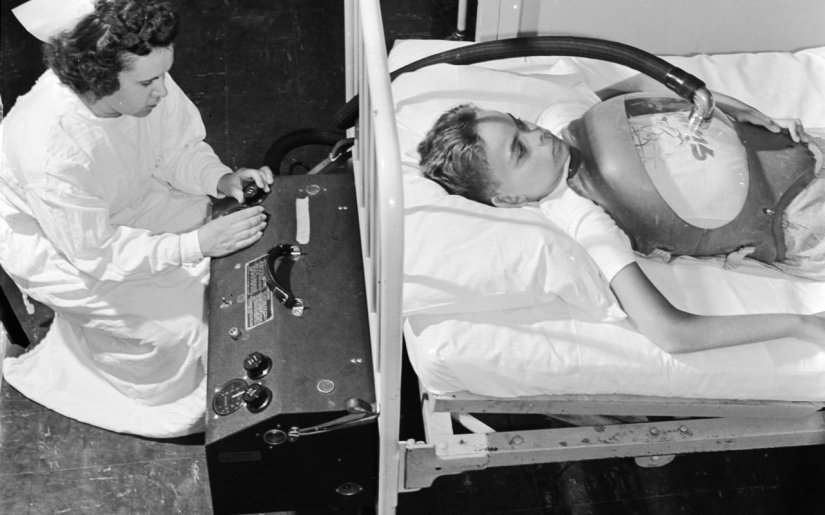 Today’s ventilators, like those being made in Kokomo right now, are much more portable and are mostly described as “breathing machines” that can be carried as easily as a briefcase. For extreme breathing cases, smaller single-patient iron lungs, known as “Cuirass ventilators” (named for the Cuirass, a torso-covering body armor worn by armored knights), are used. The Cuirass ventilator encloses only the patient’s torso, chest or abdomen, but otherwise operates essentially the same as the original, full-sized iron lung. The lightweight variation of the cuirass is a jacket ventilator or poncho / raincoat ventilator, which uses a flexible, impermeable material (such as plastic or rubber) stretched over a metal or plastic frame placed over the patient’s torso.
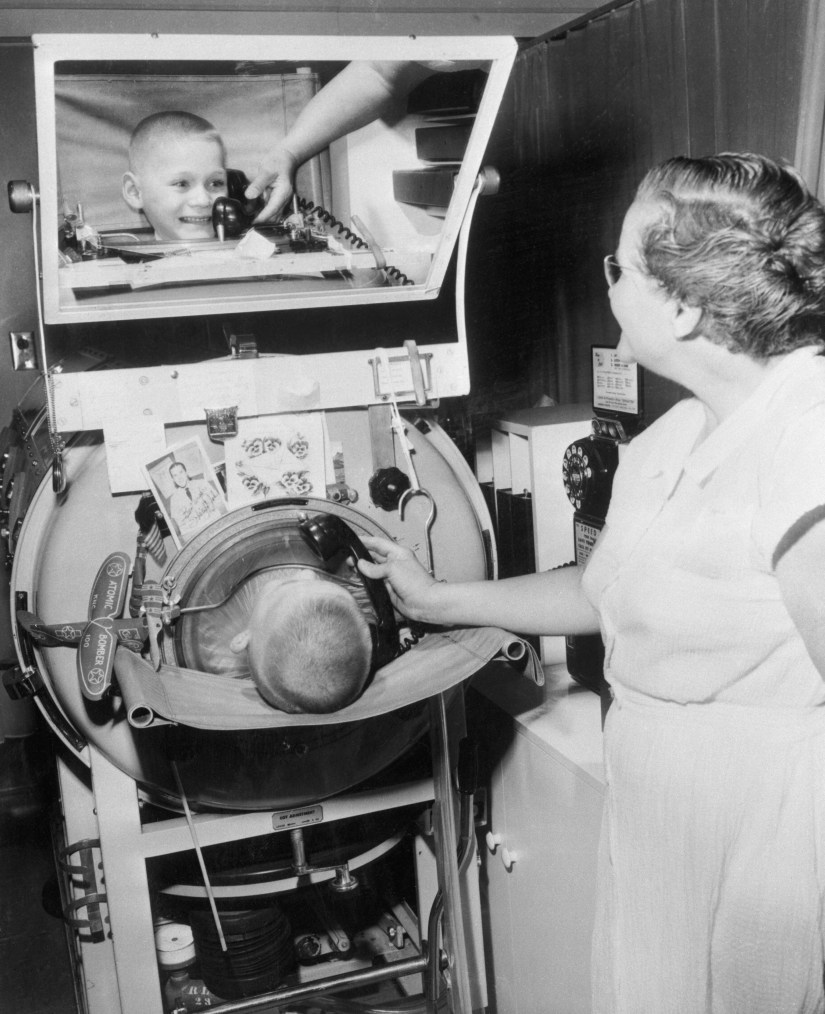 And, although the idea of the old fashioned iron lung mostly only survives in the collective public memory of baby boomers, the COVID-19 pandemic has revived some interest in the device. Thanks to the internet, public safety scams and urban legends proliferate our life daily. As silly as the idea of saving red stripes from packs of cigarettes to exchange for time in iron lungs sounded to the enlightened twenty years ago, when viewed through the periscope of new age social media theory today, it fits right in. And Covid-19 has reignited fears of epidemics past including Polio and the Spanish Flu (which allegedly originated in Kansas by the way). So, in short, there is nothing new under the sun and the takeaway from all of this is that, hopefully, this too shall pass.

 According to a 1907 article in the New York Times, “The anti-spitting movement, a thing of comparatively recent growth, has spread all over the union. The purpose of the anti-spitting ordinance is two fold: first, to abate a nuisance; second, to prevent disease. While the nuisance is a very real one, and from that stand point, if from no other, spitting should be prohibited, the danger of the spreading of disease by spitting in public places has been exaggerated…Spitting upon the sidewalks, in street cars and public places is not nearly so dangerous as the spitting in tenement houses, cheap lodging houses, factories and workshops, and other places which the average spitting law does not presume to prohibit.”
 More precisely, the article goes on to note that in 1907, there were 20 arrests in Indianapolis for spitting in public. All of these arrests were made by health officers, not policemen. The article went on to say “If you have to spit, don’t spit in Buffalo, N.Y., for it may cost you $25. The cheapest place to spit is Indianapolis, where people paid an average of 78 cents.” In 1907 tuberculosis was the second leading cause of death behind pneumonia /influenza.
 During this period, no fewer than four tuberculosis hospitals were built in and around Indianapolis. The Flower Mission Pavilion for Incurables was added to the grounds of the city hospital. The revolutionary design of the building featured open air verandas built at the height of 822 feet containing 2 wards with 10 beds each and 6 private rooms. This hospital was unique in that it charged no fee for services and was available only to patients with advanced, incurable cases of “Consumption.”
 But by far the most interesting of these four T.B. hospitals was the Day Camp of the Women’s Improvement Club, located in the Brightwood area of Indianapolis. It’s capacity was only 7 patients. Literature of the era described the facility as being “For colored women in incipient or convalescent stages of tuberculosis. The camp is located in a grove near Brightwood, a suburb of Indianapolis. The equipment used is largely tents. This is one of the few camps in the United States exclusively for colored women. It is conducted by the Women’s Improvement Club, composed of twenty colored women of Indianapolis.”
 It was mistakenly believed that the only way the epidemic could be stopped within a family was to visit the cemetery at night and disinter the deceased subject and remove it’s heart. There was a well documented case of this very thing happening in Rhode Island in 1892. Nineteen-year-old Mercy Brown had died of consumption and as her family began to suffer from the same symptoms, her father went to the family tomb two months after her death and, assisted by the family physician, removed her heart and burnt it to ashes. These fears and old wive’s tales about T.B. surely existed in 1907, undoubtedly contributing to the ferocity of the Tuberculosis War in Indianapolis.

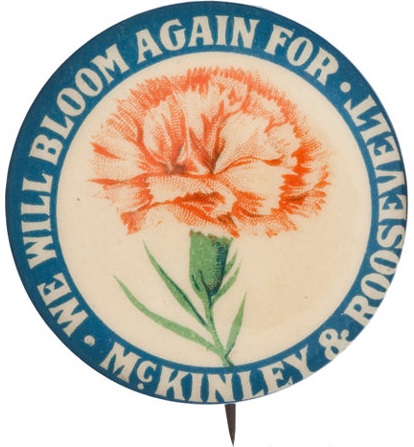 Most Americans remember President William McKinley solely for the way he died. His image a milquetoast chief executive from the age of American Imperialism who was at the helm for the dawn of the 20th century. McKinley’s ordinary appearance belied the fact that he was the last president to have served in the American Civil War and the only one to have started the war as an enlisted soldier. It is long forgotten that McKinley led the nation to victory in the Spanish-American War, protected American industry by raising tariffs, and kept the nation on the gold standard by rejecting free silver. Most notably, his assassination at the 1901 Pan-American Exposition in Buffalo, New York unleashed the central figure who would come to personify the new century; his Vice-President Teddy Roosevelt.
 McKinley’s favorite flower was a red carnation. He displayed his affection by wearing one of the bright red florets in his lapel every day. The carnation boutonnière soon became McKinley’s personal trademark. As President, bud vases filled with red carnations were conspicuously placed around the White House (known as the “Executive Mansion” back then). Whenever a guest visited the President, McKinley’s custom was to remove the carnation from his lapel and present it to the star-struck visitor. For men, he would often place the souvenir blossom into the lapel himself and suggest that it be given to an absent wife, mother, or child. Afterward, he would replace his boutonnière with another from a nearby vase and repeat the transfer again and again for the rest of the day. McKinley was superstitious about these carnations, believing that they brought good luck to both him and his recipient.
 One account alleges that McKinley’s “Genus Dianthus” custom began early in his presidency when an aide brought his two sons to the White House to meet the President. McKinley, who loved children dearly, presented his carnation to the older boy. Seeing the disappointment in the younger boy’s face, the President deftly retrieved a replacement carnation and pinned it on his own lapel. Here the flower remained for a few moments before he removed it and gave to the younger child, explaining “this way you both can have a carnation worn by the President.”
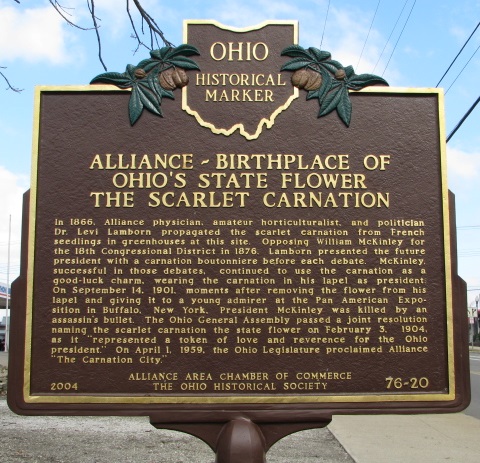
 However, McKinley’s ubiquitous floral tradition can be traced to the election of 1876, when he was running for a seat in Congress. His opponent, Dr. Levi Lamborn, of Alliance, Ohio, was an accomplished amateur horticulturist famed for developing a strain of vivid scarlet carnations he dubbed “Lamborn Red.” Dr. Lamborn presented McKinley with a “Lamborn Red” boutonniere before their debates. After he won the election, McKinley viewed the red carnation as a good luck charm. He wore one on his lapel regularly and soon began his custom of presenting them to visitors. He wore one during his fourteen years in Congress, his two gubernatorial wins and both 1896 and 1900 presidential campaigns.
 After his second inauguration on March 4, 1901, William and Ida McKinley departed on a six-week train trip of the country. The McKinleys were to travel through the South to the Southwest, and then up the Pacific coast and back east again, to conclude with a visit to the Buffalo Exposition on June 13, 1901. However, the First Lady fell ill in California, causing her husband to limit his public events and cancel a series of planned speeches. The First family retreated to Washington for a month and then traveled to their Canton, Ohio home for another two months, delaying the Expo trip until September.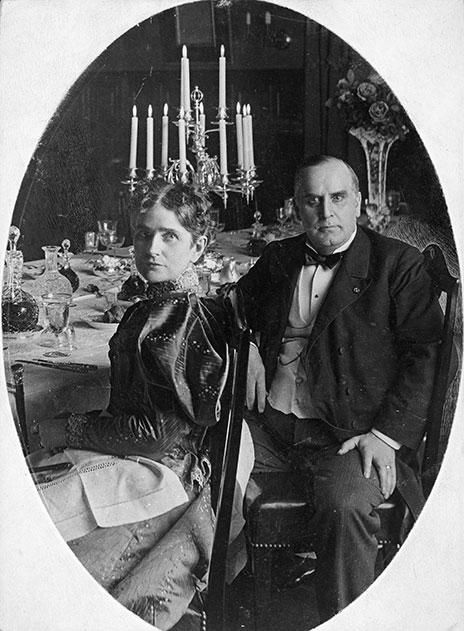
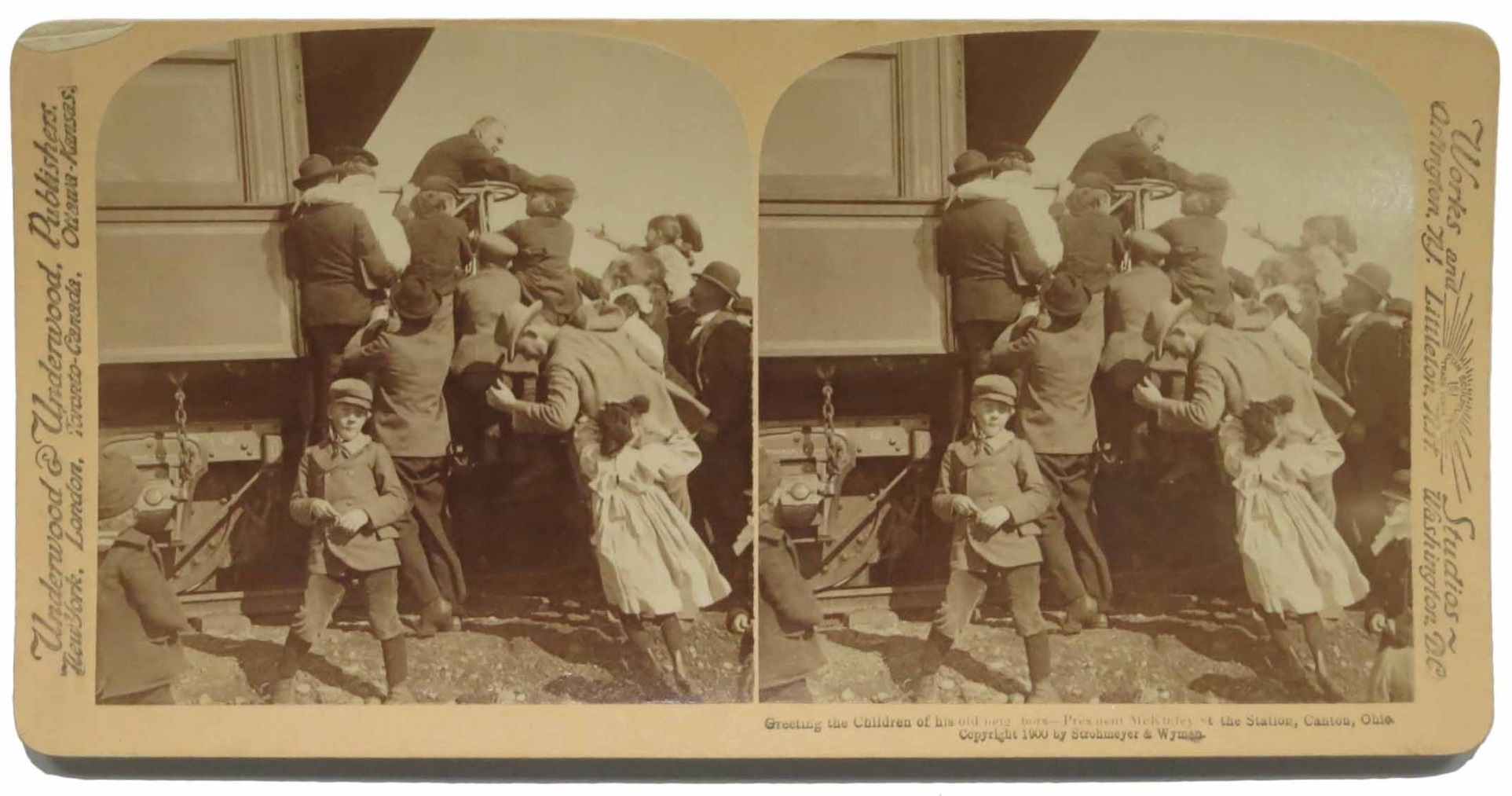
 As McKinley fell backwards into the arms of his aides, members of the crowd immediately attacked Czolgosz. McKinley said, “Go easy on him, boys.” McKinley urged his aides to break the news gently to Ida, and to call off the mob that had set on Czolgosz, thereby saving his assassin’s life. McKinley was taken to the Exposition aid station, where the doctor was unable to locate the second bullet. Ironically, although a newly developed X-ray machine was displayed at the fair, doctors were reluctant to use it on the President because they did not know what side effects. Worse yet, the operating room at the exposition’s emergency hospital did not have any electric lighting, even though the exteriors of many of the buildings were covered with thousands of light bulbs. Amazingly, doctors used a pan to reflect sunlight onto the operating table as they treated McKinley’s wounds.
 McKinley drifted in and out of consciousness all day. By evening, McKinley himself knew he was dying, “It is useless, gentlemen. I think we ought to have prayer.” Relatives and friends gathered around the deathbed. The First Lady sobbed over him, “I want to go, too. I want to go, too.” Her husband replied, “We are all going, we are all going. God’s will be done, not ours” and with final strength put an arm around her. Some reports claimed that he also sang part of his favorite hymn, “Nearer, My God, to Thee” while others claim that the First Lady sang it softly to him. At 2:15 a.m. on September 14, President McKinley died. Czolgosz was sentenced to death and executed by electric chair on October 29, 1901.
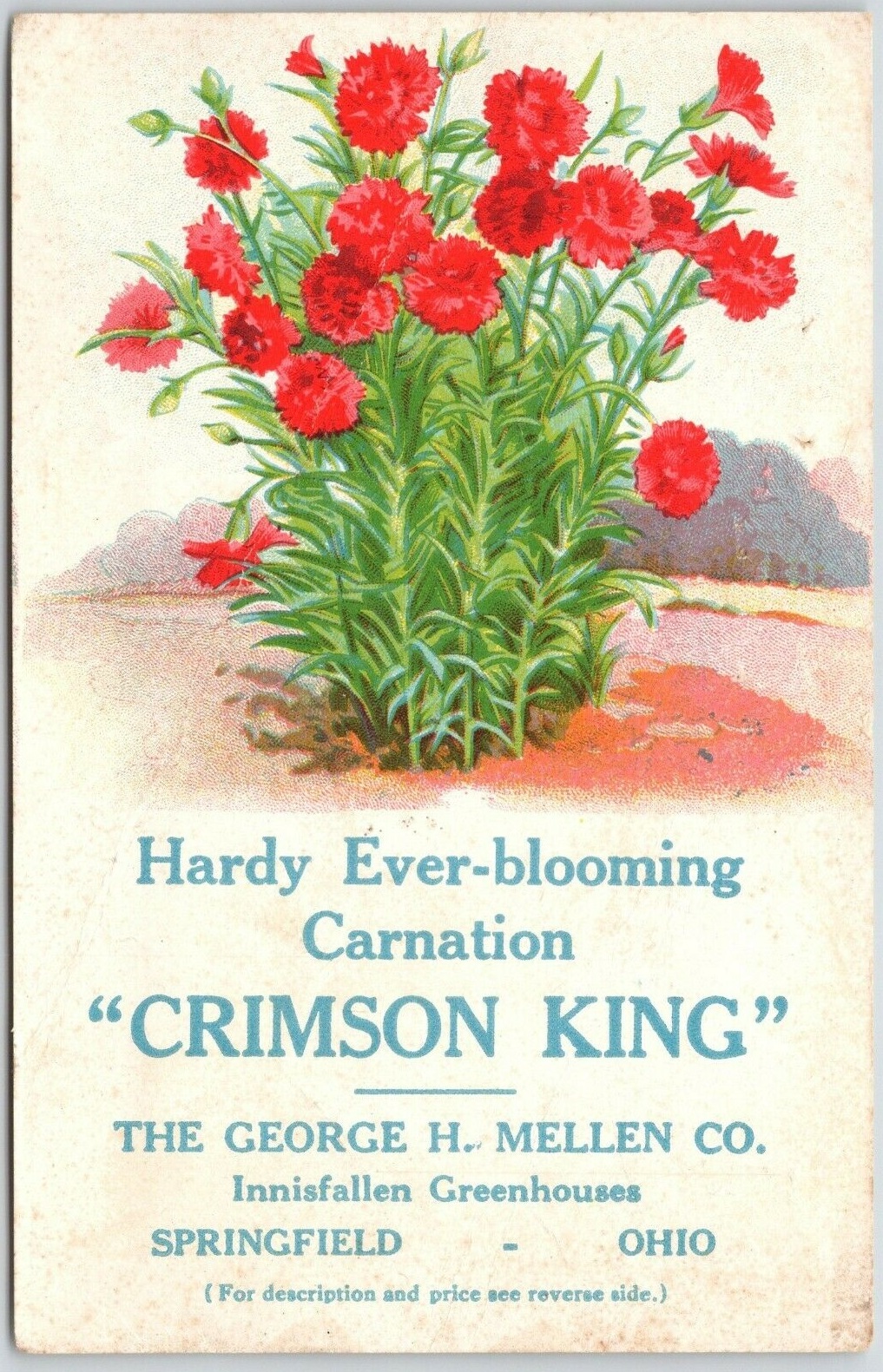 Loyal readers will recognize my affinity for objects and will not be surprised by the query, “What became of that assassination carnation?” In an article for the Massillon, Ohio Daily Independent newspaper on Sept. 7, 1984, Myrtle Ledger Krass, the 12-year-old-girl to whom the President gave his lucky flower moments before he was killed, reported that the McKinley’s carnation was pressed and kept in the family Bible. Myrtle, at the time a well-known painter living in Largo, Florida, explained how, many years later while moving, “The old Bible had been put away for years, when I took it out to wrap it for moving, it just crumbled in my hand. Just fell away to nothing.”
 In 1902, Lewis Gardner Reynolds (born in 1858 in Bellefontaine, Ohio) found himself in Buffalo on business on the first anniversary of McKinley’s death. While there he found that the mayor of Buffalo had declared the day a legal holiday. Gardner recalled, “without thinking at the time that I was doing something that would become a national custom, I purchased a pink carnation which I placed in the buttonhole of my coat after tying a small piece of black ribbon on it. As I went through Buffalo I explained to questioners the reason for the flower and the black ribbon. Many of those who questioned me followed my example.” On his return to Ohio, he explained to his friend Senator Mark Hannah what he had done in Buffalo. Later, in Cleveland, Reynolds met with Hannah and Governor Myron T. Herrick. Soon plans were made to celebrate Jan. 29, the anniversary of McKinley’s birth, as “Carnation Day.”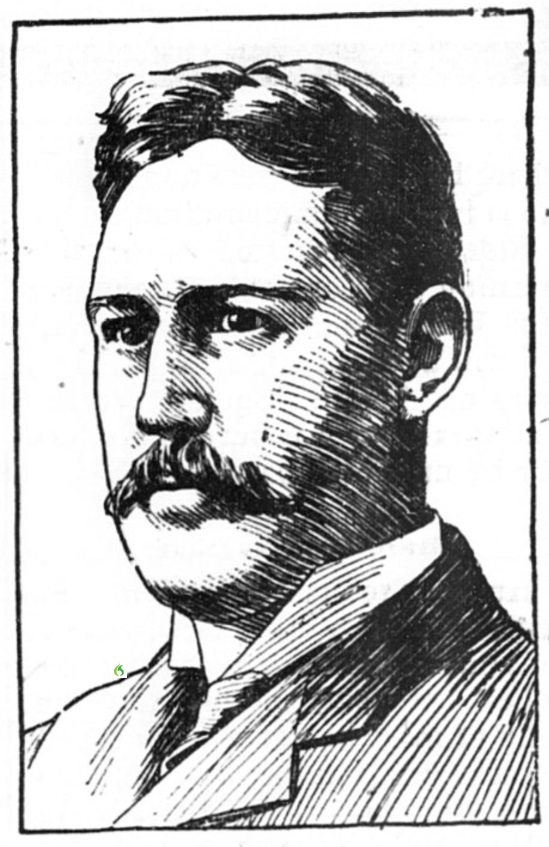
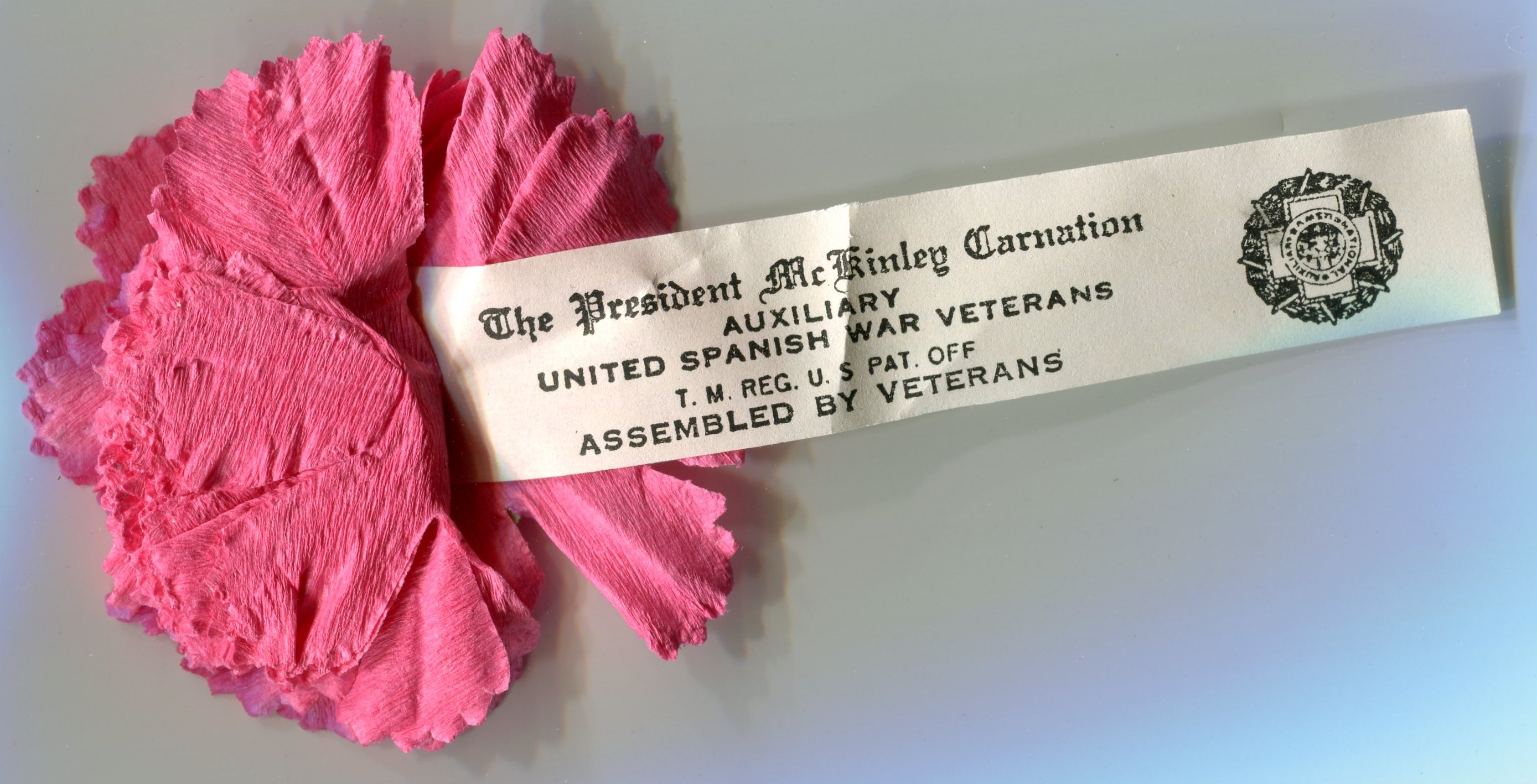 Today, the Ohio Statehouse in Columbus continues observing Red Carnation Day every January 29 by installing a small display honoring the assassinated President. Last year, the Statehouse Museum Shop and on-site restaurant offered special discounts to anyone wearing a red carnation or dressed in scarlet on that day. Yes, the sentimental association of the carnation with McKinley’s memory is due to Lewis Gardner Reynolds.



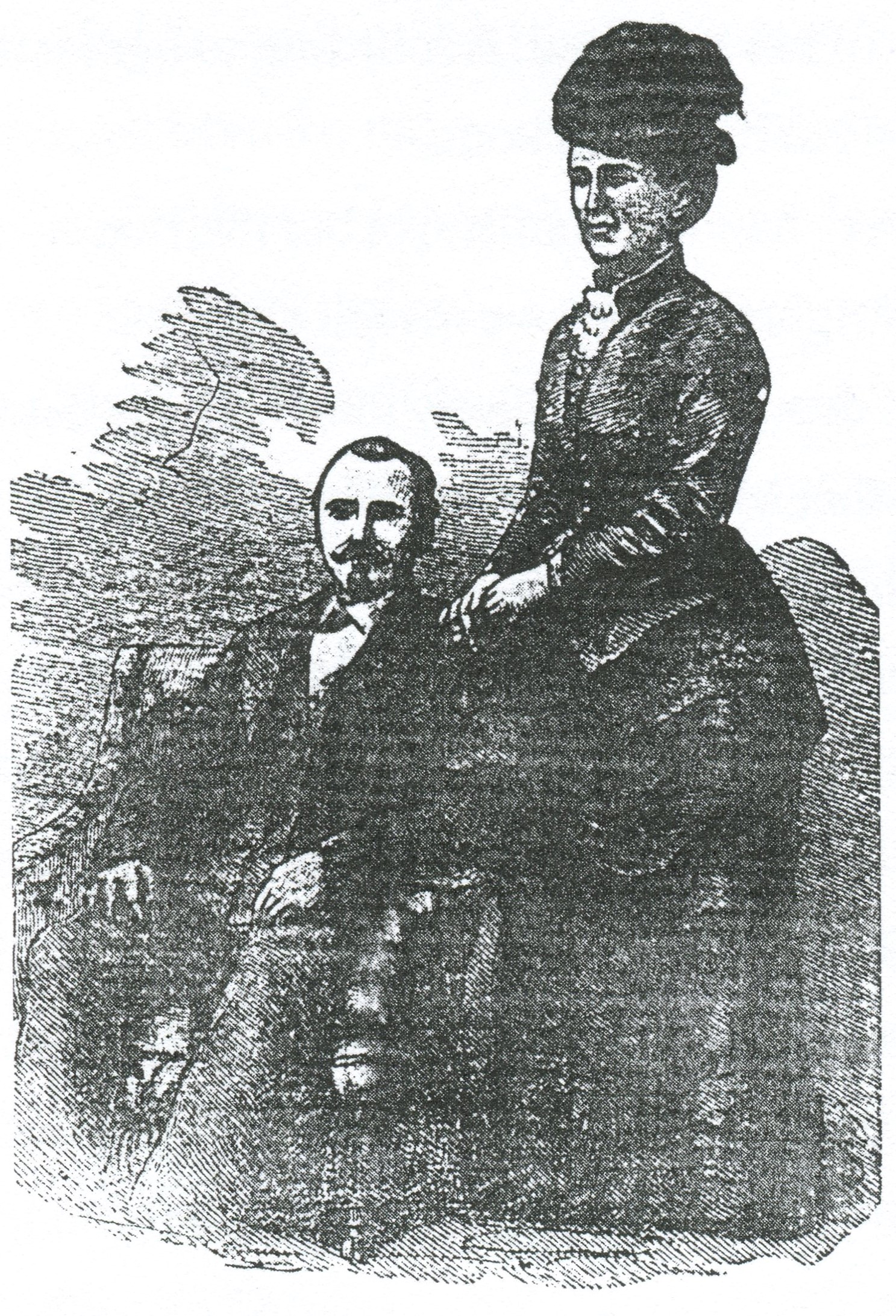

 If he was fearful, Joseph Brown did not show it as he sat down for what would be his last meal. At 5:30 PM, Mary Brown sent her two older children to the Smith’s, neighbors whose home was frequently visited by Wade, the children and Mary Brown. Mary instructed the children that she would come to get them after dinner and that Wade would play fiddle that evening to entertain at the Smith home. During the course of the evening, Wade asked Brown to borrow his buggy. He stated that he wanted to sell a horse to Irvington’s Dr. long. Brown agreed. As dinner ended, Brown went into the front yard to work on an ax handle. Wade was hitching the horse to the buggy.
 The investigation by Coroner George Wishard, namesake of today’s Wishard Hospital, was thorough and damning to Wade. During his investigation at the Brown farm, Wishard “found a board, probably a small kneading tray, hidden away under the shed… Which is bespattered with blood.” Signs of a violent struggle and blood were found in the yard. The mountain of evidence was building against Wade. But did he act alone? Or was “Bloody Mary” Brown, as one of the contemporary newspapers dubbed her, more involved than she claimed?
 Alan E. Hunter