Hollywood, Pop Culture, Television

Batman and the Playboy Bunny.

Batman and Playboy

Original publish date:  January 24 , 2011
Republished:  November 8, 2018

The first Playboy club opened at 116 East Walton in downtown Chicago, Illinois on February 29, 1960. Playboy magazine owner Hugh Hefner decided that Leap Year would be an appropriate time to open up his controversial club on Chicago’s Gold Coast. After all, Hefner had started Playboy magazine in his Hyde Park kitchen on Chicago’s South Side in 1953 and in the years that followed, Playboy became the most popular men’s publication in the country. I imagine that many of you can recall the famed men’s clubs that used to stretch from coast-to-coast and around the world (40 clubs worldwide at its height) and suspect that more than one of you may even still have a Playboy Club gold key tucked away in your dresser drawer somewhere. Whether you liked Hef’s idea or hated Hef’s idea, what cannot be denied is the impact his Playboy Clubs made on American pop culture.

z key
Hef’s personal key card

But there is one aspect of the Playboy Club that you may not be aware of. The Chicago Playboy Club is credited with spawning the popular “Batman” television series of the Mid-1960s. That’s right, in the early 1960s, the Playboy Club in Chicago was screening the old 1940s Era Batman movie serials for their guests every Saturday night. These private screenings became very popular among the club’s hip clientele. Playboy party goers would cheer and applaud the Dynamic Duo, and boo and hiss at the villains. During one of these party screenings, east coast ABC executive Yale Udoff, a Batman fan in childhood, attended and was amazed at the reaction the old serials were getting. He contacted ABC executives who eventually developed a prime time Batman series in the hip & fun style of the wildly popular Man from U.N.C.L.E. TV show. z extralarge
For two and a half seasons from January 12, 1966 to March 14, 1968, a total of 120 episodes were produced and they strangely mirrored their Playboy Club Genesis by packing star power and sexuality in nearly every episode. Just as the biggest names in Hollywood flocked to the Playboy Clubs, soon many of these same big names wanted to make cameo appearances as villains on the Batman TV show. The guest star list reads like the Hollywood walk-of-fame: Burgess Meredith, Otto Preminger, Vincent Price, Eli Wallach, John Astin, Art Carney, Tallulah Bankhead, Roddy McDowell, Liberace, Ethel Merman, Ida Lupino, Rudy Vallee, Milton Berle, Shelley Winters, Carolyn Jones, Liberace, Van Johnson, Zsa Zsa Gabor, Cliff Robertson, Joan Collins and Anne Baxter (TWICE!). z BatmanVillains
Do you remember THESE Batman villain names: Lola Lasagne, The Puzzler, Nora Clavicle and her mechanical mice, Lord Marmaduke Ffogg, Lady Penelope Peasoup, Olga-Queen of the Kossacks, The Sandman, Colonel Gumm, Shame, Clock King, False Face, Louie the Lilac, Bookworm, King Tut, and the Mad Hatter? Do you remember the Batclimb Cameo that opened many of the TV episodes? 14 episodes featured a window that would be opened by a celebrity for a short conversation as the Dynamic Duo scaled a building using Batarangs and Bat-ropes. The scenes were actually filmed on a horizontal surface with the camera rotated by 90 degrees to give the illusion that the Duo were on a vertical wall. Their capes were held up by strings (usually off-camera, but on occasion visible). These Batclimb cameos featured big names like Jerry Lewis, Dick Clark, Sammy Davis Jr., Bill Dana as astronaut José Jiménez, Werner Klemperer as Colonel Klink from Hogan’s Heroes,Ted Cassidy as Lurch from The Addams Family, Don Ho, Andy Devine as Santa Claus, Art Linkletter, Edward G. Robinson, and famously Van Williams and Bruce Lee as Green Hornet and Kato. And was there a sexier costume on 1960s television than Catwoman? Julie Newmar, Lee Meriwether, Eartha Kitt in skin tight black vinyl & sequins? Forget about it!z catwomen
During the same era, the Playboy Club phenomenon was soaring too. During the last three months of 1961, more than 132,000 people visited the Chicago club, making it the busiest night club in the world. Playboy Club membership became a status symbol. Only 21% of all key holders ever went to a club. At $25.00 per year per membership, Playboy earned $25 million for every 1,000,000 members. This revenue stream was critical to the development of the Playboy empire.
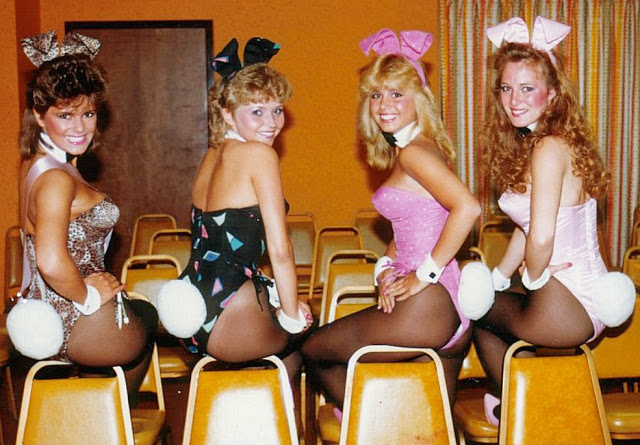
The success of the club was tied directly to the costumed Playboy Bunnies. According to Hugh Hefner, the Bunny was inspired by Bunny’s Tavern in Urbana, Illinois (opened 1936). Hef was one of the many Univ. of Illinois students who studied at Bunny’s during his years on campus. These Bunnies, with their royal-satin corsets, white collar, cuffs, bowtie, bunny ears and fluffy white tails served “Keyholders” as VIPs of the club. The bunny costume also featured black sheer to waist pantyhose and matching high-heeled shoes. The outfit became a powerful symbol of the Playboy Clubs which was quickly elevated to icon status. It was also the first commercial uniform to be registered by the United States Patent and Trademark Office (U.S. trademark registration number 0762884).z tv
More than once, the club was described by the media as a “Disneyland for adults.” The layout of the club was described as, “Each of four floors was designed as a ‘room’ in a mythical and fabulous bachelor pad—there was Playroom, a Penthouse, a Library, and a Living Room. Teak and leather furniture, wood-paneled walls and rich, autumnal shades prevailed in the decor. Playboy magazine was in evidence everywhere-from framed original cartoons in the ‘cartoon corner’ of the Living Room, to huge, back-lit pictures of Playmates in the Playmate Bar.”
z play4_0The Chicago club opened on a bitterly cold day in Chicago, yet lines of eager prospective members stretched around the block, warmed by ideas of what was to be found inside. Membership was available to anyone willing to purchase a key – $50 for residents and $25 for out-of-towners. The club “key” itself was metal and topped off with a rabbit head, later replaced by a gold plastic credit card to carry in a wallet. Hefner was present at the grand opening until the club closed at 4am. Keyholders gawked at ladies in their colorful Playboy Bunny outfits and dined on steaks and salads (no fancy hors d’oeuvres or desserts here), drank cocktails and bought packs of cigarettes and Playboy logo lighters. Most club items were available for the standard price of $1.50 per item (an exorbitant price at the time, especially for drinks and cigarettes). In the club’s first year, entertainment included the most popular stars of the day, including Mel Torme, Barbara Streisand and a 19-year-old Aretha Franklin.
The Playboy Club was an instant success. In the first year, there were 106,000 Keyholders and the place sold more food and drink than any other restaurant or club in town. Clubs quickly opened in Miami and New Orleans and, between the first three, brought in over $ 4.5 Million in gross profits during that first year. Playboy Club Keyholders were served by Playboy Bunnies in their skimpy attire. Each Bunny outfit featured a satin rosette with the bunny’s name, worn on the hip. But, it was made very clear that she was unavailable for anything but the serving of cocktails. Keyholders could look but not touch.
z bunnymanual1The Bunnies themselves were instructed, in a 44-page “Bunny Manual”, that they could not date customers, give out their phone numbers, or meet their boyfriends or husbands within two blocks of the club. If they did, they would face the tortuous penalty of being banned from the “bunny hutch.” There were different types of Bunnies, including the Door Bunny, Cigarette Bunny, Floor Bunny, Playmate Bunny and the Jet Bunnies (specially selected to serve on the Playboy “Big Bunny” Jet). To become a Bunny, women first had to audition. Prospective “Kits” (short for “Kitten Rabbits”) underwent thorough and strict training before officially becoming a Bunny. Bunnies were required to be able to identify 143 brands of liquor and know how to garnish 20 cocktail variations. Customers were also not allowed to touch the Bunnies, and demerits were given if a Bunny’s appearance was not properly organized.
z article-2200500-14EAB3D9000005DC-954_634x669

A Bunny also had to master the required maneuvers to work. These included the “Bunny Stance”, a posture that was required in front of patrons. The Bunny must stand with legs together, back arched and hips tucked under. When the Bunny is resting or while waiting to be of service, she must do the “Bunny Perch”. She must sit on the back of a chair, sofa, or railing without sitting too close to a patron. The most famous maneuver of all, the “Bunny Dip”, was invented by Kelly Collins, once renowned for being the “Perfect Bunny”; to do the “Bunny Dip” the Bunny gracefully leaned backwards while bending at the knees with the left knee lifted and tucked behind the right leg. This maneuver allowed the Bunny to serve drinks while keeping her low-cut costume in place. Strict regulations were enforced by special workers in the guise of patrons.
z Playboy-Bunny-club-manual-4

The Playboy Bunny mantra? “Always remember, your proudest possession is your bunny tail.” To ensure enforcement, a “Bunny Mother” was hired and served both as confidant and enforcer of the rules. The Bunny Mother was in charge of scheduling work shifts, hiring, firing and training. The Playboy Club’s numerous conservative enemies kept the clubs on their toes and Hefner went so far as to hire private detectives to continuously test the Bunnies and bartenders by trying to entrap them by offering money for favors and thinly disguised requests for sex. The Club Manager had only two responsibilities for the Bunnies; floor service and weigh in. The Bunnies were weighed by the club manager before every shift and could not gain or lose more than one pound (let that sink in for a z bunnydating

moment ladies). Playboy Enterprises required all employees to turn in their costumes at the end of employment. Somewhere out there is a warehouse full of old Playboy costumes. The only two bunny costumes on public display are in the collections of The Smithsonian and the Chicago History Museum.
z Gloria-Steinem-sexual-Most readers are aware of feminist Gloria Steinem’s crusade to expose the sexist treatment of Playboy Bunnies in her 1983 book “Outrageous Acts and Everyday Rebellions.” The article featured a photo of Steinem in Bunny uniform and detailed how women were treated at those clubs. The article was first published in 1963 in Show magazine as “A Bunny’s Tale”. But are there any other famous former Bunnies out there? Well, yes, the “hutch” is littered with the names of young, struggling Hollywood actresses. Some are familiar: Lauren Hutton, Sherilyn Fenn (Twin Peaks TV star), Barbara Bosson (Hill Street Blues TV star), Patricia Quinn (Magenta from Rocky Horror), Kathryn Leigh Scott (Dark Shadows TV star) and many others. Jon Bon Jovi’s mom, Carol Sharkey, was a Bunny as was Kimba Wood, Bill Clinton’s nominee for Attorney General in 1993. At least 32 former Bunnies were also Playboy Magazine Centerfold “Playmates.” Rock stars Dale Bozzio (Missing Persons and Frank Zappa) and Blondie’s Debbie Harry were also Bunnies. Harry once famously remarked, “The girls there were part of the entertainment; part of the sort of mystique, the excitement, the naughtiness of it. But on the inside of that job, the girls were treated very, very well. There was a lot of benefits: health benefits, job security, good salary, good money. It was a very sought-after kind of job.”
z club girlsThe Chicago Playboy Club enjoyed a long and successful quarter century run, but closed in 1986. Today, the “One Magnificent Mile Building” has replaced the Chicago Playboy Club, and in 2000, that stretch of Walton was given the honorary name of “Hugh Hefner Way.” The original magazine headquarters was located nearby as was the original Playboy Mansion at 1340 N. State St., both of which have also moved on. Sadly, nothing has quite replaced the Playboy Club in Chicago. Hugh Hefner died at his home in Holmby Hills, Los Angeles, California, on September 27, 2017, at the age of 91. The cause was sepsis brought on by an E. coli infection. He is interred at Westwood Memorial Park in Los Angeles, in the $75,000 crypt beside Marilyn Monroe. “Spending eternity next to Marilyn is an opportunity too sweet to pass up.”
And Batman? The franchise, which existed decades before the TV Show, rolls on through the present day. Although the 1960s Batman TV series campy reputation continued to be associated with the character for years after the show ended, various creators worked to return the character to his dark roots, culminating in the Batman movies that remain popular with present day fans. A cultural icon, Batman has been licensed and adapted into a variety of media, from radio to television and film, and appears on a variety of merchandise sold all over the world such as toys and video games.z Bob-Kane-and-Batman-Through-The-Ages-678x381
Who would have thought that two iconic American institutions so widely opposite from one another shared such a common thread as this? That’s what you have to love about America. Its the differences that draw us together proving that opposites attract to make, dare I say it? Strange bedfellows. Besides, didn’t Hugh Hefner remind you just a little bit of Batman’s alter-ego, Bruce Wayne. Yeah, now it all makes sense.
 

Hollywood, Indianapolis, Pop Culture

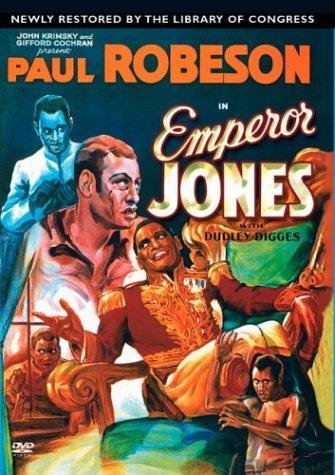
The Emperor Jones.

Emperor Jones poster

Original publish date:  September 9, 2011            Reissued: July 5, 2018

It was Wednesday night March 16, 1921, St. Patrick’s Day Eve, and Indianapolis was stretching the boundaries of the cultural heartland. That is, with the help of recent Pulitzer Prize winning playwrite Eugene O’Neill. The state and nation were in flux; World War II was still fresh in the hearts and minds of Americans (the United States officially declared peace with Germany in August of that year), newly minted President Warren G. Harding had been in office less than two weeks, and the Indiana Ku Klux Klan was officially chartered by the state. Worldwide, Adolph Hitler assumes leadership of the Nazi party, Albert Einstein wins the Nobel Prize in Physics, and 5 million people die in the Russian Famine brought on by the Russian Civil War.

z Original-Subscription-Card
Original membership card from 1915-16 to The Little Theatre in Indianapolis.

Out of this atmosphere and into the footlights of the Little Theatre in Indianapolis stepped “The Emperor Jones”, an expressionist play by Eugene O’Neill featuring a controversial unlikable black protagonist in the lead role. The play tells the story of Brutus Jones, an African-American train porter who kills a man, is sentenced to prison, escapes to a Caribbean island, and cons his way to the Emperor’s throne. The story is told from the prospective of Jones himself in a series of eight acts that are written in flashback style and scripted in the vernacular of Jim Crow America in a decidedly unflattering colloquial tongue. So dominant is the lead character, that scenes two thru seven feature only Rufus Jones himself speaking in a rambling retrospective of his two year sojourn to the top.
The play had premiered off Broadway in 1920 and was so well received that it eventually had to be moved to a larger theatre on Broadway to accommodate demand. It was Eugene O’Neill’s first critical and financial success and is credited with launching the future Nobel Prize winner’s career. While there can be no doubt that Eugene O’Neill took daring chances with his plays that would ultimately change the face of American theatre, we must also tip our cap to the “Little Theatre” of Indianapolis for the risks assumed by staging this one-time performance.
“The Little Theatre Society” was founded in the Fall of 1915 to showcase productions by American and European authors / playwrites heretofore unable to garner recognition by mainstream producers. The Society was unique in that it had no theatre of its own. During the earliest years, plays were performed in the sculpture court of the John Herron Art Institute. Although beautiful, the acoustics were poor and the venue could only seat 200 guests. Soon, performances were soon moved to the Masonic Temple. The Temple was beautiful and could seat 1,000 guests, but the stage was shallow and there were no dressing rooms. Each member of the society paid a $ 5 annual membership fee which entitled them to 12 tickets for every performance. Members could use the tickets themselves or sell them to the public at an average cost of between twenty-five and fifty cents each.
According to the Society’s literature, their purpose is to: “encourage the production of new plays, plays which cannot be produced by commercial stage, either because of their content or lack of commercial possibility-in short, to encourage all community endeavor of an original character in the field of the theatre.” The Little Theatre Society was among the first to shine a spotlight on Hoosiers Theodore Dreiser and W.O. Bates. Other productions included George Bernard Shaw, Booth Tarkington, Jack London, Oscar Wilde, William Butler Yeats, George Ade, Meredith Nicholson, and James Whitcomb Riley. And that was just in the Theatre’s first two years.
z 6b90f7f2801f80121cede26010e5597dWith the choice of O’Neill’s work, “The Emperor Jones”, the Society was taking an enormous risk if only for the fact that it required an elaborate stage for a one night performance. And then there was the Klan. The KKK was growing by leaps and bounds despite the fact that it had just been formally recognized in the state that same year. Soon, one third of the native male white born citizenry of the state would belong to the Klan. This was a play solely centered around a strong, murderous black man in a position of absolute authority in production in the principally white governed center of the WASP-ish Midwestern cornbelt.
On the contrary, in defiance of its cornbelt stereotype, the Little Theatre Society was chartered for just such bold experimentation and modeled after such avant-garde venues as the Moscow Art Theatre, the Abbey Theatre of Dublin, the Manchester Players in England and Théâtre Libre in Paris. Local critics, like Walter D. Hickman of the Indianapolis Times, applauded the company’s brave undertaking immediately: “Last night at the Masonic Temple, an Indianapolis audience witnessed for the first time a local presentation of The Emperor Jones. No legitimate theatre in Indianapolis would ever think of presenting this play…the title role was played by a local negro educator, Mr. Arthur T. Long…Mr. Long dominated every scene last night and gave to the role the great beauty of expressive inflection which the part demands. I forgot that a local man was playing the role and I surrendered myself to the grim tragedy which was unfolded on the Masonic stage. A grim tragedy told in a volcanic way.”
300px-Poster-The-Emperor-Jones-Marionettes-1937W. F. McDermott, drama editor of the Indianapolis News, wrote this about Long: “a colored actor, played the role of the emperor with several moments of great naturalness. He was able to portray the negro fear of “ha’nts” with unusual power.” But McDermott was less kind to the playwrite, “O’Neill writes darkly of brooding, inscrutable fate; of black and stormbound heights, of man, stripped savage and terrified; of man tragically at odds with his environment and foredoomed.”
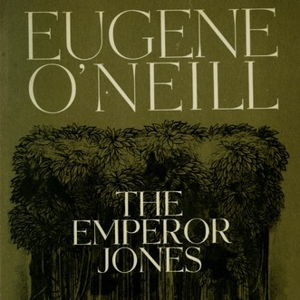
However, it was the local black owned press that was perhaps hardest on the production, routinely denouncing O’Neill’s work for its stereotypes in the form of the backwards (certainly by today’s standard) dialog. Although groundbreaking when viewed within the context of the time, today, O’Neill’s so called “Negro plays” are seldom performed nowadays because of their perceived negative stereotypes. Much the same as Mark Twain’s historic works have been routinely revised and censured by modern day pundits. In truth, racial issues were never O’Neill’s focus. His aim was the human soul in its tragic destiny. His ultimate goal was to provide opportunities in mainstream theatre for talented black actors. Eugene O’Neill was the son of James O’Neill, an actor whose “Romeo” character was described as the best ever, making him one of the countries first matinee idols. O’Neill was determined to revolutionize what he called the “hateful theater of my father, in whose atmosphere I had been brought up.”
z the-emperor-jones-b2skuw13.znxPerhaps the most unusual feature of the Indianapolis production was the choice of the lead actor chosen to portray Brutus Jones. Arthur Theodore Long was born on December 31, 1884, the son of Henry and Nattie (Buckner) Long in Morrillton, Arkansas. According to the 6th edition of “Who’s Who in Colored America (1941-1944)”, Long graduated from Sumner High School in St. Louis, Missouri in 1904. He entered the University of Illinois at age twenty and earned a BA degree in 1908. Arthur then went on to further his education at both Indiana and Butler universities. He then studied at the University of Chicago, presumably in pursuit of his master’s degree. Long earned teaching credentials in history, civics, English, music and mathematics.
In 1909 Long was hired to teach at I.P.S. 26 (one of the “colored schools”) in Indianapolis. There he served as assistant principal (1910 to 1915) and as principal (1915 to 1923). Long served as principal at a high school in Crawfordsville and later as a supervisor for principals in Indiana. Long then took a similar position at Lincoln School in Trenton, New Jersey, where he served for a decade. Wherever he went, Arthur T. Long promoted the arts (dance, music, and drama) and was described by people who knew him as a “tall, light skinned serious minded disciplinarian who liked to play the piano for the students in the mornings.” In good weather, he often lit up the school playground at night to stage impromptu school productions featuring black heroes like Frederick Douglas, Booker T. Washington and Benjamin Banneker. Long left his position in Trenton in November of 1933, just two months before his fiftieth birthday and was never heard from again.

z o'neill
Playwrite Eugene O’Neill

What became of O’Neill’s social masterpiece, “The Emperor Jones?” Although it struck the theatre world like an electric shock nearly a century ago, it is relatively forgotten today. Personally, I believe it to be as socially relevant today as it was when it made its debut back in 1920, regardless of color. The story could easily serve as a parable for many of the problems facing every facet of today’s society. O’Neill’s Brutus Jones is a desperate man facing a hopeless situation who is thrust into an opportunity he sees as his only chance at survival. He arrives on an isolated island and is immediately elevated to a position of authority and power by the island’s uninformed, superstitious inhabitants. In time, he abuses his position, becomes careless and is punished (in this case killed) by his “subjects” who have caught on to his game.
Is this not unlike today’s ninety-day wonders: rookie corner drug dealers who operate freely and undetected for brief periods of time with more money than they can spend and more friends than they can count before law enforcement catches up to them? Or perhaps a modern day investment banker or securities trader spending the money of trusted friends and clients for his own whims before he is discovered and prosecuted? Both of these examples speak their own language and justify their own actions in the same coarse way as Eugene O’Neill’s Brutus Jones did all those years ago. Although you can easily look up “The Emperor Jones” on the web and decide for yourself, its unlikely that you’ll be seeing it on Broadway anytime soon. But, like me, you can take pride in the fact that nearly a century ago, a brave little theatre troupe in Indianapolis had the guts to stage the saga on St. Patty’s Day eve when other, allegedly more “Cosmopolitan” cities wouldn’t touch it.

Hollywood, Indianapolis, Indy 500

Clark Gable at the Indianapolis 500.

Clark gable pic 3

Original publish date:  May 25, 2010                                                                                 Reissue date: May 25, 2018

I originally wrote this article back in May of 2010 and in the years since, I have been informed by a longtime friend (and Irvingtonian) Bruce Gable that there is an Irvington connection, so I figured I’d update it and run it again. For the most part, here it is as it ran back then with a few appropriate updates.

It was 50 years ago that the “King of Hollywood”, Clark Gable died. They called him the king for good reason. Women swooned at his masculine screen presence and men viewed him as the ultimate man’s man. Best remembered as Rhett Butler in Gone with the Wind, most film critics agree that without Gable, GWTW would have blown away quietly. Yet, most Hoosiers don’t realize that Gable has several ties to our fair state.

600-WD-205
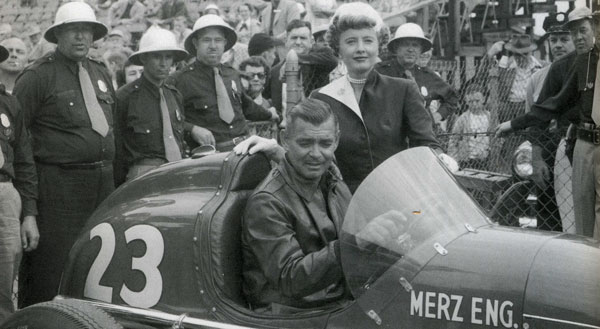
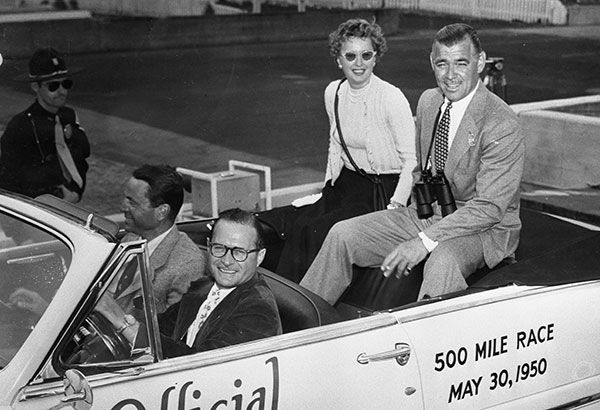
Clark Gable & Barbara Stanwyck at the Indianapolis Motor Speedway.

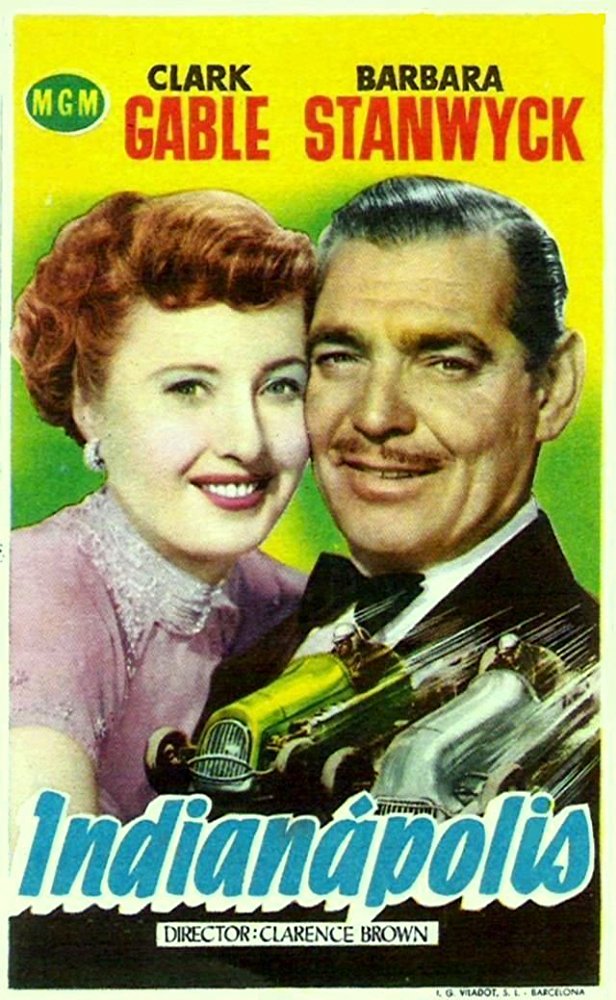
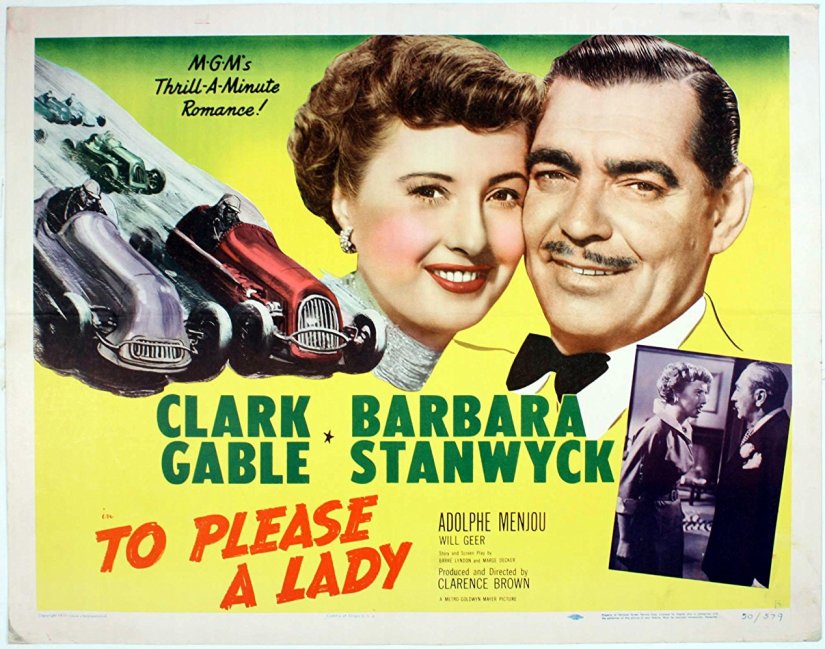
It is a little known fact that Gable was a devoted race fan who regularly attended races including the Indianapolis 500. In 1950 Gable starred in the movie “To Please a Lady”, filmed at the Indianapolis Motor Speedway,. Although not critically acclaimed, the movie is considered to be a motorsports classic. Most of the scenes were shot over a three-week period at the speedway. To make the racing scenes as authentic as possible, director Clarence Brown used a good deal of actual professional racing footage. Gable did some of his own driving for close-ups, while a stunt driver took the wheel for the more dangerous shots. The film’s climax was shot at the 1950 Indianapolis 500 won by Johnnie Parsons in a rain shortened race.

Clark gable pic
Clark Gable & Barbara Stanwyck in Indianapolis.

In the film Gable stars as Mike Brannon, a thrill-seeking race car driver whose ruthless tactics cause a crash that results in another driver’s death. Barbara Stanwyck plays Regina Forbes, an influential newspaper columnist who is determined to get him permanently banned from the professional racing circuit. Gable’s Brannan character has a bad reputation and Stanwyck’s columnist Forbes character tries to interview him, but he refuses. Regina’s column suggests that Brannan caused the fatal accident deliberately, which leads to him losing his ride. Brannan begins driving in a stunt show, eventually earning enough money to buy a car of his own and enter the Indy 500 himself. The pair engages in an explosive battle of wills while fighting off an attraction to each other that threatens to spin out of control.
The film was director Clarence Brown’s eighth and final film with Clark Gable, who was also his good friend. Brown managed to pull off some of the most thrilling racing sequences ever filmed, capturing the raw excitement of the speedway by throwing viewers right into the middle of the action. Fans experience the energy of the pit crew in action, the zooming car engines, and the roar of the crowd. Cinematographer Hal Rosson used up to six camera crews at a time to capture action from actual races. The location shooting paid off in the film’s nail-biting climax where car speeds averaged 100 miles an hour.

9a68f1f86a799aceb91edf6808063162
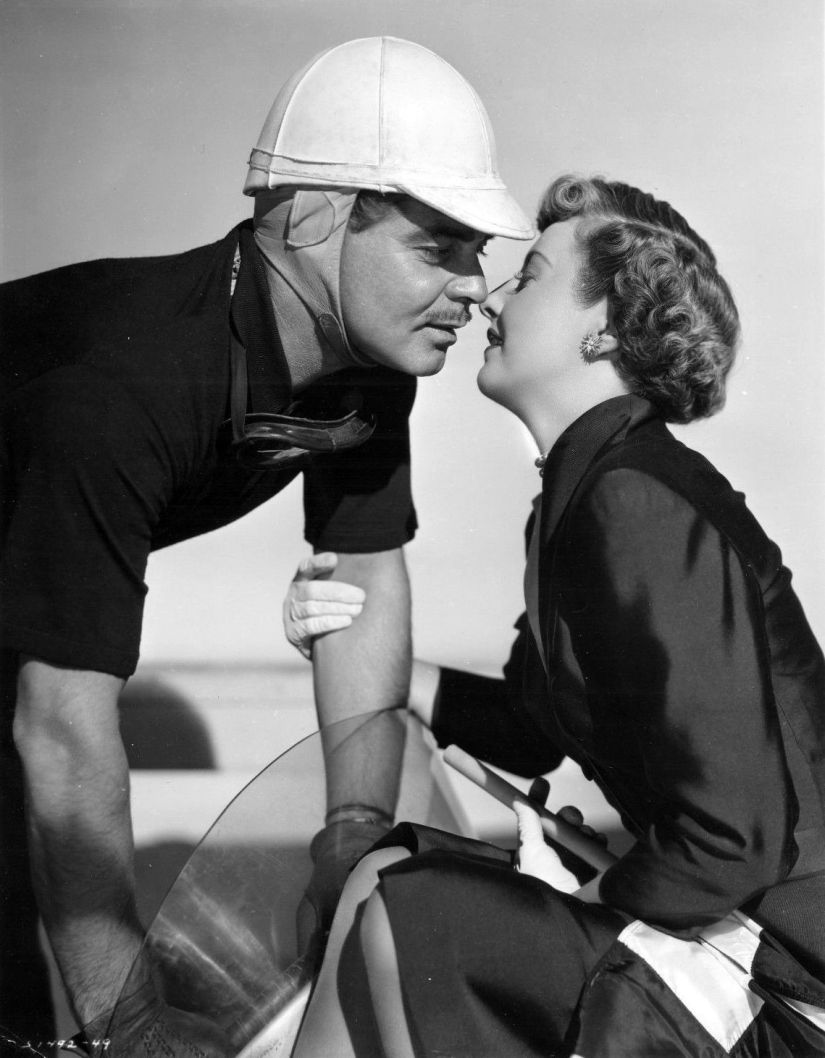
Clark Gable & Barbara Stanwyck.

Gable and Stanwyck are well matched as a romantic onscreen duo whose character’s intense chemistry is undeniable. This was the couple’s second film together. Their first, “Night Nurse”, was made nearly 20 years earlier at Warner Bros. In that movie Gable, not yet a major movie star played a small role as a nasty chauffeur who viciously slaps Barbara Stanwyck across the face. The moment was replicated in the speedway film when Stanwyck took another smack across the kisser from Gable.

Clark gable pic 2
Ironically, “To Please a Lady” was not a major box office success due in part to the surge in household television sales, which by 1950 was rapidly taking business away from movie theaters. However, the film did win plenty of critical praise. The New York Times said of the film: “You can bet that Indianapolis never experienced a contest as hotly run as the race that Mr. Brown has staged.” Variety proclaimed that the movie “has excitement, thrills, with some of the greatest racing footage ever put on celluloid – It firmly returns Gable to the rugged lover, rugged character status.”
The film’s legacy among race fans is the chance to see authentic open-wheel midget and Indy-car racing footage from an often neglected time in auto racing. The montage featuring a racing engine being machined and assembled along with some nice race car close-ups and pit stop action make it a must see flick for gear heads. The film also captures a couple of minutes of authentic footage of Joie Chitwood’s famous stunt car show, a rare treat for vintage race fans.

carole2
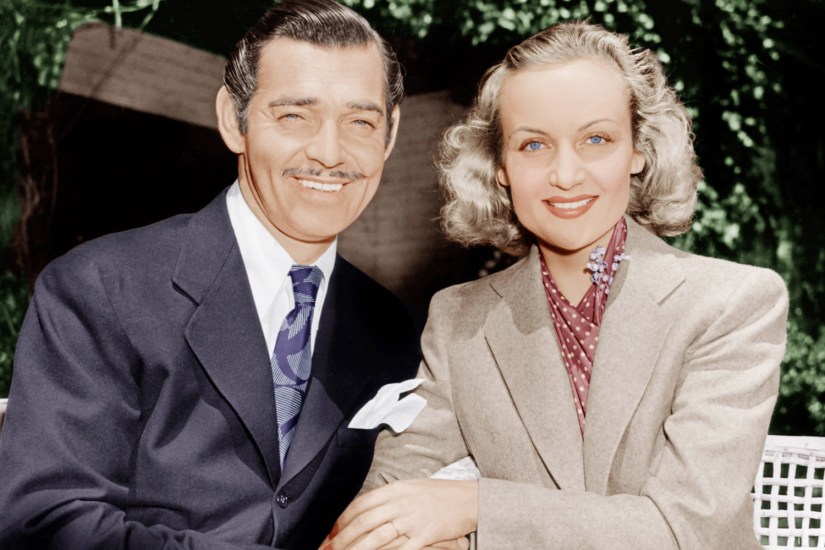
Clark Gable and Hoosier Carole Lombard.

Being in Indianapolis was difficult for Clark Gable personally. Married five times, Gable’s most glittering union was with Hoosier actress Carole Lombard. The city was the final stop of a 1942 war bond tour headlined by Lombard, before flying back home to Los Angeles. Tragically, Lombard’s plane never made it, crashing in Nevada killing everyone on board. Gable and Lombard honeymooned at Lake Barbee near Warsaw, Indiana. Their three-year marriage had been the ideal Tinseltown union, and Lombard’s death was a loss from which Gable never recovered.

At the time of “To Please a Lady” Gable had finally remarried, this time to Douglas Fairbanks’ widow, Lady Sylvia Ashley. During filming he seemed happier and healthier than he had been in years according to friends. Even so, Gable remembered his beloved late wife while in Indianapolis. He quietly made a point to visit the downtown locations where Lombard had made her final public appearances before her tragic death.

When Gable left Indianapolis, he had one last surprise waiting for him. Lady Sylvia’s teenage nephew, Timothy Bleck showed up on set with a group of friends and took over several rooms at the Marriott Hotel, where the Gables were staying, charging their bill to the Gable’s account. Many who knew Bleck felt that the youngster had developed a “crush” on Gable. For his part, Gable often complained to his new wife that Bleck and his friends were “eating me out of house and home and always pestering me for money.”

Lew-Smith-Barbara-Stanwyck-Clark-Gable-and-Bill-Hickman-on-the-set-of-To-Please-a-Lady
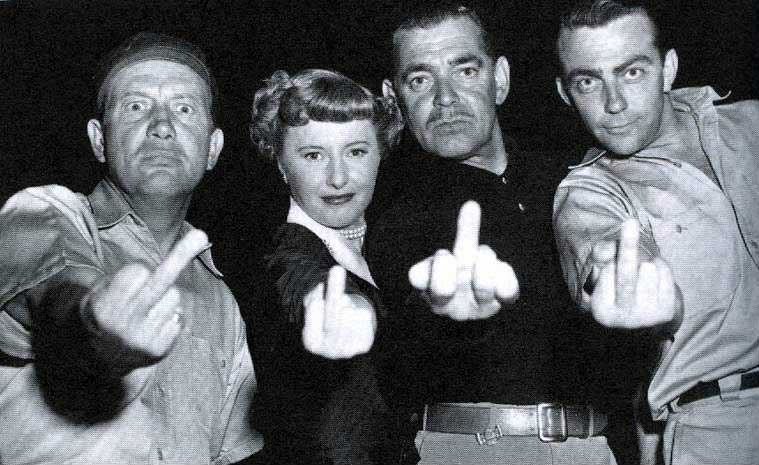
Clark Gable & Barbara Stanwyck breaking bad at the Indianapolis Motor Speedway.

Lady Sylvia, a British National famous for her temper tantrums. Later that same year, she demanded a spacious dressing room for her personal use during Clark’s next movie being filmed in Durango, Mexico, “The Wide Missouri.” (Gable’s first Technicolor film since Gone with the Wind.) Heretofore an exclusive luxury granted only to mega-movie stars like Greta Garbo, Marlene Dietrich, Joan Crawford and Bette Davis. The couple divorced within the year.

Gable’s list of film pairings includes many of the most beautiful women in Hollywood. Joan Crawford teamed with Gable eight times, more than any other actress. Jean Harlow starred with Gable in six films in a union that would have undoubtedly continued if not for her untimely death. Lana Turner shared the credits with him four times. Gable worked twice each with Loretta Young and Claudette Colbert. In his final film, “The Misfits” at almost sixty-years-old, Gable starred opposite 34-year-old Marilyn Monroe. Gable had been her childhood idol. The film also starred the tragically flawed fallen film idol Montgomery Clift.

The Misfits would take on a macabre life of its own, fostering whispers of a curse, when Gable suffered a heart attack two days after filming ended, He died ten days later. Monroe and Clift attended the premiere in New York in February 1961 while Monroe was on pass from a psychiatric hospital; she later said that she hated the film and could not watch herself in it. Within a year and a half, she was dead of an alleged drug overdose. The Misfits was the last completed film for both Monroe and Gable.

Montgomery Clift, previously known for his classic profile, had been badly injured in a 1956 car crash requiring reconstructive surgery on his face, evident in his close-ups for “The Misfits”. He died six years after the filming. The Misfits was on television on the night Clift died. His live-in personal secretary asked Clift if he wanted to watch it. “Absolutely not” was Clift’s reply, the last words that he spoke to anyone. He was found dead the next morning, having suffered a heart attack during the night.

Many feel that Clark Gable danced a tango with death and morbid curiosity throughout his career. Gable’s perceived death wish circled around the many dangerous, often violent, themed films he starred in, his early death and the unexpected deaths of his costars. Capped off with the tragic early demise of his wife Carole Lombard. Another eerie connection to Indiana by Clark Gable can be found in the last movie Hoosier outlaw John Dillinger ever saw. Moments before he was gunned down in an alley outside Chicago’s Biograph Theatre, Public Enemy #1 was watching an MGM film called “Manhattan Melodrama” starring…you guessed it, Clark Gable.

Update: Irvingtonians Bruce and Fred Gable have shared stories with me about their famous relative. Turns out, Clark Gable was a distant cousin. The Gable home was located at 5850 University Avenue across from the guardian home. Bruce & Fred researched the Gable family connection and discovered that their Great-grandfather and Clark Gable’s grandfather were 1st cousins. “They were wildcatters who migrated to Indiana from Pennsylvania in search of oil back in the 1880s,” Bruce states, “All they found was natural gas though and neither made any money on that.”

images
Irvingtonian Bruce Gable

The Gable family lived for a time in the Audubon Court apartments and they can remember stories about the elder Gable visiting his cousin / their grandfather in Irvington. Gable’s Great-grandfather owned the Thompkins drugstore on South Audubon Road across from the Magic Candle. The brothers recall a time when telling neighborhood kids that they were related to Clark Gable was a big deal. “Later, when my kids told their friends that, no one knows who they’re talking about.” says Bruce. As for that I’ll quote Rhett Butler by saying, “Frankly my dear I don’t give a damn” because I’m just glad to hear that Irvington has a connection to one of the most admired leading men in Hollywood history.

Ghosts, Hollywood, Pop Culture

Clifton Webb’s Ghost-Forgotten Hoosier Hollywood Icon

webb1Original publish date:  November 9, 2008

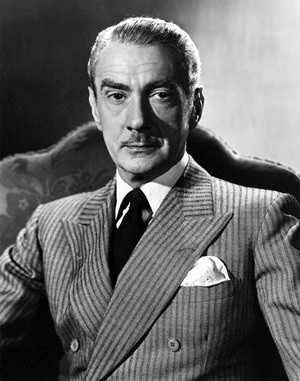
If you’re a fan of the Golden Age of Hollywood, then you should recognize the name Clifton Webb. If you’ve never heard of him, but consider yourself a fan of old Hollywood movies, don’t despair as you’ve probably seen Webb in one of his many old movies or television appearances made during his long career in Tinseltown. He’s one of those great character actors whose face is very familiar but whose name escapes us. So great in fact that he was nominated for 3 Academy Awards and 2 Golden Globe awards ( winning one in 1946) during his career. His story is sadly sweet.

If you’re a fan of the Golden Age of Hollywood, then you should recognize the name Clifton Webb. If you’ve never heard of him, but consider yourself a fan of old Hollywood movies, don’t despair as you’ve probably seen Webb in one of his many old movies or television appearances made during his long career in Tinseltown. He’s one of those great character actors whose face is very familiar but whose name escapes us. So great in fact that he was nominated for 3 Academy Awards and 2 Golden Globe awards ( winning one in 1946) during his career. His story is sadly sweet.  Clifton Webb was born Webb Parmelee Hollenbeck to a multi-generational Hoosier farming family in Marion County on November 19, 1889. If you find a biography on Mr. Webb, it will most likely claim that he was born in Beech Grove. However that information proves faulty when you realize that Beech Grove wasn’t formed as a community until after he was born. Beech Grove as we know it was not formed until 1906. Before that time it was known as a region known for the many Beech trees that populated the area. The town of Beech Grove was formed when the Big Four railroad began to use it as a hub during the early 1900s.

It’s much more accurate to say that Clifton Webb was born nearer to Brookville Road in the South eastern area of Marion County. So it’s accurate to say that Webb started life as an east-sider. However, he did not stay long. Webb’s father, Jacob Grant Hollenbeck (1867-1939) , was an Indiana farmer and sometime green grocer. His domineering mother, Maybelle A. Parmelee (1869-1960) was the daughter of a railroad conductor. Maybelle insisted that her “Little Webb” keep her family name along with that of Webb’s father. She moved with her “little Webb” to New York City after her husband’s job as a ticket taker did not suit her plans for her son’s career advancement in the theater.

Maybelle was known to tell anyone she came in contact with the “We never speak of him. He didn’t care for the theater.” Maybelle had “little Webb” enrolled in singing, dancing, & acting classes in New York City by the age of 5. Maybelle was an effective and aggressive stage mother who managed to get “little Webb” his stage debut at Carnegie Hall at the age of only 7 in a play called “The Brownies”. Webb was so effective in this first role that he was signed up to tour with a traveling vaudeville acting troupe. Shortly afterwards he was tapped for lead roles as Tom Sawyer and Oliver Twist. Maybelle kept “little Webb” busy between performances with painting and opera lessons. Webb quite school by the age of 13. He was performing opera solos on stage by the age of 17.

By the age of 19, Webb had dropped both the Parmelee and Hollenbeck names and adopted the stage name we know as “Clifton Webb”. He was performing regularly on Broadway and it was not unusual to find his mother Maybelle’s name listed in the playbill along with her “little Webb” as a minor scene player or extra. During this period, Webb co-starred with legends like Will Rogers and Al Jolson in plays and musicals written by luminaries like Cole Porter, Irving Berlin, Oscar Wilde, Noel Coward, the Gershwins and Jerome Kern. Webb received billing above Humphrey Bogart in Bogie’s first stage performance. Although he appeared in a few silent films in the 1920s, he stuck to Broadway until 1944.

webbclifton01Webb was tapped by director Otto Preminger to appear in the classic “Laura” alongside Gene Tierney. He would receive his first Oscar nomination for this appearance, even though he was relatively unknown to movie fans. 2 years later in 1946 he again starred with Tierney in the cult classic film “The Razor’s Edge”. He received his second Oscar nomination for this role. Webb’s created the lasting character “Mr. Belvedere” in 1949 for the film “Sitting Pretty” and would reprise the role 2 more times. This character would earn him his third and final Academy Award nomination. This same “Mr. Belvedere” character would be retooled as a TV show and played by 4 different actors from the 1950s thru the 1980s.
Some of Webb’s other films (He made 25 films in all) include: “The Dark Corner” in 1946, “Cheaper by the Dozen” with Myrna Loy in 1950, “For Heaven’s Sake” in 1950, “Dreamboat” in 1952, “Woman’s World” in 1954, “Titanic” in 1954 (He played Barbara Stanwyck’s doomed husband), “Three Coins in a Fountain” (1954), “The Man Who Never Was” in 1956, “Boy on a Dolphin” (1957), and “The Remarkable Mr. Pennypacker” in 1959. It’s been claimed that Webb’s real life persona was most like that of his “Mr. Belvedere” character, described as being somewhat of a “Sophisticated, stuffy, effete snob” by some who knew him. It was no secret that Clifton Webb was gay. This at a time in Hollywood when it was an unwritten rule in Tinseltown to “Don’t ask, don’t tell”.

Clifton Webb’s elegant style landed him on Hollywood’s best dressed list for decades. Webb was the subject of many great stories and quotes in Hollywood. One of comic Bob Newhart’s favorite stories is to relate how while he was a young & naive star in Hollywood at one of his first exclusive parties, Clifton Webb approached this wide eyed newcomer and startled Newhart by asking him if he wanted to dance. Despite this obvious frankness, Clifton Webb managed to keep his personal life out of the Hollywood tabloids. Although the rumor in late 1950’s Hollywood was that Webb was once romantically linked with fellow Hoosier icon James Dean. It was widely known that Webb openly flirted with young, good looking men at parties in Hollywood, taking satisfaction in garnering more attention from them than the women in the room.

However, this is all unsubstantiated Hollywood gossip. Webb was never seriously linked to anyone in Hollywood, male or female. He never married. This is at least due in part to his abnormally close relationship with his mother, who seemed to be the sole object of Webb’s tenderness and love. She lived with her son until her death at age 91 in 1960. Webb was distraught. So much so that his friend Noel Coward tried to get him to snap out of the deep depression months after her death by telling Webb, “It must be difficult to be orphaned at 70, Clifton.” As for trivia, cartoonist Jay Ward claimed that he modeled the “Peabody” character from the Rocky & Bullwinkle show on Clifton Webb.

Direct quotes attributed to Webb include, when speaking of his alternative lifestyle, he said “It’s never morals, it’s manners.” and “You can be rich and dull or poor and amusing–but you must always contribute something to the community.” On the subject of wearing a partially exposed handkerchief in a suit jacket pocket, Webb said “Never pointed, never square…it should always be, of course, pear shaped.”

Clifton Webb never really recovered from the loss of his mother and his health began to suffer for it. He reportedly locked her room and refused to remove her belongings, choosing instead to leave everything just as he left it. He spent the last 5 years of his life as a sad, lonely recluse in his Beverly Hills home. Sadly, upon her death he slipped into a prolonged period of denial and depression going so far as to contact dozens of clairvoyants and spirit mediums in an effort to contact the spirit of his dead mother. One of these mediums was the former Blonde Bombshell star Mae West, who was herself known for a powerful spiritually intuitive gift of communicating with the spirits of the dead.

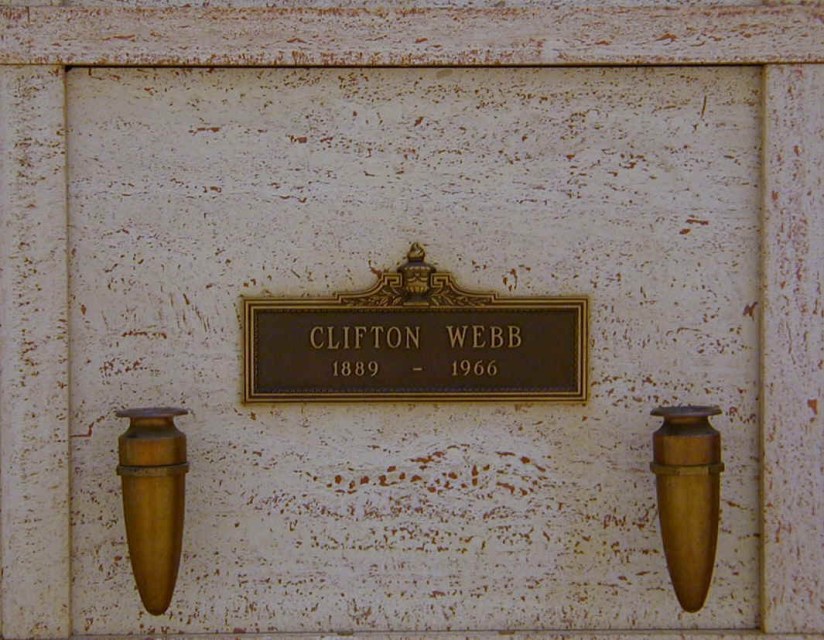
Clifton Webb died of a heart attack on October  13, 1966 at the age of 76. He was awarded his own star on the Hollywood walk of fame. It’s located at 6840 Hollywood Blvd. He was interred in a burial vault at Hollywood Forever Cemetery. His is crypt 2350, Corridor G-6 in the Abbey of Psalms. Why so much detail about Webb’s burial spot? Because it’s rumored to be haunted by Webb himself.

Rarely will you find accounts of ghosts “haunting” their gravesites, but Clifton Webb is the exception to this general rule. Clifton Webb’s restless spirit has been seen haunting the crypt in the section known as “The Sanctuary of Peace” where his mortal remains were laid to rest. Mr. Webb is always seen fastidiously dressed in his dapper suit and sometimes has been known to startle visitors by yelling at them in his distinctive voice. There are even a few accounts of Mr. Webb haunting his old house at 1005 Rexford Drive in Beverly Hills before it was torn down many years ago. It has been claimed that the reason for his haunting is his reluctance to relinquish his fame and the fear that his legacy might be forgotten. The precursor for these ghostly visits by Webb in his burial vaults is the unnerving sound of the marble slab that covers the opening shifting back and forth.

Clifton_Webb1I can tell you from first hand experience, this slab does indeed move to and fro within the slot that covers the burial cavity. I had heard these legends and visited the Hollywood Forever cemetery 9 years ago to test the theory. I will tell you that it’s an eerie feeling and an even stranger sound. If I were alone in that vault and heard that sound without explanation as to whom or what was causing it, I would not stick around to see if it was my famous fellow Hoosier, Clifton Webb!