
Creepy history, Health & Medicine, Pop Culture

Raggedy Ann and the Anti-Vaxxers.

raggedy syringe

Original Publish date: August 16, 2015

The Tribeca Film Festival in New York City opens this weekend. Recently, news that Robert De Niro, co-founder of the festival, announced he was pulling an anti-vaxxer film came as a shocker to the medical and science community as much as it did for fans of the festival. The documentary, titled Vaxxed: From Cover-Up to Conspiracy, is directed by British gastroenterologist Andrew Wakefield, who published a study in 1998 linking the MMR (measles, mumps, rubella) vaccine to autism.
De Niro, who himself has a child with autism, first zealously defended the choice of the film for the festival. The decision to pull the film has restarted the anti-vaxxer movement in a big way. What does anti-vaxxer mean, you ask? Strictly defined, an Anti-vaxxer is any person who is opposed to vaccination, typically a parent who does not wish to vaccinate their child. Some believe, myself included, that the anti-vaxxer argument started right here in Irvington. And what’s more, that the first symbol for the anti-vaxxer movement is a beloved little doll that is as American as apple-pie: Raggedy Ann.

raggedy-3-johnny-gruelle
Johnny Gruelle.

Everyone is familiar with the cute little rag doll known as Raggedy Ann but most don’t know the real story about her creator or his inspiration. John Barton Gruelle was born on Christmas eve 1880 in Arcola, Illinois. A the age of two, he moved with his family to Indianapolis, where his painter father, Richard Gruelle, became associated with the Hoosier Group of painters, many of whom lived in Irvington. Undoubtedly, the elder Gruelle introduced his son Johnny to Irvington at an early age and he never forgot it.
Johnny married Myrtle J. Swann on March 23, 1901 and a little over a year later, 18-year-old Myrtle gave birth to a daughter, Marcella Delight Gruelle on August 18, 1902. Gruelle was working as an illustrator for the Indianapolis People newspaper and would soon leave to join the Indianapolis News. Around 1903, the couple had saved up enough money to buy a lot at 5630 Lowell Ave (early records show the address variously as “5606” and “5696”). The family would eventually build a 3-story home on the lot.
Johnny spent long hours at the drawing board, hurrying home each night to play with baby Marcella, whom he called Muggins. Popular legend claims that Raggedy Ann was born in suburban Indianapolis (Irvington perhaps?) when Marcella brought from her grandmother’s attic a long forgotten faceless rag doll upon which her father drew a face. The myth further states that Gruelle suggested that Marcella’s grandmother sew a shoe button for a missing eye. He then suggested naming the doll Raggedy Ann by combing the names of two James Whitcomb Riley poems, “The Raggedy Man” and “Little Orphant Annie”. The legend is further bolstered by the the knowledge that Poet Riley had been a close friend of the Gruelle family.

z 32775c7e76fdccbd4ddf7ae25c360455
The Original Raggedy Ann Doll from 1915.

Separating fact from fiction when it comes to Raggedy Ann is made all the more difficult because Gruelle was a prankster with a puckish sense of humor who was known for initiating many of these legends himself. What is known for sure is that Johnny Gruelle received US Patent D47789 for his Raggedy Ann doll on September 7, 1915. The character was introduced to the public in the 1918 book Raggedy Ann Stories based on tales that Gruelle drew from playtime episodes and stories shared with daughter Marcella. By this time, Gruelle had left Indianapolis for good and his beloved daughter Marcella was not there to share the stories she had inspired.
The year is 1915. America is marching towards World War I and smallpox is hot on its heels. Mass inoculation was the public response. It seemed that the easiest solution to the epidemic was to inoculate all public school children against the dreaded disease. Perhaps unbelievably nowadays, obtaining consent from the parents prior to inoculation was not necessary back then. Children were routinely inoculated at school, sometimes several times for the same disease without parents even knowing it.
z s4f
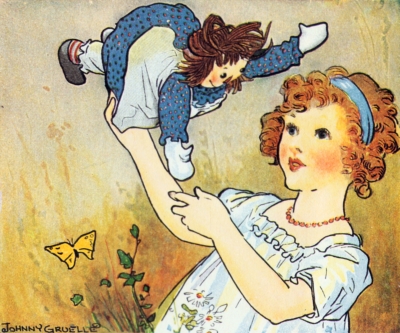
Marcella Gruelle and Raggedy Ann.

Marcella Gruelle was one of those young schoolchildren receiving a hypodermic smallpox inoculation at school. Almost immediately, she loses her appetite, becomes feverish and fatigued. Instead of notifying her parents, the school nurse administers another round of shots to little Miss Gruelle. Marcella’s health continues to decline and she quickly becomes bedridden. She loses her muscle control, “becoming listless and lifeless like a rag doll.”
Marcella dies a slow and painful death, every moment of which witnessed by her loving parents. After her death in November of 1915, seven leading physicians were called upon to opine about the cause of her death. Six of them determined that death was caused as the result of vaccine induced poisoning and call it malpractice. The seventh, being the head of the school board and a supporter of vaccination, declined to comment.
In spite of this, Marcella’s death certificate cited vascular heart disease of several years duration as the cause of death. The secondary (or contributory) cause was listed as oedema with a duration of about 90 days. Oedema is defined as a condition characterized by an excess of watery fluid collecting in the cavities or tissues of the body. Nowhere on the certificate was a vaccination, or infected vaccination for that matter, listed as a cause of death. For the rest of their lives, Myrtle and Johnny Gruelle staunchly maintained that either a bad vaccination or a dirty needle had killed their daughter.
z fc64f059f1c575fd6098a199972dece2
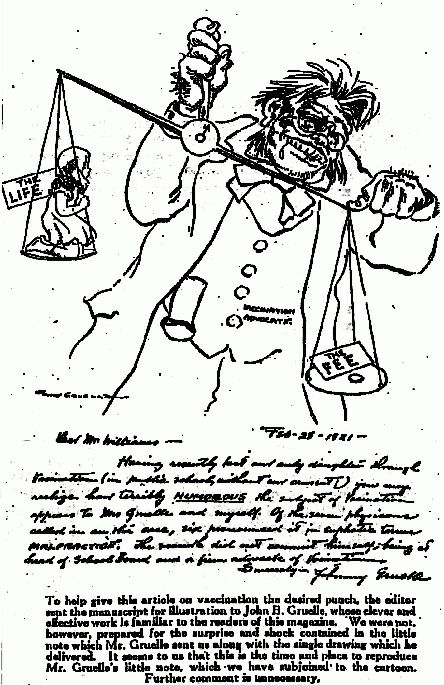
Johnny Gruelle’s original Anti-Vaxxer letter and sketch from 1921.

Not long after his daughter’s death, the still grieving Gruelle was commissioned to create an illustration for an article in Physical Culture magazine titled “Vaccines Killed My Two Sisters.” The cartoon is a clever and effective work, reflective of Johnny’s style which is familiar to the readers of the magazine. Mr. Gruelle enclosed the following handwritten note along with his submitted illustration: “Feb. 28, 1921. Dear Mrs. Williams, Having recently lost our only daughter through Vaccination (in public school, without our consent) you may realize how terribly HUMOROUS the subject of vaccination appears to Mrs. Gruelle and myself. Of the seven physicians called in on the case, six pronounced it in emphatic terms MALPRACTICE. The seventh did not commit himself, being the head of the school board and a firm advocate of vaccination. Sincerely, Johnny Gruelle.”
The tragic vaccine-induced death of Marcella propelled Johnny to become a staunch member of the anti-vaccination movement of the time. Shortly after Marcella’s death, Johnny puts the finishing touches on a doll much different than the more popular, rigid, ceramic and composite dolls of the time. Rather than create a rigid doll that stands up straight with a healthy and happy glow, in a fitting tribute to his only daughter, he designs a soft cloth rag doll to represent her limp and dying body. Raggedy Ann is a stark contrast to the Era’s Kewpie doll’s erect posture and healthy demeanor.
z raggedy-ann
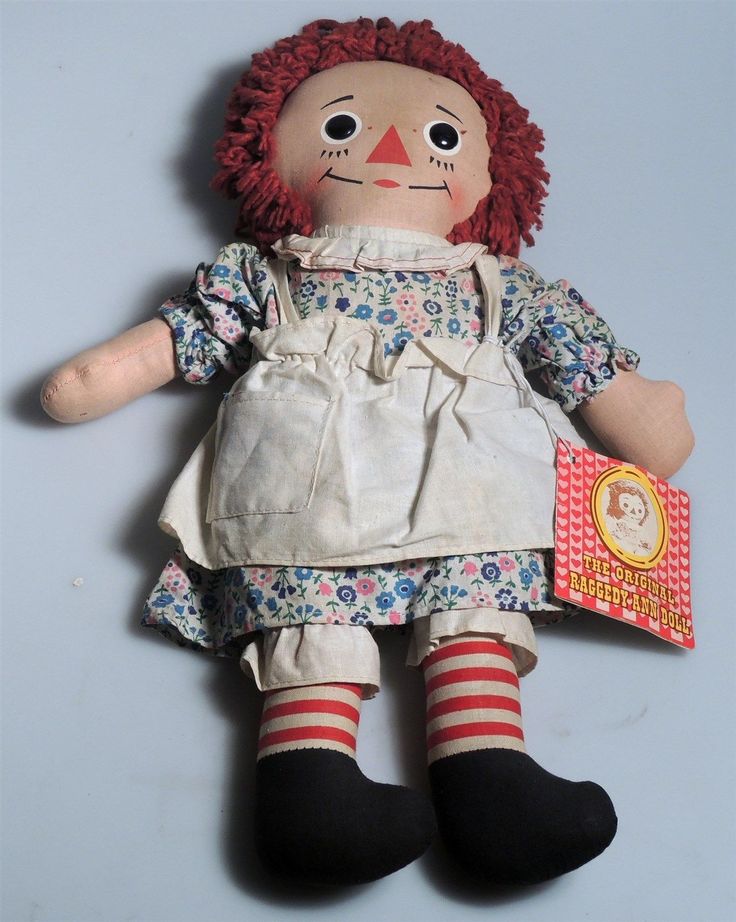
Modern day Raggedy Ann doll.

In 1920, Chicago department store giant, Marshall Field, markets the Raggedy Ann doll. It becomes an instant best seller and customers have no clue about the tragic inspiration behind it. To generations of consumers, Raggedy Ann is their colorful little friend with a candy heart. To the anti-vaxxers, Raggedy Ann symbolizes a century of childhood vaccine injuries and deaths.

Health & Medicine

Robert Rayford America’s First Aids Victim.

AIDS hiv-ribbonOriginal publish date:  May 12, 2014

45 years ago this week, May 16,1969, the face of modern medicine changed forever when 15-year-old Robert Rayford, sometimes identified as “Robert R.” due to his age, died in a St. Louis, Missouri hospital. He was a slender, uncommunicative street kid whose condition left doctors distressed, perplexed and…scared. Although no-one knew it at the time, Robert R’s was the earliest confirmed case of HIV/AIDS in North America. Rayford’s death was a mystery to doctors, who could not account for his symptoms. The true cause of his death remained unidentified until 1987.
Like the disease itself, this young man’s story is one of tragedy. He spent all fifteen or sixteen years of his life (some sources list his birth date as February 3, 1953 but no one knows for sure) in a poor African American ghetto in St. Louis. Of his enigmatic life, little else is known. Described by medical personnel as being “mildly retarded”, Bobby Rayford first checked himself into Barnes Hospital in St. Louis in the early Spring of 1968. His doctors were baffled by his symptoms. His swollen loins were covered with open, infected sores. He struggled while breathing, was razor thin and pale as a ghost.
Doctors suspected some form of cancer at first, but subsequent tests revealed the patient had herpes, genital warts, and a severe case of chlamydia. The infection spread, in the form of purple colored lesions, to his legs, causing a misdiagnosis of lymphedema, an infection of the lymph nodes. He said that he had been suffering from these symptoms for at least two years, or since he was about thirteen years old. When doctors suggested a routine rectal exam, Rayford steadfastly refused. The doctors, like most of America at that time, did not think to ask about homosexual contact. It wasn’t until later that the doctors noted in Robert’s medical charts that that he was likely gay and speculated that the young man refused the exam for fear of confirmational “evidence” being found therein.
When asked about his sexual history, Rayford became dodgy, at first calling himself “the stud of all time” and later claiming absolute celibacy. Still later he claimed to have had sex just once, “with a neighborhood girl,” and that he started to feel sick shortly after that encounter. Strangely, although doctors suspected that Robert was highly promiscuous, they never considered the possibility that he had been molested. All moral judgments aside, clinicians were helpless as they watched the teenager slowly waste away before their eyes from a disease they were unable to diagnose and powerless to treat. During his first months in the hospital, doctors tried everything they could think of to stop the spread of this mysterious malady. They cut back on his water and salt intake, administered drugs to promote water loss, wrapped and elevated his legs, all intended to reduce the swelling. Nothing worked, and the inflammation moved up his body and into his lungs. Finally they tried powerful antibiotics and were cheered in late 1968 when Rayford’s condition seemed to be stabilizing.
By March 1969 the patient’s symptoms returned with a vengeance and his condition steadily deteriorated. He had increased difficulty breathing, and his white blood cell count plummeted. The doctors determined that his immune system was shutting down. By all accounts, this uneducated street kid maintained his dignity in the face of inevitable demise. In the words of Dr. Memory Elvin-Lewis, who attended to him during his final days, “He barely said ‘boo.’ Finally, he developed a raging fever and at 11:20 pm on May 15, 1969 Robert Rayford died, never knowing of his place his history.
For lack of a more precise diagnosis, Robert’s death was attributed to loss of vitality, intractable fluid imbalance and lung disease. An autopsy revealed numerous other problems, including evidence of a rarely seen cancer called Kaposi’s Sarcoma. In this case, “KS” manifested itself in the form of small purplish lesions discovered on Rayford’s left thigh and within his soft tissue. Doctors concluded that the lesions were Kaposi’s sarcoma, a rare type of cancer most often found in elderly men of Mediterranean or Ashkenazi Jewish ancestry. Today KS is taken as almost certain proof of AIDS, but in 1969, its significance was not understood.
For the next 18 years, doctors and researchers continued to search for a solution to the mystery of Bobby Rayford. So mystified were they that they saved samples of Robert’s tissues and blood for nearly two decades, hoping that future advances in medical science and technology would help them solve this puzzle. Finally in October of 1987 , the riddle of Robert R.’s illness was solved, and the answer was nothing short of astonishing. New tests of the dead boy’s preserved blood, brain and organ tissue samples led to a grim conclusion: Robert R. almost certainly died of AIDS, making his the earliest case of the killer disease ever discovered in the United States.
However, as you may imagine, Bobby Rayford’s most awful claim to fame is not without controversy. Although a review of the case was eventually published in the medical journal “Lymphology” in 1973, many believe that the perceived immorality of the disease’s alleged contraction stifled the search for a cause, treatment and a cure. After the autopsy, blood and tissue samples were kept in cold storage at the University of Arizona but after the October 1987 revelation there was no further follow-up, in part because the samples disappeared.
Robert R’s case is the classic chicken or the egg argument. After all, his illness had to come from somewhere. Rayford said he never traveled outside the Midwest and had never received a blood transfusion. Since doctors concluded that Rayford’s AIDS infection was contracted through sexual contact, it must be presumed that AIDS was present in the US before Rayford’s symptoms arose in 1966. Rayford told doctors he had never visited big cities such as New York, Los Angeles, or San Francisco, where the HIV-AIDS epidemic was first observed in the United States. The commonly accepted trajectory of HIV / Aids epidemic is Africa to Haiti to US to Europe and finally to the rest of the Americas. But Robert never left the region, much less the country.
Doctors, investigating the case in the early 1980s, speculated that Rayford may have been a male prostitute. That assumption was made when the medical community believed the progression from initial infection to the diagnosis of AIDS took only two and a half years. Ironically, researchers believe that it was precisely because the St. Louis gay population was small in number by comparison that enabled the Bobby Rayford strain of HIV / Aids to die out. Therefore, St. Louis did not become a hotbed of Aids activity.
The saddest aspect of this entire story is that all of this happened before anyone had ever heard the term “AIDS” (which stands for “Acquired Immunodeficiency Syndrome” by the way). Robert Rayford has been described variously by history as mildly retarded, sexually promiscuous or as a male prostitute. I have yet to find any account, and believe me I have read many, that calls him a man. In his case, the medical community is operating under the same social mores society was slogging through in the Nixon years. Modern day scientists have found the same telltale “KS” evidence in African children as young as three years old. If we accept this scientific fact, could it be possible that Robert R. was born with it, rather than contracting it through nefarious means?
In one of his rare communicative moments, Rayford told the doctors that his grandfather “had the same symptoms.” This might suggest a congenital “immunodeficiency”, and that other factors may have exacerbated this problem rather than caused his illness and eventual death. So even if Robert were lying about his sexual history, there is little else to suggest that he contracted his KS lesions from gay sex. Instead, based on his statement about his grandfather’s similar symptoms, Robert’s lesions may well have developed from the inside outward.
There is one final theory about this first Aids case in America that I will put forth for all of those who love to sink their teeth into a good conspiracy theory. In the book “The River” a theory is advanced that Robert became vulnerable to the illnesses during the 1950’s when the Army Chemical Corps conducted open-air chemical warfare tests in American cities. These included thirty-five aerosol releases in and around St. Louis. Most of those tests were conducted in low-income neighborhoods, allegedly to minimize public resistance to such tests. One of those test areas was only half a block from the house in which Robert was born. These tests, conducted at the height of the Cold War, were explained away to local officials as being simple smoke screen experiments designed to shield US cities in the event of a Soviet attack.
Decades later it was revealed that those tests involved zinc cadmium sulfide, a mixture of zinc sulfide and cadmium sulfide. It’s frequently referred to as a fluorescent particle because it glows in ultraviolet light. This quality makes it easy to trace for efficacy after the fact. However, cadmium is a highly toxic metal that is even more pernicious when spread through the air. Because the kidneys absorb it quickly, it is commonly associated with kidney failure, leads to cirrhosis of the liver and causes severe damage to the lungs and body cavities. All of these conditions were noted in Robert R’s report. Also, the effects can be passed by a mother to her fetus, so it’s entirely possible that Robert may have developed the seeds of his illness while still in the womb.
We’ll most likely never know the whole truth about the death of Robert Rayford. In part because we weren’t looking for the answers in the Aids context we’re so familiar with today. We are content to label him as the first victim of a terrible epidemic that ran unchecked through our nation during the Moral Majority driven Reagan Revolution. Most of the knowledge gained about Aids in the two decades between Robert Rayford’s death and ultimate diagnosis came from research and development, not from doctors and hospitals, but from the victims themselves. We Americans owe a great debt of gratitude for our understanding of this dread disease to those who have suffered, and often died, while searching for a cure. Robert Rayford, a mere medical footnote in history, among them.