
Creepy history, Ghosts, Indianapolis, Irvington Ghost Tours, Weekly Column

The Ghosts of Playground Productions in Irvington.

Andrea and Adam Long of Playground Productions.

Original publish date October 16, 2025.

https://weeklyview.net/2025/10/16/the-ghosts-of-playground-productions-in-irvington/

One of the enjoyable aspects of leading ghost tours in Irvington every October is hearing the new ghost stories and spooky tales associated with the buildings we pass along the route. For the past few years, Adam Long and his wife, Andrea, have allowed the tours access to their building, Playground Productions Studio at 5529 N. Bonna Ave., as a jumping-off point to rest and recover after tours. Some of you may know Adam by his stage name, Adam Riviere, a homage to his mother’s whose maiden name. Most importantly, the studio hosts the crew from the Magick Candle every Friday and Saturday night during October for psychic readings for our tour guests and visitors, with the proceeds going to fund the food bank at Gaia Works (6125 E. Washington St.).

Playground Productions Studio at 5529 N. Bonna Ave. during the Halloween Festival.

Adam graduated from Martinsville High School, studied at Butler University, and attended IUPUI for his graduate work. Adam is an accomplished musician and an artist in his own right. Andrea, originally from London, Kentucky, graduated from North Laurel High School there and from IUPUI in Indianapolis. Andrea is quiet, but when she talks, she speaks with an easy southern drawl that somehow soothes the listener’s ears. As I write this, the couple is celebrating their eleventh wedding anniversary. Adam and Andrea were married in 2014, but have been together since 2008. I first met Adam over a decade ago, when he was a guest on one of my ghost tours. After hearing the Abraham Lincoln ghost train story, which concludes each tour, Adam was sprung. He later informed me that the story resonated with him so deeply that he commissioned an artist friend to create a painting of the ethereal visage for display in his studio office. It comes as no surprise that Adam’s studio is located along the historic corridor of the railroad tracks upon which Lincoln’s funeral train traveled back on April 30, 1865.
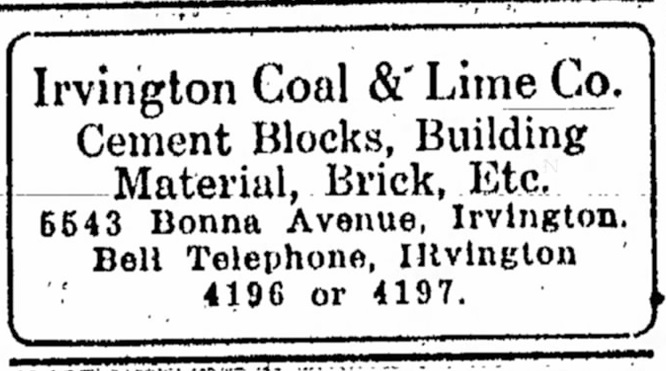
Indianapolis Star Sunday December 25, 1921.

Adam’s studio has an interesting history. Adam stated, “It was originally the Coal & Lime Company in Irvington. That was why they wanted to call this area the Coal Yard district, because this is the spot where the trucks would come and pick up the coal to deliver to the areas close by.” The name is a bit of a misnomer, however. While it is true that the company sold “Hoosier Red Pepper Coal” harvested “clean” and “hand picked” from “Indiana’s Richest Coal Mines,” contrary to it’s strict definition, the company specialized in providing hydrated mason’s lime used in the manufacture of common bedrock building materials like glazed tile, fire brick, cement blocks, and common bricks.
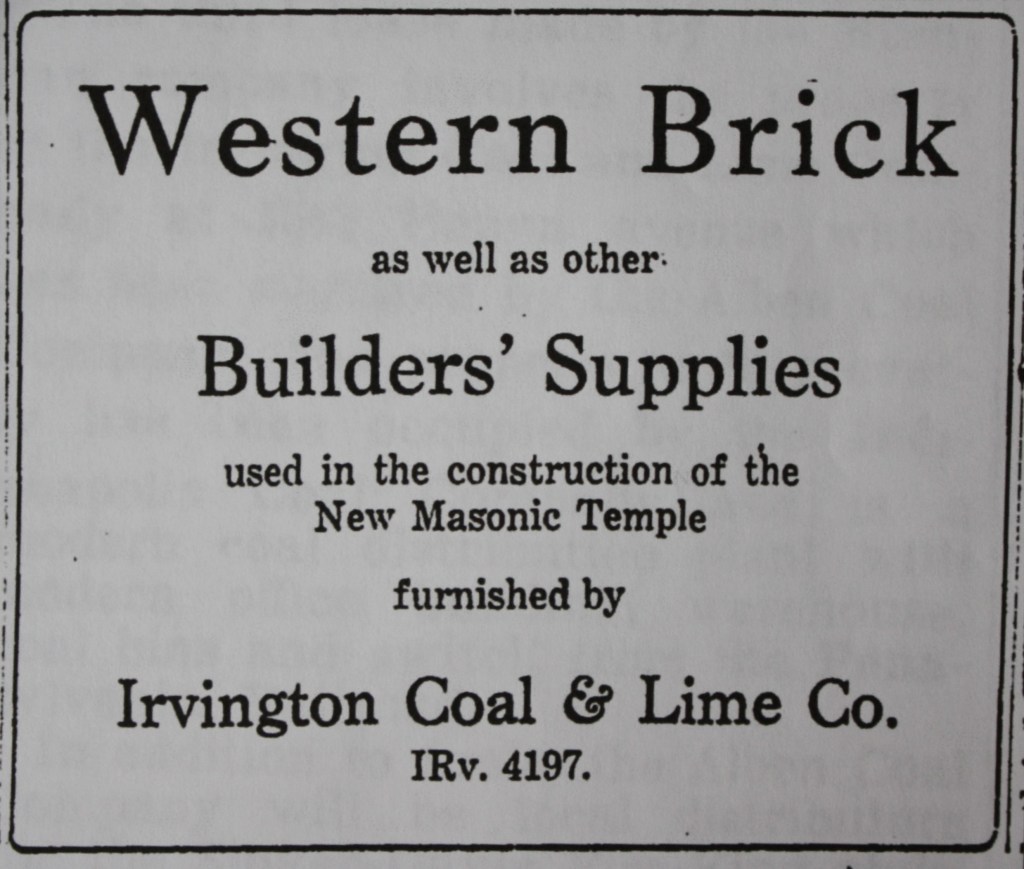
August 3rd, 1922, Indianapolis Star ad.
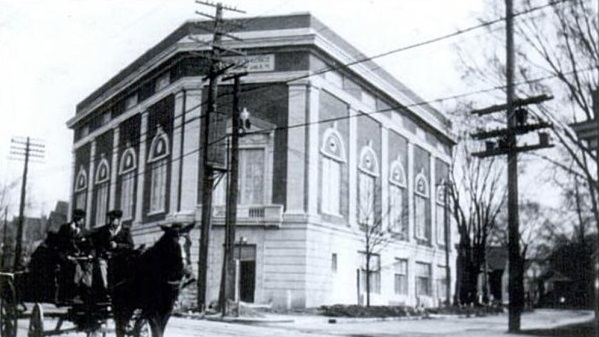
Irvington Masonic Lodge 666 in 1922.

On August 3rd, 1922, an ad on page 10 of the Indianapolis Star boasted that the Irvington Coal & Lime Company supplied the “Western Brick as well as other builder’s supplies used in the construction of the new Masonic Temple,” a.k.a. Irvington Masonic Lodge 666, whose cornerstone was laid the year before. Adam was quick to point out to visitors to the property that a portion of the foundation for the old brick factory remains in place several yards away from his studio entrance. Adam informed, “In the early 1950s, a company called Foamcraft bought the building.”
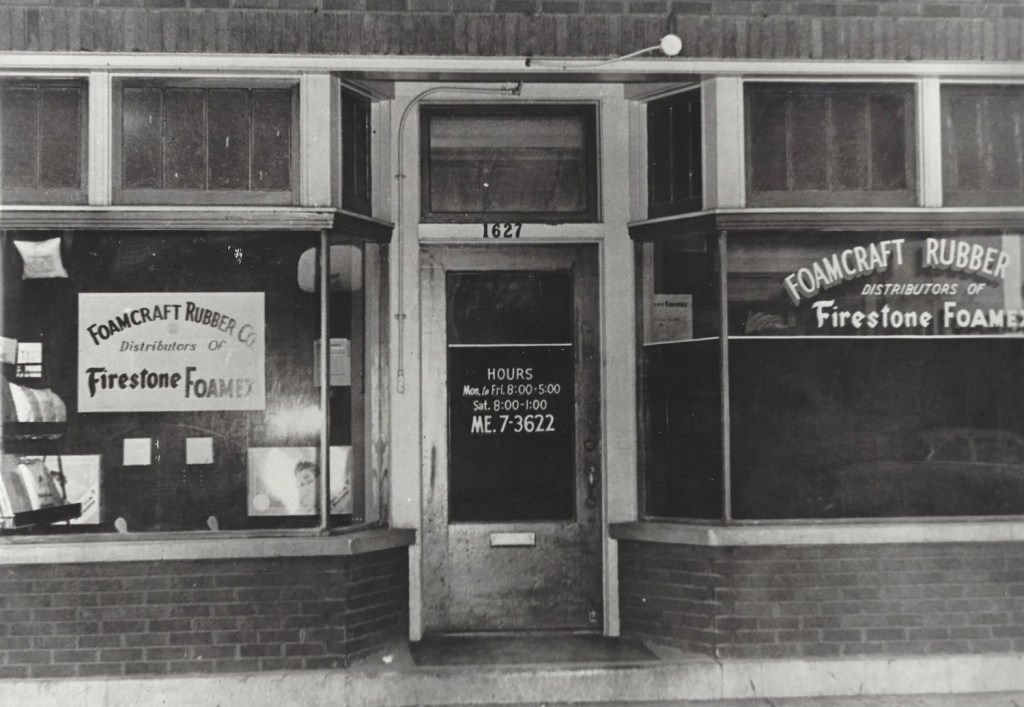
Foamcraft with Firestone ad.

Foamcraft still exists. According to their website, “In 1952, Robert T. Elliott, the founder of our company, started the Foamcraft Rubber Company. As a District Sales Manager for the Firestone Tire and Rubber Company, he was responsible for helping to start several foam rubber distributors. Foamcraft was his special passion, though, and in founding our company, he set a foundation for business integrity and dedication to service, as well as a vision to develop long-term relationships with our customers.” Foamcraft makes specialized cushioning used in furniture, beds, minivans, boats, and other products. The company buys large blocks of foam rubber called “Buns” or “Blocks” and cuts them to smaller sizes and shapes as needed by their customers. It was, and remains, a family-run operation with a very high-tenured workforce staffed by generations of families working “cutting foam” for a variety of customer products. The company boasts a 99.9% on-time production and delivery reputation.
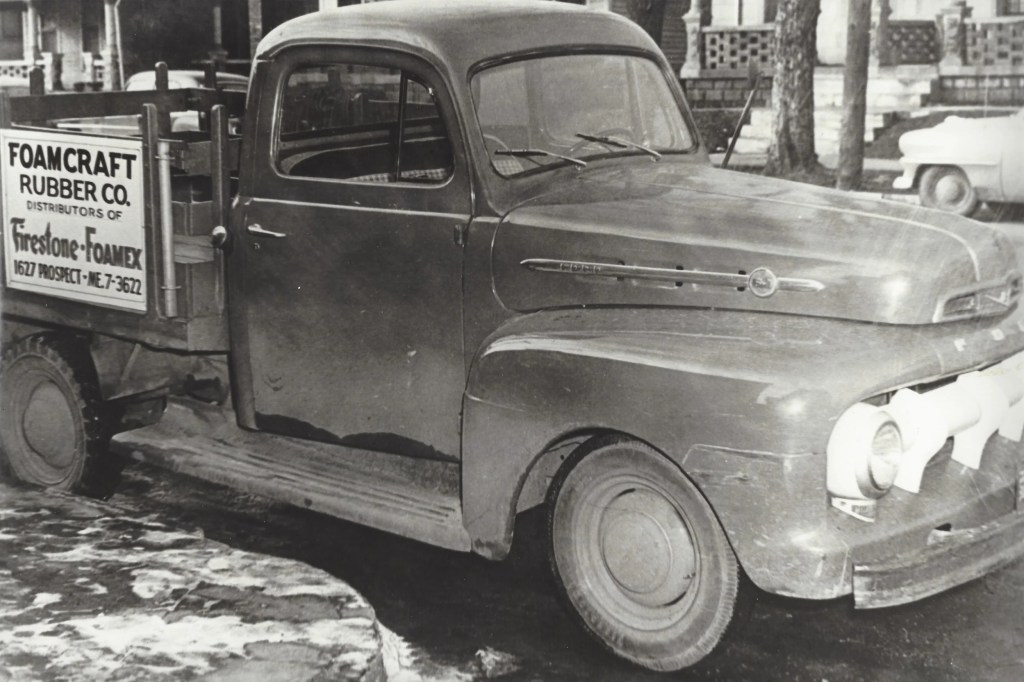
Foamcraft Truck in 1952.

Elliott opened his Irvington foam factory on Bonna Avenue in 1957, and it remained there for the next 44 years. Foamcraft briefly relocated in 2001 to a leased building on Post Road before moving to a much larger facility in Greenfield in 2016, where it remains today. Company headquarters are located at 9230 Harrison Park Ct. in between the Fort Benjamin branch library and Peyton Manning Children’s Hospital in Lawrence. Foamcraft also has a manufacturing facility in Elkhart. They never forgot their ties to Irvington, though. Employees referred to the old 20,000 square foot factory, made up of several buildings, simply as the “Bonna.” According to their Web site, employees remember the Bonna facility as “dark and spread out with rooms everywhere. It was sort of claustrophobic with low ceilings, and we worked elbow-to-elbow. It had slippery floors throughout the facility, which sometimes required us to spread sand or sawdust in certain areas.” Despite the distinctly ominous Irvington location’s appearance, inside and out, Foamcraft’s employees described the working atmosphere as “Valhalla.”
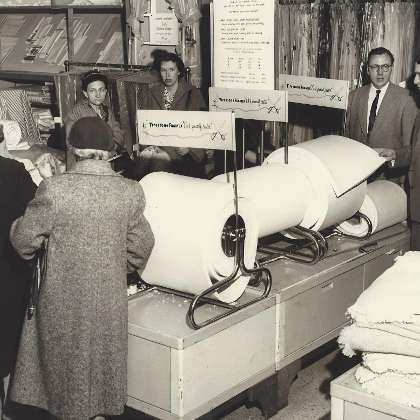
Foamcraft Interior 1950s Era.

One former employee, Jim Quakenbush, recalls that Foamcraft Inc. “ was located on Bonna Ave. just east of Ritter Ave. I worked there for two summers, unloading railroad cars in 1970 & 1971. I have fond memories of working there. Rob Elliott, whose father owned the company, worked with me unloading train cars full of large refrigerator-sized foam rubber “buns”. I think Rob became the CEO and may still be. The warehouse building still stands, but the office building is gone. The railroad track is gone. I really enjoyed the people. My supervisor was Dave Fisher. Great guy. Don Scruggs was a truck driver, funny as hell. Larry Harding worked with me. [The] Sewing department had Ursie Hert, Ralph Wainwright, from Jamaica. Clayton Sneed was a saw operator. Paul was an autistic laborer who used to irritate Ralph. I laughed so hard listening to them argue back and forth. All in good fun. Good memories.”

Interior of Playground Productions Studio.

The old Foamcraft building has quite a history to it, and apparently, a few ghosts as well. Adam recalled, “When I first moved in here, while I locked up at night, stepping out the door, there was a feeling. It wasn’t really ominous, but it definitely gave you a creepy feeling. “ When asked if he feels a presence in the building, Adam stated, “Yes, sometimes when I’m alone in the building, I can hear sharp knocks on the wood in the studio. When I check, nothing is there to explain it.” Adam and Andrea say they don’t ever feel uncomfortable in their building, and they don’t think there is any dark energy connected to their workspace. “We just take it as it comes, we’re used to it now.”
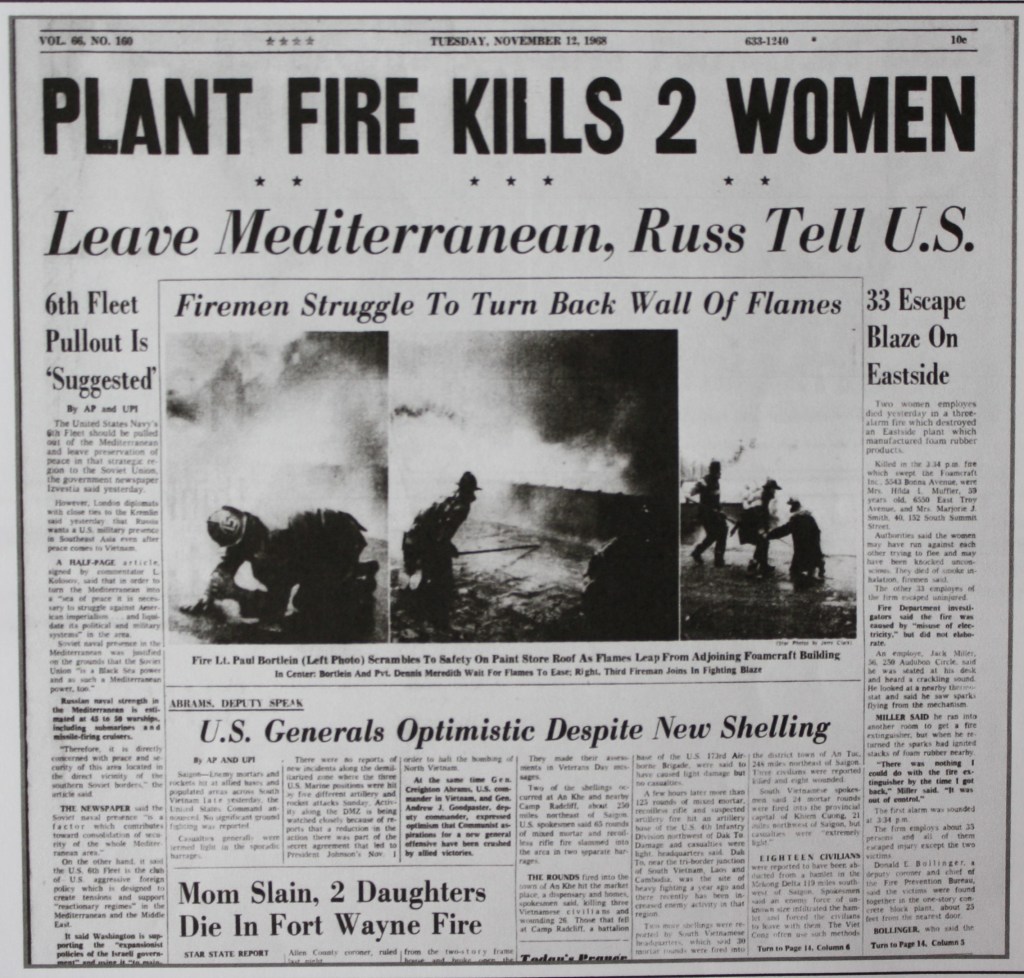
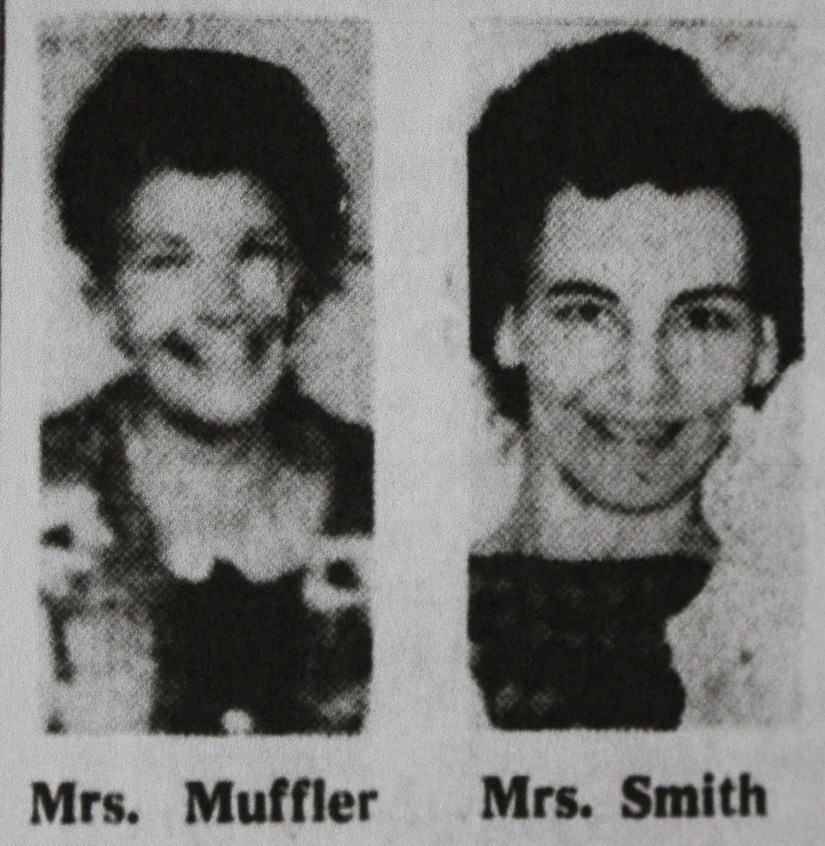
The factory site was visited by tragedy in the autumn of 1968. The front page of the November 12, 1968, Indy News announced “Plant Fire Kills Two Women. 33 Escape Blaze on Eastside.” At 3:34 in the afternoon, firefighters responded to a three-alarm fire at the Foamcraft factory plant. Mrs. Hilda F. Muffler, 59, of 6550 East Troy Avenue, and Mrs. Marjorie J. Smith, 40, of 152 South Summit Street, were killed in the blaze. Mrs. Muffler was employed as a seamstress, and Mrs. Smith as a cutter. Authorities theorized that the two women may have collided and been knocked unconscious during the frenzy to escape the fire. The women died of smoke inhalation and heat. According to the article, Fire Department investigators said the fire was caused by ‘misuse of electricity,’ but did not elaborate.
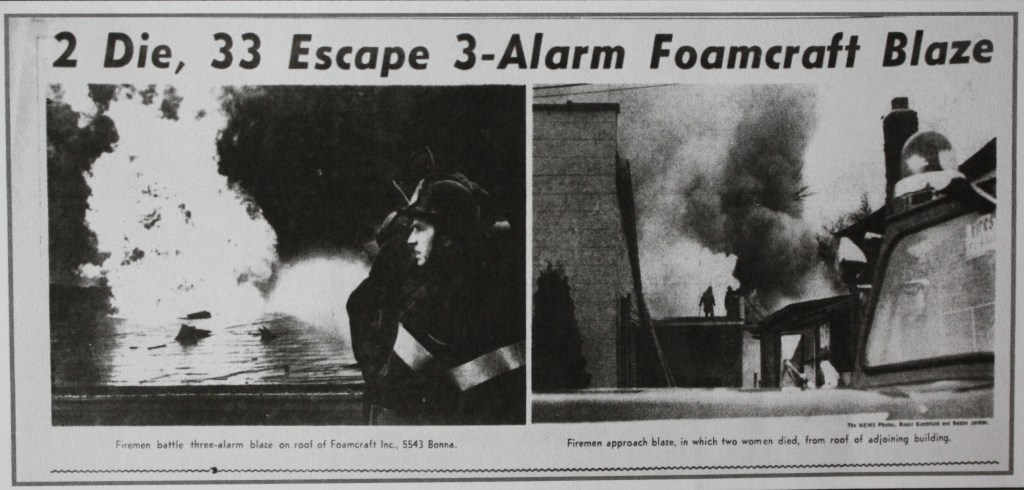
The article further reports, “An employee, Jack Miller, 56, 250 Audubon Circle, said he was seated at his desk and heard a crackling sound. He looked at a nearby thermostat and said he saw sparks flying from the mechanism. Miller said he ran into another room to get a fire extinguisher, but when he returned, the sparks had ignited stacks of latex foam rubber nearby. There was nothing I could do with the fire extinguisher by the time I got back. It was out of control.” Another Star article quotes Miller as saying he saw a “flash of lightning” come from the wall thermostat and strike a pile of foam. Deputy Marion County Coroner and chief of the fire prevention bureau, Donald E. Bollinger, said the victim’s bodies suffered no burns and were found lying face down perpendicular,  one atop the other, in the one-story concrete block plant. The women were found within 4 feet of an office door and only 8 feet from the nearest exit door.
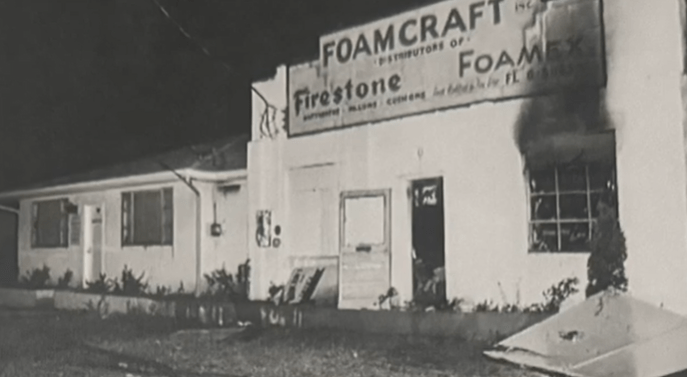
Foamcraft Building Exit Door After The Fire in 1968.

They were discovered to be some 70 feet from the nearest fire damage about 25 minutes after the first alarm had sounded. Other employees challenged the notion that the women panicked trying to escape. Bollinger later theorized that since Mrs. Smith’s coat was found lying next to her body, the women may have attempted to reach a restroom to retrieve their coats and purses before being overcome by smoke.
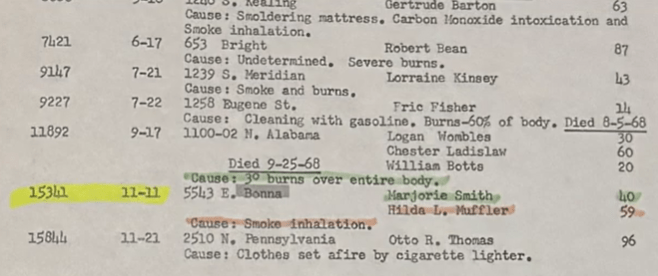
Coroner’s Report From the Foamcraft Fire.

The fire was spectacular, with flames shooting over 100 feet high in the sky, and the massive plumes of heavy black smoke could be seen from all over the city of Indianapolis. The high-intensity heat hampered firefighters’ efforts to extinguish it quickly. The first alarm came at 3:34, the second at 3:44, and the third at 4:42 pm. Emergency first responders arrived quickly with over 20 pieces of firefighting equipment and 65 firefighters. John T. O’Brien, owner of the Bonna Printing Company at 5543 Bonna Avenue, reported that his adjacent building suffered only minor smoke and water damage during the conflagration. Other adjacent businesses, Krauter Equipment Company & the Firestone Tire & Rubber Company, also reported minor damage. At 12:17 am, the blaze briefly reignited, and firemen were again called to extinguish the flames. That second fire had ignited beneath the collapsed roof of the factory and was brought under control at 1:17 am.
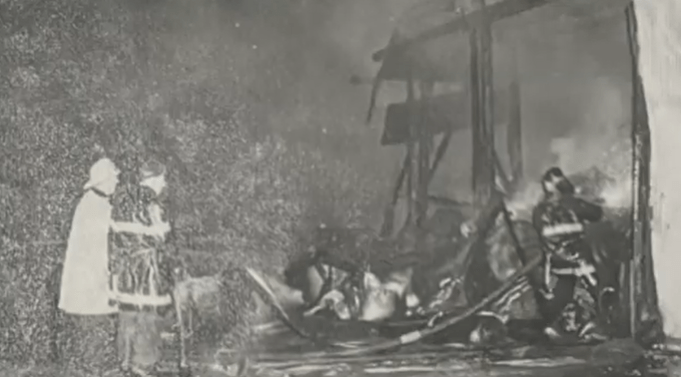
Foamcraft Fire.

The Foamcraft building was destroyed in the inferno. Investigators determined the fire started along the north wall of the “blackened pillow room” on the northeast corner of the building. Deputy Chief Bollinger later speculated that the fire could have been prevented if the wall receptacle box, which contained the mechanism controlling the heating blowers, had been properly covered. One unnamed employee told Bollinger that he tried to make a metal cover for the box the week before the blaze, but was shocked during the attempted installation and was unable to do so. That same employee said that he had informed company officials of the problem, but it had not been fixed yet.

Learning that Adam and Andrea’s building may have a resident ghost, one could believe that the spirits of Playgorund Productions Studio are those of the tragic victims of the Foamcraft factory fire from 1968, but that does not appear to be the case. Tim Poynter, intuitive psychic empath who has worked with me on the tours for decades and now spends every October Friday and Saturday night in the building, admits that he encounters those spirits regularly, “But they aren’t necessarily attached to the building. They seem to be just passing through. Sometimes the tour guests bring them, and at other times, they are brought in by the readers.” Likewise, longtime tour volunteer Cindy Adkins, who was featured as a psychic intuitive in an episode of Zak Bagans’ Ghost Adventures in 2019, does not feel a resident ghost in the building. “They’re not in here permanently. I don’t feel them inside, but I do think some spirits are roaming around outside the building.” said Cindy. Indeed, it should be noted that the spot where the two employees died is located outside the studio, about 20-30 yards northwest of the door.
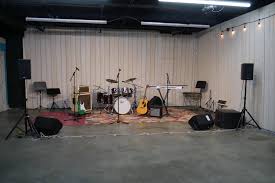
Inside Stage at Playground Studios.

Today, Playground Productions Studio is a far cry from the old, dark, and spooky, chopped-up Foamcraft factory. The working studio is now full of light and texture. Walls are constructed of a naturally grounded hardwood facia and are peppered by soft blankets buffering any echoes and sounds that might affect the recording work. The artists, bands, and performers who regularly work or visit the Playground are joyful and carefree whenever there is an event or party going on. Knowing the depth of feeling that former Foamcraft employees have for the old “Bonna” location, it is easy to imagine that if there are spirits hovering around the property, inside or out, they do so with mirth and glee.

https://www.linkedin.com/posts/foamcraft-inc-_the-story-of-foamcraft-inc-activity-7089985534889975808-y92J/
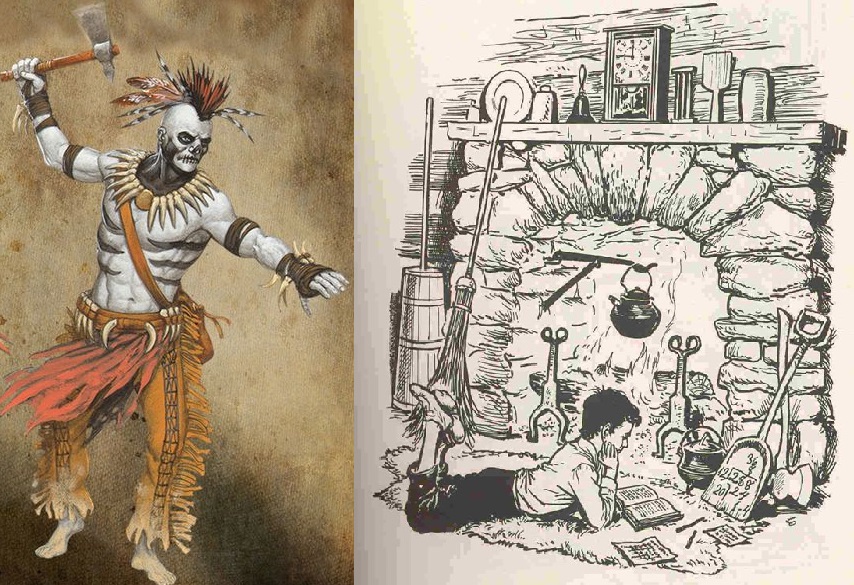
Foamcraft has created a fantastic, informative, and historical video with scenes shot at the old factory on Bonna. It can be found on the Web at: https://www.linkedin.com/posts/foamcraft-inc-_the-story-of-foamcraft-inc-activity-7089985534889975808-y92J/
Abe Lincoln, Ghosts, National Park Service, Presidents

Abraham Lincoln’s First Ghost Story.

Original Publish date October 7, 2021. https://weeklyview.net/2021/10/14/abraham-lincolns-first-ghost-story/

There are many ghost stories associated with Abraham Lincoln. Most revolve around his time in the White House, his assassination at Ford’s Theatre, and his death in the Petersen House across the street. But what was the first ghost story that Abraham Lincoln ever heard? Historian Louis A. Warren, whose 1959 book “Lincoln’s Youth. Indiana Years 1816-1830” is considered to be the definitive work on Lincoln’s early life in the state, does its best to answer that question.

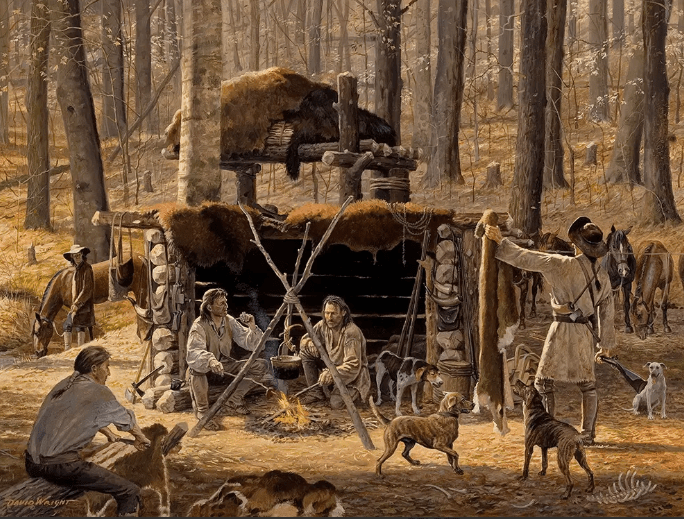
In the fall of 1816, Thomas and Nancy Lincoln packed their belongings and their two children, Sarah, 9, and Abraham, 7, and left Kentucky bound for southern Indiana. Arriving at his 160-acre claim near the Little Pigeon Creek sometime between Thanksgiving and Christmas. Thomas moved his family into a hunter’s half-face camp consisting of three rough-hewn walls and a large fourteen-foot space where a fire was almost always kept burning. Lincoln’s earliest memories of this home were the sounds of wild panthers, wolves, and coyotes howling just beyond the opening.

Typical 18th Century half-face hunting camp.

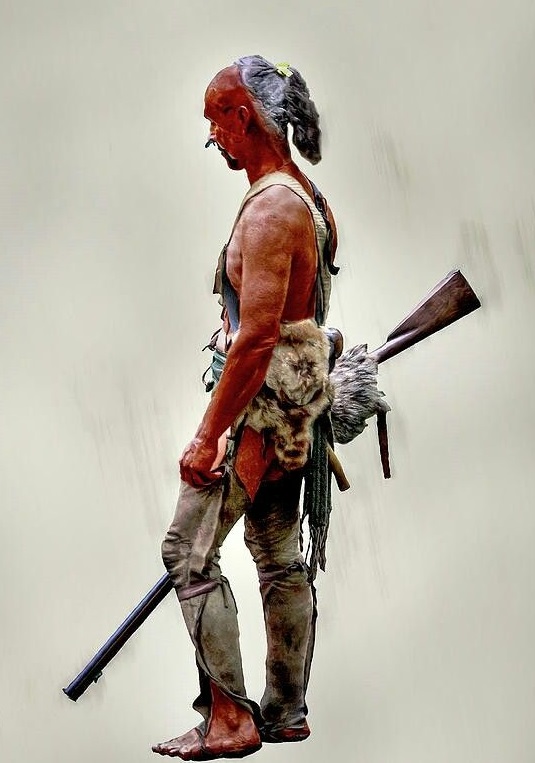
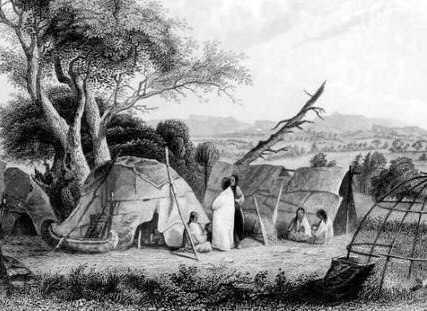
Once the chores were finished, Thomas would entertain his small family with tales of hunters, wild Indians, and ghosts. None of which was more frightening than the ghost of old Setteedown, mighty chief of the Shawnee tribe. The Shawnees were scattered throughout the region with their main settlement of about 100 wigwams located on the Ohio River near present-day Newburgh.

Shawnee tribe – Wigwams

For the most part, the Indians were friendly and peaceful. Tradition recalls that Chief Setteedown (or Set-te-tah) and settler Athe Meeks were the exceptions to that rule. The Chief accused Meeks, a farmer and trapper, of robbing his traps and Meeks accused Setteedown of stealing his pigs. A feud developed between the two men that would ultimately leave both men dead.

Atha Meeks (1820-1913)

The hatred became bitter and Setteedown decided to settle the matter once and for all. Early on the morning of April 14, 1812, Setteedown, his seventeen-year-old son and a warrior named Big Bones lay in wait outside the Meeks family cabin. The warriors were armed with rifles, knives, and tomahawks. When Atha, Jr. stepped out of the cabin to fetch water from a nearby spring, one of the Indians fired at him, wounding him in the knee and wrist.

In 2016, descendent Anthony Dale Meeks detailed the encounter in his family history. The Indians “crept up behind a fodder stack ten or twelve rods in front of the door and when my brother Athe (Jr.) got out of bed and passed out of the house and turned the corner with his back towards them, they all fired at him. One ball passed through his knee cap, another ball passed through his arm, about halfway from his elbow to his wrist. Another ball passed through the leg of his pants doing no injury.”

When Atha, Sr. heard the shots, he ran out of the cabin where Big Bones shot him as he exited the doorway. Margaret Meeks and another son dragged the dying man into the cabin before the Indians could scalp him. Atha, Sr. died without ever knowing what hit him. That 2016 account continues “Meanwhile father jumped out of bed, ran to the door to see what was up, and met an Indian right at the door who shot him right through the heart. He turned on his heels and tried to say something and fell dead under the edge of the bedstead.”

William Meeks (1815-1877)

Setteedown and his son then ran to the wounded younger man and attacked him with their tomahawks. Meeks Jr. managed to fight his attackers off until his uncle William arrived from his adjacent cabin. William Meeks fired his rifle at the tribesmen, killing Big Bones and chasing the other two away.

Some accounts report that the attack on the Jr. Atha was more of a contest of humiliation than a duel to the death. Chief Setteedown and his son were toying with their prey like a cat with a mouse, throwing tomahawks and knives at the wounded young man from a close distance.

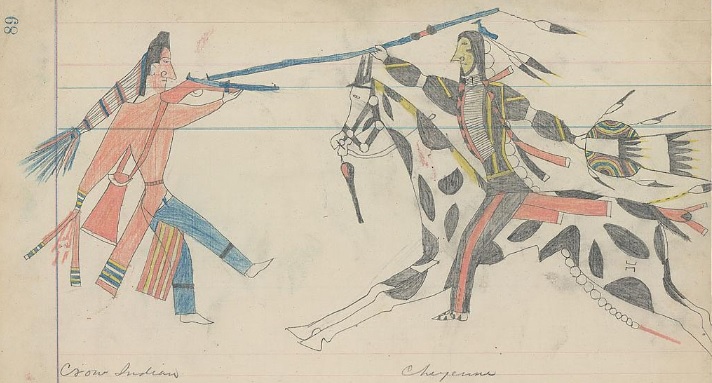
1880s drawing of a mounted Cheyenne warrior counting coup with lance on a Crow warrior.

Among the Plains Indians, counting coup is the warrior tradition of winning prestige in battle by showing bravery in the face of an enemy. It involves shaming a captive with the ultimate goal being to persuade the enemy combatant to admit defeat, without having to kill him. In Native American Indian culture, any blow struck against the enemy counted as a coup. The most prestigious acts included touching an enemy warrior with a hand, bow, or coup stick and escaping unharmed; all without killing the enemy. The tradition of “counting coup”, if true in this instance, ultimately cost the great Chief his life. The gruesome practice allowed armed avengers to bring this “game” to an end by precipitating a hasty retreat.

Some eight hours later, a group of settlers arrived at Setteedown’s village seeking revenge. The vigilantes captured Setteedown, his wife, the son who participated in the attack, and two or three other children. The posse confined them in the cabin of Justice of the Peace Uriah Lamar near Grandview. They were guarded by three men, including the deceased brother William Meeks. Sometime during the night the old chief was shot and killed, presumably by Uncle William Meeks.

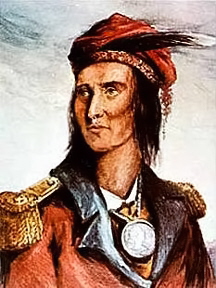
Tecumseh.

The remaining family members were banished from the region. Legend claims that they left a treasure behind buried somewhere near Cypress Creek and the Ohio River. Setteedown’s tribe disbanded and reportedly joined Tecumseh to fight in the War of 1812.

And what became of Chief Setteedown’s body? Author Louis Warren notes, “Setteedown was buried in his Indian blanket in a shallow grave close to the Lamar cabin. Mischievous boys were reported to have pushed sticks down through the soil until they pierced the old blanket. (thereby releasing his vengeful spirit) And for many years old Setteedown’s ghost was supposed to be visible at times in the vicinity.”

Local lore claims that old Chief Setteedown roamed the hills, dales, and waterways of Spencer and Warrick County looking for scalps to add to his war belt. Frontier children were warned that Setteedown’s playful spirit was a ruse with deadly intentions. Chief Setteedown was searching for souls to repopulate his lost tribe in the afterlife. In an age when children were often in charge of refilling the household water trough, gathering firewood, or collecting nuts and berries to supplement every meal, it is easy to imagine how ghost stories about bloodthirsty Indians may have sparked young Abe Lincoln’s imagination. The setteedown legend had every element that would have sparked a child’s imagination: Indians, murder and lost treasure.

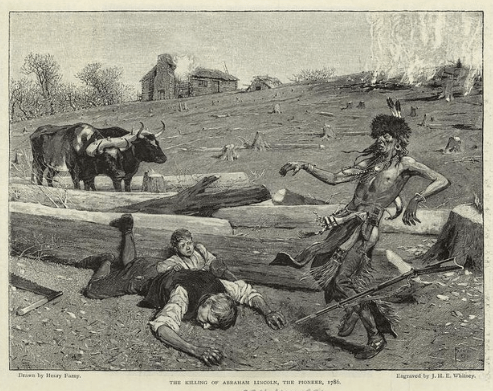
1870 Century Magazine print titled: “The Killing Of Abraham Lincoln, The Pioneer, 1786.”

The legend takes on added significance when it is remembered that Abraham Lincoln’s namesake grandfather was ambushed and killed by Indians. In May 1786, Abraham Lincoln, Sr. (his Kentucky tombstone lists his surname alternatively as “Linkhorn”) was putting in a crop of corn with his sons, Josiah, Mordecai, and Thomas, when they were attacked by a small war party. He was killed in the initial volley. In referring to his grandfather in a letter to Jesse Lincoln in 1854, Lincoln wrote that “the story of his death by the Indians, and of Uncle Mordecai, then fourteen years old, killing one of the Indians, is the legend more strongly than all others imprinted upon my mind and memory.”

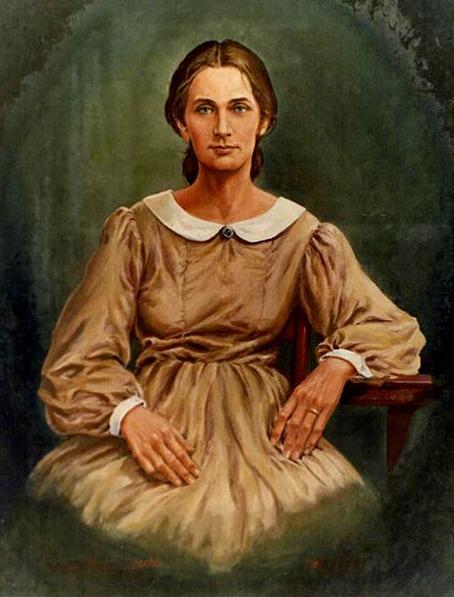
Nancy Hanks Lincoln by Lloyd Ostenddorf.

Although life was generally good for the Lincoln family during their first couple of years in Indiana, like most pioneer families they experienced their share of tragedy. In October 1818, when Abraham was nine years old, his mother, Nancy Hanks Lincoln, died of “milk sickness”. The milk sickness ensued after a person consumed the contaminated milk of a cow infected with the toxin from the white snakeroot plant ( or Ageratina altissima). Nancy had gone to nurse and comfort her ill neighbors and became herself a victim of the dreaded disease.

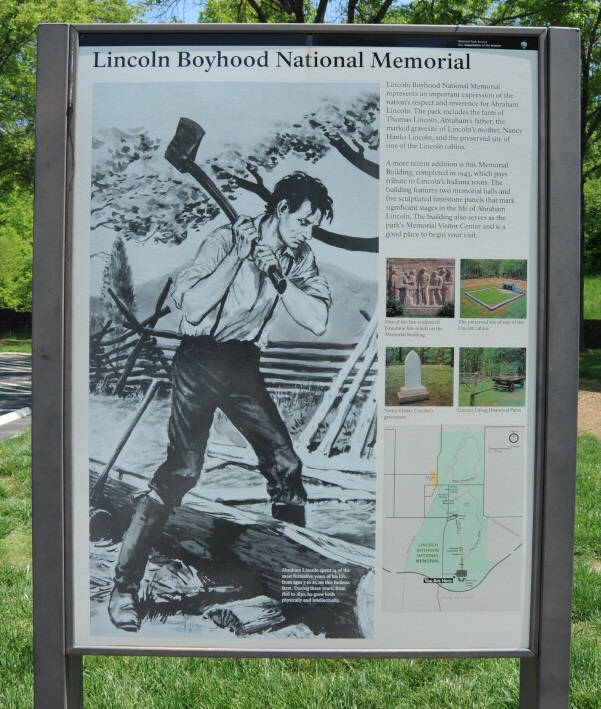
Lincoln Boyhood Home Marker Indiana.

Thomas and Abraham whipsawed Hoosier Forrest logs into coffin planks, and young Abe whittled wooden pegs with his own hands, pausing only briefly to wipe the tears away that were flowing down his cheeks. Ultimately, Abe’s hand-carved pegs fastened the boards together into the coffin for his beloved mother. She was buried on a wooded hill south of the cabin. For young Abraham, it was a tragic blow. His mother had been a guiding force in his life, encouraging him to read and explore the world through books.

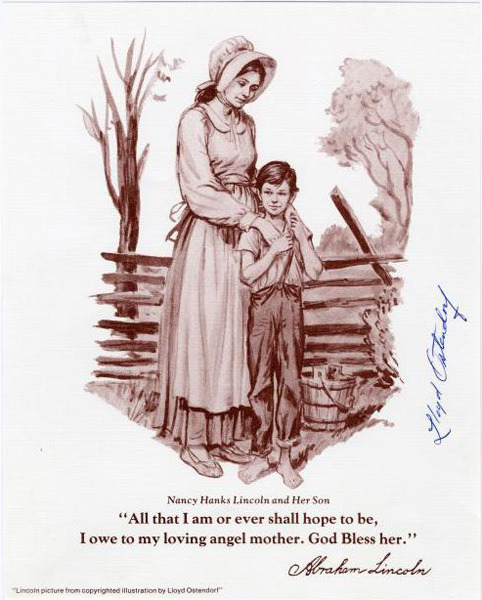
Lincoln with his “Angel Mother” signed by Dayton, Ohio artist Lloyd Ostendorf.

His feelings for her were still strong some 40 years later when he said, “All that I am or hope to be, I owe to my angel mother.” Lincoln’s fatalistic countenance, his famous bouts with melancholy, and his overall sad-faced demeanor could easily be traced back to those “growing-up” days in Southern Indiana. It is easy to imagine that, although terrifying to most children, the Setteedown ghost story was welcome entertainment to the hard reality of life on the Hoosier frontier for young Abe Lincoln.

Abe Lincoln, Creepy history, Ghosts, Politics, Presidents

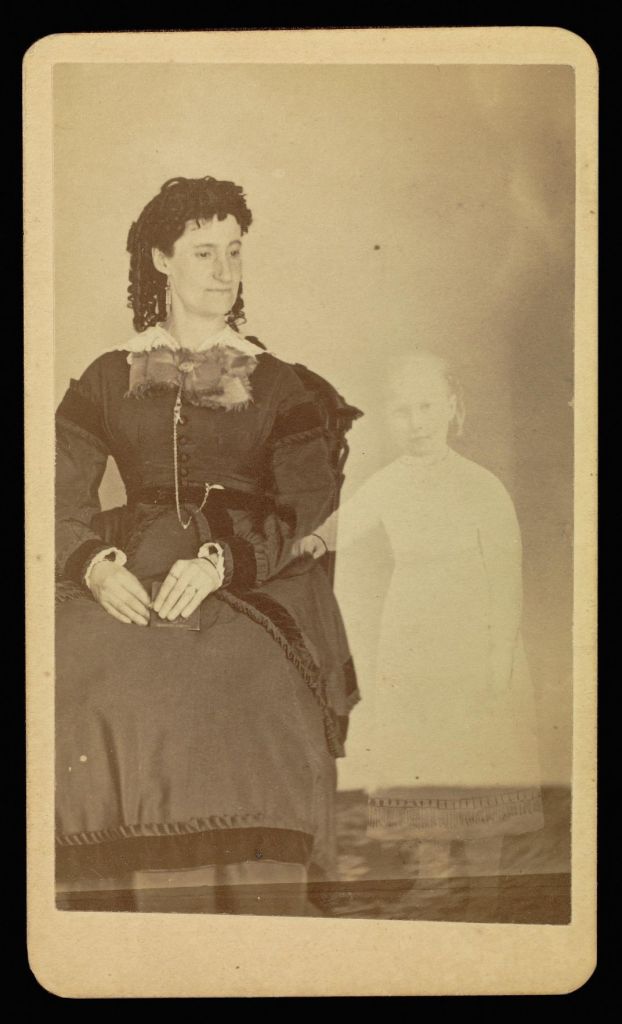
The Mumler Abraham Lincoln Ghost Photo.

Original publish date:  October 22, 2020. https://weeklyview.net/2020/10/22/the-mumler-abraham-lincoln-ghost-photo/

https://www.digitalindy.org/digital/collection/twv/id/3900/rec/104

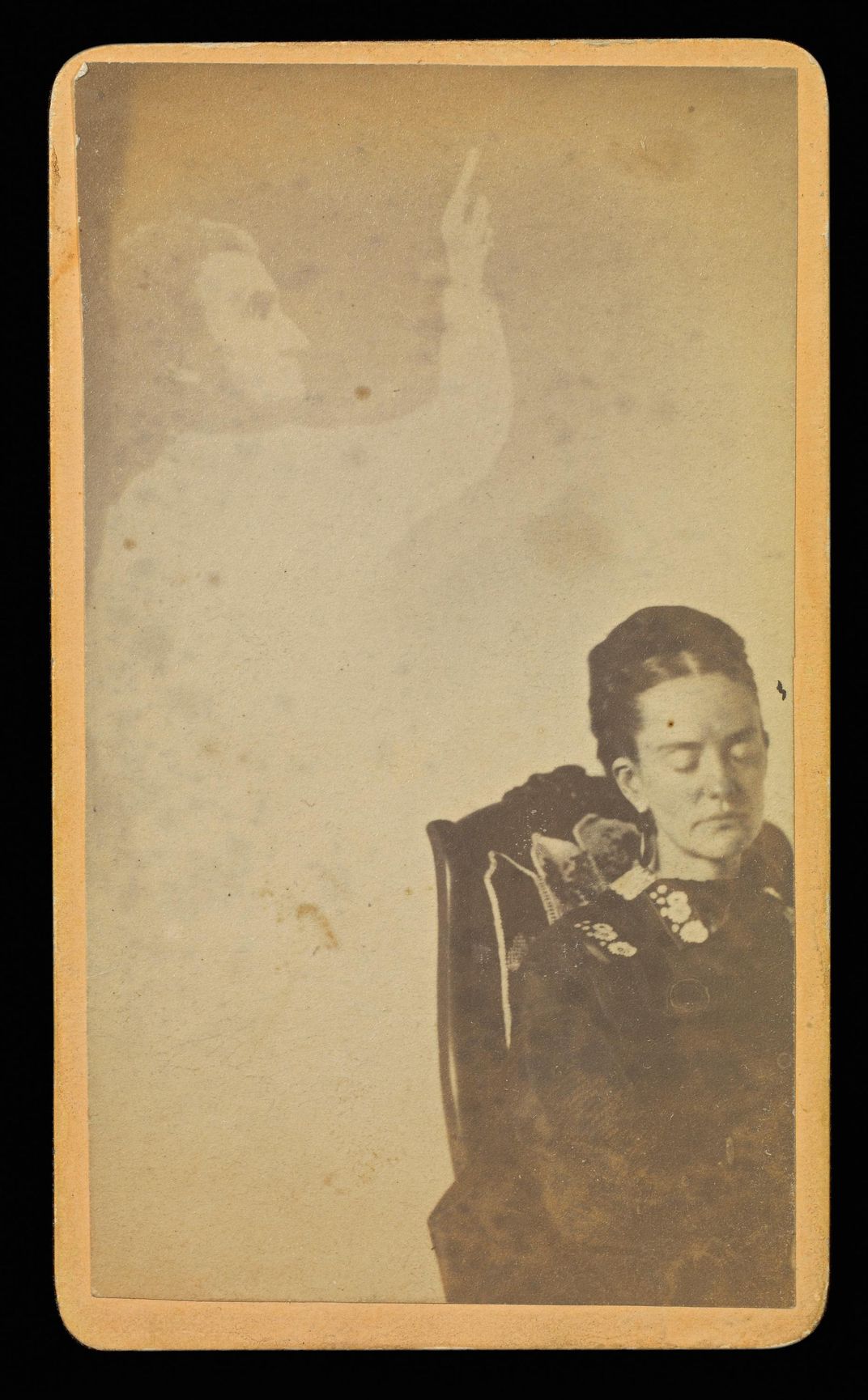
Last Saturday before the Irvington ghost tours, one of our volunteers, Alex McFarland, initiated a conversation that seemed to be a perfect topic for the evening: the Abraham Lincoln ghost photo. Known officially as the “Mumler photos”, these were a series of posed studio photographs, not unlike any old-time photo, usually in Carte de Visite (or CDV) form, that can be found at any antique show, shop, or mall today. The difference is, that Mumler’s photos had the visual image of a ghost in them. The most famous of the Mumler photos features widowed First Lady Mary Lincoln with her deceased husband, President Abraham Lincoln.


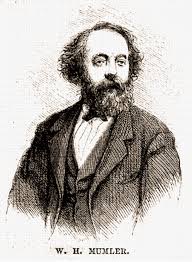
William H. Mumler

William H. Mumler (1832-1884) was a well-known Boston photographer who claimed to be a “medium for taking spirit photographs.” Mumler was part of the growing phenomenon of spiritual manifestations introduced in 1848 by the Fox sisters of Hydesville, N.Y. The three sisters held séances at their home (near Newark, N.J.), that featured spirit rappings and table tippings in response to their queries. Their amazing “abilities” caused a sensation that spread across the country. With its long history of highly-intelligent, intellectually curious populace, Boston became an epicenter for the movement attracting spiritualists, mediums, and psychics from all over to the mysterious world of the “higher plane.”
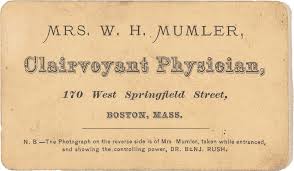
In 1871, the camera was still in its infancy. The technology had graduated from metal to glass to paper photos readily available and affordable to the general public like never before. The country was still mourning from Civil War losses, in some cases having lost entire male lines of families and large portions of towns and communities. The loss of loved ones was still fresh and many turned to any means necessary to see and talk to their loved ones one last time. Mumler’s promise of contact in the form of visual evidence drew flocks of true believers to his studio at 170 West Springfield Street in this city historians called the “Cradle of Liberty.”


In February of 1872, seven years after Lincoln’s assassination, a still grieving Mary Lincoln arrived at William Mumler’s Boston Studio to have her picture made. Dressed in mourning, she gave the photographer a false name (‘Mrs. Lindall”) and kept her face concealed behind a black veil. In 1875, Mumler recalled in his autobiography, “I requested her to be seated, went into my darkroom, and coated a plate. When I came out I found her seated with her veil still over her face. I asked if she intended to have her picture taken with her veil. She replied, ‘When you are ready, I will remove it.’” The widow Lincoln was used to dealing with charlatans and knew how to prevent their tricks.

The reason she landed at Mumler’s studio was because her dead husband had appeared to her at a séance earlier in Boston. The medium told her she should visit Mumler’s studio because the photographer could capture the shadows of the dead on photographic negatives. Mumler always claimed that he did not recognize his subject until after he developed the negative. And then only after he recognized the image of the martyred President did he realize it was Mary Todd Lincoln. His visitor just may have been the most vulnerable woman in America, shattered by death and loss for the past two decades.
Mary never recovered from her husband’s assassination six years before and the loss of three of her four sons, all dead before their 18th birthdays. Even before her husband’s death, Mary Lincoln had embraced spiritualism, the belief that the spirits of the dead can be contacted through mediums. Reputedly going so far as hosting seances in the White House and visiting mediums in Georgetown and D.C., sometimes accompanied by the President himself. So her visit to the studio, today located near historic Frederick Douglass Square in Boston, was unsurprising and predictable. It should also come as no surprise that the photo, the greatest presidential ghost photo ever known, is a fake.


Mary’s visit to William Mumler’s studio (one of five Boston studio locations he occupied during the 1860s-70s and 80s) stands out as one of the grand hoaxes of the Spiritualist period. The distraught first lady must have been satisfied, even consoled by the image, but to our practiced modern eyes, this photograph of Mary Lincoln remains a touching, if sadly preposterous, fake. Nonetheless, it was Mumler’s most famous portrait. Mumler’s Lincoln image is his most reproduced photograph, and it is believed to be the last photo ever taken of Mary before she died in 1882.


The story of Mumler’s spirit photography began as an accident and turned into a joke. In 1861 the 29-year-old jewelry engraver was living in Boston and experimenting with the new art of photography as a hobby. In his autobiography, The Personal Experiences of William H. Mumler in Spirit Photography, Mumler claimed his discovery was made while developing a self-portrait. While the plate was soaking in the tray of toxic chemicals, he noticed the mysterious form of a young girl slowly materialize on the negative. Amused and mystified, Mumler printed this curiosity and showed it around to friends, claiming that it was the ghost of a dead cousin. Mumler, a man of “a jovial disposition, always ready for a joke,” decided to show the photo to his spiritualist friends, pretending that his picture was a genuine impression from beyond the grave.

The Boston psychics fell for the gag and soon Mumler’s ghost photos were circulating around the city. It became an instant sensation and once Mumler’s photo was published in The Banner of Light and other spiritualist newspapers, he became an instant celebrity. The “spirit cousin” was nothing more than the transfer residue of an earlier negative made with the same plate, but it was declared a miracle and Mumler the jeweler became heralded as the “oracle of the camera”. Mumler soon left his job as a jewelry engraver and opened his own photography business full-time.

Here’s the scam. On arrival, the subject of the photo was greeted by William’s wife Hannah, she would chat up the client who would invariably reveal who the spirits were that they wished to appear in their sitting. Hannah had some clairvoyant abilities of her own and she often offered her own intuitions about the spirits surrounding her husband’s clients, resulting in the client’s unwittingly revealing more precise information. All while William Mumler was eavesdropping from the adjoining room. Part of his con included a “vacuum tube” that glowed as an electrical current was run through it which he claimed was a special force he then channeled into the camera. It was P.T. Barnum-style showmanship pure and simple.

For this special ability, Mumler’s fees were extravagant. At the height of his fame, Mumler charged $10 for a dozen photographs, roughly five times the average rate. Worse, there was no guarantee that any spirits would appear. If Mumler or his wife sensed a particular vulnerability in their subject, the spirits would not appear in the photos. Clients were encouraged to make repeated trips to Mumler’s studio before they were blessed with a true spirit photograph. If the high fee was ever questioned, “The spirits,” Mumler answered, “did not like the throng.”


Boston’s other photographers were not impressed by Mumler’s ghost photos. James Black, one of Boston’s premiere photographers famous for his aerial views of the city taken from the perspective of a hot air balloon, was convinced that Mumler was cheating. He set out to catch him at it. Black bet Mumler $50 that he could discover his secret. Black examined Mum­ler’s camera, plate and processing system, and even went into the darkroom with him. In his auto­biography, Mumler described Black’s reaction when a ghostlike image emerged on the negative right before the doubter’s eyes as, “Mr. B., watching with wonderstricken eyes…exclaimed, ‘My God! Is it possible?’”

P.T. Barnum.

Of the incident, Mumler later recalled, “Another form became apparent, growing plainer and plainer each moment, until a man appeared, leaning his arm upon Mr. Black’s shoulder.” The man later eulogized as “an authority in the science and chemistry of his profession” then watched “with wonder-stricken eyes” as the two forms took on a clarity unsettling in its intimacy. Despite the best efforts of countless investigators, no one was able to determine exactly how Mumler created his apparitions. With the photographic elite unable to debunk Mumler’s ghost photos, hoards of desperate souls flocked to Mumler’s studio-including a grieving Mary Lincoln and the master of all hoaxes, P.T. Barnum himself.
Soon Mumler’s pictures became the subject of great speculation among his peers from all over the country. In 1863 noted Boston scientist, physician, and avid photographer Oliver Wendell Holmes not only gave step-by-step instructions on how to obtain a double exposure in an essay for the Atlantic Monthly, but he also contemplated the popularity of Mumler’s pictures. “Mrs. Brown, for instance, has lost her infant, and wishes to have its spirit-portrait taken,” Holmes wrote. “It is enough for the poor mother, whose eyes are blinded with tears, that she sees a print of drapery like an infant’s dress, and a rounded something, like a foggy dumpling, which will stand for a face…An appropriate background for these pictures is a view of the asylum for feeble-minded persons…and possibly, if the penitentiary could be introduced, the hint would be salutary”
Further confounding the experts was the fact that the apparitions seen in a Mumler photograph had human features, lifelike gestures, and filmy interactive forms. They are translucent spirits, not hard-edged ghosts. That was the secret of a Mumler ghost photo. To mediums, psychics, and spiritualists, Mumler’s photos depicted what they believed: that the afterlife was a paradise, simply the next step in human existence, albeit on a higher plain. All questions of process and motives aside, Mumler’s subjects were satisfied with the results. Distraught parents saw visions of children gone for years. Grieving widows saw their husbands one more time and widowers looked into the eyes of deceased wives once again.
Eventually, Mumler was a victim of his own vanity and the third deadly sin of avarice: aka Greed. The more people that showed up, the more Mumler had to perform. Some prominent Boston spiritualists, once avid supporters of Mumler’s ability, began to examine the ghost photos more closely only to discover that some of the “spirits” in the images were still quite alive. The ragman, the butcher, the schoolteacher, the cop. These were normal people walking the streets of Boston, all past subjects of Mumler’s “straight” photo studio sessions utilized by Mumler in the photographs of strangers. Eventually, Mumler’s business in Boston fell off.


He died on May 16, 1884 holding patents on a number of innovative photographic techniques, including Mumler’s Process, which allowed publishers to directly reproduce photographic illustrations in newspapers, periodicals, magazines, and books. Mumler’s skill as a photographer was only rivaled by his talent as a con artist, but he never really experienced any accumulated wealth from his labors. Mumler maintained to the end that he was “only a humble instrument” for the revelation of a “beautiful truth.” To further confuse matters, Mumler destroyed all of his negatives shortly before he died. William Mumler’s photographs may be products of pure hoaxing, but the question of whether technology is capable of catching spirits on film remains with us to this day. Search the web on any given day and you will see photos of every type captured by cameras of every description. Security cameras, ring doorbells, digital images, and cellphones continue to capture photos of mysterious orbs, mists, apparitions, shadows, dancing lights, and unexplainable phenomenon of every description. The allure of capturing a ghost on film, especially that which is invisible to the naked eye, may have begun with William Mumler but it continues to this day.

Abe Lincoln, Ghosts, Indianapolis, Irvington Ghost Tours, Museums, Politics, Presidents, Weekly Column

Abraham Lincoln & James Whitcomb Riley on Halloween!

Original publish date:  October 29 2020

In 1988, a survey was taken in conjunction with the “Hoosier Celebration” during Governor Robert Orr’s administration ranking the best known Hoosiers. Abraham Lincoln was number one and James Whitcomb Riley was number two followed (in descending order) by Benjamin and William Henry Harrison and explorers Lewis and Clark, who tied with former Governor Otis Bowen. And, because everybody loves a list, others making the cut included Larry Bird, John Cougar Mellencamp, Red Skelton, Florence Henderson, Jane Pauley, Michael Jackson and Bobby Knight. Don’t remember the “Hoosier Celebration”? Neither do I.

Screenshot (155)
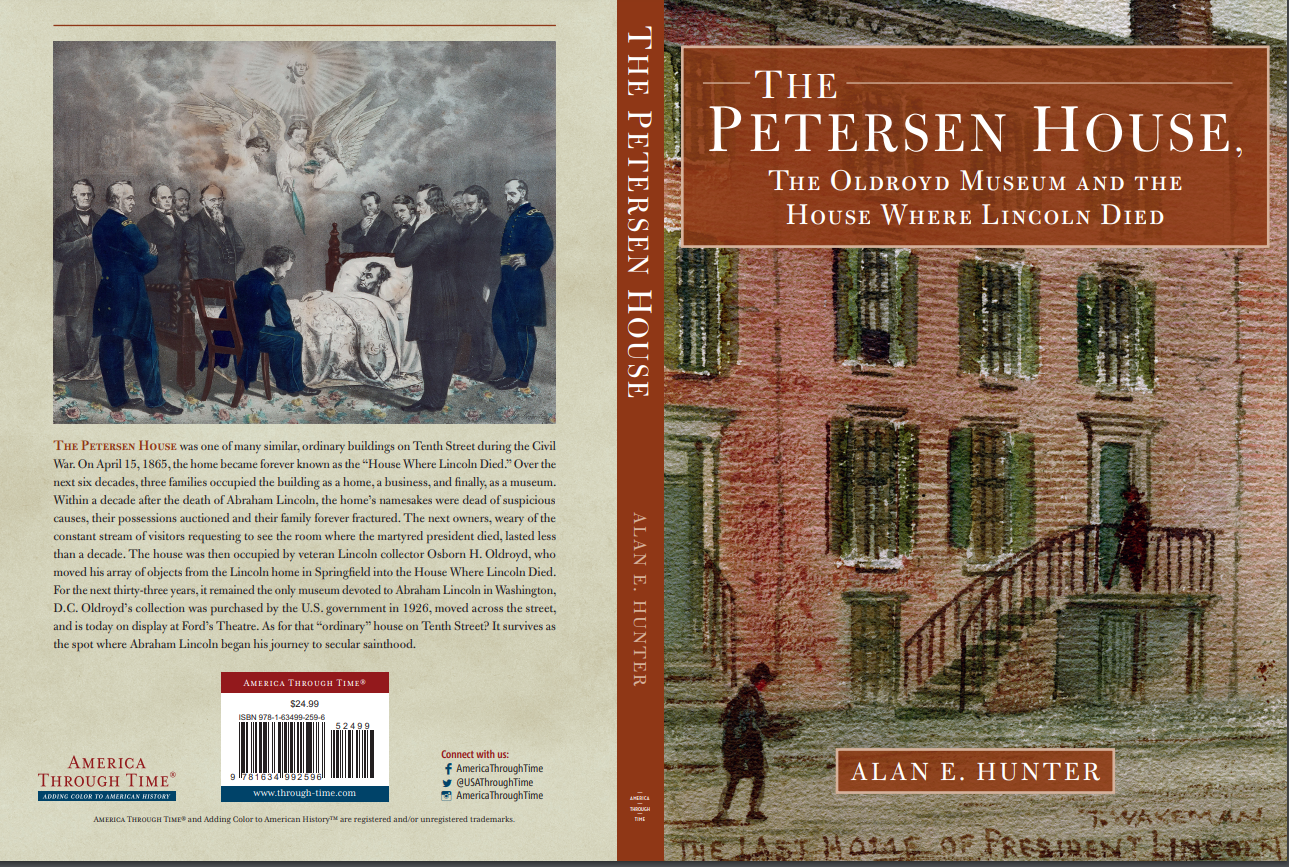
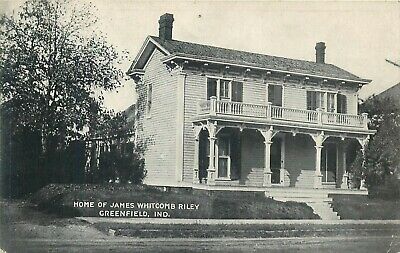
This Saturday (Yay! On Halloween!) October 31st, I will be visiting the James Whitcomb Riley boyhood home in Greenfield to talk about both Lincoln and Riley. That day will be the official book reveal for my newest book, “The Petersen House, The Oldroyd Museum and The House Where Lincoln Died”. Thanks to the courtesy of former Indiana National Road Board member and Director of the Riley Boyhood Home and Museum Stacey Poe, you are invited to come out at 2:00 pm and experience the Riley home and their new “Lizabuth Ann’s Kitchen” facility located at 250 W. Main Street on the historic National Road. I will be bringing some Lincoln props, signing books, sharing stories about the Washington DC building Lincoln died in (and it’s Indiana connection) and, in the “spirit” of the season, spinning a few ghost stories too.

z jws-l400Although Lincoln and Riley died a half-century apart, the men had much in common. The two were considered the state’s most famous Hoosiers (that is until John Dillinger died in 1934) and their names were often linked in speeches, newspaper articles, books and periodicals in the first fifty years of the 20th century. One of my favorite quotes found while searching the virtual stacks of old newspapers comes from the July 20, 1941 Manhattan Kansas Morning Chronicle: “If you want to succeed in life, you might run a better chance if you live in a house with green shutters. Abraham Lincoln, Mark Twain and James Whitcomb Riley all lived in such houses.” Lincoln and Riley epitomized everything that was good about being a Hoosier, right down to the color of their green window shutters.

z jw liz download

Lizabuth Ann’s Kitchen

The comparison was not unfounded. Both men were born in a log cabin. Both came from humble origins. Both were unevenly educated and both men never stopped learning. Both studied law-Lincoln with borrowed law books, Riley doodling poetry in the margins of his father’s law books. Both men were poets and both were considered among the greatest speakers of their generation. And both men had problematic relationships with women. Lincoln once said that he could “never be satisfied with anyone who would be blockhead enough to have me” and Riley famously said “the highest compliment I could pay to a woman is to not marry her.”

z 13964410_1441413422


Reuben Alexander Riley (1819-1893)

For the poet, his admiration began with his father, Reuben Riley. The senior Riley was a state legislator and among the first central Indiana politicians to embrace the railsplitter as a national figure and presidential candidate. Riley was considered by many to be the best political orator of his day. He traveled the Hoosier state stumping for Lincoln in 1860 and continued his support until the day that Lincoln died. Because of this young J.W. Riley could not remember a time when he did not admire Lincoln.
When the Lincoln funeral train came through Indiana on April 30, 1865, the official “Travel Log” notes that it arrived in Greenfield at 5:48 a.m., Philadelphia at 5:57 a.m., Cumberland at 6:30 a.m., the Engine House (identified as “Thorne” in Irvington) at 6:45 a.m. before finally arriving in Indianapolis at 7:00 a.m. In Greenfield, the depot was choked with people wishing to gaze upon the face of the departed leader one last time. The train was not officially scheduled to stop in Greenfield, but the mood among the citizens was that perhaps the engineer might be persuaded to stop when he witnessed the tremendous outpouring of trackside emotion at the Greenfield depot.

Lincoln train
The local newspaper described “a knot of three boys, hands in pockets chattering back and forth with each other while pacing up and down the railroad tracks. Two older fellows were standing together, each arm around the other, probably soldiers remembering what it means to be a comrade.” The depot porch was filled to overflowing with women in their long dresses, old soldiers in their Union uniforms and a sea of men dressed entirely in black. The telegraph operator in Charlottesville wired that the train had just passed and was heading towards the neighboring town. A sentinel was perched atop the station to alert the citizens below of the train’s approach.
In a few moments, a cloud of silver phosphorescent smoke appeared above the tree tops along the route of today’s Pennsy trail. “Here it Comes” was the cry from above and immediately the crowd below hushed and gazed eastward expectantly. For several moments, the only sound that could be heard on the platform was the muffled weeping of the gathered mourners. As the train slowly approached, Captain Reuben Riley read aloud excerpts from Lincoln’s second Inaugural address at the close of which he sat down and wept uncontrollably. The train paused briefly at the station and the engineer removed his cap in respect to reverent gathering. Fortuitously, Reverend Manners stepped from the crowd and led the group in a prayer that began, “Thank God for the life of Abraham Lincoln.” The people now openly wept as the train slowly departed westward towards Indianapolis. It is likely that 16-year-old James Whitcomb Riley was present that day.

Alan Hunter 3 col x 3

Riley wrote two poems dedicated to Abraham Lincoln. in a letter to Edward W. Bok dated October 23, 1890, Riley said this of the sixteenth President; “I think of what a child Lincoln must have been-and the same child-heart at home within his breast when death came by.” Along with all the shared common traits mentioned above, Lincoln and Riley were, and still remain, perhaps foremost, the idol of children everywhere.
Three days after Riley died on July 22, 1916, the Morning Call newspaper in Allentown, Pennsylvania eulogized the poet by saying: “The country has produced poets of more creative power and commanding genius, but none- not even Longfellow, beloved as he was- ever came quite so close to the heart of the mass of the people as the Hoosier Poet, James Whitcomb Riley, who died at Indianapolis on Sunday. He was truly from and of the people as was Lincoln, and in their way, his personality and career are almost as interesting and picturesque as those of the immortal emancipator.”
Elbert Hubbard, founder of the Roycrofters Arts & Crafts community in Aurora, New York, said “Who taught Abraham Lincoln and James Whitcomb Riley how to throw the lariat of their imagination over us, rope us hand and foot and put their brand upon us? God educated them. Yes, that is what I mean, and that is why the American people love them.” Hubbard was a contemporary of Riley’s who, along with his wife, died when the Germans sunk the RMS Lusitania leading to our entry into World War I a year before Riley passed.
However, in my view, what links both men in perpetuity is a shared language. Both men spoke fluent Hoosier. All his life, Lincoln and Riley tended to swallow the ‘g’ sound on words ending with ‘ing’, so a Walking Talking Traveling man become Walkin’, Talken’, Travelin’, man. Lincoln said “warsh” for wash, “poosh” for push, “kin” for can, “airth” for earth, “heered” for for heard, “sot” for sat, “thar” for there, “oral” for oil, “hunnert” for hundred, “feesh” for fish and “Mr. Cheerman” for Mr. Chairman. Likewise, Riley practiced the Hoosier dialect in his printed work, saying “punkin'” for pumpkin, “skwarsh” for squash, “iffin'” for if then and “tarlet” for toilet. Both men peppered their speech with distinctive words like yonder and for schoolin’ both “larned” their lessons and got their “eddication” in fits and spurts.
Both men’s lives came to an end in private houses, not in hospitals. Riley in the Nickum House in Indianapolis’ Lockerbie Square and Lincoln in the Petersen House in Washington, D.C. This Saturday, I will share my favorite ghost story about J.W. Riley (in the Lockerbie house) and while I have no ghost stories to share about The House Where Lincoln Died, I will detail a connection between the two. I will introduce you to the three families who resided there, the last of whom, Osborn Oldroyd, displayed his Lincoln collection of relics and objects for over thirty years before selling it to the United States Government in 1926. That collection is now on display in the basement of Ford’s Theatre.
Riley Lincoln poemOldroyd, a thrice-wounded Civil War veteran, collector, curator and author, is perhaps the father of the house museum in America. One of Oldroyd’s books, a compilation of poems entitled, “The Poets’ Lincoln— Tributes In Verse To The Martyred President”, was published in 1915. James Whitcomb Riley’s poem, A Peaceful Life with the name “Lincoln” in parenthesis as a sub-title can be found there on page 31. In Oldroyd’s version, the first line differs from Riley’s original version. Riley’s handwritten original (found today in the archives of the Lilly Library on the Bloomington campus of Indiana University) begins: “Peaceful Life:-toil, duty, rest-“. Oldroyd’s book version begins; “A peaceful life —just toil and rest—.” Interestingly, the Oldroyd version has become the standard. And there you have it. Oldroyd’s influence is subtle, his name largely unknown, yet he stays with us to this day.
Civil War, Creepy history, Ghosts, Irvington Ghost Tours, Travel

Haunted Antique Mall.

549b01d3e7296.image

Original publish date:  October 5, 2010              Reissue / Updated: August 6, 2020

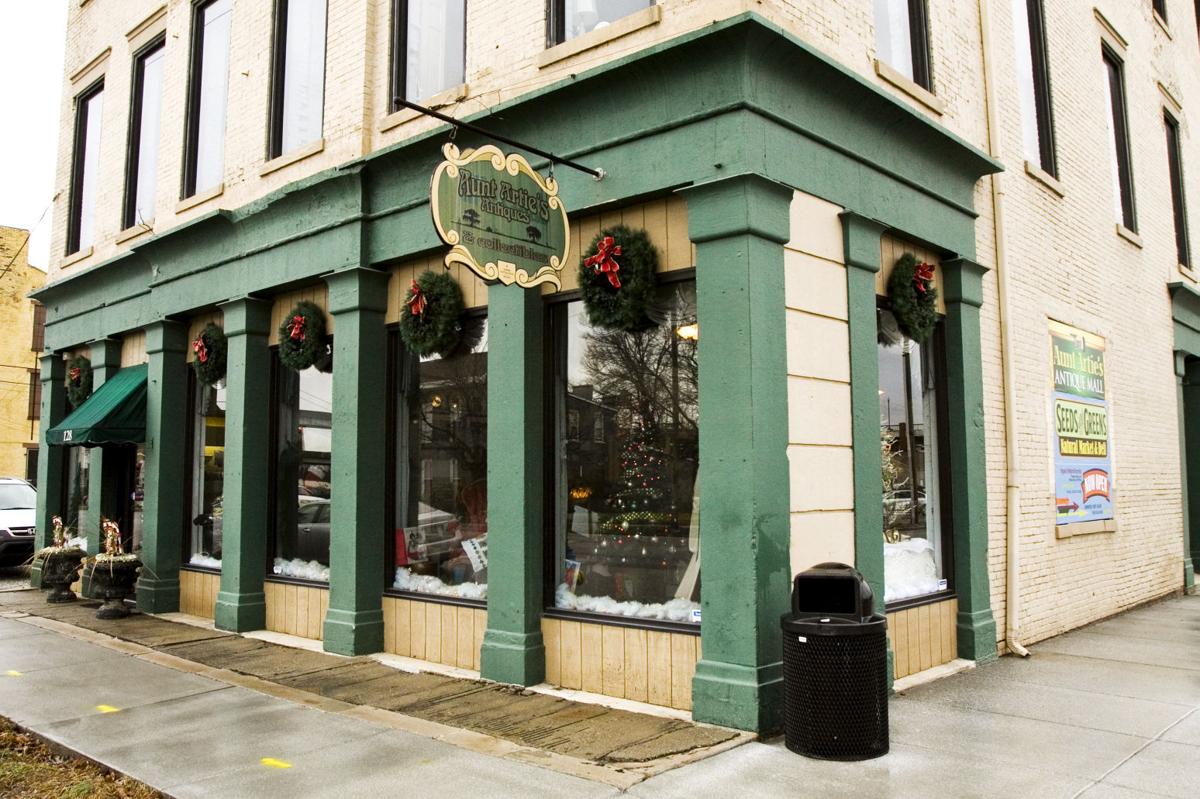
Here’s a one tank trip that might just help make your autumn season a little bit better. It combines many things that I like and perhaps a couple of things you might fancy as well; History, Antiques and ghosts! Recently my wife Rhonda and I took a trip down to New Albany, Indiana (just a stones throw from Louisville) to visit a place I’d long heard about but had yet to visit, Aunt Arties Antique Mall at 128 W. Main Street in New Albany.
Judy Gwinn is the owner of the old Ohio River Opera House and has turned the stately old building into one of the nicest antique malls in Southern Indiana. For antiquers, it is like stepping a decade back in time to a multi-dealer co-op with 3 floors of collectibles that would please most any collector. In short, it’s a mall full of quality merchandise the likes of which we all used to find in the days before Ebay.
“There are a lot of strange things that go on in this old building,” Judy says, “It has a vibe all its own.” Gwinn has operated the antique mall for nearly 10 years now and has witnessed many unexplained occurrences over the past decade. Lucky for Judy and her dealers, the ghosts of Aunt Arties aren’t poltergeists so breakage has not been a problem, “Although they sometimes move things around the building.”

z Opera
Woodward Hall New Albany, Indiana

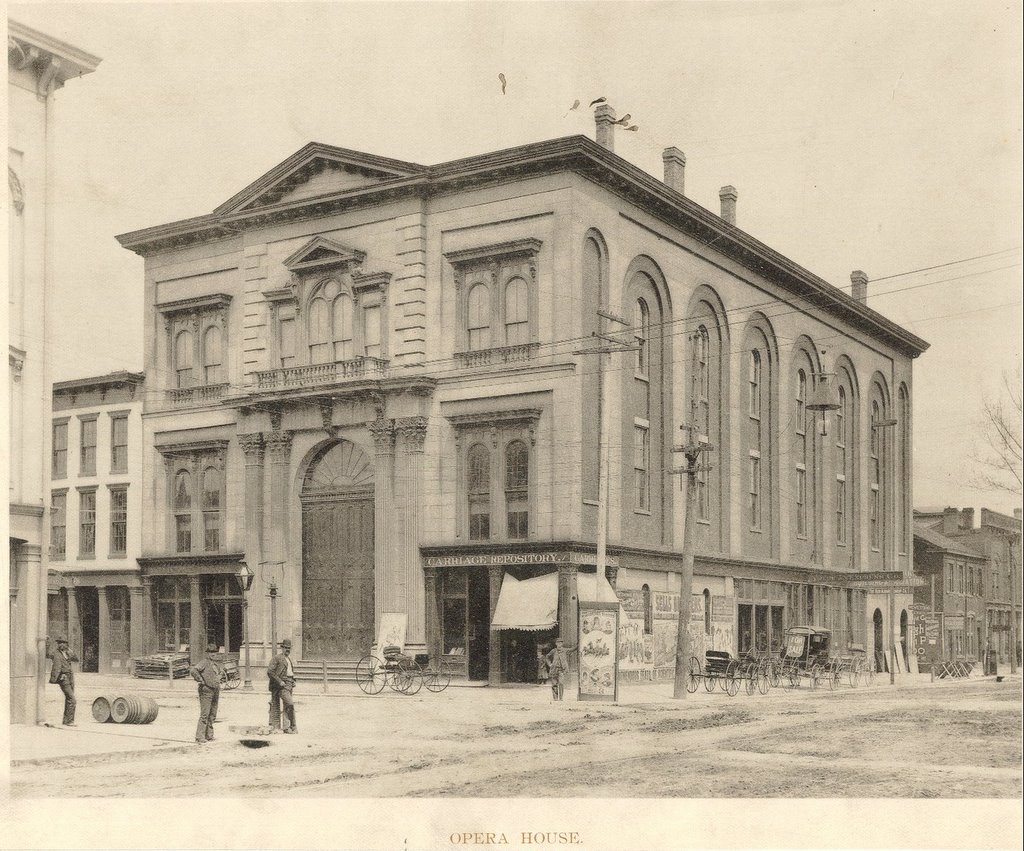
The building, originally known as Woodward Hall, was built in 1853 and purposely situated a block from the river on the corner of State and Main, “J.K. Woodward built it so that his wife and kids did not have to deal with the drunks and neer-do-wells that often prowled the docks down by the river in the years before the Civil War. He wanted a safe place for his family to enjoy themselves.” said Judy. In its lifetime just about every famous person who passed through New Albany appeared on the 3rd floor Opera House including the famed Siamese twins Eng and Chang, P.T.Barnum’s diminutive protege Tom Thumb and his friend, Commodore Foote, Opera star Adelina Patti, Philosopher/Poet Ralph Waldo Emerson, and self taught former slave turned master musician Blind Tom who was billed as the “Negro piano prodigy.” Not every performer to grace the stage of old Woodward Hall was famous though. The venue attracted countless numbers of minstrel shows, political debates, religious revivals, social lectures and dramatic productions.
The lower 2 levels housed a dry goods / department store well into the 20th century in what was once the largest city in the state before the Civil War. Although Judy is responsible for its current look, it has been used as an antique store since the late 1980s. Along with the city’s reputation as a river community, New Albany also has a rich history as a factory town and will celebrate its 200th anniversary in 2013.
z utc posterThe Opera House hosted the first performance of the inflammatory anti-slavery play “Uncle Tom’s Cabin” and its location straddling the North-South boundary caused quite a stir in the days leading up to the Civil War. During the “War of the Rebellion”, the building was used as “Hospital No. 9” and soldiers from both sides of the conflict could often be found lying side-by-side within its walls. In April of 1862, the steamer “H.J. Adams” delivered 200 wounded soldiers to the converted Opera House fresh from the killing fields of Shiloh. In these years before sterilization set the standard of hospital care, a wounded soldier sent to Hospital No. 9, as with any hospital North or South of the Mason-Dixon line, might as well have been handed a death sentence. Many a soldier in Hospital No. 9 would write letters telling friends and family that he was on the mend from a minor battle wound one day, only to die unexpectedly the next day from disease.
Judy and the girls that work in the mall feel that some of these performers and soldiers have never left the building. “I never believed in ghosts until I bought this building. Neither did my husband, but after all of the strange things we’ve experienced in this building, We have changed my minds,” Judy Gwinn said. However, she is no longer afraid of being thought of as a crackpot because she is not the only person to witness these unexplained happenings.
z 5c05d88edef32.imageJudy recalls how in 2001, her youngest son David was down in the building’s cellar “fishing” for old bottles in a cistern that he had removed the concrete covering from. “He was laying on his stomach down there alone when he suddenly felt someone tap him on the shoulder” she says, “he looked around expecting to see the source of the poking, but saw that he was still down there alone. Since that time, David does not like to be in the basement by himself.”
Judy recalls one time when she and her sister were walking down the stairway from the second to the first floor when she suddenly lost her balance and began to fall. “Something pulled me back and saved me from falling and serious injury. I shook for several minutes after that one.” says Judy.
img485Spirits of a Civil War soldier and a woman in an old fashioned Antebellum Era dress have been seen lounging around the cafe area by a few folks. “Every once in awhile, we’ll get a psychic coming through here telling us that they see the spirits of several Civil War soldiers around the entire building and sense sadness in the basement area.” says Gwinn.
On one occasion, Judy was down in the cellar with a group of 4 people when the youngest person down there, an 11-year-old girl wandered a few feet away from the group. “We all watched as a bright white orb of light appeared and went right through that little girl.” she says, “I have seen shadows go through walls and felt the tapping on my own shoulder. Whatever it is, I’m not scared of it anymore.”
Judy Gwinn might not be afraid of the ghosts that linger within the walls of Aunt Arties Antique Mall, but others might have a different opinion. Judy confesses that some people have walked in the doors and turned around and walked right back out. She’s seen more than a few people start walking up the stairs only to suddenly stop and walk carefully back down the stairway. When asked about the basement, Judy says, “Oh my, I don’t think we could ever use this area for anything more than storage. Its just too creepy and I’m not even sure that the employees want to come down here.”

z 10672416_798739180182771_6158681886050951161_n
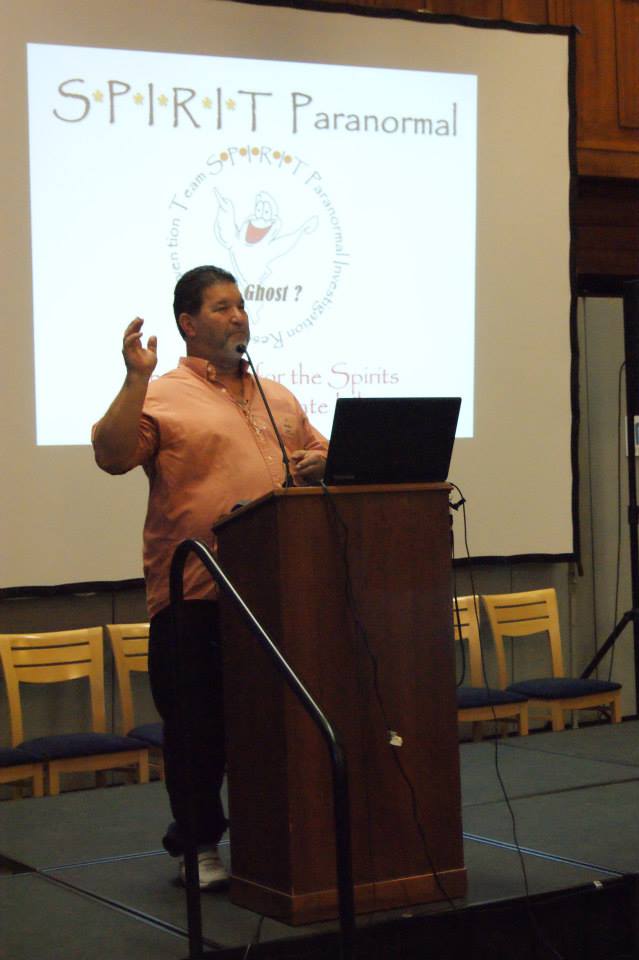
Tim Poynter delivering a presentation at the Indiana State Library in Indianapolis.

Update: This article originally ran 10 years ago. Aunt Arties closed its doors on New Years Eve of 2014 and the remaining contents were auctioned off in February of 2015. After Rhonda and I visited the store in the Fall of 2010, we took another trip down with several intuitives, including Tim Poynter and Jill Werner. My decision to rerun this story came after the following facebook post from Tim: “Aunt Arties was once a stop on the underground railroad with a reputation of being haunted by a Lady in blue/gray. When we arrived the spirit of a young soldier started following one of the group around. He was very smitten with Jill and had big puppy dog eyes. I noticed the lady spirit on the stairway overseeing our groups investigation. We spent some time on each floor looking for spirits. Near the end of our visit I noticed several spirits of slaves that had been buried on the property still residing in the basement even after all those years. They has perished from injuries received from their perilous journey to freedom. They were still very afraid of our attention to their being there. I remember being overwhelmed with their fear and mistrust. The connection with spirit often comes with much more than we expect. After understanding that we were not a threat they became more forth-giving of their trip to freedom. Even though they had died, they died as free men. I helped them understand that the only thing holding them there was their own energy and off they went. We that were born to freedom seldom understand it’s true value. Those that restrict the freedom of others don’t understand the mark they leave on their own soul.” Well said, Tim, well said.