Abe Lincoln, Civil War, Museums, World War II

Obituary for Wayne C. “Doc” Temple”

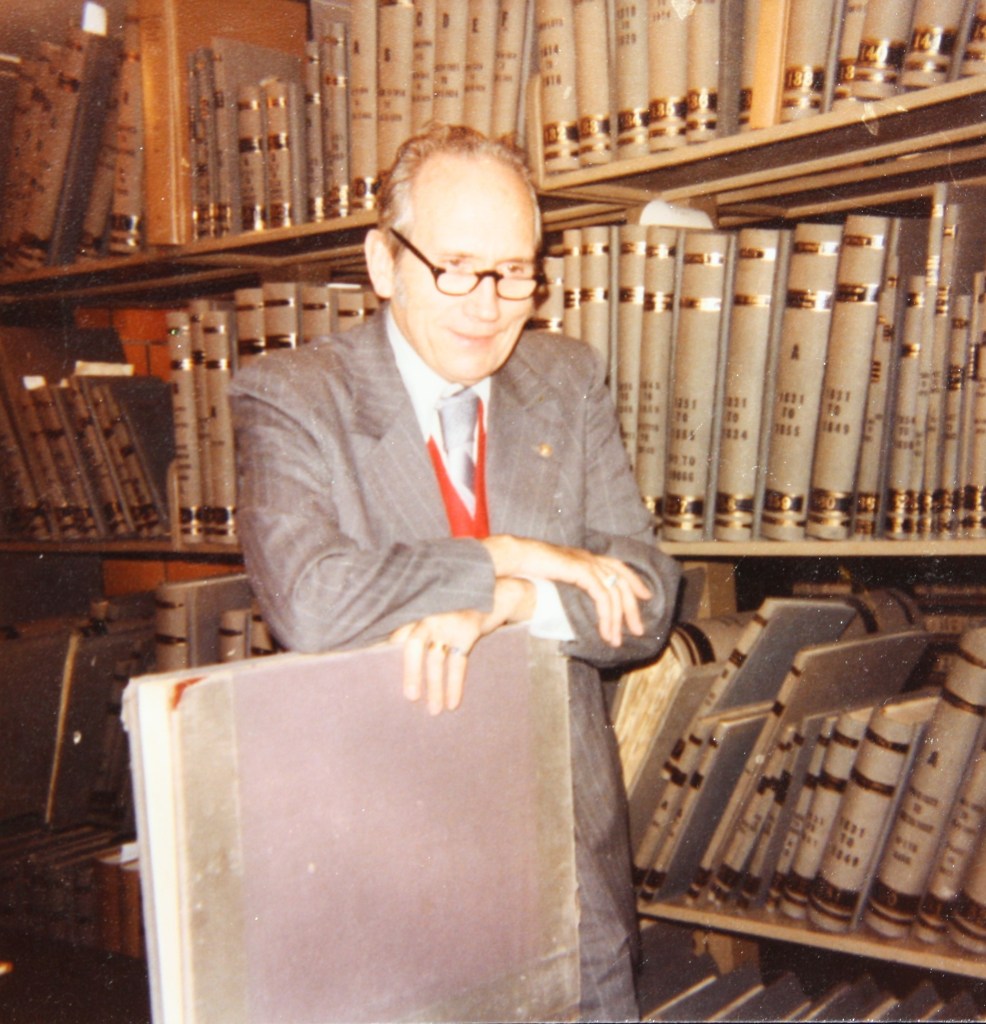
Wayne C. “Doc” Temple at his post of 56 years & 7 months in the Illinois State Archives Springfield, Illinois.

Doc Temple’s century of service is complete, his earthly journey concluded, and he has embarked on the most anticipated trip of his long and happy life, carried on the wings of cardinals to reunite in heaven with his beloved wife Sunderine. Doc’s life, by his own admission, was a dream come true. Born in Ohio’s fields of plenty, Doc was an old soul from the start. With nary a penny in his pocket, at the age of five he carried an old broken pocket watch and chain found abandoned in a farmer’s field as part of his daily attire. He turned that love of timepieces into the preeminent collection of Illinois Watch Company pocket watches known in the state. Governors, senators, congressmen, generals, scholars, and friends today carry an “A. Lincoln” or “Bunn Special” pocket watch with them today, courtesy of Wayne C. Temple. Other creatures received his bounty, too: he fed the cardinals outside his home on Fourth Street Court assiduously and considered every red bird that benefited from his efforts as an earthly manifestation of his wife Sandy, reminding him, over the past three years, that she stood with open arms on the rainbow bridge, awaiting his arrival.
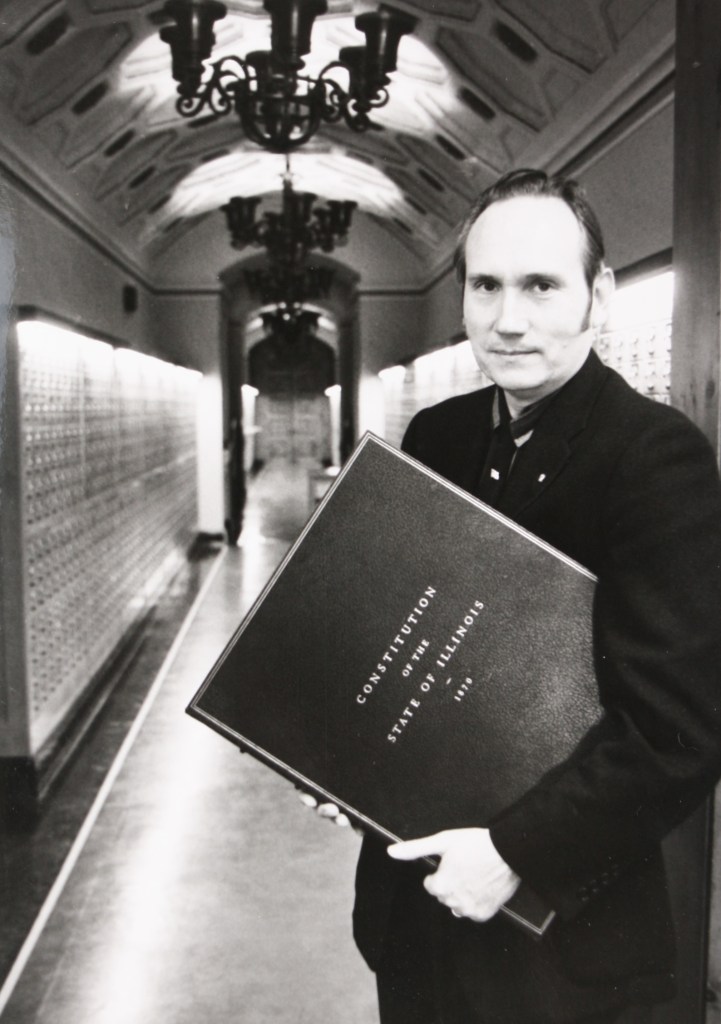
Doc holding the Illinois State Constitution at the archives.

While historians know that Doc was chosen as one of the top 150 graduates of all time from the University of Illinois during its sesquicentennial year of 2017, not many realize that Doc was also an accomplished poet, living his life with poetry in his soul. He sprouted as a poor Ohio farm boy with an unquenchable thirst for history, education, and life, with his first love the English language.  He put that adoration for the printed word to good use in elocution contests and essays that were the first signs of his innate talent. From those humble beginnings, Doc served his country in Europe, slept on castle floors, befriended a General named Eisenhower who would soon become President, and drank the wine of emperors gifted to him by grateful war-torn communities that he literally brought back to life with his engineering skills. Of course, Doc shared Napoleon’s wine with his battle buddies. Doc’s flame burned brighter than any other historian in Illinois’s history, and the prowess of his Lincoln scholarship was unchallenged for half a century. He spent a career burning holes in the pages of others’ older history by his meticulous research, yet Doc’s flame always warmed, never burned those around him. He was quick to share information with all who sought his advice. Whether you were a budding scholar, land surveyor, dentist (yes, Doc was an honorary dentist), lawyer, politician, historical enthusiast, tourist, or student, Doc always had time to lend a hand in the most generous fashion. He never concerned himself about attribution or credit; his mantra was always “Get the information out there.”  Some of it was new information, too: Each year he wrote Sandy an original poem, in rhyme, for her birthday or anniversary.
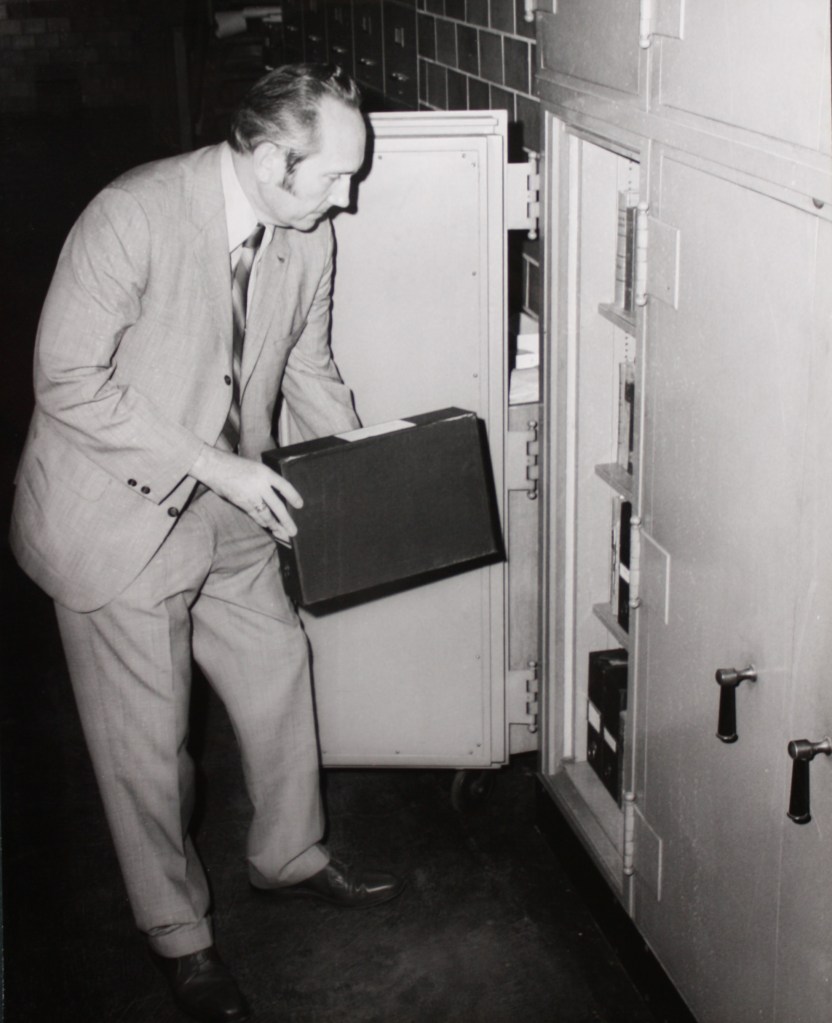
Doc Temple at work in the archives.

Although Doc stood front and center for every important Illinois event, commemoration, or big reveal for the past seven decades, you’d never know it by his demeanor. If he wasn’t on the dais, he was in the front row. During his career in the Archives, he was just as excited to meet Hoss Cartwright’s school teacher as he was to meet the Vice-President of the United States. Doc’s presence will be sorely missed, his record of 54 years, 7 months service to the state of Illinois may never be surpassed, and his space in the Lincoln field will remain unfilled. His passing came with typical military precision, bisecting the clock at precisely 1230 hours, the hands on the clock in an upswing, moving up, not down, on the final day of March. Doc’s transition occurred exactly at the conclusion of his life’s seasonal winter to burst forth to the heavenly spring we all hope awaits our final journey. Doc would remind us all, with a wink and a smile, that he also waited until after the St. Louis Cardinals home opener had arrived.
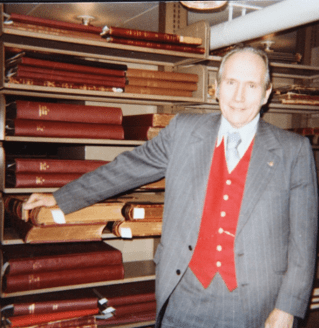
Doc Temple in the safe at the archives.

Wayne Calhoun Temple, the dean of Lincoln studies and for half a century the mainstay of the Illinois State Archives, died peacefully on March 31, 2025, at a care facility in Chatham, Illinois.  Devoted friends Teena Groves and Sharon Miller were present Wayne Calhoun Temple, the dean of Lincoln studies and for half a century the mainstay of the Illinois State Archives, died peacefully on March 31, 2025, at a care facility in Chatham, Illinois.  Devoted friends Teena Groves and Sharon Miller were present and biographer Alan E. Hunter was on the phone with them at the time of his passing. He was predeceased by his beloved wife Sandy (2022), and by his parents Howard (1971) and Ruby (1978) Temple, of Richwood, Ohio.. He was predeceased by his beloved wife Sandy (2022), and by his parents Howard (1972) and Ruby (1977) Temple, of Richwood, Ohio.
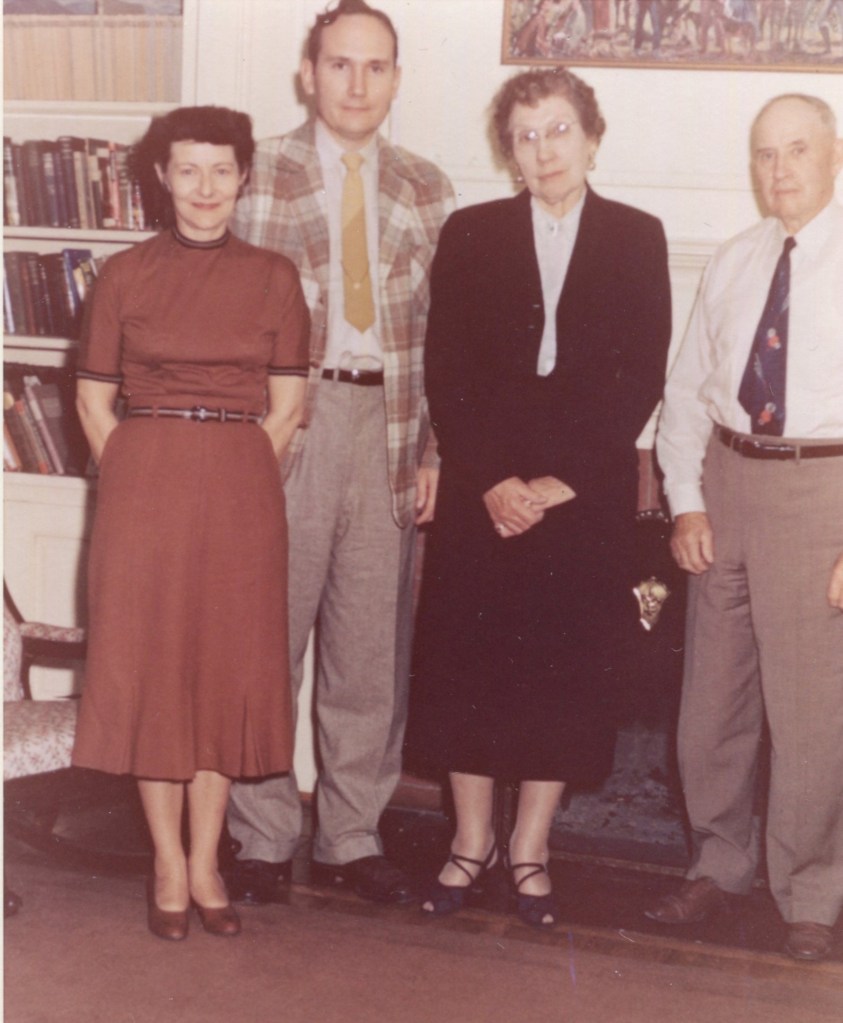
Loi & Doc with his parents Roby & Howard Temple.

Temple, known to all for 60 years as “Doc,” was born on a small family farm two miles east of Richwood (about 40 miles north of Columbus), on Feb. 5, 1924. He liked to note that he shared a birthday with Lincoln’s mother, Nancy Hanks Lincoln.  He was an only child. From his mother, a teacher, he learned literature, history, and music; from his father, he learned how to ride, how to shoot, how to plant and reap. An oft-repeated story is how at age 9 years he encouraged his parents to go see the fair in Chicago in 1933 as they wished. He persuaded them that he’d be fine and he was – he had the horse, the cart, and the rifle.
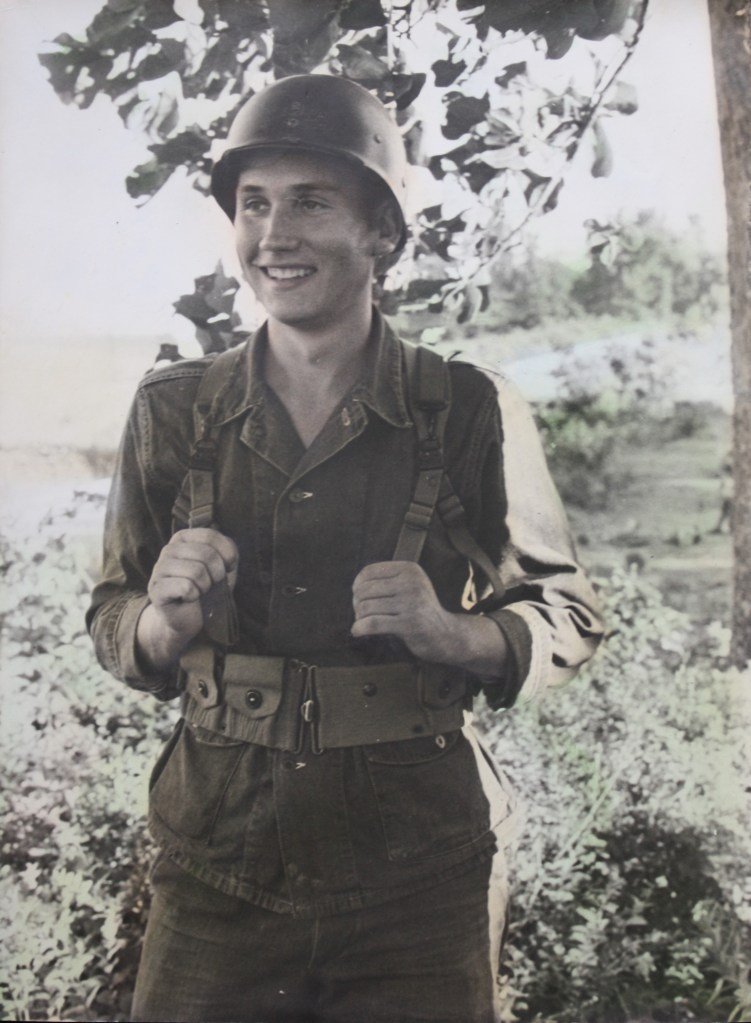
Doc Temple World War II.

After a one-room-schoolhouse start, in high school he was valedictorian and ran on a championship 1,500-yard 4-man relay team. He played clarinet in a traveling band of adult men. In 1941, he entered Ohio State University on a football scholarship, intending to study chemistry. He was soon drafted into the Army Air Corps and sent to Urbana, Illinois, for training as an engineer. He and his mates were sent to North Carolina for special training; then to Kansas for ordnance production.
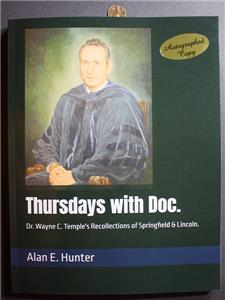
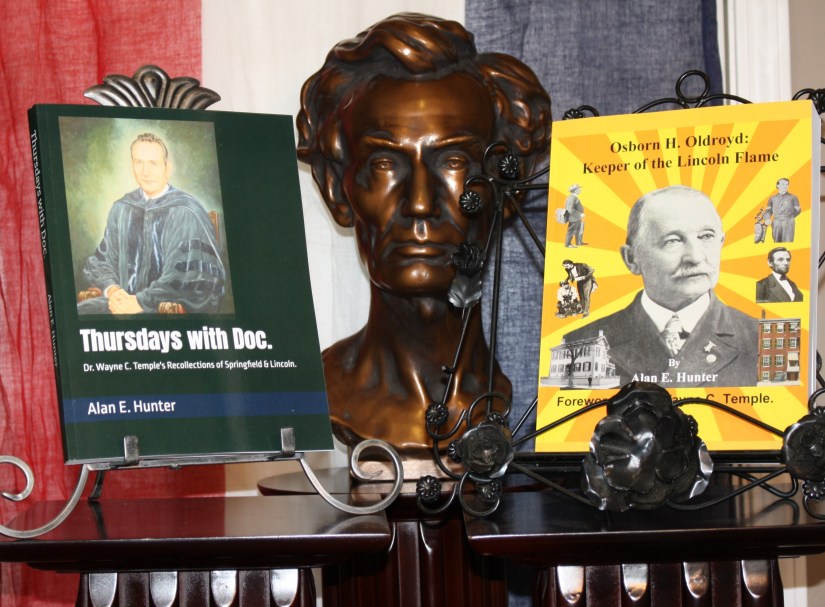
He spent 1945-46 in Europe, and at age 21 as a Tec 5 in the Signal Corps (grade of a sergeant), he helped install new airfields and radio communications, some of it personally for General-in-Chief Eisenhower.  Many more details are found in Alan E. Hunter’s remarkable oral-history-as-life-study, Thursdays with Doc (2025), copies of which Temple signed in his last months of life.
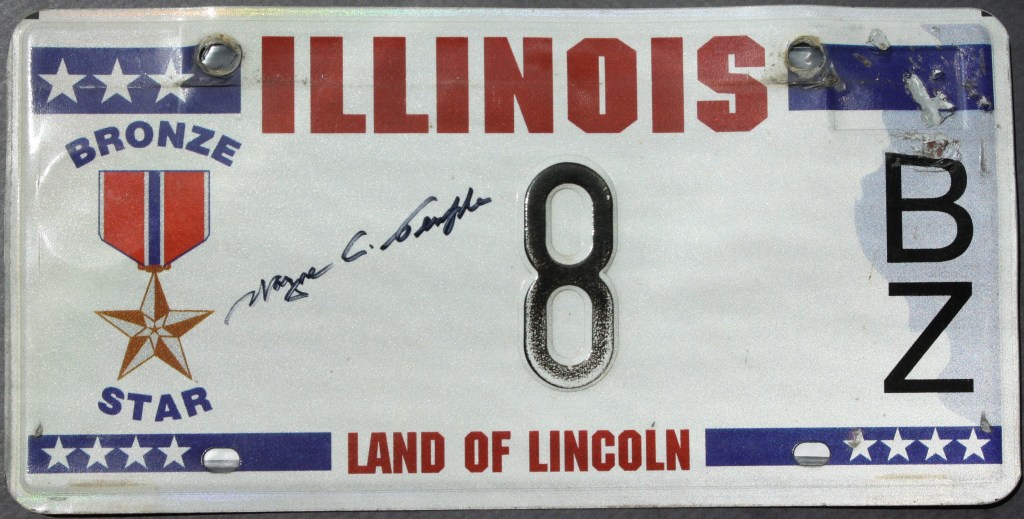
Doc’s Bronze Star license plate.

He was awarded the Bronze Star for his one-man battle with a Luftwaffe pilot who strafed their camp on the Franco-German border in the last weeks of the war.  While others dove for the ditch, Doc used his favorite weapon, the Thompson submachine gun, to fire upward at the plane. “Did you hit him?” Doc was later asked. “I don’t know, but he didn’t come back.”
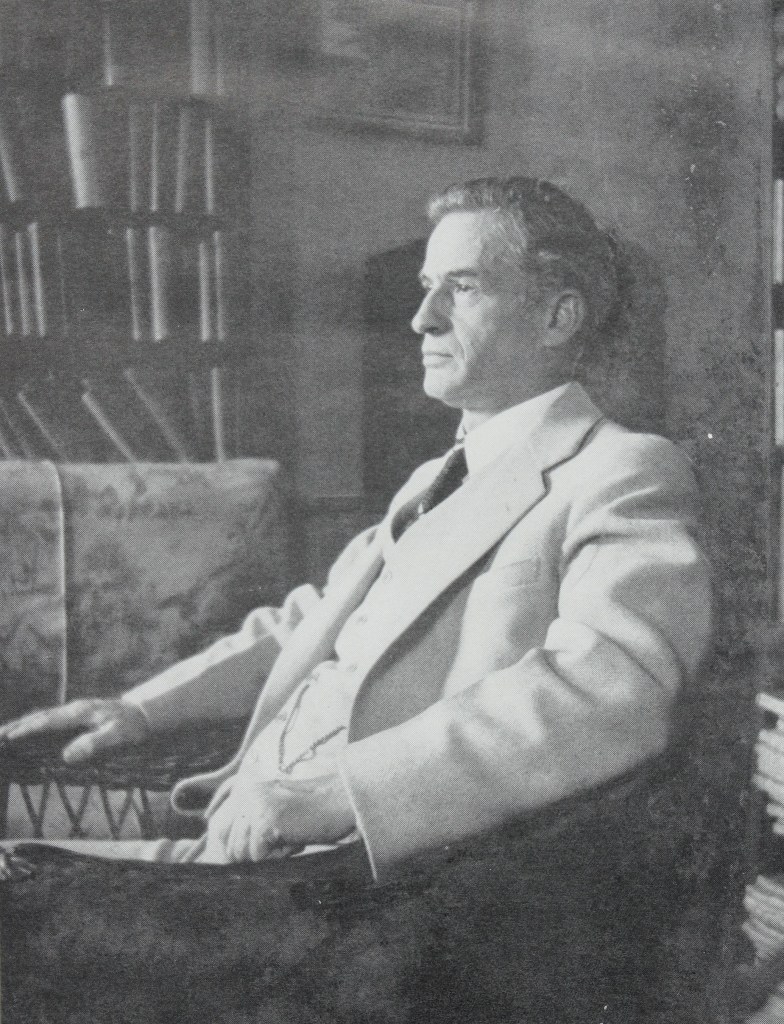
James Garfield Randall Univ. of Illinois.

After the war he returned to the U. of Illinois, earning a war-interrupted B.A. in History and English. Here, he was discovered by Prof. James G. Randall, the first academic historian of Lincoln, and became his graduate student and research assistant until “Jim’s” death in 1953. Temple helped him write vol. 3 of the tetralogy Lincoln the President (1945-55) and rough out vol. 4 although a more senior scholar got credit as co-author. Temple also helped Ruth Randall with her popular and “junior” histories about the Lincolns and women of the Civil War era, and corresponded with her until her death in 1971.
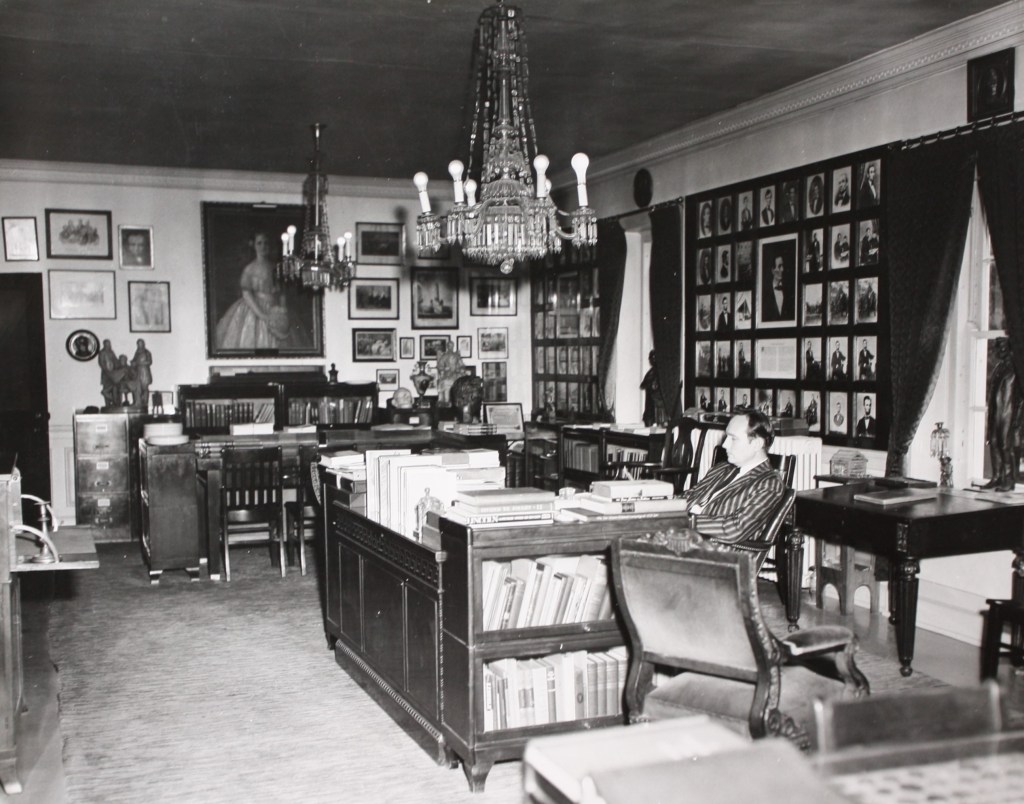
Doc in his office, the “Lincoln Room”, at Lincoln Memorial University Harrogate, Tennessee.

His first book was commissioned and remunerated handsomely by Thorne Deuel of the Illinois State Museum, on Indian Villages of the Illinois Country (1958), still considered a model of research and analysis. From there Temple took his wife Lois McDonald Temple to Lincoln Memorial University, Harrogate, Tennessee, to head up the history department. They remained in touch for decades with some of the young women who assisted in the department. He edited The Lincoln Herald there, making it the best periodical in the field, and remained as editor till the mid-1970s, long after the Illinois State Archives in 1964 brought him on staff. For decades before his retirement there in 2016 he was permanent Chief Deputy Director. (Lois died in 1978; Doc and Sandy met and married in 1979.) He no longer taught classrooms, helping instead an average of 150 people per month for a half-century who called, wrote, or walked in with questions at the Archives – in addition to speaking and writing publicly more than most fulltime professors. Land surveying, one of Temple’s many skills, proved invaluable for the dozen survey questions a month on that topic, alongside tracing the course of legislative bills old or new, gubernatorial proclamations, or judicial rulings. He mastered the use of old registers, microfilm, and the typewriter, but never took to computers. Nine secretaries of State, of both parties, kept Temple on, recognizing his value to the state and to the public; tech-savvy assistants like his friend Teena Groves made the office efficient, complementing Doc’s top-notch research work.
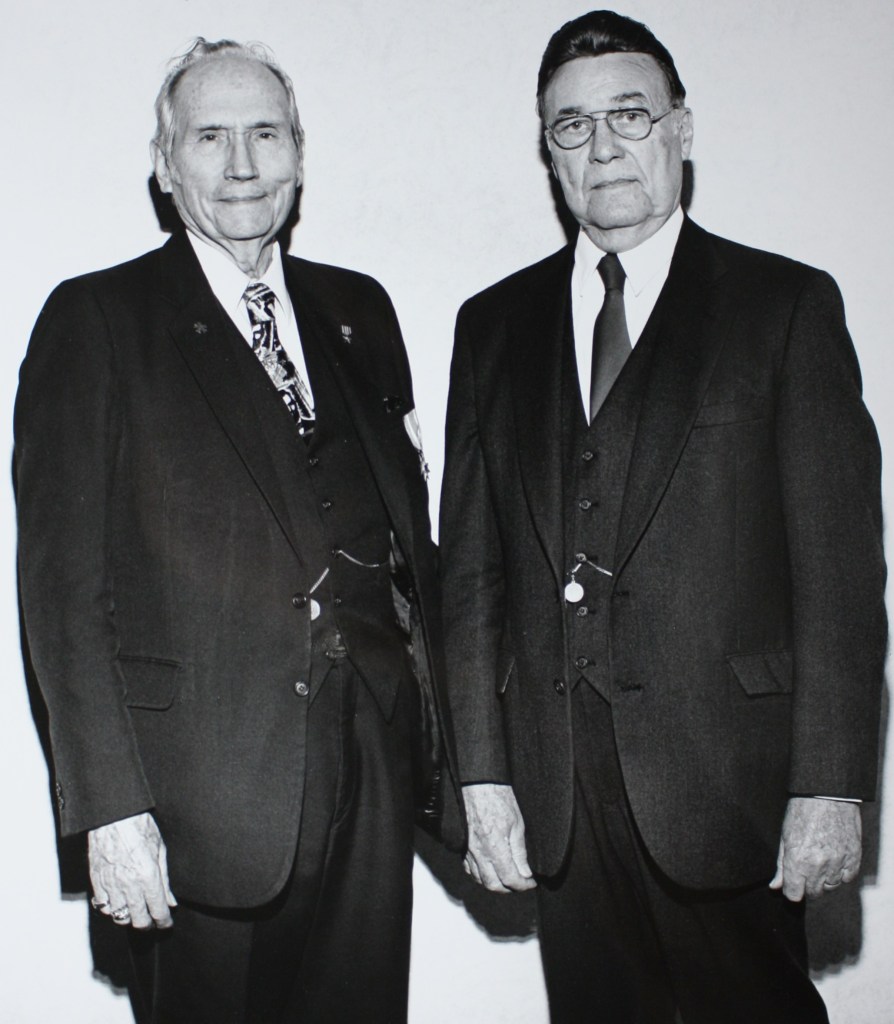
Doc with his longtime friend,
Dayton Ohio artist Lloyd Ostendorf.

At the popular level he engaged artist Lloyd Ostendorf to illustrate the Lincoln Herald with Temple’s precise historical notes on people’s heights, demeanor, clothing, armaments, supported by background architecture and horsetack, for the best historic illustrations of any American’s circle of friends and colleagues.  These scenes were set in dozens of Illinois cities and towns around the legal or political circuit, plus Lincoln’s White House years. Supporting local-history projects with Phil Wagner, John Eden of Athens, the Masonic Lodge, and towns themselves, Temple also helped re-create dramatic moments of the past.  The Lincoln Academy of Illinois made him a Regent in the 1960s with a nomination by a governor from each party, and he was elected a Laureate in 2009, the highest honor in the State’s gift.  Helping in 1969 to reactivate the 114th Illinois Volunteer Infantry of the Civil War era, he rose in its ranks from Lt. Col. to full General, presiding at dozens of ceremonies.  Nationally he was a member of the U.S. Civil War Centennial Commission (1960-1965); was invited to recite the Gettysburg Address on the steps of the Lincoln Memorial with President Nixon and other officials present in 1971, then to speak to the Senate about the Lincoln boys’ Scottish-born tutor Alexander Williamson; and in 1988 was present for the commissioning of the aircraft carrier U.S.S. Abraham Lincoln. Privately and at work he was asked to weigh in on the authenticity of dozens of Lincoln documents owned by private collectors.
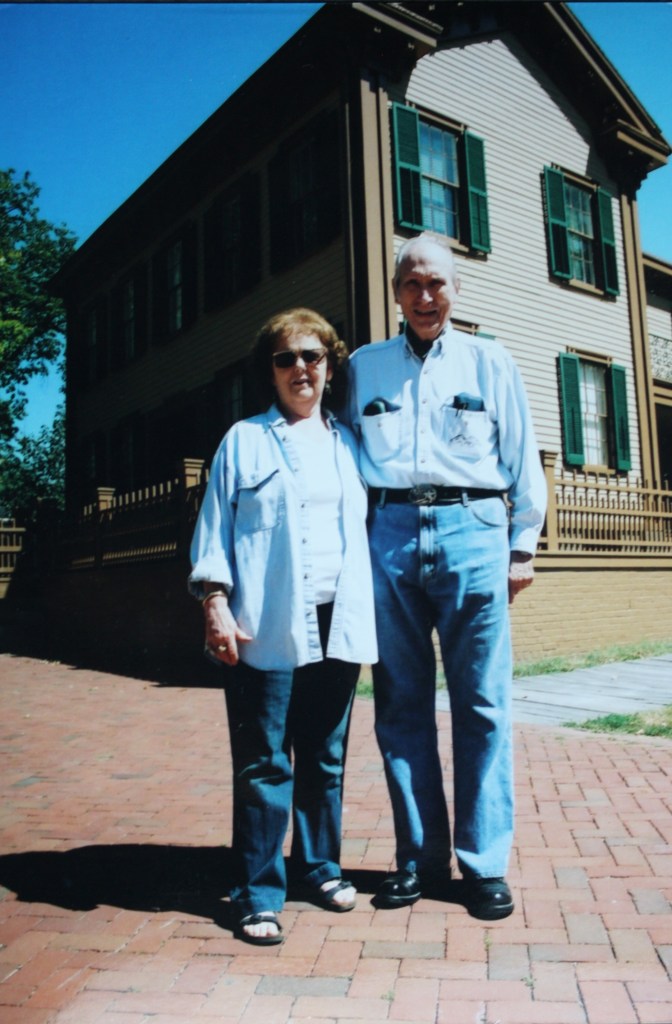
Sandy & Doc Temple in front of the Abraham Lincoln Home Springfield.

Temple’s published works remain the testament to his great energies and skill.  With wife Sunderine, a.k.a. Sandy, who for 40 years was a head docent at the Old State Capitol, he wrote Illinois’ Fifth Capitol: The House that Lincoln Built and Caused to Be Rebuilt (1837-1865) (1988), the standard work on its initiation, contracts, costs, furnishing, refurbishing, and historic moments such as Lincoln’s “House Divided” speech in 1858. In like vein he wrote up the Lincoln Home, in By Square and Compasses (1984; updated 2002). For shorter works he found or recovered the stories of people high and low, including Mariah Vance, the Lincolns’ African-American laundress; Barbara Dinkel, a German-born widow down the block; two Portuguese immigrants nearby; Robert Lincoln’s ability to play the piano; and father Abraham’s formal commission as an Illinois militia officer after the Black Hawk War of 1832, which he maintained throughout his life by attending the annual muster.  C. C. Brown, namesake of the oldest continuous business in Illinois – the law firm Brown, Hay, & Stephens (est. 1828) — offered some thoughts on working with Lincoln which Temple found and turned into a booklet in 1963.   Probably his most enduring book will be Abraham Lincoln: From Skeptic to Prophet (1995), on the religious views, which Temple called not merely a religious study but “really a biography of the Lincoln family.” Lincoln’s many connections to Pike County introduced a book about the area’s Civil War record; his trip through the Great Lakes in 1849 gave rise to a booklet about the Illinois & Michigan Canal and Lincoln’s patented invention. Some of the best of Temple’s 500 to 600 articles are being collected into a book edited by Steven Rogstad.
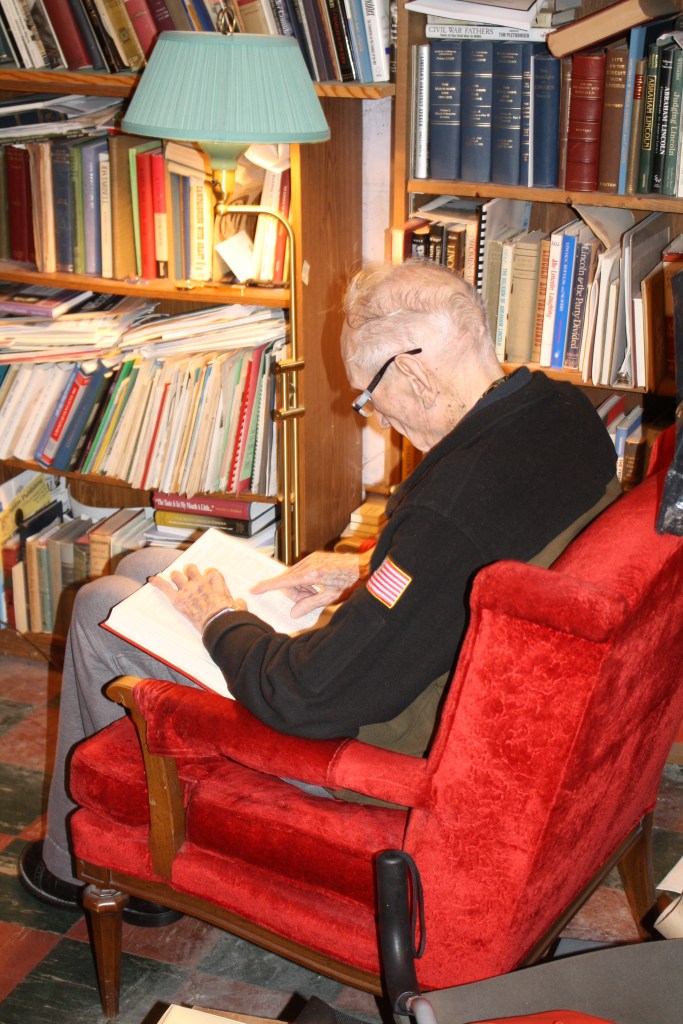
Doc at work in his basement library.

Personally Temple was highly generous, helping Sandy’s distant family when in need, serving as an Elder and teacher at the First Presbyterian Church, and endowing the UI Urbana History Dept. with funds from his estate. On behalf of wife Lois’s nephew, Temple headed a Boy Scout troop in town.  Doc gave his father’s canful of ancient Indian artifacts dug from the Ohio farm to the public library in Richwood, Ohio, as one of his last acts, though he could have sold them for many thousands of dollars. When Temple learned that his barber, a father of five, could not afford to send his bright youngest son to college, Temple spoke to Congressman Paul Findley, who got the young man appointed to the Academy at West Point, and a successful military career was launched.  Temple’s collection of 3,000 books is bound for UI Springfield’s Lincoln Studies Center, while his fine collection of artworks as well as personal papers will go to the Presidential Library and Museum.

Doc Temple and the author in their first meeting back in February of 2011.

In the opinion of the person who succeeds Temple as the dean of Lincoln historians, Prof. Michael Burlingame of UI Springfield, Doc “displayed an uncanny ability to unearth new information about Lincoln through painstaking research … For over eight decades, he tenaciously filled many niches in the Lincoln story.” His neighbor of 43 years, Sharon Miller, said, “Doc was simply a wonderful man. But he missed Sandy too much to keep going.”
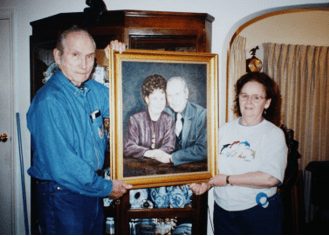
Doc and Sandy in their home holding Lloyd Ostendorf’s painting of the couple.

A memorial service will be held on Thursday, April 10th, at 10:00 a.m. at Staab Funeral Home, S. 5th St. in Springfield.  Burial will take place at 1:00 p.m. at Camp Butler National Cemetery, next to Sandy temple’s gravesite. A reception at the St. Paul’s #500 A.F. & A.M. Lodge on Rickard Drive will follow.
Civil War, Uncategorized

Where did you go Ambrose Bierce?

Original publish date September 26, 2024. https://weeklyview.net/2024/09/26/where-did-you-go-ambrose-bierce/

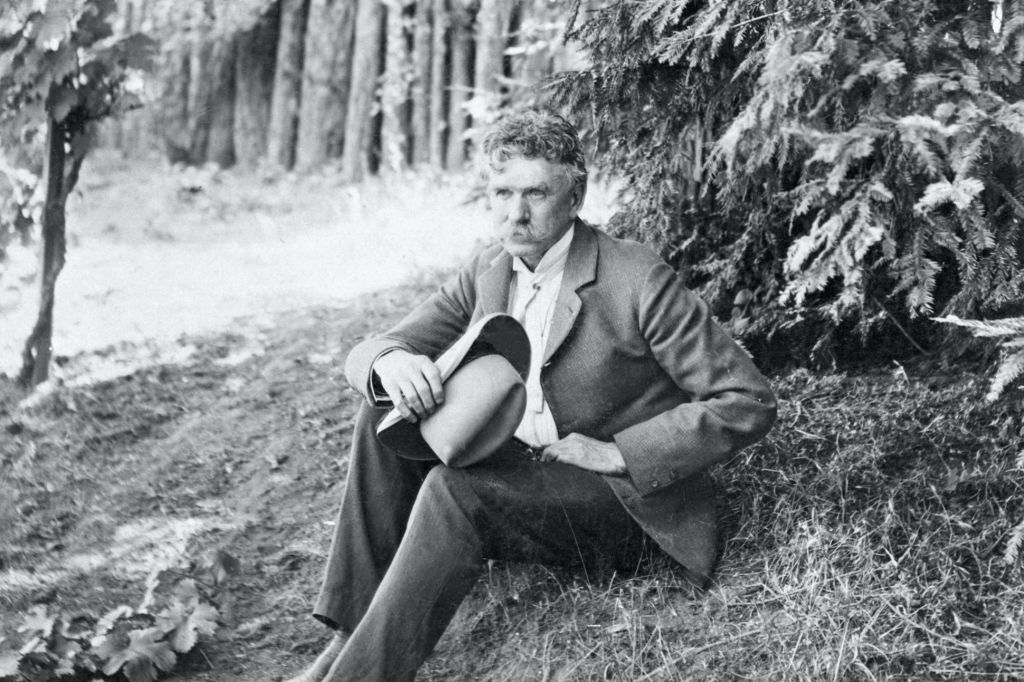
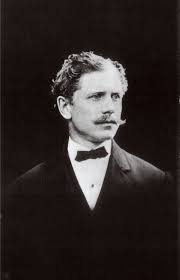
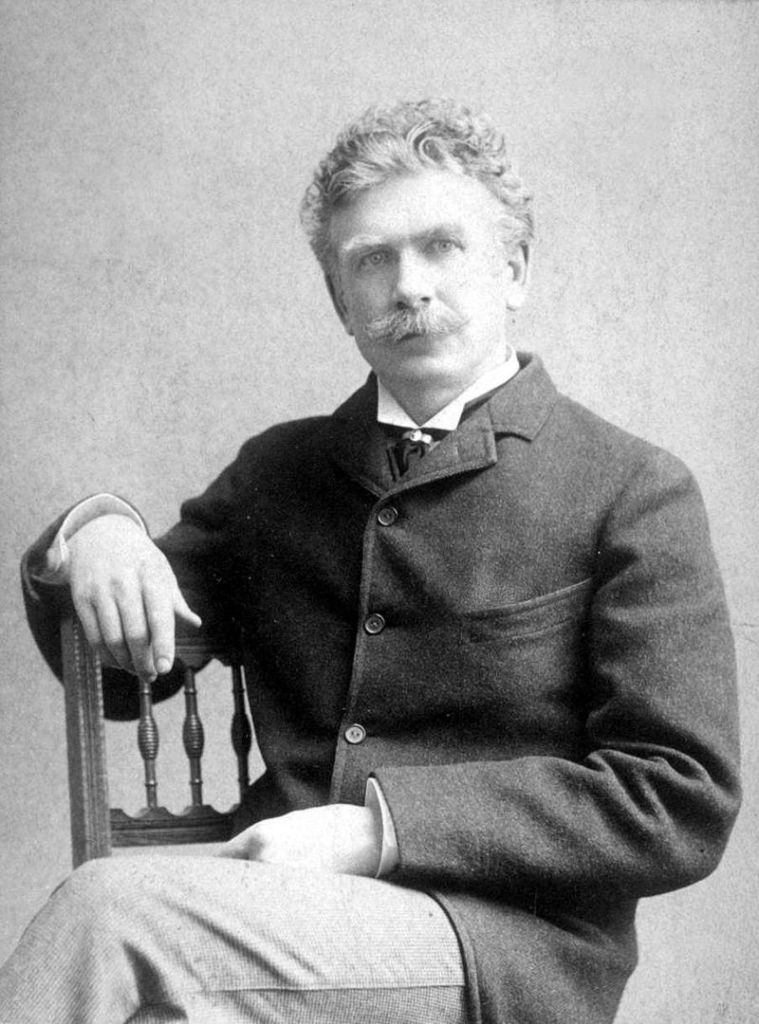
Ambrose Bierce 1892.

110 years ago last week, one of the most famous journalists you’ve never heard of disappeared from the face of the earth. Sometime between September 18-24, 1914, Ambrose Gwinnett Bierce was reported missing. And of course, he had Hoosier ties. Less than two weeks after the start of the Civil War, Bierce enlisted with the 9th Indiana on April 24, 1861, in Elkhart, Indiana. Bierce was born in a log cabin at Horse Cave Creek in Meigs County, Ohio, on June 24, 1842. Horse Cave Creek, “a religious settlement” southeast of Columbus, Ohio, is long gone. Bierce was the tenth of thirteen children, all of whom were given names by their father beginning with the letter “A”. As a child, Bierce moved from the Appalachian foothills of southeastern Ohio to the lake country of northern Indiana. His parents were a poor but literary couple who instilled in him a deep love for books and writing. Bierce grew up in Kosciusko County, Indiana, attending high school at the county seat in Warsaw. He left home in 1857 at age 15 to become a “printer’s devil” at a small abolitionist newspaper in Warsaw: the Northern Indianan. A printer’s devil was an indentured servant who performed many thankless tasks, including mixing tubs of ink and fetching type. Bierce was in good company: Benjamin Franklin, Walt Whitman, Bret Harte, and Mark Twain were all printer’s devils.

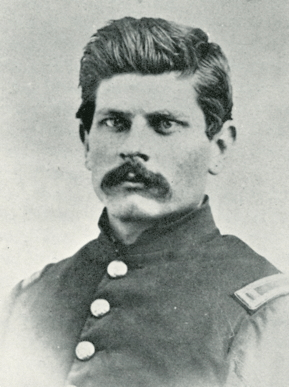
Lt. Ambrose Bierce 9th Indiana.

While with the 9th Indiana, Bierce served in Western Virginia and was present at the Battle of Philippi (the first organized land action of the war in June of 1861). Bierce received his first media attention for his daring rescue, under fire, of a gravely wounded comrade at the Battle of Rich Mountain. Later, he fought at the Battle of Shiloh (April 1862), which he would write about in the memoir “What I Saw of Shiloh”. Within two years Bierce was serving on the staff of General Wm. Hazen. Here he became known to leading generals such as George H. Thomas and Oliver O. Howard, both of whom recommended him for admission to West Point in May 1864. General William T. Sherman also endorsed his application for admission. In June 1864, Bierce sustained a traumatic brain injury at the Battle of Kennesaw Mountain and spent the rest of the summer on furlough. By the end of the war, Bierce rejoined Gen. Hazen to inspect military outposts across the Great Plains, ending in San Francisco, where he was awarded the rank of brevet major before resigning from the Army.

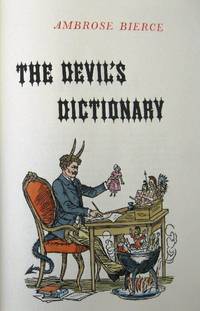
The Devil’s Dictionary 1881.

Bierce remained in San Francisco for many years, becoming famous as a contributor or editor of newspapers and periodicals. He eventually graduated to the historical novels he is most remembered for today. His book The Devil’s Dictionary was named one of “The 100 Greatest Masterpieces of American Literature” by the American Revolution Bicentennial Administration. The book first took form as a serialized newspaper column before being published as a book. The book contains satirical definitions of English words that lampoon political double-talk. The book was volume seven of a twelve-volume set called “The Collected Works of Ambrose Bierce” published from 1909 to 1912. Bierce was a pioneer in realist fiction, his horror writing prowess rivaled Edgar Allan Poe, and his satire equals his peer, Mark Twain. Bierce’s sharp tongue and penchant for biting social criticism and satire often placed him at odds with his publisher William Randolph Hearst. His poetry could be equally caustic as when one of his poems about the assassination of William McKinley in 1901 sparked a national outcry.

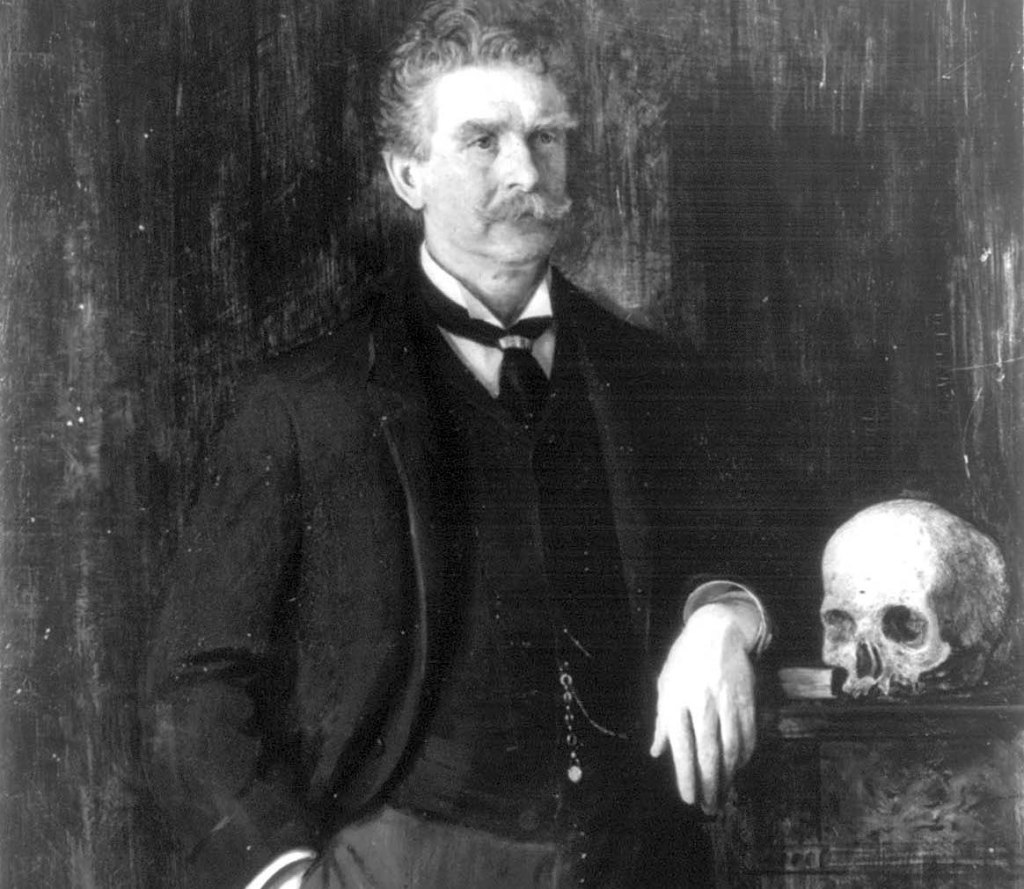
Ambrose Bierce.

Bierce’s most notable work came at the close of the Gilded Age. From 1888 to 1891 he wrote a rapid succession of short stories centering around the inscrutability of the universe and the absurdity of death. Many of those realistic themes came from the terrible things Bierce had seen on the battlefield. His collection of 25 war stories including “An Occurrence at Owl Creek Bridge”, “A Horseman in the Sky”, “One of the Missing”, and “Chickamauga” has been called “the greatest anti-war document in American literature”. Nothing infuriated Bierce more than hearing grandiose accounts of honor and glory of war from people who’d never seen or experienced it personally. His psychological horror story “An Occurrence at Owl Creek Bridge” has been described as “one of the most famous and frequently anthologized stories in American literature”, and his book “Tales of Soldiers and Civilians” was named by the Grolier Club one of the 100 most influential American books printed before 1900. Ernest Hemingway and Stephen King were among the many he influenced.

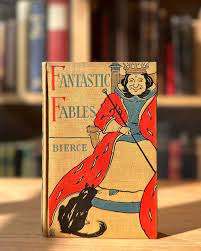
Bierce’s Fantastic Fables 1899.

BIerce’s “Fantastic Fables” book and his many ghost stories were the precursors of the grotesquerie that became a more common genre in the 20th century. Bierce liked nothing better than to shock his audience by challenging their minds on the way to a surprise ending. No better example can be found than his “An Occurrence at Owl Creek Bridge”. Written in 1890 and set during the Civil War, the short story climaxes when Peyton Farquhar, a wealthy Alabama planter and slave owner, is about to be executed by hanging from a railroad bridge as a company of Union infantrymen guards the bridge to carry out the sentence. In his final moments, Farquhar thinks of his wife and children but is suddenly distracted by an unbearably loud clanging. It is the ticking of his watch. He ponders the possibility of unfreeing his hands and jumping from the bridge to swim to safety, but the soldiers drop him off the bridge before he can act on the idea.

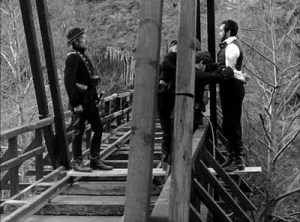
A scene from “An Occurrence at Owl Creek Bridge”

Farquhar flashes back to a time when he and his wife are relaxing at home one evening as a Rebel soldier rides up to the gate and tells Farquhar that Union troops have seized the Owl Creek railroad bridge. The soldier suggests that Farquhar might be able to burn the bridge down if he can slip past its guards. The soldier is in reality a Union scout setting a trap for Farquhar knowing that any civilian caught committing such an act will be hanged as a spy. Farquhar snaps back to the present and falls into the creek after the rope around his neck breaks. He frees his hands, pulls the noose off, and rises to the surface to begin his escape. He dodges, dives, and swims downstream to avoid rifle and cannon fire. Once out of range, he begins the frantic 30-mile journey back home. While Farquhar walks through endless forests day and night, he begins to hallucinate, seeing strange constellations and hearing whispered voices in an unknown language. He trudges on, driven by the thought of his wife and children despite the pain of his ordeal. The next morning he arrives at the gate to his plantation and rushes forward to embrace his wife, but before he touches her, he feels a heavy blow upon the back of his neck. There is a loud noise and a flash of white and “then all is darkness and silence!” Bierce reveals that Farquhar never escaped at all. His escape was an imagination, his journey home a momentary ripple in time experienced during the moment between his drop from the bridge and the noose breaking his neck.

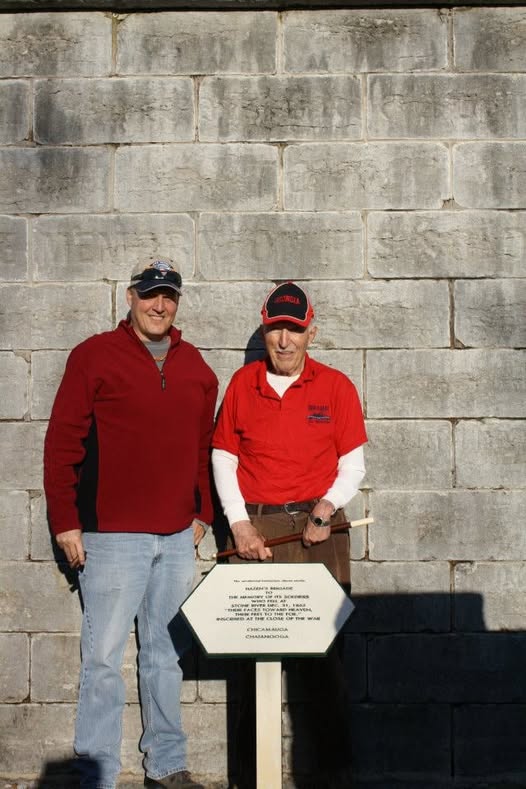
Alan E. Hunter & Edd Bearrs.

Bierce continued writing and pushing the outside of the envelope for the rest of his life. Since much of Bierce’s writing centered on the Civil War, about a decade ago I asked National Parks Historian Emeritus Ed Bearrs about Bierce. I was sharing a beer with Mr. Bearrs in a hotel bar just after touring the Stone’s River battlefield between Murfreesboro and Nashville, Tennessee. Mr. Bearrs, who passed in 2020, was a man of few words. In this instance, he paused before answering, taking a pull from his bottle of Budweiser beer, and said, “What do I think of Ambrose Bierce? I think he was a grade-A Bull-sh_ _ artist.” Which elicited laughter from me and the few others at the table.

Ambrose Bierce.

In 1913, at age seventy-one, he left Washington, D.C. to tour his old familiar Civil War battlefields. Within a short time, Bierce changed his mind and decided to chase Pancho Villa’s army to gain first-hand experience of the Mexican Revolution. Bierce traveled to Mexico to witness (and some say become a part of) the revolution. By December he had passed through Louisiana and Texas, entering Mexico via El Paso. In Ciudad Juárez he joined Pancho Villa’s army as an observer, and in that role, he witnessed the Battle of Tierra Blanca. It was reported that Bierce accompanied Villa’s army as far as the city of Chihuahua. His last known communication with the world was a letter he wrote there to Blanche Partington, a close friend, dated December 26, 1913. After closing this letter by saying, “As to me, I leave here tomorrow for an unknown destination.” And that was the last anyone ever heard of Ambrose Bierce. He vanished without a trace, one of the most famous disappearances in American literary history. No one knows where, when, or under what circumstances he met his end.

The U.S. consular opened an official investigation into the disappearance of one of its citizens. Some of Villa’s men were questioned but they all gave contradictory accounts. Local legend, documented by priest James Lienert, states that Bierce was executed by firing squad in the cemetery of the town of Sierra Mojada, Coahuila. Bierce’s ultimate fate remains a mystery. He wrote in one of his final letters: “Good-bye. If you hear of my being stood up against a Mexican stone wall and shot to rags, please know that I think it is a pretty good way to depart this life. It beats old age, disease, or falling down the cellar stairs. To be a Gringo in Mexico–ah, that is euthanasia!” His body was never recovered.

Abe Lincoln, Civil War

99 Birthday Cards for Doc.

https://weeklyview.net/2023/02/02/99-birthday-cards-for-doc/

PLEASE SHARE!

February 5, 2023.

Friends, please consider joining me in a project celebrating the 99th birthday of the Dean of all Abraham Lincoln scholars from Springfield, Illinois:

Dr. Wayne C. “Doc” Temple.

I have been working on a biography of Doc for some time now. For nearly 70 years, Doc has researched, written, and published more than 20 books and over 300 articles on Abraham Lincoln, the Civil War, Indigenous tribes, and Midwest history. Along the way, Doc has graciously volunteered his time, knowledge & wisdom with countless students and scholars along the way. Most of today’s Lincoln scholars have consulted Doc for facts in their work.

This will be Doc’s first birthday since losing Sandy, his wife of 42 years, last March. Doc is a member of America’s greatest generation having fought bravely for the United States in the European theatre, once actually standing in an open road firing a Thompson Sub-machine gun at a German fighter plane strafing his unit. He is an amazing man.

I ask that you join me in sending a birthday card or friendly note to Doc (he doesn’t do e-mail) in time for his 99th birthday (February 5, 2023) in care of the address below. Please share this humble announcement to your page and we’ll see if we can’t get 99 cards for Doc’s 99th birthday. His personal archives will be donated to the Abraham Lincoln Presidential Library and Museum in Springfield and these birthday cards will be preserved among that collection. Thank you for your consideration.

Wayne “Doc” Temple

c/o Books on the Square

427 East Washington Street

Springfield, IL 62701

————–

Doc’s historical resume is unchallenged. In my opinion, he is our nation’s greatest living Lincoln scholar. I am just one of the legion of Lincoln scholars he has helped and encouraged along the way. Doc served as chief deputy director of the Illinois State Archives for over 50 years (1964-2016), Secretary-treasurer of the National Lincoln-Civil War Council during the 100th anniversary Centennial years (1958-1964),  and editor / associate of the Lincoln Herald since 1973.

I have listed Doc’s “resume” below. As you can see, it is quite impressive.

Doc’s education credentials & historical resume:

AB cum laude, University of Illinois, 1949; AM, University of Illinois, 1951; Doctor of Philosophy, University of Illinois, 1956; Lincoln Diploma of Honor (Illinois’ highest civilian award), Dean of history at Lincoln Memorial U., Harrogate, Tennessee, 1963. Wayne Calhoun Temple has been listed as a noteworthy Historian by Marquis Who’s Who.

Curator ethnohistory, Illinois State Museum, 1954-1958; editor-in-chief, Lincoln Herald, Lincoln Memorial U., 1958-1973; associate editor, Lincoln Herald, Lincoln Memorial U., since 1973; also director department Lincolniana, director university press, John Wingate Weeks professor of history, Lincoln Herald, Lincoln Memorial U., 1958-1964; with, Illinois State Archives, since 1964; chief deputy director, Illinois State Archives. Lecturer United States Military Academy, 1975. Secretary-treasurer National Lincoln-Civil War Council, 1958-1964.

Member bibliography committee Lincoln Lore, since 1958. Honorary member Lincoln Sesquicentennial Commission, 1959-1960. Advisory council United States Civil War Centennial Commission, 1960-1966.

Major Civil War Press Corps, since 1962. President Midwest Conference Masonic Education, 1985.

Doc’s books include:

Lincoln the Railsplitter 1961. (listed in the top 100 Lincoln books ever written)

Stephen A. Douglas, freemason Stephen A. Douglas, Freemason.

Abraham Lincoln and Others at the St. Nicholas.

Lincoln’s Confidant: The Life of Noah Brooks (The Knox College Lincoln Studies Center) by Wayne C. Temple, Douglas L. Wilson, et al. / Nov 30, 2018

Abraham Lincoln: From Skeptic to Prophet 1st Edition by Wayne C. Temple (1995)

Alexander Williamson: Friend of the Lincolns (Special publication)

Lincoln’s Surgeons at His Assassination Hardcover – October 29, 2015

BY SQUARE AND COMPASS: THE BUILDING OF LINCOLN’S HOME AND ITS SAGA.

Lincoln-Grant: Illinois militiamen Lincoln-Grant: Illinois militiamen

Indian Villages of the Illinois Country: Historic Tribes (Scientific Papers, Vol 2, Pt 2)

Membership:

Sponsor Abraham Lincoln Bay, Washington National Cathedral. Member Illinois State Flag Commission, since 1969. Trustee, regent Lincoln Academy Illinois, 1970-1982, Bicentennial Order Lincoln, 2009.

Board governors St. Louis unit Shriners Hospitals for Crippled Children, 1975-1981. Commissioning committee, honorary crew member and plank owner United States Ship Springfield submarine, since 1990. Honorary crew member United States Ship Abraham Lincoln aircraft carrier, since 1989.

With United States Army, 1943-1946, general Reserve (retired). Fellow Royal Society Arts (life). Member National Rifle Association, Knight Templar (Red Cross Constantine), Lincoln Group District of Columbia (honorary), University Illinois Alumni Association, Illinois State History Society, Board of Advisors, The Lincoln Forum, Illinois Professional Land Surveyors Association, Illinois State Dental Society (citation plague 1966), Reserve Officers Association, Lincoln Fellowship of Wisconsin, Iron Brigade Association (honorary life), Military Order Loyal Legion United States (honorary companion), Military Order Foreign Wars United States, Army and Navy Union, Masons (33 degree, Meritorious Service award, grand representative from Grand Lodge of Colorado), Shriners, Kappa Delta Pi, Phi Alpha, Phi Alpha Theta (Scholarship Key award), Chi Gamma Iota, Phi Beta Kappa, Tau Kappa Alpha, Alpha Psi Omega, Sigma Pi Beta (Headmaster), Sigma Tau Delta (Gold Honor Key award for editorial writing), Zeta Psi.

Abe Lincoln, Assassinations, Civil War, Criminals

Pink Parker and his Monument to John Wilkes Booth.

https://www.digitalindy.org/digital/collection/twv/id/3538/rec/151

Original Publish Date August 26, 2021. https://weeklyview.net/2021/08/26/pink-parker-and-his-monument-to-john-wilkes-booth/

Recently, I ran across an obscure booklet about a little-known episode in the post-assassination chronology of Abraham Lincoln. Surprisingly it was published and distributed by a man named Stewart Winning McClelland (1891-1977) a self-described “Sponsor” of Dale Carnegie courses from Indianapolis. More surprising is the fact that it was published exactly 70 years ago on August 28, 1951. The booklet is titled “A Monument to The Memory Of John Wilkes Booth.” Now THAT got your attention, didn’t it

The booklet tells the story of a cranky old Rebel from Troy Alabama named Joseph Pinckney “Pink” Parker, born August 16, 1839, and died December 12, 1921. Parker, a former police officer and veteran of the Confederate Army, was often described in the local newspaper as “the bitterest Rebel in the South.” Almost immediately after graduating from Springhill Academy in Coffee County Alabama, the Civil War broke out and Pink enlisted in the Confederate Army. He left his family’s well-stocked plantation, a sister, and a bevy of slaves when he left for the front lines.
Parker served in Company A of the Second Georgia Battalion Infantry, Wright’s Brigade, Mohone’s Division of AP Hill’s Corps of the Army of Northern Virginia. During Parker’s four years of service, he rose to the rank of Corporal and fought at the battles of Gettysburg, the Wilderness, Spotsylvania, Cold Harbor, Petersburg, and Appomattox: many of the fiercest battles of the Civil War.
Four years later, when the war ended, Pink returned to find the “farm overgrown with weeds, his stock and slaves disappeared and his sister imbittered by her treatment received at the hands of the northern soldiers.” The family estate was soon “eaten up” by taxes and the former Rebel soldier was forced to take a position as a “walker” on the railroad tracks carrying with him “maul and spikes to keep the tracks repaired.” Parker grew to hate everything “Yankee”, blaming President Abraham Lincoln for the social and economic distress throughout the South and for Reconstruction, which he considered the continued destruction of the South.
Parker married and bought a farm near Inverness, Florida, but found farm life there hard and unforgiving. He moved his wife and three children to a house he bought on Madison Street in Troy. For years he earned a hardscrabble living on his meager salary as a grocery store clerk, policeman, and cotton compress worker. Eventually, he became a schoolteacher in Troy, where he built a comfortable home a short distance from the famed Natchez trace “which Andrew Jackson used in his battles against the Indians in Florida.”

The booklet describes Pink as a well-respected member of his community and a devout member of the Baptist Church with just one single vice: a deep-seated hatred for Abraham Lincoln. As Lincoln’s legend began to move towards secular sainthood, in both the North and the South, Pink Parker’s wrath grew year by year into a compulsion. Whenever Lincoln’s name was mentioned, Pink would burst forth with impassioned flights of profanity that astonished and shocked his friends and family. So bad were these outbursts that his pastor at the Baptist Church removed him from the church roles for his profanity. In a situation that Pink described, “It wasn’t quite fair. I know all the deacons in that church and any one of them can cuss better than I can.”
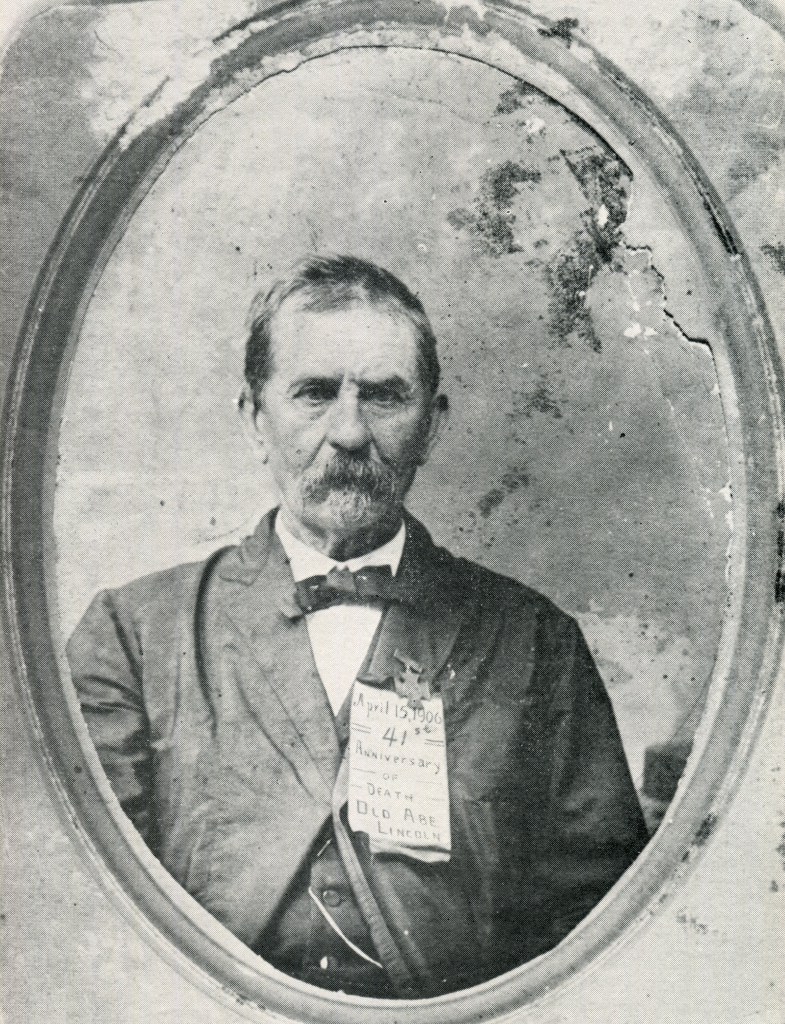
His expulsion from the church proved to be the capstone of Parker’s Lincoln hatred. Parker’s wife died in 1893 and his children moved away. From that point on, every April 15th, Pink would fashion for himself a paper badge and ribbon celebrating the “Anniversary of the Death of old Abe Lincoln.” Occasionally, Pink would memorialize these otherwise sad anniversaries by walking into the local photography studio to have his picture made wearing the offensive badge. As years passed, the idea came into his head that he would erect a monument to the memory of John Wilkes Booth. As unthinkable and repulsive as the idea sounds to our modern ears, Pink indeed put his plan into action.
The monument, standing approximately 4 feet high, resembled a typical graveyard headstone found in any Alabama burying ground around the state. Pink was always quick to note that he never took the oath of allegiance after the Civil War and he personally never surrendered. The stone bore the inscription: “Erected by Pink Parker in honor of John Wilks Booth, for killing old Abe Lincoln.” It is interesting to note that the old Rebel misspelled the cowardly assassin’s name on his memorial, fitting for such an unpopular, shortsighted memorial.

He first offered his ghastly memorial to the city of Troy to be placed in front of the Pike County Courthouse or in a public park. When the city quickly declined his invitation, he installed the monument in his front yard on Madison Street. It wasn’t long before local vandals turned their attention to the stone, defacing it. Soon Parker erected a board fence to protect it. Although newspapers from the 1920s stated that the stone had been erected in 1866, Pink placed the marker in 1906. Pink told his grandsons that he invited President Theodore Roosevelt to the stone’s dedication with a postcard stating that “while I can’t furnish a carriage for you, I could get you a dray hauled by a couple of mules.”
When those same grandsons asked their grandfather how he was going to get along with all those Yankees when he got to heaven, Pink would say, “Well, I don’t suppose I will find enough up there to bother me.” Pink Parker always believed that John Wilkes Booth was still alive, that Booth did not die from Boston Corbett’s shot through the neck in the Garrett tobacco barn. A belief principally subscribed to by only the most avowed skeptics, conspiracy theorists, and carnival sideshow aficionados of the era.

Pink Parker’s House.

Parker became ill and, in 1918, his son, Eugene, moved his father to Sardis, Georgia. Parker deeded his home to his three children. They sold it in 1920. In 1921 emotions over Pink’s distasteful display reached a boiling point. The local president of the Alabama Women’s League of Republican Voters, Mrs. C.D. Brooks, instigated a campaign to have the monument removed permanently. Letters poured in from all over the country supporting her stand. Then sometime around Halloween, a group of local boys pulled down the marker as a prank. The Booth monument lay half-buried in the dirt as weeds slowly overtook it.
In 1921, the Troy Messenger received a large volume of indignant letters and the National Sons of Union Veterans wrote to President Waren G. Harding demanding the monument be removed and destroyed. The added attention and the age of the automobile soon brought souvenir hunters to the little town of Troy. These eager relic collectors began to chip away pieces of the stone. The Troy Messenger reported on July 13, 1921, that the monument had been removed by order of the town council. It was hidden away out of sight and mind in a shed and forgotten.

The recarved Booth Marker.

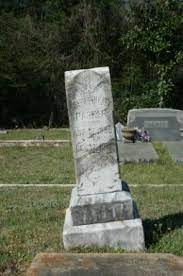
In the midst of the furor, the half-blind, sick, and forgotten Pink Parker passed away in December of 1921 at the age of 82. His body was brought back to Troy and buried next to his wife. His sons retrieved the stone from cold storage and had it re-carved. The inscription honoring Booth was removed from the monument and it was fashioned into his tombstone, his name and birth/death dates on one side and the details of his service in the Confederate Army listed on the other. Confederate veterans served as his pallbearers.

Pink’s Grave Marker Today.

Historians have long realized how much the South lost by the killing of Abraham Lincoln. Lincoln was the one man who might have reunited a broken country. The one man who could have allayed sectional hostilities and rebuilt a nation. Pink Parker was on the wrong side of history. But Pink Parker did not care. Today, the former Booth monument can be seen on Parker’s grave in Oakwood Cemetery, located on North Knox Street in Troy. The gravestone stands on a downward slope in the farthest regions of the cemetery. There is no trace of the former writing, no indication that it ever honored assassin John Wilkes Booth. Perhaps fittingly, Pink Parker’s grave marker lists to the larboard side, forever tilted, just like the man it honors.