Art, Indianapolis, World War II

Nazi Ideology on the Eastside; a Continuance.

Original publish date June 19, 2025.

https://weeklyview.net/2025/06/19/nazi-ideology-on-the-eastside-a-contnuance/

Last March, I wrote a two-part article on Eastsider Charles Soltau, the “Nazi at Arsenal Tech”. This Saturday (June 21st) at noon, I will revisit those articles on Nelson Price’s “Hoosier History Live” radio show WICR 88.7 FM. Nelson, a longtime friend of Irvington, has a personal connection to that story, which he will share for the first time ever during that broadcast. As it happens, weeks after that article appeared, quite by accident, I ran across a few documents that spoke directly to that time in Indianapolis history.
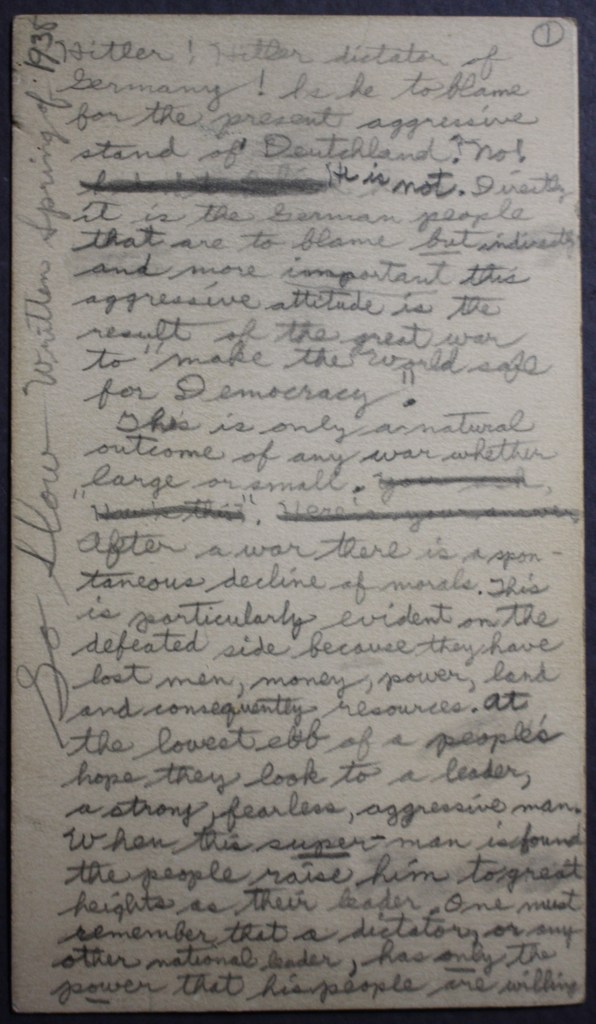
Card # 1

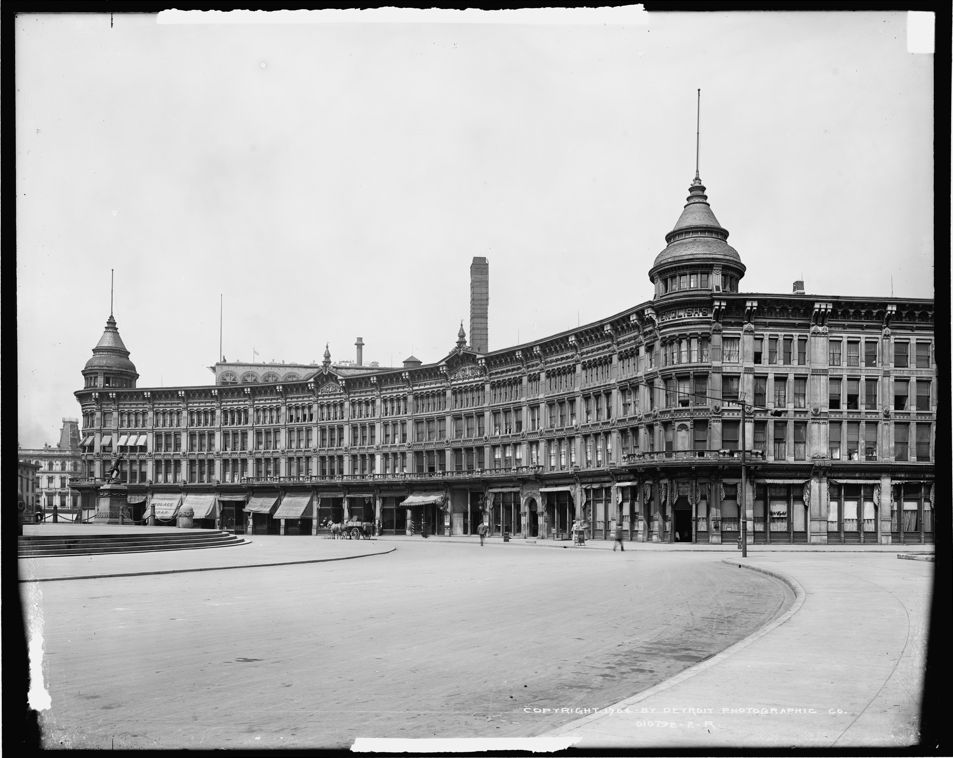
While perusing a few boxes of vintage paper at a roadside antiques market, I found a pair of cards from February 1938, advertising one of the first 35 mm camera photo exhibitions in Indianapolis at the Hotel Lincoln. The Hotel Lincoln, built in 1918, was a triangular flat-iron building located on the corner of West Washington St. and Kentucky Ave. The hotel was named in honor of Abraham Lincoln, who made a speech from the balcony of the Bates House across the street in 1861. Afterwards, that block became known as “Lincoln Square.” The Hotel displayed a bust of Abraham Lincoln on a marble column in its lobby for decades. The Lincoln was a popular convention center and was once the tallest flat-iron building in the city. The Lincoln was the site of the arrest of musician Ray Charles (a subject covered in depth in one of my past columns). It also served as the headquarters for Robert Kennedy and his campaign staff, who leased the entire eleventh floor of the hotel during the 1968 Indiana primary. The Lincoln was intentionally imploded in April of 1973.
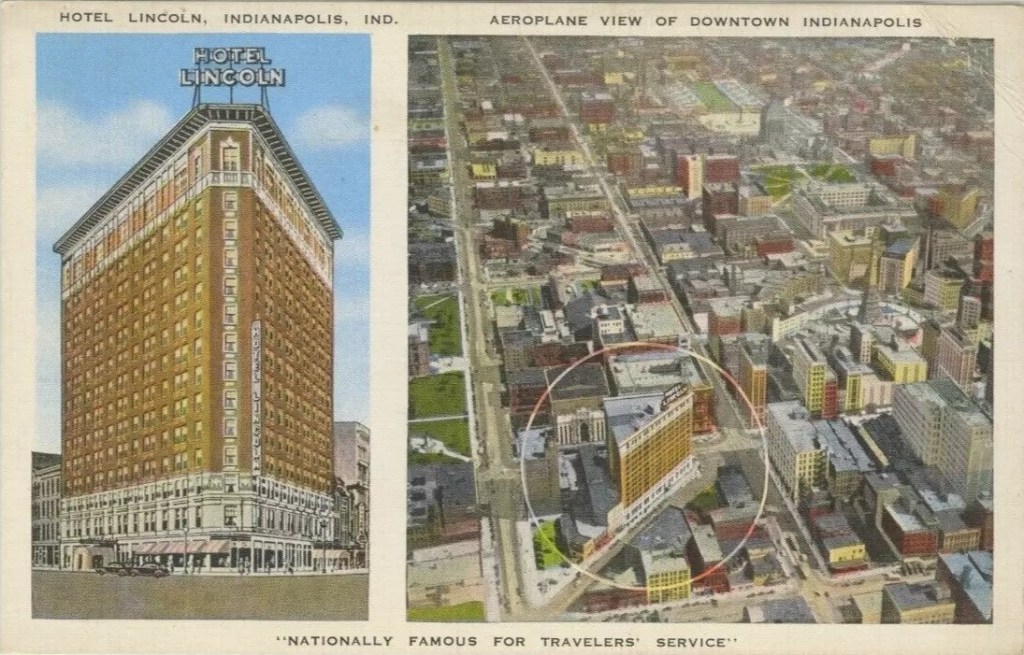
Hotel Lincoln Postcard.

It was the Hotel Lincoln’s history that originally piqued my interest. The front of each card read, “You are invited to attend the Fourth International Leica Exhibit on display in the Hotel Lincoln, Parlor A, Mezzanine Floor, Indianapolis, Ind., from February 23 to 26 [1938], inclusive. Hours: 11 A.M. to 9 P.M. (on February 26, the exhibit will close at 5 P.M.) More than 200 outstanding Leica pictures will be on display, representing the use of the camera in various fields…Candid, Amateur, Commercial, Press and Scientific Photography. Do not fail to view this show which represents the progress in miniature camera photography throughout the year. Illustrated Leica Demonstration will be given at the American United Life Insurance Co., Auditorium, Indianapolis, February 24, 8:30 P.M. by Mrs. Anton F. Baumann. ADMISSION FREE. E. Leitz, Inc. New York, N.Y.” Research reveals that the winner of the contest was W.R. Henkel, who resided at 2936 E. Washington Street. Henkel received the Oscar Barnak Medal, named for the inventor of the Leica camera.
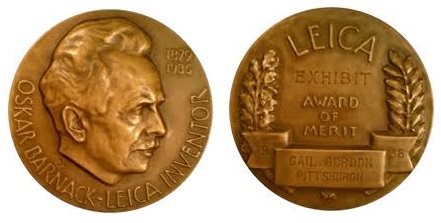
Oscar Barnak Leica Exhibition Medal.

The Leica was the first practical 35 mm camera designed specifically to use standard 35 mm film. The first 35 mm film Leica prototypes were built by Oskar Barnack at Ernst Leitz Optische Werke, Wetzlar, in 1913. Some sources say the original Leica was intended as a compact camera for landscape photography, particularly during mountain hikes, but other sources indicate the camera was intended for test exposures with 35mm motion picture film. Leica was noteworthy for its progressive labor policies which encouraged the retention of skilled workers, many of whom were Jewish. Ernst Leitz II, who began managing the company in 1920, responded to the election of Hitler in 1933 by helping Jews to leave Germany, by “assigning” hundreds (many of whom were not actual employees) to overseas sales offices where they were helped to find jobs. The effort intensified after Kristallnacht in 1938, until the borders were closed in September 1939. The extent of what came to be known as the “Leica Freedom Train” only became public after his death, well after the war.
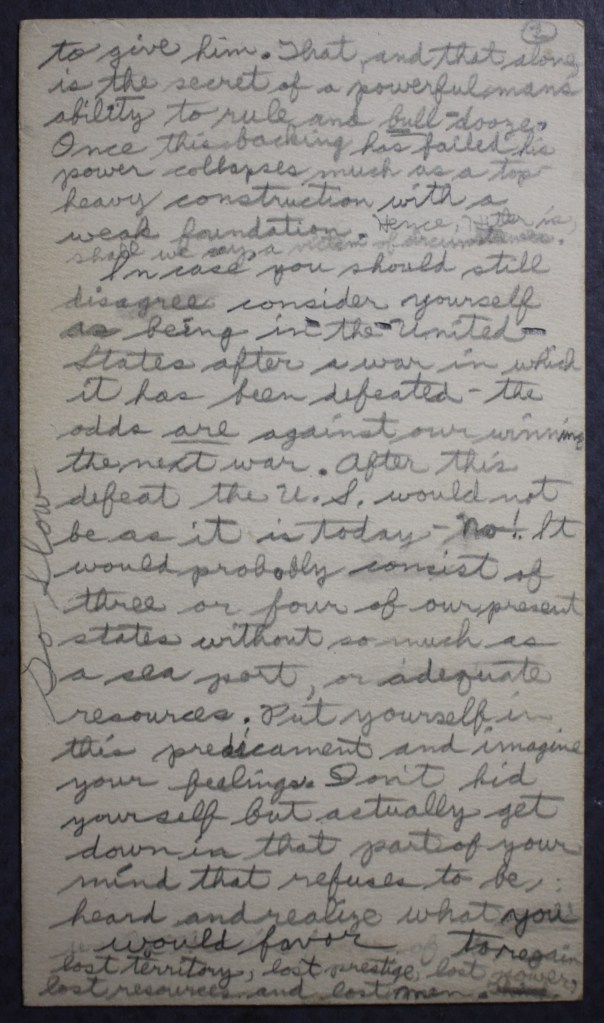
Card # 2

While my interest was drawn to the printed text, it was the handwritten pencil notations on the back of the cards that sparked that purchase. The cards contained a contemporary essay about the political atmosphere in the Circle City less than a month after the Soltau family’s Nazi incident. Written in pencil, the cards, numbered 1 and 2, read: “Hitler! Hitler Dictator of Germany! Is he to blame for the present aggressive stand of Deutchland? No! He is not. Directly, it is the German people that are to blame but additionally and more importantly, this aggressive attitude is the result of the great war to “make the world safe for Democracy!!” This is only a natural outcome of any war, whether large or small. After a war there is a spontaneous decline of morals. This is particularly evident on the defeated side because they have lost men, money, power, land, and consequently, resources. At the lowest ebb of a people’s hope they look to a leader, a strong, fearless, aggressive man. When this superman is found, the people raise him to great heights as their leader. One must remember that a dictator, or any other national leader, has only the power that his people are willing to give him. That, and that alone, is the secret of a powerful man’s ability to rule and bulldoze. Once the backing has failed, his power collapses much as a top-heavy construction with a weak foundation. Hence, Hitler is, shall we say, a victim of circumstance. In case you should still disagree, consider yourself as being in the United States after a war in which it has been defeated; the odds are against ever winning the next war. After this defeat the U.S. would not be as it is today. It would probably consist of three or four of our present states without so much as a seaport or adequate resources. Put yourself in this predicament and imagine your feelings. Don’t kid yourself but actually get down in that part of your mind that refuses to be heard and realize what you would favor to regain lost territory, lost prestige, lost power, lost resources, and lost men.”
Card # 3

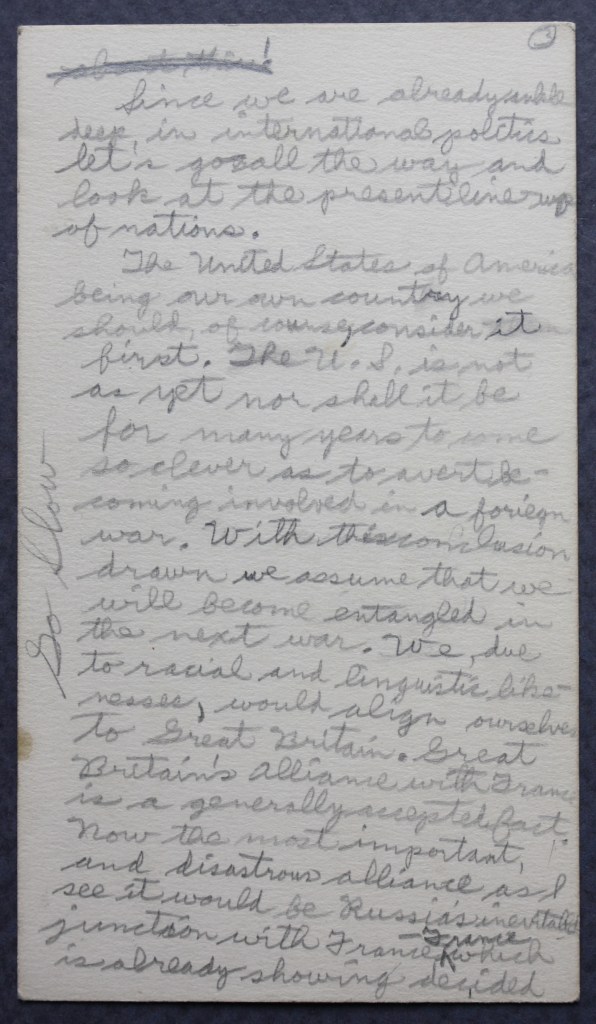
The next week, I revisited that roadside market. Lo and behold, the same dealer was there, and he brought more boxes of paper. I found two more of those cards, numbered 3 & 7, with more of that essay featured on the reverse. “Since we are already ankle deep in international politics, let’s go all the way and look at the present lineup of nations. The United States of America, being our own country, we should, of course, consider it first. The U.S. is not as yet, nor shall it be for many years to come so clever as to ever become involved in a foreign war. With this conclusion drawn, we assume that we will become entangled in the next war. We, due to racial and linguistic likenesses, would align ourselves to Great Britain. Great Britain’s alliance with France ia a generally accepted fact . Now the most important and, disastrous as I see it, would be Russia’s inevitable junction with France, which is already showing decided…Couldn’t we be a little more consistent one way or the other?”
Card # 7

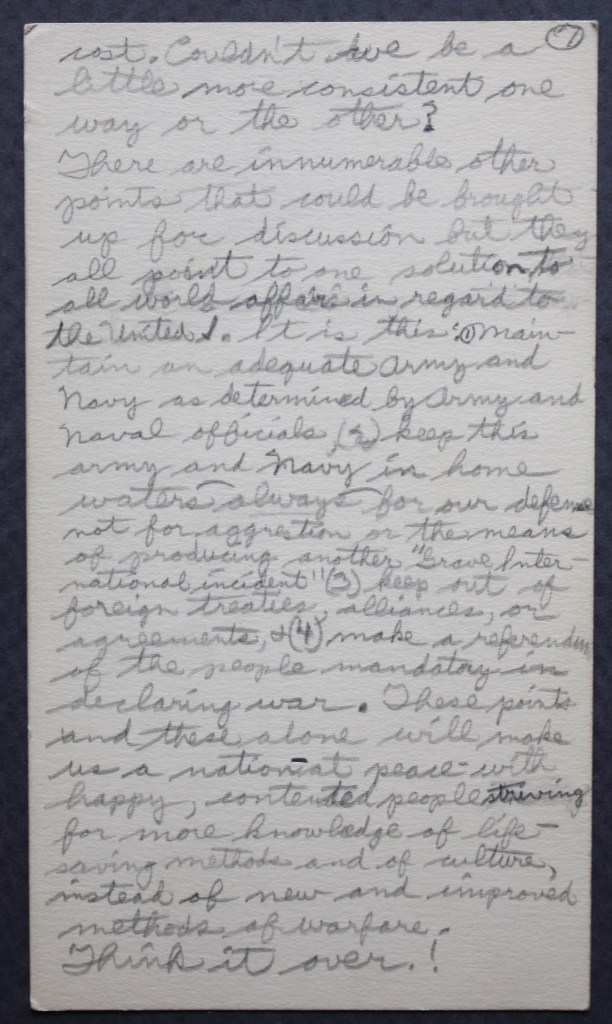
There are innumerable other points that could be brought up for discussion, but they all point to one solution to all world affairs in regard to the United States. (1) It is this: maintain an adequate army and navy as determined by Army and Navy officials. (2) Keep this army and navy in home waters always for our defense and not aggression or the means of producing another “Grave international incident.” (3) Keep out of foreign treaties, alliances, or agreements. (4) Make a referendum of the people mandatory in declaring war. These points, and these alone, will make us a nation at peace with happy, interested people striving for more knowledge of lifesaving methods and of culture, instead of new and improved methods of warfare. Think it over!”
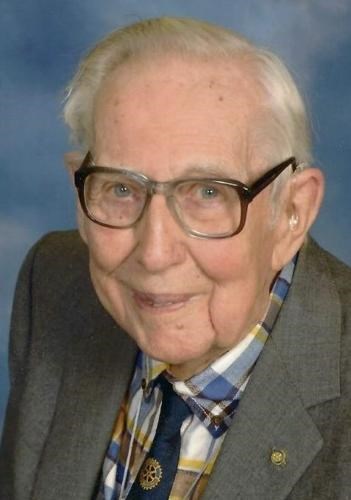
Robert W. Shoemaker, Jr. (1921-2022)

All four of these cards were authored (and signed) by Bob Shoemaker, Jr. of Anderson, IN. Robert W. Shoemaker, Jr. (1921-2022) Bob was born in New Philadelphia, Ohio, the only child of Robert W. Shoemaker, Sr. (1898-1968) and Irene English Shoemaker (1900-1988). The family moved to Anderson in 1935. Shortly after settling in Indiana, Bob became a Boy Scout. While attending the 1937 National Boy Scout Jamboree in Washington DC, Bob received his Eagle Scout award. It is likely that the seeds of this essay were planted when he sailed to Europe to participate in the 1937 World Jamboree in the Netherlands. Here, young Bobby Shoemaker witnessed the changes taking place in Hitler’s Germany firsthand. After graduating from Anderson High School in 1939, Bob enrolled in Harvard College and was on course to graduate with the Class of 1943 when the war came calling. Among Bob’s hobbies and interests were amateur radio, reading, history, and photography. Through slides, home movies, and videos, Bob compiled a remarkable visual history of his life and the life of his family from the 1920s to the current century. His many slides and movies taken during the 1937 Jamboree trips provide a fascinating glimpse of life in Washington DC, and Europe before the tragic onset of World War II. It was that love of photography that drew Bob to that Leica Exhibit at the Hotel Lincoln in Indianapolis back in 1938.
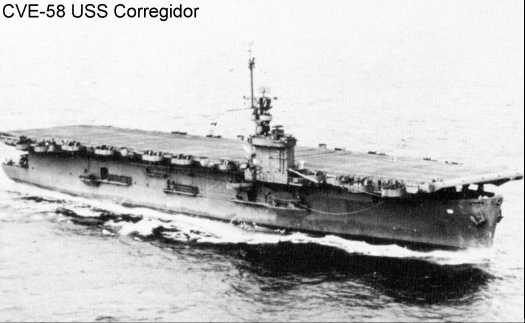
Bob was commissioned as an ensign in the U.S. Naval Reserve in 1942 and attended officers’ training programs in the Bronx, NY, and Washington, D.C, before being assigned to the Naval Mine Warfare Test Station at Solomons Island, MD, where he served as Naval personnel officer. After requesting a shipboard assignment, Bob was transferred to the Pacific for duty aboard the escort aircraft carrier U.S.S. Corregidor (CVE-58) as Lieutenant Junior Grade and Signal Officer until the ship’s decommissioning after the war in 1946. After World War II, Bob earned two graduate degrees from Harvard: an MBA and a Bachelor of Arts Degree in Government in 1947. Upon his return to Anderson in 1947, Bob remained active in the U.S. Naval Reserve Division 9-31. In 1949, Bob and his parents purchased Short Printing, Inc., then located on 20th Street near Fairview Street in Anderson. He successfully operated the business as President for almost five decades, which included building a larger one on Madison Avenue in 1961 and changing the name to Business Printing, Inc. He retired and sold the business in 2000. Bob was a Scoutmaster and Skipper of a Sea Scout ship in Anderson. He also held a variety of district and council leadership positions in Scouting for many years.
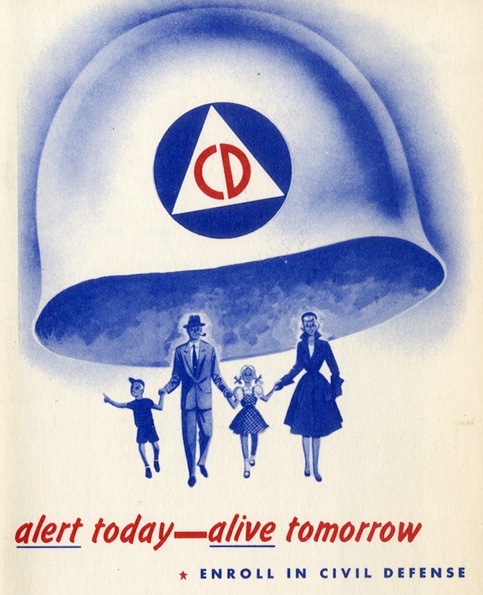
In 1946, Bob obtained his amateur radio license, and in 1952, he was asked to organize amateur radio communications for the Madison County Civil Defense, which led to his appointment as County Civil Defense Director, a position he held for 12 years. This period witnessed rising tensions with the Soviet Union and the threat of nuclear attacks, including the 1962 Cuban Missile Crisis. As CD Director, Bob gave many educational slide presentations regarding proper preparations in the face of nuclear threats, oversaw the selection and stocking of emergency fallout shelters throughout the county, and helped organize the conversion of the old Lindbergh School north of town into a CD emergency command headquarters. His slide show included photos taken in his capacity as an official observer at the Yucca Flats, Nevada, nuclear test in 1955. Later, Bob was invited by NASA to Cape Canaveral to observe the launch of Apollo 8, which carried astronauts into orbit around the moon for the first time, and the Apollo 15 moon mission launch. As a seven-decade member and officer of the Rotary Club, Bob secured NASA astronaut Al Worden, command module pilot for Apollo 15 and one of 24 people to have flown to the Moon, as a special speaker for the Madison County Rotary Club in 1971.
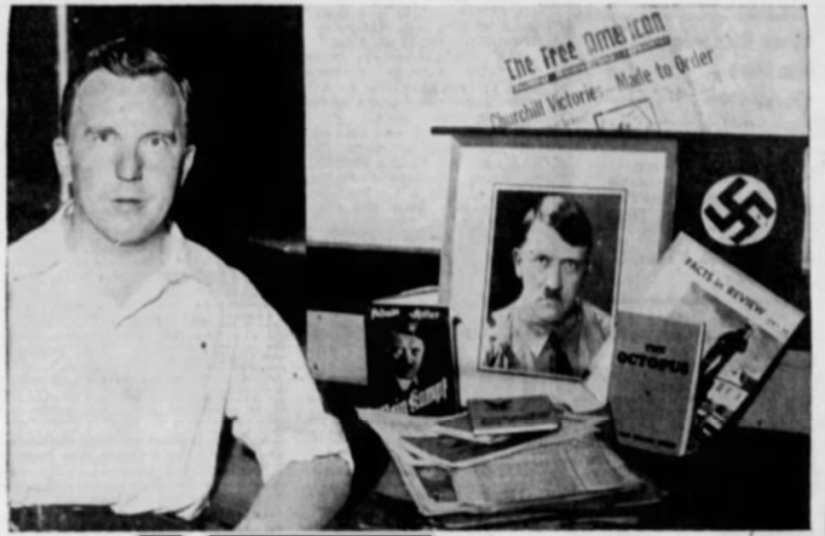
Arsenal Tech’s Nazi Charles Soltau.

When Bob Anderson Jr.’s life is measured against that of his “peer,” Arsenal Tech grad Charles Soltau, it is easy to see that while both shared the same isolationist mentality as young men, one chose to follow that Nazi ideology of Adolf Hitler and the other followed that of Uncle Sam. Soltau faded into the obscurity that Gnaw Bone, Indiana, maintains to this day. Anderson became a public-spirited pillar of Madison County society whose shadow is still cast in that community — proving that idealogy comes and goes with the flow of generations. What often sounds like an attractive idea can easily morph into an unexpectedly bad outcome. Mark Twain is often quoted as having said, “History doesn’t repeat itself, but it often rhymes,” and, if so, it applies today.

I will be talking about this series of articles with Nelson Price on his radio show “Hoosier History Live” this Saturday June 21, 2025 noon to 1 (ET) on WICR 88.7 fm, or stream on phone at WICR HD1. See the link below.
https://www.facebook.com/www.hoosierhistorylive.org

Art, Hollywood, Music, Pop Culture

The Genesis of Bob Dylan, Part 1

Original Publish Date February 20, 2025.

https://weeklyview.net/2025/02/20/the-genesis-of-bob-dylan-part-1/

Another sad anniversary passed recently. On February 3, 1959, rock and roll pioneers Buddy Holly, Ritchie Valens, and “The Big Bopper” J. P. Richardson were all killed (along with pilot Roger Peterson) in a plane crash near Clear Lake, Iowa. The event became known as “The Day the Music Died” after Don McLean memorialized it in his 1971 song “American Pie.” While the anniversary passes every year, every so often they put us in a reflective mood. This year’s anniversary observance came on the heels of my 2-part article on the tragic death of Hattie Carroll, a subject that serrated Bob Dylan’s soul.

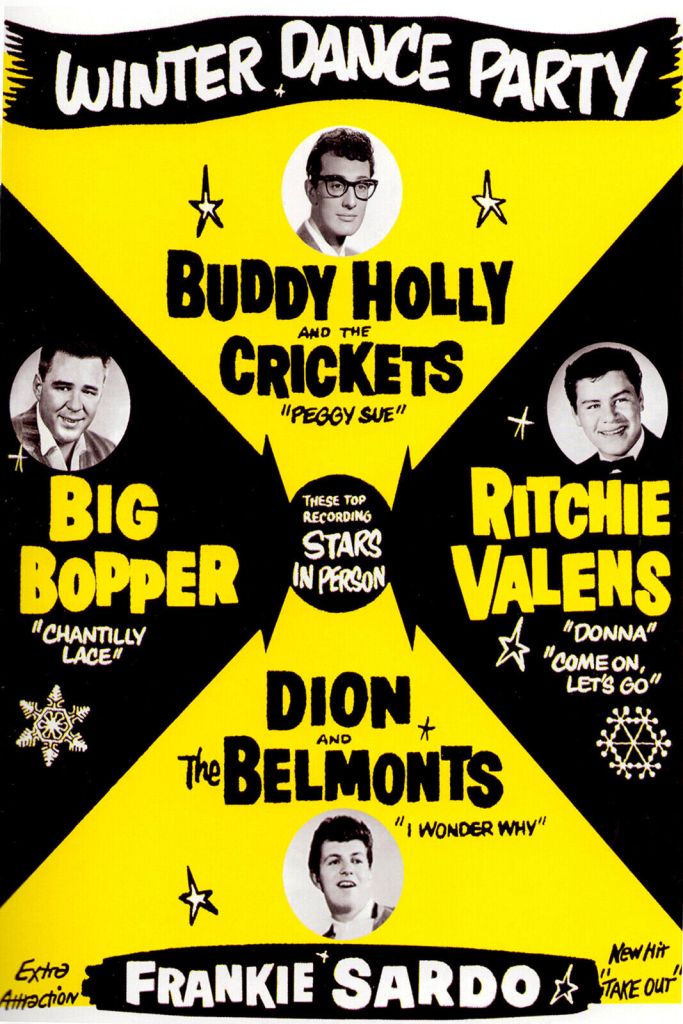
Buddy Holly’s Final Concert Poster.

It turns out the Clear Lake plane crash had an equal impact on him, but for this one, Dylan had a front-row seat. On January 31, 1959, 18-year-old Robert Allen Zimmerman was in the crowd when Buddy Holly brought his ill-fated “Winter Dance Party” tour to Dylan’s Duluth Minnesota hometown. Holly, Valens, and the Big Bopper (along with Waylon Jennings and Dion and the Belmonts) came to the National Guard Armory in that city nine days into a grueling 24-date barnstorming tour of small ballrooms and theatres of the midwest in the dead of winter. While the tour was scheduled to go as far south as Chicago, Cincinnati, and Louisville, it did not include any Indiana stops.

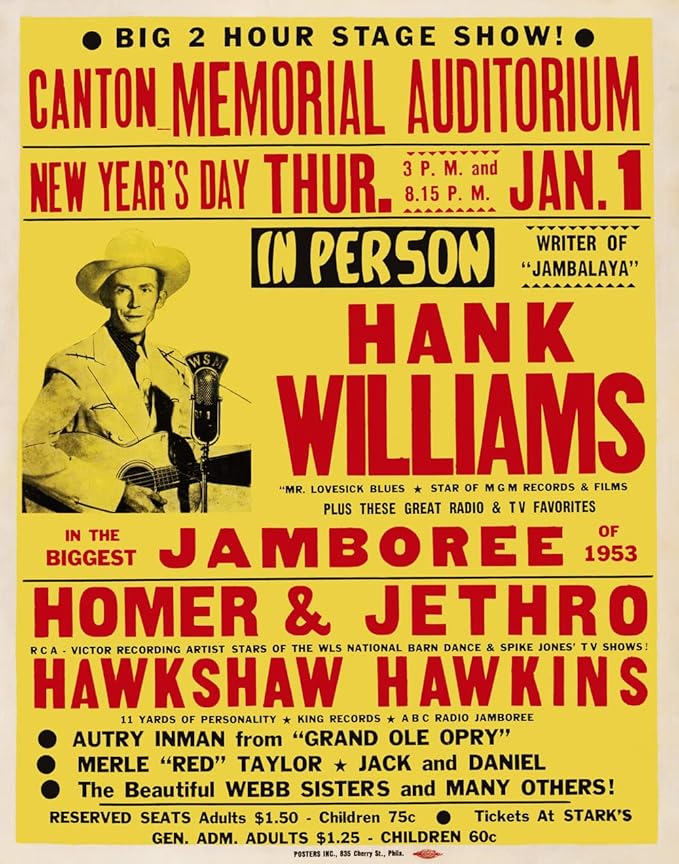
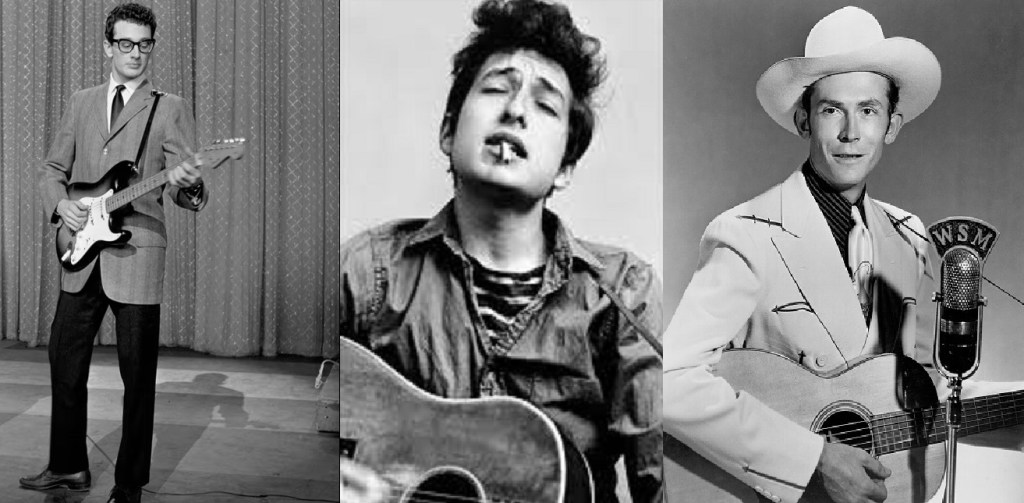
Hank Williams Final Concert Poster.

In June 2017, after being honored with the Nobel Prize for Literature, the famously enigmatic Dylan reflected on his earliest influences. As you may imagine, Dylan singled out three books specifically: Moby Dick, All Quiet on the Western Front, and The Odyssey before reflecting on Buddy Holly and how that night started him on his musical journey. “If I was to go back to the dawning of it all, I guess I’d have to start with Buddy Holly. Buddy died when I was about 18 and he was 22. From the moment I first heard him, I felt akin. I felt related like he was an older brother. I even thought I resembled him.” Dylan continued, “Buddy played the music that I loved, the music I grew up on country western, rock and roll, and rhythm and blues. Three separate strands of music that he intertwined and infused into one genre. One brand. And Buddy wrote songs, songs that had beautiful melodies and imaginative verses. And he sang great, sang in more than a few voices. He was the archetype, everything I wasn’t and wanted to be.”

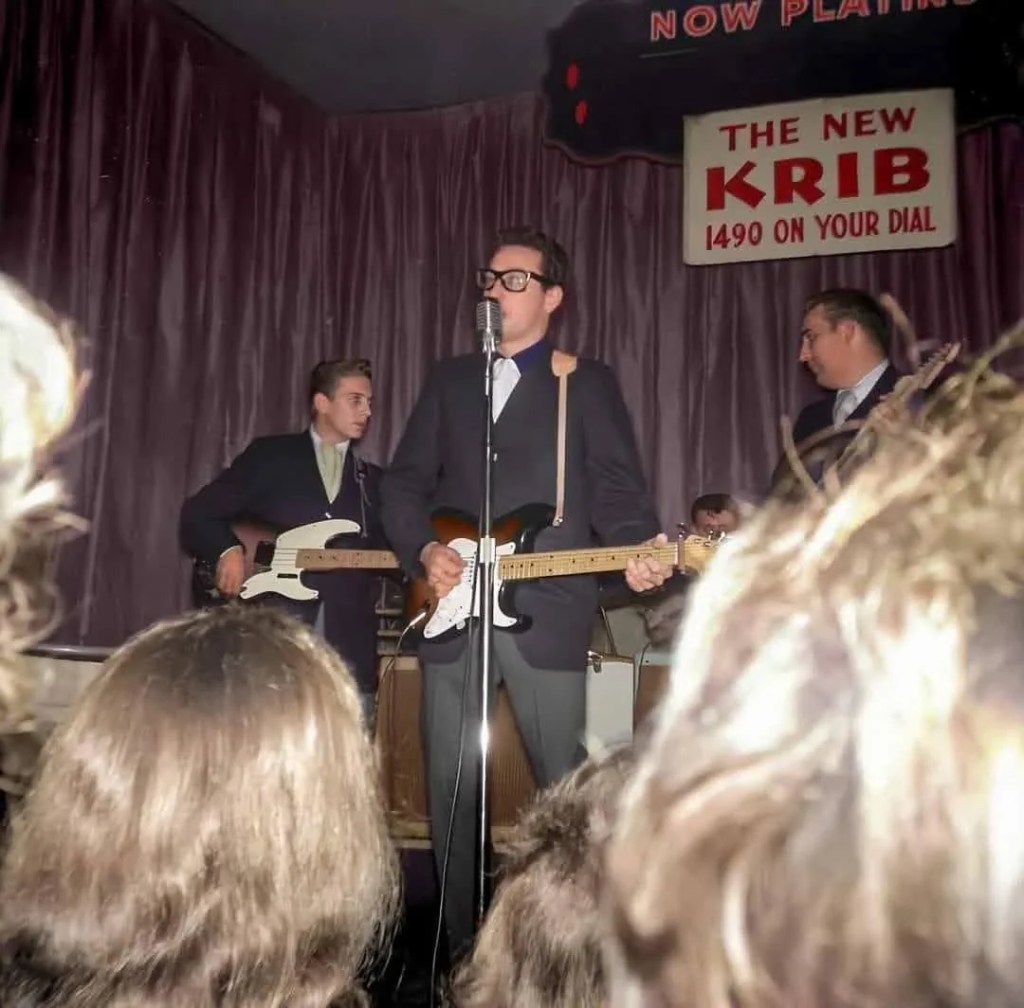
Buddy Holly’s Performing at his Final Concert.

“I saw him only but once, and that was a few days before he was gone,” Dylan recalled. “I had to travel a hundred miles to get to see him play, and I wasn’t disappointed. He was powerful and electrifying and had a commanding presence. I was only six feet away. He was mesmerizing. I watched his face, his hands, the way he tapped his foot, his big black glasses, the eyes behind the glasses, the way he held his guitar, the way he stood, his neat suit. Everything about him. He looked older than 22. Something about him seemed permanent, and he filled me with conviction.”

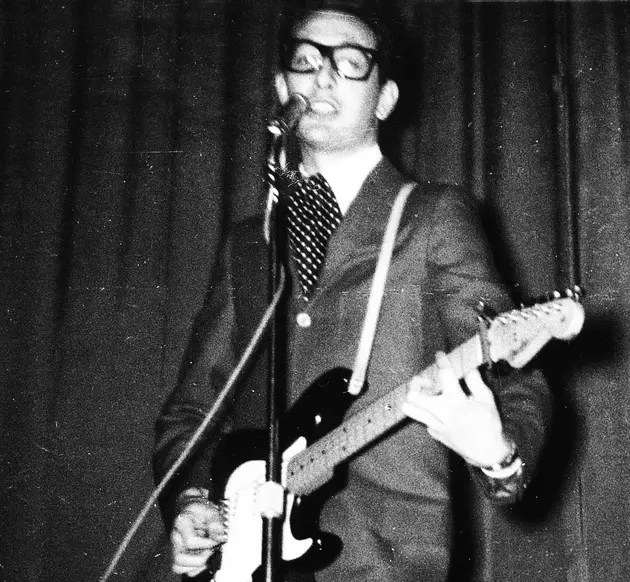
Buddy Holly Makes Eye Contact at the Duluth Armory.

Even though it happened 57 years prior, Dylan remembered the experience of standing a few feet away and making eye contact with Holly like it was yesterday. And of course, he described it exactly as you would expect: Bob Dylan style: “Then, out of the blue, the most uncanny thing happened,” said Dylan. “He looked me right straight dead in the eye, and he transmitted something. Something I didn’t know what. And it gave me the chills.” Three days after locking eyes with his musical idol, Buddy Holly was dead. Holly’s death caused Dylan to reflect on his own mortality at such a young age, stripping away the confidence of youth and beginning the complicated relationship between Dylan and death that would resonate in his songwriting for the rest of his career. Throughout his career, Dylan covered many of Holly’s songs: “Gotta Travel On,” “Not Fade Away,” “Heartbeat,” and others.

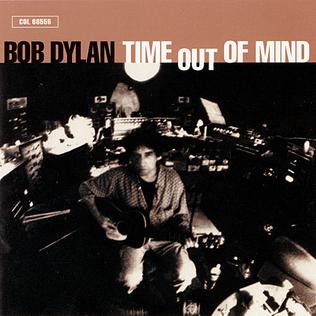
On his 1997 triple Grammy-winning album Time Out of Mind Dylan sings “When the last rays of daylight go down / Buddy, you’re old no more” on “Standing in the Doorway.” Dylan said he could feel the late rocker’s presence while making the album. In a 1999 interview, Dylan said, “I don’t really recall exactly what I said about Buddy Holly, but while we were recording, every place I turned there was Buddy Holly. It was one of those things. Every place you turned. You walked down a hallway and you heard Buddy Holly records like ‘That’ll Be the Day.’ Then you’d get in the car to go over to the studio and ‘Rave On’ would be playing. Then you’d walk into this studio and someone’s playing a cassette of ‘It’s So Easy.’” Dylan continued, “And this would happen day after day after day. Phrases of Buddy Holly songs would just come out of nowhere. It was spooky, but after we recorded and left, it stayed in our minds. Well, Buddy Holly’s spirit must have been someplace, hastening this record.” When it won Album of the Year in 1998, Dylan said, “I just have some sort of feeling that he [Holly] was, I don’t know how or why, but I know he was with us all the time we were making this record in some kind of way.”

Dylan later described what happened a day or two after the plane crash when someone gave him a copy of an obscure 12-string guitarist from Louisiana named Huddy Lead Belly. It was of the 1940 song “Cotton Fields” (also known as “In Them Old Cotton Fields Back Home”). Dylan said, “I think it was a day or two after that that his plane went down. And somebody-somebody I’d never seen before-handed me a Leadbelly record with the song ‘Cotton Fields’ on it. And that record changed my life right then and there. Transported me into a world I’d never known. It was like an explosion went off. Like I’d been walking in darkness and all of a sudden the darkness was illuminated. It was like somebody laid hands on me. I must have played that record a hundred times.” Lead Belly led to more influential artists like Robert Johnson, John Lee Hooker, and others in folk and blues, country, and jazz.

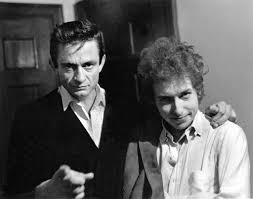
Johnny Cash & Bob Dylan.

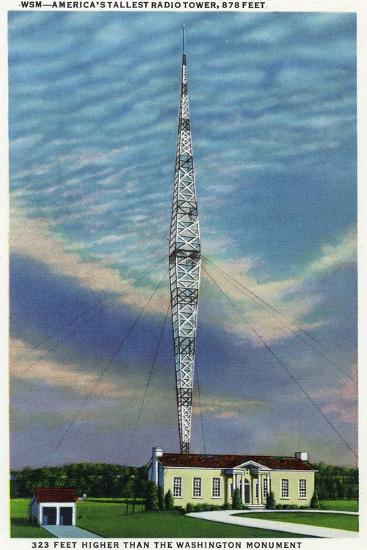
Songwriter Kris Kristofferson once described his friend Johnny Cash as being “a walking contradiction, partly fact, partly fiction” but that verse could easily be applied to Bob Dylan, especially when one considers that Cash was another of Dylan’s acknowledged influences. Over the years, Dylan has acknowledged other influences, and, like Cash, some are more obvious than others. Dylan’s Jewish Russian immigrant parents were fond of the Grand Ole Opry show on WSM radio. WSM broadcasts originated in Brentwood, Tennessee, and featured a unique 808-foot tall “Diamond” shaped tower that allowed the radio station to broadcast to forty states and hundreds of largely rural and small-town audiences. To this day, the WSM Tower is the oldest surviving intact example of this type of radio tower in the world.

WSM Radio Tower Postcard.
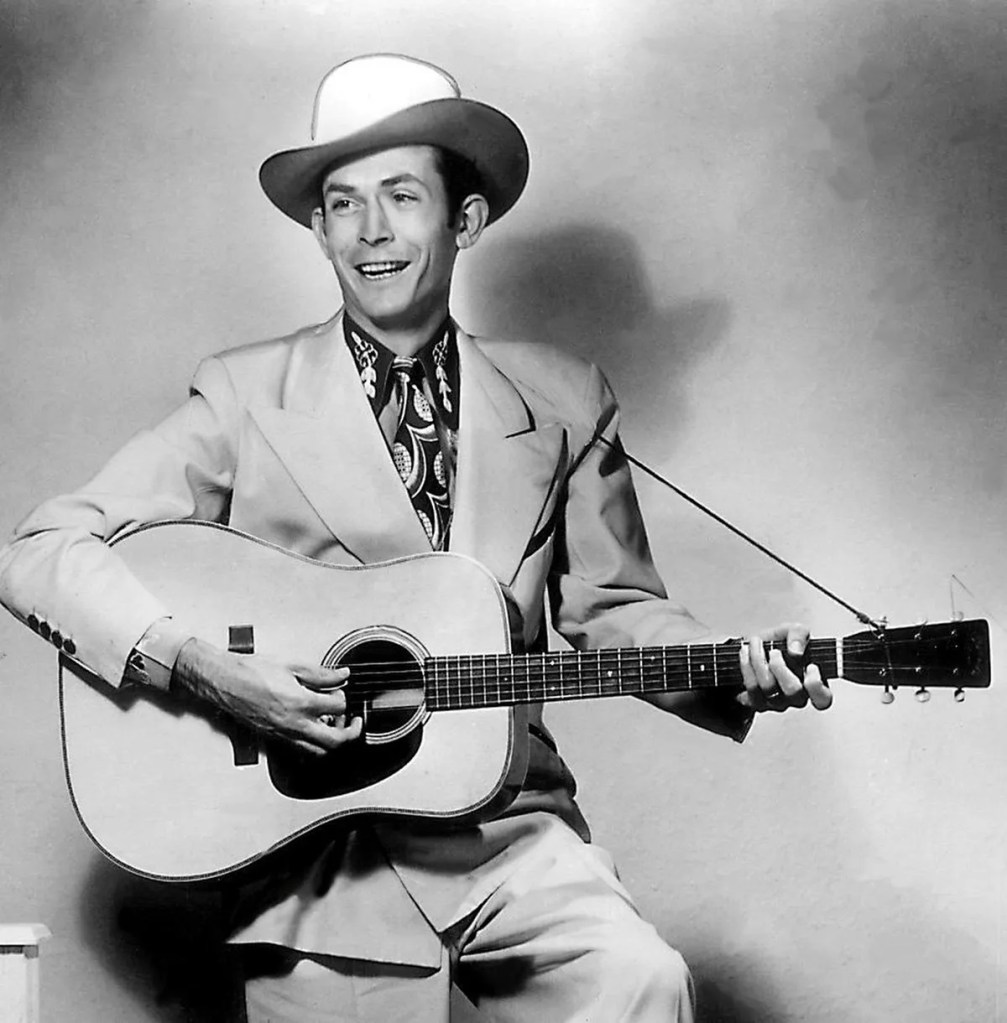
Hank Williams, Sr.

In the early 1950s, Dylan listened to the Grand Ole Opry radio show and heard the songs of Hank Williams for the first time. In his 2004 book, Dylan wrote: “The first time I heard Hank [Williams] he was singing on the Grand Ole Opry…Roy Acuff, who MC’d the program was referred to by the announcer as ‘The King of Country Music.’ Someone would always be introduced as ‘the next governor of Tennessee’ and the show advertised dog food and sold plans for old-age pensions. Hank sang ‘Move It On Over,’ a song about living in the doghouse and it struck me really funny.  He also sang spirituals like ‘When God Comes and Gathers His Jewels’ and ‘Are you Walking and a-Talking for the Lord.’ The sound of his voice went through me like an electric rod and I managed to get a hold of a few of his 78s-’Baby We’re Really In Love’ and ‘Honky Tonkin’’ and ‘Lost Highway ‘-and I played them endlessly.”

Dylan continued, “They called him a ‘hillbilly singer,’ but I didn’t know what that was. Homer and Jethro were more like what I thought a hillbilly was. Hank was no burr head. There was nothing clownish about him. Even at a young age, I identified fully with him. I didn’t have to experience anything that Hank did to know what he was singing about. I’d never seen a robin weep, but could imagine it and it made me sad. When he sang ‘the news is out all over town,’ I knew what news that was, even though I didn’t know. The first chance I got, I was going to go to the dance and wear out my shoes too. I’d learn later that Hank had died in the backseat of a car on New Year’s Day, kept my fingers crossed, hoped it wasn’t true. But it was true. It was like a great tree had fallen. Hearing about Hank’s death caught me squarely on the shoulder. The silence of outer space never seemed so loud. Intuitively I knew, though, that his voice would never drop out of sight or fade away-a voice like a beautiful horn.”
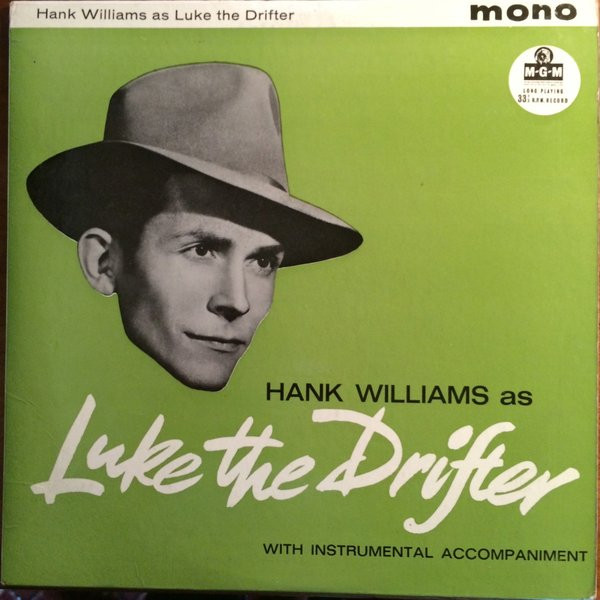
“Much later, I’d discover that Hank had been in tremendous pain all of his life, suffered from severe spinal problems-that the pain must have been torturous. In light of that, it’s all the more astonishing to hear his records. It’s almost like he defied the laws of gravity. The Luke the Drifter record, I just about wore out. That’s the one where he sings and recites parables, like the Beatitudes. I could listen to the Luke the Drifter record all day and drift away myself, become totally convinced in the goodness of man. When I hear Hank sing, all movement ceases.  The slightest whisper seems sacrilege. In time, I became aware that in Hank’s recorded songs were the archetype rules of poetic songwriting. The architectural forms are like marble pillars and they had to be there. Even his words-all of his syllables are divided up so they make perfect mathematical sense. You can learn a lot about the structure of songwriting by listening to his records, and I listened to them a lot and had them internalized. In a few years’ time, Robert Shelton, the folk and jazz critic for the New York Times, would review one of my performances and would say something like ‘resembling a cross between a choirboy and a beatnik…he breaks all the rules in songwriting, except that of having something to say”. The rules, whether Shelton knew it or not, were Hank’s rules, but it wasn’t like I ever meant to break them.  It’s just that what I was trying to express was beyond the circle.”

The Genesis of Bob Dylan, Part 2

Original Publish Date February 27, 2025.

https://weeklyview.net/2025/02/27/the-genesis-of-bob-dylan-part-2/

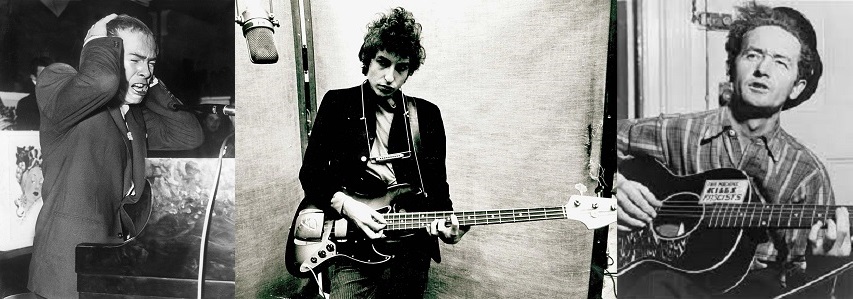
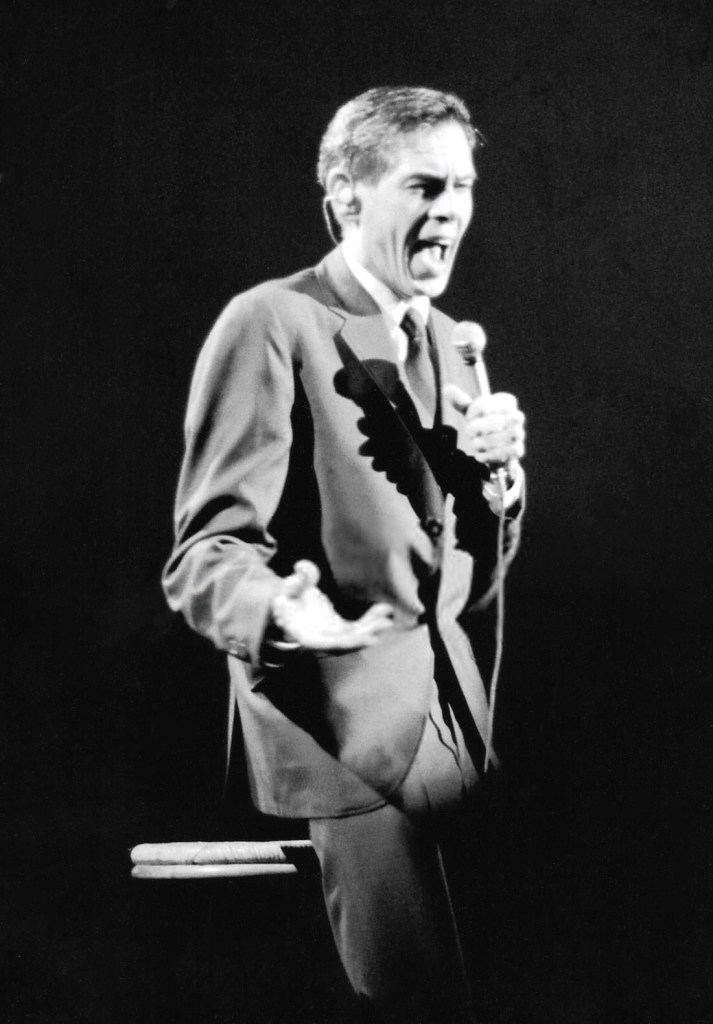
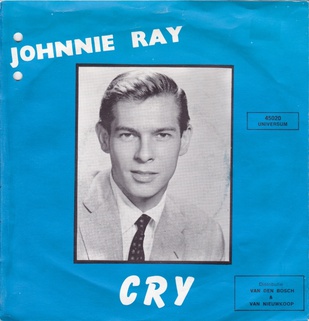
Bob Dylan’s next early musical influence came sandwiched between Hank and Buddy, and it is one you might not expect. Dylan discovered the plaintive delivery of Johnnie Ray (1927-1990) a singer/songwriter who played piano while delivering song lyrics tinged by a stream of tears. Although Ray is largely forgotten today, he was wildly popular for most of the 1950s and has been cited by many artists and critics as a major precursor to rock and roll. Tony Bennett called Ray the “father of rock and roll.” Dylan wrote of Johnnie Ray: “He was the first singer whose voice and style, I guess, I totally fell in love with… I loved his style, wanted to dress like him too.”

Johnnie Ray.

Johnnie Ray was a star in a pre-Elvis gyrating world of pop music, a genre of teenaged music that hadn’t existed before World War II. Ray was tall and lanky, partially deaf, and a little awkward on stage, a perceived fragility that caused his songs like “The Little White Cloud That Cried” and “Cry” to soar. Johnnie Ray didn’t just sing these songs-he became them. The press nicknamed him “The Prince of Wails,” “Mr. Emotion,” and “The Nabob of Sob.”

Ray was every bit of an enigma as Bob Dylan. He was an alcoholic who was loved and admired by the Black community (he began his career by performing in segregated Black nightclubs in the 1950s) and a man who never really divulged his sexuality. He was married to a woman in 1952/separated in 1953/divorced in 1954 and was allegedly the father of a child with journalist and What’s My Line TV show panelist Dorothy Kilgallen (1913-1965). In 1951, and again in 1956, Johnnie was arrested and briefly jailed for soliciting a plain-clothed police officer, both times in Detroit. Ray pled guilty to both charges, paid the fine, and was released. Ray was later arrested in a gay bar but the charges were kept quiet.

Sadly, Johnnie found no place in the folk music phenomenon, the rock ‘n’ roll revolution passed him by, and the British Invasion killed all the “white bread” acts, even though Ringo Starr admitted that, in the early days of The Beatles, they only loved “Chuck Berry, Little Richard, and Johnnie Ray.” Oh, there were movie roles, starring alongside Marilyn Monroe in 1954’s There’s No Business Like Show Business, but only fans in the UK and Australia stood by him. During the ’60s and ’70s, Ray made occasional television appearances, but he was largely a forgotten man. Although today, it should be said that Johnnie is mentioned in a Billy Idol song, featured in the opening lines of “Come On Eileen” by Dexys Midnight Runners, and as a cultural touchstone in Billy Joel’s “We Didn’t Start The Fire.” Bob Dylan said this of Ray: “He was the first singer whose voice and style, I guess, I totally fell in love with. There was just something about the way he sang ‘When Your Sweetheart Sends A Letter’…that just knocked me out. I loved his style, wanted to dress like him too.”

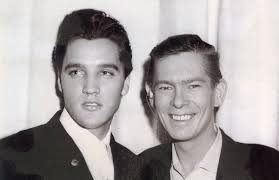
Elvis & Johnnie Ray.

During the fifties, Johnnie Ray went toe-to-toe on the charts with Chuck Berry, Little Richard, Jerry Lee Lewis, and Elvis Presley. While the press tried to gin up an imagined feud between Elvis and Johnnie, the two had a mutual respect. After returning to the States from a European tour in 1956, Johnnie Ray was asked “What do you think of Elvis Presley?” He replied, “What’s an Elvis Presley?” People thought he was disrespecting Elvis, but at that point, he had been out of the country and never heard of him. However, Elvis would often sing Johnnie’s songs (like “Such a Night”) through the years. Johnnie Ray bridged the gap between swing and rock n roll and his influence is a huge one. But what about Elvis, was the king of rock n roll an influence on Bob Dylan?

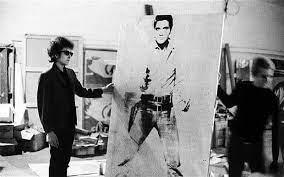
Dylan in Andy Warhol’s studio with Warhol’s Elvis.

In a 2009 Rolling Stone interview, Dylan said, “I never met Elvis, because I didn’t want to meet Elvis. Elvis was in his Sixties movie period, and he was just crankin’ ’em out and knockin’ ’em off, one after another. And Elvis had kind of fallen out of favor in the Sixties. He didn’t really come back until, whatever was it, ’68? I know the Beatles went to see him, and he just played with their heads…Elvis was truly some sort of American king…And, well, like I said, I wouldn’t quite say he was ridiculed, but close. You see, the music scene had gone past him, and nobody bought his records. Nobody young wanted to listen to him or be like him. Nobody went to see his movies, as far as I know. He just wasn’t in anybody’s mind. Two or three times we were up in Hollywood, and he had sent some of the Memphis Mafia down to where we were to bring us up to see Elvis. But none of us went. Because it seemed like a sorry thing to do. I don’t know if I would have wanted to see Elvis like that. I wanted to see the powerful, mystical Elvis that had crash-landed from a burning star onto American soil. The Elvis that was bursting with life. That’s the Elvis that inspired us to all the possibilities of life. And that Elvis was gone, had left the building.“
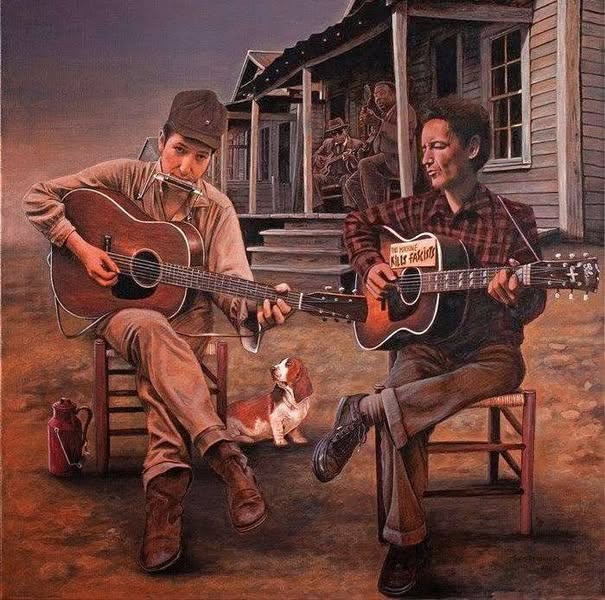
Painting of Dylan & Guthrie.

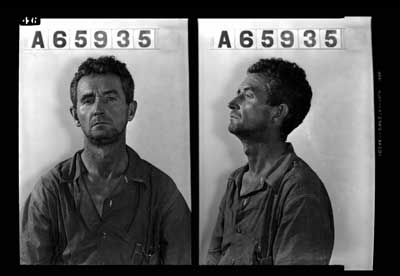
But who was Bob Dylan’s main influence on his musical career? Other than Buddy Holly, it was the only artist that Dylan ever made an effort to find: Woody Guthrie. In May 1960, Dylan dropped out of college and by January 1961, he was performing in coffee houses around Greenwich Village in New York City. Five days after arriving in “The Village,” Dylan tracked Guthrie down at Greystone Park Psychiatric Hospital in Morris Plains, New Jersey. In September of 1954, unable to control his muscles, Guthrie checked himself into the facility. He wouldn’t leave for another two years, and when he did so in May 1956, he spent days wandering the streets of Morristown, New Jersey, in a state of homelessness. Guthrie was picked up by police and spent a night in Morris County Jail. It was believed that he was suffering from paranoid schizophrenia and Woody was transferred back to Greystone. It was a voluntary readmission and Greystone staffers could not believe that this drifter had published a book and countless songs. Later Guthrie was diagnosed with Huntington’s disease, a hereditary condition that cause loss of body control.

Woody Guthrie and his famous guitar.

By the time Bob Dylan met his hero in the winter of 1961, “The Village” was flooded with folk players, and the radio was populated with singers riffing on black artists (Pat Boone’s “Tutti-Fruiti” being the most egregious example) or catchy, but safe, songs from Tin Pan Alley songwriters. This prompted Dylan to comment, “I always kind of wrote my own songs but I never really would play them. Nobody played their own songs, the only person I knew who really did it was Woody Guthrie. Then one day,” he continued, “I just wrote a song, and it was the first song I ever wrote, and it was ‘A Song for Woody Guthrie.’ And I just felt like playing it one night and I played it. I just wanted a song to sing and there came a certain point where I couldn’t sing anything, I had to write what I wanted to sing because what I wanted to sing nobody else was writing, I couldn’t find that song someplace. If I could’ve I probably wouldn’t have ever started writing.” The song would be featured on Dylan’s self-titled debut album, released on March 19, 1962. The album sold 5,000 copies in its first year, just breaking even.

Woody’s Mugshot.

By then, Guthrie’s condition had declined to the point that he could barely move and depending on the day, barely speak. Performing was out of the question. So Dylan sang Woody’s songs back to him and the friendship blossomed. In the novel My Name is New York, Dylan said, “When I met him, he was not functioning with all of his facilities at 100 percent. I was there more as a servant. I knew all of his songs, and I went there to sing him his songs. He always liked the songs. He’d ask for certain ones and I knew them all!” Thereafter, the two shared a unique bond that would last the rest of Guthrie’s life. Dylan wrote of Guthrie’s impact: “The songs themselves had the infinite sweep of humanity in them… [He] was the true voice of the American spirit. I said to myself I was going to be Guthrie’s greatest disciple.” When Guthrie died at age 55 in 1967, Dylan emerged from a self-imposed exile after a motorcycle accident to perform a tribute concert to his hero at Carnegie Hall. According to one biographer, “This farewell to Dylan’s ‘last idol’ was the moment the legacy of American folk was crystalized.”

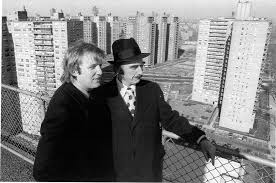
Donald & Fred Trump.

While any conversations shared between Dylan and Guthrie during those meetings will likely never be known, one Guthrie song is irresistible to not comment on…and speculate. In 1954, Guthrie wrote a song that describes what he felt were the racist housing practices and discriminatory rental policies of his landlord. In December 1950, Guthrie signed a lease at the Beach Haven apartment complex in Gravesend, Brooklyn. The song is called “Old Man Trump” and his landlord was none other than Fred Trump, father of U.S. President Donald Trump. In the song, Guthrie expresses his dissatisfaction with the “color line” Trump had drawn in his Brooklyn neighborhood. Oddly, there are no known Guthrie recordings of this song. However, the lyrics (written in Guthrie’s own hand) were discovered in 2016. “I suppose Old Man Trump knows, Just how much Racial Hate He stirred up In the bloodpot of human hearts When he drawed That color line Here at his Beach Haven family project…Beach Haven is Trump’s Tower, Where no Black folks come to roam. No, no, Old Man Trump! Old Beach Haven ain’t my home!”

Art, Assassinations, Creepy history, Criminals

The Gun That Killed Vincent Van Gogh?

Original Publish Date February 15, 2024.

https://weeklyview.net/2024/02/15/the-gun-that-killed-vincent-van-gogh/

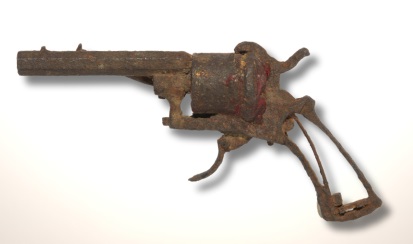
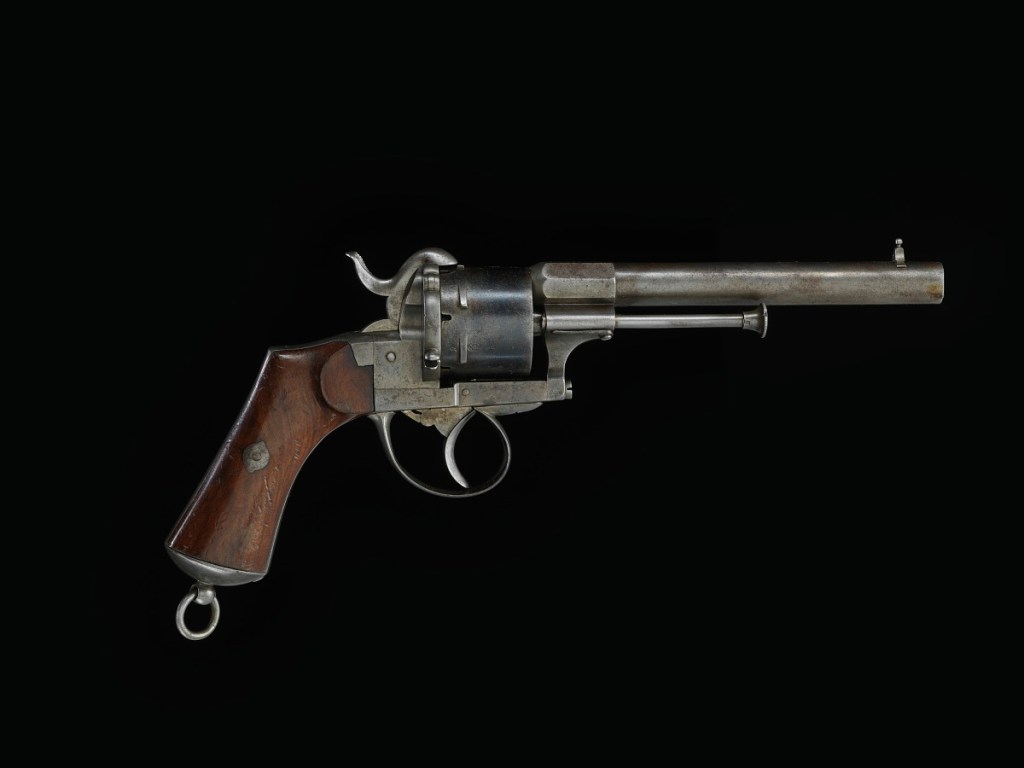
Alleged gun that killed Vincent Van Gogh.

I have spent the past 12 years on a quest. A quest to discover a little-known Lincoln collector turned museum curator named Osborn H. Oldroyd. I have written about Oldroyd many times and, sometimes, the mere mention of his name elicits groans from family and friends whom I’ve forced to share my obsession, whether they want to or not. No worries, I’m not going down that road again today. I simply mention him regarding another of my early obsessions: artist Vincent van Gogh. I know, I know, Oldroyd to Van Gogh? Evel Knievel couldn’t have made that jump. Stay with me now.

A few years back, a Paris auction house (Auction Art–Rémy Le Fur) sold the gun that Van Gogh allegedly killed himself with for approximately $182,000 to an unidentified Belgian buyer. The hammer price was almost triple the auction estimate of $44,800 to $67,000 and presumably included the buyer’s premium. Like everything in Van Gogh’s life, the sale was not without controversy. And, like many of the objects in Oldroyd’s collection (for his collection was his life), the provenance of the firearm is the sticking point. If authentic, the auction house’s description of it as “the most famous weapon in the history of art” would be unchallenged. However, let’s examine the event, the discovery, and its ultimate disposition and see what you think.

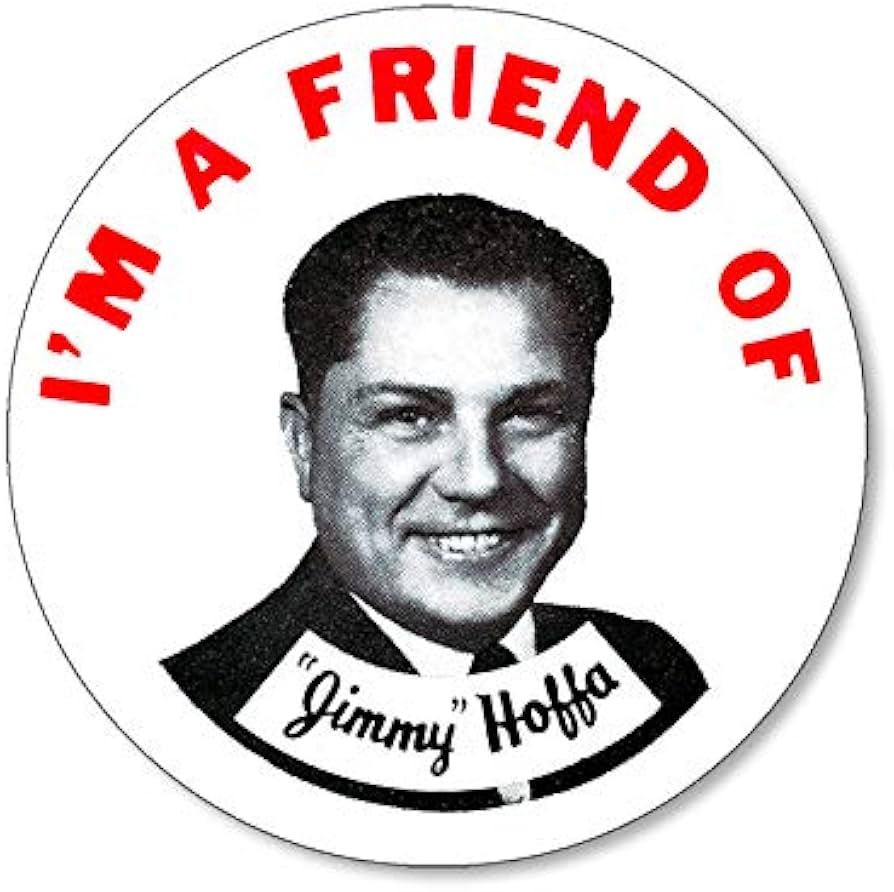
JImmy Hoffa Labor Union Badge.

As a kid, I spent most of my free time in the library. Like many my age, my first instinct was to discover a much-wished-for connection to some (or any) historical event. I pored through the annual book of Guinness World Records looking for some record (any record) that I could conceivably break. I never found one. Then I tried to prove a genealogical link to anyone of note . . . Please be Lincoln . . . Please be Lincoln. It was not Lincoln. I was descended from a long line of boringly average people. The last hope was a connection to someone/something according to my birthday (July 30th). I found two: Jimmy Hoffa disappeared and Vincent van Gogh was buried. Oh sure, Henry Ford was born, Jamestown was founded, but not much else. So I clung to the Van Gogh square. He’s been a windmill for me to tilt at ever since.

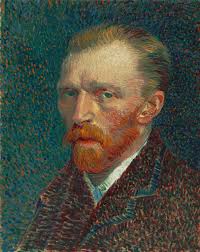
There are so many mysteries surrounding Vincent van Gogh. Was he crazy? Was a visual problem responsible for his unique painting style? Why did his paintings, all acknowledged masterpieces, not sell until after he died? And perhaps most of all, did he REALLY kill himself? Well, he did famously cut off an ear after an argument with fellow artist Paul Gauguin and famously presented it to a prostitute in a nearby brothel. And he was confined to insane asylums more than once in his lifetime. But that gun may fuel the biggest Van Gogh mystery of them all.

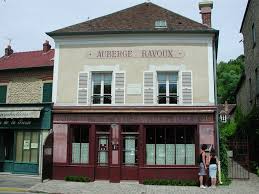
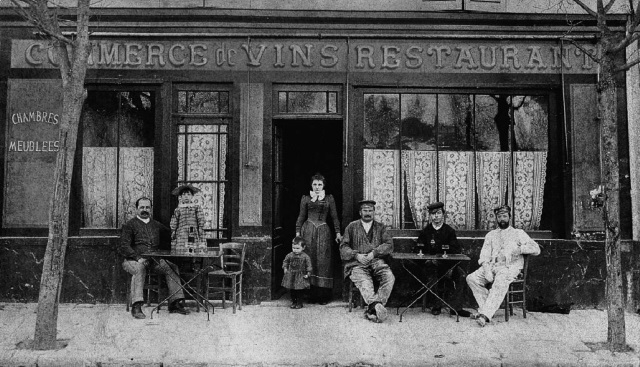
Arthur Ravoux’s Inn in Auvers-sur-Oise in France today (at left) & in Van Gogh’s time.

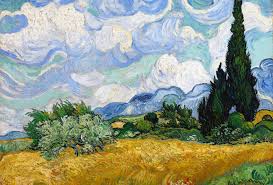
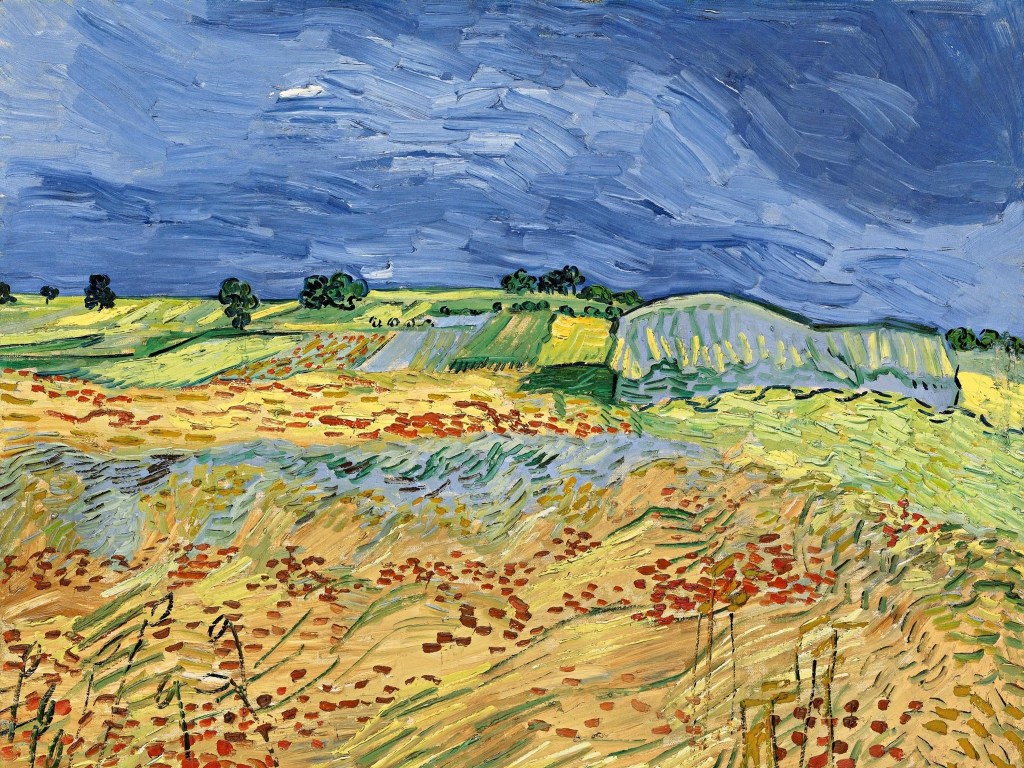
In May of 1890, after one of those asylum stays, Van Gogh moved into Arthur Ravoux’s Inn in Auvers-sur-Oise in France. While living in room number five there, he turned out an average of a painting a day, despite his increasingly unstable mental state. The common theory is that on Sunday, July 27th, 1890, Van Gogh ventured from his château hideaway to a nearby wheat field in the village of Auvers-sur-Oise and shot himself in the chest. The gunshot did not kill him immediately, instead, Van Gogh lost consciousness and, after waking up and in seeming defiance of his mortal injuries, left his easel against a haystack before stumbling back to his modest attic room, lit only by a small skylight, in the Ravoux Inn. He died two days later, his beloved brother Theo by his side.

Lefaucheux pinfire revolver.

According to the auction house, while admitting that it could never be 100% certain that it was the actual gun used by the artist to take his life, circumstantial evidence certainly points to that conclusion. According to museum officials, the rusted skeletal frame of the 7mm Lefaucheux revolver was “discovered where Van Gogh shot it; its caliber is the same as the bullet retrieved from the artist’s body as described by the doctor at the time; (and) scientific studies demonstrate that the gun had stayed in the ground since the 1890s.” Devil’s advocate: Lefaucheux pinfire revolvers were inexpensive and plentiful in the late 19th century. They can be found everywhere all over the world, so finding one in a field under a random tree in France may not constitute proof experts require for authentication. While stories like that may have worked in Oldroyd’s day, it certainly does not live up to modern curatorial standards. However, it does pique one’s imagination.

The story goes that a local farmer found the gun in 1965 after plowing up the very spot in the field where tradition states the artist shot himself in the stomach in July of 1890. The farmer presented the weapon to the owners of an inn in the village, and it was passed down through their family before it was given to the auction consignor’s mother, who put it up for auction. Also weighing in the gun’s favor is the fact that it is a low-power gun, which explains why the gun didn’t kill Vincent instantly. For those subscribing to the theory that Van Gogh did not shoot himself, the auction house explains that even if his death was caused by hoodlums with a grudge against him or after two young boys playing with a gun “accidentally pressed the trigger and wounded Van Gogh by mistake” the gun could still be the weapon responsible for his death. In 2016, the Van Gogh Museum in Amsterdam exhibited the gun as part of the show “On the Verge of Insanity, Van Gogh and His Illness.”

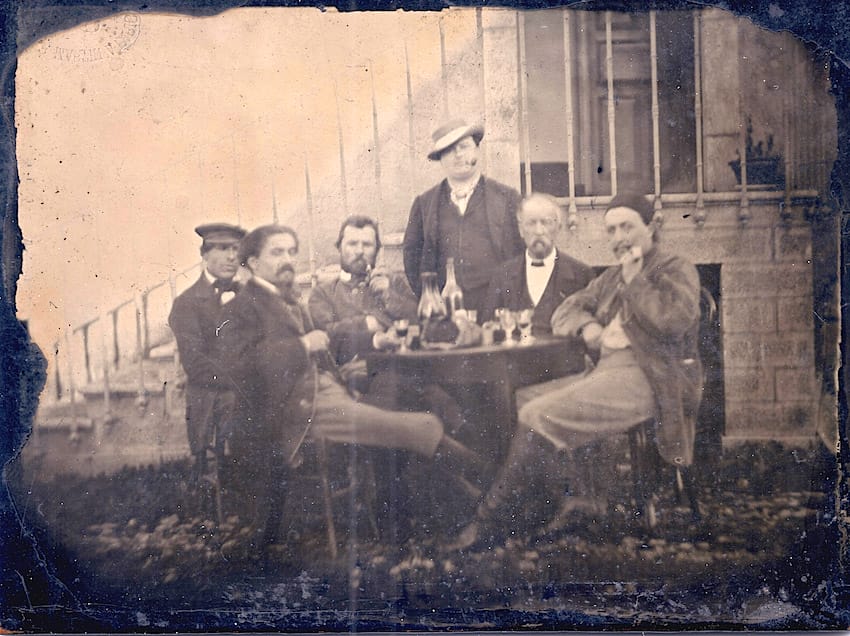
This is an 1887 tintype photo of Vincent Van Gogh (third from left) in conversation with Paul Gauguin, Emile Bernard, Félix Jobbé-Duval. André Antoine is standing between them.

Regardless, Vincent’s myth is so complicated, his art so unattainable to all but the ultra-rich, the thought of owning the pistol that killed him may strike some as irresistible. Imagine owning the ultimate instrument of tortured artistic doom, carried into an otherwise unremarkable wheat field in northern France in late July of 1890 by a man tortured with night terrors and “overwhelmed by boredom and grief.” Did the nightmares of mental illness finally prove too much to bear? Is this the final instrument of self-martyrdom? I’ll leave that for you, the reader, to decide. Shortly before his death, on July 2, writing to his brother Theo, Vincent commented: “I myself am also trying to do as well as I can, but I will not conceal from you that I hardly dare count on always being in good health. And if my disease returns, you would forgive me. I still love art and life very much…” Eight days later, Vincent wrote Theo in French, “Je me sens – raté” (I feel failed), and added: “And the prospect grows darker, I see no happy future at all.” Before his death at 1:30 in the morning, Vincent’s last words to his brother were remembered as “La tristesse durera toujours” (The sadness will last forever).

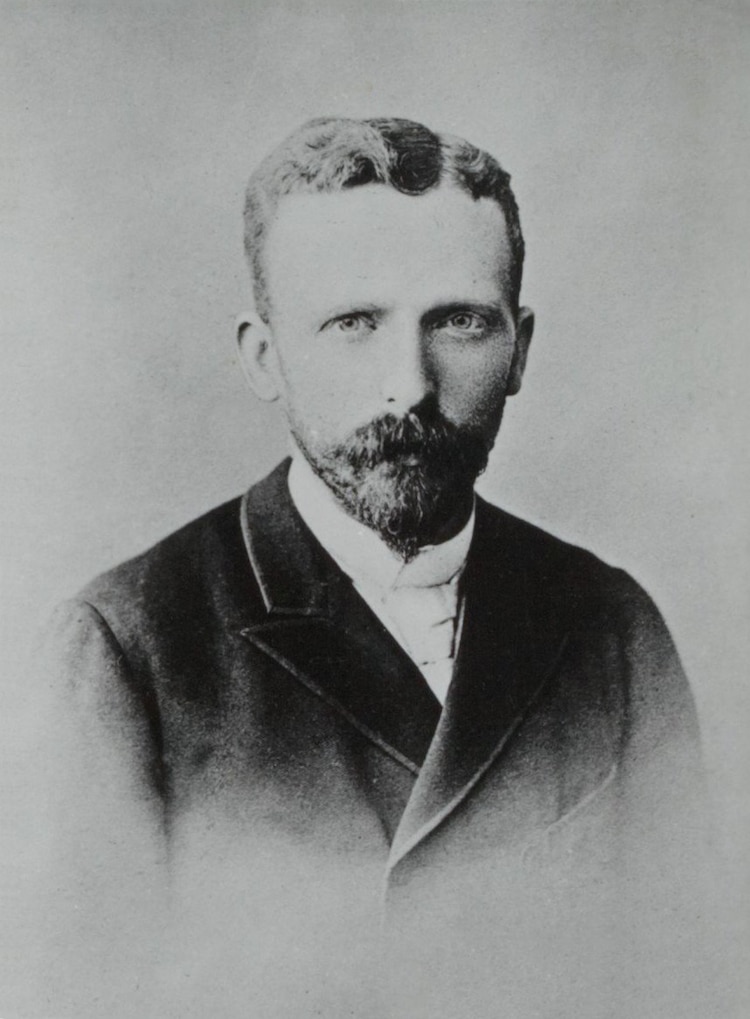
Theo Van Gogh.

On the afternoon of July 30th, Van Gogh’s body was laid out in his attic room, surrounded by his final canvases and masses of yellow flowers including dahlias and sunflowers. His easel, folding stool, and paintbrushes were placed before the coffin. Van Gogh’s last retreat at the Auberge Ravoux has remained intact since his death, as according to legend a room where a suicide took place must never again be rented out. Legend states that the room remained sealed up for almost a century for fear of bad luck. The room is unfurnished, except for a chair. However, like Oldroyd’s museum in the House Where Lincoln Died in Washington D.C., Van Gogh’s spirit can be felt there, permeating the very floors, joists, ceiling, and walls where he passed.

Abe Lincoln, Art, Museums, Presidents

Abraham Lincoln’s Favorite Poem.

Original publish date October 19, 2023. https://weeklyview.net/2023/10/19/abraham-lincolns-favorite-poem/

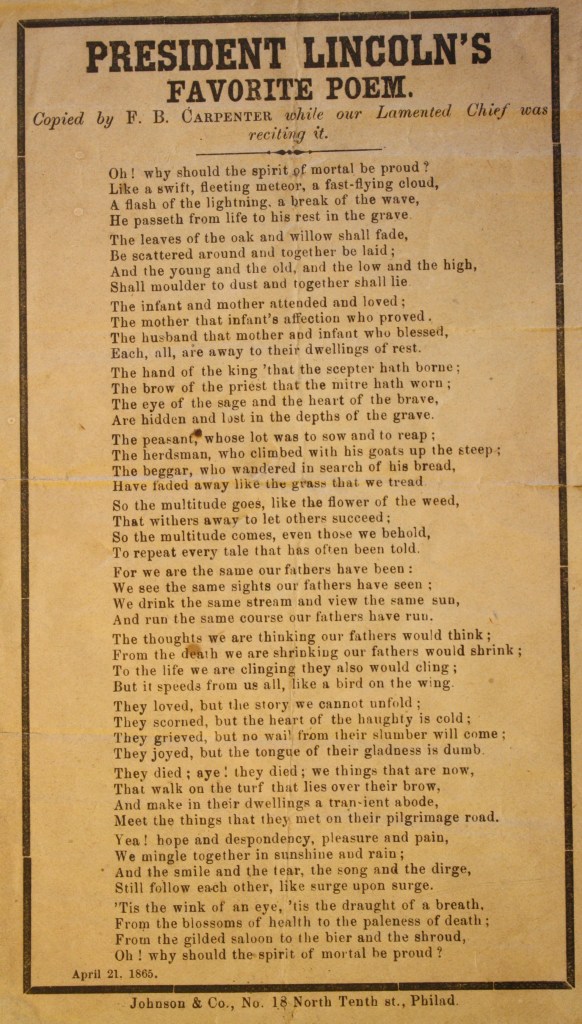
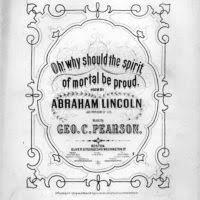
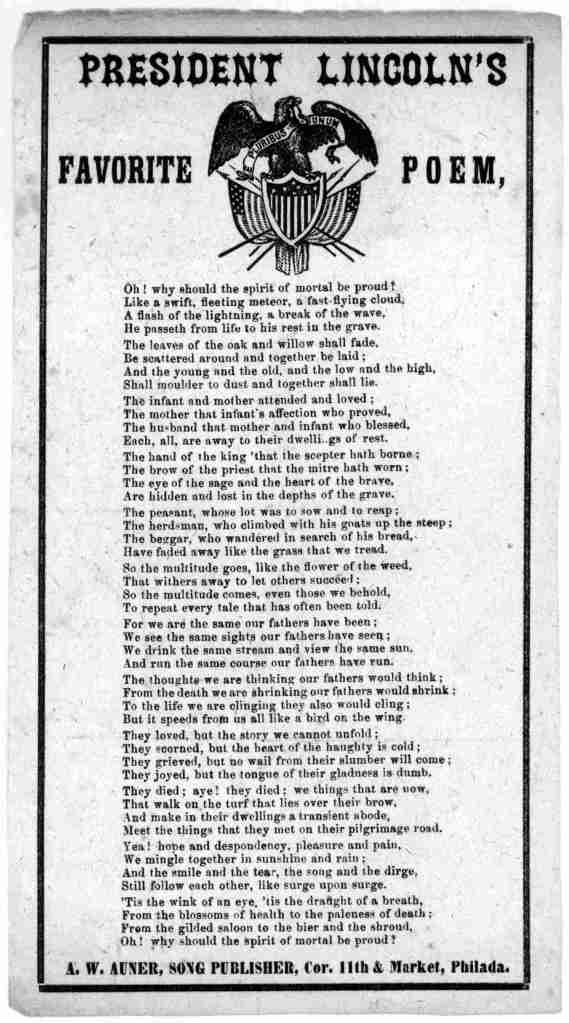
This was once displayed in Osborn H. Oldroyd’s museum inside the Lincoln Home in Springfield, Illinois. The poem was read aloud on the 15th anniversary of the President’s death, April 15, 1880, at the first memorial service at Lincoln’s Tomb ceremony by Mrs. Edward S. Johnson (wife of Lincoln Guard of Honor member and second Lincoln Tomb custodian Major Edward S. Johnson). Undoubtedly this leaflet was handed out at that ceremony on that day as a souvenir. It is titled “President Lincoln’s Favorite Poem. Copied by F.B. Carpenter while our Lamented Chief was reciting it.”

During the month of October in Irvington, I am near-constantly surrounded by reminders of the dead. While Irvington celebrates Halloween with little door-knocking ghosties and goblins gliding from door to door in search of treats, it does nothing to dispel the fact that Halloween revolves around the spirits of the dearly departed. I write often about Abraham Lincoln, but seldom about Lincoln and Halloween. I thought it might be a good time to examine a mysterious poem that fits the season and has often been referred to as Lincoln’s favorite.

Lincoln developed his lifelong love of poetry while a boy in Southern Indiana. Although by his own admission, Lincoln got his education “by littles” and the total time spent in a classroom by the young rail-splitter amounted to less than a year, he devoured the poetry found in the four school readers historians attribute to his early years in the Hoosier state. Many of those poems were about death. John Goldsmith’s 1766 poem, An Elegy On The Death Of A Mad Dog, Edgar Allan Poe’s 1845 poem The Raven, Oliver Wendell Holmes’ 1831 poem The Last Leaf, and Thomas Gray’s 1751 poem Elegy Written in a Country Churchyard. And of course, Lincoln’s love of William Shakespeare is widely known.

These poets in particular capture the gloomy, melancholic poetry of which Lincoln was so fond of as a young man. Lincoln, a capable amateur poet himself, memorized the poems he cherished, reciting them to friends and inserting them in conversations and speeches throughout his life. His favorite poem, which he recited so often that people suspected he was its author, was William Knox’s “Mortality,” alternately known as “O, Why should the Spirit of Mortal be Proud!” Lincoln often opined to friends (and at least once in a letter) that he, “would give all I am worth, and go in debt, to be able to write so fine a piece as I think that is.”

The poem was cut from a newspaper and given to Lincoln by Dr. Jason Duncan in New Salem, Illinois. At the time, its author was anonymous, and attribution was unknown. On at least a few occasions, having committed it to memory, Lincoln wrote the Mortality poem out longhand and sent it to friends, always noting that “I am not the author.” He would spend twenty years searching for the poet. Aptly for the season, one stormy night in the White House, Lincoln recited the poem for a small group of friends including a congressman, an army chaplain, and an actor, noting that the “poem was his constant companion” and that it crossed his mind whenever he sought “relief from his almost constant anxiety.”

General James Grant Wilson (1832-1914)

When the group departed, Lincoln requested that his guests help to discover who had written it. “Its author has been greatly my benefactor, and I would be glad to name him when I speak of the poem…that I may treasure it as a memorial of a dear friend.” Union General James Grant Wilson (1832-1914) would ultimately inform the President that the poem was written by an obscure Scottish poet named William Knox (1789-1825). The poem was first published in his 1824 book Songs of Israel. After Lincoln’s death, the poem experienced a resurgence in popularity.

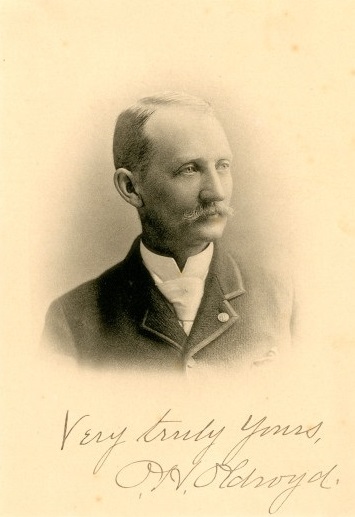
Osborn H. Oldroyd.

On April 15, 1880, on the 15th anniversary of the President’s death, the poem was read aloud by Mrs. Edward S. Johnson (wife of Lincoln Guard of Honor member and second Lincoln tomb custodian Major Edward S. Johnson) during a ceremony at the tomb in Springfield. A leaflet, handed out at that ceremony and found in my collection, was saved by Lincoln collector and personal muse Osborn H. Oldroyd and displayed in his collection in the Lincoln home for years. It remains important to the Oldroyd story as the impetus for his personal resolve to build a Lincoln Museum of his own.

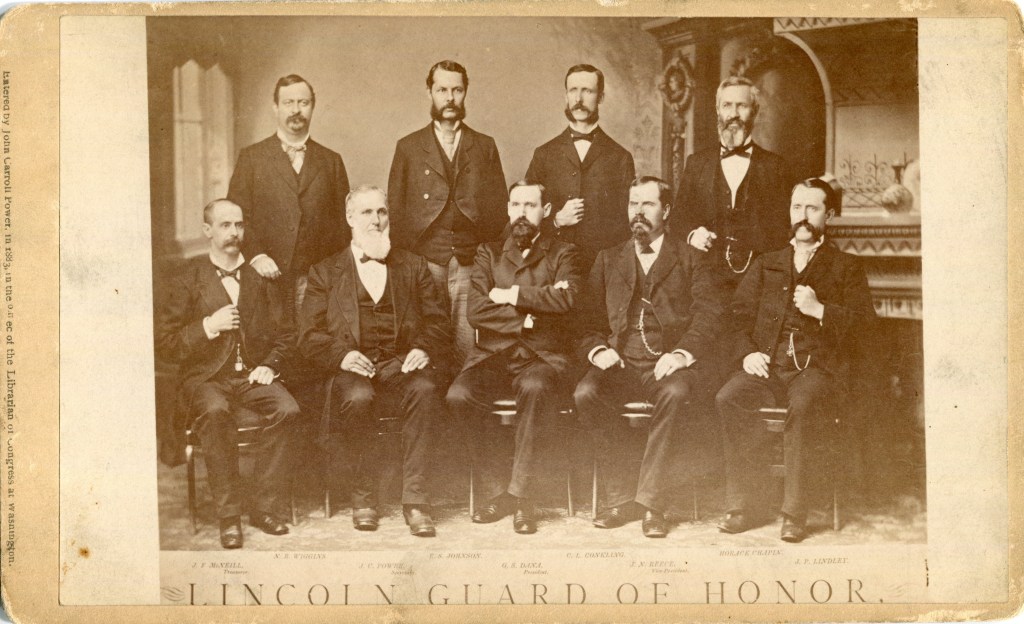
Lincoln Tomb Guard of Honor. John Carroll Power seated front row second from left.

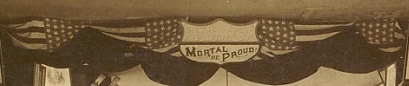
At that time the tomb’s Memorial Hall housed a small exhibit of Lincoln artifacts gathered by custodian John Carroll Power (a subject of my past columns). At that event, Oldroyd decided that his collection might be a bigger deal than he thought it was. “As I gazed on the…resting place of him whom I had learned to love in my boyhood years, I fell to wondering whether it might not be possible for me to contribute my might toward adding luster to the fame of this great product of American institutions,” wrote Oldroyd. It was after gazing upon those priceless Lincoln relics at the tomb that Oldroyd resolved to build a Memorial Hall in Springfield to display his own collection of Lincoln memorabilia. For a decade (1883 to 1893) that museum occupied the front parlors of the only home Abraham Lincoln ever owned at 8th and Jackson. The divider between those two rooms was adorned by a shield-shaped, flag-draped wooden motif adorned with the title “O, Why should the Spirit of Mortal be Proud!” Oldroyd made sure that every visitor to his museum was aware of the poem’s significance in the Lincoln chronology while surreptitiously causing each visitor to cast their eyes towards the heavens to receive the message.

Oldroyd’s Springfield Museum.
A stanza from the poem fashioned into a plaque hangs above the door in the above photo.

The poem is written in Quatrain form with an A-A-B-B rhyme scheme, or clerihew, with all of the dominant words highlighted by the rhyme. The poem resounded in Lincoln’s mind like an echo, its pauses, and connotations framing the beat of the poem. The poem causes its reader to reflect on the inevitable continuity of life; Life is short so why sweat the small stuff? We are but insignificant players in a much grander scheme, so do all you can while you’re here. Here, submitted for your approval in the spirit of Halloween, is Abraham Lincoln’s favorite poem in its entirety.

“O why should the spirit of mortal be proud! Like a fast-flitting meteor, a fast-flying cloud, A flash of the lightning, a break of the wave-He passes from life to his rest in the grave. The leaves of the oak and the willow shall fade, Be scattered around and together be laid; As the young and the old, and the low and the high, Shall moulder to dust, and together shall lie. The child that a mother attended and loved, The mother that infant’s affection that proved, The husband that mother and infant that blest, Each-all are away to their dwelling of rest. The maid on whose cheek, on whose brow, in whose eye, Shone beauty and pleasure-her triumphs are by: And the memory of those that beloved her and praised, And alike from the minds of the living erased. The hand of the king that the sceptre hath borne, The brow of the priest that the mitre hath worn, The eye of the sage, and the heart of the brave, Are hidden and lost in the depths of the grave.”

“The peasant whose lot was to sow and to reap, The herdsman who climbed with his goats to the steep, The beggar that wandered in search of his bread, Have faded away like the grass that we tread. The saint that enjoyed the communion of Heaven, The sinner that dared to remain unforgiven, The wise and the foolish, the guilty and just, Have quietly mingled their bones in the dust. So the multitude goes-like the flower and the weed, That wither away to let others succeed; So the multitude comes-even those we behold, To repeat every tale that hath often been told. For we are the same things that our fathers have been, We see the same sights that our fathers have seen, We drink the same stream, and we feel the same sun, And we run the same course that our fathers have run.”

“The thoughts we are thinking our fathers would think, From the death we are shrinking from they too would shrink, To the life we are clinging to, they too would cling-But it speeds from the earth like a bird on the wing. They loved-but their story we cannot unfold; They scorned-but the heart of the haughty is cold; They grieved-but no wail from their slumbers may come; They joyed-but the voice of their gladness is dumb. They died-ay, they died! and we, things that are now, Who walk on the turf that lies over their brow, Who make in their dwellings a transient abode, Meet the changes they met on their pilgrimage road. Yea, hope and despondence, and pleasure and pain, Are mingled together like sunshine and rain: And the smile and the tear, and the song and the dirge, Still follow each other like surge upon surge. ‘Tis the twink of an eye, ’tis the draught of a breath, From the blossom of health to the paleness of death, From the gilded saloon to the bier and the shroud-O why should the spirit of mortal be proud!”

Memento homo (remember you are only a man).

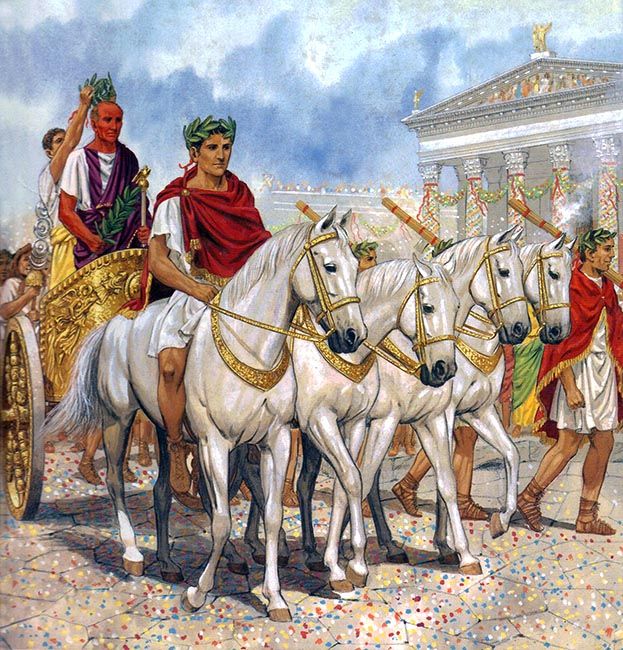
So what is the takeaway? Why should you be so proud of what you have, when all you have is so little in the bigger picture? The theme is one of life and death. A bleak and somber contrast reminds us that life is short, and in Lincoln’s case, fame is fleeting. Auriga, the slave charged with accompanying Roman Generals and Emperors through the streets of Rome after triumph in battle, often whispered the phrase Memento homo (remember you are only a man) while holding the golden crown inches above their heads. From a young age, Lincoln was well acquainted with the idea of mortality. So it comes as no surprise that he adored that poem. But it isn’t all gloom and doom. Within its stanzas are found muted messages of hope and the promise that it is not too late for society to change its ways by following in the footsteps of our ancestors. Reading this poem, one experiences the same feeling of reflection as Lincoln did. It explains how, during his entire lifetime, The Great Emancipator remained penitent and humble by simply following the lessons of this poem.

Art, Homosexuality, Pop Culture

Oscar Wilde In Indianapolis.

Oscar_Wilde

Original publish date:  February 28, 2019

It would be harder to find a more quintessential Victorian Era Englishman than Oscar Wilde, especially if you were to ask a literate American. Who was Oscar Wilde you ask? Oscar Fingal O’Flahertie Wills Wilde (October 16,1854-November 30, 1900) was THE flamboyant Irish poet and playwright. He became one of London’s most popular playwrights in the early 1890s and is perhaps best remembered for his novel The Picture of Dorian Gray, and the peculiar circumstances of his imprisonment and early death. What is largely forgotten is his visit to America in 1882, including two stops in the Hoosier state.
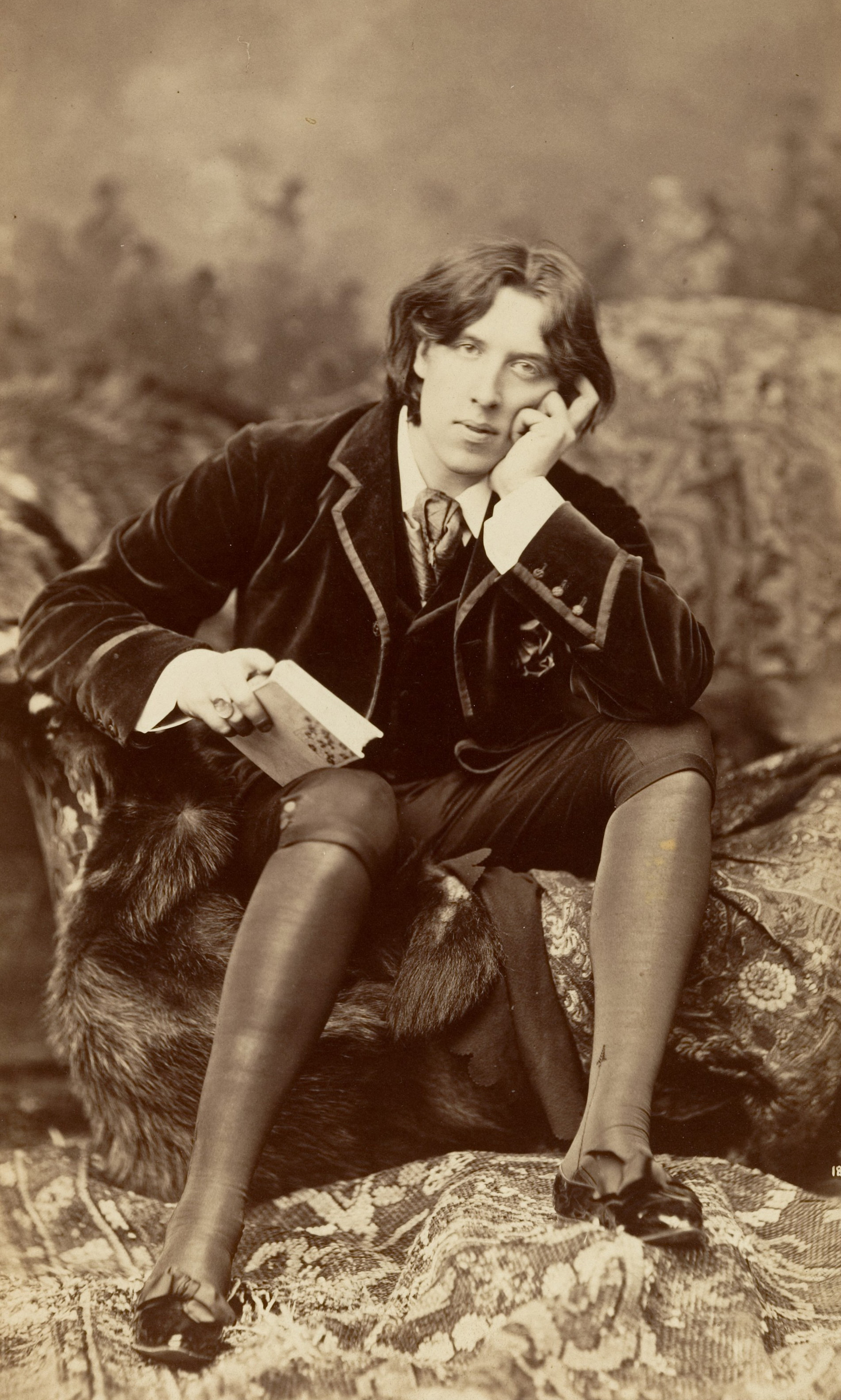
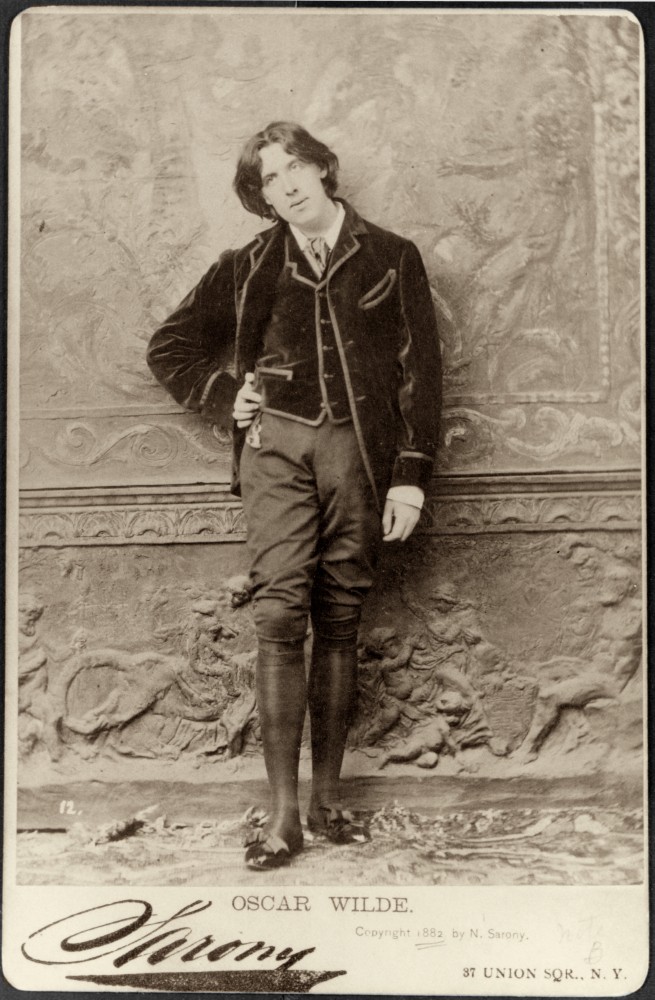
On January 3, 1882, 27-year-old Oscar Wilde arrived in New York on what would become a year long 15,000 mile visit to 150 American cities. The Dublin-born Oxford educated man was at the pinnacle of his personal eccentricity. His garish fashion sense, acerbic wit, and extravagant passion for art and home design had made such a spectacle in London that none other than Gilbert & Sullivan penned an operetta named “Patience” that lampooned Wilde as the champion of England’s aesthetic movement of the 1870s and ’80s . He was hired to go to America to lecture on interior decorating but in the end, it turned out to be a way for Wilde to promote himself. His visit may well have been one of the very first examples of “branding” as we know it today. It was on this lecture tour where most of the iconic photographic images so associated with Wilde and his “fierce” fashion sense were made.z Wilde-Sarony1
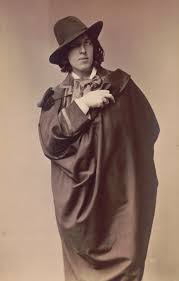
Despite the fact that at the time of his visit, Wilde was only the author of one self-published book of poems and a single unproduced play, he often proclaimed himself a “star”. His established routine was to appear on stage dressed in satin breeches and a velvet coat with lace trim crowned by a velvet feathered slouch hat perched at a jaunty angle as he advocated the importance of sconces and embroidered pillows—and himself. Wilde was among the first “celebrity” to understand that fame for it’s own sake could launch a career and sustain one. Good or bad, no matter, Wilde’s only concern what that they spell his name right.z wilde 1
According to biographer David M. Friedman (Wilde in America) Widle’s tour of nineteenth-century America ranged “from the mansions of Gilded Age Manhattan to roller-skating rinks in Indiana, from an opium den in San Francisco to the bottom of the Matchless silver mine in Colorado—then the richest on earth—where Wilde dined with twelve gobsmacked miners, later describing their feast to his friends in London as “First course: whiskey. Second course: whiskey. Third course: whiskey.” Wilde gave 100 interviews in America, more than anyone else in the world in 1882. Wilde arrived in an America whose news headlines were populated by outlaws (Jesse James), Presidential assassins (Charles Guiteau), legendary showmen (P.T. Barnum), and inventors (Thomas Edison). Where grabbing headlines are concerned, Oscar Wilde went toe-to-toe with them all. The difference being that Oscar Wilde was the first to become famous for being famous.
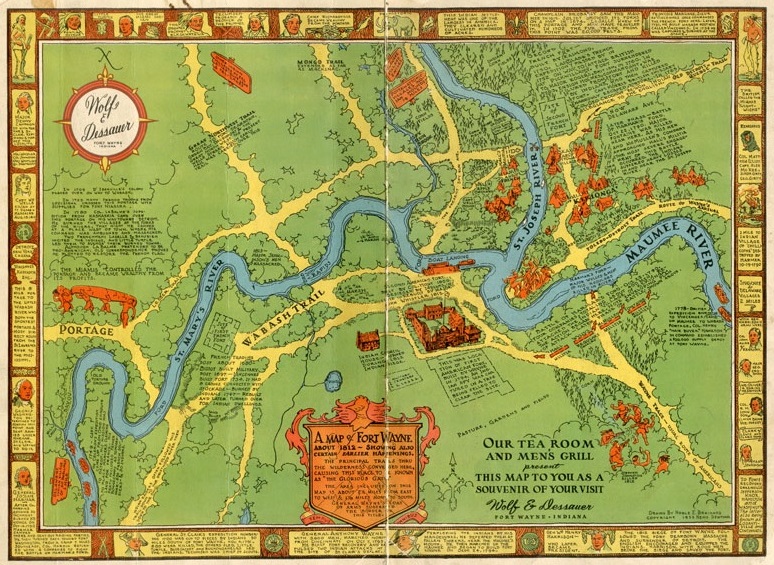
The first stop in Indiana on Wilde’s tour came in Fort Wayne on February 16, 1882. Wilde appeared at a facility known as “The Rink” located at 215 East Berry St. in the city (between Clinton and Barr streets). As the name denotes, it was opened as a rollerskating rink in 1869 and was converted into a public house known as “The Academy of Music” for the next decade before it became “The People’s Theatre” before being demolished in 1901. According to the “Pictorial History of Fort Wayne” the building stood on the site of the present Lincoln Memorial Life Insurance Building and was 60 feet wide by 150 feet long with a floor space capable of accommodating 500 ice skaters.

z w-amp-d-map-1940
Fort Wayne Indiana Map.

The Fort Wayne daily Gazette reported, “the Academy was about three quarters filled last night to hear Oscar Wilde, the greatly advertised lecturer, who has carried with him the lovers of the beautiful and his ideas of art. His lecture, in the main, is certainly an elaborately written, beautifully worded piece of literature; but for Oscar Wilde he is not an elocutionist, his voice is as effeminate as a school girl’s, and he becomes very tiresome to his auditors, even those who admire the lily and sunflower theory of the aesthetic genius. That Oscar Wilde is a cultured man no one will deny, that he is an orator, every one will hold up their hands in horror against such an insinuation.” The Fort Wayne News called the talk a “languid, monotonous stream of mechanically arranged words … scholarly but pointless; as instructive as a tax list to a pauper, and scarcely as interesting.” From Fort Wayne, Wilde circled around to Detroit, Cleveland, Cincinnati, Louisville, and Indianapolis.
Wilde’s February visit to Indianapolis came at a busy time in the city with 3 major conventions taking place: A veterans of the Mexican War reunion, the GAR reunion of Civil War Vets and the Greenback Party convention. Wilde appeared in person for one of his fashion lectures at the English Opera House on the northwest quadrant Monument Circle on February 22, 1882. A full color poster inside the opera house’s marble entryway declared that Wilde’s visit would be “The Fashionable event of the season.” The building was constructed by the Honorable William H. English, a businessman, banker, historian, and politician. Opened on September 20, 1880, the English immediately became the city’s leading theatre and remained so for the next 68 years. Widle’s visit came two years after Hancock ran for Vice-President with Civil War Hero of Gettysburg, General Winfield Scott Hancock.


z wilde 2
The English Opera House.

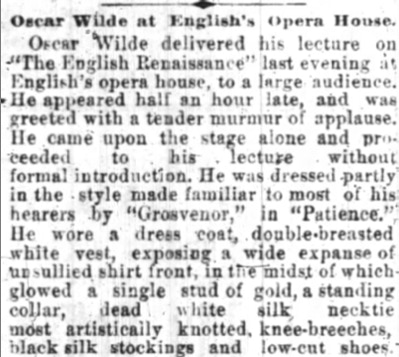
A crowd of 500 people crowded the opera house to witness Wilde’s 75 minute performance titled “The Decorative Arts”. The Feb. 23, 1883 issue of the Indianapolis News reported, “Oscar Wilde delivered his lecture on “The English Renaissance” last evening at English’s Opera House, to a large audience. He appeared half an hour late, and was greeted with a tender murmur of applause. He came upon the stage alone and proceeded to his lecture without formal introduction. He was dressed partly in the style made familiar to most of his hearers by “Grosvernor” in “Patience.” He wore a dress coat, double-breasted white vest, exposing a wide expanse of unsullied shirt front, in the middle of which glowed a single stud of gold, a standing collar, dead white silk necktie most artistically knotted, knee breeches, black silk stockings and low-cut shoes… Mr. Wilde has been has been variously criticized, but all agree that he is well worth seeing and listening to. Some can make nothing out of his lecture while others are delighted with it. The only way to judge is for each to go and hear for yourself.”
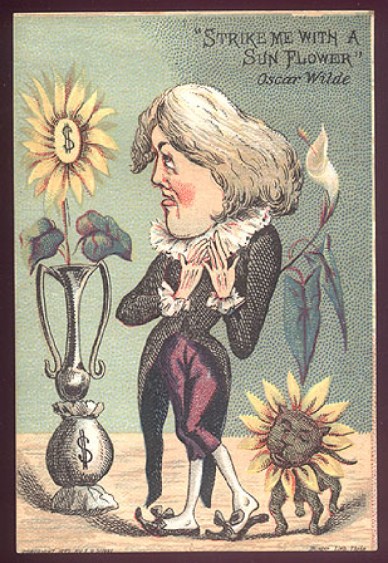
z strike-me-sunflowerNo less than five separate newspaper columns excoriated Wilde or his performance. The Indianapolis Journal newspaper said “We have grown sunflowers for many a year, suddenly, we are told there is a beauty in them our eyes have never been able to see. And hundreds of youths are smitten with the love of the helianthus. Alackaday! We must have our farces and our clowns. What fool next?” Soon, gaggles of admiring young men sporting sunflowers in their velvet lapels formed clubs known as “sunflower boys” to sit front and center at Wilde’s appearances. At Wilde’s other appearances, so many young street toughs interrupted Wilde’s shows that he sent advance notice to Denver that he would no longer act the gentleman and that he was “practicing with my new revolver by shooting at sparrows on telegraph wires from my car. My aim is as lethal as lighting. — O. Wilde.”
clipping-399


“He knows uncommonly well what he is doing,” said the Indianapolis News. The Indianapolis Daily Sentinel reported that “from pit to dome,” most came to make fun of him, but many soon realized that he had something to say. “It would be safe to wage a cigar that if Oscar can be induced by his manager to be a little more utilitarian, he will not want for appreciate or applause.” Wilde took the conservative criticism seriously and decided to tone down his outlandish stage costumes. Wilde later noted that his next night’s audience was “dreadfully disappointed at Cincinnati at my not wearing knee breeches.” Of the Queen City, Wilde quipped, “I wonder that no criminal has ever pleaded the ugliness of your city as an excuse for his crimes.”

1882-2-22-indianapolis-news-341 Morris Ross, one of the “legendary foursome” staff of writers and editors for the Indianapolis News (including Hilton U. Brown, Meredith Nicholson and Louis Howland), said that Wilde gained attention “mainly by adopting knee breeches and a lily. The latter’s lecture at the last-named city was by no means successful. One reporter caught him using the word “handicrawftsmen” seventeen times and noted his pronunciation of “teel-e-phone,” “eye-solate,” and “vawse.” The same newsman disliked Wilde’s legs, which he said had no more symmetry than the same length of garden hose. Wilde was invited to the governor’s party that evening and on the way he was asked why he came to America. “For recreation and pleasure,” he answered with his typical wit, “but I have not, as yet, found any Americans. There are English, French, Danes, and Spaniards in New York; but I have yet to see an American.” This was a common British criticism of this country during the nineteenth century. At dinner with the governor and his family, Wilde ate greedily. The Saturday Review reported that when he was introduced to ice cream he spooned it up “with the languor of a debilitated duck.”29 Indiana of the 1880’s was truly unsympathetic to Wilde and the aesthetic movement.”
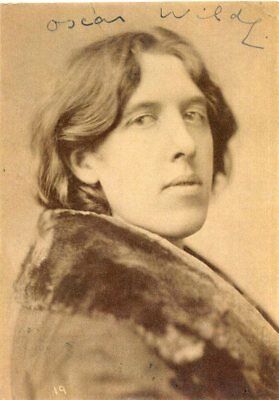
z OSCAR-WILDE-Signed-Photograph-Writer-AuthorOn his 1882 lecture tour of America drank elderberry wine with Walt Whitman in Camden (of whom he said, “I have the kiss of Walt Whitman still on my lips.”), conversed chillily with Henry James in Washington (who called Wilde “the most gruesome object I ever saw”), lectured in Saint Joseph, Missouri (two weeks after the death of Jesse James), called on an elderly Jefferson Davis at his Mississippi plantation (of whom Wilde inexplicably remarked, “The principles for which Jefferson Davis and the South went to war cannot suffer defeat.”), and fell prey to a con-man in New York’s Tenderloin (he lost $ 5,000 to legendary Gotham City conman Hungry Joe Lewis in a rigged Bunco game).
However, my favorite encounter story from Wilde’s American tour comes from his visit to Hildene. the New Hampshire estate of President Abraham Lincoln’s son Robert Todd Lincoln. Wilde ate dinner with the former Secretary of War and his wife Mary. Mrs. Lincoln was apparently entranced by Wilde but Robert remained silent throughout the encounter. The visit culminated with Mr. Lincoln’s sudden rise and push back from the table followed by a slamming of his napkin onto his dinner plate and announcement, “I do not care for that man!” Years after Lincoln’s death in 1926, an imperial sized cabinet photo of Wilde (dressed in all his finery) was found in the Secretary’s estate signed “To Robert T. Lincoln, with my very best wishes, Oscar Wilde”. Oh, if they only knew.