Abe Lincoln, Assassinations, Criminals, Indianapolis

John Mathews, Abraham Lincoln, John Wilkes Booth and six degrees of separation.

SONY DSCOriginal publish date:  February 19, 2016

Remember the game “Six Degrees of Kevin Bacon” that was so popular a few years back? It was a parlor game based on the concept that any two people on Earth are six or fewer acquaintance links apart. The winner is determined by the person able to use the least links to get to Kevin Bacon. Example: Someone draws the name Elvis Presley. Elvis was in the 1969 film CHANGE OF HABIT with Ed Asner. Asner was in the 1991 movie JFK with Kevin Bacon. Next player gets Will Smith. Smith and Jon Voight starred in ENEMY OF THE STATE… Jon Voight and Burt Reynolds starred in DELIVERANCE… Burt Reynolds and Demi Moore starred in STRIP TEASE…Demi Moore and Kevin Bacon starred in A FEW GOOD MEN . So Elvis wins.
I sometimes find myself playing six degrees with two of my favorite subjects: Abraham Lincoln and Indiana. I also love historical trivia. This article involves both. John Mathews was an actor and childhood friend of Abraham Lincoln assassin John Wilkes Booth. Mathews grew up with Booth in Baltimore Maryland and remained a close friend right up to that fateful night in April of 1865. They had the same jet black hair and classic features, but Mathew lacked the style and charisma that made Booth the superstar who many considered the most handsome man in America at the time. In fact, Mathews was acting on stage at Ford’s Theatre the night his friend killed the President.
Sometime around 11:00 am on April 14, 1865, John Wilkes Booth left the National Hotel and went to Ford’s Theatre to pick up his mail. At Ford’s he learns that President Abraham Lincoln would be attending the evening performance of Our American Cousin. Booth paced around the theater in a trance for some time before he decided that this would be the perfect time to assassinate the president.
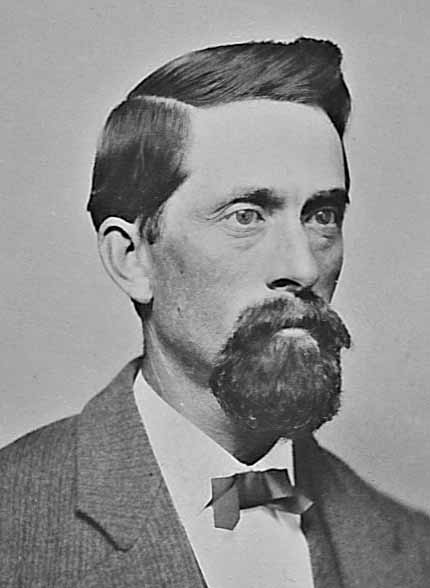
zjohn-h-mathews-croppedThat afternoon, Booth sat down and wrote a letter to the editor of a Washington D.C. newspaper called the National Intelligencer. In it, he explained that his plans had changed from kidnapping Lincoln to assassinating Lincoln. He signed the letter not only with his own name but also three of his co-conspirators: Lewis Powell, George Atzerodt, and David Herold. Then he got up and walked his rented horse down Fourteenth Street.
Around 4:00 pm, Booth runs into his old friend Mathews on the street near Willard’s Hotel. As it happens Mathews was playing the role of Richard Coyle in Our American Cousin that night. Booth greeted his friend with excited handshake, Mathews later recalled that Booth squeezed his hand so tightly that his nails left marks in his flesh. He gave Mathews the letter and asked him to deliver it to the National Intelligencer the next day. Booth got on his horse and rode off, passing General Ulysses S. Grant’s carriage along the way. Mathews, used to his friend’s odd behavior, tucked the letter into his coat pocket and thought no more about it.
Six hours later Booth enters Ford’s Theatre lobby around 10:07 P.M. He walks in the shadows along the curved back wall of the theatre up to the President’s box. Within minutes, Booth mortally wounds the President, jumps from the box 12 feet to the stage (breaking his leg in the process) and vanishes into the night. Inside the theatre, chaos ruled. Mathews and many of his fellow actors decided fairly quickly that the best thing they could do was to get out of there quick. Back then, actors were considered in the same vein as pickpockets, confidence men, rat catchers and prostitutes and they wanted nothing to do with the police. Those few actors who remained were quickly rounded up and jailed by the police. Harry Hawk, the actor who had been on stage at the moment of the shooting, wandered the streets of Washington aimlessly all night too afraid to go home.
In the chaos following the shot, Mathews retreated to his nearby boardinghouse. The streets were choked with people and soldiers guarded the entrance to every building. Mathews climbed the gutter to the open window of his upstairs room totally unaware that Booth’s letter was still secreted away in his overcoat pocket. As he removed his coat, the envelope dropped out with a pop onto the hardwood floor. Time stood still as a terrified Mathews stared at the unopen letter laying at his feet. “Great God,” he surely thought, this could be the instrument of my doom.zjonathan-h-mathews-cropped
30-year-old Mathews picked up the envelope with the care and concern of a surgeon. He slowly turned it over in his hands, unsure of what to do. Finally, he decided to open the letter. While the true contents of the letter are known only by Mathews and Booth, Mathews claimed it was a detailed confession to the assassination. Mathews quickly destroyed the letter by throwing it into the fireplace after reading it. After all, no one wanted the authorities to believe that they were associated with the assassin, childhood friendships notwithstanding.
After watching the fires consume the murderous edict, Mathews climbed back out the window and nervously walked back to the place he knew best; Ford’s Theatre. John Mathews almost got himself hanged twice on assassination night. Two separate crowds tried to hang him based on his resemblance to Booth and because he was in the theatre that night. He escaped the first unscathed. The second time, the rope had already been placed around his neck when some soldiers rescued him. Eventually, Mathews was detained by the authorities; partly for his own safety and partly for interrogation.
In time, Mathews revealed his long association with Booth and the details of the mysterious letter. He tried to reconstruct the letter for authorities but strenuously proclaimed his innocence and complete ignorance of his friend’s murderous intentions. Despite his protestations, he was detained for several days as an accomplice. Luckily for Mathews, Booth read newspaper accounts smuggled to him while hiding in the pine thicket of the southern Maryland woods. He discovered that Mathews had not delivered his manifesto to the newspaper as promised. Booth recreated it for posterity in his diary and it would match, nearly word-for-word, Mathews account of the letter.
After his release, Mathews was so frightened that he thought briefly of changing his name, but relented. Although risky and unpopular, Mathews remained faithful to his friend Booth for the rest of his life. He told friends and fellow actors, his sole reason for burning the letter was to erase any evidence against his friend. Even three decades later, he referred to the country’s first presidential assassination as “the great mistake.”
Interesting to be sure, but what about the trivia and the six degrees? John Mathews lived upstairs at Petersen’s Boardinghouse, the house directly across the street from Ford’s Theatre where President Lincoln was taken after he was shot. Petersen often rented rooms to the stock actors playing at Ford’s. During the 1864-65 season both John Mathews and fellow actor Charles Warwick had previously rented the room Willie Clark was renting on April 14. It was in private Willie Clark’s room where Abraham Lincoln died at 8:22 am on April 15, 1865.
Booth knew both actors well enough that he often stopped and chatted with each of them there. A few accounts go so far as to claim that Booth himself spent the night in the Petersen house, possibly even in the room in which Lincoln died. What historians know for sure is that Mathews was boarding at the Petersen House on March 16th when he returned to find Booth stretched out on the bed, hands clasped behind his head calmly smoking a cigar while waiting for him. It was the very same bed in which Lincoln died less than a month later.
z attachment-image-154bab99-e5ab-487c-82b3-f53b57612c82Apparently Booth visited Mathews and Warwick at the Petersen house and both rented the Lincoln death room on numerous occasions. Both actors recalled Booth visiting them there, stretching out on the bed, laughing and telling stories, chomping on a cigar or with his pipe hooked in his mouth. There are several unconfirmed claims that Mathews was actually staying in an upstairs room at the Petersen House on the night of Lincoln’s assassination. The accounts are speculative at best but tantalizing to be sure. If that were the case, then Mathews burned Booth’s confessional letter in a fireplace just feet away from the dying President.
As for the six degrees? John Mathews is buried in the Actors Fund plot of Kensico cemetery in Valhalla, New York a few feet away from vaudevillian actor Pat Harrington, Sr. His son Pat, Jr. played handyman Dwayne Schneider in the TV show “One Day at a Time” that also starred Bonnie Franklin, Valerie Bertinelli and MacKenzie Phillips. The sitcom was based in Indianapolis. I win!

Abe Lincoln, Creepy history, Pop Culture

Abraham Lincoln Parenting Skills. Part II.

ln0106_family_i52457_0946dfb2a7Original publish date:  June 10, 2013

Last week, I pondered the parenting skills of our sixteenth President Abraham Lincoln. Coming to the conclusion that I probably wouldn’t want to sit next to Abe and Mary’s kids on an airplane. Witnesses, acquaintances and close friends often remarked, sometimes frankly, other times temperately, that the Lincoln boys were “active.” I ended part one with a great quote from First Lady Jacqueline Kennedy about parenting: “If you bungle raising your children, I don’t think whatever else you do well matters very much.”
Like many a late stage baby-boomer, I realize that I have a fascination with historical celebrity nurtured by mass media that began at a young age. Part of that fascination revolves around the children of famous or noteworthy people, especially when it goes bad. I suppose there is comfort in knowing that rain also falls on the child of privilege as equally as it falls in our own lives. Regardless, there is a morbid fascination with parenting gone bad.
As a kid in Indianapolis, the Vietnam war was very real to me. I had neighbors, family members and school chums touched by the rigors brought on during that useless Southeast Asia debacle. Of course there were the outlandish rumors that passed through the school halls (Leave it to Beaver star Jerry Mathers dying in Vietnam prominent among them) but one rumor I can vividly recall was that Sean Flynn was missing. The son of famous swashbuckling actor and legendary playboy, Erroll Flynn, Sean was an actor turned freelance photojournalist who disappeared on April 16, 1970 while on assignment for Time magazine in Vietnam.
316310_506868396047614_471481590_nSean Leslie Flynn, born May 31, 1971, made some forgettable films during his short movie career including the regrettable remake of his father’s classic “Captain Blood” featuring the predictable title “Son of Captain Blood”. When he “retired” from acting, Flynn signed a contract with Time Magazine. In a search for exceptional images, he attached himself to Special Forces units and even irregulars operating in remote areas.
On April 6, 1970, while traveling by motorcycle in Cambodia, Flynn and Dana Stone (on assignment for Time magazine and CBS News respectively) were captured by communist guerrillas at a roadblock on Highway One. They were never seen again and their bodies have never been found. Although it is known that they were captured by Vietnamese Communist forces, it is believed that they died in the hands of rogue “hostile” forces. Citing various government sources, the current consensus is that he (or they) were held captive for over a year before they were killed by Khmer Rouge in June 1971.
Sean Flynn’s plight has often been sited as the inspiration for the “Russian Roulette” sequences in the 1978 film, “The Deer Hunter” with Christopher Walken winning an Oscar for portraying the character based on Flynn. Flynn’s mother, actress Lili Damita, spent an enormous amount of money searching for her son, with no success. In 1984 she had him declared legally dead. By this time, Sean’s dad, Erroll Flynn, had been dead for 25 years. Erroll Flynn’s life was the stuff of legend and his son’s mysterious disappearance brought the war home to young men all over the country in a way that olive clad casualty statistics just couldn’t convey.
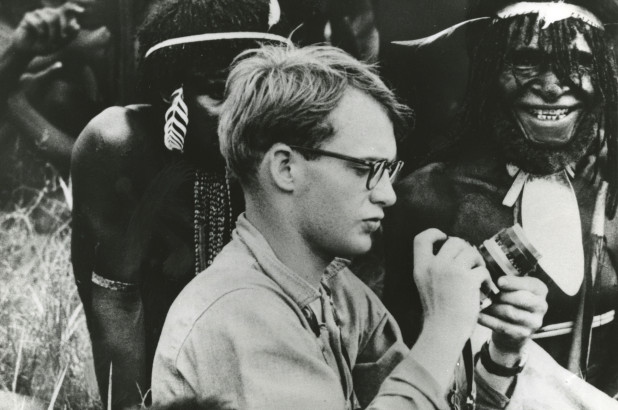
One other disappearance that I wasn’t around to hear about firsthand, but do remember hearing about for years afterward, was the strange case of Michael Rockefeller. The youngest son of New York Governor, U.S. Vice-President & multi-time Republican Presidential candidate Nelson Rockefeller, Michael Clark Rockefeller, was a fourth generation member of the Rockefeller family who had only recently graduated from college. After attending The Buckley School in New York, Rockefeller graduated from Harvard University cum laude in 1960, served for six months as a private in the U.S. Army, then went on an expedition for Harvard’s Peabody Museum of Archaeology and Ethnology to study the Dani tribe of western New Guinea.
The expedition produced Dead Birds, a documentary film, 3,500 photographs, and many anthropological artifacts that are now part of the Michael C. Rockefeller collection at the Metropolitan Museum of Art in New York City. The Peabody Museum exhibits the pictures taken by Rockefeller during that first New Guinea expedition. After returning home with the Peabody expedition, Rockefeller returned to New Guinea to study the Asmat tribe and collect primitive art. “It’s the desire to do something adventurous,” he explained, “at a time when frontiers, in the real sense of the word, are disappearing.” There was one tiny detail that Michael should have taken into consideration though. The Asmats were known headhunters.
untitled-9On November 17, 1961, Rockefeller and Dutch anthropologist René Wassing were in a 40-foot dugout canoe about three miles from shore when their double pontoon boat was swamped and overturned into the Arafura Sea. Their two local guides swam for help and told the Anglos to stay put, for obvious reasons. After drifting for some time in the rolling waters off the coast of New Guinea, Rockefeller said to Wassing “I think I can make it”. Michael estimated that the catamaran boat was five miles from the shore. The current was against him, and he risked a confrontation with a shark or crocodile, but perhaps because he was a Rockefeller, the fabled family of industrialists, philanthropists and politicians, he decided to swim for it. Later it was determined that the capsized boat was closer to twelve miles off shore when Michael pushed off.
Wassing, a poor swimmer, had decided to stay with the overturned boat, and he tried to persuade the stubborn Rockefeller against his plan. Rockefeller “Jerry-rigged” a life preserver by lashing together two empty gas cans. He stripped down to his underwear and tied his eyeglasses to his head with twine. He took a few deep breaths before paddling toward the forbidding mangrove swamps that lined the southwest coast of the world’s second-largest island. Wassing watched the swimming figure slowly disappear into the watery horizon. The Dutchman was rescued just nine hours later.
Michael Rockefeller was never seen or heard from again. The news that the great-grandson of John D. Rockefeller, founder of Standard Oil Co., was big news around the world. Upon hearing the news, Governor Rockefeller and Michael’s twin sister Mary rushed to New Guinea followed closely by a hoard of over 100 journalists. They searched frantically for 10 days at what the press called “the end of the earth, where Stone Age cultures had survived”. Finally, Nelson Rockefeller held a press conference to say that he had reached the conclusion that his son had died at sea before reaching shore.
In time, news of the disappearance of the youngest Rockefeller faded from the newspaper headlines and Michael joined the pantheon of missing persons that included Amelia Earhart, Jimmy Hoffa and D.B. Cooper. As with each of the other lost luminaries, various theories about Michael Rockefeller’s fate have surfaced over the years. Did he die from exposure, exhaustion or drowning? Did he decide to go native and lose himself in the jungles of New Guinea? Was he eaten by a shark or a saltwater crocodile? Or, in the most sensational speculative twist, was he a pale human trophy for New Guinean headhunters?
Headhunting and cannibalism were still present in some areas of Asmat in 1961. The Asmats MOA included stripping their trophy heads to the bone, bleaching them in the sun, and covering the skulls with painted depictions of the battle at which the victim fell. The size and climate of the huge island, slightly larger than Texas, did not aid Michael’s rescue efforts. A tropical rain forest, it has relentless heat and humidity and swarming insects. The coast is lined with swamps that are nearly impossible to navigate, and the interior jungles are dark and largely impassable. The island, due north of Australia and known as Dutch New Guinea, got its name from a Spanish explorer who saw a resemblance between the natives there and those of the Guinea, West Africa.
To support the death by cannibalism theory, researchers note that several leaders of Otsjanep village, where Rockefeller likely would have arrived had he made it to shore, were killed by a Dutch patrol in 1958, and thus would have been seeking revenge against someone from the “white tribe.” Cannibalism and headhunting in Asmat culture was viewed as an eye-for-an-eye revenge cycle, and it is possible that Rockefeller found himself the unlucky victim of such a cycle started by the Dutch patrol. The Rockefeller family believes that Michael either drowned or was attacked by a shark or crocodile. Rockefeller’s body was never found. He was declared legally dead in 1964.
Regardless, the Michael Rockefeller and Sean Flynn sagas are just a couple examples of the many tragic aspects of parenting that all parents must consider at the end of the day. The internet is full of accounts of missing children and adults. The news of these tragedies often gets lost in the headlines of the day. The best that we can hope for is to never be visited by such an unanswerable parental dilemma in our lifetimes. But for most of us, stories like this are always in the back of our minds. Regardless of our level of parental aptitude.

Abe Lincoln

Abraham Lincoln Parenting Skills. Part I

GettyImages-535801559-1600x1015Original publish date:  June 3, 2013

This has been an epiphinal year for the Hunter family. Recently, I watched as my daughter Jasmine graduated from Indiana University and tomorrow I’ll watch as my son Addison graduates from high school and readies himself to head down to I.U. this fall. I’ve raised these kids surrounded by history. Vacations, TV programs, movies, books, publications, heck, just about everything we do as a family has a historical tint. I’ve always told them that no matter what problem you face today, the answer can be found in history. Every modern situation has been faced and dealt with by someone we admire and emulate at some point in the past.
Recent weeks have set my mind a wanderin’ about parenting skills. Effective parenting is defined as a matter of strengthening the bond between the parent and child, and building positive parenting skills. I just returned from a two-day getaway to the Springfield, Illinois home of President Abraham Lincoln. I love to go and visit his house on Seventh Street in the early morning hours before the National Park Service employees, buses full of schoolchildren and tourists arrive. This during these early morning hours when you can really feel a connection with the old house.
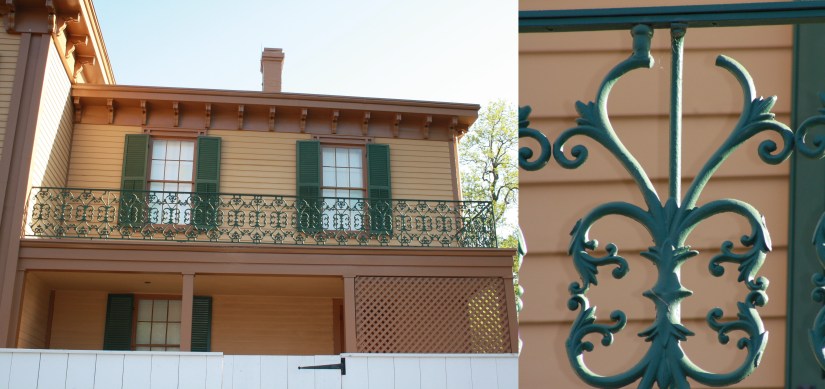
Lincoln fenceMy eyes are always drawn towards the upper second-floor balcony and a wrought iron gate contained there. Upon closer examination, one notices that there is a small piece of the ornate iron fencing that is broken. The balcony railing has been maintained in a state of “arrested decay” to honor Lincoln’s rambunctious boys, Willie and Tad, who allegedly broke off a piece of the ornamentation while playing on the balcony. While I have a deep affinity for Abraham Lincoln the man, I don’t think I’d aspire to adopt the parenting qualities of Abraham Lincoln, the father.
I often wonder how Lincoln, or any historical figure for that matter, would cope with raising children today. After all, many of the issues parents face today would have seemed like science fiction in Abraham Lincoln’s time. Monitoring kid’s online activities, cell phone usage, accelerated sports programs, complicated homework assignments and the litany of social media activities can be a difficult challenge requiring delicate handling nowadays. Yet, as far as parenting philosophies go, the Lincolns and their contemporaries have more in common with modern parents than they did with their own parents and grandparents. It seems that Civil War era families shared more in common with us than we think.
In colonial America, the family functioned as a single economic unit with each member of the household responsible for contributing to the families production and survival. Families were large, and children were expected to pitch in as soon as they were old enough to be useful. Life expectancy was short and it was not uncommon to find the same first name used over and over in family trees in anticipation of the child not surviving to adulthood. Colonial households did not allow a lot room for sentimentality where the family was concerned.
Marriages were often arranged for practical purposes: a father might marry his daughter off to a neighbor’s son to combine their parcels of land, for example. Romantic love between spouses was the exception, not the rule. Children were viewed as products of original sin that needed to have their wicked wills broken in order to become upright and productive citizens. All that was changing around the time that young Abe Lincoln wrote in to Springfield. As urban, middle-class professional men started working in offices separate from their homes, the family was increasingly bound together by ties of affection rather than economy. Men and women started marrying for love, limiting the size of their families and investing additional care and affection in their children. Childhood then, as today, was seen as a time of innocence and natural goodness that parents sought to indulge and enjoy.
Consider the difference between Lincoln’s experience and that of his children. Lincoln was born on a farm and expected to work for the families benefit until he legally came of age at 21. He later recalled that at age 8 he “had an ax put into his hands at once; and from that till within his twenty-third year, he was almost constantly handling the most useful instrument – less, of course, in plowing and harvesting seasons.” Lincoln left home at his earliest opportunity and his relationship with his father was so cool that he opted not to visit him on his deathbed.
Lincoln_Family.in_Abraham_Lincoln_MuseumLincoln’s own children, however, spent their days playing with their toys in their carpeted sitting room or attending school. Both luxuries not available to young Abe Lincoln. While Abe grew up in poverty, Mary came from a prominent, wealthy Kentucky family-the Todds. Although she grew up in considerable luxury, her childhood was affected by the loss of her mother, emotional alienation from her father and disenfranchisement from her step-mother. Mary’s unhappy childhood caused her to dote on her children as equally as her husband but for vastly different reasons. In short, most people would consider the Lincoln children to be perfect “brats”. Mary Lincoln later recalled that Lincoln “was very – exceedingly indulgent to his children… He always said it is my pleasure that my children are free, happy and unrestrained by parental tyranny. Love is the chain whereby to bind a child to its parents.”
Examples of Lincoln’s indulgence towards his children can be found in every volume that mentions his family life. Some of the accounts are romantic and flowery in their descriptions, while other, more contemporary accounts offer a more frank, unvarnished view. Lincoln’s law partner and biographer William Herndon described the Lincoln boys thusly: “Had (his children) sh-t in his hat, and rub it on his boots, Lincoln would have laughed and thought it smart.” Willie and his younger brother Tad were considered “notorious hellions” during the period they lived in Springfield. They were recorded by Herndon for turning their law office upside down; the boys regularly discarded orange peels and other trash on the office floor, jumped from desk to desk and pulled books off the shelves. While Lincoln appeared oblivious to their behavior.
The Lincolns had four sons. Undoubtedly, Mary would have liked to have had a little girl to dress up and fuss over, but she loved her boys deeply. The Lincoln boys had extremely varied personalities; Robert was serious and dour, Eddie and Tad bubbly, curious and energetic while Willie was precocious and much more contemplative. Only two of the children survived their father and only one lived to maturity. Eddie was the first to die and we do not know as much about him as the other boys. He died at an early age before the Lincolns were well known. From all accounts it was a tragedy from which their parents never recovered, especially his mother.
By all accounts, the Lincolns were permissive parents. On one train trip the other passengers were appalled by the behavior of the boys who Lincoln referred to as the “little codgers”. They were racing down the isles disturbing the other passengers. The Lincoln home was a child-centered home. Every year, Mary would hold birthday parties for her boys during an era when such events were very out of the ordinary. Mary would dress up for roles in Robert’s many theatrical performances. The Lincolns encouraged the boys to recite poetry (usually Burns and Shakespeare). Viewed in context with the times, these were considered inappropriate intrusions into adult social functions. In short the Lincoln boys did as they pleased and attempts at discipline in the Springfield household were rare.
The permissive approach continued in the White House. The two middle boys entered the White House together with their parents while Robert was initially away at school and later serving in the Union Army. The roof of the White House was converted to a play area for Willie and Tad. But make no mistake about it, the entire White House was domain to the devilish pranksters as they ran wild throughout the White House. Their antics amused a nation immersed in the tragedy of the Civil War. Visitors, employees, and Cabinet members became so used to the sight of Willie and Tad sliding down the banisters, that they quickly ignored it. Sometimes the President himself could be seen romping about the White House with them. Both boys delighted in their father carrying them on his shoulders. Lincoln was of course very tall and the boys could often reach the rafters in the ceiling which delighted them.
They were the two most famous presidential boys and they left a trail of destruction and mayhem in their wake. The President for the most part saw it as great fun. Tad was impulsive, unrestrained, and did not attend school. Some historians have described Tad as being “slow”, or worse, as mentally challenged. Willie, however, was a deep thinker who regularly memorized railroad timetables and chided his brother for breaking White House property because it didn’t belong to the family, it belonged to the American people. Lincoln’s personal secretary, Hoosier John Hay, wrote that Tad’s numerous tutors in the White House usually quit in frustration. While Willie read, Tad had free run of the White House. Tad collected animals, charged visitors to see his father, and once sentenced a pet rat to death by hanging. His father quickly pardoned the rat and set it free.
It is a little-known fact that Abraham Lincoln issued more presidential pardon’s than any president before or since. It is understandable as so many of them were for deserters in the civil war. For much of history deserting your post has been punishable by death. Harsh perhaps, but when your actions [falling asleep at your post etc] can get your fellow soldiers killed it was an effective way to maintain discipline. Lincoln recognized that war is awful and felt that if, in his own words, “God gave a man cowardly legs” then perhaps some lenience when they “run away with him” was appropriate. Lincoln once heard about a 16-year-old soldier who was scheduled to be executed for desertion. He telegraphed the General in charge to pardon the young man and asked that they institute a policy of not executing anyone under the age of 18.
Although remembered as angelic in nature, Willie was not immune to the military atmosphere in which he was surrounded. When one of Tad’s soldier dolls “fell asleep at its post”, Willie sentenced the doll to death. Tad brought the issue to his father knowing that he was the only one that could help. In the midst of dealing with the pressures and physical hardships brought on by the rigors of the Civil War, Abe still took the time to address the situation by issuing an official pardon on presidential stationary signed, “A. Lincoln”. Weeks later, in 1862, when 11-year-old Willie died of fever in the White House, the entire nation grieved. Less than 100 years after the Lincolns inhabited the White House, first lady Jacqueline Kennedy told a reporter, “If you bungle raising your children, I don’t think whatever else you do well matters very much.”

Abe Lincoln, Gettysburg

William H. Johnson. Citizen. An Abraham Lincoln story.

9475088_123705676279Original publish date:  December 14, 2013
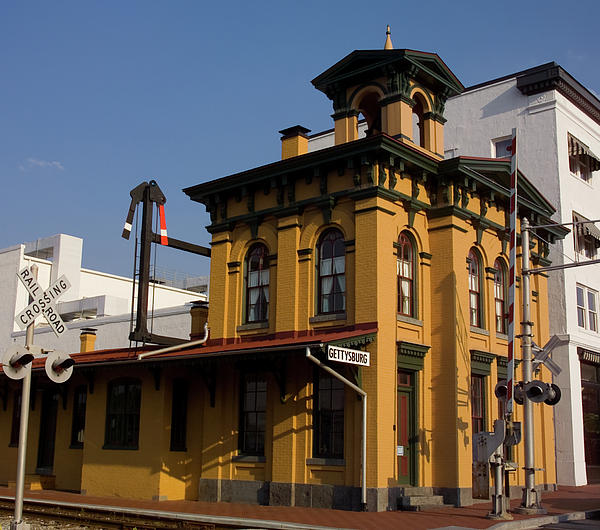
This past November, I shared with you a series of articles commemorating the 150th anniversary of Abraham Lincoln’s Gettysburg address. The speech is well known to most Americans and the words Mr. Lincoln spoke that day were once required memorization for every student in this country. The minutia surrounding the speech would make a Hollywood script writer salivate; Lincoln’s son Tad was left behind at the White House with a raging fever, Lincoln was asked to attend the cemetery dedication as an afterthought, the ground upon which he spoke was literally still wet with the blood of dead American soldiers and now Lincoln himself was showing signs of the fevered weakness of smallpox.
By all accounts, it was Lincoln’s African American valet William H. Johnson who identified the symptoms, alleviated the problem and nursed the President back to health. What? A black man saved Abraham Lincoln’s life after Gettysburg? Why have we never heard of William H. Johnson? Almost all that is known of him comes from Lincoln’s Papers. Although recently, Hollywood tried to put it’s own spin on the good Mr. Johnson. In the entirely forgettable 2012 film “Abraham Lincoln: Vampire Hunter”, they replaced the young railsplitter’s literary “sidekick” with his White House Valet, William Johnson, played by actor Anthony Mackie. Did I mention that was Hollywood though? Now, let me tell you the real story and let’s try to set the record straight.
William Henry Johnson was born around 1835 in a site unknown. He was described as a free “colored man” who came with the Lincoln family from Springfield Illinois to become the newly elected President’s valet and barber. He has no surviving photograph, and we can only speculate as to his age. He was, however, very close to the president. He had been serving Mr. Lincoln for about a year when his employer wrote him a note of recommendation on March 7, 1861. Seems that even a President had to get confirmation for a desired new hire back in those days. It stated: “Whom it may concern. William Johnson, a colored boy, and bearer of this, has been with me about twelve months; and has been, so far, as I believe, honest, faithful, sober, industrious, and handy as a servant. A. LINCOLN.” Although he served as the President’s valet, the President’s House Register listed him in 1861 as “W. H. Johnson, Fireman, President’s House, $600 per annum.”
It appears that there was antagonism toward Johnson from the start. Some believe it was due to Mr. Johnson’s close relationship with the President. Most of the opposition came from the existing White House staff, who were generally lighter skinned, “high yellow”, that is to say, almost white. So, a White House job was apparently out of the question. President Lincoln sought other employment for Johnson only days after his inauguration. In a letter to Navy Secretary Gideon Welles on March 7, 1861, the President asked the secretary to give employment to W. Johnson, “a servant who has been with me for some time.” In that same letter, Lincoln notes that “The difference of color between him & other servants is the cause of our separation.” explained Lincoln. “I have confidence as to his integrity and faithfulness.” Even though Welles was as close a friend as Lincoln had in all of Washington, his plea evidently fell on deaf ears.
In a subsequent letter to Salmon Chase, he successfully sought a position for Johnson in the Treasury Department. On November 29,1861, Lincoln wrote Treasury Secretary Salmon P. Chase: “You remember kindly asking me, some time ago whether I really desired you to find a place for William Johnson, a colored boy who came from Illinois with me. If you can find him the place shall really be obliged. Yours truly A. LINCOLN.” He was then given a place as laborer / messenger with the Treasury Department at $600 per year. From then on, he worked for the Treasury in the afternoon and tended to Lincoln’s wardrobe, shaved him, and did other personal services for Mr. Lincoln in the morning and evening.
On March 11, 1862, the President wrote Johnson a personal check for $5. October 24, 1862, again found Lincoln writing a recommendation for him reading: “The bearer of this, William Johnson (colored), came with me from Illinois; and is a worthy man, as I believe. A. LINCOLN.” Nevertheless, on December 17, 1862 the President declined to endorse a memo for Johnson because he did not want it to be mistaken as an order for employment. The memorandum, referring to a request for leave of absence for his valet in order to earn extra money, reads: “I decline to sign the within, because it does not state the thing quite to my liking. The colored man William Johnson came with me from Illinois, and I would be glad for him to be obliged, if he can be consistently with the public service; but I can not make an order about it, nor a request which might, in some sort, be construed as an order. A. LINCOLN.”
gettysburg-train-On November 18, 1863, Lincoln wrote a note explaining that Johnson would travel with him to Gettysburg for the dedication of the soldiers’ cemetery. The note, written to the Treasury Department, asks to borrow Johnson’s services for a “whole day or two” and closes simply: “William goes with me.” Mrs. Lincoln remained at the White House attending to their son Tad. Once in Gettysburg. After delivering his address, Lincoln began to feel ill and while aboard the return train to Washington “lay in a relaxed position with a wet towel across his head,” placed there by Johnson. The details of the President’s recovery were covered in detail in part III of the November Lincoln at Gettysburg series. Although the President would recover, Mr. Lincoln may have unwittingly passed the illness on to his valet.
The story of Johnson’s death is not much clearer than that of his life, since the chaos of war left death and burial records in disarray. What we know is that by by January 12, 1864 Johnson was himself sick with smallpox. By the 28th, he was dead. In a January 12th interview with the Chicago Tribune, Lincoln told the reporter than he didn’t believe that he gave smallpox to Johnson. But based on the late November speech date, given the incubation period of about two weeks and the average time for the illness to run its fatal course, that’s about the right timing for a disease contracted while caring for Lincoln. However, if it was circulating around residents and staff at the White House, it is possible that Johnson contracted it from someone else.
Abraham-Lincoln colorizedDuring that Chicago Tribune interview, the journalist found Abraham Lincoln busy counting greenbacks. The money belonged to Johnson who was in the hospital, so sick that he could not even draw his pay. “This, sir, is something out of my usual line,” the president told the reporter, “but a president of the United States has a multiplicity of duties not specified in the Constitution or acts of Congress. This is one of them. This money belongs to a poor negro [Johnson] who is a porter in one of the departments (the Treasury) and who is at present very bad with the smallpox. He did not catch it from me, however; at least I think not. He is now in hospital, and could not draw his pay because he could not sign his name. I have been at considerable trouble to overcome the difficulty and get it for him, and have at length succeeded in cutting red tape, as you newspaper men say. I am now dividing the money and putting by a portion labeled, in an envelope, with my own hands, according to his wish.”
After Johnson’s passing, Lincoln learned that his friend had borrowed $150 from the First National Bank of Washington using Lincoln as a reference. The bank’s cashier, William J. Huntington, happened to mention the outstanding notes to Lincoln: “the barber who used to shave you, I hear, is dead.”
“‘Oh, yes,’ interrupted the President, with feeling; ‘William is gone. I bought a coffin for the poor fellow, and have had to help his family.’” When Huntington said the bank would forgive the loan, Lincoln replied emphatically: “No you don’t. I endorsed the notes, and am bound to pay them; and it is your duty to make me pay them.”
“Yes,” said the banker, “but it has long been our custom to devote a portion of our profits to charitable objects; and this seems to be a most deserving one.” When the president rejected that argument, Huntington said: “Well, Mr. Lincoln, I will tell you how we can arrange this. The loan to William was a joint one between you and the bank. You stand half of the loss, and I will cancel the other.” After thinking it over, Lincoln said: “Mr. Huntington, that sounds fair, but it is insidious; you are going to get ahead of me; you are going to give me the smallest note to pay. There must be a fair divide over poor William. Reckon up the interest on both notes, and chop the whole right straight through the middle, so that my half shall be as big as yours. That’s the way we will fix it.” Huntington agreed, saying: “After this, Mr. President, you can never deny that you endorse the negro.” “That’s a fact!” Lincoln exclaimed with a laugh; “but I don’t intend to deny it.”
Although the exact day of Johnson’s death is not known we do know that on January 28, 1864, Lincoln wrote a recommendation for Solomon James Johnson (it’s unknown if he was related) to Treasury Secretary Salmon P. Chase: “This boy says he knows Secretary Chase, and would like to have the place made vacant by William Johnson’s death. I believe he is a good boy and I should be glad for him to have the place if it is still vacant. A. LINCOLN.”
While he shared a racial view typical of many white northern moderates, Lincoln clearly thought highly of Johnson. The incident reveals Lincoln’s humanity at its best. The working relationship between the two men attests to the complex and even enigmatic nature of Lincoln’s racial attitudes in general. Indeed, the mystery that surrounds Johnson’s death, and Lincoln’s sense of responsibility for it, tells us much about the “Great Emancipator’s” complex relationship with African Americans and their quest for full citizenship.
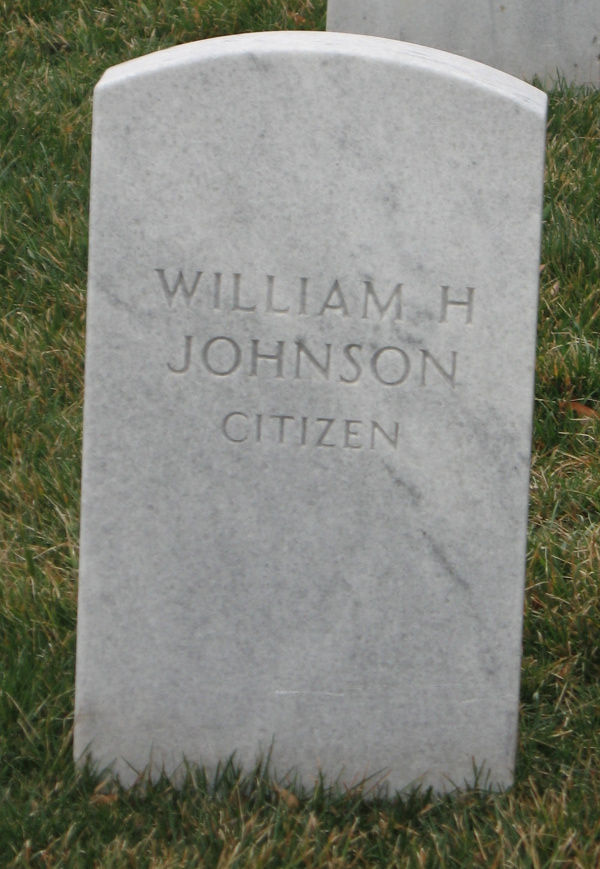
Lincoln requested that his valet be buried on the Arlington Mansion grounds (the Custis-Lee estate’s official conversion to Arlington National cemetery was still several months away) and used his own personal funds to pay all funeral service expenses including the tombstone. That original stone no longer exists. He now rests under a circa-1990s Era government issued stone with the name and a single word added by his friend, the President of the United States, Abraham Lincoln. While no-one will ever truly know the depth of the personal relationship between the two men, the depth of respect can not be denied. The headstone, found in Plot 3346- Section 27 of Arlington National Cemetery, reads simply: “WILLIAM H JOHNSON. CITIZEN.”

Abe Lincoln, Auctions, Gettysburg, Pop Culture

The Gettysburg Wax Museum Auction.

Wax MuseumOriginal publish date:  March 20, 2014

Seeking escape from the coldest, harshest winter in recent memory, I sought escape by attending a liquidation auction at an iconic baby boomer tourist landmark on the site of America’s greatest battlefield; The Gettysburg Wax Museum in Pennsylvania. Aware of my penchant for tourist traps and knowing that the museum was built the year I was born (1962), despite my reservations, she decreed “You’re going.”
Known as “The National Civil War Wax Museum”, the site at 297 Steinwehr Avenue opened April 19, 1962. That week Walter Cronkite took over as CBS anchorman, Bob Dylan performed “Blowin’ in the Wind” for the first time in Greenwich Village, the Boston Celtics won their fourth straight NBA championship, the Seattle World’s Fair opened and Indy 500 champion Al Unser Jr. was born (on the museum’s opening day). The original Museum featured 35 scenes containing over 150 individual figures highlighting the Civil War and Gettysburg. The museum’s purpose was not only to entertain but to educate.
IMG_0520On Saturday, March 15th the museum’s contents were sold to the public at auction. The sale included 95 Civil War wax figures and the accouterments used to illustrate each scene. In it’s half century of service the museum saw over 8 million visitors walk through the turnstiles, now lot # 265 in this very special auction.
Although I had been in the museum many times over the past 25 years, it was a shock to now see the building gutted and lain bare. Most of the auction lots were arranged in the scenes where they had “lived” for the past half-century. It seemed strange to now step into the scenes to get a closer view of the lifelike depictions from the pages of history. These forms thast were gazed upon by untold generations of visitors including presidents, diplomats, dignitaries and just plain folk from every walk of life.
I met 19-year wax museum employee Stephanie Lightner while walking the halls among the ghostly figures. She is the manager of the new museum that will soon be open there. Stephanie says the building was purchased by a New Jersey man who had grown up in Gettysburg and that the facility was being retooled to better accommodate a new generation of visitors. “We’ll be keeping some of the exhibits to display in the new museum,” said Stephanie. She said that the new owner kept all of the staff from the Wax Museum, always a good thing. The new museum, known as the “Gettysburg Heritage Center”, is set to open in late April but as Stephanie smilingly admits, “It might be Memorial Day at this point.”
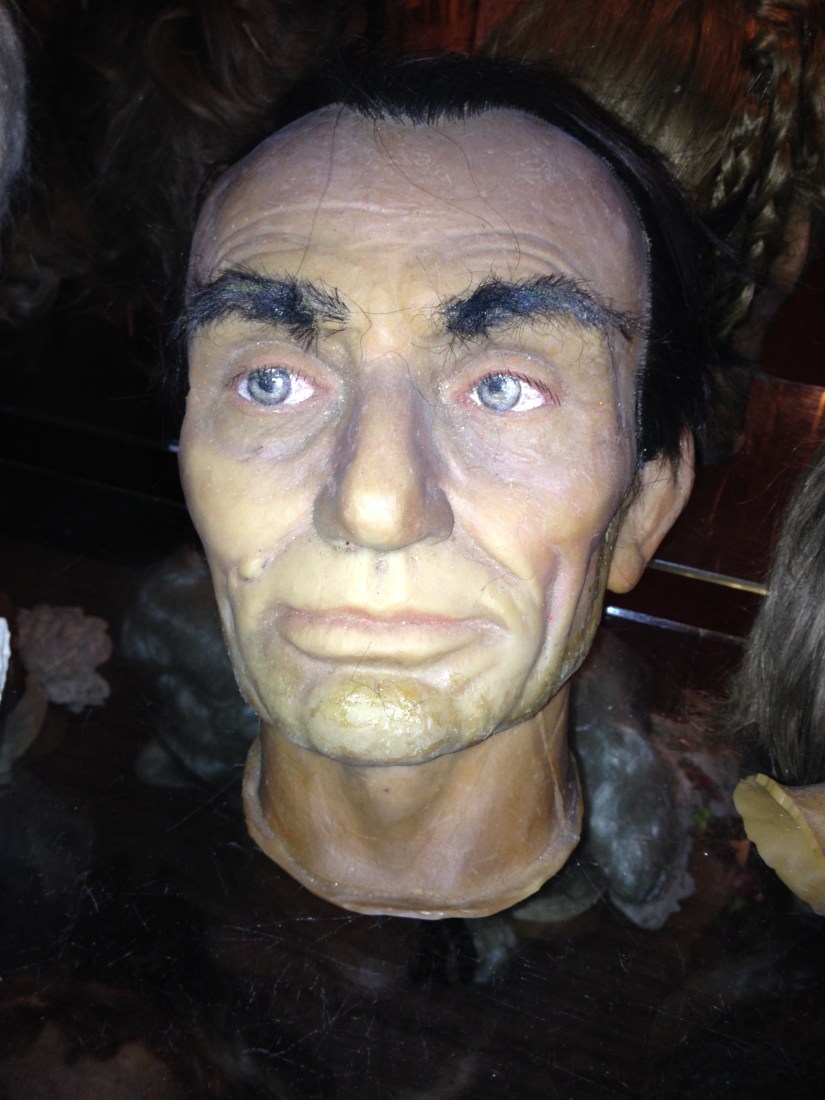
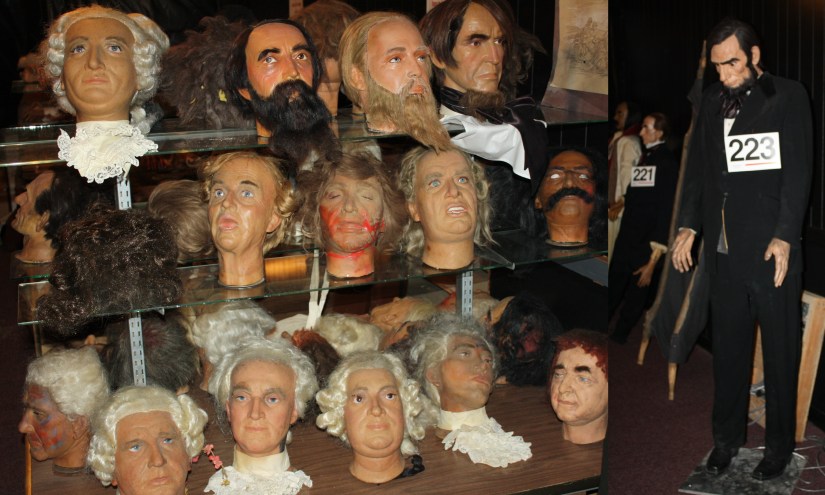
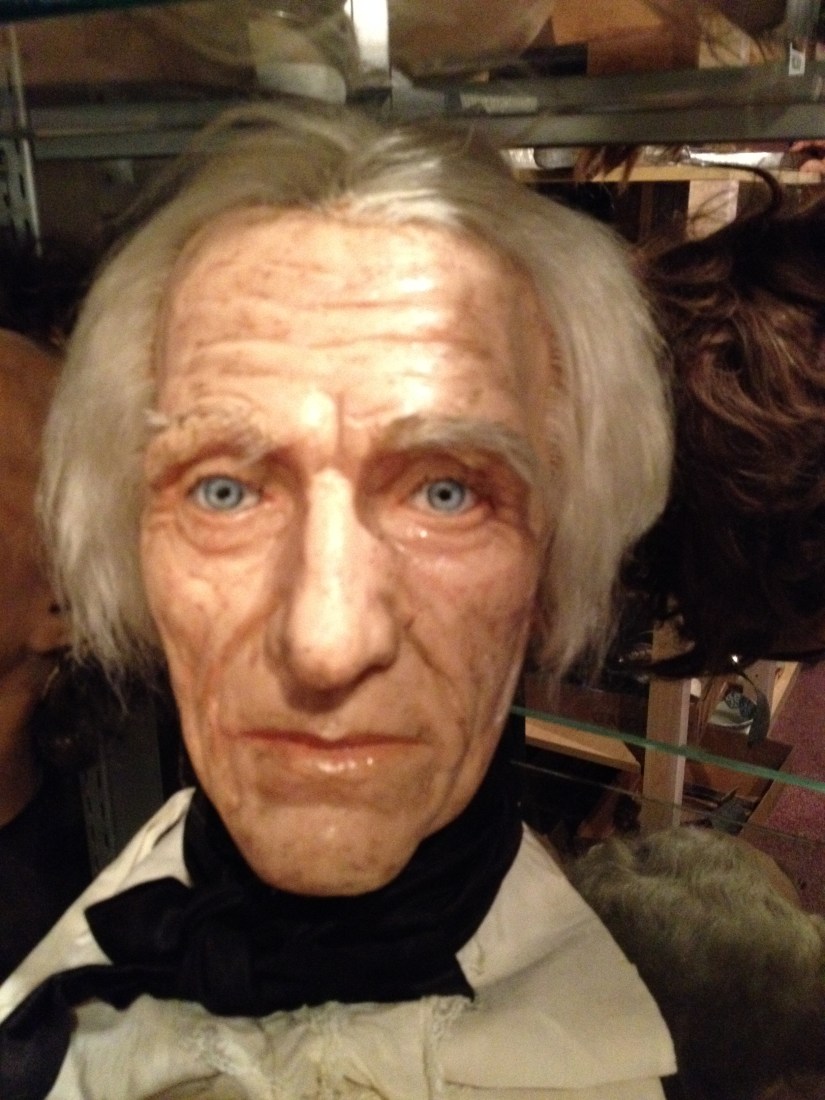
IMG_0521As I finished perusing the auction lots, I halted at an area tucked away in a back corner of the hall. This dimly lit crook featured tiered shelves upon which rested approximately 40 disembodied heads. Some of the heads were recognizable to me; Abraham Lincoln, Andrew Jackson. On a shelf nearby lay a pile of arms, legs and hands. Some of these body parts, in keeping with the brutality of the Civil War, were spattered with blood stains. Seeing these, I turned to my wife and said “Now these have the potential to go sky high.”
Officially, the auction featured 335 official lots but that number would balloon to over 400 by close of sale. The crowd quickly ballooned to standing room only. It was a strange mix of Civil War re-enactors, Harley dude’s and local Pennsylvania Dutchmen. I spotted a few ghost hunter types in the crowd as well, no doubt hoping to score a disembodied head, bloodstained arm or broken hand should the opportunity arise. I saw some familiar faces, among them Gettysburg’s former Abe Lincoln, Bill Ciampo, who told me, “I just came to see if there was a market for this stuff. When I sold my Lincoln wax statue, I sold it for $500 just to get rid of it.” Ciampo walked up to the Lincoln figures (the museum had three full Lincoln figures and one head) and said, “See, their chins are already drooping, that’s why I got rid of mine.”
IMG_0523The synchronicity of the moment was not lost on me as, outside just yards away, bulldozers busily cleared out the massive football field sized blacktop parking lot. It had once served the old visitor’s center (torn down in 2008) and Cyclorama building, built the same year as the wax museum and torn down in March 2013. In the past 25 years I watched as other tourist landmarks disappeared from the borough including the Lincoln Room Museum, The National Tower, and now, the Wax Museum.
Also among the crowd was Erik L. Dorr, curator and owner of “The Gettysburg Museum of History” at 219 Baltimore Street. Erik painstakingly maintains his fantastic personal collection of relics from the Battle and the pages of American history within the walls of his ancestral family home. “The house was built in the 1850s and has been in my family for four generations. It was extensively remodeled in 1867 and again in the early 1900s.” said Dorr.
On this day, Mr. Dorr was searching for additions to his massive collection. “I’m running out of room at my Museum now. I actually tried to buy the whole Wax Museum, including the contents, land and building. I thought it would be a fun experiment and I was getting financing in order but it didn’t fall into place fast enough and the museum sold.” says Dorr, “I would have kept the wax museum intact as much as possible while adding my collection to it.” Among the items he bid on and won were the Jenny Wade, George Armstrong Custer and John Wilkes Booth wax statues. He also bought many of the signs including the iconic interior entryway sign that lit up to indicate when the next group should enter.
“I bought most of the Jenny Wade booth with the idea of recreating it in my museum.” Dorr remarked. “As it stands now, I’ll have to display the statues one at a time because of space limitations.” Mr. Dorr reports that he is actively looking for a new space to house his collection, “I could get a place just outside of the town limits, but I want it to stay in the borough of Gettysburg.” Currently Dorr, the consummate historian, is busy making plans to attend the 70th anniversary of the D-Day invasion at Normandy in early June as an invited guest. “They’re calling this the last reunion.” he says, “The trip is pretty brutal and most of the vets won’t make it to the 75th.” But that’s a story for a future column.
Seated nearby were a young couple whom I met by taking a photo of them proudly displaying their bidder number. Turns out this couple was Scott and Lori Hilts from Arcade New York. They live on an 1850s dairy farm and Scott has converted the barn into a museum dedicated to the battle of Gettysburg. In a familiar refrain, Scott admits, “I’m running out of room. It’s 40’by 80′, but I might have to expand.”
Scott, owner and operator of 2 funeral homes, proudly traces his roots back to Corp. John Christ of Co. E 136th New York State volunteer infantry who was wounded on the mystical third day at Gettysburg. “I bought the (Robert E.) Lee and (George) Meade figures because I felt they were the ones most identified with Gettysburg,” Hilts said, “but I bought some paintings and signs too. Since I bought the Lee-Longstreet conference painting, I went ahead and bought the General James Longstreet figure too.” He also bought a colorful Zouave soldier to represent the many ethnic troops that fought at Gettysburg and to honor his home state.
I asked Lori about Scott’s Gettysburg obsession and she explained that she was “fine with it and it keeps him out of trouble.” She admitted that when Scott told her of his plans to purchase a wax figure or two, she thought the idea was “strange” and her biggest fear was running into one of them in the middle of the night. “As long as they stay in his man cave, then I guess it’s all right.” Besides, Lori reports that she found a Steiff “center stitched teddy bear” the next day at an antique show in nearby New Oxford so, “It was a good tip for me too.”
Scott, an arduous collector whose specialty is images, letters and diaries of soldiers killed, wounded or held as POWs at Gettysburg, loves nothing better than researching every item he adds to his collection. Over the years I have found that it is often collectors like Scott who are most dedicated to the preservation, protection and promotion of history. Scott Hilts is one of those new breed “collector as curator / preservationists.”
By my count the auction grossed just over $ 100,000, a figure that does not reflect the 10% buyers premium. There were over 350 registered bidders from as far away as Los Angeles. You might think it would be one of the statues that brought the most money at the sale. But the top lot was # 317, a rare Singer sewing machine made in 1846, that brought $5775 and a round of applause from the crowd. The famous General figures, and those of Jennie Wade and Jesus Christ, all landed in the $1000 neighborhood. The Lincoln figures sold for upwards of $2000 each. But many of the lots receiving spirited bidding included the furniture, wall hangings, and artwork that adorned the scenes. Items that went largely unnoticed by museum visitors focused solely on the statues. Civil War military equipment and uniforms used to adorn the wax figures (swords, belts, hats, saddles, and bayonets) all sold well.
A personal favorite was the larger-than-life animated figure of Abraham Lincoln, for years the closing scene for the Museum. This figure moved ever so slightly to the cadence of The Gettysburg Address, or at least it used to. Now the figure looked rather sad, more resembling the Addams family Lurch character than our 16th President. The $ 2200 winning bid came via phone. I couldn’t help but wonder if the bidder would’ve been half as exuberant had they been there to view the statue in person. Oh, and that turnstile I mentioned before, it sold for $ 495. A pittance when you consider the aggregate humanity that hip-checked their way past its mechanical tentacles.
After the last lot was hammered down, I asked Erik Dorr if there were any surprises or regrets at the auction. “I thought most stuff went as expected, but some lots went higher than I would’ve guessed. I knew the Gettysburg lots would go high and recognized many local collectors in the crowd. But it seemed like they waited, bid on the lot they wanted, and left, which might’ve actually helped me.” Dorr said “I wanted to bid on one of the paintings or the Lincolns, but couldn’t justify the high price. I noticed that after the sale, all of the Lincoln statues were grouped together waiting for shipment. I suspect that they were all sold to the same bidder and that they might have actually sold for more had bidding continued.”
When I posed the same question to Scott Hilts, he responded, “I thought things went very reasonably, not cheap, but lower than I expected.” As for regrets, he says, “I wish I’d have bought the George Pickett figure. It only sold for $ 700. I should have bought more of the paintings too.” Scott offers perhaps the most touching observations of the day by saying, “I first came to this museum when I was 8-years-old. I brought my son Derron here when he was the same age. (Scott has 3 daughters too). Now Derron is graduating from Fredonia State University this June. My Great-Great-Grandfather was wounded where those bulldozers are working right now. In fact, he may well have received his wound right here where the museum sits. He was here that’s for sure.” Scott Hilts love for Gettysburg is deeply rooted.
IMG_0519Undoubtedly the happiest person in the room that day was a young woman named Kim Yates. She was hard to miss. Towards the end of the auction she bid on, and won, the last wax figure in the catalog. Suddenly, the previously sedate young lady began to scream wildly and jump around the room. One of the ringmen sidled over to me, after noting the look of obvious surprise on my face, and whispered, “She’s never bid in an auction before.”
Within moments, that same ringman rolled out those uncatalogued body parts. The Lincoln head sold for $330, then Andy Jackson’s head brought $275, followed by several more disembodied heads sporting powdered wigs sold for $ 250 each. Then it was down to the bloodied heads. Suddenly Kim Yates sprang to the front of the room and began bidding on the grisly remains faster than the ringmen could keep up with. After all was finished and the last lot hammered down, Kim told me, “I bought 6 heads, 4 torsos, a sword and a whole bunch of hands and arms.” Turns out that Kim runs a haunted attraction near Baltimore known as “Kim’s Krypt”, scheduled to open that very night. “My only worry is getting them back in time to display them tonight.” Who knew that props from one of Gettysburg’s most esteemed museums would someday end up in a haunted house? I told you those body parts would go crazy.

As you can see in this clip, I nearly owned this sign (the ring-man is pointing at me). Instead, it went to Eric Dorr’s museum in Gettysburg. A suitable place.