Abe Lincoln, Ghosts, Indianapolis, Irvington Ghost Tours, Museums, Politics, Presidents, Weekly Column

Abraham Lincoln & James Whitcomb Riley on Halloween!

Original publish date:  October 29 2020

In 1988, a survey was taken in conjunction with the “Hoosier Celebration” during Governor Robert Orr’s administration ranking the best known Hoosiers. Abraham Lincoln was number one and James Whitcomb Riley was number two followed (in descending order) by Benjamin and William Henry Harrison and explorers Lewis and Clark, who tied with former Governor Otis Bowen. And, because everybody loves a list, others making the cut included Larry Bird, John Cougar Mellencamp, Red Skelton, Florence Henderson, Jane Pauley, Michael Jackson and Bobby Knight. Don’t remember the “Hoosier Celebration”? Neither do I.

Screenshot (155)
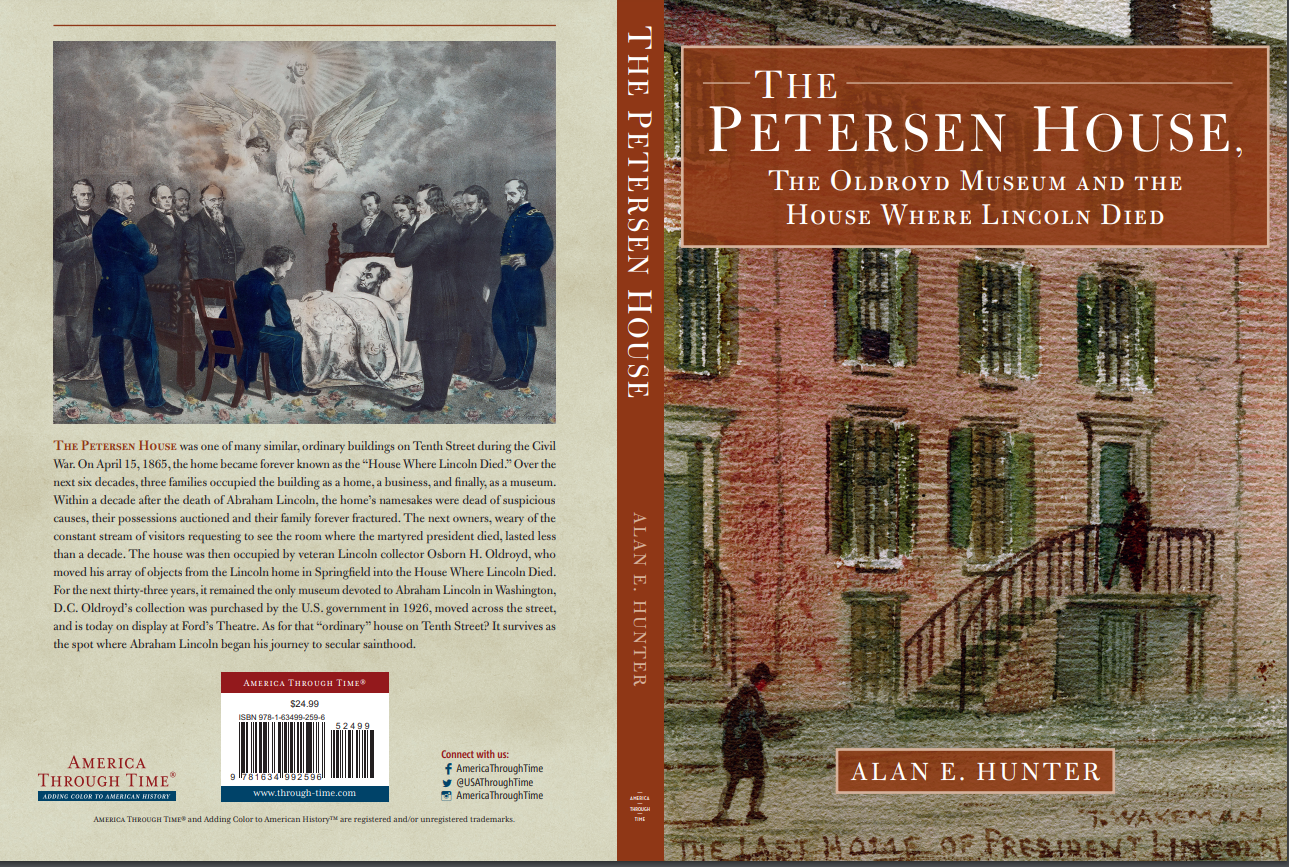
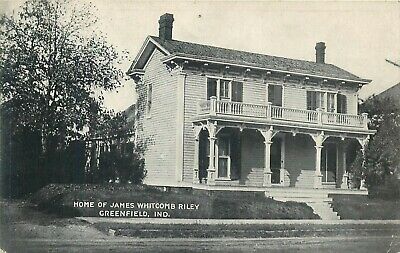
This Saturday (Yay! On Halloween!) October 31st, I will be visiting the James Whitcomb Riley boyhood home in Greenfield to talk about both Lincoln and Riley. That day will be the official book reveal for my newest book, “The Petersen House, The Oldroyd Museum and The House Where Lincoln Died”. Thanks to the courtesy of former Indiana National Road Board member and Director of the Riley Boyhood Home and Museum Stacey Poe, you are invited to come out at 2:00 pm and experience the Riley home and their new “Lizabuth Ann’s Kitchen” facility located at 250 W. Main Street on the historic National Road. I will be bringing some Lincoln props, signing books, sharing stories about the Washington DC building Lincoln died in (and it’s Indiana connection) and, in the “spirit” of the season, spinning a few ghost stories too.

z jws-l400Although Lincoln and Riley died a half-century apart, the men had much in common. The two were considered the state’s most famous Hoosiers (that is until John Dillinger died in 1934) and their names were often linked in speeches, newspaper articles, books and periodicals in the first fifty years of the 20th century. One of my favorite quotes found while searching the virtual stacks of old newspapers comes from the July 20, 1941 Manhattan Kansas Morning Chronicle: “If you want to succeed in life, you might run a better chance if you live in a house with green shutters. Abraham Lincoln, Mark Twain and James Whitcomb Riley all lived in such houses.” Lincoln and Riley epitomized everything that was good about being a Hoosier, right down to the color of their green window shutters.

z jw liz download

Lizabuth Ann’s Kitchen

The comparison was not unfounded. Both men were born in a log cabin. Both came from humble origins. Both were unevenly educated and both men never stopped learning. Both studied law-Lincoln with borrowed law books, Riley doodling poetry in the margins of his father’s law books. Both men were poets and both were considered among the greatest speakers of their generation. And both men had problematic relationships with women. Lincoln once said that he could “never be satisfied with anyone who would be blockhead enough to have me” and Riley famously said “the highest compliment I could pay to a woman is to not marry her.”

z 13964410_1441413422


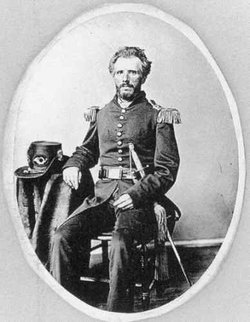
Reuben Alexander Riley (1819-1893)

For the poet, his admiration began with his father, Reuben Riley. The senior Riley was a state legislator and among the first central Indiana politicians to embrace the railsplitter as a national figure and presidential candidate. Riley was considered by many to be the best political orator of his day. He traveled the Hoosier state stumping for Lincoln in 1860 and continued his support until the day that Lincoln died. Because of this young J.W. Riley could not remember a time when he did not admire Lincoln.
When the Lincoln funeral train came through Indiana on April 30, 1865, the official “Travel Log” notes that it arrived in Greenfield at 5:48 a.m., Philadelphia at 5:57 a.m., Cumberland at 6:30 a.m., the Engine House (identified as “Thorne” in Irvington) at 6:45 a.m. before finally arriving in Indianapolis at 7:00 a.m. In Greenfield, the depot was choked with people wishing to gaze upon the face of the departed leader one last time. The train was not officially scheduled to stop in Greenfield, but the mood among the citizens was that perhaps the engineer might be persuaded to stop when he witnessed the tremendous outpouring of trackside emotion at the Greenfield depot.

Lincoln train
The local newspaper described “a knot of three boys, hands in pockets chattering back and forth with each other while pacing up and down the railroad tracks. Two older fellows were standing together, each arm around the other, probably soldiers remembering what it means to be a comrade.” The depot porch was filled to overflowing with women in their long dresses, old soldiers in their Union uniforms and a sea of men dressed entirely in black. The telegraph operator in Charlottesville wired that the train had just passed and was heading towards the neighboring town. A sentinel was perched atop the station to alert the citizens below of the train’s approach.
In a few moments, a cloud of silver phosphorescent smoke appeared above the tree tops along the route of today’s Pennsy trail. “Here it Comes” was the cry from above and immediately the crowd below hushed and gazed eastward expectantly. For several moments, the only sound that could be heard on the platform was the muffled weeping of the gathered mourners. As the train slowly approached, Captain Reuben Riley read aloud excerpts from Lincoln’s second Inaugural address at the close of which he sat down and wept uncontrollably. The train paused briefly at the station and the engineer removed his cap in respect to reverent gathering. Fortuitously, Reverend Manners stepped from the crowd and led the group in a prayer that began, “Thank God for the life of Abraham Lincoln.” The people now openly wept as the train slowly departed westward towards Indianapolis. It is likely that 16-year-old James Whitcomb Riley was present that day.

Alan Hunter 3 col x 3

Riley wrote two poems dedicated to Abraham Lincoln. in a letter to Edward W. Bok dated October 23, 1890, Riley said this of the sixteenth President; “I think of what a child Lincoln must have been-and the same child-heart at home within his breast when death came by.” Along with all the shared common traits mentioned above, Lincoln and Riley were, and still remain, perhaps foremost, the idol of children everywhere.
Three days after Riley died on July 22, 1916, the Morning Call newspaper in Allentown, Pennsylvania eulogized the poet by saying: “The country has produced poets of more creative power and commanding genius, but none- not even Longfellow, beloved as he was- ever came quite so close to the heart of the mass of the people as the Hoosier Poet, James Whitcomb Riley, who died at Indianapolis on Sunday. He was truly from and of the people as was Lincoln, and in their way, his personality and career are almost as interesting and picturesque as those of the immortal emancipator.”
Elbert Hubbard, founder of the Roycrofters Arts & Crafts community in Aurora, New York, said “Who taught Abraham Lincoln and James Whitcomb Riley how to throw the lariat of their imagination over us, rope us hand and foot and put their brand upon us? God educated them. Yes, that is what I mean, and that is why the American people love them.” Hubbard was a contemporary of Riley’s who, along with his wife, died when the Germans sunk the RMS Lusitania leading to our entry into World War I a year before Riley passed.
However, in my view, what links both men in perpetuity is a shared language. Both men spoke fluent Hoosier. All his life, Lincoln and Riley tended to swallow the ‘g’ sound on words ending with ‘ing’, so a Walking Talking Traveling man become Walkin’, Talken’, Travelin’, man. Lincoln said “warsh” for wash, “poosh” for push, “kin” for can, “airth” for earth, “heered” for for heard, “sot” for sat, “thar” for there, “oral” for oil, “hunnert” for hundred, “feesh” for fish and “Mr. Cheerman” for Mr. Chairman. Likewise, Riley practiced the Hoosier dialect in his printed work, saying “punkin'” for pumpkin, “skwarsh” for squash, “iffin'” for if then and “tarlet” for toilet. Both men peppered their speech with distinctive words like yonder and for schoolin’ both “larned” their lessons and got their “eddication” in fits and spurts.
Both men’s lives came to an end in private houses, not in hospitals. Riley in the Nickum House in Indianapolis’ Lockerbie Square and Lincoln in the Petersen House in Washington, D.C. This Saturday, I will share my favorite ghost story about J.W. Riley (in the Lockerbie house) and while I have no ghost stories to share about The House Where Lincoln Died, I will detail a connection between the two. I will introduce you to the three families who resided there, the last of whom, Osborn Oldroyd, displayed his Lincoln collection of relics and objects for over thirty years before selling it to the United States Government in 1926. That collection is now on display in the basement of Ford’s Theatre.
Riley Lincoln poemOldroyd, a thrice-wounded Civil War veteran, collector, curator and author, is perhaps the father of the house museum in America. One of Oldroyd’s books, a compilation of poems entitled, “The Poets’ Lincoln— Tributes In Verse To The Martyred President”, was published in 1915. James Whitcomb Riley’s poem, A Peaceful Life with the name “Lincoln” in parenthesis as a sub-title can be found there on page 31. In Oldroyd’s version, the first line differs from Riley’s original version. Riley’s handwritten original (found today in the archives of the Lilly Library on the Bloomington campus of Indiana University) begins: “Peaceful Life:-toil, duty, rest-“. Oldroyd’s book version begins; “A peaceful life —just toil and rest—.” Interestingly, the Oldroyd version has become the standard. And there you have it. Oldroyd’s influence is subtle, his name largely unknown, yet he stays with us to this day.
Abe Lincoln, Civil War, Gettysburg, Museums, Pop Culture, Presidents, Travel

Statuary Myths and Urban Legends. John Rogers.

Part II

Original publish date:  October 1, 2020

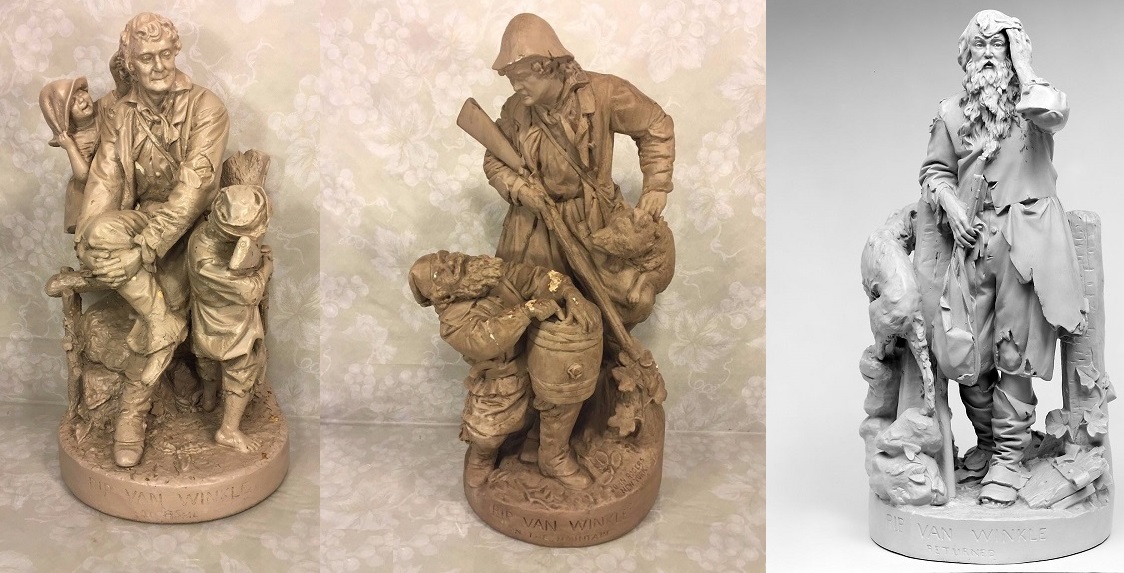
If you are a fan of Victorian decor, or if, like me, you find yourself haunting antique malls and shops, you’re probably familiar with the work of sculptor John Rogers. Commonly known as “Groups” for their routine use of more than one subject per sculpture, Rogers’ work is distinctive for many reasons: historical themes, uncommon accuracy and exquisite detail. Rogers was the first American sculptor to be classified as a “pop artist”, scorned by art critics but beloved by the average American. His themes included literary themes, Civil War soldiers, ordinary citizens, animals, sports and luminaries from the pages of history. For Irvingtonians, his works depicting namesake Washington Irving’s Rip Van Winkle are particularly prized.

zz s-l1600

John Rogers Rip Van Winkle Series.

I have a few in my office and one of my favorite places to eat, the “Back 40 Junction” in Decatur, is decorated with many John Rogers groups throughout their restaurant.
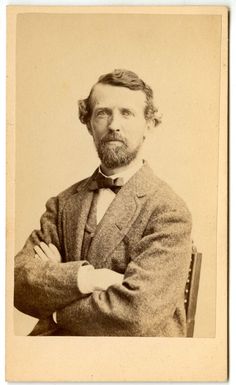
John Rogers was born in Salem, Massachusetts, on October 30, 1829, how can Halloween fans not love him already? His father, an unsuccessful but well-connected Boston merchant, felt that an artist’s life was no better than a vagabond and discouraged his artistic son from pursuing art as a profession. So, Rogers confined his love of drawing, painting and modeling in clay to his spare time. In 1856 Rogers ran away to Mark Twain’s Hannibal, Missouri where he worked as a railroad mechanic. Two years later, he moved to Europe to attain a formal education in sculpting. His first group, in 1859, he titled “The Slave Auction”. It depicts a white auctioneer as he gavels down the sale of a defiant black man, posed arms crossed, with his weeping wife and babies cowering at the side. Rogers, a strong abolitionist, was making a statement against slavery but New York shopkeepers refused to display his work in their windows for fear that the controversial subject matter would drive customers away. So Rogers hired a black salesman to peddle the statue from door-to-door and in a short time, Rogers’ statue, described as “Uncle Tom’s Cabin in plaster” became a best seller.

z john rogers cdvz artistic-sm

Sculptor John Rogers.

That same year, Rogers went to Chicago, where he entered his next statue, titled “The Checker Players” in a charity event, which won a $75.00 prize and attracted much attention. Rogers soon began rapidly producing very popular, relatively inexpensive figurines to satiate the average Gilded Age citizen’s thirst for art. Over the next quarter century, a total of 100,000 copies of nearly 90 different Rogers Groups were sold across the United States and abroad. Unsurprisingly, the next few years were filled with Rogers groups depicting scenes from the Civil War to honor their soldier boys serving far from home. These statues would remain popular with veterans after the war as well.
Gettysburg Longstreet monument sculptor Gary Casteel remarked, “Rogers is very well known as an American sculptor. More for his collection of small group settings rather than large public works. Both are excellent in detail and representation. His collection of CW related plaster cast pieces are quite well know and continually sought after by collectors to this day.” Rogers’ work was innovative, preferring to create his statuary based on every day, ordinary scenes from life. While Rogers’ work rarely made its way into art museums, it did grace the parlors, libraries and offices of Victorian homes around the world. However, there is one work that stands out among the rest, for subject matter, realism, and controversy.

1967.114_1.tif
                                                         Rogers’ Council of War.

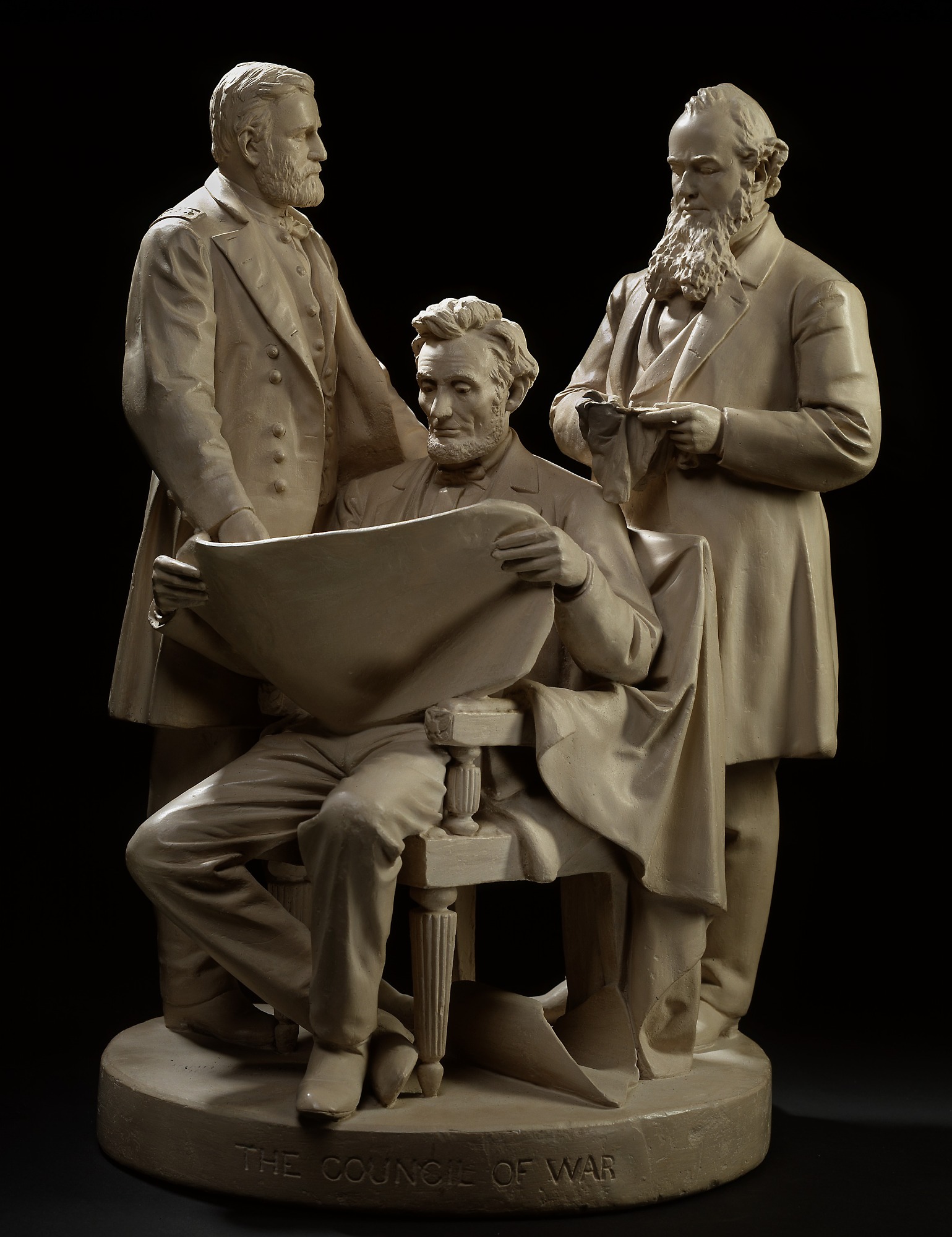
“The Council of War”, created in 1868, stands 24 inches tall and, like all of Rogers’ groups, was designed to fit perfectly on a round oak “ball and claw” footed parlor table. It depicts Abraham Lincoln seated in a chair, studying a map held in both hands, as General Ulysses S. Grant and Secretary of War Edwin Stanton confer over his shoulders. The June 1872 issue of the “American Historical Record” describes the scene: “The time is supposed to be early in March, 1864, just after Grant was appointed a Lieutenant-General and entrusted by Congress with the largess and discriminatory power as General-in-Chief of all the armies. The occasion was the Council at which the campaign of 1864 was determined upon, which was followed by Grant’s order on the 1st of May for the advance of the great armies of the Republic against the principal forces of the Confederates.”

31421516_1822681181096470_5411414843112554496_n

Gettysburg Sculptor Gary Casteel.

Both Robert Todd Lincoln and Edwin Stanton proclaimed this version of the President to be the best likeness of the man either had ever seen. Secretary Stanton wrote to the sculptor in May of 1872 stating, “I am highly gratified with the genius and artistic skill you have displayed. I think you were especially fortunate in your execution of the figure of President Lincoln. In form and feature it surpasses any effort to embody the expression of that great man which I have seen. The whole group is very natural and the work, like others from the same hand, well represents interesting incidents of the time.” Although the two surviving subjects received the piece positively, the public allegedly saw it differently: quite literally.
The controversy surrounding the pose arose based upon the positioning of Stanton behind Lincoln. Stanton, is posed polishing his spectacles, held in both hands, directly behind the President’s left ear approximately where Booth’s bullet entered Mr. Lincoln’s head. The pose is thought to have aroused the ire of collectors who believed the awkward positioning somehow stirred memories of the assassination. Hence, John Rogers made three versions of this particular group to appease those sympathies. Although the depictions of Grant and Lincoln remained the same in all three, Stanton’s hands were emptied and placed at his side in the second version and then changed back to polishing his glasses, this time forward of Lincoln’s head, in the third version. Some historians surmise the changes were affected due to the alleged theory of Stanton’s involvement in Lincoln’s murder that were circulating at the time. On the other hand, art historians claim the change was made for purely structural purposes and ease of casting to prevent breakage.
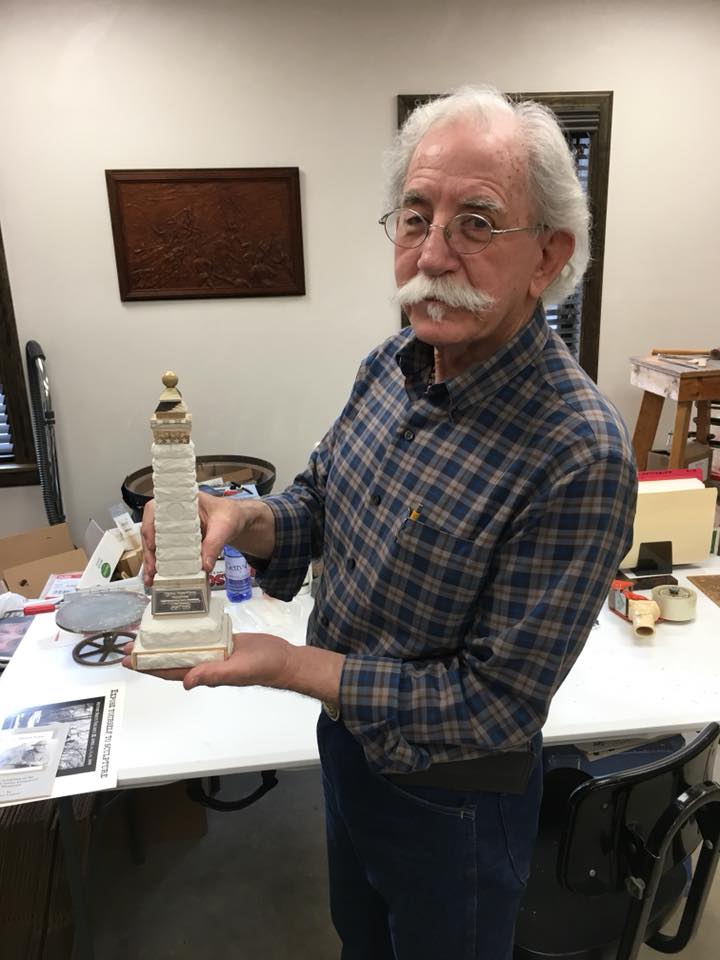
Modern day sculptors like Gary Casteel utilize many of the same methods as Rogers did a century-and-a-half ago, just as Rogers used those techniques he learned about while studying in Europe. Casteel, who like Rogers, also studied sculpture in Europe, says, “Every sculptor has his own way of sculpture production. However, there are probably similarities. I do a lot of detail as he did just simply because it’s my natural style.” The advantage that Gary Casteel has is the internet. Gary has a website and blog (Casteel Sculptures, LLC / Valley Arts Publishing) that walks his “fans” through the process of wood, wire & clay step-by-step. If you have an interest in the process, I highly recommend you subscribe to Gary’s blog. Watching Gary’s scale sculptures of the ornately detailed monuments of Gettysburg might better explain that Rogers’ changes in his Council of War group may not have been all about myth and urban legends after all.
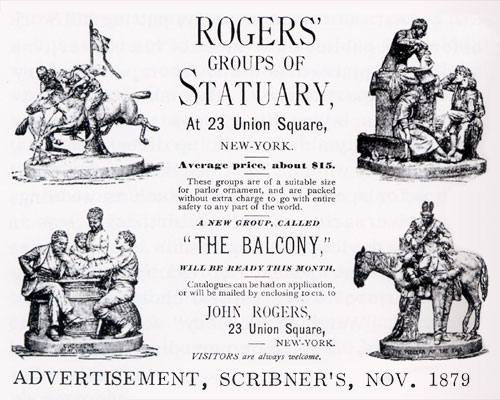
At the height of their popularity, Rogers’ figurines graced the parlors of homes in the United States and around the world. Most sold for $15 apiece (about $450 in 2020 dollars), the figurines were affordable to the middle class. Instead of working in bronze and marble, he sculpted in more affordable plaster, painted the color of putty to hide dust. Rogers was inspired by popular novels, poems and prints as well as the scenes he saw around him. By the 1880s, it seemed that families who did not have a John Rogers Group were not conforming to the times. Even Abraham Lincoln owned a John Rogers Group. My favorite account of a typical Rogers statue encounter comes from the Great American West. Libby Custer mentions in her book “Boots and Saddles” that her husband, General George Armstrong Custer, carried two prized John Rogers groups (“One More Shot” and “Mail Day”, both depicting Civil War soldiers) from post-to-post on the Western frontier including the couples’ final Indian outpost before the “Last Stand.”
z LibbyandGeorge1.jpg09082017

Libby and George Armstrong Custer.

Libby states, “Comparatively modern art was represented by two of the Rogers statuettes that we had carried about with us for years. Transportation for necessary household articles was often so limited it was sometimes a question whether anything that was not absolutely needed for the preservation of life should be taken with us, but our attachment for those little figures and the associations connected with them, made us study out a way always to carry them. At the end of each journey, we unboxed them ourselves, and sifted the sawdust through our fingers carefully, for the figures were invariably dismembered. My husband’s first occupation was to hang the few pictures and mend the statuettes. He glued on the broken portions and moulded (sic) putty in the crevices where the biscuit had crumbled. Sometimes he had to replace a bit that was lost… On one occasion we found the head of the figure entirely severed from the trunk. Nothing daunted, he fell to patching it up again… The distorted throat, made of unwieldy putty, gave the formally erect, soldierly neck a decided appearance of goiter. My laughter discouraged the impromptu artist, who for one moment felt that a “restoration” is not quite equal to the original. He declared that he would put a coat of gray paint overall, so that in a dim corner they might pass for new. I insisted that it should be a very dark corner!”
z rogersad-500

Another article, this one from the January 1926 issue of “Antiques” magazine, encapsulates the love-hate relationship for Rogers’ work: “The fact that Rogers groups are fragile has made them rare enough to arouse the interest of collectors, although I doubt that they will ever be widely collected or will ever acquire high values. They are too large to be comfortably collected in quantity. Nevertheless there might be some slight activity in Rogers groups among collectors of American antiques and it is to be hoped that existing examples will be preserved for the sake of what they express of life some forty years since.”
In 1878 Rogers opened a small studio at 13 Oenoke Ridge in New Canaan, Connecticut. By the 1890s, his work had largely fallen out of favor. Poor health forced his retirement in 1893. Rogers died at his New Canaan home on July 26, 1904. His studio was designated a U.S. National Historic Landmark in 1965. Rogers sculpted what he saw, drawing his inspiration from the everyday beauty observed by his own eye or that created by his mind’s eye while interpreting the literary works he valued most. Although he died in relative obscurity, his works live on as perfect representations of Victorian Era life at the crossroads of the Gilded Age and the Second Industrial Revolution.

Abe Lincoln, Civil War, Indianapolis, Politics, Presidents

General Ulysses S. Grant earned his stripes here!

z GenUSGrant

Original publish date:  April 19, 2009             Reissue date: July 4, 2020

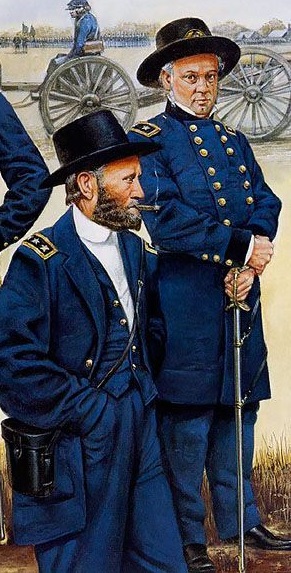
So you think you’re a Civil War buff ? Well, so did I. I’ve read, researched and written about many things connected to the American Civil War most of my life. Yet, I recently found out a factoid from my beloved home state and city of my birth that I had never heard before and I’d like to share it with you here. On Saturday October 17, 1863, Union General Ulysses S. Grant is given orders to travel to Indianapolis from Cairo, Illinois by General Henry Halleck, who also tells the General to bring his staff with him in preparation “for immediate operations in the field.”

z grant halleck
Generals Grant & Halleck

The General, his wife Julia Dent Grant, and his staff arrived in Indianapolis in the early evening and checked into the Bates House Hotel on the old National Road (Present day Washington Street). On the morning of October 18th, the party prepared to leave for Louisville, where Julia Grant expected to meet old friends. The train was just about to roll out of the Indianapolis Union Station when word came to delay it’s departure pending the arrival of an important passenger. It was non other than Secretary of War Edwin M. Stanton, who traveled west from Washington, D.C. to confer with Grant. Secretary Stanton made his way to Grant’s car and seeing a group of officers, strode forward with his hand outstretched and said, “How do you do, General Grant? I recognize you from your pictures.” Unfortunately, the man Stanton greeted so vigorously was not General Grant but his medical director, Dr. Edward Kittoe. The staunch Quaker lawyer was nonplussed by his mistake and as Stanton was pointed in the right direction by Grant’s staff, the General struggled to conceal his amusement. Before this Indianapolis meeting, Stanton had only communicated with Grant via telegraph.

1967.114_1.tif
General U.S. Grant, Abraham Lincoln & Edwin Stanton by sculptor William Rogers.

Stanton handed Grant a telegraph from President Abraham Lincoln that read: ” By direction of the President of the United States, the Departments of the Ohio, of the Cumberland, and of the Tennessee, will constitute the Military Division of the Mississippi. Major General U.S. Grant, United States Army, is placed in command of the Military Division of the Mississippi, with his headquarters in the field.” These orders that Stanton felt necessary to travel the nearly 600 arduous, bone shaking miles by rail in order to hand deliver to a man he had never met, General U.S. Grant, placed Grant in command of three armies that would now be known collectively as “the Military Division of Mississippi.” Grant was thus in charge of all military operations from the Appalachian Mountains to the Mississippi River, more or less.
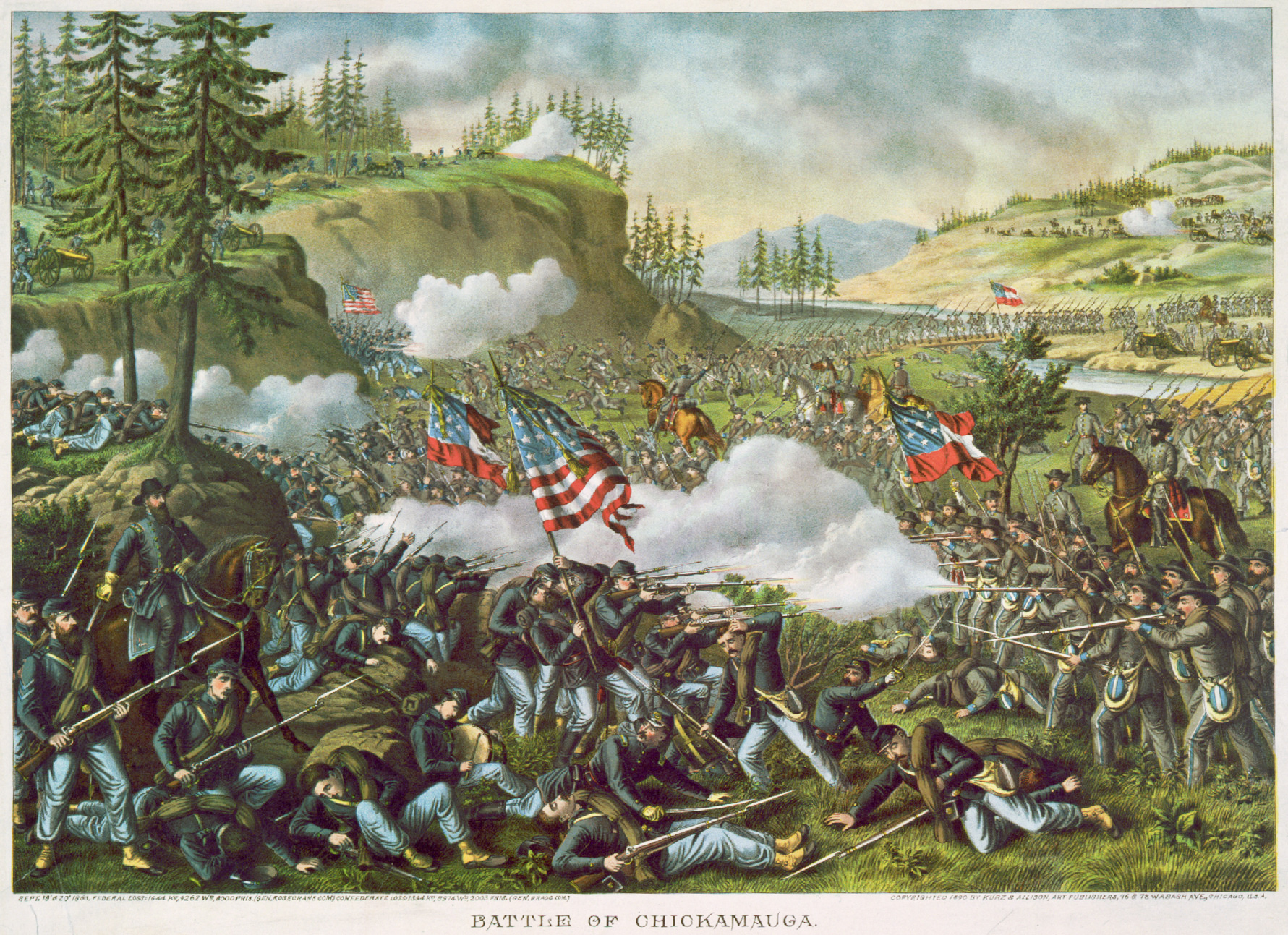
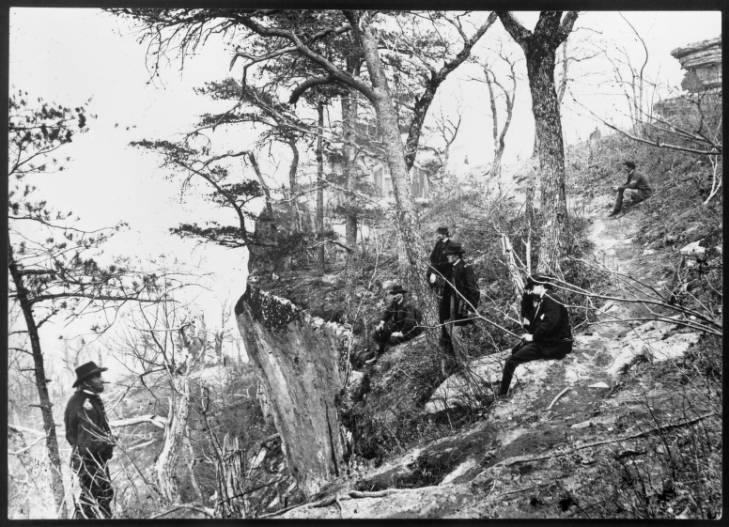
z ChickamaugaGrant immediately relieved Rosecrans in Chattanooga and replaced him with Maj. Gen. George H. Thomas, soon to be known as “The Rock of Chickamauga”. Devising a plan known as the “Cracker Line”, Thomas’s chief engineer, William F. “Baldy” Smith opened a new supply route to Chattanooga, helping to feed the starving men and animals of the Union army. Upon re-provisioning and reinforcing, the morale of Union troops lifted and in late November, they went on the offensive. The Battles for Chattanooga ended with the capture of Lookout Mountain, opening the way for the Union Army to invade Atlanta, Georgia, and the heart of the Confederacy.
z default
U.S.Grant (left corner) atop Lookout Mountain.

Grant’s willingness to fight and his ability to win impressed President Lincoln, who appointed him lieutenant general in the regular army-a rank not awarded since George Washington- which was recently re-authorized by the U.S. Congress with Grant in mind-on March 2, 1864. On March 12, Grant became general-in-chief of all the armies of the United States. The rest is history. It’s also noteworthy to remember that Edwin Stanton was appointed by President Grant to the Supreme Court, but he died four days after he was confirmed by the Senate and never took the oath to become a Justice.
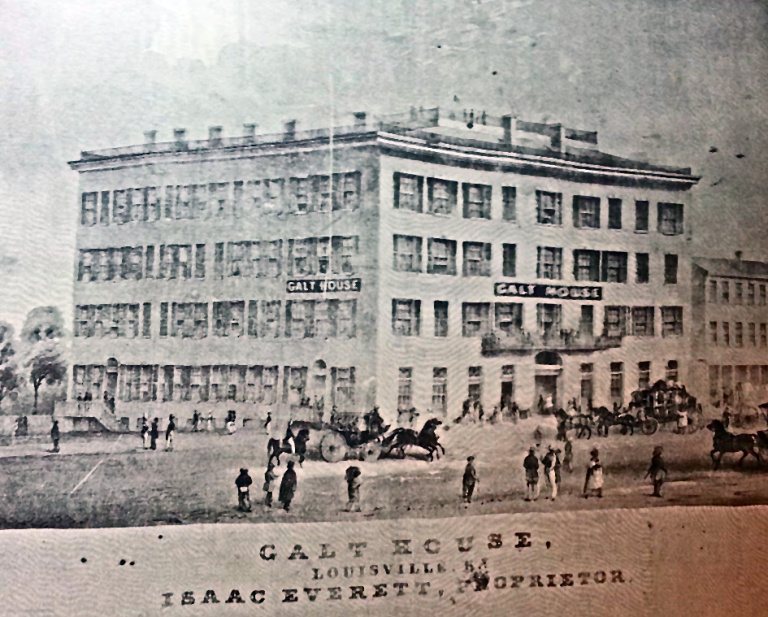
Why is this important? This was the first official step taken by General Ulysses S. Grant on his road to fame that ultimately ended at the White House. In U.S. Grant’s memoirs, the General remembered that the train arrived in Louisville at night in a cold drizzling rain. Secretary Stanton told Grant that he had caught a miserable cold from that trip from which he “never expected to recover from”. Grant believed that Stanton never fully recovered from this cold and that it contributed to Stanton’s death in 1869. The Galt House Hotel in Louisville always takes the credit for this important announcement meeting, although it actually happened right here in Indianapolis on a south bound train leaving Union Station on a crisp Hoosier autumn Sunday morning .

z joebacci_gh1835

Abe Lincoln, Civil War, Presidents, Travel

A Hoosier Wedding in Lincoln’s White House.

https://weeklyview.net/2020/06/11/a-hoosier-wedding-in-lincolns-white-house/

Lincoln White House Wedding photo

Original publish date:  June 11, 2020. 

Sometimes, I need to dig up a historical story for no other reason than I need a smile. And nothing makes me smile more than sharing a story with an Indiana connection. A story that many of you have never heard before. A story that might just make you smile. This is the story of Abraham Lincoln, the Civil War, and a White House wedding. The only wedding to take place during Lincoln’s time in the White House.
In March of 1862, a 19-year-old Mount Sidney, Virginia, woman named Elizabeth Amanda Sheets wanted to marry a 28-year-old farmhand living in the same town named James Chandler, a native of Bowling Green, Kentucky. The problem was, Elizabeth’s parents disapproved of the engagement, let alone a wedding, to the much older man, so the couple decided to elope. After several months of a secret courtship, the young couple obtained a marriage license and boarded a stagecoach bound for Harper’s Ferry to get hitched.
125 miles later, as they approached the outskirts of the town, they were turned away because of the build-up of Federal forces there readying themselves for the soon-to-begin military campaign in the Shenandoah Valley. With no other options, they traveled on by stage, 63 miles away to Washington, D.C., a city neither was familiar with.
And so it was that this couple from the Rebel state of Virginia found themselves in the Union Capitol of Washington at the height of the Civil War. Luckily for them, during the war between the states, D.C. was the equivalent of Las Vegas. The stagecoach driver informed the couple that they could be married in any public building there. What’s more, the driver suggested they go and knock on the door of the White House and ask “Honest Abe” to marry them.
It sounded like a good idea to the starstruck couple, so they traveled hand-in-hand to the Executive Mansion to be joined in holy matrimony in the grandest of styles. While walking towards the White House, they asked a man who was coming towards them if it was true that they could get married there. The stranger replied that he did not know, pointed towards the front door, and told them to knock and ask for themselves.

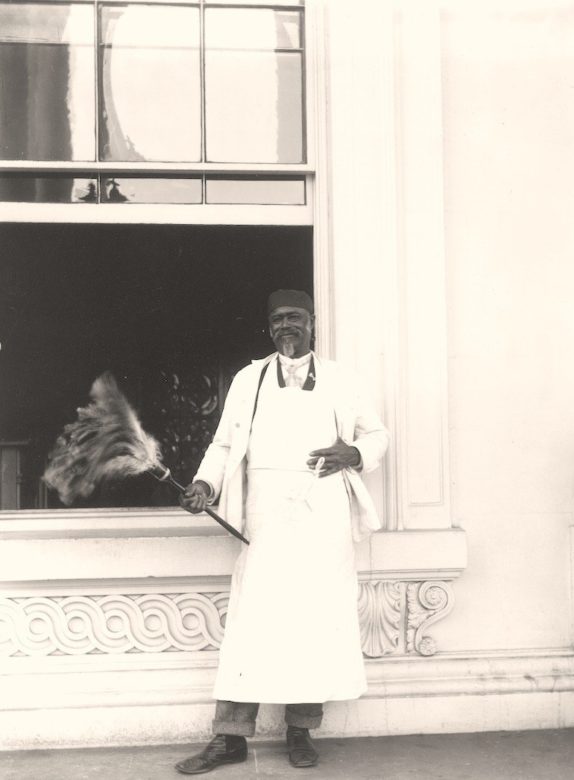
Jeremiah “Jerry” Smith
White House Doorman Jeremiah Smith.

Tradition states that the door was answered by President Lincoln’s legendary doorman, Jeremiah Smith, a subject of past columns. Further tradition states that after President Lincoln heard of a young couple seeking some place to be married, he took them to the East Room and summoned a Baptist minister. The White House Historical Association reports that “a group of women then entered the room, along with First Lady Mary Todd Lincoln, to serve as witnesses for the ceremony. After the minister announced their marital status, the president and first lady shook their hands, served an elegant dinner, and invited the newlyweds to spend the night.”
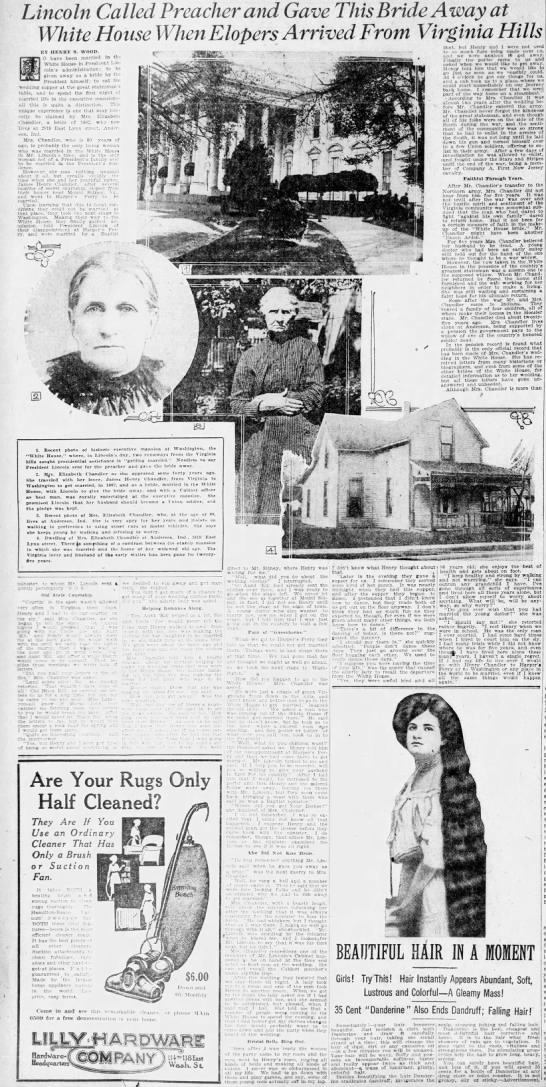
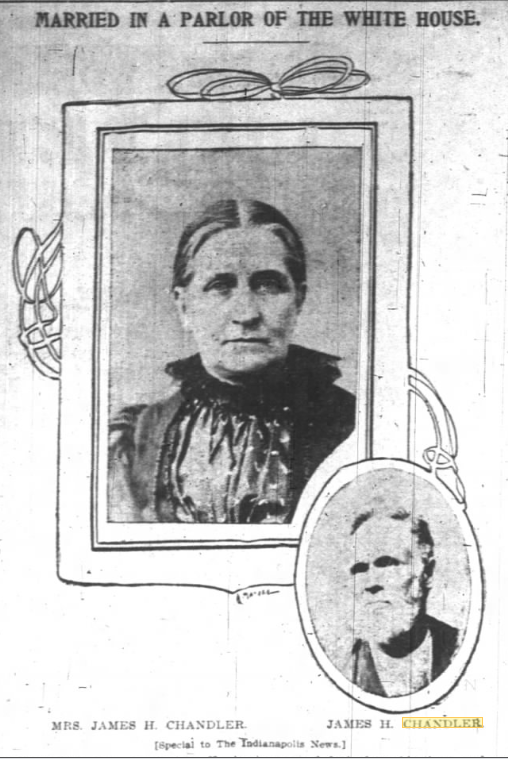
Thus, again according to the White House Historical Association, “Abraham Lincoln was credited with seeing to the marriage in the White House of a couple he did not know.” The incident first surfaced in the September 27, 1901 Indianapolis News in a story headlined “Married in a Parlor of the White House” less than two weeks after the assassination of President William McKinley. Then, as now, I’m guessing the world was in need of a little good news.
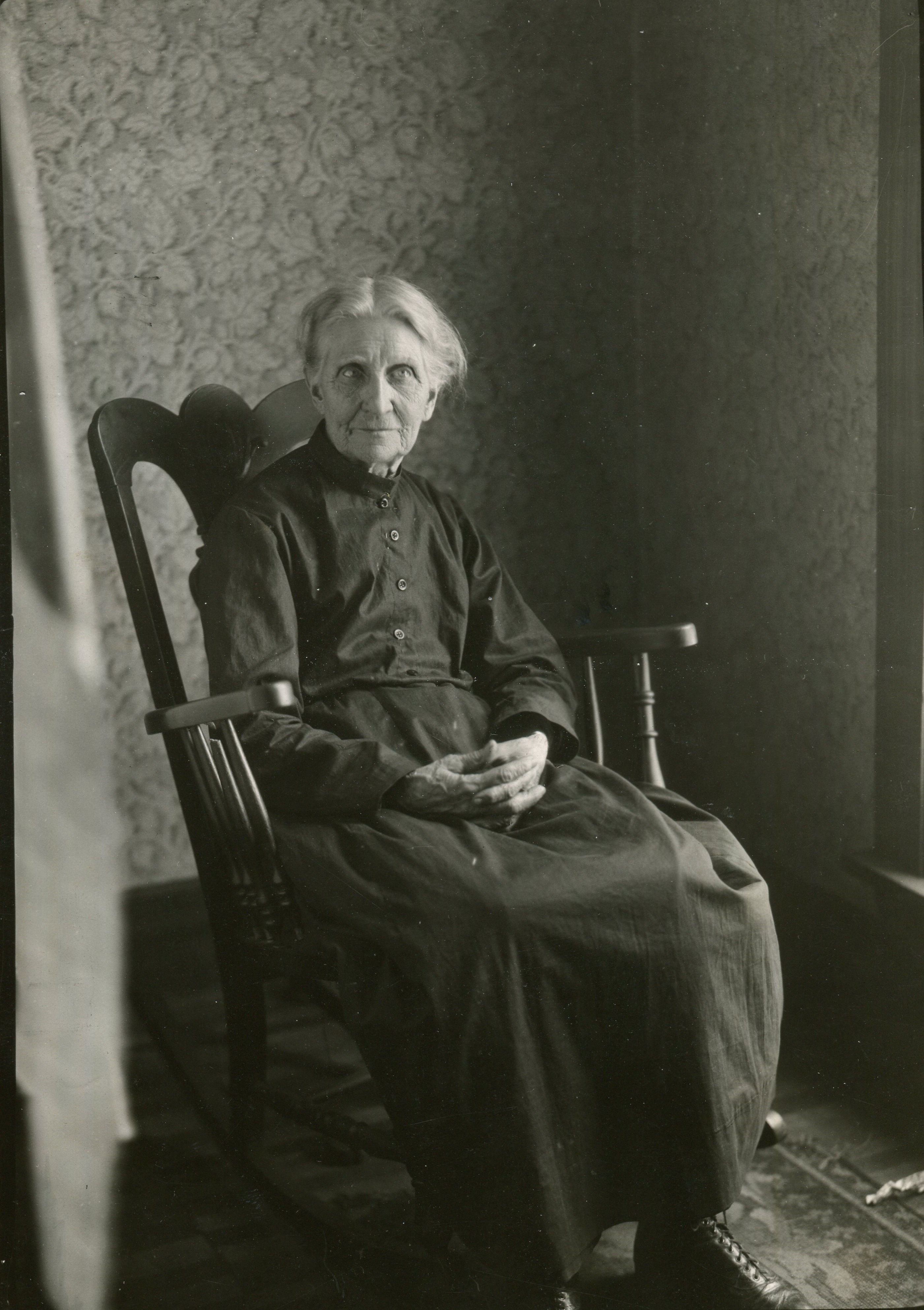
The 57-year-old widow, now known as Elizabeth Chandler, was living a quiet life in Anderson, Indiana; her husband James Henry Chandler having died six years earlier on Sept. 19, 1895, at the age of 61. The article recorded widow Chandler’s remarks about her White House wedding 44 years earlier made during a family dinner held in her honor at Rochester, Indiana. According to Mrs. Chandler, President Lincoln “shared in the happiness of the couple by suddenly finding it possible to have a wedding in the White House.”

White House Wedding Chandler
Screenshot (156)

The article understates the obvious by noting, “inasmuch as she is probably the only woman living in Indiana who has the distinction of having been a White House bride… Mrs. Chandler does not regard the circumstances of the wedding as being anything out of the ordinary so far as she is concerned.” The story broke “like a romantic picture out of the past” in newspapers all over the state and was soon picked up nationally. Over the next three decades, widow Chandler’s story proved irresistible whenever there was a wedding in the White House or an important Lincoln anniversary. On February 17, 1906 (a few days after Abraham Lincoln’s 97th birthday) the Indianapolis News ran the story on the day President Teddy Roosevelt’s outspoken daughter Alice married Ohio Congressman Nicholas Longworth at the White House. The story reemerged in 1909, the 100th anniversary of the birth of Abraham Lincoln, and again in November 1913 as President Woodrow Wilson’s daughter Jessie prepared to marry Francis Sayre.
While it is difficult to prove whether the wedding actually took place, each succeeding story contained more details about the event. Elizabeth later recalled how President Abraham Lincoln led the couple up the stairs of the White House and into a big room all draped with flags. Elizabeth said she recognized the president because she had seen his picture. The young bride remembered that Lincoln summoned a messenger and, upon his arrival, the messenger and the groom left the room while Elizabeth remained with the president. Lincoln spoke to her about the war and asked whether she would be willing for her husband to fight for his country. When Lincoln noted that talk of war upset her, he changed the subject and began telling the blushing bride jokes and tall tales.
z inaugural-receptionAfter the minister’s arrived, Lincoln rang a bell and then led the wedding party into a big room, Elizabeth recalled. The president stood alongside the minister and not only did he give the bride away but also acted as the groom’s best man. Elizabeth recalled how he smiled throughout the ceremony. She stated that a Cabinet member stood up with them, but couldn’t recall his name or that of the minister. Mr. and Mrs. Lincoln were the first to shake the newlyweds’ hands. Elizabeth’s most vivid recollection of the nuptials was how scared she was. The president chatted with them awhile and then returned to his office with the unnamed Cabinet member. Elizabeth had worn a plain white cashmere dress for the ceremony. Afterwards, the couple was taken to separate rooms in the White House to change clothes, where Elizabeth changed into a navy blue cashmere dress.
According to the White House Historical Association, “a social function was being held at the White House that evening and when those present learned there were newlyweds in the house, they came ringing bells and compelled the couple to come and and join the party. The couple were greeted with handshakes and questions about where they were from and where they were going.” Elizabeth recalled that all of the guests were Northerners, and being a Virginian, she didn’t how nice Northerners were until that night. The newlywed described how she and her new husband hardly got a chance to speak during the evening because of the constant requests for her to dance the Virginia Reel.
After the party, the newlyweds were invited to a fine dinner in a room with the longest table she had ever seen. Elizabeth recalled that a hot punch was served and how everybody would stand up and drink while someone said something. The dinner lasted until the early hours of the morning. Because of the late hour and inclement weather, Elizabeth recalled that President and Mrs. Lincoln would not allow the couple to leave and insisted they stay the night. The next day, armed with a pass signed by the President himself, Mr. and Mrs. Chandler went up the Potomac River to Harper’s Ferry. From there they returned to Mount Sidney to deliver the news to the parents that they’d just got “married in the White House.”
After their fairy tale wedding in the White House, James and Elizabeth Chandler moved to a farmhouse in Augusta County, Virginia, near Mount Sidney. The couple’s home was in the heart of the Shenandoah Valley and in the path of Stonewall Jackson’s Valley Campaign. In a move that would have certainly dismayed their wedding host, 28-year-old James Henry Chandler joined the Rebel Army, enlisting as a private in the 52nd Virginia Infantry Regiment at nearby Mount Meridian on June 15, 1862. The regiment, organized the previous August, was made up of mostly Augusta County men. Perhaps because James was never paid his promised enlistment bounty, he remained in the Confederate service for only a month before going AWOL on July 17, 1862.
Chandler returned to the regiment May 23, 1863, where he remained until Oct. 14, 1863, when he was captured at the Battle of Bristoe Station, Virginia. Many years later, Elizabeth said her husband surrendered and asked permission to fight in Lincoln’s army. POW James Chandler was sent north to Washington and after some explanation and investigation, permission was granted. James took the oath of allegiance to the United States government on Dec. 13, 1863. Sixteen days later on Dec. 29, he enrolled as a private in Co. A, 1st New Jersey Cavalry. The following day he was mustered into Federal service under the name James Grimes.

Elizabeth Chapman Grave 2
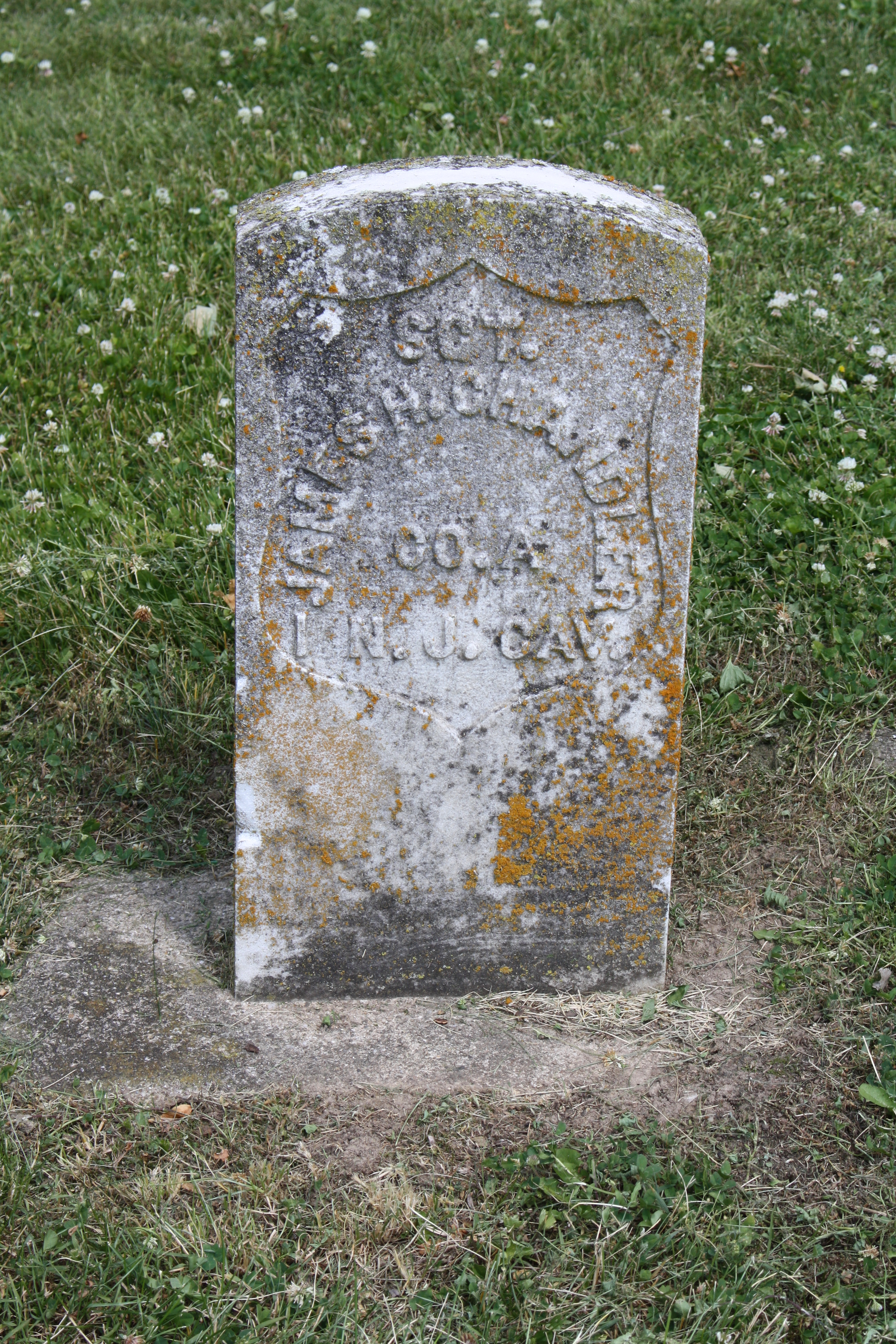
James Chandler’s Grave at Miller Cemetery Middletown,Indiana. 6/16/20. (Author’s Photo)

As a Federal soldier, James was promoted to the rank of corporal Nov. 1, 1864, and then sergeant June 1, 1865. At war’s end, Chandler was mustered out of service on July 24, 1865, but apparently did not return home for quite some time afterwards. Mrs. Chandler stated that, from the time he left the Confederate army in October 1863, she did not hear from him for five years and thought him among the dead. When he finally returned, he found his Virginia home intact and his wife working for a neighbor, awaiting his return. Likely because of the stigma associated with switching sides during the rebellion, the couple relocated to Henry County, Indiana. In 1868, the first of their five children was born. Census data reveals that the Chandlers were living in Jefferson Township in 1870 but by 1880 had moved to Fall Creek Township where they established a farm.

Elizabeth Chapman House 6
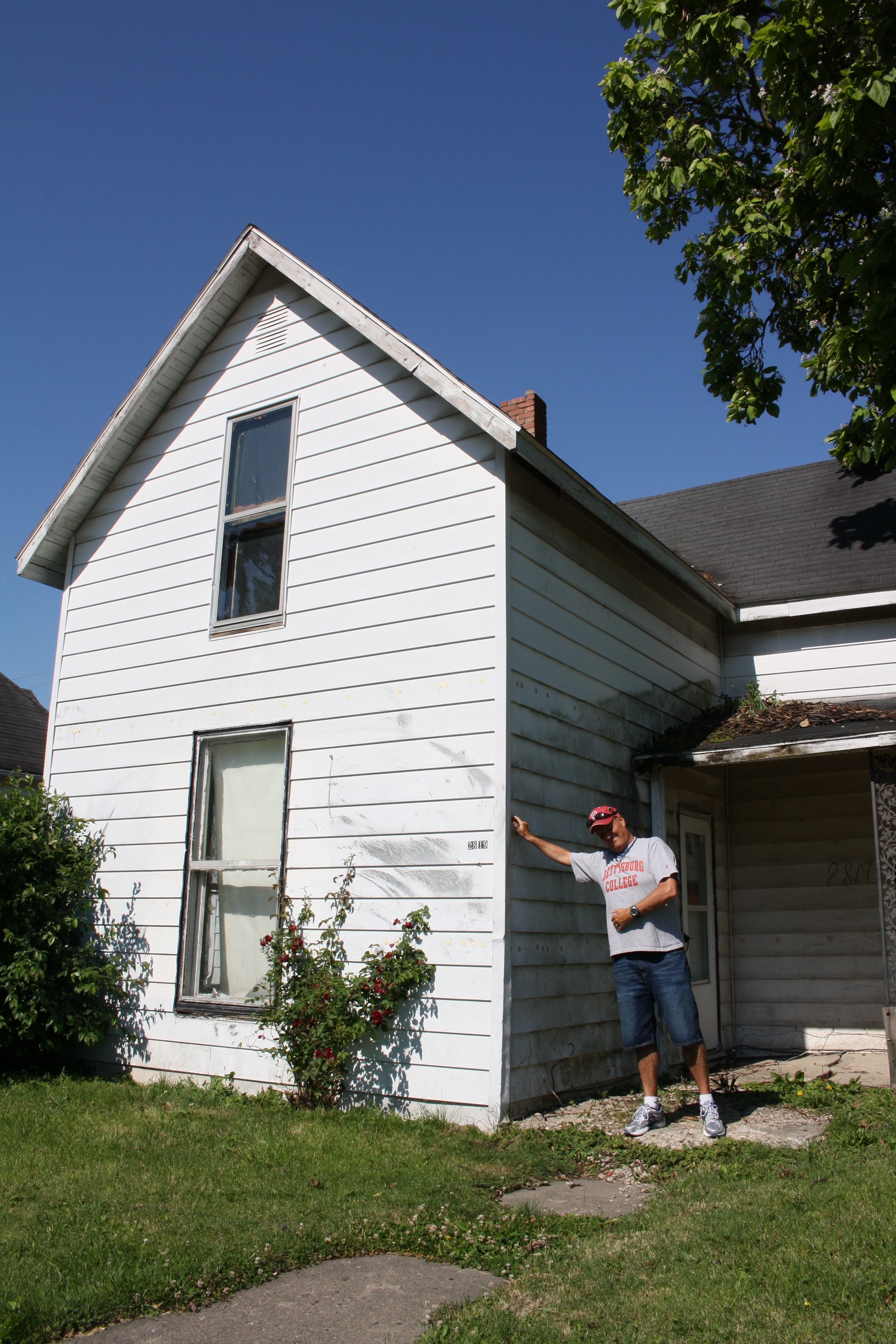
The author at Elizabeth Chandler’s House- 2819 E. Lynn St. Anderson, Indiana. 6/16/20. 

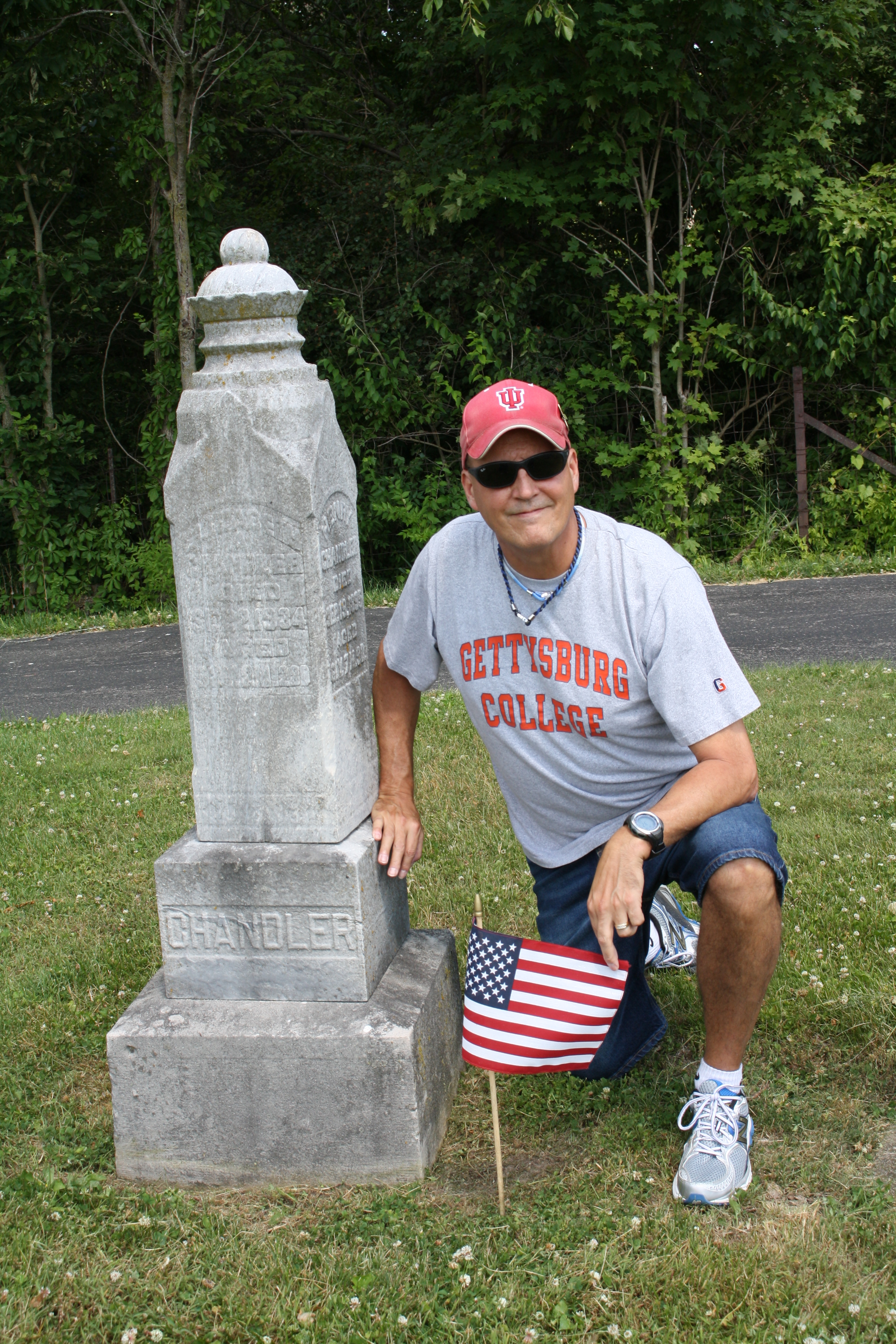
After James Henry’s death in 1895, Elizabeth moved to a little unpainted house at 2819 E. Lynn St. in Anderson (the home still stands). She was living there when her White House wedding and Lincoln connection was revealed in 1901 and remained in the home until her death in the home at the age of 92 on Sept. 2, 1934. Elizabeth and James Chandler are buried on the east side of Miller Cemetery in Middletown, Indiana. It should be noted that the only couple ever married in Lincoln’s White House are surrounded by the graves of 15 former Confederate soldiers, the largest gathering of former Rebel soldiers in any cemetery in Indiana.

Elizabeth Chapman Grave 7
The Author at Elizabeth Chandler’s Grave at Miller Cemetery Middletown, Indiana. 6/16/20.

Officially, there have been either 17 or 19 weddings conducted in the White House depending upon which source you use. These include nine presidential children and one president, Grover Cleveland. Because the Chandlers were not related to any of the official families and it was hastily arranged, the Chandler wedding does not register among the official records. However, the wedding date is contained in James Henry Chandler’s papers issued by the Pension Department. Following her husband’s death, Elizabeth was granted a Federal pension as a soldier’s widow by virtue of James’ service in the Civil War. However, those records do not note Chandler’s singular status as the only soldier who fought for both sides who could claim President Abraham Lincoln as his best man.

Abe Lincoln, National Park Service, Presidents

Abraham Lincoln Dies in Indiana.

Lincoln in Indiana photo

Original publish date:  February 13, 2020

“In his 10th year he was kicked by a horse, and apparently killed for a time.” The words were Abraham Lincoln’s. He was describing his boyhood in the hills of southern Indiana. Although much has been written about Abraham Lincoln’s life, his time as a Hoosier has been woefully neglected. Lincoln’s family moved to Indiana in 1816, when Lincoln was seven years old. Multiple noteworthy events in Lincoln’s life occurred during his time in Indiana. The most important of these was the death of his mother, Nancy Hanks, who died of “milk sickness” from drinking poisonous cows’ milk on October 5, 1818.
Her death was a tragedy Lincoln never got over, however her death resulted in a “rebirth” of sorts when the young railsplitter’s father Thomas married Sarah Bush Johnston of Kentucky in December 1819. Lincoln’s stepmother moved into the family’s Pigeon Creek cabin, bringing with her three children (two girls and one boy). More importantly Sarah brought with her the attention and educational encouragement that young Abraham Lincoln craved and was lacking from his relationship with his father. Lincoln attended school sporadically in present-day Spencer County during the years 1820-24 where he learned to read and write.
On January 20, 1828, Lincoln’s sister Sarah passed away while delivering a stillborn child and both were buried in the Pigeon Creek Baptist Church Cemetery attached to the church the Lincoln family attended, and in which Abraham worked as a janitor for a short time. Perhaps the most significant theological event in Lincoln’s life occurred while he was a Hoosier. In December of 1828 he and his friend Allen Gentry embarked on a trip to New Orleans down the Mississippi River where Lincoln witnessed a slave auction, after which Lincoln said, “If I ever get a chance to hit that thing (slavery), I’ll hit it hard.” Also during those formative years in Indiana, Lincoln worked as a store clerk and met lawyers like John Pritcher, who he borrowed law books from. On March 1, 1830, the Lincolns packed up and moved to Illinois.

z scripps
Scripps Original letter to Lincoln.

When Lincoln ran for President in 1860, John Locke Scripps, senior editor of the Chicago Press and Tribune, asked the candidate for an autobiography. This third-person account, the longest of his autobiographies, offers fascinating details about his early years told in the folksy, homespun style only Lincoln could relay. In this autobiography Lincoln refers to himself alternatively as ‘A’ or ‘Mr. L.’ It is remarkably brief about certain periods of his life, including his years spent in Indiana “A. now thinks that the aggregate of all his schooling did not amount to one year. He was never in a college or Academy as a student; and never inside of a college or academy building till since he had a law-license. What he has in the way of education, he has picked up.’”
Although historians, beginning with biographer Carl Sandburg, love to weave homespun stories about Lincoln into nearly every written account of the 16th President’s life, Lincoln himself was ashamed of the poverty of those early days spent in the Hoosier state and was uncomfortable talking about his life before Springfield. When Scripps interviewed him in 1860, Lincoln explained “Why Scripps, it is a great piece of folly to attempt to make anything out of my early life. It can all be condensed into a single sentence and that sentence you will find in Gray’s Elegy; ‘The short and simple annals of the poor.’ That’s my life, and that’s all you or anyone else can make of it.’”

z 34566
Scripps Chicago Tribune Biography.

But what about Lincoln’s statement that he was, “apparently killed for a time”? Well, as you might expect, there is more to the story. Like many a Hoosier farm boy in 1818 frontier Indiana, Lincoln the boy was assigned certain chores perhaps better suited for a man. One of those chores was to deliver corn to Gordon’s gristmill located about two miles from the Lincoln cabin. Abraham rode one of Thomas’ horses to the mill with the sack of corn for grinding stowed safely behind the saddle. Upon his arrival the young railsplitter found a considerable line of others waiting their turn at the wheel. Gordon’s gristmill utilized a horse engine as the power source, but the mill could also be powered by dogs, donkeys, oxen or humans. Watching the horses slowly go round and round, young Lincoln remarked that “my dog could eat the meal as fast as the mill could grind it.”
z horse millEventually it was Abraham’s turn to hitch his old mare to the gristmill’s arm. As he tediously walked his horse round and round, he grew impatient at having wasted most of the morning already. He began to apply a hickory switch to the beast’s behind while shouting, “Git up, you old hussy; git up, you old hussy” to keep his horse moving at an accelerated pace. This tactic worked for a short time until the horse had had enough and, just as his young master clucked out the words “Git up”, the horse kicked backwards and hit the boy in the head with a rear hoof. Lincoln was knocked off his feet and into the air, landing some distance away where he came to rest bruised and bloodied. Noah Gordon rushed to the aid of the unconscious young man. Realizing the seriousness of the situation, Gordon picked the boy up and brought him in to his house, placing him on a nearby bed.
z 9a02e410581fb8ed0f4421e10404f724Meanwhile, Dave Turnham, who had come to the mill with Abraham, ran the two miles to get Abraham’s father. Thomas Lincoln rushed to his wagon and lit out to the scene. The elder Lincoln, seeing his son’s grave condition, hauled the injured boy home and put him to bed where the young man remained prone and unconscious all night. Neighbors from the small, close knit community, including mill owner Noah Gordon, gathered at the Lincoln cabin believing Thomas Lincoln’s boy was close to death. The next morning one witness jumped from their seat, pointed and shouted, “Look he’s coming straight back from the dead!” Abraham was shaking and jerking from head to toe when he opened his eyes and finished his cadence from the day before by shouting “You old hussy”.
After the family relocated to Illinois, settling in Macon County, 10 miles west of Decatur, Abraham became increasingly distant from Thomas and those low days in Indiana. In 1831, as Thomas established a new homestead in Coles County, Illinois, Abraham left home for New Salem, where he lived for six years. Leaving his “Angel Mother”, his only sister, his only niece or nephew, and that ornery mule far behind him. But, according to most historians, that angry mule kick stayed with him for the rest of his life.
Edward J. Kempf, an accomplished neurologist and psychiatrist, theorized in his 1965 book, “Abraham Lincoln’s Philosophy of Common Sense”, that the incident caused cerebral damage and contributed to the “melancholy” Lincoln felt throughout his life. The book featured numerous “psychobiographies” of many great figures, including Lincoln. Kempf’s study brought unusual expertise to the subject and is among the best works of its genre. Kempf’s hypothesis was based on what generations of artists, sculptors and photographers already knew; that Abraham Lincoln’s face had a good side and a bad side.
z cabinLincoln’s contemporaries noticed that at times his left eye drifted upward independently of his right eye, a condition doctors diagnosed as “strabismus” but more derisively known as “Lazy Eye”. The resulting affliction results in the eyes failure to properly align with each other when looking straight ahead, particularly when trying to focus on an object. As proof, experts point to the best surviving evidence; two life masks of Lincoln. One a beardless portrait made in April of 1860 and the other, a bearded image made in February of 1865. Laser scans of both masks reveal an unusual degree of facial asymmetry. In short, the left side of Lincoln’s face was much smaller than the right, resulting in the double diagnosis of “hemifacial microsomia” compounded by “strabismus”. The defects join a long list of posthumously diagnosed ailments including smallpox, heart disease, bi-polar disorder and depression that doctors claimed afflicted Lincoln.
Lincoln’s case can be identified by the bony ridge over his deep-set left eye, which was rounder and thinner than the right side. In life, Lincoln’s appearance was mocked by friend and foe alike. In 1862, author Nathaniel Hawthorne, a Lincoln admirer, noted the president’s “homely sagacity” and his “sallow, queer, sagacious visage.” A description considered so disrespectful and inflammatory that it was deleted by Hawthorne’s Atlantic Monthly magazine editor. The strongest evidence for the “case of Lincoln’s lopsided face” can be found in the iconic November 1863 Alexander Gardner photograph taken shortly before the Gettysburg Address.
z lincmaskAccording to a cadre of modern day medical historians, Gardner’s photo is worth a thousand words. Although modern neurologists admit that a positive diagnosis would require a complete examination of the living Lincoln, photographic evidence strongly supports their theory. The mule kick to the forehead undoubtedly fractured the skull at the point of impact, the size and depth of the depression attesting to the incident’s severity. In addition, the nerves behind the left eye were damaged by the violent snapping of the head and neck backward. That whiplash also caused several small hemorrhages in the brainstem resulting in the permanent ocular and facial effects and was likely responsible for Lincoln’s high pitched, rasping voice.
Other symptoms included Lincoln’s tendency to lapse into a lower conscious state of mental detachment, occasional bouts of sadness and melancholy, accentuated by a near constant gloomy facial expression. These symptoms were described by contemporaries and friends as “ugly and stupid looking”, “dull,” “sad and abstract,” “detached” and “withdrawn.” In those rare moments of joy, humor and happiness, Lincoln’s facial expression turned on a dime from dull indifference to animated interest and boisterous laughter, which doctors point to as a further sign of brain injury.
z lincoln boyYet another after effect of that boyhood mulekick was noticed by Josiah Crawford, a neighbor from Gentryville, Ind. who employed the boy Lincoln, loaned him books for study. Gentry liked to playfully needle the young railsplitter about the way he “stuck out” his lower lip while in deep concentration. When 35-year-old Lincoln returned to to make a speech in southern Indiana in 1844 for Henry Clay, Crawford noticed Abe’s lower lip still protruded abnormally. When Crawford asked what books he consulted before making the speech, Lincoln replied humorously, “I haven’t any. Sticking out my lip is all I need.”
The study of Lincoln’s alleged malady through photos began when many who knew the martyred President were still alive. In 1914, Dr. S. Mitchell found “evidence of left hyperphoria” and suggested that “the corrugations of his brow and crow’s feet at each corner of the eyes showed that he habitually used auxiliary facial muscles to support the external muscles of the eyes in the work for visual coordination.” In 1932, ophthalmologist Dr. W. H. Crisp observed that “Fullface photographs show an upward deviation of the left eye, great enough to produce a lack of fusion of its images with the right eye. The two eyes did not work together, possibly as a result of a vertical strabismus of the left.” And in 1948, Dr. K. C. Wold suggested that the “diplopia was caused by a decoordination of the external muscles of the left eye which was inherently connected in some way with the other facial asymmetries. No physician of record, in so far as I know, has offered an explanation of the nervous origin and nature of the asymmetrical functioning of the left facial and ocular muscles, although some of the nervous effects of eyestrain have been discussed.”
Perhaps due to that mule kick, Lincoln’s adult years were filled with nervous attacks, characterized by eyestrain and headache with nausea and indigestion, so severe that often he became unable to work and had to lie down with a cold compress over his eyes. He had couches in his law office, at home, and in the White House, for this purpose. Mount Rushmore sculptor Gutzon Borglum unknowingly described the disparity of Lincoln’s face for posterity. Before creating the great marble head of Lincoln in the Capitol rotunda at Washington (and also located at the entrance to the tomb in Springfield) Borglum made meticulous comparative measurements of all known photographs, life paintings and masks of Lincoln before attempting his sculpture.

z lincoln-bust-by-borglum-500-wide
Gutzon Borglum’s Lincoln.

The Danish-American Borglum later gave careful interpretations of the relative meanings of the right and left sides of his face as indicated by its lines and measurements detailing that he saw greater strength of function on the right side rather than the left. The sculptor determined that the lines around the right eye revealed that it was more active, more dominant, and that Lincoln “naturally thought and planned with the visualized imagery of this eye.” The lines around Lincoln’s mouth on the right side indicated that “he smiled very, very often when his nature took no part in it.”
Borglum also noticed that the tip of Lincoln’s nose pointed slightly to the right and the left eye was “wide open” and out of focus, “indecisive,” “noncommittal and dreamy.” The left side of the face seemed “primitive,” “immature” and “unfinished.” Its weak expression was “sad and undetermined” in contrast to the determined strength of the right side. The left brow was “anxious, ever slightly elevated and concerned.” Written on his face was “humor, pathos, half-smile, half-sadness; half-anger, half-forgiveness, half-determination, half-pause; …. a dual Nature struggling with a dual problem delivering a single result.” Borglum’s description of Lincoln’s face is most noteworthy because he made no attempt to find a medical determination to explain why the left side was characterless, weak and undeveloped and the right side expressed the real personality and state of mind of Lincoln.
One final symptom of that childhood mule kick was noted by many biographers and contemporaries (like Ward Lamon and Noah Brooks) over the years. Mr. Lincoln spoke often of several impressive mystifying episodes he experienced as “double visions” that all had superstitious meanings for him. These dreamstate visions were welcomed by the President, who believed them to be good luck omens foretelling good news. That is all but his last vision that foretold of a death in the White House; the death of the President by an assassin’s bullet. A bullet that came to rest behind Abraham Lincoln’s left eye. The very same eye which that errant mule kick at an Indiana gristmill cast toward the heavens nearly fifty years before.