Abe Lincoln, Assassinations, Presidents, Travel

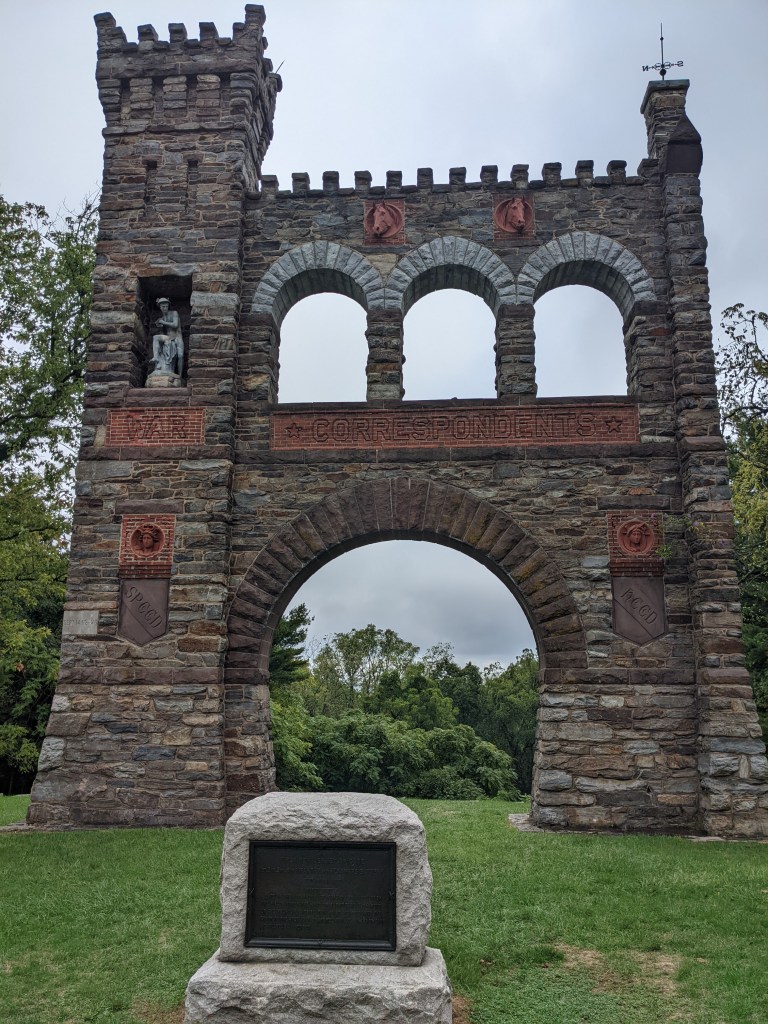
George Alfred Townsend and The War Correspondent Memorial Arch.

Original publish date April 11, 2024. https://weeklyview.net/2024/04/11/george-alfred-townsend-and-the-war-correspondent-memorial-arch/

The War Correspondent Memorial Arch.

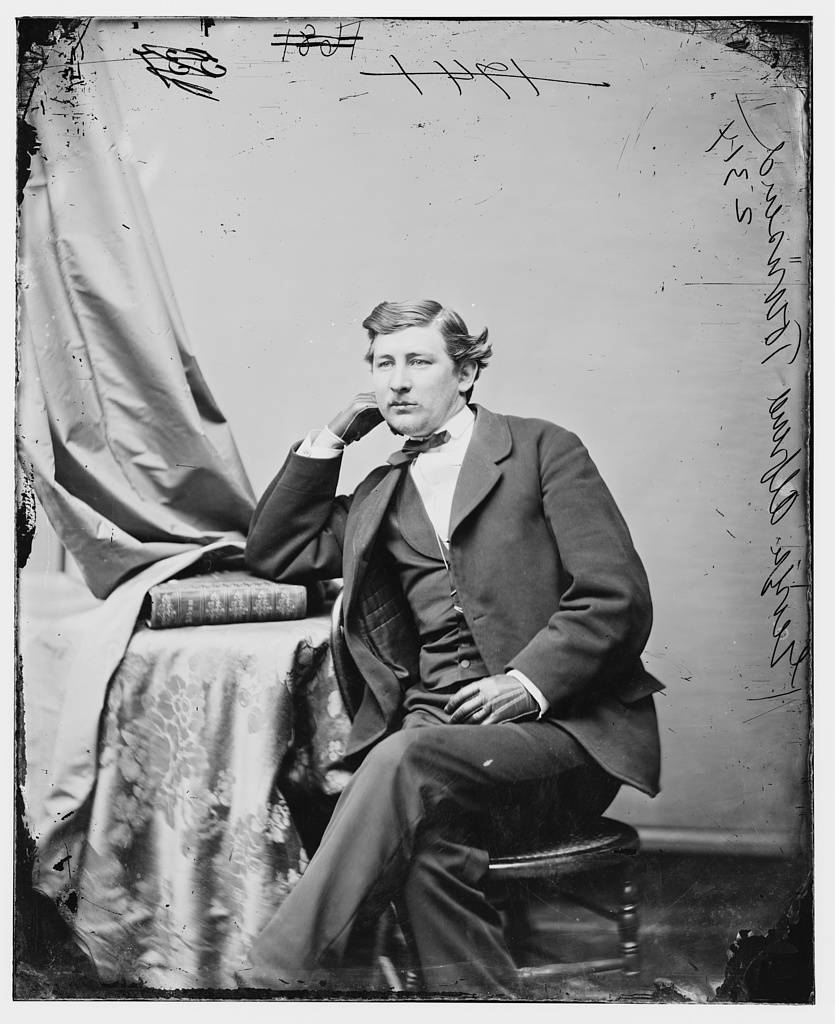
Next week will witness another sad passing in American history: the 159th anniversary of the assassination of Abraham Lincoln. Because I live with this date dancing around in my head more than most, I want to share my experience (and admiration) for a peripheral character in that tragedy: George Alfred Townsend. Born in Georgetown, Delaware on January 30, 1841, Townsend was one of the youngest war correspondents during the American Civil War. Soon after graduation from high school (with a Bachelor of Arts) in 1860, Townsend began his career as a news editor with The Philadelphia Inquirer. In 1861, he moved to the Philadelphia Press as city editor. As the war broke out, he worked for the New York Herald as a war correspondent in Philadelphia.

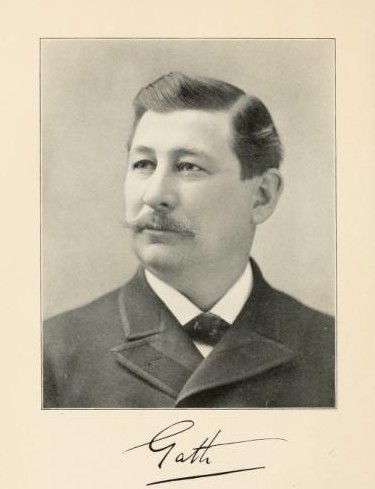
George Alfred Townsend.

By April 1862, George got his big break when General George McClellan rode through Philadelphia on his way to Washington. That fortuitous meeting would propel young Townsend to exclusive access to many of the Civil War’s greatest battles. One of America’s first nationally syndicated columnists, Townsend used the pen name “Gath” for his newspaper columns. Gath was an acronym of his initials with the addition of an “H” at the end. Friends and contemporaries like Mark Twain, Bret Harte, and Noah Brooks, claimed the “H” stood for “Heaven” while wags and rivals claimed it stood for “Hell.” Gath himself was inspired by the biblical passage uttered by David after the death of King Saul in II Samuel 1:20, “Tell it not in Gath, publish it not in the streets of Askalon.”

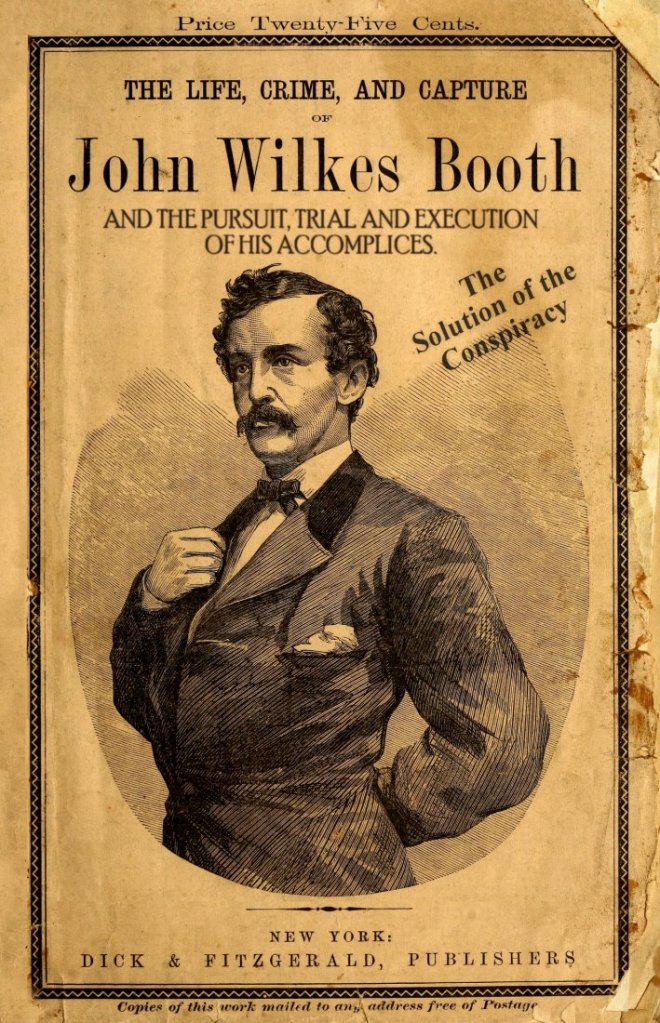
The Life, Crime and Capture of John Wilkes Booth.

While Townsend won accolades for his work covering the war, it was his coverage of the Lincoln assassination that he is best remembered for. His detailed columns (which he called “letters”) about the tragedy were filed between April 17 – May 17 and would later be published as The Life, Crime and Capture of John Wilkes Booth. Published in 1865, Townsend’s book offers a full sketch of the assassin, the conspiracy, the pursuit, trial, and execution of his accomplices. As a lifelong student of Lincoln, I have read countless books, articles, letters, and various accounts centered on his life. It was in George Alfred Townsend’s “letters” that I found my holy Grail. Townsend’s description of Lincoln in his coffin made me feel as if I were standing there myself. His description of Lincoln’s office left me awestruck and wishful. In my opinion, it would be hard to find a more worthy example of Victorian journalism than these excerpts from Gath’s “letters”.

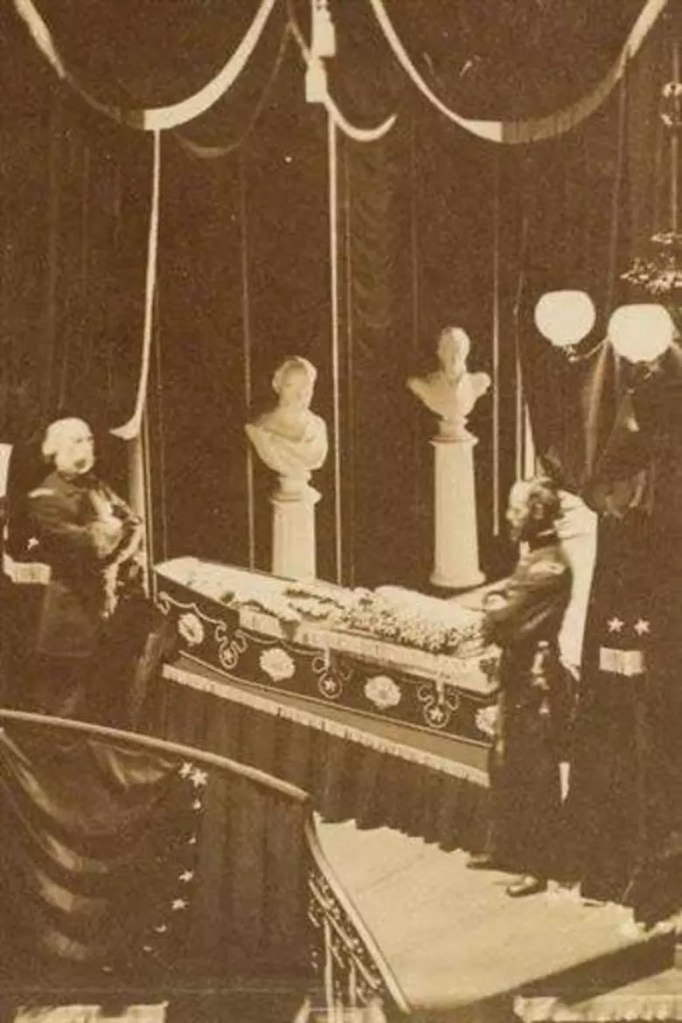
Lincoln in his coffin.

“Deeply ensconced in the white satin stuffing of his coffin, the President lies like one asleep. Death has fastened into his frozen face all the character and idiosyncrasy of life. He has not changed one line of his grave, grotesque countenance, nor smoothed out a single feature. The hue is rather bloodless and leaden; but he was always a sallow. The dark eyebrows seem abruptly arched; the beard, which will grow no more, is shaved close, save the tuft at the short small chin. The mouth is shut, like that of one who had put the foot down firm, and so are the eyes, which look as calm as slumber. The collar is short and awkward, turned over the stiff elastic cravat, and whatever energy or humor or tender gravity marked the living face is hardened into its pulseless outline. No corpse in the world is better prepared according to appearances. The white satin around it reflects sufficient light upon the face to show us that death is really there; but there are sweet roses and early magnolias, and the balmiest of lilies strewn around, as if the flowers had begun to bloom even upon his coffin. Looking on interruptedly! for there is no pressure, and henceforward the place will be thronged with gazers who will take from the site its suggestiveness and respect. Three years ago, when little Willie Lincoln died, Doctors Brown and Alexander, the embalmers or injectors, prepared his body so handsomely that the President had it twice disinterred to look upon it. The same men, in the same way, have made perpetual these beloved lineaments. There is now no blood in the body; it was drained by the jugular vein and sacredly preserved, and through a cutting on the inside of the thigh the empty blood vessels were charged with the chemical preparation which soon hardened to the consistence of stone. The long and bony body is now hard and stiff, so that beyond its present position it cannot be moved any more than the arms or legs of a statue. It has undergone many changes. The scalp has been removed, the brain taken out, the chest opened and the blood emptied. All that we see of Abraham Lincoln, so cunningly contemplated in his splendid coffin, is a mere shell, an effigy, a sculpture. He lies in sleep, but it is the sleep of marble. All that made the flesh vital, sentiment, and affectionate is gone forever.”

Lincoln Funeral Train.

On May 14, 1865, the day Abraham Lincoln’s body was placed on the funeral train to leave Washington DC forever, Townsend visited the White House. Mary Lincoln still resided there with her beloved son Tad, too distraught to leave the White House. “I am sitting in the President’s office. He was here very lately, but he will not return to dispossess me of the high-backed chair he filled so long, nor resume his daily work at the table where I am writing. There are here only Major Hay (Salem Indiana’s John Hay, Lincoln’s private secretary) and the friend who accompanies me. A bright-faced boy runs in and out, darkly attired, so that his fob chain of gold is the only relief to his mourning garb. This is little Tad, the pet of the White House. That great death, with which the world rings, has made upon him only the light impression which all things make upon childhood. He will live to be a man pointed out everywhere, for his father’s sake; and as folks look at him, the tableau of the murder will seem to encircle him.”

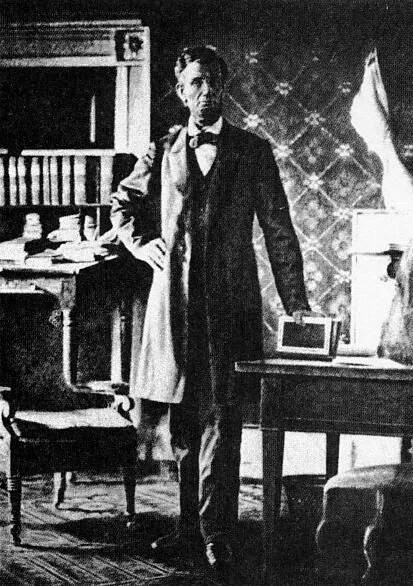
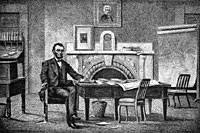
Lincoln in his White House Office.

Townsend further describes Lincoln’s office, just as he left it. “The room is long and high, and so thickly hung with maps that the color of the wall cannot be discerned. The President’s table at which I am seated adjoins a window at the farthest corner; and to the left of my chair as I reclined in it, there is a large table before an empty grate, around which there are many chairs, where the cabinet used to assemble. The carpet is trodden thin, and the brilliance of its dyes is lost. The furniture is of the formal cabinet class, stately and semi-comfortable; there are bookcases sprinkled with the sparse library of a country lawyer, but lately plethoric, like the thin body which has departed in its coffin. Outside of this room, there is an office, where his secretaries sat – a room more narrow but as long – and opposite this adjacent office, a second door, directly behind Mr. Lincoln’s chair leads by a private passage to his family quarters. I am glad to sit here in his chair, where he has spent so often, – in the atmosphere of the household he purified, and the site of the green grass and the blue river he hallowed by gazing upon, in the very center of the nation he preserved for the people, and close the list of bloodied deeds, of desperate fights of swift expiations, of renowned obsequies of which I have written, by indicting at his table the goodness of his life and the eternity of his memory.”

“They are taking away Mr. Lincoln’s private effects, to deposit them wheresoever his family may abide, and the emptiness of the place, on this sunny Sunday, revives that feeling of desolation from which the land has scarce recovered. I rise from my seat and examine the maps; they are from the coast survey and engineer departments, and exhibit all the contested grounds of the war: there are pencil lines upon them where someone has traced the route of armies, and planned the strategic circumferences of campaigns. Was it the dead President who so followed the March of Empire, and dotted the sites of shock and overthrow? So, in the half-gloomy, half-grand apartment, roamed the tall and wrinkled figure whom the country had summoned from his plain home into mighty history, with the geography of the Republic drawn into a narrow compass so that he might lay his great brown hand upon it everywhere. And walking to and fro, to and fro, to measure the destinies of arms, he often stopped, with his thoughtful eyes upon the carpet, to ask if his life were real and he were the arbiter of so tremendous issues, or whether it was not all a fever-dream, snatched from his sofa in the routine office of the Prairie state.”

“I see some books on the table; perhaps they have lain there undisturbed since the reader’s dimming eyes grew nerveless. A parliamentary manual, a thesaurus, and two books of humor, “Orpheus C. Kerr,” and “Artemis Ward.” These last were read by Mr. Lincoln in the pauses of his hard day’s labor. Their tenure here bears out the popular verdict of his partiality for a good joke; and, through the window, from the seat of Mr. Lincoln, I see across the grassy grounds of the capitol, the broken shaft of the Washington Monument, the long bridge and the fort-tipped Heights of Arlington, reaching down to the shining riverside. These scenes he looked at often to catch some freshness of leaf and water, and often raised the sash to let the world rush in where only the nation abided, and hence on that awful night, he departed early, to forget this room and its close applications in the abandon of the theater. I wonder if it were the least of Booth’s crimes to slay this public servant and the stolen hour of recreation he enjoyed but seldom. We worked his life out here, and killed him when he asked a holiday.”

George Alfred Townsend.

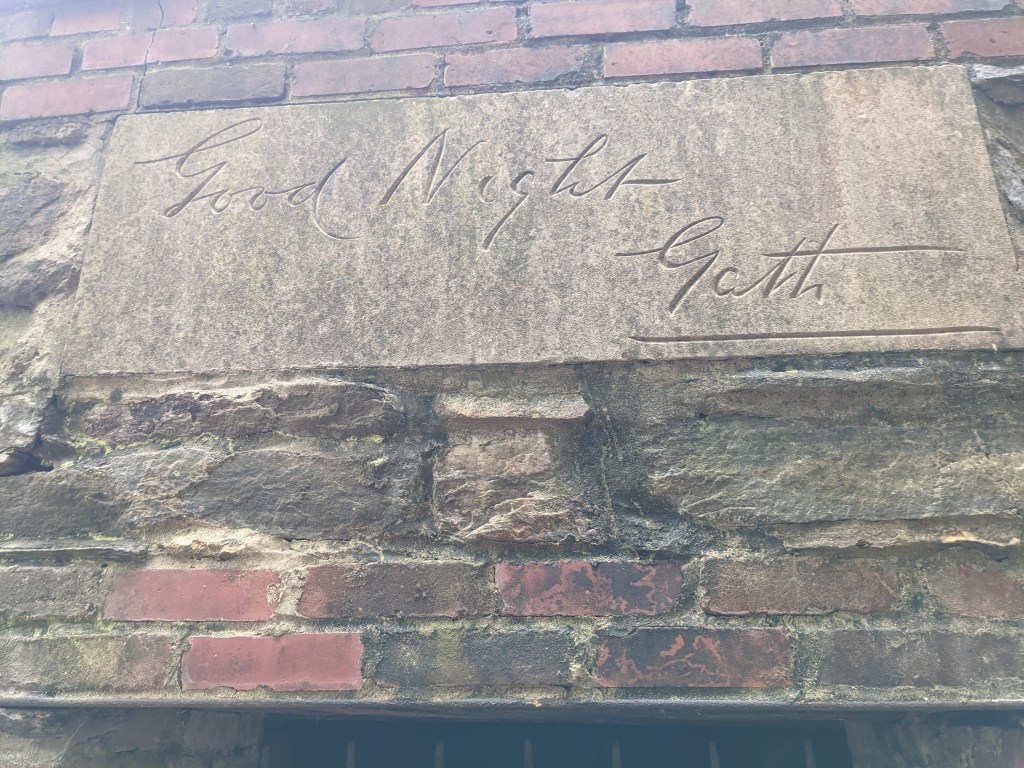
As one of the most successful journalists of his day, Townsend accumulated a tidy fortune. He used much of that fortune to build a 100-acre baronial estate near Crampton’s Gap, South Mountain, Maryland known as “Gapland”. The Civil War Battle of Crampton’s Gap was fought as part of the Battle of South Mountain on September 14, 1862, and resulted in 1,400 combined casualties. Tactically the battle resulted in a Union victory because they broke the Confederate line and drove through the gap. Strategically, the Confederates were successful in stalling the Union advance and were able to protect the rear. Gath literally bought the battlefield upon which he built his estate. The estate was composed of several buildings, including Gapland Hall, Gapland Lodge, the Den and Library Building, and a brick mausoleum (notable for its inscription of “Good Night Gath” above the entrance).

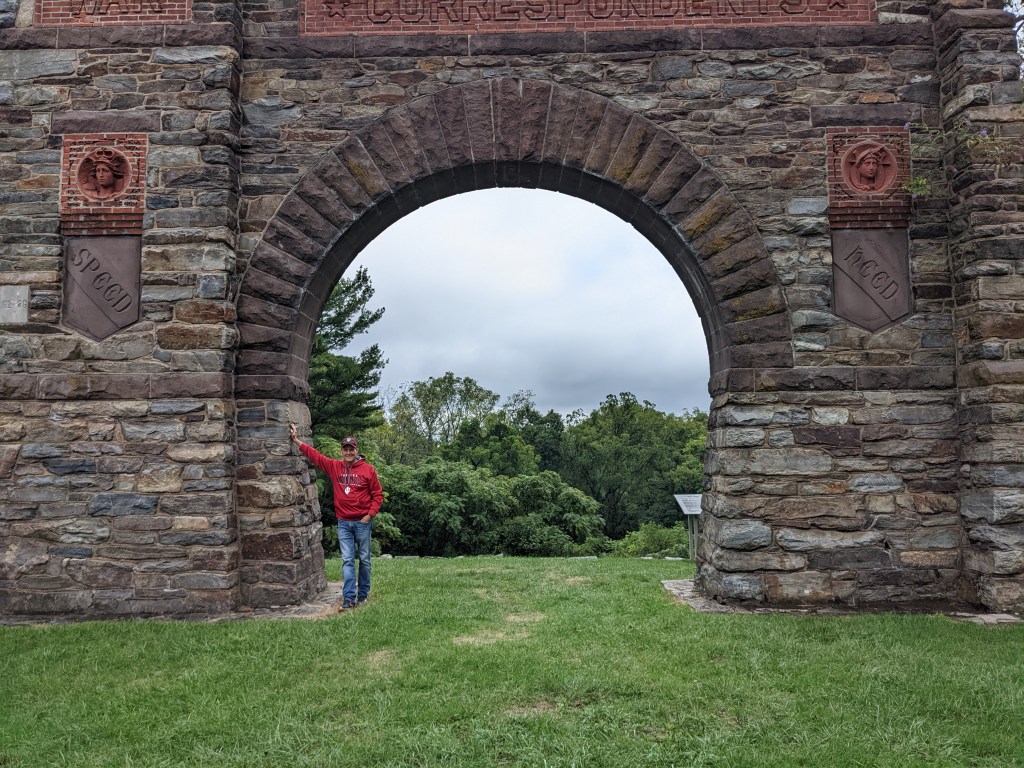
The author at Gath’s arch.

In 1896, Townsend built a monument to war correspondents to memorialize the contributions of his colleagues North and South. Dedicated in 1896, The War Correspondent Memorial Arch is 50 feet high and 40 feet wide and is the only monument in the world dedicated solely to war correspondents. Not only does the arch stand on Townsend’s original estate (operated by the Maryland Department of Natural Resources), it also rests smack dab in the middle of the Appalachian National Scenic Trail. Furthermore, the woods surrounding Gapland and the nearby town of Burkittsville were the setting for the 1999 horror film Blair Witch Project.

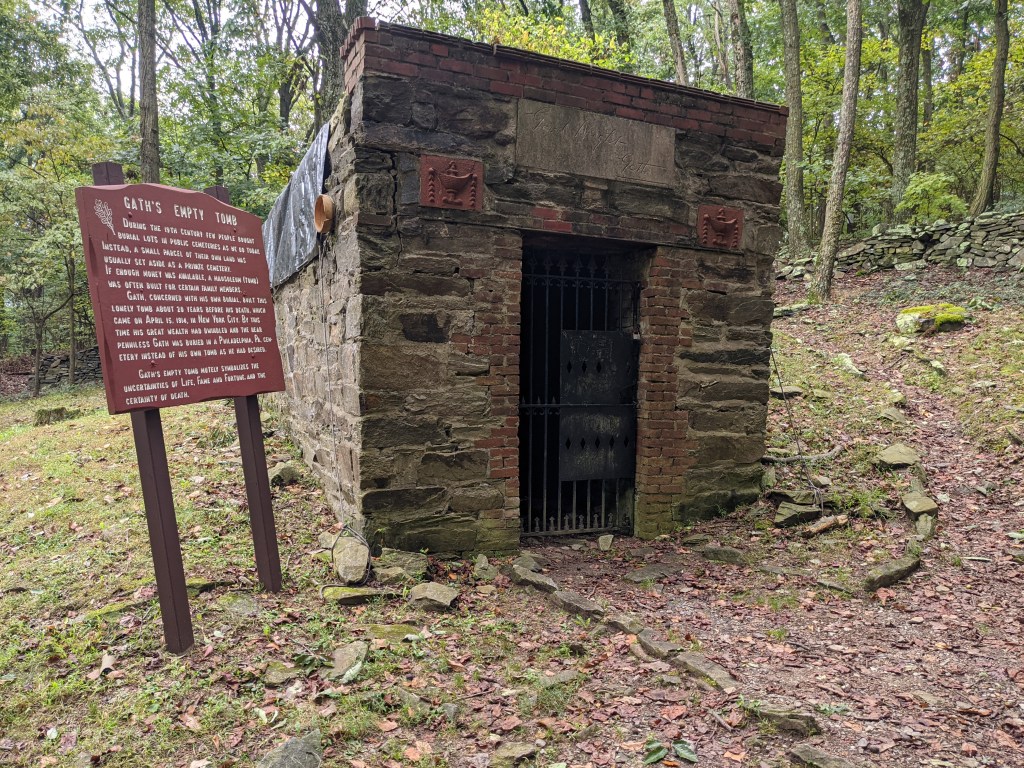
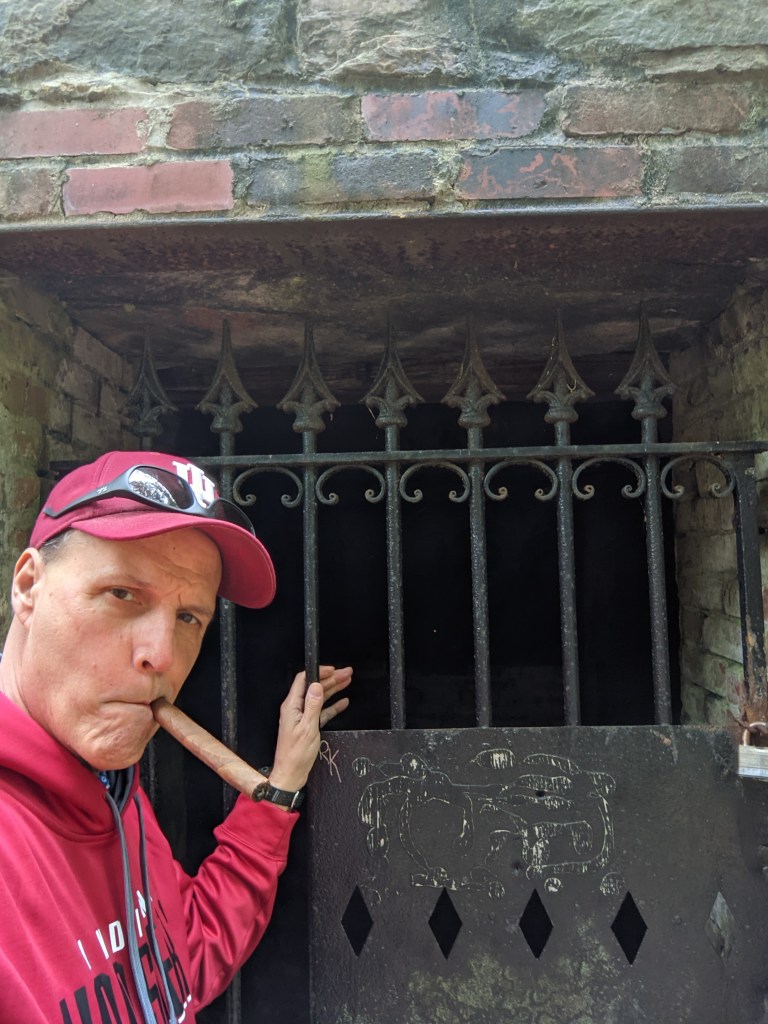
Gath’s Empty Tomb.
Good Night Gath.

Last September, I traveled to the Catoctin Mountains to visit Townsend’s estate not far from the Antietam battlefield. Townsend’s Gapland estate is now known as Gathland State Park. Several buildings still stand, including Gapland Hall (which is the park headquarters) and the mausoleum, while other buildings are mere shadows of their former self. Townsend left Gapland in 1911 and died in New York City three years later on April 15, 1914. The 49th anniversary of Abraham Lincoln’s death. He was buried at Laurel Hill Cemetery in Philadelphia.

The author at Gath’s empty tomb.

His brick mausoleum, fronted by an ominous-looking iron gate causing it to look more like a jail cell than a tomb, stands empty, its roof slowly caving in. Although the object of my quest was The War Correspondent Memorial Arch, I could not help but spend most of my time seated beneath that empty tomb smoking a cigar. While the hale and hearty hikers pausing briefly at the foot of the Appalachian Trail might not have appreciated my vice, as I stared at the epitaph above the iron gate above Townsend’s unused tomb, George Alfred Townsend would understand. Good Night Gath.

Abe Lincoln, Museums

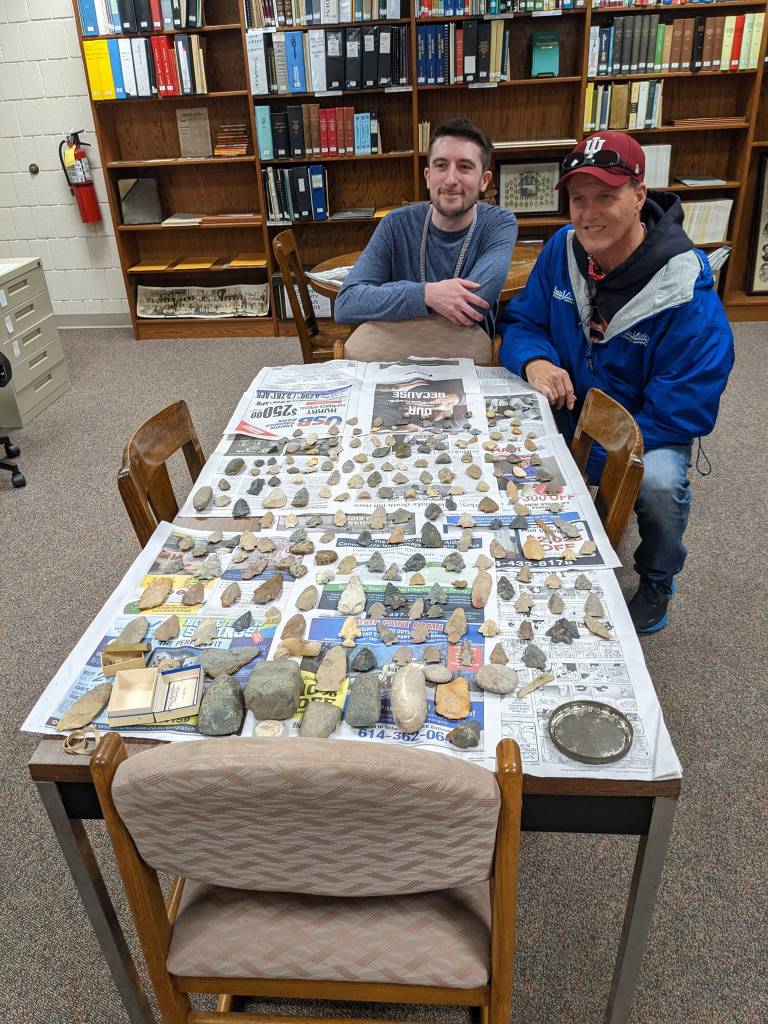
The big reveal of Springfield, Illinois Abraham Lincoln scholar Wayne C. “Doc” Temple’s collection of Native American Indian Artifacts at the Richwood, Ohio History Museum.

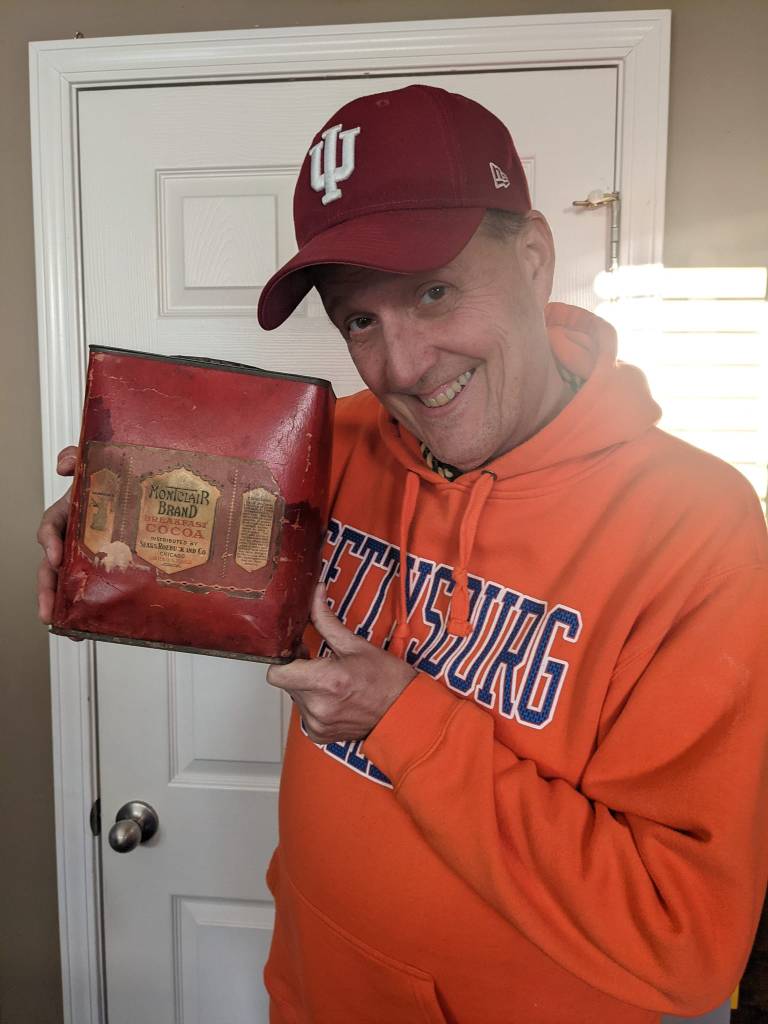
On Thursday, March 9, 2023, I visited the Richwood, Ohio History museum and library with my wife Rhonda S. Hunter. We dropped off the Temple family collection of Native American Indian artifacts collected over the course of at least two decades from @1900 past World War I. The compilation, contained in an old can of Cocoa, had not seen the light of day for nearly a century. Doc, Springfield Illinois’ premiere Abraham Lincoln scholar for over 60 years, also wrote the definitive book on the subject in 1966, Indian Villages of the Illinois Country: Historic Tribes, and several scholarly articles and papers on the subject for the University of Illinois. The artifacts were dug in the farm fields in and around Richwood Ohio so it seemed fitting that Doc’s collection go back to their place of origin. We were as happy to deliver them as the museum officials were to receive them.

Doc’s arrowhead collection had been stored in this cocoa box for a century.
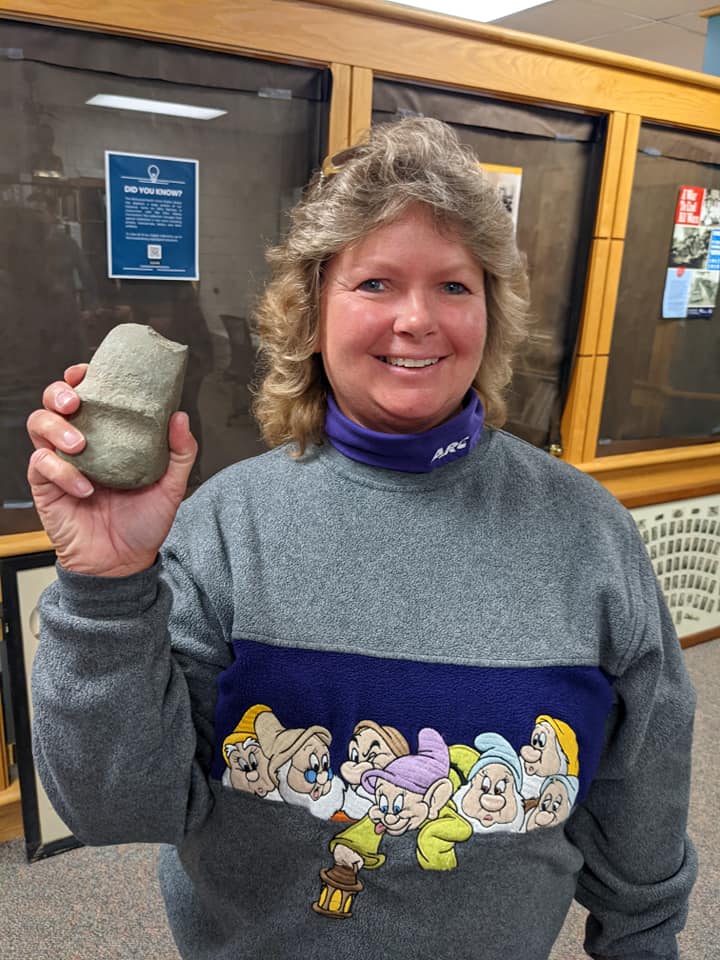
Rhonda Hunter with the piece from the collection that Doc recalled specifically. I believe it is a hammer or tomahawk head.
Richwood Museum staffer Dustin Lowe and Alana E. Hunter with Doc’s collection.
Abe Lincoln, Civil War

99 Birthday Cards for Doc.

https://weeklyview.net/2023/02/02/99-birthday-cards-for-doc/

PLEASE SHARE!

February 5, 2023.

Friends, please consider joining me in a project celebrating the 99th birthday of the Dean of all Abraham Lincoln scholars from Springfield, Illinois:

Dr. Wayne C. “Doc” Temple.

I have been working on a biography of Doc for some time now. For nearly 70 years, Doc has researched, written, and published more than 20 books and over 300 articles on Abraham Lincoln, the Civil War, Indigenous tribes, and Midwest history. Along the way, Doc has graciously volunteered his time, knowledge & wisdom with countless students and scholars along the way. Most of today’s Lincoln scholars have consulted Doc for facts in their work.

This will be Doc’s first birthday since losing Sandy, his wife of 42 years, last March. Doc is a member of America’s greatest generation having fought bravely for the United States in the European theatre, once actually standing in an open road firing a Thompson Sub-machine gun at a German fighter plane strafing his unit. He is an amazing man.

I ask that you join me in sending a birthday card or friendly note to Doc (he doesn’t do e-mail) in time for his 99th birthday (February 5, 2023) in care of the address below. Please share this humble announcement to your page and we’ll see if we can’t get 99 cards for Doc’s 99th birthday. His personal archives will be donated to the Abraham Lincoln Presidential Library and Museum in Springfield and these birthday cards will be preserved among that collection. Thank you for your consideration.

Wayne “Doc” Temple

c/o Books on the Square

427 East Washington Street

Springfield, IL 62701

————–

Doc’s historical resume is unchallenged. In my opinion, he is our nation’s greatest living Lincoln scholar. I am just one of the legion of Lincoln scholars he has helped and encouraged along the way. Doc served as chief deputy director of the Illinois State Archives for over 50 years (1964-2016), Secretary-treasurer of the National Lincoln-Civil War Council during the 100th anniversary Centennial years (1958-1964),  and editor / associate of the Lincoln Herald since 1973.

I have listed Doc’s “resume” below. As you can see, it is quite impressive.

Doc’s education credentials & historical resume:

AB cum laude, University of Illinois, 1949; AM, University of Illinois, 1951; Doctor of Philosophy, University of Illinois, 1956; Lincoln Diploma of Honor (Illinois’ highest civilian award), Dean of history at Lincoln Memorial U., Harrogate, Tennessee, 1963. Wayne Calhoun Temple has been listed as a noteworthy Historian by Marquis Who’s Who.

Curator ethnohistory, Illinois State Museum, 1954-1958; editor-in-chief, Lincoln Herald, Lincoln Memorial U., 1958-1973; associate editor, Lincoln Herald, Lincoln Memorial U., since 1973; also director department Lincolniana, director university press, John Wingate Weeks professor of history, Lincoln Herald, Lincoln Memorial U., 1958-1964; with, Illinois State Archives, since 1964; chief deputy director, Illinois State Archives. Lecturer United States Military Academy, 1975. Secretary-treasurer National Lincoln-Civil War Council, 1958-1964.

Member bibliography committee Lincoln Lore, since 1958. Honorary member Lincoln Sesquicentennial Commission, 1959-1960. Advisory council United States Civil War Centennial Commission, 1960-1966.

Major Civil War Press Corps, since 1962. President Midwest Conference Masonic Education, 1985.

Doc’s books include:

Lincoln the Railsplitter 1961. (listed in the top 100 Lincoln books ever written)

Stephen A. Douglas, freemason Stephen A. Douglas, Freemason.

Abraham Lincoln and Others at the St. Nicholas.

Lincoln’s Confidant: The Life of Noah Brooks (The Knox College Lincoln Studies Center) by Wayne C. Temple, Douglas L. Wilson, et al. / Nov 30, 2018

Abraham Lincoln: From Skeptic to Prophet 1st Edition by Wayne C. Temple (1995)

Alexander Williamson: Friend of the Lincolns (Special publication)

Lincoln’s Surgeons at His Assassination Hardcover – October 29, 2015

BY SQUARE AND COMPASS: THE BUILDING OF LINCOLN’S HOME AND ITS SAGA.

Lincoln-Grant: Illinois militiamen Lincoln-Grant: Illinois militiamen

Indian Villages of the Illinois Country: Historic Tribes (Scientific Papers, Vol 2, Pt 2)

Membership:

Sponsor Abraham Lincoln Bay, Washington National Cathedral. Member Illinois State Flag Commission, since 1969. Trustee, regent Lincoln Academy Illinois, 1970-1982, Bicentennial Order Lincoln, 2009.

Board governors St. Louis unit Shriners Hospitals for Crippled Children, 1975-1981. Commissioning committee, honorary crew member and plank owner United States Ship Springfield submarine, since 1990. Honorary crew member United States Ship Abraham Lincoln aircraft carrier, since 1989.

With United States Army, 1943-1946, general Reserve (retired). Fellow Royal Society Arts (life). Member National Rifle Association, Knight Templar (Red Cross Constantine), Lincoln Group District of Columbia (honorary), University Illinois Alumni Association, Illinois State History Society, Board of Advisors, The Lincoln Forum, Illinois Professional Land Surveyors Association, Illinois State Dental Society (citation plague 1966), Reserve Officers Association, Lincoln Fellowship of Wisconsin, Iron Brigade Association (honorary life), Military Order Loyal Legion United States (honorary companion), Military Order Foreign Wars United States, Army and Navy Union, Masons (33 degree, Meritorious Service award, grand representative from Grand Lodge of Colorado), Shriners, Kappa Delta Pi, Phi Alpha, Phi Alpha Theta (Scholarship Key award), Chi Gamma Iota, Phi Beta Kappa, Tau Kappa Alpha, Alpha Psi Omega, Sigma Pi Beta (Headmaster), Sigma Tau Delta (Gold Honor Key award for editorial writing), Zeta Psi.

Abe Lincoln, Assassinations, Civil War, Criminals

Pink Parker and his Monument to John Wilkes Booth.

https://www.digitalindy.org/digital/collection/twv/id/3538/rec/151

Original Publish Date August 26, 2021. https://weeklyview.net/2021/08/26/pink-parker-and-his-monument-to-john-wilkes-booth/

Recently, I ran across an obscure booklet about a little-known episode in the post-assassination chronology of Abraham Lincoln. Surprisingly it was published and distributed by a man named Stewart Winning McClelland (1891-1977) a self-described “Sponsor” of Dale Carnegie courses from Indianapolis. More surprising is the fact that it was published exactly 70 years ago on August 28, 1951. The booklet is titled “A Monument to The Memory Of John Wilkes Booth.” Now THAT got your attention, didn’t it

The booklet tells the story of a cranky old Rebel from Troy Alabama named Joseph Pinckney “Pink” Parker, born August 16, 1839, and died December 12, 1921. Parker, a former police officer and veteran of the Confederate Army, was often described in the local newspaper as “the bitterest Rebel in the South.” Almost immediately after graduating from Springhill Academy in Coffee County Alabama, the Civil War broke out and Pink enlisted in the Confederate Army. He left his family’s well-stocked plantation, a sister, and a bevy of slaves when he left for the front lines.
Parker served in Company A of the Second Georgia Battalion Infantry, Wright’s Brigade, Mohone’s Division of AP Hill’s Corps of the Army of Northern Virginia. During Parker’s four years of service, he rose to the rank of Corporal and fought at the battles of Gettysburg, the Wilderness, Spotsylvania, Cold Harbor, Petersburg, and Appomattox: many of the fiercest battles of the Civil War.
Four years later, when the war ended, Pink returned to find the “farm overgrown with weeds, his stock and slaves disappeared and his sister imbittered by her treatment received at the hands of the northern soldiers.” The family estate was soon “eaten up” by taxes and the former Rebel soldier was forced to take a position as a “walker” on the railroad tracks carrying with him “maul and spikes to keep the tracks repaired.” Parker grew to hate everything “Yankee”, blaming President Abraham Lincoln for the social and economic distress throughout the South and for Reconstruction, which he considered the continued destruction of the South.
Parker married and bought a farm near Inverness, Florida, but found farm life there hard and unforgiving. He moved his wife and three children to a house he bought on Madison Street in Troy. For years he earned a hardscrabble living on his meager salary as a grocery store clerk, policeman, and cotton compress worker. Eventually, he became a schoolteacher in Troy, where he built a comfortable home a short distance from the famed Natchez trace “which Andrew Jackson used in his battles against the Indians in Florida.”

The booklet describes Pink as a well-respected member of his community and a devout member of the Baptist Church with just one single vice: a deep-seated hatred for Abraham Lincoln. As Lincoln’s legend began to move towards secular sainthood, in both the North and the South, Pink Parker’s wrath grew year by year into a compulsion. Whenever Lincoln’s name was mentioned, Pink would burst forth with impassioned flights of profanity that astonished and shocked his friends and family. So bad were these outbursts that his pastor at the Baptist Church removed him from the church roles for his profanity. In a situation that Pink described, “It wasn’t quite fair. I know all the deacons in that church and any one of them can cuss better than I can.”
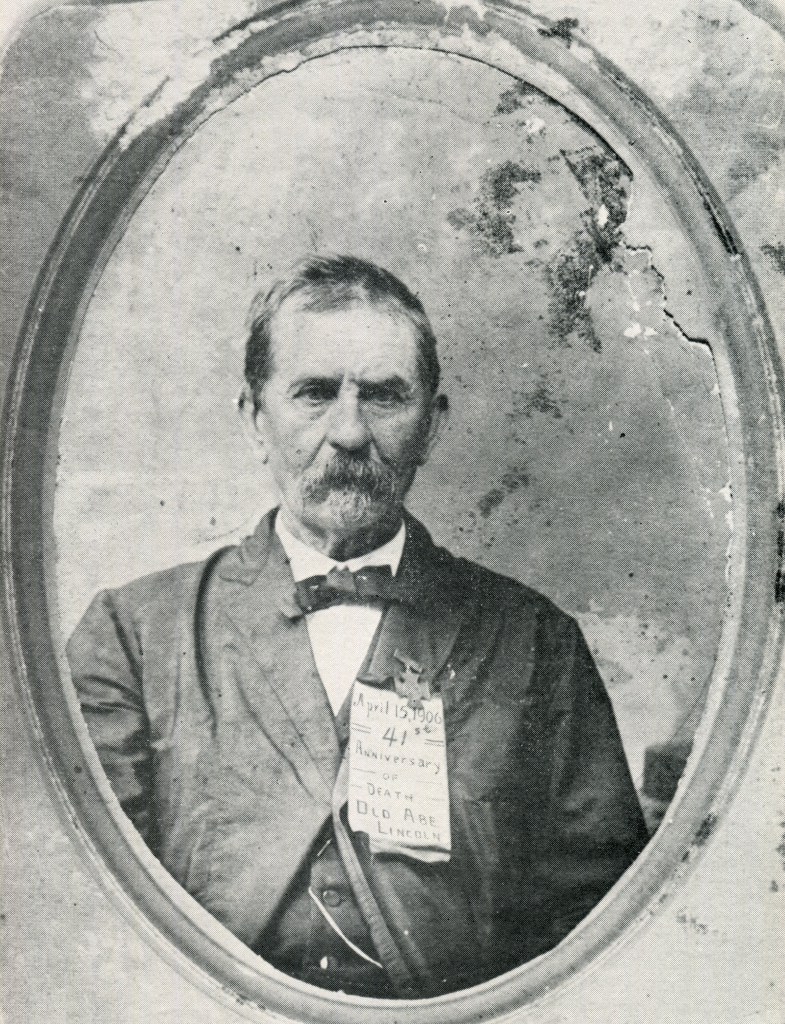
His expulsion from the church proved to be the capstone of Parker’s Lincoln hatred. Parker’s wife died in 1893 and his children moved away. From that point on, every April 15th, Pink would fashion for himself a paper badge and ribbon celebrating the “Anniversary of the Death of old Abe Lincoln.” Occasionally, Pink would memorialize these otherwise sad anniversaries by walking into the local photography studio to have his picture made wearing the offensive badge. As years passed, the idea came into his head that he would erect a monument to the memory of John Wilkes Booth. As unthinkable and repulsive as the idea sounds to our modern ears, Pink indeed put his plan into action.
The monument, standing approximately 4 feet high, resembled a typical graveyard headstone found in any Alabama burying ground around the state. Pink was always quick to note that he never took the oath of allegiance after the Civil War and he personally never surrendered. The stone bore the inscription: “Erected by Pink Parker in honor of John Wilks Booth, for killing old Abe Lincoln.” It is interesting to note that the old Rebel misspelled the cowardly assassin’s name on his memorial, fitting for such an unpopular, shortsighted memorial.

He first offered his ghastly memorial to the city of Troy to be placed in front of the Pike County Courthouse or in a public park. When the city quickly declined his invitation, he installed the monument in his front yard on Madison Street. It wasn’t long before local vandals turned their attention to the stone, defacing it. Soon Parker erected a board fence to protect it. Although newspapers from the 1920s stated that the stone had been erected in 1866, Pink placed the marker in 1906. Pink told his grandsons that he invited President Theodore Roosevelt to the stone’s dedication with a postcard stating that “while I can’t furnish a carriage for you, I could get you a dray hauled by a couple of mules.”
When those same grandsons asked their grandfather how he was going to get along with all those Yankees when he got to heaven, Pink would say, “Well, I don’t suppose I will find enough up there to bother me.” Pink Parker always believed that John Wilkes Booth was still alive, that Booth did not die from Boston Corbett’s shot through the neck in the Garrett tobacco barn. A belief principally subscribed to by only the most avowed skeptics, conspiracy theorists, and carnival sideshow aficionados of the era.

Pink Parker’s House.

Parker became ill and, in 1918, his son, Eugene, moved his father to Sardis, Georgia. Parker deeded his home to his three children. They sold it in 1920. In 1921 emotions over Pink’s distasteful display reached a boiling point. The local president of the Alabama Women’s League of Republican Voters, Mrs. C.D. Brooks, instigated a campaign to have the monument removed permanently. Letters poured in from all over the country supporting her stand. Then sometime around Halloween, a group of local boys pulled down the marker as a prank. The Booth monument lay half-buried in the dirt as weeds slowly overtook it.
In 1921, the Troy Messenger received a large volume of indignant letters and the National Sons of Union Veterans wrote to President Waren G. Harding demanding the monument be removed and destroyed. The added attention and the age of the automobile soon brought souvenir hunters to the little town of Troy. These eager relic collectors began to chip away pieces of the stone. The Troy Messenger reported on July 13, 1921, that the monument had been removed by order of the town council. It was hidden away out of sight and mind in a shed and forgotten.

The recarved Booth Marker.

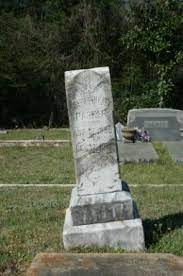
In the midst of the furor, the half-blind, sick, and forgotten Pink Parker passed away in December of 1921 at the age of 82. His body was brought back to Troy and buried next to his wife. His sons retrieved the stone from cold storage and had it re-carved. The inscription honoring Booth was removed from the monument and it was fashioned into his tombstone, his name and birth/death dates on one side and the details of his service in the Confederate Army listed on the other. Confederate veterans served as his pallbearers.

Pink’s Grave Marker Today.

Historians have long realized how much the South lost by the killing of Abraham Lincoln. Lincoln was the one man who might have reunited a broken country. The one man who could have allayed sectional hostilities and rebuilt a nation. Pink Parker was on the wrong side of history. But Pink Parker did not care. Today, the former Booth monument can be seen on Parker’s grave in Oakwood Cemetery, located on North Knox Street in Troy. The gravestone stands on a downward slope in the farthest regions of the cemetery. There is no trace of the former writing, no indication that it ever honored assassin John Wilkes Booth. Perhaps fittingly, Pink Parker’s grave marker lists to the larboard side, forever tilted, just like the man it honors.

Abe Lincoln, Creepy history, Ghosts, Politics, Presidents

The Mumler Abraham Lincoln Ghost Photo.

Original publish date:  October 22, 2020. https://weeklyview.net/2020/10/22/the-mumler-abraham-lincoln-ghost-photo/

https://www.digitalindy.org/digital/collection/twv/id/3900/rec/104

Last Saturday before the Irvington ghost tours, one of our volunteers, Alex McFarland, initiated a conversation that seemed to be a perfect topic for the evening: the Abraham Lincoln ghost photo. Known officially as the “Mumler photos”, these were a series of posed studio photographs, not unlike any old-time photo, usually in Carte de Visite (or CDV) form, that can be found at any antique show, shop, or mall today. The difference is, that Mumler’s photos had the visual image of a ghost in them. The most famous of the Mumler photos features widowed First Lady Mary Lincoln with her deceased husband, President Abraham Lincoln.


William H. Mumler

William H. Mumler (1832-1884) was a well-known Boston photographer who claimed to be a “medium for taking spirit photographs.” Mumler was part of the growing phenomenon of spiritual manifestations introduced in 1848 by the Fox sisters of Hydesville, N.Y. The three sisters held séances at their home (near Newark, N.J.), that featured spirit rappings and table tippings in response to their queries. Their amazing “abilities” caused a sensation that spread across the country. With its long history of highly-intelligent, intellectually curious populace, Boston became an epicenter for the movement attracting spiritualists, mediums, and psychics from all over to the mysterious world of the “higher plane.”
In 1871, the camera was still in its infancy. The technology had graduated from metal to glass to paper photos readily available and affordable to the general public like never before. The country was still mourning from Civil War losses, in some cases having lost entire male lines of families and large portions of towns and communities. The loss of loved ones was still fresh and many turned to any means necessary to see and talk to their loved ones one last time. Mumler’s promise of contact in the form of visual evidence drew flocks of true believers to his studio at 170 West Springfield Street in this city historians called the “Cradle of Liberty.”


In February of 1872, seven years after Lincoln’s assassination, a still grieving Mary Lincoln arrived at William Mumler’s Boston Studio to have her picture made. Dressed in mourning, she gave the photographer a false name (‘Mrs. Lindall”) and kept her face concealed behind a black veil. In 1875, Mumler recalled in his autobiography, “I requested her to be seated, went into my darkroom, and coated a plate. When I came out I found her seated with her veil still over her face. I asked if she intended to have her picture taken with her veil. She replied, ‘When you are ready, I will remove it.’” The widow Lincoln was used to dealing with charlatans and knew how to prevent their tricks.

The reason she landed at Mumler’s studio was because her dead husband had appeared to her at a séance earlier in Boston. The medium told her she should visit Mumler’s studio because the photographer could capture the shadows of the dead on photographic negatives. Mumler always claimed that he did not recognize his subject until after he developed the negative. And then only after he recognized the image of the martyred President did he realize it was Mary Todd Lincoln. His visitor just may have been the most vulnerable woman in America, shattered by death and loss for the past two decades.
Mary never recovered from her husband’s assassination six years before and the loss of three of her four sons, all dead before their 18th birthdays. Even before her husband’s death, Mary Lincoln had embraced spiritualism, the belief that the spirits of the dead can be contacted through mediums. Reputedly going so far as hosting seances in the White House and visiting mediums in Georgetown and D.C., sometimes accompanied by the President himself. So her visit to the studio, today located near historic Frederick Douglass Square in Boston, was unsurprising and predictable. It should also come as no surprise that the photo, the greatest presidential ghost photo ever known, is a fake.


Mary’s visit to William Mumler’s studio (one of five Boston studio locations he occupied during the 1860s-70s and 80s) stands out as one of the grand hoaxes of the Spiritualist period. The distraught first lady must have been satisfied, even consoled by the image, but to our practiced modern eyes, this photograph of Mary Lincoln remains a touching, if sadly preposterous, fake. Nonetheless, it was Mumler’s most famous portrait. Mumler’s Lincoln image is his most reproduced photograph, and it is believed to be the last photo ever taken of Mary before she died in 1882.


The story of Mumler’s spirit photography began as an accident and turned into a joke. In 1861 the 29-year-old jewelry engraver was living in Boston and experimenting with the new art of photography as a hobby. In his autobiography, The Personal Experiences of William H. Mumler in Spirit Photography, Mumler claimed his discovery was made while developing a self-portrait. While the plate was soaking in the tray of toxic chemicals, he noticed the mysterious form of a young girl slowly materialize on the negative. Amused and mystified, Mumler printed this curiosity and showed it around to friends, claiming that it was the ghost of a dead cousin. Mumler, a man of “a jovial disposition, always ready for a joke,” decided to show the photo to his spiritualist friends, pretending that his picture was a genuine impression from beyond the grave.

The Boston psychics fell for the gag and soon Mumler’s ghost photos were circulating around the city. It became an instant sensation and once Mumler’s photo was published in The Banner of Light and other spiritualist newspapers, he became an instant celebrity. The “spirit cousin” was nothing more than the transfer residue of an earlier negative made with the same plate, but it was declared a miracle and Mumler the jeweler became heralded as the “oracle of the camera”. Mumler soon left his job as a jewelry engraver and opened his own photography business full-time.

Here’s the scam. On arrival, the subject of the photo was greeted by William’s wife Hannah, she would chat up the client who would invariably reveal who the spirits were that they wished to appear in their sitting. Hannah had some clairvoyant abilities of her own and she often offered her own intuitions about the spirits surrounding her husband’s clients, resulting in the client’s unwittingly revealing more precise information. All while William Mumler was eavesdropping from the adjoining room. Part of his con included a “vacuum tube” that glowed as an electrical current was run through it which he claimed was a special force he then channeled into the camera. It was P.T. Barnum-style showmanship pure and simple.

For this special ability, Mumler’s fees were extravagant. At the height of his fame, Mumler charged $10 for a dozen photographs, roughly five times the average rate. Worse, there was no guarantee that any spirits would appear. If Mumler or his wife sensed a particular vulnerability in their subject, the spirits would not appear in the photos. Clients were encouraged to make repeated trips to Mumler’s studio before they were blessed with a true spirit photograph. If the high fee was ever questioned, “The spirits,” Mumler answered, “did not like the throng.”


Boston’s other photographers were not impressed by Mumler’s ghost photos. James Black, one of Boston’s premiere photographers famous for his aerial views of the city taken from the perspective of a hot air balloon, was convinced that Mumler was cheating. He set out to catch him at it. Black bet Mumler $50 that he could discover his secret. Black examined Mum­ler’s camera, plate and processing system, and even went into the darkroom with him. In his auto­biography, Mumler described Black’s reaction when a ghostlike image emerged on the negative right before the doubter’s eyes as, “Mr. B., watching with wonderstricken eyes…exclaimed, ‘My God! Is it possible?’”

P.T. Barnum.

Of the incident, Mumler later recalled, “Another form became apparent, growing plainer and plainer each moment, until a man appeared, leaning his arm upon Mr. Black’s shoulder.” The man later eulogized as “an authority in the science and chemistry of his profession” then watched “with wonder-stricken eyes” as the two forms took on a clarity unsettling in its intimacy. Despite the best efforts of countless investigators, no one was able to determine exactly how Mumler created his apparitions. With the photographic elite unable to debunk Mumler’s ghost photos, hoards of desperate souls flocked to Mumler’s studio-including a grieving Mary Lincoln and the master of all hoaxes, P.T. Barnum himself.
Soon Mumler’s pictures became the subject of great speculation among his peers from all over the country. In 1863 noted Boston scientist, physician, and avid photographer Oliver Wendell Holmes not only gave step-by-step instructions on how to obtain a double exposure in an essay for the Atlantic Monthly, but he also contemplated the popularity of Mumler’s pictures. “Mrs. Brown, for instance, has lost her infant, and wishes to have its spirit-portrait taken,” Holmes wrote. “It is enough for the poor mother, whose eyes are blinded with tears, that she sees a print of drapery like an infant’s dress, and a rounded something, like a foggy dumpling, which will stand for a face…An appropriate background for these pictures is a view of the asylum for feeble-minded persons…and possibly, if the penitentiary could be introduced, the hint would be salutary”
Further confounding the experts was the fact that the apparitions seen in a Mumler photograph had human features, lifelike gestures, and filmy interactive forms. They are translucent spirits, not hard-edged ghosts. That was the secret of a Mumler ghost photo. To mediums, psychics, and spiritualists, Mumler’s photos depicted what they believed: that the afterlife was a paradise, simply the next step in human existence, albeit on a higher plain. All questions of process and motives aside, Mumler’s subjects were satisfied with the results. Distraught parents saw visions of children gone for years. Grieving widows saw their husbands one more time and widowers looked into the eyes of deceased wives once again.
Eventually, Mumler was a victim of his own vanity and the third deadly sin of avarice: aka Greed. The more people that showed up, the more Mumler had to perform. Some prominent Boston spiritualists, once avid supporters of Mumler’s ability, began to examine the ghost photos more closely only to discover that some of the “spirits” in the images were still quite alive. The ragman, the butcher, the schoolteacher, the cop. These were normal people walking the streets of Boston, all past subjects of Mumler’s “straight” photo studio sessions utilized by Mumler in the photographs of strangers. Eventually, Mumler’s business in Boston fell off.


He died on May 16, 1884 holding patents on a number of innovative photographic techniques, including Mumler’s Process, which allowed publishers to directly reproduce photographic illustrations in newspapers, periodicals, magazines, and books. Mumler’s skill as a photographer was only rivaled by his talent as a con artist, but he never really experienced any accumulated wealth from his labors. Mumler maintained to the end that he was “only a humble instrument” for the revelation of a “beautiful truth.” To further confuse matters, Mumler destroyed all of his negatives shortly before he died. William Mumler’s photographs may be products of pure hoaxing, but the question of whether technology is capable of catching spirits on film remains with us to this day. Search the web on any given day and you will see photos of every type captured by cameras of every description. Security cameras, ring doorbells, digital images, and cellphones continue to capture photos of mysterious orbs, mists, apparitions, shadows, dancing lights, and unexplainable phenomenon of every description. The allure of capturing a ghost on film, especially that which is invisible to the naked eye, may have begun with William Mumler but it continues to this day.