
Original publish date: August 12, 2013 Reissue Date: June 18, 2020
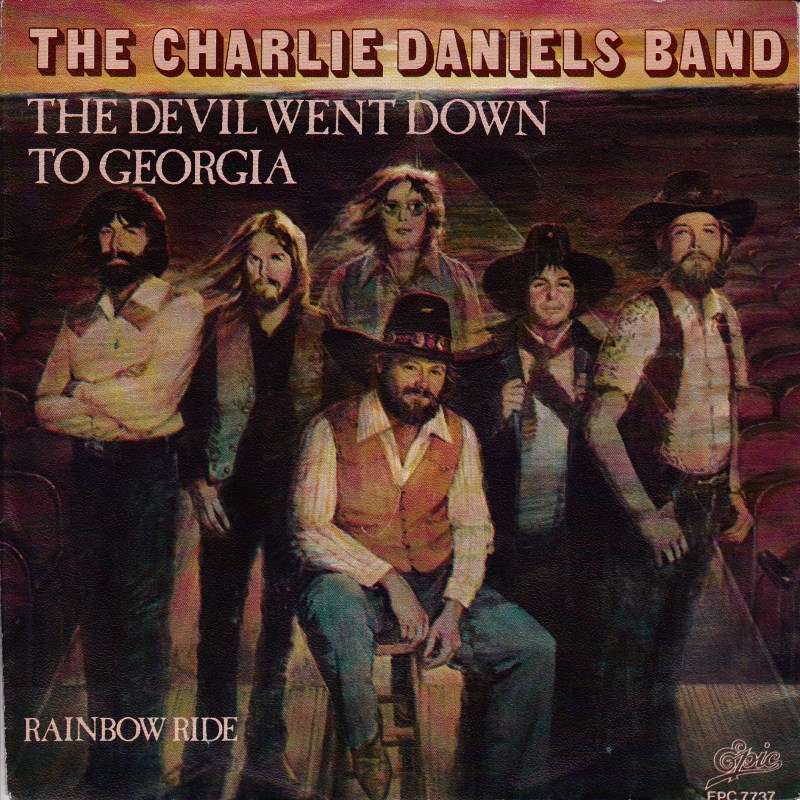
“The Devil went down to Georgia. He was lookin’ for a soul to steal. He was in a bind ’cause he was way behind. He was willing to make a deal.” If you’ve ever listened to the radio in your lifetime, these lyrics are very familiar to you. And chances are, after reading this, they’ll be bouncing around in your brain for the rest of the day. But did you realize that there is a school of thought out there that believes these lyrics are not just musical fantasy, they are autobiographical in nature?
 Legend claims this song tells the story of the most famous guitar player you’ve probably never heard of. Robert Johnson was born in Hazelhurst, Mississippi on May 8, 1911. He died under mysterious circumstances 75 years ago this week, on August 16, 1938. Johnson’s life has ascended into legend and it is often hard to separate fact from fiction, where this Mississippi bluesman’s life is concerned.
Robert Johnson was born to the Delta blues like a fish was born to water. Although he grew up dirt poor, one of 10 children, and was sparsely educated,no less an authority than Eric Clapton called Johnson “the most important blues singer that ever lived.” Johnson was married at age eighteen in 1929. His wife, 16-year-old Vergie Mae Smith, died in childbirth a year later. He married Caletta Craft in May 1931 and a year later, the couple moved to Clarksdale in the Mississippi Delta. Here Caletta fell ill and Johnson abandoned her for a career as a ‘walking’ musician. He spent the rest of his life traveling from town to town, playing on streetcorners, at picnics, Saturday night dances and juke joints.
 Johnson’s haunting, spiritual lyrics survive in songs such as “Cross Road Blues”, “Sweet Home Chicago” and “Me and the Devil Blues”. Robert Johnson’s shortlist of 29 landmark recordings from 1936 & 1937 display a combination of singing, guitar skills, and songwriting talent that influenced future generations of musicians. The American Record Corporation released eleven 78rpm records on their Vocalion label during Johnson¹s lifetime, and one more after his death.
If you doubt his impact on modern music, I suggest you Google Robert Johnson and take a few minutes to listen to any one of his many recordings that can be found on YouTube. Johnson’s music has been acknowledged as the driving influence behind the careers of guitar legends like Keith Richards, Eric Clapton, Bob Dylan, Led Zepplin and the Allman Brothers. Johnson’s “Cross Road Blues”, which allegedly tells the story of how he sold his soul to devil, has been covered by Cream, Jimi Hendrix, Van Halen, Steve Miller Band, Lynyrd Skynyrd, Molly Hatchet and The Doors, among others.
As an itinerant performer, Johnson experienced little commercial success and remained relatively unknown during his lifetime. From 1932 until his death in 1938, Johnson moved frequently between large cities like Memphis, Tennessee and Helena, Arkansas to smaller towns on the Mississippi Delta. On occasion, he traveled much farther to Chicago, Texas, New York, Canada, Kentucky, and here in Indiana. Johnson’s records sold poorly during his lifetime. It was only after the reissue of his recordings in 1961 on an album called “King of the Delta Blues Singers” that his work reached a wider audience. Johnson is now recognized as a master of the blues, particularly of the Mississippi Delta blues style. Johnson was inducted into the Rock and Roll Hall of Fame as an “Early Influence” in their first induction ceremony in 1986. In 2003, Rolling Stone magazine ranked Johnson fifth on their list of the 100 Greatest Guitarists of All Time.

Johnson’s songs documented the intense loneliness, terrors and tortuous lifestyle that came with being an African-American in the deep South during the Great Depression. Never before had the hardships of the world been transformed into such a poetic height; never had the blues plumbed such an emotional depth. Johnson transformed his specific and very personal experience into music of universal relevance and global reach. “You want to know how good the blues can get?” Keith Richards once said: “Well, this is it.” Eric Clapton put it more plainly: “I have never found anything more deeply soulful than Robert Johnson.”
The power of Johnson’s music has been amplified over the years by what little we know about him. Johnson was the first guitarist to use the guitar as ‘the other vocalist in the song’, a technique later perfected by B. B. King. Johnson mastered the guitar using an approach that was highly complex and extremely advanced musically. When Keith Richards was first introduced to Johnson’s music by bandmate Brian Jones, he asked, “Who is the other guy playing with him?”, not realizing it was Johnson alone playing one guitar. “I was hearing two guitars, and it took a long time to actually realize he was doing it all by himself,” said Richards, who would later add “Robert Johnson was like an orchestra all by himself.”
 Contemporaries described him as well mannered, soft spoken, and most often, indecipherable. As for his character, everyone seems to agree that, while he was pleasant and outgoing in public, in private he was reserved and liked to go his own way. Musicians who knew Johnson testified that he was a nice guy and fairly average—except, of course, for his musical talent, his weakness for whiskey and women, and his commitment to the road.
When Johnson arrived in a new town, he would play for tips on street corners or in front of the local barbershop or a restaurant. During these live performances Johnson did not focus on his dark and complex original compositions, but instead performed more well-known pop standards of the day to encourage bigger tips. Johnson had an uncanny ability to pick up a tune after hearing it just one time. Johnson had no trouble establishing a rapport with his audience and in every town he played, he established ties to the local community that would serve him well when he passed through again a month or a year later.
 Johnson’s poorly documented life and shadowy death at age 27, fueled the Faustian myth that he sold his soul to the devil to achieve success. This self-perpetuating legend states that sometime in the early-1930s Johnson strolled down a Clarksdale, Mississippi county road and was stopped at the intersection of highways 61 and 49 by Lucifer himself. It was here that he sold his soul to become the best blues guitarist that ever lived. Robert Johnson actually recorded songs alluding to this legend of the devil’s crossroads, and his untimely death only fed the legend.
Several different accounts of what really happened in Mississippi can be found on the net: it happened in the graveyard in Beauregard; it happened at the intersection of highways 1 and 8 in Rosedale; it happened at the crossroads of Old Highway 8 and Dockery Road in Clarksdale. There are now tourist attractions claiming to be “The Crossroads” in both Clarksdale and Memphis, so locating the “official” signposts that commemorate the event can be a challenge.
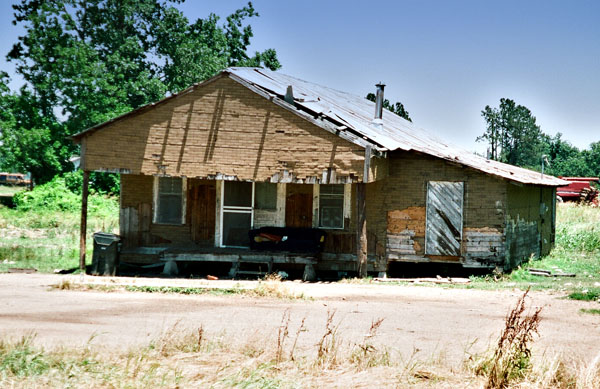
According to legend, as a young man living on a plantation in rural Mississippi, Robert Johnson developed a burning desire to become a great blues musician. He was “instructed” to take his guitar to a crossroad near Dockery Plantation at midnight. There he was met by a large black man (the Devil) who took the guitar and tuned it. The “Devil” played a few songs and then returned the guitar to Johnson, giving him mastery of the instrument. This was in effect, a deal with the Devil mirroring the legend of Faust. In exchange for his soul, Robert Johnson was able to create the blues for which he became famous. Another version places the meeting not at a crossroads but at midnight in a graveyard.
 The capstone to Robert Johnson’s legend is cemented by the details of his early death at the age of 27. On the night of Saturday, August 13, 1938, Johnson was playing in a juke joint 15 miles outside of Greenwood, Mississippi when he was allegedly murdered by the jealous husband of a woman with whom he had flirted. In an account by fellow blues legend Sonny Boy Williamson, Johnson had been flirting with a married woman at a dance, where she gave him a bottle of whiskey poisoned (reportedly with strychnine or lye) by her husband. When Johnson took the bottle, Williamson knocked it out of his hand and advised him to never drink from a bottle that he had not personally seen opened. Johnson replied, “Don’t ever knock a bottle out of my hand.”
Soon after, he was offered another tainted bottle and accepted it. Johnson began feeling ill the next evening and had to be helped back to his room in Greenwood Mississippi in the early morning hours. Over the next three days his condition steadily worsened and witnesses reported that he died in a convulsive state of severe pain. Some say the poisoned whiskey killed him, other stories range from pneumonia to syphilis. Regardless of cause, by all accounts, Johnson’s death was a violent array of howling and convulsions.
As you might expect, the mystery of Johnson doesn’t end with his death. The biggest mystery of all might be his final resting place. Three graveyards claim the musical legend’s tombstone: Mount Zion Missionary Baptist Church near Morgan City; Payne Chapel near Quito Mississippi; and the Little Zion M.B. Church north of Greenwood. Visit any of the sites today, and you’ll see all kinds of memorabilia, liquor bottles and music-related trinkets left atop the headstones by adoring fans from around the globe.
 Ironically, 75 years ago this week, while Robert Johnson was thrashing back and forth in agony on his deathbed in 1938, Columbia Records producer John H. Hammond was frantically searching for Johnson to book him for the first “From Spirituals to Swing” concert at Carnegie Hall in New York. Robert Johnson’s “Big break” never reached him.


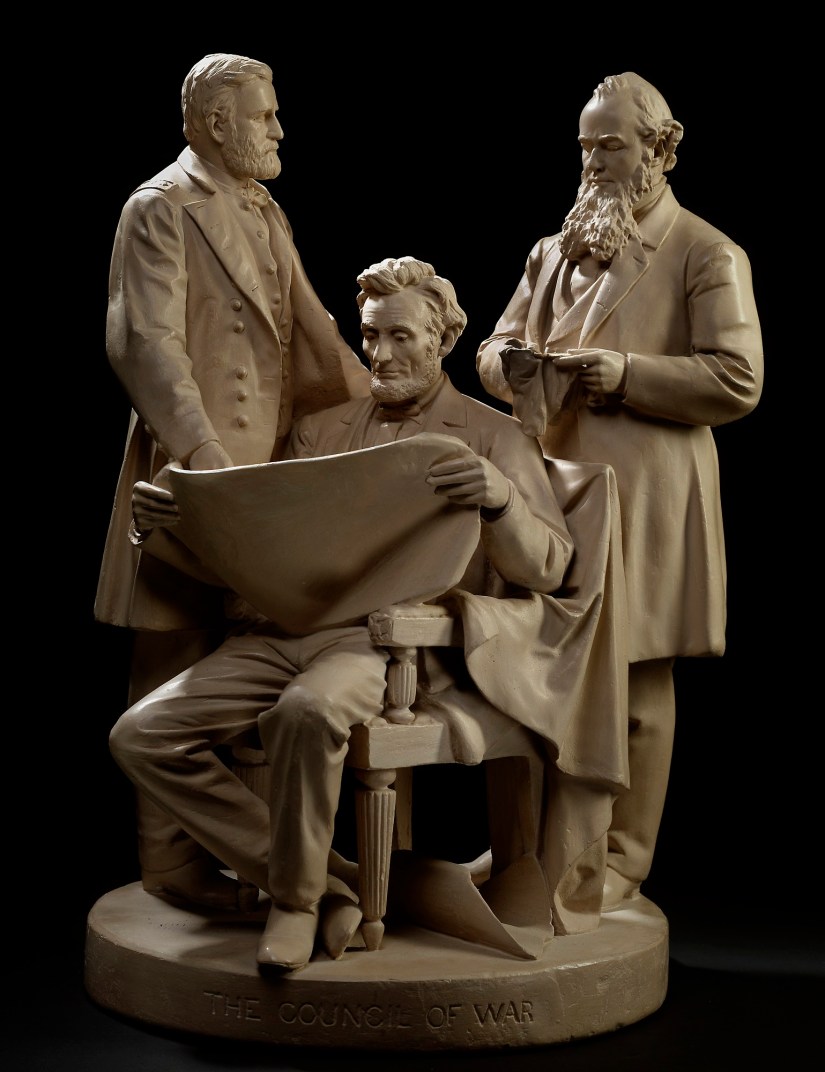
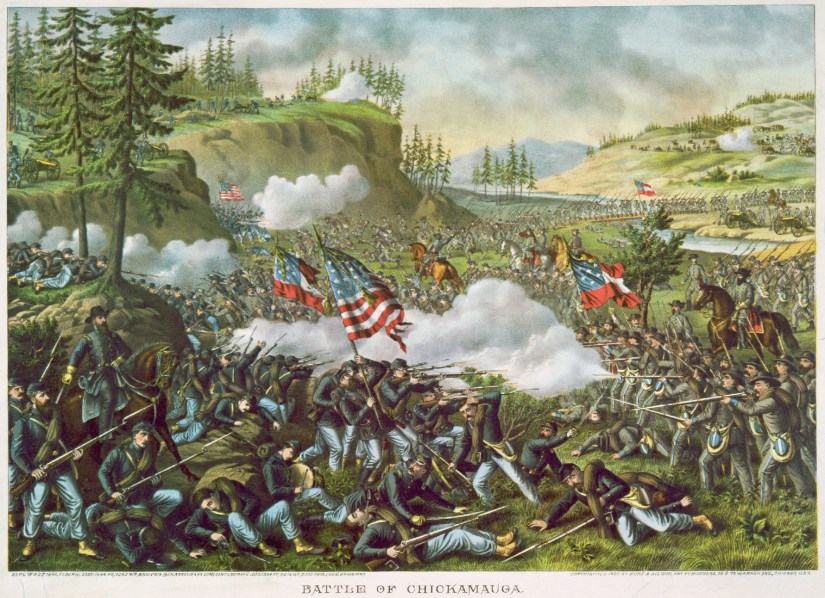 Grant immediately relieved Rosecrans in Chattanooga and replaced him with Maj. Gen. George H. Thomas, soon to be known as “The Rock of Chickamauga”. Devising a plan known as the “Cracker Line”, Thomas’s chief engineer, William F. “Baldy” Smith opened a new supply route to Chattanooga, helping to feed the starving men and animals of the Union army. Upon re-provisioning and reinforcing, the morale of Union troops lifted and in late November, they went on the offensive. The Battles for Chattanooga ended with the capture of Lookout Mountain, opening the way for the Union Army to invade Atlanta, Georgia, and the heart of the Confederacy.

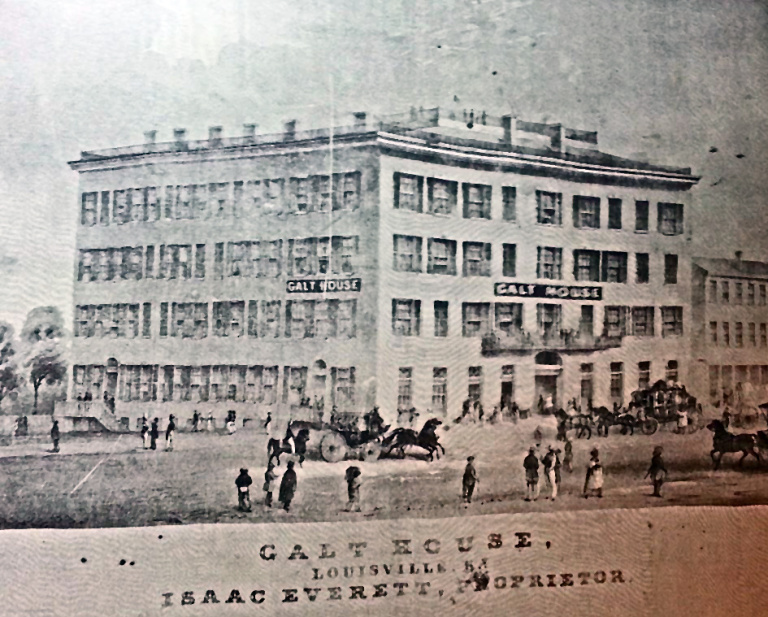
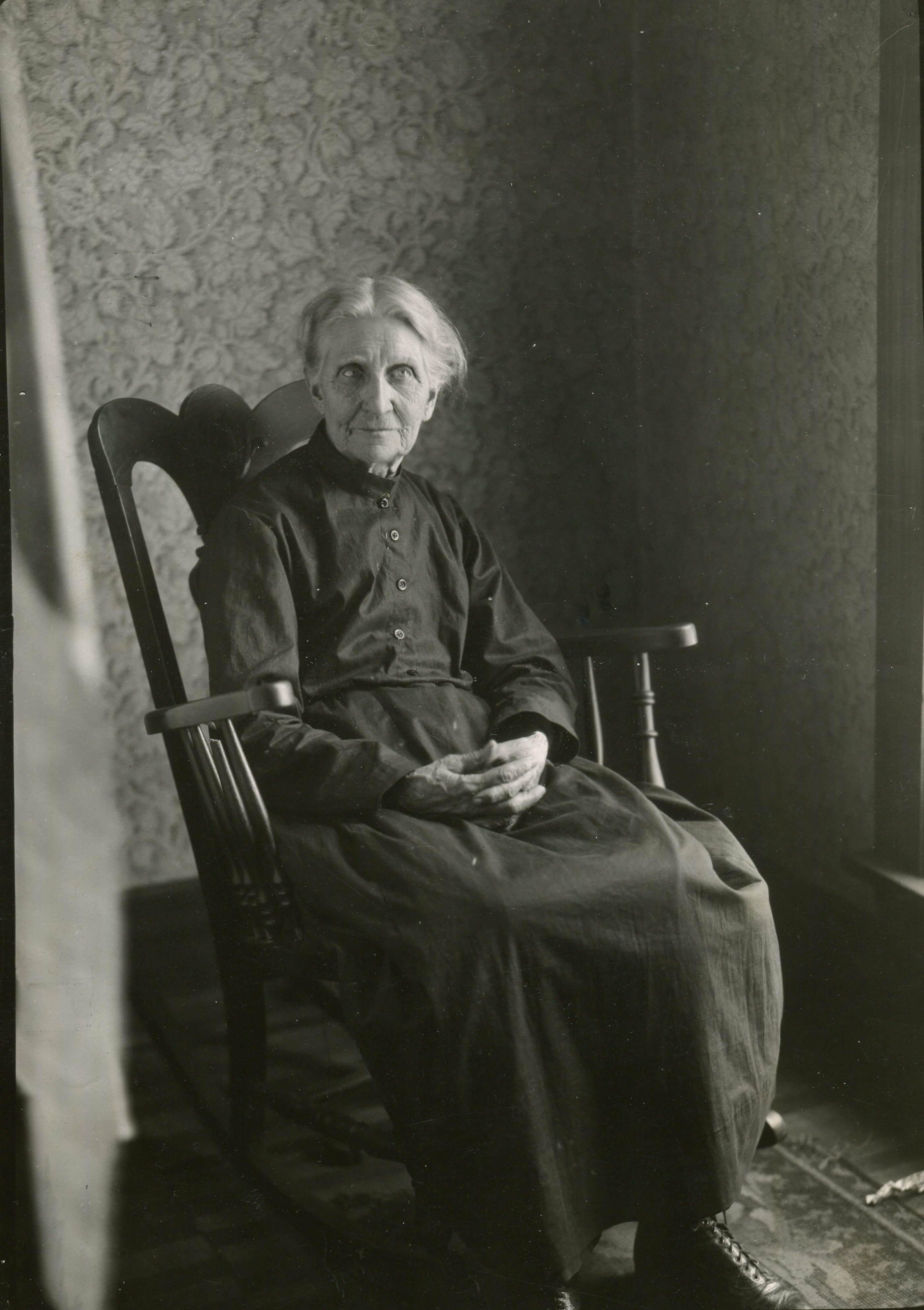
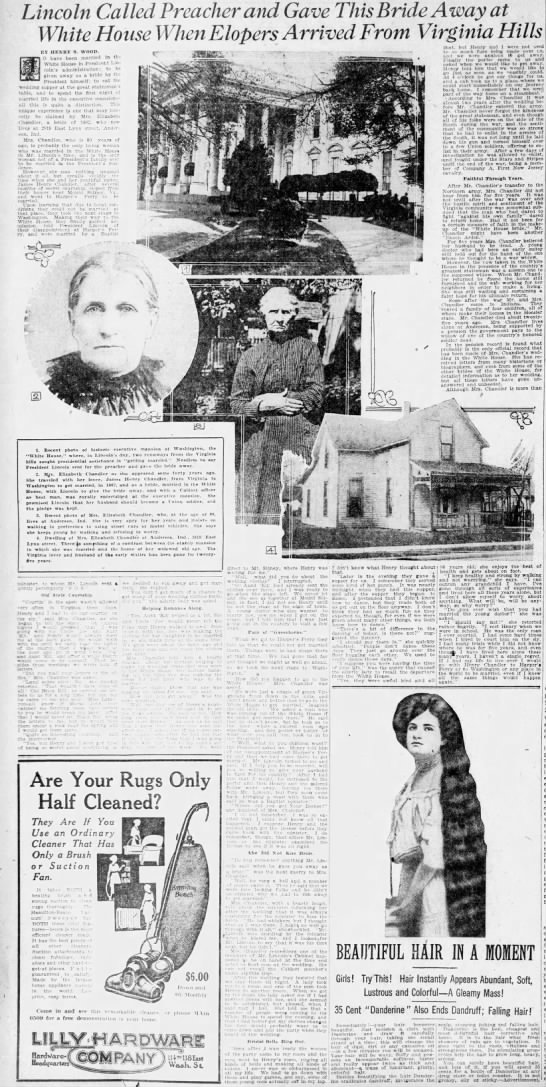
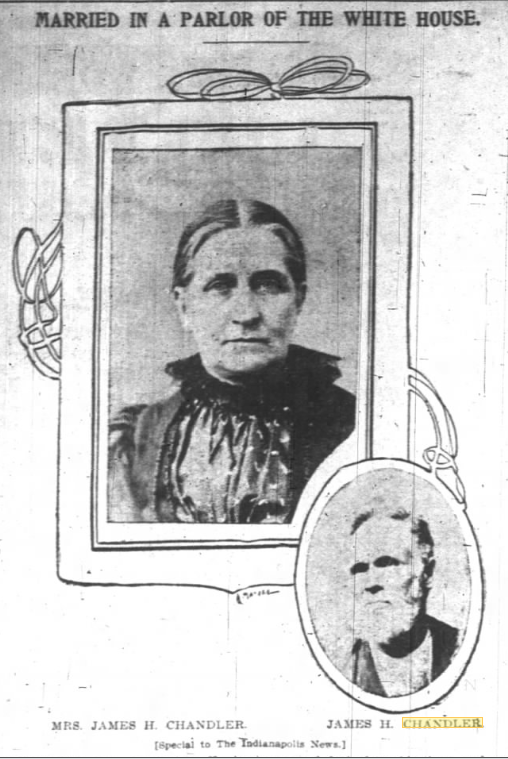
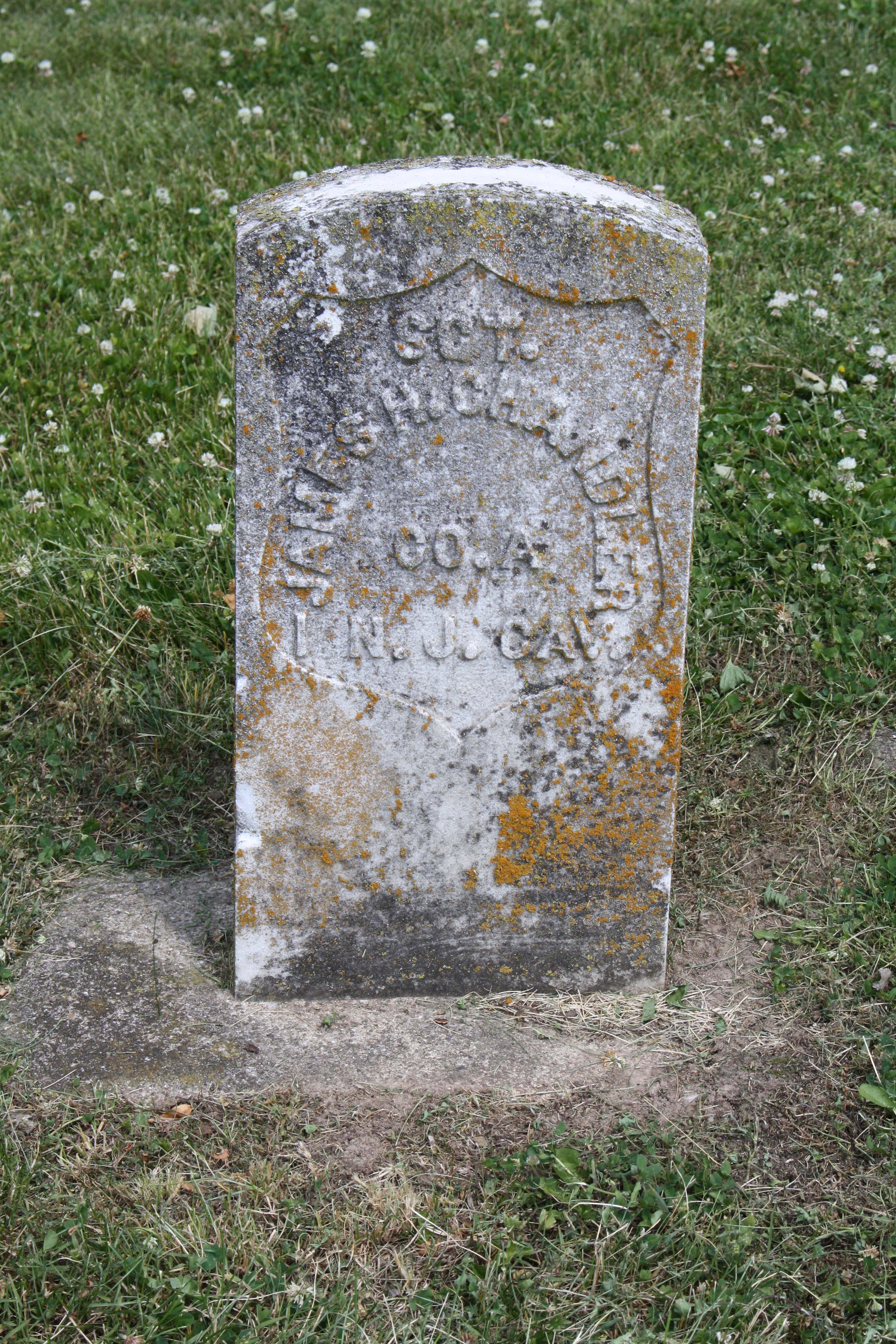
 After the minister’s arrived, Lincoln rang a bell and then led the wedding party into a big room, Elizabeth recalled. The president stood alongside the minister and not only did he give the bride away but also acted as the groom’s best man. Elizabeth recalled how he smiled throughout the ceremony. She stated that a Cabinet member stood up with them, but couldn’t recall his name or that of the minister. Mr. and Mrs. Lincoln were the first to shake the newlyweds’ hands. Elizabeth’s most vivid recollection of the nuptials was how scared she was. The president chatted with them awhile and then returned to his office with the unnamed Cabinet member. Elizabeth had worn a plain white cashmere dress for the ceremony. Afterwards, the couple was taken to separate rooms in the White House to change clothes, where Elizabeth changed into a navy blue cashmere dress.
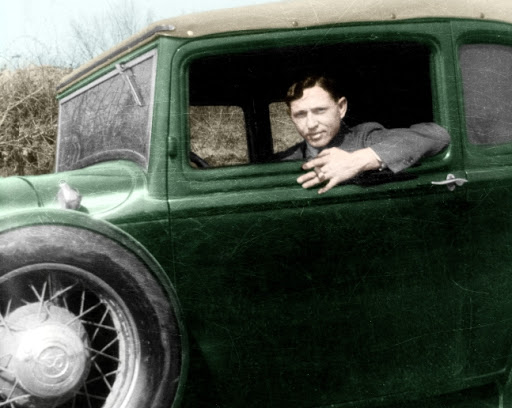
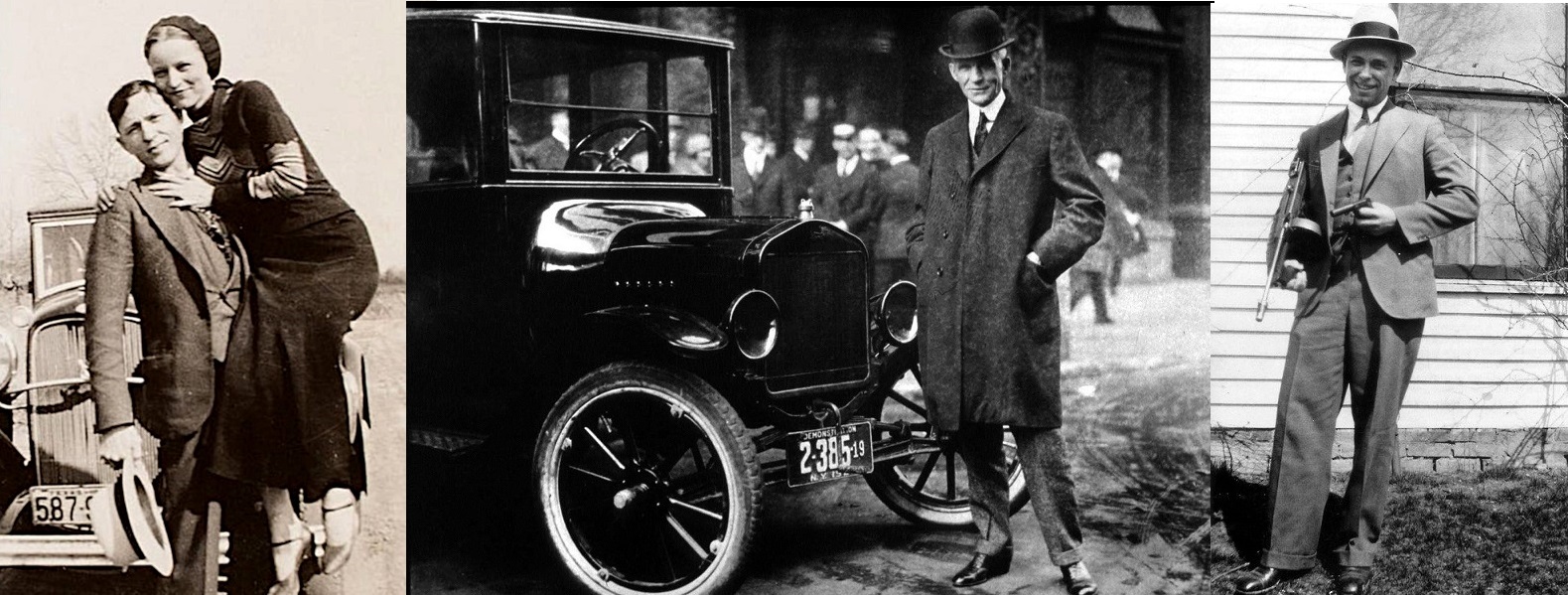
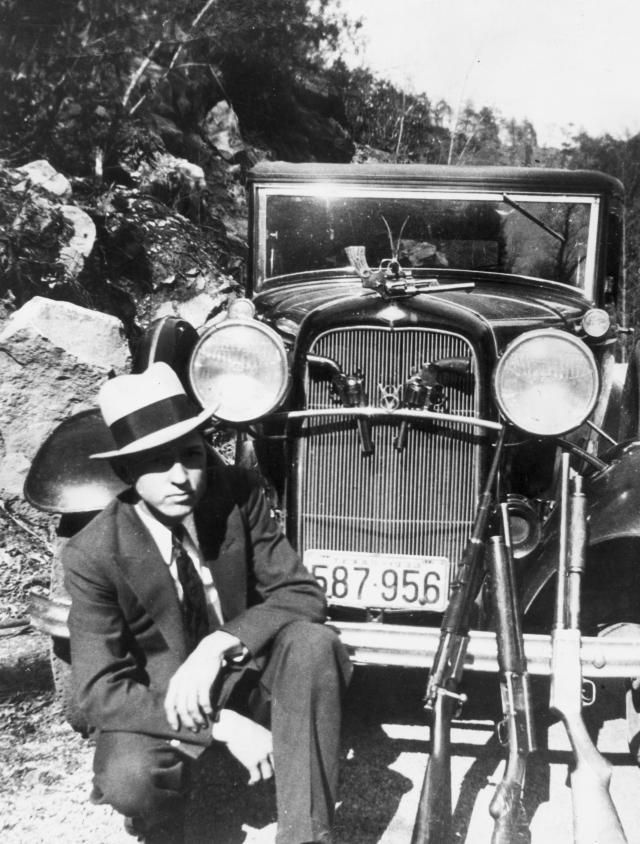 Clyde had an uncanny ability to steal Ford V8 cars and evade the police whenever he was trapped, cornered or surrounded. Clyde claimed that a Ford V8 car could outmaneuver and outrun any police car that attempted to follow him. Additionally, living a life on the run meant that Clyde and Bonnie spent days (or weeks) traveling long distances and sleeping in their car at night. Clyde supposedly preferred Ford V8s because he thought that their bodies were thicker and, thereby, more bullet-resistant. And those famous photos of Bonnie and Clyde mugging, clowning and romancing for the camera, most of them include a Ford V8 in the background.
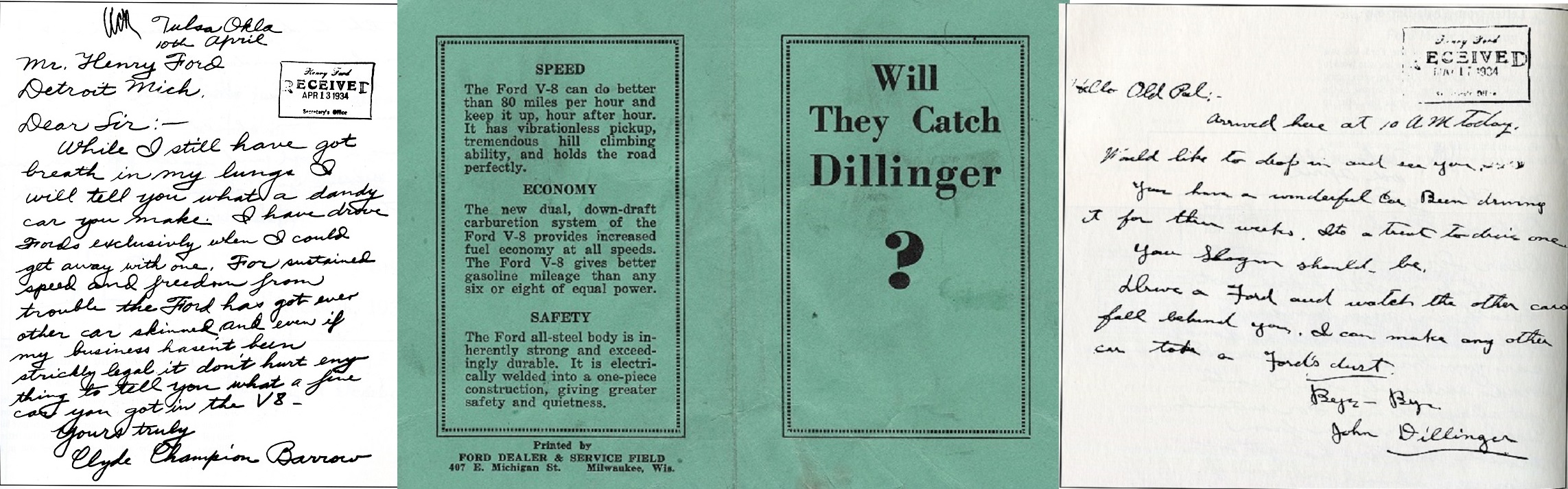
 Clyde Barrow loved the Ford V8 so much that he wrote a letter to Henry Ford in April of 1934 praising the car. Addressed simply to “Mr. Henry Ford Detroit, Mich.” from “Tulsa, Okla. 10th April” the letter, misspellings and all, reads: “Dear Sir:- While I still have got breath in my lungs I will tell you what a dandy car you make. I have drove Fords exclusively when I could get away with one. For sustained speed and freedom from trouble the Ford has got ever other car skinned and even if my business hasen’t been strickly legal it don’t hurt enything to tell you what a fine car you got in the V8- Yours truly, Clyde Champion Barrow” (Clyde Barrow’s middle name was actually Chestnut. He jokingly listed “Champion” as his middle name when he entered the Texas state prison at Huntsville in 1930.)
 Amazingly, after Ford’s secretary failed to recognize the outlaw’s name,a reply was sent on April 18th. The neatly typed letter on the ornate letterhead of the Ford Motor Company reads: “Mr. Clyde Barrow, Tulsa, Oklahoma. Dear Sir: On behalf of Mr. Ford, we wish to acknowledge your letter of April 10 and thank you for your comments regarding the Ford car. H.R. Waddell, Secretary’s Office.” Six weeks later, Bonnie and Clyde were dead. A debate rages to this day as to whether the letter is authentic or not. Regardless, it is a priceless piece of Americana that can often be found on public display at the Henry Ford museum in Dearborn. When Dillinger was asked about Bonnie & Clyde after his capture and incarceration at Crown Point, he responded, “Bonnie & Clyde? Huh, a couple a punks.”
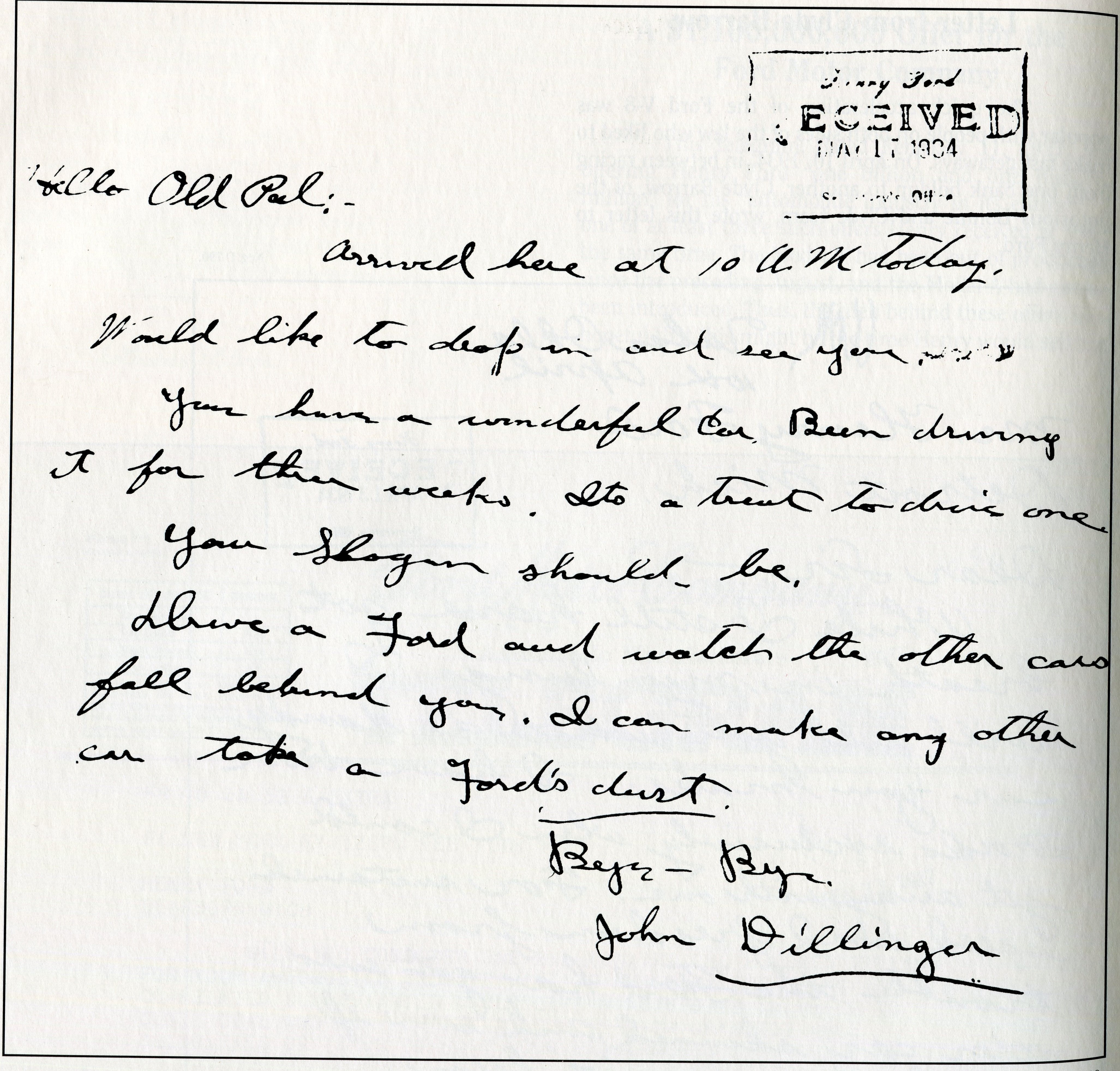 Ironically, a month later, Henry Ford would receive another letter. In May of 1934, a letter arrived from the most famous gangster in the world: John Dillinger. Like the previous letter, this one features the official stamp of the Henry Ford office, dated May 17, 1934. The letter is postmarked from Detroit and, like the Bonnie & Clyde letter, is entirely handwritten. It reads: “Hello Old Pal. Arrived here at 10:00 AM today. Would like to drop in and see you. You have a wonderful car. Been driving it for three weeks. It’s a treat to drive one. Your slogan should be, Drive a Ford and watch the other cars fall behind you. I can make any other car take a Ford’s dust! Bye-Bye, John Dillinger”. The Dillinger gang had just held up the Citizens Commercial Savings Bank in Flint, Michigan, on May 18, 1934. Like the Barrow letter, the authenticity of the letter writer is called into question. A week after this letter was received, Bonnie and Clyde were dead. 67 days later, so was John Dillinger. While Dillinger died in a Chicago Alley next to the Biograph Theater, Clyde Barrow died behind the wheel of his last stolen car: a Ford V8.
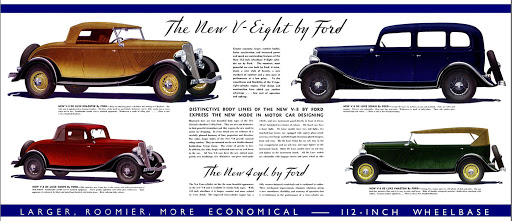
 The letter, coming on the heels of the disastrous escape by Dillinger and his gang from the Little Bohemia Lodge in Manitowish Waters, Wisconsin a month before on April 22, inspired a Milwaukee Ford Motor Car dealership to create and distribute a sales brochure asking the question, “Will They Catch John Dillinger?” on the front. When opened, it featured the answer, “Not Until They Get Him Out of a Ford V-8!” with additional info at bottom reading, “NEWS NOTE: John Dillinger evaded capture by making speedy get-away in new Ford V-8 after famous jail break at Crown Point, Indiana. His spectacular get-away from Little Bohemia Resort, Mercer, Wisconsin, was also in a Ford V-8.” The back of the brochure touts the Ford V-8’s “Speed: The Ford V-8 can do better than 80 miles per hour and keep it up, hour after hour. It has vibrationless pickup, tremendous hill climbing ability, and holds the road perfectly.” The “Economy: The new dual down-draft carburetion system of the Ford V-8 provides increased fuel economy at all speeds. The Ford V-8 gives better gasoline mileage than any other six or eight of equal power.” And, perhaps confirming Clyde Barrows assertion, the “Safety: The Ford all-steel body is inherently strong and exceedingly durable. It is electrically welded into a one-piece construction, giving greater safety and quietness.” The brochure concludes with the dealership name and address at 407 E. Michigan Street in Milwaukee, Wisconsin.
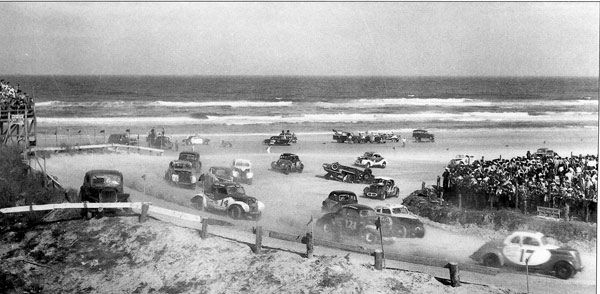 There is a lot of history on the world’s most famous beach: cars, gangsters, auto racing, motorcycles, bootleggers and Henry Ford, for starters. When you think of auto racing, two American cities come to mind: Indianapolis and Daytona. However, before Indianapolis and Daytona, Ormond Beach was the mecca of auto racing. Ormond Beach just north of Daytona, held races on the beach from 1902 until after World War II. At that time, Ormond Beach was a playground for America’s rich and famous: The Vanderbilts, Rockefellers, Roosevelts, Henry Flagler, John Jacob Astor; all spent their winters at the old Ormond Hotel.
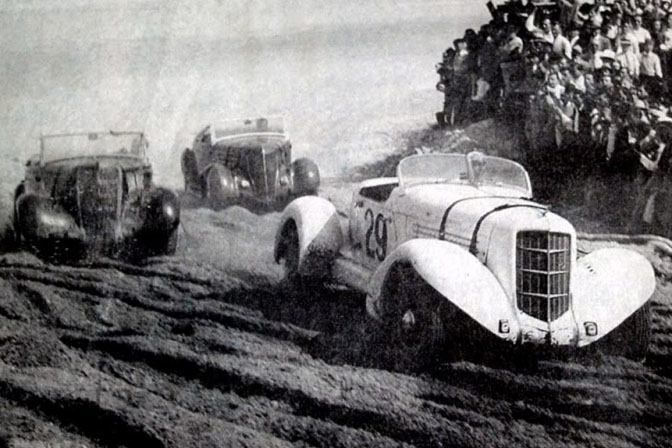 From 1902 to 1935, auto industry giants such as Henry Ford, Louis Chevrolet, and Ransom E. Olds brought their cars to race on the beach. Cigar-chomping Barney Oldfield, the most famous race-car driver in the world at the time, set a new world speed record on the Ormond-Daytona course in 1907. Racing faded somewhat in Ormond and Daytona after World War I as the racing world turned its attention to the Indianapolis Motor Speedway.
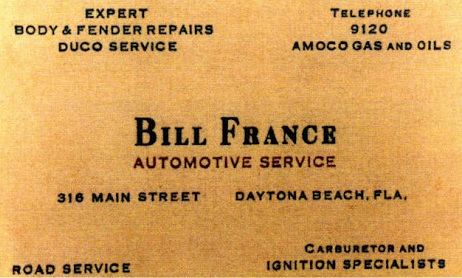
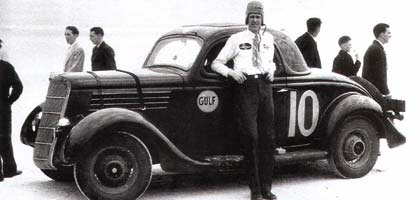
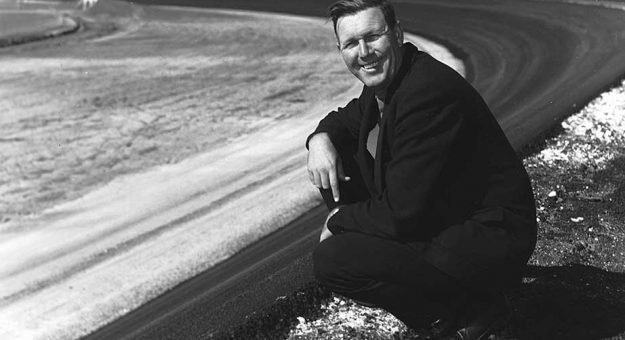
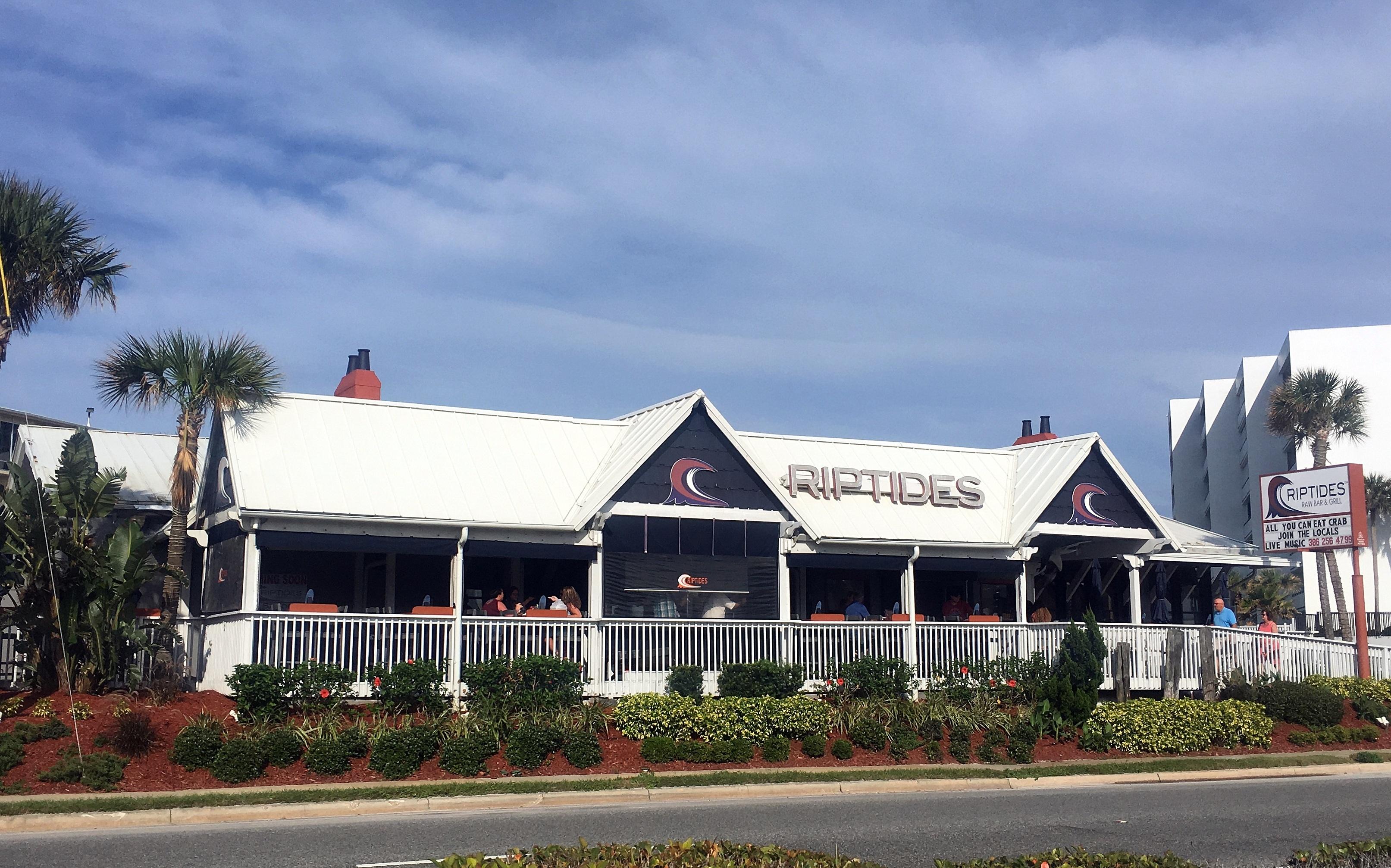
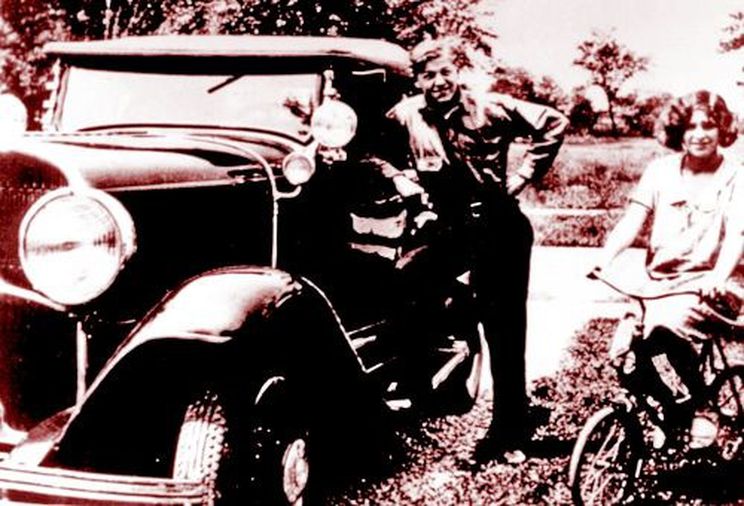
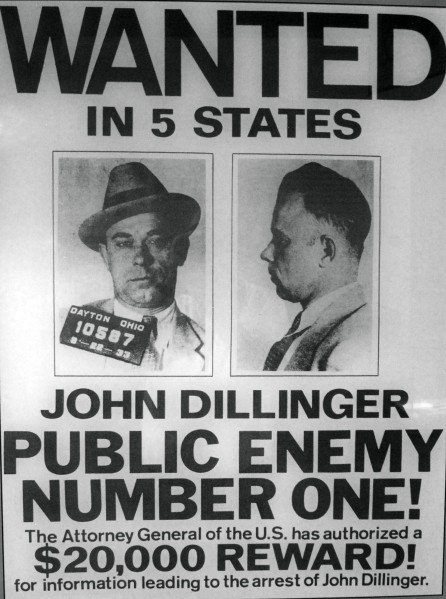 So it comes as no surprise that the gangsters of the 1930s drove Fords. In particular, outlaws John Dillinger, Bonnie and Clyde and Baby Face Nelson all preferred the Ford Model V8. Introduced in 1932, it was touted as America’s first affordable big-engine car. Dillinger also is said to have owned a Model A and what’s more, in mid-December of 1933, he drove his Ford to Daytona Beach for a vacation. After secretly visiting the Dillinger family farm in Mooresville, America’s first Public Enemy # 1 brought along girlfriend Evelyn “Billie” Frechette, Hoosier “Handsome Harry” Pierpont and his “molls” Mary Kinder, her sister Margaret and Opal Long and gang members Russell Clark and Fat Charlie Makley. The gang rented a spacious 3-story, seventeen room beach house for $ 100 a month at 901 South Atlantic Avenue until Mid-January, 1934. The house, long ago demolished, was located across the street from Seabreeze high school on the spot where “Riptides Raw Bar & Grill” and the Aliki Atrium are located today. Vacationers will recognize the “Riptides” name from the banner pulled by the tail of an airplane that constantly trails up and down Daytona beach.