Creepy history, Hollywood, Pop Culture

Shrek…For Real?

Original Publish Date: October 24, 2024. https://weeklyview.net/2024/10/24/shrek-for-real/
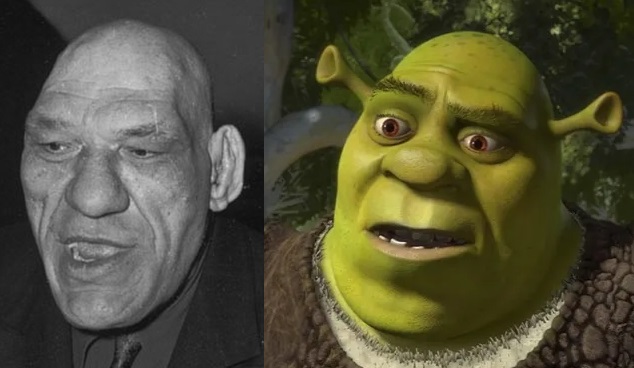
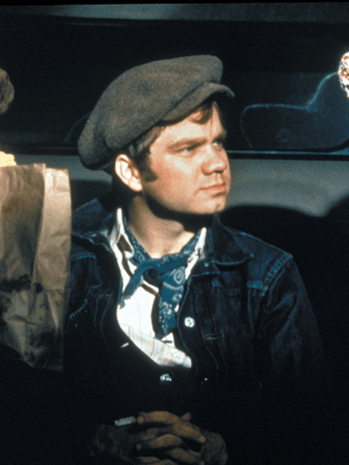
Michael J. Pollard. (1939-2019.)

The low spark of high-heeled boys is the title track from the 1971 album by British rock band Traffic. The 11-minute, 44-second song, was written by Jim Capaldi and Steve Winwood. Capaldi credits diminutive actor Michael J. Pollard (Bonnie & Clyde) for coming up with the term while the two were in Morocco planning a movie (that was ultimately never made). In a 2009 radio interview, Capaldi said, “Pollard and I would sit around writing lyrics all day, talking about Bob Dylan and The Band, thinking up ridiculous plots for the movie…Pollard wrote in my book ‘The Low Spark of High Heeled Boys’. For me, it summed him up. He had this tremendous rebel attitude. He walked around in his cowboy boots, his leather jacket. At the time he was a heavy little dude. It seemed to sum up all the people of that generation who were just rebels.” For this writer, that lyric succinctly sums up the creation of the most iconic cartoon character of our time: Shrek. And since it is Halloween week, I’m going to tell you why.
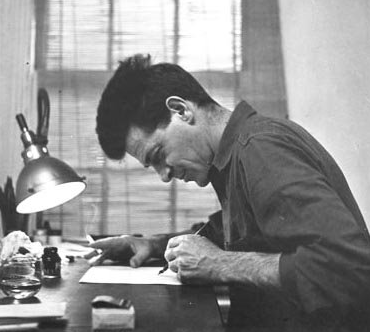
Artist William Steig (1907-2003)

Shrek was created by William Steig (1907-2003) who, during his lifetime, was hailed as the “King of Cartoons.” Steig began drawing illustrations for The New Yorker magazine in 1930, ultimately producing more than 2,600 drawings and 117 covers for the magazine. Steig began his “second career” writing children’s books at the age of 61. In 1990, Steig published his picture book Shrek! which formed the basis for the 2001 DreamWorks Animation film. After the 2004 release of Shrek 2, Steig became the first sole creator of an animated movie franchise to gross over $1 billion after only one sequel. Eventually, three sequels and three spin-offs were produced. When asked his opinion about the movie, Steig responded: “It’s vulgar, it’s disgusting-and I loved it.”

Maurice Tillet “The French Angel” (1903 –1954)

It is widely believed that Steig based his Shrek character on the professional wrestler Maurice Tillet aka “The Angel”, a nickname given to him by his mother when he was a boy. Maurice Tillet (1903-1954), a Russian/French professional wrestler, was a two-time World Heavyweight Champion and a leading box office draw in the early 1940s. Tillet was born in 1903 in St. Petersburg, Russia. His mother was a teacher of languages and his father was a railroad engineer involved in the construction of the Trans-Siberian railroad. Tillet’s father died when he was young. In 1917, Tillet and his mother fled Russia to avoid the Revolution, settling in Reims, France. When Tillet was twenty years old, his feet, hands, and head began to swell uncontrollably. A doctor diagnosed him with acromegaly, a rare condition usually caused by a benign tumor on the pituitary gland, which causes the body to produce too much growth hormone. The condition causes the body tissues and bones to grow rapidly resulting in bone overgrowth and thickening. Over time, acromegaly leads to an abnormally large head, oversized hands and feet, and a wide range of other symptoms. Maurice had a head almost twice the size of normal for a man of his size and he could shuffle three decks of cards at once in his mammoth hands.

“The Angel”

Although Tillet’s acromegaly resulted in an abnormally grotesque appearance, in truth, “The Angel” was a highly intelligent man. He spoke 14 languages, played chess brilliantly, and despite his massive size and frightening face, was known as a modest, gentle, and friendly man. Tillet completed his law degree at the University of Toulouse but felt he would never be successful as a lawyer due to his deep voice and imposing physical appearance. Tillet joined the French Navy and served as an engineer in the submarine service for five years, rising to the rank of Chief Petty Officer. Always a good athlete, Tillet excelled at rugby. After being named to an all-France rugby team in 1926, Tillet earned the honor of shaking hands with King George V. at a game in London, a feat he considered one of his greatest achievements. In February 1937, Tillet met Lithuanian light-heavyweight champion wrestler Karl Pojello in Singapore who talked Tillet to enter the ring. Tillet wrestled for two years in France and England from 1937 to 1939 until World War II forced them to leave for the U.S.

The Angel in profile.

In Boston in 1940, Tillet began wrestling as “The French Angel” and was billed as the closest living specimen of a Neanderthal man known to exist. Tillet went unbeaten for nineteen consecutive months and became an instant attraction in the area. At his American debut at Boston Garden on January 24, 1940, Maurice walked down the aisle, climbed into the ring, leaned over the ropes, and roared at the crowd. The crowds flocked to see this monster of a man who was a throwback to prehistoric times. He was hawked as the unstoppable man and was AWA World Heavyweight Champion from May 1940 until May 1942. Maurice was 5 foot 8.5 inches in height, 276 pounds with a 47-inch chest. The bear hug became his signature move. Tillet reported to the U.S. Army in 1942 to enlist in the war effort but was turned away after being told that he would be a curiosity and distraction.


As a result of his success and unique look, several Angel imitators emerged during World War II, including “Angels” from Sweden, Russia, Canada, Poland, Czechoslovakia, Ireland, and several ubiquitous American versions emerged including the Golden Angel, Black Angel, and Lady Angel, most of whom were also suffering the effects of acromegaly. The most famous imitator was Tor Johnson known as the “Super Swedish Angel.” Johnson is best remembered not as a wrestler, but as an actor who appeared in many B-movies, including the famously bad 1957 Ed Wood movie Plan 9 from Outer Space.

Maurice Tillet in later life.

Maurice proved incredibly strong and highly popular. He staged highly publicized stunts where he would pull a bus or street car with his massive hands. By 1945, after many years of punishment in the ring combined with the fact that most people suffering from acromegaly didn’t live past the age of 30, Maurice Tillet’s health began to fail and he was no longer advertised as unstoppable. He briefly considered a movie career, but the B-movie genre was years away and the Drive-in theatre craze had not yet swept America. The Mid-1940s / Early 1950s were a long, slow ride to irrelevance and the once mighty Angel was little more than a curiosity now billed as the “Ugliest Man in the World.” A highlight came in February 1947 when Maurice took the oath of citizenship to the United States. He was a devout Catholic who attended church every Sunday and that same year he was given an audience with the Pope. In his final wrestling match, in Singapore on Valentine’s Day of 1953, Angel agreed to lose to Bert Assirati, the British World Champion recalled as being one of the strongest men to ever enter the ring.


Suffering from an enlarged heart caused by his acromegaly, Tillet died of a heart attack in Chicago’s County Hospital on September 4, 1954. He was buried at the Lithuanian National Cemetery in Justice, Illinois. As for the “low spark of high-heeled boys” reference, I find it infinitely interesting that Shrek, one of the crudest, yet most beloved animated characters of the past 50 years, was created by the principal artist of one of the most high-brow publications in the country: The New Yorker. And it was all inspired by a highly-intelligent participant in one of the world’s most low-brow professions: Pro wrestling. Things are not always what they seem my friends. Happy Halloween!

The tombstone of Maurice “The French Angel” Tillet is buried next to his trainer, Karl Pojello. Lithuanian National Cemetery in Justice, Illinois.
food, Indianapolis, Pop Culture, Uncategorized

Beef Manhattan: Born in Irvington?

Original Publish Date March 14, 2024 https://weeklyview.net/2024/03/14/beef-manhattan-born-in-irvington/

Okay, okay, not likely…but possible. No one really knows EXACTLY where the Beef Manhattan was born, but most culinary historians agree that the dish (a diagonally cut roast beef sandwich split butterfly fashion with a generous scoop of mashed potatoes resting between the two halves and the whole shebang swimming in a pool of brown beef gravy) came from the eastside of Indianapolis.

Legend claims the Beef Manhattan was born at the Naval Air Warfare Center, a former US Navy facility located at Arlington Avenue and East 21st Street in Warren Township, a stone’s throw from Irvington. The knife and fork-plated comfort food was (allegedly) the brainchild of Manhattan-trained cooks working at the factory during World War II. Faced with an overage of Hoosier staples (meat, potatoes, & bread) these crafty Hell’s Kitchen food slingers came up with a plan.

A poor man’s version of the dish had been making the rounds of Manhattan (the most densely populated and smallest of the five boroughs of New York City) for generations. The difference was, that the first version contained mysterious New York City street meat, rolls, not bread, potatoes, and no gravy. We do not know the name of the chef (or chefs) who created it or, for that matter, the date the dish first showed up in the cafeteria of the Naval Ordnance Plant. But, the best guess is that the Beef Manhattan made its debut in the winter of 1942.

Ratheon-300x136
Naval Ordinance Plant in Indianapolis.

The plant opened that year, covering 1,000,000 square feet and employing 3,000 workers in avionics research and development. Construction began in 1941 and the plant became fully operational in 1943. The “NOP-I”, as it was known locally, was one of five inland sites selected in July 1940 by the US Department of the Navy Bureau of Ordnance for the manufacture of naval ordnance. The other plants were in Canton, Ohio; Center Line, Michigan; Louisville, Kentucky; and Macon, Georgia. The government-owned, contractor-operated (GOCO) plant was built for $13.5 million ($255 million in 2024 dollars) and the plant manufactured Norden bombsights until September 1945.

After World War II, the plant was renamed the Naval Avionics Center, where employees designed and built prototype avionics, including “electronic countermeasures, missile guidance technologies, and guided bombs.” In 1992, the facility changed its name to the Naval Air Warfare Center Aircraft Division. The site was closed in 1996 on the recommendation of the 1995 Base Realignment and Closure Commission at which time it transferred ownership to Hughes Electronics Corporation. In 1997, it was the “largest full-scale privatization of a military facility in U.S. history” at the time. Eventually, the company was acquired and renamed the Raytheon Analysis & Test Laboratory. As of 2022, the facility is privately owned by Vertex Aerospace and employs about 600.

While those are the facts about the origin of place for the Beef Manhattan, determining where it first hit the streets of Indianapolis is a little bit more speculative. The riddle begins with the name itself. It is a misnomer. The dish is one of two Manhattan-named staples with no ties to New York City other than a space on the menu. The other, Manhattan clam chowder, originated in Rhode Island. Sure, New York City can claim many different foods created within its five boroughs: Eggs Benedict & the Waldorf salad (Midtown), Chicken & Waffles (Harlem), The Reuben (Manhattan), and the Cronut (So-Ho), but the Beef Manhattan is pure Hoosier.

There are different variations. One calls for shredded, pot-roast style beef on two slices of white bread, mashed potatoes on the side, with a layer of brown gravy poured over all. While another insists that the mashed potatoes are placed on top of the sliced, but unseparated, sandwich which is then drowned in brown gravy. Some versions call for diagonal slices, others conventional center-sliced bread. Another variation is Turkey Manhattan, which substitutes turkey for roast beef, but that is an obvious imposter. And, although the dish is named after Manhattan, if you were to order it in a Gotham City restaurant, you’re likely to be served a cocktail (whiskey, sweet vermouth, bitters, and a maraschino cherry garnish). Beef Manhattan is unknown there, instead such dishes are usually called “open-face sandwiches” in the Big Apple.

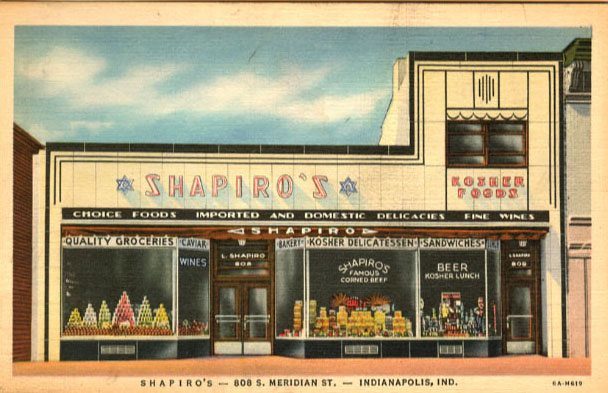
Should you Google it, you are likely to see that the dish was first served under the name “Beef Manhattan” in a now-defunct Indianapolis deli in the late 1940s, and shortly after its introduction, it became a Hoosier staple. But, nobody seems to know exactly which Indianapolis Deli was the first to put it on the menu. However, there are a few likely suspects. The natural choice would seem to be Shapiro’s. Their website states that restaurant namesakes, Louis and Rebecca Shapiro, arrived in the Hoosier state around 1900 after fleeing Russia due to anti-Semite persecution which included vandalism to their family grocery store in Odessa, Ukraine. They sold sugar and flour from a pushcart on the streets of Indianapolis for two years while saving up money to open their deli at Shapiro’s 808 South Meridian in 1905.

Shapiro's

So, Shapiro’s certainly fits the bill timewise, appearing on the scene a generation before the birth of the Beef Manhattan. Shapiro’s is the sentimental favorite for sure. And it has an Irvington tie-in too. In 1925, during the reign of terror by the Ku Klux Klan in Indiana, Shapiro’s thumbed their nose at Klansman/Governor (and Irvington resident) Ed Jackson by redecorating their storefront in an art-deco style dominated by a huge Star of David for all to see. But officially, “Shapiro’s Kosher Deli” didn’t open until 1945, three years after the dish was invented.

Likewise, the Hook’s Drug Company opened a new drugstore and soda fountain at the corner of 22nd and Meridian Streets on Feb. 17, 1940, to serve hungry Hoosiers. Hook’s restaurant featured a new stainless steel soda fountain perfectly designed to serve Beef Manhattans. A contemporary news article described Hook’s as having “year-round air conditioning” and as “the last word in efficiency and beauty. The floor behind the fountain is depressed to a level so that the customer is sitting in the same comfortable position as at his own dining table. The fountain is provided with a system of sterilization which makes it sanitary for refreshments and luncheons. The cooking equipment is electrical.” Hook’s advertised heavily in the 1940s but never mentioned the Beef Manhattan in those ads. The dish did not appear in Hook’s ads until the 1950s.

The best bet (at least of this reporter) is that the Beef Manhattan most likely appeared first as a menu selection somewhere on Illinois Street. There were at least three delis operating on Illinois Street in 1942, including Brownie’s Kosher Deli at 3826 N. Illinois, Fox Delicatessen at 19 S. Illinois, and Henry Dobrowitz & Sons Kosher Meats and Delicatessen at 1002 S. Illinois. Someday, somewhere, a better Circle-city researcher than me will pinpoint the exact location but until then, I’m content to let it remain a mystery.


Choosing instead to revisit Shapiro’s version of the “Hot Beef Manhattan” in my daydreams. It consists of 2 slices of white bread, not cheap squishy white bread, but good firm white bread with some heft to it, cut diagonally and spread out on the plate like a poker hand, a layer of handmade mashed potatoes binds them together, and forms the foundation for a generous portion of thin-sliced tender beef, brisket I’m guessing. The meat mound is topped with more mashed potatoes and covered with enough gravy to float a kayak. Not that better than bouillon gravy stuff that somehow smacks of chemicals to me, but rather, real gravy made from the constant stirring of the collected juices of meats roasting. To those haughty Food Network snobs, the Beef Manhattan looks like a failure pile on a sadness plate, but Hoosiers know it is delicious.

Typically, Indianapolis sees 29 days a year where the thermometer doesn’t rise above 32 °F, and for five months a year, we’re shivering below the fifties. So, knowing that, is it that hard to understand why the Beef Manhattan remains so popular in Indiana? I mean, no one eats a tenderloin to get warm. And while the Beef Manhattan most likely wasn’t born in Irvington, it did originate on the east side of Indianapolis and Irvingtonians can fairly claim to be among the first wave of devotees.

Abe Lincoln, Museums

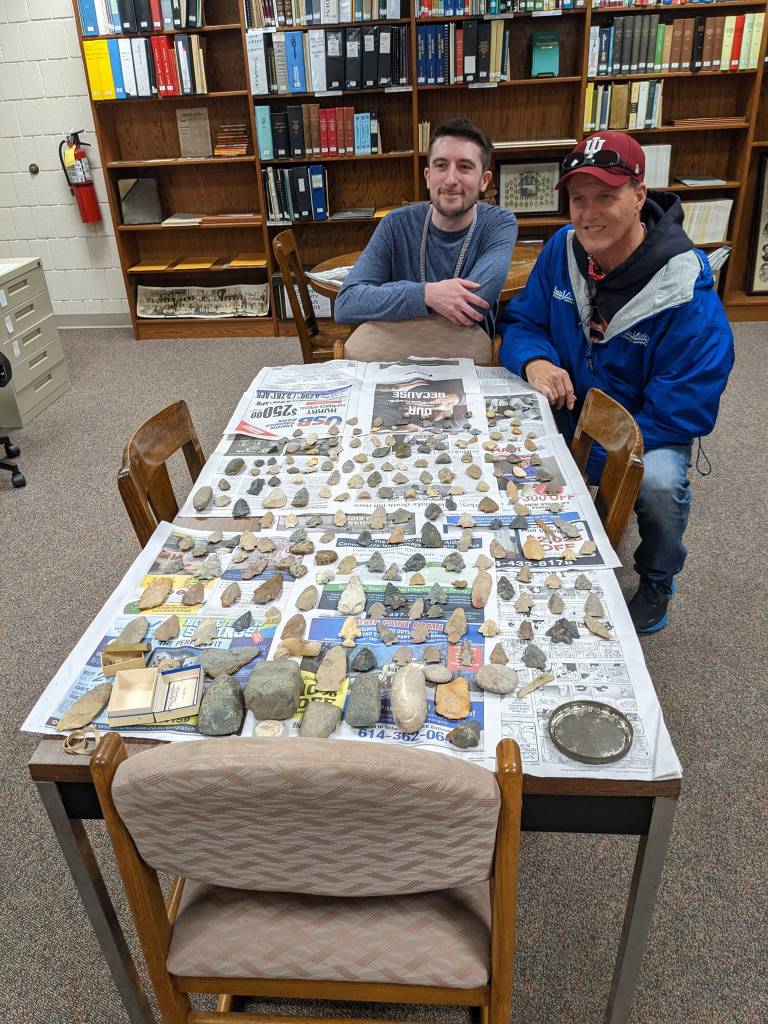
The big reveal of Springfield, Illinois Abraham Lincoln scholar Wayne C. “Doc” Temple’s collection of Native American Indian Artifacts at the Richwood, Ohio History Museum.

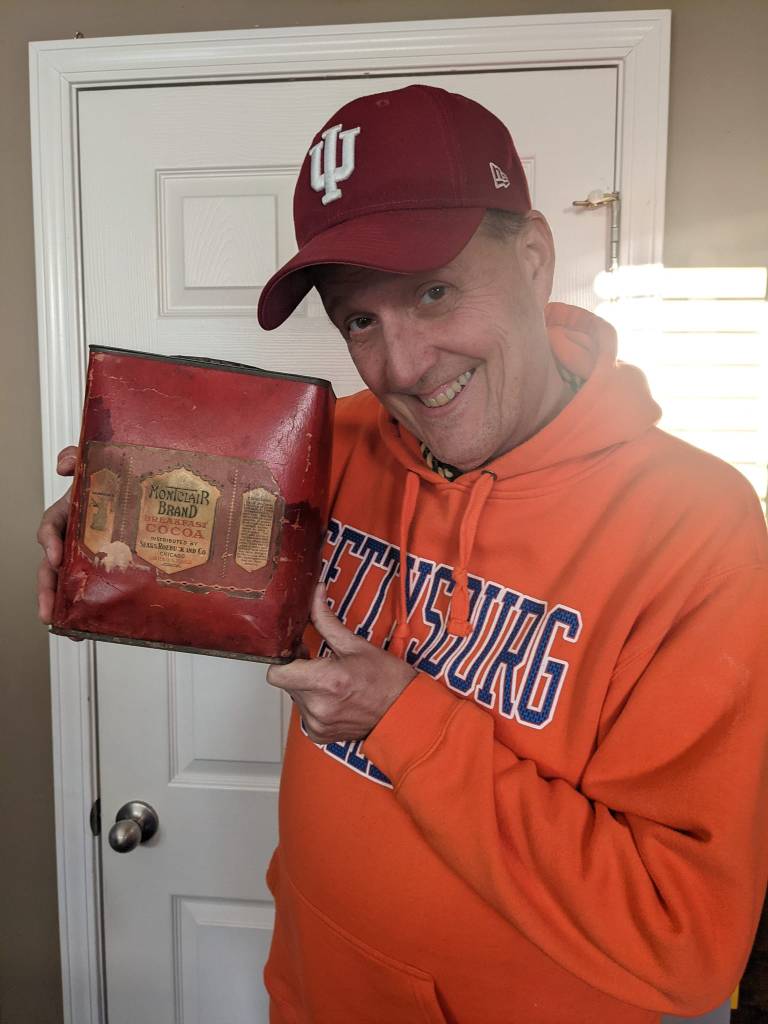
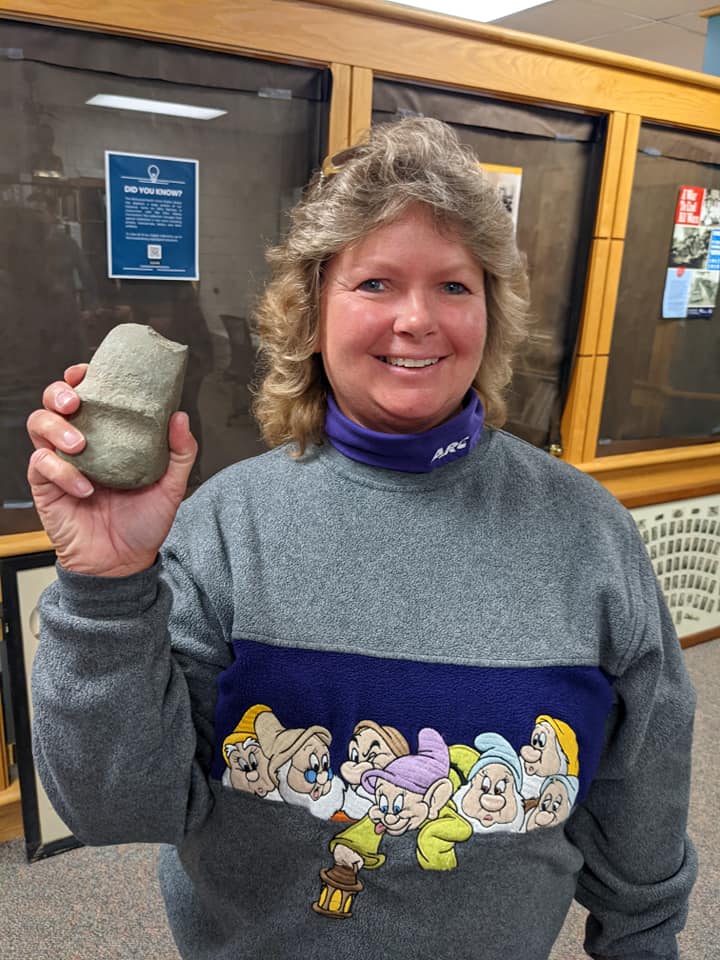
On Thursday, March 9, 2023, I visited the Richwood, Ohio History museum and library with my wife Rhonda S. Hunter. We dropped off the Temple family collection of Native American Indian artifacts collected over the course of at least two decades from @1900 past World War I. The compilation, contained in an old can of Cocoa, had not seen the light of day for nearly a century. Doc, Springfield Illinois’ premiere Abraham Lincoln scholar for over 60 years, also wrote the definitive book on the subject in 1966, Indian Villages of the Illinois Country: Historic Tribes, and several scholarly articles and papers on the subject for the University of Illinois. The artifacts were dug in the farm fields in and around Richwood Ohio so it seemed fitting that Doc’s collection go back to their place of origin. We were as happy to deliver them as the museum officials were to receive them.

Doc’s arrowhead collection had been stored in this cocoa box for a century.
Rhonda Hunter with the piece from the collection that Doc recalled specifically. I believe it is a hammer or tomahawk head.
Richwood Museum staffer Dustin Lowe and Alana E. Hunter with Doc’s collection.
Abe Lincoln, Civil War

99 Birthday Cards for Doc.

https://weeklyview.net/2023/02/02/99-birthday-cards-for-doc/

PLEASE SHARE!

February 5, 2023.

Friends, please consider joining me in a project celebrating the 99th birthday of the Dean of all Abraham Lincoln scholars from Springfield, Illinois:

Dr. Wayne C. “Doc” Temple.

I have been working on a biography of Doc for some time now. For nearly 70 years, Doc has researched, written, and published more than 20 books and over 300 articles on Abraham Lincoln, the Civil War, Indigenous tribes, and Midwest history. Along the way, Doc has graciously volunteered his time, knowledge & wisdom with countless students and scholars along the way. Most of today’s Lincoln scholars have consulted Doc for facts in their work.

This will be Doc’s first birthday since losing Sandy, his wife of 42 years, last March. Doc is a member of America’s greatest generation having fought bravely for the United States in the European theatre, once actually standing in an open road firing a Thompson Sub-machine gun at a German fighter plane strafing his unit. He is an amazing man.

I ask that you join me in sending a birthday card or friendly note to Doc (he doesn’t do e-mail) in time for his 99th birthday (February 5, 2023) in care of the address below. Please share this humble announcement to your page and we’ll see if we can’t get 99 cards for Doc’s 99th birthday. His personal archives will be donated to the Abraham Lincoln Presidential Library and Museum in Springfield and these birthday cards will be preserved among that collection. Thank you for your consideration.

Wayne “Doc” Temple

c/o Books on the Square

427 East Washington Street

Springfield, IL 62701

————–

Doc’s historical resume is unchallenged. In my opinion, he is our nation’s greatest living Lincoln scholar. I am just one of the legion of Lincoln scholars he has helped and encouraged along the way. Doc served as chief deputy director of the Illinois State Archives for over 50 years (1964-2016), Secretary-treasurer of the National Lincoln-Civil War Council during the 100th anniversary Centennial years (1958-1964),  and editor / associate of the Lincoln Herald since 1973.

I have listed Doc’s “resume” below. As you can see, it is quite impressive.

Doc’s education credentials & historical resume:

AB cum laude, University of Illinois, 1949; AM, University of Illinois, 1951; Doctor of Philosophy, University of Illinois, 1956; Lincoln Diploma of Honor (Illinois’ highest civilian award), Dean of history at Lincoln Memorial U., Harrogate, Tennessee, 1963. Wayne Calhoun Temple has been listed as a noteworthy Historian by Marquis Who’s Who.

Curator ethnohistory, Illinois State Museum, 1954-1958; editor-in-chief, Lincoln Herald, Lincoln Memorial U., 1958-1973; associate editor, Lincoln Herald, Lincoln Memorial U., since 1973; also director department Lincolniana, director university press, John Wingate Weeks professor of history, Lincoln Herald, Lincoln Memorial U., 1958-1964; with, Illinois State Archives, since 1964; chief deputy director, Illinois State Archives. Lecturer United States Military Academy, 1975. Secretary-treasurer National Lincoln-Civil War Council, 1958-1964.

Member bibliography committee Lincoln Lore, since 1958. Honorary member Lincoln Sesquicentennial Commission, 1959-1960. Advisory council United States Civil War Centennial Commission, 1960-1966.

Major Civil War Press Corps, since 1962. President Midwest Conference Masonic Education, 1985.

Doc’s books include:

Lincoln the Railsplitter 1961. (listed in the top 100 Lincoln books ever written)

Stephen A. Douglas, freemason Stephen A. Douglas, Freemason.

Abraham Lincoln and Others at the St. Nicholas.

Lincoln’s Confidant: The Life of Noah Brooks (The Knox College Lincoln Studies Center) by Wayne C. Temple, Douglas L. Wilson, et al. / Nov 30, 2018

Abraham Lincoln: From Skeptic to Prophet 1st Edition by Wayne C. Temple (1995)

Alexander Williamson: Friend of the Lincolns (Special publication)

Lincoln’s Surgeons at His Assassination Hardcover – October 29, 2015

BY SQUARE AND COMPASS: THE BUILDING OF LINCOLN’S HOME AND ITS SAGA.

Lincoln-Grant: Illinois militiamen Lincoln-Grant: Illinois militiamen

Indian Villages of the Illinois Country: Historic Tribes (Scientific Papers, Vol 2, Pt 2)

Membership:

Sponsor Abraham Lincoln Bay, Washington National Cathedral. Member Illinois State Flag Commission, since 1969. Trustee, regent Lincoln Academy Illinois, 1970-1982, Bicentennial Order Lincoln, 2009.

Board governors St. Louis unit Shriners Hospitals for Crippled Children, 1975-1981. Commissioning committee, honorary crew member and plank owner United States Ship Springfield submarine, since 1990. Honorary crew member United States Ship Abraham Lincoln aircraft carrier, since 1989.

With United States Army, 1943-1946, general Reserve (retired). Fellow Royal Society Arts (life). Member National Rifle Association, Knight Templar (Red Cross Constantine), Lincoln Group District of Columbia (honorary), University Illinois Alumni Association, Illinois State History Society, Board of Advisors, The Lincoln Forum, Illinois Professional Land Surveyors Association, Illinois State Dental Society (citation plague 1966), Reserve Officers Association, Lincoln Fellowship of Wisconsin, Iron Brigade Association (honorary life), Military Order Loyal Legion United States (honorary companion), Military Order Foreign Wars United States, Army and Navy Union, Masons (33 degree, Meritorious Service award, grand representative from Grand Lodge of Colorado), Shriners, Kappa Delta Pi, Phi Alpha, Phi Alpha Theta (Scholarship Key award), Chi Gamma Iota, Phi Beta Kappa, Tau Kappa Alpha, Alpha Psi Omega, Sigma Pi Beta (Headmaster), Sigma Tau Delta (Gold Honor Key award for editorial writing), Zeta Psi.

Baseball, Politics

John Glenn & Ted Williams: The Flying Leathernecks.

Ted Williams and John Glenn

Original Publish Date March 3, 2022. https://weeklyview.net/2022/03/03/john-glenn-ted-williams-the-flying-leathernecks/

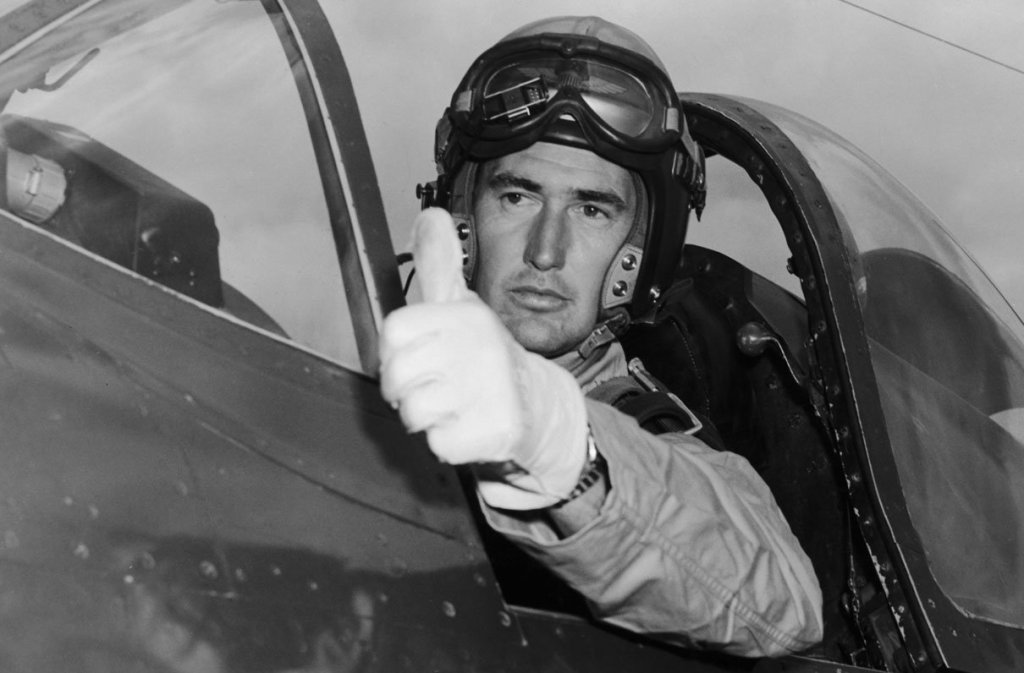
On February 16, 1953, a wounded fighter jet approached the airfield at Suwon, Korea. The plane’s radio was inoperable, its hydraulic system gone, and it was trailing smoke and bleeding fluids. Its streaming 30-foot ribbon of fire all indicated serious danger. The pilot brought his hobbled midnight-blue F9F Grumman “Panther” jet in for a dangerous wheels-up belly landing, skidding the length of the tarmac in a cloud of sparks and debris. An already tense situation became worse as the nose promptly burst into flames below the cockpit. The trapped aviator blew off the canopy, struggled out of the plane, and limped away as fire and rescue crews quickly blanketed the burning aircraft with foam. The plane was a total loss but the pilot survived.
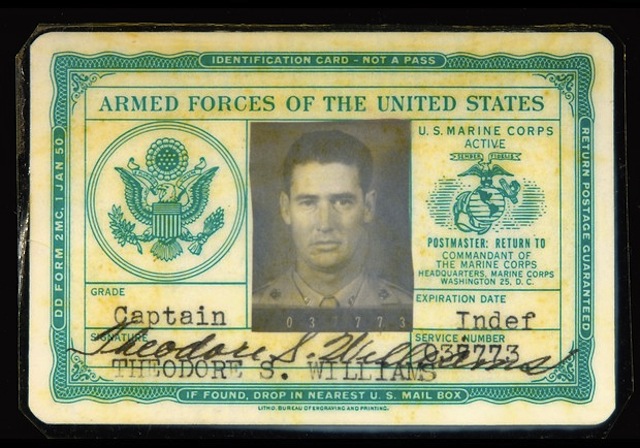
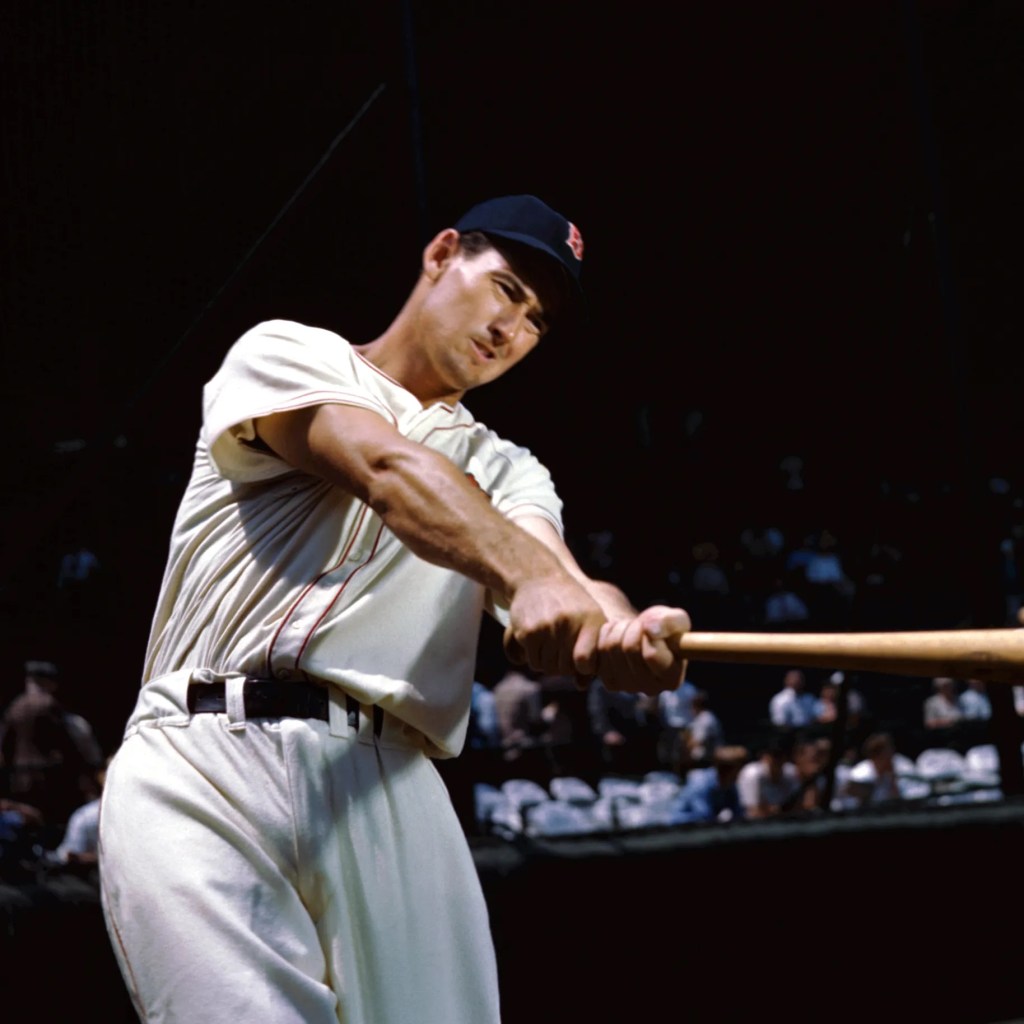
Later, the airmen at Suwon learned they had just witnessed the dramatic escape of the most famous flying leatherneck in Korea; Captain Theodore S. Williams, better known as Ted Williams of the Boston Red Sox. Williams was arguably the best baseball hitter of all time. “Teddy Ballgame” was a six-time American League batting champ, two-time AL MVP, and the last man to hit .400 for a season. He was inducted into the Baseball Hall of Fame in 1966 five years after hitting a homerun in his last at bat.

Ted Williams.

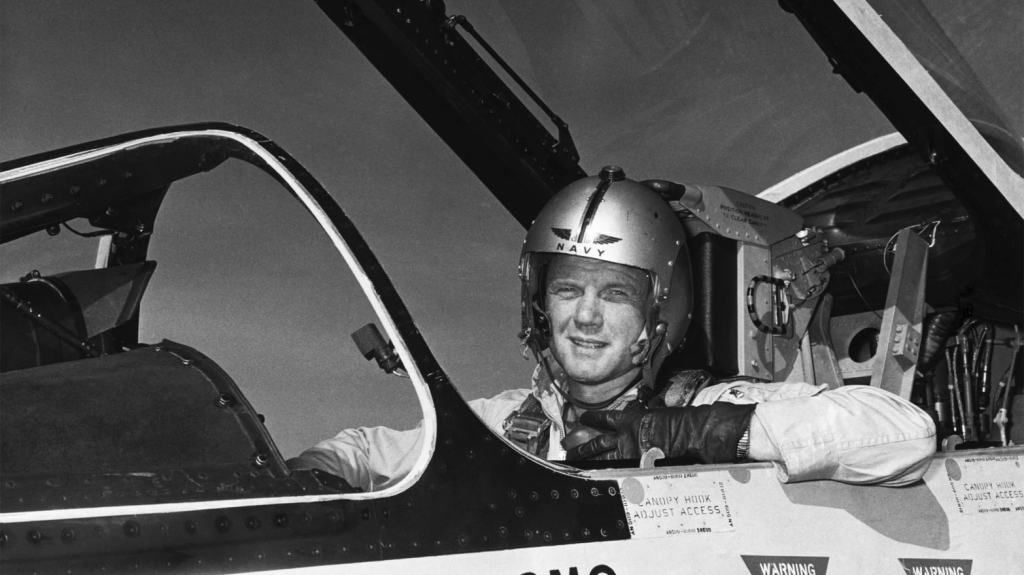
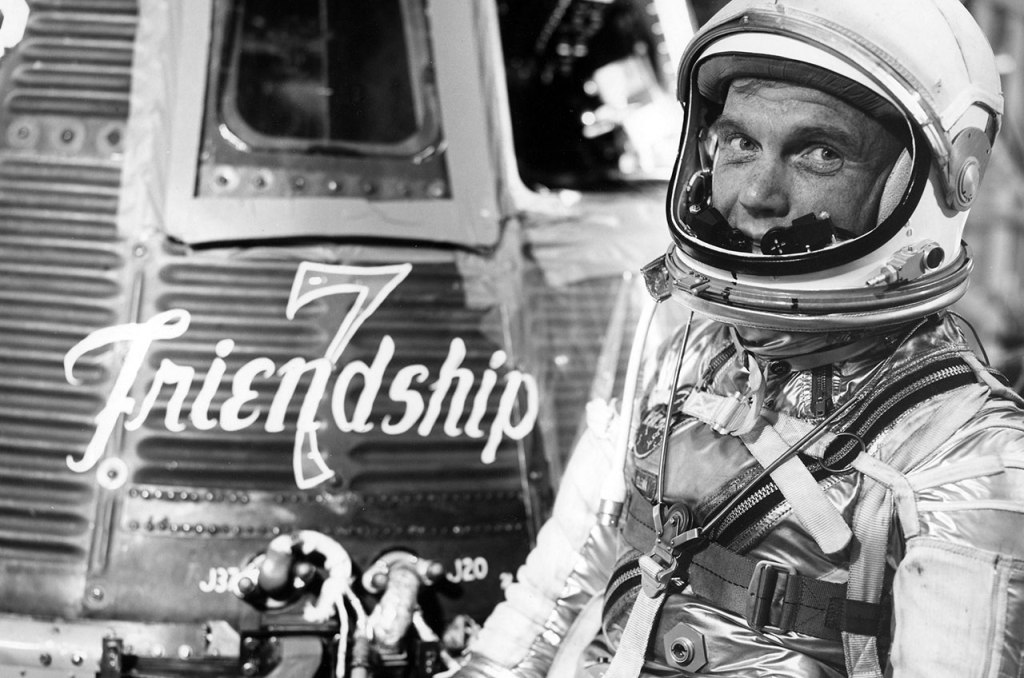
His stats as an airman were equally impressive. Ted flew 39 combat missions in Korea and his planes were hit by enemy fire three times. On this mission, as with many, Williams was flying as wingman for his squadron’s operations officer, John H. Glenn, Jr.: Ohio’s Mercury astronaut, former senator, and 1984 presidential candidate. Glenn and Williams were both Marine pilots during World War II but did not know each other well. Shortly after Pearl Harbor, Glenn dropped out of Muskingum College in New Concord, Ohio, and enlisted in the Marines. Williams joined the Marines at the end of the 1942 season after leading the league with a .356 batting average.
The two met and became friends in Korea. Glenn flew 63 combat missions in Korea and was nicknamed “Old Magnet Ass” because of the number of flak hits he took on low-level close air support missions. He returned to base with over 250 holes in his plane twice. But on that Feb. 16th mission, Williams’ plane was the one that took the heavy hits. When Glenn saw that his wingman’s plane was on fire, he flew to Williams’ wingtip and pointed up. The duo went up into thinner air and the fire went out.
Other pilots gestured for Williams to bail out but the slugger wouldn’t do it. Ted was 6-foot-4 and thought his knees might “catch the hatch” during ejection and that would be the end of his baseball career. Instead, Williams flew back to the base, zeroed in on the runway, and skidded to a stop. The hall of famer leaped from the cockpit and ran from the plane just as the aircraft caught fire again.
While much is known about Ted Williams the ballplayer, little is known about Williams the Marine pilot. In January 1942, Williams was drafted into the military, being put into Class 1-A (Available; fit for general military service). A friend suggested that Ted appeal his classification to the governor’s Selective Service board, since Williams was the sole support of his mother, arguing that he should be reclassified to Class 3-A (Men with dependents, not engaged in work essential to national defense). The “Splendid Splinter” was reclassified to 3-A ten days later.
Afterward, the public reaction was extremely negative. Quaker Oats stopped sponsoring Williams, and Williams, who previously had eaten Quaker products “all the time”, never ate Quaker products again. Williams took more flak by signing a new contract with the BoSox for $30,000 in 1942. That season, Williams won the Triple Crown, with a .356 batting average, 36 home runs, and 137 RBIs. On May 21, Williams hit his 100th career home run, and the next day he was sworn into the US Navy Reserves. Williams grew up in San Diego (a “Navy town”) and aviator Charles Lindbergh was one of his childhood heroes. Williams later noted that he first became interested in flying after seeing the Navy’s majestic lighter-than-air ship “Shenandoah” as a kid.

Naval aviation cadet T. S. Williams was sent to Amherst College in Massachusetts for a 90-day stint in preflight training, described as “Officer candidate school with a crash course in advanced science.” The school is where prospective pilots were whipped into shape, learned how to be military officers, and studied basic theories of how airplanes operated. Those cadets who did not wash out were then moved to Chapel Hill, N.C., for three months of preflight training. While the academic load was more strenuous, here the pilots actually got to fly airplanes. Ground-school training included subjects like engines, ordnance, aircraft characteristics, aerodynamics, and navigation.
Here the cadets flew small two-seat, single-engine, high-wing Piper NE-1 “Grasshopper” trainers to acquire the skills to fly an airplane. Next, Ted Williams was sent to the “Naval Air Station Bunker Hill” in Kokomo (Now Grissom Air Force Base) for basic flight training. There he learned more theory but also spent time flying Vultee SNV and North American SNJ trainers over the skies of Central Indiana. Upon graduation, Williams opted for the Marine Corps and moved south to Pensacola, Florida for advanced flight training as a fighter pilot.
Williams learned about tactics and weapons as he practiced advanced navigation, aerial combat maneuvering, and formation flying. His athletic ability, steady hand, and excellent eyesight made him a very good pilot. In fact, he was good enough to set the Marine gunnery record at Jacksonville. Williams once again was having an outstanding “rookie” season. Williams played on the baseball team (along with his Red Sox teammate Johnny Pesky) while in pre-flight training with the Civilian Pilot Training Course. While on the baseball team, Williams was sent back to Fenway Park on July 12, 1943, to play on an All-Star team managed by Babe Ruth. Upon meeting Williams the newspapers reported that Babe Ruth said, “Hiya, kid. You remind me a lot of myself. I love to hit. You’re one of the most natural ballplayers I’ve ever seen. And if my record is broken, I hope you’re the one to do it”. Williams later said he was “flabbergasted” by the incident, as “after all, it was Babe Ruth”. In the game, Williams hit a 425-foot home run to help give the A.L. All-Stars to a 9–8 win.

Ted Williams aka The Splendid Splinter.

Williams went on active duty in 1943 and was commissioned a second lieutenant in the United States Marine Corps as a Naval Aviator on May 2, 1944. In mid-1944, Marine aviation in the Pacific was on the wane. Japanese fighters had all but disappeared from the skies, and the days of dogfighting fighters crisscrossing the skies over the “Solomons Slot” were gone. With fighter pilots no longer in high demand, the most promising student aviators were made flight instructors, and that is what happened to Ted Williams.
When, in the summer of 1945, Ted finally received orders for the combat zone, he was in San Francisco. On September 2, 1945, when the war ended, Second Lieutenant Theodore S. Williams USMC was in Pearl Harbor, Hawaii playing baseball in the eight-team Navy League alongside Joe DiMaggio, Joe Gordon, and Stan Musial. The Service World Series games featuring Army versus the Navy attracted crowds of 40,000. The players said it was even better than the actual World Series between the Detroit Tigers and Chicago Cubs that year.
Williams was discharged by the Marine Corps on January 28, 1946, in time to begin preparations for the upcoming baseball season. For the 1946 season, Williams hit .342 with 38 home runs and 123 RBIs. He ran away as the MVP winner and helped the Red Sox win the pennant. That season, Williams hit the only inside-the-park home run in his Major League career and topped that with the longest home run in Fenway Park history, at 502 feet (the landing zone marked by a single red seat in the Fenway bleachers).
The name Theodore S. Williams was swapped from the list of inactive reserves to active duty on January 9, 1952. As the Korean War heated up the Marines desperately needed pilots and the 33-year-old married father was one of the best. Williams returned to active duty six games into the 1952 season. After hitting a 2-run home run in his last at-bat to beat the Detroit Tigers 5-3, Williams traded his uniform for a flight suit.
Although initially bitter at being called up (he’d only been in a plane once since World War II ended), Williams realized that going to Korea was the right thing to do. Still, Williams believed his call-up had more to do with the publicity it would generate for the Marines than the true need for his services. Right before he left for Korea, the Red Sox held a “Ted Williams Day” at Fenway Park. Williams was given a Cadillac and a memory book signed by 400,000 fans. The governor of Massachusetts and the mayor of Boston were there and at the end of the ceremony, the fans in the stands held hands and sang “Auld Lang Syne” to their hero.
Williams reported to Willow Grove (Pa.) Naval Air Station for flight-refresher training and then headed to Cherry Point, N.C., for ground school before transitioning into jets. From there, Williams traveled to Pohang on Korea’s eastern coast in early 1953. Captain Williams flew 39 combat missions, sustaining heavy enemy on many occasions, and he was awarded three Air Medals before being sent home with a severe ear infection and recurring viruses in June. Williams was formally discharged from active duty on July 28, 1953, the day after a cease-fire in Korea went into effect.
Williams’ squadron commander at his North Carolina training station said of him, “He was a spoiled-brat… He had too much money and had too many people rooting for him.” Unlike Williams, Major John H. Glenn, Jr. remained in the Marines after World War II. In Korea, it would have been easy for Glenn, the operations officer in Williams’ squadron in charge of assigning pilots to their daily missions, to adopt the same attitude toward Williams but he never did.

John Glenn

In the early 1950s, Glenn was a hotshot Marine pilot no one outside the military had ever heard of. In the early 1950s, Williams was one of the most famous big-league players on the planet. In his 1999 memoir, Glenn described Williams as anything but a prima donna. “I had just joined the squadron and was sitting in the pilots’ ready room one day when he walked in and came over and introduced himself,” Glenn writes of their first meeting. “I had been a baseball fan since I was a boy, and meeting Ted was a thrill.”
Glenn described Williams as a pilot, “He was just great. The same skills that made him the best baseball hitter ever — the eye, the coordination, the discipline — are what he used to make himself an excellent combat pilot.” As for their shared sky duty in Korea, Glenn describes, “We would be over one of their supply roads. Then we would drop down and follow the road back toward the front, hoping to catch their troops and trucks in the open . . . We leapfrogged, with one of us flying at treetop level and the other at 1,000 or 1,500 feet above and behind in order to see farther down the road and relay advice to the `shooter’ on targets ahead. We would switch positions every 10 minutes.”
Williams later described Glenn as “Absolutely fearless. The best I ever saw. It was an honor to fly with him.” In his memoir, Glenn emphasizes his fondness for Williams and recalls how the famously zipper-thin Williams developed an appetite for the fudge Glenn’s sister-in-law would send through the mail. “Ted and I flew together a lot,” Glenn recalled, “Ted flew about half his missions as my wingman. He was a fine pilot, and I liked to fly with him.”
Williams’ two major career disruptions for military service eventually cost the slugger nearly four years of playing time at the very peak of his career. Most articles about Williams focus on his sports achievements, hardly mentioning his military service. The only question usually asked is, “Where would Ted Williams be in the record book had he not lost four prime baseball seasons serving his country?” It may be more accurate to ask, “Where would the United States be without men like Ted Williams?” Ted’s baseball achievements take a backseat to his performance as a “Flying Leatherneck.” Williams was a baseball star for nineteen years and a proud Marine for five. In the words of Senator John Glenn, “Ted may have batted .400 for the Red Sox, but he hit a thousand as a U.S. Marine.”

John Glenn Mercury Astronaut