
Author: Alan E. Hunter- Irvington
Alan E. Hunter’s column, “Bumps in the Night”, has run on the front page of the Weekly View / Eastside Voice / Eastside Herald newspaper in Irvington on the east side of Indianapolis since 2007. Al’s Pop culture-based articles have been the genesis of several national and local television and radio programs over the years spurring programs on subjects as varied as John Dillinger, Abraham Lincoln, Charles Manson, the ABA Indiana Pacers, and Burger Chef to the mysterious disappearance of ABA star John Brisker and all points in between.
Alan E. Hunter is the author of the books “The Petersen House, the Oldroyd Museum and the House Where Lincoln Died“, “Thursdays with Doc. Dr. Wayne C. Temple’s recollections on Springfield and Lincoln“, “Osborn H. Oldroyd: Keeper of the Lincoln Flame“, and has co-authored two books on the Historic Indiana National Road.
Al has researched, scripted, and led the Irvington Ghost Walks since 2002. Al’s tours are roughly 75% history and 25 % ghost stories and folklore. These non-profit tours raise much-needed funds for the Eastside Irvington community. In addition, Al has led similar tours in Greenfield and Cambridge City on the Historic National Road. Al is a former Vice-President and board member of the Indiana National Road Association. Al served as the historian and event coordinator for the Dropping Dimes Foundation which aids the former players of the ABA (American Basketball Association). Al also organized both the 30-year reunion of the ABA held at the Hoosier Dome in 1997 and the 50-year reunion of the ABA festivities at Bankers Life Fieldhouse on the campus of Butler University on Saturday, April 7, 2018.
Al has co-authored two books on haunted Irvington. In 2013, Al published a compilation of his “Bumps in the Night” articles selected from his column in the Weekly View newspaper. Al also wrote a book on “Haunted Indianapolis” and most recently, a book on the H.H. Holmes relic collection for the benefit of the Irvington Historic Society and the Bona Thompson Memorial Center. The relics detailed in the books were featured in the History Channel 8-part series “American Ripper.” Al and his wife Rhonda appeared in 3 of the segments alongside the Great-great-grandson Jeff Mudgett. Al was featured in the November 21, 2018, episode of Mysteries at the Museum with Don Wildman where he detailed a scalpel used by America’s first serial killer, H.H. Holmes, in Irvington. Al was also featured in the October 9, 2019, episode of Ghost Adventures with Zak Bagans in which he detailed the history of the H.H. Holmes house in Irvington.
Over the decade, Al has led talks and programs in Irvington that have collected food and personal care items for the Irvington homeless shelter, gathering well over a ton of food, clothing, and personal care goods for distribution. A former teacher and baseball coach at Westfield High School, Al graduated from Indiana University and has been married to his wife Rhonda since 1989. They have 2 children, Jasmine and Addison.
The Ghosts of Playground Productions in Irvington.
Original publish date October 16, 2025.
https://weeklyview.net/2025/10/16/the-ghosts-of-playground-productions-in-irvington/
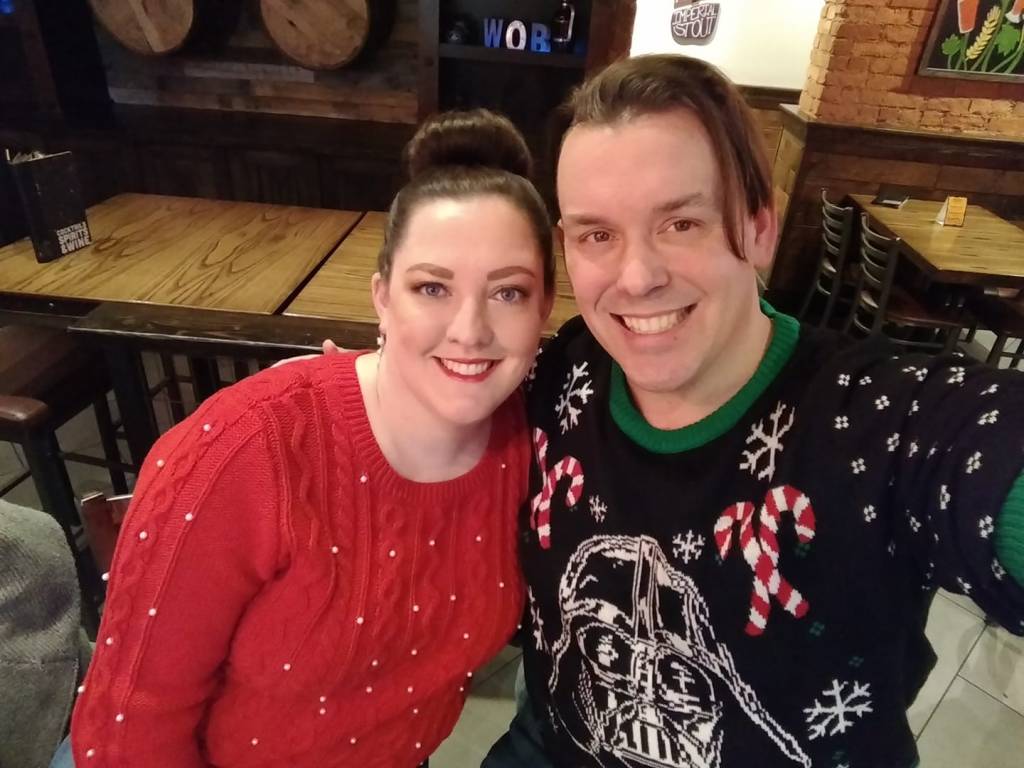
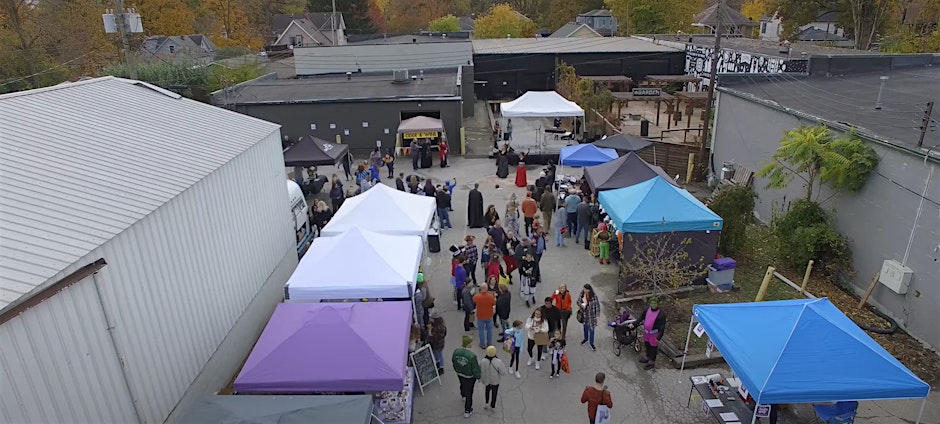
One of the enjoyable aspects of leading ghost tours in Irvington every October is hearing the new ghost stories and spooky tales associated with the buildings we pass along the route. For the past few years, Adam Long and his wife, Andrea, have allowed the tours access to their building, Playground Productions Studio at 5529 N. Bonna Ave., as a jumping-off point to rest and recover after tours. Some of you may know Adam by his stage name, Adam Riviere, a homage to his mother’s whose maiden name. Most importantly, the studio hosts the crew from the Magick Candle every Friday and Saturday night during October for psychic readings for our tour guests and visitors, with the proceeds going to fund the food bank at Gaia Works (6125 E. Washington St.).
Adam graduated from Martinsville High School, studied at Butler University, and attended IUPUI for his graduate work. Adam is an accomplished musician and an artist in his own right. Andrea, originally from London, Kentucky, graduated from North Laurel High School there and from IUPUI in Indianapolis. Andrea is quiet, but when she talks, she speaks with an easy southern drawl that somehow soothes the listener’s ears. As I write this, the couple is celebrating their eleventh wedding anniversary. Adam and Andrea were married in 2014, but have been together since 2008. I first met Adam over a decade ago, when he was a guest on one of my ghost tours. After hearing the Abraham Lincoln ghost train story, which concludes each tour, Adam was sprung. He later informed me that the story resonated with him so deeply that he commissioned an artist friend to create a painting of the ethereal visage for display in his studio office. It comes as no surprise that Adam’s studio is located along the historic corridor of the railroad tracks upon which Lincoln’s funeral train traveled back on April 30, 1865.
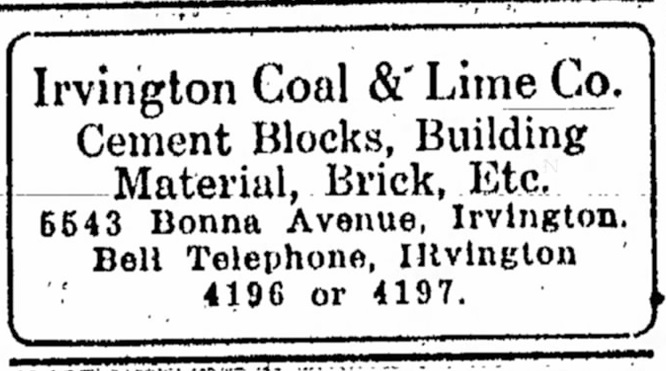
Adam’s studio has an interesting history. Adam stated, “It was originally the Coal & Lime Company in Irvington. That was why they wanted to call this area the Coal Yard district, because this is the spot where the trucks would come and pick up the coal to deliver to the areas close by.” The name is a bit of a misnomer, however. While it is true that the company sold “Hoosier Red Pepper Coal” harvested “clean” and “hand picked” from “Indiana’s Richest Coal Mines,” contrary to it’s strict definition, the company specialized in providing hydrated mason’s lime used in the manufacture of common bedrock building materials like glazed tile, fire brick, cement blocks, and common bricks.

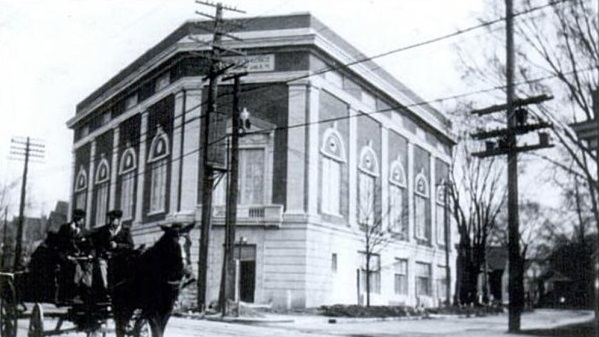
On August 3rd, 1922, an ad on page 10 of the Indianapolis Star boasted that the Irvington Coal & Lime Company supplied the “Western Brick as well as other builder’s supplies used in the construction of the new Masonic Temple,” a.k.a. Irvington Masonic Lodge 666, whose cornerstone was laid the year before. Adam was quick to point out to visitors to the property that a portion of the foundation for the old brick factory remains in place several yards away from his studio entrance. Adam informed, “In the early 1950s, a company called Foamcraft bought the building.”
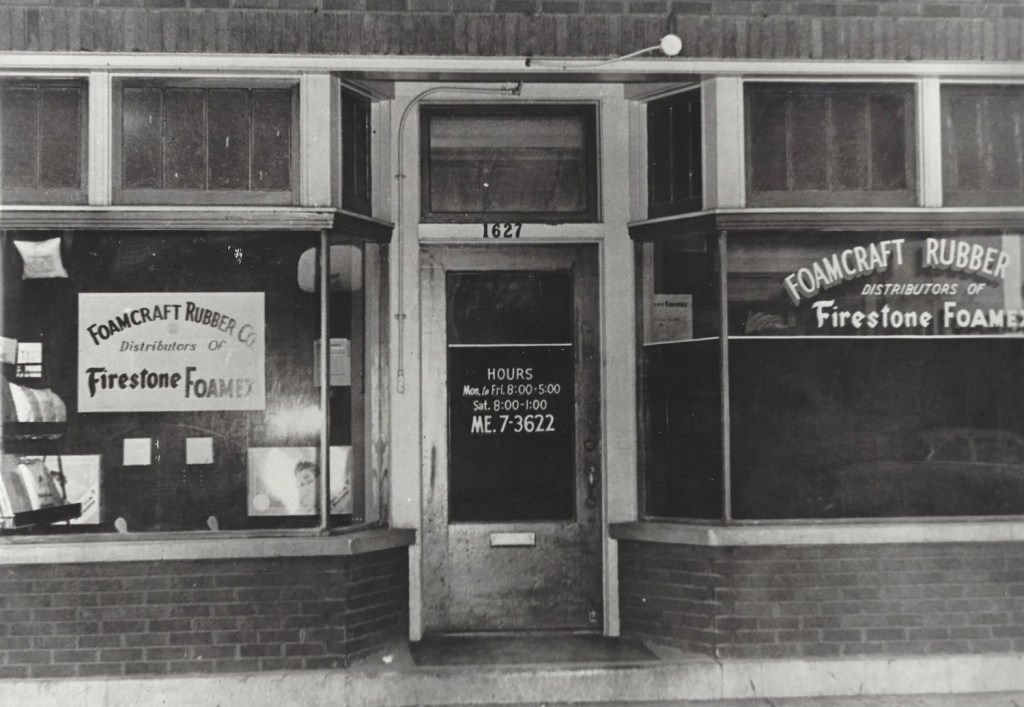
Foamcraft still exists. According to their website, “In 1952, Robert T. Elliott, the founder of our company, started the Foamcraft Rubber Company. As a District Sales Manager for the Firestone Tire and Rubber Company, he was responsible for helping to start several foam rubber distributors. Foamcraft was his special passion, though, and in founding our company, he set a foundation for business integrity and dedication to service, as well as a vision to develop long-term relationships with our customers.” Foamcraft makes specialized cushioning used in furniture, beds, minivans, boats, and other products. The company buys large blocks of foam rubber called “Buns” or “Blocks” and cuts them to smaller sizes and shapes as needed by their customers. It was, and remains, a family-run operation with a very high-tenured workforce staffed by generations of families working “cutting foam” for a variety of customer products. The company boasts a 99.9% on-time production and delivery reputation.
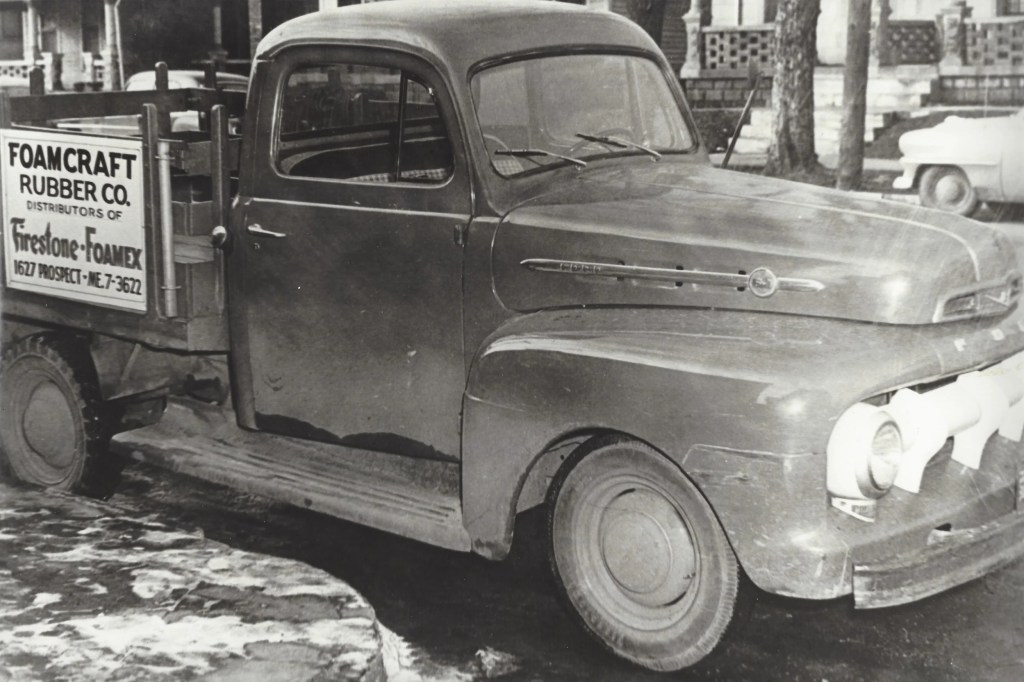
Elliott opened his Irvington foam factory on Bonna Avenue in 1957, and it remained there for the next 44 years. Foamcraft briefly relocated in 2001 to a leased building on Post Road before moving to a much larger facility in Greenfield in 2016, where it remains today. Company headquarters are located at 9230 Harrison Park Ct. in between the Fort Benjamin branch library and Peyton Manning Children’s Hospital in Lawrence. Foamcraft also has a manufacturing facility in Elkhart. They never forgot their ties to Irvington, though. Employees referred to the old 20,000 square foot factory, made up of several buildings, simply as the “Bonna.” According to their Web site, employees remember the Bonna facility as “dark and spread out with rooms everywhere. It was sort of claustrophobic with low ceilings, and we worked elbow-to-elbow. It had slippery floors throughout the facility, which sometimes required us to spread sand or sawdust in certain areas.” Despite the distinctly ominous Irvington location’s appearance, inside and out, Foamcraft’s employees described the working atmosphere as “Valhalla.”
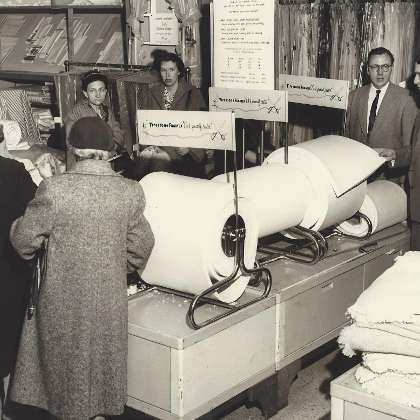
One former employee, Jim Quakenbush, recalls that Foamcraft Inc. “ was located on Bonna Ave. just east of Ritter Ave. I worked there for two summers, unloading railroad cars in 1970 & 1971. I have fond memories of working there. Rob Elliott, whose father owned the company, worked with me unloading train cars full of large refrigerator-sized foam rubber “buns”. I think Rob became the CEO and may still be. The warehouse building still stands, but the office building is gone. The railroad track is gone. I really enjoyed the people. My supervisor was Dave Fisher. Great guy. Don Scruggs was a truck driver, funny as hell. Larry Harding worked with me. [The] Sewing department had Ursie Hert, Ralph Wainwright, from Jamaica. Clayton Sneed was a saw operator. Paul was an autistic laborer who used to irritate Ralph. I laughed so hard listening to them argue back and forth. All in good fun. Good memories.”
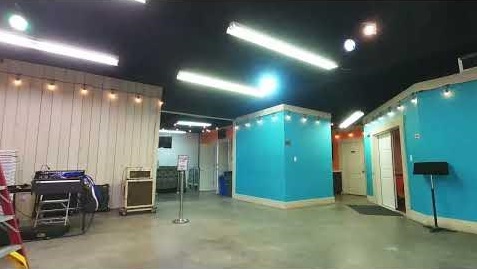
The old Foamcraft building has quite a history to it, and apparently, a few ghosts as well. Adam recalled, “When I first moved in here, while I locked up at night, stepping out the door, there was a feeling. It wasn’t really ominous, but it definitely gave you a creepy feeling. “ When asked if he feels a presence in the building, Adam stated, “Yes, sometimes when I’m alone in the building, I can hear sharp knocks on the wood in the studio. When I check, nothing is there to explain it.” Adam and Andrea say they don’t ever feel uncomfortable in their building, and they don’t think there is any dark energy connected to their workspace. “We just take it as it comes, we’re used to it now.”
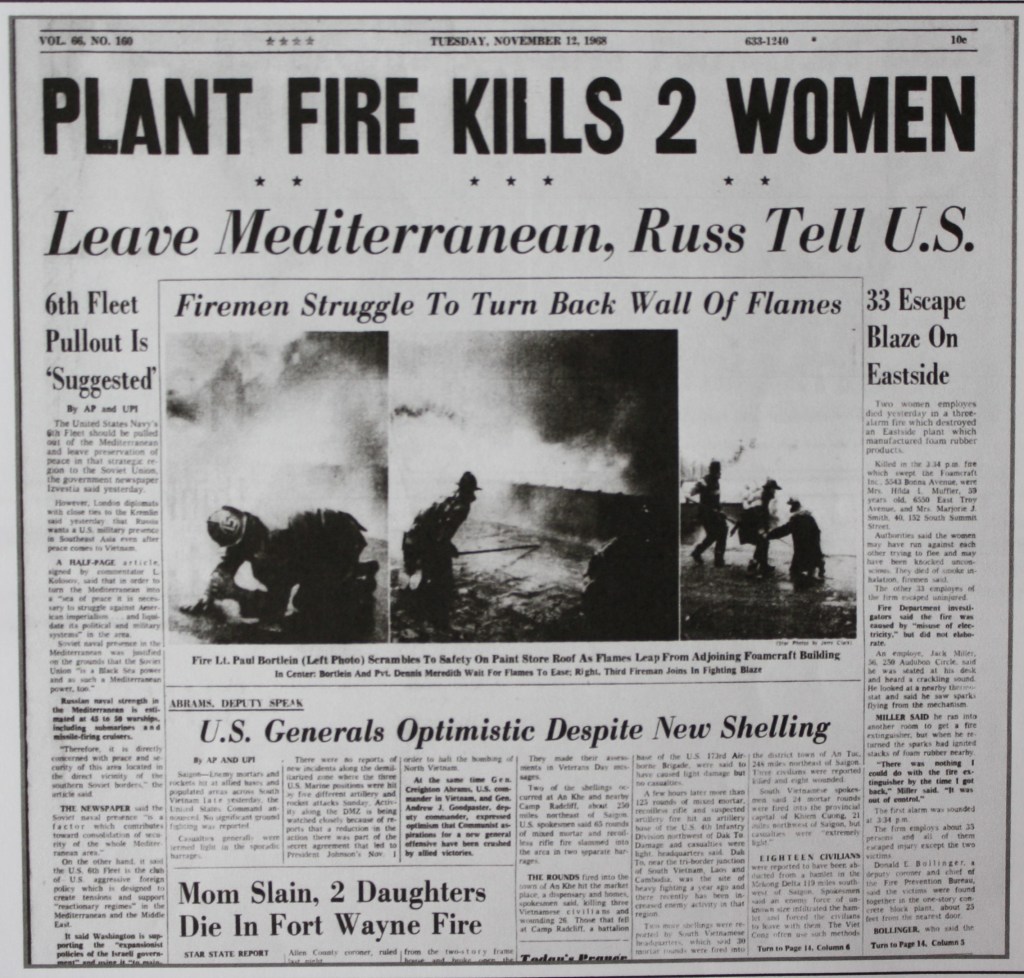
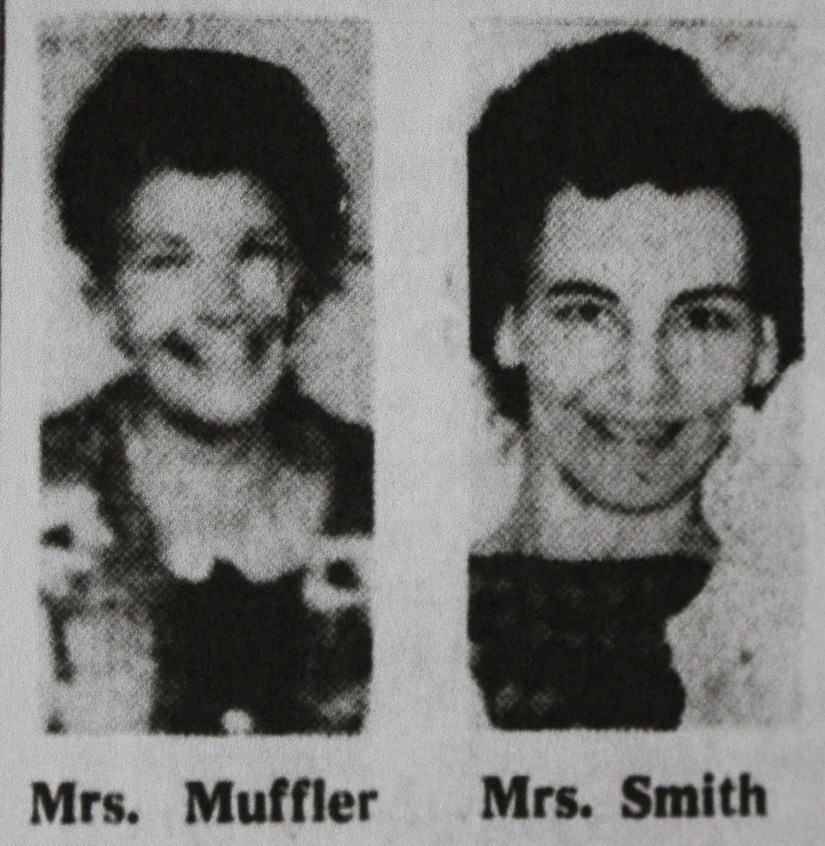
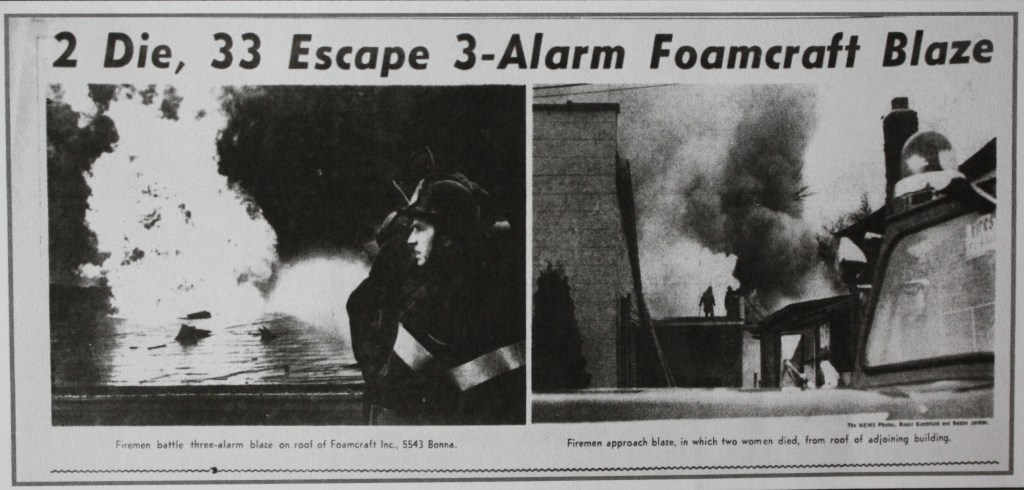
The factory site was visited by tragedy in the autumn of 1968. The front page of the November 12, 1968, Indy News announced “Plant Fire Kills Two Women. 33 Escape Blaze on Eastside.” At 3:34 in the afternoon, firefighters responded to a three-alarm fire at the Foamcraft factory plant. Mrs. Hilda F. Muffler, 59, of 6550 East Troy Avenue, and Mrs. Marjorie J. Smith, 40, of 152 South Summit Street, were killed in the blaze. Mrs. Muffler was employed as a seamstress, and Mrs. Smith as a cutter. Authorities theorized that the two women may have collided and been knocked unconscious during the frenzy to escape the fire. The women died of smoke inhalation and heat. According to the article, Fire Department investigators said the fire was caused by ‘misuse of electricity,’ but did not elaborate.
The article further reports, “An employee, Jack Miller, 56, 250 Audubon Circle, said he was seated at his desk and heard a crackling sound. He looked at a nearby thermostat and said he saw sparks flying from the mechanism. Miller said he ran into another room to get a fire extinguisher, but when he returned, the sparks had ignited stacks of latex foam rubber nearby. There was nothing I could do with the fire extinguisher by the time I got back. It was out of control.” Another Star article quotes Miller as saying he saw a “flash of lightning” come from the wall thermostat and strike a pile of foam. Deputy Marion County Coroner and chief of the fire prevention bureau, Donald E. Bollinger, said the victim’s bodies suffered no burns and were found lying face down perpendicular, one atop the other, in the one-story concrete block plant. The women were found within 4 feet of an office door and only 8 feet from the nearest exit door.
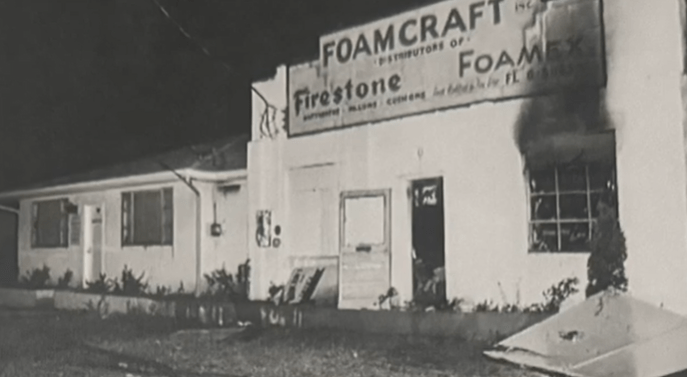
They were discovered to be some 70 feet from the nearest fire damage about 25 minutes after the first alarm had sounded. Other employees challenged the notion that the women panicked trying to escape. Bollinger later theorized that since Mrs. Smith’s coat was found lying next to her body, the women may have attempted to reach a restroom to retrieve their coats and purses before being overcome by smoke.
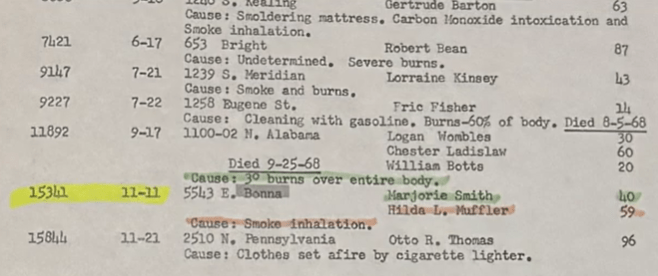
The fire was spectacular, with flames shooting over 100 feet high in the sky, and the massive plumes of heavy black smoke could be seen from all over the city of Indianapolis. The high-intensity heat hampered firefighters’ efforts to extinguish it quickly. The first alarm came at 3:34, the second at 3:44, and the third at 4:42 pm. Emergency first responders arrived quickly with over 20 pieces of firefighting equipment and 65 firefighters. John T. O’Brien, owner of the Bonna Printing Company at 5543 Bonna Avenue, reported that his adjacent building suffered only minor smoke and water damage during the conflagration. Other adjacent businesses, Krauter Equipment Company & the Firestone Tire & Rubber Company, also reported minor damage. At 12:17 am, the blaze briefly reignited, and firemen were again called to extinguish the flames. That second fire had ignited beneath the collapsed roof of the factory and was brought under control at 1:17 am.
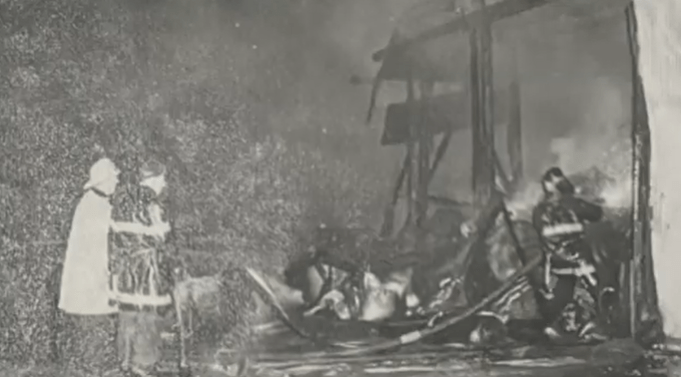
The Foamcraft building was destroyed in the inferno. Investigators determined the fire started along the north wall of the “blackened pillow room” on the northeast corner of the building. Deputy Chief Bollinger later speculated that the fire could have been prevented if the wall receptacle box, which contained the mechanism controlling the heating blowers, had been properly covered. One unnamed employee told Bollinger that he tried to make a metal cover for the box the week before the blaze, but was shocked during the attempted installation and was unable to do so. That same employee said that he had informed company officials of the problem, but it had not been fixed yet.

Learning that Adam and Andrea’s building may have a resident ghost, one could believe that the spirits of Playgorund Productions Studio are those of the tragic victims of the Foamcraft factory fire from 1968, but that does not appear to be the case. Tim Poynter, intuitive psychic empath who has worked with me on the tours for decades and now spends every October Friday and Saturday night in the building, admits that he encounters those spirits regularly, “But they aren’t necessarily attached to the building. They seem to be just passing through. Sometimes the tour guests bring them, and at other times, they are brought in by the readers.” Likewise, longtime tour volunteer Cindy Adkins, who was featured as a psychic intuitive in an episode of Zak Bagans’ Ghost Adventures in 2019, does not feel a resident ghost in the building. “They’re not in here permanently. I don’t feel them inside, but I do think some spirits are roaming around outside the building.” said Cindy. Indeed, it should be noted that the spot where the two employees died is located outside the studio, about 20-30 yards northwest of the door.

Today, Playground Productions Studio is a far cry from the old, dark, and spooky, chopped-up Foamcraft factory. The working studio is now full of light and texture. Walls are constructed of a naturally grounded hardwood facia and are peppered by soft blankets buffering any echoes and sounds that might affect the recording work. The artists, bands, and performers who regularly work or visit the Playground are joyful and carefree whenever there is an event or party going on. Knowing the depth of feeling that former Foamcraft employees have for the old “Bonna” location, it is easy to imagine that if there are spirits hovering around the property, inside or out, they do so with mirth and glee.
Foamcraft has created a fantastic, informative, and historical video with scenes shot at the old factory on Bonna. It can be found on the Web at: https://www.linkedin.com/posts/foamcraft-inc-_the-story-of-foamcraft-inc-activity-7089985534889975808-y92J/
Immigration, Baseball, PTSD, and the Titanic.
Original Publish Date October 2, 2025.
https://weeklyview.net/2025/10/02/immigration-baseball-ptsd-and-the-titanic/
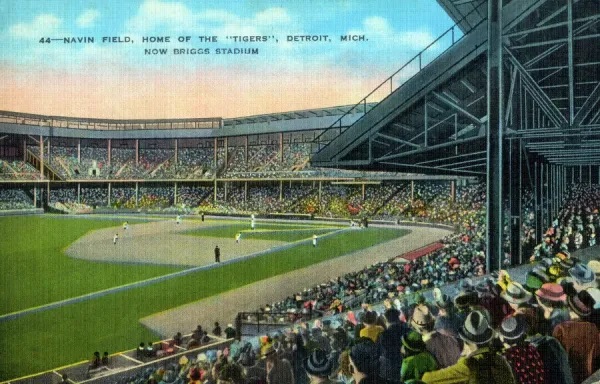
It’s playoff time in Major League Baseball. Right now, there are 12 teams marching toward the World Series. One of those teams, the Detroit Tigers, is heading to the playoffs for the second year in a row following a decade-long drought. The Tigers are one of the most storied franchises in MLB history. Since they became a major league franchise in 1901, the Tigers have won four World Series championships, 11 AL pennants, and four AL Central division championships. From 1912 to 1937, the Tigers played their home games at Navin Field in the Corktown neighborhood of Detroit. Corktown is a traditionally Irish settlement named so because nearly half of its settlers traced their lineage to County Cork, Ireland. Corktown is the oldest neighborhood in Detroit.

In 1911, the new Tigers owner Frank Navin ordered a new steel-and-concrete baseball park to be built that could seat 23,000 fans. Navin Field opened on April 20, 1912, the same day as the Red Soxs’ Fenway Park in Boston and just 5 days after the RMS Titanic sank. Another ominous portent is the fact that Cleveland Naps player “Shoeless” Joe Jackson scored the first run at Navin Field. Jackson was later banned from baseball as a member of the Chicago “Black Sox” team, accused of throwing the 1919 World Series. The $300,000 price tag for Navin Field translates to about $50 million today. The ballpark featured a 125-foot flagpole in center field that, to this day, is the tallest obstacle ever built in fair territory in a major league park. 26,000 fans crammed into the park for Navin Field’s opening day, postponed two days from its planned inaugural date because of rain. Despite that Motor City milestone, most of the attention was knocked from newspaper headlines the next morning by the sinking of the Titanic.
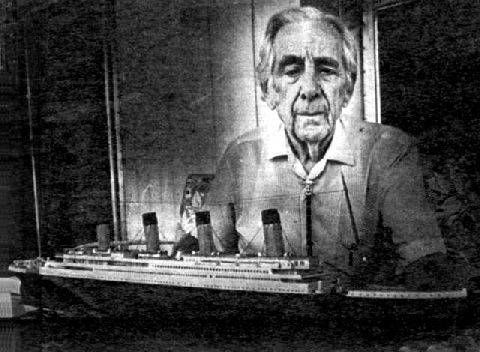
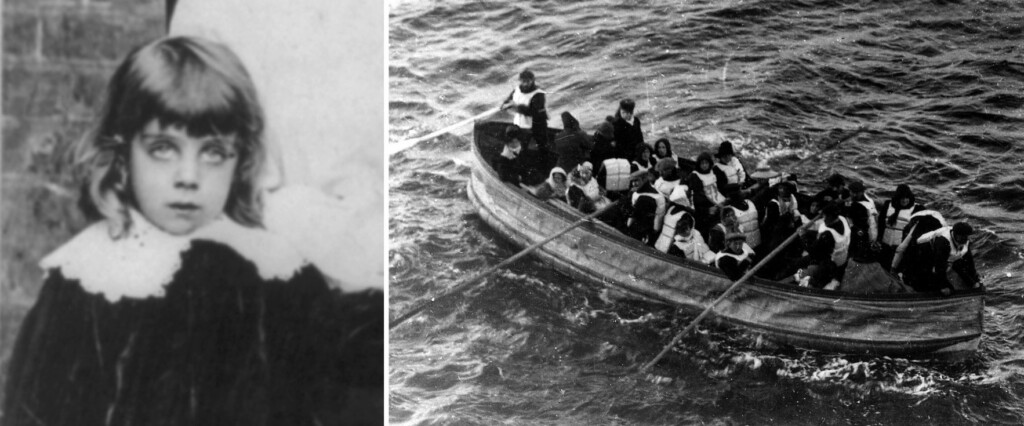
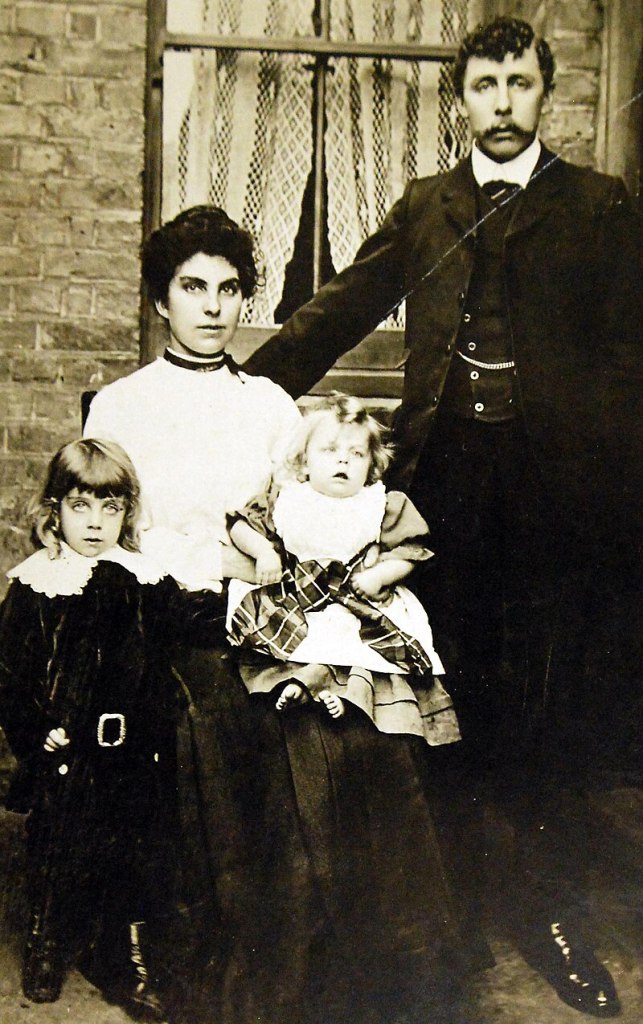
The week before that milestone grand opening day, some 3,700 miles away, a nine-year-old British boy named Frank John William Goldsmith was preparing for the trip of a lifetime. Frankie was born in Strood, Kent, England, the eldest child of Frank and Emily Goldsmith. Between 1908 to 1911, most of the extended Goldsmith family emigrated to the US, settling in Detroit. In the spring of 1912, Frankie’s parents decided to join them. The Goldsmith family boarded the New York City-bound RMS Titanic in Southampton as third-class passengers. During the first three uneventful days aboard ship, Frankie spent his time playing and exploring the ship with other similarly aged English-speaking third-class children. The boys ran the decks, climbed the baggage cranes, and wandered down to the boiler rooms to watch the stokers and firemen at work. Of these boys, only Frankie and one other survived the sinking.
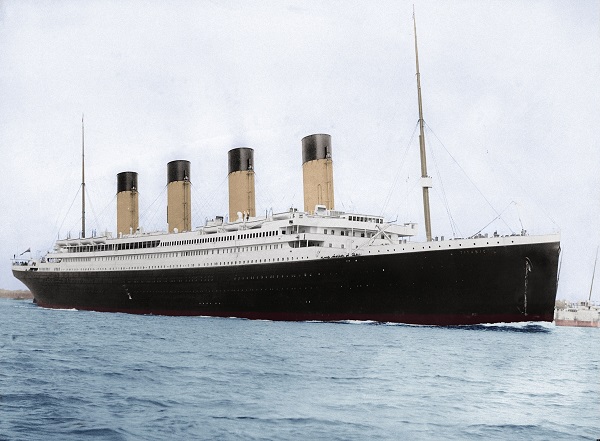
Unsurprisingly, Goldsmith (1902-1982) remembered the exact moment his personal Titanic trauma began for the rest of his life. In a speech to the Rotary Club in 1977, he recalled that he was lacing up his shoes in his third-class passenger cabin when a Titanic officer knocked on, and then opened, the cabin door at about 1:30 a.m. The officer pointed to the ceiling and informed them to put on one of the lifejackets located there. Earlier, Frankie’s father woke his family and informed them to get dressed and prepare to make their way up to the prow of the ship. Ironically, Frankie’s family likely made their way up from their cramped F-deck third-class quarters via the opulent Grand Staircase of the ship. Upon learning that the “Unsinkable Titanic” had struck an iceberg, the family made their way to the forward end of the boat deck, where the “Collapsible C” lifeboat was being loaded. Frankie remembered the lifeboat being surrounded by a ring of crewmen who were only letting women and children on. Collapsible C was the second to last ship to leave, carrying 41 passengers and departing at 1:47 a.m.
Goldsmith wrote of the experience: “Mother and I then were permitted through the gateway. My dad reached down and patted me on the shoulder and said, ‘So long, Frankie, I’ll see you later.’ He didn’t, and he may have known he wouldn’t.” Goldsmith Sr. died in the sinking; his body was never recovered. Goldsmith wrote a book about his Titanic experience, published posthumously by the Titanic Historical Society in 1991. That book, Echoes in the Night: Memories of a Titanic Survivor, remains the only full account recorded by a third-class passenger.
As their lifeboat floundered in the Atlantic Ocean, to keep her son’s young mind off the unfolding tragedy, Frankie’s mother instructed him to turn his back to the sinking ship and care for an invalid survivor. For forty agonizing minutes, the screams of the doomed passengers echoed across the water. By 2:20 a.m, the RMS Titanic was totally submerged, but helpless survivors lasted another 10 minutes before surrendering to the icy waters. The ship sank two hours and 40 minutes after impact with the iceberg. Collapsible C was picked up by the RMS Carpathia around 6:30 a.m. During those four anguished hours asea, Mrs. Goldsmith busied herself sewing clothes from blankets for women and children who had left the ship in only nightclothes. After being rescued, young Frankie was initiated by RMS Carpathia’s boiler-stokers as an honorary seaman by having him drink a mixture of water, vinegar, and a whole raw egg. Frankie swallowed it in one gulp, and from then on, he proudly considered himself a member of the ship’s crew. Nine-year-old Goldsmith remembered the crewmen telling him, “Don’t cry, Frankie, your dad will probably be in New York before you are.”
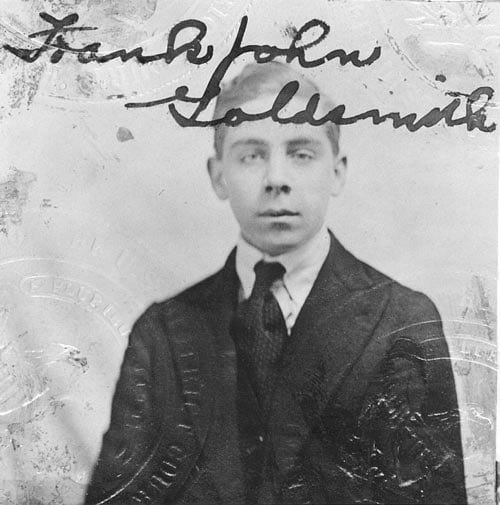
Growing up, Goldsmith clung to the hope of his father’s survival. It took him months to understand that his dad was really dead, and for years afterward, he dreamed that “another ship must have picked him up and one day he will come walking right through that door and say, ‘Hello, Frankie.’” Alas, he never saw his father again. Throughout Goldsmith’s life the Titanic became both a dream and a nightmare. At times, he would suddenly start talking uncontrollably about that midnight, how he grabbed some candy when leaving their cabin; how, as his descending lifeboat passed a porthole, he saw teen-age crew members playing hide and seek; how the Titanic shot off rockets as if it were the King’s birthday. An adolescent memory of his lifeboat rowing hard after the receding lights of a foreign fishing boat, fleeing the disaster lest its illegal presence become known. The endless, anxious nail-biting sick-feeling of survivor’s guilt that never goes away.
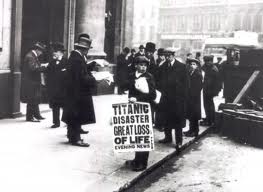
Upon arrival in New York City, Frankie and his mother were cared for by the Salvation Army, which provided train fare to reach their relatives in Detroit. They moved to a home near the newly opened Navin Field, home of the Detroit Tigers. However, unlike most 9-year-old boys, Frankie was never a big fan of baseball. Within easy earshot of the new ballyard, every time Frankie heard the crowd erupt in cheers during a game, he cringed. The sound reminded him of the screams of the dying passengers and crew in the water just after the ship sank; as a result, he never attended Tigers baseball games. Although the acronym PTSD is a more recent generational term, it is nonetheless real. Post-traumatic stress disorder exists as a mental health condition caused by an extremely stressful or terrifying event. PTSD can be caused by either being a part of it or by witnessing it. PTSD may include flashbacks, nightmares, severe anxiety, and uncontrollable thoughts about the event. Nearly everyone knows someone who has suffered from, or continues to battle against, the mysterious (often undiagnosed) condition. It can be a combat war veteran friend who avoids July 4th celebrations or a family member who avoids hospitals due to the loss of a loved one to cancer or another devastating disease. The point is, as I’ve always preached, history matters, and many of the daily hardships we face today have been outlined by our ancestors.
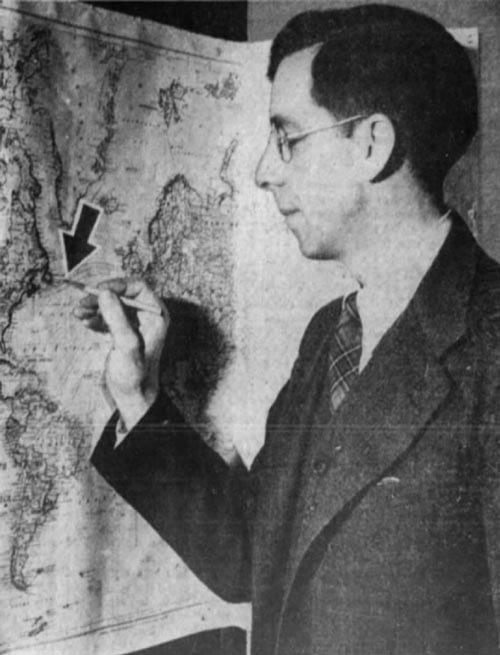
Frankie married Victoria Agnes Lawrence (Goldsmith) in 1926, and they had three sons: James, Charles, and Frank II. During World War II, Frankie served as a civilian photographer for the U.S. Army Air Corps. After the war, he brought his family to Ashland, Ohio, and later opened a photography supply store in nearby Mansfield. Goldsmith died at his home in 1982, at age 79. His ashes were scattered over the North Atlantic, above the site where the Titanic rests.

Frank John William Goldsmith Jr. was just another immigrant child when he survived the tragic sinking of the Titanic. For the remainder of his life, the fatherless boy could never enjoy the cheers of a crowd, regardless of the occasion. Every loud exuberant roar transported him back to that dark April night in 1912. To Frankie, the sound echoed the screams and cries of passengers fighting for their lives in the icy Atlantic. Goldsmith carried the weight of that association with him for the rest of his life. So my friends, when you encounter a neighbor, a friend, a relative, or an immigrant, remember you take them as you find them. Their story might run a little deeper than you think.
Paul Bearer and the Morticians-An Indiana Garage Band Story.
Part I
Original Publish Date September 18, 2025.
As many of you who have read my columns over the past two decades will recall, I am a collector. Many of my columns center around collectibles, some valuable, some historic, and some for sheer folly with no lasting value other than a momentary nostalgic smile. I often visit regular antique shows, events, and roadside markets looking for whatever I can find. I recently visited a regular haunt and once again found my hands inside of boxes containing an assortment of papers and bric-a-brac from a lifetime ago. Sometimes, I run across something serendipitously, as if it was placed there specifically for me to find; one step away from the trash heap.

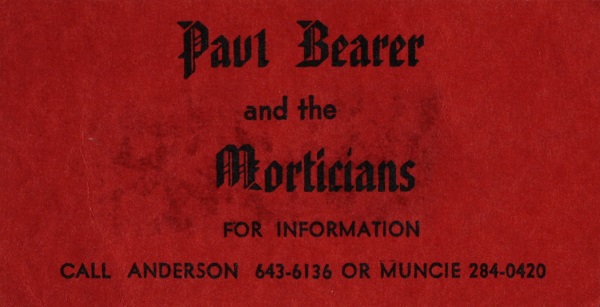
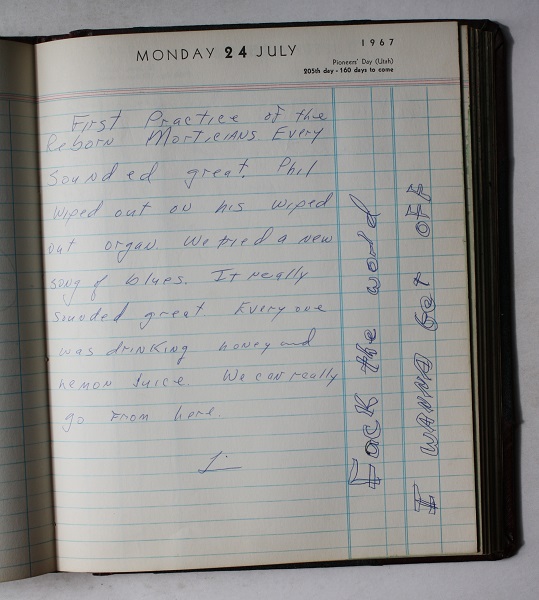
In this box, there were two 8×10 thick & heavy leather-bound books, each titled “National Diary”, although they have 1967 & 1968 cover dates, I believe they’re from 1968 & 1969 (likely a frugal “clearance” purchase by a struggling band not hung up on the concept of time, man). When I opened the initial book, the first thing I saw was a bright red business card pasted to the top of this page, emblazoned “Paul Bearer and the Morticians” with Anderson & Muncie, Indiana phone numbers inset. I quickly flipped through the first few pages to see what it was, as a wide-eyed smile slowly crept across my face. Not the best poker face, I told myself as I slammed the book closed and decided that these were going home with me. There they sat beside my “writing chair” waiting for me to devour them. Life gets in the way sometimes, so it took me a minute to get there. Oh, I would occasionally pick one of them up, flip through the pages, and whet my curiosity whistle, until I finally had a day to devote to a full read.
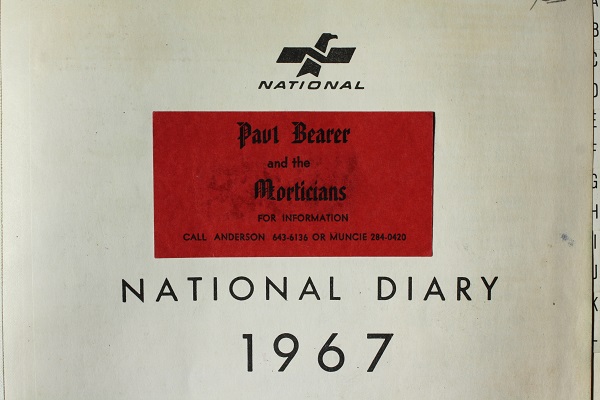
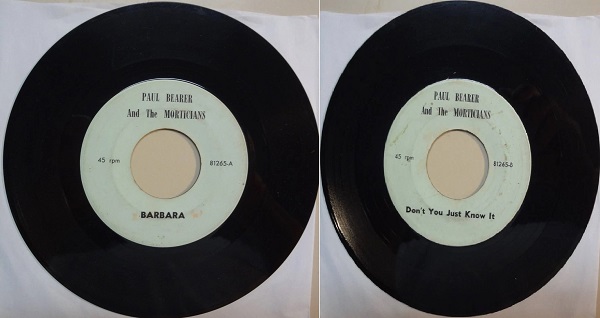
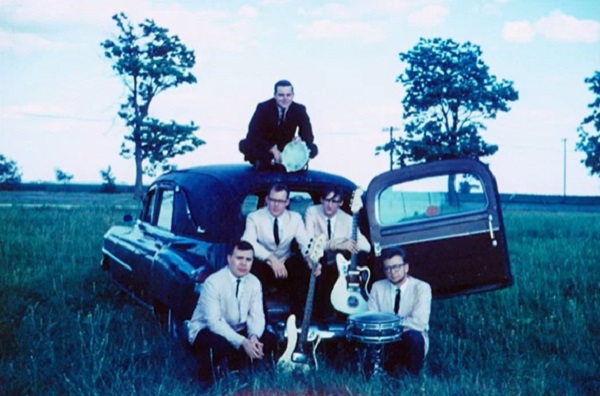
Turns out, what I had accidentally stumbled over was a day-by-day accounting of an Indiana garage band as detailed by one of its members, Larry Scherer, aka Paul Bearer himself! Larry Phillip Scherer was born Sept. 19, 1946, in Anderson and passed away on Jan. 23, 2004, in Greenfield. By all accounts, while growing up, Larry lived an ideal Hoosier childhood. He was active in Cub Scouts and Boy Scouts and played football and Little League baseball. He graduated from Anderson High School in 1964 and later earned his BA and MA in Counseling Psychology from Ball State University. He was the lead singer of the band, Paul Bearer and the Morticians. Not a lot is known about this band. A few references can be found on the net, including a 45 rpm single and a single publicity shot of the 5-man band posed around a hearse in a cemetery surrounded by their instruments. The single’s A-side is a song called “Barbara,” and the B-side is “Don’t You Just Know It.”

Each book begins & ends with a calendar page, both jumbled by hurried circles, arrows, and scribbles denoting sporadic gigs every week. Flipping through the pages, one can almost feel the high hopes of the band melting away during those first formative winter months. The entry for January 1 notes that the band took some publicity photos, which must have boosted their hopeful confidence immensely. Then reality sets in. The pages from January to February are filled with depressing notations of inactivity: “Nothing” and “Nada” on nearly every page, like a road to nowhere. Around Valentine’s Day, things were looking up, but not musically. Feb. 10, “Went to see Paul Revere + the Raiders-they were great-got a tip at where they were staying + buzzed out there. Holiday Inn-Got all their autographs…Jack talked to Mark Lindsay…We should have some great pictures.” On Feb. 17th, “Played at McPherson’s Dance Inn [in Anderson] over 300 showed up, we made $100 clear (about $1,000 today)…Thank God…we each got about $14 per man.”
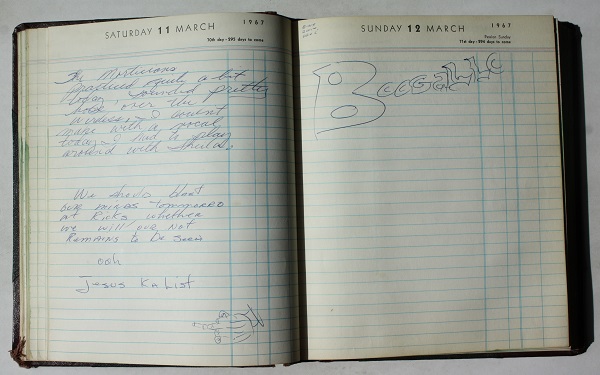
Bolstered by this modest success, the boys begin to practice regularly on original compositions (Town of Evil) and covers (Cream’s “Sunshine of Your Love” and “Outside Woman Blues”) in preparation for a desired gig at a “Hullabaloo”. A Hullabaloo was the franchise name for teen dance clubs spinning off the popular NBC musical variety show of that era. The TV series originated in London and was hosted by The Beatles’ manager Brian Epstein before hopping across the pond to America.
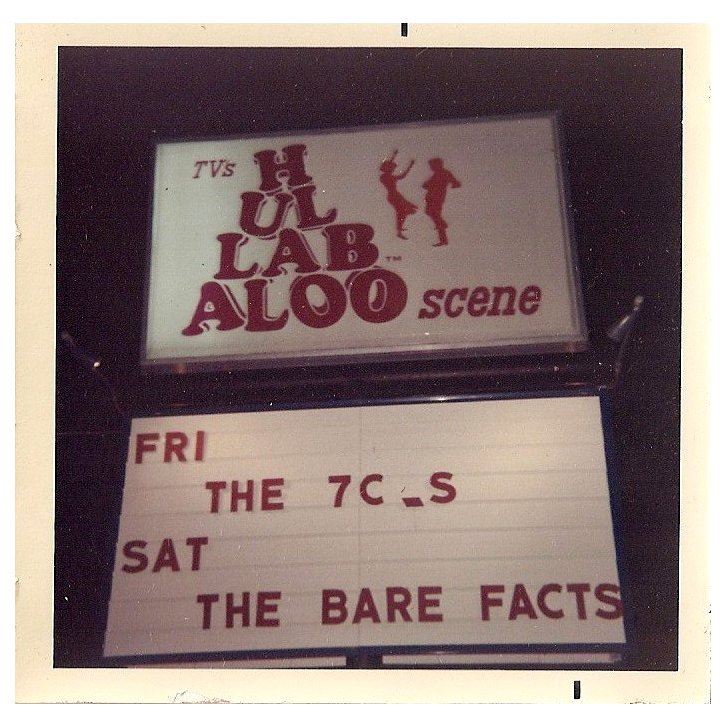
These trademarked “Hullabaloo” nightclubs were usually found near colleges (Ball State, IU, Purdue, Notre Dame, etc.) and larger high schools. On Feb. 27, the band played the Conservation Club in Anderson and received $140. “[We] sounded like a professional group, surprised everyone but me…First time we used Saxophone-sounded real good-going to use it a helluva lot more.” The success of that gig led to an audition for the Teen Time Lounge in Hartford City. March 3: “Notified to play Teen Time Palace…Sounded Great. KIds ate us up. Nothing much happened except some clown busted a $200 glass door. Some girl asked for autographs.” The band was paid $75 and by now Paul Bearer and the Morticians had a set list of 41 songs: “35 good ones-6 stand bys” including covers of the Rolling Stones “Under My Thumb”, Junior Walker’s “Pucker Up Buttercup”, Spencer Davis Group’s “Gimme Some Lovin”, and Wilson Pickett’s “In The Midnight Hour.”
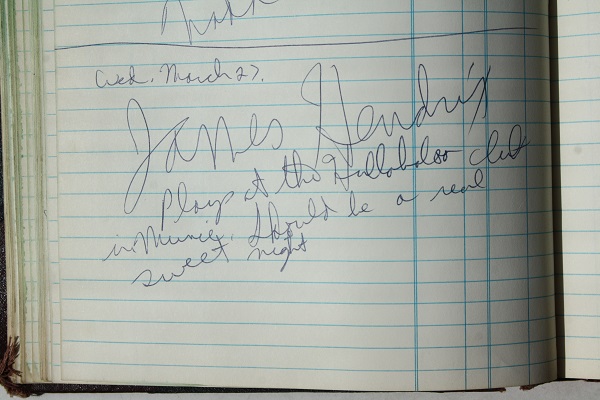
By mid-March, the band was looking ahead to a gig at Anderson’s Peppermint Lounge. March 15, “Tim came over to get some money to finish the coffin-Paid $5.” The Morticians were paid $115; by the time they left the stage, the boys made $7 each after expenses. On March 22, the band hoped to land a $125 gig at the Hullabaloo in Muncie. March 27 entry reads: “James Hendrix plays at the Hullabaloo Club in Muncie.
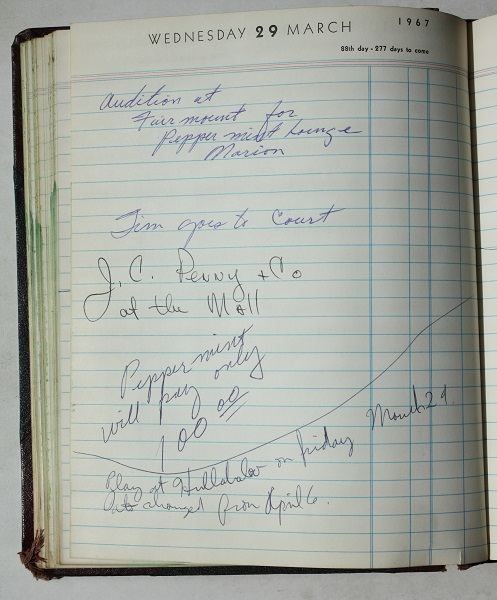
Should be a real sweet night.” The very next night, the Morticians take the stage. The band is fielding inquiries for gigs at Rensselaer ($115 payout), Hartford City ($50), Fairmount ($100), and Lapel ($85). April 1: “Best critics in Anderson-my friends-said we were whats happening-I agree!! The guys sounded great. I know we can make it to the top-just a matter of time—is on my side, yes it is.” On April 5, the Morticians book a gig to play at the Hullabaloo Club in Dayton, Ohio: for $150. On April 8, the boys again played for Anderson’s Conservation Club. “Blast it was too!! The band finally hit what its worth-a cool 40 beans apiece!! There were 267 kids there-about half sniffen glue-haha. Split the profit.”
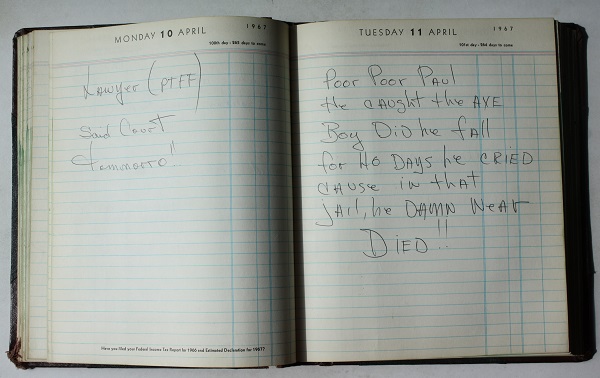
On April 11th, the diary lyrically notes, “Poor, Poor Paul. He caught the axe. Boy, did he fall. For 40 days he cried cause in that jail, he damn near died!!” For the next 40 pages, every day is denoted as “Black Monday, Black Tuesday, Black Wednesday, etc.” On May 20, another lyric, “Oh!! Did you hear what they say. Oh Paul’s out now, and their on their way. Dunt Dunt Dunt Hey!!”
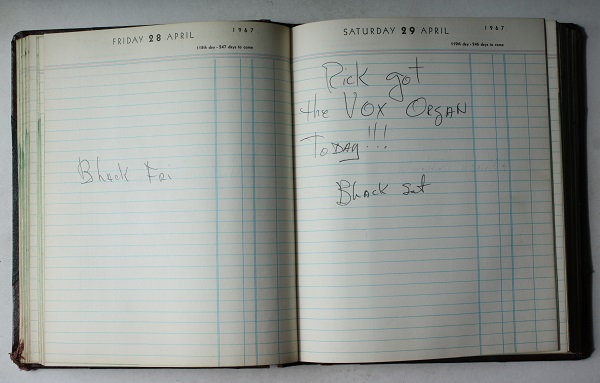
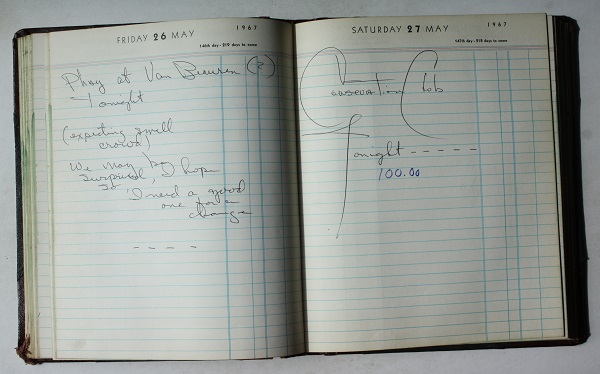
The band starts up again, practicing regularly at “Rick’s”. May 21: “[We] need more work. Changed out style somewhat on some songs but we’ll soon socket to em!” May 26th “Play at Van Buren tonight. (expecting small crowd) We may be surprised, I hope so. I need a good one for a change.”

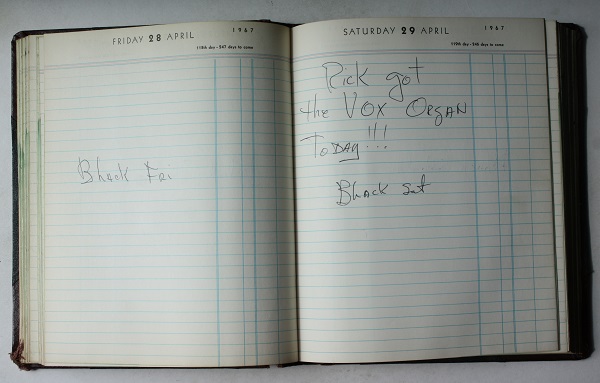
May 27, “Conservation Club Tonight $100.” On June 5th, the band joins the American Federation of Musicians for $102.50. June 29th, “Practiced at Rick’s house + thusly decided to kick out Rick. One Mortician is buried.” July 7, “Found the band outfits at a Brand X store in Indianapolis. Sweet as hell for a mere 5 beans.” August 6, “Got our publicity pictures taken today at the graveyard in back of North Drive Inn [Anderson] 14 in all. Two sets of clothes. Outta be cold, cold shake cool. Blimey Govnor.” The entry on August 8 is actually the handwritten lyrics to a song: “There is a man from L.A., That is hard to understand. People tell me he’s an uncertain kind. In California where kids blow their mind. He has come to Hoosierland to waste his time. There are two things that he loves, an old truck and a jail to sleep. Some call him little Bo-peep. Since coming to the Midwest, he is always losing his job, because of this he can’t afford my little nest. Maybe someday he’ll be persuaded to stay around, he’ll be downgraded. No home to go to weep or food to eat. This is a man from L.A. who sleeps in the hay. He is a different brand, but now a lighting man.”
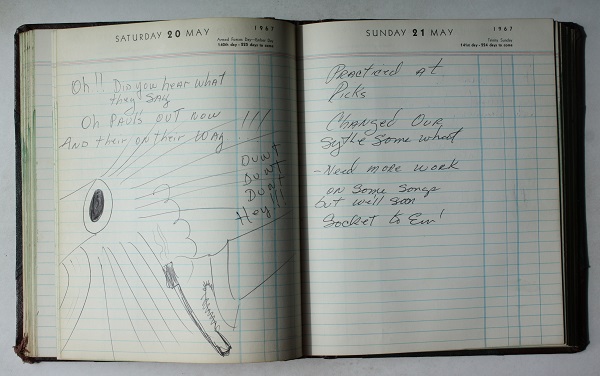
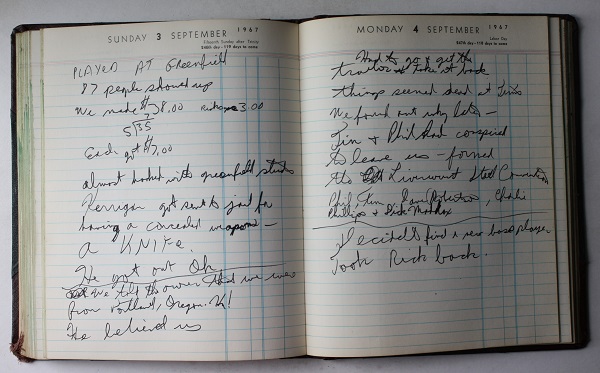
August 14th, another song, not much better than the first: “Hey Baby, why don’t you love me anymore. Hey Baby, I been here all alone eh. You know I love you, But you don’t realize, you will love me, when I look in your eyes. Oh, you got to love me, baby, then love me all the time. In the morning, in the evening, in the summer, in the winter, you gotta love me. Hey baby, I’ll buy a house + settle down. Hey, ask your mom, tell her I love you. If there’s any doubt, Baby believe me, everything I say is true. If you don’t love me, I’ll try to be true. You got to love me in the bathroom, in the kitchen, in the basement, in the sink, in the backyard. You gotta love me.” August 17, “Practided! Worked on a couple new songs. Two friends of Phil’s who own the Acid Land nightclub came to watch us. Played a lot of Psychedelic stuff.” August “Paul went to labor at the Delco Remy Salt Pits…Won’t last long.” September 3: “Played at Greenfield. 87 people showed up. We made $38. Each got $7. Tim + Phil conspired to leave us-formed the Liverwurst Steel Convention [band].” By mid-month, the Morticians were practicing new songs, mostly by The Who: “Whiskey Man” & “Pictures of Lily”.

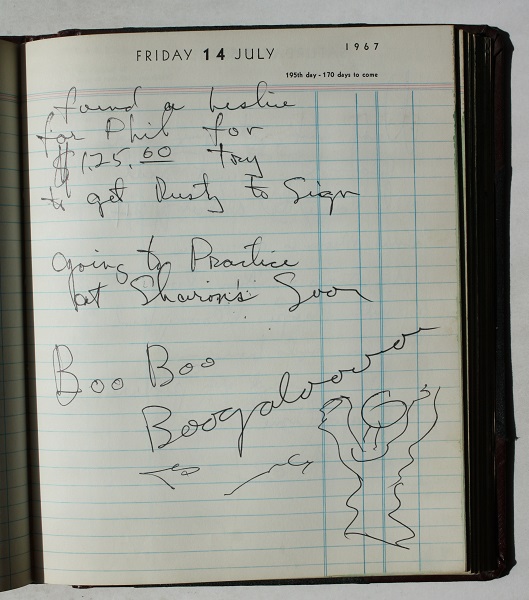
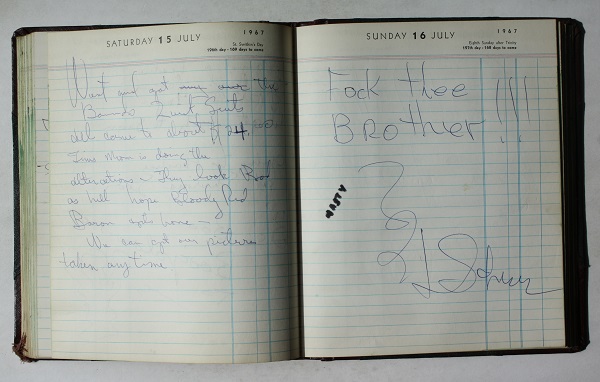
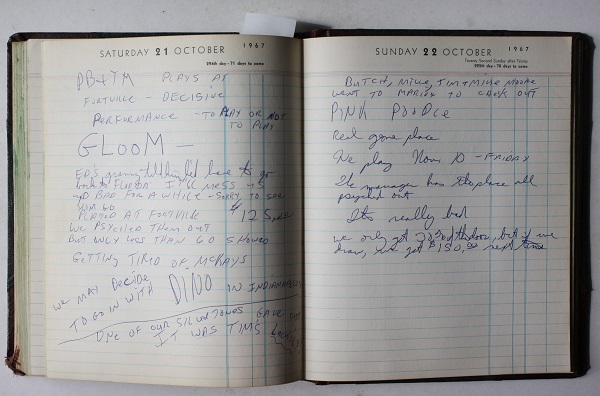
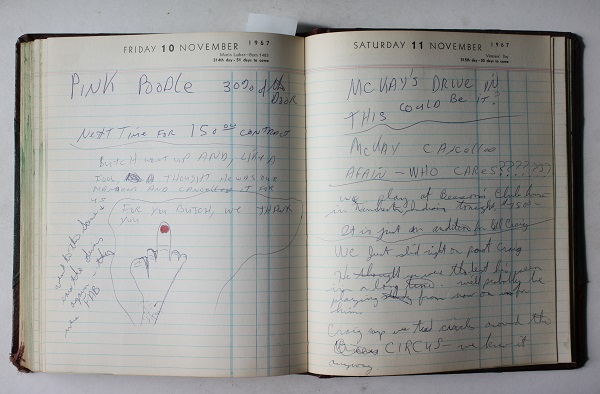
The band booked a Sept. 30th gig for $125 at McKay’s Drive-In nightclub known as the “Psycadelic Sounds at The Place” on Highway 67 in Fortville, after which they were signed as the “House Band”. October 1st, “Played at Fortville, made $2 per. If fortune doesn’t straighten up, we’re going to drop McKay. Not enough crowd…Learned two more songs: “I Need You”-By The Beatles + “Tired Of Waiting For You”-Kinks.” Oct. 18th: “We really psyched out on Fortville. I can’t explain. Had Better Be Ready.” Oct. 21: “Fortville-Decisive Performance-To Play or Not to Play. GLOOM. We psyched them out but only less than 60 showed. Getting tired of McKay’s.” Nov. 4, “Dance scheduled for McKay’s but he screwed us up again + cancelled the dance cause his roof wasn’t fixed.” Nov. 8, “We play at the Beeson Clubhouse Country Club [in Winchester] on Saturday Next. Nice Place. We get $75. Auditioned for the Hullabaloo Club in Muncie tonight. They thought we were BEAUTIFUL!! They dug the Jimi Hendrix stuff we played.” Nov. 11: “McKay’s Drive In. This could be it. McKay cancelled again-who cares??? We played at Beeson’s Clubhouse in Winchester, Indiana tonight. $75.” Nov. 15: “We found out the WHO will be in Muncie on Thanksgiving night + there’s a chance we might play alongside them. It may all depend on our performance at the barn Saturday night.” Nov. 23-Thanksgiving day. “The Who played at the new barn. All of us went to see them-they were greater than ever. We got to talk to Pete Townshend a little bit-he was really cool. Mike got some great pictures.”
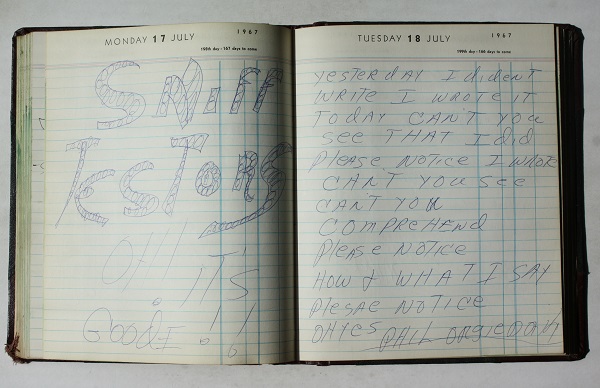
By December, the Morticians set list included 39 songs including JImi Hendrix “Hey Joe” (which they performed twice back-to-back), “Give me some lovin'”, “I can’t explain”, “Mickey’s Monkee”, “Bring it on home to me”, “Louis Louis”, “Money”, “Little Latin Lupe Lu”, “Hold On”, “We gotta get out of this place”, “Purple Haze”, “Fire”, “Foxey Lady”, “MIdnight Hour”, “The Letter”, “House of the Rising Sun”, “I’ve been loving you too long”, “Lady Jane”, and an intriguing original song titled “Ban the Egg.” On Christmas Eve, the boys “Played at Winchester for $75. The crowd dug us bad. Michael Eddie screwed up Purple Haze 3 times that night-Used Pete Townshend’s guitar strap.” The Morticians practiced but did not gig for the remainder of the year, resulting in the Dec. 31st entry: “A very dull New Year’s Eve Indeed.” Year-end receipts totaled $1899.50 (just under $20,000 today), averaging out to $70.70 per gig. Split between a rotating lineup of five musicians per night, it doesn’t take a mathlete to figure out that none of these guys could quite their day jobs.
Paul Bearer and the Morticians-An Indiana Garage Band Story.
Part II
Original Publish Date September 18, 2025.
In part I of this article, I detailed one of my latest “Finds”, a 1968 diary from the leader of a 1960s Anderson, Indiana garage band known as “Paul Bearer and the Morticians.” I love that it landed in my lap just before the official spooky season in Irvington commences. I wanted to share it with you, the readers, because I thought that it might stir the chords of mystic memory for other Circle City hippy kids like myself.
Jan. 13 [1969]: Played at the Loft in Muncie for a mere $75. A real good crowd showed up + there were only a few meager fights. Jan. 25: “Conservation Club [Anderson]- “Not too good of a crowd. We only made $47.50.” Jan. 27: “We played at Winchester, Ind. for $85. That’s all I’m going to say!!” On Feb. 17th, “Played at McPherson’s Dance Inn [in Anderson] over 300 showed up we made $100 clear (about $1,000 today)…Each Poison (sic) got $14 apiece.” By March, the band was looking more official than before. This second diary book includes a few of the original typed contracts between the venues and the band, all signed by Larry Scherer as the band’s representative. March 15th, 1968, is for a gig at Rensselaer High School for $115. The diary entry reads: “It was a hick dance at a school, but they liked us. Wild night in the motel there-almost got kicked out. We also had a lot of car trouble-flat tire, breakdown, etc etc.” Another contract is for the Muncie Hullabaloo Club on Kilgore near Yorktown. It netted $125 for the band and stipulates that a fee of $25 “per half hour late starting” will be enforced. The band played two sets for a “real good crowd. Our first set was a little ill, but we smoked on in the second + third. We wiped a*s on Foxey Lady.”
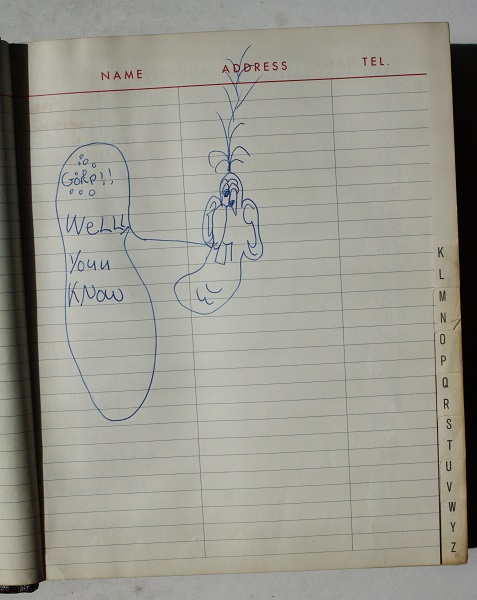
The May 1st entry finds an interesting partial lyric composition: “Wednesday, such a mellow day. Blowing wind + the children play!! I see the glowing sun shining down, I feel the pain and I wear a frown. It can’t be a dream, It’s not what it seems. But I am dying now.” In the Spring of 1968, the band was carving out its own identity, trying hard not to be just another cover band, by writing and practicing original compositions. Their set list now included seven new songs: “Rize Up”, “Charlotte”, “Fool of Cotton”, “Dance the form Evil”, “Turn on Green”, “Impression in F”, and their newest song, “Good Things for our Minds”. May 4th’s entry announced that the Morticians would be playing a gig at the Hullabaloo Club in Muncie alongside the British pop group, The Cryin’ Shames, who had a minor hit with the remake of the 1961 song “Please Stay” by The Drifters. The Drifters’ claim to fame (and ultimate demise) came when they turned down a managerial offer from Brian Epstein, manager of The Beatles. The April 15th entry describes, “We play the first set + they play the second, we play the third + they play fourth. We’re supposed to use our equipment and they theirs. We will definitely have to completely wipe them out. We will increase their draw by 200 people. There’ll be a lot of people discussing recording records etc. It should prove to be a very exciting evening.”
May 13 entry: “Started tonight playing the Sugar Cube for $100 [per night]. Tired as hell afterwards!” The Sugar Cube nightclub was located close to Marhofers Meat Packing Co. on Granville Avenue in Muncie. The Morticians gigged at the Sugar Cube from May 13th to the 18th for a whopping $400 paycheck! Paul Bearer and the Morticians played the “In Club” in Van Wert, Ohio for $125. May 25th: “Jack quit the band. We have to look for a new drummer-probably get Roy Buckner.” May 31, the band played a show at the Youth Center in Syracuse, IN. for $125 payday. “There were a lot of teeny boppers there that dug us bad. We will definitely go back later this summer.” By June, the band was adding more original songs to their setlist: “Manic Depression”, “Little Miss (Over)”, “Come on in”, “Talk Talk”, “You Don’t Know Like I Know”, and “When I Was Young”. June 15: “McPherson’s probably for $150…The clown only went $130.” June 21, the boys played the YMCA in Peru, In. for $150. During a dry spell for the band, one entry reads: “Went to the fabulous Anderson Fair (cow dung everywhere) + then bopped over to Phillips Swimming Hole in Muncie-It was real coooool man.” Muncie’s Phillips public swimming pool opened in 1922 and was closed in 1961 and thereafter used for training by the Muncie fire department.
July 5th, 1968, finds the band playing “The Hub” in Celina, Ohio, for $125. “We didn’t get a good reaction at first, but the third set was real good. Wiped up with Purple Haze, Fire, Foxey Lady, + You Know. I would go to Russia, Vietnam, Belgium, France, The Congo, Brazil, but NOT THE HUB.” A month later (August 3rd), a diary entry reads: “There was an atomic attack on Celina, Ohio today. Luckily, no one was saved. Praise Allah.” July 6: “Found out The Who are back in the United States for a 9-week tour. They’ll def. pass thru here. The Fab Beach Boys are in town along with the Union Gap + The Human Beings.” July 11, the band is playing at the Honeywell Pool in Wabash, In, for $150. Two days later, they are playing in Shelbyville for $150. “We def. will not play for less than $150 beans from now on. $25 raise when we cut the record. They bought us on our gimmick-Dry Ice- fog during our performance.” Despite that entry, days later, on June 21st, the band was once again appearing at the Hullabaloo in Muncie for a $130 payday. In the end, the band netted $57 and paid out $15 per band member. August 8: “Rick quit the band, supposedly, then came crawling back 3 days later, acting like it was all a gag! HAR.”
August 9th, 1968, finds the band playing at Jefferson Landing, 127 E. Main St. in Crawfordsville for $150.”It was a real sweet place, but NOBODY showed up-cause it’s Tuesday, no doubt. We got a real good report from here though.” Five days later, the Morticians were once again playing The Place in Fortville for $150. “We finally are going back to play at Fortville once more. It will really bring back old memories. Har de Har de Har!!! All they could say was that it was too loud.” On August 25, Paul Bearer and the Morticians played the Indiana State Fair [likely a warmup for The Cowsills]: “They were really digging our music.” Sept. 3rd finds the band playing a dance at the Bridge Vu Theatre in Valparaiso, IN,. for $175. October 4, 1968: “Today is the 2nd anniversary of PB + M. Ain’t you proud? I found a super contact: Jeff Beck. He is supposed to speak at the Gent tomorrow.” Oct. 12th finds the band playing a Halloween party at the Kendallville Youth Center in Kendallville, IN., for $175. “Everything was going great, until old nag (blind) started raising the roof because she thought we were a bunch of maniacs, how right she was! The kids dug us so much, they clapped after every song.” The show went over so well, the band was asked to play again the next night. On Oct. 25th, the band played the Sigma Phi Epsilon frat house at Ball State in Muncie for $100. Immediately following the show, the band drove straight to New York to see Steppenwolf. On Nov. 6, the band was playing a show at “The Anchor” in Findlay, Ohio, for $125. Nov. 8, 1968: “Went to Indianapolis + saw Canned Heat + Iron Butterfly-Boy were they great. Worth every minute, they were.”

Nov. 11, the band booked a $150 gig at the Purity Inn on High Street in Oxford, Ohio. “They said we were too loud. We won’t go back def. The acoustics were totalled. We each got 20 beans apiece tonight.” Nov. 20, the band played the armory in Crawfordsville, IN., for $175. “We turned WAY DOWN but don’t know if they liked us or not. We split the diff. + each for 30 Beans.” Nov. 30 the band was once again playing the Hullabaloo in Muncie for $135. Dec. 2nd, the band played the Sigma Pi House at Purdue University for $125. “They seemed to like us quite well + I think we did one of our better gigs. They really dug it bad.” The gigs were getting fewer and farther between now and the diary entries ceased until December 29, 1968. “Played at the Muncie Haullabaloo Club today for a measly $43.57, which was 50% of the door-WOW! We’ll probably be playing there steady at jam sessions on Sundays-NO CONTRACT yet.”
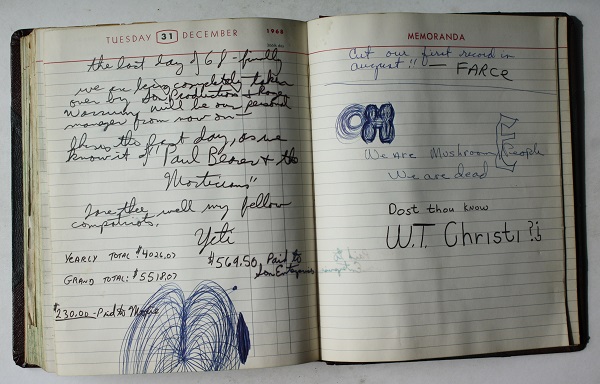
Two days later, on New Year’s Eve, 1968, the diary reads: “The last day of ’68-finally. We are being completely taken over by Son Productions. This is the last day, as we know it of Paul Bearer + the Morticians. Fare thee well, my fellow compatriots.” The annual tally for 1968 totalled $5,518.07, or just over $50,000 in today’s money. The memoranda section of the diary reads: “Cut our first record in August!!-FARCE. We Are Mushroom People. We Are Dead.”
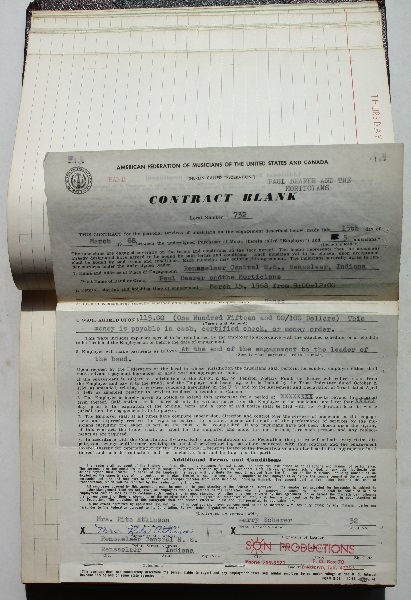
As hard as it is to find detailed information on Paul Bearer and the Morticians, it is even harder to find info on Son Records. Initial information can be found on the band’s contracts, where Larry Scherer signs as the legal representative of “Son Productions P.O. Box 78 Yorktown, Ind. 47396 (Phone) 759-9371”. One article found in the August 1, 1968, Muncie Star newspaper, notes that Son Records founder, Roger Warrum, was born in Shelbyville, attended Mount Comfort schools, graduated from Ball State University, lived in Greenfield, and settled in Anderson. Warrum had a band, The Glass Museum, and also brokered the Jimi Hendrix Concert in Muncie at the Hullabaloo Club. He formed “Son Productions” (named to honor his son Jeffrey Scott) in late 1966 and was described as the “founder-manager-chief worker” for the licensed music booking agency. The company logo incorporated sun rays jutting out of the “o” in “Son”. Warrum made his office inside the Muncie Hullabaloo building, booking bands in Indiana, Eastern Michigan, Ohio, and Kentucky. He opened a branch in Valparaiso to serve the Chicagoland & Greater Michigan, Illinois, and Wisconsin regions. The article states that Warrum planned to open more branches in Bloomington (in October) and Michigan (in January). Warrum only booked union bands and notes, “Paul Bearer and the Morticians came back [to the Muncie Hullabaloo] three times before they had a big enough, good enough sound to make the circuit.” Roger J. Warrum would go on to a successful Insurance career in Anderson, where he was elected to the City Council. He died in Hudson, Ohio in 2009 at the age of 63.
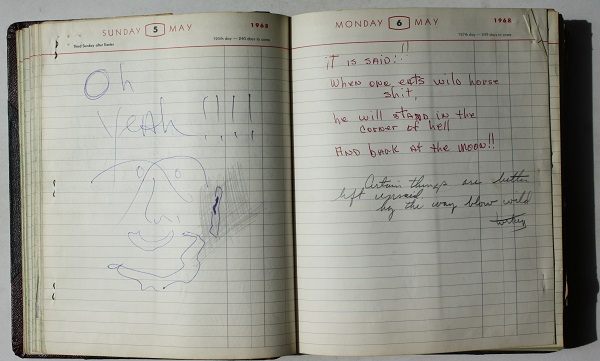
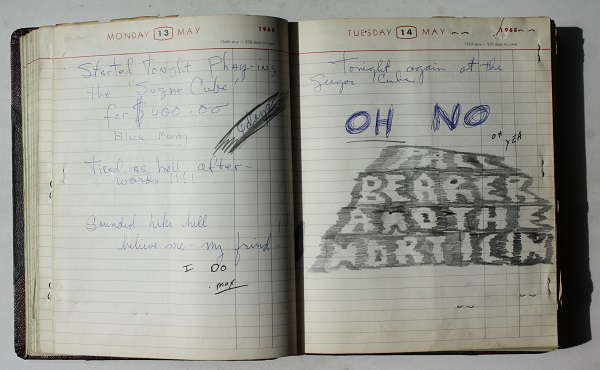
As detailed in Part I of this series, the diarist of these books, Larry Scherer (Paul Bearer himself), died at his home in Greenfield on Jan. 23, 2004, following a brief illness. After the band broke up, Larry taught school in Broxton, GA, and was Teacher of the Year three times. He relocated to Anderson in 1978 and was employed by Madison County Employment & Training Administration as an Assessment Testing Counselor and the Director of Weatherization. Larry was the owner/operator of his business as a General Construction Contractor. As for the rest of the band, Vic Burnett was the guitarist, organist, vocalist, and songwriter, and Jim Shannon was the bassist for the band. Jim Shannon’s signature appears in the diary with a comic profane inscription. Other names appearing on the pages of the diary include Tim Connelly, Jack McCleese, Phil Daily, Rick Thompson, Mike Ford, Chris Wisehart, Michael Eddie, Dave Robertson, Charlie Phillips, Dick Maddox, Steve Whitesell, Ed Wyatt (from Florida), Mike Moore, and Gary Rinker. It should be assumed that these men were members of, or closely associated with, the band.


Despite their hopes of becoming a headliner band, Paul Bearer and the Morticians were little more than a hobby, which they all hoped would turn into something bigger but never did. A thread on the net can be found from Chris Shannon (relative of bassist Jim Shannon) stating that “Paul Bearer and the Morticians made an appearance via satellite on either the Jerry Lewis Telethon or Dick Clark’s American Bandstand. Any time they played in public, the street would be packed with people listening to them play. They were hot, man!” I have spent the last month trying to connect with any family members of the men who created this band, including Chris Shannon, to no avail. So, Chris, if you’re out there, I’d love to hear from you and learn more about Paul Bearer and the Morticians. So, there you have it, the little-known story of a typical 1960s Indiana garage band.
Rhonda Hunter’s Cancer Journey.
Original Publish Date: August 21, 2025.
https://weeklyview.net/2025/08/21/rhonda-hunters-cancer-journey/
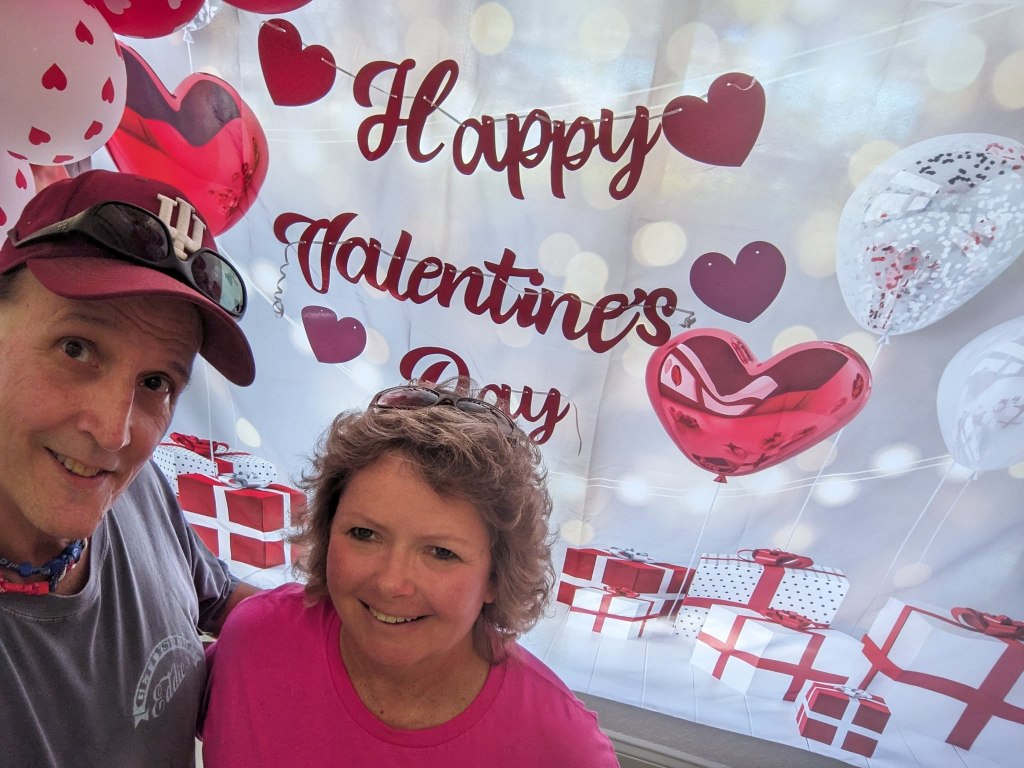
Warning. This is a self-serving article about my hero (my wife, Rhonda) and her year-and-a-half-long cancer ordeal. During our 2023 Irvington ghost tour season, she discovered a bad spot on one of the toes on her left foot. The ring toe to be specific (the little piggy that got no roast beef). At first, she thought it was a bad case of athlete’s foot. Rhonda called around the Indy area searching for a dermatologist: no openings anywhere until Christmas. She found her savior in the form of Megan Rahn, nurse practitioner at Pinnacle Dermatology in Crawfordsville, Ind. Within two days, they got her in and diagnosed it as one of the worst cases of melanoma they had ever seen. Rhonda recalls, “Megan asked if I wanted her to tell me the truth. I said, yes, and she said, ‘It’s cancer.'” We got that news on the Friday of Halloween festival weekend. Rhonda recalls, “During that weekend, longtime regular tour guests kept coming up to me and asking, ‘What’s the matter with Al? He’s not himself tonight.’ Needless to say, it was a rough weekend.

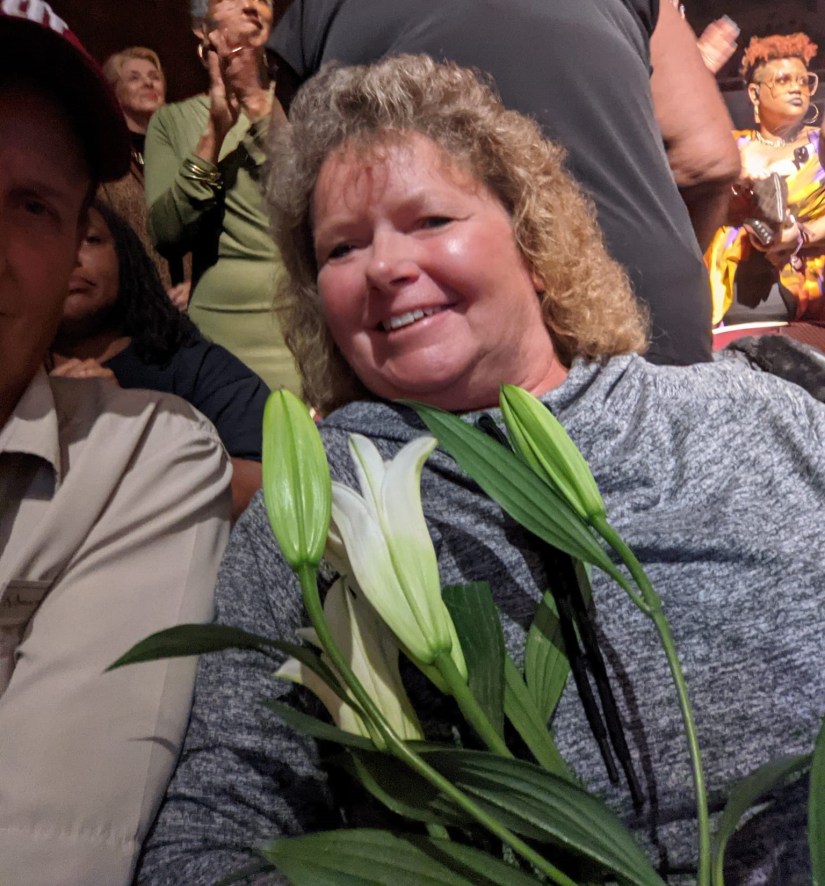
After the tours concluded, we traveled down to our little Ricky and Lucy Ricardo efficiency time share in Daytona Beach, Florida, a luxury we bought ourselves over thirty years ago when we didn’t have two nickels to rub together. Over the years, we discovered that soaking anything in salt water cured almost everything. But this time, it didn’t work. Our trip concluded with a live concert by Patti LaBelle. At the end of the show, Patti walked over to Rhonda and handed her a bouquet of white lilies from a vase on her piano. Traditionally, white lilies symbolize purity and rebirth. Little did we know, it was an omen.
Returning to Indiana, we learned that the good folks at Pinnacle Dermatology had secured an appointment with Dr. Jeffrey Wagner, melanoma reconstruction surgeon at MD Anderson Cancer Center Community North in Indy. By now, the toe was black. Dr. Wagner, who has seen over 20,000 melanoma cases in his decades-long career, said the toe’s gotta go. Her skin cancer was now categorized as a very aggressive form of malignant melanoma, the fastest spreading of all cancers (it can spread to dangerous levels in a month). She went under the knife, and they removed the toe and carved out three more spots, two on the top of her foot and one deep patch on the back of her calf.
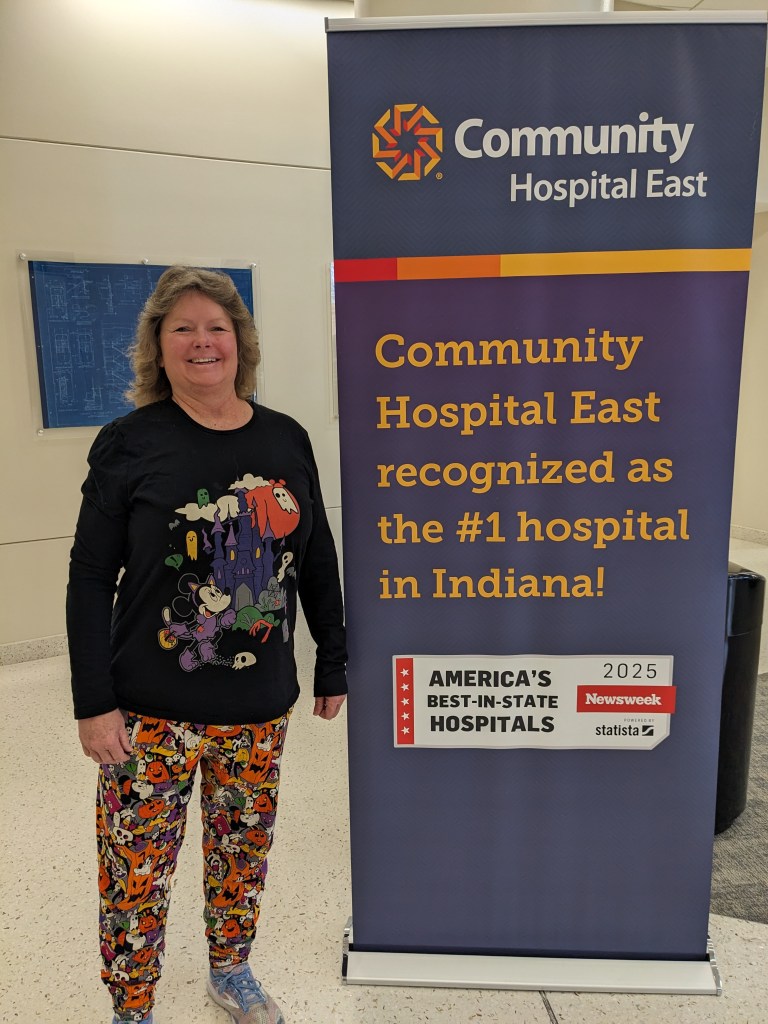
They also removed a leaking Lymph Node in the groin. The result was two months in bed and a very uncomfortable Christmas season. We quickly learned that being diagnosed with melanoma is not unlike being an alcoholic, a drug addict, a diabetic, or bipolar: it’s a life sentence. It means a lifetime of treatment, scans, and medical supervision. We are now regulars at Pinnacle Dermatology, where we discovered that more than a few folks from Irvington are regulars. They now refer to Rhonda as “the lady with the toe.”
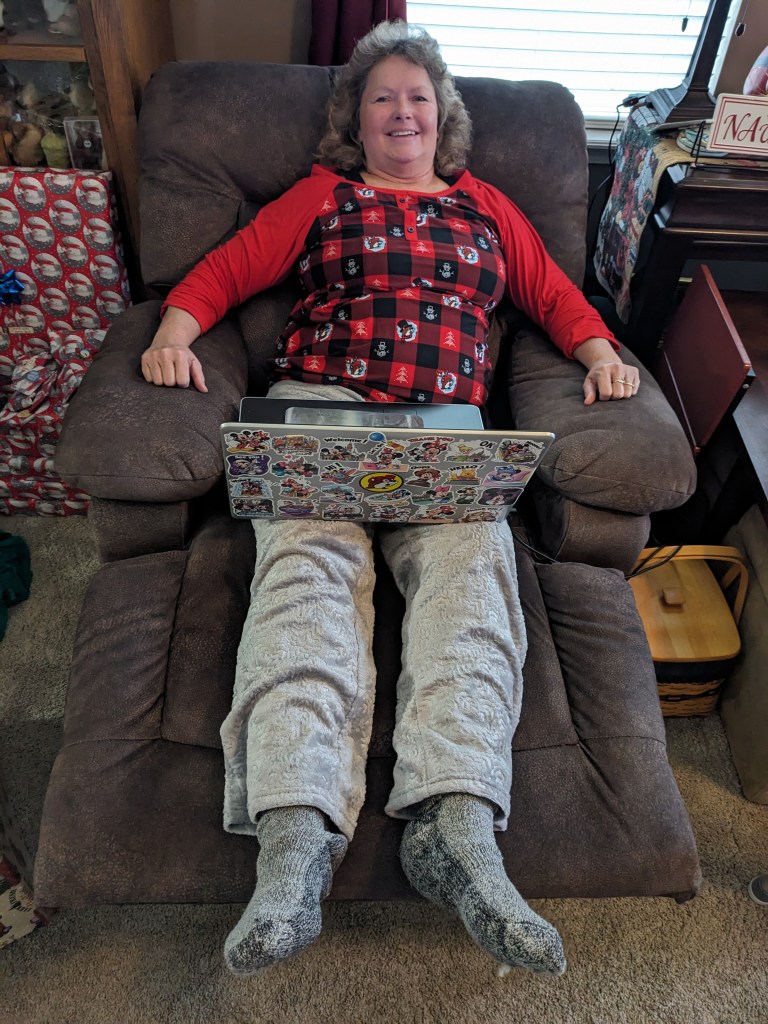
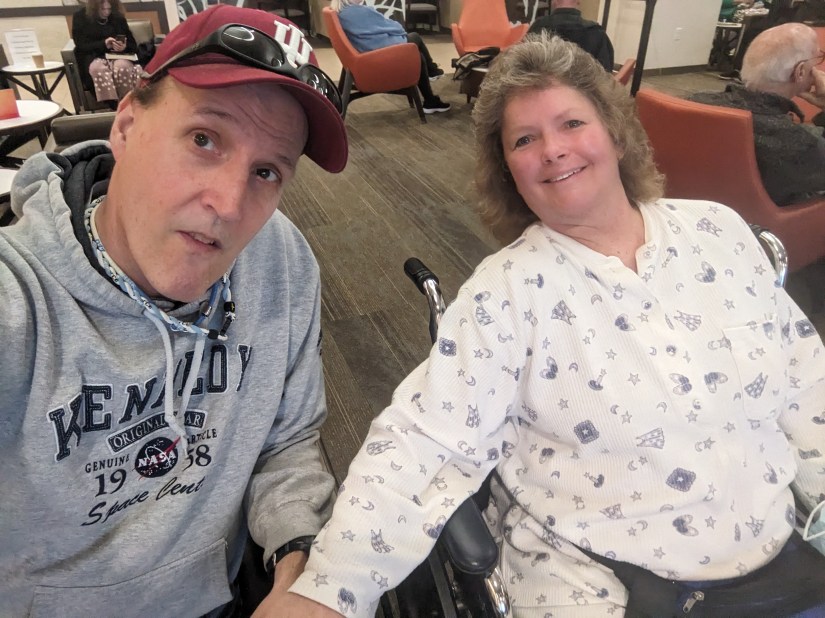
As pilgrims on this journey, we quickly learned that everyone has a skin cancer story. And, sadly, because of that, skin cancer is often minimized as a passing ailment that elicits a dismissive rejoinder. In our case, nothing could be further from the truth. Once everything was removed, we thought that was the end of it. That is, until we learned that a leaking Lymph Node had been detected and Rhonda needed to see Oncologist Dr. Sumeet Bhatia at MD Anderson. Coming a mere three days before Christmas, this was a devastating surprise; Rhonda wasn’t even out of a wheelchair yet. She was placed on Keytruda, a relatively new medicine used to treat melanoma. These monthly treatments, administered intravenously, were accompanied by endless blood work (that alone will make most readers cringe), and regular scans: PET Scans, CT scans, and MRIs. For all of 2024, we became accustomed to bi-weekly visits to MD Anderson, Community North, and Community East.
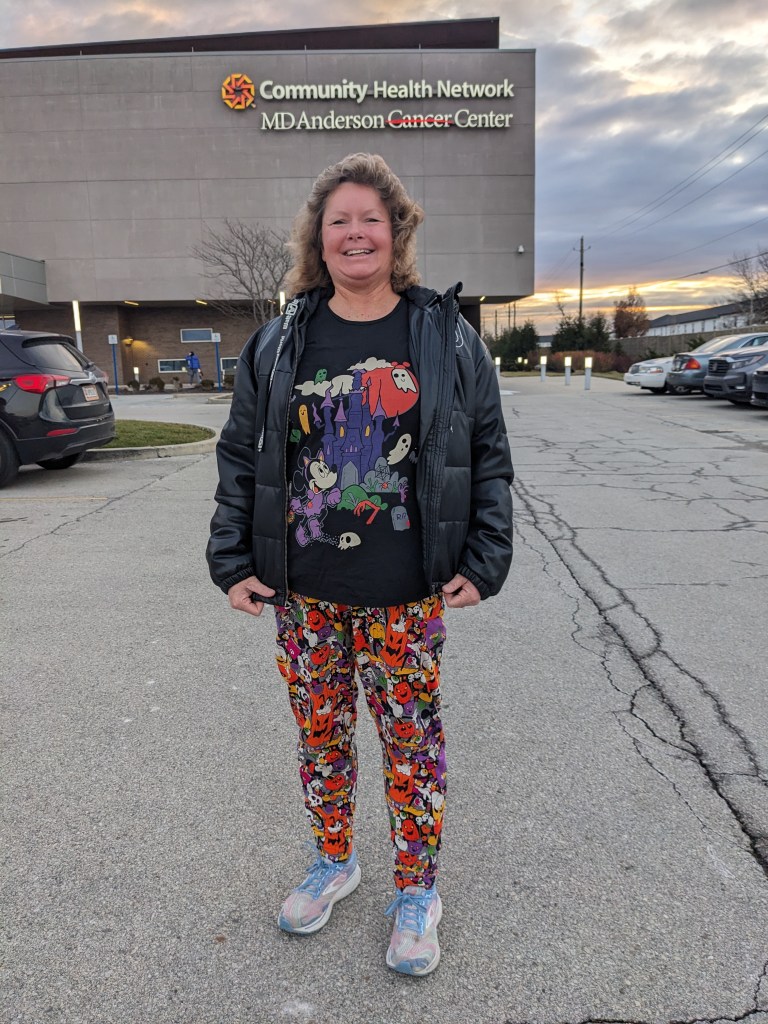
Sometimes with Oncology nurse Jennifer Chapman, sometimes with cancer navigator & advocate Andrea Oliver, and sometimes with Dr. Bhatia. As her last treatment concluded, we expected to walk out and ring the cancer-free bell. Suddenly, the treatment room door swung open, and in walked her entire team. The melanoma had now spread to her brain. Game changer.
Within moments, the nurse was crying, the advocate was crying, Rhonda was crying, and the doctor was crying. Surprisingly, the only person not crying was me, which is odd, because I’m the guy who tears up at Bambi, Old Yeller, and Steve Hartman stories. The doctor told us he’d give us time to decide whether we wanted to continue with a new treatment, with the warning not to wait too long because it could be too late. I had only two questions: Are they going to cut her and will she lose her hair? The answer was no. Long story short, our 10:30 checkup turned out to be an 11:30 fitting for a Radiation Therapy Thermoplastic Mask. Whenever I saw that mask, I couldn’t help but think of Boston Bruins goalie Gerry Cheevers. Google his mask and you’ll see what I mean.
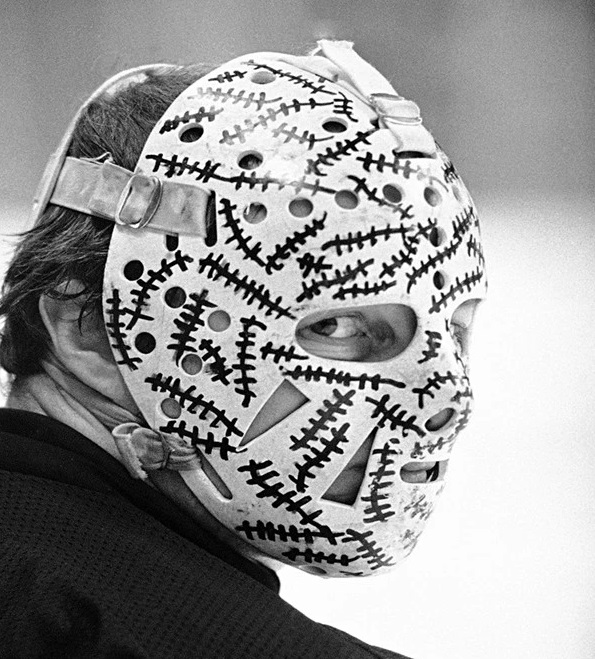
Within 1 week, she underwent radiology for one spot on the brain. I expected her to be zapped (pardon the pun) of energy and looking for a long nap. Instead, she came bouncing off that table and insisted on heading to Jockamos Pizza and Midland Antiques Market for the afternoon. A few months later, after another MRI discovered she had three more spots on the brain, she underwent another radiation treatment. This time, she had to be helped off the table and out the door. It was a long procedure extending past regular business hours. I was eerily alone in the cancer center and managed to lock myself out of the office, but that’s another story. She still came out smiling, though.
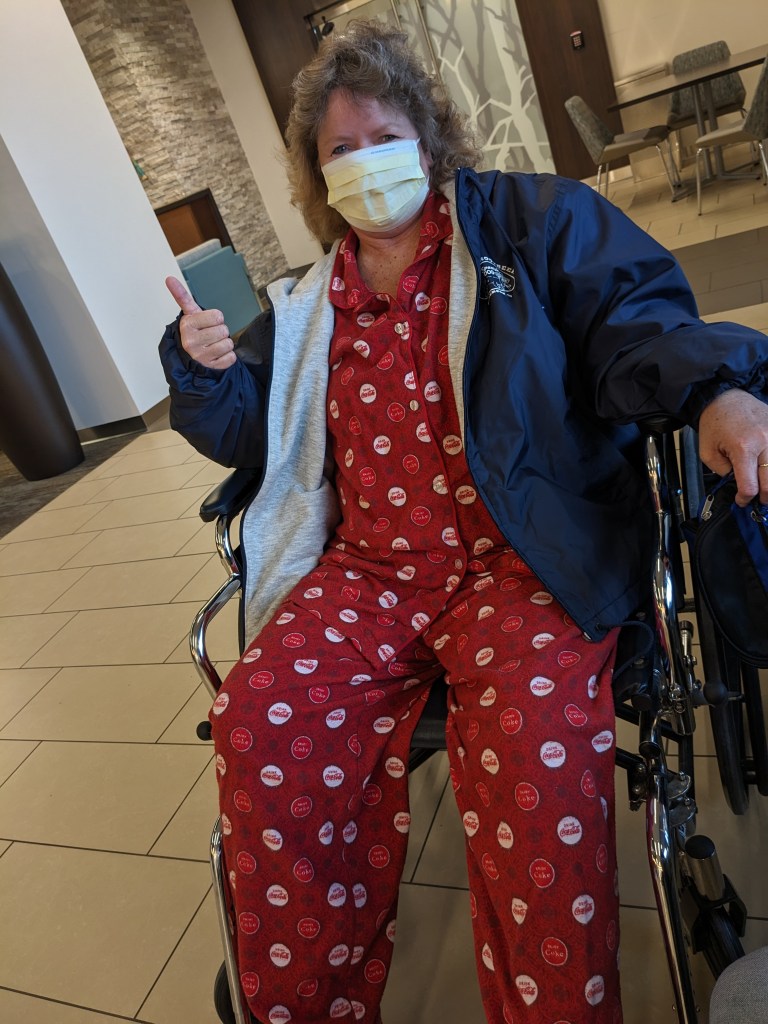
Early summer 2025 was rough as we nervously anticipated a four-month wait for new scan results. Faith & Begorra, the scans were clear! There were other challenges, including an emergency weekend hospitalization for internal bleeding, but it was not cancer-related. Now you know the details of one person’s cancer journey from an observer’s viewpoint. But how about the patient’s view?
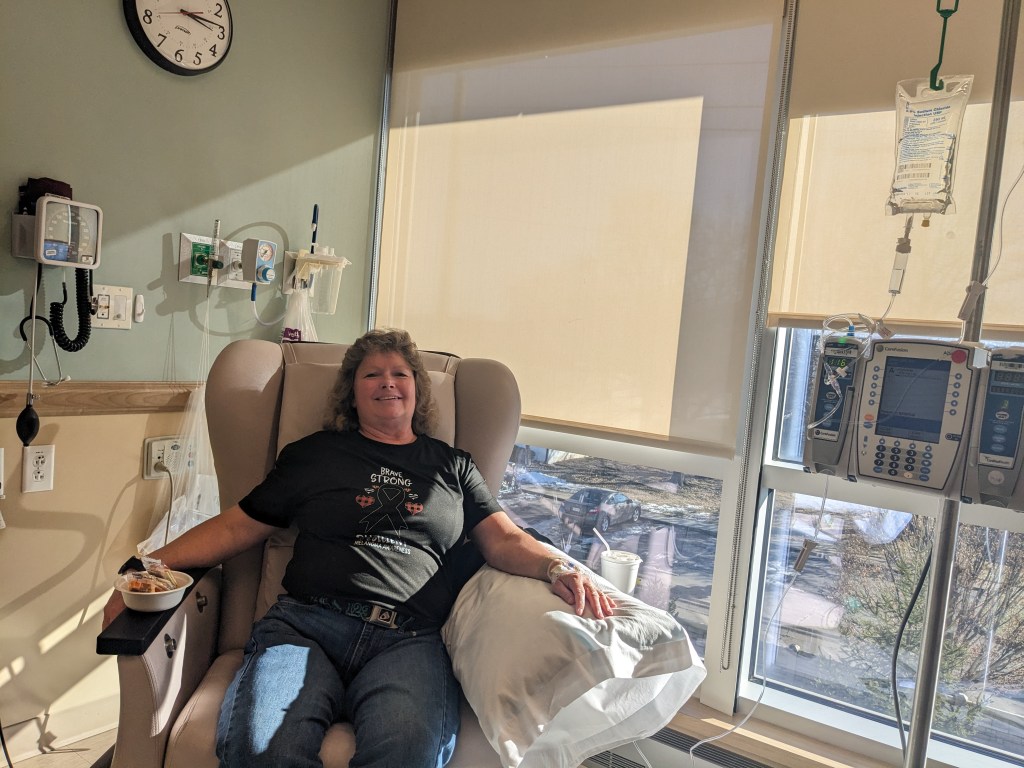
“This is the same cancer that killed Bob Marley, and it started on his toe. It got Jimmy Buffett, too. Jimmy Carter was diagnosed with melanoma on his head and neck at the age of 90 in 2015. It spread to his brain, but after a year of treatment, the spots disappeared.

He died last year at the age of 100, but he didn’t die of melanoma; he died from bleeding in the brain caused by falls.” Rhonda says. “If you get skin cancer, take it seriously. And above all else, stay out of tanning beds. Tanning beds have been labeled as “carcinogenic to humans” by both the World Health Organization and the International Agency for Research on Cancer (IARC). So, if you must have those tan lines, spray tanning is safer. Or, just rock that Disney Princess skin!”

My wife is a Disco girl and a creature of the eighties (No lie: her office has a mirrored disco ball, movie posters from Grease and Saturday Night Fever, and a velvet painting of Donna Summer). Like most young people of that era, especially girls, she spent a lot of time (and no little money) in tanning beds.
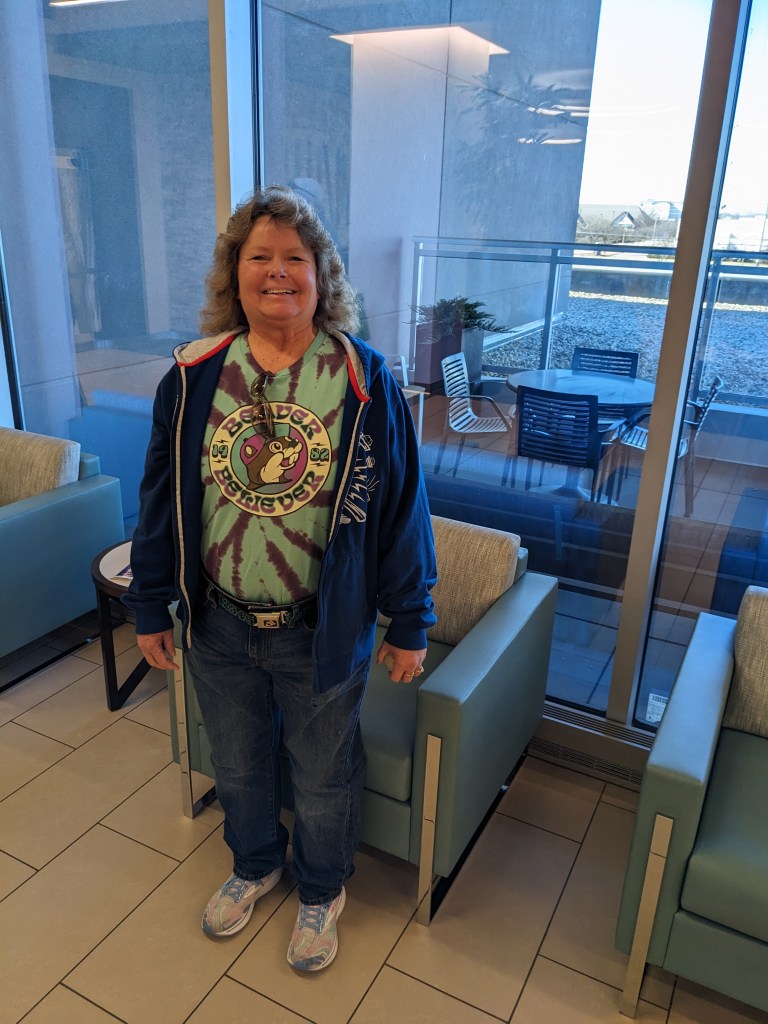
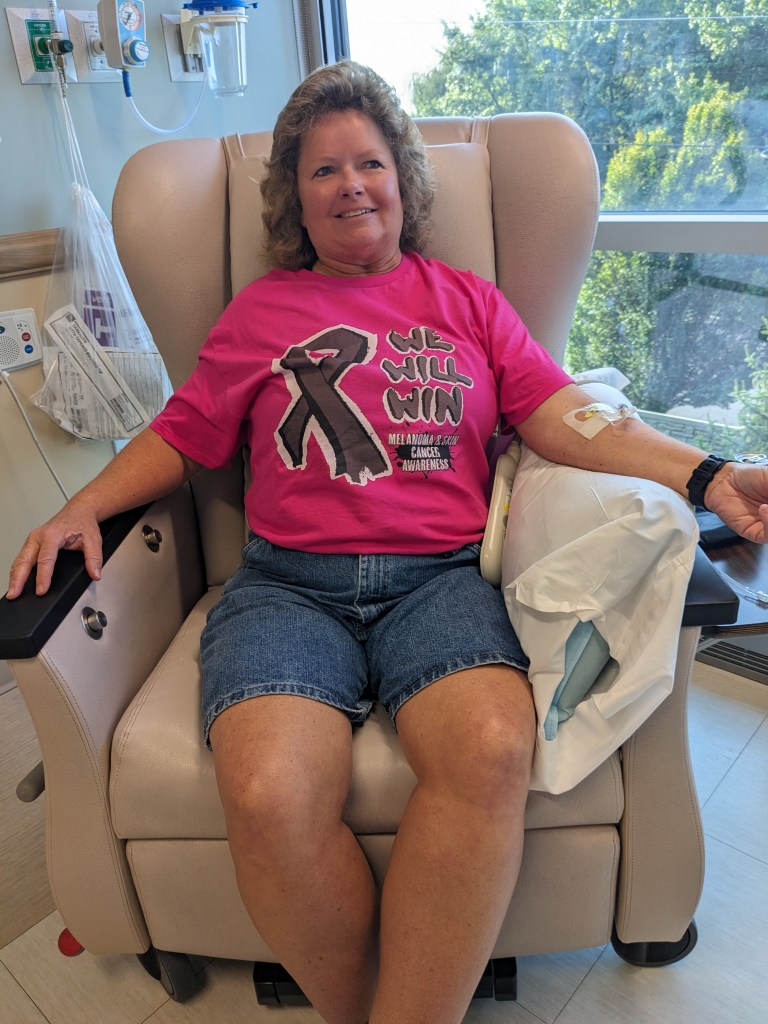
When I point out that I doubt Marley, Buffett, or Carter ever saw a tanning bed their entire lives, she answers, “Very true. Proof that the sun can damage you, too. Additionally, IARC studies show that if you’ve ever had a severe sunburn before the age of 18, you are 60% more likely to have melanoma, and that tanning-bed use before the age of 35 drives up the risk of melanoma by 75%. Worse, 70% of all melanoma travels to the brain. I never knew how aggressive this type of cancer was until I got it. Back then, not only were there tanning huts in every strip mall, but people of our generation remember using baby oil, cocoa butter, and tanning oil with no SPF whatsoever, straight up turkey basting! Even with all the bad publicity about the dangers of tanning bed use over the past quarter century, the Journal of the American Medical Association reports that 30% of white, female high school students and women ages 18 to 34 have used a tanning bed in the past year.”
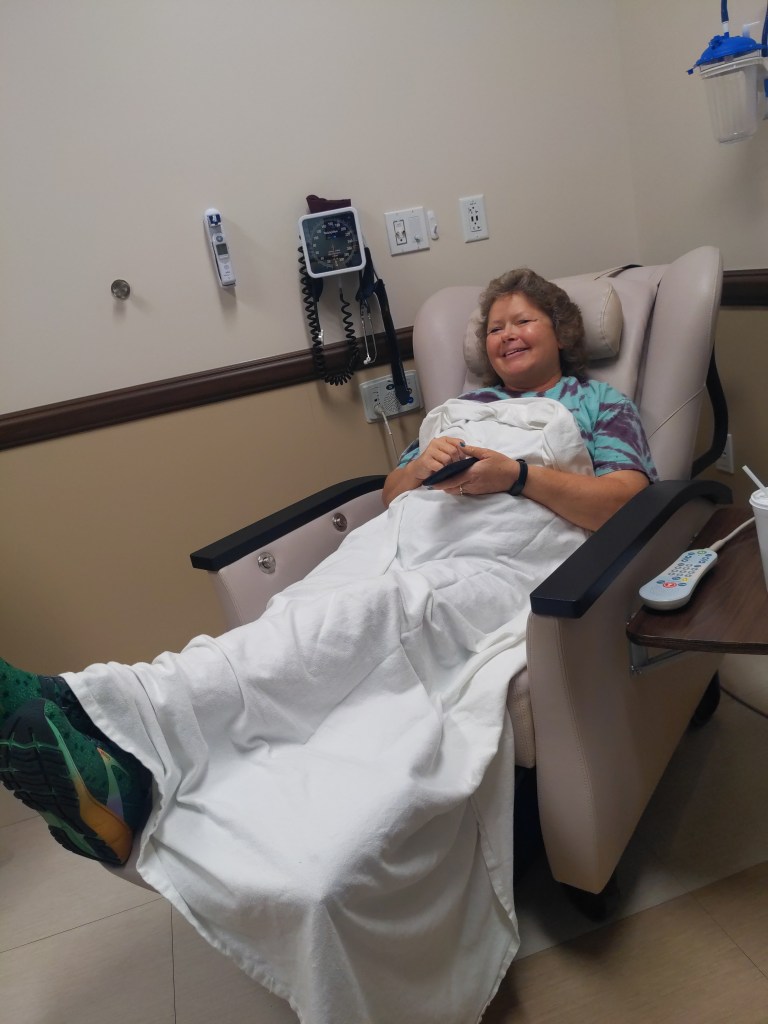
I asked Rhonda to retrace her cancer journey, both highs and lows. She answered, “The lows are pretty much what you would expect: fear, discomfort, and pain. I never smoked. I never did drugs, not even when they were prescribed to me. I don’t drink, so I went through a “Why me?” phase. But you get over all that in time. As for the medications, I did very well on Keytruda for the year I was on it. I was worried about it since I’d heard stories about people doing poorly on it and lasting for only one or two treatments. The Keytruda worked on my body, but not on my brain. So they switched my medication twice. They put me on Opdivo and Yervoy for two months (Jan.-Feb.), but it kicked my tail. I lost feeling in my hands and feet and experienced shortness of breath, flu-like pain all over, and I couldn’t even walk up a short flight of stairs.
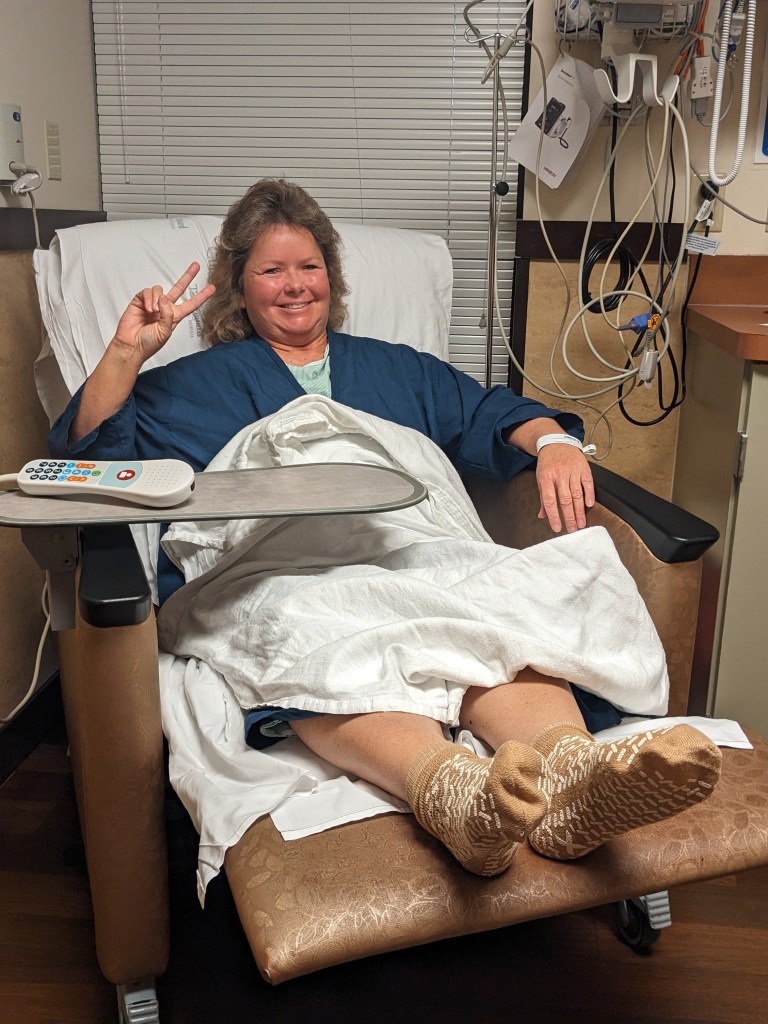
They put me on steroids, which alleviated the pain but pumped me up like the Michelin Man. They weaned me off of them slowly, but it came with an unfortunate side effect. I was tired all the time, with abdominal pain, muscle soreness, nausea, and vomiting. Worse, when I quit steroids, I went through wicked withdrawals; I was dope sick, like an addict. It’s starting to go away, but now the pain and discomfort are coming back. I am now on Braftovi and Mektovi. It makes me nauseous, weak, and tired. I don’t have many good days anymore, and even the good days aren’t great (It hurts to brush my hair). But I know there are many patients in much worse shape than me, so I’m going to keep fighting.”
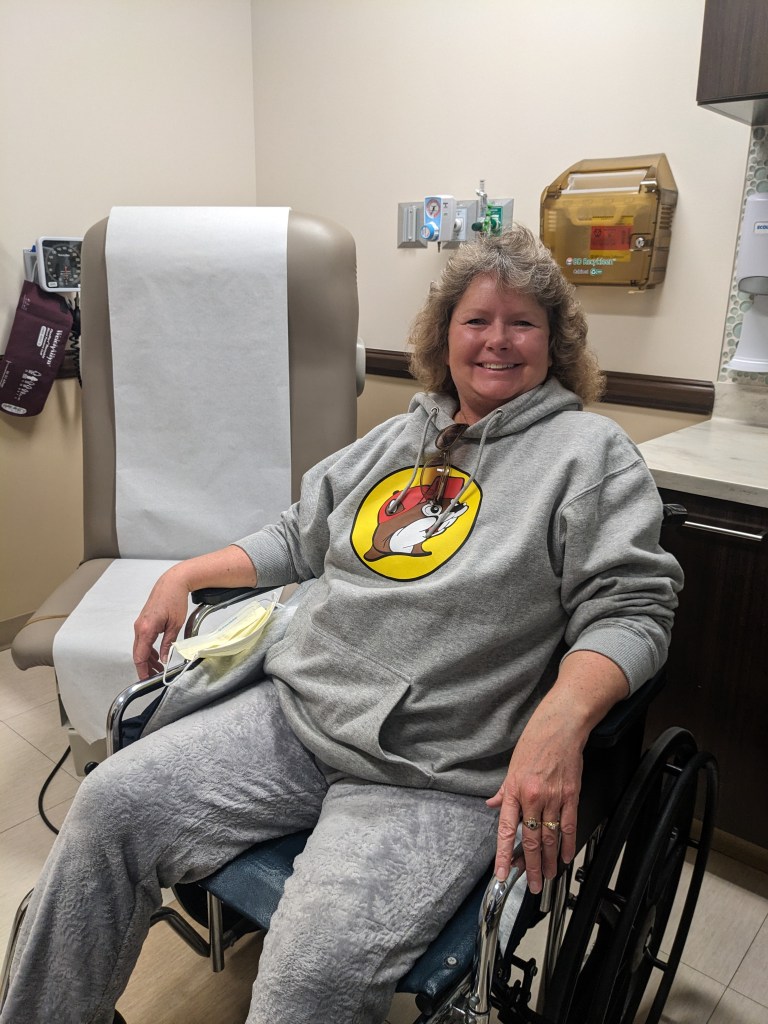
“I have been blessed with friends and family who love and support me. The value of those connections can’t be understated. My mom, Kathy Hudson, has been there from the beginning; diagnosis, treatment, and home-care. My dad, Ron Musick, has been a constant support, both by phone and in person. My children, Jasmine and Addison, have been better than I ever could have imagined. Addison, my mom, and you were the first faces I saw coming out of surgery. Jasmine, a former IU Med student, has made researching melanoma her new hobby. She discovered a web community on Reddit called “Melahomies” which has been quite helpful and informative. My sister Rennee, who works in the medical industry, has been a fountain of youth and support from Florida. I am equally blessed to have friends to lean on as well.
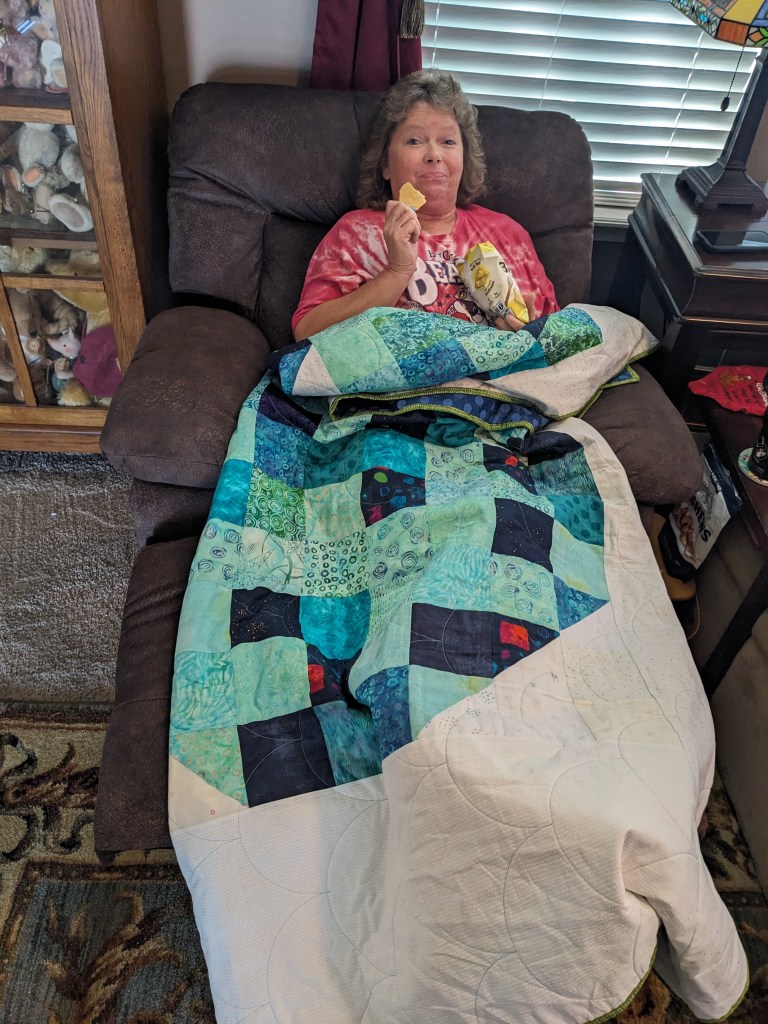
Thanks to Becky Hodson, Kris Branch, Cindy Adkins, Tim Poynter, Karen Newton, Kathleen Kelly, and Jodie Hall for being there. I am grateful for the continued support of Irvingtonians like Jan and Michelle at the Magick Candle, Adam and Carter at Hampton Designs, Dale Harkins at the Irving Theatre, and, of course, the girls at the Weekly View. Not to mention the support of your friends in the historic field. Barb Adams, Bruce & Deb Vanisacker, our Gettysburg friends and friends in the Lincoln community: Doc Temple (who passed earlier this year), Dr. James Cornelius, Bill and Teena Groves, and Richard Sloan. People like them rarely get the praise they deserve. If you ever find yourself in my position, or any traumatic medical condition for that matter, don’t be afraid to lean on your friends and family. They are as important to your healing process as the doctors and nurses. And of course, you Al, you are my rock.”
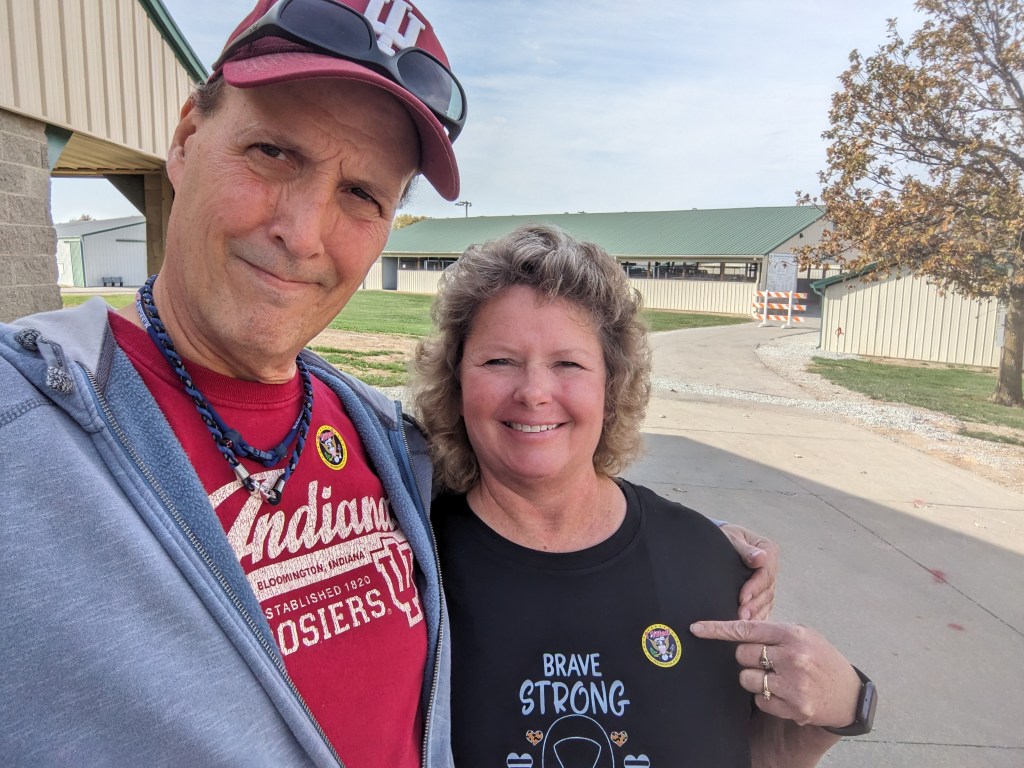
My first introduction to skin cancer came from our longtime friend, former ABA Pacers legend Bob Netolicky, and his family in Austin, Texas. Bob, Elaine, and Nicole have offered support and counsel throughout this journey. Neto has been battling skin cancer since being diagnosed during our first ABA reunion in 1997. Neto says, “I spent a lot of time in the sun when I was younger. Annual checkups are now a part of my routine.” Longtime readers of my column might recall that rocker Warren Zevon has been a constant in our relationship since the beginning. On his last appearance on David Letterman’s Late Show, Zevon, who passed away from cancer in 2003, advised his fans to “Enjoy every sandwich.”
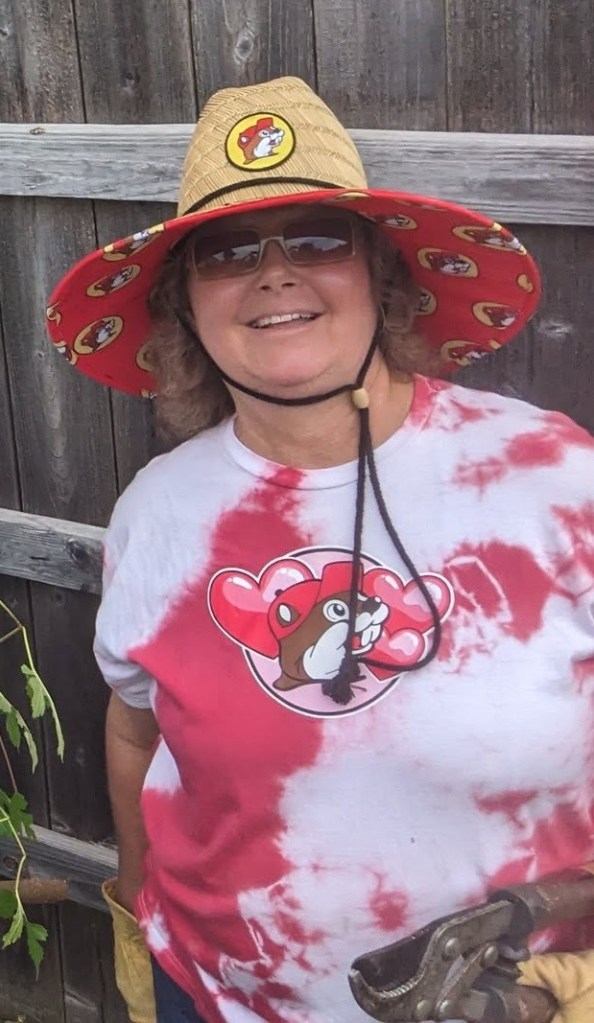
So, I asked Rhonda if she had any advice of her own. “I worry about people like me who had no idea how serious this thing is. Joggers, walkers, golfers, bicyclists, people who work or spend time outdoors professionally or recreationally. Skin cancer can sneak up on you, and it is serious. Don’t take it for granted. If you’re outside, wear a hat and make sunscreen a part of your daily routine. My Buc-ee’s straw hat is now a part of my regular gear. And it looks pretty cool.”

 Alan E. Hunter