
Original Publish date May 8, 2025.
https://weeklyview.net/2025/05/08/bob-fellers-happy-mothers-day/
So what did you get for Mother’s Day this year? I hope it was something fun, delicious, or useful, but just in case the answer was nothing, this article might make you feel a little better. Every year, as the boys of summer take the field anew, I try to dig up a baseball story that you may have never heard of before. Or, if you’ve heard of it, perhaps you’re not familiar with or don’t recall all the details. I was lucky enough to meet Baseball Hall of Famer Bob Feller on several occasions. I suppose the most memorable was on July 27, 1984. That was the day of the Cracker Jack Baseball Old-Timers Dream Game at the Hoosier Dome Downtown. I was midway through my term as Deputy Auditor for the state of Indiana, and my office was a short walk to the Dome and an even shorter walk to the Embassy Suites Hotel where the players were staying. So I strolled over and took an extended lunch hour to see if I could meet any of the players as they checked in. I was fortunate that day and had the opportunity to meet Joe DiMaggio, Sal “The Barber” Maglie, Billy Williams, Tony Oliva, Don Larsen, Minnie Minoso, Don Newcombe, Luke Appling, and Bob Feller. Mr. Feller was a gentleman and we talked for a little bit after he checked in. I told him that in my opinion, he was (along with Nolan Ryan and Bob Gibson) one of the three greatest pitchers of my lifetime. I asked him if he could still throw (I think he was 66 at the time) and if so, how fast can he bring it. He answered, “Well, I could still hit 85-90 mph, I guess. If I didn’t want to comb my hair for a month.”
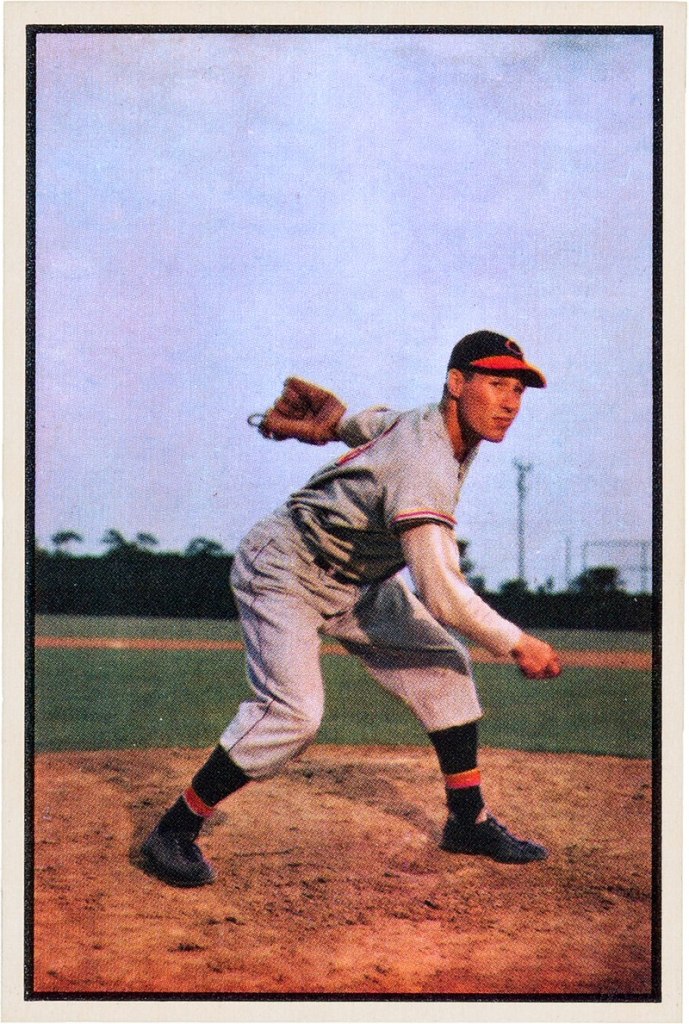
This story is about Bob Feller and his mom on Mother’s Day 1939. Robert William Andrew Feller, nicknamed “the Heater from Van Meter”, “Bullet Bob”, and “Rapid Robert”, was born on November 3, 1918, in Van Meter, Iowa. As a teenager, Feller was a shortstop/outfielder, but by the age of 15, he began to pitch and never looked back. In 1936, Feller was signed by legendary Cleveland Indians scout Cy Slapnicka for one dollar and an autographed Indians team baseball. A prodigy who bypassed baseball’s minor leagues, Feller made his Major League debut at the age of 17 in a relief appearance against the Washington Senators on July 19, 1936. A month later, on August 23, Feller made his first career start against the St. Louis Browns. Feller struck out all three batters he faced in the first inning on his way to recording 15 strikeouts (highest ever at the time for a starting pitcher’s debut) and earned his first career win. Three weeks later, he struck out 17 in a win over the Philadelphia Athletics, tying Dizzy Dean’s single-game strikeout record. He finished that first season with a 5–3 record over 14 games, 47 walks and 76 strikeouts in 62 innings. Then, Feller traveled back to Van Meter for his Senior Year of high school. The governor of Iowa met him at the door on that first day.
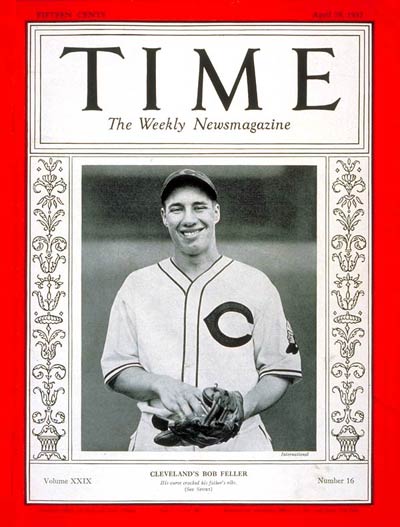
For the start of the 1937 season, Feller appeared on the cover of the April 19, 1937, issue of Time magazine. Rookies appearing on magazine and video game covers have been a longtime curse in the sports world. Feller was no different. After that Time cover, during his first appearance of the season on April 24, Feller blew out his elbow throwing a curveball. He spent April and May healing and traveled back to Van Meter to graduate high school in May in a ceremony that was aired nationally on NBC Radio. For the 1937 season, Feller finished 9-7 despite his 0-4 start. He allowed only 116 hits while striking out 150 batters against a paltry 106 walks pn just under 149 innings.
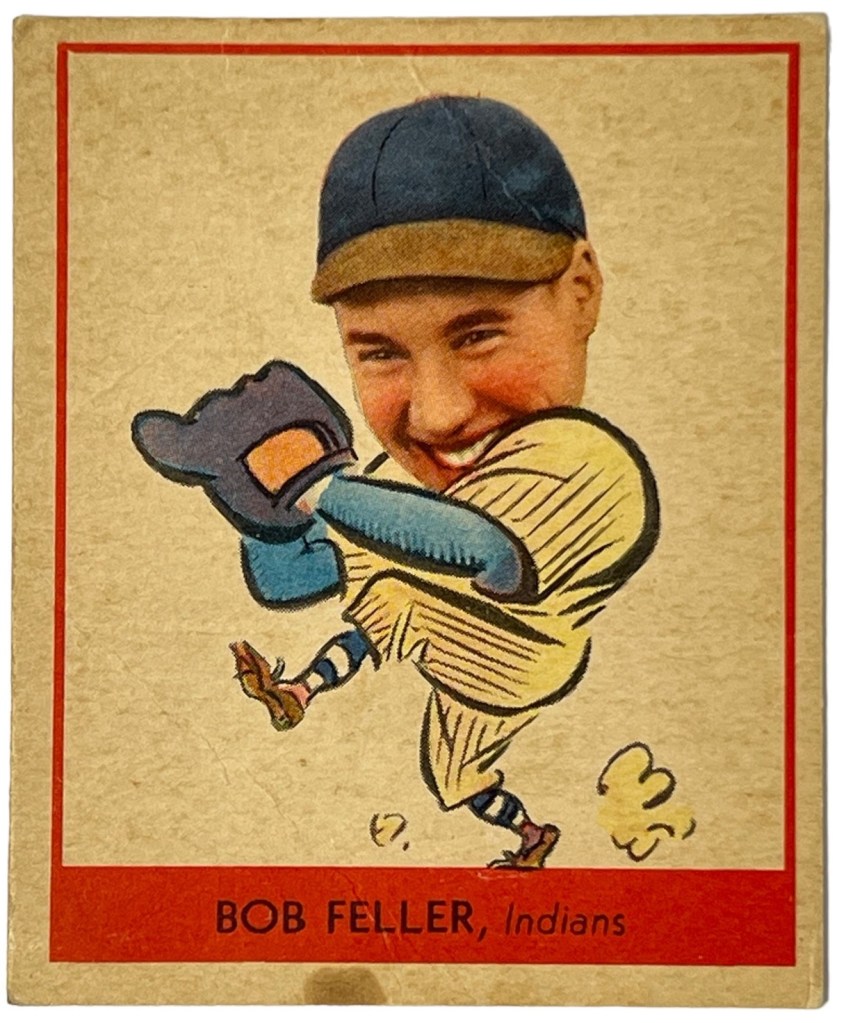
For the 1938 season, Feller led all pitchers with 208 walks and 240 strikeouts. Feller pitched in 39 Major League games during the 1938 regular season finishing with 17 wins, 11 losses, and 1 save. He allowed 225 hits and finished with a 4.08 E.R.A. with no hit batters, no wild pitches, and no intentional walks. On April 20, 1938, Feller pitched the first of his 12 career one-hitters in the Cleveland Indians’ 9-0 win over the St. Louis Browns. His biggest fan, his mother Lena, was bedridden and sick with pneumonia, so she could only listen to her son’s milestone game on the radio and cheer from home. It was the Indians’ second game of the new season Cleveland’s fireballing right-hander was nearly unhittable. The only hit came in the sixth inning off a weak grounder back to the mound by St. Louis Browns’ catcher Billy Sullivan who beat out an infield hit. Two-time all-star and 1935 batting champion Buddy Myer told the papers, “Bob Feller’s fastball comes at you looking like a shirt button-and as easy to hit.”
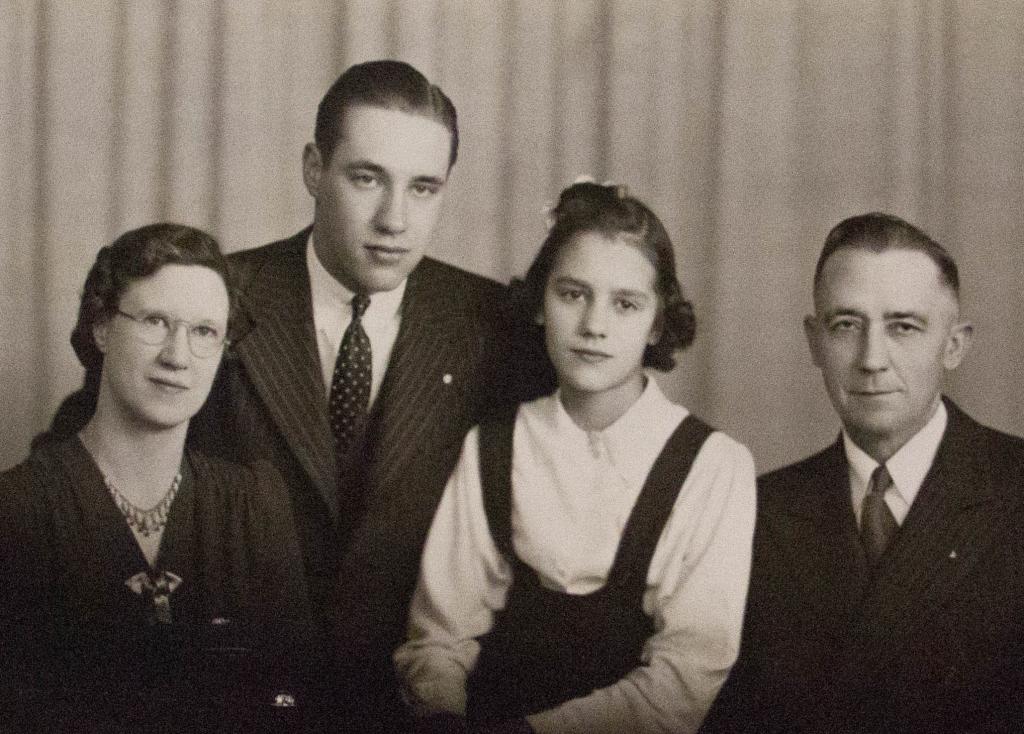
Since it was her son’s first game of the season, the Feller house was full of Iowa newspaper reporters, hungry for quotes and reactions from the phenom’s parents. “That’s fine,” Feller’s mother said to her husband, “but it’s a shame he couldn’t have had a no-hit game.” Her nonplussed reaction was no surprise when it came to her son’s prowess on the mound. Lena C. Feller was quite used to her son’s greatness and habit of throwing no-hitters. In 1936, he pitched five no-hitters for Van Meter High School before he went on to help the Indians in the season, all before graduating high school in 1937. Growing up on a farm west of Des Moines, Feller developed great strength and broad shoulders while performing his daily chores. That work helped him throw blazing fastballs. When he was 8 years old, he threw a baseball so hard it broke three of his father William Andrew Feller’s ribs. The elder Feller built his son a ballfield one-quarter mile east of the farmhouse, complete with bleachers and a concession stand. The ballfield has been called the “original Field of Dreams”. That farm was federally designated as a historic site in 1999. In his 2012 biography, Feller stated that if he could relive any moment of his life, it would be “Playing catch with my dad between the red barn and the house.”
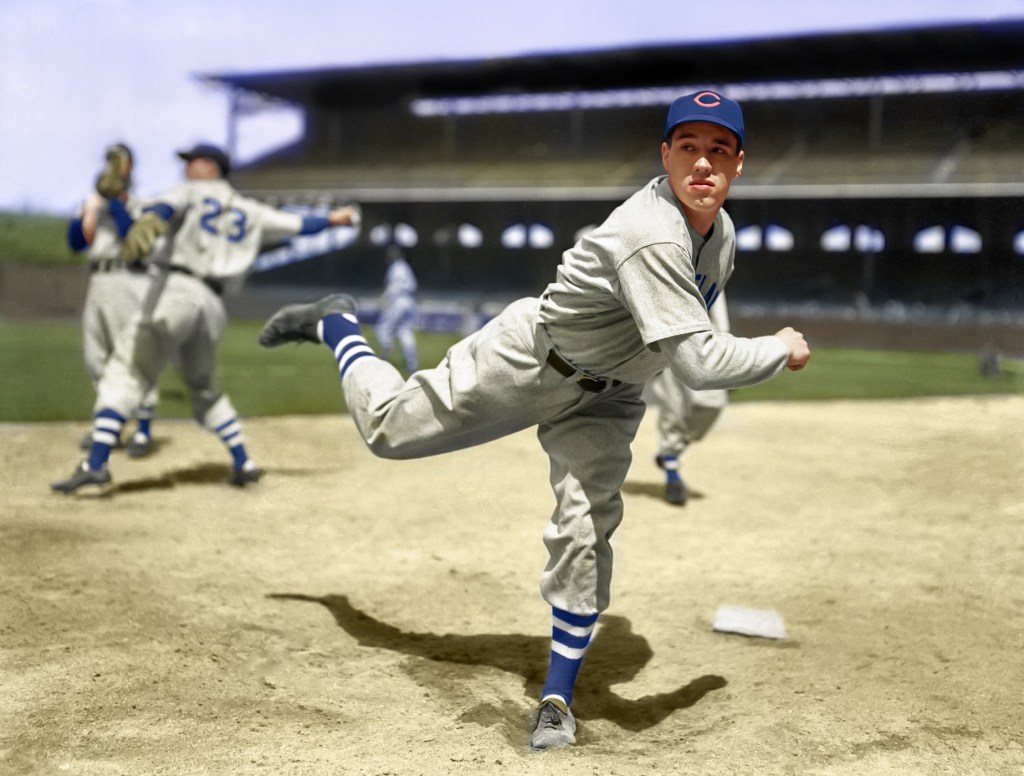
Although already an all-star, 1939 was Bob Feller’s breakout season. He would lead the American League in wins (24), complete games (24), and innings pitched (296 and 2⁄3), and he led the majors for a second consecutive year in both walks (142) and strikeouts (246). And while Feller would repeat as an all-star in 1939, it was an incident on Sunday, May 14, 1939, Mother’s Day, that would be remembered by baseball fans for generations to come. Lena and Bill Feller, along with their 10-year-old daughter Marguerite and over 700 fans from Van Meter, made the 5-hour, 350-mile trip from Iowa to Comiskey Park in Chicago to see their 20-year-old hometown hero pitch against the White Sox in front of 28,000 fans. The Feller family sat in front-row box seats on the first baseline behind the visitors’ dugout.
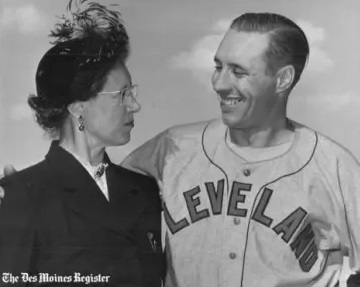
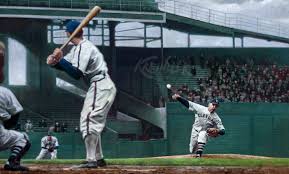
In the last half of the third inning, Indians up 6 to 0, Feller delivered a pitch to right-handed palehose 3rd baseman Marv Owen. Feller threw a fastball at which Owen swung on hard but late. The foul ball screamed towards the first baseline and into the stands behind the Indians’ dugout, and a horrific CRACK! echoed onto the field. Instinctively, Rapid Robert Feller watched helplessly as the ball struck his mother above her eye, breaking her eyeglasses. News accounts differ as to whether it was her left eye or right eye, but the result was certain: the lenses shattered, lacerating her nose, eyes, and forehead. Blood poured from her eyelid and forehead. The crowd gasped, the Iowa fans shrieked, and Bob Feller froze on the pitcher’s mound. For a few moments stood “stark still,” visibly shaken and agonizing over the drama in the stands. Bob dashed to the box and watched helplessly as she was led off to Chicago’s Mercy Hospital, where stitches were required. The game was delayed as Cleveland Indians trainer Max “Lefty” Weisman rushed into the stands to tend to Mrs. Feller. Lefty escorted her “to a spot below the stands” where he gave Mrs. Feller emergency treatment. He assured his young pitcher that the wounds were not serious before, aided by Lena’s husband and daughter, helping her to a nearby car and driving her to Mercy Hospital. As soon as Lena was safely on her way, Feller retook the mound and struck Owen out. “There wasn’t anything I could do,” Feller later said, “so I went on pitching.” The incident shook him up, and unable to fully concentrate on the game, Feller allowed the White Sox to score three runs before he regained his composure. Settling down, Feller won the game 9 to 4.
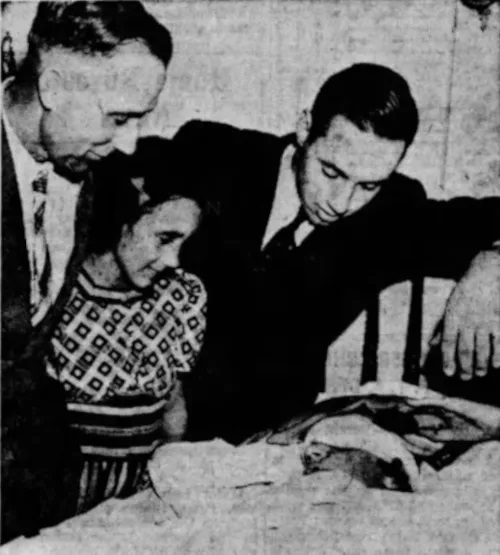
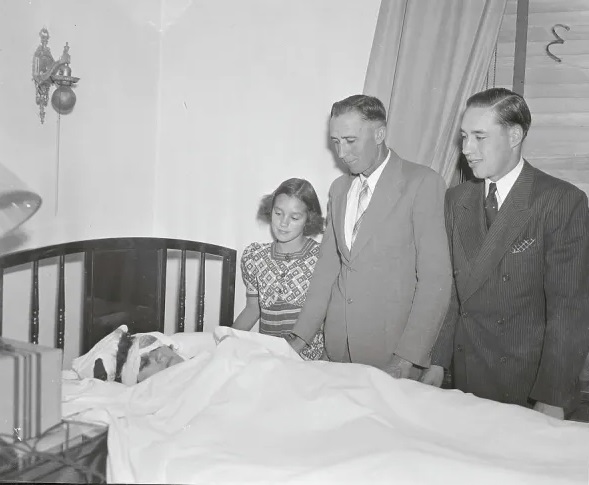
At the hospital, 45-year-old Lena received six stitches to close the deepest cut. Doctors determined that Lena probably suffered a mild concussion, but luckily, an X-ray examination determined that her skull was not fractured and no bones were broken. The hospital announced that they expected her to make a full recovery. With the game now over, Bob sped to the hospital to check on his mom. He walked into Lena’s hospital room to find her sitting up in the hospital bed with her head swathed in bandages. He rushed to the bedside and embraced his mother in a hug and she said, “Everything is all right, I just didn’t see that ball coming.” Seeing that his mom was battered and bruised, but otherwise all right, Bob reminded her of his promise to win the game as a Mother’s Day present, which he did. Ironically, it was Bob Feller Day at the ballpark, so Bob was the one who received a gift that day in the form of a brand new portable radio presented before the game from the Iowa delegation. It was his sixth victory of the season, and Feller held the White Sox to six hits, seven walks, and struck out six batters. Another visitor to Lena’s room that day was Kennesaw Mountain Landis, former Hoosier (Delphi & Logansport) and sitting Commissioner of Major League Baseball, whose office was in Chicago.
One newspaper, the May 15, 1939, Lancaster (Ohio) Eagle-Gazette, snarked off after the incident. “Bob Feller will ring up around $10,000 (in today’s money) on the side this year from his endorsements of candy, baseball equipment, breakfast foods, and what have you. That little sum should take care of Master Robert’s [problems].” As detailed above, Feller would recover nicely from the incident and have one of the best seasons of his career. It must be noted that the next year on April 16th, Opening Day of the 1940 season, Bob Feller threw his first no-hitter against, you guessed it, the Chicago White Sox at Comiskey Park. This time Marv Owen was not in the lineup, having been sold to the Boston Red Sox in December 1939, and Feller’s parents were safely at home listening to the game on the radio.

 Alan E. Hunter