

Original publish date: October 11, 2018
Matthew Weedman, Assistant Professor of Art at Wabash College will be presenting his talk “IT’S ALIVE! ELECTRICITY, CINEMA AND METAPHOR IN FRANKENSTEIN” at the Bona Thompson Memorial Center at 2 pm, Sunday, Oct.14. The subject seems a perfect fit for the upcoming Historic Irvington Halloween Festival. But how much do you really know about Victor Frankenstein’s monster? When you think of Frankenstein, do you envision Boris Karloff’s 1931 version? Mel Brooks’ 1974 version? Robert DeNiro’s 1994 version? How about TV’s Herman Munster? Or maybe even the Burger Chef knockoff Crankenburger commercial character from the 1970s? It seems that Frankenstein is in the eye of the beholder. However, with this monster, there is more than meets the eye.
Eighteen Hundred and Froze To Death. That is the epithet given to the year 1816 by those who survived it. 1816 also became known as the year without a summer. In the spring and summer of 1816, the eastern United States was blanketed by a persistent blood red “dry fog” that often blotted out the sun. Neither wind nor rainfall could disperse this crimson fog. Temperatures dipped below freezing every day in May and snow was recorded regularly in June. July and August saw frost on the ground and ice on the rivers from the northwest territory to the eastern seaboard. Europe and the rest of the world was locked in a long cold volcanic winter caused by the eruption of Mount Tambora the year before. Located on Sumbawa Island in the East Indies, it was the greatest eruption in Earth’s recorded history up to that time. Crops failed universally and for three years following Tambora’s explosion, almost anywhere in the world, if you were alive you were hungry.
 What better time to introduce two of the world’s most popular monsters? Frankenstein and Dracula were born on the same night in the same weekend in 1816. They were brought to life by Mary Shelley and Lord Byron during a contest to see who could create the scariest monster. The weekend was wet and stormy and Lord Byron suggested the reading of ghost stories to pass away the dreary weather. Sitting around a log fire at the Villa Diodati on the shores of Lake Geneva, the company of friends amused themselves by reading German ghost stories translated into French from the book Fantasmagoriana. The members of the party were Lord Byron and his mistress Claire Claremont, his doctor John Polidori, Percy Bysshe and Mary Shelley. Lord Byron is known for his poetry, mostly Don Juan. After reading a few stories, Byron suggested that each member of their party write their own story of horror.
That weekend challenge changed the face of the literary world forever. Byron wrote a small novella about a nobleman who rises from the dead. Later on Dr Polidori would use Byron’s unfinished novella and not only would the nobleman rise from the dead, but he would also have to drink the blood of others to sustain himself. Byron named his creation of his nobleman that rose from the dead a vampyre.
 Unable to think of a story, young Mary became anxious, in the introduction to her book she recalled: “Have you thought of a story? I was asked each morning, and each morning I was forced to reply with a mortifying negative.” During one evening in the middle of summer, the discussions turned to the nature of the principle of life. “Perhaps a corpse would be re-animated”, Mary noted, “galvanism had given token of such things”. It was after midnight before they retired, and unable to sleep, she became possessed by her imagination as she beheld the grim terrors of her “waking dream.” In September 2011, astronomer Donald Olson, after visiting the Lake Geneva villa and inspecting data about the motion of the moon and stars, concluded that her “waking dream” took place “between 2 a.m. and 3 a.m.” on June 16, 1816, several days after the initial idea by Lord Byron that they each write a ghost story.
Mary Shelley was just eighteen years old when she began writing “Frankenstein; or, the Modern Prometheus”. Shelley wrote the first four chapters in the weeks following the suicide of her half-sister Fanny. This was one of many personal tragedies that impacted Shelley’s work. The horror masterpiece came two years after she’d become pregnant with her first child, a baby she never named. On the eleventh day after her child’s birth, she wrote in her diary: “I awoke in the night to give it suck it appeared to be sleeping so quietly that I would not awake it.” The next diary entry, written the next morning, reads simply, “Find my baby dead.” Her grief at the loss can be seen in later diary entries, “Dream that my little baby came to life again; that it had only been cold, and that we rubbed it before the fire, and it lived.” and “Awake and find no baby.”
Pregnant again only weeks later, she was likely still nursing her second baby when she started writing “Frankenstein,” and pregnant with her third by the time she finished. She didn’t put her name on her book, preferring to publish her novel anonymously in 1818. The first theatrical production of “Frankenstein” was staged in London in 1823. By that time the author had given birth to four children, buried three, and lost another unnamed baby to a miscarriage so severe that she nearly died of bleeding that stopped only when her husband had her sit on ice.
In 1822, her husband drowned when his sailing boat sank during a storm. The last decade of her life was dogged by illness, probably caused by the brain tumor that was to kill her in 1851 at the age of 53. Although principally noted as the literary creator of Frankenstein, it should be noted that Shelley was one of the world’s first fighters for women’s rights. After her husband’s death, she continued to practice her feminist principles by extending aid to women whom society disapproved of. On the first anniversary of Mary Shelley’s death, her box-desk was opened. Inside was found locks of her dead children’s hair, a notebook she had shared with Percy Bysshe Shelley, and a copy of his poem Adonaïs with one page folded round a silk parcel containing some of his ashes and the remains of his heart.
In this his 200th anniversary year, Frankenstein is as popular today as ever. The book tells the story of Victor Frankenstein, a doctor who creates a grotesque, intelligent creature by piecing together cadavers collected by the young scientist. The seed for the horror classic can be found in a trip by author Shelley through Europe in 1814. Her journey traveled along the river Rhine in Germany not far from Frankenstein Castle, where, two centuries before, an alchemist was engaged in experiments. On another trip, she travelled in the region of Geneva (Switzerland) where much of the story takes place. The idea for the novel came to her in a dream about a scientist who created life and was horrified by what he had made; her dream later became her novel’s story.
Although the name “Frankenstein” is often used to refer to the monster itself, in the novel, the monster is identified by words such as “creature,” “monster,” “demon,” “wretch,” “abortion,” “fiend,” and “it.” About this apparent misnomer, Shelley, perhaps thinking back on the death of her own unnamed child years before, remarked “This nameless mode of naming the unnameable is rather good.”
 When “Frankenstein” was published it became an immediate sensation. Mary Shelley crafted her book so that readers’ sympathies would lie not only with Frankenstein, whose suffering is dreadful, but also with the creature, whose suffering is worse. Shelley skillfully directs her readers’ sympathy, page by page, paragraph by paragraph, sometimes even line by line, from Frankenstein to the creature. Shelley deftly navigates the creature’s vicious murders, first of Frankenstein’s little brother, then of his best friend, and, finally, of his bride. In 1824, one critic wrote, “The justice is indisputably on his side and his sufferings are, to me, touching to the last degree.”
Shelley’s dialog is amazing. “It was on a dreary night of November, that I beheld the accomplishment of my toils,” relates Victor Frankenstein. The rain patters on the windowpane; a bleak light flickers from a dying candle. He looks at the “lifeless thing” at his feet, come to life: “I saw the dull yellow eye of the creature open; it breathed hard, and a convulsive motion agitated its limbs.” Having labored so long to bring the creature to life, he finds himself disgusted and horrified—“unable to endure the aspect of the being I had created”—and flees, abandoning his creation, unnamed.
“Hear my tale,” the creature insists, when he at last confronts his creator. “I was a poor, helpless, miserable wretch; I knew, and could distinguish, nothing…But, feeling pain invade me on all sides, I sat down and wept.” He learned to walk, and began to wander, still unable to speak—“the uncouth and inarticulate sounds which broke from me frightened me into silence again.” Eventually, while secretly observing the villagers talk, “I discovered the names that were given to some of the most familiar objects of discourse: I learned and applied the words fire, milk, bread, and wood.” In time, the creature acquired “a cursory knowledge of history…I heard of the division of property, of immense wealth and squalid poverty; of rank, descent, and noble blood.” He learned that the weak are routinely abused by the powerful, and the poor despised. “I, the miserable and the abandoned, am an abortion,” the creature says, before, in the book’s final scene, he disappears on a raft of ice.
Shelley’s novel offers many deeper moral and political ambiguities not often found in the versions that followed. Her novel questions whether Victor Frankenstein is to be blamed for creating the monster-usurping the power of God, and of women-or for failing to love, care for, and educate him. Mary Shelley was dead by then, her own chaotic origins already forgotten. Nearly everyone she loved died before she did, most of them when she was still very young. Of this mortal reality, Shelley, commented, “the last relic of a beloved race, my companions extinct before me.”
In his 1919 essay ‘The Uncanny’, Sigmund Freud says that “apparent death and reanimation of the dead have been represented as most uncanny themes”. This, of course, can be related to Frankenstein’s reanimation of a creature made from dead body parts, joined together. When Frankenstein looks upon his creation’s ‘yellow skin… watery eyes… shrivelled complexion and straight black lips,’ he is disgusted and realizes the monster symbolizes Frankenstein’s own death. With so much death and tragedy littering her wake, Shelley too was acutely reminded of her own mortality.
In Mary Shelley’s introduction to the 1831 edition of Frankenstein (written two decades before her death), the author states, “I saw-with shut eyes, but acute mental vision-I saw the pale student of unhallowed arts kneeling beside the thing he had put together. I saw the hideous phantasm of a man stretched out, and then, on the working of some powerful engine, show signs of life and stir with an uneasy, half-vital motion. Frightful must it be, for supremely frightful would be the effect of any human endeavor to mock the stupendous mechanism of the Creator of the world.”
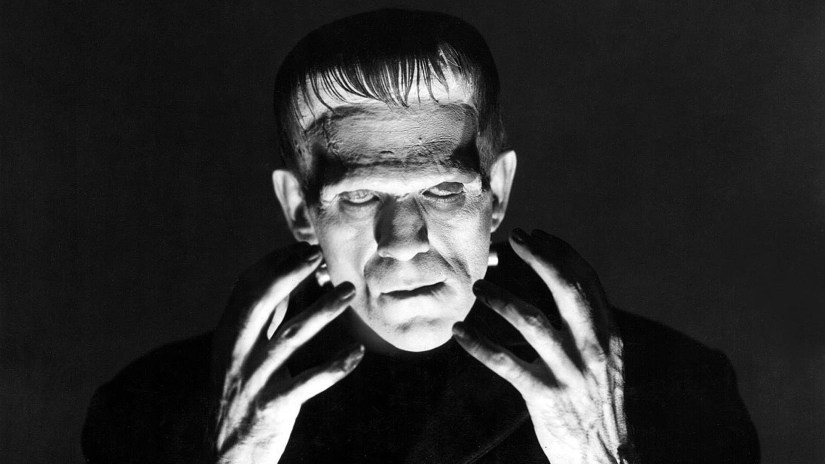
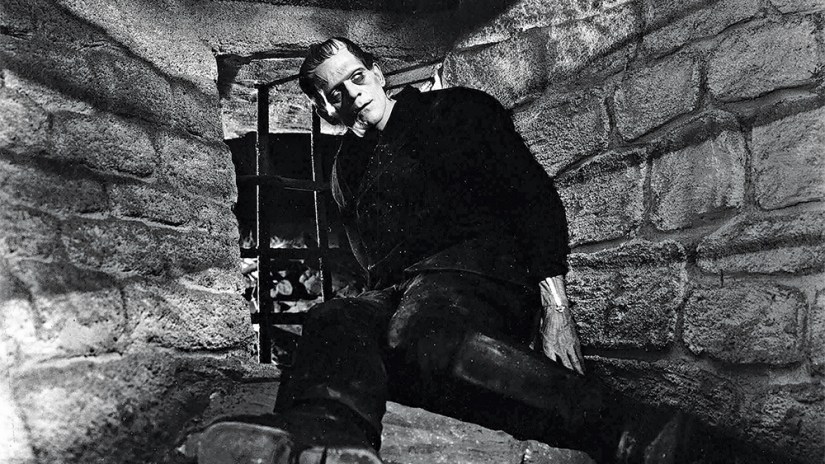
 A century later, a lurching, grunting Boris Karloff defined the most widely accepted version of the creature in Universal Pictures’s 1931 production of “Frankenstein.” Karloff’s monster-portrayed as prodigiously eloquent, learned, and persuasive in the novel-was no longer merely nameless but all but speechless, too. “Frankenstein” has spawned many different depictions in the two centuries since its publication. For its bicentennial, the original, 1818 edition has been reissued in paperback form by Penguin Classics as “The New Annotated Frankenstein.”
Matthew Weedman will address the Frankenstein topic indepth this Sunday afternoon (2 pm at the Bona Thompson Memorial Center) with his talk “IT’S ALIVE! ELECTRICITY, CINEMA AND METAPHOR IN FRANKENSTEIN”.

 This coming Saturday, October 20th at 2 PM, several of those famous friends will be here in Irvington at the Irving theater to share their talent with our community in a program I have called, “Whispers from the Grave. Testimony of Irvington’s Most Famous Crimes.” Over the past decade and a half I have gathered testimony, witness accounts, personal statements and personality sketches of the characters, both good and bad, from the stories I share on the tours. This Saturday, local celebrities, journalists and members of the media will lend their talents to the voices of these characters. Much of this spoken word performance will offer accounts that have not been heard for over a century. This testimony, told in its entirety using the words of the subjects themselves, is always poignant, sometimes shocking and often scandalous.
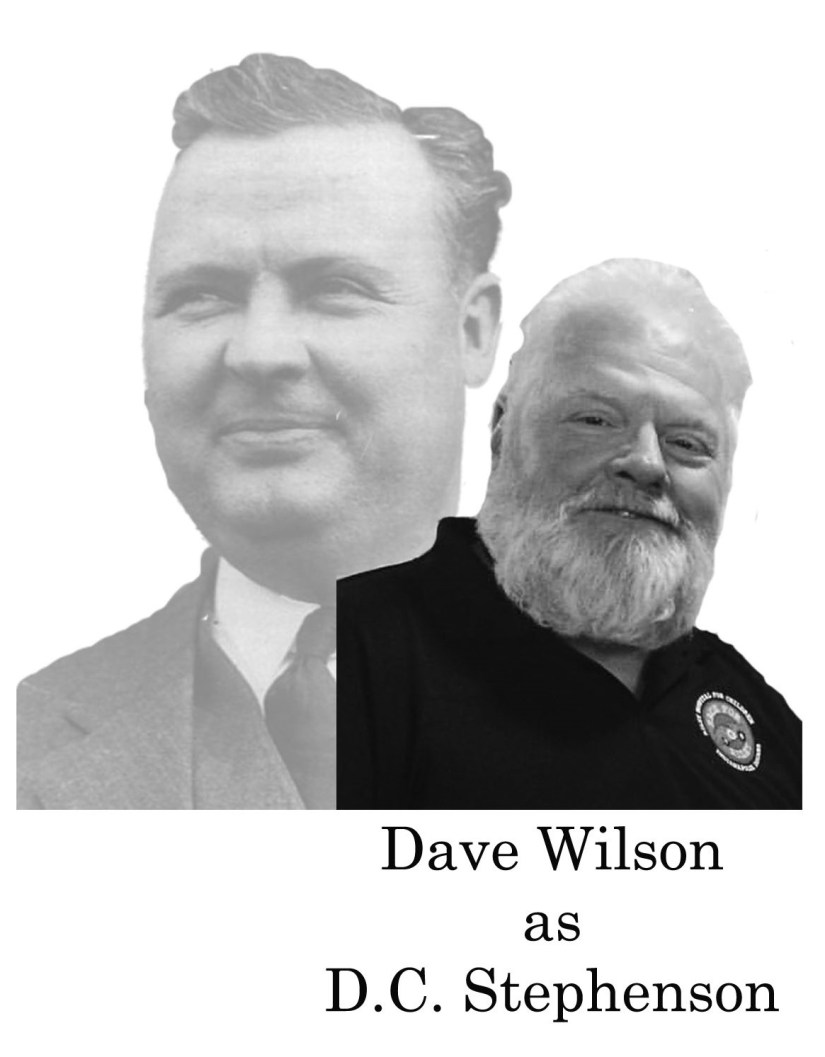 Joining us Saturday will be long time Q 95 star and stand up comic Dave “the King” Wilson reading the words of DC Stephenson. David Curtis Stephenson was the Grand Dragon of the Indiana Ku Klux Klan who reigned supreme here in central Indiana during The Roaring 20s. Stephenson controlled Indiana politics from the governor’s office to the mayor’s office with Klan money and influence from his University Avenue home here in Irvington. Gathering testimony and statements from Stephenson’s made all the more harder by the fact that after his 1925 trial for murder concluded, the official court papers mysteriously disappeared.
 2 – time Emmy award-winning former WTHR on air personality & meteorologist Nicole Misencik who will be voicing Madge Oberholtzer. Tragically, Madge was the undeserving victim of DC Stephenson’s crime in the spring of 1925. Madge was an Irvingtonian and former student at Butler College whose death at the hands of Stephenson brought down the Ku Klux Klan, which was the most powerful organization in the country at the time. Madge’s testimony was so graphically detailed that when it was read aloud in open court in Noblesville Indiana, women fainted and grown men got up and left the room. Nicole will recount Madge’s 9 – page deathbed declaration and its entirety for the first time in public and nearly a century.
 Former WTHR reporter Brandon Kline will be voicing Pinkerton detective Frank Geyer, the man who brought America’s first serial killer to justice. Brandon will wear the hero cape by voicing this legendary Pinkerton agent who is dogged determination alone solved Irvington’s first murder, that of 10-year-old Howard Pitezel. Brandon’s hero duty will be doubled when he also voices Irvingtonian lawyer Asa J Smith who recorded Madge’s deathbed declaration in what promises to be a most memorable exchange with his wife Nicole.
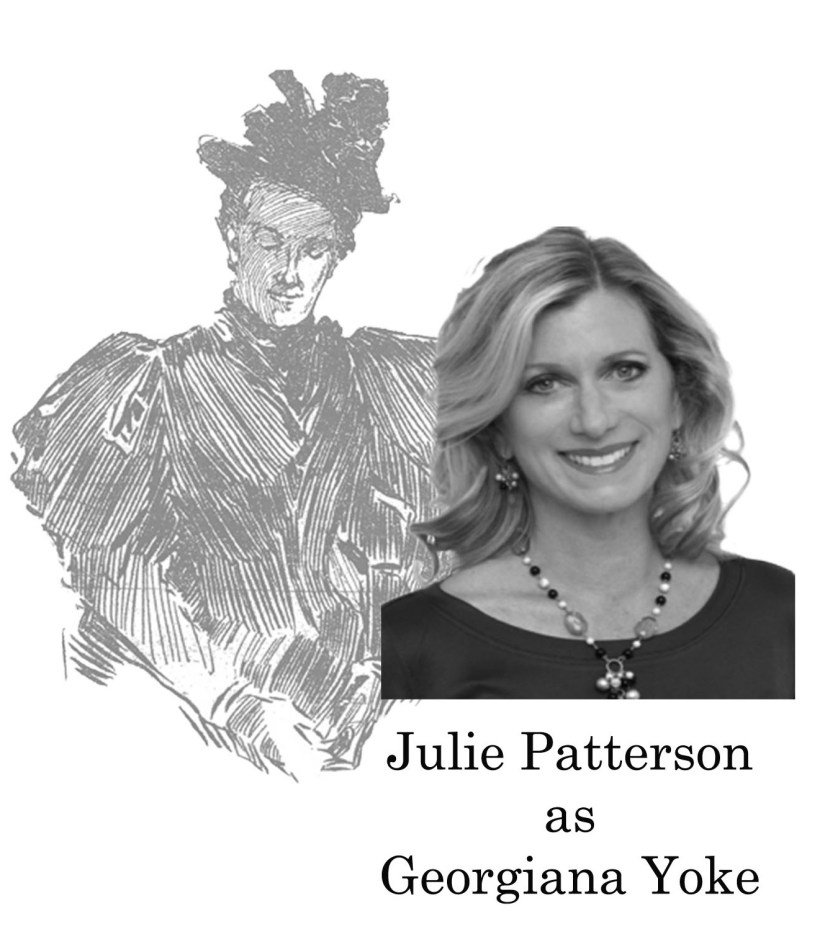 Boomer TV personality, longtime WZPL radio host and former WISH – TV alumni Julie Patterson will be voicing the last wife of HH Holmes, Georgiana Yoke. Ms. Yoke, a native of Franklin Indiana, is easily the most unknown character in the presentation. Georgiana’s family has deep connections to Indianapolis’east side at both Garfield Park and Holliday Park. Georgiana narrowly escaped death at the hands of her husband and, after his death by hanging, could not escape the cloud of suspicion that hung over her in Indianapolis after her husband’s crimes were revealed. Julie’s interpretation of Georgiana will also include her court testimony, some of which was delivered by her husband HH Holmes while acting as his own counsel.
 Ed Wenck, long time local radio host, journalist, author and on-air television personality, will be voicing America’s first serial killer HH Holmes. Allegedly responsible for over 200 murders, Holmes admitted to killing 27. The arch fiend came to Irvington in October 1894 on the heels of the 1893 Chicago world’s fair. His crimes are numerous, gruesome and unspeakable. Ed will voice America’s first serial killer using Holmes’ own words which are guaranteed to make your skin crawl.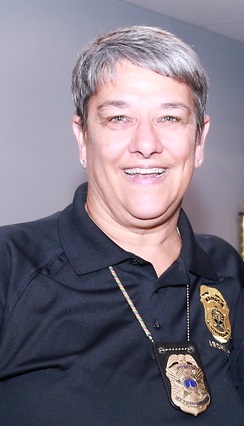


 The Chicago club opened on a bitterly cold day in Chicago, yet lines of eager prospective members stretched around the block, warmed by ideas of what was to be found inside. Membership was available to anyone willing to purchase a key – $50 for residents and $25 for out-of-towners. The club “key” itself was metal and topped off with a rabbit head, later replaced by a gold plastic credit card to carry in a wallet. Hefner was present at the grand opening until the club closed at 4am. Keyholders gawked at ladies in their colorful Playboy Bunny outfits and dined on steaks and salads (no fancy hors d’oeuvres or desserts here), drank cocktails and bought packs of cigarettes and Playboy logo lighters. Most club items were available for the standard price of $1.50 per item (an exorbitant price at the time, especially for drinks and cigarettes). In the club’s first year, entertainment included the most popular stars of the day, including Mel Torme, Barbara Streisand and a 19-year-old Aretha Franklin.
 The Bunnies themselves were instructed, in a 44-page “Bunny Manual”, that they could not date customers, give out their phone numbers, or meet their boyfriends or husbands within two blocks of the club. If they did, they would face the tortuous penalty of being banned from the “bunny hutch.” There were different types of Bunnies, including the Door Bunny, Cigarette Bunny, Floor Bunny, Playmate Bunny and the Jet Bunnies (specially selected to serve on the Playboy “Big Bunny” Jet). To become a Bunny, women first had to audition. Prospective “Kits” (short for “Kitten Rabbits”) underwent thorough and strict training before officially becoming a Bunny. Bunnies were required to be able to identify 143 brands of liquor and know how to garnish 20 cocktail variations. Customers were also not allowed to touch the Bunnies, and demerits were given if a Bunny’s appearance was not properly organized.
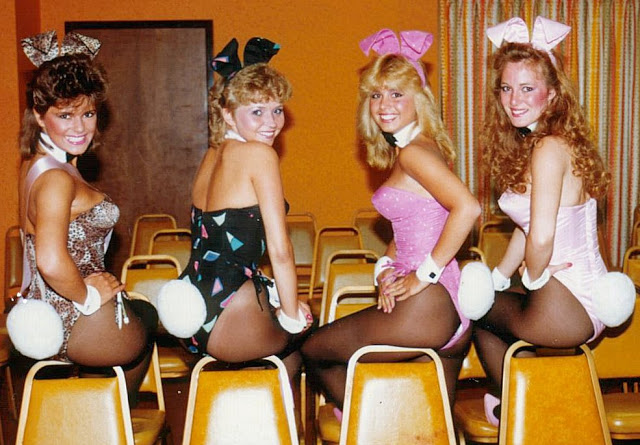

 Most readers are aware of feminist Gloria Steinem’s crusade to expose the sexist treatment of Playboy Bunnies in her 1983 book “Outrageous Acts and Everyday Rebellions.” The article featured a photo of Steinem in Bunny uniform and detailed how women were treated at those clubs. The article was first published in 1963 in Show magazine as “A Bunny’s Tale”. But are there any other famous former Bunnies out there? Well, yes, the “hutch” is littered with the names of young, struggling Hollywood actresses. Some are familiar: Lauren Hutton, Sherilyn Fenn (Twin Peaks TV star), Barbara Bosson (Hill Street Blues TV star), Patricia Quinn (Magenta from Rocky Horror), Kathryn Leigh Scott (Dark Shadows TV star) and many others. Jon Bon Jovi’s mom, Carol Sharkey, was a Bunny as was Kimba Wood, Bill Clinton’s nominee for Attorney General in 1993. At least 32 former Bunnies were also Playboy Magazine Centerfold “Playmates.” Rock stars Dale Bozzio (Missing Persons and Frank Zappa) and Blondie’s Debbie Harry were also Bunnies. Harry once famously remarked, “The girls there were part of the entertainment; part of the sort of mystique, the excitement, the naughtiness of it. But on the inside of that job, the girls were treated very, very well. There was a lot of benefits: health benefits, job security, good salary, good money. It was a very sought-after kind of job.”
 The Chicago Playboy Club enjoyed a long and successful quarter century run, but closed in 1986. Today, the “One Magnificent Mile Building” has replaced the Chicago Playboy Club, and in 2000, that stretch of Walton was given the honorary name of “Hugh Hefner Way.” The original magazine headquarters was located nearby as was the original Playboy Mansion at 1340 N. State St., both of which have also moved on. Sadly, nothing has quite replaced the Playboy Club in Chicago. Hugh Hefner died at his home in Holmby Hills, Los Angeles, California, on September 27, 2017, at the age of 91. The cause was sepsis brought on by an E. coli infection. He is interred at Westwood Memorial Park in Los Angeles, in the $75,000 crypt beside Marilyn Monroe. “Spending eternity next to Marilyn is an opportunity too sweet to pass up.”
 Alan E. Hunter